

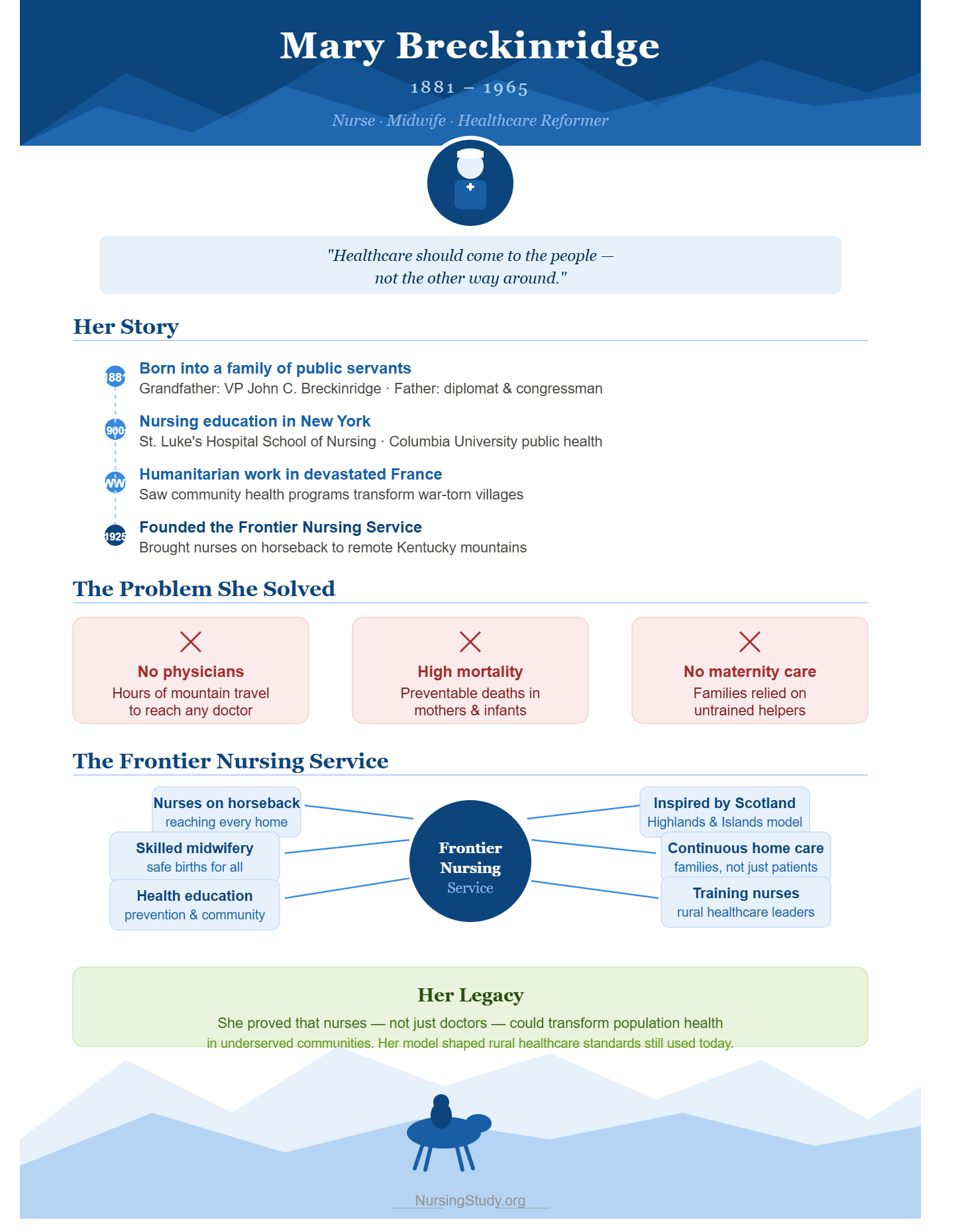
Mary Breckinridge, the Frontier Nursing Service, and the Transformation of Nursing Services and Public Health in Kentucky
Few individuals have influenced the development of rural healthcare in the United States as profoundly as Mary Breckinridge. At a time when many families living in the mountains of Kentucky had little or no access to physicians, hospitals, or organized healthcare programs, she introduced an innovative model of care that transformed the delivery of healthcare in remote communities. Through the establishment of the Frontier Nursing Service (FNS) in 1925, Mary Breckinridge demonstrated that high-quality healthcare could be successfully delivered even in geographically isolated regions when professional nursing, preventive medicine, and community engagement were combined into a coordinated system.
The significance of Mary Breckinridge’s work extends far beyond the creation of a single healthcare organization. Her efforts helped redefine the role of nurses in society and illustrated how nursing services could address some of the most pressing healthcare challenges facing underserved populations. Rather than limiting healthcare to hospitals and urban centers, she brought care directly to individuals and families living in the remote mountains of rural Kentucky. This approach challenged traditional healthcare delivery models and established a framework that continues to influence modern community health programs.
One of the most remarkable aspects of Mary Breckinridge’s achievements was her ability to recognize and respond to the unique healthcare needs of isolated populations. During the early twentieth century, many communities in southeastern Kentucky faced significant obstacles when seeking medical assistance. These challenges included:
- Limited transportation infrastructure.
- Scarcity of healthcare professionals.
- High rates of preventable illness.
- Inadequate access to maternal and infant healthcare.
- Geographic isolation caused by mountainous terrain.
- Lack of organized public health programs.
For many residents, obtaining medical care required traveling long distances over difficult roads or mountain trails. As a result, preventable diseases often went untreated, and pregnancy-related complications posed serious risks to both mothers and infants.
Recognizing these challenges, Mary Breckinridge developed a healthcare model centered on accessibility, prevention, and continuity of care. Her vision was not simply to establish clinics or hospitals but to create a comprehensive system capable of serving entire communities. The model she developed incorporated several key components:
- Professional nursing care delivered directly within communities.
- Skilled nurse-midwives trained to provide maternal healthcare.
- Home visitation programs that allowed ongoing patient monitoring.
- Health education initiatives focused on disease prevention.
- Community-based healthcare facilities and nursing centers.
- Integration of clinical care with broader public health goals.
This innovative approach would eventually become one of the earliest examples of a modern comprehensive healthcare system designed specifically for rural populations.
A defining feature of the Frontier Nursing Service was its emphasis on maternal and child health. Inspired by successful healthcare programs she observed abroad, Mary Breckinridge recognized that many maternal and infant deaths could be prevented through access to skilled healthcare providers. Under her leadership, trained nurse-midwives traveled throughout the Appalachian region, often by horseback, to provide prenatal care, assist with childbirth, monitor infant development, and educate families about healthy living practices. These efforts contributed to significant improvements in health outcomes and demonstrated the effectiveness of community-based healthcare delivery.
The influence of Mary Breckinridge also extended into professional nursing education. She believed that improving healthcare required not only delivering services but also preparing future generations of healthcare professionals. Through the development of educational programs in nursing and midwifery, she helped establish standards that would shape the future of rural nursing, community health practice, and nurse-midwifery in the United States. Her commitment to education ensured that the principles underlying the Frontier Nursing Service would continue long after its founding.
The story of Mary Breckinridge is therefore not only the story of an individual nurse but also the story of a transformative movement in healthcare. Her work addressed critical gaps in healthcare access, advanced the professional role of nurses, strengthened maternal and child healthcare, and demonstrated the value of community-centered care. Many of the principles she championed—including prevention, health promotion, home-based care, and healthcare accessibility—remain central to contemporary nursing and public health practice.
This article examines the life, work, and enduring influence of Mary Breckinridge. It explores the historical conditions that inspired her mission, the creation of the Frontier Nursing Service, the development of nurse-midwifery in rural communities, the impact of her healthcare innovations, and the lasting legacy she left on nursing, public health, and rural healthcare delivery. Through a deeper understanding of her contributions, it becomes clear why Mary Breckinridge remains one of the most influential figures in the history of modern nursing.
Feeling stressed about writing a detailed nursing paper?
Let us produce a thorough, high-quality document
Who Was Mary Breckinridge?
Mary Breckinridge was an American nurse, healthcare reformer, and visionary leader whose work transformed healthcare delivery in some of the most isolated regions of the United States. Best known for founding the Frontier Nursing Service, she developed a model of community-based healthcare that brought professional nursing and midwifery services directly to families living in remote mountain communities. Her efforts significantly improved maternal and infant health outcomes and helped establish standards for rural healthcare that continue to influence nursing practice today.
What distinguished Mary Breckinridge from many healthcare leaders of her era was her ability to combine clinical knowledge, public health principles, and organizational leadership into a practical healthcare system. She recognized that improving health outcomes required more than treating illness; it required addressing barriers to healthcare access, educating communities, and providing continuous support to individuals and families. This philosophy became the foundation of her life’s work and ultimately led to the creation of one of the most successful rural healthcare programs in American history.
Mary Breckinridge’s contributions were particularly significant because they occurred during a period when healthcare resources were unevenly distributed across the United States. While urban areas were experiencing advances in medicine, many residents of rural communities continued to face severe shortages of healthcare providers and facilities. By introducing innovative models of care, Mary Breckinridge demonstrated how nursing professionals could play a central role in improving population health and expanding access to essential services.
To fully understand the impact of her achievements, it is important to examine the experiences that shaped her beliefs, education, and commitment to public service.
Early Life and Education
Mary Breckinridge was born on February 17, 1881, into a prominent American family with a long history of public service. Her full name was Mary Carson Breckinridge, and she grew up in an environment that emphasized education, leadership, and civic responsibility. Her family included influential political figures, diplomats, and government officials, exposing her from an early age to discussions about public affairs and social issues.
Among her notable relatives was her grandfather John C. Breckinridge, a prominent political leader, while her father, Clifton Breckinridge, served as a diplomat and congressman. Through her father’s diplomatic career, Mary spent portions of her childhood in the United States and abroad, gaining exposure to diverse cultures and social conditions. These experiences broadened her understanding of society and would later influence her perspective on healthcare and social welfare.
Educational Foundations
Mary Breckinridge received an education that was considered exceptional for women during the late nineteenth and early twentieth centuries. She attended the Crescent College and Conservatory, a respected institution that emphasized academic excellence and personal development. The conservatory for young women provided opportunities that were not widely available to many women at the time, helping to cultivate her intellectual curiosity and leadership abilities.
Although her early education was not initially focused on healthcare, it provided a strong foundation in critical thinking, communication, and social responsibility. These skills would later prove invaluable as she developed complex healthcare programs and advocated for underserved populations.
Her path toward nursing was not immediate. Like many women of her social class, Mary initially followed a more traditional educational trajectory. However, a combination of personal experiences and exposure to human suffering gradually influenced her career direction. Eventually, she turned to nursing, recognizing that healthcare offered a meaningful way to improve lives and address social inequalities.
To pursue professional nursing education, Mary enrolled at St. Luke’s Hospital School of Nursing in New York, often referred to as Luke’s Hospital School of Nursing. At the time, this institution was regarded as one of the leading nursing schools in the country. Her experience in nursing in New York exposed her to modern healthcare practices and professional nursing standards.
The rigorous training she received at the hospital school of nursing equipped her with:
- Clinical nursing skills.
- Patient assessment techniques.
- Principles of disease prevention.
- Community health concepts.
- Professional standards of nursing practice.
- Leadership and organizational abilities.
Following her nursing education, Mary continued her studies at Teachers College, part of Columbia University, where she expanded her knowledge of public health, administration, education, and healthcare systems. Her academic experiences at Columbia played a significant role in shaping her understanding of population health and preventive care.
This combination of practical nursing education and advanced academic preparation gave Mary Breckinridge a unique perspective. She was able to view healthcare not only from the standpoint of individual patient care but also through the broader lens of community health and social reform.
Experiences That Shaped Her Public Health Mission
While education provided Mary Breckinridge with professional knowledge, it was her personal experiences that profoundly influenced her commitment to healthcare reform and public service.
Personal Tragedies and Their Influence
Several devastating personal losses shaped Mary’s worldview and strengthened her determination to improve healthcare services. She experienced the deaths of loved ones, including her young children, at a time when maternal and infant mortality rates remained high. These tragedies gave her firsthand insight into the emotional and physical consequences of inadequate healthcare.
Rather than allowing these experiences to discourage her, Mary transformed her grief into a lifelong commitment to improving the health of mothers and children. She became increasingly interested in understanding why so many preventable deaths occurred and what healthcare systems could do to reduce these losses.
These experiences helped her appreciate the importance of:
- Early intervention.
- Preventive healthcare.
- Skilled maternity care.
- Family-centered nursing practice.
- Accessible healthcare services for vulnerable populations.
International Humanitarian Service
Another critical influence on Mary Breckinridge’s public health philosophy was her involvement with the American Committee for Devastated France following World War I. The organization provided assistance to communities that had been severely affected by war.
While working in France, Mary observed large-scale community health initiatives that integrated medical care, nursing services, health education, and social support. She saw how coordinated healthcare programs could improve outcomes even in challenging environments.
This experience introduced her to several important concepts:
- Healthcare should be accessible to all populations.
- Prevention is often more effective than treatment alone.
- Nurses can play a leadership role in community health.
- Home visitation programs improve continuity of care.
- Maternal and child health should be a public health priority.
The lessons she learned in France would later become central features of the Frontier Nursing Service.
Learning from International Healthcare Models
Mary also traveled extensively to study successful healthcare systems abroad. One of the most influential experiences was her examination of healthcare programs in the British Isles.
She studied the work of the Highlands and Islands Medical Service, sometimes referenced as the Islands Medical and Nursing Service, which provided healthcare to residents living in remote rural regions. She was particularly impressed by the effectiveness of trained midwives and community nurses in improving health outcomes.
In addition, she observed practices associated with the British Hospital for Mothers and the Hospital for Mothers and Babies, institutions that emphasized maternal health, preventive care, and professional midwifery training.
These observations reinforced her belief that rural populations could receive high-quality healthcare if services were specifically designed to meet their unique needs. She recognized that many of the challenges faced by remote communities in Scotland were similar to those affecting families in rural America.
Recognizing the Needs of Rural Kentucky
After returning to the United States, Mary Breckinridge began studying healthcare conditions in Leslie County and other parts of southeastern Kentucky. What she found was deeply concerning.
Many families living in rural areas experienced:
- Limited access to physicians.
- Poor transportation networks.
- High rates of preventable disease.
- Inadequate maternity care.
- Significant healthcare disparities.
- Elevated maternal and infant mortality rates.
Communities often relied on informal healthcare providers because professional services were unavailable or inaccessible. In some cases, reaching a physician required traveling for hours across mountainous terrain.
Mary recognized that traditional healthcare models were failing to meet the needs of these populations. Rather than expecting residents to travel long distances for care, she envisioned a system that would bring healthcare directly to them.
This realization became the foundation of Mary Breckinridge’s vision and ultimately led to the development of a revolutionary healthcare model that combined professional nursing, midwifery, community outreach, and public health services. The experiences of her early life, education, personal losses, international service, and observations of healthcare disparities all converged to shape the mission that would define her legacy and transform healthcare in rural Kentucky for generations to come.
The Public Health Crisis in Rural Kentucky
During the early twentieth century, rural Kentucky, particularly the Appalachian communities of southeastern Kentucky, experienced a severe and persistent public health crisis. These communities lived under conditions shaped by geographic isolation, poverty, and a lack of structured nursing services. Within this environment, Mary Breckinridge identified deep systemic gaps that would later inform the development of the Frontier Nursing Service (FNS).
The existing health care system in these regions was fragmented and largely inaccessible. Many families lived in remote mountain areas with little to no contact with trained healthcare professionals. Preventable illnesses, untreated infections, and complications related to childbirth were common. This situation reflected a broader failure of early public health systems to reach vulnerable populations in rural areas.
Rather than viewing these challenges as isolated medical issues, Mary Breckinridge recognized them as structural problems that required a coordinated, community-based response combining prevention, education, and direct clinical care.
Healthcare Conditions in Appalachian Communities
Healthcare delivery in Appalachian Kentucky was shaped by multiple overlapping barriers that significantly limited access to care and contributed to poor health outcomes.
Geographic Isolation and Transportation Barriers
The mountainous terrain of Leslie County, Hyden, and surrounding regions made travel extremely difficult. Many communities were accessible only by foot, mule, or horseback and often cut off during harsh weather conditions. Because of these barriers, individuals often delayed seeking care until illnesses became severe. Emergency cases frequently worsened during the time it took to reach help, increasing the risk of complications and death. This isolation later influenced the development of mobile nursing care models that prioritized home-based services.
Limited Healthcare Infrastructure and Workforce Shortages
Healthcare infrastructure in rural Kentucky was extremely limited. Few hospitals existed in Leslie County and surrounding Appalachian regions, and there was a shortage of physicians willing or able to serve remote communities. Organized district nursing systems were virtually nonexistent. Before the establishment of the Frontier Nursing Service, there was no coordinated system for delivering continuous nursing services to rural populations. As a result, many communities relied on informal care or untreated illness progression, with no structured public health nurse presence.
Poverty and Economic Constraints
Economic hardship further intensified the healthcare crisis. Most families relied on subsistence farming, and cash income was extremely limited. Preventive healthcare was often neglected due to cost barriers. Healthcare was typically sought only in emergencies, meaning conditions were often advanced by the time treatment was accessed. This reactive pattern of care contributed to higher morbidity and mortality rates across rural populations.
Weak Public Health Systems and Education Gaps
Public health infrastructure was minimal or absent in many Appalachian communities. Few structured public health nurse programs existed, and health education on hygiene, nutrition, and disease prevention was limited. Preventive services such as immunization and maternal education were underdeveloped. Without consistent outreach or education, many preventable diseases continued to spread unchecked. The absence of organized public health systems meant that early intervention and health promotion were rarely available.
Maternal and Infant Health Challenges
Maternal and infant health outcomes were among the most serious aspects of the rural health crisis in Kentucky. These challenges highlighted the urgent need for structured midwifery and family nursing services.
High Maternal Mortality and Unsafe Childbirth Practices
Childbirth in rural communities was extremely risky due to:
- Lack of trained nurse-midwives
- Minimal prenatal monitoring
- Home deliveries without skilled assistance
- Poor sanitation during labor and delivery
Complications such as hemorrhage, infection, and obstructed labor were common and often fatal. These outcomes highlighted the absence of structured maternity care systems and the need for standardized, skilled nursing care.
Infant Mortality and Early Childhood Illness
Infant survival rates were extremely low due to several preventable factors:
- Lack of newborn care education
- Poor breastfeeding and nutrition practices
- High exposure to infectious diseases
- Limited sanitation and hygiene practices
Many infant deaths could have been prevented with basic healthcare interventions, underscoring the absence of consistent health care in rural settings.
Lack of Skilled Birth Attendance and Continuity of Care
A major gap in care was the absence of trained professionals during childbirth and postpartum care.
- Most births were attended by untrained individuals
- No standardized system for maternal follow-up existed
- Postnatal care for mothers and infants was extremely limited
This gap emphasized the need for formal training programs such as the school of midwifery and family nursing, which later became central to Mary Breckinridge’s model.
The Need for a New Healthcare Approach
The severity of conditions in rural Kentucky demonstrated that hospital-based care alone was insufficient for isolated populations.
A new system was required that could:
- Deliver continuous nursing services directly into communities
- Integrate preventive and curative public health strategies
- Train professional nurse-midwives for rural practice
- Establish structured home visitation programs
- Address both medical and social determinants of health
These realities directly informed Mary Breckinridge’s vision for healthcare reform. The conditions observed in rural Kentucky ultimately led to the establishment of the Frontier Nursing Service (FNS) in 1925, forming the foundation of a modern comprehensive health care system designed for underserved rural populations.
Founding the Frontier Nursing Service
The establishment of the Frontier Nursing Service (FNS) marked a turning point in the development of nursing services and public health delivery in the United States, particularly in rural Kentucky. Building on her experiences in rural areas and her exposure to international healthcare systems, Mary Breckinridge recognized that existing services were inadequate for populations living in geographically isolated regions such as Leslie County and Hyden. In response, she developed a structured, community-based model that would later become one of the most influential examples of modern comprehensive health care systems in rural America.
The founding of the FNS was not simply the creation of an organization but the implementation of a new philosophy of care. It combined preventive medicine, skilled nurse-midwives, home visitation, and community engagement into a unified system designed to address both immediate medical needs and long-term public health challenges. This approach directly challenged the hospital-centered model of care that dominated early twentieth-century healthcare delivery.
Mary Breckinridge’s Vision for Rural Nursing Services
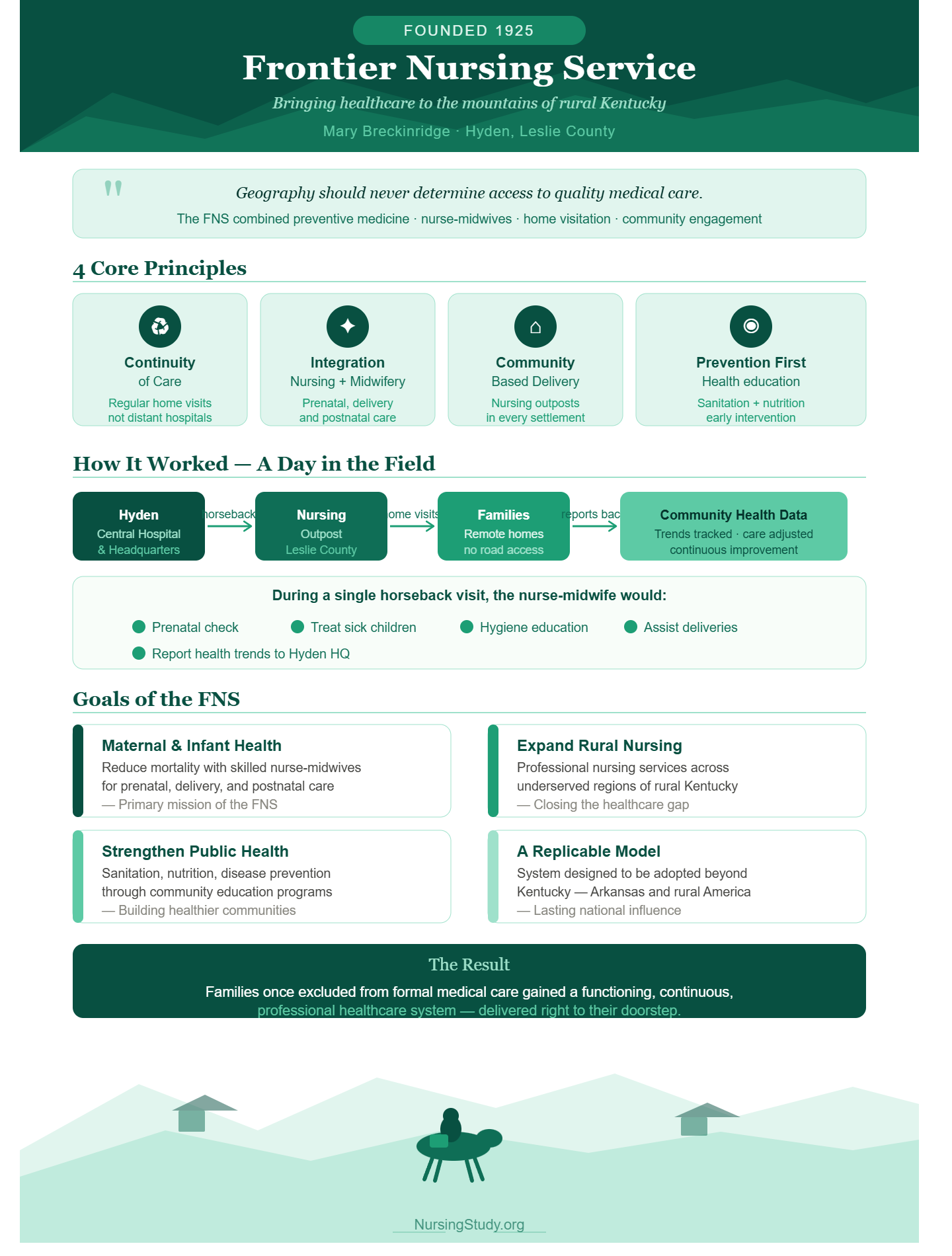
Mary Breckinridge’s vision for rural healthcare was rooted in the belief that geography should never determine access to quality medical care. After studying healthcare systems in Europe, including the Highlands and Islands Medical Service and maternal care models such as the British Hospital for Mothers and Babies, she became convinced that structured nursing services could effectively reach populations in remote regions if properly organized.
Her vision for rural nursing services was built on several core principles:
Continuity of Care in Rural Communities
She believed that healthcare should not be episodic but continuous, with ongoing monitoring of maternal and infant health, chronic conditions, and family wellbeing. This required regular home visits rather than reliance on distant hospitals.
Integration of Nursing and Midwifery
A key feature of her vision was the integration of midwifery and family nursing into a single system of care. She recognized that maternal health outcomes could be significantly improved when trained nurse-midwives provided prenatal, delivery, and postnatal care within the same care continuum.
Community-Based Health Delivery
Instead of requiring patients to travel long distances, Mary Breckinridge envisioned healthcare delivered directly within communities. This included the establishment of nursing stations and outposts across rural Kentucky, enabling access to care even in isolated settlements.
Prevention as a Core Function of Care
Her model emphasized prevention over treatment. Health education, sanitation instruction, and early intervention were central to reducing maternal mortality and childhood disease in underserved populations.
For example, in communities where families previously relied on untrained birth attendants, FNS nurse-midwives introduced standardized prenatal assessments and hygiene education, significantly improving outcomes.
Establishment and Goals of the FNS
The Frontier Nursing Service (FNS) was formally established in 1925 by Mary Breckinridge, following her return from international healthcare work and her assessment of conditions in southeastern Kentucky. The organization was headquartered at the hospital and health center in Hyden, which served as the central hub for operations, training, and patient care.
Foundational Structure of the FNS
The FNS was structured to function as a fully integrated rural healthcare system, combining clinical care, education, and outreach. Its key components included:
Nursing Outposts and Community Coverage
Small nursing centers were established throughout remote regions to ensure that even the most isolated families could access care. These outposts served as bases for public health nurse activities and mobile nursing care delivery.
Horseback Nursing Delivery System
Due to limited infrastructure, horseback travel became a defining feature of the FNS model. Nurse-midwives traveled long distances across mountainous terrain to reach patients, often carrying medical supplies and emergency equipment. This approach ensured consistent care delivery in areas with no road access.
Training and Education Systems
The establishment of the school of midwifery and hospital school of nursing ensured that the FNS could sustain a trained workforce. These programs later evolved into the Frontier School of Midwifery, reinforcing the link between education and service delivery.
Goals of the Frontier Nursing Service
The FNS was designed with clearly defined healthcare objectives that addressed both immediate and long-term community needs.
Improvement of Maternal and Infant Health
A primary goal was to reduce maternal mortality and improve outcomes for infants by ensuring access to skilled nurse-midwives during pregnancy and childbirth. This included prenatal monitoring, safe delivery practices, and postnatal care.
Expansion of Rural Nursing Services
The FNS aimed to expand access to professional nursing services across underserved regions, ensuring that families in rural Kentucky and surrounding rural areas received consistent healthcare support.
Strengthening Public Health Infrastructure
The service also focused on improving public health by addressing sanitation, nutrition, and disease prevention. This included community education programs led by public health nurse teams.
Development of a Sustainable Healthcare Model
One of the long-term goals was to create a replicable system that could be applied beyond Kentucky, influencing healthcare delivery in other underserved regions such as Arkansas and other parts of rural America.
Example of Impact in Early Implementation
In early FNS operations, a nurse-midwife assigned to a remote area in Leslie County might travel by horseback to visit multiple families in a single day. During these visits, she would:
- Conduct prenatal assessments for expectant mothers
- Provide nursing care for sick children
- Educate families on hygiene and nutrition
- Assist in home deliveries when necessary
- Report community health trends back to the central hospital in Hyden
This coordinated approach demonstrated how Mary Breckinridge’s vision translated into a functioning healthcare system capable of serving populations previously excluded from formal medical care.
Through the founding of the FNS, Mary Breckinridge effectively established a new model of rural healthcare that combined public health, clinical nursing, and midwifery into a single integrated system.
Nursing Services Provided by the Frontier Nursing Service
The Frontier Nursing Service (FNS) developed one of the most comprehensive models of rural healthcare delivery in the United States, offering structured nursing services that addressed the wide-ranging needs of families in rural Kentucky. Under the leadership of Mary Breckinridge, the FNS system was designed to function as a continuous care network rather than a series of isolated clinical interventions. This approach integrated maternal and infant care, family health support, and community-level public health programs into a single coordinated framework.
Unlike traditional hospital-based systems, the FNS emphasized home-based care delivered directly in rural areas such as Leslie County, Hyden, and surrounding Appalachian communities. Through the use of nurse-midwives, public health nurse teams, and mobile nursing care units, the service ensured that healthcare reached populations who had previously been excluded from formal medical systems.
Maternal and Child Healthcare
One of the most critical components of the FNS model was its focus on maternal and child healthcare. At a time when maternal mortality and infant death rates were extremely high in rural regions, the FNS introduced structured, evidence-based interventions that significantly improved outcomes.
Prenatal Care Services
FNS nurse-midwives provided regular prenatal visits that included:
- Monitoring maternal vital signs and fetal development
- Identifying high-risk pregnancies early
- Providing nutritional and health education
- Preparing families for safe childbirth practices
For example, in remote areas of southeastern Kentucky, a pregnant woman who previously might not have seen a healthcare provider until delivery would now receive multiple prenatal visits from a traveling nurse-midwife.
Safe Delivery and Birth Attendance
The FNS established a system in which trained nurse-midwives attended home births, ensuring safer delivery conditions. These professionals were trained in sterile techniques, emergency response, and newborn resuscitation.
This significantly reduced complications associated with unassisted or poorly managed home deliveries, especially in communities where access to a hospital in Hyden or other facilities was limited.
Postnatal and Infant Care
After delivery, FNS staff continued to provide care for both mother and infant, including:
- Monitoring recovery after childbirth
- Supporting breastfeeding practices
- Educating families on infant hygiene and nutrition
- Tracking early childhood development
This continuity of care was essential in reducing infant mortality and improving long-term health outcomes in rural Kentucky.
Family and Community Nursing Services
Beyond maternal care, the FNS extended its nursing services to entire households and communities, recognizing that health outcomes were influenced by environmental, social, and economic conditions.
Household Health Assessments
Public health nurse teams conducted regular home visits to assess:
- Sanitation conditions
- Water quality and food storage practices
- Presence of communicable diseases
- General family health status
These assessments allowed early detection of health risks and supported timely interventions.
Care for Children and Chronic Conditions
FNS nurse-midwives and community nurses also provided care for:
- Childhood illnesses such as respiratory infections
- Chronic conditions including malnutrition
- Injuries and acute medical needs
For example, a child in Leslie County suffering from repeated respiratory infections could receive ongoing monitoring and treatment during home visits, reducing the need for emergency travel over long distances.
Family Health Education
Education was a central part of family nursing services. Nurses taught families about:
- Hygiene and sanitation practices
- Nutrition and food preparation
- Disease prevention strategies
- Basic first aid and home care techniques
This educational approach strengthened family capacity to manage health issues independently, reducing preventable illness across rural areas.
Preventive Care and Public Health Programs
A defining feature of the FNS was its strong emphasis on prevention as a core component of public health. Mary Breckinridge’s vision placed equal importance on preventing illness and treating disease, making the FNS one of the earliest examples of a prevention-centered rural healthcare system.
Immunization and Disease Prevention
FNS teams promoted and supported early immunization efforts and worked to reduce the spread of infectious diseases through:
- Community vaccination campaigns where available
- Isolation guidance during outbreaks
- Monitoring of communicable disease patterns
This helped reduce the impact of common rural illnesses in southeastern Kentucky communities.
Environmental and Sanitation Improvements
Public health efforts also focused on improving living conditions, including:
- Safe water usage education
- Waste disposal practices
- Improved household cleanliness
- Reduction of environmental health risks
These interventions were particularly important in areas lacking formal sanitation infrastructure.
Health Surveillance and Community Reporting
FNS staff maintained detailed records of community health trends, which allowed them to:
- Track disease patterns across rural Kentucky
- Identify recurring health risks
- Adjust nursing care strategies based on community needs
This early form of health surveillance strengthened the effectiveness of public health nurse interventions and contributed to more targeted care delivery.
Example of Preventive Impact
In one Leslie County community, repeated cases of childhood infections were identified through routine home visits. FNS nurses responded by implementing hygiene education sessions, improving sanitation practices, and increasing follow-up visits. Over time, the frequency of infections in that area significantly decreased, demonstrating the effectiveness of preventive nursing services.
Through these integrated maternal, family, and preventive care services, the Frontier Nursing Service established a model of healthcare that combined clinical excellence with community-based public health principles. This system ensured that care was not only accessible but also continuous, preventive, and responsive to the unique needs of rural areas in Kentucky and beyond.
The Horseback Nursing Model
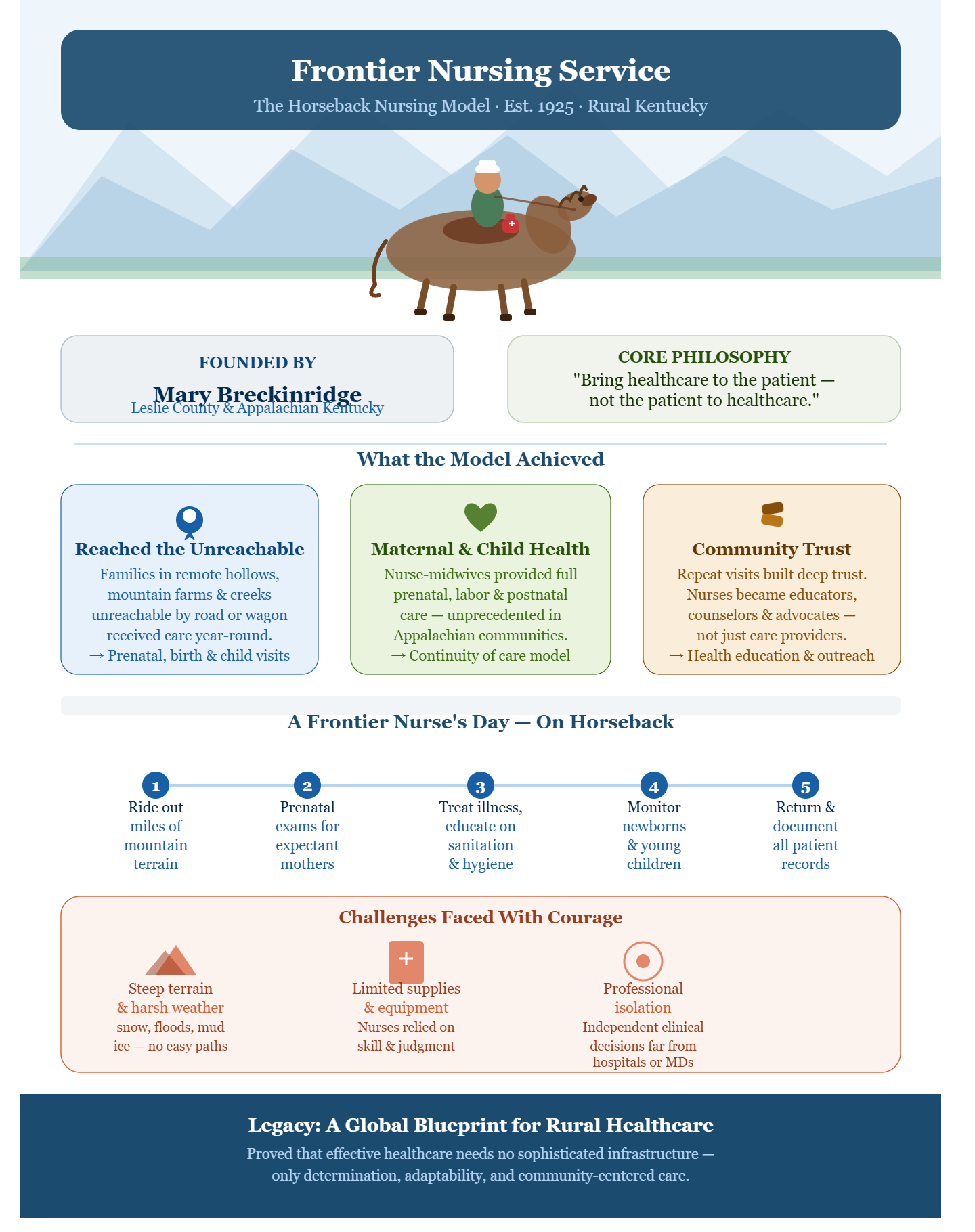
One of the most iconic and innovative aspects of the Frontier Nursing Service (FNS) was its use of the horseback nursing model. While the image of nurses riding through mountain trails has become closely associated with Mary Breckinridge, this approach was far more than a symbol of dedication—it was a practical solution to a significant healthcare access problem. In the remote regions of rural Kentucky, particularly throughout Leslie County, Hyden, and surrounding Appalachian communities, conventional healthcare delivery methods were often impossible due to the rugged terrain and lack of transportation infrastructure.
When Mary Breckinridge established the FNS in 1925, she understood that a healthcare system could only succeed if it was designed around the realities of the population it served. Rather than expecting patients to travel long distances to clinics or hospitals, she brought healthcare directly to them. This philosophy aligned with her broader vision of accessible nursing services, community-centered care, and preventive public health practice.
The horseback nursing model allowed FNS personnel to reach families living in isolated mountain hollows, on remote farms, and in communities separated by rivers, forests, and steep mountain ridges. It became one of the defining features of the organization’s success and a powerful example of adapting healthcare delivery to local needs.
Reaching Isolated Communities
Bringing Healthcare to the Patient
The primary purpose of the horseback nursing model was to overcome the geographic barriers that had long prevented residents of rural Kentucky from accessing healthcare. Many communities were located miles from the nearest physician, and roads, where they existed, were often poorly maintained. During winter storms or periods of heavy rainfall, travel by wagon or automobile could become impossible.
To address these challenges, FNS nurse-midwives traveled on horseback from nursing stations and outpost centers strategically located throughout the service area. This approach enabled healthcare providers to reach patients regardless of road conditions or distance.
A typical day for a Frontier nurse might include:
- Riding several miles across mountainous terrain.
- Conducting prenatal examinations for expectant mothers.
- Providing treatment for illnesses and minor injuries.
- Educating families about sanitation and disease prevention.
- Monitoring newborns and young children.
- Returning to the nursing center to document patient visits.
Unlike traditional healthcare models that required patients to seek care, the FNS actively brought care into homes and communities.
Establishing Community Trust
The regular presence of FNS nurses helped build strong relationships between healthcare providers and community members. Families became familiar with the nurses who visited them repeatedly throughout the year, creating trust and improving acceptance of professional healthcare services.
This trust was particularly important because many residents had limited prior experience with formal medical care. Through repeated interactions, nurses became respected members of the community and often served as educators, counselors, and advocates in addition to healthcare providers.
Expanding Access to Maternal and Child Healthcare
The horseback model was especially effective in improving maternal and infant health outcomes. Pregnant women who previously had little access to skilled care could now receive regular prenatal assessments and childbirth assistance from trained nurse-midwives.
For example, an expectant mother living in a remote area of Leslie County might receive multiple prenatal visits throughout her pregnancy, assistance during labor, and postnatal follow-up care after delivery. This continuity of care was largely unprecedented in many Appalachian communities before the arrival of the FNS.
Creating a Network of Rural Nursing Services
The horseback system worked because it was supported by a broader healthcare network. Nurses operated from strategically placed nursing centers and outposts that extended the reach of the organization into remote regions. These facilities functioned as local bases where supplies were stored, records were maintained, and healthcare activities were coordinated.
Together, the nursing centers, outposts, and horseback nurses formed a comprehensive system of nursing services that significantly expanded health care in rural communities.
Challenges of Rural Healthcare Delivery
While the horseback nursing model was highly effective, it also presented numerous challenges. The nurses who worked within the FNS faced physical, environmental, and professional obstacles that required resilience, adaptability, and commitment.
Difficult Terrain and Harsh Weather
The mountainous landscape of southeastern Kentucky created constant travel challenges. Nurses often navigated:
- Steep mountain trails.
- Narrow paths along rivers and creeks.
- Dense forests.
- Muddy roads and flooded crossings.
- Snow, ice, and severe weather conditions.
Traveling under these conditions was physically demanding and occasionally dangerous. A routine visit could require several hours of riding through difficult terrain before reaching a patient’s home.
For example, a nurse responding to a laboring mother might travel through heavy rain or snow to provide care, knowing that delays could place both mother and child at risk.
Limited Medical Resources
Unlike modern healthcare providers, FNS nurses worked with limited equipment and supplies. Medical resources had to be transported on horseback, restricting the amount of equipment available during home visits.
Nurses frequently had to rely on:
- Clinical judgment and assessment skills.
- Practical problem-solving abilities.
- Knowledge of emergency care procedures.
- Preventive healthcare strategies.
This required a high level of professional competence and independence.
Professional Isolation
Healthcare professionals working in remote communities often practiced with limited immediate support from physicians or hospitals. Nurses were frequently required to make important clinical decisions independently.
This level of responsibility was particularly significant for nurse-midwives, who managed prenatal care, attended births, and provided postnatal care in environments far removed from traditional medical facilities.
Addressing Cultural and Educational Barriers
Another challenge involved introducing modern healthcare practices to communities with long-established traditions and beliefs. Some residents were initially hesitant to accept professional medical services or unfamiliar healthcare recommendations.
FNS personnel addressed these challenges through:
- Consistent community engagement.
- Respectful communication.
- Health education initiatives.
- Long-term relationship building.
By earning the trust of families, nurses gradually encouraged the adoption of healthier practices and greater utilization of healthcare services.
Maintaining a Sustainable Healthcare System
Providing healthcare across large geographic areas required careful planning and organization. The FNS needed to:
- Recruit and retain qualified nurse-midwives.
- Maintain horses and transportation equipment.
- Supply remote nursing stations.
- Coordinate patient records and follow-up care.
- Secure funding for ongoing operations.
Despite these logistical challenges, Mary Breckinridge successfully developed a sustainable model that continued to expand and serve thousands of individuals throughout rural Kentucky.
The Lasting Significance of the Horseback Nursing Model
The horseback nursing model demonstrated that effective healthcare delivery does not always depend on sophisticated infrastructure. Instead, it showed that successful healthcare systems can be built around the unique needs of the populations they serve.
By adapting healthcare delivery to the realities of Appalachian life, Mary Breckinridge and the Frontier Nursing Service created a system that reached people who had long been excluded from formal healthcare. The model not only improved access to nursing care and public health services but also provided a blueprint for delivering healthcare in underserved regions around the world.
The success of the horseback nursing model remains one of the most compelling examples of innovation in rural nursing, demonstrating how determination, adaptability, and community-centered care can overcome even the most significant barriers to healthcare access.
Advancing Nurse-Midwifery and Professional Nursing Practice
The contributions of Mary Breckinridge extended far beyond the creation of a successful rural healthcare organization. One of her most enduring achievements was advancing the professional development of nurse-midwives and elevating the role of nursing within the American healthcare system. At a time when midwifery was poorly understood and often undervalued in the United States, she introduced a model that demonstrated how highly trained nurses could provide safe, effective, and comprehensive care to women, infants, and families.
Through the Frontier Nursing Service (FNS), Mary Breckinridge helped establish standards for professional practice that combined nursing, midwifery, and public health principles. Her approach emphasized rigorous education, evidence-based care, and community engagement, helping transform perceptions of what nurses could accomplish in both clinical and community settings.
The significance of this achievement becomes even more apparent when viewed within the historical context of the early twentieth century. At that time, many healthcare services were concentrated in urban centers, and opportunities for advanced nursing practice were limited. By creating a system in which nurses served as primary healthcare providers in rural areas, Mary Breckinridge expanded the professional scope of nursing and demonstrated the value of advanced nursing roles in addressing healthcare disparities.
Introduction of Nurse-Midwives in Rural America
One of the most revolutionary aspects of the FNS was the introduction of professionally trained nurse-midwives into rural America. Prior to the establishment of the organization, many women in isolated communities had little access to skilled maternity care. Childbirth often occurred at home with assistance from family members or traditional attendants who lacked formal medical training.
Recognizing this gap, Mary Breckinridge sought to introduce a new model of maternity care based on successful systems she had observed abroad.
International Influences on Nurse-Midwifery
Several international experiences shaped her understanding of effective maternal healthcare.
Among the most influential were:
- The British Hospital for Mothers and Babies
- The Highlands and Islands Medical Service
- Her work with the American Committee for Devastated France
These experiences exposed her to healthcare systems where trained midwives played a central role in reducing maternal and infant mortality. She became convinced that similar approaches could address the healthcare challenges facing rural Kentucky.
Rather than importing these models unchanged, she adapted them to the unique geographic and cultural realities of Appalachian communities.
Establishing Professional Standards for Nurse-Midwives
A defining characteristic of the FNS was its emphasis on professional education and competency. Mary Breckinridge believed that midwifery should be grounded in advanced nursing knowledge rather than informal apprenticeship alone.
As a result, FNS personnel received specialized preparation in:
- Maternal health assessment
- Labor and delivery management
- Postpartum care
- Infant health monitoring
- Community health nursing
- Disease prevention and health education
This emphasis on professional preparation distinguished FNS nurse-midwives from many traditional birth attendants of the era and helped establish midwifery as a respected healthcare profession in the United States.
Expanding Access to Skilled Maternity Care
The introduction of nurse-midwives dramatically expanded access to healthcare for women living in remote regions.
Instead of traveling long distances to obtain maternity services, women could receive care directly within their communities through:
- Prenatal home visits
- Childbirth assistance
- Postnatal follow-up care
- Infant health monitoring
- Family health education
For example, a pregnant woman living in an isolated mountain settlement near Hyden could receive regular visits from an FNS nurse-midwife throughout her pregnancy. This continuity of care greatly improved the likelihood of identifying complications early and ensuring safer deliveries.
Strengthening Professional Nursing Practice
The work of FNS personnel also expanded the role of nurses within the broader healthcare system.
Rather than functioning solely under physician supervision, nurses often:
- Conducted comprehensive patient assessments
- Managed routine maternity care
- Delivered preventive health services
- Coordinated community health initiatives
- Provided health education to families
This level of responsibility demonstrated the capacity of highly trained nurses to serve as essential providers within underserved communities and contributed to the evolution of advanced nursing practice in the United States.
Improving Maternal and Infant Health Outcomes
One of the clearest indicators of the success of the Frontier Nursing Service was its impact on maternal and infant health. The organization’s comprehensive approach to nursing care and midwifery produced measurable improvements in outcomes that had long been problematic in Appalachian Kentucky.
Addressing Maternal Mortality
Reducing maternal mortality was one of the central goals of the FNS.
Several factors contributed to improved maternal outcomes:
- Regular prenatal assessments
- Early identification of pregnancy complications
- Skilled attendance during childbirth
- Postpartum monitoring and support
- Improved hygiene and infection control practices
Before the arrival of trained nurse-midwives, many women experienced pregnancy and childbirth without professional medical assistance. The FNS model significantly reduced these risks by ensuring that mothers received continuous care throughout the childbearing process.
Improving Infant Survival
The organization also focused heavily on infant health.
Key interventions included:
- Monitoring newborn development
- Encouraging breastfeeding
- Providing parental education
- Identifying illnesses early
- Promoting proper nutrition
These efforts contributed to lower infant mortality rates and healthier childhood development.
For instance, an FNS nurse visiting a newborn’s home might assess feeding practices, monitor weight gain, educate parents about sanitation, and identify warning signs requiring additional intervention. Such preventive measures often prevented minor health concerns from becoming life-threatening conditions.
Creating a Continuum of Care
A major strength of the FNS model was its emphasis on continuity.
Care was not limited to childbirth itself but extended across multiple stages:
- Prenatal care
- Labor and delivery
- Postpartum recovery
- Infant monitoring
- Family health support
This integrated approach reflected the principles of midwifery and family nursing and helped ensure that healthcare needs were addressed comprehensively rather than in isolation.
Community Education and Long-Term Health Improvement
The success of the FNS was not solely the result of clinical interventions. Education played a crucial role in improving health outcomes.
FNS personnel regularly taught families about:
- Nutrition
- Sanitation
- Infant care
- Disease prevention
- Maternal health practices
These educational efforts empowered families to make informed health decisions and contributed to lasting improvements in community wellbeing.
Establishing a Model for Future Healthcare Programs
The achievements of Mary Breckinridge and the Frontier Nursing Service demonstrated that professionally trained nurse-midwives could successfully deliver high-quality care in underserved settings. The improvements in maternal and infant outcomes provided compelling evidence that nursing-led healthcare models could address significant public health challenges.
As a result, the FNS became an influential example for future maternal health initiatives, rural healthcare programs, and advanced nursing practice models throughout the United States. The organization’s success helped legitimize nurse-midwifery as a profession and reinforced the critical role that nurses play in improving population health outcomes, particularly in communities with limited access to traditional healthcare services.
Educational Influences and the Development of Nursing Training
The success of the Frontier Nursing Service (FNS) was not solely the result of innovative healthcare delivery. It was also deeply connected to Mary Breckinridge’s commitment to education, professional preparation, and the development of highly skilled healthcare providers. Throughout her career, Mary Breckinridge believed that sustainable improvements in healthcare required a well-trained workforce capable of delivering competent, evidence-based care in diverse settings.
Her approach to nursing education was shaped by a combination of personal experiences, formal academic training, international observation, and practical fieldwork. Rather than relying on a single educational model, she integrated lessons from American nursing schools, European healthcare systems, and community-based healthcare programs. These influences ultimately helped create a framework for training nurse-midwives that would have a lasting impact on nursing and midwifery education in the United States.
The educational philosophy behind the FNS emphasized several key principles:
- Strong clinical preparation
- Community-based healthcare delivery
- Preventive public health practices
- Maternal and child health expertise
- Professional accountability and leadership
These principles ensured that nurses were prepared not only to provide direct patient care but also to function as educators, advocates, and leaders within the communities they served.
International and Academic Influences on the FNS Model
The healthcare model developed by Mary Breckinridge was heavily influenced by both academic institutions and international healthcare systems. Her willingness to study successful programs from different parts of the world allowed her to create an innovative approach specifically suited to the needs of rural Kentucky.
Academic Foundations in Nursing and Public Health
Before becoming a pioneering healthcare leader, Mary Breckinridge pursued educational opportunities that broadened her understanding of nursing, public health, and healthcare administration.
Her academic journey included exposure to institutions such as:
- St. Luke’s Hospital School of Nursing
- Teachers College at Columbia University
- Other educational experiences connected to nursing in New York
At Luke’s Hospital School of Nursing, she gained insight into professional nursing standards and patient care practices. Her studies helped her appreciate the importance of structured nursing education and clinical competency.
Her association with Columbia University and Teachers College further expanded her understanding of public health concepts, community health initiatives, and healthcare organization. These experiences reinforced the idea that healthcare should extend beyond hospitals and address broader social and environmental determinants of health.
Influence of Early Educational Experiences
The educational development of Mary Carson Breckinridge began long before her formal nursing studies. Her attendance at the Crescent College and Conservatory and the Conservatory for Young Women contributed to the development of leadership skills, intellectual curiosity, and a commitment to public service.
Although these institutions were not nursing schools, they helped cultivate the discipline and educational foundation that later supported her professional achievements.
Learning Through International Observation
Some of the most significant influences on the FNS model came from healthcare systems outside the United States.
The British Hospital for Mothers and Babies
The British Hospital for Mothers and Babies demonstrated how trained midwives could provide high-quality maternity care while reducing maternal and infant mortality.
From this model, Mary Breckinridge learned the importance of:
- Standardized maternity care
- Professional midwifery education
- Continuity of care from pregnancy through postpartum recovery
These lessons later became central features of the FNS.
Highlands and Islands Medical Service
The Highlands and Islands Medical Service served remote populations in Scotland facing challenges similar to those encountered in Appalachian Kentucky.
Key lessons included:
- Delivering healthcare to isolated communities
- Establishing regional care networks
- Using community-based healthcare providers
- Integrating preventive and clinical services
This model strongly influenced the structure of the FNS and its network of nursing outposts.
American Committee for Devastated France
During her work with the American Committee for Devastated France, Mary Breckinridge observed large-scale public health and community recovery efforts following World War I.
This experience reinforced the importance of:
- Community engagement
- Population health strategies
- Preventive care programs
- Healthcare coordination across diverse settings
The experience also demonstrated how organized healthcare systems could transform health outcomes in underserved populations.
Adapting International Models to Rural Kentucky
One of Mary Breckinridge’s greatest strengths was her ability to adapt successful ideas rather than simply replicate them. She recognized that the healthcare needs of southeastern Kentucky differed from those of Europe.
As a result, she modified international concepts to fit local realities by:
- Utilizing horseback transportation
- Establishing strategically located outposts
- Training healthcare providers for rural practice
- Emphasizing home visitation services
- Integrating public health and clinical care
The result was a uniquely American model of rural healthcare delivery that reflected both global influences and local needs.
The Frontier School of Midwifery and Nursing Education
As the FNS expanded, Mary Breckinridge recognized that sustaining high-quality healthcare services required a reliable system for educating future practitioners. This realization led to the development of formal educational programs that would become some of the most influential institutions in nurse-midwifery education.
Establishment of the Frontier School of Midwifery
The creation of the Frontier School of Midwifery represented a major milestone in the professionalization of nurse-midwifery in the United States.
The school’s primary objectives included:
- Preparing skilled nurse-midwives
- Promoting evidence-based maternity care
- Supporting healthcare delivery in rural areas
- Advancing professional nursing practice
Students received education that combined classroom instruction with practical clinical experience, ensuring that graduates were prepared to serve diverse populations.
Integration of Midwifery and Nursing Education
Unlike many educational programs of the era, the Frontier model emphasized the integration of nursing and midwifery.
Training included:
- Maternal health assessment
- Labor and delivery management
- Postpartum care
- Newborn care
- Family health services
- Community-based healthcare delivery
This approach reflected the principles of midwifery and family nursing that were central to the FNS philosophy.
Clinical Learning Through Community Practice
A distinguishing feature of Frontier education was its emphasis on experiential learning.
Students gained practical experience through:
- Home visits
- Community outreach programs
- Maternal health services
- Child health monitoring
- Preventive healthcare initiatives
By working directly within communities, trainees learned how to adapt healthcare delivery to the realities of rural practice.
For example, a student nurse-midwife might accompany an experienced practitioner on visits to remote families, observing how clinical care, health education, and community engagement were integrated into a single patient encounter.
Evolution of Nursing Education Programs
Over time, the educational initiatives associated with the FNS continued to expand and evolve.
Programs connected to the school of midwifery and related nursing education efforts contributed to the broader development of advanced nursing practice in the United States. These initiatives helped establish standards for nurse-midwifery education and increased opportunities for nurses seeking advanced clinical roles.
The commitment to education remained a defining feature of the organization and ensured that future generations of healthcare professionals could continue the work begun by Mary Breckinridge.
Foundation for Frontier Nursing University
The educational legacy of the Frontier movement ultimately extended beyond its original training programs. The institutions established to prepare nurse-midwives evolved over time and contributed to the development of Frontier Nursing University, a nationally recognized leader in graduate nursing and midwifery education.
This progression reflects the enduring impact of Mary Breckinridge’s vision. What began as a response to healthcare shortages in rural Kentucky grew into an educational movement that influenced nursing practice across the United States.
Through her commitment to education, professional preparation, and lifelong learning, Mary Breckinridge ensured that the principles underlying the Frontier Nursing Service would continue to shape healthcare delivery long after its founding. Her educational initiatives not only strengthened rural healthcare but also helped establish new standards for nursing and midwifery training that continue to influence the profession today.
The Impact of the Frontier Nursing Service on Public Health
The establishment of the Frontier Nursing Service (FNS) represented one of the most significant developments in the history of American public health and rural healthcare delivery. While the organization is often recognized for its innovative use of nurse-midwives and horseback travel, its broader impact extended far beyond maternity care. Through its comprehensive approach to healthcare delivery, the FNS demonstrated that high-quality healthcare could be successfully provided in geographically isolated and medically underserved communities.
Before the work of Mary Breckinridge, many residents of rural Kentucky had limited access to trained healthcare professionals, preventive health services, and organized medical care. The FNS helped change this reality by creating a healthcare model that integrated clinical care, health education, disease prevention, and community outreach. In doing so, it addressed both immediate healthcare needs and the underlying social conditions that contributed to poor health outcomes.
The impact of the organization can be measured in several ways:
- Improved access to healthcare services in remote communities.
- Reductions in preventable maternal and infant deaths.
- Expansion of professional nursing roles in underserved areas.
- Increased emphasis on preventive healthcare and health education.
- Creation of a sustainable model for delivering healthcare in rural settings.
Most importantly, the FNS demonstrated that healthcare systems could be designed around the needs of communities rather than requiring communities to adapt to existing healthcare structures.
Strengthening Rural Healthcare Systems
One of the most enduring achievements of the FNS was its role in strengthening healthcare infrastructure in rural areas. Rather than functioning as a temporary relief effort, the organization created a structured and sustainable healthcare network capable of serving entire populations.
Expanding Access to Healthcare in Rural Communities
Prior to the FNS, access to healthcare in many parts of southeastern Kentucky was extremely limited. Families often lived hours away from physicians or hospitals, and transportation barriers made seeking care difficult.
The FNS addressed these challenges by bringing healthcare directly into communities through:
- Home visitation programs
- Community nursing stations
- Rural health outposts
- Mobile nursing services
This decentralized approach significantly improved access to care for individuals who had previously been excluded from the formal health care system.
For example, a family living in a remote mountain community near Hyden could receive routine health assessments, maternal care, and preventive services without traveling long distances to a medical facility.
Establishing a Coordinated Healthcare Network
The FNS created a system that linked various healthcare resources into a unified structure.
Key components included:
- Nursing outposts located throughout service areas
- A central hospital and health center
- Trained public health nurse personnel
- Skilled nurse-midwives
- Community-based health programs
This network improved communication, continuity of care, and patient follow-up while ensuring that healthcare services were available across a broad geographic region.
Promoting Preventive and Population Health Approaches
Another major contribution of the FNS was its emphasis on prevention rather than solely treating illness after it occurred.
Preventive initiatives included:
- Prenatal care programs
- Child health monitoring
- Health education campaigns
- Sanitation improvement efforts
- Disease prevention activities
These programs reflected core public health principles and contributed to long-term improvements in community health.
Creating a Model for Rural Healthcare Delivery
The success of the FNS attracted national attention because it demonstrated that effective healthcare could be delivered even in highly isolated environments.
Its approach provided a framework for future programs focused on:
- Rural healthcare access
- Community nursing
- Maternal health services
- Healthcare workforce development
The influence of this model eventually extended beyond Kentucky, shaping discussions about health care in rural communities across the United States.
Contributions to Community-Based Nursing Services
Perhaps the most transformative aspect of the FNS was its advancement of community-centered nursing practice. The organization redefined the relationship between healthcare providers and the populations they served.
Bringing Nursing Care into the Community
Traditional healthcare models of the early twentieth century often centered on hospitals and physician offices. The FNS adopted a different approach by delivering nursing care directly within homes and communities.
This approach allowed nurses to:
- Observe living conditions firsthand.
- Identify environmental health risks.
- Build long-term relationships with families.
- Provide personalized education and support.
By working directly within communities, FNS personnel gained a deeper understanding of the factors influencing health outcomes.
Expanding the Role of the Public Health Nurse
The FNS significantly expanded the responsibilities of the public health nurse.
In addition to providing clinical care, nurses served as:
- Health educators
- Community advocates
- Care coordinators
- Disease prevention specialists
- Maternal and child health experts
This broad scope of practice reflected Mary Breckinridge’s vision of nursing as a profession capable of addressing both individual and community health needs.
Supporting Families Across the Lifespan
FNS services extended beyond maternity care and addressed the needs of entire families.
Healthcare providers assisted with:
- Maternal health
- Infant and child care
- Chronic disease management
- Communicable disease control
- Health promotion activities
This family-centered approach reflected the principles of midwifery and family nursing, which emphasized comprehensive care rather than isolated treatment of specific conditions.
Building Trust Through Long-Term Relationships
A defining characteristic of community-based nursing services was the development of trust between healthcare providers and residents.
Because nurses regularly visited families over extended periods, they often became trusted sources of guidance and support. These relationships increased community acceptance of healthcare interventions and encouraged greater participation in preventive health programs.
For example, a nurse who provided prenatal care to a mother might later care for her children, offer health education to the family, and assist with future healthcare needs. This continuity strengthened both patient outcomes and community engagement.
Empowering Communities Through Health Education
Education was a cornerstone of the FNS approach to community nursing.
Healthcare professionals taught families about:
- Nutrition and healthy eating
- Infant care practices
- Personal hygiene
- Disease prevention
- Home sanitation
These educational efforts empowered individuals to take a more active role in managing their own health and contributed to lasting improvements in community wellbeing.
Influencing Modern Community Health Nursing
Many practices now considered standard in community health nursing can be traced to principles demonstrated by the FNS.
These include:
- Home-based care delivery
- Population health management
- Preventive health interventions
- Community engagement strategies
- Interdisciplinary healthcare coordination
Through these innovations, Mary Breckinridge helped establish a model of community-based nursing services that remains relevant in modern healthcare systems.
The impact of the Frontier Nursing Service on public health extended far beyond the communities it initially served. By strengthening healthcare infrastructure, expanding access to professional care, and demonstrating the effectiveness of community-centered nursing, the organization transformed how healthcare could be delivered in underserved populations. Its contributions continue to influence rural healthcare initiatives, community nursing programs, and population health strategies throughout the United States, reinforcing the enduring significance of Mary Breckinridge’s work in the advancement of nursing and public health.
Mary Breckinridge’s Legacy in Nursing and Public Health
The legacy of Mary Breckinridge extends far beyond the mountains of Kentucky where she established the Frontier Nursing Service (FNS). Her work fundamentally changed how healthcare professionals, policymakers, and nursing leaders viewed the delivery of healthcare in underserved populations. Through her commitment to expanding access to care, advancing nurse-midwifery, and integrating public health principles into clinical practice, she helped create a model that continues to influence healthcare systems nearly a century after its founding.
Perhaps the most remarkable aspect of Mary Breckinridge’s legacy is that many of the challenges she sought to address remain relevant today. Rural communities throughout the United States and around the world continue to face provider shortages, transportation barriers, and disparities in healthcare access. The solutions she developed—community-based care, preventive health services, and the use of highly trained nurses as primary healthcare providers—remain important strategies for addressing these issues.
Her contributions also transformed perceptions of nursing itself. At a time when nurses were often viewed primarily as hospital-based caregivers, Mary Breckinridge demonstrated that nurses could serve as leaders, educators, healthcare innovators, and essential providers of comprehensive community care. This expanded vision of nursing helped shape the development of advanced practice roles and strengthened the profession’s influence within the broader healthcare landscape.
Advancing the Professional Status of Nursing
One of her most significant contributions was elevating the professional role of nurses in healthcare delivery.
Through the FNS, nurses were entrusted with responsibilities that included:
- Providing primary healthcare services.
- Managing maternal and child health programs.
- Conducting community health assessments.
- Delivering preventive care interventions.
- Educating families and communities.
This approach showcased the expertise and autonomy of nurses while demonstrating their ability to improve population health outcomes in underserved settings.
Establishing a Lasting Public Health Model
The FNS also left a lasting mark on public health practice by illustrating the value of prevention-focused healthcare.
Its success highlighted several principles that remain relevant today:
- Early intervention improves health outcomes.
- Community engagement strengthens healthcare delivery.
- Home-based care can reduce barriers to access.
- Health education plays a critical role in disease prevention.
- Healthcare systems should be designed around community needs.
These concepts continue to guide modern public health programs and community health initiatives.
Inspiring Future Generations of Healthcare Leaders
The story of Mary Carson Breckinridge remains a source of inspiration for nurses, midwives, public health professionals, and healthcare administrators.
Her career demonstrates how innovation, persistence, and commitment to service can transform healthcare systems. Rather than accepting existing limitations, she identified unmet needs and developed practical solutions that improved the lives of countless individuals and families.
For many healthcare professionals, her legacy serves as a reminder that meaningful change often begins with a willingness to challenge conventional approaches and advocate for vulnerable populations.
National Influence on Rural Healthcare
Although the FNS began in rural Kentucky, its influence quickly expanded beyond the Appalachian region. Healthcare leaders across the United States recognized the effectiveness of its community-based model and began exploring similar approaches to address healthcare disparities in other underserved areas.
Demonstrating the Feasibility of Rural Healthcare Systems
One of the greatest achievements of the FNS was proving that comprehensive healthcare could be successfully delivered in remote environments.
Prior to its success, many policymakers believed that isolated communities could not sustain high-quality healthcare services. The accomplishments of Mary Breckinridge challenged this assumption by demonstrating that carefully organized nursing services could overcome geographic barriers and improve health outcomes.
This example influenced rural healthcare planning throughout the country.
Influence on Healthcare Programs in Other States
The FNS model provided valuable insights for healthcare initiatives beyond Kentucky, including programs developed in states such as Arkansas and other regions of rural America.
Key elements adopted by later programs included:
- Community-based healthcare delivery.
- Use of advanced nursing practitioners.
- Preventive health services.
- Maternal and child health programs.
- Regional healthcare networks.
These adaptations helped expand healthcare access in communities facing challenges similar to those encountered in Appalachian Kentucky.
Shaping Modern Rural Nursing Practice
The principles established by the FNS continue to influence rural nursing today.
Many contemporary healthcare systems incorporate strategies that reflect Breckinridge’s original vision, including:
- Mobile healthcare services.
- Community outreach initiatives.
- Home visitation programs.
- Population health management.
- Integrated care models.
Although modern technology has transformed healthcare delivery, the underlying philosophy remains remarkably similar to the one promoted by Mary Breckinridge in 1925.
Supporting Healthcare Equity
The FNS also contributed to broader discussions about healthcare equity.
By focusing on populations that had historically been underserved, the organization demonstrated that healthcare access should not be determined by geography, income, or social status. This principle continues to influence healthcare policy and rural health advocacy efforts throughout the United States.
Frontier Nursing University and Continuing Impact
One of the clearest examples of Mary Breckinridge’s enduring influence is the continued success of Frontier Nursing University, the educational institution that evolved from the training programs established through the FNS.
The university represents the continuation of her commitment to preparing highly skilled healthcare professionals capable of serving diverse populations and improving healthcare access.
Origins in Frontier Nursing Education
The educational foundation of Frontier Nursing University can be traced to the Frontier School of Midwifery and related training initiatives developed to support the growing need for qualified nurse-midwives.
These programs were created because Mary Breckinridge understood that sustaining quality healthcare required ongoing investment in professional education. The preparation of future practitioners became a central component of her long-term vision.
Expanding Opportunities for Advanced Nursing Practice
Over time, Frontier’s educational programs expanded significantly, helping prepare nurses for advanced clinical and leadership roles.
Areas of focus have included:
- Nurse-midwifery.
- Women’s health.
- Family healthcare.
- Community health.
- Advanced nursing practice.
These educational opportunities have contributed to the growth of the nursing workforce while supporting access to care in underserved communities.
Continuing the Mission of Service
Although healthcare has changed dramatically since the founding of the FNS, the core mission established by Mary Breckinridge remains evident.
That mission includes:
- Improving healthcare access.
- Promoting evidence-based practice.
- Serving vulnerable populations.
- Advancing professional nursing education.
- Supporting community-centered care.
These principles continue to guide the institution and the professionals it prepares.
Influence on Modern Healthcare Delivery
Graduates of Frontier’s programs have carried Breckinridge’s vision into healthcare settings across the United States and internationally. Many work in communities facing challenges similar to those encountered in early twentieth-century rural Kentucky, including provider shortages and barriers to healthcare access.
Their work reflects the continuing relevance of the ideas first introduced through the Frontier Nursing Service.
Preserving the Legacy of Mary Breckinridge
The continued recognition of Mary Breckinridge within nursing history reflects the extraordinary impact of her contributions. Her work demonstrated that innovative healthcare solutions can emerge from even the most challenging circumstances and that nurses can serve as powerful agents of change within society.
From the establishment of the Frontier Nursing Service to the ongoing success of Frontier Nursing University, her influence continues to shape healthcare education, nursing leadership, and public health practice. The systems she created helped improve the lives of thousands during her lifetime, but their broader significance lies in the enduring principles they introduced—accessibility, prevention, community engagement, and professional excellence.
These principles ensure that the legacy of Mary Breckinridge remains an important part of nursing and public health history and continues to guide efforts to improve healthcare for underserved populations in the twenty-first century.
Feeling stressed about writing a detailed nursing paper?
Let us produce a thorough, high-quality document.
Conclusion
The story of Mary Breckinridge is one of vision, innovation, and unwavering commitment to improving healthcare for underserved populations. At a time when many families in rural Kentucky faced significant barriers to healthcare access, she refused to accept poor health outcomes as an inevitable consequence of geography or poverty. Instead, she developed a model of care that brought professional healthcare directly to communities, transforming the lives of countless mothers, infants, and families.
Through the establishment of the Frontier Nursing Service, Mary Breckinridge demonstrated that effective healthcare extends beyond hospitals and clinics. Her emphasis on preventive care, community engagement, home visitation, and the integration of nurse-midwives into healthcare delivery created a system that addressed both individual and population health needs. The success of this model proved that well-trained nursing professionals could play a central role in improving health outcomes, particularly in regions where access to physicians and healthcare facilities was limited.
Her contributions also helped elevate the status of nursing and nurse-midwifery within the American healthcare system. By combining clinical expertise with public health principles, she expanded opportunities for nurses to serve as leaders, educators, advocates, and primary healthcare providers. Many of the practices that are now considered essential components of community health nursing and rural healthcare can be traced to the foundations she established nearly a century ago.
Perhaps the most enduring aspect of Mary Breckinridge’s legacy is the continued relevance of her work. Healthcare disparities, provider shortages, and barriers to care remain challenges in many communities today. The principles that guided her efforts—accessibility, prevention, continuity of care, and community-centered service—continue to inform modern healthcare initiatives and nursing practice.
For nurses, healthcare professionals, and students alike, Mary Breckinridge’s life offers an important lesson: meaningful change often begins with recognizing an unmet need and having the courage to develop innovative solutions. Her achievements remind us that nursing is not only a profession dedicated to caring for individuals but also a powerful force for advancing public health, strengthening communities, and improving the health and well-being of future generations.
Frequently Asked Questions
What did Mary Breckinridge do for nursing?
Mary Breckinridge revolutionized rural healthcare by founding the Frontier Nursing Service (FNS) in 1925. She introduced professionally trained nurse-midwives to rural America, expanded access to healthcare in remote communities, and helped establish nurse-midwifery as a respected nursing specialty. Her work significantly improved maternal and infant health outcomes in rural Kentucky.
Who is Mary Breckinridge?
Mary Breckinridge (1881–1965) was an American nurse, midwife advocate, and public health pioneer best known for founding the Frontier Nursing Service. She dedicated her life to improving healthcare access for underserved populations in rural Kentucky and became one of the most influential figures in the history of nursing and public health.
Which nursing pioneer is known as the founder of modern nursing?
Florence Nightingale is widely recognized as the founder of modern nursing. Her work during the Crimean War helped establish professional nursing standards, emphasized sanitation and evidence-based care, and laid the foundation for modern nursing education.
What inspired Mary Breckinridge?
Mary Breckinridge was inspired by her experiences in public health work, the healthcare challenges she observed in rural Kentucky, and successful healthcare models she studied in Europe. Her work with the American Committee for Devastated France, as well as her observations of the Highlands and Islands Medical Service and the British Hospital for Mothers and Babies, convinced her that community-based nursing and midwifery could dramatically improve maternal and child health in underserved rural communities.
