

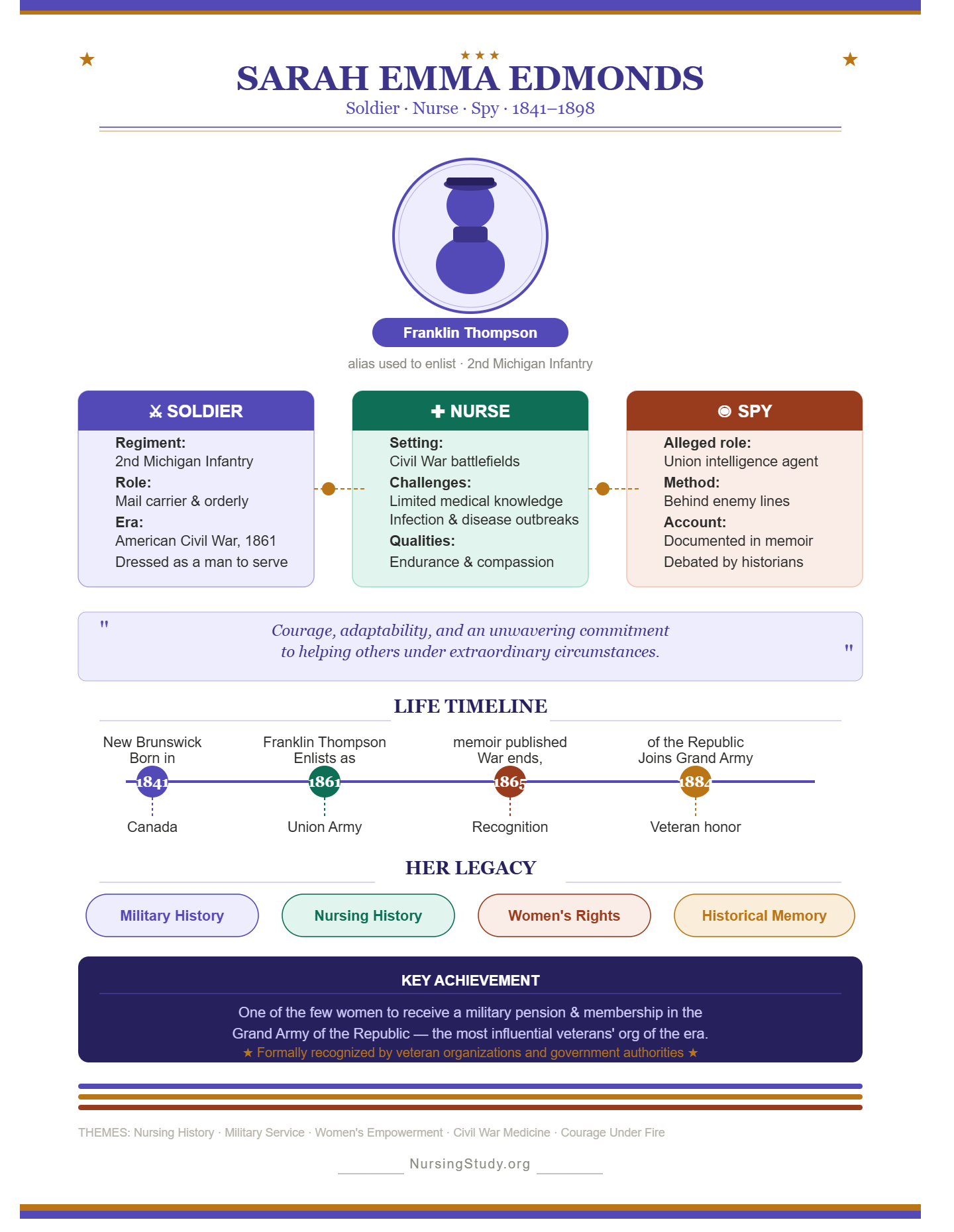
Sarah Emma Edmonds: The Spy Who Served as Franklin Thompson in the American Civil War
The history of nursing is filled with individuals whose contributions extended far beyond traditional caregiving roles. While many nursing pioneers are remembered for advancing healthcare practices, others left their mark through service in times of conflict, demonstrating courage, adaptability, and an unwavering commitment to helping others under extraordinary circumstances. One such figure is Sarah Emma Edmonds, a woman whose remarkable life intersected with military service, nursing, and espionage during the American Civil War. Her experiences offer a unique window into the realities of wartime healthcare, the challenges faced by caregivers on nineteenth-century battlefields, and the determination required to overcome social barriers in pursuit of service.
Born in December 1841 in New Brunswick, Sarah Emma Edmonds lived during an era when opportunities available to women were often limited by social expectations and legal restrictions. Yet her life would take an extraordinary path that differed dramatically from those of most women of her generation. After leaving her home in British North America and establishing a new life in the U.S., she adopted identities that enabled her to pursue opportunities unavailable to women at the time. Eventually becoming known as Franklin Thompson, and later Franklin Flint Thompson, she entered the ranks of the Union Army during one of the most significant conflicts in American history.
The story of Sarah Emma Edmonds is remarkable because it encompasses several distinct yet interconnected roles. Historical accounts portray her as:
- A civil war soldier who served with the 2nd Michigan Infantry.
- A mail carrier responsible for delivering communications between military units.
- A caregiver who assisted wounded soldiers during military campaigns.
- A field nurse Sarah Edmonds whose experiences reflected the harsh realities of wartime medicine.
- A reported spy in the Union Army who allegedly gathered intelligence while operating behind enemy lines.
These diverse responsibilities make her one of the most intriguing individuals associated with the Civil War era. Unlike many historical figures who are remembered for a single accomplishment, Sarah Emma Edmonds is notable for the breadth of her service and the unusual circumstances under which that service occurred.
To appreciate the significance of her contributions, it is important to understand the conditions that existed when the Civil War began in 1861. Medical knowledge was still developing, infection control practices were limited, and military hospitals frequently struggled to accommodate the overwhelming number of casualties generated by the war. Many of the conflict’s major engagements became some of the bloodiest battles of the Civil War, producing thousands of injured soldiers who required immediate care. Nurses, volunteers, and medical personnel often worked under extremely difficult conditions, treating wounds, managing disease outbreaks, and providing comfort to soldiers facing uncertain outcomes.
Within this challenging environment, Sarah Emma Edmonds reportedly performed duties that required both physical endurance and emotional resilience. Whether caring for patients, carrying messages, traveling with military units, or undertaking assignments that allegedly involved espionage, she operated in circumstances where failure could result in severe consequences. Her decision to serve while dressed as a man also highlights the significant social obstacles women faced during the nineteenth century. By adopting a male disguise and assuming the name Franklin Thompson, she gained access to military service at a time when women were prohibited from enlisting as soldiers.
The historical importance of Sarah Emma Edmonds extends beyond her wartime experiences. Following the conflict, she became one of the few women associated with military service to receive formal recognition from veteran organizations and government authorities. Her later life involved efforts to secure acknowledgment for her contributions, ultimately leading to a military pension and acceptance into the Grand Army of the Republic, one of the most influential veterans’ organizations of the era. These achievements reflected the respect she earned from many fellow soldiers who had served alongside her during the war.
Another reason Sarah Emma Edmonds continues to attract scholarly attention is the publication of her memoir, which documented her wartime experiences and helped shape public understanding of her life. The memoir contains detailed accounts of military service, nursing activities, and alleged intelligence missions. However, historians have long debated the accuracy of certain claims contained within the narrative. As a result, the life of Sarah Emma Edmonds serves not only as a compelling historical story but also as an important case study in evaluating historical evidence, personal recollections, and the complexities of memory in reconstructing the past.
Several themes make her story particularly significant:
- Military History – Her service provides insight into the daily experiences of Union soldiers and support personnel.
- Nursing History – Her caregiving activities illustrate the challenges faced by individuals who cared for the sick and injured during wartime.
- Women’s History – Her adoption of a male identity demonstrates how some women navigated social restrictions in the nineteenth century.
- Historical Memory – The debates surrounding her memoir reveal how historians assess evidence and interpret historical narratives.
- Leadership and Service – Her experiences highlight qualities such as courage, perseverance, adaptability, and dedication to others.
This article examines the extraordinary life of Sarah Emma Edmonds, tracing her journey from her early years in New Brunswick to her service as Franklin Thompson during the American Civil War. It explores her experiences as a soldier, nurse, and alleged spy, investigates the historical evidence surrounding her wartime activities, and analyzes the legacy she left behind. Through this exploration, readers gain a deeper understanding of a woman whose story continues to occupy a unique place in the histories of nursing, military service, and American society.
Struggling with complex nursing topics?
We’ll simplify them into clear, concise, and professional assignments.
Sarah Emma Edmonds’ Early Life and Escape from an Arranged Marriage
The extraordinary story of Sarah Emma Edmonds did not begin on the battlefields of the American Civil War. Long before she became known as Franklin Thompson, served in the Union Army, or gained recognition through her memoir, she was a young woman growing up in rural Canada under circumstances that profoundly shaped her character and future decisions. Understanding the early years of Sarah Emma Edmonds provides important context for many of the choices she would later make, including her decision to leave home, assume new identities, and pursue a life that defied the expectations placed upon women during the nineteenth century.
The experiences of Sarah Emma Edmonds during her youth reveal themes that would remain central throughout her life: independence, resilience, determination, and a willingness to challenge societal norms. These qualities became evident long before she entered military service and help explain how she eventually transformed herself into one of the most fascinating figures associated with the Civil War era.
Childhood and Family Life in New Brunswick
Sarah Emma Edmonds was born in December 1841, making her one of many children raised in a farming family in what is now Canada. Historical records indicate that Edmonds was born in 1841 in New Brunswick, a British colony that was largely rural during the mid-nineteenth century. She spent her early years on a farm near Magaguadavic Lake, an area characterized by forests, farmland, and small agricultural communities.
Growing up in rural New Brunswick required hard work from every member of a household. Families depended heavily on farming, and children were expected to contribute to daily tasks from an early age. As a result, the young Sarah Emma Edmonds became familiar with the physical demands of rural life, developing endurance and self-reliance that would later prove valuable during military service.
Accounts of her childhood suggest that she grew up with her sisters in a strict household where traditional gender roles were strongly enforced. During the nineteenth century, daughters were generally expected to prepare for marriage, domestic responsibilities, and family life. Educational opportunities for girls were often limited, and many families viewed sons as more valuable because they could inherit property and contribute directly to agricultural production.
Several biographical accounts indicate that Sarah Emma Edmonds experienced a difficult relationship with her father. According to her later writings, he preferred having sons and held rigid views regarding the roles women should occupy in society. While historians acknowledge that some details originate primarily from her later memoir, there is broad agreement that her family environment was challenging and influenced her desire for independence.
The social environment of rural New Brunswick during the 1840s and 1850s was one in which personal choices, especially for young women, were often constrained by family expectations. Marriage was commonly viewed not only as a personal relationship but also as an economic arrangement that could benefit families and strengthen community ties. It was within this cultural context that one of the most significant events of Sarah Emma Edmonds’ early life unfolded.
Leaving Home and Beginning a New Identity
As Sarah Emma Edmonds entered adolescence, she faced increasing pressure regarding her future. According to historical accounts and her own writings, her father sought to arrange a marriage for her with a man she did not wish to marry. This proposed arranged marriage became a turning point that altered the course of her entire life.
Rather than accept a future she did not choose, Sarah Emma Edmonds made the bold decision to leave home. Many historical narratives describe how she fled home to escape the planned union, effectively choosing uncertainty over a life she believed would limit her freedom and ambitions. In this sense, her departure represented far more than an effort to escape an arranged marriage; it was an assertion of personal independence in an era when women possessed relatively few legal or social avenues for self-determination.
The decision was not without risk. A young woman traveling alone in the mid-nineteenth century faced numerous challenges, including economic hardship, limited employment opportunities, and concerns about personal safety. Nevertheless, Edmonds fled her family home and began building a new life for herself.
One of the first steps in this transformation involved creating a new identity. Historical accounts indicate that she changed her last name, adopting the surname Edmonds and gradually establishing herself as Sarah Emma Edmonds. Some biographers suggest that she altered her identity in part to avoid being located by family members, while others note that adopting a new name allowed her to distance herself from the restrictions of her previous life.
This period also introduced a pattern that would later define much of her life: the strategic use of alternative identities. Before becoming known as Franklin Thompson, Sarah Emma Edmonds reportedly learned how appearance, clothing, and presentation could influence how society perceived an individual. These early experiences likely contributed to her later ability to navigate different social environments and assume roles that were typically reserved for men.
To support herself financially, Sarah Emma Edmonds worked in occupations uncommon for many women of the period. One notable role involved selling Bibles and religious literature. During her travels as a salesperson, she reportedly adopted the persona of an Irish peddler, enabling her to move more freely and interact with potential customers in different communities. This experience required confidence, communication skills, and adaptability—qualities that would become increasingly important in the years ahead.
Several factors made this stage of her life particularly significant:
- It demonstrated her willingness to challenge social expectations.
- It marked the beginning of her practice of using alternative identities.
- It provided valuable experience traveling independently.
- It strengthened her ability to communicate with diverse groups of people.
- It helped develop the resilience that later characterized her military service.
The influence of popular culture may also have played a role in shaping her outlook. Some historians have noted that Sarah Emma Edmonds was familiar with the popular book Fanny Campbell, a fictional adventure story featuring a courageous heroine who adopts male attire and embarks on daring exploits. Although it is impossible to determine the extent of the book’s influence, the story reflected themes of independence and unconventional gender roles that would later appear in Edmonds’ own life.
By the late 1850s, Sarah Emma Edmonds had successfully established herself apart from her family and the expectations that had once constrained her future. The young woman who had left New Brunswick to escape an arranged marriage had already demonstrated remarkable determination and adaptability. She had created opportunities for herself, traveled independently, and learned to navigate a world that often limited women’s choices.
These formative experiences laid the foundation for the next chapter of her life. The skills she developed while living independently, adopting alternative identities, and overcoming personal adversity would later enable Sarah Emma Edmonds to take an even more extraordinary step when the American Civil War erupted. As the conflict expanded and the demand for military volunteers increased, she would once again reinvent herself—this time by adopting the identity that would make her famous in history: Franklin Thompson.
Sarah Emma Edmonds and the Creation of Franklin Thompson
The transformation of Sarah Emma Edmonds into Franklin Thompson represents one of the most remarkable identity changes associated with the American Civil War. While many individuals contributed to the war effort through conventional means, Sarah Emma Edmonds took a path that was highly unusual for the period. By assuming a male identity and entering military service, she crossed social boundaries that nineteenth-century society rigidly enforced. Her decision was not simply an act of adventure; rather, it reflected a combination of personal independence, patriotic motivation, practical necessity, and a desire to participate directly in events that would shape the future of the nation.
To understand how Sarah Emma Edmonds became known as Franklin Thompson, it is important to examine both the social realities of the era and the circumstances surrounding her enlistment. Her adoption of a male persona was a calculated decision that required careful preparation, constant vigilance, and a willingness to live under the threat of discovery.
Adopting a Male Disguise
During the mid-nineteenth century, women in North America faced significant legal and social restrictions. Military service was considered exclusively male, and women were generally expected to contribute to society through domestic work, caregiving, teaching, or other socially accepted occupations. As a result, any woman who wished to serve as a soldier had few options other than concealing her identity.
For Sarah Emma Edmonds, adopting a male disguise was not an entirely new concept. Before the war, she had already demonstrated an ability to create alternative identities while supporting herself independently. Her experience as an Irish peddler and her travels while selling Bibles had taught her how clothing, mannerisms, and presentation could influence how others perceived her. These earlier experiences provided valuable preparation for the much greater challenge that lay ahead.
When the Civil War began in 1861, patriotic enthusiasm swept across many communities in the northern states. Thousands of men volunteered for military service, motivated by a variety of factors including patriotism, economic opportunity, a sense of duty, and a desire for adventure. Historical accounts suggest that Sarah Emma Edmonds felt a strong desire to contribute to the war effort. However, because women could not officially enlist as combat soldiers, she chose a different path.
To enter military service, Sarah Emma Edmonds carefully altered her appearance and behavior. She effectively became known as Franklin, presenting herself as a young man capable of fulfilling military duties. This transformation required much more than changing clothing. Maintaining a male identity involved:
- Modifying speech patterns and mannerisms.
- Adopting male dress and grooming habits.
- Concealing physical characteristics that might reveal her sex.
- Participating in daily military activities without attracting suspicion.
- Living continuously among male soldiers.
The success of this transformation illustrates the determination and discipline that characterized Sarah Emma Edmonds throughout her life.
Some accounts associated with her later memoir describe the use of additional methods to support her various wartime identities. Among the more famous stories is the claim that she used silver nitrate and silver nitrate to dye her skin when assuming certain espionage-related disguises. While historians continue to debate some of these specific claims, such stories demonstrate the extent to which her narrative became linked with themes of concealment, adaptation, and personal courage.
The adoption of a male identity also reflected broader social realities. Women who wished to participate directly in military operations often found themselves forced to circumvent existing rules. By becoming Franklin Thompson, Sarah Emma Edmonds gained access to opportunities that would otherwise have remained closed to her. In doing so, she joined a small but significant group of women who reportedly enlisted as a male in order to serve during the war.
Her decision carried considerable risks. If she had been discovered as a woman, she could have faced public humiliation, expulsion from military service, or other consequences. Nevertheless, she accepted these risks and continued with her plan.
Enlistment in the Union Army as Franklin Flint Thompson
After establishing her male identity, Sarah Emma Edmonds took the next critical step: joining the military. Under the name Franklin Thompson, and more formally Franklin Flint Thompson, she enlisted in the Union Army shortly after the outbreak of hostilities.
Her enlistment occurred during a period when the federal government was rapidly expanding military forces to meet the demands of war. The civil war union effort depended heavily on volunteers, and recruiting officers often processed large numbers of applicants in a relatively short period. These conditions may have contributed to the ability of some women, including Sarah Emma Edmonds, to enter military service while concealing their identities.
As Franklin Flint Thompson, she was assigned to Company F, commonly referred to as F of the 2nd Michigan, within the 2nd Michigan Infantry. This regiment became one of the many volunteer units organized to support the Union cause during the conflict.
The enlistment of Sarah Emma Edmonds marked a profound turning point in her life. No longer simply a young woman who had left New Brunswick in search of independence, she had now become part of a military organization engaged in a national conflict. Her decision demonstrated an extraordinary willingness to embrace hardship and uncertainty in pursuit of a larger purpose.
Life in the army was demanding from the very beginning. New recruits were expected to:
- Learn military discipline and regulations.
- Participate in drills and training exercises.
- Adapt to camp life and communal living conditions.
- Endure long marches and difficult physical labor.
- Prepare for the possibility of combat.
For Sarah Emma Edmonds, these challenges were compounded by the constant need to protect her secret identity. Every interaction with other soldiers carried the possibility that her true identity could be exposed. Yet historical records indicate that she successfully maintained her role as Franklin Thompson for an extended period, earning the trust and respect of many of her comrades.
The significance of her enlistment extends beyond its novelty. It highlights the determination of individuals who sought to contribute to the war effort despite legal and social barriers. While thousands of men enlisted openly, Sarah Emma Edmonds had to navigate a far more complicated path in order to serve. Her successful integration into the military demonstrates both personal resourcefulness and the limitations of contemporary assumptions regarding gender roles.
The creation of Franklin Thompson ultimately became one of the defining elements of the story of Sarah Emma. What began as a carefully constructed identity soon evolved into a military career that would include service with the 2nd Michigan Infantry, participation in major campaigns, work as a mail carrier, care for wounded soldiers, and later claims that she became a spy operating behind enemy lines. These experiences would transform Sarah Emma Edmonds from an ordinary volunteer into one of the most discussed and debated figures of the Civil War era.
Military Service in the Union Army
After adopting the identity of Franklin Thompson and successfully entering military service, Sarah Emma Edmonds began a new chapter that would define much of her historical legacy. While her later reputation would be shaped by stories of espionage and nursing, her primary role during the early years of the conflict was that of a member of the Union Army. Like thousands of other volunteers who enlisted after the Civil War began in 1861, she was expected to endure the hardships of military life, obey orders, participate in campaigns, and support the broader war effort.
The military experience of Sarah Emma Edmonds is particularly significant because it illustrates the realities faced by ordinary soldiers during the American Civil War. Contrary to romanticized portrayals of war, military service often involved long periods of waiting, difficult marches, inadequate shelter, disease outbreaks, poor sanitation, and constant uncertainty. Soldiers frequently spent far more time in camps and on the move than they did in combat. For Sarah Emma Edmonds, these challenges were compounded by the need to continuously protect the secret that she was a woman serving under the identity of Franklin Flint Thompson.
Her ability to function successfully within a military environment for an extended period demonstrates remarkable adaptability and resilience, qualities that would later become evident in her nursing and wartime support activities.
Life and Duties as a Soldier
The daily life of a civil war soldier was demanding and often exhausting. Upon entering military service, Sarah Emma Edmonds, serving under the name Franklin Thompson, became subject to the same expectations and responsibilities as the men around her.
A typical soldier’s duties included:
- Participating in military drills.
- Learning battlefield formations and tactics.
- Standing guard duty.
- Maintaining weapons and equipment.
- Constructing camps and defensive positions.
- Performing marches over long distances.
- Carrying supplies and military equipment.
- Following strict military regulations.
For Sarah Emma Edmonds, fulfilling these responsibilities required more than physical endurance. She also had to maintain her male identity at all times. Every aspect of camp life—from sleeping arrangements to personal hygiene—posed potential risks. Any mistake could have resulted in her being discovered as a woman, which would likely have ended her military career.
Historical records indicate that Sarah Emma Edmonds earned the respect of many fellow soldiers through her reliability and willingness to perform assigned duties. Unlike some individuals who enlisted primarily for adventure, she appears to have taken her responsibilities seriously and worked to contribute meaningfully to the war effort.
One of her notable responsibilities was her role as a mail carrier. During the Civil War, communication was critical to military operations. Soldiers depended on letters from home to maintain morale, while commanders relied on dispatches and official correspondence to coordinate movements and strategies.
As a mail carrier, Sarah Emma Edmonds was responsible for:
- Delivering military dispatches.
- Transporting official communications between units.
- Carrying personal correspondence for soldiers.
- Assisting in maintaining communication networks within military operations.
This duty required trustworthiness, mobility, and the ability to travel through potentially dangerous areas. The position also provided opportunities to observe military operations beyond the immediate confines of camp life.
The experiences of Sarah Emma Edmonds illustrate an important aspect of Civil War military service: not every contribution occurred on the front lines. Support roles such as communication, logistics, transportation, and caregiving were essential to military success. Soldiers who performed these tasks played a vital role in sustaining the effectiveness of military units throughout the conflict.
Service with the 2nd Michigan Infantry
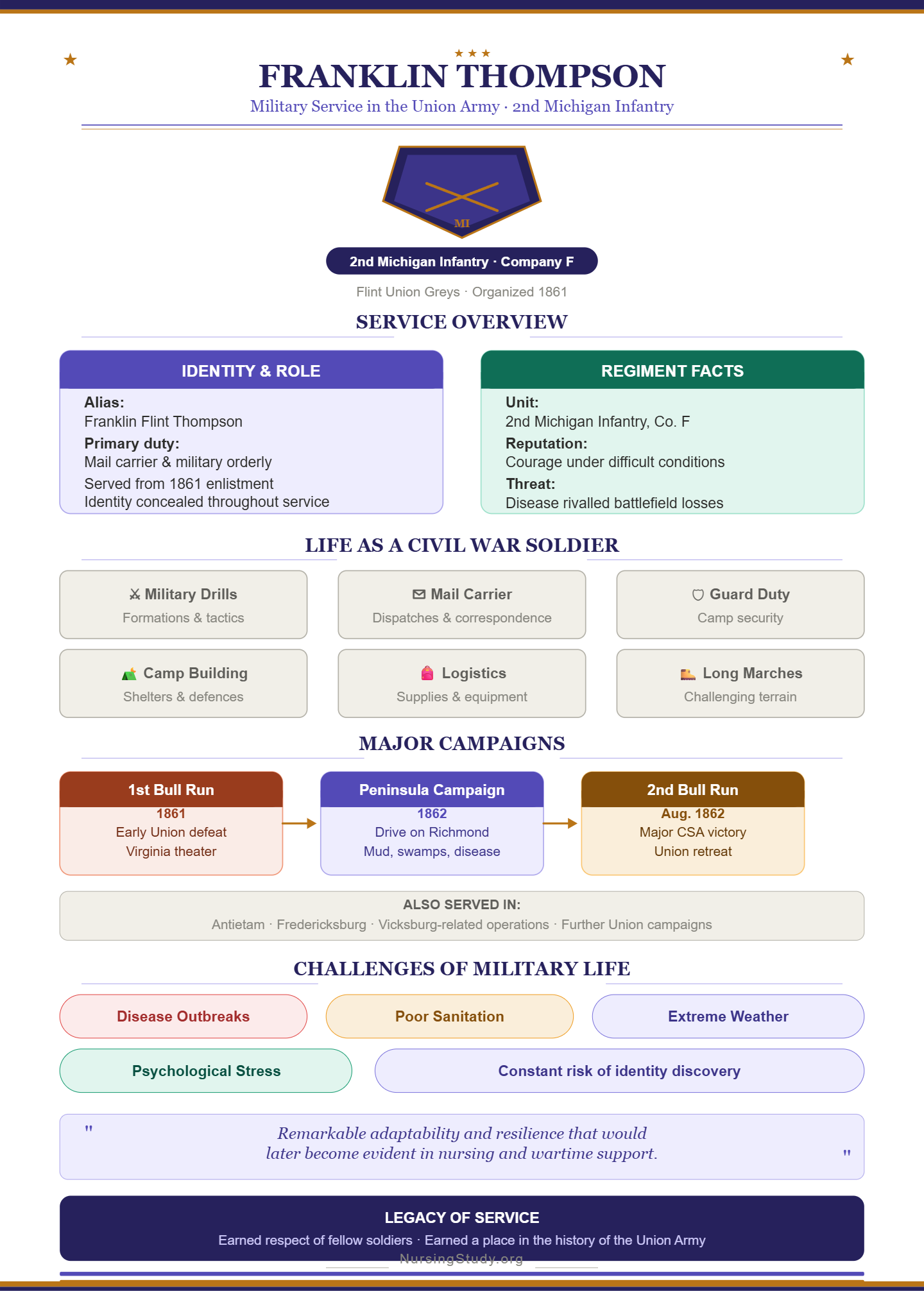
The military career of Sarah Emma Edmonds was closely tied to the 2nd Michigan Infantry, one of the volunteer regiments that served in the Union Army throughout much of the war. She enlisted in Company F, often referred to as F of the 2nd Michigan, under the identity of Franklin Flint Thompson. The company itself was known as the Flint Union Greys, a name reflecting its origins in Flint, Michigan.
The 2nd Michigan Infantry was organized in 1861 and went on to participate in numerous major campaigns of the war. The regiment gained a reputation for courage and persistence, often serving in difficult conditions and suffering substantial casualties over the course of the conflict.
Being part of the regiment meant that Sarah Emma Edmonds shared in the experiences common to many volunteer soldiers:
- Lengthy marches across challenging terrain.
- Exposure to extreme weather conditions.
- Limited food supplies and inconsistent living conditions.
- Constant threats from disease.
- The psychological stress associated with military service.
The regiment’s history reveals the enormous sacrifices made by the soldiers of the Civil War. Disease claimed many lives, often rivaling or exceeding battlefield casualties. Unsanitary camps, contaminated water, and limited medical knowledge contributed to widespread illness among troops. These conditions later influenced Sarah Emma Edmonds’ understanding of military healthcare and would become particularly relevant during her work among sick and injured soldiers.
Military service also fostered strong bonds among comrades. Living, marching, and fighting together created relationships that often lasted for decades after the war ended. The support Sarah Emma Edmonds later received from many fellow soldiers suggests that she had earned considerable respect within the regiment despite the secret she carried throughout her service.
Participation in Major Civil War Campaigns
One of the most significant aspects of Sarah Emma Edmonds’ military career was her participation in several important campaigns and battles of the American Civil War. Historical records place her regiment in numerous military operations that shaped the course of the conflict.
Among the campaigns associated with her service was the Peninsula Campaign, an ambitious Union effort launched in 1862 to capture the Confederate capital of Richmond, Virginia. Under the command of General George B. McClellan and the Army of the Potomac, Union forces advanced up the Virginia Peninsula in hopes of ending the war quickly. Although the campaign initially showed promise, Confederate resistance eventually forced Union forces to withdraw.
For soldiers such as Sarah Emma Edmonds, the Peninsula Campaign provided firsthand exposure to the realities of large-scale military operations. Troops faced:
- Difficult marches through mud and swamps.
- Exposure to disease-causing environments.
- Limited access to adequate shelter.
- Continuous logistical challenges.
- Frequent encounters with enemy forces.
The regiment also participated in the Battle of Bull Run, including the Battle of Second Manassas, also known as the Second Battle of Bull Run, one of the most important Confederate victories of the war. The battle occurred in August 1862 and resulted in a significant Union defeat that altered military planning in the eastern theater.
The battle of Second Manassas demonstrated the brutal nature of Civil War combat. Large armies maneuvered across northern Virginia, and intense fighting resulted in thousands of casualties. The Confederate victory forced Union troops to retreat and opened the way for further Confederate operations.
In addition to these engagements, records associated with the 2nd Michigan Infantry indicate participation in several other major operations, including:
- The First Battle of Bull Run.
- Antietam.
- Fredericksburg.
- Vicksburg-related operations.
- Later campaigns involving the Union war effort.
Many of these engagements rank among the battles of the Civil War that produced substantial casualties and tested the endurance of military personnel. Soldiers routinely witnessed severe injuries, death, and suffering on a scale unprecedented in North American history. Some battles became recognized as one of the bloodiest battles of the conflict, leaving lasting physical and emotional impacts on participants.
For Sarah Emma Edmonds, these campaigns provided experiences that extended far beyond combat. They exposed her to military logistics, battlefield medicine, communication systems, and the hardships faced by ordinary soldiers. These experiences would later influence her work with wounded soldiers of the army, contribute to the stories recorded in her memoir, and help establish her reputation as one of the most remarkable individuals associated with the Civil War era.
By the time her service progressed into later stages of the conflict, Sarah Emma Edmonds had already demonstrated an extraordinary ability to function within the demanding environment of the Union Army. Serving as Franklin Thompson, she successfully navigated military life, participated in significant campaigns, and earned a place within the history of one of the war’s most active regiments. Her military experiences would soon expand beyond the role of soldier, leading her into responsibilities that included nursing care and the activities that later contributed to her reputation as a wartime spy.
Sarah Emma Edmonds as a Nurse and Spy
Among the many individuals who served during the American Civil War, few have generated as much historical interest as Sarah Emma Edmonds. While her military service as Franklin Thompson was remarkable in its own right, much of her enduring legacy stems from her reported work as both a caregiver and a wartime intelligence operative. These dual roles placed her in situations that required courage, adaptability, and a willingness to face extraordinary dangers.
For historians, the story of Sarah Emma Edmonds is particularly fascinating because it combines two critical aspects of the Civil War experience:
- The essential work performed by nurses and caregivers who treated the sick and injured.
- The intelligence-gathering activities that military leaders relied upon to make strategic decisions.
Although some of the espionage stories associated with Sarah Emma Edmonds remain the subject of historical debate, there is substantial evidence supporting her service in military and healthcare-related roles. Her experiences provide valuable insight into the challenges of wartime nursing and the dangers associated with military intelligence operations.
Field Nursing During the American Civil War
The Civil War transformed healthcare in North America. Before the conflict, medical systems were relatively underdeveloped, and few people anticipated the enormous number of casualties the war would produce. As battles grew larger and more destructive, military hospitals struggled to manage the constant flow of injured and ill patients.
Within this environment, Sarah Emma Edmonds reportedly spent significant time assisting wounded soldiers, making her story especially relevant to the history of nursing. Accounts contained in her memoir describe her involvement in caring for soldiers suffering from battle injuries, disease, exhaustion, and emotional trauma. While serving with military units, she witnessed firsthand the devastating effects of war on the human body.
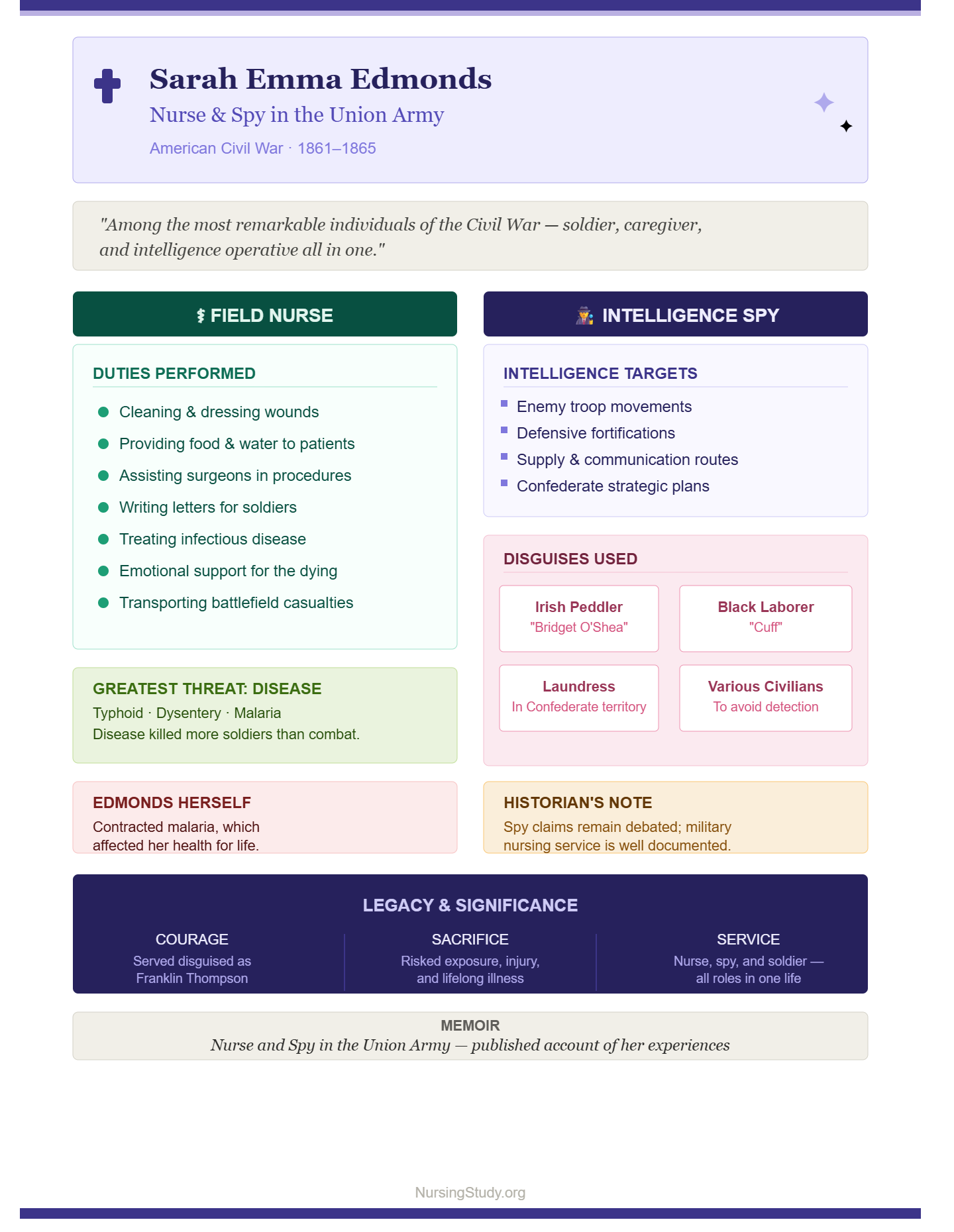
The duties commonly performed by Civil War caregivers included:
- Cleaning and dressing wounds.
- Providing food and water to injured patients.
- Assisting surgeons during medical procedures.
- Writing letters for hospitalized soldiers.
- Monitoring patients suffering from infectious diseases.
- Offering emotional support to dying soldiers.
- Helping transport casualties from battlefields to hospitals.
Historical accounts associated with field nurse Sarah Edmonds emphasize that wartime nursing required both physical endurance and emotional resilience. Unlike modern hospitals, Civil War medical facilities often lacked adequate sanitation, sufficient supplies, and effective treatments for infection. Nurses frequently worked in overcrowded wards where disease spread rapidly.
One of the greatest challenges facing military healthcare workers was the prevalence of illness. Diseases such as typhoid fever, dysentery, measles, pneumonia, and malaria claimed thousands of lives throughout the conflict. In many instances, disease killed more soldiers than combat itself. Caregivers therefore found themselves treating both battlefield injuries and widespread epidemics.
For example, after major battles, hospitals often received hundreds or even thousands of casualties within a short period. Medical staff had to prioritize treatment according to the severity of injuries. Soldiers suffering from gunshot wounds, amputations, infections, and severe blood loss required immediate attention. Under these circumstances, individuals such as Sarah Emma Edmonds played an important role in supporting the care of patients and helping maintain hospital operations.
Her experiences also highlight an important aspect of nineteenth-century nursing: caregiving frequently extended beyond physical treatment. Many soldiers were far from home and separated from family members. Nurses often served as companions, listeners, and advocates for patients during some of the most difficult moments of their lives. This human dimension of nursing remains a defining characteristic of the profession today.
Intelligence-Gathering and Spy Activities
The reputation of Sarah Emma Edmonds as a wartime spy largely originates from stories presented in her published memoir, Nurse and Spy in the Union Army. In this work, she claimed that she became a spy and participated in intelligence missions for the Union Army, gathering information from Confederate-controlled territory and reporting it to Union authorities.
According to her account, these assignments required her to travel behind enemy lines using many disguises. The various identities she described demonstrate both creativity and a sophisticated understanding of how appearance could influence social interactions.
Among the disguises described in her narrative were:
- An Irish peddler named Bridget O’Shea.
- A Black laborer known as Cuff.
- A laundress working within Confederate-controlled areas.
- Various civilian identities designed to avoid suspicion.
One of the most frequently discussed stories involves her claim that she used silver nitrate and silver nitrate to dye her skin while portraying a Black man during an intelligence mission. According to her account, this disguise enabled her to move through Confederate territory without revealing her true identity. Historians continue to debate the accuracy of this and several other espionage narratives, but the stories became central elements of her public image after the war.
The purpose of wartime intelligence gathering was straightforward: obtain information that could provide a military advantage. Intelligence operatives attempted to collect data regarding:
- Troop movements.
- Defensive fortifications.
- Supply routes.
- Communication networks.
- Strategic plans of opposing forces.
If the accounts in her memoir are accurate, Sarah Emma Edmonds used observation, conversation, and infiltration to obtain information useful to Union commanders. However, modern historians note that little official documentation has been found to verify many of the specific spy missions she described. As a result, scholars generally distinguish between her confirmed military service and the espionage claims that remain difficult to prove conclusively.
Nevertheless, even historians who question aspects of her spy stories acknowledge her documented service as Franklin Thompson and recognize her willingness to place herself in dangerous situations during the war.
Risks, Challenges, and Wartime Experiences
Whether serving as a soldier, caregiver, courier, or alleged intelligence operative, Sarah Emma Edmonds faced significant risks throughout the war. Her experiences illustrate the numerous dangers confronting those who served in military environments during the nineteenth century.
One of the greatest threats was the possibility that her true identity would be discovered. Maintaining the identity of Franklin Thompson required constant vigilance. Everyday activities that seemed routine for other soldiers carried unique dangers for Sarah Emma Edmonds. Medical examinations, shared living quarters, and battlefield injuries all increased the risk of exposure.
At the same time, she faced the same dangers encountered by other members of the Union Army, including:
- Combat injuries.
- Disease outbreaks.
- Harsh weather conditions.
- Food shortages.
- Physical exhaustion.
- Psychological stress.
Military campaigns exposed soldiers to extreme conditions for extended periods. During operations involving the Army of the Potomac, troops often marched for days, slept outdoors, and endured difficult terrain. These hardships affected both physical health and morale. Many soldiers experienced chronic illness long after their service ended.
Disease proved particularly dangerous. Historical records indicate that Sarah Emma Edmonds eventually suffered from malaria, an illness that contributed significantly to her departure from military service and reportedly affected her health for the rest of her life. Some accounts suggest that fear of being identified while receiving treatment influenced her decisions regarding medical care.
If she truly served as a spy in the Union Army, the dangers would have been even greater. Intelligence operatives captured by the Confederate Army risked imprisonment or execution. Operating under false identities in hostile territory required exceptional composure and resourcefulness. Even a minor mistake could have fatal consequences.
The wartime experiences of Sarah Emma Edmonds ultimately reveal the complexity of Civil War service. She occupied multiple roles during a period of national crisis, adapting to circumstances that demanded courage, endurance, and sacrifice. Whether caring for patients in overcrowded hospitals, assisting wounded soldiers of the army, carrying messages, or participating in the activities described in her memoir, she demonstrated a commitment to service that contributed significantly to her enduring place in American military and nursing history.
Illness, Departure from Service, and Revelation of Her Identity
The military career of Sarah Emma Edmonds was marked by determination, resilience, and an unwavering commitment to service. However, like thousands of other members of the Union Army, she eventually faced an enemy that was often more dangerous than battlefield combat: disease. The Civil War exposed soldiers to unsanitary camps, contaminated water, inadequate nutrition, and harsh environmental conditions that contributed to widespread illness. In many cases, disease claimed more lives than enemy gunfire.
For Sarah Emma Edmonds, declining health ultimately brought an end to her service as Franklin Thompson. The circumstances surrounding her illness, departure from the army, and eventual exposure of her identity form one of the most important chapters in her life story. These events not only altered her personal future but also influenced how historians, veterans, and the public would later remember her contributions during the American Civil War.
Health Challenges and Leaving the Army
By 1863, after nearly two years of military service, Sarah Emma Edmonds had participated in numerous campaigns and endured the same hardships faced by other members of the 2nd Michigan Infantry. Continuous marching, exposure to the elements, inadequate sanitation, and the physical demands of military life took a toll on soldiers throughout the conflict.
One of the most serious health threats during the Civil War was malaria, a disease that affected thousands of troops operating in regions where mosquitoes were prevalent. Historical records indicate that Sarah Emma Edmonds contracted malaria while serving in the Union Army. The illness caused debilitating symptoms such as:
- High fevers.
- Severe chills.
- Extreme fatigue.
- Muscle weakness.
- Recurring episodes of sickness.
- Long-term health complications.
For an ordinary soldier, the expected course of action would have been straightforward: report to a military medical facility and receive treatment. For Sarah Emma Edmonds, however, the situation was far more complicated.
As Franklin Thompson, she had successfully concealed her identity for an extended period. Seeking treatment at a military hospital would likely have required physical examinations that could reveal she was a woman. Historical accounts suggest that she feared her true identity would be discovered if she entered a military medical facility. Rather than take that risk, she chose to leave military service.
This decision had significant consequences. Military records eventually listed Franklin Thompson as a deserter. From an administrative standpoint, army officials were unaware of the circumstances behind the disappearance. To them, a soldier had abandoned service without authorization. Yet from the perspective of Sarah Emma Edmonds, remaining in the army while seriously ill risked exposing the secret she had worked so hard to protect.
The decision illustrates the unique challenges faced by women who enlisted as a male during the Civil War. Unlike male soldiers, they often had to weigh medical needs against the danger of exposure. In the case of Sarah Emma Edmonds, protecting her identity ultimately took precedence over remaining in military service.
After leaving the army, she reportedly sought treatment outside the military system and gradually recovered. However, the illness appears to have had lasting effects, and some accounts suggest that health problems related to her wartime service affected her for the rest of her life
Discovery That Franklin Thompson Was Sarah Emma Edmonds
The revelation that Franklin Thompson was actually Sarah Emma Edmonds did not occur dramatically on a battlefield or through an official military investigation. Instead, the truth emerged gradually after her departure from service.
When she left the army because of illness, many of the men who had served alongside Franklin Thompson had no idea that their comrade was a woman. For a period of time, military authorities simply regarded Thompson as another soldier who had disappeared from the ranks.
After recovering, Sarah Emma Edmonds resumed life as a woman rather than returning to the military under her male identity. She later devoted her efforts to other forms of service, including work associated with the United States Christian Commission, where she continued assisting those affected by the war. This transition marked the end of her military career as Franklin Thompson and the beginning of a new chapter in her life.
As years passed, her wartime experiences became increasingly public. The publication of her memoir introduced many readers to the remarkable story of a woman who had served under a male identity during the war. Through her writings and later public appearances, it became widely known that Franklin Thompson and Sarah Emma Edmonds were the same person.
Interestingly, there is evidence that at least some individuals may have suspected the truth before it became public knowledge. One account involving fellow soldier Jerome Robbins suggests that he sensed something unusual about Thompson and later learned the secret while maintaining confidentiality during the war. Such accounts indicate that although her disguise was highly effective, a few observant individuals may have noticed inconsistencies that raised questions.
The fact that Sarah Emma Edmonds managed to maintain her identity for such a long period remains remarkable. She successfully lived, worked, marched, and served among male soldiers while preserving her secret throughout much of her military career. This achievement required extraordinary discipline and constant attention to detail.
Reactions from Fellow Soldiers and Military Authorities
One of the most remarkable aspects of the story of Sarah Emma is the reaction she received once her identity became known. In many situations during the nineteenth century, individuals who violated social norms faced harsh criticism or public ridicule. Yet the response to Sarah Emma Edmonds was often surprisingly supportive.
Many of her fellow soldiers judged her not by her gender but by her conduct and performance as a soldier. Those who had served with Franklin Thompson remembered a dependable comrade who had shared the hardships of military life, participated in campaigns, and contributed to the success of the regiment. As a result, numerous veterans expressed admiration for her service even after learning the truth.
Former members of Company F played a particularly important role in defending her reputation. When Sarah Emma Edmonds later sought official recognition for her service, many veterans provided statements supporting her claims. They attested to her character, courage, and dedication, helping demonstrate that she had served honorably despite the circumstances surrounding her departure from the army.
The support of these veterans proved crucial because her military record still contained the serious charge of desertion. Over time, however, evidence regarding her service and the testimony of former comrades helped change official perceptions. Her supporters argued that her departure was not an act of cowardice or disloyalty but rather the result of extraordinary circumstances involving illness and the need to protect her identity.
The eventual response of military and government authorities reflected this changing view. Decades after the war, efforts were undertaken to correct aspects of her military record. Congress ultimately recognized her service, and she received a pension for her service, becoming one of the few women associated with Civil War military service to obtain such recognition. The desertion charge was later removed, and her contributions were formally acknowledged.
The reactions of both veterans and officials reveal an important aspect of Sarah Emma Edmonds’ legacy. While her service initially challenged the gender expectations of the nineteenth century, many of those who knew her best ultimately evaluated her according to the same standards applied to other soldiers: courage, loyalty, and dedication to duty. Their support ensured that the woman once known as Franklin Thompson would not simply be remembered as someone who concealed her identity, but as an individual whose service earned lasting respect and recognition.
The Sarah Emma Edmonds Memoir and Historical Evidence
The life of Sarah Emma Edmonds is unusual not only because of her wartime experiences but also because much of what is known about her comes from her own published account of the Civil War. Unlike many ordinary soldiers whose stories survive only in military records, letters, or newspaper reports, Sarah Emma Edmonds left behind a detailed personal narrative describing her service. This narrative became one of the most influential sources shaping public understanding of her life and remains central to discussions about her legacy today.
At the same time, the memoir has generated considerable debate among historians. While it provides valuable firsthand insight into the experiences of a woman who served in the Union Army, scholars have questioned the accuracy of some of its most dramatic claims. As a result, the story of Sarah Emma Edmonds offers an important example of how historians evaluate personal narratives, compare them with documentary evidence, and distinguish between verified events and potentially embellished recollections.
Understanding the relationship between the memoir and the historical record is essential for appreciating both the accomplishments of Sarah Emma Edmonds and the challenges involved in interpreting Civil War-era sources.
Key Claims Presented in the Memoir
Following her wartime service, Sarah Emma Edmonds published an account of her experiences. The work first appeared during the war and was later issued under the title Nurse and Spy in the Union Army. The book became highly popular, selling tens of thousands of copies and introducing readers across the country to the remarkable story of a woman who had served as a soldier, nurse, and intelligence operative. Profits from the publication were reportedly donated to organizations assisting veterans and wounded soldiers.
The memoir presents Sarah Emma Edmonds as a woman who overcame extraordinary obstacles in order to serve her adopted country. Throughout the narrative, she portrays herself as motivated by patriotism and duty, famously writing that “patriotism was the true secret” of her success. The book emphasizes sacrifice, courage, and commitment to the Union cause.
Several major claims appear throughout the memoir:
1. Service as Franklin Thompson
The memoir recounts how Sarah Emma Edmonds adopted the name Franklin Thompson and entered the Union Army while dressed as a man. According to her account, she successfully maintained this identity while serving alongside other soldiers throughout multiple campaigns.
2. Nursing and Hospital Work
A significant portion of the narrative describes her experiences caring for sick and injured soldiers. She details visits to military hospitals, interactions with patients, and efforts to assist wounded soldiers following major engagements. The book contains numerous descriptions of suffering, disease, and the emotional challenges faced by wartime caregivers.
3. Espionage Missions
Perhaps the most famous and controversial portions of the memoir involve claims that Sarah Emma Edmonds became a spy and conducted intelligence operations for the Union. She described serving as a spy in the Union Army, traveling behind enemy lines, gathering military information, and using many disguises to avoid detection. These disguises allegedly included:
- An Irish peddler.
- A Black laborer.
- A Southern woman.
- Various civilian identities used to infiltrate Confederate territory.
The memoir portrays these missions as highly dangerous undertakings that required constant deception and courage.
4. Participation in Major Military Campaigns
The narrative also places Sarah Emma Edmonds in numerous military operations, including the Peninsula Campaign, the Battle of Bull Run, and other major events that occurred throughout the war. She describes observing combat, assisting casualties, and witnessing the human cost of conflict firsthand.
Collectively, these claims helped establish the public image of Sarah Emma Edmonds as a soldier, nurse, and spy whose experiences differed dramatically from those of most Civil War participants.
Corroborating Evidence and Historical Records
While historians have questioned certain aspects of the memoir, substantial evidence confirms that many key elements of Sarah Emma Edmonds’ story are historically accurate.
Military records demonstrate that an individual named Franklin Flint Thompson served in Company F of the 2nd Michigan Infantry during the Civil War. This provides strong evidence supporting her claim that she successfully enlisted and served under a male identity.
Additional evidence comes from:
- Regimental records.
- Pension documents.
- Veteran affidavits.
- Congressional records.
- Testimonies from former comrades.
These sources confirm that Sarah Emma Edmonds served in the military and that many fellow soldiers later supported her efforts to obtain official recognition for her service.
Historical records also support several other important aspects of her life:
- She was born in New Brunswick in 1841.
- She left home as a young woman and immigrated to the United States.
- She served with the 2nd Michigan Infantry.
- She later worked with the United States Christian Commission.
- She successfully obtained a military pension decades after the war.
- She gained membership in the Grand Army of the Republic, a rare honor for a woman veteran.
The memoir’s descriptions of nursing activities also align with what historians know about Civil War hospitals and caregiving. Her accounts of treating patients, writing letters for hospitalized soldiers, and witnessing disease outbreaks correspond closely with documented conditions in wartime medical facilities.
Furthermore, historians have found evidence that the book was published relatively close to the events it describes, making it an important primary source despite questions about certain details. The original wartime publication provides valuable insight into how Sarah Emma Edmonds wished her experiences to be understood and remembered.
Debates, Criticisms, and Historical Reliability
Although historians generally accept the core facts of Sarah Emma Edmonds’ military service, they remain divided regarding many of the more dramatic episodes described in her memoir.
The primary source of controversy involves her alleged espionage activities. Modern researchers have struggled to find official military records confirming many of the spy missions she described. As a result, scholars often distinguish between her verified service as Franklin Thompson and the more difficult-to-prove claims regarding intelligence work.
Several factors contribute to historical skepticism:
Lack of Official Documentation
Unlike standard military assignments, intelligence operations frequently generated limited paperwork. However, historians have not located sufficient contemporary records verifying many of the specific missions described in the memoir. This absence of documentation makes independent confirmation difficult.
Possible Exaggeration for a Popular Audience
Civil War memoirs often blended factual events with dramatic storytelling. Publishers and readers favored exciting narratives, and authors sometimes emphasized extraordinary experiences to attract attention. Some historians believe portions of Sarah Emma Edmonds’ account may have been embellished to make the book more appealing to readers.
Questions About Battle Participation
Researchers have identified instances where the timeline presented in the memoir does not perfectly align with military records. For example, some historians question whether Sarah Emma Edmonds was present during certain events exactly as described. These discrepancies have fueled ongoing debates regarding the accuracy of specific episodes.
The Nature of Memory
Another consideration is that personal narratives are shaped by memory. Individuals recalling events years later may unintentionally alter details, merge experiences, or emphasize particular moments. This does not necessarily mean an account is dishonest; rather, it reflects the complexities of human memory and storytelling.
Despite these criticisms, historians generally agree on several important points:
- Sarah Emma Edmonds genuinely served in the Union Army.
- She successfully lived as Franklin Thompson during her military service.
- She participated in the Civil War effort under extraordinarily difficult circumstances.
- Her contributions to military and nursing history are significant regardless of debates surrounding individual espionage stories.
Today, most scholars approach the memoir as a mixture of verified history, personal recollection, and wartime storytelling. Rather than dismissing the work entirely or accepting every claim without question, historians use it alongside military records, government documents, veteran testimony, and other primary sources to construct a more complete picture of Sarah Emma Edmonds’ life. In this way, the memoir remains both a valuable historical document and an enduring subject of scholarly investigation, continuing to shape discussions about one of the most fascinating figures of the American Civil War.
Post-War Life and Recognition
The conclusion of the American Civil War marked the beginning of a new chapter in the life of Sarah Emma Edmonds. Like many veterans, she emerged from the conflict carrying the physical and emotional effects of wartime service. However, unlike most former soldiers, she also faced the challenge of reconciling her military record with the secret identity under which she had served.
The years following the war were characterized by continued service, efforts to obtain official recognition, and increasing public interest in her remarkable experiences. During this period, Sarah Emma Edmonds transitioned from a wartime participant to a recognized veteran whose contributions would eventually be acknowledged by both the government and fellow former soldiers.
Her post-war life demonstrates how individuals who served during the Civil War sought to rebuild their lives while preserving the memory of their wartime experiences. It also highlights the evolving attitudes toward her service as Franklin Thompson, showing how a woman who had once concealed her identity gradually became celebrated for her contributions.
Work with the United States Christian Commission
Although Sarah Emma Edmonds left military service because of illness, her commitment to helping others did not end when she departed the army. After recovering from malaria, she continued contributing to the Union cause through the United States Christian Commission.
The United States Christian Commission was established to provide support to Union soldiers during the war. The organization supplied:
- Medical assistance.
- Religious services.
- Reading materials.
- Food and clothing.
- Emotional and spiritual support.
- Volunteer caregivers for hospitals and camps.
The commission became one of the most important civilian relief organizations of the war, supplementing the efforts of military medical departments and charitable groups. Many volunteers worked long hours in hospitals, caring for patients suffering from injuries and disease. Historical records indicate that Sarah Emma Edmonds worked with the organization as a nurse after leaving active military service.
This period is particularly important because it demonstrates that her dedication to service continued even after she was no longer serving as Franklin Thompson. Rather than withdrawing from wartime activities, she remained actively involved in supporting soldiers affected by the conflict.
Her work with the commission built upon skills she had already developed during the war. Having witnessed the suffering of wounded soldiers firsthand, Sarah Emma Edmonds understood the importance of compassionate care and practical assistance. The transition from soldier to civilian caregiver also reflects a broader pattern seen among many wartime volunteers who continued assisting military personnel outside formal military structures.
For historians of nursing, this phase of her life reinforces the significance of caregiving in her overall legacy. While popular accounts often focus on espionage and military service, her humanitarian work through the United States Christian Commission demonstrates a sustained commitment to helping others during one of the nation’s most devastating conflicts.
Military Pension and Veteran Status
One of the most significant challenges Sarah Emma Edmonds faced after the war involved securing official recognition for her military service.
Because she had left the army while suffering from illness, military records initially classified Franklin Thompson as a deserter. This designation created substantial obstacles for obtaining the benefits commonly available to veterans. For years, the official record did not reflect the extraordinary circumstances surrounding her departure from service.
Determined to correct the situation, Sarah Emma Edmonds began gathering evidence to support her case. In the early 1880s, she contacted former comrades from the 2nd Michigan Infantry and collected affidavits attesting to her honorable service. These statements proved crucial because they demonstrated that many fellow soldiers recognized her dedication and believed she deserved official recognition.
Her campaign for recognition involved several important steps:
- Obtaining testimony from former members of her regiment.
- Demonstrating that illness contributed to her departure from the army.
- Seeking removal of the desertion charge associated with Franklin Thompson.
- Petitioning the federal government for veteran benefits.
The effort ultimately proved successful. After years of advocacy and review, Congress recognized her military service, and she was awarded a military pension. In 1884, she received a pension for her service, a significant achievement given the unusual circumstances of her case.
The granting of a pension carried importance beyond financial support. It represented formal acknowledgment that Sarah Emma Edmonds had served honorably during the war. The decision also reflected growing acceptance of her contributions by government officials and veterans alike.
This recognition was particularly remarkable because relatively few women associated with Civil War military service received such official validation. By securing veteran status and federal benefits, Sarah Emma Edmonds achieved a level of recognition that many women of her era could not have imagined.
The successful pension application also helped preserve her place in history. Official government records created during this process provided additional documentation supporting the broader narrative of her military service and helped ensure that future generations would remember her contributions.
Membership in the Grand Army of the Republic
Perhaps the most extraordinary honor bestowed upon Sarah Emma Edmonds during her post-war years was her admission into the Grand Army of the Republic.
The Grand Army of the Republic, often referred to simply as the Grand Army, was the most influential veterans’ organization established after the Civil War. Founded in 1866, the organization was composed of former members of the Union Army, Navy, and Marine Corps who had served during the war. Beyond providing social connections for veterans, the organization became a powerful political and advocacy group that worked to protect veterans’ interests and preserve the memory of the conflict.
Membership in the Grand Army of the Republic was generally restricted to honorably discharged veterans. Because the organization was overwhelmingly male, the admission of Sarah Emma Edmonds was highly unusual.
In 1897, she became one of the very few women—and is often described as the only woman granted full membership because of military service as a soldier—to be admitted into the Grand Army of the Republic. Her acceptance reflected the respect she had earned from fellow veterans and the growing recognition of her wartime contributions.
Several factors contributed to this achievement:
- Support from former members of the 2nd Michigan Infantry.
- Recognition of her service as Franklin Thompson.
- The successful resolution of questions surrounding her military record.
- Public awareness generated by her writings and lectures.
Membership in the Grand Army represented far more than ceremonial recognition. It signified acceptance into a community of veterans who shared the experience of wartime service. For Sarah Emma Edmonds, this honor demonstrated that many former soldiers viewed her as a legitimate comrade rather than an outsider.
The significance of her admission becomes even clearer when considering the organization’s influence. The Grand Army of the Republic played a major role in shaping Civil War memory, promoting veterans’ benefits, supporting commemorative activities, and preserving the legacy of the Union cause. Acceptance into such a prominent organization effectively affirmed her status as a veteran in the eyes of the broader public.
Unfortunately, Sarah Emma Edmonds enjoyed this distinction for only a short time. She died on September 5 (September 5, 1898) not long after becoming a member of the organization. Nevertheless, her admission into the Grand Army of the Republic remains one of the most significant recognitions of her wartime service.
By the end of her life, the woman who had once hidden behind the identity of Franklin Thompson had achieved what few could have predicted. She had secured official veteran status, received a military pension, earned the respect of former comrades, and gained membership in one of the nation’s most prestigious veterans’ organizations. These accomplishments ensured that Sarah Emma Edmonds would be remembered not merely as a woman who disguised herself to serve, but as a recognized veteran whose contributions were acknowledged by the very institutions that preserved the legacy of the Civil War.
Legacy and Historical Significance
More than a century after her death, Sarah Emma Edmonds remains one of the most fascinating and widely discussed figures associated with the American Civil War. Her story continues to attract the attention of historians, military scholars, nurses, educators, authors, and public history organizations because it intersects several important themes in American history. She was a woman who challenged nineteenth-century gender expectations, a wartime caregiver who witnessed the realities of battlefield medicine, a soldier who served in the Union Army, and a public figure whose life story sparked ongoing discussions about memory, identity, and historical evidence.
The enduring interest in Sarah Emma Edmonds stems not only from the unusual circumstances of her military service but also from the broader significance of what her experiences reveal about the Civil War era. Her life provides insight into the experiences of women during wartime, the evolution of military nursing, the challenges faced by soldiers, and the ways in which historical narratives are created and remembered.
Today, Sarah Emma Edmonds occupies an important place in both nursing history and military history, serving as an example of courage, adaptability, and determination during one of the most turbulent periods in North American history.
Contributions to Nursing and Military History
One of the most significant aspects of Sarah Emma Edmonds’ legacy is her contribution to the historical understanding of nursing during the Civil War. Although modern nursing had not yet fully developed into the profession recognized today, the war accelerated changes in healthcare delivery, hospital organization, and patient care practices.
The experiences of field nurse Sarah Edmonds illustrate the critical role caregivers played in supporting military operations. Civil War nurses often worked under extremely difficult conditions, including:
- Overcrowded hospitals.
- Limited medical supplies.
- Poor sanitation.
- High rates of infectious disease.
- Continuous influxes of casualties from major battles.
By assisting sick and injured soldiers, Sarah Emma Edmonds became part of a broader movement that helped demonstrate the importance of organized nursing care. Her experiences reflect the contributions made by thousands of women who provided treatment, comfort, and emotional support during the conflict.
For nursing students and healthcare professionals, her story offers valuable lessons about:
Compassion in Difficult Circumstances
Civil War caregivers frequently encountered patients suffering from severe injuries and life-threatening illnesses. The ability to provide comfort despite limited resources remains a fundamental principle of nursing practice today.
Adaptability and Resourcefulness
Healthcare workers during the war often had to improvise solutions in challenging environments. The experiences of Sarah Emma Edmonds demonstrate how flexibility and determination can help caregivers meet patient needs even under adverse conditions.
Commitment to Service
Whether working among wounded soldiers, assisting hospitalized patients, or supporting relief efforts through the United States Christian Commission, Sarah Emma Edmonds consistently demonstrated dedication to helping others.
Beyond nursing, her military service has also secured her place in military history. Historians frequently cite Sarah Emma Edmonds as one of the best-documented examples of a woman who successfully enlisted as a male during the Civil War. Her service as Franklin Thompson highlights the limitations imposed on women during the nineteenth century and the extraordinary measures some individuals took to participate directly in national events.
Her story has contributed to broader scholarly discussions about:
- Gender roles during wartime.
- Women’s participation in military service.
- The experiences of nontraditional soldiers.
- Civil War memory and historical interpretation.
By examining her life, historians gain a more complete understanding of the diverse individuals who contributed to the Union war effort. Rather than focusing exclusively on generals and political leaders, her story reminds us that the Civil War was shaped by ordinary people whose experiences often fell outside traditional historical narratives.
Representation in Books, Memorials, and Public History
The remarkable nature of Sarah Emma Edmonds’ life has inspired numerous books, educational resources, memorials, and historical exhibits. Through these various forms of public history, her story continues to reach new generations of readers and learners.
Books and Biographies
One of the primary ways her legacy has been preserved is through literature. Her own memoir, Nurse and Spy in the Union Army, remains one of the most important sources for understanding her perspective on the war.
In addition to her memoir, many historians and authors have written biographies examining the life of Sarah and evaluating the historical evidence surrounding her experiences. These works often explore:
- Her childhood in New Brunswick.
- Her decision to escape an arranged marriage.
- Her military service as Franklin Thompson.
- Her nursing activities.
- The debates surrounding her espionage claims.
- Her post-war recognition.
Her story has also been adapted into educational materials designed for younger audiences. Several children’s book biographies introduce students to the story of Sarah Emma through age-appropriate narratives that emphasize courage, perseverance, and service. These books have helped ensure that her experiences remain accessible to readers beyond academic audiences.
Memorials and Historical Markers
Physical memorials also play an important role in preserving her legacy. Historical markers and commemorative programs acknowledge her contributions to Civil War history and veteran heritage.
After Edmonds died, efforts were made to ensure that her service would not be forgotten. She was buried with recognition reflecting her status as a veteran, and later commemorative activities helped draw attention to her achievements.
Her grave at Washington Cemetery in Houston has become an important site for those interested in Civil War history and women’s military service. Over the years, ceremonies and commemorative events have been held to honor her contributions and preserve public awareness of her story.
The recognition she received, including burial with full military honors, symbolizes the respect that many veterans and later generations felt for her service.
Public History Organizations
Several organizations have played a significant role in interpreting and preserving the history of Sarah Emma Edmonds.
The National Park Service frequently includes her story in educational materials addressing women’s contributions during the Civil War. Through battlefield parks, museum exhibits, and digital resources, the organization helps place her experiences within the broader context of the conflict.
Similarly, the American Battlefield Trust has published articles and educational content exploring her service and historical significance. By highlighting individuals such as Sarah Emma Edmonds, these organizations help broaden public understanding of the diverse experiences that shaped the Civil War era.
Many museums and historical institutions also use a photograph of Sarah and related artifacts to illustrate discussions about gender, military service, and wartime nursing. These visual resources help visitors connect more personally with her story and understand the human dimensions of historical events.
How Sarah Emma Edmonds Is Remembered Today
Today, Sarah Emma Edmonds is remembered as a figure whose life defied conventional expectations and whose contributions extended across multiple fields of service.
Different groups often emphasize different aspects of her legacy:
In Nursing History
She is remembered as a caregiver who assisted soldiers during one of the most challenging periods in American healthcare history. Her experiences illustrate the importance of compassion, resilience, and patient advocacy in difficult circumstances.
In Military History
She is recognized as a civil war soldier who served under the identity of Franklin Thompson and successfully participated in military operations despite significant social barriers.
In Women’s History
Her story serves as an example of how women challenged traditional limitations and created opportunities for themselves in environments that excluded them from formal participation.
In Public Memory
Many people know her as the woman who was known as Franklin and who reportedly served as a spy while contributing to the Union cause. Although historians continue to debate some aspects of her wartime narrative, there is broad agreement regarding the significance of her service and the extraordinary nature of her experiences.
Modern scholarship increasingly views Sarah Emma Edmonds as a complex historical figure rather than simply a Civil War curiosity. Researchers recognize that her life raises important questions about identity, memory, patriotism, and historical storytelling.
Her own words continue to resonate with many readers. In explaining her motivations, she wrote that “patriotism was the true secret” and described that commitment as the “true secret of my success.” Whether discussing her military service, nursing work, or post-war advocacy, these statements reflect the values she believed guided her actions.
More than 125 years after Sarah Emma Edmonds passed away, her legacy remains relevant because it demonstrates how determination and service can transcend social expectations. Through her contributions to nursing, military history, and public memory, she continues to occupy a distinctive place among the individuals whose lives helped shape the history of the American Civil War.
Struggling with complex nursing topics?
We’ll simplify them into clear, concise, and professional assignments
Conclusion
The story of Sarah Emma Edmonds stands as one of the most remarkable and multifaceted narratives to emerge from the American Civil War. From her early years in New Brunswick and her decision to flee an arranged marriage, to her transformation into Franklin Thompson and service in the Union Army, her life reflects extraordinary determination, resilience, and adaptability. At a time when social expectations severely limited women’s opportunities, Sarah Emma Edmonds challenged conventional norms and carved out a place for herself in one of the most significant events in American history.
Her military service offers valuable insight into the realities faced by Civil War soldiers, including long marches, harsh camp conditions, disease, and the constant threat of death on the battlefield. Equally important are her contributions as a caregiver. Through her work among wounded and ill soldiers, Sarah Emma Edmonds demonstrated qualities that remain central to modern nursing: compassion, courage, selflessness, and a commitment to caring for others during times of crisis. Her experiences provide an important historical connection between wartime caregiving and the development of professional nursing practice.
The publication of her memoir ensured that her experiences would not be forgotten, even as historians continue to evaluate and debate some of its claims. While questions remain regarding certain espionage stories, the core facts of her service as Franklin Thompson, her dedication to the Union cause, and her post-war advocacy are well documented. The continued scholarly interest in her life reflects both the uniqueness of her experiences and the broader historical questions her story raises about gender, military service, memory, and historical interpretation.
Sarah Emma Edmonds’ later recognition—including the granting of a military pension and admission to the Grand Army of the Republic—demonstrates the respect she ultimately earned from fellow veterans and the nation she served. These honors helped secure her place in history not simply as a woman who disguised herself to join the army, but as a veteran whose contributions were acknowledged and valued.
Today, Sarah Emma Edmonds is remembered as a soldier, nurse, author, and symbol of perseverance. Her life continues to inspire historians, nurses, military scholars, and readers interested in the human stories behind the Civil War. More than a century after her death, her legacy endures as a powerful reminder that courage and service are not defined by gender but by a willingness to act in the face of adversity and to contribute meaningfully to the lives of others.
Frequently Asked Questions
What did Sarah Emma Edmonds do in the Civil War?
Sarah Emma Edmonds served in the Union Army during the American Civil War under the male alias Franklin Thompson. She served with the 2nd Michigan Infantry, worked as a soldier and mail carrier, cared for wounded soldiers as a nurse, and later claimed in her memoir that she undertook intelligence-gathering missions as a spy.
Who is Sarah Edmonds?
Sarah Emma Edmonds was a Canadian-born Civil War veteran, nurse, author, and one of the most well-known women to serve disguised as a man in the Union Army. Born in New Brunswick in 1841, she fled home to escape an arranged marriage, immigrated to the United States, and later became famous for her wartime service and memoir Nurse and Spy in the Union Army.
Who was the most famous nurse during the Civil War?
The most famous nurse of the American Civil War is generally considered to be Clara Barton. Known as the “Angel of the Battlefield,” she provided care to wounded soldiers, delivered medical supplies to the front lines, and later founded the American Red Cross. Other notable Civil War nurses included Dorothea Dix and Sarah Emma Edmonds.
How did Sarah Emma Edmonds become Franklin Thompson?
After leaving New Brunswick, Sarah Emma Edmonds adopted a male identity to gain greater independence and employment opportunities. When the Civil War began in 1861, she took the name Franklin Flint Thompson, dressed as a man, and enlisted in the Union Army. By maintaining this disguise and adopting male mannerisms, she successfully served alongside other soldiers for nearly two years before illness eventually led her to leave the army.
