

Mary Ann Bickerdyke: How Mother Bickerdyke Became a Civil War Nurse and Advocate for Veterans
Few individuals have left as profound a mark on military nursing and patient advocacy as Mary Ann Bickerdyke. Remembered throughout history as Mother Bickerdyke, she emerged as one of the most influential healthcare figures of the American Civil War, transforming the way wounded and sick soldiers were cared for in military camps and hospitals. At a time when nursing was not yet a formally organized profession and healthcare resources were often inadequate, she demonstrated exceptional leadership, compassion, and determination in addressing the physical and emotional needs of thousands of soldiers.
The significance of Mary Ann Bickerdyke extends beyond her reputation as a dedicated Civil War nurse. Her work represents an important chapter in the evolution of nursing practice, particularly in areas such as patient advocacy, hospital administration, infection control, resource management, and humanitarian service. Through her efforts, military healthcare facilities became more efficient, sanitary, and responsive to the needs of patients, helping to improve outcomes during one of the most challenging periods in American history.
The American Civil War created unprecedented healthcare challenges. Military hospitals were frequently overcrowded, medical supplies were often scarce, and knowledge of infection prevention was still developing. Soldiers faced numerous threats, including:
- Battlefield injuries from gunfire, artillery, and combat-related trauma.
- Infectious diseases such as dysentery, typhoid fever, pneumonia, and malaria.
- Poor sanitation in camps and hospitals.
- Limited access to adequate nutrition and clean water.
- Shortages of trained caregivers and organized healthcare services.
Within this environment, Mary Ann Bickerdyke distinguished herself through her ability to identify problems and implement practical solutions. Rather than simply providing bedside care, she became actively involved in improving healthcare systems and hospital operations. Her contributions included:
- Organizing and supervising hospital facilities.
- Improving sanitation and cleanliness standards.
- Securing food, clothing, and medical resources for patients.
- Advocating for better treatment of injured and ill soldiers.
- Coordinating care among healthcare workers and military personnel.
- Supporting soldiers throughout their recovery and rehabilitation.
These accomplishments helped establish her reputation as a trusted caregiver and leader among both soldiers and military commanders. Her willingness to challenge inefficiency and prioritize patient welfare earned widespread respect and contributed to lasting improvements in military healthcare delivery.
One of the most remarkable aspects of Mary Ann Bickerdyke’s story is her commitment to service beyond the battlefield. While many recognize her contributions during the war, her humanitarian efforts continued long after the conflict ended. She devoted significant time to assisting former soldiers and their families, helping them access support services and navigate the challenges of postwar life. This commitment to lifelong service reinforced her status as an important advocate for veterans, demonstrating that patient care often extends beyond immediate treatment and recovery.
The legacy of Mary Ann Bickerdyke also provides valuable insight into the broader development of nursing as a profession. Her career illustrates several enduring principles that remain relevant in healthcare today:
- Compassionate and patient-centered care.
- Strong leadership in difficult environments.
- Advocacy for vulnerable populations.
- Commitment to quality improvement.
- Effective resource management.
- Collaboration across healthcare teams.
- Dedication to public service and community welfare.
Understanding the life and work of Mary Ann Bickerdyke offers a deeper appreciation of how nursing leaders have shaped healthcare throughout history. Her contributions demonstrate that effective nursing involves far more than clinical skills alone; it also requires courage, initiative, critical thinking, and an unwavering commitment to the well-being of others. From her early experiences before the Civil War to her service in military hospitals, advocacy for veterans, and enduring influence on the nursing profession, her story remains a powerful example of how one individual can create lasting change in healthcare and society.
Behind on multiple nursing assignments?
Our team will handle them while you focus on learning and clinical work.
Mary Ann Bickerdyke’s Early Life and Personal Background
Understanding the remarkable achievements of Mary Ann Bickerdyke during the American Civil War requires an examination of the experiences that shaped her character long before she became known as Mother Bickerdyke. Her early life was marked by personal hardship, strong moral influences, community involvement, and exposure to social reform movements that were transforming the United States during the nineteenth century. These experiences helped develop the resilience, compassion, independence, and leadership skills that would later define her work as a pioneering Civil War nurse and humanitarian.
Rather than emerging suddenly as a wartime hero, Mary Ann Bickerdyke spent decades developing the qualities that enabled her to serve thousands of soldiers and advocate for vulnerable populations. Her childhood, educational experiences, and family life all contributed to the formation of a woman who would become one of the most respected figures in military nursing history.
Childhood and Family Influences
Mary Ann Bickerdyke was born as Mary Ann Ball in 1817, a period when the United States was still a young nation experiencing rapid social and geographic expansion. Historical records indicate that Mary Ann Ball was born in Ohio, where she spent much of her early life amid the challenges of frontier society.
Her childhood was not without difficulties. She lost her mother at a young age, an event that significantly influenced her development. During the early nineteenth century, the loss of a parent often created considerable hardship for children because social welfare systems and organized support services were limited. As a result, young Mary Ann Ball learned self-reliance and adaptability from an early age.
Several factors appear to have shaped her worldview during these formative years:
- Exposure to religious and humanitarian values.
- Experiences with personal loss and adversity.
- Observation of community cooperation in frontier settlements.
- Awareness of social inequalities and human suffering.
- A growing belief in helping those in need regardless of personal sacrifice.
These influences would later become evident in her approach to nursing and patient advocacy. Throughout her career, Mary Ann Bickerdyke demonstrated an extraordinary willingness to place the needs of others before her own comfort, a trait that can be traced to the values instilled during her childhood.
The America in which she grew up was also experiencing significant social reform movements. Debates surrounding abolition, education, women’s roles, and public welfare were becoming increasingly prominent. These developments helped shape the social environment that encouraged civic responsibility and humanitarian service, principles that would guide much of her later work.
Importantly, her early experiences cultivated qualities that became central to her leadership style:
- Independence in decision-making.
- Strong moral conviction.
- Compassion toward vulnerable populations.
- Persistence in the face of obstacles.
- Confidence when challenging authority.
These characteristics would later distinguish Mary Ann Bickerdyke from many of her contemporaries and enable her to advocate effectively for soldiers under difficult wartime conditions.
Education and Time at Oberlin College
One of the most influential periods in the life of Mary Ann Bickerdyke was her educational experience at Oberlin College. Historical accounts indicate that she attended Oberlin College, an institution that was widely recognized for its progressive approach to education and social reform.
Founded in Ohio, Oberlin College was unique for its time because it promoted ideals that were considered revolutionary during the nineteenth century. The institution supported:
- Coeducation of men and women.
- Educational opportunities for African Americans.
- Abolitionist causes.
- Religious and moral reform.
- Community service and social responsibility.
When Mary Ann Bickerdyke attended Oberlin College, she entered an environment that emphasized not only academic learning but also civic engagement and ethical leadership. Although educational opportunities for women were limited in many parts of the country, Oberlin encouraged intellectual development and active participation in social issues.
The influence of Oberlin can be seen throughout her later accomplishments. The institution’s emphasis on service and reform helped reinforce several principles that became evident in her nursing career:
Commitment to Social Justice
Oberlin’s abolitionist culture encouraged students to challenge injustice and advocate for those facing hardship. Later, Mary Ann Bickerdyke would display similar determination when advocating for sick soldiers, demanding better hospital conditions, and supporting veterans after the war.
Leadership Through Action
Rather than waiting for formal authority, Oberlin encouraged practical involvement in community issues. This philosophy was reflected in Bickerdyke’s willingness to take initiative when she encountered inadequate healthcare conditions.
Humanitarian Service
The belief that individuals had a moral responsibility to help others became a recurring theme throughout her life. Her wartime service demonstrated an unwavering commitment to caring for people regardless of social status or personal inconvenience.
Many historians also note that the reform-minded atmosphere at Oberlin exposed students to influential figures and ideas. Among those associated with abolitionist and reform movements during this period was Harriet Beecher Stowe, whose advocacy against slavery reflected the broader social activism that characterized the era.
Although Mary Ann Bickerdyke did not receive formal nursing education as understood today, her time at Oberlin helped cultivate the intellectual curiosity, organizational skills, and humanitarian outlook that later contributed to her effectiveness in military healthcare settings.
Marriage to Robert Bickerdyke and Life in Illinois
A major turning point in her personal life occurred in 1847 when Mary Ann married Robert Bickerdyke. Historical records frequently note that 1847 she married Robert Bickerdyke, beginning a new chapter that would eventually lead her to Illinois and further shape her commitment to community service.
After married Robert Bickerdyke, the couple settled in Galesburg, Illinois, a growing community that became an important center of social, political, and religious activity in the Midwest. References to Mary Ann Bickerdyke often highlight her years in Galesburg because the city served as the foundation for much of her prewar humanitarian work.
Life in Illinois exposed her to a variety of social and public health challenges. During the mid-nineteenth century, communities frequently faced:
- Infectious disease outbreaks.
- Limited healthcare infrastructure.
- Economic instability.
- Population growth associated with westward expansion.
- Social welfare needs among vulnerable families.
Within this environment, Mary Ann Bickerdyke became known for her willingness to assist individuals facing hardship. Long before she entered military hospitals, she was already involved in community-based caregiving and charitable activities.
One of her most significant contributions during this period involved her work with the Home for the Friendless, an organization dedicated to assisting women, children, and families experiencing poverty or social disadvantage. Her involvement demonstrated a deep commitment to humanitarian service and provided valuable experience in organizing assistance for vulnerable populations.
These experiences were important because they allowed her to develop practical skills that would later prove invaluable during the Civil War, including:
- Managing limited resources.
- Coordinating relief efforts.
- Caring for sick individuals.
- Working with community organizations.
- Addressing the needs of disadvantaged populations.
The death of her husband left her a widow responsible for supporting her family, creating additional challenges that further strengthened her resilience and independence. Rather than retreating from public service, she continued to engage actively in community affairs and charitable work.
By the eve of the Civil War, Mary Ann Bickerdyke had already established herself as a capable organizer, compassionate caregiver, and respected member of her community. The experiences she gained as Mary Ann Ball, her education at Oberlin College, and her years in Galesburg following her marriage to Robert Bickerdyke collectively laid the foundation for the extraordinary service that would soon make her one of the most celebrated figures in American nursing history. When war erupted in 1861, these life experiences prepared her to step into a leadership role that would ultimately transform military nursing and improve the lives of countless soldiers.
Mary Ann Bickerdyke’s Journey into Civil War Nursing
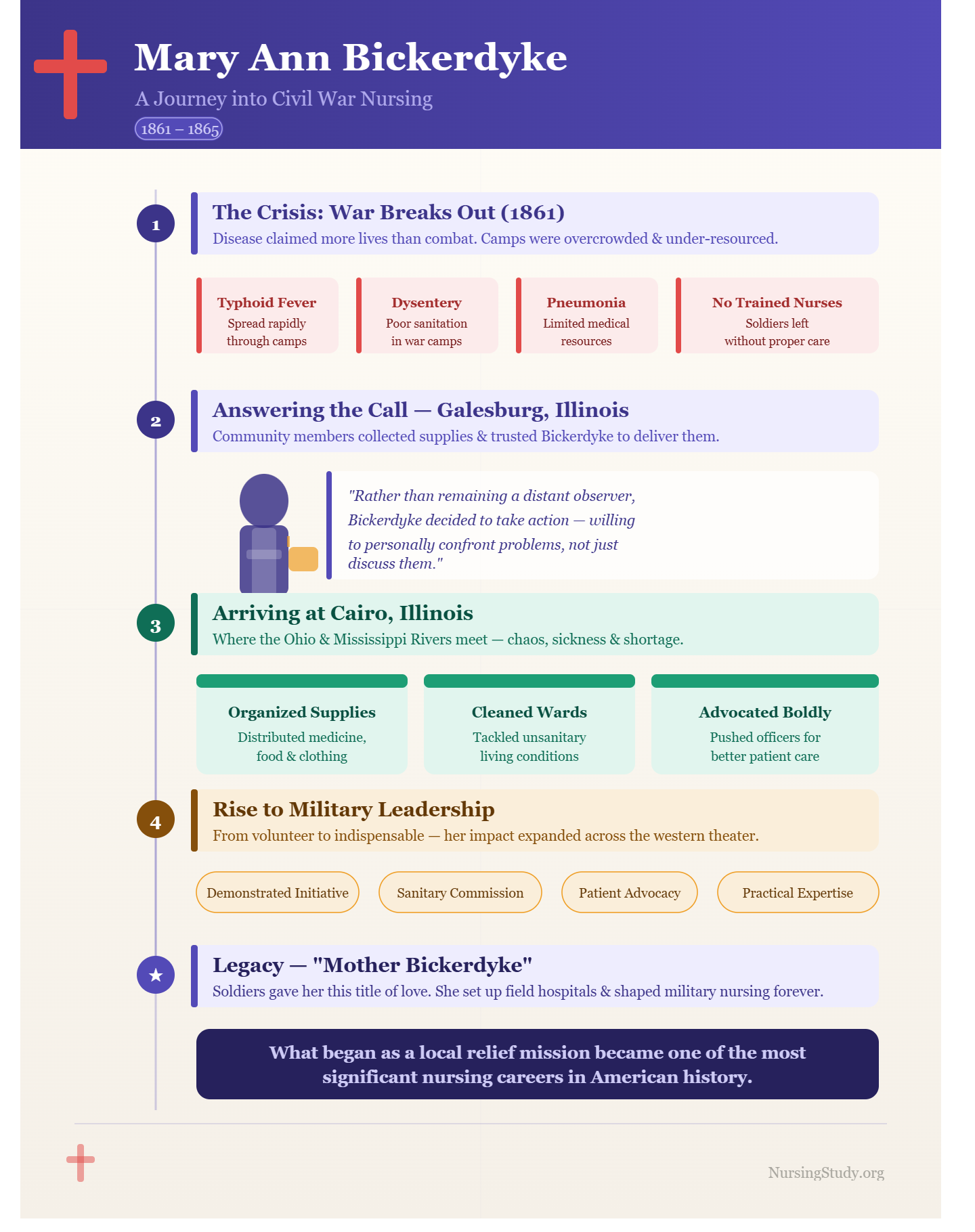
The transformation of Mary Ann Bickerdyke from a community caregiver in Illinois to one of the most respected figures in military healthcare was closely tied to the events that unfolded during the early years of the American Civil War. Although she had no formal nursing credentials by modern standards, her compassion, organizational ability, and commitment to public service positioned her to respond when the nation faced an unprecedented humanitarian crisis.
The journey of Mary Ann Bickerdyke into wartime nursing illustrates how leadership often emerges during periods of uncertainty and need. Her entry into military healthcare was not the result of an official appointment or professional ambition; rather, it was driven by a desire to alleviate suffering among soldiers who were facing disease, injury, inadequate living conditions, and limited access to proper medical care. As the war expanded, her role evolved from that of a concerned civilian volunteer to a highly influential healthcare leader whose contributions would reshape military nursing.
The Outbreak of the Civil War
The outbreak of the Civil War in 1861 marked a turning point not only in American history but also in the development of military medicine and nursing. When hostilities began between the Union and the Confederacy, neither side was adequately prepared to manage the enormous number of casualties that would result from years of warfare.
During the early stages of the conflict, military healthcare systems faced numerous challenges, including:
- A shortage of trained medical personnel.
- Poor sanitation in military camps.
- Limited hospital infrastructure.
- Inadequate transportation for injured soldiers.
- Insufficient quantities of food, medicine, and equipment.
- Limited understanding of infection prevention and disease control.
In fact, disease claimed more lives during the war than combat itself. Conditions such as typhoid fever, dysentery, malaria, pneumonia, and measles spread rapidly through overcrowded camps. Many soldiers entered military service with little understanding of sanitation, and army medical services struggled to keep pace with growing demands.
As news of these conditions reached communities throughout the North, citizens became increasingly concerned about the welfare of the troops. Among those deeply affected was Mary Ann Bickerdyke, who was living in Galesburg at the time.
Members of her local community learned that many Union soldiers were suffering from inadequate care and shortages of essential resources. Reports described overcrowded hospitals, unsanitary living quarters, and patients lacking proper food and basic comforts. These accounts resonated strongly with Bickerdyke, whose previous charitable work had already demonstrated her commitment to helping vulnerable individuals.
Rather than remaining a distant observer, Mary Ann Bickerdyke decided to take action. Her response reflected a defining characteristic that would shape the rest of her career: a willingness to personally confront problems rather than simply discuss them. This decision would soon place her at the center of military healthcare efforts in the western theater of the war.
First Nursing Efforts in Cairo, Illinois
The first major step in Mary Ann Bickerdyke’s nursing journey occurred when she traveled to Cairo, Illinois, a strategically important military location situated near the junction of the Ohio and Mississippi Rivers. During the early years of the war, large numbers of Union soldiers stationed in Cairo were preparing for military operations or recovering from illness and injury.
At the time, stationed in Cairo were thousands of troops who required medical attention, food, supplies, and emotional support. Local citizens in Galesburg collected donations to assist the soldiers and entrusted Mary Ann Bickerdyke with delivering these resources.
Upon arriving in Cairo, she encountered conditions that were far worse than many civilians had imagined.
Among the problems she observed were:
- Overcrowded hospital wards.
- Poor sanitation and cleanliness.
- Insufficient bedding and clothing.
- Inadequate nutrition for recovering patients.
- Shortages of nurses and caregivers.
- Limited quantities of essential medical resources.
The situation demanded immediate intervention. Instead of simply delivering donated goods and returning home, Mary Ann Bickerdyke remained to help improve patient care. Her practical approach quickly became evident as she began organizing assistance for sick and injured soldiers.
One of her earliest contributions involved helping distribute medical supplies to the Union forces and ensuring that resources reached those who needed them most. She also worked to secure additional food, clothing, and comfort items for hospitalized patients.
Her efforts aligned closely with the goals of the Sanitary Commission, a civilian relief organization established to improve healthcare conditions for Union troops. Through cooperation with the Sanitary Commission, Bickerdyke gained access to additional resources and developed a broader understanding of military healthcare administration.
For example, rather than focusing solely on bedside care, she examined the entire patient-care environment. If a ward was dirty, she organized cleaning efforts. If patients lacked nutritious meals, she sought ways to improve food preparation. If essential supplies were unavailable, she advocated aggressively to obtain them.
This holistic approach reflected an early understanding of what modern healthcare professionals recognize as the relationship between environmental conditions and patient outcomes.
Her reputation grew rapidly among both soldiers and medical personnel because she consistently prioritized patient welfare. Many troops who encountered her during this period remembered her not only for her nursing care but also for her determination to solve problems that others ignored.
Transition from Volunteer Caregiver to Military Nurse
Although Mary Ann Bickerdyke initially arrived in Cairo as a volunteer representative of her community, the scope of her responsibilities expanded quickly. The effectiveness of her work soon attracted the attention of military officials, physicians, and relief organizations.
What distinguished Bickerdyke from many volunteers was her ability to combine compassion with organizational leadership. She was not content merely to comfort patients; she sought to improve the systems responsible for their care.
Several factors contributed to her transition from volunteer caregiver to recognized military healthcare leader:
Demonstrated Leadership
Bickerdyke repeatedly identified problems and implemented practical solutions without waiting for formal instructions. Her initiative made her an invaluable asset in rapidly changing wartime environments.
Collaboration with Relief Organizations
Through her work with the Sanitary Commission, she gained greater authority and access to resources that enabled her to support larger numbers of patients.
Advocacy for Soldiers
She became known for speaking directly to military officers and medical administrators when she believed patient needs were not being adequately addressed. This willingness to advocate for soldiers earned widespread respect among the troops.
Expertise Gained Through Experience
Although she lacked formal nursing education, her hands-on experience allowed her to develop extensive practical knowledge regarding hospital management, sanitation, nutrition, and patient care.
As her responsibilities increased, Mary Ann Bickerdyke began accompanying military operations and supporting healthcare services across broader geographic areas. Her work gradually expanded beyond Cairo as she followed Union forces in the western regions of the conflict.
This period marked the beginning of a remarkable career that would eventually see her involved in:
- Setting up hospitals for military personnel.
- Improving standards of care within military healthcare facilities.
- Supervising large numbers of caregivers and volunteers.
- Managing the distribution of supplies and resources.
- Supporting thousands of sick and wounded soldiers throughout the war.
The transition from civilian volunteer to military nurse was therefore not a single event but a gradual process driven by competence, dedication, and leadership. By demonstrating an unwavering commitment to the welfare of soldiers, Mary Ann Bickerdyke established herself as a trusted and indispensable figure within Union military healthcare.
Her experiences in Cairo laid the foundation for the extraordinary achievements that would follow. The skills she developed there would later enable her to oversee major healthcare operations, improve conditions in military hospitals, and earn the affectionate title of Mother Bickerdyke. What began as a local relief mission during the outbreak of the Civil War soon evolved into one of the most significant nursing careers in American history, setting the stage for her lasting impact on military medicine and patient advocacy.
Mary Ann Bickerdyke’s Impact on Military Hospitals and Soldier Care
The contributions of Mary Ann Bickerdyke to Civil War healthcare represent one of the most practical and transformative examples of nursing leadership in nineteenth-century military medicine. Often referred to as Mother Bickerdyke, she played a central role in improving hospital systems, reorganizing patient care environments, and ensuring that Union soldiers received dignified and effective treatment during the American Civil War.
At a time when civil war medicine was still developing and hospitals were overwhelmed by the scale of casualties, Mary Ann Bickerdyke emerged as a decisive force in improving both the structure and function of military healthcare. Her work extended across multiple field hospital settings, where she addressed urgent challenges related to sanitation, supply shortages, overcrowding, and patient neglect.
Her impact can be understood through three interconnected areas:
- Improving hospital conditions and sanitation
- Establishing and managing field hospitals
- Direct care of wounded and sick Union soldiers
Improving Hospital Conditions and Sanitation
One of the most defining contributions of Mary Ann Bickerdyke was her aggressive and systematic approach to improving sanitation in military hospitals. During the American Civil War, many hospitals suffered from conditions that severely compromised patient recovery.
Common challenges included:
- Poor waste disposal systems
- Contaminated water sources
- Overcrowded wards
- Lack of ventilation
- Insufficient cleaning supplies
- High rates of infection among wounded soldiers
In response, Mary Ann Bickerdyke implemented practical reforms that significantly improved survival rates.
Key Sanitation Interventions
- Deep cleaning of hospital wards: She organized the removal of waste, dirty bedding, and contaminated materials from patient areas.
- Improvement of ventilation: She insisted on better airflow in enclosed hospital spaces to reduce the spread of disease.
- Provision of clean linens and clothing: Clean bedding became a priority to reduce infection risks among patients.
- Food and nutrition reform: She worked to ensure that soldiers received adequate, nutritious meals to support recovery.
- Environmental control: She often intervened directly when hospital conditions deteriorated, bypassing bureaucratic delays.
These actions aligned closely with the goals of the Sanitary Commission, although Mary Ann Bickerdyke frequently acted independently when urgent action was required.
Her sanitation reforms were especially important because many soldiers were more likely to die from infection than battlefield injuries. By improving cleanliness and organization, she directly contributed to reducing preventable deaths in military hospitals.
Establishing and Managing Field Hospitals
Beyond improving existing facilities, Mary Ann Bickerdyke played a major role in the creation and management of temporary field hospital systems that supported military campaigns across the western theater.
These hospitals were often established in:
- Churches
- Schools
- Private homes
- Warehouses
- Temporary tents near battle zones
During campaigns involving Union forces in the western regions, rapid medical response was essential. Soldiers needed immediate treatment before being transported long distances.
Organizational Contributions
Mary Ann Bickerdyke became known for her ability to transform disorganized spaces into functional medical environments. Her responsibilities included:
- Coordinating the setting up hospitals in newly captured or temporary locations
- Organizing medical teams, including bickerdyke and her fellow nurses
- Managing the distribution of medical supplies to the union forces
- Ensuring that essential resources reached the army of the tennessee and other units
- Overseeing care operations across an estimated 300 hospitals and 300 field hospitals
Her work required constant movement with military units. As nurses followed the union forces, she adapted rapidly to changing battlefield conditions.
Supply and Logistics Management
A major challenge in military hospitals was the shortage of essential resources. Mary Ann Bickerdyke frequently secured:
- Bandages and surgical tools
- Clean water and food supplies
- Bedding and clothing
- Medicines and disinfectants
In some instances, she personally arranged or redirected shipments worth significant value, including reports of approximately 500 worth of medical supplies being distributed under her supervision during critical shortages.
Her ability to manage logistics made her indispensable to military healthcare operations.
Caring for Wounded and Sick Union Soldiers
While her administrative achievements were significant, Mary Ann Bickerdyke was equally known for her direct involvement in patient care. Her compassion for Union soldiers extended beyond organization into hands-on nursing support for both the physically injured and the critically ill.
The experience of a wounded soldier during the Civil War was often severe and traumatic. Battlefield injuries frequently included:
- Gunshot wounds
- Amputations
- Infection-related complications
- Shock and blood loss
In addition, many soldiers suffered from disease due to poor camp conditions and inadequate hygiene.
Direct Patient Care Practices
Mary Ann Bickerdyke ensured that soldiers received:
- Clean bedding and proper clothing
- Regular meals to support recovery
- Hygiene support to prevent infection
- Emotional reassurance during recovery periods
She often personally intervened when soldiers lacked basic necessities, refusing to allow bureaucratic delays to interfere with care.
Advocacy in Clinical Settings
Her role also included strong advocacy. She was known for confronting medical staff or military officials when patient care standards were not being met. This assertiveness contributed to her reputation as Mother Bickerdyke, a figure who consistently prioritized patient welfare above institutional barriers.
Holistic Care Approach
Her caregiving reflected a comprehensive understanding of patient needs:
- Physical care: Treating wounds, ensuring comfort, and maintaining hygiene
- Emotional care: Providing reassurance and companionship
- Advocacy: Defending soldier rights and dignity
- Continuity of care: Supporting recovery from battlefield to hospital discharge
Through this approach, Mary Ann Bickerdyke became one of the most trusted figures among hospitalized soldiers.
Mary Ann Bickerdyke’s Service with the Western Armies
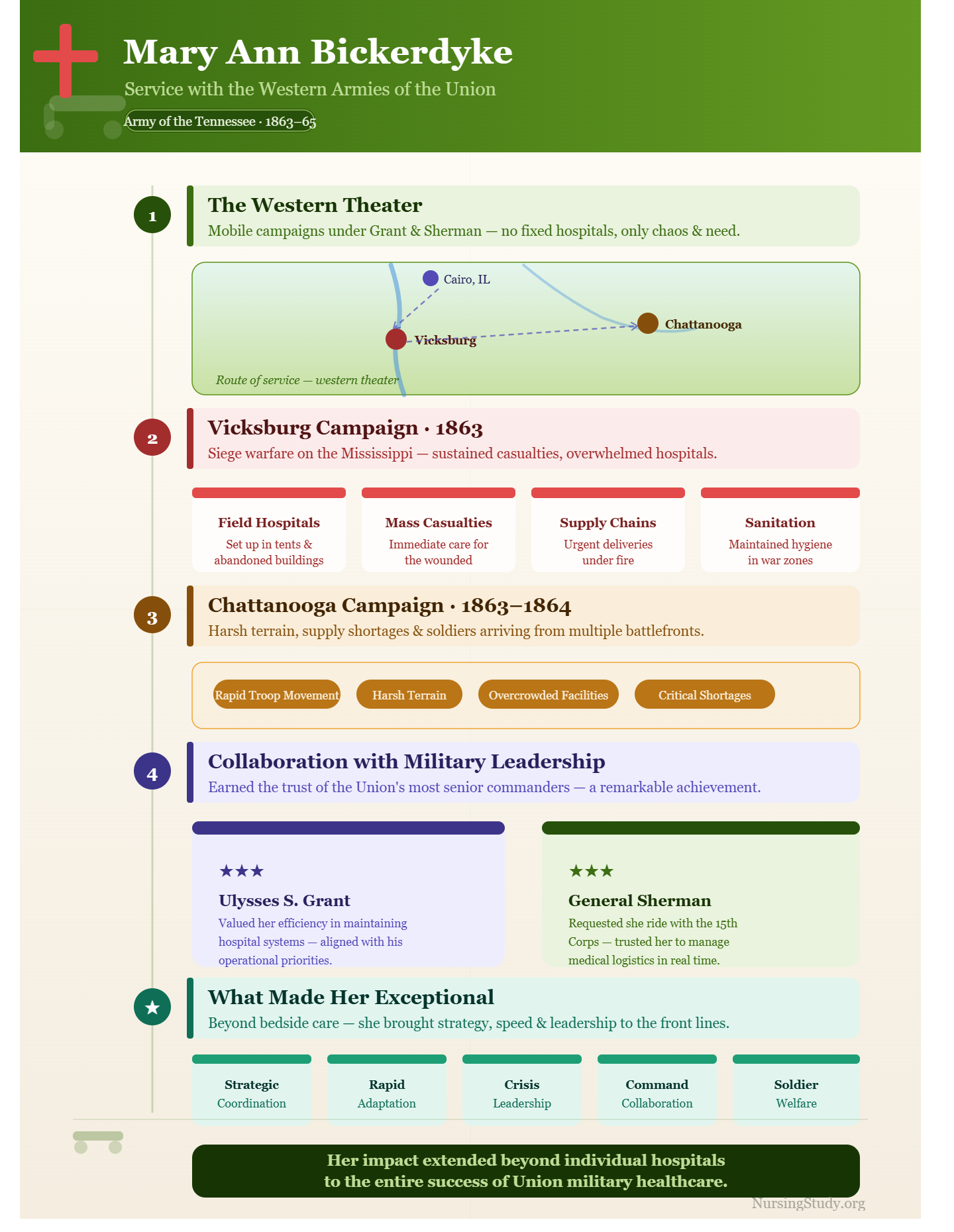
The service of Mary Ann Bickerdyke with the western armies of the Union represents one of the most significant chapters in her Civil War career. As her reputation as a capable organizer and compassionate caregiver grew, she was increasingly attached to military campaigns operating in the western theater of the American Civil War. Unlike stationary hospital work, this phase of her service required constant movement, rapid decision-making, and the ability to establish functioning medical systems in unstable and often dangerous environments.
During this period, Mary Ann Bickerdyke became closely associated with major Union operations, particularly those involving the army of the Tennessee. Her contributions during key campaigns such as Vicksburg and Chattanooga demonstrated her extraordinary ability to combine nursing care, logistics management, and military collaboration under extremely challenging conditions.
Work with the Army of the Tennessee
One of the most important assignments in the career of Mary Ann Bickerdyke was her service with the army of the Tennessee, a major Union force operating in the western theater under commanders such as Ulysses S. Grant and later William T. Sherman.
The army of the Tennessee was heavily engaged in prolonged campaigns that resulted in large numbers of casualties requiring immediate and organized medical attention. Unlike fixed hospitals, battlefield conditions demanded mobile and adaptable healthcare systems.
Role and Responsibilities
Within this army structure, Mary Ann Bickerdyke performed multiple critical functions:
- Organizing temporary field hospital facilities near battle zones
- Coordinating medical supplies to the Union forces during active campaigns
- Supervising bickerdyke and her fellow nurses in high-pressure environments
- Ensuring care for Union soldiers suffering from battle injuries and disease
- Supporting logistical operations for the movement of patients and supplies
Her presence ensured that injured soldiers received immediate care before being transported to larger hospitals. This rapid intervention often made the difference between recovery and death.
Working Style in the Field
Unlike many formal military administrators, Mary Ann Bickerdyke operated with direct, hands-on involvement. She frequently moved between camps, hospitals, and supply depots, ensuring that no unit was neglected. Her practical approach made her especially effective in chaotic battlefield environments where traditional administrative structures were too slow to respond.
Service During the Vicksburg and Chattanooga Campaigns
Two of the most defining periods of Mary Ann Bickerdyke’s wartime service occurred during the Vicksburg campaign (1863) and the Chattanooga campaign (1863–1864). These operations were critical to Union strategy and resulted in intense fighting, large-scale troop movements, and significant medical emergencies.
Vicksburg Campaign
During the Vicksburg campaign, Union forces aimed to gain control of the Mississippi River, a strategic objective that required prolonged siege warfare. The extended duration of the campaign created severe strain on medical resources.
In this environment, Mary Ann Bickerdyke contributed by:
- Establishing emergency field hospital units near active combat zones
- Managing treatment for large numbers of wounded soldiers
- Coordinating urgent supply deliveries under difficult conditions
- Ensuring basic sanitation and hygiene standards were maintained
For example, during periods of heavy casualties, she organized makeshift treatment areas in abandoned buildings and tents, ensuring that soldiers received immediate attention even when formal hospitals were overwhelmed.
Chattanooga Campaign
Following Vicksburg, Mary Ann Bickerdyke continued her service during the Chattanooga campaign, another critical Union operation aimed at securing strategic positions in Tennessee.
The conditions in Chattanooga were particularly challenging due to:
- Rapid troop movements
- Harsh terrain and weather conditions
- Overcrowded medical facilities
- Shortages of food and medical supplies
During this campaign, her responsibilities expanded further as she helped coordinate care for soldiers arriving from multiple battlefronts. She worked closely with military logistics teams to ensure that supplies reached the front lines efficiently.
Her efforts contributed to stabilizing medical operations during one of the most complex phases of the western campaigns.
Collaboration with Military Leadership
A defining feature of Mary Ann Bickerdyke’s service with the western armies was her direct and often influential collaboration with senior military leadership. Despite operating in a traditionally male-dominated military environment, she earned the respect of some of the most prominent Union generals.
Relationship with Ulysses S. Grant
Her work brought her into contact with general ulysses, later known as Ulysses S. Grant, who recognized the importance of her contributions to military healthcare. Grant valued efficiency in both military operations and support services, and Bickerdyke’s ability to maintain functioning hospital systems aligned with these priorities.
Interaction with General Sherman
One of the most notable aspects of her service involved her relationship with general sherman. Historical accounts frequently note that general sherman requested that bickerdyke ride with military operations or accompany units during campaigns to ensure proper medical support.
In some accounts, sherman requested that bickerdyke ride at the head of advancing columns or move with the 15th corps of the army, reflecting the trust placed in her ability to manage medical logistics in real time.
Her interactions with Sherman demonstrated:
- Recognition of her authority in medical matters
- Dependence on her logistical expertise
- Trust in her ability to manage large-scale medical needs during campaigns
Broader Military Collaboration
Beyond individual commanders, Mary Ann Bickerdyke also worked with:
- Medical officers overseeing army hospitals
- Supply coordinators responsible for logistics
- Volunteer nursing groups operating in the field
- Relief organizations supporting Union forces
Her ability to collaborate across different levels of military structure made her an essential link between battlefield operations and healthcare delivery.
Significance of Her Western Army Service
The service of Mary Ann Bickerdyke with the western armies demonstrated that effective military nursing required more than clinical care. It demanded:
- Strategic coordination
- Rapid adaptation to battlefield conditions
- Strong leadership in crisis environments
- Close collaboration with military command structures
- A deep commitment to the welfare of Union soldiers
Through her work with the army of the Tennessee, her involvement in the Vicksburg and Chattanooga campaigns, and her collaboration with leaders such as Ulysses S. Grant and General Sherman, Mary Ann Bickerdyke played a crucial role in shaping the effectiveness of Union medical services.
Her contributions during this period solidified her reputation as one of the most capable and influential figures in Civil War nursing history, ensuring that her impact extended far beyond individual hospitals to the broader success of military healthcare operations in the western theater.
Why Mary Ann Bickerdyke Became Known as “Mother Bickerdyke”
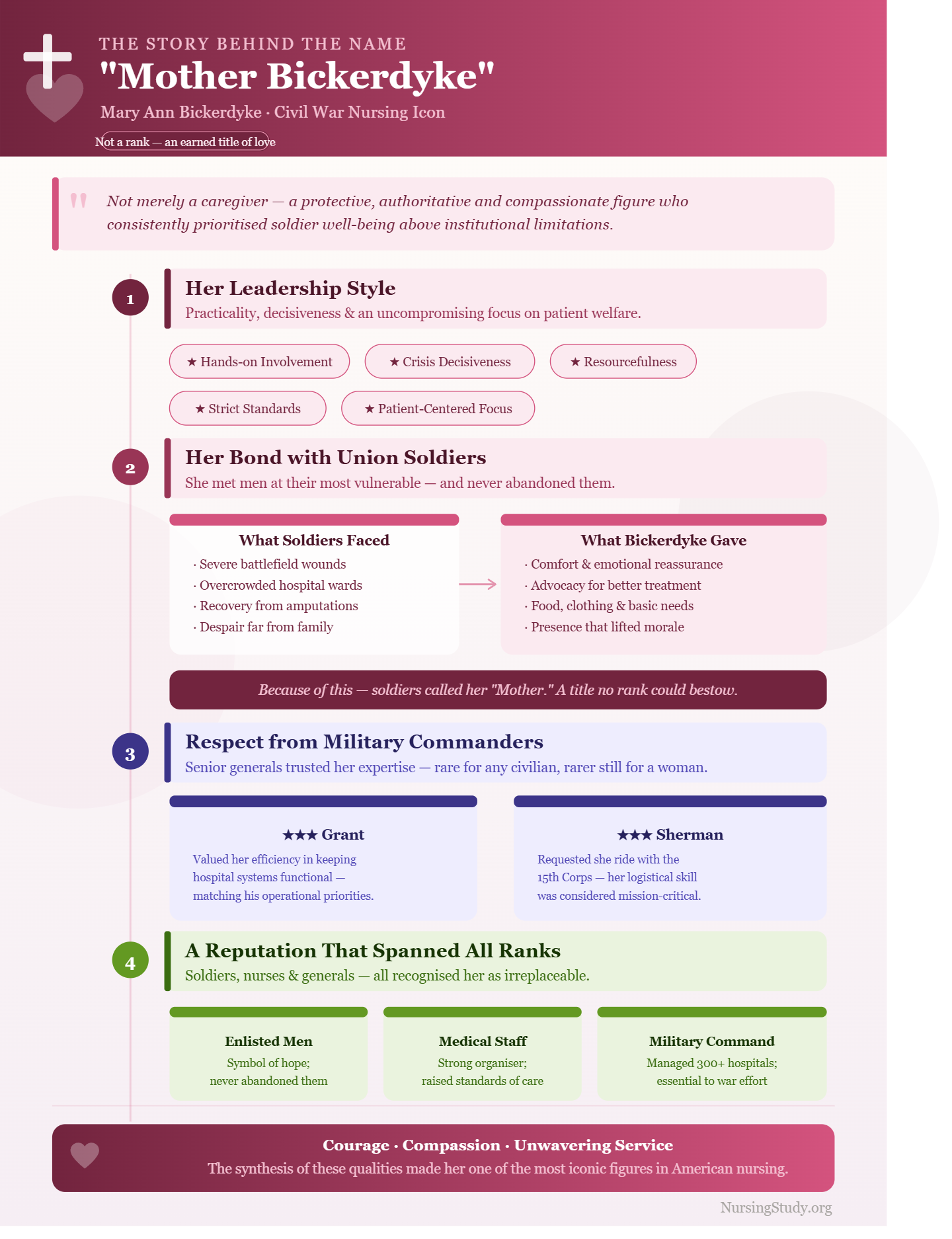
The title “Mother Bickerdyke” was not an official designation but a deeply symbolic recognition earned by Mary Ann Bickerdyke through her unwavering commitment to the welfare of Union soldiers during the American Civil War. Unlike many individuals who served in formal military or medical roles, she developed a reputation that combined maternal care, strict leadership, and fearless advocacy for patients in both field hospital and permanent hospital settings.
Her nickname reflected how soldiers and military personnel perceived her: not merely as a caregiver, but as a protective, authoritative, and compassionate figure who consistently prioritized their well-being above institutional limitations. The emergence of the name “Mother” highlights the emotional and social impact of her work, particularly among wounded and sick troops who often experienced isolation, fear, and uncertainty.
Leadership Style and Dedication to Soldiers
The leadership style of Mary Ann Bickerdyke was defined by practicality, determination, and an uncompromising focus on patient welfare. In an era when military hospitals were often disorganized and under-resourced, she introduced structure, discipline, and efficiency while maintaining a deeply compassionate approach to care.
Key Characteristics of Her Leadership
- Hands-on involvement: She did not delegate from a distance; she worked directly with patients, nurses, and supplies.
- Decisiveness in crisis: She made rapid decisions in emergencies without waiting for formal approval when soldiers required immediate assistance.
- Resourcefulness: She frequently secured medical supplies through unconventional means when official channels failed.
- Strict standards: She enforced cleanliness, proper nutrition, and order in field hospital environments.
- Patient-centered focus: Her primary concern was always the survival and comfort of wounded soldiers.
For example, when hospital wards lacked clean bedding or adequate food, Mary Ann Bickerdyke would often take immediate action to correct the situation, sometimes personally organizing supply distribution or directing volunteers to improve conditions. This proactive approach distinguished her from many contemporaries who were limited by bureaucratic procedures.
Her dedication was also evident in her willingness to work long hours under physically and emotionally exhausting conditions. She frequently moved between hospitals, camps, and supply stations, ensuring that no group of soldiers was neglected. This constant presence reinforced her authority and trustworthiness among both medical staff and military personnel.
Relationships with Union Troops and Commanders
The reputation of Mary Ann Bickerdyke as “Mother Bickerdyke” was strongly shaped by her relationships with both Union soldiers and senior military commanders.
Relationships with Union Soldiers
Among soldiers, she was widely regarded as a protector and advocate. Many troops experienced her care during moments of extreme vulnerability, such as:
- Severe battlefield injuries
- Illness in overcrowded hospital wards
- Recovery from amputations or infections
- Emotional distress due to separation from family
In these settings, Mary Ann Bickerdyke provided more than medical assistance. She offered:
- Comfort during recovery
- Advocacy for improved treatment
- Personal attention to basic needs such as food and clothing
- Emotional reassurance during long hospital stays
Because of this consistent support, soldiers often referred to her affectionately as “Mother”, emphasizing her nurturing role in their recovery process. In some accounts, soldiers stated that her presence in hospitals improved morale and reduced feelings of despair among the injured.
Relationships with Military Commanders
Her interactions with military leadership were equally significant. Although she operated in a male-dominated military structure, she gained the respect of several high-ranking officers, including general ulysses (Ulysses S. Grant) and general sherman.
Notably, general sherman requested that bickerdyke ride alongside military units during operations to ensure that medical support was available where needed. In some instances, she was even assigned to accompany advancing forces, including the 15th corps of the army, reflecting the trust placed in her logistical and organizational abilities.
Her relationships with commanders were characterized by:
- Mutual respect based on performance
- Recognition of her expertise in hospital organization
- Dependence on her ability to manage medical supplies to the union forces
- Willingness to accept her direct communication style, even when she challenged decisions
Although she was not part of the formal military hierarchy, her influence often extended into strategic decisions regarding medical logistics and battlefield care.
Reputation Throughout the Civil War
The reputation of Mary Ann Bickerdyke grew steadily throughout the American Civil War, evolving from that of a dedicated volunteer to one of the most respected figures in military healthcare.
Among Soldiers
To enlisted men, she became a symbol of hope and compassion. Her reputation was built on:
- Consistent presence in field hospital environments
- Immediate response to suffering and shortages
- Willingness to confront authority on behalf of patients
- Ability to secure food, clothing, and medical supplies
- Personal involvement in patient recovery
Her work during major campaigns, including those involving the army of the Tennessee, reinforced her image as a dependable caregiver who never abandoned soldiers in need.
Among Medical Staff and Volunteers
Among nurses and medical personnel, including bickerdyke and her fellow nurses, she was recognized as a strong organizer and leader. She was known for setting high standards and expecting discipline in hospital operations. While her methods could be strict, they were widely respected because they consistently improved patient outcomes.
Among Military Leadership
Military commanders viewed her as an essential part of the Union war effort. Her ability to manage large-scale hospital operations, oversee setting up hospitals, and coordinate care across multiple locations made her invaluable. Her contributions extended to managing systems involving hundreds of facilities, including references to as many as 300 hospitals and 300 field hospitals during her service.
Overall Civil War Reputation
By the end of the war, Mary Ann Bickerdyke had established a national reputation defined by:
- Exceptional leadership in wartime healthcare
- Unmatched dedication to Union soldiers
- Strong advocacy for humane treatment in military hospitals
- Effective collaboration with both volunteers and generals
- A legacy of compassion combined with authority
Her nickname, “Mother Bickerdyke”, ultimately reflected the synthesis of these qualities. It captured not only her nurturing care for the sick and wounded but also her protective role as an advocate who challenged inefficiency and demanded better conditions for those under her care.
Through her leadership style, relationships with soldiers and commanders, and enduring reputation across the Civil War, Mary Ann Bickerdyke became one of the most iconic figures in American nursing history, embodying the principles of courage, compassion, and unwavering service.
Mary Ann Bickerdyke as an Advocate for Veterans
The contributions of Mary Ann Bickerdyke did not end with the conclusion of the American Civil War. While many caregivers returned to private life after the war ended, she continued her humanitarian mission by focusing on the long-term welfare of civil war veterans. Her postwar work extended the principles she had practiced during battlefield service—compassion, advocacy, and hands-on assistance—into the complex challenges of reintegrating soldiers into civilian life.
As an advocate for veterans, Mary Ann Bickerdyke addressed issues that were often overlooked in the aftermath of war, including disability support, economic hardship, medical follow-up care, and access to government assistance. Her efforts demonstrated that the responsibility of caring for soldiers did not conclude when combat ended but continued throughout their recovery and reintegration into society.
Assisting Veterans After the War
After the end of the war, thousands of Union soldiers returned home with serious physical injuries, chronic illnesses, and psychological trauma. Many were unable to resume normal employment or support their families. The transition from military to civilian life was often difficult due to:
- Long-term disabilities caused by battlefield injuries
- Limited access to healthcare services
- Economic instability and unemployment
- Lack of structured government support systems
- Emotional and psychological distress
In this context, Mary Ann Bickerdyke extended her caregiving mission beyond hospital walls. She actively assisted veterans in practical ways, often working directly with individuals and families struggling to rebuild their lives.
Forms of Postwar Assistance
Her support for veterans included:
- Providing basic necessities such as food and shelter for those in need
- Helping disabled soldiers locate medical care and rehabilitation services
- Assisting families of injured soldiers facing financial hardship
- Offering guidance and advocacy in accessing government resources
- Supporting community efforts to care for former soldiers
In many cases, she personally intervened when veterans were neglected or lacked access to proper support systems. Her continued presence in their lives reinforced her identity as Mother Bickerdyke, not only during wartime but also in the difficult years that followed.
Supporting Pension Claims and Veteran Benefits
One of the most significant aspects of Mary Ann Bickerdyke’s postwar work involved assisting veterans in securing pension benefits and government support. During the post-Civil War period, the United States government established pension systems for injured soldiers and their families. However, the process of obtaining these benefits was often complicated, bureaucratic, and difficult to navigate.
Many veterans struggled with:
- Complex application procedures
- Lack of official documentation
- Medical proof requirements for disabilities
- Delays in government processing
- Limited understanding of legal entitlements
To address these challenges, Mary Ann Bickerdyke became actively involved in helping veterans secure their rightful benefits.
Key Contributions in Pension Advocacy
- Assisting with the preparation of pension applications
- Helping veterans gather medical and service documentation
- Advocating for fair treatment of disabled soldiers
- Supporting families in claims for widows’ and dependents’ benefits
- Working to ensure that veterans received recognition for their service
Her efforts in this area included collaboration with government offices and informal advocacy networks. In some accounts, she helped soldiers who were initially denied benefits by providing testimony or supporting evidence of their service-related injuries.
This work reflected her broader belief that service members deserved lifelong support, not only during active duty but also in their postwar recovery. Her advocacy contributed to early discussions about veterans’ rights and the responsibilities of government institutions toward former soldiers.
Continued Humanitarian and Community Service
Beyond pension advocacy, Mary Ann Bickerdyke remained deeply involved in broader humanitarian and community-based service. Her postwar life reflected a continuation of the same principles that guided her wartime nursing: direct action, compassion, and community engagement.
Community-Based Contributions
She participated in and supported several forms of humanitarian work, including:
- Operating and supporting charitable institutions such as the home for the friendless, which provided assistance to vulnerable individuals
- Assisting in local relief efforts for impoverished families and disabled veterans
- Participating in community welfare programs aimed at rebuilding postwar society
- Offering informal caregiving and support services in various communities
In addition, she was known for opening her home and resources to those in need when formal systems were insufficient. In some cases, she established temporary assistance arrangements similar to a boarding house in Salina, reflecting her willingness to provide direct shelter and support.
Continued Advocacy for Soldiers and Families
Her humanitarian work also extended to families of veterans, including widows and children who were affected by wartime losses. She often assisted with:
- Emotional support for grieving families
- Material assistance for households facing poverty
- Community coordination for charitable support networks
- Advocacy for fair treatment of families of deceased soldiers
Her efforts demonstrated an understanding that the impact of war extended beyond the battlefield and into the long-term stability of families and communities.
Public Recognition and Legacy of Service
Over time, Mary Ann Bickerdyke became widely recognized not only as a civil war nurse but also as a lifelong humanitarian figure. Her continued service after the war reinforced her reputation as a steadfast advocate for human dignity and social responsibility.
She remained active in public life for many years, and although she eventually reduced her direct involvement due to age, her influence continued through the systems and practices she helped establish.
Nursing Leadership Lessons from Mary Ann Bickerdyke
he legacy of Mary Ann Bickerdyke extends far beyond her direct contributions to American Civil War healthcare. Her life offers enduring insights into nursing leadership, particularly in how nurses can function as advocates, coordinators, and change agents within complex healthcare systems. Often remembered as Mother Bickerdyke, she demonstrated that effective nursing leadership is not confined to formal titles or institutional authority but is grounded in action, moral courage, and a sustained commitment to patient welfare.
The experiences of Mary Ann Bickerdyke provide valuable lessons in three major areas of nursing leadership:
- Patient advocacy and compassionate care
- Leadership in challenging healthcare environments
- Relevance for modern nursing practice
Patient Advocacy and Compassionate Care
One of the most defining aspects of Mary Ann Bickerdyke’s work was her unwavering commitment to patient advocacy. During the Civil War, Union soldiers often suffered not only from battlefield injuries but also from neglect, overcrowding, and insufficient medical resources in field hospital settings.
In these conditions, Mary Ann Bickerdyke consistently acted as a strong voice for patients who were unable to advocate for themselves. Her approach to care emphasized both compassion and direct intervention.
Key Elements of Her Patient Advocacy
- Protection of patient dignity: She ensured that wounded soldiers were treated with respect regardless of rank or condition.
- Immediate intervention: When care was inadequate, she did not hesitate to intervene directly with hospital staff or military officials.
- Resource acquisition: She actively secured medical supplies, food, and clothing when shortages affected patient care.
- Holistic support: Her care extended beyond physical treatment to include emotional reassurance and comfort.
For example, if soldiers lacked clean bedding or adequate nutrition, she often took immediate steps to correct the situation rather than waiting for formal approval. This proactive approach reflected a deep understanding of the relationship between environment, morale, and recovery outcomes.
Her compassionate care model aligns closely with modern nursing principles such as patient-centered care, advocacy ethics, and holistic nursing practice. In many ways, Mary Ann Bickerdyke demonstrated these principles long before they were formally defined in nursing theory.
Leadership in Challenging Healthcare Environments
The Civil War presented one of the most demanding healthcare environments in history. Hospitals were frequently overcrowded, understaffed, and under-resourced. In these settings, Mary Ann Bickerdyke demonstrated exceptional leadership skills that allowed her to manage chaos and improve system functionality.
Her leadership was especially evident in field hospital environments, where rapid decision-making was essential for survival.
Core Leadership Strengths
- Adaptability: She successfully operated in changing and unstable conditions across multiple military campaigns.
- Operational management: She helped organize the setting up hospitals in makeshift locations such as churches, tents, and abandoned buildings.
- Coordination of care teams: She supervised bickerdyke and her fellow nurses, ensuring efficient patient care delivery.
- Crisis response: She responded quickly to outbreaks of disease, mass casualties, and supply shortages.
- Collaboration with leadership: She worked with senior commanders, including general ulysses and general sherman, to coordinate medical logistics.
A key example of her leadership can be seen during large-scale military operations, where she helped ensure that medical supplies to the union forces were delivered efficiently despite logistical barriers. Her ability to manage both human and material resources made her indispensable in wartime healthcare systems.
Her leadership style combined authority with compassion. While she was firm in enforcing sanitation and care standards, she also maintained a strong sense of empathy toward both patients and caregivers. This balance is a hallmark of effective nursing leadership even in contemporary healthcare settings.
Relevance for Modern Nursing Students
The life and work of Mary Ann Bickerdyke continue to hold significant relevance for modern nursing practice. Her experiences provide practical lessons that align with contemporary healthcare priorities such as quality improvement, patient advocacy, interdisciplinary collaboration, and leadership in crisis situations.
Key Lessons for Modern Nursing Practice
1. The Importance of Advocacy
Her career demonstrates that nurses must be willing to advocate for patients, especially in situations where systems fail to meet patient needs. Advocacy may involve:
- Speaking up about unsafe conditions
- Ensuring equitable access to care
- Challenging inefficiencies in healthcare systems
2. Leadership Without Formal Authority
Although she did not hold formal military rank, Mary Ann Bickerdyke influenced hospital operations and military medical logistics. This highlights that leadership in nursing is often based on competence, initiative, and integrity rather than position alone.
3. Resource Management in Healthcare
Her ability to secure and distribute medical supplies, organize field hospital systems, and coordinate care under scarcity conditions reflects the importance of resource management in nursing practice today.
4. Compassion in Clinical Care
Her consistent focus on dignity and emotional support for Union soldiers reinforces the importance of compassion in patient outcomes. Emotional care remains a critical component of nursing practice in modern healthcare systems.
5. Adaptability in Crisis Situations
Just as she adapted to battlefield conditions during the American Civil War, modern nurses must be prepared to respond to emergencies such as pandemics, disasters, and mass casualty events.
Example of Modern Application
In contemporary healthcare settings such as emergency departments or disaster response units, nurses often face conditions similar in principle to those encountered by Mary Ann Bickerdyke:
- High patient volumes
- Limited resources
- Urgent decision-making requirements
- Emotional stress among patients and staff
Her leadership model provides a framework for responding effectively in such environments by prioritizing patient needs, maintaining organization, and ensuring clear communication among care teams.
Mary Ann Bickerdyke’s Later Years and Enduring Legacy
The later years of Mary Ann Bickerdyke reflect a continuation of the same dedication to service that defined her during the American Civil War. Although the war ended, her commitment to Union soldiers, civil war veterans, and humanitarian work did not diminish. Instead, she extended her efforts into community support, veteran welfare, and public recognition of soldiers’ sacrifices. Her postwar life demonstrates that her identity as Mother Bickerdyke was not limited to battlefield nursing but was a lifelong mission of advocacy and care.
Life After the Civil War
After the war ended, Mary Ann Bickerdyke continued working directly with civil war veterans, many of whom returned home with chronic injuries, disabilities, and limited financial support. One of the most significant challenges faced by veterans was securing stable livelihoods and accessing government assistance.
During this period, she became actively involved in supporting veterans through practical and community-based initiatives, including:
- Assisting soldiers in accessing pension support and navigating government systems
- Helping families affected by wartime injuries and loss
- Providing shelter and informal care services for displaced individuals
- Continuing her association with charitable institutions such as the home for the friendless
Her advocacy was especially important because many veterans struggled with the process of obtaining the modest government stipend of $25 a month from Congress, which was often insufficient and difficult to secure. Mary Ann Bickerdyke frequently intervened to help ensure that deserving soldiers received financial recognition for their service.
She also remained active in community support systems, including operating a boarding house in Salina, which served as a refuge for individuals in need. These efforts reflected her continued commitment to humanitarian service beyond formal medical environments.
In recognition of her service and enduring influence, she was often affectionately referred to as the patron saint of Kansas, a title that reflected her deep connection to communities in the region where she spent her later years, particularly after settling in Kansas in 1887.
Death and Historical Recognition
Mary Ann Bickerdyke died in 1901, marking the end of a life defined by service, resilience, and unwavering dedication to others. Her passing was widely recognized as the loss of one of the most influential figures in civil war nurse history.
By the time of her death, her contributions had already been firmly established in both military and civilian memory. She was remembered not only for her wartime service but also for her postwar advocacy for veterans and continued humanitarian efforts.
Her historical recognition includes:
- Memorialization in regions such as Knox County and Woodward
- Continued acknowledgment by institutions such as Oberlin College, where she had earlier studied
- Association with broader Civil War memory events such as the grand review of the armies, particularly the triumphant grand review held in Washington on July 19, 1865, where returning Union forces were honored
- Recognition alongside prominent reform figures of her era, including reformers such as Harriet Beecher Stowe, whose humanitarian ideals aligned with the social reform spirit of the period
These acknowledgments reinforced her status as a nationally significant figure in both nursing history and veteran advocacy.
Lasting Influence on Nursing and Veteran Care
The enduring legacy of Mary Ann Bickerdyke is most clearly seen in her long-term influence on nursing practice, military healthcare systems, and veteran welfare policy. Her work during and after the Civil War helped shape foundational principles that continue to guide modern healthcare systems.
Influence on Nursing Practice
Her contributions helped establish key nursing principles, including:
- Patient-centered care grounded in dignity and respect
- The importance of sanitation in preventing disease in field hospital environments
- Strong nursing leadership in crisis situations
- Advocacy as a core responsibility of healthcare professionals
- Collaboration between nurses, physicians, and military leadership
Her experience managing 300 field hospitals and coordinating care for thousands of soldiers demonstrated the importance of structured healthcare organization even in emergency conditions.
Influence on Veteran Support Systems
Her postwar advocacy for civil war veterans highlighted the need for structured government support for former soldiers. Her involvement in pension assistance and community care helped shape early awareness of veteran welfare as a national responsibility.
By assisting soldiers with injuries sustained during service in the army of the Tennessee and other Union forces, she reinforced the idea that care must extend beyond active duty into long-term recovery and reintegration.
Cultural and Historical Legacy
Mary Ann Bickerdyke also left a strong cultural legacy. Her nickname, Mother Bickerdyke, continues to symbolize compassion, leadership, and fearless advocacy in nursing history. Her story is frequently referenced in discussions of civil war medicine and the evolution of nursing as a profession.
Her influence remains relevant today, particularly in:
- Military nursing education
- Emergency and disaster response training
- Veteran healthcare policy discussions
- Leadership development in nursing practice
Behind on multiple nursing assignments?
Our team will handle them while you focus on learning and clinical work.
Conclusion
The life of Mary Ann Bickerdyke stands as a powerful example of how individual resolve, compassion, and practical leadership can reshape healthcare systems during times of crisis. Emerging from humble beginnings as Mary Ann Ball, she grew into a defining figure of the American Civil War, earning enduring recognition as Mother Bickerdyke through her relentless commitment to Union soldiers and her transformative influence on field hospital care.
Across the western theater of the war, her work with the army of the Tennessee, her service during campaigns such as Vicksburg and Chattanooga, and her close collaboration with military leaders including general sherman and general ulysses demonstrated a rare combination of courage and administrative skill. She did not merely provide bedside care; she restructured how care was delivered under extreme conditions, ensuring that medical supplies, sanitation, and organized nursing support reached those who needed them most.
Her contributions extended far beyond wartime medicine. After the war ended, she became a steadfast advocate for veterans, helping injured soldiers navigate pension systems, access basic support, and rebuild their lives. Through continued humanitarian service and community engagement, she reinforced the idea that healthcare responsibility does not end at discharge or demobilization—it continues as a lifelong commitment to human dignity.
In reflecting on her legacy, several enduring truths emerge:
- Effective nursing leadership is rooted in action, not title.
- Compassion must be matched with advocacy to create real change.
- Healthcare systems improve when individuals are willing to challenge inefficiency.
- The welfare of patients extends beyond treatment to long-term social support.
Ultimately, Mary Ann Bickerdyke remains a cornerstone in the history of nursing and military medicine. Her work helped lay the foundation for modern nursing practice, veteran care systems, and the recognition of nurses as essential leaders in healthcare reform. More than a historical figure, she represents a lasting standard of what it means to serve with courage, humanity, and unwavering dedication to those in need.
Frequently Asked Questions
What was Mary Ann Bickerdyke famous for?
Mary Ann Bickerdyke was famous for her work as a Civil War nurse who revolutionized military healthcare by improving field hospital sanitation, organizing medical care for Union soldiers, and advocating strongly for better treatment and resources for the wounded. She became widely known as Mother Bickerdyke for her compassionate and fearless leadership.
Who was the most famous nurse during the Civil War?
One of the most famous nurses of the American Civil War was Mary Ann Bickerdyke, widely recognized for her leadership in military hospitals and humanitarian service. Others such as Clara Barton also played major roles, but Bickerdyke was especially renowned in the western theaters of the war for her hands-on hospital reforms and soldier advocacy.
How did Bickerdyke help soldiers?
Mary Ann Bickerdyke helped soldiers by improving field hospital conditions, securing medical supplies, ensuring proper food and sanitation, and directly caring for wounded soldiers. She also advocated for better treatment, confronted poor hospital practices, and supported soldiers emotionally and physically during recovery.
What is Bickerdyke’s legacy?
Her legacy is that of a pioneering nurse and advocate for veterans who transformed Civil War healthcare. She influenced military nursing standards, improved hospital organization, and continued postwar support for veterans through pension advocacy and humanitarian service. Today, she is remembered as a symbol of compassionate leadership and nursing reform.
