

Lillian Wald, the Henry Street Settlement, Public Health, and the Legacy of a Humanitarian Nurse
Introduction
The history of modern nursing is shaped by individuals whose contributions extended far beyond direct patient care. Among the most influential of these figures is Lillian Wald, a pioneering nurse, humanitarian, educator, and advocate whose work transformed the relationship between healthcare and society. At a time when many healthcare services were concentrated within hospitals and available only to limited segments of the population, Lillian Wald championed a new vision of care—one that recognized the importance of meeting people where they lived, worked, and raised their families. Her efforts helped establish the foundations of modern public health nursing and demonstrated that health outcomes are deeply connected to social, economic, and environmental conditions.
The significance of Lillian Wald’s contributions can be understood by examining the challenges facing American cities during the late nineteenth and early twentieth centuries. Rapid industrialization, urban growth, and large waves of immigration created overcrowded neighborhoods where poverty, disease, and inadequate housing were common realities. In New York’s Lower East Side, thousands of immigrant families struggled to access basic healthcare services. Many residents lived in densely populated tenements with poor sanitation, limited medical resources, and few opportunities to improve their living conditions.
These circumstances created several interconnected public health concerns:
- High rates of infectious diseases such as tuberculosis and typhoid fever.
- Limited access to physicians and healthcare facilities.
- Poor housing and sanitation conditions.
- Inadequate health education among vulnerable populations.
- Significant barriers to healthcare for women, children, and immigrant families.
Rather than viewing these problems as isolated medical issues, Lillian Wald recognized that they were symptoms of broader social conditions. This understanding would become one of the defining principles of her work and would ultimately reshape nursing practice throughout the United States.
A turning point in healthcare history occurred when Lillian Wald began providing care within impoverished neighborhoods and witnessed firsthand the daily struggles faced by residents. These experiences led her to develop an innovative model of community-based care that combined nursing services with education, advocacy, and social support. This approach challenged traditional healthcare models by emphasizing prevention alongside treatment and by addressing factors that influenced health beyond the walls of hospitals.
Central to this vision was the establishment of the Henry Street Settlement, an organization that became a landmark institution in both nursing and social welfare. More than a traditional settlement house, the Henry Street Settlement served as a center for healthcare delivery, community outreach, education, and social services. Through its programs, nurses worked directly with families, conducted home visits, promoted disease prevention, and helped connect individuals with essential community resources. The organization demonstrated how nursing could be integrated into broader efforts to improve community well-being and advance social justice.
The work associated with the Henry Street Settlement also contributed to the emergence of the public health nurse as a distinct professional role. Under Lillian Wald’s leadership, nurses expanded their responsibilities beyond bedside care to include:
- Community assessment.
- Health promotion and disease prevention.
- Family-centered care.
- Health education.
- Social advocacy.
- Coordination of community resources.
- Public health outreach.
These responsibilities remain central components of contemporary public health nursing practice, illustrating the enduring relevance of Wald’s ideas more than a century later.
However, the influence of Lillian Wald was not limited to nursing. She was also a dedicated social reformer who advocated for improvements in child welfare, education, labor conditions, civil rights, and social justice. Her involvement in numerous reform movements reflected a belief that healthcare professionals have an important role to play in addressing societal inequalities. By linking healthcare with social welfare, she helped establish a framework that continues to guide public health initiatives and community nursing programs today.
The story of Lillian Wald is therefore more than a biography of a remarkable healthcare leader. It is also the story of how nursing evolved from a primarily clinical occupation into a profession capable of influencing communities, public policy, and social change. Understanding her work provides valuable insight into the origins of public health nursing, the development of community-based healthcare, and the enduring importance of equitable access to health care. Her legacy continues to shape modern nursing practice and serves as a powerful example of how compassion, leadership, and advocacy can transform both healthcare systems and society as a whole.
Overwhelmed with multiple nursing deadlines?
Let us write your papers efficiently and accurately.
Who Was Lillian Wald?
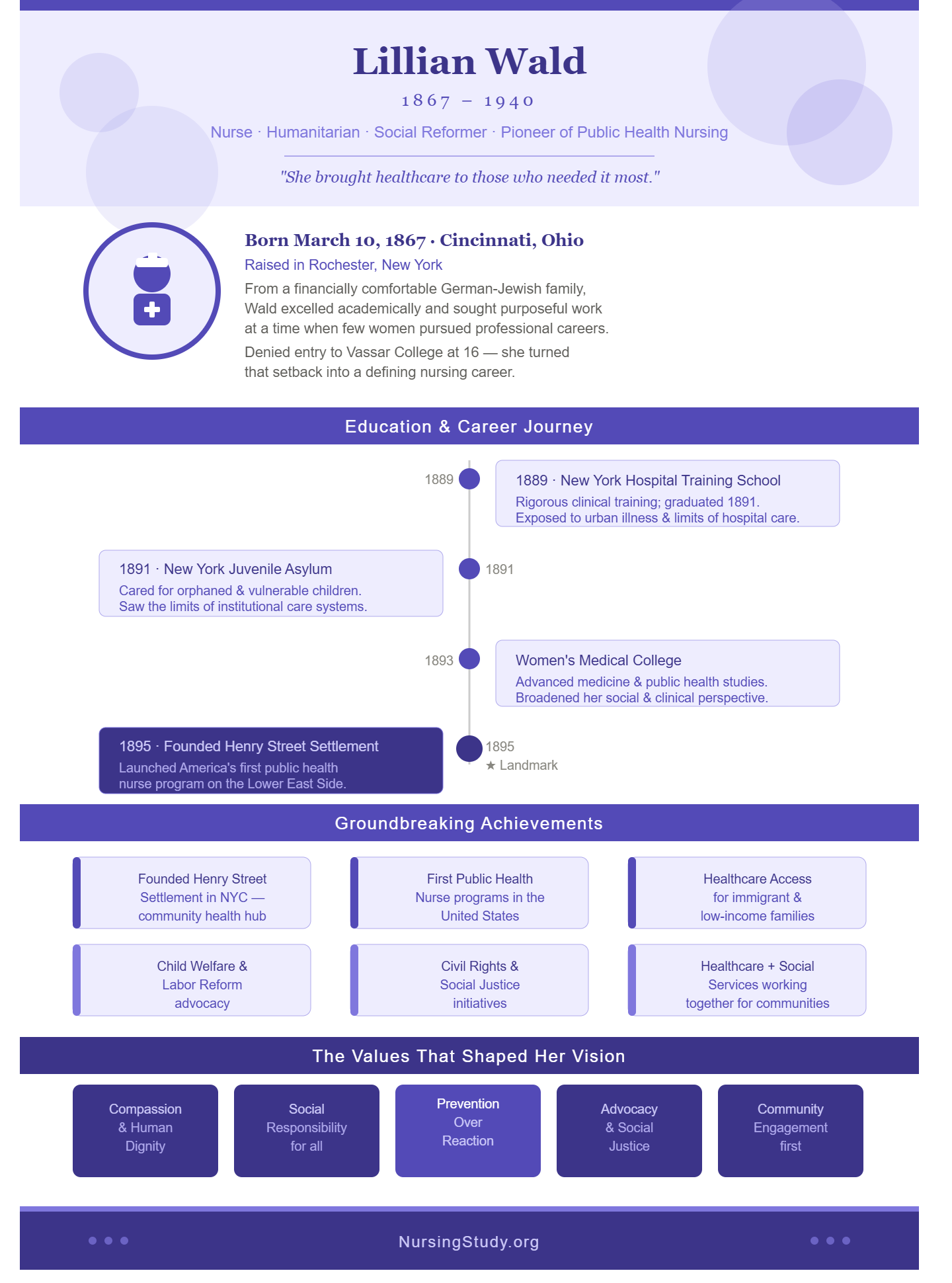
Few individuals have had a greater influence on the development of community health nursing and social reform in the United States than Lillian Wald. Remembered as a pioneering nurse, humanitarian, educator, and advocate, Lillian Wald fundamentally changed how healthcare was delivered to vulnerable populations. At a time when most healthcare services were centered in hospitals and largely inaccessible to poor communities, she envisioned a system that brought care directly into neighborhoods and homes. Her work laid the foundation for modern public health nursing and helped establish nursing as a profession capable of influencing social change as well as patient outcomes.
What distinguishes Lillian Wald from many other historical nursing leaders is the breadth of her impact. She was not only a healthcare provider but also a social reformer who recognized that poverty, inadequate housing, poor sanitation, discrimination, and lack of education could be just as harmful to health as disease itself. Through her leadership, nursing evolved beyond the treatment of illness and became a profession actively engaged in improving community well-being and promoting social justice.
Today, Lillian Wald is widely recognized for several groundbreaking achievements:
- Founding the Henry Street Settlement in New York City.
- Helping create the first organized public health nurse programs in the United States.
- Expanding healthcare access for immigrant and low-income families.
- Advocating for child welfare, labor reform, and educational opportunities.
- Supporting civil rights initiatives and social justice movements.
- Demonstrating how healthcare and social service programs can work together to improve community health.
The influence of Lillian Wald extended far beyond the neighborhoods she served. Many principles that guide modern nursing—including prevention, health promotion, community outreach, interdisciplinary collaboration, and equitable access to health care—can be traced to the work she pioneered more than a century ago. Understanding her life provides important insight into the origins of modern nursing and the continuing role of nurses as leaders, advocates, and agents of change.
Early Life and Education
Lillian Wald was born on March 10, 1867, in Cincinnati, Ohio, into a financially comfortable German-Jewish family. When she was still young, her family relocated to Rochester, New York, a city that she would later consider her true hometown. Growing up in a stable and supportive environment provided her with educational opportunities that were unavailable to many women of her era.
As a child, Lillian Wald demonstrated intellectual curiosity, independence, and a strong interest in learning. She attended private schools in Rochester, where she excelled academically and developed an appreciation for literature, science, and social issues. Unlike many young women from affluent families during the late nineteenth century, she sought a purposeful career rather than a life focused solely on social activities.
A significant moment occurred when she applied to attend Vassar College at the age of sixteen. Despite her academic abilities, she was denied admission because she was considered too young. Although disappointing, this setback ultimately redirected her toward a career that would have an even greater societal impact.
Several factors influenced her decision to pursue healthcare:
- Exposure to educated and socially engaged women.
- A desire to perform meaningful work that benefited others.
- Growing awareness of social inequalities.
- Personal experiences observing healthcare providers caring for family members.
- A belief that women could make significant contributions outside traditional domestic roles.
These experiences helped shape the worldview that would later guide her work in nursing, community health, and social reform.
Nursing Training and Professional Development
In 1889, Lillian Wald enrolled in the New York Hospital Training School, one of the most respected nursing education programs in the country. At the time, formal nursing education was still relatively new in the United States, and admission into a reputable hospital training school required dedication, discipline, and intellectual ability. The program provided rigorous clinical experience while emphasizing professionalism, patient care, and responsibility.
Training at New York Hospital exposed Lillian Wald to a broad range of medical conditions and healthcare challenges. More importantly, it introduced her to the realities of urban illness and the limitations of healthcare systems that primarily focused on treating disease after it occurred rather than preventing it. She graduated in 1891 and began her professional career with a strong clinical foundation.
Following graduation, she accepted a position at the New York Juvenile Asylum, an institution that cared for orphaned, abandoned, and vulnerable children. Her experience there became an important stage in her professional development. While caring for children with a variety of health conditions, she observed both the benefits and shortcomings of large institutional systems. She increasingly questioned whether institutions alone could adequately address the complex social and health needs of disadvantaged populations.
Working at the New York Juvenile Asylum taught her several important lessons:
- Illness is often connected to social and environmental conditions.
- Children thrive best when supported by families and communities.
- Healthcare should address prevention as well as treatment.
- Large institutions may overlook individual needs.
- Nurses can serve as advocates as well as caregivers.
Seeking additional knowledge, Lillian Wald enrolled in the Women’s Medical College, sometimes referred to as the medical college in New York that offered advanced opportunities for women pursuing medical education. Her studies expanded her understanding of medicine, public health concerns, and healthcare systems. Although she did not complete her medical degree, the experience broadened her perspective and helped prepare her for the innovative work she would soon undertake.
The combination of education received through the New York Hospital Training School, practical experience at the New York Juvenile Asylum, and coursework at the Women’s Medical College equipped Lillian Wald with a unique blend of clinical expertise and social awareness. This combination would later distinguish her from many healthcare professionals of her time.
The Values That Shaped Her Humanitarian Vision
The humanitarian philosophy that defined Lillian Wald’s career did not emerge from a single event. Rather, it developed through years of observation, education, and direct interaction with people experiencing poverty and social disadvantage. Her experiences gradually convinced her that healthcare could not be separated from the conditions in which people lived.
Several core values became central to her vision.
Compassion and Human Dignity
Lillian Wald believed that every individual deserved respect, regardless of income, ethnicity, religion, or social status. This conviction guided her interactions with the immigrant families she later served in New York’s Lower East Side. Rather than viewing the poor as charity recipients, she treated them as valued members of the community whose dignity deserved protection.
Social Responsibility
Unlike many healthcare providers of her era, Lillian Wald believed that society had a collective responsibility to address conditions that contributed to illness. She understood that overcrowded housing, unsafe working environments, poor nutrition, and lack of education could negatively affect health outcomes.
Prevention Over Reaction
A defining characteristic of Lillian Wald’s approach was her emphasis on prevention. She recognized that educating families about hygiene, nutrition, sanitation, and disease prevention could often reduce illness before medical intervention became necessary. This philosophy would later become a cornerstone of public health care and community nursing.
Advocacy and Social Justice
Lillian Wald viewed advocacy as an essential responsibility of healthcare professionals. She believed nurses should not remain silent when confronting injustice, discrimination, or harmful social conditions. This perspective later influenced her involvement in numerous reform movements and civil rights initiatives.
Community Engagement
Rather than expecting patients to travel to healthcare institutions, Lillian Wald believed healthcare professionals should become active participants within the communities they served. This belief eventually inspired the community-based model that would define the Henry Street Settlement and transform the practice of nursing.
Together, these values formed the foundation of Lillian Wald’s humanitarian vision. They shaped her understanding of health, influenced her professional decisions, and guided the innovations that would later make her one of the most influential figures in nursing history. Her commitment to compassion, social justice, prevention, and community engagement not only transformed healthcare during her lifetime but also established principles that continue to influence modern nursing and public health practice today.
Lillian Wald’s Early Nursing Career and the Lower East Side
The early professional experiences of Lillian Wald played a decisive role in shaping both her career and the future of American nursing. Although her education at New York Hospital and her work at the New York Juvenile Asylum provided valuable clinical training, it was her exposure to the realities of urban poverty that transformed her understanding of healthcare. During the late nineteenth century, New York City was experiencing rapid population growth fueled by immigration and industrialization. While economic opportunities attracted millions of newcomers, many immigrant families found themselves living in overcrowded neighborhoods where disease, poverty, and inadequate living conditions were common.
For Lillian Wald, these conditions revealed a critical gap in the healthcare system. Hospitals and charitable institutions existed, but they often failed to reach those who needed assistance most. Many residents could not afford medical treatment, lacked transportation to healthcare facilities, or hesitated to seek help because of language barriers and cultural differences. As a result, preventable illnesses frequently progressed into serious health crises.
The experiences Lillian Wald encountered during this period led her to question traditional models of healthcare delivery. Rather than focusing exclusively on treating illness within hospitals, she began exploring ways to provide care directly within communities. This shift in perspective would ultimately influence the development of the Henry Street Settlement, the emergence of the public health nurse, and the broader field of community health nursing.
Social and Health Conditions in Immigrant Communities
To understand why Lillian Wald became such a passionate advocate for healthcare reform, it is important to examine the social environment of New York’s Lower East Side during the late nineteenth century.
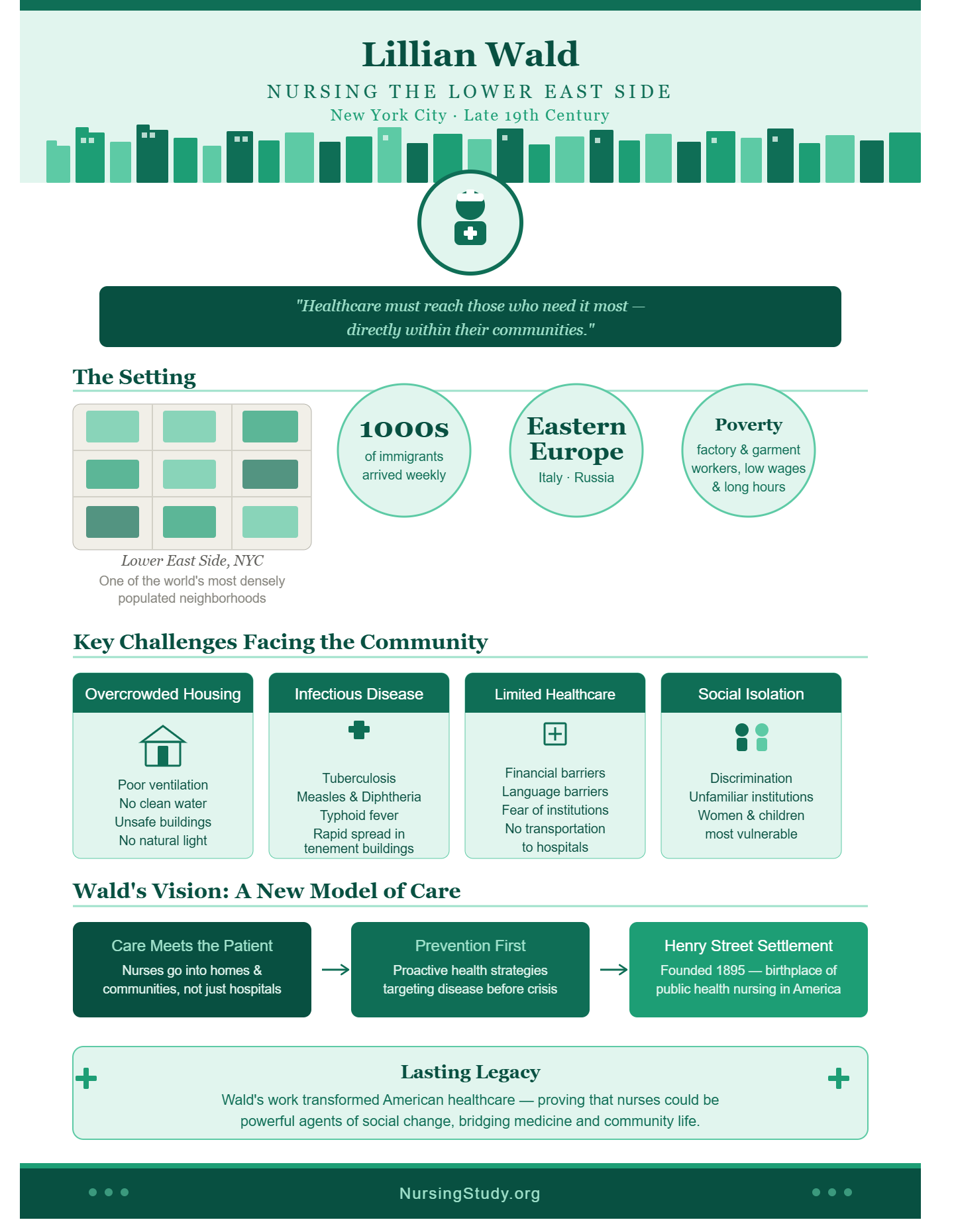
At the time, the Lower East Side was one of the most densely populated urban areas in the world. Thousands of immigrants from Eastern Europe, Italy, Russia, Germany, and other regions settled there in search of economic opportunity and a better life. While many families were hopeful about their future, they often encountered difficult living conditions that negatively affected their health and well-being.
Several major challenges characterized immigrant life in the neighborhood.
Overcrowded Housing
Many families lived in tenement buildings designed to maximize occupancy rather than promote health and safety. It was not unusual for multiple family members to share a single room.
Common housing problems included:
- Poor ventilation.
- Limited access to clean water.
- Inadequate waste disposal systems.
- Insufficient natural light.
- Unsafe building conditions.
These environmental factors contributed to the spread of infectious diseases and created significant public health concerns.
Widespread Poverty
Most immigrant families worked in low-paying jobs within factories, garment workshops, or other labor-intensive industries. Long working hours and unstable employment made it difficult to obtain adequate nutrition, healthcare, and education.
Poverty often resulted in:
- Delayed medical treatment.
- Malnutrition among children.
- Poor maternal health outcomes.
- Increased vulnerability to illness.
- Limited opportunities for upward mobility.
Lillian Wald recognized that poverty was not simply an economic issue but a major determinant of health.
Infectious Disease Burden
The crowded conditions of New York’s Lower East Side created an environment where infectious diseases spread rapidly. Tuberculosis, measles, diphtheria, typhoid fever, and other communicable illnesses affected large numbers of residents.
For example:
- A child infected with measles could unknowingly spread the disease throughout an entire tenement building.
- Tuberculosis often moved quickly among family members living in confined spaces.
- Poor sanitation increased the risk of waterborne illnesses.
These challenges highlighted the need for proactive public health care strategies focused on prevention rather than solely treatment.
Limited Access to Healthcare
Although hospitals existed, healthcare was often inaccessible to poor immigrant families.
Barriers included:
- Financial constraints.
- Language differences.
- Cultural misunderstandings.
- Transportation difficulties.
- Fear of institutional settings.
As a result, many individuals relied on home remedies or delayed seeking treatment until their condition became severe.
Social Isolation and Vulnerability
Newly arrived immigrants frequently faced discrimination, social exclusion, and unfamiliarity with American institutions. Women and children were especially vulnerable because they often had limited access to resources and support systems.
These circumstances convinced Lillian Wald that healthcare providers needed to become active participants in community life rather than remain distant professionals working solely within hospitals.
Experiences That Inspired Community-Based Nursing
The event most often associated with the transformation of Lillian Wald’s career occurred in 1893, a year that would prove pivotal in both her life and the history of nursing.
While teaching a home nursing course to immigrant women on the Lower East Side, Lillian Wald encountered a young girl who urgently requested assistance for her mother. The child led Wald through crowded streets and deteriorating tenement buildings to a small apartment where a seriously ill woman was living in extreme poverty.
The scene left a lasting impression.
The family lacked:
- Adequate medical care.
- Proper sanitation.
- Financial resources.
- Social support.
- Access to essential health services.
Rather than viewing the situation as an isolated case, Lillian Wald recognized it as evidence of a broader systemic problem. She later described this experience as a defining moment that revealed the urgent need for healthcare services delivered directly within communities.
Several important realizations emerged from this encounter.
Healthcare Needed to Reach People Where They Lived
Traditional healthcare institutions expected patients to come to them. However, many families lacked the means to access these services.
Lillian Wald concluded that nurses could have a greater impact by visiting homes and providing care within the community itself. This idea would later become a defining feature of public health nursing.
Prevention Was as Important as Treatment
Many of the illnesses she encountered were linked to environmental and social factors rather than medical conditions alone.
For example:
- Poor sanitation increased disease transmission.
- Overcrowding facilitated the spread of infection.
- Lack of health education contributed to preventable illnesses.
These observations reinforced her belief that health education and disease prevention should be central responsibilities of every health nurse.
Nursing Could Address Social Conditions
As Lillian Wald visited families throughout the neighborhood, she became increasingly aware that health problems were often connected to housing, employment, nutrition, and education.
This understanding expanded the role of the nurse beyond clinical care. Nurses could:
- Advocate for healthier living conditions.
- Educate families about disease prevention.
- Connect individuals with community resources.
- Support children and vulnerable populations.
- Promote long-term improvements in quality of life.
Community Trust Was Essential
One of the most important lessons Lillian Wald learned was that effective healthcare depends on trust. By entering homes and building relationships with families, nurses gained a deeper understanding of patients’ needs and circumstances.
This approach allowed healthcare providers to deliver care that was culturally sensitive, practical, and responsive to community realities.
The Beginning of a New Nursing Model
Inspired by these experiences, Lillian Wald and her colleague Mary Brewster made the bold decision to move into the neighborhood they served. Their goal was not simply to provide medical treatment but to become part of the community itself.
This decision marked the beginning of a revolutionary approach to healthcare. Instead of waiting for patients to seek assistance, nurses actively engaged with families, assessed community needs, provided health education, and addressed social challenges affecting health outcomes.
The principles that emerged from these early experiences would later guide the creation of the House on Henry Street, the development of the Henry Street Settlement, and the establishment of the public health nurse as a recognized professional role. More importantly, they demonstrated that effective healthcare requires an understanding of the social conditions that influence health. Through her work in New York’s Lower East Side, Lillian Wald developed a model of community-based nursing that continues to influence modern public health and nursing practice around the world.
The Founding of the Henry Street Settlement
The founding of the Henry Street Settlement marked one of the most significant developments in the history of nursing, public health, and community-based social services in the United States. What began as a small effort by Lillian Wald and a handful of dedicated colleagues eventually evolved into one of the nation’s most influential centers for healthcare delivery, community support, and social welfare. More importantly, the organization introduced a revolutionary model of care that addressed not only illness but also the social and environmental conditions that contributed to poor health.
The establishment of the Henry Street Settlement represented a fundamental shift in how healthcare was viewed and delivered. During the late nineteenth century, healthcare services were primarily concentrated in hospitals, charitable institutions, and private medical practices. While these facilities played an important role in treating disease, they often failed to reach impoverished immigrant populations living in crowded urban neighborhoods. Lillian Wald believed that effective healthcare required a more comprehensive approach—one that combined nursing care, health education, advocacy, and community engagement.
Her vision emerged directly from her experiences in New York’s Lower East Side, where she witnessed firsthand the hardships facing immigrant families. The poverty, overcrowding, and disease she encountered convinced her that healthcare professionals needed to become active participants in community life rather than remain isolated within institutional settings. This belief ultimately led to the creation of the Henry Street Settlement, an organization that would transform both nursing practice and public health care.
Establishing the Henry Street Settlement
The origins of the Henry Street Settlement can be traced to 1893, when Lillian Wald decided to dedicate herself to serving the residents of the Lower East Side. After witnessing the severe health challenges facing immigrant communities, she recognized that traditional healthcare systems were insufficient for meeting their needs.
Unlike many healthcare providers of the era, Lillian Wald understood that health problems were often rooted in broader social conditions. Families struggling with poverty, overcrowded housing, poor sanitation, and limited educational opportunities frequently experienced higher rates of illness. Treating disease alone was not enough; lasting improvements required addressing the underlying factors affecting health.
Determined to make a difference, Lillian Wald and her colleague Mary Brewster moved into the neighborhood they served. Initially, they rented a modest apartment where they began providing nursing care directly to local residents. Their presence within the community allowed them to develop close relationships with families and gain a deeper understanding of the challenges they faced.
This decision was innovative for several reasons:
- It placed healthcare providers directly within the community.
- It emphasized prevention as well as treatment.
- It encouraged long-term relationships between nurses and families.
- It integrated healthcare with broader social support services.
- It promoted trust and cultural understanding.
As demand for services increased, the small apartment quickly became inadequate. Recognizing the need for a larger and more permanent base of operations, supporters helped secure a property on Henry Street. This building became known as the House on Henry Street and served as the foundation for what would later become the Henry Street Settlement House.
The House on Henry Street was far more than a residence for nurses. It functioned as a center for healthcare delivery, education, and community outreach. Over time, the organization expanded significantly, eventually occupying seven buildings on Henry Street and providing a wide range of services to thousands of residents.
The growth of the settlement reflected the increasing recognition that healthcare and social service programs were closely interconnected. By addressing both medical and social needs, the organization demonstrated a new model of community care that would influence healthcare systems throughout the country.
Mary Brewster and Other Early Collaborators
Although Lillian Wald is rightly celebrated as the visionary behind the Henry Street Settlement, its success was made possible through the contributions of numerous collaborators who shared her commitment to community health and social reform.
Among the most important of these early partners was Mary Brewster, a fellow nurse and close colleague. Brewster had trained alongside Lillian Wald and shared many of her beliefs regarding healthcare access and community service. Together, they formed the core leadership team that launched the settlement’s earliest programs.
The partnership between Wald and Brewster was particularly effective because both women brought complementary strengths to the organization. While Lillian Wald often focused on strategic planning, advocacy, and organizational leadership, Mary Brewster played a critical role in delivering direct care and supporting the daily operations of the settlement.
Their collaboration demonstrated several key principles that remain important in healthcare leadership today:
- Shared commitment to a common mission.
- Interdisciplinary teamwork.
- Community engagement.
- Professional collaboration.
- Mutual respect and trust.
As the organization expanded, additional nurses, educators, physicians, philanthropists, and reform advocates joined the effort. Many supporters recognized that the settlement offered an innovative solution to some of the most pressing urban challenges of the era.
Among those who contributed to the settlement’s growth were:
- Community volunteers.
- Healthcare professionals.
- Social workers.
- Educational leaders.
- Charitable donors.
- Civic reform advocates.
These partnerships enabled the Henry Street Settlement to broaden its reach and provide services beyond nursing care alone.
The collaborative environment also helped shape the future of community nursing of the American healthcare system. By working alongside professionals from different disciplines, nurses demonstrated their ability to serve as leaders within larger public health and social service networks.
Mission and Goals of the Settlement
From its inception, the Henry Street Settlement pursued a mission that extended well beyond the treatment of illness. Lillian Wald envisioned an organization dedicated to improving the overall quality of life for individuals, families, and communities.
The settlement’s mission was based on a simple but transformative idea: health is influenced by social, economic, educational, and environmental factors. Therefore, improving health required a comprehensive approach that addressed these interconnected issues.
Several core goals guided the work of the settlement.
Providing Accessible Healthcare
One of the primary objectives was to improve access to health care for populations that had historically been underserved. Nurses conducted home visits, treated illnesses, monitored chronic conditions, and provided preventive services directly within the community.
This approach was especially important for:
- Immigrant families.
- Children.
- Older adults.
- Low-income workers.
- Individuals unable to access hospital-based care.
Promoting Health Education
The settlement emphasized education as a powerful tool for improving community health. Nurses taught families about:
- Hygiene practices.
- Nutrition.
- Infant care.
- Disease prevention.
- Home sanitation.
These educational efforts helped reduce preventable illnesses and empowered residents to take a more active role in managing their health.
Supporting Children and Families
Recognizing that healthy communities begin with healthy families, the settlement developed programs designed to support child development and family well-being.
Services included:
- Educational programs.
- Recreational activities.
- Child welfare initiatives.
- Family assistance programs.
- Community support services.
Advancing Social Welfare
The settlement also became a leader in social welfare initiatives. Rather than focusing solely on healthcare, it addressed broader social concerns affecting residents’ lives.
These efforts included advocacy for:
- Better housing conditions.
- Improved working environments.
- Educational opportunities.
- Child protection policies.
- Community development programs.
Through these initiatives, the settlement became an important institution in social welfare history and demonstrated how healthcare organizations could contribute to social progress.
Building Stronger Communities
Perhaps the most enduring goal of the Henry Street Settlement was community empowerment. Rather than imposing solutions from outside the neighborhood, the organization worked closely with residents to identify needs and develop appropriate responses.
This community-centered approach fostered trust, participation, and long-term sustainability.
The mission established by Lillian Wald ultimately transformed the settlement into much more than a healthcare organization. It became a model for integrating nursing, education, advocacy, and social service programs within a single community-based institution. By addressing both health and social conditions, the Henry Street Settlement House demonstrated that meaningful improvements in public well-being require a holistic approach. Its success not only improved the lives of countless New Yorkers but also provided a blueprint for community health initiatives that continue to influence nursing and public health practice today.
Lillian Wald and the Birth of Public Health Nursing
Among the many contributions made by Lillian Wald, none has had a more profound and lasting impact on healthcare than her role in creating and defining modern public health nursing. While nursing had long focused on caring for individuals in homes, hospitals, and charitable institutions, Lillian Wald transformed the profession by developing a new model that addressed the health needs of entire communities. Her work expanded the scope of nursing beyond bedside care and established a framework that connected healthcare, prevention, education, advocacy, and social service.
Today, public health nursing is recognized as a vital specialty within healthcare systems worldwide. Public health nurses work in schools, community health centers, government agencies, and home-care settings, focusing on disease prevention, health promotion, and community well-being. Many of these responsibilities can be traced directly to the vision developed by Lillian Wald during her work in New York’s Lower East Side. Historians and nursing scholars widely acknowledge her as the founder of modern public health nursing because she created a model that integrated nursing care with broader efforts to improve social and environmental conditions affecting health.
The emergence of public health nursing represented a major shift in healthcare philosophy. Instead of waiting for illness to occur and then responding to it, Lillian Wald advocated for preventing disease, promoting healthy living, and addressing the root causes of poor health. This approach would eventually influence nursing education, healthcare policy, and community health programs across the United States and beyond.
The Origins of Public Health Nursing
The origins of public health nursing are closely connected to the experiences Lillian Wald gained while caring for immigrant families in the Lower East Side during the early 1890s. As she visited homes and interacted with residents, she realized that many health problems could not be solved through medical treatment alone.
Families frequently struggled with challenges such as:
- Overcrowded housing.
- Poor sanitation.
- Unsafe working conditions.
- Malnutrition.
- Limited educational opportunities.
- Inadequate access to healthcare services.
These conditions contributed to high rates of illness, particularly among women and children. Traditional healthcare institutions focused primarily on treating disease after it developed, but Lillian Wald believed that a more effective approach would involve preventing illness and improving the conditions that contributed to poor health in the first place.
This realization became the foundation of what would later become public health care. Rather than viewing patients as isolated individuals, Lillian Wald examined the broader circumstances affecting their lives. She understood that health was influenced by social, economic, environmental, and educational factors. This perspective was revolutionary for its time and remains a central principle of modern public health practice.
The establishment of the Henry Street Settlement in 1893 provided the organizational structure needed to put these ideas into practice. Through the settlement, nurses worked directly within neighborhoods, delivering healthcare services to families who otherwise might never receive professional medical attention. These nurses not only treated illness but also taught hygiene, promoted disease prevention, connected families with resources, and advocated for healthier living conditions.
Several innovations distinguished Wald’s approach from traditional nursing models:
- Delivering care directly within the community.
- Emphasizing prevention alongside treatment.
- Addressing social and environmental determinants of health.
- Integrating nursing with education and social support.
- Focusing on population health rather than individual illness alone.
These principles helped establish what many scholars consider the first organized public health nursing program in the United States.
Coining the Term “Public Health Nurse”
One of Lillian Wald’s most significant contributions was her decision to define and name this emerging field. Recognizing that existing nursing titles did not adequately describe the work being performed in communities, she coined the term “public health nurse” in 1893. The phrase reflected her belief that nurses should serve not only individual patients but also the broader public.
The decision to coin the term “public health nurse” was more than a simple change in terminology. It represented a new professional identity and a new philosophy of care.
According to Lillian Wald, a public health nurse was not merely a visiting caregiver. Instead, the role involved understanding the relationship between health and the conditions in which people lived. Nurses were expected to assess community needs, educate families, advocate for social improvements, and work collaboratively with other organizations to address health problems at their source.
This concept differed substantially from traditional nursing roles of the era.
A hospital-based nurse primarily focused on:
- Treating illness.
- Assisting physicians.
- Monitoring patient recovery.
- Managing clinical care.
By contrast, a health nurse working within the community focused on:
- Disease prevention.
- Health promotion.
- Family education.
- Community outreach.
- Social advocacy.
- Environmental health concerns.
For Lillian Wald, these responsibilities were inseparable. She believed that nurses should understand the complete context of a patient’s life rather than treating symptoms in isolation. Her model linked healthcare with housing, education, employment, sanitation, and social welfare.
The influence of this idea spread rapidly. Public health nursing programs emerged throughout the country, and the role of the public health nurse became increasingly recognized as an essential component of healthcare delivery. The field’s growth eventually contributed to the formation of the National Organization for Public Health Nursing, further professionalizing the specialty and expanding its influence.
Principles of Community-Based Nursing Care
The nursing model developed by Lillian Wald was built upon a set of principles that continue to guide community health practice today. These principles distinguished her work from traditional healthcare approaches and helped establish a new standard for nursing care.
Health as a Community Responsibility
One of Wald’s core beliefs was that health should be viewed as a community concern rather than solely an individual matter. She understood that infectious diseases, poor sanitation, and unhealthy living conditions could affect entire neighborhoods.
For example, an outbreak of tuberculosis in a crowded tenement building did not threaten only one family. It posed risks to every resident in the community. This understanding encouraged nurses to address population-level health concerns rather than focusing exclusively on individual cases.
Prevention Before Treatment
A defining feature of Wald’s philosophy was her emphasis on prevention.
Rather than waiting for illness to develop, nurses worked to reduce risk factors through:
- Health education.
- Vaccination advocacy.
- Hygiene instruction.
- Nutritional guidance.
- Maternal and child health programs.
This preventive approach remains one of the foundational principles of modern public health nursing.
Care Within the Community
Unlike hospital-centered models of care, Wald believed healthcare should be delivered where people lived and worked.
Community-based care offered several advantages:
- Greater accessibility.
- Improved continuity of care.
- Better understanding of patient circumstances.
- Stronger relationships between nurses and families.
- Increased trust within underserved populations.
This philosophy later influenced home healthcare, school nursing, community clinics, and many other healthcare delivery models.
Addressing Social Determinants of Health
Long before the phrase “social determinants of health” became common, Lillian Wald recognized that health outcomes were strongly influenced by factors outside traditional medicine.
She advocated for improvements in:
- Housing conditions.
- Workplace safety.
- Educational opportunities.
- Child welfare.
- Access to nutritious food.
- Community resources.
By addressing these factors, nurses could help prevent illness and improve overall community well-being.
Advocacy as a Nursing Responsibility
Perhaps one of Wald’s most enduring contributions was her belief that nurses should serve as advocates for vulnerable populations.
This meant:
- Identifying barriers to healthcare.
- Speaking on behalf of underserved communities.
- Promoting policy changes.
- Supporting social justice initiatives.
- Working to reduce health inequities.
This advocacy role remains a defining characteristic of nursing leadership today.
The principles developed by Lillian Wald transformed nursing from a profession focused primarily on treating illness into one actively engaged in improving community health. Through the Henry Street Settlement, the development of the public health nurse, and her commitment to prevention, education, and social reform, Lillian Wald established a model of community-based nursing that continues to influence healthcare systems around the world. Her work not only gave birth to public health nursing but also demonstrated how nurses can serve as powerful agents of social change and public well-being.
The Work of Henry Street Settlement Nurses
The success and influence of the Henry Street Settlement were not solely the result of visionary leadership; they were also made possible by the dedicated work of the nurses who served within the community. Under the guidance of Lillian Wald, the Henry Street nurse became much more than a caregiver who treated illness. These nurses functioned as educators, advocates, counselors, community organizers, and public health leaders. Their work represented a dramatic departure from traditional nursing roles of the late nineteenth and early twentieth centuries and helped establish many practices that remain central to community health nursing today.
At a time when most nursing care was delivered in hospitals, Henry Street Settlement nurses entered crowded apartments, tenement buildings, schools, workplaces, and community centers to provide care where it was needed most. They recognized that many health problems could not be fully addressed within institutional settings because illness was often connected to poverty, poor housing, inadequate sanitation, and limited educational opportunities.
The nursing model developed at the settlement emphasized several key principles:
- Bringing healthcare directly to individuals and families.
- Promoting disease prevention and health education.
- Addressing social and environmental factors affecting health.
- Building trust within underserved communities.
- Expanding healthcare access for vulnerable populations.
Through these efforts, the nurses of the Henry Street Settlement House helped redefine the profession and demonstrated how nursing could contribute to broader improvements in community well-being.
Home Visiting Nursing Services
One of the most innovative aspects of the Henry Street Settlement was its home visiting nursing program. Rather than waiting for patients to seek treatment at hospitals or clinics, nurses traveled directly into neighborhoods and provided care within people’s homes.
This approach was particularly important because many residents of New York’s Lower East Side faced significant barriers to healthcare. Families often lacked transportation, financial resources, or access to healthcare facilities. Language differences and cultural concerns could also discourage individuals from seeking medical attention.
Home visits allowed nurses to overcome these obstacles and provide care to people who might otherwise go untreated.
During a typical visit, a Henry Street nurse might:
- Assess a patient’s physical condition.
- Monitor recovery from illness or injury.
- Provide wound care and basic treatments.
- Assist with maternal and infant health needs.
- Educate family members about caregiving practices.
- Identify environmental risks affecting health.
- Connect families with additional community resources.
Unlike hospital-based encounters, home visits gave nurses a firsthand view of the circumstances influencing a patient’s health. They could observe housing conditions, sanitation practices, nutritional challenges, and family dynamics that might contribute to illness.
For example, a nurse caring for a child with recurring respiratory infections might discover that the family lived in an overcrowded apartment with poor ventilation and exposure to indoor pollutants. Understanding these environmental factors allowed the nurse to provide recommendations that addressed the underlying causes of illness rather than simply treating symptoms.
Home visiting also strengthened relationships between nurses and community members. Because nurses became familiar faces within neighborhoods, families were often more willing to seek guidance and discuss health concerns openly. This trust became one of the defining strengths of the settlement’s nursing program.
The effectiveness of home-based care soon became apparent. As demand increased, the settlement expanded its nursing workforce and developed one of the nation’s most respected community nursing programs. These efforts eventually contributed to the creation of the visiting nurse service of new York, which further institutionalized home healthcare and extended its reach to larger populations.
Health Education and Disease Prevention
While direct patient care was an important component of the settlement’s work, Lillian Wald believed that preventing illness was equally important. Consequently, health education became a central responsibility of settlement nurses.
The emphasis on education reflected a fundamental principle of public health care: empowering individuals and families with knowledge can reduce disease, improve health outcomes, and strengthen communities.
Settlement nurses regularly taught residents about topics such as:
- Personal hygiene.
- Household sanitation.
- Nutrition and food safety.
- Infant and child care.
- Infectious disease prevention.
- Maternal health practices.
- Healthy living habits.
These educational efforts were particularly valuable in immigrant communities, where families often had limited access to reliable health information. Nurses provided practical guidance that residents could apply in their daily lives despite financial constraints and challenging living conditions.
For example, during outbreaks of infectious diseases, nurses educated families about:
- Handwashing practices.
- Proper waste disposal.
- Isolation of infected individuals.
- Cleaning and disinfecting living spaces.
- Recognizing early signs of illness.
Such interventions helped reduce disease transmission and protected both individual households and the broader community.
The settlement’s focus on prevention also extended to child health. Nurses monitored children’s growth and development, taught parents about nutrition, and encouraged practices that supported healthy childhood development.
These efforts reflected Lillian Wald’s belief that long-term health improvements required more than medical treatment. Communities needed the knowledge and resources necessary to prevent illness before it occurred.
The educational work performed by settlement nurses helped establish prevention as a core responsibility of the modern public health nurse. Today, public health nurses continue to provide health education in schools, clinics, workplaces, and community organizations, demonstrating the lasting influence of the model pioneered at Henry Street.
Improving Access to Healthcare for Vulnerable Populations
Perhaps the most significant achievement of the Henry Street Settlement was its success in improving access to health care for populations that had historically been underserved.
During the late nineteenth and early twentieth centuries, healthcare disparities were widespread. Immigrant families, low-income workers, women, children, and older adults frequently faced obstacles that limited their ability to obtain medical care. These barriers included financial hardship, discrimination, transportation difficulties, language differences, and a lack of available healthcare providers.
Lillian Wald understood that addressing these barriers required more than simply increasing the number of healthcare services. Healthcare delivery itself needed to become more accessible and responsive to community needs.
The settlement adopted several strategies to achieve this goal.
Delivering Care Regardless of Ability to Pay
Many families receiving services from settlement nurses could not afford private medical care. The Henry Street Settlement sought to ensure that financial limitations did not prevent individuals from receiving essential healthcare services.
This approach reflected Wald’s commitment to healthcare as a social responsibility rather than a privilege reserved for those with economic resources.
Reaching Marginalized Communities
Settlement nurses actively served populations that were often overlooked by traditional healthcare systems.
These groups included:
- Newly arrived immigrants.
- Children living in poverty.
- Working-class families.
- Women with limited healthcare access.
- Older adults requiring ongoing support.
By entering neighborhoods directly, nurses were able to reach individuals who might never visit a healthcare facility.
Integrating Health and Social Services
One of the most innovative features of the settlement was its integration of healthcare with social services and instruction. Nurses recognized that many health problems were closely linked to social challenges such as unemployment, poor housing, and inadequate education.
As a result, they frequently helped families access:
- Educational programs.
- Child welfare resources.
- Housing assistance.
- Employment support.
- Community services.
This holistic approach improved overall well-being while addressing factors contributing to poor health.
Supporting Population-Level Health Improvements
The work of settlement nurses extended beyond individual patient care to include broader community health initiatives. By collecting information about common health concerns and community needs, nurses helped identify trends and advocate for reforms that benefited larger populations.
Their efforts contributed to improvements in:
- Sanitation standards.
- School health services.
- Child welfare programs.
- Community health infrastructure.
- Public health policy.
These achievements demonstrated that nurses could influence not only individual outcomes but also the health of entire communities.
The work performed by Henry Street Settlement nurses transformed healthcare delivery in the United States. Through home visiting nursing services, health education initiatives, and efforts to improve access to health care, they created a model of community-based practice that remains highly relevant today. Guided by the vision of Lillian Wald, these nurses showed that effective healthcare requires more than treating disease—it requires understanding people, supporting communities, and addressing the conditions that shape health. Their contributions helped establish the foundations of modern public health nursing and continue to inspire healthcare professionals committed to advancing health equity and community well-being.
Lillian Wald’s Contributions to Public Health and Social Reform
While Lillian Wald is best known for founding the Henry Street Settlement and helping establish the profession of the public health nurse, her influence extended far beyond community nursing. Throughout her career, she worked tirelessly to address the social conditions that contributed to illness, poverty, and inequality. For Lillian Wald, improving health required more than providing medical treatment; it also required transforming the social, economic, and political environments that affected people’s lives.
This broader perspective made Lillian Wald one of the most influential reformers of the Progressive Era. She understood that issues such as unsafe workplaces, inadequate education, racial discrimination, child labor, and gender inequality had direct consequences for health and well-being. As a result, she used her position as a respected nurse, humanitarian, and social reformer to advocate for meaningful change at both the local and national levels.
Her contributions to public health and social reform can be seen in three major areas:
- The development of school nursing and child health programs.
- Advocacy for labor reform and child welfare protections.
- Leadership in civil rights, women’s rights, and broader social justice movements.
Together, these efforts expanded the role of nursing and demonstrated how healthcare professionals could become powerful advocates for social progress.
School Nursing Programs and Child Health Initiatives
One of Lillian Wald’s most important contributions to healthcare was her role in developing school nursing programs. During the late nineteenth and early twentieth centuries, many children living in urban communities faced serious health challenges. Infectious diseases, poor nutrition, inadequate sanitation, and limited access to healthcare frequently interfered with school attendance and academic achievement.
School officials often responded to health concerns by excluding sick children from the classroom. While this practice was intended to reduce disease transmission, it created additional problems. Children missed valuable educational opportunities, and families often lacked access to the healthcare services necessary to address the underlying health issues.
Recognizing this problem, Lillian Wald advocated for placing nurses in schools to provide preventive care and health education. In 1902, she worked with the New York City Board of Education to launch one of the nation’s first public school nursing initiatives. The program assigned a nurse to work directly within schools, helping identify and address health problems before they became severe.
The results were remarkable.
School nurses were able to:
- Conduct health assessments.
- Monitor communicable diseases.
- Provide health education.
- Assist families in obtaining medical care.
- Reduce unnecessary school absences.
- Promote hygiene and disease prevention.
Historical reports demonstrated that the presence of school nurses significantly reduced student absenteeism while improving health outcomes. The success of the initiative quickly attracted national attention and became a model for school nursing programs across the United States.
The school nursing movement reflected several principles that Lillian Wald consistently promoted:
- Prevention is more effective than crisis intervention.
- Children should have equitable access to healthcare services.
- Education and health are closely interconnected.
- Nurses can play a leadership role in community health.
Beyond school nursing, Lillian Wald supported numerous child health initiatives aimed at improving the well-being of vulnerable children. Nurses associated with the Henry Street Settlement provided maternal and infant care, monitored child development, and educated parents about nutrition, sanitation, and disease prevention.
These efforts contributed to healthier childhood environments and helped establish child health as a central focus of modern public health care.
Labor Reform and Child Welfare Advocacy
Another defining aspect of Lillian Wald’s career was her commitment to labor reform and child welfare. Her experiences working among immigrant families in New York’s Lower East Side exposed her to the harsh realities of industrial life. Many residents worked long hours in dangerous conditions for low wages, while children were often employed in factories, workshops, and other labor-intensive environments.
From a public health perspective, these conditions had serious consequences. Workplace injuries, occupational illnesses, fatigue, poor nutrition, and inadequate housing contributed to widespread health problems among working-class families.
Rather than viewing these issues as separate from healthcare, Lillian Wald considered them important public health concerns. She believed that improving health required addressing the social and economic circumstances that placed individuals at risk.
One area of particular concern was child labor. During the early twentieth century, millions of children worked in factories, mines, mills, and agricultural settings. Many endured hazardous conditions that endangered both their health and development.
To combat these practices, Lillian Wald became actively involved with the National Child Labor Committee, an organization dedicated to ending exploitative child labor practices and promoting educational opportunities for children. Through advocacy, public awareness campaigns, and policy reform efforts, the committee helped build support for stronger labor protections.
Wald’s involvement with the National Child Labor Committee reflected her broader belief that children deserved safe environments in which to grow, learn, and thrive. She argued that protecting children was not only a moral obligation but also an essential investment in the nation’s future health and prosperity.
Her labor reform efforts extended beyond child welfare. She also advocated for:
- Safer working conditions.
- Reasonable work hours.
- Improved occupational health standards.
- Better housing conditions for workers.
- Expanded social protections for vulnerable populations.
These initiatives demonstrated how Lillian Wald connected healthcare with broader efforts to improve quality of life. Her work helped establish the principle that public health professionals have a responsibility to address social conditions that contribute to illness and suffering.
Civil Rights, Women’s Rights, and Social Justice Efforts
The commitment of Lillian Wald to social justice extended beyond healthcare and labor reform. Throughout her life, she actively supported movements aimed at expanding civil rights, promoting gender equality, and reducing discrimination.
At a time when racial segregation and discrimination were widespread in the United States, Lillian Wald advocated for racial equality and inclusion. She believed that all individuals deserved equal opportunities regardless of race, ethnicity, religion, or social background.
This commitment led her to support the creation of the National Association for the Advancement of Colored People. In 1909, Lillian Wald joined other prominent reformers and activists in helping establish the NAACP, an organization that would become one of the most influential civil rights groups in American history. The Advancement of Colored People movement sought to combat racial discrimination, promote equal rights, and challenge systemic injustices affecting African Americans.
Wald’s involvement in the founding of the NAACP demonstrated her willingness to address controversial social issues even when doing so carried political risks. She viewed civil rights as a public health issue because discrimination and social exclusion often contributed to poorer health outcomes and reduced access to opportunities.
In addition to racial justice, Lillian Wald was a strong advocate for women’s rights. During a period when women faced significant legal, political, and professional barriers, she supported efforts to expand opportunities for women in education, employment, and public life.
Her advocacy reflected the belief that:
- Women should have access to quality education.
- Women should participate fully in civic life.
- Women should have opportunities for professional advancement.
- Gender equality contributes to healthier communities.
- Social justice is essential for long-term public health improvement.
As a respected healthcare leader, Lillian Wald demonstrated that women could exercise influence in areas traditionally dominated by men. Her leadership helped challenge assumptions about women’s roles and inspired future generations of nurses, reformers, and public health professionals.
Beyond specific causes, Wald consistently championed broader principles of social justice. She believed that healthcare professionals should advocate for marginalized populations and work to reduce inequities affecting community health.
This philosophy guided her involvement in numerous organizations and reform movements dedicated to improving society. Whether advocating for children, workers, women, immigrants, or racial minorities, Lillian Wald remained committed to the idea that health and justice are deeply interconnected.
The contributions of Lillian Wald to public health and social reform demonstrate the extraordinary breadth of her influence. Through pioneering school nursing programs, advancing child welfare initiatives, supporting labor reform, and promoting civil rights and gender equality, she expanded the boundaries of nursing and public health practice. Her work showed that nurses can play a vital role not only in treating illness but also in addressing the social conditions that shape health outcomes. More than a century later, her commitment to equity, advocacy, and community well-being continues to serve as a powerful example of how healthcare professionals can contribute to meaningful and lasting social change.
The Development of the Visiting Nurse Service
The development of the Visiting Nurse Service of New York represents one of the most significant achievements in the history of nursing and community healthcare. What began as a small neighborhood effort led by Lillian Wald and her colleagues eventually evolved into the largest and most influential visiting nursing organization in the United States. Through this transformation, the principles established at the Henry Street Settlement were expanded from a local initiative serving immigrant communities into a comprehensive healthcare model that influenced nursing practice throughout the nation.
The growth of the visiting nurse movement reflected the increasing recognition that healthcare should not be limited to hospitals and clinics. Lillian Wald believed that many individuals, particularly the poor, the elderly, children, and those recovering from illness, could benefit greatly from professional nursing care delivered within their homes. This belief became the foundation of a system that brought healthcare directly to communities and helped redefine the role of the public health nurse.
The evolution of the visiting nurse service also demonstrated the practical application of Wald’s broader vision. She understood that effective healthcare required more than treating disease. It involved educating families, preventing illness, addressing social conditions, and ensuring equitable access to health care. These principles remained central as the organization expanded and became a model for community-based healthcare throughout the United States.
From Henry Street Settlement Nurses to a Formal Nursing Organization
The origins of the visiting nurse service can be traced directly to the work of Lillian Wald and Mary Brewster in 1893. After witnessing the severe health challenges faced by immigrant families in New York’s Lower East Side, the two nurses began providing home-based care to residents who lacked access to traditional healthcare services. Their earliest efforts consisted of visiting families in crowded tenement apartments, treating illness, educating caregivers, and helping residents navigate social challenges affecting their health.
As word of their work spread throughout the community, demand for services increased rapidly. What initially involved only Wald and Brewster soon required additional nurses and greater organizational support. The growing program became a central component of the Henry Street Settlement House, where nursing services were integrated with education, recreation, and other community programs.
Several factors contributed to the rapid expansion of the nursing service:
- Increasing population growth within immigrant communities.
- High rates of communicable diseases.
- Limited access to physicians and hospitals.
- Public recognition of the effectiveness of home nursing care.
- Growing support from philanthropists and civic leaders.
As the organization expanded, the nursing service became increasingly structured and professionalized. Rather than operating as an informal charitable effort, it developed into a coordinated healthcare system with trained personnel, standardized procedures, and clearly defined goals. Nurses received specialized preparation in community health, home care, and preventive services, helping establish new standards for professional nursing practice.
The scale of growth was remarkable. By the early twentieth century, the nursing staff had expanded significantly, enabling services to reach thousands of residents throughout New York City. By 1906, the settlement employed dozens of nurses serving the Lower East Side, and by 1914, more than one hundred nurses were providing care through the organization. At the time of Lillian Wald’s death in 1940, nearly 300 nurses were working through multiple branches connected to the settlement.
The increasing size and complexity of the program eventually led to the formalization of the nursing service as a distinct organization. In 1944, the nursing division separated from the Henry Street Settlement and officially became the Visiting Nurse Service of New York, creating an independent institution dedicated to providing home healthcare and community nursing services. This transition allowed the organization to expand its operations while continuing the mission originally established by Wald.
The creation of the Nurse Service of New York represented more than an administrative change. It signified the maturation of public health nursing into a recognized and respected healthcare specialty capable of serving large populations while maintaining its commitment to community-centered care.
Influence on Community Health Services Nationwide
The impact of the Visiting Nurse Service of New York extended far beyond New York City. As healthcare leaders, policymakers, educators, and nurses observed the success of the Henry Street model, similar programs began appearing throughout the United States.
Several aspects of the organization attracted national attention.
Demonstrating the Effectiveness of Home-Based Care
One of the most important contributions of the visiting nurse service was its demonstration that high-quality nursing care could be delivered effectively in patients’ homes.
Home-based care provided numerous benefits:
- Reduced barriers to healthcare access.
- Improved continuity of care.
- Earlier identification of health problems.
- Better patient and family engagement.
- Greater opportunities for prevention and education.
These advantages helped persuade healthcare leaders that community-based nursing could complement hospital services and improve overall health outcomes.
Establishing Standards for Public Health Nursing
The organization also played a critical role in shaping the professional identity of the public health nurse. Nurses working within the visiting service were expected to possess not only clinical expertise but also skills in education, community assessment, advocacy, and social support.
Their responsibilities included:
- Providing direct patient care.
- Teaching disease prevention strategies.
- Supporting maternal and child health.
- Coordinating community resources.
- Identifying public health concerns.
- Promoting healthier living environments.
These expectations influenced nursing education programs across the country and helped establish community health nursing as a recognized specialty.
Influencing Healthcare Policy and Public Health Programs
The success of the visiting nurse service provided evidence that community-based healthcare programs could improve population health while reducing the burden on hospitals and charitable institutions.
As a result, many local and state governments began incorporating similar approaches into public health initiatives. The work pioneered by Lillian Wald influenced:
- Municipal nursing programs.
- School health services.
- Maternal and child health programs.
- Home healthcare services.
- Community health departments.
- Preventive care initiatives.
These developments helped integrate public health nursing into the broader healthcare system and expanded opportunities for nurses to serve in leadership roles.
Advancing Professional Nursing Organizations
The influence of the visiting nurse movement also contributed to the growth of national professional organizations dedicated to community health. Wald herself helped establish the National Organization for Public Health Nursing, which promoted professional standards, education, and advocacy for public health nurses across the country. Through these efforts, the ideas developed at Henry Street became embedded within the nursing profession itself.
Creating a Lasting Model for Community Healthcare
Perhaps the most enduring contribution of the Visiting Nurse Service of New York was the creation of a healthcare model that continues to influence modern practice.
Many contemporary services reflect principles first developed through the Henry Street visiting nurse program, including:
- Home healthcare agencies.
- Community health centers.
- Transitional care programs.
- Chronic disease management services.
- Population health initiatives.
- Community outreach programs.
These programs share a common belief that healthcare should be accessible, preventive, and responsive to the needs of diverse communities.
The development of the Visiting Nurse Service of New York illustrates how a local nursing initiative can evolve into a nationally influential institution. Beginning with the efforts of Lillian Wald and Mary Brewster in the immigrant neighborhoods of New York’s Lower East Side, the organization grew into a formal nursing service that transformed healthcare delivery. By expanding the reach of nursing beyond hospital walls and demonstrating the value of community-based care, the visiting nurse movement reshaped public health practice and established a model that continues to guide healthcare systems today. Its legacy remains a powerful reminder that effective healthcare is not defined solely by where care is delivered, but by how successfully it meets the needs of the people it serves.
Challenges and Leadership Lessons From Lillian Wald’s Career
The remarkable accomplishments of Lillian Wald are often highlighted in discussions of nursing history, public health, and social reform. However, her achievements become even more impressive when viewed in the context of the numerous obstacles she faced throughout her career. The healthcare innovations associated with Lillian Wald, the Henry Street Settlement, and the development of the public health nurse did not emerge in an environment of widespread support and acceptance. Instead, they were developed during a period marked by social inequality, political resistance, limited healthcare infrastructure, and skepticism toward new ideas.
Many of the reforms that seem obvious today—such as community-based healthcare, school nursing, home visiting services, child welfare protections, and health education initiatives—were considered unconventional or even controversial when Lillian Wald first proposed them. Her ability to navigate these challenges while maintaining her commitment to healthcare equity offers valuable leadership lessons for healthcare professionals, policymakers, and community advocates.
The story of Lillian Wald’s career demonstrates that meaningful change often requires persistence, courage, collaboration, and a willingness to challenge established systems. Her leadership not only transformed nursing practice but also provided a model for addressing complex social and public health issues.
Obstacles to Public Health Reform
The work of Lillian Wald unfolded during a time of rapid industrialization and urban growth in the United States. Although these developments created economic opportunities, they also generated significant social and health challenges. Reformers seeking to address these issues frequently encountered resistance from political leaders, business interests, and members of the public who were reluctant to embrace change.
One of the first obstacles faced by Lillian Wald was the prevailing view of healthcare itself. During the late nineteenth century, healthcare was largely focused on diagnosing and treating disease after it occurred. The idea that nurses should actively work to prevent illness and improve community conditions was not yet widely accepted.
Many healthcare professionals questioned whether community-based nursing could be effective. Critics often believed that nursing belonged primarily within hospitals and that home visiting programs represented a charitable activity rather than a legitimate healthcare service.
Resistance to Preventive Healthcare
A central component of Wald’s philosophy was the belief that prevention was as important as treatment. Today, preventive care is a cornerstone of modern public health, but this concept was far less established during her lifetime.
When Lillian Wald advocated for:
- Health education.
- Home visiting services.
- School nursing programs.
- Community sanitation initiatives.
- Disease prevention efforts.
many policymakers and healthcare leaders remained unconvinced of their value.
Because the benefits of prevention were often long-term rather than immediately visible, securing support and funding for these programs could be difficult. Wald frequently had to demonstrate that investing in preventive care would ultimately reduce illness, improve productivity, and strengthen communities.
Poverty and Structural Inequality
Another major challenge involved the social conditions affecting the communities she served. Families living in New York’s Lower East Side often faced overwhelming hardships that could not be solved through healthcare alone.
These challenges included:
- Extreme poverty.
- Overcrowded housing.
- Unsafe working conditions.
- Limited educational opportunities.
- Language barriers among immigrant populations.
- Inadequate sanitation infrastructure.
Even the most skilled nurse could not eliminate these problems through medical treatment alone. As a result, Lillian Wald recognized that public health reform required broader social change.
Addressing these issues was often difficult because many political and economic institutions benefited from maintaining the status quo. Efforts to improve housing standards, regulate labor conditions, and protect vulnerable populations frequently encountered opposition from individuals and organizations concerned about costs or government intervention.
Gender Barriers in Professional Leadership
As a woman working during a period when leadership positions were largely dominated by men, Lillian Wald faced additional challenges. Women were often excluded from political decision-making processes and had limited influence within many professional organizations.
Despite these barriers, Wald became a respected national voice on healthcare and social reform. Her success required exceptional determination and the ability to build relationships with influential policymakers, philanthropists, healthcare leaders, and community organizations.
Her achievements are particularly significant because they demonstrated that women could exercise leadership not only within nursing but also within broader public policy and social reform movements.
Political and Social Controversy
Many of the causes supported by Lillian Wald generated political controversy. Her advocacy for labor reform, racial equality, women’s rights, and social justice sometimes placed her at odds with powerful groups.
For example, her support for the NAACP, labor protections, and other reform initiatives challenged prevailing social norms and invited criticism from opponents who viewed such efforts as radical. Similarly, her involvement with organizations such as the American Civil Liberties Union and the League for Peace and Freedom reflected a willingness to engage with difficult social and political issues.
Rather than avoiding controversy, Lillian Wald believed that healthcare professionals had an ethical responsibility to advocate for policies that improved human well-being. This conviction enabled her to remain committed to reform even when facing criticism.
Financial Challenges and Sustainability
Building and expanding the Henry Street Settlement also required overcoming financial obstacles. Providing healthcare and social service programs to underserved populations demanded substantial resources.
Wald spent considerable time:
- Securing philanthropic support.
- Building partnerships with community organizations.
- Developing relationships with government agencies.
- Demonstrating program effectiveness.
- Advocating for sustainable funding.
Her ability to maintain and expand services despite limited resources highlights an important aspect of effective healthcare leadership: innovation must often be accompanied by strategic resource management and organizational development.
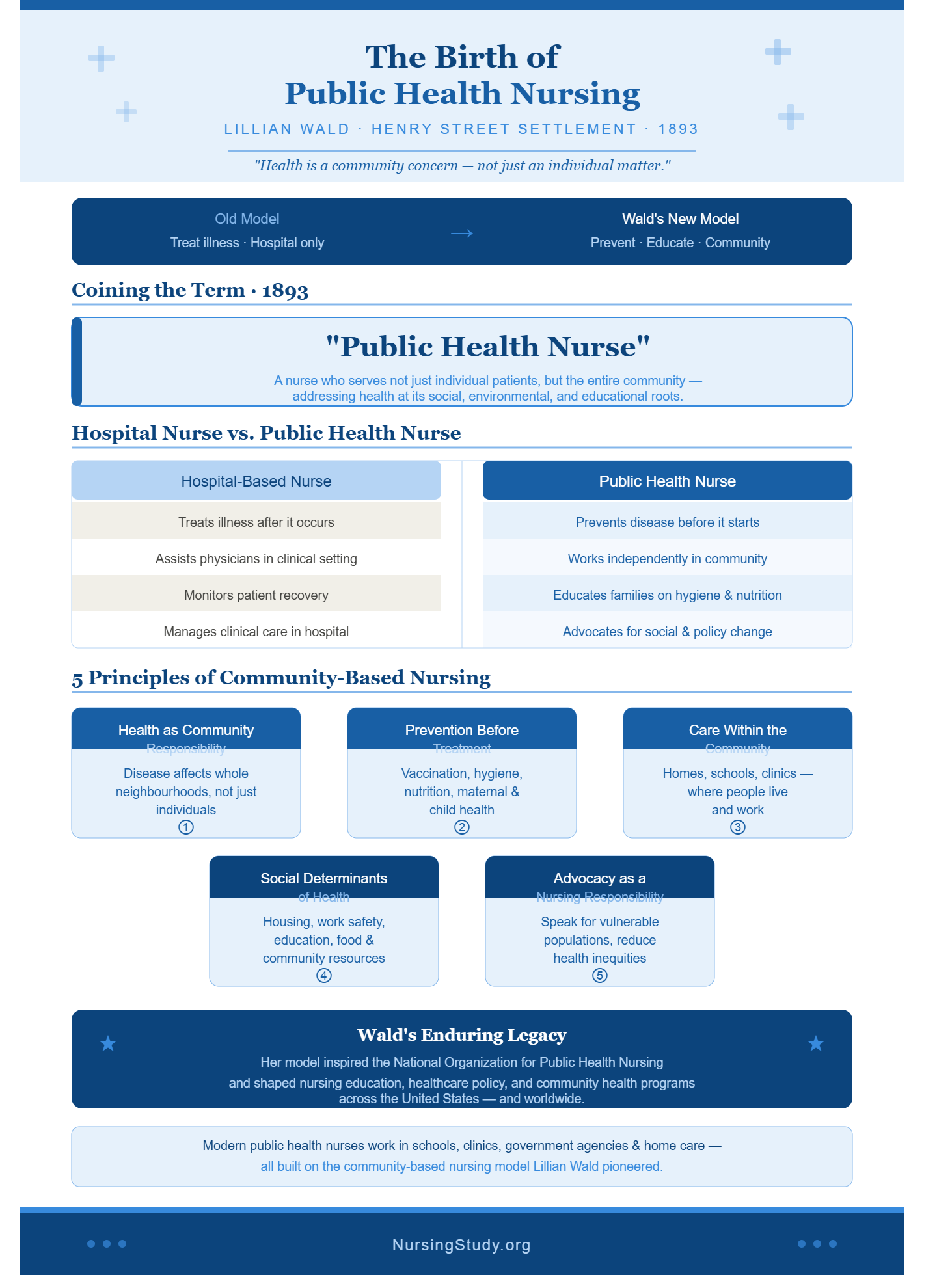
Leadership Qualities That Defined Lillian Wald
While the challenges faced by Lillian Wald were substantial, her ability to overcome them reveals the leadership qualities that made her one of the most influential figures in nursing history. These qualities continue to provide valuable lessons for healthcare professionals today.
Visionary Thinking
One of Wald’s most remarkable characteristics was her ability to see possibilities where others saw limitations.
At a time when healthcare was primarily hospital-based, she envisioned a system in which nurses would work directly within communities. She understood that improving health required attention not only to disease but also to housing, education, employment, and social conditions.
This long-term perspective enabled her to create innovative solutions that transformed nursing practice.
For example, the concept of the public health nurse emerged because Wald recognized needs that existing healthcare systems were failing to address.
Commitment to Service
A defining feature of Lillian Wald’s leadership was her unwavering dedication to serving others. Rather than remaining detached from the communities she helped, she chose to live among the residents of the Lower East Side and experience many of the same daily realities they faced.
This commitment fostered trust and ensured that her decisions were informed by direct experience rather than assumptions.
Effective leaders often succeed because they remain connected to the people they serve, and Wald exemplified this principle throughout her career.
Courage to Challenge Existing Systems
Many of Wald’s achievements required challenging established practices and institutions.
She questioned:
- Traditional healthcare delivery models.
- Inadequate labor protections.
- Educational inequalities.
- Racial discrimination.
- Gender barriers.
Such efforts required significant courage because they often involved confronting powerful interests and longstanding social norms.
Her willingness to advocate for change demonstrates the importance of leadership that prioritizes ethical principles over personal convenience or popularity.
Collaboration and Relationship Building
Although Lillian Wald possessed strong individual leadership skills, she understood that lasting change could not be achieved alone.
Throughout her career, she collaborated with:
- Nurses.
- Physicians.
- Educators.
- Social workers.
- Philanthropists.
- Government officials.
- Community leaders.
These partnerships strengthened the Henry Street Settlement and helped expand the reach of its programs.
Modern healthcare increasingly depends on interdisciplinary collaboration, making this aspect of Wald’s leadership especially relevant today.
Adaptability and Innovation
Healthcare challenges are constantly evolving, and effective leaders must be willing to adapt. Wald consistently demonstrated flexibility and creativity in responding to emerging needs.
When she identified gaps in healthcare access, she developed home visiting programs.
When children were missing school because of untreated illnesses, she supported school nursing initiatives.
When social conditions threatened community health, she advocated for policy reform.
Her ability to innovate while remaining focused on core principles contributed significantly to her long-term success.
Advocacy and Social Responsibility
Perhaps the most enduring leadership lesson from Lillian Wald is the importance of advocacy. She believed that healthcare professionals have responsibilities that extend beyond direct patient care.
For Wald, leadership involved:
- Identifying systemic problems.
- Speaking on behalf of vulnerable populations.
- Promoting social justice.
- Advancing health equity.
- Working toward lasting societal improvement.
These principles continue to shape nursing leadership and public health practice today.
The career of Lillian Wald demonstrates that transformative leadership often emerges in the face of significant challenges. Despite resistance to public health reform, social inequalities, financial limitations, and political opposition, she remained committed to improving the lives of others. Through visionary thinking, courage, collaboration, innovation, and advocacy, Lillian Wald helped redefine the role of the nurse and expanded the possibilities of healthcare itself. Her leadership lessons remain highly relevant for modern healthcare professionals seeking to address complex health challenges and create meaningful change within their communities.
The Lasting Legacy of Lillian Wald and the Henry Street Settlement
More than a century after the founding of the Henry Street Settlement, the influence of Lillian Wald continues to shape nursing, healthcare delivery, public health policy, and social welfare programs throughout the United States and around the world. Few individuals have had such a profound impact on both the nursing profession and the broader healthcare system. Through her pioneering vision, Lillian Wald transformed nursing from a profession primarily focused on bedside care into one capable of addressing the health needs of entire communities.
The significance of her work extends far beyond the historical achievements often associated with her name. The principles she championed—health equity, prevention, community engagement, social responsibility, and advocacy—remain foundational elements of modern healthcare practice. The model established through the Henry Street Settlement demonstrated that effective healthcare requires an understanding of the social, economic, and environmental factors that influence health outcomes.
Today, healthcare professionals continue to confront many of the challenges that concerned Lillian Wald, including healthcare disparities, unequal access to services, chronic disease burdens, and social determinants of health. The strategies she developed to address these issues remain remarkably relevant in contemporary practice.
As a result, the legacy of Lillian Wald is not confined to history books. It lives on in the daily work of nurses, public health professionals, community organizations, educators, and policymakers committed to improving health and well-being.
Impact on Modern Nursing Practice
The influence of Lillian Wald on modern nursing practice is both extensive and enduring. Her work fundamentally expanded the scope of nursing by demonstrating that nurses could serve not only as caregivers but also as educators, advocates, leaders, and agents of social change.
Before Wald’s innovations, much of nursing care occurred within hospitals or private homes under physician supervision. While these settings remain important, Wald showed that nurses could have a broader impact by working directly within communities and addressing the factors that contribute to illness.
Many aspects of modern nursing practice reflect principles first developed through the Henry Street Settlement.
Expansion of Community-Based Nursing
One of Wald’s most important contributions was establishing community-based nursing as a respected and essential area of practice.
Today, nurses work in a wide variety of community settings, including:
- Public health departments.
- Schools.
- Community health centers.
- Home healthcare agencies.
- Long-term care facilities.
- Outreach programs.
- Mobile health clinics.
These roles reflect the same commitment to community engagement that guided the work of the early Henry Street nurse.
Strengthening the Role of the Public Health Nurse
The modern public health nurse continues to embody many of the responsibilities envisioned by Lillian Wald.
Contemporary public health nurses often:
- Assess community health needs.
- Promote disease prevention.
- Conduct health education programs.
- Coordinate healthcare services.
- Advocate for vulnerable populations.
- Address health disparities.
These responsibilities closely mirror the nursing model Wald developed more than a century ago.
Integration of Advocacy into Nursing Practice
A major aspect of Wald’s legacy is the recognition that nurses have a responsibility to advocate for patients and communities.
Today, nurses routinely advocate for:
- Improved healthcare access.
- Patient rights.
- Health equity.
- Safer healthcare systems.
- Better community resources.
This advocacy role is now widely viewed as an essential component of professional nursing practice.
Recognition of Social Determinants of Health
Modern nursing increasingly emphasizes the importance of social determinants of health, including housing, education, employment, income, and access to healthcare.
Long before this concept became widely recognized, Lillian Wald understood that these factors significantly influenced health outcomes. Her holistic approach to care anticipated many of the principles now emphasized in contemporary nursing education and healthcare policy.
Influence on Public Health and Social Welfare
The legacy of Lillian Wald extends beyond nursing and has significantly influenced the fields of public health and social welfare.
Her work demonstrated that health and social conditions are deeply interconnected. This understanding became a cornerstone of modern public health practice and helped shape the development of numerous community programs and government initiatives.
Advancing Preventive Healthcare
One of Wald’s most important contributions was promoting prevention as a central component of healthcare.
Many public health initiatives now focus on:
- Disease prevention.
- Health promotion.
- Vaccination programs.
- Maternal and child health.
- Community education.
- Early intervention services.
These priorities reflect the preventive philosophy that Wald championed throughout her career.
Improving Access to Health Care
A central goal of the founder of Henry Street Settlement was expanding access to health care for underserved populations.
Today, this objective remains a major priority for healthcare systems worldwide. Community clinics, home healthcare programs, school health services, and outreach initiatives all reflect efforts to ensure that healthcare reaches individuals who might otherwise encounter barriers to care.
The principle that healthcare should be accessible regardless of socioeconomic status remains one of Wald’s most enduring contributions.
Shaping Social Welfare Programs
The settlement model developed by Wald helped influence broader social welfare initiatives across the United States.
The Henry Street Settlement House demonstrated how healthcare services could be integrated with programs addressing:
- Education.
- Housing assistance.
- Child welfare.
- Employment support.
- Community development.
This holistic approach contributed significantly to the evolution of modern social welfare systems.
Because of these contributions, Lillian Wald occupies a prominent place in social welfare history. Her work illustrated how community organizations can address both immediate needs and the structural factors affecting health and quality of life.
Influencing Public Policy
Many reforms supported by Wald eventually influenced public policy at local, state, and national levels.
Her advocacy contributed to advances in:
- School health services.
- Child welfare protections.
- Public health infrastructure.
- Community nursing programs.
- Labor reform initiatives.
These policy developments helped institutionalize many of the ideas that originated through the Henry Street Settlement.
Lessons for Today’s Nursing Students
Although healthcare systems have changed dramatically since the early twentieth century, the experiences and achievements of Lillian Wald continue to offer valuable lessons for future nurses.
Her career demonstrates that nursing is not limited to clinical skills alone. It is also a profession grounded in leadership, service, advocacy, and social responsibility.
Understand the Whole Patient
One of the most important lessons from Wald’s work is the importance of viewing patients within the context of their lives.
Health outcomes are influenced by numerous factors, including:
- Family circumstances.
- Economic conditions.
- Educational opportunities.
- Cultural background.
- Community resources.
Effective nursing requires understanding these influences and incorporating them into care planning.
Embrace Prevention and Health Promotion
The work of Lillian Wald highlights the value of preventing illness before it occurs.
Future nurses can contribute to healthier communities by:
- Providing education.
- Encouraging healthy behaviors.
- Supporting early intervention efforts.
- Promoting disease prevention strategies.
These activities often have long-lasting effects on community health.
Develop Leadership Skills
Wald’s accomplishments demonstrate that nurses can be influential leaders within healthcare systems and society.
Leadership may involve:
- Identifying unmet needs.
- Advocating for patients.
- Coordinating community programs.
- Participating in policy discussions.
- Leading quality improvement initiatives.
Nurses who develop leadership skills can help shape the future of healthcare.
Value Collaboration
Throughout her career, Lillian Wald worked closely with nurses, physicians, educators, social workers, policymakers, and community organizations.
Modern healthcare likewise depends on interdisciplinary collaboration. Building strong professional relationships enhances patient care and strengthens healthcare systems.
Advocate for Health Equity
Perhaps the most enduring lesson from Wald’s career is the importance of advocating for equitable healthcare.
Many populations continue to face barriers related to:
- Income.
- Geography.
- Race and ethnicity.
- Language.
- Disability.
- Healthcare access.
Nurses can play an important role in identifying these disparities and working toward solutions that promote fairness and inclusion.
Commit to Lifelong Service
Wald’s life demonstrates that nursing is ultimately a profession dedicated to service. Her commitment to improving the lives of others extended far beyond traditional clinical responsibilities and reflected a deep belief in human dignity and social responsibility.
This commitment remains central to the nursing profession today.
The legacy of Lillian Wald and the Henry Street Settlement continues to influence healthcare more than a century after their founding. Through her pioneering contributions to community nursing, public health, social reform, and healthcare advocacy, Lillian Wald helped create a model of care that remains highly relevant in the modern world. Her impact can be seen in the work of public health nurses, community health programs, social welfare initiatives, and healthcare organizations dedicated to serving vulnerable populations. For today’s nursing students and healthcare professionals, her life offers a powerful reminder that nursing is not only about treating illness—it is also about improving communities, promoting justice, expanding opportunity, and advancing the health and well-being of society as a whole.
Overwhelmed with multiple nursing deadlines?
Let us write your papers efficiently and accurately.
Conclusion
The story of Lillian Wald is far more than the biography of an influential nurse; it is the story of how one individual helped redefine the relationship between healthcare, social responsibility, and community well-being. Through her groundbreaking work in New York’s Lower East Side, Lillian Wald recognized that illness could not be separated from the conditions in which people lived, worked, and raised their families. This understanding led her to develop innovative approaches that transformed nursing from a profession focused primarily on bedside care into one capable of addressing the broader social determinants of health.
By establishing the Henry Street Settlement, Lillian Wald created a model that combined healthcare, education, advocacy, and social services under a single community-centered mission. Her efforts laid the foundation for modern public health nursing, expanded access to healthcare for underserved populations, and demonstrated the critical role nurses can play in improving both individual and population health. From home visiting services and school nursing programs to labor reform and civil rights advocacy, her work illustrated that effective healthcare requires more than treating disease—it requires addressing the social and environmental factors that influence health outcomes.
The influence of Lillian Wald can still be seen throughout contemporary healthcare systems. Public health nurses, community health programs, home healthcare services, school health initiatives, and health equity efforts all reflect principles she championed more than a century ago. Her belief that healthcare should be accessible, preventive, and rooted in community needs remains as relevant today as it was during the Progressive Era.
Perhaps most importantly, Lillian Wald demonstrated that nursing is a profession of leadership, advocacy, and service. She challenged conventional thinking, confronted social injustice, and used her skills and influence to create lasting change. Her legacy reminds healthcare professionals that caring for patients extends beyond clinical treatment and includes a commitment to improving the conditions that shape health and quality of life.
As healthcare continues to evolve, the life and work of Lillian Wald remain a powerful example of what can be achieved when compassion is combined with vision, determination, and a dedication to social progress. Her contributions not only transformed nursing and public health but also established a lasting framework for building healthier, more equitable communities for future generations.
Frequently Asked Questions
What was Lillian Wald’s legacy?
Lillian Wald’s legacy lies in her pioneering role in establishing modern public health nursing and founding the Henry Street Settlement. She coined the term “public health nurse,” expanded healthcare access for underserved populations, promoted school nursing programs, advocated for social reform, and demonstrated how nurses could improve both individual and community health through education, prevention, and advocacy.
Who is considered the pioneer of modern nursing?
Florence Nightingale is widely regarded as the pioneer of modern nursing. Her work during the Crimean War, emphasis on sanitation, use of statistical evidence, and establishment of professional nursing education laid the foundation for contemporary nursing practice worldwide.
Was Lillian D. Wald a public health nurse and was born in Cincinnati, Ohio, in 1867?
Yes. Lillian D. Wald was a nurse, humanitarian, and social reformer who is widely recognized as the founder of public health nursing in the United States. She was born on March 10, 1867, in Cincinnati and later became known for her work in New York City, where she founded the Henry Street Settlement and helped develop community-based healthcare services.
Who pioneered nursing modern reforms?
While Florence Nightingale is generally credited with pioneering modern nursing reforms through her emphasis on sanitation, education, and evidence-based care, Lillian Wald played a pioneering role in modern public health nursing reforms by bringing healthcare into communities, promoting disease prevention, and integrating nursing with social welfare and public health initiatives. Together, their contributions helped shape the nursing profession as it exists today.
