

Linda Richards, Trained Nurse, and 1841 Pioneer: The Life and Legacy of America’s First Professional Nurse
The history of modern nursing is built upon the work of pioneering individuals who transformed caregiving from an informal responsibility into a respected and highly skilled profession. Among these pioneers, Linda Richards holds a particularly significant place. Widely recognized as America’s first professionally trained nurse, Linda Richards helped establish standards and practices that would influence nursing education, patient care, hospital administration, and healthcare reform for generations. Her career coincided with a critical period in the development of healthcare, when hospitals were evolving, medical knowledge was expanding, and the need for educated nursing personnel was becoming increasingly apparent.
Born in 1841, Linda Richards entered the nursing profession during an era when formal nursing education was still in its infancy. Before the establishment of organized nurse training programs, patient care was often provided by family members, religious organizations, or untrained attendants. While many caregivers demonstrated compassion and dedication, the absence of standardized education meant that nursing practices varied widely and often lacked consistency. The emergence of structured training schools marked a turning point in healthcare, and Linda Richards became one of the most influential figures associated with this transformation.
What makes Linda Richards particularly important in nursing history is that her contributions extended far beyond earning the distinction of being the first professionally trained nurse in the United States. Throughout her career, she worked to improve multiple aspects of healthcare and nursing practice. Her achievements included:
- Advancing professional nursing education through the development and supervision of training programs.
- Improving standards of patient care in hospitals.
- Introducing more organized methods of clinical documentation.
- Promoting effective nursing administration and leadership.
- Supporting the expansion of nursing education both nationally and internationally.
- Contributing to the professionalization of nursing as a recognized healthcare discipline.
These accomplishments helped shape the foundations of modern nursing and demonstrated that nurses could serve as educators, administrators, reformers, and leaders in addition to providing direct patient care.
One of Linda Richards’ most enduring contributions involved the improvement of patient documentation. During the nineteenth century, medical record-keeping was often inconsistent, making it difficult for healthcare providers to track patient progress and coordinate care effectively. Richards recognized the importance of accurate documentation and helped develop a system for keeping individual medical records for hospitalized patients. Although documentation systems have become far more sophisticated over time, the fundamental principle of maintaining organized patient records remains an essential component of contemporary nursing practice.
Linda Richards also played a crucial role in the development of nursing education. As nursing schools began to emerge across the United States, there was a growing need for leaders who could establish curricula, supervise students, and promote professional standards. Richards accepted these responsibilities and helped strengthen educational programs that prepared future generations of nurses. Her work demonstrated that quality patient care depended not only on clinical skill but also on structured education, ongoing training, and professional accountability.
Another defining aspect of Linda Richards’ career was her commitment to healthcare reform and innovation. Rather than simply accepting existing practices, she consistently sought ways to improve healthcare systems and nursing services. Her leadership positions in hospitals and training institutions allowed her to influence policies, educational standards, and administrative procedures. These efforts contributed to the gradual transformation of nursing into a profession characterized by specialized knowledge, ethical responsibility, and evidence-informed practice.
The influence of Linda Richards was not limited to the United States. Her work eventually extended beyond national borders, particularly through her involvement in nursing education initiatives in Japan. By helping establish modern nurse training programs internationally, she contributed to the global spread of professional nursing principles. Her efforts demonstrated that the values of education, organization, and patient-centered care could be adapted across different healthcare systems and cultural settings.
The career of Linda Richards also highlights the broader challenges faced by women pursuing professional careers during the nineteenth century. Opportunities for women in healthcare leadership were limited, and many social barriers restricted access to advanced education and professional advancement. Despite these obstacles, Richards became a respected leader whose work earned recognition both during her lifetime and long after her death. Her accomplishments illustrate how determination, education, and innovation can drive meaningful change within healthcare institutions and society as a whole.
Today, Linda Richards remains an important figure in nursing history because many aspects of modern nursing practice reflect principles she helped advance. The emphasis on formal education, professional standards, accurate documentation, leadership development, and lifelong learning can all be linked to reforms championed by early nursing pioneers such as Richards. Her life story provides valuable insight into the origins of professional nursing and demonstrates how one individual’s dedication can influence the development of an entire profession.
Understanding the contributions of Linda Richards offers more than a historical perspective. It provides a deeper appreciation of how nursing evolved into the complex and highly respected profession it is today. Her legacy continues to be reflected in nursing schools, healthcare institutions, professional organizations, and patient care practices around the world, making her one of the most influential figures in the history of nursing.
Feeling stressed about writing a detailed nursing paper?
Let us produce a thorough, high-quality document.
Linda Richards’ Early Life and Path to Nursing
The remarkable career of Linda Richards did not begin in a hospital ward or a nursing classroom. Like many influential figures in healthcare history, her journey was shaped by personal experiences, family circumstances, and the social realities of her time. Understanding the early life of Linda Richards provides important context for appreciating how she became a pioneer in professional nursing and why her contributions continue to be studied today.
The path that eventually led Linda Richards to become America’s first professionally trained nurse was neither straightforward nor predetermined. During the mid-nineteenth century, women had limited opportunities to pursue professional careers, particularly in healthcare. Nursing as a formal occupation was still developing, and many hospitals lacked organized educational programs. Against this backdrop, Richards’ determination to pursue nursing reflected both personal resilience and a commitment to serving others during a period of significant change in healthcare.
Her early experiences exposed her to illness, loss, and caregiving responsibilities, all of which would profoundly influence her future career choices. These experiences not only inspired her desire to become a nurse but also helped shape the compassionate and disciplined approach that characterized her professional life.
Birth and Family Background in 1841
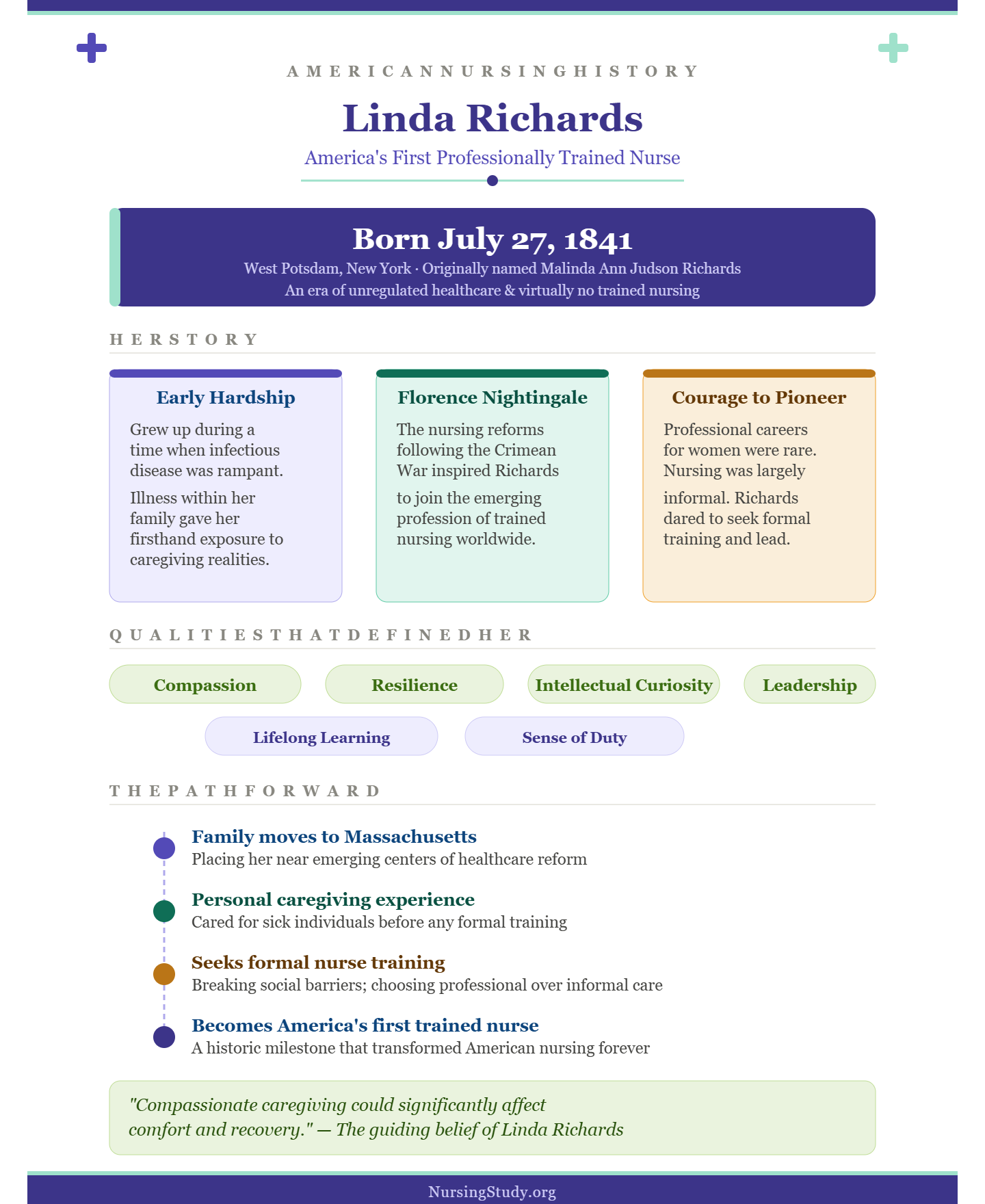
Linda Richards was born on July 27, 1841, in West Potsdam, New York. Originally named Malinda Ann Judson Richards, she was often referred to as Linda J. Richards in historical records. The year 1841 marked a period when the United States was experiencing rapid social and economic changes, yet healthcare remained largely unregulated and inconsistent. Medical treatments were often limited, hospitals were relatively uncommon compared to today, and trained nursing personnel were virtually nonexistent.
Richards was born into a family that valued education, hard work, and community responsibility. Her parents encouraged intellectual development, which would later contribute to her success as an educator and healthcare leader. Although opportunities for women were restricted during this era, Richards benefited from an environment that emphasized learning and self-improvement.
Several characteristics of her upbringing would later influence her nursing career:
- A strong sense of responsibility toward others.
- An appreciation for education and lifelong learning.
- Exposure to the realities of illness and healthcare challenges.
- The development of perseverance and adaptability.
These qualities became evident throughout her professional life as she worked to establish nurse education programs and improve patient care standards.
Richards’ childhood was not without hardship. During the nineteenth century, infectious diseases were common causes of illness and death. Families often experienced significant losses due to conditions that are now preventable or treatable. Such realities made healthcare a deeply personal issue for many individuals, including Richards.
Historical accounts indicate that illness affected members of her family, exposing her at an early age to the challenges faced by patients and caregivers. Unlike modern healthcare systems that rely on trained professionals and advanced medical technology, much of the caregiving responsibility at that time fell upon family members. Witnessing these experiences helped shape Richards’ understanding of the importance of compassionate and competent care.
Her family eventually moved to Massachusetts, where she continued her education. This relocation proved important because Massachusetts would later become a center for nursing reform and professional nurse education. The move also placed Richards closer to institutions that would play significant roles in her future career.
Experiences That Inspired a Nursing Career
The decision to pursue nursing was deeply influenced by personal events that occurred during Linda Richards’ young adulthood. Like many healthcare professionals whose careers are inspired by firsthand encounters with illness, Richards was profoundly affected by experiences involving loved ones who required care.
One of the most significant influences was the illness and eventual death of individuals close to her. Historical sources note that Richards was inspired by these personal losses and the caregiving experiences associated with them. During an era when professional nursing services were rare, family members often provided the majority of patient care. Through these experiences, Richards gained firsthand insight into both the physical and emotional demands of caregiving.
These events helped her recognize several important realities:
- Patients required more than medical treatment alone.
- Compassionate caregiving could significantly affect comfort and recovery.
- Healthcare providers needed specialized knowledge and skills.
- Organized nursing services could improve patient outcomes.
Rather than viewing illness solely as a medical problem, Richards began to understand the broader human dimensions of healthcare. This perspective would later influence her approach to nursing education and patient care.
Another factor that shaped her career aspirations was the growing visibility of nursing reform movements during the nineteenth century. The work of Florence Nightingale during and after the Crimean War had drawn international attention to the value of trained nurses. Nightingale’s emphasis on sanitation, observation, organization, and education demonstrated that nursing could become a respected profession rather than merely an informal caregiving role.
Although nursing opportunities for women remained limited, these developments helped create new possibilities. Richards became increasingly interested in joining this emerging profession and contributing to healthcare improvements.
Her interest in nursing was strengthened by practical caregiving experiences. Before entering formal training, she spent time caring for sick individuals, developing skills that would later prove valuable in professional practice. These experiences allowed her to observe both effective and ineffective aspects of patient care, reinforcing her belief that structured education was necessary for high-quality nursing.
Richards’ decision to become a nurse was also notable because it required challenging prevailing social expectations. During the mid-nineteenth century, professional careers for women were uncommon, and nursing itself had not yet achieved widespread recognition as a respected occupation. Pursuing this path demanded courage, determination, and a willingness to enter relatively uncharted territory.
As healthcare institutions began establishing formal educational opportunities, Richards recognized the potential to transform her caregiving experiences into professional expertise. Her commitment to learning and service ultimately led her toward formal nurse training, setting the stage for a historic achievement that would change the course of American nursing. The experiences of her early life—marked by personal loss, caregiving responsibilities, educational opportunities, and exposure to emerging healthcare reforms—created the foundation upon which her groundbreaking nursing career would be built.
By the time Linda Richards sought professional training, she had already developed many of the qualities that would define her legacy: compassion, resilience, intellectual curiosity, leadership potential, and a deep commitment to improving the lives of patients. These attributes would later enable her to break barriers, influence healthcare systems, and become one of the most important figures in the history of nursing.
Linda Richards and the Beginning of Professional Nursing Education
The development of professional nursing education in the United States marked one of the most significant turning points in healthcare history. Before the late nineteenth century, nursing was largely an informal occupation with few educational requirements, limited professional recognition, and no standardized methods of training. Individuals who cared for the sick often learned through observation or personal experience rather than through structured instruction. The emergence of organized nursing education fundamentally changed this situation, creating a pathway for nurses to acquire specialized knowledge and clinical skills.
At the center of this transformation was Linda Richards, whose career became closely associated with the birth of professional nurse education in America. Her journey into formal nursing training coincided with broader healthcare reforms that sought to improve hospital care, patient outcomes, and the preparation of healthcare workers. Through her determination and commitment to learning, Linda Richards helped demonstrate the value of systematic nurse education and established a model that influenced future training programs throughout the United States.
The significance of Linda Richards extends beyond her personal achievements. Her training represented a shift toward viewing nursing as a profession requiring education, discipline, and accountability rather than simply a caregiving role. This distinction laid the foundation for modern nursing practice and helped elevate the status of nurses within healthcare institutions.
Training at the New England Hospital for Women and Children
The most important step in Linda Richards’ professional development occurred when she enrolled in the nurse training program at the New England Hospital for Women and Children in Boston, Massachusetts. This institution occupied a unique place in healthcare history because it was one of the few hospitals in the United States dedicated to providing medical care by and for women while also supporting opportunities for women in healthcare professions.
Founded by physician Dr. Marie Zakrzewska, the New England Hospital for Women and Children sought to address two major challenges of the era:
- Limited access to healthcare services for women and children.
- Limited professional opportunities for women in medicine and nursing.
The hospital became an important center for healthcare innovation and education. As the demand for skilled caregivers increased, leaders at the institution recognized the need for a formal training school for nurses that could provide systematic instruction rather than relying solely on informal apprenticeship methods.
In 1872, Linda Richards entered the hospital’s pioneering training program. At the time, organized nursing education was still a relatively new concept in the United States. Students were expected to learn both theoretical principles and practical clinical skills through direct patient care experiences.
The program at the New England Hospital for Women and Children included training in several essential areas:
- Bedside patient care.
- Observation and reporting of patient conditions.
- Hygiene and sanitation practices.
- Medication administration.
- Infection prevention measures.
- Hospital organization and ward management.
Unlike many informal caregiving roles of the period, the training program emphasized discipline, responsibility, and professional conduct. Students were expected to maintain high standards while working under supervision in clinical settings.
Linda Richards quickly distinguished herself through her dedication and strong work ethic. Historical accounts describe her as a diligent learner who recognized the importance of combining compassion with technical competence. Her training exposed her to a wide variety of patient needs and healthcare challenges, helping her develop the skills necessary for future leadership positions.
The educational model used at the New England Hospital for Women and Children was heavily influenced by reforms occurring in Europe, particularly those associated with Florence Nightingale. Following Nightingale’s success during the Crimean War and her subsequent efforts to improve nursing education in Britain, healthcare leaders increasingly recognized the need for structured nurse preparation. The hospital’s training school reflected many of these emerging principles, including supervised clinical practice, formal instruction, and professional accountability.
An important aspect of Richards’ education was the balance between classroom learning and practical experience. Students were not merely studying healthcare concepts; they were actively applying their knowledge while caring for patients. This approach remains a hallmark of nursing education today, where clinical experiences are integrated with theoretical instruction to prepare nurses for real-world practice.
Becoming America’s First Professionally Trained Nurse
The successful completion of her education at the New England Hospital for Women and Children marked a historic achievement in American healthcare. In 1873, Linda Richards graduated from the institution’s nursing program, becoming widely recognized as America’s first professionally trained nurse and the first trained nurse in the United States to complete a formal nursing education program.
This achievement represented much more than a personal milestone. It symbolized the beginning of a new era in healthcare in which nursing was increasingly viewed as a profession grounded in education, skill development, and professional standards.
Several factors contributed to the significance of this accomplishment:
- Richards completed a structured educational curriculum rather than relying solely on informal experience.
- She demonstrated the effectiveness of organized nurse training.
- Her success validated the concept of nursing schools in the United States.
- She helped establish a professional identity for future nurses.
As a professionally trained American nurse, Richards became a powerful example of what formal nursing education could achieve. Her graduation provided evidence that nurses could be systematically prepared for complex clinical responsibilities and leadership roles within healthcare institutions.
The distinction of becoming America’s first professionally trained nurse also brought new opportunities. After graduation, Richards began working in hospitals where she applied the skills and knowledge acquired during her education. These experiences allowed her to observe challenges within healthcare systems and identify opportunities for improvement.
One of the most influential contributions that emerged from her early professional practice involved documentation. Richards recognized that hospitals needed better methods for tracking patient information and coordinating care. To address this issue, she helped develop a system for keeping individual medical records for hospitalized patients. This innovation improved communication among healthcare providers and contributed to safer, more organized patient care.
The importance of this achievement becomes even clearer when viewed within its historical context. During the 1870s, the nursing profession lacked many of the structures that are now considered essential. There were few educational standards, limited opportunities for professional advancement, and minimal recognition of nursing expertise. By successfully completing formal training and demonstrating the value of educated nursing practice, Linda Richards helped challenge these limitations.
Her graduation also encouraged the growth of additional training schools across the country. Healthcare leaders increasingly recognized that hospitals could improve patient care by employing nurses who had received systematic education. As a result, nursing programs began to expand, creating new opportunities for women and contributing to the professionalization of healthcare.
The legacy of Linda Richards’ educational journey can still be seen in modern nursing programs. Contemporary nursing curricula continue to emphasize many of the principles that guided her training, including:
- Evidence-informed practice.
- Clinical competency.
- Patient-centered care.
- Professional accountability.
- Lifelong learning.
- Ethical responsibility.
Through her pioneering role in professional nursing education, Linda Richards helped establish a foundation upon which modern nursing would be built. Her training at the New England Hospital for Women and Children and her historic achievement as America’s first professionally trained nurse marked the beginning of a career that would influence nursing education, healthcare administration, and patient care both nationally and internationally. The success of her early educational experiences demonstrated that nursing could be transformed into a respected profession supported by rigorous training, skilled practice, and a commitment to excellence in patient care.
Linda Richards’ Contributions to Patient Care and Nursing Practice
The historical significance of Linda Richards extends far beyond her distinction as America’s first professionally trained nurse. While her graduation from a formal nursing program was a groundbreaking achievement, her lasting influence stems from the practical changes she introduced to patient care and nursing practice. Throughout her career, Linda Richards consistently sought ways to improve the quality, organization, and effectiveness of healthcare delivery. Her efforts helped establish practices that would become fundamental components of modern nursing.
During the nineteenth century, hospitals were undergoing significant transformation. Healthcare institutions were becoming larger and more complex, patient populations were increasing, and medical treatments were becoming more sophisticated. However, many hospitals still lacked standardized systems for documenting patient information, coordinating care, and ensuring consistent nursing practices. In this environment, Linda Richards emerged as an innovator who recognized that excellent patient care required more than compassion alone. It also required organization, accountability, communication, and professional standards.
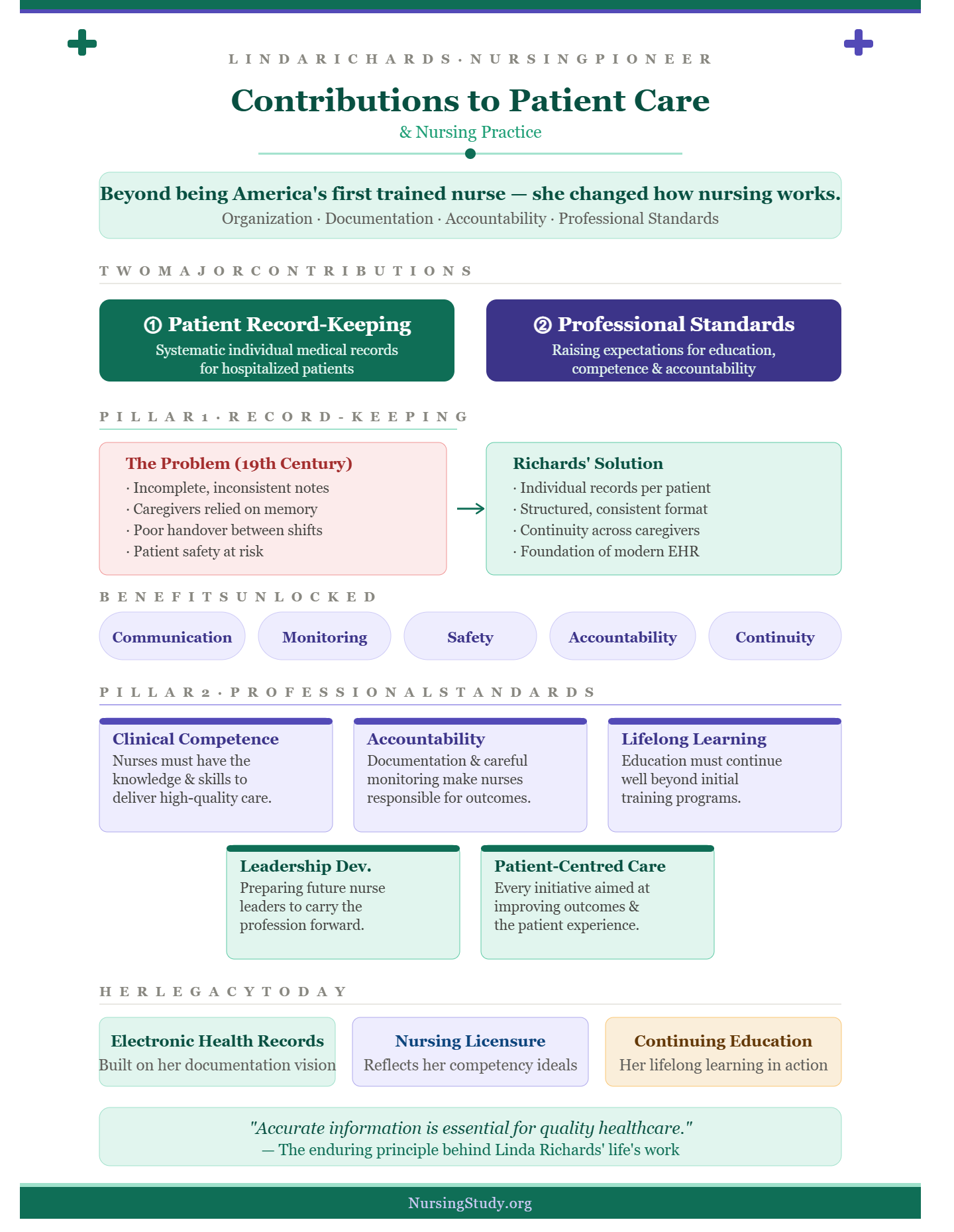
The contributions of Linda Richards to patient care can be grouped into two major areas:
- Improving the organization and continuity of patient information.
- Strengthening professional expectations for nurses and nursing practice.
Together, these innovations helped elevate nursing from an informal occupation into a disciplined profession that played a central role in healthcare delivery.
Innovations in Patient Record-Keeping
One of the most important contributions to the field made by Linda Richards involved the development of more systematic approaches to patient documentation. Today, healthcare professionals routinely record patient assessments, treatments, medications, and progress in detailed medical records. However, such practices were not standardized during the early years of Richards’ career.
In many nineteenth-century hospitals, patient information was often incomplete, inconsistent, or poorly organized. Healthcare providers frequently relied on verbal communication, handwritten notes of varying quality, or memory when monitoring patient conditions. These limitations created several challenges:
- Important patient information could be overlooked.
- Communication between caregivers was often inconsistent.
- Tracking changes in a patient’s condition was difficult.
- Continuity of care could be compromised.
Linda Richards recognized that better documentation could improve both patient safety and clinical decision-making. To address these problems, she helped establish a system for keeping individual medical records for hospitalized patients. This innovation represented a major advancement in healthcare organization and is often cited as one of her most influential achievements.
The system for keeping individual medical records enabled healthcare providers to document important information in a more structured and consistent manner. Rather than relying solely on memory or fragmented notes, nurses and physicians could access organized patient histories and treatment information.
The benefits of keeping individual medical records for hospitalized patients included:
- Improved communication among healthcare providers.
- Better monitoring of patient progress.
- More accurate treatment planning.
- Enhanced continuity of care across shifts.
- Increased accountability in patient management.
For example, consider a patient hospitalized with a severe infection during the nineteenth century. Without organized documentation, changes in symptoms, treatments administered, and responses to care might not be communicated effectively between caregivers. By maintaining individual medical records for hospitalized patients, nurses could record observations systematically, allowing physicians and other healthcare personnel to make more informed decisions.
The importance of this innovation cannot be overstated. Modern electronic health records, nursing documentation systems, and patient care plans all reflect the same underlying principle championed by Richards: accurate information is essential for quality healthcare.
Today, nursing documentation serves numerous purposes, including:
- Supporting clinical decision-making.
- Facilitating interdisciplinary communication.
- Enhancing patient safety.
- Meeting legal and regulatory requirements.
- Evaluating healthcare outcomes.
Although contemporary documentation systems are far more sophisticated than those used during Richards’ era, the foundational concept remains remarkably similar. Her efforts helped establish a culture in which accurate record-keeping became an expected part of professional nursing practice.
This contribution demonstrates that Linda Richards understood an important reality that continues to guide healthcare today: effective patient care depends not only on clinical skills but also on the ability to collect, organize, and communicate information accurately.
Advancing Professional Standards in Nursing
In addition to improving documentation practices, Linda Richards played a crucial role in advancing professional standards within nursing. During the mid-to-late nineteenth century, nursing was still developing as a profession. Educational requirements varied significantly, formal training opportunities were limited, and expectations for nursing practice were often inconsistent.
Richards believed that nurses should possess specialized knowledge, practical competence, and a commitment to professional responsibility. Throughout her career, she worked to establish higher standards for both nursing education and clinical practice.
Several key principles guided her approach:
- Nursing should be based on formal education and training.
- Nurses should demonstrate competence in patient care.
- Professional conduct should be maintained at all times.
- Healthcare institutions should support ongoing learning and improvement.
- Nursing leaders should help develop future generations of nurses.
These ideas may seem obvious today, but they represented significant advances during Richards’ lifetime.
As she assumed leadership positions in hospitals and educational institutions, Richards became increasingly involved in efforts to strengthen professional expectations. She emphasized the importance of structured learning, supervised clinical experiences, and consistent performance standards. Her work helped demonstrate that nursing required intellectual preparation as well as practical skills.
An example of her influence can be seen in the development of nursing curricula. Rather than relying solely on informal apprenticeships, Richards supported educational models that combined classroom instruction with clinical practice. This approach ensured that nurses developed a comprehensive understanding of patient care principles while gaining hands-on experience.
Her leadership also contributed to improvements in hospital operations. By promoting organization, accountability, and professional behavior, she helped create environments where nurses could provide safer and more effective care. These efforts reinforced the growing perception of nursing as a respected healthcare profession rather than simply a supportive role within hospitals.
The professional standards championed by Richards influenced several important areas of nursing practice:
Clinical Competence
Richards believed nurses should possess the knowledge and skills necessary to deliver high-quality care. This emphasis on competence remains central to modern nursing education and licensure requirements.
Accountability
By encouraging documentation, observation, and careful patient monitoring, Richards promoted a culture of accountability in which nurses were responsible for the quality of care they provided.
Lifelong Learning
Richards consistently pursued new knowledge and encouraged professional development throughout her career. Her commitment to education demonstrated that learning should continue beyond initial training.
Leadership Development
As a nurse educator and administrator, she recognized the importance of preparing future leaders who could continue advancing the profession.
Patient-Centered Care
Although the term was not commonly used during her era, many of Richards’ initiatives reflected a focus on improving patient outcomes and enhancing the overall care experience.
The influence of these professional standards can still be observed in contemporary nursing practice. Modern nurses are expected to maintain competence, engage in continuing education, follow ethical guidelines, document care accurately, and collaborate effectively with interdisciplinary teams. These expectations reflect principles that pioneers such as Linda Richards helped establish more than a century ago.
The work of Linda Richards illustrates how innovation in nursing extends beyond direct patient care. By improving documentation systems and advocating for higher professional standards, she helped create a framework that allowed nursing to evolve into a respected and essential healthcare profession. Her contributions strengthened the quality of patient care, improved communication within healthcare settings, and laid the groundwork for many of the practices that continue to guide nursing today.
As healthcare systems became increasingly complex, the organizational and professional reforms introduced by Richards proved invaluable. Her vision of nursing as an educated, accountable, and patient-focused profession remains a defining characteristic of modern nursing practice and a lasting testament to her influence on healthcare history.
Linda Richards as a Nursing Leader and Hospital Superintendent
While Linda Richards is often remembered as America’s first professionally trained nurse, her influence on healthcare extended far beyond her clinical work. One of the most important phases of her career involved her service as a nursing leader, educator, and hospital administrator. Through a series of leadership positions in major healthcare institutions, Linda Richards demonstrated that nurses could play a central role in shaping hospital operations, educational standards, and organizational development.
During the late nineteenth century, hospitals were becoming increasingly complex institutions. Growing patient populations, advances in medical science, and expanding healthcare services created a need for effective administration and supervision. At the same time, nursing education was still developing, and many healthcare organizations lacked standardized methods for training and managing nursing staff. In this environment, Linda Richards emerged as a pioneering leader who helped establish professional expectations for nursing administration.
Her leadership style was characterized by organization, discipline, innovation, and a commitment to continuous improvement. Rather than focusing solely on immediate patient care responsibilities, she worked to strengthen the systems that supported nursing practice. These efforts enabled hospitals to provide more consistent care while creating better educational opportunities for future nurses.
As Richards moved into supervisory and administrative positions, she became an influential advocate for professional nursing standards, structured education, and effective hospital management. Her work helped demonstrate that nurses could serve not only as caregivers but also as leaders capable of improving healthcare institutions at every level.
Leadership at Boston City Hospital
One of the most significant milestones in the career of Linda Richards occurred when she accepted a leadership role at Boston City Hospital. At the time, Boston City Hospital was one of the largest and most influential healthcare institutions in the United States. The hospital served a diverse patient population and provided an environment where innovations in healthcare delivery and nursing education could be tested and refined.
After gaining valuable clinical experience and establishing a reputation for competence and professionalism, Richards became increasingly involved in nursing administration. Her appointment to leadership positions reflected growing recognition of her abilities as both a clinician and an educator.
At Boston City Hospital, Richards assumed responsibilities that extended well beyond bedside care. Her duties included:
- Supervising nursing staff.
- Monitoring patient care quality.
- Coordinating nursing services.
- Assisting with educational activities.
- Developing standards for nursing practice.
- Supporting the professional growth of nurses.
These responsibilities required strong organizational and leadership skills. Hospitals of the nineteenth century often faced challenges related to staffing, communication, and consistency in patient care. Richards worked diligently to address these issues by introducing greater structure and accountability into nursing operations.
A key aspect of her leadership involved promoting professional discipline among nursing personnel. She believed that nurses should demonstrate reliability, competence, and ethical conduct in every aspect of their work. This expectation helped foster a culture of professionalism that strengthened both patient care and institutional performance.
Historical accounts suggest that Richards also emphasized careful observation and documentation, principles she had championed earlier in her career. By encouraging nurses to record patient information accurately and communicate effectively with physicians, she helped improve coordination among healthcare providers.
Her work at Boston City Hospital illustrates an important evolution in nursing history. Prior to this period, nurses were often viewed primarily as assistants carrying out physician instructions. Richards helped expand this perception by demonstrating that nurses could also contribute to organizational leadership, healthcare planning, and educational development.
The significance of her role can be better understood when considering the broader healthcare environment of the time. Many hospitals were still struggling to establish effective management systems, and nursing services were often inconsistent. Through her leadership, Richards helped create more organized nursing departments capable of delivering safer and more effective patient care.
Her success at Boston City Hospital also established her reputation as a capable administrator, leading to additional opportunities to influence nursing education and healthcare reform throughout her career.
Improving Nursing Administration and Education
Perhaps the most enduring aspect of Linda Richards’ leadership legacy lies in her efforts to improve nursing administration and education. She understood that the quality of patient care depended not only on individual nurses but also on the systems used to prepare, supervise, and support them.
At a time when many hospitals lacked formal nursing structures, Richards advocated for more organized approaches to administration. She believed that effective nursing services required clear expectations, competent supervision, and ongoing educational opportunities.
Several principles guided her administrative philosophy:
- Nursing education should be systematic and structured.
- Clinical practice should be supervised and evaluated.
- Hospitals should maintain consistent standards of care.
- Nurse leaders should serve as mentors and educators.
- Professional development should continue throughout a nurse’s career.
These ideas became increasingly important as training schools expanded across the United States.
Richards recognized that simply establishing a training school was not enough. Educational programs needed strong leadership to ensure that students received high-quality instruction and practical experience. As a result, she became deeply involved in supervising educational initiatives and helping shape curricula for future nurses.
Her work frequently involved responsibilities associated with a superintendent nurse training role. In these positions, she oversaw student instruction, monitored educational quality, and ensured that training programs met professional expectations. The superintendent nurse training model became an important component of early nursing education because it provided leadership and accountability within developing schools.
Richards was also instrumental in strengthening relationships between hospitals and educational institutions. She believed that students learned best when classroom instruction was integrated with supervised clinical practice. This approach allowed nursing students to apply theoretical knowledge in real healthcare settings while receiving guidance from experienced practitioners.
An example of this philosophy can be seen in the way early nursing programs combined lectures with ward-based experiences. Students learned about anatomy, hygiene, patient observation, and disease management while simultaneously participating in patient care activities. This educational framework remains a defining characteristic of modern nursing programs.
Another area where Richards made a significant impact involved the preparation of future nursing leaders. She understood that the long-term success of the profession depended on developing individuals capable of managing hospitals, supervising educational programs, and advocating for professional standards.
To achieve this goal, she emphasized:
- Leadership development.
- Professional responsibility.
- Critical thinking.
- Effective communication.
- Organizational skills.
Many nurses who trained under her supervision later assumed leadership positions of their own, extending her influence throughout the profession.
Richards’ commitment to educational excellence also contributed to the growth of the broader nursing reform movement. As training schools multiplied, healthcare leaders increasingly sought individuals who could establish consistent standards and promote best practices. Richards became a respected authority in this area because of her experience and demonstrated success.
Her administrative innovations helped address several challenges facing nineteenth-century healthcare institutions:
Standardizing Nursing Practice
Before formal educational systems emerged, nursing methods varied widely from one institution to another. Richards promoted consistency by encouraging the adoption of common standards and procedures.
Strengthening Educational Quality
By emphasizing structured curricula and supervised clinical experiences, she helped improve the quality of nurse preparation.
Enhancing Patient Care
Better-trained nurses contributed to safer, more effective, and more organized patient care.
Professionalizing Nursing
Her leadership reinforced the idea that nursing required specialized education, ethical conduct, and professional accountability.
Creating Sustainable Leadership Structures
By mentoring future administrators and educators, Richards helped ensure that improvements in nursing practice would continue beyond her own career.
The importance of these contributions becomes even clearer when viewed through the lens of modern healthcare. Contemporary nursing administration relies on many principles that Richards helped advance, including leadership development, quality improvement, staff education, professional accountability, and evidence-informed decision-making.
Linda Richards’ work as a nursing leader and hospital superintendent demonstrated that effective healthcare depends on more than clinical expertise alone. Strong leadership, organized administration, and high-quality education are equally essential for achieving positive patient outcomes. Through her efforts at Boston City Hospital and other institutions, she helped create a foundation for professional nursing management that continues to influence healthcare organizations today.
Her leadership legacy remains a testament to the expanding role of nurses within healthcare systems. By combining administrative skill with a commitment to education and patient care, Linda Richards helped redefine what nurses could accomplish and established a model of nursing leadership that continues to inspire the profession more than a century later.
Linda Richards and the Expansion of Nurse Training Programs
The growth of professional nursing during the late nineteenth century depended not only on the establishment of the first nursing schools but also on the efforts of visionary leaders who helped expand and improve educational opportunities across healthcare institutions. Among these leaders, Linda Richards played a particularly important role. After becoming America’s first professionally trained nurse, she devoted much of her career to developing, managing, and strengthening educational programs that would prepare future generations of nurses.
At a time when formal nurse education remained relatively uncommon, Richards recognized that the long-term success of the profession depended on creating effective and sustainable systems for training new nurses. She understood that individual accomplishments alone could not transform healthcare. Meaningful change required well-organized educational institutions capable of producing skilled, knowledgeable, and professional practitioners.
As a result, Linda Richards became deeply involved in the establishment, supervision, and improvement of nursing schools throughout the United States. Her work influenced educational standards, curriculum development, administrative practices, and leadership preparation. Through these efforts, she helped ensure that nursing would continue to evolve as a respected profession grounded in education and clinical competence.
The expansion of nurse training programs during this period represented one of the most significant developments in healthcare history. Richards’ leadership contributed directly to this transformation by helping create educational structures that would serve as models for future schools of nursing.
Establishing and Strengthening Training Schools
Following her graduation and early professional experience, Linda Richards quickly gained recognition for her organizational abilities and commitment to nursing education. Hospitals seeking to improve their educational programs increasingly turned to her expertise as they worked to establish or strengthen training schools for nurses.
During the nineteenth century, many hospitals recognized the benefits of employing educated nurses but lacked the experience necessary to create effective educational systems. Richards helped address this challenge by applying the knowledge she had acquired through clinical practice and educational leadership.
One of her most influential contributions involved helping hospitals set up a training school capable of providing both theoretical instruction and practical clinical experience. Rather than viewing nursing education as a collection of isolated skills, she promoted a comprehensive approach that combined classroom learning, bedside care, professional conduct, and leadership development.
The typical objectives of a training school for nurses during Richards’ era included:
- Teaching essential nursing skills.
- Developing clinical judgment.
- Promoting ethical patient care.
- Encouraging professional discipline.
- Preparing nurses for leadership responsibilities.
Richards believed that successful educational programs required clear standards and effective supervision. Consequently, she worked to improve not only curricula but also administrative structures within nursing schools.
One of her most notable appointments occurred when she became superintendent of the Boston Training School. As superintendent of the Boston Training School, Richards was responsible for overseeing educational activities, supervising students, and ensuring that the institution maintained high professional standards. This leadership position provided an opportunity to shape the education of future nurses while refining educational practices that would influence other programs.
Historical accounts indicate that she supervised the school with a strong emphasis on discipline, competence, and patient-centered care. Her approach reflected the belief that nurses should be thoroughly prepared before assuming independent clinical responsibilities.
The Boston Training School became an important example of how organized nursing education could contribute to improved healthcare outcomes. Through careful planning and supervision, Richards helped demonstrate that structured educational programs produced more capable and confident practitioners.
Her work extended beyond a single institution. Throughout her career, she assisted numerous hospitals and educational organizations in strengthening their nursing programs. In many cases, she evaluated existing practices, identified areas for improvement, and implemented reforms designed to enhance educational quality.
Several key principles characterized her approach to developing training schools:
Integration of Theory and Practice
Richards emphasized the importance of combining classroom instruction with clinical experience. Students were expected to learn scientific and practical concepts while actively caring for patients under supervision.
Consistent Educational Standards
She believed that all nursing students should receive systematic instruction regardless of where they trained. This emphasis on consistency helped improve the overall quality of nursing education.
Professional Accountability
Students were expected to demonstrate responsibility, reliability, and ethical behavior throughout their training.
Structured Supervision
Effective learning required guidance from experienced nurses and administrators who could provide instruction, feedback, and mentorship.
Continuous Improvement
Richards viewed nursing education as an evolving process and consistently sought ways to strengthen programs and improve outcomes.
These principles helped shape many early training schools and contributed to the broader professionalization of nursing.
Her influence became increasingly visible as training programs in the United States expanded during the late nineteenth century. Hospitals recognized that educated nurses improved patient care, enhanced organizational efficiency, and strengthened public confidence in healthcare institutions. As a result, the number of nursing schools grew steadily, creating new opportunities for women seeking professional careers in healthcare.
Mentoring Future Nurses and Nursing Leaders
While Linda Richards made substantial contributions to nursing education through administrative leadership, one of her most enduring legacies was her commitment to mentoring future nurses and nurse leaders. She understood that educational institutions could only succeed if experienced professionals were willing to guide and support the next generation.
Mentorship was particularly important during the early years of professional nursing. Because the profession was still developing, many students lacked role models who could demonstrate effective clinical practice, leadership, and professional behavior. Richards helped fill this gap by serving as both an educator and a mentor.
Her mentoring philosophy extended beyond teaching technical skills. She sought to develop well-rounded professionals capable of contributing to healthcare organizations in meaningful ways. Students under her supervision learned not only how to provide patient care but also how to think critically, communicate effectively, and assume leadership responsibilities.
Richards encouraged nurses to cultivate several essential qualities:
- Compassion and empathy.
- Professional integrity.
- Clinical competence.
- Lifelong learning.
- Leadership ability.
- Commitment to service.
These qualities remain central to nursing education today.
An important aspect of her mentorship involved helping nurses understand their broader role within healthcare systems. Rather than viewing nursing as a purely supportive occupation, Richards encouraged practitioners to become active participants in patient care planning, healthcare improvement initiatives, and organizational leadership.
Her influence can be seen in the many nurses who went on to hold leadership positions after receiving education and guidance under her supervision. These individuals carried her principles into hospitals, educational institutions, and professional organizations throughout the country.
Richards also recognized the importance of preparing future administrators. As nursing schools expanded, there was increasing demand for qualified leaders capable of managing educational programs and supervising clinical services. By mentoring future educators and administrators, she helped create a leadership pipeline that supported the continued growth of the profession.
The impact of her mentorship can be understood through several long-term outcomes:
- Increased numbers of qualified nursing educators.
- Improved quality of nursing instruction.
- Stronger hospital nursing departments.
- Greater professional recognition for nurses.
- Expansion of nursing leadership opportunities.
Her efforts contributed to the emergence of a professional culture in which experienced nurses accepted responsibility for supporting and developing those entering the field.
The significance of this work extends beyond the nineteenth century. Modern nursing continues to rely heavily on mentorship through clinical preceptorships, faculty guidance, leadership development programs, and professional networking opportunities. Many of these practices reflect principles that pioneers such as Linda Richards championed more than a century ago.
By establishing and strengthening nursing schools while simultaneously mentoring future leaders, Linda Richards helped ensure that professional nursing would continue to grow long after her own career ended. Her educational vision extended beyond immediate institutional needs and focused on building a sustainable profession capable of adapting to changing healthcare demands.
The success of nursing as a modern profession owes much to individuals who recognized the importance of education and leadership development. Through her dedication to training schools, curriculum improvement, student supervision, and mentorship, Linda Richards created opportunities for countless future nurses and contributed significantly to the advancement of nursing education in the United States. Her work laid a foundation that continues to support nursing practice, leadership, and professional growth in healthcare systems around the world.
Linda Richards’ International Work and Influence in Japan
The influence of Linda Richards was not confined to the United States. Although she had already established herself as a pioneering nurse educator, administrator, and reformer, some of her most significant contributions occurred on the international stage. Her efforts to advance nursing education beyond American borders demonstrated her commitment to improving healthcare wherever opportunities existed. Among her international accomplishments, her work in Japan stands out as one of the most important chapters of her career.
During the late nineteenth century, many countries were seeking ways to modernize their healthcare systems. Japan, in particular, was undergoing rapid social, political, and institutional transformation during the Meiji era (1868–1912). As part of these modernization efforts, Japanese leaders sought to improve medical education, hospital administration, and patient care practices. However, the country lacked a well-developed system of professional nursing education.
Recognizing the need for trained nursing personnel, healthcare leaders looked to successful Western models for guidance. By this time, Linda Richards had already gained a reputation as a highly skilled educator and administrator through her work in American nursing. Her expertise made her an ideal candidate to help establish formal nursing education programs abroad.
The international work undertaken by Richards illustrates an important aspect of nursing history: the profession’s development has often depended upon the exchange of knowledge across national and cultural boundaries. Through her efforts in Japan, Richards helped introduce educational structures and professional standards that would influence nursing practice for generations.
Introducing Modern Nursing Education in Japan
In 1885, Linda Richards traveled to Japan to assist with the development of professional nursing education. This journey represented a major undertaking, particularly considering the challenges associated with international travel during the nineteenth century. Yet Richards recognized the opportunity to contribute to healthcare reform on a global scale and accepted the challenge.
When Richards arrived in Japan, nursing as a profession was still in its early stages. While caregiving traditions existed, there were few formal educational systems designed to prepare nurses for modern hospital practice. Healthcare leaders wanted to establish structured training programs capable of producing skilled nursing personnel who could support the country’s rapidly evolving medical institutions.
One of Richards’ primary responsibilities involved helping create a nurse training program based on principles that had proven successful in the United States and Europe. Drawing upon her experience in hospital administration and nursing education, she worked to introduce organized methods of instruction, clinical supervision, and professional development.
A significant portion of her work took place at Doshisha Hospital in Kyoto. The institution became an important center for educational reform, allowing Richards to implement many of the ideas she had developed throughout her career. At Doshisha Hospital in Kyoto, she helped establish standards for student instruction and patient care while adapting nursing education to local cultural and healthcare needs.
Her contributions included:
- Designing and organizing educational curricula.
- Training nursing students in clinical skills.
- Supervising practical learning experiences.
- Establishing expectations for professional conduct.
- Promoting structured patient care practices.
- Developing systems for nursing administration.
Unlike simply transferring American educational models without modification, Richards recognized the importance of adapting nursing instruction to the Japanese healthcare environment. This flexibility contributed significantly to the success of her efforts.
An important aspect of her work involved preparing local nurses who could eventually assume leadership positions themselves. Rather than creating dependence on foreign educators, Richards focused on developing sustainable educational systems capable of supporting long-term growth.
For example, students learned not only how to provide bedside care but also how to apply principles of observation, documentation, hygiene, and patient management. These skills reflected the growing emphasis on scientific and organized healthcare practices that characterized modern nursing.
Her efforts contributed to the establishment of some of Japan’s earliest formal nursing education programs. These initiatives helped lay the foundation for the development of professional nursing throughout the country and demonstrated the value of structured educational preparation.
The impact of her work was particularly important because nursing education had the potential to influence multiple aspects of healthcare simultaneously. Better-trained nurses improved patient outcomes, strengthened hospital operations, and enhanced public confidence in healthcare institutions.
As a result, Linda Richards became one of the most influential figures in the early history of nursing in Japan. Her work helped bridge cultural and professional boundaries while supporting the modernization of healthcare services during a critical period in the nation’s development.
Global Impact on the Nursing Profession
The significance of Linda Richards’ international contributions extends far beyond her specific activities in Japan. Her work demonstrated that nursing principles could be shared, adapted, and applied across different healthcare systems, helping establish nursing as a truly global profession.
Before her international service, Richards had already contributed significantly to American nursing through education, administration, and healthcare reform. However, her success in Japan showed that the principles underlying professional nursing—education, organization, accountability, and patient-centered care—were not limited to a single country or healthcare system.
Several important themes emerge when examining the global impact of her work.
Promoting International Exchange of Nursing Knowledge
Richards helped facilitate the transfer of nursing knowledge between nations. Her experiences reflected the growing recognition that healthcare professionals could learn from one another regardless of geographic location.
This exchange of ideas contributed to:
- Improved educational practices.
- Enhanced patient care standards.
- Greater professional collaboration.
- Expanded opportunities for nursing development.
Today, international partnerships among nursing schools, healthcare organizations, and professional associations continue to reflect this tradition of global knowledge sharing.
Supporting the Professionalization of Nursing Worldwide
The educational models promoted by Richards reinforced the idea that nursing should be based on formal preparation rather than informal experience alone. This principle became increasingly influential as countries around the world developed their own nursing schools and licensing systems.
The emphasis on structured education helped establish nursing as a profession characterized by:
- Specialized knowledge.
- Clinical competence.
- Ethical responsibility.
- Professional accountability.
- Lifelong learning.
These characteristics remain central to nursing practice globally.
Expanding Opportunities for Women in Healthcare
Richards’ international work also demonstrated the important role women could play in healthcare leadership and education. At a time when professional opportunities for women remained limited in many societies, her accomplishments provided a powerful example of what could be achieved through education and dedication.
By serving as an educator, administrator, and reformer on an international level, she challenged traditional assumptions about women’s roles and contributed to broader efforts to expand opportunities within healthcare professions.
Strengthening the Foundations of Modern Nursing
Many concepts promoted by Richards continue to influence contemporary nursing practice. These include:
- Structured educational preparation.
- Clinical supervision and mentorship.
- Organized patient care systems.
- Professional leadership development.
- Quality improvement initiatives.
Modern nursing programs throughout the world incorporate these principles, reflecting the lasting relevance of her work.
Creating a Lasting International Legacy
The legacy of Linda Richards can be seen in the continued growth of nursing education across the globe. Her efforts in Japan demonstrated that educational reform could have far-reaching effects, influencing not only individual students but also healthcare institutions and entire professional systems.
The success of her international initiatives reinforced the idea that nurses could serve as agents of change capable of improving healthcare beyond their immediate clinical environments. Through education, leadership, and collaboration, Richards helped establish a model of professional nursing that transcended national boundaries.
Her work in Japan remains one of the earliest and most influential examples of international nursing development. By helping introduce modern nursing education and supporting the growth of professional nursing abroad, Linda Richards contributed to a legacy that continues to shape healthcare systems worldwide. Her achievements illustrate how the impact of a single nurse can extend far beyond local institutions, influencing the development of an entire profession on a global scale.
Linda Richards and the Influence of Florence Nightingale
No discussion of Linda Richards and her contributions to nursing would be complete without examining the influence of Florence Nightingale. During the nineteenth century, Nightingale emerged as one of the most important healthcare reformers in the world, transforming public perceptions of nursing and demonstrating the value of educated, disciplined, and scientifically informed patient care. Her work during and after the Crimean War inspired the development of modern nursing education and established principles that would shape healthcare systems for generations.
When Linda Richards began her nursing career, the reforms initiated by Florence Nightingale were already influencing hospitals and training institutions throughout Europe and North America. The emergence of formal nursing education in the United States was closely connected to Nightingale’s vision of nursing as a profession requiring structured training, ethical conduct, and practical expertise. Although Richards developed her own leadership style and made unique contributions to healthcare, many of the principles she championed reflected the foundations established by Nightingale.
The relationship between these two nursing pioneers is particularly significant because it illustrates how professional knowledge and reform ideas can spread across countries and healthcare systems. Florence Nightingale helped establish a framework for modern nursing, while Linda Richards adapted and applied many of these concepts within American hospitals, nursing schools, and later in international settings such as Japan.
By embracing and refining Nightingale’s principles, Richards contributed to the continued growth of professional nursing and helped ensure that these ideas became integrated into everyday healthcare practice.
Adapting Nightingale Principles to Nursing Practice
One of the reasons Florence Nightingale’s influence proved so enduring was that her ideas extended beyond bedside care. She believed nursing should be grounded in observation, education, sanitation, organization, and professional accountability. These principles aligned closely with the goals that Linda Richards pursued throughout her own career.
Rather than simply imitating Nightingale’s methods, Richards adapted them to meet the needs of healthcare institutions in the United States and later abroad. This ability to translate broad nursing principles into practical reforms helped make her one of the most influential nursing leaders of her era.
Several key Nightingale concepts can be identified in Richards’ work.
Emphasis on Formal Nursing Education
Perhaps the most obvious connection between the two women was their commitment to professional education.
Florence Nightingale argued that nursing should be taught through structured instruction rather than learned solely through experience. This philosophy influenced the development of the earliest training schools and inspired healthcare leaders to create organized educational programs.
Linda Richards embraced this approach throughout her career. After completing her own formal education, she became a strong advocate for nurse training programs that combined classroom learning with supervised clinical practice. Whether working in hospitals, educational institutions, or international healthcare settings, she consistently promoted the idea that effective nursing required systematic preparation.
For example, when Richards helped establish and strengthen training schools, students were expected to master both theoretical knowledge and practical skills. This educational model reflected Nightingale’s belief that nursing should be based on knowledge, discipline, and competency rather than intuition alone.
Today, the structure of modern nursing education—including lectures, laboratory experiences, clinical placements, and competency evaluations—can be traced in part to the educational philosophies promoted by both Nightingale and Richards.
Commitment to Patient Observation
One of Florence Nightingale’s most influential teachings was that nurses must be skilled observers. She emphasized careful monitoring of patient symptoms, environmental conditions, and responses to treatment.
Linda Richards incorporated this principle into her own practice and educational efforts. She taught nurses to pay close attention to patient conditions and to communicate observations accurately to physicians and other healthcare providers.
This emphasis on observation contributed directly to improved patient care because it enabled healthcare teams to:
- Detect changes in patient status.
- Identify emerging complications.
- Evaluate treatment effectiveness.
- Make informed clinical decisions.
For example, a nurse caring for a patient recovering from surgery might observe changes in temperature, breathing patterns, wound appearance, or pain levels. Accurate observation and reporting allow interventions to occur before complications become severe.
Modern nursing assessments continue to reflect the observational skills championed by Nightingale and reinforced by Richards.
Advancing Sanitation and Environmental Health
Florence Nightingale famously argued that environmental factors played a crucial role in patient recovery. She advocated for clean hospital wards, proper ventilation, adequate lighting, and sanitary conditions.
These principles influenced healthcare reform efforts throughout the nineteenth century and were incorporated into many of the institutions where Richards worked.
As a hospital administrator and educator, Richards promoted organized and hygienic care environments. She understood that patient outcomes could be affected by factors such as cleanliness, infection control, and ward management.
Although scientific understanding of infection prevention has advanced significantly since their time, the basic principle remains unchanged: healthcare environments should support healing and minimize preventable risks.
Examples of modern practices that reflect these early reforms include:
- Hand hygiene protocols.
- Environmental cleaning procedures.
- Infection prevention measures.
- Patient safety initiatives.
- Hospital quality improvement programs.
The roots of these practices can be found in the work of Nightingale and nursing leaders such as Richards who helped implement and reinforce these standards.
Strengthening Nursing Organization and Administration
Another important Nightingale principle involved organization. Nightingale believed that effective healthcare required clear systems, defined responsibilities, and efficient management.
Linda Richards demonstrated this philosophy throughout her administrative career. As a nursing leader and superintendent, she worked to create more organized nursing departments, improve communication among healthcare staff, and establish professional standards for practice.
Her administrative reforms reflected the belief that nursing should be:
- Structured.
- Accountable.
- Efficient.
- Patient-centered.
- Professionally managed.
These concepts remain central to contemporary nursing leadership and healthcare administration.
For instance, modern nurse managers coordinate staffing, oversee quality initiatives, support professional development, and ensure compliance with healthcare standards. These responsibilities echo the administrative principles advanced by Richards under the broader influence of Nightingale’s philosophy.
Promoting Professional Identity in Nursing
Before Florence Nightingale’s reforms, nursing often lacked professional recognition and social prestige. Nightingale worked tirelessly to demonstrate that nursing required intelligence, education, discipline, and ethical commitment.
Linda Richards further advanced this vision in the United States. Her achievements as America’s first professionally trained nurse provided tangible evidence that nursing could function as a respected profession rather than simply a supportive role within healthcare institutions.
Through her work as an educator, administrator, and reformer, Richards helped promote several characteristics associated with professional nursing:
- Specialized knowledge.
- Ethical responsibility.
- Lifelong learning.
- Clinical competence.
- Leadership development.
- Public service.
These values continue to define the nursing profession today.
Applying Nightingale Principles in International Nursing Development
The influence of Florence Nightingale can also be seen in Richards’ international work. When she traveled to Japan to assist with nursing education initiatives, she carried with her many of the principles that had shaped her own professional development.
In establishing nursing programs and educational systems abroad, Richards emphasized:
- Structured learning.
- Clinical supervision.
- Professional conduct.
- Organized patient care.
- Leadership preparation.
These elements reflected a practical application of Nightingale’s broader vision for nursing reform.
Rather than treating nursing as a collection of tasks, Richards promoted a comprehensive professional framework that combined knowledge, skill, accountability, and compassion. This approach helped support the development of nursing education in new cultural and healthcare settings.
The Combined Legacy of Nightingale and Richards
The relationship between Florence Nightingale and Linda Richards illustrates how professional progress often occurs through the transmission and adaptation of ideas. Nightingale laid the groundwork for modern nursing by establishing core principles and demonstrating the value of educated nursing care. Richards built upon this foundation, adapting those principles to emerging healthcare systems and helping expand their influence across the United States and internationally.
Together, their contributions shaped many aspects of contemporary nursing practice, including:
- Formal nursing education.
- Patient assessment and observation.
- Documentation and communication.
- Healthcare leadership.
- Infection prevention.
- Professional accountability.
- Quality patient care.
The enduring relevance of these principles highlights the profound impact both women had on the evolution of healthcare. While Florence Nightingale is often regarded as the founder of modern nursing, Linda Richards played a critical role in translating those ideals into practical systems that strengthened nursing education, administration, and patient care.
As a result, the legacy of Linda Richards cannot be fully understood without recognizing the influence of Florence Nightingale. By adapting and advancing Nightingale’s principles, Richards helped ensure that professional nursing would continue to grow as an educated, organized, and patient-focused profession capable of meeting the changing needs of society.
Linda Richards’ Legacy in Modern Nursing
The legacy of Linda Richards extends far beyond the historical distinction of being America’s first professionally trained nurse. Her contributions helped shape the educational, administrative, and professional foundations upon which modern nursing is built. More than a century after her death, many of the principles she championed—structured education, professional accountability, effective leadership, patient-centered care, and lifelong learning—remain central to nursing practice throughout the world.
What makes Linda Richards particularly significant in nursing history is that her influence can be traced across multiple dimensions of the profession. She was not simply a pioneering nurse who achieved a historic first; she was an educator, healthcare reformer, administrator, mentor, and international advocate for nursing advancement. Through her work, she helped transform nursing from an occupation often learned informally into a profession grounded in education, clinical competence, and organizational leadership.
Modern nurses work in healthcare systems that emphasize evidence-based practice, interdisciplinary collaboration, quality improvement, patient safety, and professional development. While these concepts have evolved over time, many can be linked to reforms and educational philosophies that pioneers such as Linda Richards helped establish during the nineteenth century.
Her legacy continues to be visible in nursing schools, hospitals, professional organizations, leadership programs, and healthcare institutions around the world. The standards she promoted helped create a profession capable of adapting to changing healthcare needs while maintaining a commitment to quality patient care.
Contributions to Nursing Education and Leadership
Among Linda Richards’ most enduring accomplishments were her contributions to nursing education and leadership development. Throughout her career, she consistently advocated for formal instruction, practical clinical experience, and professional supervision as essential components of nurse preparation.
At a time when many healthcare institutions relied on informal methods of training, Richards recognized that nursing required specialized knowledge and structured learning. Her work in developing and strengthening educational programs helped establish expectations that continue to influence schools of nursing today.
Several aspects of her educational legacy remain particularly important.
Establishing Standards for Nursing Education
One of Richards’ greatest achievements was helping demonstrate the value of organized nursing education. Through her involvement with early training schools, she promoted educational standards that emphasized:
- Clinical competence.
- Professional responsibility.
- Patient observation.
- Ethical conduct.
- Effective communication.
- Continuous learning.
These principles became foundational elements of nursing curricula and continue to guide educational programs in the twenty-first century.
For example, modern nursing students complete coursework in anatomy, physiology, pharmacology, patient assessment, leadership, and evidence-based practice while simultaneously participating in supervised clinical experiences. This integration of theory and practice reflects educational approaches that Richards helped promote during the early development of professional nursing.
Advancing Leadership in Nursing
Richards also helped redefine the role of nurses within healthcare organizations. During her era, nurses were often viewed primarily as assistants who carried out physician instructions. Through her work as an educator and administrator, she demonstrated that nurses could assume leadership responsibilities and contribute to institutional decision-making.
Her service in supervisory roles helped establish expectations for nursing leadership that continue to influence healthcare systems today.
Modern nursing leaders often:
- Manage healthcare teams.
- Coordinate patient care services.
- Develop organizational policies.
- Support staff education and development.
- Lead quality improvement initiatives.
- Advocate for patient safety.
These responsibilities reflect the expanding leadership role that Richards helped pioneer.
Developing Future Nursing Leaders
Another significant aspect of her legacy was her commitment to mentorship. Throughout her career, she supervised students, guided new nurses, and supported the development of future educators and administrators.
Many individuals who trained under her leadership later assumed influential positions within hospitals and educational institutions. By investing in future generations of nurses, Richards helped ensure that improvements in nursing practice would continue long after her own career ended.
This emphasis on mentorship remains an important feature of contemporary nursing. Clinical preceptors, faculty mentors, nurse managers, and professional development specialists continue to support nurses as they progress through various stages of their careers.
Strengthening the Professional Identity of Nursing
Perhaps one of her most profound contributions was helping establish nursing as a respected profession. Through her educational work, leadership roles, and advocacy for higher standards, Richards demonstrated that nursing required knowledge, skill, judgment, and dedication.
Her career reinforced the idea that nurses are healthcare professionals who make essential contributions to patient outcomes, organizational effectiveness, and public health.
Today, professional nursing is characterized by:
- Formal education.
- Licensure and certification.
- Ethical accountability.
- Specialized expertise.
- Research and scholarship.
- Leadership opportunities.
These characteristics reflect a professional identity that pioneers like Richards worked tirelessly to create.
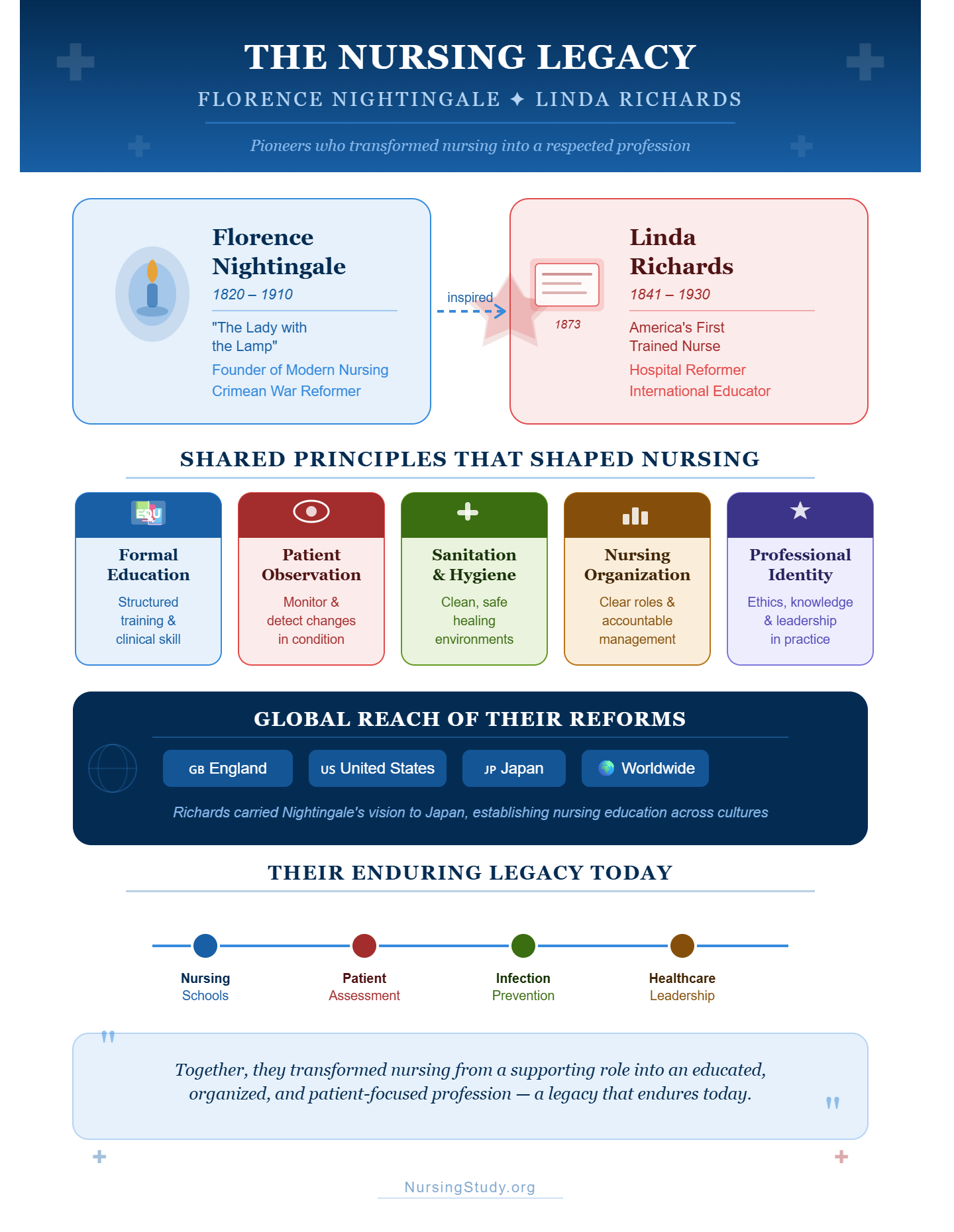
Recognition, Honors, and Historical Significance
The extraordinary contributions of Linda Richards have been recognized through numerous honors and historical acknowledgments. These recognitions reflect the lasting impact of her work on nursing education, healthcare administration, and professional nursing development.
As historians examined the origins of American nursing, Richards consistently emerged as one of the profession’s most influential figures. Her achievements as the first professionally trained American nurse, educational reformer, and international nursing advocate earned her a permanent place in healthcare history.
One of the most significant recognitions occurred decades after her death when Richards was inducted into the National Women’s Hall of Fame. This honor acknowledged her role as a trailblazer whose work expanded opportunities for women while contributing to healthcare reform and professional development.
Linda Richards was inducted into the National Women’s Hall of Fame in 1994, a recognition that highlighted her lasting influence on nursing and American society. Her induction placed her among a distinguished group of individuals whose achievements significantly shaped the nation’s history and institutions.
This recognition was particularly meaningful because it acknowledged multiple dimensions of her career, including:
- Her role as America’s first trained nurse.
- Her contributions to nursing education.
- Her leadership in hospital administration.
- Her influence on international nursing development.
- Her efforts to professionalize nursing practice.
The historical significance of Richards also extends beyond formal awards. Scholars, historians, and nursing organizations continue to study her contributions as part of the broader history of healthcare reform.
Her influence is frequently discussed in nursing history courses because her career intersects with several major developments in healthcare, including:
The Rise of Professional Nursing
Richards helped demonstrate that nursing could be transformed into a profession requiring specialized education and training.
The Expansion of Nursing Schools
Her work contributed to the growth of educational programs that prepared future generations of nurses.
Healthcare Administration Reform
Her leadership positions illustrated the value of organized nursing management and professional supervision.
International Nursing Development
Her efforts in Japan helped spread modern nursing education beyond the United States and contributed to global healthcare advancement.
Women’s Professional Advancement
Her accomplishments challenged social barriers and demonstrated the important role women could play in healthcare leadership and education.
The final years of Richards’ life reflected a career devoted to service and professional advancement. After decades of leadership, education, and reform, she eventually retired from active nursing work. She spent her later years reflecting on a profession that had changed dramatically since she first entered training.
Linda Richards suffered a severe stroke in 1923, which significantly affected her health. She died on April 16, 1930, leaving behind a remarkable legacy that continues to influence nursing education and practice. By the time of her death, the profession she had helped shape had expanded far beyond what many could have imagined when she began her career in the nineteenth century.
Today, Linda Richards is regarded as one of the most important figures in nursing history. Her contributions to the field helped establish educational standards, strengthen nursing leadership, improve healthcare administration, and advance professional nursing both nationally and internationally. The systems she helped build, the leaders she helped develop, and the reforms she championed continue to influence healthcare institutions around the world.
The enduring significance of Linda Richards lies not only in being the first professionally trained nurse in the United States but also in her vision for what nursing could become. Through education, leadership, innovation, and service, she helped lay the foundation for the modern profession and demonstrated the transformative impact that a dedicated nurse can have on healthcare, society, and future generations.
Feeling stressed about writing a detailed nursing paper?
Let us produce a thorough, high-quality document.
Conclusion
Linda Richards occupies a unique and enduring place in the history of nursing. As America’s first professionally trained nurse, she entered the profession at a time when nursing education was still emerging and healthcare institutions were undergoing significant transformation. Yet her legacy extends far beyond this historic distinction. Through her work as a clinician, educator, administrator, and reformer, Richards helped establish many of the principles that continue to define professional nursing today.
Throughout her career, Linda Richards demonstrated a commitment to improving patient care, strengthening nursing education, and advancing professional standards. Her pioneering efforts in developing systems for keeping individual medical records for hospitalized patients highlighted the importance of organization, communication, and accountability in healthcare. Equally significant were her contributions to the expansion of nurse training programs, where she helped create educational opportunities that prepared future generations of nurses for increasingly complex healthcare roles.
Richards’ influence was not limited to the United States. Her work in nursing education and nursing leadership extended internationally, particularly through her contributions to nursing in Japan. By helping establish modern nurse training programs and adapting proven educational principles to new healthcare environments, she demonstrated the global relevance of professional nursing standards and the transformative power of education.
The career of Linda Richards also reflects the broader evolution of modern nursing. Her achievements illustrate how the profession developed from informal caregiving into a discipline grounded in knowledge, clinical expertise, leadership, and continuous learning. The values she championed—professionalism, compassion, innovation, and dedication to patient welfare—remain essential qualities for nurses in contemporary healthcare settings.
More than a century after her most influential work, Linda Richards continues to be regarded as one of the most important figures in nursing history. The schools she helped strengthen, the standards she promoted, the leaders she mentored, and the reforms she championed have left a lasting imprint on healthcare systems around the world. Her life serves as a powerful reminder that meaningful progress in healthcare often begins with individuals who are willing to challenge existing limitations, pursue excellence, and dedicate themselves to improving the lives of others.
As nursing continues to evolve in response to new technologies, changing patient needs, and emerging healthcare challenges, the contributions of Linda Richards remain highly relevant. Her story is not merely a historical account of the profession’s beginnings but a testament to the enduring impact of leadership, education, and service in shaping the future of nursing.
Frequently Asked Questions
Who is Linda Richards in nursing?
Linda Richards was America’s first professionally trained nurse. After graduating from the New England Hospital for Women and Children’s nursing program in 1873, she became a pioneer in nursing education, hospital administration, patient record-keeping, and healthcare reform. Her contributions helped establish professional standards that shaped modern nursing practice in the United States and internationally.
Who was the pioneer in nursing education?
Several individuals are recognized as pioneers in nursing education, but Florence Nightingale is widely regarded as the most influential. She established the Nightingale Training School for Nurses in London in 1860 and promoted formal nursing education based on scientific knowledge, discipline, and patient-centered care. In the United States, Linda Richards played a pioneering role by helping develop and strengthen early nursing training programs.
Who was Linda Richards nursing pioneers during the Civil War?
Linda Richards was not a Civil War nurse herself, but her nursing career was influenced by pioneers who gained prominence during and after the war. These included Florence Nightingale, whose reforms transformed nursing worldwide, and notable American nursing leaders such as Clara Barton and Dorothea Dix, who provided leadership and organized nursing services during the American Civil War. Their work helped elevate nursing as a profession and influenced the environment in which Richards later trained and practiced.
What is the Lynda Hall nursing theory?
There is no widely recognized nursing theory known as the “Lynda Hall Nursing Theory.” This question may refer to Lydia Hall’s Nursing Theory, often called the Care, Cure, Core Model. Developed by nurse theorist Lydia Hall, the theory emphasizes three interconnected components:
- Care – The nurturing aspect of nursing focused on the patient’s comfort and well-being.
- Cure – Medical and therapeutic interventions aimed at treating illness.
- Core – The patient’s personal goals, emotions, and involvement in the healing process.
Lydia Hall’s theory highlights the importance of holistic, patient-centered care and remains influential in nursing practice and education.
