

Mary Seacole and the Crimean War: How Mary Jane Seacole, a Jamaican Nursing Pioneer, Changed Battlefield Care and Inspired Modern Nursing
Few figures in nursing history have generated as much interest, admiration, and scholarly discussion as Seacole Mary. Recognized for her humanitarian service during the Crimean War, Mary Seacole occupies a distinctive place in the development of healthcare and nursing. Her life story extends beyond traditional accounts of wartime caregiving, offering valuable insights into resilience, cultural diversity in healthcare, patient-centered care, and the challenges faced by women who sought to contribute to medicine and public health during the nineteenth century.
Born Mary Jane Grant in Jamaica in 1805, Mary Seacole lived during a period when opportunities for women—particularly women of mixed racial heritage—were often limited by social, political, and institutional barriers. Despite these obstacles, she developed extensive practical knowledge of health and healing, gained experience caring for individuals affected by disease, and built a reputation for her ability to provide compassionate and effective care. Long before her involvement in the Crimean War, her experiences in Jamaica and abroad had already shaped her understanding of illness, treatment, and the importance of attending to both the physical and emotional needs of patients.
Mary Seacole is most widely remembered for her service during the Crimean War, a conflict that exposed serious weaknesses in military healthcare systems. During the war, thousands of soldiers suffered not only from combat-related injuries but also from infectious diseases, poor sanitation, inadequate nutrition, and overcrowded living conditions. The crisis highlighted the urgent need for improved nursing care and better medical support for military personnel.
Several factors contributed to the significance of Mary Seacole’s work during this period:
- She provided care in challenging wartime environments.
- She offered practical assistance to sick and injured soldiers.
- She supplied food, medicines, and comfort to those under her care.
- She demonstrated remarkable independence by creating her own opportunities to serve when official avenues were unavailable.
- She helped address healthcare needs in areas where medical resources were often insufficient.
Her contributions illustrate that nursing extends beyond clinical interventions alone. Effective care often involves advocacy, compassion, resourcefulness, cultural understanding, and a willingness to respond to human suffering wherever it exists. These principles remain central to contemporary nursing practice and continue to influence healthcare professionals around the world.
An important reason Mary Seacole’s story remains accessible today is her autobiography, Wonderful Adventures of Mrs. Seacole in Many Lands. Through this publication, she documented her travels, experiences, observations, and service during the Crimean War, providing historians with a valuable firsthand account of nineteenth-century healthcare and society. The work also offers rare insight into the experiences of a Black woman navigating multiple cultures and healthcare environments during a period of significant social change.
The historical significance of Mary Seacole extends beyond her wartime service. Over time, scholars, healthcare professionals, and historians have increasingly recognized her contribution to nursing, public health, and humanitarian care. Her legacy has inspired discussions about diversity in healthcare, the recognition of overlooked historical figures, and the importance of acknowledging multiple contributors to the development of modern nursing.
Understanding Mary Seacole’s life requires examining several interconnected aspects of her journey, including:
- Her early life and upbringing in Jamaica.
- The experiences that shaped her nursing knowledge and caregiving abilities.
- Her determination to serve during the Crimean War.
- Her direct care of wounded and ill soldiers.
- The publication and significance of Seacole in Many Lands.
- Her relationship to the broader history of nursing, including comparisons with Florence Nightingale.
- Her lasting influence on healthcare, nursing values, and professional practice.
Taken together, these elements reveal a remarkable individual whose life transcended the boundaries typically placed upon women of her era. More than a historical figure, Mary Seacole represents qualities that remain highly relevant in healthcare today: courage, adaptability, compassion, leadership, and an unwavering commitment to caring for others. Her story provides an important lens through which to examine the evolution of nursing and the enduring impact that dedicated caregivers can have on patients, communities, and the profession as a whole.
Behind on nursing research or documentation tasks?
We’ll complete your assignments with clarity and precision.
Mary Seacole’s Early Life and Jamaican Heritage
Understanding the remarkable achievements of Seacole Mary during the Crimean War requires an examination of the experiences that shaped her long before she became known internationally for her nursing work. Her early years in Jamaica provided the cultural, practical, and personal foundations that influenced her approach to caregiving throughout her life. The combination of family influences, exposure to diverse healing traditions, and extensive travel helped transform Mary Seacole into one of the most distinctive healthcare figures of the nineteenth century.
Unlike many individuals who entered healthcare through formal education, Mary Seacole developed her knowledge through observation, hands-on experience, and direct engagement with patients. Her Jamaican heritage, multicultural upbringing, and practical exposure to illness and treatment played a crucial role in shaping the nursing skills that would later earn her recognition among soldiers, travelers, and healthcare historians.
Born Mary Jane Grant in 1805
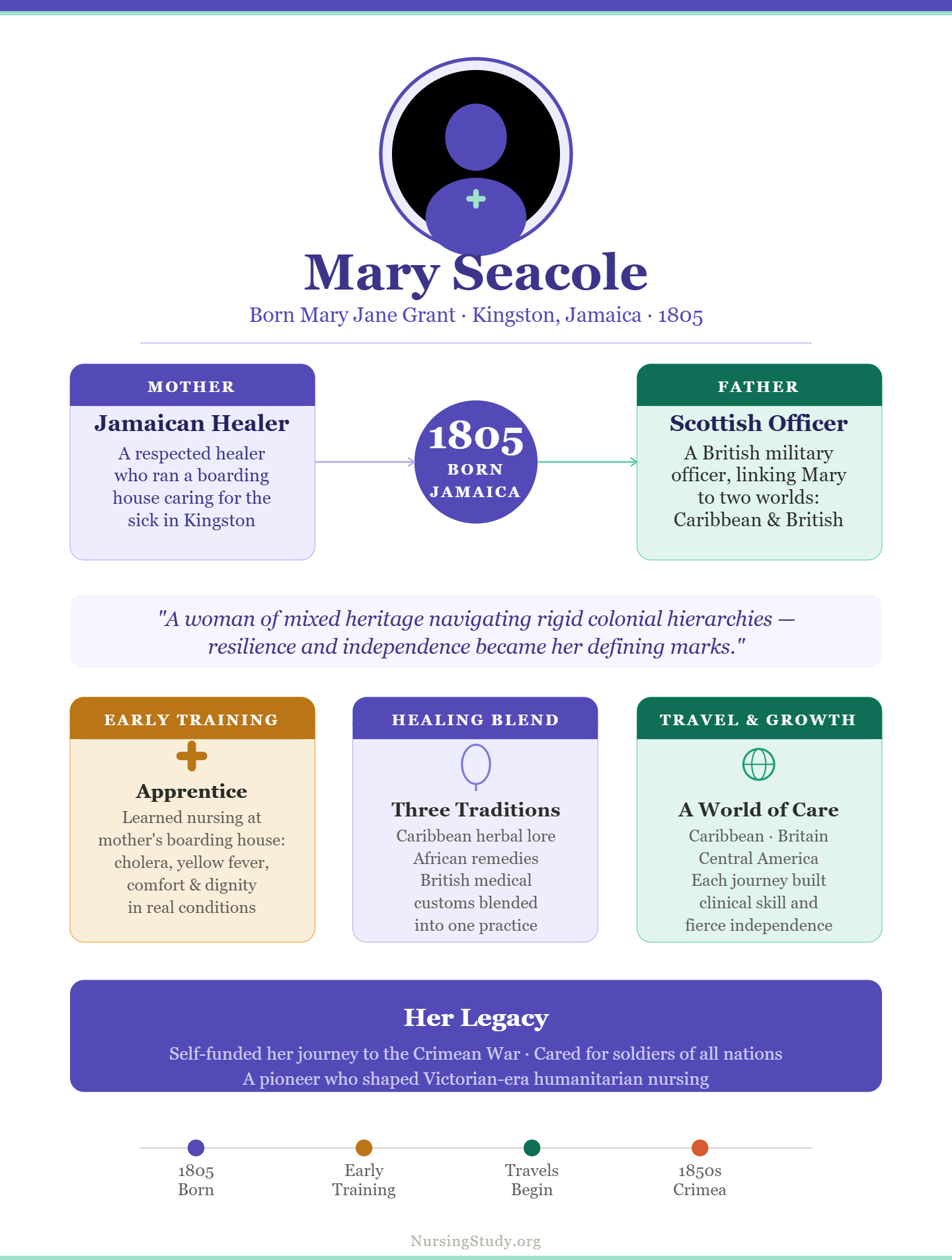
Mary Seacole was born Mary Jane Grant in 1805 in Kingston, Jamaica, during a period when the island was part of the British Empire. Historical records indicate that Mary Jane Seacole was born into a family whose background reflected the cultural diversity of colonial Jamaica.
Her family heritage was particularly significant in shaping her worldview:
- Her mother was Black and was widely respected for her healing abilities and caregiving experience.
- Her father was a Scottish military officer, giving her connections to both Jamaican and British cultural traditions.
- As a woman of mixed racial heritage, she occupied a unique social position within Jamaican society.
Because Seacole was born in Jamaica during an era characterized by rigid racial and social hierarchies, she encountered circumstances that would have limited opportunities for many women. However, these challenges also helped foster the resilience and independence that became defining characteristics of her life.
Many historical accounts note that Mary Seacole’s multicultural background exposed her to different perspectives on health, healing, and community care. While British medical practices influenced parts of her upbringing, she was also exposed to traditional Caribbean healing methods that had developed through generations of experience and adaptation.
Kingston itself was an important center of commerce, military activity, and cultural exchange. Growing up in this environment allowed Mary Seacole to interact with people from diverse backgrounds, including soldiers, merchants, travelers, and local residents. These interactions broadened her understanding of human health needs and exposed her to a variety of illnesses and treatment approaches from an early age.
The significance of her birth and upbringing becomes clearer when considering the historical context. During the early nineteenth century:
- Formal nursing education was largely unavailable.
- Healthcare systems were often poorly organized.
- Women rarely received recognition for medical expertise.
- Opportunities for women of mixed racial heritage were especially restricted.
Despite these barriers, born Mary Jane Grant would eventually become one of the most recognizable figures associated with humanitarian healthcare during the Victorian era.
Early Exposure to Healing, Nursing, and Caregiving
One of the most important influences on Mary Seacole’s development was her mother, commonly referred to as Mother Seacole. Historical sources describe Mother Seacole as a respected healer and businesswoman who operated a boarding house in Kingston.
The boarding house served purposes that extended beyond providing accommodation. It functioned as a place where travelers, military personnel, and individuals experiencing illness could receive care and support. Through her mother’s work, Mary was introduced to caregiving practices at an unusually young age.
This environment provided several valuable learning opportunities:
- Observing patients with various illnesses.
- Assisting with daily caregiving activities.
- Learning practical treatment methods.
- Understanding the importance of nutrition in recovery.
- Witnessing how emotional support affected patient well-being.
Mother Seacole taught Mary many of the principles that would later define her approach to nursing care. Rather than viewing treatment solely as the administration of remedies, she learned that healing often required attention to comfort, dignity, cleanliness, and compassion.
These early experiences helped Mary develop nursing skills that combined practical knowledge with genuine concern for patients. In many respects, her training resembled an apprenticeship, allowing her to learn directly from real-world situations rather than from textbooks or formal lectures.
The caregiving methods practiced in the boarding house reflected a blend of influences, including:
- Traditional Jamaican healing practices.
- African-derived herbal knowledge.
- British medical customs.
- Practical remedies developed through local experience.
This combination of approaches contributed to Mary Seacole’s holistic understanding of healthcare. She learned to assess individual needs and adapt her care accordingly, a principle that remains central to modern nursing.
Her early exposure to disease outbreaks further expanded her knowledge. Throughout her youth and early adulthood, Jamaica experienced recurring health challenges, including outbreaks of infectious diseases such as cholera and yellow fever. Caring for affected individuals gave Mary firsthand experience managing illness under difficult conditions.
For example, rather than relying exclusively on one method of treatment, she often combined observation, practical interventions, dietary support, and symptom management. This flexible approach would later prove invaluable during wartime service, where limited resources frequently required creativity and adaptability.
These formative experiences laid the groundwork for her future reputation as someone capable of providing nursing care in demanding environments where conventional medical systems were often inadequate.
Travel Experiences and the Development of Medical Knowledge
While her upbringing in Kingston provided the foundation for her healthcare knowledge, Mary Seacole’s education continued through extensive travel. Throughout her adult life, she visited numerous regions, exposing herself to different cultures, diseases, and healthcare practices.
Travel during the nineteenth century was often difficult and sometimes dangerous. Nevertheless, Seacole travelled extensively, demonstrating a willingness to seek new experiences and expand her understanding of the world.
Her journeys took her to various locations throughout:
- The Caribbean.
- Central America.
- Britain.
- Other regions connected through trade and travel networks.
Each destination provided opportunities to observe how different communities approached health and illness. Rather than limiting herself to familiar methods, she actively learned from the people she encountered.
These travels contributed to her medical knowledge in several important ways.
Exposure to Diverse Diseases
Different geographic regions presented different health challenges. Through travel, Mary gained experience with diseases that many practitioners encountered only rarely.
This exposure improved her ability to:
- Recognize symptoms.
- Understand disease progression.
- Adapt treatment strategies.
- Manage care during outbreaks.
Practical Clinical Experience
Unlike theoretical learning, travel placed Mary directly in situations where healthcare decisions had immediate consequences. She often cared for individuals experiencing illness while navigating unfamiliar environments.
Such experiences strengthened her:
- Clinical judgment.
- Observation skills.
- Problem-solving abilities.
- Confidence in providing care.
Cultural Understanding
Travel also enhanced her appreciation for cultural differences in health beliefs and practices. She learned that effective caregiving often requires sensitivity to individual backgrounds and preferences.
This understanding would later contribute to her success in caring for soldiers and civilians from diverse social, national, and cultural backgrounds.
Adaptability and Independence
Perhaps most importantly, travel cultivated a remarkable level of independence. Repeatedly navigating unfamiliar settings taught Mary to rely on her own resourcefulness and initiative.
These qualities became evident later when she funded her own trip to the Crimean War after official opportunities to participate were denied. Her willingness to act independently reflected habits and confidence developed through years of travel and practical experience.
By the time Mary Seacole entered the international stage during the Crimean War, she was far more than a caregiver with local experience. She was a well-traveled practitioner whose knowledge had been shaped by diverse cultures, repeated exposure to disease, and years of hands-on caregiving. Her Jamaican heritage, early training under Mother Seacole, and extensive travels collectively created the foundation for the extraordinary nursing work that would later define her legacy and secure her place in healthcare history.
Mary Seacole’s Journey to the Crimean War
Mary Seacole’s journey to the Crimean War stands as one of the most extraordinary examples of determination and humanitarian commitment in nursing history. At a time when military healthcare systems were struggling to meet the needs of thousands of soldiers, Mary Seacole chose to place herself at the center of a dangerous conflict in order to provide care and support. Her path to Crimea was neither straightforward nor officially sanctioned. Instead, it was marked by perseverance, personal sacrifice, and an unwavering belief that her nursing skills could make a meaningful difference in the lives of those suffering from illness and injury.
Unlike many healthcare workers who operated under government authority, Seacole Mary pursued an independent mission after encountering repeated obstacles to formal service. Her eventual success in reaching Crimea and establishing herself as a trusted caregiver demonstrates the resilience and initiative that would later become central to her legacy.
The Healthcare Crisis During the Crimean War
The Crimean War created one of the most severe healthcare crises of the nineteenth century. The conflict, which involved Britain, France, the Ottoman Empire, and Russia, placed enormous strain on military medical services. Although battles caused significant casualties, disease often proved more deadly than combat itself.
The Crimean War lasted from October 1853 until February 1856, and during this period thousands of soldiers experienced conditions that contributed to widespread illness and suffering. Military hospitals and camps were often unprepared for the scale of the crisis.
Several factors contributed to the poor state of healthcare during the war:
- Overcrowded hospitals.
- Inadequate sanitation systems.
- Limited access to clean water.
- Shortages of medical supplies.
- Poor nutrition among troops.
- Insufficient numbers of trained caregivers.
As a result, many wounded soldiers faced significant risks even after surviving the battlefield. Infections spread rapidly through overcrowded facilities, while diseases such as cholera, dysentery, and typhus claimed thousands of lives.
Reports sent back to Britain described poor medical facilities for wounded soldiers and highlighted the urgent need for reform. Medical facilities for wounded soldiers frequently lacked basic necessities, including clean bedding, adequate ventilation, and sufficient staff to care for the growing number of patients.
For many soldiers, survival depended not only on medical treatment but also on receiving:
- Nutritious food.
- Proper hygiene.
- Emotional support.
- Continuous observation.
- Assistance with daily activities.
These circumstances helped draw public attention to the shortcomings of military healthcare and created opportunities for individuals willing to provide additional support.
The healthcare crisis also helped shape the work of both Mary Seacole and Florence Nightingale. Although they approached caregiving differently, both women responded to the suffering caused by the war and sought ways to improve conditions for soldiers.
Overcoming Barriers to Serve
When news of the suffering in Crimea reached Britain, Mary Seacole immediately recognized the need for experienced caregivers. By this stage of her life, she had already developed considerable expertise through years of practical healthcare experience in Jamaica and other regions.
Confident in her abilities, she sought opportunities to contribute to the war effort. However, gaining official approval proved difficult.
Historical accounts indicate that Seacole approached several organizations and individuals involved in recruiting nurses for military service. These efforts included attempts to join groups connected to the War Office and nursing initiatives being organized for deployment to Crimea.
Despite her experience, she was not selected.
Although the precise reasons remain debated among historians, several factors may have contributed to these rejections:
- Limited opportunities for women in military healthcare.
- Preference for officially trained personnel.
- Social and class prejudices.
- Racial discrimination directed toward a woman whose mother was Black and whose father was a Scottish military officer.
Regardless of the reasons, the outcome was clear: Mary Seacole was not sent as an army nurse through official channels.
For many individuals, repeated rejection would have marked the end of their efforts. Mary Seacole, however, refused to abandon her goal. Her response illustrates one of the defining characteristics of her career—an ability to create opportunities when existing systems excluded her.
Rather than waiting for approval, she decided to take independent action.
This decision required considerable courage. Travel to a war zone involved substantial risks, including:
- Financial uncertainty.
- Exposure to disease.
- Dangerous transportation routes.
- Potential military threats.
- Lack of institutional support.
Nevertheless, Seacole believed that her nursing skills and practical medical knowledge could help alleviate suffering among soldiers. Her determination reflected a deep commitment to service and an understanding that healthcare professionals often have responsibilities that extend beyond formal job titles or institutional recognition.
Traveling to Crimea and Beginning Independent Nursing Work
After realizing that official opportunities were unlikely to materialize, Mary Seacole funded her own trip to the war zone. This decision represented a remarkable act of independence and personal sacrifice.
Unlike government-sponsored personnel, she assumed responsibility for:
- Travel expenses.
- Business arrangements.
- Housing logistics.
- Medical supplies.
- Operational planning.
In effect, Seacole funded her own trip to provide assistance where she believed it was most needed.
The journey itself was long and challenging. Seacole travelled through various locations before eventually reaching Crimea. Her previous travel experiences proved valuable, as they had taught her how to navigate unfamiliar environments and adapt to changing circumstances.
Upon arriving in the region, she quickly assessed the needs of soldiers and identified ways in which she could contribute. Rather than attempting to replicate hospital services, she focused on practical support that complemented existing medical efforts.
One of her most significant achievements during this period was her decision to establish services that addressed both physical and emotional needs.
Her work included:
- Providing food and refreshments.
- Supplying medicines and medical necessities.
- Offering comfort to injured soldiers.
- Visiting military positions.
- Helping nurse the wounded.
- Supporting recovery efforts outside traditional hospital settings.
Eventually, she established the British Hotel near the military encampments. Although the British Hotel was not a hospital in the conventional sense, it became an important source of support for soldiers. The facility offered food, shelter, supplies, and assistance to individuals affected by the hardships of war.
The decision to establish the British Hotel reflected Mary Seacole’s understanding that effective nursing care extends beyond treating injuries. Recovery is influenced by numerous factors, including nutrition, rest, emotional well-being, and access to essential resources.
Her willingness to travel close to military operations further distinguished her from many contemporaries. Rather than remaining in safer locations, she often ventured near the battlefield to provide assistance directly to those in need. This hands-on approach earned her respect among soldiers, many of whom came to view her as a trusted caregiver and advocate.
The journey that brought Mary Seacole to Crimea therefore represents more than a story of travel. It demonstrates how determination, professional confidence, and compassion enabled one woman to overcome institutional barriers and create a unique role within a major international conflict. By refusing to accept exclusion and choosing to serve independently, she laid the foundation for the nursing work during the Crimean War that would later secure her place among the most influential figures in healthcare history.
Mary Seacole’s Nursing Work During the Crimean War
Mary Seacole’s reputation as a nursing pioneer was established largely through her actions during the Crimean War. While many historical discussions focus on the challenges she faced in reaching the war zone, it was her actual work in Crimea that demonstrated the full extent of her compassion, resourcefulness, and commitment to caring for others. At a time when military healthcare systems were struggling to meet the needs of thousands of soldiers, Mary Seacole created her own opportunities to provide assistance, often placing herself in dangerous situations to ensure that those suffering from illness and injury received support.
The nursing work during the Crimean conflict was not limited to formal hospitals. The realities of war required caregivers to adapt constantly to changing circumstances, shortages of supplies, and overwhelming numbers of patients. In this environment, Mary Seacole developed a practical and highly personalized approach to nursing care that addressed both the physical and emotional needs of soldiers. Her efforts demonstrated that effective healthcare extends beyond treating wounds and diseases; it also involves promoting comfort, dignity, hope, and recovery.
Battlefield Care and Support for Wounded Soldiers
One of the most remarkable aspects of Mary Seacole’s service was her willingness to provide care in close proximity to military operations. Unlike many civilian caregivers who remained within established facilities, she frequently traveled to areas near the battlefield to assist soldiers who had been injured during combat.
The conditions facing wounded soldiers during the Crimean War were extremely difficult. Many experienced:
- Gunshot wounds.
- Fractures and traumatic injuries.
- Exposure to harsh weather conditions.
- Infectious diseases.
- Malnutrition and dehydration.
- Physical exhaustion and psychological distress.
Transportation systems for moving injured personnel were often inadequate, meaning that many soldiers waited extended periods before receiving medical attention. In some cases, healthcare resources were overwhelmed by the sheer number of casualties.
Recognizing these challenges, Seacole Mary sought to bring assistance closer to those who needed it most. Historical accounts describe how she visited military positions and traveled near active areas of conflict to provide support. Her presence among troops earned her widespread respect because soldiers viewed her as someone willing to share their hardships rather than remain at a distance from the realities of war.
Her support for wounded soldiers included several important activities:
Immediate Assistance and Basic Treatment
Although she was not functioning as a military surgeon, Mary Seacole provided practical care to injured individuals whenever possible. Her experience with illness and healing allowed her to assess needs quickly and offer assistance while more advanced treatment was being arranged.
Examples of care included:
- Cleaning and dressing wounds.
- Providing comfort measures.
- Offering medicines and remedies.
- Monitoring symptoms.
- Assisting with basic recovery needs.
These interventions may appear simple by modern standards, but they often made a significant difference in environments where medical personnel and supplies were limited.
Nutritional Support
One of Mary Seacole’s most valuable contributions involved ensuring that soldiers had access to food and nourishment. Recovery from illness and injury depends heavily on adequate nutrition, yet many troops struggled to obtain sufficient meals during the conflict.
She recognized that healing required more than medical procedures alone. By supplying food and beverages, she helped improve comfort and support physical recovery.
This approach reflects an important principle of modern nursing: effective care considers the whole person rather than focusing exclusively on disease or injury.
Emotional and Psychological Support
Many soldiers experienced loneliness, fear, grief, and uncertainty. Separation from family members and exposure to constant danger placed enormous psychological burdens on military personnel.
Mary Seacole became known not only for treating physical ailments but also for providing encouragement and companionship. Her interactions helped boost morale and reminded soldiers that they were valued as individuals.
Today, healthcare professionals recognize the importance of emotional well-being in patient recovery. Mary Seacole’s work demonstrates that this principle was evident in her caregiving approach long before concepts such as holistic nursing became formally defined.
Courage in Dangerous Conditions
Perhaps most significantly, she willingly entered areas that many civilians would have avoided. Her readiness to nurse the wounded near the battlefield distinguished her from many contemporaries and contributed to her reputation for bravery.
This courage became one of the defining features of her legacy. Rather than allowing danger to deter her, she consistently prioritized the needs of those under her care.
Establishment and Operation of the British Hotel
One of Mary Seacole’s most enduring achievements during the Crimean War was the creation of the British Hotel. After arriving in Crimea and assessing the needs of soldiers, she realized that existing healthcare and support systems were insufficient to address many of the challenges troops faced.
As a result, she established the British Hotel near the military camps.
Although the name might suggest a traditional hotel, the facility served a much broader purpose. It functioned as a center for support, supplies, food, lodging, and caregiving. In many respects, it bridged gaps that existed between formal medical institutions and the practical needs of soldiers in the field.
The decision to establish the British Hotel demonstrated several important qualities:
- Entrepreneurial thinking.
- Organizational ability.
- Leadership.
- Adaptability.
- Commitment to humanitarian service.
Because Seacole funded her own trip and operated independently, she had to manage the facility without relying on government administration. This required careful planning and resource management.
Services Provided Through the British Hotel
The British Hotel offered numerous forms of assistance, including:
- Meals and refreshments.
- Medical supplies.
- Comfortable accommodations.
- Social interaction and companionship.
- Support for recovering soldiers.
- Access to necessities that were difficult to obtain elsewhere.
For soldiers recovering from illness or injury, the facility represented a welcome refuge from the harsh realities of military life.
Supporting Recovery Beyond Medical Treatment
One of the most innovative aspects of the British Hotel was its recognition that recovery involves more than clinical intervention.
Mary Seacole understood that patients benefit from:
- Adequate nutrition.
- Rest and comfort.
- Emotional support.
- Clean environments.
- Access to basic necessities.
Modern healthcare systems frequently emphasize these same factors as essential components of patient-centered care.
The British Hotel therefore functioned as more than a business enterprise. It served as an extension of Mary Seacole’s caregiving philosophy and demonstrated her understanding of the broader determinants of health and recovery.
Building Trust Among Soldiers
Because of her consistent presence and willingness to help, many soldiers came to trust Mary Seacole deeply. The British Hotel became closely associated with her personal reputation for kindness, reliability, and compassion.
This trust enhanced her ability to support those under her care and strengthened the relationships that made her such a respected figure during the war.
Patient-Centered Care in a Wartime Environment
Perhaps the most significant aspect of Mary Seacole’s nursing work was her commitment to patient-centered care. Although the term did not exist during her lifetime, many of her actions reflected principles that are now recognized as central to quality healthcare.
Patient-centered care involves recognizing each individual as a unique person with specific physical, emotional, social, and cultural needs. Rather than treating patients as collections of symptoms, caregivers focus on the whole person.
Mary Seacole consistently demonstrated this philosophy through her interactions with soldiers.
Individualized Attention
Historical accounts suggest that she paid close attention to the unique needs of those she cared for. Rather than applying identical solutions to every situation, she adapted her support according to individual circumstances.
For example, one soldier might require nutritional assistance, while another might benefit more from emotional reassurance or practical support during recovery.
This flexibility remains a hallmark of effective nursing practice today.
Respect and Compassion
A defining feature of Mary Seacole’s caregiving approach was the respect she showed to patients regardless of rank, background, or condition.
Her willingness to engage personally with soldiers helped create an atmosphere of trust and dignity. Such interactions reinforced the idea that compassionate care can have a meaningful impact on patient experiences and outcomes.
Holistic Care
Modern nursing emphasizes holistic care, which considers physical, emotional, social, and environmental influences on health. Mary Seacole’s work reflected this perspective long before the concept became formally incorporated into nursing theory.
Her caregiving addressed multiple dimensions of well-being:
- Physical health through treatment and practical assistance.
- Emotional health through encouragement and companionship.
- Social needs through human connection and support.
- Environmental factors through food, shelter, and comfort.
Lessons for Contemporary Healthcare
The patient-centered approach demonstrated by Mary Seacole remains relevant in contemporary healthcare settings.
Her work illustrates several enduring nursing principles:
- Compassion enhances healing.
- Effective care extends beyond medical treatment.
- Advocacy is an essential nursing responsibility.
- Flexibility is necessary in complex healthcare environments.
- Respect for patient dignity should remain a priority in all circumstances.
By combining practical medical knowledge with empathy, courage, and cultural understanding, Mary Seacole created a model of caregiving that continues to resonate with healthcare professionals today. Her nursing work during the Crimean War not only improved the lives of countless soldiers but also demonstrated the lasting value of holistic, patient-focused care in even the most challenging environments.
Seacole in Many Lands: The Autobiography That Preserved Her Legacy
While Mary Seacole’s nursing work during the Crimean War earned her admiration from soldiers and contemporaries, much of what is known about her life today comes from a remarkable literary achievement: her autobiography. Without this written account, many details about her experiences, travels, caregiving practices, and personal reflections might have been lost to history.
Published shortly after the end of the Crimean War, Wonderful Adventures of Mrs. Seacole in Many Lands provides an invaluable firsthand perspective on nineteenth-century healthcare, travel, race, empire, and humanitarian service. More than a personal memoir, the book serves as an important historical document that allows modern readers to understand how Mary Seacole viewed her own experiences and contributions.
The autobiography occupies a unique place in both nursing history and literary history. It not only preserved the story of Seacole Mary but also helped ensure that future generations would have access to the voice of a woman whose achievements challenged many of the social expectations of her era.
Why Seacole in Many Lands Was Written
Following the conclusion of the Crimean War, Mary Seacole faced significant financial difficulties. Although she had gained widespread respect for her service to wounded soldiers, the end of military operations brought substantial economic challenges.
A large portion of her resources had been invested in supporting soldiers and operating the British Hotel. When the war ended, demand for these services declined dramatically, leaving her in a precarious financial position.
It was within this context that Wonderful Adventures of Mrs. Seacole in Many Lands was written and published.
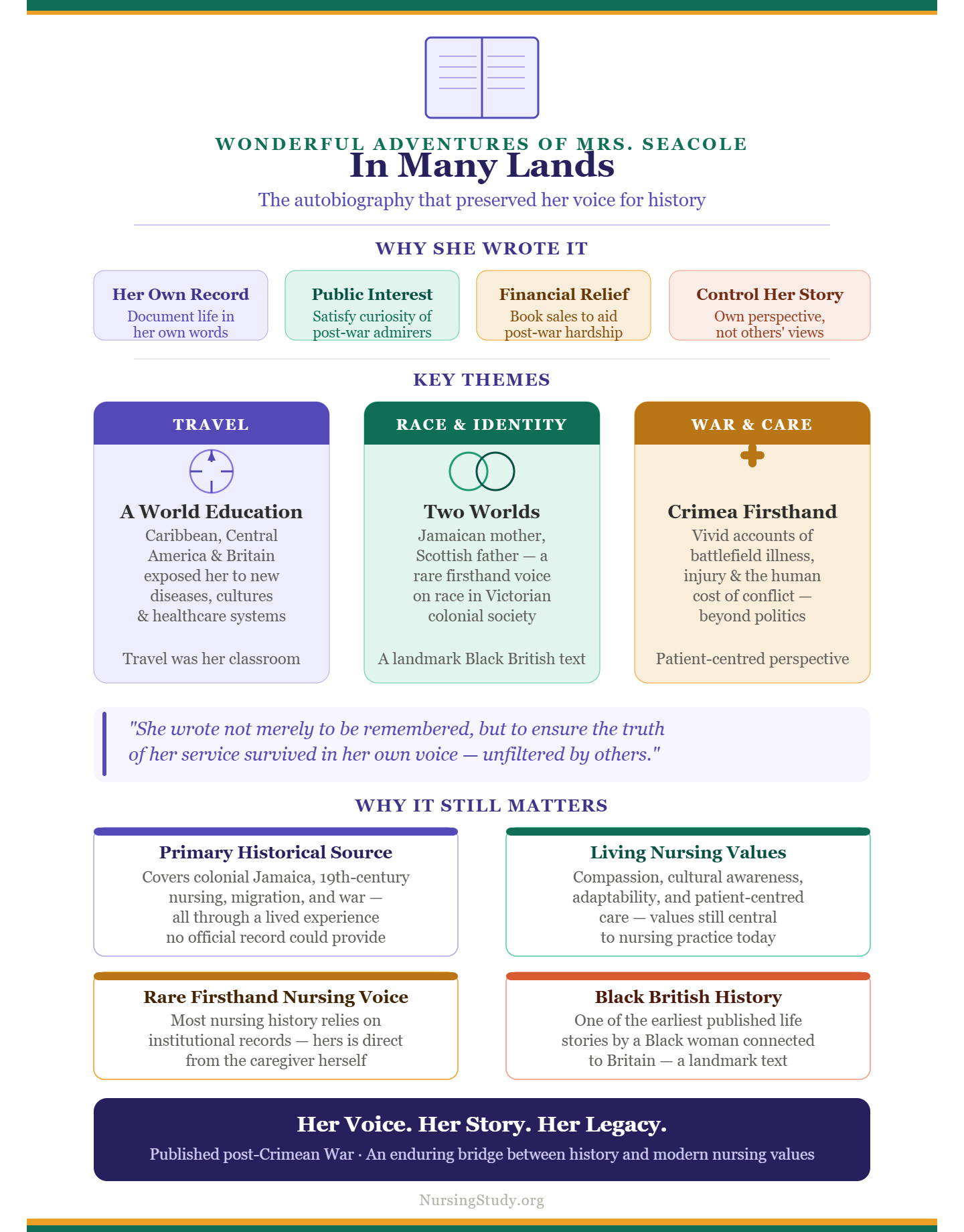
The autobiography served several important purposes.
Preserving a Personal Record of Experience
Mary Seacole had lived an extraordinary life that extended far beyond her wartime service. Before reaching Crimea, she had traveled extensively, encountered diverse cultures, and cared for individuals during disease outbreaks in various regions.
The autobiography allowed her to document these experiences in her own words.
Through the text, readers gain insight into:
- Her childhood in Jamaica.
- Her relationship with Mother Seacole.
- Her development of nursing skills.
- Her travels throughout the Caribbean and Central America.
- Her experiences during the Crimean War.
- Her observations of people, cultures, and healthcare practices.
The work therefore functions as both a personal narrative and a historical record.
Responding to Public Interest
Following her return to England, Mary Seacole had become a well-known public figure. Many people were interested in learning more about the woman who had independently traveled to a war zone and earned the respect of British soldiers.
Publishing her story helped satisfy this public curiosity while allowing her to present an accurate account of her experiences.
Rather than relying on secondhand descriptions, readers could hear directly from Mary Seacole herself.
Supporting Financial Recovery
The publication also had a practical purpose. Revenue generated through book sales could help address some of the financial hardships she experienced after the war.
At a time when few women had opportunities to share their life stories in print, the decision to publish her autobiography represented both a personal and professional undertaking.
Providing Her Own Historical Narrative
Perhaps most importantly, the autobiography allowed Mary Seacole to control how her story was told.
Historical records are often shaped by those with social, political, or institutional power. By writing her own account, Mary Seacole ensured that her experiences would be preserved from her perspective rather than being interpreted solely through the views of others.
This aspect of the autobiography remains particularly valuable to historians because it offers direct access to her thoughts, observations, and motivations.
Key Themes and Historical Insights from the Autobiography
One reason Seacole in Many Lands continues to attract scholarly attention is the wide range of themes it addresses. The book provides insights not only into Mary Seacole’s life but also into broader social and historical issues of the nineteenth century.
Several themes emerge repeatedly throughout the autobiography.
Travel and Cultural Exchange
Travel occupies a central place in the narrative. Long before she became famous for her nursing work, Seacole travelled extensively throughout various regions.
Her journeys exposed her to:
- Different healthcare systems.
- Diverse cultural traditions.
- New diseases and treatments.
- Varied social and political environments.
These experiences broadened her understanding of human health and contributed significantly to her development as a caregiver.
The autobiography demonstrates how travel served as an important form of education during a period when formal opportunities for women were often limited.
Healthcare and Humanitarian Service
Another major theme is caregiving.
Throughout the book, Mary Seacole describes situations in which she provided nursing care to individuals experiencing illness, injury, or hardship. Her accounts reveal a practical approach to healthcare that emphasized adaptability and compassion.
Readers gain insight into how she:
- Assessed patient needs.
- Applied remedies and treatments.
- Responded during health crises.
- Supported individuals facing serious illness.
These descriptions help historians understand healthcare practices before the widespread professionalization of nursing.
Courage and Resilience
The autobiography also highlights the resilience that characterized Mary Seacole’s life.
Repeatedly, she encountered obstacles that might have discouraged others, including:
- Financial setbacks.
- Difficult travel conditions.
- Social barriers.
- Racial prejudice.
- Wartime dangers.
Rather than allowing these challenges to define her, she consistently sought ways to continue helping others.
This determination became one of the defining characteristics of her legacy.
Identity and Race
Modern scholars frequently examine the autobiography for its discussions of race and identity.
As a woman whose mother was Black and whose father was a Scottish military officer, Mary Seacole occupied a unique position within nineteenth-century society.
Her writings provide valuable insight into:
- Colonial Jamaica.
- Social attitudes toward race.
- Experiences of mixed-race individuals.
- The opportunities and limitations faced by women of color.
Because relatively few firsthand accounts from Black women of the Victorian era survive, the autobiography serves as an especially important historical resource.
The Human Reality of War
The Crimean War sections of the autobiography provide vivid descriptions of the realities faced by soldiers.
Readers learn about:
- Battlefield conditions.
- Illness and injury.
- Daily military life.
- The emotional challenges experienced by troops.
- Efforts to provide comfort and support during conflict.
These observations help humanize historical events that are often discussed primarily in military or political terms.
The Historical Significance of Seacole’s Published Account
The importance of Wonderful Adventures of Mrs. Seacole in Many Lands extends far beyond its value as a personal memoir. Historians, literary scholars, and healthcare professionals regard it as a document of exceptional significance.
A Rare Firsthand Nursing Perspective
Much of nursing history is reconstructed from institutional records, official reports, and accounts written by observers. Mary Seacole’s autobiography offers something different: a firsthand account from an active caregiver.
This perspective allows readers to better understand:
- Nineteenth-century nursing practices.
- Challenges faced by caregivers.
- Patient experiences during wartime.
- Informal healthcare systems operating outside hospitals.
Such firsthand narratives are invaluable for understanding the realities of historical healthcare delivery.
An Important Contribution to Black British History
The autobiography is frequently recognized as one of the earliest published life stories written by a Black woman connected to Britain.
For this reason, many scholars regard it as a landmark text in Black British history.
The work provides evidence of the diverse individuals who contributed to British society and challenges traditional historical narratives that often overlooked their achievements.
Preserving the Legacy of Mary Seacole
Without the autobiography, many details of Mary Seacole’s life might have disappeared from public memory.
Indeed, for a period extending nearly a century after her death, her achievements received relatively limited attention in mainstream historical accounts. The survival of her autobiography played a critical role in later efforts to rediscover and reassess her contributions.
When historians renewed interest in her life during the twentieth century, Seacole in Many Lands became one of the most important sources available.
A Valuable Primary Historical Source
Today, the autobiography continues to be studied because it provides direct evidence about:
- Colonial Jamaica.
- Nineteenth-century healthcare.
- Travel and migration.
- Race relations.
- Women’s experiences.
- The Crimean War.
- Humanitarian service.
Primary sources such as this are essential because they allow researchers to examine historical events through the eyes of individuals who actually experienced them.
Continuing Relevance in Modern Nursing
For healthcare professionals, the autobiography offers more than historical information. It provides examples of values that remain important in contemporary practice:
- Compassion.
- Cultural awareness.
- Adaptability.
- Advocacy.
- Patient-centered care.
- Commitment to service.
Through her published account, Mary Seacole left behind not only a record of what she accomplished but also a reflection of the principles that guided her work. As a result, Seacole in Many Lands continues to serve as an enduring bridge between the history of nursing and the values that shape healthcare today. By preserving her voice and experiences, the autobiography ensures that Mary Seacole’s contribution to nursing remains accessible, understandable, and relevant for future generations.
Mary Seacole and Florence Nightingale: Different Paths, Shared Impact
Few topics in nursing history generate as much discussion as the relationship between Mary Seacole and Florence Nightingale. Both women became associated with the Crimean War and both contributed significantly to improving the care of soldiers during one of the nineteenth century’s most devastating military conflicts. Yet their stories are often presented as if one individual’s achievements diminish the other’s contributions. Historical evidence suggests a more nuanced reality.
Rather than viewing Mary Seacole and Florence Nightingale as rivals, it is more accurate to understand them as two influential figures who responded to the same healthcare crisis in different ways. Each woman brought unique skills, experiences, and perspectives to wartime caregiving. Their approaches differed in terms of organization, leadership style, work environment, and methods of delivering care, but both helped draw attention to the importance of nursing and the urgent need for healthcare reform.
Understanding the similarities and differences between these two women provides valuable insight into how nursing evolved during the nineteenth century and why both continue to occupy important places in healthcare history.
Similarities in Service During the Crimean War
Although their careers followed different paths, Mary Seacole and Florence Nightingale shared several important characteristics that shaped their contributions during the Crimean War.
A Commitment to Improving Soldier Health
At the heart of both women’s work was a desire to reduce suffering among soldiers.
The Crimean War exposed widespread deficiencies in military healthcare. Thousands of troops experienced:
- Severe battlefield injuries.
- Infectious diseases.
- Malnutrition.
- Poor sanitation.
- Inadequate medical resources.
Both women recognized that existing systems were failing many soldiers and sought ways to improve conditions.
Florence Nightingale focused much of her attention on hospital-based care and administrative reform, while Seacole Mary concentrated on direct support for wounded soldiers in and around military camps. Despite these differences, both were motivated by a commitment to improving health outcomes and reducing preventable suffering.
Service During a Healthcare Crisis
The Crimean War created extraordinary healthcare challenges that required innovative responses.
Both women entered environments characterized by:
- Overcrowding.
- Resource shortages.
- High mortality rates.
- Poor hygiene.
- Limited nursing infrastructure.
Their willingness to work under such conditions demonstrates a shared sense of duty and resilience.
For example, Nightingale and her nursing team worked extensively within military hospitals to improve sanitation and patient care. Meanwhile, Mary Seacole traveled to Crimea independently and provided assistance through her own initiatives, including support services near military operations.
Although their methods differed, each sought practical solutions to urgent healthcare problems.
Advocacy for Better Care
Both women understood that recovery depended on more than medical treatment alone.
Their work highlighted the importance of:
- Nutrition.
- Hygiene.
- Comfort.
- Emotional support.
- Safe environments.
These concepts are now considered essential components of quality nursing care.
By emphasizing these factors, Mary Seacole and Florence Nightingale helped broaden understanding of what effective healthcare should involve.
Challenging Traditional Expectations
During the nineteenth century, women often faced significant restrictions in professional and public life. Both women challenged these expectations through their actions.
Their achievements demonstrated that women could:
- Lead healthcare initiatives.
- Influence public opinion.
- Manage complex operations.
- Improve healthcare systems.
- Contribute meaningfully during national crises.
This aspect of their legacy continues to inspire discussions about leadership and gender in healthcare.
Differences in Nursing Practice and Leadership
While Mary Seacole and Florence Nightingale shared certain goals, their methods and professional approaches differed substantially. These differences help explain why both women occupy distinct places within nursing history.
Formal Organization Versus Independent Service
One of the most significant differences involved how they entered the Crimean War.
Florence Nightingale was appointed to lead an organized group of nurses working within the British military healthcare system. She operated with official authorization and eventually became closely associated with institutional reform efforts.
Mary Seacole’s experience was very different.
After unsuccessful attempts to secure official support, she funded her own trip to the war zone. Rather than working under government direction, she created her own opportunities to serve.
This distinction shaped nearly every aspect of their work.
Nightingale worked primarily within established healthcare institutions, whereas Seacole often operated independently and responded directly to immediate needs as they arose.
Different Care Environments
The environments in which they provided care also differed significantly.
Florence Nightingale became most closely associated with hospital settings, particularly the military hospital at Scutari. There, she focused on improving sanitation, organization, recordkeeping, and patient management.
Mary Seacole, by contrast, worked much closer to the realities of military life outside formal hospitals.
Her activities included:
- Visiting military camps.
- Assisting soldiers near the battlefield.
- Providing supplies and refreshments.
- Supporting troops through the British Hotel.
- Offering practical nursing care where resources were limited.
Because she worked in less structured environments, her caregiving often required greater flexibility and improvisation.
Leadership Style
The two women also demonstrated different forms of leadership.
Florence Nightingale’s leadership was characterized by:
- Administrative oversight.
- Policy influence.
- Statistical analysis.
- Institutional reform.
- Organizational management.
Her efforts contributed significantly to the professionalization of nursing and the modernization of hospital systems.
Mary Seacole’s leadership emerged through:
- Personal initiative.
- Direct patient interaction.
- Community building.
- Practical problem-solving.
- Humanitarian service.
Rather than leading large organizations, she led through action and example.
Her influence was rooted in relationships with soldiers and her willingness to meet needs wherever she encountered them.
Approaches to Nursing Care
The caregiving philosophies of both women reflected their unique experiences.
Florence Nightingale emphasized:
- Environmental sanitation.
- Disease prevention.
- Structured nursing systems.
- Hospital management.
- Evidence-informed practice.
Mary Seacole emphasized:
- Individualized support.
- Holistic caregiving.
- Emotional comfort.
- Cultural adaptability.
- Direct engagement with patients.
For example, when encountering a soldier recovering from illness, Nightingale might focus on ensuring optimal hospital conditions and systematic care processes. Seacole might focus on providing nourishment, companionship, practical assistance, and individualized support tailored to the person’s immediate needs.
Both approaches were valuable and addressed important aspects of healthcare delivery.
Understanding Their Combined Contribution to Nursing
Modern scholarship increasingly recognizes that Mary Seacole and Florence Nightingale should not be viewed as competing historical figures. Instead, they represent complementary approaches to improving healthcare during a period of profound need.
Together, their contributions helped transform public understanding of nursing and highlighted the essential role caregivers play during crises.
Expanding the Scope of Nursing
The work of both women demonstrated that nursing involves far more than performing clinical tasks.
Their combined efforts emphasized the importance of:
- Compassion.
- Advocacy.
- Leadership.
- Public health.
- Patient-centered care.
- Healthcare reform.
These principles remain central to modern nursing practice.
Influencing the Development of Modern Nursing
Florence Nightingale is often described as a pioneer of modern nursing because of her role in establishing formal nursing education and promoting healthcare reform.
At the same time, Mary Seacole’s contribution to nursing demonstrates the importance of adaptability, cultural awareness, and holistic patient care.
Together, their legacies reveal that modern nursing developed through multiple influences rather than the efforts of a single individual.
The profession incorporates elements associated with both women, including:
- Evidence-based improvement of healthcare systems.
- Compassionate bedside care.
- Advocacy for vulnerable populations.
- Attention to environmental health.
- Respect for patient dignity.
- Commitment to service during times of crisis.
Broadening Historical Perspectives
The growing recognition of Mary Seacole has encouraged historians to examine healthcare history more inclusively.
For many years, discussions of nursing history focused primarily on Florence Nightingale. More recent scholarship has highlighted the contributions of individuals from diverse racial, cultural, and social backgrounds.
This broader perspective enriches understanding of how healthcare evolved and ensures that important contributors receive appropriate recognition.
Enduring Lessons for Healthcare Professionals
The combined legacy of Mary Seacole and Florence Nightingale continues to offer valuable lessons.
Their experiences demonstrate that effective nursing requires a balance between:
- Compassion and organization.
- Individual care and system-wide improvement.
- Practical action and long-term reform.
- Clinical expertise and human connection.
The healthcare challenges of the Crimean War may belong to the nineteenth century, but the principles demonstrated by these two women remain highly relevant today. By addressing healthcare needs from different perspectives, Mary Seacole and Florence Nightingale helped shape a profession that values both scientific advancement and compassionate caregiving. Their shared impact continues to influence nursing education, professional practice, healthcare leadership, and patient care throughout the world.
Challenges, Recognition, and Later Life
The conclusion of the Crimean War marked the end of one chapter in Mary Seacole’s life, but it did not bring immediate security or lasting recognition. Despite the admiration she earned from soldiers and the valuable services she provided throughout the conflict, the years following the war were marked by financial uncertainty, personal challenges, and periods during which her contributions were largely overlooked. Nevertheless, her resilience remained evident long after the war ended, and the eventual rediscovery of her achievements transformed her from a relatively forgotten historical figure into one of the most celebrated pioneers in healthcare history.
The story of Mary Seacole’s later life illustrates an important reality of historical recognition: significant contributions are not always acknowledged immediately. Although she was respected by many contemporaries, it would take decades—and in some respects more than a century—before her contribution to nursing received the widespread attention it deserves today.
Financial Hardships After the Crimean War
While many people associate Mary Seacole with success and public admiration, the period following the Crimean War was characterized by considerable financial difficulties.
Throughout her time in Crimea, Seacole funded her own trip and invested substantial personal resources into supporting soldiers. Unlike official military personnel who received government salaries, she operated independently and assumed the financial risks associated with her humanitarian efforts.
The operation of the British Hotel required significant expenditures, including:
- Food and provisions.
- Medical supplies.
- Transportation costs.
- Building maintenance.
- Staffing and operational expenses.
- Goods intended for soldiers and travelers.
Although the British Hotel served an important role during the war, its viability depended heavily on the continued presence of military personnel. When the war ended and troops began leaving Crimea, demand for its services declined dramatically.
As a result, Mary Seacole faced serious financial losses.
Many of the supplies and investments she had accumulated could not be recovered, leaving her in a difficult economic position. Historical records indicate that she experienced considerable debt and struggled to rebuild financial stability after the conflict.
Public Support and the Seacole Fund
News of her financial struggles generated sympathy among many individuals who were familiar with her wartime service.
Former soldiers, military officers, journalists, and members of the public recognized the sacrifices she had made and sought ways to assist her.
This support led to the establishment of the Seacole Fund, an initiative designed to help alleviate her financial difficulties.
The Seacole Fund represented more than a charitable effort; it reflected the respect and gratitude many people felt toward her. Contributions came from individuals who believed that her service during the Crimean War deserved recognition and support.
Public fundraising activities included:
- Financial donations.
- Benefit events.
- Public appeals.
- Newspaper campaigns.
- Community support efforts.
The existence of the Seacole Fund demonstrates the extent to which many soldiers and civilians valued her contributions. It also highlights an important aspect of her legacy: although institutional recognition was sometimes limited, she earned the loyalty and appreciation of those whose lives she touched directly.
Publication of Her Autobiography
Financial hardship was also one of the factors that contributed to her decision to publish Wonderful Adventures of Mrs. Seacole in Many Lands.
Through this autobiography, Mary Seacole documented her experiences while also generating income from book sales. The work became an important source of support during a challenging period and ultimately preserved her story for future generations.
In many respects, the publication served a dual purpose:
- Providing a firsthand account of her life and service.
- Helping address the economic consequences of her wartime efforts.
Without this decision, much of what is known about her experiences might have been lost.
Return to England and Final Years
After her service in Crimea concluded, Mary Seacole returned to England. The return to England marked a transition from active wartime caregiving to a period characterized by public appearances, personal reflection, and continued engagement with the society that had come to know her through reports of her service.
Although she no longer worked under the intense conditions that had defined her wartime experiences, she remained a recognizable figure among many veterans and members of the British public.
Public Recognition During Her Lifetime
Contrary to the misconception that Mary Seacole was completely unknown after the war, she actually enjoyed a degree of public recognition during her lifetime.
Many former soldiers remembered her fondly and regarded her as a compassionate caregiver who had provided comfort under extraordinarily difficult circumstances.
She was frequently associated with qualities such as:
- Courage.
- Generosity.
- Kindness.
- Independence.
- Dedication to service.
Newspapers and public events occasionally celebrated her contributions, and she remained connected to individuals who had witnessed her work firsthand.
Personal Background and Family Life
Mary Seacole’s personal life included experiences that shaped her identity long before the Crimean War.
Historical records indicate that she married Edwin Horatio Hamilton Seacole in 1836. Mary married Edwin while living in Jamaica, and the marriage represented an important chapter in her early adulthood.
Although the marriage was relatively short due to Edwin’s death, references to married Edwin Seacole and Horatio Seacole frequently appear in discussions of her life story.
Following her husband’s death, Mary continued to pursue business ventures, travel opportunities, and caregiving activities independently. This independence was unusual for women of her era and further demonstrates the determination that characterized her life.
Continued Interest in Her Work
Even in her later years, Mary Seacole remained associated with her wartime service and humanitarian efforts.
Her autobiography continued to circulate, and many readers remained interested in her experiences. Through public engagement and personal connections, she maintained a presence within Victorian society despite the challenges she had faced after the war.
Death and Historical Rediscovery
Mary Seacole died in London on May 14, 1881. Her death marked the end of a life defined by service, travel, resilience, and caregiving.
Although Mary died in London in 1881 after earning widespread admiration from many contemporaries, the decades following her death saw a gradual decline in public awareness of her achievements.
A Period of Relative Historical Obscurity
Following her death, historical attention increasingly focused on other figures associated with nineteenth-century nursing, particularly Florence Nightingale.
As a result, Mary Seacole’s story received comparatively limited attention within mainstream historical narratives.
For approximately a century after her death, many of her contributions remained underrepresented in nursing history. While her autobiography survived and some scholars continued to recognize her significance, she did not receive the same level of institutional recognition as some of her contemporaries.
This period of relative obscurity illustrates how historical memory can be shaped by social, political, and cultural factors.
Renewed Scholarly Interest
During the late twentieth century, historians began reexamining overlooked figures whose contributions had not received adequate recognition.
As scholars explored issues related to race, gender, colonial history, and healthcare, interest in Mary Seacole grew substantially.
Researchers revisited:
- Her autobiography.
- Contemporary newspaper accounts.
- Military records.
- Historical correspondence.
- Accounts from soldiers who knew her.
This renewed investigation revealed the depth and significance of her contribution to nursing and humanitarian care.
Recognition in Modern Britain
The rediscovery of Mary Seacole’s achievements led to increasing public recognition.
Today, she is widely celebrated through:
- Educational programs.
- Historical research.
- Public memorials.
- Healthcare institutions.
- Professional awards and honors.
Her growing prominence reflects broader efforts to recognize the diverse individuals who contributed to healthcare history.
Among the most notable examples of modern recognition are:
- The Mary Seacole Trust, which promotes awareness of her legacy.
- Educational initiatives named after Mary Seacole.
- Healthcare facilities and organizations that honor her contributions.
- Public commemorations recognizing her humanitarian work.
She has also been voted the Greatest Black Briton in public polls and has been included among the 100 Great Black Britons, reflecting the profound impact her story continues to have on contemporary society.
An Enduring Legacy
The historical rediscovery of Mary Seacole transformed public understanding of nineteenth-century nursing history. Rather than being remembered solely as a wartime caregiver, she is now recognized as a pioneering figure whose life intersected with important themes including healthcare, race, gender, leadership, and humanitarian service.
Her story demonstrates that historical recognition is not always immediate. Although Seacole died in 1881 and spent many years receiving limited scholarly attention, the preservation of her autobiography and the efforts of later historians ensured that her achievements would eventually receive broader acknowledgment.
Today, Mary Seacole stands as a symbol of perseverance, compassion, and service. The renewed appreciation of her work has enriched nursing history and highlighted the importance of recognizing the many individuals whose contributions helped shape healthcare as it exists today.
Mary Seacole’s Contribution to Nursing
The significance of Mary Seacole extends far beyond her service during the Crimean War. While she is often remembered for her work among wounded soldiers and her operation of the British Hotel, her true importance lies in the enduring principles her life exemplified. Long before nursing became a highly regulated profession with formal educational pathways, Mary Seacole demonstrated many of the qualities that are now considered essential to effective healthcare practice.
Her contribution to nursing cannot be measured solely by the number of patients she treated or the services she provided during wartime. Instead, her legacy is reflected in the values she embodied: compassion, resilience, adaptability, advocacy, cultural awareness, and a commitment to patient-centered care. These qualities continue to influence modern nursing and remain relevant in healthcare settings across the world.
Today, historians increasingly recognize that the development of nursing was shaped by multiple individuals who contributed in different ways. While Florence Nightingale is often credited as a pioneer of modern nursing because of her role in nursing reform and education, Mary Seacole’s contribution to nursing demonstrates that innovation and leadership can also emerge through practical experience, humanitarian service, and direct patient care.
Influence on Modern Nursing Values
Although Mary Seacole practiced during the nineteenth century, many of the principles reflected in her work align closely with contemporary nursing values. Her approach to caregiving anticipated concepts that would later become central to professional nursing standards and healthcare ethics.
Patient-Centered Care
One of the most significant aspects of Mary Seacole’s work was her focus on individual patient needs.
Rather than viewing people solely through the lens of disease or injury, she recognized that recovery often depends on a combination of physical, emotional, and social support. Throughout her service in Crimea, she provided nursing care that extended beyond medical treatment.
Her approach included:
- Offering comfort and reassurance.
- Providing food and nourishment.
- Addressing practical needs.
- Supporting emotional well-being.
- Treating individuals with dignity and respect.
These principles closely resemble modern patient-centered care models, which emphasize understanding the unique needs, preferences, and circumstances of each patient.
For example, contemporary nurses caring for individuals recovering from surgery do more than monitor vital signs. They also assess pain, provide education, address emotional concerns, and support family involvement when appropriate. Mary Seacole adopted a similarly holistic perspective despite working long before such approaches were formally defined.
Advocacy and Service
Advocacy is another core value in modern nursing, and Mary Seacole’s actions provide a powerful example of this principle.
When official systems failed to adequately address the needs of soldiers, she sought ways to help regardless of institutional barriers. Her decision to travel independently to Crimea demonstrates a commitment to serving vulnerable populations even when doing so required personal sacrifice.
Modern nurses frequently advocate for:
- Patient safety.
- Access to healthcare.
- Ethical treatment.
- Health equity.
- Improved healthcare policies.
Although the healthcare landscape has changed dramatically since the nineteenth century, the underlying principle remains the same: nurses have a responsibility to support and protect those in their care.
Adaptability in Challenging Circumstances
Healthcare professionals routinely encounter situations that require flexibility and problem-solving.
Mary Seacole demonstrated remarkable adaptability throughout her career. Whether responding to disease outbreaks in Jamaica, navigating unfamiliar environments during her travels, or caring for soldiers during wartime, she consistently adjusted her approach to meet changing needs.
Her ability to function effectively despite limited resources mirrors the realities faced by many healthcare workers today.
Examples include:
- Providing care during natural disasters.
- Responding to public health emergencies.
- Managing resource shortages.
- Working in underserved communities.
- Adapting to rapidly evolving clinical situations.
The resourcefulness that characterized Mary Seacole’s work remains a valuable nursing competency.
Holistic Approaches to Health
Modern healthcare increasingly recognizes that health outcomes are influenced by numerous factors beyond medical interventions alone.
Mary Seacole understood that recovery depended on:
- Nutrition.
- Rest.
- Emotional support.
- Environmental conditions.
- Human connection.
This perspective aligns with contemporary holistic nursing approaches that consider physical, psychological, social, cultural, and environmental influences on health.
Leadership, Compassion, and Cultural Awareness
Among the many qualities that distinguish Mary Seacole, leadership, compassion, and cultural awareness stand out as particularly important contributions to healthcare practice.
Leadership Through Action
Leadership is often associated with formal authority, managerial positions, or institutional influence. Mary Seacole’s life demonstrates that leadership can also emerge through initiative, courage, and service.
When opportunities were denied, she created her own path. After encountering barriers to official participation in the Crimean War, she funded her own trip and developed independent solutions to address healthcare needs.
Her leadership was evident in several ways:
- Identifying unmet needs.
- Organizing resources.
- Establishing the British Hotel.
- Supporting soldiers under difficult conditions.
- Building trust among those she served.
Importantly, her leadership was not based on rank or title. Instead, it emerged from her actions and her commitment to helping others.
This model of leadership remains highly relevant in healthcare settings, where nurses often influence outcomes through clinical expertise, advocacy, teamwork, and initiative.
Compassion as a Professional Strength
Compassion is frequently described as one of the defining characteristics of nursing, and Mary Seacole’s life offers numerous examples of compassionate care in practice.
Compassion involves more than kindness. It requires:
- Recognizing suffering.
- Understanding patient experiences.
- Responding with empathy.
- Taking action to alleviate distress.
Throughout the Crimean War, Mary Seacole consistently demonstrated these qualities.
Soldiers remembered her not only because she treated illnesses and injuries but also because she provided comfort during moments of fear, uncertainty, and isolation. Her willingness to spend time with patients, listen to their concerns, and offer encouragement contributed significantly to her reputation.
Modern research continues to show that compassionate care can positively influence:
- Patient satisfaction.
- Treatment adherence.
- Emotional well-being.
- Recovery experiences.
- Trust in healthcare providers.
Mary Seacole’s example illustrates that compassion is not merely a personal virtue; it is a professional strength that enhances the quality of care.
Cultural Awareness and Inclusive Care
One of the most distinctive aspects of Mary Seacole’s background was her exposure to diverse cultures and healthcare traditions.
Born in Jamaica to a mother who was Black and a father who was Scottish, she grew up within a multicultural environment that shaped her worldview and caregiving philosophy.
Her extensive travels further expanded her understanding of different cultures, communities, and approaches to health.
As a result, she developed an appreciation for:
- Diverse beliefs and practices.
- Individual patient experiences.
- Cultural influences on health.
- The importance of respectful communication.
Today, cultural awareness is considered a fundamental component of effective healthcare.
Nurses frequently care for patients from a wide range of cultural, linguistic, and social backgrounds. Providing equitable care requires an understanding of how these factors influence health behaviors, treatment preferences, and healthcare experiences.
Mary Seacole’s ability to connect with individuals from diverse backgrounds serves as an early example of culturally responsive care.
Lessons for Nursing Students and Healthcare Professionals
Although healthcare has evolved dramatically since the nineteenth century, many of the lessons associated with Mary Seacole’s life remain highly relevant.
Her experiences offer practical insights for both current and future healthcare professionals.
The Importance of Resilience
Healthcare environments can be demanding and unpredictable. Nurses often encounter challenges ranging from heavy workloads to emotionally difficult patient situations.
Mary Seacole’s life demonstrates the importance of resilience in overcoming obstacles and continuing to provide high-quality care despite adversity.
Examples from her life include:
- Overcoming social barriers.
- Navigating financial hardship.
- Adapting to unfamiliar environments.
- Serving during wartime conditions.
These experiences illustrate how perseverance can contribute to professional growth and effective caregiving.
The Value of Lifelong Learning
Mary Seacole acquired much of her knowledge through observation, travel, experience, and continuous learning.
Her willingness to seek new knowledge reminds healthcare professionals that education extends beyond formal training programs.
Modern nurses engage in lifelong learning through:
- Continuing education.
- Professional development.
- Evidence-based practice.
- Clinical experience.
- Interdisciplinary collaboration.
This commitment to learning helps ensure high-quality patient care throughout a professional career.
Putting Patients First
Perhaps the most enduring lesson from Mary Seacole’s life is the importance of prioritizing patient needs.
Whether caring for travelers, individuals affected by disease outbreaks, or wounded soldiers in Crimea, she consistently focused on improving the well-being of those under her care.
This patient-first mindset remains central to professional nursing practice.
Leading Without Waiting for Permission
Another important lesson is that meaningful leadership does not always require formal authority.
Mary Seacole identified a need and acted upon it. Rather than allowing institutional barriers to determine the limits of her contribution, she found alternative ways to serve.
Healthcare professionals can apply this lesson by:
- Advocating for patients.
- Identifying opportunities for improvement.
- Supporting colleagues.
- Promoting quality care initiatives.
- Taking initiative when challenges arise.
A Lasting Contribution to Nursing
The enduring significance of Mary Seacole’s contribution to nursing lies not only in what she accomplished but also in the values she represented. Her commitment to compassionate care, cultural understanding, advocacy, and service continues to resonate within healthcare systems today.
As nursing evolves to address new challenges and increasingly diverse patient populations, Mary Seacole’s legacy remains highly relevant. Her life demonstrates that effective nursing requires more than technical knowledge alone. It also demands empathy, courage, adaptability, leadership, and a genuine commitment to improving the lives of others.
For these reasons, Mary Seacole continues to be recognized as an influential figure whose contributions helped shape the values that define nursing practice in the modern era.
Honors, Memorials, and Continuing Recognition
The legacy of Mary Seacole extends far beyond the nineteenth century. Although her contributions were overlooked in some historical narratives for many decades after her death, the late twentieth and early twenty-first centuries witnessed a significant revival of interest in her life and achievements. Today, she is recognized not only as an important figure in nursing history but also as a symbol of resilience, compassion, diversity, and humanitarian service.
The growing recognition of Seacole Mary reflects broader efforts to acknowledge individuals whose contributions have historically been underrepresented. Through statues, educational programs, healthcare institutions, charitable organizations, awards, and memorials, her story continues to inspire healthcare professionals and the wider public.
What makes this recognition particularly significant is that it demonstrates how historical understanding evolves over time. While Mary Seacole was admired by many soldiers during her lifetime, modern scholarship and public commemoration have expanded awareness of her contribution to nursing and her place within British, Jamaican, and global healthcare history.
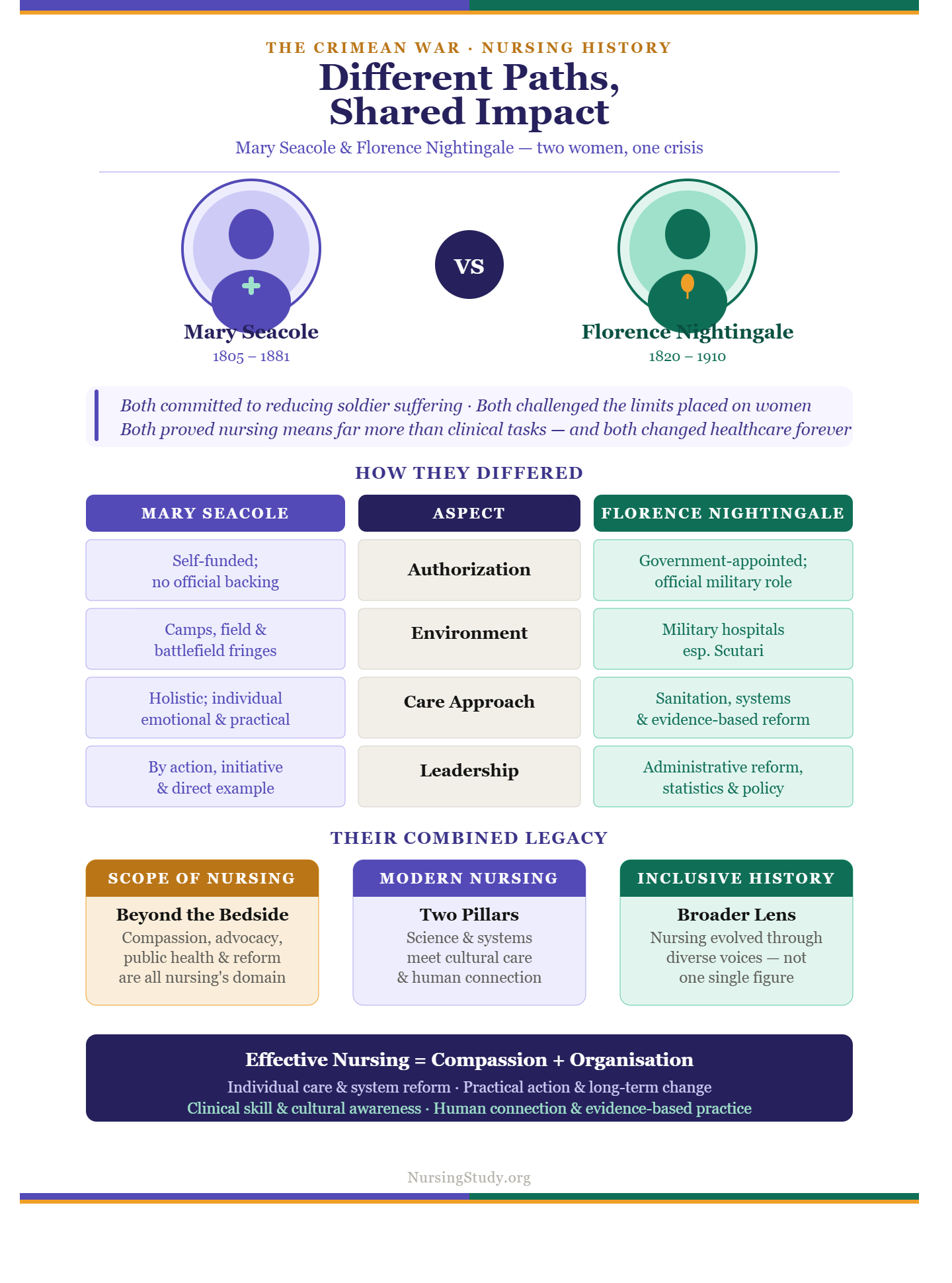
The Mary Seacole Trust and Other Tributes
One of the most important aspects of Mary Seacole’s modern legacy is the establishment of organizations and initiatives dedicated to preserving her memory and promoting the values she embodied.
The Mary Seacole Trust
Among the most influential organizations associated with her legacy is the Mary Seacole Trust. The organization works to educate the public about Mary Seacole’s life, achievements, and continuing relevance while promoting values such as equality, inclusion, opportunity, and community engagement. The Trust also supports educational and leadership initiatives inspired by her example.
The organization’s work reflects several themes associated with Mary Seacole’s life:
- Service to others.
- Overcoming barriers.
- Leadership through action.
- Cultural inclusion.
- Healthcare advocacy.
By connecting historical lessons to contemporary issues, the Trust helps ensure that Mary Seacole’s story remains relevant to modern audiences.
The Mary Seacole Memorial Association
Another important organization is the Mary Seacole Memorial Association (MSMA), which was established to preserve and promote awareness of her life and work. The association maintains her grave, organizes annual commemorative events, and supports educational activities focused on her legacy.
The continued maintenance of these memorial activities demonstrates the lasting respect many people hold for her contributions.
The Mary Seacole Statue
Perhaps the most visible symbol of modern recognition is the Mary Seacole statue located in the grounds of St Thomas’ Hospital.
Unveiled in 2016, the statue for Mary was the first public statue in the United Kingdom dedicated to a named Black woman. Positioned near the hospital grounds, it serves as a powerful reminder of her service, determination, and humanitarian work.
The statue of Seacole carries symbolic importance for several reasons:
- It acknowledges her contribution to nursing.
- It highlights the diversity of healthcare history.
- It provides public visibility for an influential historical figure.
- It encourages discussions about representation and historical recognition.
For many visitors, the mary seacole statue represents both a tribute to her individual achievements and a broader recognition of overlooked contributors to healthcare.
Buildings, Wards, and Institutions Named in Her Honor
The influence of Mary Seacole can also be seen in the many healthcare and educational institutions named after her. Across the United Kingdom and Jamaica, numerous facilities honor her memory. These include:
- Mary Seacole House.
- Seacole Ward facilities.
- Academic centers bearing her name.
- Healthcare education buildings.
- Community health organizations.
For example, Mary Seacole House in Liverpool serves communities through mental health and social support services while carrying forward her legacy of compassionate care and inclusion.
Similarly, institutions such as the Mary Seacole Centre for Nursing Practice were established to promote diversity, multicultural understanding, and professional development within healthcare education.
These tributes ensure that her name remains integrated into contemporary healthcare environments rather than confined solely to history books.
Awards and Professional Recognition
Several awards and leadership programs have also been created in her honor.
Examples include:
- Mary Seacole leadership initiatives.
- Professional development scholarships.
- Diversity and inclusion awards.
- Educational grants for healthcare professionals.
These programs recognize individuals who demonstrate leadership, innovation, and commitment to improving healthcare outcomes, values closely associated with Mary Seacole’s own life and work.
National and International Recognition
Over time, Mary Seacole has received increasing recognition both in Britain and Jamaica.
Among the most notable honors:
- She was voted the Greatest Black Briton in a major public poll.
- She has been included among the 100 Great Black Britons.
- Jamaica awarded her the Order of Merit posthumously.
- Educational and healthcare organizations continue to commemorate her achievements.
These honors reflect a growing appreciation for the impact she had on healthcare and humanitarian service.
Mary Seacole’s Place in Contemporary Nursing Education
One of the most significant aspects of Mary Seacole’s modern legacy is her role within contemporary nursing education. Today, she is widely studied as an important historical figure whose experiences provide valuable lessons for current and future healthcare professionals.
Understanding the History of Nursing
Nursing education often includes historical perspectives because understanding the profession’s development helps students appreciate current standards and practices.
Mary Seacole’s story provides insight into:
- Nineteenth-century healthcare.
- Wartime nursing.
- Patient advocacy.
- Cultural diversity in healthcare.
- The evolution of nursing roles.
Her experiences complement the study of other influential figures such as Florence Nightingale, helping learners develop a broader understanding of nursing history.
Rather than presenting healthcare development as the achievement of a single individual, contemporary education increasingly recognizes the contributions of multiple pioneers.
A Model of Patient-Centered Care
Many nursing programs use Mary Seacole’s experiences to illustrate the importance of patient-centered care.
Throughout her career, she demonstrated practices that align with modern nursing principles, including:
- Respect for patient dignity.
- Holistic caregiving.
- Compassionate communication.
- Emotional support.
- Attention to social and environmental factors affecting health.
For example, her willingness to provide food, comfort, and companionship alongside medical assistance reflects the understanding that healing involves more than physical treatment alone.
This perspective remains central to modern nursing practice.
Cultural Competence and Inclusive Healthcare
Healthcare professionals increasingly serve diverse patient populations, making cultural awareness an essential nursing competency.
Mary Seacole’s background and experiences offer valuable lessons regarding:
- Cultural sensitivity.
- Respect for diversity.
- Inclusive healthcare practices.
- Cross-cultural communication.
- Equitable patient care.
Because she grew up in Jamaica and interacted with individuals from many cultural backgrounds throughout her travels, her life provides a useful framework for discussions about culturally responsive care.
Many educational programs therefore use her story to highlight the importance of understanding patients within their broader social and cultural contexts.
Leadership and Professional Development
Mary Seacole’s life also serves as a powerful example of leadership.
Unlike many historical leaders, she did not rely on formal authority or institutional power. Instead, she demonstrated leadership through initiative, problem-solving, and service.
Students studying healthcare leadership can learn from her ability to:
- Identify unmet needs.
- Adapt to challenging circumstances.
- Build trust with patients.
- Advocate for vulnerable populations.
- Develop practical solutions in resource-limited environments.
These qualities remain highly relevant in contemporary healthcare systems.
Inspiration for Future Healthcare Professionals
Beyond historical study, Mary Seacole continues to inspire individuals entering healthcare professions.
Her story demonstrates that effective caregiving requires:
- Compassion.
- Courage.
- Persistence.
- Adaptability.
- Commitment to service.
For many learners, her life provides an example of how healthcare professionals can positively influence individuals and communities even when facing significant obstacles.
Continuing Relevance in the Twenty-First Century
The ongoing recognition of Mary Seacole illustrates the enduring relevance of her values and achievements. Through memorials, educational initiatives, leadership programs, and healthcare institutions, her legacy continues to influence contemporary discussions about nursing, diversity, inclusion, and patient care.
The growing prominence of organizations such as the Mary Seacole Trust, the visibility of the Mary Seacole statue, and the incorporation of her story into nursing curricula demonstrate that her impact extends far beyond the Crimean War. Today, she is recognized not only as a historical figure but also as a continuing source of inspiration for healthcare professionals committed to compassionate, culturally aware, and patient-centered care.
Behind on nursing research or documentation tasks?
We’ll complete your assignments with clarity and precision.
Conclusion
Mary Seacole’s story is one of courage, compassion, determination, and service. Born Mary Jane Grant in Jamaica in 1805, she transformed her early experiences in caregiving and healing into a lifelong commitment to helping others. Her journey from Kingston to the battlefields of the Crimean War demonstrates how one individual can make a profound difference even when faced with significant social, racial, and institutional barriers.
Although Mary Seacole is best known for her nursing work during the Crimean War, her legacy extends far beyond her wartime service. Through her willingness to fund her own trip to Crimea, establish the British Hotel, and provide nursing care to wounded soldiers under challenging conditions, she demonstrated principles that continue to define excellence in healthcare today. Her approach emphasized compassion, practical problem-solving, cultural awareness, and an unwavering commitment to patient well-being—qualities that remain essential in modern nursing practice.
Her autobiography, Wonderful Adventures of Mrs. Seacole in Many Lands, ensured that her experiences would not be lost to history. The work offers valuable insights into nineteenth-century healthcare, travel, race, and humanitarian service while preserving the voice of a remarkable woman whose achievements were not always fully recognized during her lifetime. The rediscovery of her story in the twentieth and twenty-first centuries has helped restore her rightful place in nursing history and broadened our understanding of the diverse individuals who helped shape healthcare.
Today, Mary Seacole’s contribution to nursing continues to inspire healthcare professionals around the world. Through the Mary Seacole Trust, educational programs, leadership awards, memorials, and the Mary Seacole statue at St Thomas’ Hospital, her legacy remains visible and influential. More importantly, the values she embodied—resilience, empathy, leadership, advocacy, and patient-centered care—continue to guide nursing practice across diverse healthcare settings.
For nurses, healthcare professionals, historians, and readers alike, Mary Seacole’s life serves as a powerful reminder that meaningful change often begins with a willingness to act in service of others. Her enduring legacy demonstrates that nursing is not only a profession built on knowledge and skill but also one founded on humanity, compassion, and the courage to care. More than a century after her death, Mary Seacole remains a nursing pioneer whose influence continues to resonate throughout healthcare and society.
Frequently Asked Questions
Who was Mary Seacole?
Mary Seacole was a Jamaican-born nurse, healer, businesswoman, and humanitarian who became famous for providing care to soldiers during the Crimean War. She was born Mary Jane Grant in Kingston, Jamaica, in 1805 and is remembered as a pioneering figure in nursing history.
What did Mary Seacole do during the Crimean War?
During the Crimean War, Mary Seacole traveled independently to Crimea and provided nursing care, food, supplies, and emotional support to wounded and ill soldiers. She also established the British Hotel near the military camps to help support soldiers’ recovery and well-being.
How did Mary Seacole contribute to nursing?
Mary Seacole’s contribution to nursing included demonstrating compassionate, patient-centered care, adapting to challenging conditions, and advocating for the needs of vulnerable patients. Her work highlighted the importance of holistic care that addresses physical, emotional, and social needs.
What is “Seacole in Many Lands”?
“Seacole in Many Lands” refers to Mary Seacole’s autobiography, published as “Wonderful Adventures of Mrs. Seacole in Many Lands” in 1857. The book documents her travels, healthcare experiences, and service during the Crimean War, making it an important historical source.
