1 Best Occipital Epilepsy Essay Example
A 738-word essay, formatted in APA 7 (about 3 double-spaced pages).
- Type
- Essay
- Length
- 738 words, 3 pages
- Style
- APA 7
Contents (8 sections)
EssayAPA 7
1 Best Occipital Epilepsy
Occipital epilepsy is a significant neurological disorder since it may seriously affect a person’s quality of life and capacity to function. Seizures may be disruptive and scary, as well as causing physical symptoms like muscular contractions or muscle control loss. Furthermore, patients with occipital epilepsy may struggle with tasks requiring visual attention and processing, such as driving, working, or reading.
This article is an occipital epilepsy essay example. Study it to gain insights into the disorder and knowledge that might be useful in writing essays of similar nature.
Occipital Epilepsy Essay Example
Definition
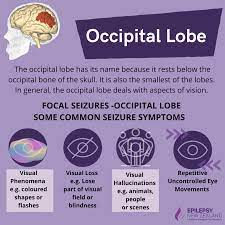
Occipital epilepsy is a rare condition that usually affects children, typically starting between the ages of five and seven. Also called benign occipital epilepsy, the syndrome is characterized by seizures that originate in the occipital lobe at the back of the brain. Some patients experience seizures that are primarily nocturnal, while others tend to have them only during the day.
They may be set off by visual stimulation, though in some cases seizures happen for no obvious reason. The disorder frequently leads to symptoms that impact the vision, particularly when the patient’s seizures occur during the day, as the majority of visual processing is done in the occipital lobe.
Symptoms
When an occipital epilepsy seizure occurs, the first symptom is often a visual hallucination. Patients may see flashes of color or light, complex illusions, or images that appear to repeat before the eyes. There may be other visual effects as well; for example, partial or full blindness may occur. The eyes may move or jerk uncontrollably from side to side, the eyelids may flutter, and there may be pain in the eyes.
In addition to visual issues, those with occipital epilepsy often suffer a variety of other symptoms during seizures. Severe headaches often occur during or after an episode; in many cases, the condition is mistaken for migraines due to these headaches and the corresponding visual cues. Many patients also become nauseous and vomit. Sometimes there will be uncontrollable jerking on one side of the body; this is more common in patients who have seizures at night.
- Read more on Diseases Related to the Human Body Systems
Diagnosis
Diagnosis of occipital epilepsy typically begins with a detailed history of the patient’s symptoms. The doctor may also perform a neurological examination to determine if the brain is functioning normally and to see if there is any evidence that mental processing or physical capabilities are being affected.
Electroencephalography, or EEG, is usually then very helpful in obtaining an accurate diagnosis, as it can determine which portion of the brain is generating the seizures. Visual stimulation such as a flashing strobe light can be used to induce neural activity to help aid in the process.
Treatment
Drug therapy is typically the preferred method to treat occipital epilepsy. Two epilepsy drugs, carbamazepine and oxcarbazepine, have proven effective in controlling seizures in a majority of patients. For those who do not respond to these medications, surgery may be a necessary alternative.
Related FAQs
1. What is occipital epilepsy?
Occipital epilepsy is a rare condition that usually affects children, typically starting between the ages of five and seven. Also called benign occipital epilepsy, the syndrome is characterized by seizures that originate in the occipital lobe at the back of the brain
2. What are the symptoms of occipital epilepsy?
When an occipital epilepsy seizure occurs, the first symptom is often a visual hallucination. Consequently, one may experience headaches or might start jerking.
3. How is occipital epilepsy treated?
Drug therapy is typically the preferred method to treat occipital epilepsy. Two epilepsy drugs, carbamazepine and oxcarbazepine, have proven effective in controlling seizures in a majority of patients
4. What triggers occipital seizures?
Turning off lights, moving from illuminated to dark regions, or moving from dark to bright locations can all be triggers.
Conclusion
It is particularly critical to recognize and treat occipital epilepsy, since it can be managed with drugs or surgical procedures. Early detection and treatment can assist to enhance an individual’s quality of life and avoid consequences associated with recurring seizures.
Read More On (Disorders Related to Occipital Epilepsy)
- Assignment Study Guide Forum – Autism Spectrum Disorder
- Medical Cannabis: A Review of the History- Pharmacology- and Clinical Implications – Best Study Guides(2022)
- Essential Oils for Relieving Muscle Discomfort and Inflammation Relief
- Medications For Attention-Deficit/Hyperactivity Disorder – Test Bank
This paper is a sample from a completed student assignment, published to help you understand structure, argument and APA formatting. Use it for inspiration and reference only, and cite it if you quote it.
Get this paper as a Word file
occipital-epilepsy-essay-example.docx, with an APA title page and reference list, ready to edit in Word or Google Docs.
Need a custom paper on 1 Best Occipital Epilepsy?
Get an original, plagiarism-free paper written to your rubric by a nursing expert.
Cite This Paper
Pick your style, then copy. Italics are kept when you paste into Word or Google Docs.
Nursing Paper Examples. (2022, December 21). 1 Best Occipital Epilepsy [Essay example]. https://nursingstudy.org/examples/occipital-epilepsy-essay-example/
(Nursing Paper Examples, 2022)
Nursing Paper Examples. (2022, December 21). 1 Best Occipital Epilepsy [Essay example]. Retrieved from https://nursingstudy.org/examples/occipital-epilepsy-essay-example/
(Nursing Paper Examples, 2022)
“1 Best Occipital Epilepsy.” Nursing Paper Examples, 21 Dec. 2022, nursingstudy.org/examples/occipital-epilepsy-essay-example.
(“1 Best Occipital Epilepsy”)
Nursing Paper Examples (2022) 1 Best Occipital Epilepsy. Available at: https://nursingstudy.org/examples/occipital-epilepsy-essay-example/ (Accessed: 14 October 2026).
(Nursing Paper Examples, 2022)
Nursing Paper Examples. 2022. “1 Best Occipital Epilepsy.” December 21, 2022. https://nursingstudy.org/examples/occipital-epilepsy-essay-example/.
(Nursing Paper Examples 2022)
Nursing Paper Examples. “1 Best Occipital Epilepsy.” December 21, 2022. https://nursingstudy.org/examples/occipital-epilepsy-essay-example/.
1. Nursing Paper Examples, “1 Best Occipital Epilepsy,” December 21, 2022, https://nursingstudy.org/examples/occipital-epilepsy-essay-example/.
Nursing Paper Examples. 1 Best Occipital Epilepsy [Internet]. 2022 Dec 21 [cited 2026 Oct 14]. Available from: https://nursingstudy.org/examples/occipital-epilepsy-essay-example/
[1] or (1)
Nursing Paper Examples. 1 Best Occipital Epilepsy. Published December 21, 2022. Accessed October 14, 2026. https://nursingstudy.org/examples/occipital-epilepsy-essay-example/
1
Published . Updated .