

Harry Stack Sullivan’s Interpersonal Theory of Psychiatry: Understanding the Theory of Personality, Interpersonal Psychiatry, and Psychotherapy
Understanding how human personality develops and how relationships influence mental health has been a major focus within psychiatry for more than a century. While many early theories emphasized unconscious conflicts, instinctual drives, or biological influences, Harry Stack Sullivan introduced a different perspective. He argued that human beings cannot be understood apart from their relationships with others. According to Sullivan, personality is not something that exists in isolation within an individual; rather, it is formed, maintained, and expressed through ongoing interactions with other people.
This perspective became the foundation of the interpersonal theory and later evolved into the broader interpersonal theory of psychiatry, a framework that transformed how mental health professionals understand psychological development, emotional well-being, and psychiatric disorders. Sullivan’s work shifted attention toward the importance of interpersonal relationships, social experiences, and environmental influences in shaping human behavior. His ideas continue to influence psychiatry, psychotherapy, nursing, counseling, and community mental health practice today.
At the center of Sullivan’s work is the Harry Stack Sullivan Developmental Timeline, a developmental framework that explains how personality develops through a series of age-related stages. Unlike theories that focus primarily on biological maturation, Sullivan emphasized that psychological growth occurs through interpersonal experiences. Each stage of development presents unique social challenges and opportunities that contribute to the formation of identity, emotional regulation, and patterns of relating to others.
The Harry Stack Sullivan Developmental Timeline proposes that individuals progress through several developmental epochs, beginning in infancy and extending through late adolescence. During each period, specific interpersonal needs emerge, and successful navigation of these needs contributes to healthy personality development. Conversely, difficulties within important relationships may contribute to anxiety, maladaptive behaviors, and later psychological difficulties.
Several key assumptions distinguish Sullivan’s approach from other personality theories:
- Human beings are inherently social creatures.
- Personality develops through interactions with other people.
- Anxiety plays a central role in shaping behavior.
- Early interpersonal experiences influence later psychological functioning.
- Mental health and mental illness are closely connected to the quality of interpersonal relationships.
- Therapeutic relationships can promote emotional growth and psychological healing.
These assumptions formed the basis of Sullivan’s personality theory and contributed significantly to the evolution of modern psychiatry. His work challenged traditional views that focused almost exclusively on intrapsychic processes and encouraged clinicians to examine how interpersonal situations influence emotional health.
One of Sullivan’s most important contributions was his belief that psychological difficulties often emerge within the context of relationships rather than solely within the individual. He suggested that experiences involving rejection, anxiety, insecurity, and disrupted communication can shape how people perceive themselves and others. As a result, concepts such as the self-system, interpersonal security, personification, dynamism, and parataxic distortion became central elements of his theoretical framework. These concepts help explain why individuals develop particular patterns of thinking, feeling, and behaving in social situations.
The significance of the Harry Stack Sullivan Developmental Timeline extends beyond theoretical psychology. Its principles have practical applications across numerous areas of mental health care, including:
- Psychiatric assessment
- Understanding how developmental experiences influence current behavior.
- Identifying relationship patterns that contribute to psychological distress.
- Psychotherapy
- Exploring interpersonal difficulties as part of treatment.
- Improving communication and relationship skills.
- Psychiatric nursing
- Building therapeutic relationships with patients.
- Enhancing patient-centered care through effective interpersonal communication.
- Community mental health
- Recognizing the influence of social environments on mental well-being.
- Developing interventions that strengthen healthy relationships and social support systems.
Sullivan’s ideas were also influential because they helped bridge multiple disciplines, including psychiatry, psychology, sociology, and social science. His emphasis on interpersonal development provided a framework for understanding how individuals interact with their social environment and how these interactions influence both normal psychological growth and the emergence of mental illness.
Throughout the Harry Stack Sullivan Developmental Timeline, the recurring theme is that human development cannot be separated from human relationships. From the infant’s first interactions with caregivers to the formation of intimate relationships during adolescence and adulthood, interpersonal experiences serve as the foundation upon which personality is built. Sullivan believed that understanding these developmental processes is essential for understanding both mental health and psychopathology.
This article provides a comprehensive examination of the Harry Stack Sullivan Developmental Timeline and the principles of Sullivan’s interpersonal theory. It explores the origins of interpersonal psychiatry, the foundations of his theory of personality, the developmental epochs that characterize human growth, and the major concepts that explain interpersonal behavior. The discussion also examines Sullivan’s views on schizophrenia, his relationship to psychoanalysis, his contributions to psychotherapy, and the lasting influence of his work on modern psychiatry, nursing practice, and community mental health. By examining these topics in depth, readers can gain a clearer understanding of how interpersonal experiences shape human personality and why Sullivan’s theories continue to remain relevant in contemporary mental health care.
Running out of time to finish your nursing coursework?
Get accurate, ready-to-submit assignments now.
Harry Stack Sullivan and the Development of Interpersonal Psychiatry
The development of interpersonal psychiatry represents one of the most significant shifts in the history of mental health theory and practice. Before the emergence of Sullivan’s ideas, much of the field of psychiatry focused on biological explanations of mental illness or the intrapsychic conflicts emphasized by traditional psychoanalysis. Mental disorders were often viewed primarily as problems originating within the individual. Harry Stack Sullivan challenged this perspective by proposing that psychological health and illness could only be fully understood within the context of human relationships and social experiences.
At the heart of Harry Stack Sullivan’s interpersonal theory was the belief that people are fundamentally social beings whose thoughts, emotions, and behaviors develop through interactions with others. Rather than studying individuals in isolation, Sullivan encouraged mental health professionals to examine how interpersonal relations, communication patterns, and social environments influence psychological functioning. This approach eventually became known as the interpersonal theory of psychiatry, a framework that continues to influence contemporary mental health care.
Sullivan argued that personality is not a fixed entity residing solely within an individual. Instead, personality emerges from recurring patterns of interaction that occur throughout life. These interactions begin during infancy, continue through the various developmental periods described in the Harry Stack Sullivan Developmental Timeline, and influence psychological functioning across the lifespan. His emphasis on interpersonal development transformed the way clinicians understood mental illness, making relationships a central focus of assessment and treatment.
The development of interpersonal psychiatry occurred during a period when many psychologists and psychiatrists were seeking new ways to understand mental illness. Sullivan’s ideas offered an alternative that integrated insights from psychology, sociology, anthropology, and social science, creating a broader and more holistic understanding of human behavior.
Harry Stack Sullivan’s Background and Contributions to Psychiatry
Born in 1892 in Norwich, New York, Harry Stack Sullivan grew up during a period of rapid change in both medicine and psychology. His early experiences of social isolation and feelings of loneliness are often believed to have influenced his later interest in interpersonal functioning and emotional well-being. These personal experiences may have contributed to his lifelong effort to understand how relationships affect psychological health.
Sullivan studied medicine and eventually specialized in psychiatry, a field that was undergoing significant transformation during the early twentieth century. Unlike many of his contemporaries, he became increasingly dissatisfied with explanations of mental illness that ignored the importance of social experiences. Through his clinical work, particularly with patients diagnosed with schizophrenia, Sullivan observed that interpersonal factors often played a critical role in both the development and maintenance of psychological symptoms.
Several major contributions distinguish Sullivan’s work within the field of psychiatry:
1. Development of the Interpersonal Theory
Perhaps Sullivan’s most influential contribution was the creation of the interpersonal theory, which proposed that:
- Personality develops through social interactions.
- Psychological difficulties often emerge within interpersonal contexts.
- Human behavior can only be understood by examining relationships.
- Anxiety is shaped and transmitted through interactions with significant others.
This perspective challenged traditional models that focused exclusively on unconscious drives or biological abnormalities.
2. Creation of a New Theory of Personality
Sullivan developed a unique theory of personality that viewed personality as a dynamic pattern of interactions rather than a collection of internal traits. According to Sullivan’s theory, personality is constantly shaped by experiences with family members, peers, authority figures, and intimate partners.
This idea differed significantly from earlier approaches because it emphasized that personality develops through ongoing interpersonal experiences rather than being predetermined by instinctual forces alone.
3. Understanding Mental Illness Through Relationships
One of Sullivan’s most groundbreaking contributions involved his work with individuals diagnosed with schizophrenia. During a time when many practitioners considered schizophrenic patients unreachable, Sullivan believed meaningful communication and therapeutic engagement were possible.
He argued that symptoms often reflected disturbed interpersonal processes rather than solely biological dysfunction. This perspective encouraged clinicians to focus on understanding the patient’s experiences, relationships, and social environment rather than simply categorizing symptoms.
4. Emphasis on Therapeutic Relationships
Sullivan recognized that effective treatment depended on the quality of the relationship between the clinician and patient. His work helped establish the importance of therapeutic relationships, which remain central to psychiatric nursing, counseling, and psychotherapy today.
For example, when caring for a patient experiencing severe anxiety, a clinician influenced by Sullivan’s approach would not focus solely on symptom reduction. Instead, they would explore:
- Relationship stressors.
- Communication patterns.
- Social support systems.
- Interpersonal conflicts contributing to emotional distress.
This relational perspective remains highly relevant in contemporary mental health practice.
The Influence of William Alanson White and the Washington School of Psychiatry
The development of Sullivan’s ideas did not occur in isolation. Two major influences on his thinking were William Alanson White and the Washington School of Psychiatry, both of which played important roles in shaping the evolution of interpersonal psychiatry.
William Alanson White’s Influence
William Alanson White was one of the most influential psychiatrists of the early twentieth century. As superintendent of St. Elizabeths Hospital in Washington, D.C., White advocated for more humane and psychologically informed approaches to psychiatric care.
Unlike many practitioners of his era, White emphasized:
- The importance of social factors in mental illness.
- The psychological meaning of symptoms.
- The value of understanding patients as individuals.
- The integration of psychiatry with broader social and cultural perspectives.
These ideas resonated strongly with Sullivan and helped shape his emerging views regarding interpersonal functioning.
White also encouraged the integration of insights from psychology, sociology, and anthropology into psychiatric practice. This interdisciplinary approach later became a defining feature of Sullivan’s interpersonal theory.
The Washington School of Psychiatry
The Washington School of Psychiatry became one of the most influential centers for the development and dissemination of interpersonal psychiatry. Founded in part through Sullivan’s efforts and collaborations, the institution promoted innovative approaches to understanding mental health and mental illness.
The school’s philosophy emphasized:
- The importance of interpersonal relationships in psychological development.
- The role of culture and society in shaping behavior.
- The therapeutic value of human connection.
- The integration of psychiatric theory with social science research.
Through the Washington School of Psychiatry, Sullivan’s ideas gained wider recognition and influenced generations of psychiatrists, psychologists, social workers, and other mental health professionals.
The institution became a platform for expanding interpersonal approaches to diagnosis, treatment, education, and research. Many concepts that are now considered fundamental within mental health care can trace their roots to the intellectual environment fostered by Sullivan and his colleagues.
Sullivan’s Impact on Modern Mental Health Care
The influence of Harry Stack Sullivan’s interpersonal theory extends far beyond its historical origins. Many principles introduced by Sullivan continue to shape modern approaches to psychiatric care, psychotherapy, and mental health treatment.
One of his most enduring contributions is the recognition that psychological well-being is closely linked to the quality of interpersonal relationships. Contemporary research consistently demonstrates that supportive social connections contribute to improved mental health outcomes, while chronic interpersonal conflict, isolation, and disrupted attachments increase the risk of psychological distress.
Sullivan’s ideas can be seen in numerous areas of modern practice:
Psychiatric Assessment
Today’s mental health assessments frequently examine:
- Family relationships.
- Social support networks.
- Communication patterns.
- Interpersonal stressors.
- Relationship histories.
This emphasis reflects Sullivan’s belief that understanding a person’s relationships is essential for understanding their psychological functioning.
Psychotherapy
Many contemporary forms of psychotherapy incorporate principles derived from interpersonal psychiatry. Therapists routinely help clients identify unhealthy interpersonal patterns, improve communication skills, and develop healthier ways to interact with others.
For example, an individual experiencing depression may work with a therapist to explore how unresolved conflicts, social withdrawal, or problematic relationship dynamics contribute to emotional distress.
Psychiatric Nursing
Sullivan’s influence is particularly evident within psychiatric nursing, where therapeutic communication forms the foundation of patient care. Nurses frequently use interpersonal skills to:
- Build trust.
- Reduce anxiety.
- Promote emotional expression.
- Support recovery.
These practices reflect Sullivan’s belief that healing often occurs through meaningful human connection.
Community Mental Health
Sullivan’s work also contributed to the growth of community mental health approaches. His emphasis on social environments encouraged mental health professionals to consider broader factors affecting psychological well-being, including:
- Family systems.
- Community resources.
- Cultural influences.
- Social support networks.
This perspective helped move mental health care beyond institutional settings and into communities where prevention, education, and early intervention could occur.
Lasting Relevance in Modern Psychiatry
The continued relevance of Sullivan’s work can be attributed to its emphasis on universally important aspects of human life:
- Relationships.
- Communication.
- Social belonging.
- Emotional security.
- Human connection.
Although contemporary psychiatry incorporates advances in neuroscience, genetics, and pharmacology, Sullivan’s central insight remains influential: people cannot be fully understood apart from their relationships with others. This principle continues to guide mental health professionals seeking to understand human behavior, promote psychological growth, and improve patient outcomes.
Through the development of interpersonal psychiatry, Harry Stack Sullivan transformed the understanding of mental health by demonstrating that relationships are not merely background influences but fundamental forces in psychological development and emotional well-being. His contributions laid the foundation for many modern therapeutic approaches and continue to shape the practice of psychiatry, psychotherapy, and community-based mental health care today.
Foundations of Sullivan’s Interpersonal Theory
To understand the Harry Stack Sullivan Developmental Timeline, it is essential to first understand the theoretical framework upon which it was built. Sullivan’s interpersonal theory emerged as a response to psychological approaches that focused primarily on internal drives, instincts, or biological determinants of behavior. While Sullivan acknowledged that biological factors influence human functioning, he argued that they could not fully explain the complexity of human personality, emotional development, and mental health.
The central premise of Harry Stack Sullivan’s interpersonal theory is that human beings are inherently social. From the moment of birth, individuals exist within a network of relationships that shape their perceptions, emotions, behaviors, and sense of self. According to Sullivan, personality cannot be understood apart from these interactions because personality itself is a product of interpersonal experience.
This perspective represented a significant shift in the field of psychiatry. Rather than viewing mental health solely as an internal process, Sullivan emphasized the importance of examining how people interact with others, form relationships, experience anxiety, and adapt to their social environment. He believed that every aspect of psychological functioning—from self-esteem and identity to emotional well-being and psychopathology—is influenced by patterns of human interaction.
The foundations of interpersonal psychiatry rest upon several interconnected ideas:
- Human personality develops through relationships.
- Social interactions shape psychological development.
- Anxiety influences behavior and interpersonal functioning.
- Mental health problems often emerge within interpersonal contexts.
- Understanding relationships is essential for understanding human behavior.
- Psychological growth depends upon successful interpersonal development.
These principles became the cornerstone of the interpersonal theory of psychiatry and continue to influence psychotherapy, psychiatric nursing, counseling, and community mental health practice.
One reason Sullivan’s framework remains influential is that it reflects observable human experiences. For example, individuals raised in supportive environments often develop confidence, trust, and emotional stability. In contrast, individuals exposed to chronic criticism, rejection, or interpersonal conflict may develop insecurity, anxiety, and difficulties establishing healthy relationships. Sullivan viewed these outcomes not as isolated personal traits but as reflections of ongoing interpersonal experiences.
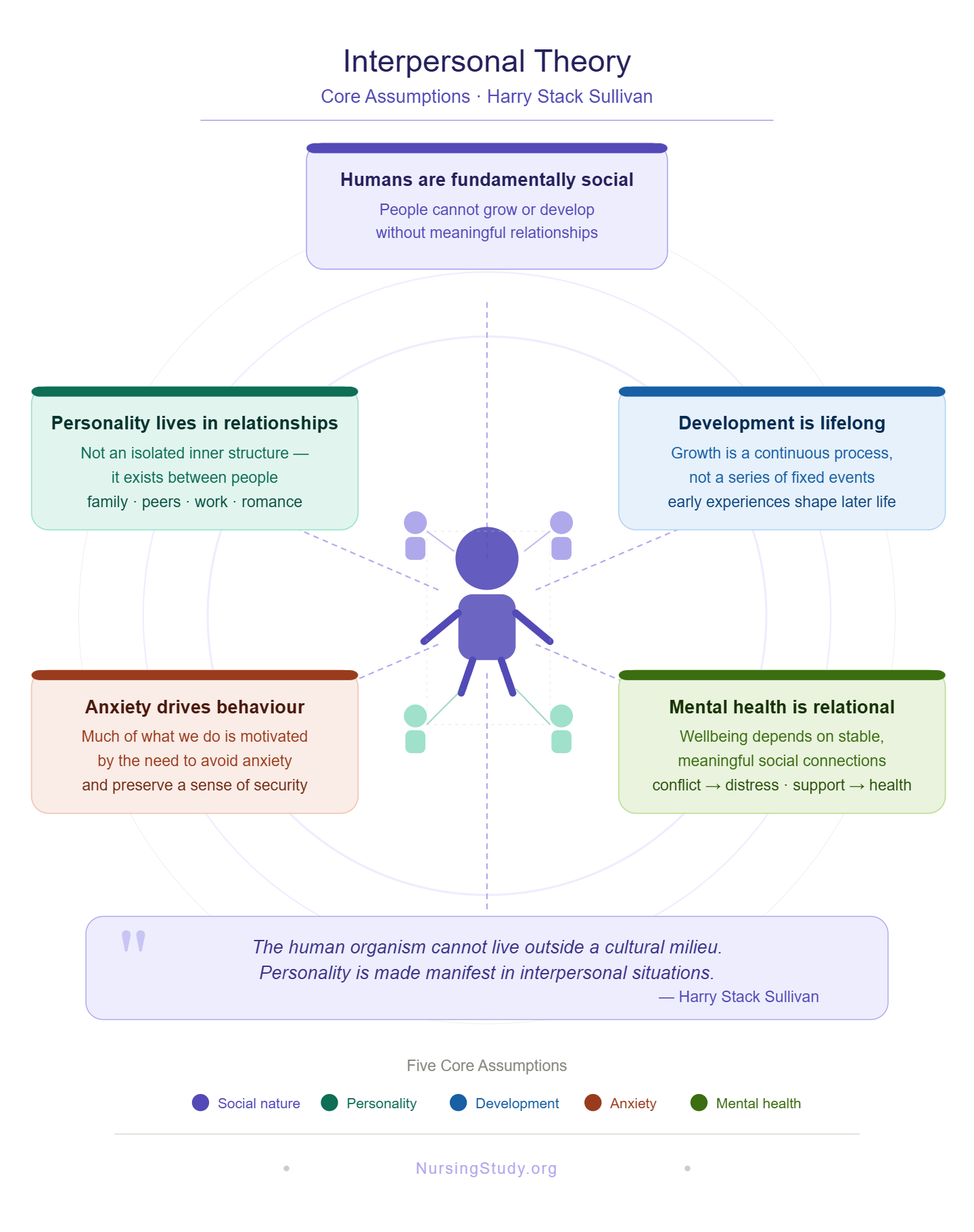
Core Assumptions of the Interpersonal Theory
The interpersonal theory is built upon a number of foundational assumptions that distinguish it from other approaches to personality and psychological development. These assumptions provide the framework for understanding both normal development and mental illness throughout the Harry Stack Sullivan Developmental Timeline.
Human Beings Are Fundamentally Social
Perhaps the most important assumption of Sullivan’s theory is that humans are social beings whose lives are organized around relationships. According to Sullivan, people cannot survive, grow, or develop psychologically without meaningful interactions with others.
This idea extends beyond physical survival. Emotional security, self-esteem, identity formation, and psychological health all emerge through social experiences.
For example:
- An infant develops trust through interactions with caregivers.
- A child learns social rules through family and peer relationships.
- An adolescent develops identity through friendships and intimate relationships.
- Adults continue to shape their personalities through family, work, and community interactions.
In each case, development occurs through relationships rather than in isolation.
Personality Exists Within Interpersonal Relationships
Unlike many traditional theories, Sullivan argued that personality is not an independent structure residing solely within an individual. Instead, personality exists within patterns of interpersonal relations.
This means that personality cannot be fully understood without examining:
- Family relationships.
- Peer interactions.
- Romantic relationships.
- Workplace relationships.
- Social environments.
According to Sullivan, human behavior reflects attempts to navigate these relationships while maintaining emotional security.
Psychological Development Is Continuous
Another important assumption is that development occurs throughout life. Although the Harry Stack Sullivan Developmental Timeline identifies specific developmental stages, Sullivan viewed growth as an ongoing process rather than a series of isolated events.
Each developmental period builds upon previous experiences. Early interactions influence later relationships, and interpersonal experiences continue shaping personality across the lifespan.
Anxiety Influences Human Behavior
Sullivan considered anxiety one of the most powerful forces affecting psychological functioning. He believed that much of human behavior is motivated by efforts to avoid anxiety and preserve feelings of security.
This assumption plays a central role in explaining:
- Relationship patterns.
- Communication styles.
- Defense mechanisms.
- Emotional reactions.
- Psychological symptoms.
Mental Health Is Relational
A final assumption of the interpersonal theory of psychiatry is that mental health cannot be separated from social relationships. Psychological well-being depends largely upon an individual’s ability to establish and maintain meaningful interpersonal connections.
People who experience supportive, stable relationships are generally better equipped to cope with stress and adversity. Conversely, chronic interpersonal conflict may contribute to emotional distress and psychological dysfunction.
The Theory of Personality and Human Behavior
One of Sullivan’s most influential contributions to psychology and psychiatry was his unique theory of personality. While many personality theorists focused on internal structures or unconscious drives, Sullivan proposed that personality develops through repeated interactions with other people.
According to Sullivan believed theory of personality, personality is best understood as a pattern of recurring interpersonal situations rather than a collection of fixed traits.
This perspective suggests that:
- Personality is dynamic rather than static.
- Personality changes through experience.
- Social interactions influence behavior.
- Relationships shape self-concept.
- Human behavior reflects attempts to achieve security and reduce anxiety.
In essence, human personality is continually being constructed and reconstructed through interpersonal experiences.
Personality as a Product of Interpersonal Development
Within Sullivan’s framework, personality development begins at birth and continues through adulthood. Every significant relationship contributes to the formation of beliefs, expectations, emotional responses, and behavioral patterns.
For example:
A child who consistently receives encouragement and affection may develop:
- Confidence
- Trust
- Positive self-esteem
- Healthy interpersonal interactions
Conversely, a child exposed to rejection or hostility may develop:
- Insecurity
- Fear of criticism
- Social withdrawal
- Difficulties forming intimate relationships
These experiences become part of the individual’s broader personality structure.
Human Behavior as an Adaptive Process
Sullivan viewed behavior as an adaptive response to interpersonal circumstances. People constantly adjust their actions in an effort to achieve acceptance, reduce discomfort, and maintain emotional security.
For instance:
- A student may work hard academically to gain approval from parents.
- An employee may avoid conflict to preserve workplace relationships.
- An adolescent may conform to peer expectations to gain social acceptance.
In each situation, behavior reflects interpersonal motivations rather than purely internal drives.
The Role of Social Environment
A major strength of Sullivan’s personality theory is its recognition of the social environment as a powerful determinant of behavior.
Individuals are influenced by:
- Family dynamics
- Cultural expectations
- Peer groups
- Community relationships
- Social institutions
These factors shape how people perceive themselves and others, influencing both normal psychological development and the emergence of psychological difficulties.
Anxiety as a Driving Force in Personality Development
Among all the concepts within Sullivan’s interpersonal theory, anxiety occupies a particularly important position. Sullivan believed that anxiety is one of the primary forces shaping personality and influencing interpersonal behavior.
Unlike physical fear, which results from immediate danger, anxiety arises from perceived threats to interpersonal security. It develops when individuals sense disapproval, rejection, criticism, or disruption within important relationships.
Origins of Anxiety
According to Sullivan, anxiety first emerges during infancy through interactions with caregivers.
Infants are highly sensitive to the emotional states of those around them. When caregivers are calm and responsive, infants experience security. When caregivers are anxious, inconsistent, or emotionally unavailable, infants may begin experiencing anxiety.
Over time, these experiences influence how individuals perceive relationships and respond to social situations.
Anxiety and Personality Formation
The relationship between anxiety and personality development is central to the Harry Stack Sullivan Developmental Timeline.
As individuals grow, they learn various strategies for managing anxiety. These strategies influence the development of personality characteristics, interpersonal styles, and coping mechanisms.
For example:
An individual who frequently experiences criticism may:
- Become highly self-conscious.
- Seek constant approval.
- Avoid social risks.
- Develop perfectionistic tendencies.
Another individual may respond by becoming emotionally withdrawn or defensive.
These behavioral patterns often persist into adulthood and become integrated into personality.
Anxiety and Interpersonal Relationships
Sullivan emphasized that anxiety is transmitted through relationships. Because humans are deeply connected to others, emotional experiences frequently arise within interpersonal contexts.
Common sources of anxiety include:
- Fear of rejection.
- Fear of embarrassment.
- Fear of abandonment.
- Fear of criticism.
- Fear of social failure.
These concerns influence how individuals approach relationships and interact with others.
For instance, someone who fears rejection may avoid forming close relationships, while another person may become overly dependent on social approval.
Clinical Relevance of Sullivan’s View of Anxiety
Sullivan’s understanding of anxiety remains highly relevant in contemporary mental health care.
Modern mental health professionals frequently observe how interpersonal stress contributes to:
- Anxiety disorders
- Depression
- Relationship difficulties
- Low self-esteem
- Social withdrawal
Therapeutic interventions often focus on helping individuals identify and modify problematic interpersonal patterns that contribute to anxiety.
In psychiatric nursing and psychotherapy, clinicians may explore questions such as:
- How do relationships influence emotional distress?
- What interpersonal experiences contribute to anxiety?
- Which relationship patterns maintain psychological symptoms?
- How can healthier interactions promote emotional well-being?
These questions reflect Sullivan’s enduring influence on modern psychiatry and psychotherapy.
Ultimately, Sullivan viewed anxiety not merely as a symptom but as a powerful force that shapes personality, influences behavior, and affects interpersonal functioning throughout life. Understanding its role is essential for understanding both the Harry Stack Sullivan Developmental Timeline and the broader principles of Sullivan’s interpersonal theory, which place relationships at the center of human psychological development.
The Self-System and Personality Formation
Among the many concepts introduced by Harry Stack Sullivan, few are as important as the self-system. Within Sullivan’s interpersonal theory, the self-system serves as a protective psychological structure that develops through interpersonal experiences and helps individuals manage anxiety, preserve self-esteem, and maintain a sense of security in relationships. Sullivan considered the self-system to be one of the most significant influences on personality formation because it affects how people perceive themselves, interpret social situations, and respond to others throughout life.
To understand the role of the self-system, it is important to remember a central principle of the Harry Stack Sullivan Developmental Timeline: personality develops within relationships. According to Sullivan, individuals are not born with a fully formed sense of self. Instead, their understanding of who they are emerges gradually through interactions with caregivers, family members, peers, teachers, and other significant individuals. Through these experiences, people learn which behaviors are accepted, rewarded, criticized, or rejected. Over time, these lessons become integrated into the self-system and influence future behavior.
The self-system can therefore be viewed as an internal organization of beliefs, attitudes, feelings, and behavioral tendencies that develops in response to interpersonal experiences. It helps individuals navigate their social world while protecting them from emotional discomfort and anxiety.
Several key functions of the self-system include:
- Preserving feelings of interpersonal security.
- Protecting self-esteem.
- Reducing psychological discomfort.
- Guiding behavior in social situations.
- Helping individuals interpret interpersonal interactions.
- Maintaining consistency in self-perception.
Because the self-system develops through relationships, it is closely connected to personality formation. As individuals progress through the developmental stages described in the Harry Stack Sullivan Developmental Timeline, the self-system becomes increasingly complex and influential. Experiences during infancy, childhood, preadolescence, and adolescence all contribute to the development of beliefs about oneself and others.
For example, a child who consistently receives encouragement and emotional support may develop a self-system characterized by confidence, trust, and positive expectations regarding relationships. In contrast, a child who frequently experiences criticism or rejection may develop a self-system characterized by insecurity, self-doubt, and fear of negative evaluation.
These early patterns often influence adult behavior. Individuals with a secure self-system may approach relationships with openness and confidence, whereas those with a more fragile self-system may become defensive, avoidant, or overly dependent on approval from others.
Understanding the Self-System
The concept of the self-system emerged from Sullivan’s observations of how people respond to anxiety-producing situations. He noticed that individuals develop recurring ways of thinking and behaving that help them avoid emotional discomfort and preserve a sense of personal worth. These patterns become organized into the self-system.
According to Sullivan’s theory, the self-system is not an inborn structure. Rather, it develops through repeated experiences within interpersonal relationships. Every interaction contributes to an individual’s understanding of:
- Who they are.
- How others perceive them.
- Which behaviors are acceptable.
- Which behaviors lead to approval or disapproval.
- How to maintain emotional safety.
Sullivan believed that children begin forming the self-system very early in life. During infancy and childhood, interactions with caregivers provide powerful messages about acceptance, love, competence, and worthiness. These experiences gradually shape a person’s self-image.
The Components of the Self-System
Sullivan described the self-system as containing various aspects of personality that emerge through interpersonal experiences. Among the most important are:
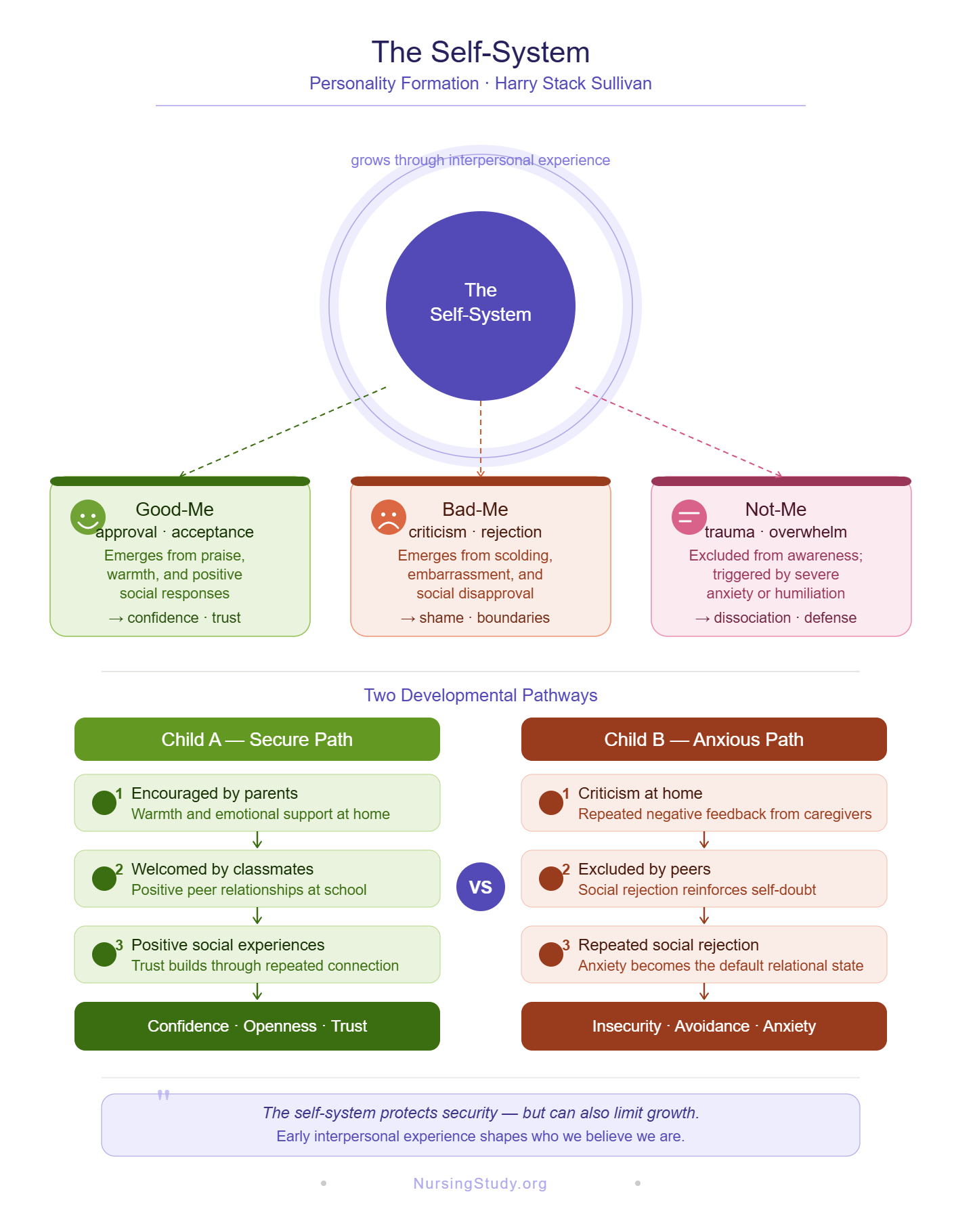
The Good-Me
The “good-me” develops from experiences associated with approval, acceptance, and positive emotional responses from others.
For example:
- A child praised for sharing toys may view generosity as part of their identity.
- A student recognized for academic achievement may develop confidence in intellectual abilities.
These positive experiences strengthen self-esteem and contribute to healthy personality development.
The Bad-Me
The “bad-me” develops from experiences involving criticism, punishment, embarrassment, or disapproval.
Examples include:
- Being scolded for inappropriate behavior.
- Experiencing rejection from peers.
- Receiving repeated negative feedback.
Although these experiences can be uncomfortable, they also help individuals learn social expectations and boundaries.
The Not-Me
The “not-me” represents experiences associated with overwhelming anxiety or emotional distress. These experiences may be so threatening that they are excluded from conscious awareness.
For instance:
- Severe humiliation.
- Traumatic interpersonal experiences.
- Intense feelings of rejection.
The not-me serves as a psychological defense against experiences that threaten emotional stability.
Example of Self-System Development
Consider two children entering school for the first time:
Child A
- Receives encouragement from parents.
- Is welcomed by classmates.
- Develops positive social experiences.
This child may develop a self-system characterized by confidence and interpersonal trust.
Child B
- Experiences criticism at home.
- Is frequently excluded by peers.
- Encounters repeated social rejection.
This child may develop a self-system characterized by insecurity and social anxiety.
Although both children possess similar intellectual abilities, their interpersonal experiences contribute to very different personality outcomes.
Interpersonal Security and Anxiety Reduction
The concepts of interpersonal security and anxiety reduction are central to Sullivan’s interpersonal theory. Sullivan believed that much of human behavior is motivated by the desire to maintain security within relationships and avoid experiences that generate anxiety.
What Is Interpersonal Security?
Interpersonal security refers to a person’s sense of safety, acceptance, and emotional comfort within relationships. When individuals feel secure, they are more likely to:
- Express themselves openly.
- Form healthy relationships.
- Develop confidence.
- Explore new experiences.
- Cope effectively with challenges.
Conversely, when interpersonal security is threatened, anxiety often emerges.
Sullivan argued that the pursuit of interpersonal security begins during infancy and continues throughout life. Human beings consistently seek relationships that provide emotional stability and reduce uncertainty.
Anxiety as a Threat to Security
In Sullivan’s interpersonal theory, anxiety is not simply an internal emotional state. Rather, it originates within interpersonal situations and reflects threats to social acceptance, belonging, or emotional safety.
Common sources of interpersonal anxiety include:
- Rejection.
- Criticism.
- Isolation.
- Conflict.
- Disapproval.
- Loss of important relationships.
For example, an adolescent who fears rejection from peers may experience significant anxiety before attending a social event. Similarly, an adult concerned about criticism from coworkers may experience stress in professional settings.
In both cases, anxiety emerges because interpersonal security feels threatened.
Security Operations
To protect themselves from anxiety, individuals develop security operations, which are behavioral and psychological strategies designed to maintain emotional stability.
Common security operations include:
- Selective inattention.
- Rationalization.
- Avoidance.
- Denial.
- Emotional withdrawal.
These strategies help individuals cope with uncomfortable experiences, but excessive reliance on them can create interpersonal difficulties.
For example:
A person who repeatedly avoids conflict may temporarily reduce anxiety but may also struggle to communicate needs effectively. Over time, this pattern can contribute to unhealthy relationships.
The Relationship Between Security and Mental Health
Sullivan believed that mental health depends largely upon an individual’s ability to establish and maintain secure interpersonal relationships.
Characteristics associated with strong interpersonal security include:
- Healthy self-esteem.
- Effective communication.
- Emotional resilience.
- Trust in others.
- Positive social interactions.
In contrast, chronic insecurity may contribute to anxiety disorders, depression, social withdrawal, and other psychological difficulties.
Self and Others in Personality Development
One of the most distinctive features of Harry Stack Sullivan’s interpersonal theory is its emphasis on the relationship between self and others. Sullivan argued that the self cannot be understood independently of interpersonal experiences because identity emerges through social interaction.
Unlike theories that view personality as primarily an internal phenomenon, Sullivan proposed that personality exists within patterns of interpersonal relationships. Consequently, understanding the self requires understanding the social context in which development occurs.
The Social Origins of the Self
According to Sullivan, individuals develop self-awareness through interactions with other people. From early childhood onward, individuals learn about themselves through feedback received from:
- Parents.
- Siblings.
- Friends.
- Teachers.
- Romantic partners.
- Community members.
These relationships help shape beliefs about:
- Personal value.
- Competence.
- Likeability.
- Social acceptance.
- Emotional worth.
For example, a child consistently encouraged by caregivers may develop a positive sense of self, while a child exposed to constant criticism may internalize negative self-perceptions.
Interpersonal Experiences Across Development
Throughout the Harry Stack Sullivan Developmental Timeline, interpersonal experiences influence personality in different ways.
During:
- Infancy, caregivers shape feelings of safety and trust.
- Childhood, family interactions influence self-concept and behavior.
- Preadolescence, friendships become increasingly important.
- Early adolescence, peer acceptance contributes to identity formation.
- Late adolescence, intimate relationships influence emotional maturity and self-understanding.
Each developmental period provides opportunities for psychological growth and interpersonal learning.
Human Relationships as the Foundation of Personality
A central theme throughout Sullivan’s interpersonal theory is that human relationships are the foundation of personality. Individuals continuously interpret themselves through their interactions with others, and these interpretations influence future behavior.
For example:
- Positive relationships often foster confidence and emotional stability.
- Supportive friendships encourage social competence.
- Healthy intimate relationships promote emotional growth.
- Chronic interpersonal conflict may contribute to insecurity and distress.
Through these experiences, personality evolves over time rather than remaining fixed.
Implications for Mental Health Care
Sullivan’s emphasis on self and others remains highly influential in modern mental health practice. Mental health professionals frequently explore interpersonal experiences when assessing emotional difficulties because relationship patterns often reveal important information about personality functioning.
In psychotherapy, psychiatric nursing, and counseling, clinicians may examine:
- Relationship histories.
- Attachment patterns.
- Social support systems.
- Interpersonal conflicts.
- Communication styles.
These assessments reflect Sullivan’s enduring belief that understanding personality requires understanding the interpersonal world in which it develops.
Ultimately, the concepts of the self-system, interpersonal security, and the relationship between self and others form the foundation of Sullivan’s explanation of personality formation. Together, they demonstrate how interpersonal experiences shape identity, influence behavior, and contribute to both psychological health and psychological distress throughout the developmental journey described in the Harry Stack Sullivan Developmental Timeline.
Key Concepts in Harry Stack Sullivan’s Theory
The Harry Stack Sullivan Developmental Timeline is supported by a number of theoretical concepts that explain how individuals interpret experiences, form relationships, and develop patterns of behavior throughout life. While Sullivan’s broader interpersonal theory emphasizes the importance of relationships in shaping personality, concepts such as personification, dynamism, parataxic distortion, and the modes of experience provide the mechanisms through which interpersonal development occurs.
These concepts help explain why people often respond differently to similar situations, why certain relationship patterns persist over time, and how early interpersonal experiences influence later psychological functioning. They also provide important insights into the development of mental health disorders and interpersonal difficulties.
Sullivan believed that personality cannot be understood merely by observing behavior. Instead, it is necessary to examine how individuals perceive themselves, interpret others, and assign meaning to interpersonal situations. The concepts discussed in this section illustrate how these processes operate and contribute to both healthy and maladaptive patterns of functioning.
Personification
One of the most important concepts in Harry Stack Sullivan’s interpersonal theory is personification. Sullivan used this term to describe the mental images, assumptions, beliefs, and expectations that individuals develop about themselves and other people through interpersonal experiences.
In simple terms, personification refers to the way people perceive and mentally represent themselves and others. These perceptions are not always objective. Instead, they are often shaped by past experiences, emotional reactions, and recurring interpersonal interactions.
According to Sullivan, personifications begin developing early in life and become increasingly complex as individuals move through the developmental periods outlined in the Harry Stack Sullivan Developmental Timeline.
How Personifications Develop
Personifications emerge from repeated interactions within the social environment. As individuals encounter approval, criticism, acceptance, rejection, affection, or hostility, they develop mental images that help them understand the people around them and their place within relationships.
For example:
- A child consistently comforted by a caregiver may develop a personification of that caregiver as loving, dependable, and protective.
- A child exposed to unpredictable behavior may develop a personification of others as unreliable or threatening.
- Positive social experiences may lead to favorable self-perceptions.
- Repeated criticism may contribute to negative self-images.
Over time, these perceptions become integrated into personality and influence future interpersonal interactions.
Major Types of Personification
Sullivan described several important personifications that contribute to personality formation.
The Good-Me
The “good-me” develops from experiences associated with approval, acceptance, and positive feedback.
Characteristics associated with the good-me include:
- Confidence
- Self-worth
- Competence
- Social acceptance
For example, a student who is consistently encouraged by teachers and family members may develop a strong good-me personification.
The Bad-Me
The “bad-me” develops from experiences involving criticism, punishment, or disapproval.
This aspect of personality may include:
- Feelings of inadequacy
- Shame
- Self-doubt
- Fear of criticism
For instance, a child repeatedly told that they are irresponsible may begin incorporating that perception into their self-concept.
The Not-Me
The “not-me” represents experiences associated with overwhelming anxiety. These experiences are often pushed outside conscious awareness because they are too distressing to integrate comfortably into the self-system.
Examples may include:
- Severe humiliation
- Traumatic rejection
- Intense interpersonal conflict
The not-me serves as a protective mechanism but can also contribute to psychological difficulties when important experiences are excluded from awareness.
Clinical Importance of Personification
Personifications significantly influence how individuals interpret relationships.
For example:
A patient who developed negative self-personifications during childhood may automatically assume that healthcare providers are judging them negatively, even when no criticism is present. Such perceptions can affect communication, trust, and treatment outcomes.
Understanding personifications allows mental health professionals to identify distorted perceptions and promote healthier interpersonal functioning.
Dynamism
Another central concept within Sullivan’s interpersonal theory is dynamism. Sullivan used this term to describe recurring patterns of behavior, thoughts, emotions, and interpersonal responses that individuals develop over time.
Unlike isolated actions, dynamisms represent habitual ways of responding to interpersonal situations. They help explain why people often react similarly across different relationships and circumstances.
According to Sullivan, dynamisms develop through repeated experiences and become relatively stable components of personality.
Understanding Dynamisms
A dynamism can be thought of as a behavioral pattern that consistently emerges in response to particular interpersonal circumstances.
Examples include:
- Seeking approval from authority figures.
- Avoiding confrontation.
- Becoming defensive when criticized.
- Attempting to control social situations.
- Withdrawing from relationships during periods of stress.
These patterns often develop because they once helped the individual manage anxiety or achieve interpersonal security.
Development of Dynamisms
Throughout the Harry Stack Sullivan Developmental Timeline, individuals encounter numerous interpersonal experiences that shape their behavioral tendencies.
Consider the following example:
A child who receives praise only when achieving high grades may develop a perfectionistic dynamism. As the individual matures, this pattern may extend into work, relationships, and other areas of life.
Similarly:
- A child exposed to frequent criticism may develop a defensive dynamism.
- A person who experiences rejection may develop an avoidant dynamism.
- A child rewarded for helping others may develop a nurturing dynamism.
Over time, these recurring patterns become integrated into personality.
Dynamism and Human Behavior
One reason dynamisms are important is that they explain continuity in behavior across different situations.
For example, an individual who consistently seeks reassurance may display this pattern:
- In friendships.
- In romantic relationships.
- In educational settings.
- In professional environments.
Although the context changes, the underlying interpersonal pattern remains similar.
Clinical Relevance of Dynamism
Understanding dynamisms can help mental health professionals identify recurring interpersonal difficulties.
Examples include:
- Repeated relationship conflicts.
- Chronic dependency.
- Social withdrawal.
- Excessive need for approval.
By recognizing these patterns, therapists and psychiatric nurses can help individuals develop more adaptive ways of interacting with others.
Parataxic Distortion
Among Sullivan’s most influential concepts is parataxic distortion, which refers to the tendency to interpret present interpersonal situations through the lens of past experiences.
In essence, parataxic distortion occurs when individuals project expectations, emotions, or assumptions from previous relationships onto current relationships.
This concept remains highly relevant because many interpersonal conflicts result from inaccurate perceptions rather than objective reality.
How Parataxic Distortion Develops
According to Sullivan, individuals develop expectations about relationships based on earlier experiences.
When these expectations are carried into new situations without sufficient evidence, parataxic distortions may occur.
For example:
A person who experienced frequent rejection during childhood may assume that others will reject them even when no rejection is occurring.
Similarly:
- Someone who grew up with a highly critical parent may perceive constructive feedback as personal criticism.
- An individual betrayed in a previous relationship may become suspicious of trustworthy partners.
- A patient who had negative experiences with healthcare providers may distrust new clinicians.
In each case, past experiences influence present perceptions.
Examples of Parataxic Distortion
Consider a workplace scenario:
An employee receives a brief email from a supervisor requesting a meeting.
A person without significant interpersonal concerns may view the request as routine.
However, someone with a history of criticism may immediately assume:
- They are in trouble.
- They performed poorly.
- They are being evaluated negatively.
The emotional reaction is based more on past experiences than on the actual situation.
Parataxic Distortion and Mental Health
Parataxic distortions can contribute to various psychological difficulties, including:
- Anxiety disorders.
- Relationship conflicts.
- Low self-esteem.
- Social withdrawal.
- Interpersonal misunderstandings.
Sullivan believed that helping individuals recognize these distortions could improve emotional well-being and interpersonal functioning.
Relationship to Schizophrenia
Sullivan also explored the role of parataxic thinking in individuals diagnosed with schizophrenia. He observed that severely distorted interpretations of reality can interfere with communication, social functioning, and emotional adjustment.
Although contemporary understandings of schizophrenia have evolved, Sullivan’s observations contributed to a broader appreciation of how distorted perceptions influence mental health.
Modes of Experience and Interpersonal Perception
To explain how individuals understand themselves and the world around them, Sullivan described three primary modes of experience. These modes influence interpersonal perception and play a significant role in personality development throughout the Harry Stack Sullivan Developmental Timeline.
The modes of experience represent different ways of processing reality and interpreting interpersonal situations.
Prototaxic Mode
The prototaxic mode is the earliest form of experience and occurs primarily during infancy.
Characteristics include:
- Immediate sensory experiences.
- Lack of logical organization.
- Absence of symbolic thinking.
- Limited understanding of cause and effect.
For example, an infant experiences hunger, warmth, comfort, and discomfort without understanding the reasons behind these sensations.
This mode forms the foundation for later cognitive and interpersonal development.
Parataxic Mode
The parataxic mode emerges as children begin connecting experiences but before they develop fully logical thinking.
Characteristics include:
- Subjective interpretations.
- Illogical associations.
- Personal meanings attached to events.
- Limited reality testing.
For example:
A child who wears a particular shirt on the day they receive praise may believe the shirt caused the positive outcome.
Although these associations may seem irrational, they reflect an important stage of cognitive development.
The parataxic mode also contributes to the development of parataxic distortion when inaccurate assumptions continue into adulthood.
Syntaxic Mode
The syntaxic mode represents the most advanced level of experience.
Characteristics include:
- Logical thinking.
- Objective reasoning.
- Effective communication.
- Shared understanding of reality.
Individuals operating primarily in the syntaxic mode can evaluate situations more accurately and communicate their thoughts effectively.
For example:
An adult functioning within the syntaxic mode can recognize that constructive criticism is intended to promote growth rather than serve as a personal attack.
Interpersonal Perception and Psychological Functioning
The development of these modes of experience influences how individuals perceive themselves and others.
Interpersonal perception affects:
- Communication.
- Relationship quality.
- Emotional responses.
- Decision-making.
- Social interactions.
Accurate perceptions promote healthy relationships, while distorted perceptions can contribute to misunderstanding and conflict.
Importance Within Sullivan’s Theory
The concepts of personification, dynamism, parataxic distortion, and modes of experience work together to explain how individuals interpret interpersonal situations and develop enduring patterns of behavior.
Collectively, these concepts demonstrate several key principles of Harry Stack Sullivan’s interpersonal theory:
- Personality develops through interpersonal experience.
- Early relationships influence later perceptions.
- Anxiety shapes behavior and emotional responses.
- Interpersonal patterns can become deeply ingrained over time.
- Psychological health depends partly on accurate interpersonal perception.
These ideas remain foundational to modern understandings of personality, psychotherapy, and interpersonal functioning, providing valuable insights into how human beings perceive themselves, relate to others, and navigate the social world throughout the developmental journey described in the Harry Stack Sullivan Developmental Timeline.
Harry Stack Sullivan Developmental Timeline
The Harry Stack Sullivan Developmental Timeline is one of the most distinctive aspects of Harry Stack Sullivan’s interpersonal theory. Unlike many developmental theorists who emphasized biological maturation or unconscious instinctual drives as the primary forces behind growth, Sullivan proposed that human development is fundamentally shaped by interpersonal relationships and social experiences. He believed that personality evolves through interactions with others and that every stage of life presents unique interpersonal challenges that influence psychological growth.
Central to the Harry Stack Sullivan Developmental Timeline is the idea that development occurs through a series of developmental epochs, each characterized by specific interpersonal needs, social tasks, and emotional experiences. As individuals progress through these stages, they acquire new skills, form increasingly complex relationships, and develop a deeper understanding of themselves and others.
Sullivan viewed development as a lifelong interpersonal process rather than a purely biological progression. According to his perspective, the quality of relationships experienced during each developmental period has a lasting impact on personality development, emotional well-being, self-esteem, and mental health. Successful navigation of developmental challenges promotes healthy psychological growth, while unresolved interpersonal difficulties may contribute to anxiety, maladaptive interpersonal patterns, and later psychological distress.
The importance of the Harry Stack Sullivan Developmental Timeline lies in its emphasis on the social nature of human development. Throughout life, individuals seek security, acceptance, belonging, intimacy, and meaningful connections. These needs influence behavior and help shape the development of human personality.
Overview of Sullivan’s Developmental Epochs
Sullivan divided human development into a sequence of developmental epochs, with each epoch representing a period of life characterized by unique interpersonal experiences and developmental tasks. Unlike stage theories that focus primarily on cognitive or biological changes, Sullivan’s framework emphasizes interpersonal growth and the evolving nature of relationships.
The major developmental periods within the Harry Stack Sullivan Developmental Timeline include:
- Infancy Epoch (Birth to approximately 18 months)
- Childhood Epoch (Approximately 18 months to 6 years)
- Juvenile Epoch (Approximately 6 to 9 years)
- Preadolescence Epoch (Approximately 9 to 12 years)
- Early Adolescence Epoch (Approximately 12 to 14 years)
- Late Adolescence Epoch (Approximately 14 years to adulthood)
Each stage builds upon experiences from earlier periods. Sullivan believed that interpersonal successes or difficulties during one stage often influence functioning in subsequent stages. For example, a child who develops trust and emotional security during infancy is generally better prepared to establish healthy friendships during preadolescence and intimate relationships during adolescence.
A recurring theme throughout these developmental stages is the increasing complexity of interpersonal needs. As individuals mature, relationships become more sophisticated and emotionally significant. Development therefore involves not only physical and cognitive growth but also the gradual refinement of interpersonal skills and emotional capacities.
Infancy Epoch
The infancy epoch marks the beginning of the Harry Stack Sullivan Developmental Timeline and extends from birth to approximately 18 months of age. During this period, the infant’s primary developmental task is the establishment of security through relationships with caregivers.
According to Sullivan, infants enter the world with limited ability to regulate emotions independently. Consequently, they rely heavily on caregivers to meet both physical and emotional needs. Through repeated interactions, infants begin forming expectations about their social world.
Major Developmental Characteristics of Infancy
During infancy, several important processes occur:
- Development of trust and security.
- Formation of early emotional attachments.
- Emergence of basic interpersonal awareness.
- Initial development of the self-system.
- Learning patterns of emotional regulation.
Sullivan believed that anxiety can be transmitted from caregivers to infants. For example, when caregivers consistently display calmness and responsiveness, infants are more likely to experience feelings of security. Conversely, caregivers who are highly anxious, inconsistent, or emotionally unavailable may contribute to the infant’s experience of insecurity.
Example
Consider two infants:
- Infant A is cared for by attentive caregivers who consistently respond to distress and provide comfort.
- Infant B experiences unpredictable caregiving characterized by emotional inconsistency and limited responsiveness.
Over time, Infant A is more likely to develop a sense of interpersonal security, whereas Infant B may become more vulnerable to anxiety and difficulties in later relationships.
The experiences of infancy provide the foundation upon which all subsequent interpersonal development is built.
Childhood Epoch
The childhood epoch spans approximately 18 months to 6 years of age and represents a period of rapid growth in language, communication, self-awareness, and social understanding.
As children become more mobile and cognitively advanced, they begin expanding their interactions beyond primary caregivers. Family members, teachers, and peers become increasingly important influences on development.
Key Developmental Tasks
During childhood, individuals learn to:
- Communicate effectively with others.
- Follow social rules and expectations.
- Develop self-control.
- Understand acceptable and unacceptable behaviors.
- Build a more organized self-system.
This period also contributes significantly to the formation of personification, as children begin developing mental images of themselves and others based on interpersonal experiences.
For example, a child consistently praised for kindness may begin viewing themselves as caring and helpful. Conversely, repeated criticism may contribute to negative self-perceptions.
Role of Anxiety
Anxiety continues to influence development during childhood. Children become increasingly aware of approval and disapproval from significant individuals. Their desire for acceptance often shapes behavior and contributes to the development of security operations designed to reduce emotional discomfort.
Successful completion of this stage promotes confidence, social competence, and emotional stability.
Juvenile Epoch
The juvenile epoch generally occurs between the ages of 6 and 9 years and represents an important transition within the Harry Stack Sullivan Developmental Timeline. During this stage, children become increasingly involved in the broader social world and begin developing skills necessary for effective participation in group settings.
Unlike earlier periods that focus primarily on family relationships, the juvenile stage emphasizes learning how to function successfully among peers.
Major Developmental Goals
Key objectives of this stage include:
- Learning cooperation.
- Developing teamwork skills.
- Understanding social norms.
- Building peer relationships.
- Increasing social competence.
Children begin evaluating themselves in relation to others and become more aware of their strengths and weaknesses.
Example
A child participating in school activities learns:
- How to work collaboratively.
- How to resolve disagreements.
- How to respect rules.
- How to accept feedback.
These experiences contribute to the development of healthy interpersonal interactions and prepare the individual for more emotionally significant relationships later in life.
According to Sullivan, difficulties during the juvenile stage may contribute to social isolation, low self-esteem, or problems with peer relationships in later developmental periods.
Preadolescence Epoch
Sullivan regarded preadolescence as one of the most important developmental periods in the entire Harry Stack Sullivan Developmental Timeline. Typically occurring between ages 9 and 12, this stage introduces a new developmental need: the capacity for close friendship.
For Sullivan, preadolescence represents the first period during which genuine intimacy begins to emerge.
Developmental Characteristics
During preadolescence, individuals:
- Form close same-sex friendships.
- Develop empathy and mutual understanding.
- Learn loyalty and trust.
- Become increasingly sensitive to the needs of others.
- Strengthen interpersonal skills.
Unlike earlier friendships based primarily on convenience or shared activities, relationships during preadolescence become emotionally meaningful.
Importance of Friendship
Sullivan believed that successful friendship development during preadolescence serves as preparation for future intimate relationships.
A close friendship teaches individuals:
- Cooperation.
- Trust.
- Emotional sharing.
- Mutual respect.
- Perspective-taking.
These experiences contribute significantly to psychological growth and social maturity.
Example
Two friends who consistently support one another through academic, social, and emotional challenges learn important interpersonal skills that will later influence romantic relationships and adult friendships.
Sullivan considered successful navigation of preadolescence essential for healthy personality development.
Early Adolescence Epoch
The early adolescence stage typically occurs between the ages of 12 and 14 and is characterized by major biological, emotional, and social changes.
During this period, individuals begin experiencing increased interest in the opposite sex or potential romantic partners. New interpersonal needs emerge, and previously established friendship skills become important foundations for more complex relationships.
Key Developmental Challenges
Individuals in early adolescence must learn to:
- Balance friendship and romantic interests.
- Manage emerging sexual feelings.
- Develop personal identity.
- Navigate changing social roles.
- Cope with increased emotional intensity.
This stage often involves heightened self-consciousness as adolescents become more aware of how others perceive them.
Example
An adolescent who previously focused primarily on friendships may begin experiencing romantic attraction while simultaneously seeking peer acceptance and personal independence.
These changes can create interpersonal conflicts, anxiety, and uncertainty as individuals attempt to integrate new aspects of identity into their self-concept.
The ability to navigate these challenges contributes significantly to emotional maturity and interpersonal competence.
Late Adolescence Epoch
The late adolescence stage represents the final major developmental period within the Harry Stack Sullivan Developmental Timeline. Extending from approximately age 14 into early adulthood, this stage involves the consolidation of identity and the development of mature interpersonal relationships.
Sullivan viewed late adolescence as the culmination of previous developmental achievements. Skills acquired during earlier stages are integrated into a more stable and coherent personality structure.
Major Developmental Objectives
During late adolescence, individuals work toward:
- Establishing a stable identity.
- Forming intimate relationships.
- Achieving emotional independence.
- Integrating social and personal goals.
- Developing mature interpersonal patterns.
This period is characterized by a growing capacity for intimacy, commitment, and emotional reciprocity.
Development of Intimate Relationships
One of the most important achievements of late adolescence is the ability to form meaningful and mutually satisfying intimate relationships.
These relationships are characterized by:
- Trust.
- Emotional openness.
- Mutual respect.
- Shared responsibility.
- Genuine concern for another person’s well-being.
According to Sullivan, individuals who successfully complete earlier developmental stages are generally better equipped to establish these relationships.
Example
A young adult who has developed healthy friendship skills, emotional regulation abilities, and a secure self-concept is more likely to establish stable romantic relationships and maintain positive social connections.
Significance of Late Adolescence
For Sullivan, late adolescence marks the emergence of mature interpersonal functioning. Individuals who successfully navigate this stage are typically capable of balancing personal needs with the needs of others while maintaining healthy relationships and emotional well-being.
The culmination of the Harry Stack Sullivan Developmental Timeline demonstrates a central principle of Sullivan’s interpersonal theory: personality develops through relationships. From the dependency of infancy to the intimacy of adulthood, every developmental epoch contributes to the formation of identity, emotional health, and interpersonal competence. Through these developmental stages, individuals learn how to establish meaningful connections, manage anxiety, and participate effectively in the social world, ultimately shaping the course of their psychological development and overall mental health.
Interpersonal Theory and Mental Illness
One of the most influential aspects of Harry Stack Sullivan’s interpersonal theory is its explanation of mental illness through the lens of human relationships and social experiences. Unlike many traditional psychiatric models that focused primarily on biological abnormalities, unconscious conflicts, or inherited traits, Sullivan proposed that psychological disorders could only be fully understood by examining an individual’s interpersonal world. According to the interpersonal theory of psychiatry, mental health and mental illness exist within the context of relationships, communication patterns, social experiences, and the ongoing interactions between the individual and the surrounding environment.
Throughout the Harry Stack Sullivan Developmental Timeline, individuals encounter numerous interpersonal situations that shape their emotional well-being and psychological functioning. Positive experiences can foster emotional resilience, self-confidence, and healthy adaptation, while chronic interpersonal difficulties may contribute to anxiety, insecurity, maladaptive coping mechanisms, and psychological distress. Sullivan believed that many psychiatric symptoms represent attempts to cope with problematic interpersonal experiences rather than isolated manifestations of internal pathology.
This perspective was revolutionary because it shifted attention from simply identifying symptoms to understanding the relationship experiences that contributed to those symptoms. Sullivan argued that clinicians should examine not only what symptoms a person displays but also how that individual relates to others, manages anxiety, and navigates social interactions.
Several principles characterize Sullivan’s view of mental illness:
- Psychological difficulties often develop within interpersonal contexts.
- Anxiety plays a central role in emotional disturbance.
- Distorted interpersonal perceptions contribute to maladaptive behavior.
- Relationship patterns established early in life often influence later mental health.
- Effective treatment requires understanding the individual’s interpersonal experiences.
- Therapeutic relationships can facilitate psychological growth and recovery.
By emphasizing interpersonal relations, Sullivan expanded the scope of psychiatric assessment and treatment, encouraging clinicians to explore the social and relational dimensions of psychological functioning.
Sullivan’s Understanding of Schizophrenia
Among Sullivan’s most important contributions to the field of psychiatry was his work with individuals diagnosed with schizophrenia. During the early twentieth century, schizophrenia was frequently viewed as an incurable biological disease. Many mental health professionals believed that meaningful communication with schizophrenic patients was impossible because they were considered detached from reality and incapable of productive interpersonal engagement.
Harry Stack Sullivan challenged these assumptions. Through extensive clinical experience, he developed a more optimistic and humanistic understanding of schizophrenia. Rather than viewing the disorder solely as a biological defect, Sullivan sought to understand the interpersonal experiences and emotional processes underlying schizophrenic symptoms.
Sullivan’s Perspective on Schizophrenia
Sullivan believed that schizophrenia involves severe disturbances in interpersonal functioning. According to his view, the disorder is associated with profound difficulties in communication, self-concept, emotional regulation, and social relationships.
He argued that many schizophrenic symptoms may develop as protective responses to overwhelming anxiety and interpersonal insecurity. Individuals who experience intense emotional distress may withdraw from reality, distort perceptions, or develop unusual patterns of thinking in an effort to cope with psychological discomfort.
In Sullivan’s framework, schizophrenia was not simply a collection of symptoms but a disruption of interpersonal functioning.
The Role of Anxiety in Schizophrenia
Anxiety occupies a central position in Sullivan’s explanation of schizophrenia. He believed that excessive anxiety can interfere with an individual’s ability to interpret reality accurately and maintain effective relationships.
When anxiety becomes overwhelming, several outcomes may occur:
- Withdrawal from social interactions.
- Difficulty distinguishing reality from subjective perceptions.
- Increased reliance on maladaptive security operations.
- Impaired communication.
- Distorted interpersonal perceptions.
For Sullivan, these responses were not random symptoms but attempts to protect the individual from unbearable emotional distress.
Example
Consider an individual who experiences repeated rejection, criticism, and social isolation throughout childhood and adolescence. Over time, these experiences may contribute to chronic anxiety and profound interpersonal insecurity.
As emotional distress intensifies, the person may begin:
- Distrusting others.
- Misinterpreting social interactions.
- Avoiding relationships.
- Developing unusual beliefs about interpersonal situations.
Although contemporary psychiatry recognizes multiple biological and environmental contributors to schizophrenia, Sullivan’s observations highlighted the importance of examining interpersonal experiences when understanding the disorder.
Humanizing the Schizophrenic Patient
One of Sullivan’s most significant achievements was his insistence that schizophrenic patients remain capable of meaningful human connection.
At a time when many patients were treated as hopeless cases, Sullivan emphasized:
- Respectful communication.
- Empathy.
- Therapeutic engagement.
- Understanding the patient’s subjective experience.
This perspective contributed to more humane treatment approaches and influenced the evolution of modern psychiatric care.
Interpersonal Factors in Psychological Disorders
While Sullivan devoted considerable attention to schizophrenia, his theory extended to many forms of psychological distress. He believed that numerous mental health problems can be traced, at least in part, to difficulties within interpersonal relationships and social environments.
According to Sullivan’s interpersonal theory, personality develops through interpersonal experiences. Consequently, disruptions in those experiences may contribute to emotional and behavioral difficulties.
Early Interpersonal Experiences
Relationships during childhood and adolescence play a particularly important role in psychological development.
Experiences that may contribute to later difficulties include:
- Chronic criticism.
- Emotional neglect.
- Rejection.
- Inconsistent caregiving.
- Social isolation.
- Interpersonal trauma.
These experiences can influence the development of the self-system, self-esteem, and interpersonal expectations.
For example, an individual who repeatedly experiences rejection may develop a persistent expectation that others will eventually abandon them. This expectation can influence future relationships and contribute to ongoing emotional distress.
Maladaptive Interpersonal Patterns
Sullivan believed that individuals often develop recurring interpersonal patterns that serve as attempts to reduce anxiety or maintain interpersonal security.
Examples include:
- Excessive dependency on others.
- Avoidance of intimacy.
- Fear of criticism.
- Chronic people-pleasing.
- Social withdrawal.
- Difficulty trusting others.
Although these behaviors may temporarily reduce anxiety, they can also create additional interpersonal difficulties.
Parataxic Distortion and Psychological Distress
As discussed earlier, parataxic distortion occurs when individuals interpret current situations through the lens of past experiences.
This process can contribute significantly to psychological disorders.
For example:
A person who experienced harsh criticism from caregivers may perceive neutral feedback from coworkers as hostile criticism. This distorted interpretation may trigger anxiety, defensiveness, or withdrawal.
Over time, repeated distortions can interfere with relationships and reinforce emotional difficulties.
The Social Environment and Mental Health
Sullivan emphasized that the social environment plays a critical role in mental health.
Psychological well-being is influenced by factors such as:
- Family relationships.
- Peer support.
- Community involvement.
- Social acceptance.
- Cultural expectations.
- Access to supportive relationships.
This perspective aligns with contemporary research demonstrating that social connectedness is a major predictor of mental health outcomes.
Interpersonal Situations and Emotional Well-Being
Many psychological disorders are associated with problematic interpersonal situations, including:
- Relationship conflicts.
- Loneliness.
- Social rejection.
- Bullying.
- Family dysfunction.
- Workplace stress.
Sullivan argued that understanding these relational contexts is essential for understanding emotional distress.
Rather than focusing exclusively on symptoms, clinicians should explore the interpersonal experiences contributing to those symptoms.
Implications for Psychiatric Assessment and Treatment
The interpersonal theory of psychiatry has important implications for both assessment and treatment. Sullivan’s approach encourages mental health professionals to examine interpersonal functioning as a central component of psychological evaluation.
Rather than asking only “What symptoms does this person have?” Sullivan’s framework encourages clinicians to ask:
- How does this individual relate to others?
- What relationship experiences have shaped current functioning?
- What interpersonal situations trigger anxiety?
- Which patterns contribute to emotional distress?
- How can healthier relationships promote recovery?
These questions remain highly relevant in modern psychiatric practice.
Interpersonal Assessment
Assessment from a Sullivanian perspective often includes examination of:
Relationship History
Clinicians explore:
- Family relationships.
- Childhood experiences.
- Friendships.
- Romantic relationships.
- Workplace interactions.
Understanding these experiences provides insight into personality development and current functioning.
Communication Patterns
Assessment may examine:
- Verbal communication.
- Emotional expression.
- Conflict resolution skills.
- Ability to establish trust.
Communication difficulties frequently reveal important interpersonal concerns.
Sources of Anxiety
Because anxiety is central to Sullivan’s interpersonal theory, identifying anxiety-provoking situations is an important component of assessment.
Clinicians may evaluate:
- Fear of rejection.
- Fear of criticism.
- Attachment concerns.
- Social insecurities.
Implications for Treatment
Sullivan believed that treatment should focus on improving interpersonal functioning and reducing anxiety.
Several principles guide this approach.
The Therapeutic Relationship
One of Sullivan’s most enduring contributions is the emphasis on therapeutic relationships.
He viewed the relationship between clinician and patient as a powerful vehicle for change.
An effective therapeutic relationship provides:
- Trust.
- Emotional safety.
- Acceptance.
- Empathy.
- Opportunities for interpersonal learning.
Through this relationship, patients can explore problematic interpersonal patterns and develop healthier ways of relating to others.
Psychotherapy and Interpersonal Growth
Many modern forms of psychotherapy reflect Sullivan’s influence.
Therapeutic goals often include:
- Improving communication skills.
- Enhancing self-awareness.
- Identifying maladaptive interpersonal patterns.
- Strengthening healthy relationships.
- Reducing interpersonal anxiety.
For example, a patient struggling with chronic loneliness may work with a therapist to examine fears of rejection, challenge distorted beliefs about relationships, and develop more effective social skills.
Psychiatric Nursing Applications
Sullivan’s ideas are particularly valuable in psychiatric nursing.
Nurses frequently use interpersonal skills to:
- Establish rapport.
- Build trust.
- Reduce anxiety.
- Encourage emotional expression.
- Promote recovery.
By understanding a patient’s interpersonal experiences, nurses can provide more individualized and effective care.
Contemporary Relevance
Modern psychiatry increasingly recognizes the interaction of biological, psychological, and social factors in mental illness. Although neuroscience and genetics have advanced significantly since Sullivan’s time, his emphasis on relationships remains highly relevant.
Current mental health practice continues to acknowledge the importance of:
- Social support.
- Therapeutic alliances.
- Family functioning.
- Interpersonal communication.
- Community connections.
These principles reflect Sullivan’s enduring belief that mental health cannot be fully understood apart from the interpersonal world in which individuals live.
Ultimately, Sullivan’s explanation of mental illness represents one of the most important contributions to modern psychiatry. By emphasizing relationships, anxiety, interpersonal experiences, and social contexts, the interpersonal theory of psychiatry provides a comprehensive framework for understanding psychological disorders and promoting recovery. Whether examining schizophrenia, anxiety, depression, or interpersonal difficulties, Sullivan’s work continues to remind mental health professionals that human beings are fundamentally relational and that psychological well-being is deeply connected to the quality of their interactions with others.
Harry Stack Sullivan and Psychoanalysis
The relationship between Harry Stack Sullivan and psychoanalysis is one of the most important topics in the history of modern psychology and psychiatry. Although Sullivan developed many of his ideas during a period when Freudian thought dominated the mental health professions, he did not simply reject psychoanalysis. Instead, he built upon certain psychoanalytic concepts while simultaneously challenging many of its fundamental assumptions.
To fully appreciate Harry Stack Sullivan’s interpersonal theory, it is important to understand the intellectual environment in which he worked. During the early twentieth century, Freud’s psychoanalytic model exerted tremendous influence over the field of psychiatry. Mental illness was often explained through unconscious conflicts, instinctual drives, and intrapsychic processes. The primary focus was on what occurred within the individual mind.
Sullivan agreed that early experiences play a significant role in shaping personality and behavior. However, he believed that psychoanalysis placed too much emphasis on internal psychological forces and not enough emphasis on relationships. According to Sullivan, human beings cannot be understood in isolation because personality emerges through interactions with other people.
This perspective became the foundation of interpersonal psychoanalysis, a movement that expanded traditional psychoanalytic thinking by emphasizing the importance of interpersonal relationships, communication patterns, and social experiences.
As a result, Sullivan occupies a unique position in the history of mental health theory. He served as a bridge between classical psychoanalysis and the more relational approaches that would later influence contemporary psychotherapy, psychiatric nursing, counseling, and social psychiatry.
Similarities Between Interpersonal Theory and Psychoanalysis
Although Sullivan’s interpersonal theory differs substantially from traditional psychoanalysis, the two approaches share several important assumptions. Understanding these similarities helps explain why Sullivan is often considered part of the broader psychoanalytic tradition despite developing a distinct theoretical framework.
Recognition of Early Experiences
Both Sullivan and Freud believed that childhood experiences exert a profound influence on later psychological functioning.
According to both theorists:
- Early experiences shape personality.
- Childhood relationships influence adult behavior.
- Developmental experiences affect mental health.
- Psychological difficulties often have roots in earlier life experiences.
For example, both approaches would recognize that a child exposed to chronic rejection may experience relationship difficulties during adulthood. However, they differ in how they explain the mechanisms behind those difficulties.
Freud focused on unconscious conflicts emerging from early experiences, whereas Sullivan emphasized the development of maladaptive interpersonal patterns and anxiety within relationships.
Importance of Personality Development
Both theories seek to explain personality development and the processes through which individuals become who they are.
Each framework attempts to answer questions such as:
- How does personality form?
- Why do people behave in certain ways?
- How do early experiences influence adulthood?
- What causes psychological distress?
Although their explanations differ, both Freud and Sullivan viewed personality as a product of developmental processes rather than something fixed at birth.
Focus on Unconscious Processes
Sullivan did not completely abandon the concept of unconscious mental activity. Like psychoanalytic theorists, he acknowledged that individuals are often unaware of factors influencing their behavior.
For example:
- People may not recognize how past experiences affect current relationships.
- Individuals may rely on defensive strategies without conscious awareness.
- Anxiety may influence behavior in subtle ways.
This recognition of unconscious influences reflects an important connection between psychoanalysis and interpersonal theory.
Therapeutic Exploration
Both approaches emphasize the value of therapeutic conversations in promoting psychological insight and change.
In both psychoanalysis and interpersonal approaches, therapy involves:
- Exploring experiences.
- Examining emotions.
- Understanding behavior.
- Identifying recurring patterns.
- Improving self-awareness.
While the focus of therapy differs between the two models, both view the therapeutic process as an opportunity for personal growth and psychological healing.
Mental Illness as Meaningful
Another important similarity is the belief that symptoms have meaning.
Rather than viewing symptoms as random events, both Freud and Sullivan argued that psychological symptoms often reflect underlying emotional processes.
For example:
- Anxiety may reflect unresolved emotional concerns.
- Relationship difficulties may reveal deeper psychological conflicts.
- Behavioral patterns may represent attempts to cope with distress.
This perspective contributed significantly to more comprehensive approaches to mental health assessment and treatment.
Differences Between Sullivan and Freud
Despite their similarities, the differences between Harry Stack Sullivan and Freud are substantial. In many respects, Sullivan’s work represented a major departure from classical psychoanalysis and helped establish a new direction within psychiatry and psychotherapy.
Source of Personality Development
One of the most significant differences concerns the origins of personality.
Freud’s Perspective
Freud argued that personality develops largely through:
- Instinctual drives.
- Biological impulses.
- Psychosexual stages.
- Internal psychological conflicts.
According to psychoanalysis, unconscious sexual and aggressive drives are major determinants of behavior.
Sullivan’s Perspective
Sullivan proposed that personality develops primarily through interpersonal experiences.
According to Sullivan’s theory of personality:
- Relationships shape personality.
- Social interactions influence behavior.
- Anxiety develops within interpersonal contexts.
- Human development is fundamentally social.
Rather than focusing on instinctual drives, Sullivan emphasized human relationships and interpersonal experiences.
Understanding Human Nature
Freud and Sullivan also differed in their assumptions about human nature.
Freud often emphasized internal conflict as a central aspect of psychological life. He viewed behavior as resulting from tensions between competing forces within the mind.
Sullivan, in contrast, viewed humans primarily as social beings motivated by the need for:
- Security.
- Acceptance.
- Belonging.
- Emotional connection.
- Meaningful relationships.
This difference reflects Sullivan’s broader emphasis on interpersonal development rather than intrapsychic conflict.
Role of Anxiety
Although both theorists recognized anxiety as important, they conceptualized it differently.
Freud’s View
Freud viewed anxiety largely as a signal of internal conflict involving unconscious impulses and psychological defenses.
Sullivan’s View
Sullivan believed anxiety originates primarily within interpersonal situations.
For example:
- Fear of rejection.
- Fear of criticism.
- Fear of abandonment.
- Threats to interpersonal security.
According to Sullivan’s interpersonal theory, anxiety is fundamentally relational rather than purely intrapsychic.
The Self and Relationships
Another major difference concerns the relationship between the individual and the social world.
Freud focused primarily on internal psychological structures such as:
- The id.
- The ego.
- The superego.
Sullivan focused on:
- Self and others.
- Interpersonal interactions.
- Social relationships.
- Communication patterns.
- Social environments.
For Sullivan, personality cannot be understood apart from relationships.
View of Mental Illness
Freud generally explained psychopathology through unconscious conflicts and developmental fixations.
Sullivan emphasized:
- Disturbed interpersonal relations.
- Chronic anxiety.
- Maladaptive relationship patterns.
- Deficiencies in interpersonal development.
This distinction is particularly evident in Sullivan’s work with schizophrenia, where he focused on interpersonal experiences rather than solely biological or intrapsychic explanations.
Therapeutic Focus
The goals of treatment also differ considerably.
Traditional Psychoanalysis
Therapy focuses on:
- Uncovering unconscious conflicts.
- Interpreting dreams.
- Exploring childhood experiences.
- Resolving psychosexual conflicts.
Sullivan’s Approach
Therapy focuses on:
- Current interpersonal relationships.
- Communication patterns.
- Anxiety reduction.
- Improving interpersonal functioning.
- Developing healthier relationships.
This relational emphasis contributed significantly to the development of modern psychotherapy.
Sullivan’s Contribution to the Evolution of Psychotherapy
The influence of Harry Stack Sullivan’s interpersonal theory extends far beyond theoretical discussions. His work played a pivotal role in shaping the evolution of modern psychotherapy, helping move the profession toward more relational, collaborative, and person-centered approaches.
Many concepts now considered standard in mental health treatment can be traced directly or indirectly to Sullivan’s contributions.
Establishing the Importance of Relationships
Perhaps Sullivan’s most enduring contribution was demonstrating that relationships themselves can be therapeutic.
Before Sullivan, treatment often focused primarily on symptom interpretation and intrapsychic processes. Sullivan emphasized that healing occurs through meaningful human interaction.
This insight helped establish the importance of:
- Therapeutic relationships.
- Empathy.
- Trust.
- Collaboration.
- Effective communication.
Today, the quality of the therapeutic alliance is recognized as one of the strongest predictors of successful treatment outcomes.
Development of Interpersonal Psychotherapy
Sullivan’s ideas significantly influenced the development of interpersonal approaches to treatment.
Modern interpersonal psychotherapy incorporates many principles consistent with Sullivan’s work, including:
- Examination of relationship difficulties.
- Identification of interpersonal stressors.
- Improvement of communication skills.
- Enhancement of social support networks.
- Resolution of interpersonal conflicts.
These approaches remain widely used for conditions such as depression, anxiety disorders, and relationship difficulties.
Influence on Psychiatric Nursing
Sullivan’s contributions have had a profound impact on psychiatric nursing practice.
Many nursing principles reflect his emphasis on interpersonal relationships, including:
- Therapeutic communication.
- Patient-centered care.
- Empathic listening.
- Anxiety reduction.
- Collaborative treatment planning.
Nurses frequently use interpersonal skills as primary therapeutic tools, demonstrating the continued relevance of Sullivan’s ideas.
Contribution to Social Psychiatry
Sullivan also helped advance social psychiatry by emphasizing the influence of the social environment on mental health.
His work encouraged clinicians to consider:
- Family relationships.
- Community influences.
- Cultural factors.
- Social support systems.
- Environmental stressors.
This broader perspective contributed to the development of more comprehensive approaches to mental health care.
Influence on Modern Mental Health Professionals
Today, mental health professionals routinely assess:
- Relationship histories.
- Social functioning.
- Interpersonal conflicts.
- Communication patterns.
- Support systems.
These practices reflect Sullivan’s belief that understanding an individual’s relationships is essential for understanding psychological functioning.
Lasting Legacy in Psychotherapy
The lasting significance of Sullivan’s work lies in his ability to shift the focus of psychotherapy from isolated internal processes to the dynamic world of human relationships.
His contributions helped establish several principles that remain central to contemporary practice:
- Relationships influence mental health.
- Personality develops through interpersonal experiences.
- Anxiety is closely connected to interpersonal functioning.
- Therapeutic relationships can promote psychological growth.
- Social environments shape emotional well-being.
By integrating insights from psychiatry, psychology, and social science, Harry Stack Sullivan helped transform psychotherapy into a more relational and human-centered discipline. His work expanded the boundaries of psychoanalytic thought, influenced generations of clinicians, and laid the groundwork for many contemporary therapeutic approaches. As a result, Harry Stack Sullivan’s interpersonal theory remains one of the most influential contributions to the understanding of personality, mental health, and the healing potential of human relationships.
Applications of Sullivan’s Theory in Nursing and Psychotherapy
One reason Harry Stack Sullivan’s interpersonal theory continues to be studied in nursing, psychiatry, psychology, and counseling is its practical relevance to clinical care. While many theories focus primarily on explaining human behavior, Sullivan developed concepts that can be directly applied to patient assessment, communication, therapeutic interventions, and mental health treatment. His emphasis on interpersonal relationships, anxiety, and personality formation provides healthcare professionals with a framework for understanding how human connections influence both psychological well-being and recovery from illness.
The principles found throughout the Harry Stack Sullivan Developmental Timeline have particular significance for nursing and psychotherapy because both professions rely heavily on interpersonal interactions. Every encounter between a healthcare professional and a patient involves communication, trust-building, emotional support, and relationship development. Sullivan believed that these interactions are not merely supportive elements of care—they can themselves become powerful therapeutic tools.
Modern mental health practice increasingly recognizes that recovery is influenced not only by medications and clinical interventions but also by the quality of relationships patients experience with healthcare providers. Whether working with individuals experiencing anxiety, depression, schizophrenia, trauma-related disorders, or adjustment difficulties, clinicians frequently draw upon principles consistent with Sullivan’s interpersonal theory.
Some of the most important applications of Sullivan’s work include:
- Building therapeutic relationships.
- Improving communication skills.
- Reducing anxiety.
- Understanding interpersonal patterns.
- Promoting emotional growth.
- Strengthening social support systems.
- Facilitating recovery through meaningful human interaction.
For nurses and mental health professionals, these concepts provide practical guidance for understanding patients as individuals whose experiences are shaped by relationships, social environments, and interpersonal experiences.
Therapeutic Relationships in Nursing Practice
One of Sullivan’s most enduring contributions to healthcare is his emphasis on therapeutic relationships. According to interpersonal psychiatry, the relationship between the healthcare provider and the patient can become a powerful vehicle for healing, growth, and psychological change.
This concept has had a particularly profound influence on nursing practice. Nurses often spend more time interacting with patients than any other healthcare professional, placing them in a unique position to establish trust, provide emotional support, and foster interpersonal security.
Understanding Therapeutic Relationships
A therapeutic relationship is a professional relationship intentionally developed to promote the patient’s health, well-being, and recovery. Unlike social relationships, therapeutic relationships are structured around the patient’s needs and goals.
Effective therapeutic relationships are characterized by:
- Trust.
- Respect.
- Empathy.
- Professional boundaries.
- Consistent communication.
- Emotional support.
These qualities create an environment in which patients feel safe expressing concerns, discussing symptoms, and participating actively in treatment.
Sullivan’s Influence on Nursing Practice
Sullivan believed that anxiety significantly influences behavior and communication. Consequently, one of the nurse’s primary responsibilities is helping reduce patient anxiety through supportive interpersonal interactions.
For example:
A patient admitted to a psychiatric unit may feel frightened, confused, and uncertain about treatment. A nurse who listens attentively, provides clear information, and responds with empathy can help reduce anxiety and establish a sense of interpersonal security.
This process reflects Sullivan’s belief that healing occurs through meaningful human connections.
Therapeutic Communication
Therapeutic communication is one of the most important applications of Harry Stack Sullivan’s interpersonal theory in nursing.
Effective communication techniques include:
- Active listening.
- Reflection.
- Clarification.
- Open-ended questioning.
- Validation of feelings.
- Appropriate use of silence.
These strategies encourage patients to express emotions, explore concerns, and develop insight into their experiences.
Example in Psychiatric Nursing
Consider a patient diagnosed with severe anxiety who repeatedly states, “Nobody understands what I’m going through.”
A nurse influenced by Sullivan’s approach may respond:
“Tell me more about what has been most difficult for you.”
Rather than immediately offering advice, the nurse encourages exploration of interpersonal experiences and emotional concerns.
This approach helps strengthen the therapeutic relationship while promoting self-awareness and emotional expression.
Benefits of Therapeutic Relationships
Research consistently demonstrates that strong therapeutic relationships contribute to:
- Increased treatment adherence.
- Reduced anxiety.
- Improved patient satisfaction.
- Better communication.
- Enhanced emotional well-being.
- Improved mental health outcomes.
These findings support Sullivan’s longstanding assertion that relationships are central to psychological healing.
Interpersonal Psychotherapy in Mental Health Care
Another major application of Sullivan’s interpersonal theory can be seen in interpersonal psychotherapy, one of the most widely used evidence-based treatments in contemporary mental health care.
Although interpersonal psychotherapy has evolved beyond Sullivan’s original work, many of its fundamental principles reflect his emphasis on relationships, communication, and interpersonal functioning.
What Is Interpersonal Psychotherapy?
Interpersonal psychotherapy is a structured therapeutic approach that focuses on improving interpersonal relationships and resolving relationship-based problems that contribute to psychological distress.
The approach is based on the assumption that symptoms often occur within interpersonal contexts and that improving relationships can reduce emotional suffering.
Treatment typically focuses on:
- Relationship conflicts.
- Social isolation.
- Life transitions.
- Grief and loss.
- Communication difficulties.
- Interpersonal stressors.
These areas closely align with the principles of interpersonal theory.
Sullivan’s Influence on Interpersonal Psychotherapy
Several core concepts from Sullivan’s interpersonal theory appear throughout interpersonal psychotherapy.
These include:
The Importance of Relationships
Sullivan believed that psychological well-being depends heavily upon the quality of relationships.
Consequently, therapists examine:
- Current interpersonal relationships.
- Relationship histories.
- Patterns of interaction.
- Sources of interpersonal stress.
Anxiety and Interpersonal Functioning
Therapists help patients identify how anxiety affects communication and relationships.
For example:
A patient experiencing social anxiety may avoid interactions due to fear of criticism. Therapy can help the individual examine these fears and develop healthier interpersonal strategies.
Interpersonal Patterns
Many individuals develop recurring interpersonal patterns that contribute to emotional distress.
Examples include:
- Excessive dependence.
- Fear of intimacy.
- Difficulty expressing emotions.
- Chronic conflict.
- Avoidance of relationships.
Identifying and modifying these patterns is often a major therapeutic goal.
Example of Interpersonal Psychotherapy
Consider an individual experiencing depression following the end of a long-term relationship.
An interpersonal therapist may explore:
- The impact of the loss.
- Changes in social support.
- Emotional responses to the breakup.
- Difficulties establishing new relationships.
By addressing interpersonal concerns directly, therapy helps reduce symptoms and promote recovery.
Applications Across Mental Health Conditions
Interpersonal psychotherapy has demonstrated effectiveness in treating:
- Depression.
- Anxiety disorders.
- Postpartum depression.
- Adjustment disorders.
- Certain trauma-related conditions.
- Relationship difficulties.
Its continued success highlights the enduring relevance of Sullivan’s insights regarding the role of relationships in mental health.
The Role of the Psychiatrist in Treatment
The role of the psychiatrist occupies a central place within the interpersonal theory of psychiatry. Sullivan challenged traditional views that positioned the psychiatrist as a detached observer whose primary function was diagnosis and interpretation. Instead, he proposed a more collaborative and relational approach to treatment.
According to Sullivan, the psychiatrist is not merely an evaluator but an active participant in the therapeutic process.
The Psychiatrist as a Participant Observer
One of Sullivan’s most influential ideas was the concept of the “participant observer.”
This concept suggests that:
- The psychiatrist influences the therapeutic relationship.
- The patient influences the psychiatrist’s perceptions.
- Both individuals contribute to the therapeutic interaction.
Rather than remaining completely detached, the psychiatrist actively engages with the patient’s experiences while maintaining professional objectivity.
This approach represented a significant departure from traditional psychoanalytic models.
Building Interpersonal Security
Sullivan believed that many patients seek treatment while experiencing significant anxiety and interpersonal insecurity.
The psychiatrist’s responsibilities therefore include:
- Creating a safe environment.
- Establishing trust.
- Encouraging open communication.
- Reducing anxiety.
- Supporting emotional growth.
By fostering interpersonal security, psychiatrists can help patients explore difficult emotions and experiences more effectively.
Understanding the Patient’s Interpersonal World
Within Sullivan’s interpersonal theory, assessment extends beyond symptoms alone.
A psychiatrist influenced by Sullivan’s approach may explore:
- Family relationships.
- Friendship patterns.
- Romantic relationships.
- Workplace interactions.
- Social support systems.
- Developmental experiences.
Understanding these factors provides valuable insight into personality development and psychological functioning.
Example
A patient presenting with panic attacks may initially appear to have a purely anxiety-related disorder.
However, through careful exploration of interpersonal experiences, the psychiatrist may discover:
- Ongoing family conflict.
- Chronic fear of rejection.
- Relationship instability.
- Limited social support.
These interpersonal factors may be contributing significantly to the patient’s symptoms.
Collaboration With Other Mental Health Professionals
Sullivan’s work also emphasizes the importance of interdisciplinary collaboration.
Modern psychiatrists frequently work alongside:
- Nurses.
- Psychologists.
- Social workers.
- Counselors.
- Occupational therapists.
This collaborative approach reflects Sullivan’s belief that effective treatment often requires understanding multiple aspects of an individual’s interpersonal environment.
Contemporary Relevance of Sullivan’s View
Today, psychiatrists continue to incorporate many principles consistent with interpersonal psychiatry.
These include:
- Patient-centered care.
- Collaborative treatment planning.
- Therapeutic alliance development.
- Family involvement when appropriate.
- Consideration of social and environmental influences.
Such practices recognize that mental health treatment involves more than symptom management; it also involves helping individuals establish healthier relationships and improve interpersonal functioning.
Integrating Sullivan’s Theory Into Modern Practice
The applications of Harry Stack Sullivan’s interpersonal theory in nursing and psychotherapy demonstrate the practical value of his ideas. Whether through therapeutic relationships, interpersonal psychotherapy, or the work of the psychiatrist, Sullivan’s concepts continue to guide modern mental health care.
His emphasis on communication, interpersonal security, anxiety reduction, and relationship-centered treatment has influenced generations of healthcare professionals and remains highly relevant in contemporary practice. By recognizing that psychological well-being develops within relationships, nurses, therapists, and psychiatrists can better understand their patients and provide care that addresses both emotional needs and interpersonal functioning.
Ultimately, Sullivan’s work reminds healthcare professionals that effective treatment often begins with a simple yet powerful intervention: establishing a meaningful human connection. Through therapeutic relationships and supportive interpersonal interactions, clinicians can help patients achieve greater self-understanding, emotional resilience, and psychological well-being.
Sullivan’s Legacy in Community Mental Health
The legacy of Harry Stack Sullivan reaches far beyond the development of the interpersonal theory of psychiatry and the concepts outlined in the Harry Stack Sullivan Developmental Timeline. His work fundamentally changed how professionals in psychiatry, psychology, nursing, and social science understand mental health, human behavior, and recovery. While many theorists of his era focused primarily on internal psychological processes, Sullivan argued that people cannot be understood apart from their relationships with others. This emphasis on interpersonal relations, human relationships, and the social environment became one of the defining characteristics of interpersonal psychiatry.
Throughout Harry Stack Sullivan’s interpersonal theory, mental health is viewed as a product of ongoing interpersonal interactions. Sullivan believed that individuals develop their sense of self through relationships and that disturbances in these relationships often contribute to psychological distress. This perspective naturally extended into his views about communities and mental health care systems. Rather than seeing mental illness as solely an individual problem, Sullivan viewed it as something influenced by family dynamics, cultural expectations, social experiences, and broader community conditions.
The importance of this perspective becomes clear when examining the Harry Stack Sullivan Developmental Timeline. From infancy through late adolescence, every developmental period is shaped by interactions with significant others. As individuals progress through the seven developmental periods identified by Sullivan, they continuously learn how to form relationships, manage anxiety, develop interpersonal skills, and build a stable identity. Consequently, healthy communities and supportive social networks become essential for fostering psychological well-being.
Many principles that guide modern community mental health services—including prevention, social support, rehabilitation, recovery-oriented care, and community integration—reflect ideas that can be traced back to Sullivan’s interpersonal theory. His work helped mental health professionals recognize that effective treatment often requires attention not only to symptoms but also to the interpersonal world in which those symptoms occur.
Contributions to Community Mental Health
Expanding the Focus Beyond the Individual
One of the most important contributions of Harry Stack Sullivan was his insistence that mental health professionals consider the broader social context of psychological functioning. Prior to the growth of social psychiatry, many approaches focused almost exclusively on diagnosing and treating symptoms within the individual.
Sullivan challenged this perspective by arguing that emotional difficulties frequently emerge within interpersonal situations. According to the theory of psychiatry developed by Sullivan, relationships play a crucial role in both mental illness and recovery. Problems within families, friendships, workplaces, and communities can significantly affect psychological functioning.
This perspective encouraged clinicians to ask questions such as:
- How does this person interact with others?
- What types of interpersonal relationship difficulties are present?
- How have past interpersonal experiences influenced current functioning?
- What aspects of the person’s social environment may be contributing to distress?
These questions remain central to many modern community mental health assessments.
Strengthening Community-Based Care
Sullivan’s emphasis on relationships contributed to the eventual movement away from long-term institutionalization and toward community-centered treatment approaches.
Modern community mental health programs seek to help individuals remain active participants in society while receiving treatment and support. This approach aligns closely with Sullivan’s belief that meaningful human contact is essential for emotional well-being.
Examples of community-based services influenced by these principles include:
- Outpatient mental health clinics.
- Community support programs.
- Peer-support groups.
- Family counseling services.
- School-based mental health initiatives.
- Community rehabilitation programs.
These services recognize that recovery often occurs through ongoing participation in healthy social networks rather than isolation from society.
Emphasis on Healthy Relationships
Throughout Sullivan’s interpersonal theory, healthy development depends upon the ability to establish and maintain meaningful relationships. Sullivan believed that healthy relationships contribute to emotional stability, self-confidence, and psychological resilience.
For example, an individual recovering from depression may benefit from:
- Strong family support.
- Positive friendships.
- Supportive workplace relationships.
- Community engagement opportunities.
Such connections help reduce isolation and promote recovery.
Conversely, chronic interpersonal conflict, rejection, or social isolation may increase vulnerability to psychological distress. This understanding has influenced community mental health programs that focus on social connectedness as a protective factor against mental illness.
The Developmental Perspective in Community Mental Health
The Harry Stack Sullivan Developmental Timeline also contributed significantly to prevention and early intervention efforts.
According to Sullivan, experiences during different developmental stages influence future mental health outcomes. Each epoch introduces unique interpersonal challenges that affect psychological development and personality development.
For example:
- During infancy, secure caregiving promotes emotional security.
- During preadolescence, close friendships foster empathy and trust.
- During early adolescence, social acceptance influences identity formation.
- During late adolescence, intimate relationships contribute to emotional maturity.
Community programs designed to support children, adolescents, and families often reflect these developmental principles.
Influence on Recovery-Oriented Mental Health Care
Modern recovery-oriented care emphasizes helping individuals lead meaningful lives despite mental health challenges. This philosophy closely aligns with Sullivan’s belief that people grow through relationships and social participation.
Recovery-oriented approaches encourage:
- Personal empowerment.
- Social inclusion.
- Community engagement.
- Development of interpersonal skills.
- Strengthening support systems.
These goals reflect Sullivan’s conviction that mental health involves more than symptom reduction; it also involves improving interpersonal functioning and enhancing quality of life.
Influence on Contemporary Psychiatry and Psychotherapy
The influence of Harry Stack Sullivan’s interpersonal theory remains evident throughout contemporary psychiatry and psychotherapy. Many ideas that are now considered fundamental to mental health practice originated from Sullivan’s emphasis on relationships, communication, and social experiences.
Influence on Contemporary Psychiatry
Modern psychiatry increasingly embraces a biopsychosocial perspective that recognizes the interaction of biological, psychological, and social factors in mental illness.
This approach closely parallels the principles of interpersonal psychiatry, which emphasize the importance of:
- Interpersonal functioning.
- Relationship histories.
- Social influences.
- Environmental stressors.
- Communication patterns.
Contemporary psychiatrists routinely assess these factors when evaluating patients.
For example, when assessing a patient with anxiety or depression, clinicians often explore:
- Family relationships.
- Friendship networks.
- Romantic relationships.
- Occupational stressors.
- Social support systems.
These assessments reflect Sullivan’s belief that mental health cannot be fully understood without examining the individual’s interpersonal world.
Humanizing the Treatment of Schizophrenia
One of Sullivan’s most important contributions involved his work with schizophrenia. During a period when many clinicians viewed the schizophrenic patient as unreachable, Sullivan demonstrated that meaningful communication remained possible.
He argued that individuals experiencing schizophrenia should be understood within the context of their interpersonal experiences and emotional struggles.
This perspective influenced modern approaches that emphasize:
- Respect for patient dignity.
- Therapeutic engagement.
- Recovery-focused care.
- Collaborative treatment planning.
- Person-centered interventions.
Today, these principles are widely accepted within psychiatric practice.
Influence on Modern Psychotherapy
The impact of Sullivan’s interpersonal theory on contemporary psychotherapy is substantial. Many therapeutic approaches now focus on relationship dynamics, communication patterns, and social functioning.
Therapists frequently explore:
- Recurrent interpersonal difficulties.
- Relationship conflicts.
- Emotional communication.
- Attachment patterns.
- Social interactions.
These areas closely reflect Sullivan’s emphasis on interpersonal development and interpersonal experience.
Interpersonal Psychotherapy
One of the clearest examples of Sullivan’s influence is interpersonal psychotherapy, an evidence-based treatment approach that focuses on improving relationships and resolving interpersonal difficulties.
Interpersonal psychotherapy addresses issues such as:
- Social isolation.
- Grief and loss.
- Interpersonal disputes.
- Role transitions.
- Relationship stress.
These treatment targets are consistent with Sullivan’s view that psychological symptoms often emerge within interpersonal contexts.
The Importance of Therapeutic Relationships
Sullivan’s work also transformed how clinicians understand therapeutic relationships.
According to Harry Stack Sullivan’s interpersonal theory, the relationship between the patient and the therapist is not simply a setting for treatment—it is an active component of treatment itself.
Today, strong therapeutic relationships are associated with:
- Greater treatment adherence.
- Improved patient satisfaction.
- Reduced anxiety.
- Better clinical outcomes.
- Enhanced emotional growth.
Research consistently supports Sullivan’s belief that healing often occurs through meaningful interpersonal connections.
Influence on Mental Health Professionals
Modern mental health professionals continue to apply Sullivan’s principles in numerous settings.
These include:
- Psychiatric hospitals.
- Community mental health centers.
- Counseling practices.
- Schools.
- Primary care settings.
- Rehabilitation programs.
Professionals working in these environments frequently use strategies based on:
- Therapeutic communication.
- Anxiety reduction.
- Relationship building.
- Social skills development.
- Interpersonal assessment.
Lasting Influence on Social Psychiatry
Sullivan’s ideas contributed significantly to the growth of social psychiatry, which examines how social conditions influence mental health and illness.
Current research continues to support Sullivan’s observations regarding the importance of:
- Social support.
- Community belonging.
- Family relationships.
- Interpersonal functioning.
- Social connectedness.
These findings reinforce his belief that psychological well-being is deeply rooted in human relationships.
Enduring Legacy
The enduring influence of Harry Stack Sullivan’s interpersonal theory stems from its recognition that people are fundamentally social beings. Sullivan demonstrated that human personality, emotional health, and psychological adjustment develop through interactions with others. His work helped establish the foundations of community mental health, influenced the evolution of modern psychiatry, and contributed significantly to contemporary psychotherapy.
Today, the principles of interpersonal theory, interpersonal psychiatry, and community mental health continue to guide clinicians seeking to understand how relationships shape mental health across the lifespan. Through his emphasis on interpersonal security, interpersonal interactions, and the importance of supportive communities, Harry Stack Sullivan left a lasting legacy that continues to influence mental health care around the world.
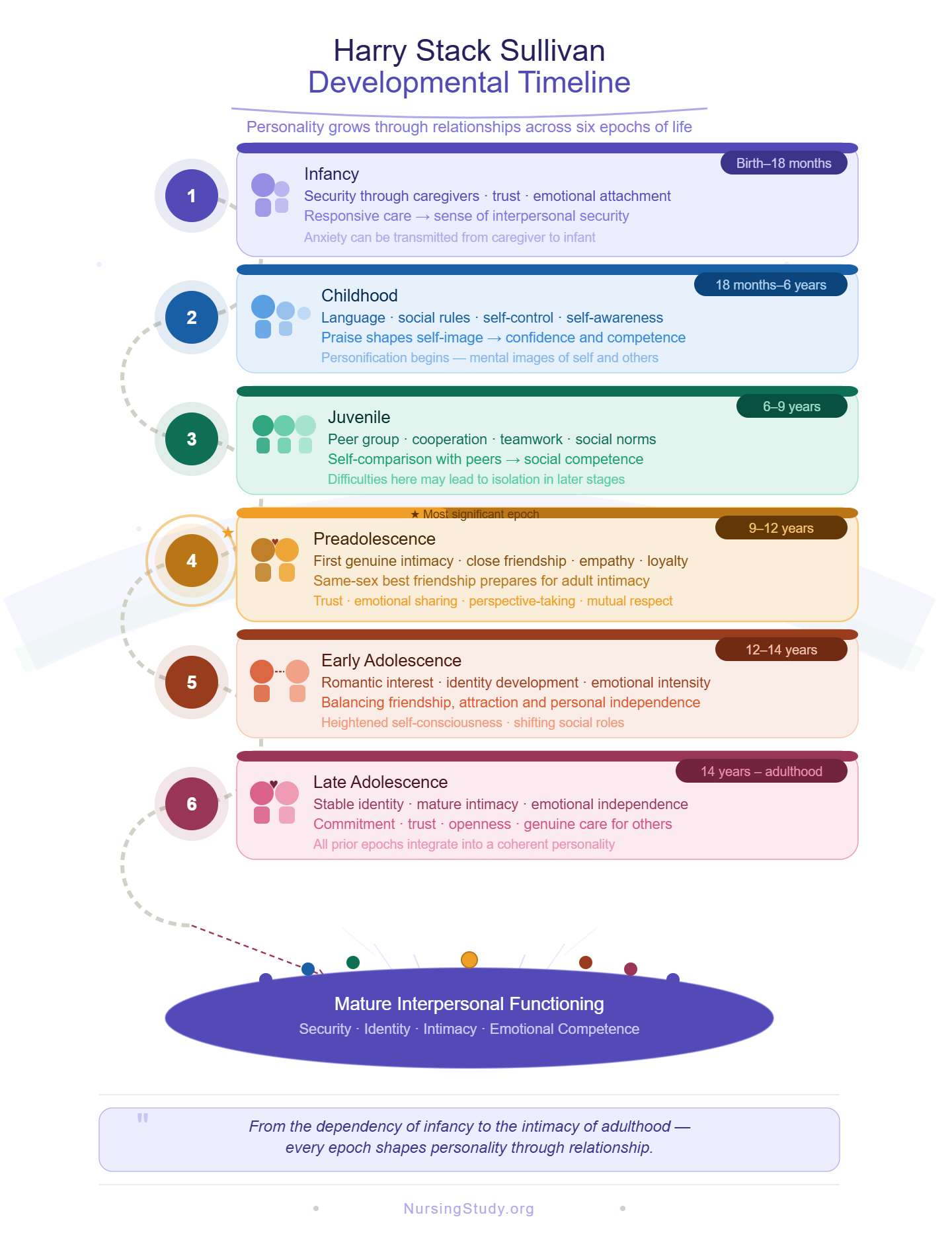
Strengths and Limitations of Sullivan’s Interpersonal Theory
The interpersonal theory of Harry Stack Sullivan represents one of the most influential frameworks in psychiatry, psychotherapy, and social science because it shifted attention from purely intrapsychic explanations of behavior toward the role of relationships, communication, and the social environment. At the same time, like all theoretical models of human personality, it has both notable strengths and important limitations. Understanding both sides is essential for appreciating its relevance within modern interpersonal psychiatry and its continued application in clinical practice.
Strengths of Sullivan’s Interpersonal Theory
1. Strong Emphasis on Interpersonal Relationships
One of the most significant strengths of Sullivan’s interpersonal theory is its clear focus on interpersonal relationships as the central force in personality development. Sullivan argued that personality is not formed in isolation but emerges through continuous interaction with others.
This perspective helps mental health professionals understand that:
- Emotional difficulties often arise within relationships
- Self-concept develops through feedback from others
- Behavioral patterns reflect learned interpersonal interactions
For example, an individual who repeatedly experiences rejection during preadolescence may develop avoidance patterns in later interpersonal relations, which can influence intimate relationships in adulthood.
This relational focus remains highly relevant in modern community mental health and therapeutic practice.
2. Integration of Developmental Perspective
Another major strength is the incorporation of developmental stages through the Harry Stack Sullivan Developmental Timeline, which includes infancy, childhood, preadolescence, early adolescence, and late adolescence.
Sullivan’s concept of developmental epochs highlights how personality evolves across the lifespan through changing interpersonal experiences.
This developmental approach allows clinicians to:
- Trace emotional difficulties back to earlier interpersonal development
- Understand how early interpersonal security or insecurity shapes later functioning
- Identify critical periods where maladaptive interpersonal patterns may have formed
For instance, disruptions in infancy due to inconsistent caregiving may contribute to long-term difficulties in trust and emotional regulation within human relationships.
3. Practical Application in Psychotherapy
A key advantage of Sullivan’s work is its direct applicability to psychotherapy and clinical care. His ideas strongly influenced interpersonal psychotherapy, which focuses on improving communication, resolving relational conflicts, and strengthening therapeutic relationships.
In clinical settings, Sullivan’s theory helps practitioners:
- Analyze recurring interpersonal difficulties
- Address maladaptive communication styles
- Improve interpersonal security in patients
- Strengthen coping mechanisms within relationships
For example, a patient experiencing depression due to chronic marital conflict may benefit from therapy focused on improving interpersonal relations rather than solely addressing internal cognitive symptoms.
This practical orientation makes the theory especially useful in psychiatric nursing and counseling practice.
4. Humanistic and Patient-Centered Approach
Sullivan’s work significantly contributed to the humanization of psychiatry, particularly in contrast to earlier models that often emphasized pathology over personhood.
His approach encourages clinicians to:
- View patients as socially embedded individuals
- Prioritize empathy and understanding in treatment
- Focus on lived interpersonal experience rather than only diagnosis
This has had a lasting impact on modern mental health professionals, especially in fostering respectful and collaborative care environments.
For example, in treating individuals with schizophrenia, Sullivan emphasized understanding their interpersonal world rather than viewing them as detached or unreachable.
5. Foundation for Modern Social Psychiatry
Another major strength is Sullivan’s influence on social psychiatry, which examines how societal and interpersonal factors influence mental health.
His theory helped establish the idea that:
- Mental health is shaped by social interactions
- Community and family systems play a critical role in recovery
- Psychological distress cannot be separated from social context
This has directly contributed to the development of community mental health systems that prioritize social support and integration rather than isolation.
Limitations of Sullivan’s Interpersonal Theory
1. Limited Emphasis on Biological Factors
One of the most common criticisms of Sullivan’s interpersonal theory is its relatively limited attention to biological and neurological influences on behavior.
While Sullivan focused heavily on interpersonal experiences, modern psychiatry recognizes that mental disorders such as schizophrenia also involve:
- Genetic predisposition
- Neurochemical imbalances
- Brain structure abnormalities
By underemphasizing biological determinants, the theory may provide an incomplete explanation of certain psychiatric conditions.
2. Difficulty in Empirical Testing
Another limitation is that many of Sullivan’s concepts—such as dynamism, personification, and parataxic distortion—are abstract and difficult to measure scientifically.
In research settings, this creates challenges in:
- Operationalizing key constructs
- Testing hypotheses empirically
- Measuring interpersonal experience objectively
As a result, while the theory is clinically valuable, it is less empirically precise compared to some modern psychological models.
3. Overemphasis on Interpersonal Factors
Although interpersonal relationships are undeniably important, critics argue that Sullivan may have placed too much emphasis on interpersonal relations as the primary cause of psychological disorders.
In reality, mental health is influenced by multiple interacting factors, including:
- Biological vulnerabilities
- Cognitive processes
- Trauma history
- Environmental stressors
- Cultural influences
For example, while poor relationships may contribute to depression, neurochemical changes and genetic predispositions also play significant roles.
4. Limited Structural Framework Compared to Other Theories
Compared to theories such as Freud’s psychoanalysis, Sullivan’s model is sometimes considered less structurally detailed.
Freud provided a highly structured model of personality (id, ego, superego), whereas Sullivan’s emphasis on interpersonal psychiatry and relational processes is more fluid and less formally organized.
This can make it more difficult to apply consistently across different clinical contexts.
5. Potential Neglect of Individual Intrapsychic Processes
Although Sullivan acknowledged internal experiences such as anxiety, his theory tends to prioritize external interpersonal factors over internal psychological processes.
This may lead to underestimation of:
- Intrapsychic conflict
- Cognitive distortions
- Individual emotional processing styles
For instance, two individuals in similar interpersonal environments may develop very different psychological outcomes due to differences in cognition and temperament—factors not fully explained by Sullivan’s model.
Running out of time to finish your nursing coursework?
Get accurate, ready-to-submit assignments now.
Conclusion
Harry Stack Sullivan’s interpersonal theory represents a major turning point in the understanding of psychiatry, psychotherapy, and human personality development. By shifting attention away from purely intrapsychic explanations and toward interpersonal relationships, Sullivan offered a framework that views mental health as something fundamentally shaped through ongoing interpersonal interactions, human relationships, and the broader social environment.
Across the Harry Stack Sullivan Developmental Timeline, from infancy through late adolescence, individuals develop their sense of self through continuous engagement with others. These experiences shape interpersonal security, influence the formation of the self-system, and contribute to long-term patterns of behavior within interpersonal relations. When these interactions are supportive, they foster emotional stability, healthy coping, and adaptive personality development. When they are marked by conflict, rejection, or inconsistency, they may contribute to anxiety, maladaptive interpersonal patterns, and vulnerability to mental health disorders.
Sullivan’s contributions to interpersonal psychiatry and social science also extended the role of mental health care beyond diagnosis and symptom management. His work emphasized the importance of therapeutic relationships, communication, and understanding the patient’s relational world. This perspective continues to influence modern mental health professionals, particularly in community mental health settings where treatment is closely tied to social support systems and real-life functioning.
Although the theory has limitations—particularly in its reduced emphasis on biological and neurochemical factors—it remains highly valuable for its humanistic and relational focus. Its influence can still be seen in contemporary psychotherapy, especially in approaches that prioritize relationship dynamics, emotional expression, and interpersonal functioning as central pathways to healing.
Ultimately, Sullivan’s legacy lies in his enduring insight that human beings are not isolated psychological entities, but deeply relational beings whose mental health is continuously shaped by their connections with others. His work continues to remind the field of psychiatry that understanding a person requires understanding their relationships, and that healing often begins within the context of meaningful human connection.
Frequently Asked Questions
What is Harry Stack Sullivan’s interpersonal theory?
Harry Stack Sullivan’s interpersonal theory is a psychiatric and psychological framework that explains human behavior and personality development primarily through interpersonal relationships. It proposes that individuals are shaped by their interactions with others, and that mental health or illness arises from patterns of interpersonal relations, communication, and social experiences rather than purely internal or biological factors.
What are the 4 phases of interpersonal relationships?
In Sullivan’s framework, interpersonal development is often understood through four broad phases of relational growth:
- Infancy and childhood attachment phase – formation of basic trust and emotional security with caregivers.
- Juvenile peer relationship phase – development of friendships, cooperation, and social skills.
- Preadolescence intimacy phase – formation of close, emotionally meaningful friendships.
- Adolescence and adulthood intimacy phase – development of romantic relationships and mature, long-term interpersonal bonds.
These phases reflect increasing complexity in interpersonal interactions and emotional connection.
What is Sullivan’s theory of interpersonal development?
Sullivan’s theory of interpersonal development explains that personality develops through a series of developmental stages (epochs) driven by social interaction. Each stage introduces new interpersonal challenges, such as forming trust in infancy or building intimacy in adolescence. Successful navigation of these stages leads to healthy personality development, while difficulties may contribute to anxiety, distorted relationships, and psychological distress.
What is personality according to Harry Sullivan’s interpersonal theory?
According to Sullivan, personality is the relatively stable pattern of behaviors, thoughts, and emotional responses that emerges from an individual’s interpersonal experiences. It is not fixed at birth but is continuously shaped and reorganized through relationships, communication patterns, and the need to achieve interpersonal security within the social environment.
