

Revitalizing Alfred Adler Theory of Individual Psychology for Understanding Human Nature in Nursing Practice
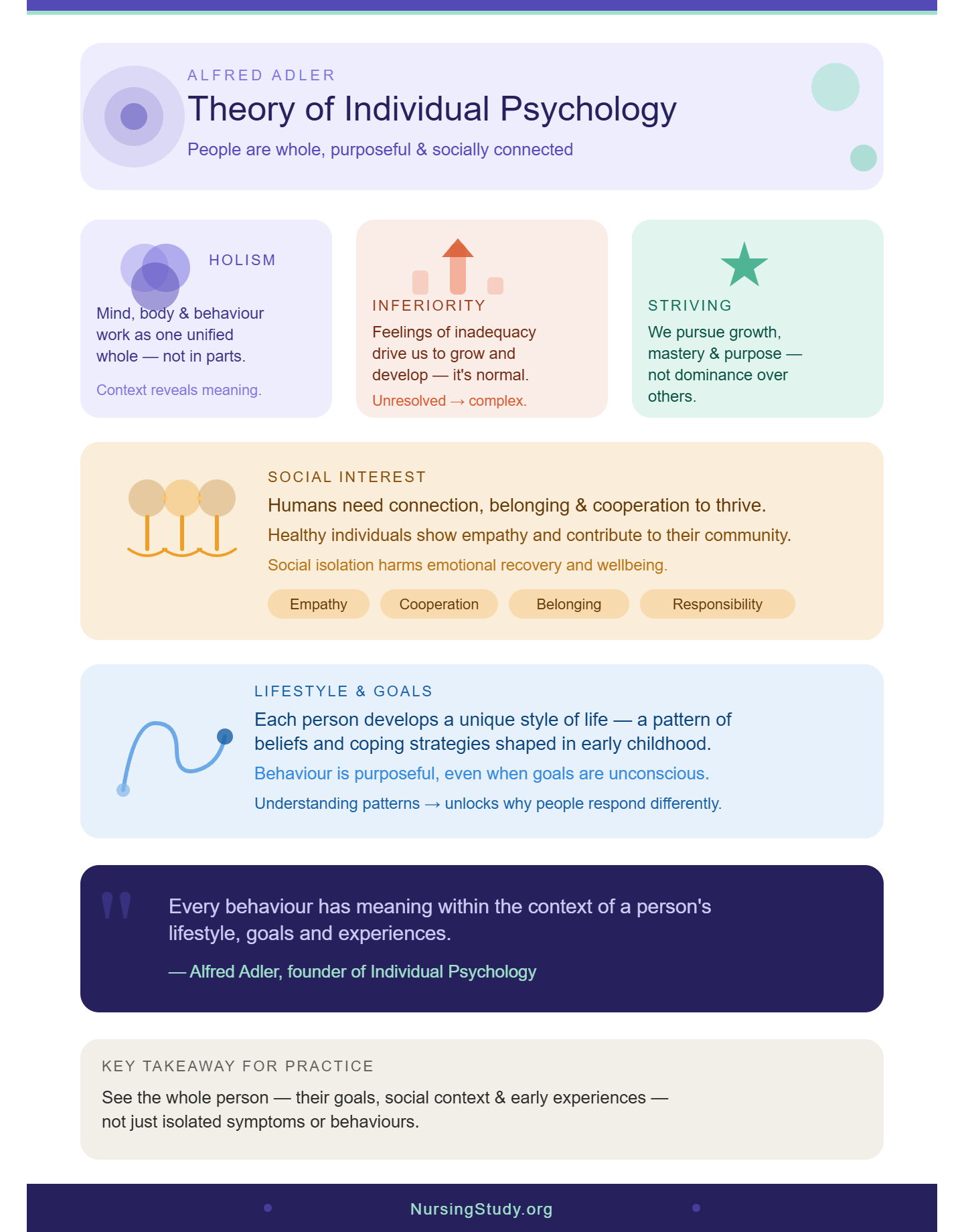
The Alfred Adler Theory of Individual Psychology remains one of the most influential approaches for understanding human behavior, personality development, motivation, and interpersonal relationships. Developed by Alfred Adler, this psychological perspective shifted attention away from purely instinct-driven explanations of behavior and toward a broader understanding of human beings as socially connected, goal-oriented, and capable of growth. Although Adler was originally associated with Sigmund Freud and the psychoanalytic movement, Adler’s ideas eventually evolved into a distinct framework that emphasized social relationships, encouragement, purpose, and community feeling as central elements of mental health and human development.
The Alfred Adler Theory of Individual Psychology continues to influence psychotherapy, counseling, education, leadership studies, and healthcare practice because it provides a holistic approach to understanding human nature. Rather than viewing people as passive victims of unconscious drives or childhood trauma alone, Adler believed that individuals actively shape their lives through choices, goals, beliefs, and social experiences. According to Adler, behavior is purposeful and directed toward achieving significance, belonging, and personal meaning. This perspective remains highly relevant in healthcare settings, where emotional, psychological, social, and environmental factors often influence patient outcomes as much as physical illness itself.
At the center of individual psychology is the idea that human beings are inherently social. Adler emphasized that people cannot be fully understood in isolation from their families, communities, and cultural environments. Human behavior develops through interactions with others and through efforts to achieve a sense of belonging within society. This concept of social connectedness is reflected in several important Adlerian principles, including:
- Social interest and community feeling
- Goal-directed behavior
- Lifestyle or style of life development
- Family constellation and birth order influences
- The drive to overcome inferiority
- The importance of encouragement and cooperation
These concepts form the foundation of Adlerian psychology and continue to shape modern approaches to mental health care, patient-centered communication, and therapeutic relationships.
One of the most recognized contributions of the Alfred Adler Theory of Individual Psychology is the concept of inferiority. Adler proposed that feelings of weakness, limitation, or inadequacy are universal human experiences that begin in early childhood. Children naturally experience dependence and vulnerability as they grow and interact with others, leading to what Adler described as a feeling of inferiority. Importantly, Adler did not consider inferiority to be entirely negative. In many situations, feelings of inadequacy motivate individuals to strive toward improvement, competence, achievement, and personal growth.
However, Adler also warned that unresolved inferiority feelings may become excessive and unhealthy. When individuals are unable to cope effectively with these feelings, they may develop an inferiority complex characterized by:
- Low self-esteem
- Withdrawal from social relationships
- Overdependence on others
- Fear of failure or criticism
- Aggressive overcompensation
- Emotional distress and maladaptive behaviors
Understanding these patterns is particularly important in healthcare and mental health practice because patients often respond to illness, disability, trauma, or social stress through behaviors shaped by insecurity, fear, and perceived inadequacy. Adlerian theory therefore provides useful insight into patient coping mechanisms, emotional responses, and interpersonal functioning.
Another defining feature of Alfred Adler’s individual psychology is the belief that people constantly strive toward superiority, success, or completion. In Adlerian theory, superiority does not necessarily refer to dominance over others. Instead, it reflects the human desire for mastery, growth, resilience, and self-improvement. Adler believed that healthy psychological development occurs when individuals channel this striving in socially constructive ways that benefit both themselves and their communities. Conversely, unhealthy striving may contribute to narcissism, excessive competitiveness, neurosis, or dysfunctional interpersonal relationships.
The theory of individual psychology also places strong emphasis on early childhood experiences and family dynamics. Adler identified birth order, parenting styles, sibling relationships, and family environment as major influences on personality development. He argued that individuals develop a unique style of life during childhood based on how they interpret and respond to their experiences. This lifestyle influences behavior, relationships, goals, coping strategies, and emotional functioning throughout life. For example:
- Firstborn children may develop responsibility-oriented traits
- Middle children may become competitive or adaptive
- Youngest children may seek attention or dependency
- Only children may demonstrate maturity alongside sensitivity to criticism
Although modern psychology recognizes limitations in birth order theory, Adler’s work helped expand understanding of how family experiences shape personality and social behavior.
The Alfred Adler Theory of Individual Psychology is also significant because it introduced many ideas that later became central to preventive mental health and community-based care. Adler began developing child guidance clinics, parent education programs, and school-based mental health interventions that focused on encouragement, cooperation, and healthy social development. His emphasis on prevention and education represented an important shift away from viewing mental health care solely as treatment for illness. Adler believed that strengthening relationships, improving communication, and fostering social responsibility could improve psychological well-being across communities.
Several major concepts continue to define Adlerian theory and practice today, including:
- Social interest as a marker of psychological health
- Encouragement as a therapeutic intervention
- Goal orientation and purposeful behavior
- Holistic understanding of the individual
- The influence of subjective experiences on personality
- The role of belonging in emotional well-being
These principles remain valuable in psychotherapy, counseling, nursing care, rehabilitation, leadership development, and family interventions.
In healthcare practice, Adlerian concepts help professionals better understand patient behavior, emotional adjustment, and interpersonal dynamics. Patients experiencing chronic illness, disability, anxiety, depression, trauma, or social isolation often struggle with feelings of inferiority, hopelessness, or disconnection. Adlerian psychology encourages healthcare providers to view patients not simply as diagnoses or symptoms, but as individuals shaped by life experiences, social relationships, goals, and personal meaning. This perspective supports compassionate communication, patient empowerment, collaborative care planning, and holistic treatment approaches.
This article provides a comprehensive exploration of the Alfred Adler Theory of Individual Psychology and its relevance to understanding human behavior in healthcare settings. The discussion examines Adler’s background, the foundations of individual psychology, inferiority and striving for superiority, birth order theory, social interest, personality development, psychotherapy applications, and the continuing influence of Adlerian psychology in modern nursing and mental health practice. Through these discussions, the article highlights how Adler’s ideas continue to contribute to understanding human nature, therapeutic relationships, emotional well-being, and patient-centered care.
Feeling stressed about writing a detailed nursing paper?
Let us produce a thorough, high-quality document.
Alfred Adler and the Foundations of Individual Psychology
The development of the Alfred Adler Theory of Individual Psychology marked a major turning point in the history of psychology and mental health theory. While early psychological models often focused heavily on unconscious instincts and pathology, Alfred Adler introduced a more socially oriented and optimistic perspective on human behavior. Adler’s ideas emphasized purpose, belonging, motivation, and the importance of social relationships in shaping personality and emotional well-being. His work laid the foundation for many modern approaches to psychotherapy, counseling, education, leadership development, and holistic healthcare practice.
The theory of individual psychology remains influential because it views individuals as integrated human beings whose thoughts, emotions, behaviors, and social experiences are interconnected. Rather than reducing behavior to isolated symptoms or unconscious drives, Adlerian psychology seeks to understand the whole person within the context of family, society, goals, and lived experiences. This holistic perspective continues to shape contemporary understanding human behavior and patient-centered care.
Alfred Adler’s Background and Influence on Psychology
Alfred Adler was born on February 7, 1870, in Vienna, Austria, during a period of major scientific and intellectual change in Europe. Adler was born into a middle-class Jewish family and experienced several health challenges during childhood, including serious illnesses that influenced his later interest in medicine and human development. These early experiences contributed to his understanding of inferiority, resilience, and the human drive to overcome weakness.
Initially, Adler pursued a career as an ophthalmologist before later transitioning into general medicine and psychiatry. His medical background exposed him to the relationship between physical illness, emotional distress, and social circumstances. Unlike many theorists of his time, Adler often examined psychological problems within broader social and environmental contexts rather than focusing exclusively on biological or instinctual explanations.
Adler and the Psychoanalytic Movement
During the early stages of his career, Adler became associated with Sigmund Freud and the psychoanalytic movement. Freud recognized Adler’s intellectual abilities and invited him to join a discussion group that later evolved into the Vienna Psychoanalytic Society. For a period, Adler and Freud worked closely together, and Adler even served as president of the organization.
However, important theoretical disagreements gradually emerged between the two scholars. While Freud emphasized unconscious sexual drives and instinctual conflict as the primary determinants of personality, Adler believed that human beings were motivated more strongly by social factors, personal goals, and the desire for significance and belonging. These disagreements eventually became irreconcilable, and Freud and Adler went their separate ways in the early 1900s.
The separation marked the beginning of Adler’s independent theoretical development. Adler developed the school of individual psychology as an alternative to classical psychoanalysis. This new perspective focused on:
- Social connectedness
- Goal-directed behavior
- Personal responsibility
- Human potential for growth
- Community feeling and cooperation
- The influence of early childhood experiences
Adler’s ideas were revolutionary because they shifted psychology toward a more optimistic and socially conscious understanding human nature.
Adler’s Influence on Modern Psychology
The influence of Alfred Adler’s individual psychology extends far beyond psychotherapy. Many concepts commonly used in contemporary psychology, counseling, education, and healthcare have roots in Adlerian theory. In many ways, Adler was the first major psychologist to emphasize prevention, social equality, and community mental health.
Adler also contributed significantly to:
- Parent education programs
- Child guidance clinics
- School counseling approaches
- Family therapy concepts
- Humanistic psychology
- Cognitive and behavioral approaches
- Community mental health initiatives
Adler began promoting mental health education within schools and communities long before preventive mental healthcare became widely accepted. He established one of the first child guidance clinics and advocated for collaborative approaches involving parents, teachers, physicians, and counselors. His child guidance clinic in Vienna focused on helping children develop confidence, cooperation, and healthy social relationships rather than simply treating symptoms.
Because Adler emphasized encouragement, belonging, and social responsibility, his work later influenced theorists such as Carl Rogers, Abraham Maslow, Viktor Frankl, and Albert Ellis. Many modern therapeutic approaches continue to reflect Adlerian principles even when they do not explicitly identify themselves as Adlerian psychology.
Core Principles of the Theory of Individual Psychology
The Alfred Adler Theory of Individual Psychology is based on the idea that human beings are unified, purposeful, and socially connected. Adler proposed that personality cannot be understood by examining isolated traits or unconscious drives alone. Instead, people must be viewed as whole individuals whose behaviors reflect their goals, perceptions, relationships, and efforts to adapt to life challenges.
Several foundational principles define the theory of individual psychology.
1. Holism and the Unity of Personality
One of Adler’s most important contributions was the concept of holism. Adler believed that thoughts, emotions, behaviors, and physical experiences function together as parts of an integrated whole. This idea differed from approaches that divided personality into conflicting internal components.
According to Adler, every behavior has meaning within the broader context of an individual’s lifestyle, goals, and experiences. For example:
- A patient refusing treatment may not simply be “noncompliant”
- A socially withdrawn individual may be protecting themselves from perceived rejection
- Excessive perfectionism may reflect compensation for feelings of inferiority
Adlerian psychology therefore encourages professionals to understand behavior in context rather than making simplistic judgments.
2. Inferiority and Compensation
The concept of inferiority is central to the Alfred Adler Theory of Individual Psychology. Adler believed that all human beings experience feelings of weakness or inadequacy at some point in life, especially during early childhood when dependence on others is greatest.
Inferiority itself is not abnormal. In fact, Adler considered it a necessary part of human development because it motivates individuals to strive toward growth, competence, and improvement. Problems arise when inferiority feelings become overwhelming or unresolved.
Adler identified several possible responses to inferiority:
- Healthy striving toward self-improvement
- Overcompensation through dominance or aggression
- Withdrawal and avoidance behaviors
- Development of an inferiority complex
- Excessive dependence on others
For example, a student who struggled academically during childhood may become highly motivated to succeed professionally. Conversely, another individual with similar experiences may develop chronic self-doubt and avoidance behaviors.
3. Striving for Superiority
Adler proposed that people are naturally motivated to strive toward superiority, achievement, and fulfillment. Importantly, superiority in Adlerian theory does not necessarily mean being better than others. Instead, it refers to the pursuit of growth, competence, mastery, and purpose.
Healthy striving involves:
- Personal growth
- Social contribution
- Resilience
- Cooperation
- Meaningful achievement
Unhealthy striving may involve narcissism, excessive competition, or pursuit of power over others.
Adler believed psychological health depends on balancing personal achievement with social interest and concern for others.
4. Social Interest and Community Feeling
Social interest is one of the defining concepts of individual psychology. Adler emphasized that humans are social beings who require connection, belonging, and cooperation for healthy functioning.
Social interest includes:
- Empathy toward others
- Cooperation
- Sense of belonging
- Social responsibility
- Contribution to community well-being
According to Adler, psychologically healthy individuals demonstrate concern for others and actively participate in society. Lack of social interest may contribute to emotional difficulties, antisocial behavior, and interpersonal conflict.
This principle remains highly relevant in healthcare because social isolation, loneliness, and lack of support often affect patient outcomes and emotional recovery.
5. Lifestyle and Goal-Directed Behavior
Adler developed the concept of style of life to describe the unique patterns of beliefs, behaviors, and coping strategies individuals develop early in life. This lifestyle reflects how people interpret themselves, others, and the world around them.
Adler believed that behavior is purposeful rather than random. Individuals act in ways that support their goals, even when those goals operate outside conscious awareness.
For instance:
- A patient who avoids relationships may fear rejection
- A perfectionistic nurse may seek validation and control
- An aggressive individual may be compensating for insecurity
Understanding these patterns helps explain why people respond differently to similar life experiences.
Differences Between Adler and Freud
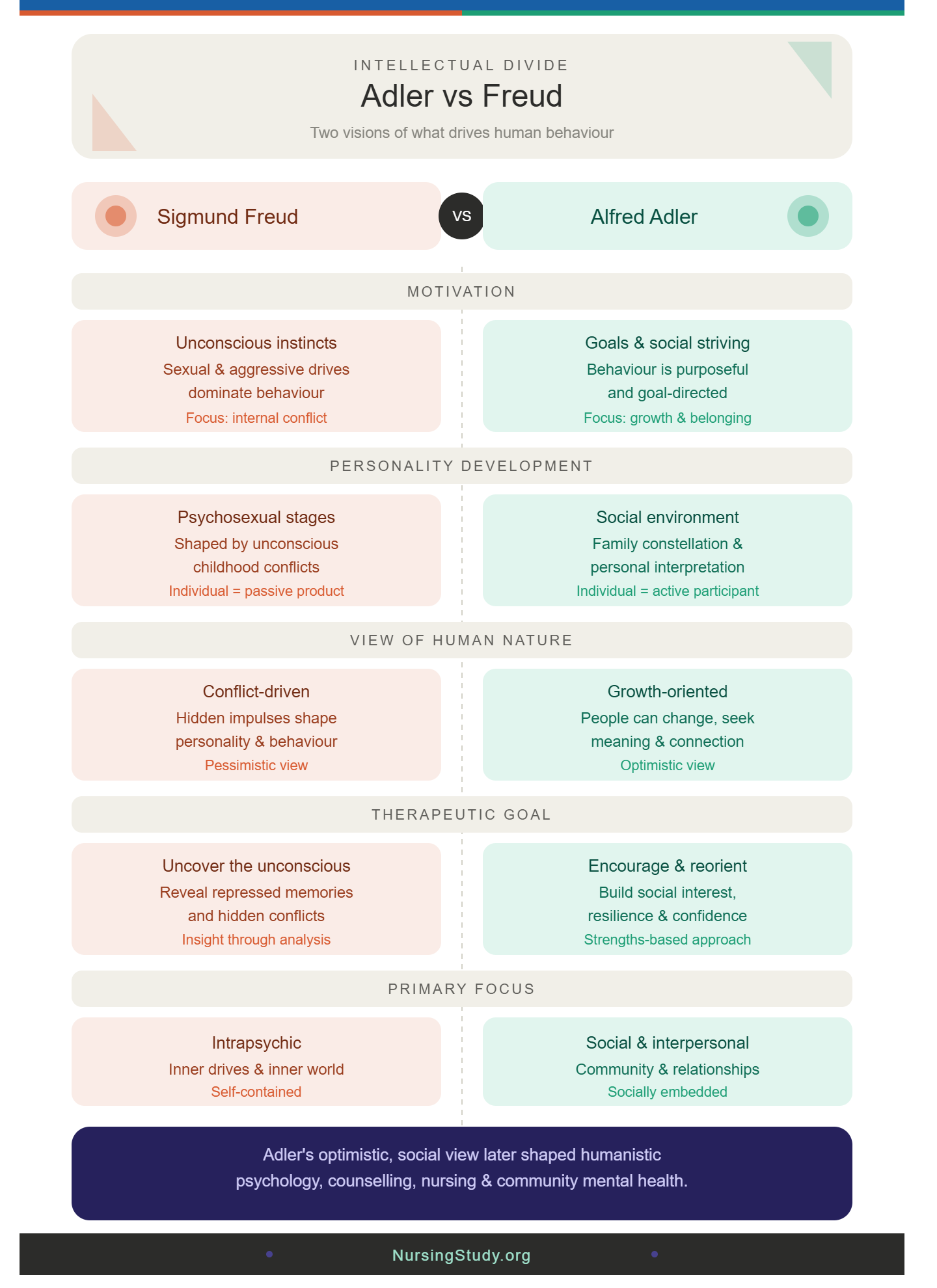
The relationship between Adler and Freud represents one of the most important intellectual divisions in psychological history. Although Adler was initially part of Freud’s psychoanalytic circle, their theories eventually diverged in several major areas.
1. View of Human Motivation
Freud emphasized unconscious sexual and aggressive instincts as the primary forces shaping behavior. In contrast, Adler believed that social relationships, goals, and striving for significance were more important motivational factors.
Freud’s Perspective
- Human behavior driven largely by unconscious instincts
- Emphasis on sexual and aggressive drives
- Focus on internal conflict
Adler’s Perspective
- Human behavior is goal-directed and purposeful
- Emphasis on social interest and belonging
- Focus on growth and adaptation
2. Understanding of Personality Development
Freud focused heavily on psychosexual stages and unconscious childhood conflicts. Adler acknowledged the importance of early childhood experiences but placed greater emphasis on social environment, family constellation, and personal interpretation of experiences.
Adler considered individuals active participants in shaping their lives rather than passive products of instinctual forces.
3. Perspective on Human Nature
Freud’s psychoanalysis often portrayed human nature as conflict-driven and heavily influenced by hidden impulses. Adlerian theory presented a more optimistic perspective.
Adler believed:
- People can change and grow
- Human beings seek meaning and belonging
- Cooperation is essential for mental health
- Social connectedness promotes well-being
This optimistic orientation later influenced humanistic psychology and strengths-based therapeutic approaches.
4. Therapeutic Goals
Freudian psychoanalysis focused on uncovering unconscious conflicts and repressed memories. Adlerian psychotherapy emphasizes encouragement, insight, social interest, and goal reorientation.
Adlerian therapists often help individuals:
- Recognize unhealthy lifestyle patterns
- Develop healthier coping strategies
- Improve social relationships
- Increase self-awareness
- Build confidence and resilience
These approaches continue to influence counseling, nursing communication strategies, rehabilitation programs, and mental health interventions.
5. Social Versus Intrapsychic Focus
Perhaps the greatest difference between Adler and Freud was Adler’s emphasis on society and interpersonal relationships. Adler considered mental health inseparable from social functioning and community involvement.
This social orientation explains why the Alfred Adler Theory of Individual Psychology remains especially relevant in healthcare, education, counseling, and community mental health settings today.
Understanding Human Development in Adlerian Psychology
The Alfred Adler Theory of Individual Psychology provides a comprehensive framework for understanding how human beings develop psychologically, emotionally, socially, and behaviorally throughout life. Unlike theories that focus primarily on instinctual drives or unconscious conflict, Adlerian psychology emphasizes purpose, social relationships, subjective experiences, and the human capacity for growth. Alfred Adler believed that personality development is shaped by the interaction between early childhood experiences, family relationships, social environments, and the goals individuals create for themselves.
One of the defining strengths of the theory of individual psychology is its holistic approach to human development. Adler considered individuals to be active participants in shaping their lives rather than passive victims of biology or circumstance. According to Adler, people interpret their experiences, assign meaning to them, and develop behavioral patterns that guide future decisions, relationships, and emotional responses. This perspective remains important in healthcare and mental health practice because it recognizes that patient behavior is often influenced by past experiences, coping strategies, family dynamics, and social connectedness.
Adlerian theory also emphasizes that human beings are fundamentally social creatures whose development occurs within relationships and communities. Family environment, parenting styles, sibling interactions, educational experiences, and social acceptance all contribute to the development of personality and emotional well-being. Understanding these influences helps healthcare professionals better recognize how individuals adapt to stress, illness, trauma, and interpersonal challenges across the lifespan.
Early Childhood Experiences and Personality Development
Early childhood occupies a central role in the Alfred Adler Theory of Individual Psychology. Adler believed that experiences during the first years of life strongly influence personality development, emotional patterns, coping mechanisms, and future relationships. However, Adlerian psychology differs from deterministic theories because it does not claim that childhood experiences permanently dictate destiny. Instead, Adler proposed that individuals actively interpret and respond to experiences, creating personal meanings that shape their style of life.
The Importance of Early Childhood
According to Adler, childhood is a period marked by dependency, vulnerability, and limited control over the environment. During this stage, children naturally experience feelings of inferiority because they are physically smaller, less skilled, and dependent on adults for survival. Adler considered these feelings universal and necessary for growth.
Children attempt to overcome inferiority through learning, adaptation, achievement, and social participation. The ways in which they respond to these early challenges contribute significantly to personality formation.
Several childhood experiences may influence development, including:
- Parenting style
- Emotional support from caregivers
- Family conflict or stability
- Birth order position
- Sibling relationships
- Social acceptance or rejection
- Physical illness or disability
- Academic experiences
- Trauma or neglect
Adler believed that these experiences influence how individuals perceive themselves, others, and the world around them.
Subjective Interpretation of Childhood Experiences
One of Adler’s most important contributions was the idea that subjective interpretation matters more than objective events themselves. Two individuals may experience similar childhood situations yet develop entirely different personalities depending on how they interpret those experiences.
For example:
Example 1: Childhood Illness
Two children may experience chronic illness during childhood.
- One child may develop resilience, empathy, and motivation to help others
- Another may develop insecurity, dependence, or withdrawal
The difference lies not only in the illness itself but in how the individual interprets the experience and adapts to it psychologically.
Example 2: Academic Struggles
A child who struggles academically may:
- Become highly motivated to succeed through hard work
- Develop an inferiority complex and avoid challenges altogether
Adlerian psychology therefore focuses on understanding personal meaning rather than simply cataloging childhood events.
Family Constellation and Personality Development
Adler identified family constellation as a major influence on human development. Family constellation refers to the structure and relational dynamics within the family, including:
- Birth order
- Parental attitudes
- Sibling interactions
- Family expectations
- Emotional climate within the household
Adler proposed that children occupy different psychological positions within the family and respond differently to these roles.
For example:
- Firstborn children may develop responsibility and leadership traits
- Middle children may become competitive or adaptive
- Youngest children may seek attention or dependence
- Only children may mature quickly while remaining sensitive to criticism
Although modern research recognizes limitations in strict birth order predictions, Adler’s work helped establish the importance of family dynamics in personality development.
Organ Inferiority and Compensation
Another concept associated with the Alfred Adler Theory of Individual Psychology is organ inferiority. Adler observed that individuals with physical weaknesses or health limitations often attempt to compensate psychologically or behaviorally.
For instance:
- A physically weak child may strive for academic excellence
- Someone with speech difficulties may become highly skilled in writing
- An individual with social insecurity may overcompensate through achievement or control
Adler believed compensation could lead either to healthy growth or maladaptive behaviors depending on how individuals cope with perceived weaknesses.
This concept remains relevant in healthcare settings where patients may struggle emotionally with chronic illness, disability, body image concerns, or reduced independence.
Lifestyle Formation and Goal-Directed Behavior
A major principle of Adlerian psychology is that individuals develop a unique style of life that guides behavior throughout life. The style of life refers to the characteristic way a person thinks, behaves, relates to others, solves problems, and pursues goals.
According to Adler, this lifestyle begins developing during early childhood and becomes relatively stable over time.
What Is Style of Life?
The style of life reflects:
- Personal beliefs about self and others
- Coping strategies
- Emotional patterns
- Social behaviors
- Goals and ambitions
- Methods of dealing with inferiority
Adler believed that lifestyle patterns are shaped by both experiences and subjective interpretations.
For example:
- A person who perceives the world as unsafe may become withdrawn and avoidant
- Someone raised in a highly competitive environment may become perfectionistic
- An individual who feels valued and encouraged may develop confidence and cooperation
Lifestyle patterns influence nearly every aspect of functioning, including relationships, career choices, emotional resilience, and health behaviors.
Goal-Directed Behavior in Adlerian Theory
One of the defining features of the Alfred Adler Theory of Individual Psychology is the belief that human behavior is purposeful and goal-oriented. Adler rejected the idea that people are controlled solely by unconscious instincts or past trauma.
Instead, Adler proposed that behavior is directed toward future goals, whether conscious or unconscious.
These goals often involve:
- Achieving success
- Gaining acceptance
- Avoiding failure
- Seeking belonging
- Attaining superiority or competence
- Protecting self-esteem
For example:
Example 1: Perfectionism
A nursing professional who constantly seeks perfection may not simply be “hardworking.” Their behavior may represent a deeper goal of avoiding criticism or overcoming feelings of inadequacy.
Example 2: Social Withdrawal
A patient who avoids social interaction may unconsciously believe withdrawal protects them from rejection or humiliation.
Example 3: Aggressive Behavior
An individual displaying controlling or aggressive behavior may be compensating for insecurity or feelings of inferiority.
Adlerian psychology therefore examines the purpose behind behavior rather than focusing only on symptoms.
Fictional Finalism
Adler also introduced the concept of fictional finalism, which refers to imagined goals or ideals that guide human behavior. People often create personal beliefs about what they must achieve in order to feel valuable or secure.
Examples include:
- “I must always succeed to be respected.”
- “I need everyone’s approval to feel worthy.”
- “I must remain independent at all times.”
These beliefs may motivate growth, but unrealistic goals can also contribute to anxiety, burnout, perfectionism, or emotional distress.
Understanding these internal goals helps explain why individuals behave differently under similar circumstances.
Understanding Human Nature Through Social Environment
The Alfred Adler Theory of Individual Psychology emphasizes that understanding human nature requires examining social relationships and environmental influences. Adler believed that psychological well-being cannot be separated from social connectedness, cooperation, and community participation.
This perspective distinguished Adlerian theory from more biologically or intrapsychically focused models of psychology.
Humans as Social Beings
Adler considered human beings fundamentally social by nature. Emotional health depends heavily on the ability to form meaningful relationships, contribute to society, and develop a sense of belonging.
Adler referred to this capacity as social interest or social feeling.
Social interest includes:
- Empathy for others
- Cooperation
- Community participation
- Respect for others
- Desire to contribute positively to society
According to Adler, healthy individuals balance personal achievement with concern for others.
Social Environment and Mental Health
Adlerian psychology recognizes that environmental conditions significantly affect emotional well-being and personality development.
Factors influencing psychological health include:
- Family relationships
- Peer acceptance
- Educational experiences
- Economic conditions
- Cultural expectations
- Social support systems
- Experiences of discrimination or exclusion
For example:
- A supportive environment may encourage resilience and confidence
- Chronic criticism may contribute to inferiority feelings
- Social isolation may increase anxiety and depression
- Encouragement may strengthen motivation and self-esteem
This social perspective aligns closely with modern healthcare approaches that recognize the impact of social determinants of health on patient outcomes.
Encouragement and Human Development
Adler emphasized encouragement as one of the most powerful influences on personality development and emotional well-being. Encouragement helps individuals develop confidence, resilience, and willingness to engage socially.
In contrast, constant criticism, humiliation, or rejection may contribute to:
- Inferiority complex
- Low self-worth
- Fear of failure
- Withdrawal behaviors
- Aggression or overcompensation
Healthcare professionals often apply encouragement principles when supporting patients coping with illness, rehabilitation, mental health challenges, or behavioral change.
For example:
- Encouraging small successes during rehabilitation can improve patient motivation
- Validating patient concerns may strengthen therapeutic trust
- Collaborative goal-setting may enhance treatment adherence
Adlerian Understanding Human Nature
The Alfred Adler Theory of Individual Psychology ultimately presents an optimistic and socially grounded understanding human nature. Adler believed that although individuals experience struggle, inferiority, and adversity, they also possess the capacity for growth, adaptation, cooperation, and meaningful contribution.
Key Adlerian assumptions about human nature include:
- Human behavior is purposeful
- Personality develops within social relationships
- People strive for significance and belonging
- Individuals can change and grow
- Social interest is essential for mental health
- Encouragement promotes resilience and development
These principles continue to influence psychotherapy, counseling, education, leadership training, and patient-centered healthcare practices throughout the world.
Inferiority and the Striving for Superiority
One of the most important contributions of the Alfred Adler Theory of Individual Psychology is its explanation of how feelings of inferiority influence human behavior, motivation, emotional development, and interpersonal relationships. Alfred Adler believed that every human being experiences some degree of weakness, limitation, or inadequacy during life. Rather than viewing these experiences as abnormal, Adler considered inferiority to be a universal and necessary part of human development.
According to Adlerian psychology, individuals are constantly attempting to overcome limitations and move toward growth, competence, achievement, and fulfillment. This process of striving plays a central role in personality development and emotional functioning. Adler believed that healthy psychological development occurs when people respond to inferiority through constructive effort, cooperation, and social contribution. However, when inferiority feelings become overwhelming or unresolved, they may contribute to emotional distress, maladaptive coping patterns, interpersonal conflict, or the development of an inferiority complex.
The relationship between inferiority and striving for superiority remains highly relevant in psychology, counseling, psychotherapy, education, leadership studies, and healthcare practice because it helps explain why people respond differently to adversity, illness, criticism, failure, or social comparison. Understanding these concepts provides valuable insight into motivation, resilience, self-esteem, and behavioral patterns across different life situations.
The Meaning of Inferiority in Individual Psychology
Inferiority is one of the foundational concepts within the theory of individual psychology. Adler proposed that feelings of inferiority originate naturally during early childhood because children are physically small, dependent, inexperienced, and less capable than adults. As children interact with parents, siblings, peers, and society, they gradually become aware of their limitations and vulnerabilities.
Importantly, Adler did not consider inferiority inherently harmful. In fact, he argued that feelings of inadequacy are essential for growth and development because they motivate individuals to improve themselves and adapt to challenges.
Inferiority as a Universal Human Experience
According to Adler, every person experiences inferiority in some form. These feelings may arise from:
- Physical weakness or illness
- Social rejection
- Academic struggles
- Financial hardship
- Emotional trauma
- Family conflict
- Disability or chronic illness
- Failure or criticism
- Perceived social comparison
Adler believed that inferiority is part of the normal human condition because no individual begins life fully capable or self-sufficient.
For example:
- A child struggling to keep up academically may feel inferior to classmates
- A patient recovering from a stroke may experience inferiority due to reduced independence
- A healthcare professional experiencing burnout may question their competence and self-worth
In each case, inferiority reflects awareness of limitation or vulnerability.
Organ Inferiority and Psychological Development
One of Adler’s early ideas involved the concept of organ inferiority. Adler observed that individuals with physical weaknesses or health problems often attempt to compensate psychologically or behaviorally.
For instance:
- A child with physical limitations may develop exceptional intellectual abilities
- Someone with chronic illness may become highly resilient and empathetic
- An individual with speech difficulties may excel in written communication
Adler found that physical weakness sometimes motivates people toward achievement and adaptation. However, unresolved feelings related to weakness may also contribute to insecurity, shame, or overcompensation.
This concept remains relevant in healthcare settings where patients may struggle emotionally with disability, body image concerns, chronic illness, or functional decline.
Subjective Perception of Inferiority
A key principle in Adlerian psychology is that inferiority is shaped not only by objective circumstances but also by personal interpretation. Two individuals may experience similar challenges yet respond very differently.
Example: Academic Failure
Two students fail an important examination:
- One views failure as motivation to work harder
- Another develops hopelessness and avoids future challenges
The difference lies in how the experience is interpreted psychologically.
According to Adler, subjective beliefs strongly influence emotional responses and future behavior patterns.
Inferiority and Social Comparison
Inferiority feelings often emerge through comparison with others. Individuals may evaluate themselves based on:
- Appearance
- Intelligence
- Social status
- Success
- Physical ability
- Relationships
- Career achievement
In modern society, social comparison has become even more significant due to media exposure, social networking platforms, academic competition, and workplace pressures.
For example:
- A patient comparing their recovery progress to others may become discouraged
- A nursing professional constantly comparing themselves to colleagues may develop self-doubt
- Adolescents exposed to unrealistic online standards may experience low self-esteem
Adlerian theory helps explain how these comparisons influence psychological well-being and behavior.
Inferiority Complex and Compensation Mechanisms
While inferiority itself is considered normal, the Alfred Adler Theory of Individual Psychology explains that problems arise when inferiority feelings become excessive, persistent, or emotionally overwhelming. In such cases, individuals may develop an inferiority complex.
An inferiority complex occurs when a person becomes consumed by feelings of inadequacy, weakness, failure, or worthlessness. These individuals often believe they are incapable of achieving success, acceptance, or personal value.
Characteristics of an Inferiority Complex
People experiencing an inferiority complex may demonstrate:
- Chronic low self-esteem
- Excessive self-criticism
- Fear of failure
- Social withdrawal
- Sensitivity to criticism
- Avoidance of challenges
- Dependence on external validation
- Anxiety or depressive symptoms
- Feelings of hopelessness
In severe cases, inferiority feelings may contribute to neurosis, dysfunctional relationships, or maladaptive coping behaviors.
Example in Healthcare
A patient newly diagnosed with a disability may begin to believe:
- “I am now useless.”
- “People will see me as weak.”
- “I can no longer contribute meaningfully.”
Without emotional support and encouragement, these beliefs may negatively affect rehabilitation, treatment adherence, and mental health outcomes.
Compensation Mechanisms in Adlerian Psychology
Adler believed that individuals naturally attempt to compensate for perceived weaknesses or inadequacies. Compensation refers to efforts aimed at overcoming inferiority and achieving competence or significance.
Compensation may occur in healthy or unhealthy ways.
Healthy Compensation
Healthy compensation promotes:
- Growth
- Resilience
- Skill development
- Achievement
- Adaptation
For example:
- A shy individual may improve communication skills through practice
- Someone with physical limitations may excel academically or creatively
- A patient coping with chronic illness may develop strong emotional resilience
Healthy compensation supports personal growth and psychological adjustment.
Overcompensation
In some situations, individuals respond to inferiority through overcompensation. This occurs when attempts to hide weakness become excessive or maladaptive.
Overcompensation may involve:
- Aggression
- Dominance
- Perfectionism
- Arrogance
- Excessive competitiveness
- Need for control
- Narcissistic behaviors
For example:
- An insecure individual may constantly seek superiority over others
- A healthcare worker struggling with self-doubt may become overly controlling
- A person feeling socially inadequate may boast excessively about achievements
Adler believed that exaggerated superiority behaviors often conceal deeper feelings of inferiority.
Safeguarding Behaviors
Adler also identified safeguarding tendencies, which are behaviors used to protect self-esteem and avoid perceived failure.
These behaviors may include:
- Excuse-making
- Procrastination
- Avoidance
- Withdrawal
- Self-sabotage
- Emotional distancing
For example:
- A student may avoid studying to protect themselves from possible failure
- A patient may refuse rehabilitation because unsuccessful recovery feels threatening
- An employee may blame others to avoid confronting insecurity
Understanding these patterns helps professionals recognize the emotional purpose behind behavior rather than viewing individuals as simply difficult or unmotivated.
Healthy Striving, Motivation, and Personal Growth
The Alfred Adler Theory of Individual Psychology does not portray inferiority as purely negative. Instead, Adler believed that feelings of limitation can become powerful sources of motivation and personal development when addressed constructively.
Central to Adlerian theory is the concept of striving for superiority.
The Meaning of Superiority in Adlerian Theory
In Adlerian psychology, superiority does not necessarily mean domination over others. Rather, it refers to:
- Self-improvement
- Mastery
- Growth
- Competence
- Fulfillment
- Achievement of personal potential
Adler believed that all individuals strive toward becoming more capable and complete.
Healthy superiority involves:
- Confidence without arrogance
- Achievement balanced with empathy
- Personal growth alongside social contribution
- Cooperation rather than domination
This striving helps individuals adapt to life challenges and pursue meaningful goals.
Goal-Directed Motivation
Adler emphasized that human behavior is purposeful and future-oriented. Individuals are motivated by goals they hope to achieve rather than being controlled entirely by past experiences.
These goals may include:
- Belonging
- Success
- Security
- Recognition
- Independence
- Social acceptance
- Personal fulfillment
For example:
- A nursing professional may pursue advanced education to gain confidence and competence
- A patient recovering from surgery may strive to regain independence
- A child who felt powerless may become highly motivated to help others later in life
Adlerian psychology therefore views motivation as deeply connected to personal meaning and future aspirations.
Social Interest and Healthy Growth
Adler believed that healthy striving must be balanced by social interest and concern for others. Individuals who pursue success while maintaining empathy, cooperation, and social responsibility are more likely to achieve emotional well-being.
Healthy psychological development includes:
- Sense of belonging
- Emotional resilience
- Ability to cooperate
- Meaningful relationships
- Contribution to society
- Confidence and self-worth
According to Adler, social interest is one of the strongest indicators of mental health.
Encouragement and Personal Development
Encouragement plays a central role in helping individuals overcome inferiority and pursue healthy growth. Adler emphasized that supportive relationships foster courage, confidence, and resilience.
Encouragement may involve:
- Recognizing effort rather than perfection
- Supporting realistic goals
- Promoting self-efficacy
- Reinforcing strengths
- Validating emotional experiences
In healthcare settings, encouragement can significantly influence patient recovery and motivation.
Example in Nursing Practice
A patient learning to walk again after injury may feel discouraged by slow progress. Through encouragement and collaborative goal-setting, healthcare professionals can help the patient:
- Regain confidence
- Build resilience
- Maintain motivation
- Develop hope for recovery
This reflects Adler’s belief that emotional support and social connectedness strengthen psychological adaptation.
Personal Growth and Human Potential
Ultimately, the Alfred Adler Theory of Individual Psychology presents an optimistic view of human nature. Although people experience inferiority, adversity, and emotional struggle, Adler believed individuals possess the capacity for growth, adaptation, creativity, and meaningful contribution.
Key Adlerian assumptions about growth include:
- Inferiority can motivate achievement and resilience
- Human behavior is purposeful and goal-directed
- Encouragement strengthens emotional well-being
- Social connectedness promotes mental health
- Healthy striving involves cooperation and contribution
- Individuals can change maladaptive lifestyle patterns
These ideas continue to influence psychotherapy, counseling, education, rehabilitation, leadership development, and holistic healthcare approaches throughout the world.
Birth Order and Personality Formation
The Alfred Adler Theory of Individual Psychology introduced one of the earliest psychological explanations of how family dynamics influence personality development. Among Adler’s most recognized contributions is his theory of birth order, which proposed that a child’s position within the family affects emotional development, behavioral patterns, social relationships, and style of life. Alfred Adler believed that children growing up in the same household do not experience identical psychological environments because each child occupies a different position within the family constellation.
Adlerian psychology emphasizes that birth order does not shape personality through biology alone. Instead, personality develops through the child’s interpretation of family experiences, parental attention, sibling interactions, responsibilities, and social expectations. According to Adler, individuals actively create meaning from their environments, and these meanings influence future goals, coping mechanisms, emotional responses, and interpersonal relationships.
Birth order theory became one of the most influential aspects of the theory of individual psychology because it highlighted the importance of social context in human development. Although modern psychology recognizes limitations in using birth order as a strict predictor of personality, Adler’s ideas contributed significantly to understanding human behavior within families and social systems. Many concepts associated with family therapy, developmental psychology, parenting education, and child guidance continue to reflect Adlerian principles today.
Alfred Adler’s Birth Order Theory
Alfred Adler proposed that birth order influences personality because each child experiences a unique psychological situation within the family. Adler believed that children compete for attention, belonging, significance, and recognition within the household. These experiences contribute to the development of lifestyle patterns and behavioral strategies aimed at overcoming inferiority and achieving a sense of value.
According to Adlerian theory, birth order affects:
- Social roles within the family
- Feelings of inferiority or superiority
- Responsibility and independence
- Competition among siblings
- Coping mechanisms
- Social confidence
- Emotional adjustment
- Leadership tendencies
Importantly, Adler emphasized that birth order should be understood psychologically rather than chronologically. A child’s perception of their family position matters more than the actual order of birth.
For example:
- A child born second may psychologically function like a firstborn if the older sibling has significant disabilities
- An only child may experience adulthood differently depending on parenting style and social exposure
- Large age gaps between siblings may alter family dynamics and personality development
Adler’s work demonstrated that personality develops within relationships and social interactions rather than in isolation.
The Family Constellation
The concept of family constellation plays a major role in the Alfred Adler Theory of Individual Psychology. Family constellation refers to the emotional structure and relational dynamics within the household, including:
- Birth order
- Parental attitudes
- Sibling relationships
- Emotional climate
- Family values and expectations
- Parenting styles
Adler believed that children interpret their position within the family and develop behaviors designed to secure attention, belonging, and significance.
For instance:
- A child receiving praise for responsibility may develop leadership behaviors
- A child who feels overlooked may become competitive or rebellious
- A child excessively protected by parents may develop dependence or insecurity
These patterns contribute to the development of a person’s style of life.
Birth Order and Feelings of Inferiority
Birth order theory is closely connected to Adler’s concept of inferiority. Children often compare themselves with siblings and may develop feelings of inadequacy based on perceived differences in ability, attention, or treatment.
Examples include:
- Younger siblings feeling inferior to older siblings’ achievements
- Older siblings feeling threatened by the arrival of younger children
- Middle children struggling for recognition within the family
Adler believed that these feelings influence motivation, behavior, and future personality patterns.
Birth Order Traits and Behavioral Patterns
Although Adler recognized that every individual is unique, he identified several general personality tendencies associated with different birth order positions. These tendencies are not absolute rules but common patterns observed within family systems.
Firstborn Children
According to Adlerian psychology, firstborn children initially receive exclusive parental attention before experiencing what Adler described as “dethronement” when younger siblings arrive. This change may strongly influence personality development.
Common Firstborn Traits
Firstborn children may develop:
- Responsibility
- Leadership tendencies
- Perfectionism
- Conscientiousness
- Desire for approval
- Protective attitudes toward siblings
- Preference for structure and order
Because firstborn children are often expected to model good behavior, they may become achievement-oriented and highly dependable.
Potential Challenges
However, firstborns may also experience:
- Anxiety related to responsibility
- Fear of failure
- Excessive need for control
- Difficulty adapting to change
- Jealousy toward younger siblings
Example
A firstborn nursing professional may demonstrate strong leadership and organizational skills but struggle with perfectionism and fear of making mistakes in clinical settings.
Adler believed that firstborn children often identify closely with authority figures and may become highly motivated to achieve success.
Middle Children
Middle children occupy a unique position within the family constellation. Adler suggested that they may feel caught between older and younger siblings, leading to heightened competitiveness and adaptability.
Common Middle Child Traits
Middle children may develop:
- Strong social skills
- Flexibility and adaptability
- Competitiveness
- Diplomatic communication
- Independence
- Motivation to distinguish themselves
Middle children often learn negotiation and cooperation because they navigate relationships with siblings on both sides.
Potential Challenges
Possible difficulties may include:
- Feeling overlooked or neglected
- Difficulty establishing identity
- Emotional frustration related to comparison
- Seeking validation outside the family
Example
A middle child may become highly socially skilled and collaborative in healthcare environments because they learned to negotiate and adapt within family relationships.
Adler identified competition as a particularly important factor for middle children, who may constantly strive to “catch up” with older siblings.
Youngest Children
Adler believed youngest children often receive significant attention and protection from family members. As a result, they may develop both strengths and vulnerabilities related to dependency and social interaction.
Common Youngest Child Traits
Youngest children may demonstrate:
- Sociability
- Charm and humor
- Creativity
- Risk-taking tendencies
- Strong desire for attention
- Emotional expressiveness
Youngest children may become highly motivated to surpass older siblings or gain recognition through unique talents.
Potential Challenges
Challenges may include:
- Dependence on others
- Difficulty with responsibility
- Feelings of inadequacy compared to older siblings
- Manipulative behaviors aimed at gaining attention
Example
A youngest child may excel in patient communication and relationship-building but struggle with self-discipline or decision-making under pressure.
Adler believed that youngest children often experience both encouragement and comparison simultaneously.
Only Children
Only children occupy a distinct position because they do not compete directly with siblings within the household.
Common Only Child Traits
Only children may develop:
- Maturity and strong verbal skills
- Comfort interacting with adults
- High achievement orientation
- Independence
- Perfectionism
- Sensitivity to criticism
Because only children often receive concentrated parental attention, they may become highly motivated and academically successful.
Potential Challenges
Potential difficulties include:
- Difficulty sharing attention
- Social discomfort with peers
- Excessive dependence on parental approval
- Fear of failure
Example
An only child working in healthcare may perform exceptionally well academically but struggle with teamwork or criticism from colleagues.
Adler emphasized that parenting style strongly influences how only children adapt socially and emotionally.
Limitations of Birth Order in Understanding Personality
Although birth order theory remains one of the most widely recognized aspects of the Alfred Adler Theory of Individual Psychology, modern psychology acknowledges several limitations in using birth order as a predictor of personality.
Adler himself did not claim that birth order rigidly determines behavior. Instead, he viewed birth order as one of many influences affecting personality development.
Personality Is Influenced by Multiple Factors
Modern psychological research shows that personality is shaped by numerous interacting influences, including:
- Genetics
- Parenting style
- Trauma and adversity
- Social environment
- Culture
- Education
- Peer relationships
- Economic conditions
- Individual temperament
Birth order alone cannot fully explain emotional development or behavior.
For example:
- Two firstborn children may develop entirely different personalities depending on parenting style and life experiences
- A youngest child raised in a stressful environment may become highly responsible rather than dependent
- Cultural expectations may shape sibling roles differently across societies
Adlerian psychology recognizes that subjective interpretation plays a major role in development.
Inconsistencies in Research Findings
Research on birth order has produced mixed results. Some studies identify modest personality trends associated with sibling position, while others find minimal or inconsistent effects.
Several factors complicate research findings:
- Small family sizes
- Blended families
- Age gaps between siblings
- Cultural differences
- Changing parenting practices
- Socioeconomic influences
Because of these variables, psychologists generally avoid making rigid assumptions about personality based solely on birth order.
Risk of Oversimplification
One criticism of birth order theory is that it may encourage stereotypes or simplistic explanations of complex behavior.
For instance:
- Not all firstborns are responsible leaders
- Not all youngest children are dependent
- Not all middle children feel neglected
Overgeneralization may prevent professionals from understanding individuals as unique persons shaped by multiple experiences.
Adlerian psychology itself emphasizes individuality and subjective interpretation rather than fixed personality labels.
Modern Relevance of Birth Order Theory
Despite limitations, birth order theory remains valuable because it highlights the importance of family relationships and social context in personality development.
The theory continues to influence:
- Family therapy
- Parenting education
- Counseling approaches
- Developmental psychology
- Communication studies
- Leadership research
Understanding family dynamics can help healthcare professionals recognize how interpersonal experiences shape coping patterns, emotional responses, and relationship behaviors.
For example:
- A patient raised in a highly critical family may respond sensitively to feedback
- A caregiver accustomed to responsibility may struggle to accept help during illness
- Individuals who lacked encouragement during childhood may experience greater feelings of inferiority during hospitalization
These insights support more compassionate, individualized, and psychologically informed care.
Adlerian Perspective on Human Development
Ultimately, the Alfred Adler Theory of Individual Psychology views birth order as part of a broader effort to understand human development within social relationships. Adler believed that personality is shaped not only by biology or unconscious instincts but also by family experiences, personal goals, social connectedness, and efforts to overcome inferiority.
Key Adlerian ideas reflected in birth order theory include:
- Human behavior develops within relationships
- Personality is shaped by subjective interpretation
- Family experiences influence lifestyle formation
- Feelings of inferiority motivate adaptation and striving
- Social environment affects emotional development
- Individuals actively create meaning from experiences
These principles continue to influence psychotherapy, counseling, education, parenting strategies, and holistic healthcare approaches today.
Social Interest and Human Connection
One of the most distinctive and influential aspects of the Alfred Adler Theory of Individual Psychology is its emphasis on social relationships, cooperation, and community involvement as essential components of psychological health. Unlike theories that focus primarily on internal conflict or instinctual drives, Alfred Adler believed that human beings are fundamentally social creatures whose emotional well-being depends heavily on connection with others. Adlerian psychology argues that individuals cannot fully understand themselves or achieve psychological balance in isolation from society, family, and community.
According to Adler, emotional health develops through meaningful participation in human relationships and through the ability to contribute positively to others. This concept became central to the theory of individual psychology and remains one of Adler’s most important contributions to psychology, psychotherapy, education, and healthcare. Adler emphasized that people naturally seek belonging, purpose, and significance within social groups. When these needs are met in healthy ways, individuals are more likely to experience resilience, emotional stability, and personal growth. Conversely, isolation, rejection, alienation, and lack of belonging may contribute to inferiority feelings, emotional distress, maladaptive behaviors, and interpersonal difficulties.
The emphasis on social connection makes Adlerian theory especially relevant in healthcare and mental health settings, where illness, trauma, disability, stress, and hospitalization often affect both emotional well-being and interpersonal functioning. Understanding social interest and human connection helps healthcare professionals recognize the psychological importance of empathy, encouragement, communication, and supportive relationships in patient care.
Social Interest and Community Feeling
Social interest is one of the foundational concepts in the Alfred Adler Theory of Individual Psychology. Adler referred to social interest as the individual’s capacity to cooperate with others, contribute to society, demonstrate empathy, and develop a sense of belonging within the human community. He believed that social interest reflects psychological maturity and healthy personality development.
Adler used the German term Gemeinschaftsgefühl, often translated as:
- Community feeling
- Social feeling
- Sense of belonging
- Social connectedness
These concepts describe an individual’s awareness of being part of a larger human community and their willingness to work for the common good.
Social Interest as a Measure of Mental Health
According to Adlerian psychology, the degree to which a person demonstrates social interest is one of the best indicators of emotional and psychological well-being.
Individuals with strong social interest often demonstrate:
- Empathy toward others
- Cooperation and teamwork
- Respect for others
- Compassion
- Emotional responsibility
- Ability to form healthy relationships
- Desire to contribute positively to society
In contrast, limited social interest may contribute to:
- Self-centeredness
- Social isolation
- Aggression
- Narcissistic tendencies
- Chronic interpersonal conflict
- Emotional insecurity
Adler believed that many psychological problems arise when individuals become disconnected from others or excessively focused on personal superiority rather than cooperation.
Development of Social Interest
Adler proposed that social interest begins developing during early childhood through relationships with parents, siblings, teachers, and communities. Encouragement, emotional support, and healthy social experiences strengthen a child’s ability to trust others and develop community feeling.
Factors that may promote healthy social interest include:
- Supportive parenting
- Emotional validation
- Cooperative family relationships
- Positive peer interactions
- Community participation
- Respectful communication
- Opportunities for contribution and responsibility
In contrast, social interest may be weakened by:
- Neglect or rejection
- Excessive criticism
- Emotional abuse
- Social exclusion
- Chronic humiliation
- Overprotection
- Competitive or hostile family environments
Example
A child consistently encouraged to cooperate, share, and contribute within the family may develop strong empathy and social responsibility. Conversely, a child raised in an environment characterized by rejection or constant criticism may struggle with trust, emotional insecurity, or social withdrawal later in life.
Community Feeling and Human Development
Adler emphasized that human beings achieve fulfillment not through domination over others but through meaningful connection and contribution. He argued that healthy striving for superiority should occur alongside concern for others and social cooperation.
Community feeling involves:
- Recognizing shared humanity
- Valuing cooperation over competition
- Feeling connected to society
- Contributing to collective well-being
- Accepting mutual responsibility
This perspective was highly progressive during Adler’s time because it shifted attention away from individual power struggles and toward collective human welfare.
In many ways, Adlerian psychology anticipated modern approaches emphasizing:
- Holistic healthcare
- Trauma-informed care
- Patient-centered communication
- Social determinants of health
- Community mental health interventions
Social Connectedness and Mental Well-Being
The Alfred Adler Theory of Individual Psychology strongly emphasizes the relationship between social connectedness and emotional health. Adler believed that individuals thrive psychologically when they feel accepted, valued, and connected to others. Human beings naturally seek belonging within families, friendships, workplaces, and communities.
According to Adlerian theory, social isolation and disconnection may significantly affect mental health and emotional functioning.
The Importance of Belonging
Adler believed that the need for belonging is one of the most important human motivations. People seek:
- Acceptance
- Recognition
- Emotional security
- Supportive relationships
- Meaningful participation in society
When individuals experience belonging, they are more likely to develop:
- Confidence
- Emotional resilience
- Healthy self-esteem
- Cooperation skills
- Positive coping strategies
Conversely, lack of belonging may contribute to:
- Anxiety
- Depression
- Inferiority feelings
- Loneliness
- Aggressive behavior
- Withdrawal from relationships
Example in Healthcare
A hospitalized patient isolated from family support may experience emotional distress, hopelessness, or reduced motivation for recovery. In contrast, patients receiving emotional encouragement and social support often demonstrate improved coping and psychological adjustment.
This illustrates Adler’s belief that emotional well-being is deeply connected to social relationships.
Social Isolation and Psychological Distress
Adlerian psychology recognizes that prolonged social disconnection may negatively affect both mental and physical health.
Social isolation may contribute to:
- Chronic stress
- Reduced self-worth
- Depression and anxiety disorders
- Substance misuse
- Emotional withdrawal
- Impaired coping abilities
Modern healthcare research strongly supports Adler’s observations regarding the importance of social connectedness. Studies consistently show that supportive relationships improve:
- Mental health outcomes
- Treatment adherence
- Recovery from illness
- Stress management
- Overall quality of life
Adler’s work was therefore far ahead of its time in recognizing the health impact of social relationships.
Encouragement and Emotional Resilience
One of Adler’s most important therapeutic concepts is encouragement. Adler emphasized that encouragement strengthens emotional resilience and promotes healthy adaptation to life challenges.
Encouragement involves:
- Recognizing strengths and effort
- Supporting realistic goals
- Promoting self-confidence
- Reinforcing hope and capability
- Reducing fear of failure
Unlike praise, which often focuses only on achievement, encouragement focuses on growth, effort, and potential.
Example
A patient recovering from major surgery may feel discouraged due to slow progress. Healthcare professionals using encouragement can:
- Acknowledge small improvements
- Reinforce the patient’s efforts
- Promote confidence in recovery
- Strengthen emotional coping
These interactions help reduce feelings of inferiority and hopelessness.
Social Connectedness in Modern Healthcare
The principles of social connectedness are highly relevant in modern healthcare because patients often experience emotional vulnerability during illness or hospitalization.
Healthcare professionals frequently encounter individuals coping with:
- Fear and uncertainty
- Loss of independence
- Physical limitations
- Trauma and grief
- Social isolation
- Chronic illness
Adlerian psychology encourages providers to recognize the emotional importance of:
- Therapeutic communication
- Empathy
- Respectful interactions
- Family involvement
- Collaborative care planning
- Emotional support systems
This holistic perspective supports patient-centered care and promotes psychological well-being alongside physical treatment.
Understanding Human Relationships Through Adlerian Theory
The Alfred Adler Theory of Individual Psychology provides valuable insight into how relationships influence personality, emotional functioning, motivation, and mental health. Adler believed that human behavior can only be fully understood within social contexts because individuals constantly interact with and respond to others.
Relationships shape:
- Self-esteem
- Emotional security
- Coping strategies
- Communication patterns
- Sense of belonging
- Lifestyle development
- Psychological resilience
Adlerian psychology therefore places strong emphasis on interpersonal dynamics and social functioning.
Relationships and Lifestyle Formation
Adler proposed that individuals develop a unique style of life based partly on relationship experiences during childhood. Interactions with parents, siblings, peers, and authority figures influence beliefs about:
- Self-worth
- Trust
- Safety
- Cooperation
- Competition
- Emotional intimacy
For example:
- A child raised in a supportive environment may develop confidence and healthy relationship skills
- A child exposed to criticism or neglect may develop insecurity or social withdrawal
These early relationship experiences continue influencing behavior throughout adulthood.
Interpersonal Relationships and Inferiority
Adler believed that relationship difficulties often reflect underlying feelings of inferiority or attempts to achieve superiority.
Examples include:
- Aggressive behavior masking insecurity
- Withdrawal used to avoid rejection
- Excessive people-pleasing motivated by fear of abandonment
- Perfectionism aimed at gaining approval
Adlerian psychology encourages professionals to look beyond surface behaviors and understand the emotional goals driving interpersonal interactions.
Example in Clinical Practice
A patient who becomes angry and demanding during hospitalization may actually be experiencing fear, helplessness, or loss of control related to illness. Understanding the emotional purpose behind behavior allows healthcare providers to respond more compassionately and effectively.
Adlerian Communication and Cooperation
Adler emphasized cooperation rather than domination in relationships. Healthy human interaction involves:
- Mutual respect
- Empathy
- Encouragement
- Shared responsibility
- Open communication
- Emotional support
This perspective aligns closely with therapeutic communication principles used in nursing, counseling, and mental health care.
Healthcare providers applying Adlerian principles may:
- Encourage patient participation in care decisions
- Promote collaborative goal-setting
- Validate emotional experiences
- Support autonomy and dignity
- Foster trust through empathy and respect
These strategies strengthen therapeutic relationships and improve patient engagement.
Life Tasks and Human Relationships
Adler identified several major life tasks that all individuals must navigate:
- Work and contribution
- Friendship and social relationships
- Love and intimacy
According to Adler, success in these areas depends heavily on social interest and emotional maturity.
Difficulties in relationships may contribute to:
- Anxiety
- Depression
- Emotional insecurity
- Personality disorders
- Social withdrawal
Adlerian psychotherapy often focuses on improving relationship patterns, increasing social interest, and helping individuals develop healthier interpersonal behaviors.
Adlerian Understanding Human Nature
Ultimately, the Alfred Adler Theory of Individual Psychology presents an optimistic understanding human nature grounded in cooperation, belonging, and social responsibility. Adler believed that people are capable of growth, resilience, empathy, and meaningful contribution when they feel connected to others and supported within their communities.
Key Adlerian assumptions regarding relationships include:
- Human beings are inherently social
- Emotional health depends on belonging and cooperation
- Social interest promotes psychological well-being
- Encouragement strengthens resilience and confidence
- Relationship experiences influence personality development
- Healthy striving balances personal goals with concern for others
These ideas continue to influence psychotherapy, counseling, healthcare communication, family therapy, education, leadership development, and community mental health practices worldwide.
Applying Alfred Adler’s Individual Psychology in Nursing Practice
The Alfred Adler Theory of Individual Psychology provides a valuable framework for understanding patient behavior, emotional responses, coping patterns, motivation, and interpersonal relationships within healthcare settings. Although Adlerian psychology originated within psychotherapy and psychological theory, many of its principles strongly align with modern nursing values such as holistic care, patient-centered communication, emotional support, empowerment, and collaborative treatment planning. Alfred Adler believed that individuals should be understood as whole human beings shaped by social relationships, personal goals, early experiences, and the ongoing effort to overcome challenges and achieve meaning.
In healthcare environments, patients are not affected solely by physical illness. Hospitalization, disability, chronic disease, trauma, pain, social isolation, and emotional stress often influence self-esteem, confidence, relationships, and sense of identity. The Alfred Adler Theory of Individual Psychology helps healthcare professionals understand how feelings of inferiority, social disconnection, fear, and perceived helplessness may shape patient behavior and emotional adjustment.
Adlerian principles encourage nurses and healthcare professionals to:
- Understand behavior within social and emotional contexts
- Recognize the importance of belonging and dignity
- Promote encouragement and emotional support
- Strengthen patient autonomy and participation
- Foster therapeutic communication and trust
- Support resilience and healthy coping mechanisms
These concepts are particularly important in nursing because effective care requires attention to psychological, emotional, social, and cultural dimensions of health alongside physical treatment.
Assessing Inferiority Feelings and Patient Behavior
One of the most important concepts in the Alfred Adler Theory of Individual Psychology is the idea that inferiority feelings influence emotional functioning, motivation, and behavior. Adler believed that all individuals experience some degree of weakness, inadequacy, or vulnerability throughout life. In healthcare settings, illness and hospitalization may intensify these feelings because patients often experience:
- Loss of independence
- Physical limitations
- Fear and uncertainty
- Pain or disability
- Social isolation
- Dependence on healthcare providers
- Changes in body image or identity
These experiences may affect emotional adjustment and interpersonal behavior in significant ways.
Understanding Inferiority in Healthcare Settings
According to Adlerian psychology, feelings of inferiority are not inherently pathological. However, when patients perceive themselves as powerless, helpless, or incapable, emotional distress and maladaptive coping behaviors may emerge.
Inferiority feelings in patients may present as:
- Anxiety or fear
- Withdrawal from communication
- Irritability or anger
- Resistance to treatment
- Low motivation during rehabilitation
- Excessive dependence on staff or family members
- Hopelessness and low self-esteem
Example
A patient recovering from a spinal cord injury may experience profound inferiority due to reduced mobility and loss of independence. The patient may become withdrawn, frustrated, or resistant to rehabilitation efforts because they fear becoming permanently dependent on others.
Adlerian theory encourages healthcare professionals to recognize that these reactions often reflect emotional vulnerability rather than simple noncompliance or difficult behavior.
Assessing Emotional and Social Factors
The Alfred Adler Theory of Individual Psychology emphasizes holistic assessment of the individual. Nurses applying Adlerian principles assess not only physical symptoms but also:
- Emotional responses to illness
- Family relationships and support systems
- Coping strategies
- Sense of belonging and social connectedness
- Patient goals and motivations
- Self-esteem and confidence levels
- Feelings of helplessness or inferiority
This approach supports more individualized and compassionate care planning.
Example in Mental Health Nursing
A patient with depression may repeatedly describe themselves as a burden to family members. Rather than focusing only on depressive symptoms, an Adlerian-informed assessment explores:
- The patient’s sense of worth
- Relationship patterns
- Feelings of social disconnection
- Fear of rejection or inadequacy
- Lifestyle beliefs developed earlier in life
Understanding these emotional dynamics allows nurses to address deeper psychological concerns contributing to distress.
Inferiority Complex and Defensive Behaviors
The Alfred Adler Theory of Individual Psychology also explains that unresolved inferiority may contribute to defensive or maladaptive behaviors.
Patients experiencing inferiority complex may:
- Refuse assistance to protect pride
- Become demanding or controlling
- Avoid participation in treatment
- Withdraw socially
- Display aggression or frustration
- Minimize symptoms or emotional concerns
Example
A patient recently diagnosed with diabetes may refuse dietary education because accepting help threatens their sense of competence and independence. Their resistance may reflect fear, embarrassment, or vulnerability rather than lack of concern for health.
Adlerian psychology encourages healthcare providers to interpret behavior within emotional and social contexts rather than relying solely on behavioral labels.
Cultural and Social Influences on Inferiority
Inferiority feelings may also be shaped by:
- Cultural expectations
- Social stigma
- Economic hardship
- Gender roles
- Disability discrimination
- Previous healthcare experiences
For instance:
- Patients from marginalized communities may feel powerless within healthcare systems
- Older adults may struggle with loss of autonomy and social value
- Individuals with visible disabilities may experience shame or social anxiety
Adlerian-informed nursing practice therefore requires sensitivity to social and cultural experiences influencing emotional well-being.
Adlerian Communication and Therapeutic Relationships
Therapeutic communication is central to nursing practice, and the Alfred Adler Theory of Individual Psychology provides important insight into how relationships influence emotional healing and patient outcomes. Adler believed that human beings require belonging, understanding, and encouragement to maintain psychological well-being. As a result, respectful and empathetic communication becomes essential for effective care.
Therapeutic Relationships in Adlerian Psychology
Adlerian psychology emphasizes relationships based on:
- Respect
- Empathy
- Cooperation
- Encouragement
- Mutual understanding
- Shared responsibility
Unlike authoritarian approaches, Adlerian communication encourages collaboration and emotional validation.
In nursing practice, therapeutic relationships help patients:
- Feel emotionally safe
- Develop trust in caregivers
- Express fears and concerns openly
- Participate more actively in treatment
- Build confidence and resilience
Example
A patient undergoing chemotherapy may experience anxiety and hopelessness regarding treatment outcomes. A nurse who provides emotional validation, active listening, and encouragement can help reduce emotional distress and strengthen the patient’s ability to cope.
Active Listening and Emotional Validation
Adlerian communication involves understanding the patient’s subjective experience rather than making assumptions about behavior or emotions.
Important communication strategies include:
- Active listening
- Open-ended questioning
- Reflective responses
- Nonjudgmental interaction
- Emotional validation
- Empathetic reassurance
Example
Instead of saying:
- “You should not feel worried about surgery.”
An Adlerian-informed response may be:
- “It sounds like you’re feeling uncertain and overwhelmed right now. Can you tell me more about your concerns?”
This approach acknowledges emotional experiences and promotes trust.
Encouragement Versus Criticism
Encouragement is one of the most important therapeutic principles in the Alfred Adler Theory of Individual Psychology. Adler emphasized that encouragement strengthens courage, confidence, and social interest, while criticism often increases inferiority feelings and emotional withdrawal.
Encouragement in nursing practice may involve:
- Recognizing patient effort
- Reinforcing strengths and progress
- Supporting realistic goals
- Promoting self-efficacy
- Acknowledging emotional struggles without judgment
Example
A patient recovering from stroke rehabilitation may feel discouraged by slow physical progress. Encouraging statements such as:
- “You’ve made meaningful progress since last week,”
- “Your effort is helping your recovery,”
can strengthen motivation and resilience.
In contrast, criticism or dismissive communication may worsen hopelessness or fear of failure.
Cooperation and Shared Decision-Making
Adlerian psychology promotes cooperation rather than dominance in relationships. Healthcare providers applying Adlerian principles encourage patient participation in care decisions whenever possible.
Collaborative communication may include:
- Discussing treatment options openly
- Involving patients in goal-setting
- Respecting patient autonomy
- Encouraging questions and feedback
- Supporting informed decision-making
This approach aligns closely with modern patient-centered care models.
Example
A nurse caring for a patient with chronic heart failure may work collaboratively to create manageable lifestyle goals rather than simply instructing the patient what to do. This strengthens patient ownership and engagement in treatment.
Building Trust Through Social Interest
Adler believed social interest and community feeling are essential for emotional health. In healthcare, therapeutic relationships help patients feel:
- Valued
- Respected
- Connected
- Understood
- Supported during vulnerability
Patients who feel emotionally supported are often more likely to:
- Adhere to treatment plans
- Communicate openly
- Participate in rehabilitation
- Demonstrate emotional resilience
This highlights the importance of compassionate and relationship-centered nursing care.
Patient Empowerment, Encouragement, and Goal Setting
The Alfred Adler Theory of Individual Psychology strongly emphasizes human potential, personal responsibility, and the ability to grow despite adversity. Adler believed that individuals are not defined permanently by weakness, illness, trauma, or past experiences. Instead, people possess the capacity for adaptation, resilience, and purposeful change.
These ideas form the basis for patient empowerment in healthcare settings.
Patient Empowerment in Adlerian Theory
Patient empowerment involves helping individuals regain confidence, autonomy, and participation in their own care.
Adlerian-informed empowerment focuses on:
- Strengthening self-efficacy
- Promoting independence
- Encouraging active participation
- Supporting personal meaning and purpose
- Reducing helplessness and inferiority feelings
Example
A patient newly diagnosed with chronic kidney disease may initially feel powerless and overwhelmed. Through education, encouragement, and collaborative planning, healthcare professionals can help the patient regain confidence in managing treatment and lifestyle adjustments.
Empowerment reduces passive dependency and promotes healthier adaptation to illness.
Encouragement as a Therapeutic Tool
Encouragement is one of the defining features of Adlerian psychology. Adler believed people grow psychologically when they feel capable, valued, and supported.
Encouragement differs from praise because it focuses on:
- Effort rather than perfection
- Progress rather than comparison
- Potential rather than shortcomings
Encouragement may include:
- Recognizing small improvements
- Reinforcing coping strengths
- Supporting perseverance during setbacks
- Promoting hope and optimism
Example
A patient struggling with postoperative pain management may feel discouraged during rehabilitation. Nurses using encouragement can reinforce the patient’s efforts and emphasize gradual improvement, helping reduce feelings of failure and hopelessness.
Goal Setting and Purposeful Behavior
The Alfred Adler Theory of Individual Psychology views human behavior as purposeful and goal-directed. Patients are more motivated when they have meaningful and achievable goals connected to personal values and quality of life.
Effective healthcare goal-setting involves:
- Realistic expectations
- Patient collaboration
- Incremental progress
- Emotional support
- Adaptation to individual circumstances
Example
For a patient recovering from hip surgery, goals may include:
- Walking independently for short distances
- Performing self-care activities safely
- Returning to family or community roles
- Regaining confidence in mobility
Breaking large goals into manageable steps strengthens motivation and emotional resilience.
Promoting Resilience and Healthy Striving
Adler believed healthy striving involves growth, contribution, and cooperation rather than perfection or dominance over others.
Healthcare professionals can support healthy striving by:
- Encouraging adaptive coping strategies
- Reinforcing social support systems
- Promoting patient strengths
- Supporting emotional expression
- Helping patients develop realistic hope
Example in Rehabilitation Nursing
A patient recovering from traumatic injury may initially focus on losses and limitations. Through encouragement and collaborative rehabilitation goals, the patient may gradually regain confidence, independence, and purpose.
This reflects Adler’s belief that individuals can move from inferiority toward growth and meaningful contribution.
Adlerian Principles in Holistic Nursing Care
The Alfred Adler Theory of Individual Psychology aligns closely with holistic nursing approaches because it recognizes the interconnected nature of emotional, social, psychological, and physical well-being.
Key Adlerian principles applied in nursing include:
- Understanding patient behavior within social and emotional contexts
- Recognizing the impact of inferiority feelings on coping and adjustment
- Using encouragement to strengthen resilience and motivation
- Promoting therapeutic communication and empathy
- Supporting patient autonomy and empowerment
- Encouraging social connectedness and belonging
- Focusing on strengths rather than deficits alone
These principles continue to influence patient-centered healthcare, mental health nursing, rehabilitation, counseling, and therapeutic communication practices across diverse healthcare settings.
Adlerian Interventions, Parent Education, and Mental Health Care
The Alfred Adler Theory of Individual Psychology has had a lasting influence on psychotherapy, counseling, education, family intervention, and mental health care. Alfred Adler believed that emotional well-being depends on social connectedness, encouragement, purpose, and the individual’s ability to overcome inferiority in healthy ways. Unlike approaches that focus primarily on pathology or unconscious conflict, Adlerian psychology emphasizes growth, resilience, cooperation, and the human capacity for positive change.
Adlerian interventions are designed to help individuals:
- Understand their behavioral patterns
- Identify mistaken beliefs and goals
- Develop healthier coping strategies
- Strengthen social interest and community feeling
- Build confidence and resilience
- Improve relationships and communication
- Develop meaningful life goals
The Alfred Adler Theory of Individual Psychology remains highly relevant in modern mental health practice because many emotional difficulties are connected to social isolation, low self-esteem, trauma, dysfunctional family dynamics, and feelings of inferiority. Adlerian principles are therefore widely applicable in counseling, psychiatric care, school-based interventions, rehabilitation settings, and community mental health programs.
Another major contribution of Adlerian psychology involves parent education and preventive mental health approaches. Adler believed that emotional problems often originate within unhealthy social environments characterized by discouragement, neglect, excessive criticism, overprotection, or lack of belonging. As a result, he emphasized the importance of healthy parenting, supportive family relationships, and early emotional guidance.
These ideas continue to influence modern approaches to family therapy, child development, behavioral health, and holistic nursing care.
Adlerian Psychotherapy and Counseling Techniques
Adlerian psychotherapy focuses on understanding individuals within the context of their relationships, goals, beliefs, and social environments. Rather than concentrating solely on symptoms, the Alfred Adler Theory of Individual Psychology seeks to understand the purpose behind behavior and help individuals move toward healthier patterns of functioning.
Adlerian counseling is generally collaborative, supportive, and goal-oriented. The therapeutic relationship is based on encouragement, empathy, mutual respect, and cooperation.
Goals of Adlerian Psychotherapy
Adlerian psychotherapy aims to help individuals:
- Develop insight into behavioral patterns
- Reduce feelings of inferiority
- Increase social interest and connectedness
- Improve self-esteem and confidence
- Strengthen coping skills
- Challenge maladaptive beliefs
- Build healthier relationships
- Develop purposeful and realistic goals
Adler believed that emotional growth occurs when individuals gain awareness of how their beliefs and lifestyle patterns influence their actions and relationships.
The Adlerian Therapeutic Relationship
In Adlerian psychology, the therapist-client relationship is viewed as a partnership rather than a hierarchical structure. Adler emphasized empathy, collaboration, and encouragement over authority or judgment.
The therapeutic relationship involves:
- Respectful communication
- Emotional validation
- Trust-building
- Active listening
- Shared problem-solving
- Encouragement and support
Example
A patient struggling with anxiety may fear being criticized or misunderstood. An Adlerian therapist or mental health nurse creates a safe and supportive environment where the patient feels accepted and encouraged to explore emotional concerns openly.
This supportive relationship helps reduce feelings of inferiority and social disconnection.
Lifestyle Assessment
One of the core techniques in Adlerian psychotherapy is lifestyle assessment. The therapist explores how individuals developed their beliefs, coping strategies, goals, and relationship patterns.
Areas commonly explored include:
- Early childhood experiences
- Family constellation
- Birth order
- Significant life memories
- Parenting relationships
- Social experiences
- Feelings of inferiority
- Personal strengths and coping patterns
Adler believed that early recollections often reveal important information about a person’s worldview and style of life.
Example
A patient who repeatedly recalls childhood experiences of rejection may have developed beliefs such as:
- “I am not important.”
- “People will eventually abandon me.”
These beliefs may later influence adult relationships, anxiety, or social withdrawal.
Encouragement as a Therapeutic Intervention
Encouragement is one of the most important techniques in the Alfred Adler Theory of Individual Psychology. Adler believed individuals grow psychologically when they feel capable, valued, and supported.
Encouragement helps individuals:
- Build confidence
- Develop resilience
- Reduce fear of failure
- Increase motivation
- Strengthen self-efficacy
Unlike praise, encouragement focuses on effort, progress, and potential rather than perfection.
Example
A patient recovering from substance use disorder may feel ashamed and discouraged after relapse. An Adlerian approach emphasizes encouragement by recognizing progress, resilience, and willingness to continue treatment rather than focusing solely on failure.
Identifying Mistaken Beliefs
Adlerian psychotherapy also helps individuals identify mistaken beliefs that contribute to emotional distress or maladaptive behavior.
Examples of mistaken beliefs include:
- “I must be perfect to be accepted.”
- “I am worthless if I fail.”
- “People cannot be trusted.”
- “I must control everything to feel safe.”
These beliefs may contribute to anxiety, depression, relationship problems, or low self-esteem.
Therapists help individuals challenge these beliefs and develop healthier perspectives.
Goal Redirection and Behavioral Change
Adlerian interventions focus on helping individuals redirect unhealthy goals and behaviors toward healthier and more socially connected patterns.
Examples include:
- Replacing avoidance with active coping
- Improving communication skills
- Encouraging social participation
- Strengthening emotional responsibility
- Developing realistic life goals
This approach promotes long-term psychological growth rather than temporary symptom management alone.
Parent Education and Preventive Mental Health
One of Adler’s most influential contributions involved parent education and preventive mental health care. Adler believed emotional problems could often be prevented through healthy family relationships, encouragement, and supportive child-rearing practices.
The Alfred Adler Theory of Individual Psychology emphasizes that children develop personality patterns based largely on their social experiences within the family environment.
Adler’s Approach to Parenting
Adler believed parenting should promote:
- Encouragement
- Cooperation
- Respect
- Responsibility
- Emotional security
- Sense of belonging
- Social interest
He opposed parenting styles characterized by:
- Excessive criticism
- Harsh punishment
- Neglect
- Humiliation
- Overprotection
- Domination
According to Adlerian psychology, children who feel valued and connected are more likely to develop emotional resilience and healthy social functioning.
Encouragement in Child Development
Adler considered encouragement essential for healthy human development. Children who receive encouragement are more likely to:
- Develop confidence
- Tolerate mistakes and setbacks
- Build healthy self-esteem
- Cooperate with others
- Develop resilience
- Feel socially connected
In contrast, chronic discouragement may contribute to:
- Inferiority complex
- Fear of failure
- Emotional withdrawal
- Aggression
- Anxiety
- Low self-worth
Example
A child repeatedly criticized for academic mistakes may develop beliefs such as:
- “I am incapable.”
- “I will never succeed.”
Over time, these beliefs may reduce motivation and contribute to emotional distress.
An Adlerian parenting approach instead focuses on supporting effort, problem-solving, and gradual improvement.
Democratic Parenting and Cooperation
Adler advocated democratic parenting styles that balance structure with respect and emotional support.
Democratic parenting includes:
- Listening to children respectfully
- Encouraging participation in decision-making
- Teaching responsibility through cooperation
- Setting consistent but fair boundaries
- Promoting problem-solving skills
This approach helps children develop independence while maintaining emotional security and social connectedness.
Parent Education Programs
Adler and his associates developed parent education initiatives designed to improve family relationships and prevent emotional difficulties in children.
These programs focused on:
- Positive communication
- Emotional encouragement
- Child development education
- Conflict resolution
- Social responsibility
- Healthy discipline strategies
Adler believed preventive mental health care should begin within families and schools rather than only after psychological problems develop.
Preventive Mental Health and Early Intervention
The Alfred Adler Theory of Individual Psychology strongly supports early intervention and prevention in mental health care.
Preventive approaches may include:
- Parenting support programs
- School counseling services
- Community mental health education
- Social skills development
- Emotional resilience training
- Early identification of behavioral concerns
These strategies help reduce long-term emotional and behavioral difficulties.
Example
School-based emotional support programs teaching communication, cooperation, and resilience may help reduce bullying, social isolation, anxiety, and behavioral problems among children and adolescents.
Adler’s work anticipated many modern preventive mental health approaches used today.
Applying Individual Psychology in Mental Health Nursing
The Alfred Adler Theory of Individual Psychology offers valuable insights for mental health nursing because it emphasizes holistic care, therapeutic relationships, emotional resilience, social connectedness, and purposeful behavior.
Mental health nurses frequently care for individuals experiencing:
- Anxiety disorders
- Depression
- Trauma-related conditions
- Personality disorders
- Substance use disorders
- Social isolation
- Emotional crises
Adlerian psychology helps nurses understand how inferiority feelings, relationship patterns, social experiences, and lifestyle beliefs influence emotional well-being and coping behaviors.
Holistic Assessment in Mental Health Nursing
Adlerian-informed nursing assessment considers:
- Emotional functioning
- Family relationships
- Social support systems
- Coping patterns
- Self-esteem and inferiority feelings
- Personal goals and motivations
- Sense of belonging and community connection
This approach recognizes that emotional distress often develops within broader social and interpersonal contexts.
Example
A patient with severe depression may not only experience sadness but also:
- Feel socially disconnected
- Believe they have no value
- Fear rejection or failure
- Lack meaningful purpose or goals
Adlerian assessment explores these underlying beliefs and relational experiences.
Therapeutic Communication and Encouragement
Mental health nursing strongly aligns with Adlerian principles of encouragement and empathetic communication.
Nurses applying Adlerian concepts may:
- Validate emotional experiences
- Encourage realistic hope
- Reinforce patient strengths
- Promote emotional expression
- Reduce shame and self-criticism
- Support social connection and participation
Example
A patient hospitalized for severe anxiety may avoid group therapy due to fear of judgment. Through encouragement and supportive communication, nurses can help the patient gradually build confidence and social engagement.
Supporting Social Interest and Recovery
Adler believed social interest is central to psychological health. Mental health nurses often help patients rebuild:
- Relationships
- Community involvement
- Communication skills
- Social confidence
- Emotional trust
Interventions promoting social connectedness may improve recovery and emotional resilience.
Examples include:
- Group therapy participation
- Peer support programs
- Family involvement in treatment
- Community reintegration planning
- Social skills training
Goal Setting and Patient Empowerment
The Alfred Adler Theory of Individual Psychology emphasizes purposeful behavior and goal-directed growth. Mental health nurses help patients identify realistic and meaningful goals that support recovery and independence.
Goals may involve:
- Managing symptoms effectively
- Returning to work or school
- Rebuilding relationships
- Developing coping strategies
- Increasing independence
- Improving self-esteem
Example
A patient recovering from major depressive disorder may begin with small goals such as:
- Participating in daily self-care
- Attending therapy sessions regularly
- Reconnecting with supportive family members
- Engaging in social or recreational activities
Gradual goal achievement strengthens confidence and resilience.
Adlerian Principles in Contemporary Mental Health Care
Many modern mental health approaches reflect Adlerian concepts, including:
- Strengths-based care
- Recovery-oriented practice
- Trauma-informed care
- Patient-centered communication
- Holistic nursing models
- Community mental health interventions
The enduring relevance of the Alfred Adler Theory of Individual Psychology lies in its optimistic and socially grounded understanding of human nature. Adler believed individuals can overcome adversity, develop healthier relationships, strengthen resilience, and achieve meaningful growth when provided with encouragement, social support, and opportunities for belonging and contribution.
Key Adlerian principles applied in mental health nursing include:
- Understanding behavior within social and emotional contexts
- Recognizing the impact of inferiority feelings on mental health
- Using encouragement to strengthen resilience and confidence
- Promoting therapeutic relationships and empathy
- Supporting patient empowerment and purposeful goal-setting
- Encouraging social connectedness and community feeling
- Focusing on strengths and growth potential rather than pathology alone
These principles continue to influence psychotherapy, counseling, psychiatric nursing, rehabilitation, education, and community mental health practice throughout the world.
Modern Relevance, Critiques, and Future Applications of Adlerian Theory
The Alfred Adler Theory of Individual Psychology continues to influence psychology, psychotherapy, counseling, education, leadership development, and healthcare more than a century after Alfred Adler first introduced his ideas. Although many psychological theories have evolved significantly over time, Adlerian psychology remains relevant because of its holistic understanding of human behavior, emphasis on social connectedness, focus on encouragement, and optimistic view of human potential.
Adler developed his theory during a period when psychology was heavily influenced by biological determinism and psychoanalysis. However, Adler’s perspective differed substantially from many early psychological models because he emphasized:
- Purposeful behavior
- Social relationships
- Community feeling
- Human resilience
- Goal-directed motivation
- Personal responsibility
- Prevention and education
These principles closely align with many modern approaches used in mental health care, nursing, rehabilitation, trauma-informed care, community health, and patient-centered healthcare.
At the same time, the theory of individual psychology has also faced criticism. Some aspects of Adlerian theory are considered difficult to measure scientifically, while concepts such as birth order remain debated within modern psychological research. Despite these limitations, Adler’s ideas continue to evolve through contemporary adaptations and interdisciplinary applications.
Today, many healthcare professionals, educators, counselors, and mental health practitioners continue revitalizing Alfred Adler’s work by integrating Adlerian principles into modern evidence-based care models focused on holistic well-being, prevention, collaboration, and human connection.
Strengths and Limitations of Individual Psychology
The Alfred Adler Theory of Individual Psychology possesses several strengths that have contributed to its long-lasting influence across multiple professional disciplines. Adlerian psychology introduced ideas that were highly progressive for its time and that remain important in understanding human behavior today.
At the same time, modern psychology recognizes limitations within Adler’s theory, particularly regarding scientific validation and generalizability of some concepts.
Strengths of Individual Psychology
1. Holistic Understanding of Human Behavior
One of the greatest strengths of Adlerian psychology is its holistic approach to understanding individuals. Adler believed human beings should be understood as integrated wholes rather than collections of isolated symptoms, instincts, or unconscious drives.
The Alfred Adler Theory of Individual Psychology considers:
- Emotional functioning
- Social relationships
- Personal goals
- Family experiences
- Community involvement
- Lifestyle patterns
- Motivation and meaning
This comprehensive perspective aligns closely with modern holistic healthcare and nursing models that address physical, emotional, psychological, and social dimensions of well-being.
Example in Healthcare
A patient with chronic pain may also experience:
- Depression or anxiety
- Social isolation
- Reduced self-esteem
- Fear of dependence
- Family stress
Adlerian psychology encourages healthcare professionals to assess the whole person rather than focusing solely on physical symptoms.
2. Emphasis on Social Connectedness
Adler was one of the earliest psychologists to emphasize the importance of social relationships and community feeling in mental health.
Adler believed that emotional well-being depends heavily on:
- Belonging
- Cooperation
- Empathy
- Contribution to society
- Healthy relationships
This focus on social interest anticipated many modern healthcare concepts related to:
- Social determinants of health
- Trauma-informed care
- Community mental health
- Patient-centered communication
- Interdisciplinary collaboration
Modern research strongly supports Adler’s belief that social isolation negatively affects both psychological and physical health.
3. Optimistic and Strengths-Based Perspective
Unlike theories focused primarily on pathology or unconscious conflict, Adlerian psychology emphasizes resilience, growth, and human potential.
The Alfred Adler Theory of Individual Psychology views individuals as capable of:
- Learning from adversity
- Changing maladaptive behaviors
- Developing healthier relationships
- Building emotional resilience
- Achieving purposeful growth
This strengths-based perspective aligns closely with recovery-oriented mental health care and positive psychology approaches.
Example
A patient recovering from substance use disorder is not viewed solely through the lens of addiction but also in terms of:
- Strengths and resilience
- Social support systems
- Capacity for change
- Future goals and aspirations
4. Practical Applications Across Disciplines
Adlerian principles have been successfully applied in:
- Psychotherapy
- Family counseling
- Parent education
- School counseling
- Leadership training
- Nursing and healthcare
- Community mental health programs
Adler’s emphasis on encouragement, prevention, and collaboration remains highly practical in real-world settings.
5. Early Focus on Prevention and Education
Adler strongly emphasized preventive mental health approaches long before prevention became central in modern healthcare systems.
He advocated:
- Parent education
- Child guidance clinics
- School mental health programs
- Community support systems
- Early intervention strategies
These ideas continue influencing modern public health and mental health prevention efforts today.
Limitations of Individual Psychology
Despite its strengths, the Alfred Adler Theory of Individual Psychology also has important limitations.
1. Limited Scientific Verification
One of the most common criticisms of Adlerian theory is that some concepts are difficult to measure objectively through scientific research.
Concepts such as:
- Inferiority feelings
- Style of life
- Fictional finalism
- Social interest
may be interpreted differently across individuals and cultures, making standardized measurement challenging.
Modern psychology often favors theories supported by large-scale empirical research and measurable variables.
2. Birth Order Theory Remains Controversial
Adler’s birth order theory remains one of the most debated aspects of individual psychology.
While some studies suggest modest personality trends associated with sibling position, research findings are often inconsistent.
Critics argue that personality is influenced by many additional factors, including:
- Genetics
- Culture
- Parenting style
- Trauma
- Socioeconomic conditions
- Education
- Individual temperament
As a result, birth order alone cannot reliably predict personality development.
3. Subjectivity of Interpretation
Adlerian psychology relies heavily on subjective interpretation of experiences and behavior.
For example:
- Two therapists may interpret the same behavior differently
- Patients may recall childhood experiences inaccurately
- Personal meaning is difficult to validate objectively
This subjectivity can limit consistency in clinical interpretation and research.
4. Less Emphasis on Biological Factors
Although Adler acknowledged physical health and organ inferiority, critics argue that his theory places relatively less emphasis on:
- Genetics
- Neurobiology
- Brain chemistry
- Physiological influences on behavior
Modern mental health care recognizes that psychological functioning results from complex interactions between biological, psychological, and social factors.
5. Broad and General Concepts
Some critics argue that Adlerian concepts can become overly broad or vague.
For example:
- Nearly all human behavior may be interpreted as striving for superiority
- Social interest may be difficult to define precisely
- Inferiority feelings can vary significantly across individuals and cultures
This broadness sometimes makes the theory less precise than more narrowly focused psychological models.
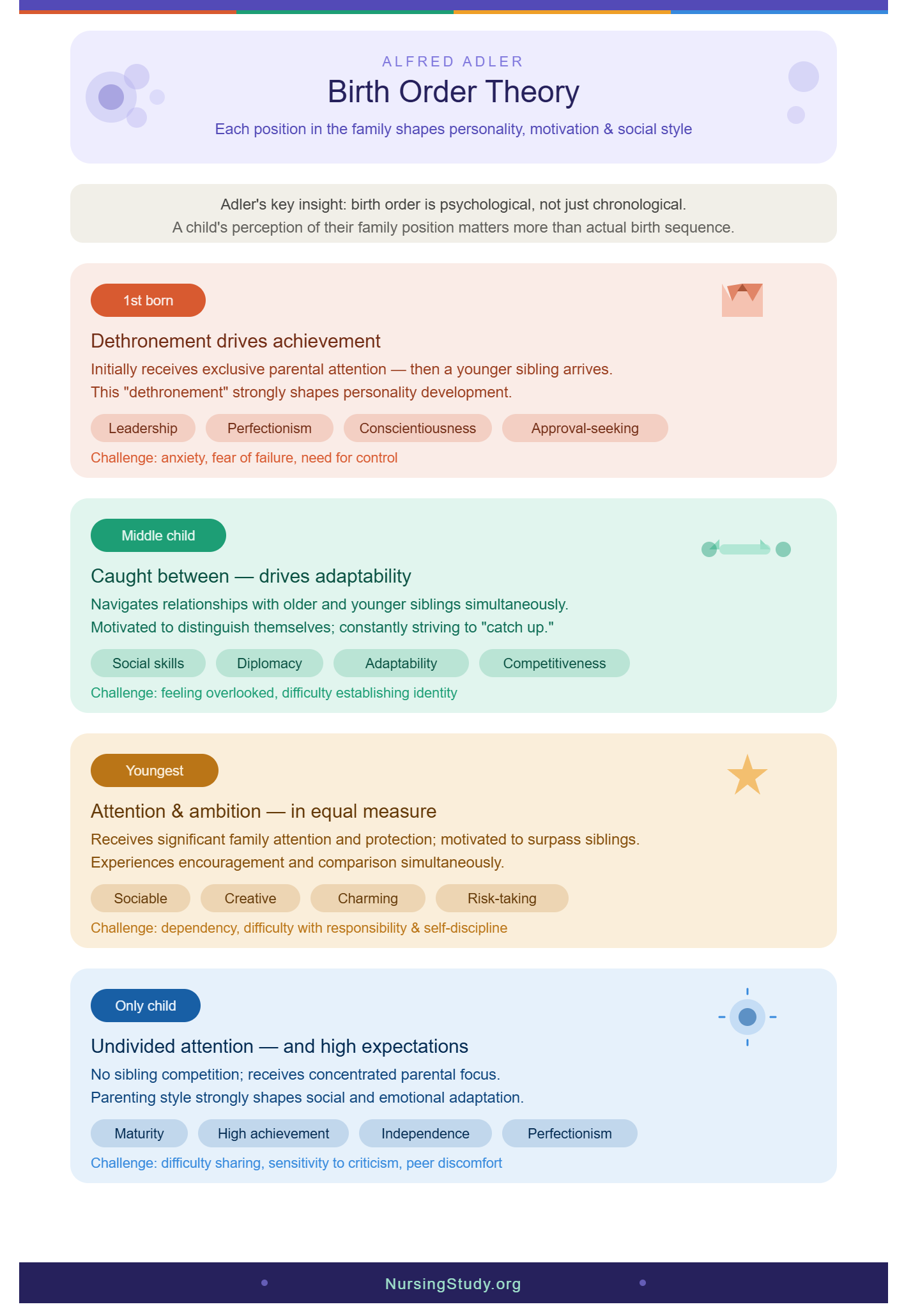
Contemporary Adaptations of Alfred Adler’s Ideas
Although developed in the early twentieth century, the Alfred Adler Theory of Individual Psychology continues evolving through contemporary adaptations in psychology, healthcare, education, and leadership studies.
Modern practitioners frequently integrate Adlerian concepts with evidence-based therapeutic approaches and interdisciplinary healthcare models.
Adlerian Therapy in Contemporary Counseling
Modern Adlerian psychotherapy continues emphasizing:
- Goal-oriented behavior
- Encouragement
- Social interest
- Family dynamics
- Cognitive restructuring
- Emotional resilience
Contemporary counselors often combine Adlerian principles with:
- Cognitive behavioral therapy (CBT)
- Solution-focused therapy
- Family systems therapy
- Narrative therapy
- Trauma-informed approaches
Example
A therapist working with anxiety may combine:
- Adlerian exploration of inferiority beliefs
- CBT-based thought restructuring
- Encouragement and goal-setting strategies
This integration strengthens therapeutic flexibility and effectiveness.
Influence on Positive Psychology
Many ideas associated with positive psychology closely resemble Adlerian principles.
Both approaches emphasize:
- Human strengths
- Resilience
- Meaning and purpose
- Optimism
- Social connection
- Growth potential
Adler’s emphasis on encouragement and purposeful striving anticipated many modern psychological approaches focused on flourishing rather than pathology alone.
Trauma-Informed Care and Adlerian Concepts
Modern trauma-informed care also reflects Adlerian principles.
Trauma-informed approaches emphasize:
- Emotional safety
- Empowerment
- Collaboration
- Respect
- Social support
- Understanding behavior within life experiences
These principles strongly align with Adlerian psychology’s focus on understanding individuals within their social and emotional contexts.
Example in Nursing
A trauma-informed mental health nurse may recognize that a patient’s aggression reflects fear, vulnerability, or past trauma rather than simple defiance.
This mirrors Adler’s belief that behavior serves emotional and psychological purposes.
Adlerian Influence in Education
Adler’s educational ideas continue influencing:
- School counseling
- Social-emotional learning programs
- Behavioral interventions
- Parent-teacher collaboration
- Positive discipline approaches
Modern educational systems increasingly emphasize:
- Emotional resilience
- Cooperation
- Student belonging
- Social skills development
These concepts reflect Adlerian principles of encouragement and community feeling.
Community Mental Health Applications
The Alfred Adler Theory of Individual Psychology also aligns closely with community-based mental health models emphasizing:
- Prevention
- Social support
- Rehabilitation
- Family involvement
- Community participation
Programs addressing homelessness, addiction recovery, youth mentorship, and social reintegration often incorporate Adlerian ideas related to belonging and social connectedness.
Revitalizing Alfred Adler for Modern Healthcare and Nursing Education
The growing emphasis on holistic healthcare, patient-centered communication, emotional resilience, and interdisciplinary collaboration has renewed interest in Adlerian psychology within healthcare and nursing education.
Revitalizing Alfred Adler’s ideas offers valuable opportunities for improving:
- Mental health care
- Therapeutic communication
- Patient empowerment
- Nursing education
- Trauma-informed practice
- Community health interventions
Adlerian Theory and Holistic Nursing
The Alfred Adler Theory of Individual Psychology strongly aligns with holistic nursing approaches because it recognizes that health is influenced by:
- Emotional well-being
- Social relationships
- Psychological resilience
- Sense of purpose
- Community support
- Lifestyle and coping patterns
Nurses frequently encounter patients struggling with:
- Fear and uncertainty
- Social isolation
- Loss of independence
- Low self-esteem
- Trauma and grief
Adlerian principles help nurses understand these experiences within broader emotional and social contexts.
Strengthening Therapeutic Communication
Adler’s emphasis on encouragement, empathy, and cooperation supports effective therapeutic communication in healthcare settings.
Healthcare professionals applying Adlerian principles may:
- Build trust through empathy
- Encourage patient participation in care
- Reinforce strengths and resilience
- Reduce feelings of inferiority and helplessness
- Promote collaborative goal-setting
These strategies improve patient engagement and emotional well-being.
Mental Health Nursing Applications
Mental health nursing increasingly emphasizes:
- Recovery-oriented care
- Strengths-based approaches
- Trauma-informed communication
- Social reintegration
- Patient empowerment
These priorities closely reflect Adlerian psychology.
Example
A psychiatric nurse helping a patient recovering from severe depression may:
- Encourage realistic goals
- Promote social support involvement
- Reinforce coping strengths
- Explore feelings of inferiority and hopelessness
This approach supports both emotional recovery and long-term resilience.
Adlerian Principles in Nursing Education
Nursing education programs can benefit from integrating Adlerian concepts related to:
- Emotional intelligence
- Communication skills
- Empathy and social interest
- Leadership development
- Team collaboration
- Patient-centered care
Adlerian theory also helps nursing students understand how:
- Family experiences influence health behaviors
- Social environments affect emotional well-being
- Encouragement improves patient outcomes
- Psychological factors shape coping and recovery
Future Directions for Adlerian Theory
The future relevance of the Alfred Adler Theory of Individual Psychology lies in its adaptability to modern interdisciplinary healthcare approaches.
Potential future applications include:
- Integrated behavioral health care
- Community mental health programs
- Preventive mental health education
- Trauma-informed nursing practice
- Telehealth counseling approaches
- Patient resilience and empowerment programs
As healthcare increasingly recognizes the importance of emotional and social well-being, Adler’s emphasis on belonging, encouragement, purpose, and human connection remains highly valuable.
Continuing Relevance of Adlerian Psychology
Ultimately, the enduring influence of the Alfred Adler Theory of Individual Psychology reflects its deeply humanistic and socially grounded understanding of people. Adler believed individuals are capable of growth, resilience, cooperation, and meaningful contribution despite adversity or emotional struggle.
Key Adlerian principles that remain highly relevant today include:
- Human behavior is purposeful and goal-directed
- Social connectedness supports emotional well-being
- Encouragement strengthens resilience and confidence
- Inferiority feelings influence behavior and coping
- Holistic understanding improves patient care
- Prevention and education support mental health
- Individuals possess the capacity for growth and change
These principles continue shaping psychotherapy, counseling, nursing practice, education, rehabilitation, community health, and modern mental health care throughout the world.
Feeling stressed about writing a detailed nursing paper?
Let us produce a thorough, high-quality document.
Conclusion
The Alfred Adler Theory of Individual Psychology remains one of the most influential and socially relevant approaches for understanding human behavior, personality development, emotional resilience, and interpersonal relationships. Alfred Adler introduced a perspective that moved beyond viewing people as passive victims of instinct or circumstance. Instead, Adler emphasized that human beings are purposeful, socially connected, and capable of growth, adaptation, and meaningful contribution throughout life.
At the center of Adlerian psychology is the belief that individuals are shaped not only by biological or psychological factors but also by family relationships, social environments, personal goals, and subjective experiences. Concepts such as inferiority feelings, striving for superiority, social interest, birth order, lifestyle formation, and community feeling continue to provide valuable insight into how people think, behave, cope with adversity, and interact with others. These ideas remain highly applicable in psychotherapy, education, counseling, leadership studies, and modern healthcare practice.
The relevance of the Alfred Adler Theory of Individual Psychology is especially significant in nursing and healthcare because it supports a holistic understanding of patients as whole individuals rather than collections of symptoms or diagnoses. Adlerian principles encourage healthcare professionals to recognize the emotional and social dimensions of illness, including fear, helplessness, social isolation, loss of identity, and reduced self-esteem. By emphasizing encouragement, empathy, therapeutic communication, and patient empowerment, Adlerian psychology aligns closely with patient-centered care and modern mental health approaches.
The theory also highlights the importance of prevention, early intervention, and healthy social environments in promoting emotional well-being. Adler’s work in parent education, child guidance clinics, and community mental health anticipated many contemporary approaches that focus on resilience, emotional support, and social connectedness as protective factors against psychological distress. His emphasis on encouragement and belonging remains particularly important in today’s healthcare systems, where patients and healthcare professionals alike often face stress, burnout, trauma, and emotional uncertainty.
Although some aspects of Adlerian theory have been criticized for limited scientific measurement or oversimplification, its broader contributions to understanding human nature remain highly influential. Modern adaptations of Adler’s ideas continue shaping trauma-informed care, strengths-based practice, recovery-oriented mental health care, and holistic nursing education. The enduring relevance of Adlerian psychology reflects its compassionate and optimistic view of mankind—a view that recognizes both human vulnerability and the remarkable capacity for resilience, growth, cooperation, and social contribution.
Ultimately, revitalizing Alfred Adler’s ideas in healthcare and nursing education offers more than historical insight into psychological theory. It provides a meaningful framework for understanding human behavior with empathy, recognizing the importance of belonging and social connectedness, and supporting individuals as they strive toward healing, purpose, and personal growth.
Frequently Asked Questions
What is Alfred Adler’s theory of individual psychology?
The Alfred Adler Theory of Individual Psychology is a psychological approach developed by Alfred Adler that emphasizes understanding people as whole individuals shaped by social relationships, personal goals, and life experiences. Adler believed that human behavior is purposeful and motivated by the desire to overcome inferiority, achieve personal growth, and develop a sense of belonging within society. The theory highlights concepts such as social interest, lifestyle formation, birth order, encouragement, and striving for superiority.
What are the 4 phases of Adlerian theory?
The four major phases of Adlerian therapy are:
- Building the Therapeutic Relationship
Establishing trust, empathy, encouragement, and collaboration between the therapist and client. - Lifestyle Assessment
Exploring early childhood experiences, family constellation, beliefs, goals, and behavioral patterns. - Insight and Interpretation
Helping individuals recognize mistaken beliefs, inferiority feelings, and unhealthy lifestyle patterns. - Reorientation and Reeducation
Encouraging healthier behaviors, social interest, goal-setting, and constructive coping strategies.
What are the key concepts in Adler’s individual psychology?
Key concepts in the theory of individual psychology include:
- Inferiority feelings
- Striving for superiority
- Social interest and community feeling
- Style of life
- Birth order and family constellation
- Goal-directed behavior
- Encouragement
- Fictional finalism
- Holism and understanding the whole person
- Sense of belonging and social connectedness
These concepts help explain personality development, motivation, relationships, and emotional well-being.
What are Adler’s five life tasks?
Adler believed that healthy psychological functioning involves successfully managing important life tasks. The five Adlerian life tasks are:
- Love and Intimacy – Building healthy emotional and romantic relationships
- Friendship and Social Relationships – Developing cooperation, trust, and social connectedness
- Work and Contribution – Finding purpose through meaningful work and contribution to society
- Self-Acceptance – Developing self-worth, confidence, and emotional balance
- Spirituality or Meaning – Seeking values, purpose, and connection beyond oneself
According to Adlerian psychology, difficulties in these life tasks may contribute to emotional distress or interpersonal problems.
