

CCMA Certification Guide for Certified Clinical Medical Assistant Careers
CCMA Certification represents a structured pathway into the field of medical assisting, where competency, standardization, and clinical readiness are measured through a nationally recognized framework. It serves as a foundational credential that aligns with the expectations of healthcare environments that rely on skilled support personnel to maintain efficient patient flow, accurate documentation, and safe clinical operations. Within this structure, the role of the certified clinical medical assistant is central, as it bridges administrative responsibilities with direct patient-facing clinical support.
Understanding CCMA Certification requires examining both its purpose and its place within the broader medical assisting landscape. It is not simply an academic milestone but a professional benchmark that reflects readiness to function in real-world healthcare settings. Individuals who pursue this credential are typically expected to demonstrate proficiency in:
- Basic patient care and clinical support tasks
- Medical terminology and communication within healthcare environments
- Clinical procedures performed under supervision
- Ethical and legal standards in healthcare practice
- Documentation and patient information management
These competencies collectively ensure that individuals entering the medical assisting field can contribute effectively to clinical workflows while maintaining patient safety and professional standards.
At the center of this certification pathway is the certification exam, which evaluates both theoretical knowledge and applied clinical understanding. The exam is structured to assess readiness across multiple domains of practice rather than focusing on a single skill area. This ensures that candidates demonstrate balanced competence in areas such as patient interaction, procedural assistance, and healthcare documentation. In most cases, successful completion of a certification program or medical assistant training program is required to adequately prepare for this assessment.
The development of CCMA Certification standards is closely associated with the National Healthcareer Association (NHA), a body responsible for establishing competency-based certification frameworks in allied health. The certification exam is designed to reflect nationally recognized expectations, ensuring consistency in how medical assisting skills are evaluated across different training backgrounds and educational pathways.
Preparation for CCMA Certification typically involves a combination of structured learning and practical reinforcement. Common preparation components include:
- Enrollment in a medical assistant training program or certification program
- Use of study materials and structured study guides
- Completion of practice tests to simulate exam conditions
- Engagement with medical terminology and clinical procedure reviews
- Exposure to phlebotomy and other essential hands-on skills
These elements are designed to strengthen both knowledge retention and applied clinical reasoning, which are critical for success in the certification exam and subsequent professional practice.
The significance of CCMA Certification extends beyond exam completion. It functions as a professional credential that supports entry into the healthcare workforce and helps standardize expectations for medical assisting roles. In many healthcare settings, individuals holding this credential are viewed as having met a verified level of competency, which enhances their ability to participate in patient care processes, clinical coordination, and support services.
Ultimately, CCMA Certification represents a structured integration of education, assessment, and professional validation. It provides a clear framework for understanding the responsibilities of certified clinical medical assistants and establishes a consistent standard for performance within the medical assisting field.
Behind on nursing research or documentation tasks?
We’ll complete your assignments with clarity and precision.
Understanding CCMA Certification and the Role of Clinical Medical Assistants
CCMA Certification functions as a structured professional benchmark within allied health, defining the baseline competencies required to support safe, efficient, and coordinated patient care in clinical environments. It establishes a standardized pathway into medical assisting roles where both administrative and clinical responsibilities are integrated into daily healthcare operations. Within this framework, certified clinical medical assistants contribute directly to patient flow, documentation accuracy, and procedural support under the supervision of licensed healthcare professionals.
Overview of CCMA Certification in Healthcare Practice
CCMA Certification is designed to validate an individual’s ability to perform essential functions in the medical assisting field, particularly in settings such as outpatient clinics, physician offices, and urgent care facilities. It reflects a competency-based structure that aligns with modern healthcare delivery systems, where efficiency and patient-centered care are critical.
Key components of its relevance in healthcare practice include:
- Standardization of clinical support roles across healthcare facilities
- Validation of competency in both administrative and hands-on tasks
- Alignment with nationally recognized healthcare expectations
- Support for safe and efficient patient care delivery
For example, in a busy outpatient clinic, a credentialed medical assistant may be responsible for preparing patients for examinations, ensuring accurate documentation of patient information, and assisting with routine clinical procedures, all while maintaining workflow efficiency.
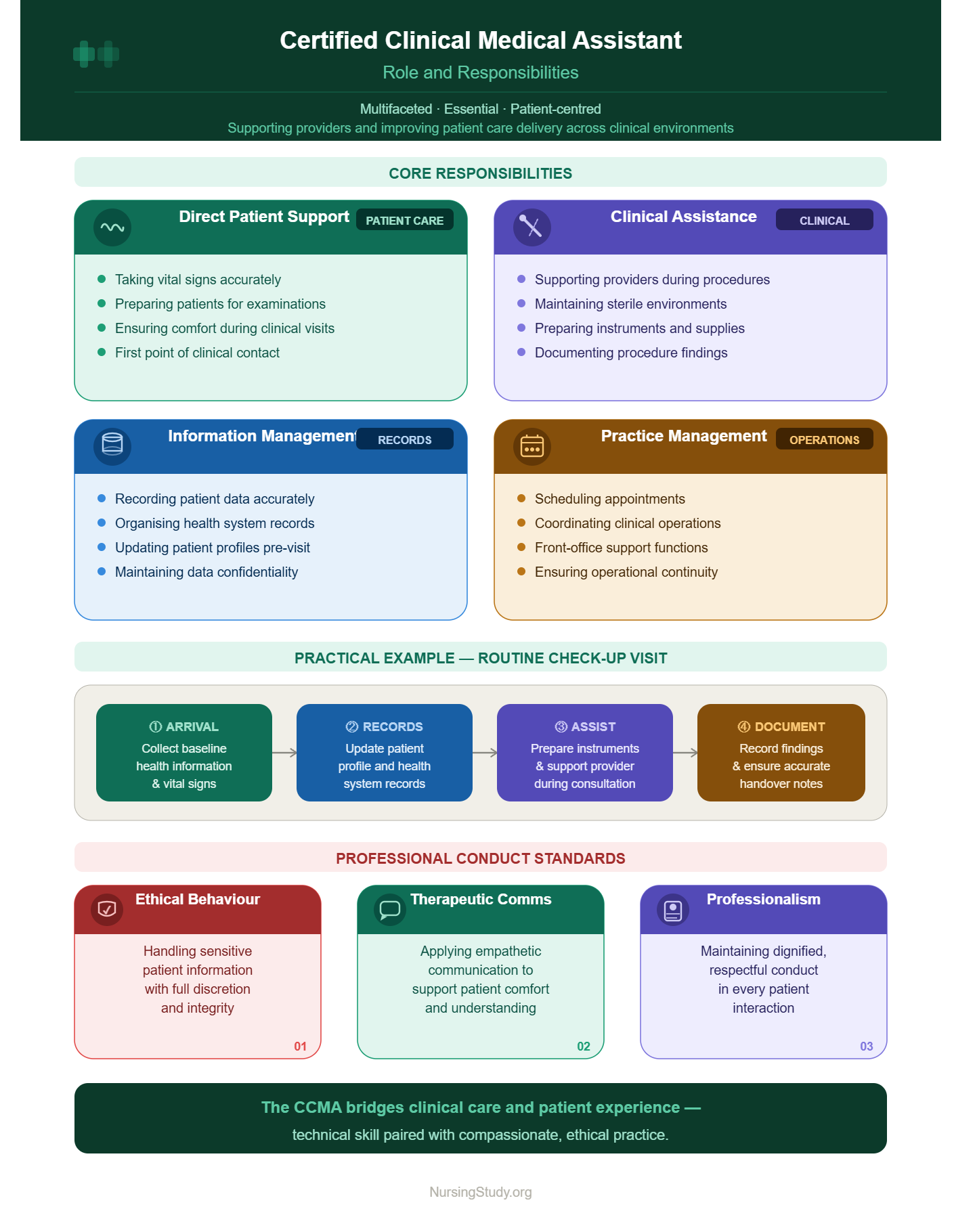
Role and Responsibilities of Certified Clinical Medical Assistant Professionals
Certified clinical medical assistants perform a wide range of responsibilities that directly support healthcare providers and improve patient care delivery. Their role is both multifaceted and essential in maintaining operational continuity within clinical environments.
Typical responsibilities include:
- Direct patient support: Taking vital signs, preparing patients for examinations, and ensuring comfort during clinical visits
- Clinical assistance: Supporting providers during procedures and maintaining a sterile environment when necessary
- Patient information management: Recording and organizing patient data accurately within healthcare systems
- Practice management support: Assisting with scheduling, coordination, and front-office operations
A practical example includes a scenario where a patient arrives for a routine check-up. The clinical medical assistant may first collect baseline health information, update patient records, and then assist the provider during the consultation by preparing instruments or documenting findings.
In addition to technical duties, professional conduct is critical. This includes:
- Demonstrating ethical behavior in handling sensitive patient information
- Applying therapeutic communication techniques to support patient comfort and understanding
- Maintaining professionalism in all patient interactions
Difference Between Certified Medical Assistant and Clinical Medical Assistants
While the terms are often used interchangeably, distinctions exist in scope and emphasis depending on healthcare context and job expectations.
Key differences include:
- Certified Medical Assistant:
- Broader designation that may include both administrative and clinical functions
- Often associated with general medical assisting roles across healthcare settings
- Clinical Medical Assistants:
- More focused on direct patient care and hands-on clinical support
- Emphasis on assisting during procedures and supporting clinical workflows
For instance, a certified medical assistant working in a large healthcare facility may rotate between front-office scheduling tasks and clinical duties, while a clinical medical assistant may primarily focus on patient preparation, procedure assistance, and clinical documentation.
Both roles contribute significantly to healthcare delivery, but the level of clinical involvement can vary depending on the setting and organizational structure.
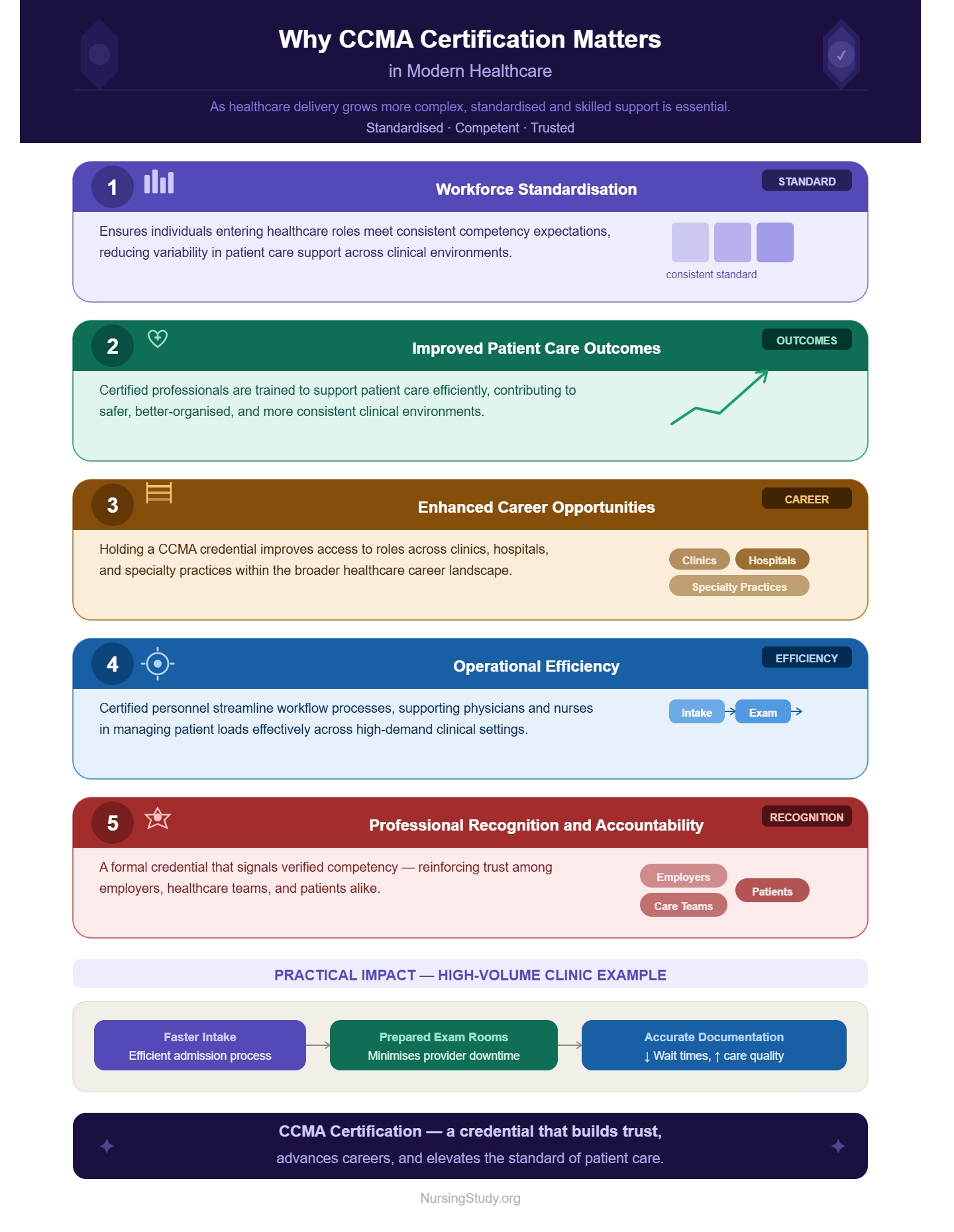
Why CCMA Certification Matters in Modern Healthcare
CCMA Certification holds significant value in today’s healthcare systems due to increasing demand for standardized, skilled support personnel. As healthcare delivery becomes more complex, the need for reliable and competent medical assistants continues to grow.
Its importance can be understood through several key factors:
1. Workforce Standardization
It helps ensure that individuals entering healthcare roles meet consistent competency expectations, reducing variability in patient care support.
2. Improved Patient Care Outcomes
Certified professionals are trained to support patient care efficiently, contributing to safer and more organized clinical environments.
3. Enhanced Career Opportunities
Holding this credential can improve access to roles within the broader healthcare career landscape, particularly in clinics, hospitals, and specialty practices.
4. Operational Efficiency in Healthcare Settings
Certified personnel help streamline workflow processes, supporting physicians and nurses in managing patient loads effectively.
For example, in a high-volume clinic, a certified assistant may help reduce patient wait times by efficiently managing intake procedures, preparing examination rooms, and ensuring documentation is completed accurately.
5. Professional Recognition and Accountability
The certification serves as a formal credential that signals verified competency, reinforcing trust among employers, healthcare teams, and patients.
CCMA Exam Structure and National Healthcareer Association Requirements
The CCMA Certification pathway is anchored in a standardized assessment system designed to evaluate both theoretical knowledge and practical competence in medical assisting. The CCMA exam is not simply an academic test; it is a structured national certification exam that measures readiness to perform safely and effectively within real healthcare environments. The framework is guided by the National Healthcareer Association (NHA), which establishes consistent expectations for candidates pursuing a certified medical assistant credential across different training backgrounds.
Overview of the CCMA Exam and Certification Exam Format
The CCMA certification exam is structured as a comprehensive, multiple-domain assessment that evaluates a candidate’s ability to apply knowledge in real clinical scenarios. It typically includes multiple-choice questions designed to test both recall and applied reasoning in medical assisting.
The exam content is generally organized into key competency areas such as:
- Patient care and clinical procedures
- Medical terminology and communication
- Medical law and ethics
- Practice management and administrative tasks
- Safety and infection control procedures
Rather than focusing solely on memorization, the exam emphasizes practical decision-making. For example, a candidate may be presented with a scenario involving patient intake and must identify the correct steps for documenting patient information, taking vital signs, or preparing for a clinical procedure.
The structure of the exam ensures that individuals who pass are capable of functioning as competent clinical medical assistants in diverse healthcare environments.
NHA (National Healthcareer Association) Certification Standards
The NHA certification framework provides the official standards that govern the CCMA certification process. The National Healthcareer Association is responsible for developing, maintaining, and updating the competency requirements for the exam.
These standards ensure that:
- The certification program aligns with current healthcare industry needs
- Candidates are evaluated using nationally consistent criteria
- The credential remains valid across different healthcare systems and states
- The exam reflects real-world expectations in the medical field
An important aspect of NHA standards is the emphasis on both cognitive and applied skills. This means candidates are not only tested on knowledge of medical terminology, but also on their ability to apply that knowledge in clinical decision-making situations.
For instance, understanding infection control principles is not enough; candidates must also demonstrate how those principles are applied during clinical procedures such as room preparation or equipment sterilization.
CCMA Exam Eligibility Requirements for Candidates
Before registering for the CCMA exam, candidates must meet specific exam eligibility criteria established under the certification framework. These requirements are designed to ensure that individuals are adequately prepared for the assessment.
Common eligibility pathways include:
- Completion of a medical assistant certification program
- Enrollment in or completion of a recognized medical assistant training program
- Completion of relevant coursework in a medical assistant course or accredited training pathway
- Possession of a high school diploma or equivalent educational qualification
In many cases, candidates pursuing becoming a certified medical assistant must also complete hands-on clinical experience as part of their training. This ensures that they are familiar with real-world healthcare environments before attempting the exam.
For example, a candidate who has completed a structured training program may have already practiced taking vital signs, assisting with phlebotomy procedures, and managing basic practice management tasks before sitting for the exam.
Exam Application and Enrollment Process
The exam application process is managed through the National Healthcareer Association (NHA) system and requires candidates to complete several structured steps. Proper enrollment ensures that candidates are officially registered and approved to take the CCMA certification exam.
The application process typically includes:
- Creating an account with the certification body
- Selecting the appropriate credential (CCMA Certification)
- Submitting proof of eligibility (such as completion of a training program)
- Paying the required exam fee
- Awaiting approval before scheduling the exam
Once approved, candidates gain access to official NHA certification exam preparation materials, which may include study resources and practice tools to support exam readiness.
For example, a candidate enrolled in an online medical assistant program may submit documentation verifying course completion before moving forward in the application process.
Scheduling the Exam Through PSI Testing Centers
After approval, candidates must schedule their exam through PSI testing centers, which are authorized locations for administering the CCMA exam. The scheduling system offers flexibility to accommodate different candidate needs, including in-person and remote options.
Key scheduling features include:
- Selection of available test dates and locations
- Option for live remote proctoring in certain cases
- Confirmation of testing requirements and identification rules
- Receipt of official exam appointment details
Some candidates may choose online CCMA testing options where available, while others prefer physical testing locations depending on accessibility and preference.
For example, a candidate living near an urban center may schedule their exam at a local PSI testing facility, while another in a remote area may opt for remote proctoring to complete the assessment from a controlled home environment.
Training Pathways to Become a Certified Clinical Medical Assistant
The pathway toward becoming a certified clinical medical assistant is built on structured education, skills development, and supervised practice within a healthcare learning environment. These pathways are designed to ensure that learners acquire both the theoretical foundation and the hands-on competence required in the medical assisting field. A well-designed training route ultimately prepares individuals for the demands of the CCMA certification exam and real-world clinical practice.
Training pathways generally vary in format, but they all aim to build readiness in key areas such as patient care, clinical procedures, medical terminology, and professional communication within healthcare settings.
Choosing a Medical Assistant Program or Medical Assistant Training Program
Selecting a medical assistant program or medical assistant training program is one of the most important steps in preparing for a career in medical assisting. These programs provide structured instruction that aligns with the expectations of CCMA Certification and the broader requirements of the healthcare industry.
A strong training program typically includes:
- Instruction in medical terminology and healthcare communication
- Modules on medical law and ethics to guide professional behavior
- Training in patient care techniques and clinical support tasks
- Exposure to clinical procedures performed in healthcare environments
- Instruction in administrative functions such as practice management
For example, a student enrolled in a structured program may learn how to take vital signs in a classroom setting before applying those skills in supervised clinical rotations. This blend of theory and practice ensures readiness for both the certification exam and workplace responsibilities.
Online Medical Assistant and Hybrid Learning Options
Modern education has expanded access to training through online medical assistant programs and hybrid learning formats. These options combine digital coursework with practical clinical experience, allowing flexibility for learners while maintaining competency standards.
Common formats include:
- Online program or online course: Theoretical instruction delivered through virtual platforms
- Hybrid training course: Combination of online learning and in-person clinical labs
- Live remote instruction: Real-time virtual teaching sessions with instructors
These formats are particularly beneficial for individuals balancing work or personal responsibilities. However, even in an online CCMA learning environment, hands-on skills such as patient interaction and clinical practice remain essential components of the curriculum.
For instance, a learner may complete theoretical modules online, then attend scheduled in-person sessions to practice procedures like blood pressure measurement or phlebotomy techniques.
How Training Programs Prepare You for CCMA Certification
A key function of any certification program is to prepare candidates for the CCMA certification exam by aligning coursework with exam content and competency standards established by the National Healthcareer Association (NHA).
Training programs support exam readiness by:
- Providing structured study materials aligned with exam objectives
- Offering practice tests that simulate real exam conditions
- Teaching time management and test-taking strategies
- Reinforcing high-yield topics such as medical terminology and patient care protocols
- Familiarizing learners with the format of multiple-choice questions used in the exam
For example, a program may include mock exams that mirror the structure of the certification exam, helping learners become comfortable with question formats and clinical scenarios.
This preparation ensures that candidates not only understand the content but can also apply knowledge effectively under exam conditions.
Importance of Phlebotomy and Clinical Skills in Training
Hands-on clinical skills are a central component of medical assistant education, and phlebotomy is one of the most important technical skills taught in many training programs. It represents the practical side of patient care that is frequently assessed in both training and certification contexts.
Key clinical competencies include:
- Drawing blood samples safely and accurately
- Assisting with diagnostic testing procedures
- Preparing patients for examinations
- Supporting physicians during clinical procedures
- Maintaining infection control standards
For example, a trainee learning phlebotomy must understand vein selection, proper use of equipment, and patient communication techniques to reduce anxiety during the procedure. These skills directly translate into workplace readiness and are essential in many healthcare settings.
Beyond phlebotomy, training also emphasizes therapeutic communication, ensuring that learners can interact professionally and empathetically with patients during care delivery.
Accredited Training Programs and Career Readiness
Choosing an accredited medical assistant program is critical for ensuring that education meets recognized quality standards and aligns with expectations for CCMA Certification and workforce entry. Accreditation confirms that the program has been evaluated for curriculum quality, instructional effectiveness, and clinical training adequacy.
Accredited programs typically ensure:
- Alignment with national certification exam standards
- Inclusion of required clinical and administrative competencies
- Structured pathways toward nationally certified credentials
- Preparation for real-world healthcare roles and responsibilities
Career readiness is achieved when learners can confidently transition from training into professional roles within healthcare environments. This includes the ability to:
- Work effectively in clinical teams
- Apply ethical decision-making in patient care situations
- Manage patient information accurately
- Perform both administrative and clinical duties efficiently
For example, a graduate of an accredited program may enter a clinic and immediately assist with patient intake, support routine examinations, and maintain accurate documentation—demonstrating readiness for real-world practice.
CCMA Exam Content, Study Strategies, and Preparation Tools
Preparation for CCMA Certification requires more than memorization; it demands structured understanding of clinical concepts, applied reasoning, and consistent engagement with study materials aligned to the expectations of the certification exam. The CCMA exam is designed to evaluate both theoretical knowledge and practical decision-making skills within real healthcare scenarios. As a result, effective preparation combines content mastery with strategic study techniques and repeated practice under exam-like conditions.
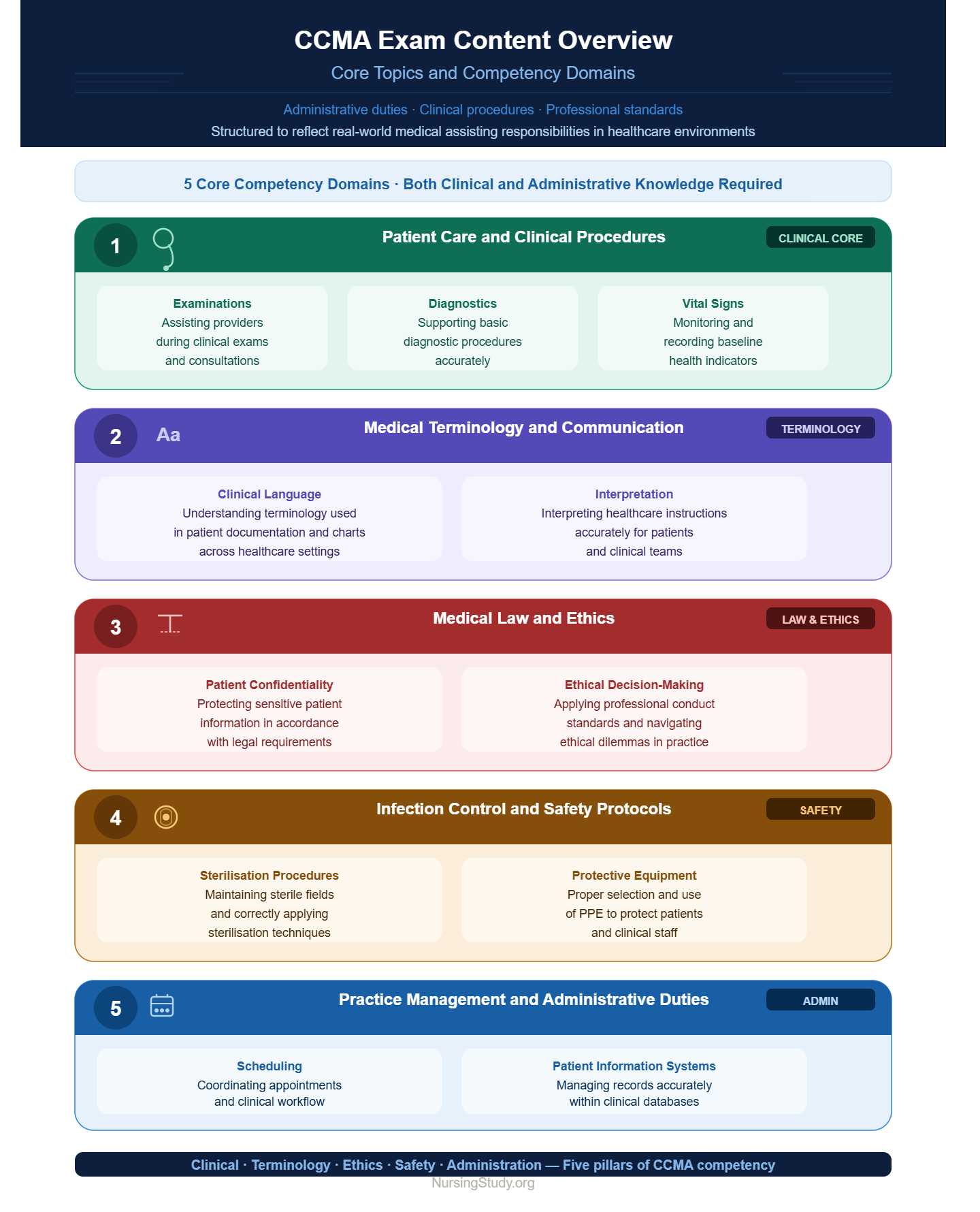
CCMA Exam Content Overview and Core Topics
The CCMA certification exam is structured around core competency areas that reflect real-world responsibilities in medical assisting and clinical support roles. These domains ensure that candidates are prepared for both administrative and hands-on duties in healthcare environments.
The main content areas typically include:
- Patient care and clinical procedures
- Assisting with examinations
- Supporting basic diagnostic procedures
- Monitoring vital signs
- Medical terminology and communication
- Understanding clinical language used in documentation
- Interpreting healthcare instructions accurately
- Medical law and ethics
- Patient confidentiality
- Professional conduct and ethical decision-making
- Infection control and safety protocols
- Sterilization procedures
- Proper use of protective equipment
- Practice management and administrative duties
- Scheduling appointments
- Managing patient information in clinical systems
For example, a candidate may be presented with a scenario requiring identification of the correct sequence for preparing a patient for a routine examination, testing both procedural knowledge and critical thinking.
Using a Study Guide for Effective Exam Preparation
A structured study guide is one of the most effective tools for preparing for the CCMA certification exam. It provides a clear roadmap of topics, ensuring that learners cover all essential areas of the exam blueprint issued by the National Healthcareer Association (NHA).
An effective study guide typically includes:
- Breakdown of exam domains and weight distribution
- Summarized explanations of key concepts such as medical terminology
- Visual aids for clinical procedures and workflows
- Practice questions aligned with exam format
A practical example is using a study guide chapter on phlebotomy, which may include step-by-step illustrations of venipuncture procedures, safety precautions, and patient communication techniques.
Study guides help structure learning by turning broad content into manageable sections, making preparation more efficient and focused.
Practice Tests and Mock Certification Exam Strategies
Engaging with practice tests is essential for building confidence and familiarity with the structure of the certification exam. These tests simulate real exam conditions and help candidates assess their readiness.
Key benefits of practice tests include:
- Familiarity with multiple-choice questions format
- Identification of weak knowledge areas
- Improvement in time management during exams
- Reinforcement of learned concepts
A common strategy involves taking timed mock exams under conditions similar to the actual CCMA exam, followed by detailed review of incorrect answers.
For example, if a candidate repeatedly misses questions related to infection control, this indicates a need for targeted review in that area before attempting the official exam.
Key Subject Areas (Medical Terminology, Medical Law and Ethics, Patient Care)
Several foundational subject areas form the core of the CCMA certification exam, each reflecting essential competencies in healthcare practice.
Medical Terminology
Understanding medical terminology is critical for interpreting documentation, communicating with healthcare professionals, and accurately recording patient information. For instance, recognizing terms related to cardiovascular or respiratory systems helps in understanding patient charts and instructions.
Medical Law and Ethics
This area focuses on professional behavior, confidentiality, and ethical responsibilities. It ensures candidates understand how to handle sensitive information and maintain compliance with healthcare regulations. Ethical decision-making is essential when managing patient interactions or documentation.
Patient Care
This domain evaluates the ability to provide safe, compassionate, and effective patient care. It includes tasks such as assisting with mobility, taking vital signs, and supporting patients during clinical procedures. Strong communication skills are essential here to ensure patient comfort and trust.
Study Techniques to Pass the CCMA Exam on First Attempt
Effective preparation for the CCMA exam involves consistent and structured study habits. Candidates who combine multiple learning strategies tend to perform better on the national certification exam.
Recommended techniques include:
- Active recall: Testing yourself regularly instead of passive reading
- Spaced repetition: Reviewing material at increasing intervals to improve retention
- Scenario-based learning: Applying concepts to real-life clinical examples
- Group study sessions: Discussing topics with peers to reinforce understanding
- Simulated exams: Practicing under timed conditions similar to the real test
For example, a learner studying medical assisting may create flashcards for medical terms and review them daily while also completing weekly practice tests to track progress.
Consistent use of these techniques helps build both confidence and competence, increasing the likelihood of passing the CCMA certification exam on the first attempt.
What to Expect on Exam Day and Scoring Process
The CCMA Certification exam day is structured to ensure standardization, security, and fairness for all candidates pursuing a certified medical assistant credential. Because the certification exam is administered under strict guidelines set by the National Healthcareer Association (NHA), candidates are expected to follow specific procedures before, during, and after testing. Understanding these processes helps reduce anxiety and improves readiness for the actual testing experience.
CCMA Exam Day Procedures and Requirements
On the day of the CCMA exam, candidates are required to follow standardized procedures whether testing at a physical PSI testing center or through live remote proctoring.
Typical exam day requirements include:
- Arrival at the testing center at least 15–30 minutes early
- Presentation of valid government-issued identification
- Verification of eligibility and exam registration details
- Completion of security checks before entering the testing area
For candidates taking the exam through online CCMA remote proctoring, additional requirements may include:
- A quiet, private testing environment
- A working webcam and stable internet connection
- Completion of a system check before the exam begins
During the exam, personal items such as phones, notes, or study materials are not allowed. This ensures the integrity of the national certification exam and maintains fairness for all candidates.
For example, a candidate arriving at a PSI center may undergo identity verification and be assigned a computer workstation where the certification exam is delivered under supervised conditions.
How the Certification Exam is Scored
The CCMA certification exam uses a standardized scoring system designed to evaluate competency across multiple domains of medical assisting. The exam consists primarily of multiple-choice questions, each contributing to the overall assessment of knowledge and applied clinical understanding.
Scoring is based on:
- Correct responses to exam questions
- Weighted distribution of content areas such as patient care, medical terminology, and clinical procedures
- Standardized scoring algorithms established by the NHA certification framework
Each question is designed to measure both knowledge recall and practical application. For instance, a question may ask a candidate to identify the correct steps in handling patient information during intake or selecting the appropriate response in a medical ethics scenario.
The scoring process ensures that candidates are evaluated consistently regardless of where or how they take the exam.
Passing Score and Results Reporting by NHA
To successfully earn CCMA Certification, candidates must achieve a passing score determined by the National Healthcareer Association. The passing threshold is set based on psychometric analysis, ensuring it reflects the minimum level of competence required for safe practice in the medical field.
Key aspects of results reporting include:
- Immediate preliminary score feedback (in most testing formats)
- Official results released through the candidate’s NHA account
- Performance breakdown by content area for review and improvement
For example, a candidate may pass overall but receive lower scores in areas such as medical law and ethics or practice management, indicating specific topics for future professional development.
Successful candidates receive their credential confirming nationally recognized status as a certified clinical medical assistant. This certification validates readiness for entry-level roles in healthcare environments.
Retake Policy and Exam Accommodations
The NHA exam system includes structured policies for candidates who do not pass on their first attempt. The retake policy ensures fairness while maintaining the integrity of the certification program.
Key elements of the retake policy include:
- A required waiting period before reattempting the exam
- Additional exam fee for each retake attempt
- Encouragement to review study materials and improve weak areas before re-testing
For example, a candidate who does not pass may return to their medical assistant training program or use additional practice tests to strengthen knowledge before scheduling another attempt.
In addition to retake options, the system also provides exam accommodations for candidates with documented needs. These may include:
- Extended testing time
- Alternative testing formats
- Special accessibility arrangements at testing centers or via remote proctoring
Such accommodations ensure that all candidates have equitable access to the certification exam, regardless of individual circumstances.
Career Opportunities and Earning Potential After CCMA Certification
Earning CCMA Certification represents a significant step toward entering and advancing within the medical assisting field, where demand for skilled support professionals continues to grow across diverse healthcare systems. The credential signals that an individual has met standardized competency requirements for both clinical and administrative responsibilities, making them eligible for a wide range of roles in hospitals, clinics, and outpatient care environments. Beyond entry-level employment, it also creates a foundation for long-term career growth within the broader medical field.
Job Roles for Certified Medical Assistants in Healthcare Settings
Individuals holding CCMA Certification are qualified for several structured roles that support healthcare delivery across different settings. These positions combine clinical support with administrative coordination, ensuring efficient patient care workflows.
Common job roles include:
- Medical Assistant in outpatient clinics: Supporting physicians with patient intake, documentation, and basic clinical procedures
- Clinical medical assistant in physician offices: Assisting with examinations, preparing treatment rooms, and managing patient information
- Specialty clinic assistant (e.g., pediatrics, cardiology): Providing targeted support based on departmental needs
- Urgent care assistant: Helping manage fast-paced patient flow and assisting with minor procedures
For example, in a primary care clinic, a certified assistant may take vital signs, update medical records, prepare patients for examinations, and assist the provider during minor procedures such as wound care or injections. These responsibilities are essential in maintaining efficiency and continuity of patient care.
Employment Opportunities for Clinical Medical Assistants
The demand for clinical medical assistants continues to expand due to increased healthcare service utilization, aging populations, and the growing complexity of outpatient care systems. As a result, employment opportunities are widely available across multiple healthcare environments.
Typical employment settings include:
- Hospitals and large healthcare systems
- Private physician practices
- Specialty clinics (orthopedic, dermatology, cardiology, etc.)
- Diagnostic laboratories and outpatient centers
- Community health organizations
In these environments, medical assisting professionals play a critical role in ensuring smooth clinical operations. For instance, in a busy hospital outpatient department, assistants may coordinate patient flow, prepare examination rooms, and assist healthcare providers with routine clinical procedures while ensuring compliance with safety protocols.
This versatility makes CCMA-certified professionals highly valuable across different healthcare delivery models.
Salary Outlook and Earning Potential in Medical Assisting
The earning potential for individuals with CCMA Certification varies depending on factors such as geographic location, healthcare setting, experience level, and specialization. However, certification generally improves employability and can positively influence compensation compared to non-certified roles.
Key factors influencing salary include:
- Level of experience in medical assisting
- Type of healthcare facility (hospital vs. private clinic)
- Specialized skills such as phlebotomy or advanced clinical procedures
- Regional demand for healthcare professionals
For example, a newly certified medical assistant working in a small clinic may start at an entry-level wage, while an experienced assistant in a specialty hospital department may earn significantly higher compensation due to advanced responsibilities.
In addition to salary, many healthcare employers offer benefits such as:
- Health insurance coverage
- Paid training and continuing education opportunities
- Retirement benefits
- Opportunities for shift differentials in hospital settings
This makes medical assisting a stable and structured healthcare career pathway with long-term financial growth potential.
Career Advancement After Earning CCMA Credential
The CCMA credential serves as a foundation for continued professional development within healthcare. It not only validates entry-level competence but also opens pathways for advancement into more specialized or supervisory roles.
Common career progression opportunities include:
- Advancement to senior or lead medical assistant roles
- Transition into specialized clinical departments
- Pursuit of additional certifications in areas such as phlebotomy or EKG technology
- Further education toward nursing or allied health professions
For example, a certified assistant may begin in a general practice setting and later specialize in a cardiology clinic, gaining additional technical skills and responsibilities over time. Others may use the credential as a stepping stone toward becoming registered nurses or healthcare administrators.
The medical assistant certification also supports professional mobility, allowing individuals to work in various healthcare environments while building experience and expanding their competencies.
Behind on nursing research or documentation tasks?
We’ll complete your assignments with clarity and precision.
Conclusion
CCMA Certification represents a structured and competency-based pathway into the medical assisting profession, where both clinical proficiency and administrative capability are essential to effective healthcare delivery. Across the healthcare system, certified professionals play a vital role in supporting providers, improving workflow efficiency, and ensuring that patient care is delivered safely and consistently. The credential is not only an academic achievement but also a validated demonstration of readiness to function within real clinical environments.
Throughout the certification journey, candidates engage with a comprehensive process that includes formal training, structured exam preparation, and standardized assessment through a nationally recognized framework. From foundational concepts such as medical terminology and patient care to applied skills like clinical procedures and phlebotomy, the scope of preparation ensures that individuals are well-equipped for the demands of modern healthcare settings. The CCMA exam further reinforces this standard by evaluating both theoretical understanding and practical decision-making under real-world conditions.
Beyond initial certification, the value of CCMA Certification extends into long-term professional development. It opens doors to diverse employment opportunities across hospitals, clinics, and specialty practices while also supporting career progression into more advanced healthcare roles. Whether serving as a clinical medical assistant in a fast-paced environment or transitioning into specialized areas of practice, certified individuals benefit from improved employability and structured career mobility.
Ultimately, CCMA Certification serves as a foundational credential within the medical assisting field, bridging education, competency, and professional practice. It strengthens the healthcare workforce by ensuring that individuals entering clinical roles meet consistent standards of quality and preparedness. As healthcare continues to evolve, the importance of well-trained and certified support professionals remains central to delivering efficient, ethical, and patient-centered care.
Frequently Asked Questions
What is the pay difference between CMA and CCMA?
The pay difference between a Certified Medical Assistant (CMA) and a CCMA (Certified Clinical Medical Assistant) is generally small and varies more by employer, location, and experience than by credential alone. In many healthcare settings, both roles fall within similar salary ranges for entry-level medical assistants. However, CMAs (often certified through organizations like the AAMA) may sometimes earn slightly higher wages in certain hospitals or specialty clinics due to broader recognition or additional training requirements. In practice, experience, clinical skills, and certifications beyond entry-level (such as phlebotomy or EKG) tend to have a bigger impact on pay than the credential type alone.
How hard is the CCMA exam?
The CCMA exam is considered moderately challenging. It is not designed to be impossible, but it does require solid preparation and understanding of core medical assisting topics. The exam includes multiple-choice questions covering areas like patient care, medical terminology, clinical procedures, and medical law and ethics. Candidates who study consistently using practice tests and a structured study guide typically find it manageable. Those without preparation or clinical exposure, however, may find it difficult due to its application-based questions.
Can I take the CCMA exam?
Yes, you can take the CCMA exam if you meet the eligibility requirements set by the National Healthcareer Association (NHA). Most candidates qualify by completing or being enrolled in a medical assistant training program or having relevant healthcare education. A high school diploma or equivalent is also typically required. Once eligibility is confirmed and the exam application is approved, you can schedule the exam through an authorized testing center or approved remote proctoring system.
What does a certified clinical medical assistant (CCMA) do?
A certified clinical medical assistant (CCMA) performs both clinical and administrative duties to support healthcare providers and improve patient care delivery. Their responsibilities typically include:
- Taking vital signs such as blood pressure, temperature, and pulse
- Preparing patients for examinations and procedures
- Assisting physicians during clinical procedures
- Recording and managing patient information
- Supporting minor in-office treatments such as injections or phlebotomy
- Handling basic administrative tasks like scheduling and documentation
For example, in a clinic visit, a CCMA may first record the patient’s vital signs, update their medical records, and then assist the provider during the consultation or minor procedure.
