

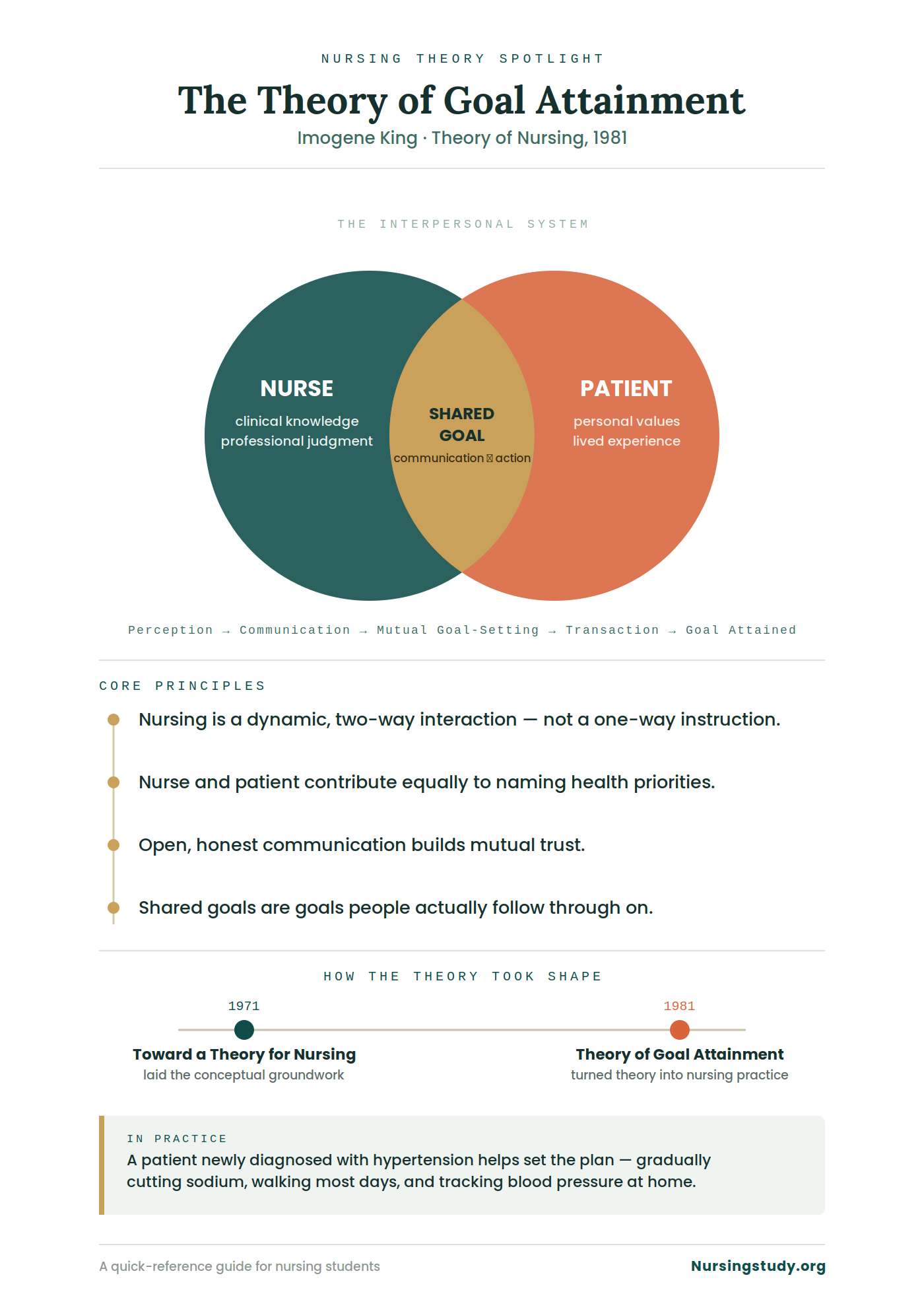
Imogene King: The Nurse Theorist Behind the Theory of Goal Attainment and Modern Nursing Theories
Imogene King is recognized as one of the most influential nurse theorists in the history of the nursing profession, earning international recognition for developing the Theory of Goal Attainment, a framework that transformed the way nurses understand patient-centered care. Throughout her career, Imogene King advocated for a model of nursing practice that viewed healthcare as a collaborative process rather than a one-sided delivery of treatment. She believed that effective nursing care depends on purposeful communication, mutual understanding, and shared goal setting between the nurse and patient, enabling both parties to work together toward achieving positive health outcomes. This perspective represented a significant advancement in nursing theories, placing equal importance on interpersonal relationships, clinical decision-making, and the active participation of patients in their own care.
Beyond developing a widely adopted theory for nursing, Imogene King made substantial contributions to nursing science, nursing education, and theory development. Her work extended beyond the classroom and hospital environment, influencing how nurses think, teach, conduct nursing research, and apply evidence-based principles in diverse healthcare settings. Through years of clinical experience, academic leadership, and scholarly inquiry, she developed a conceptual system and theory that organized the complex interactions occurring between individuals, families, communities, and healthcare organizations. These ideas continue to serve as an important foundation for modern nursing by helping practitioners understand how human interactions influence health, decision-making, and patient outcomes.
One of the defining characteristics of King’s Theory of Goal Attainment is its emphasis on the relationship between the nurse and patient. Rather than positioning nurses as the sole decision-makers, Imogene King proposed that successful healthcare is achieved when both individuals communicate openly, establish realistic goals, and work collaboratively throughout the nursing process. Her goal attainment theory recognizes that every patient brings unique experiences, values, perceptions, and expectations to the healthcare environment, requiring nurses to tailor care according to individual needs instead of relying solely on standardized interventions. This approach continues to shape contemporary nursing practice, particularly in settings where patient engagement, interdisciplinary collaboration, and individualized care planning are essential.
The significance of Imogene King’s work extends far beyond the publication of a single nursing theory. Her scholarship contributed to the broader evolution of nursing knowledge, demonstrating that nursing is both a scientific discipline and a human-centered profession built upon observation, communication, critical thinking, and therapeutic relationships. Her theory of nursing has influenced countless healthcare institutions, colleges, and professional organizations, while her ideas continue to appear in nursing school curricula, college of nursing programs, and advanced nursing education around the world. Many educators also use her work to introduce learners to the relationship between theoretical knowledge and clinical application, illustrating how nursing theories provide practical frameworks for delivering safe, effective, and compassionate patient care.
This comprehensive guide explores every major aspect of Imogene King’s life, career, and professional legacy. Throughout the article, readers will gain a thorough understanding of:
- Who Imogene King was, including her early life, education, and professional journey as a nurse, educator, and nurse theorist.
- How the Theory of Goal Attainment was developed, including the historical context, assumptions, and general concepts of human and interacting systems that form its foundation.
- The conceptual framework underlying King’s Theory of Goal Attainment, including personal, interpersonal, and social system concepts that explain how nurses and patients interact.
- The application to nursing across a variety of clinical settings, demonstrating how the theory supports the nursing process, patient-centered care, communication, and measurable goal achievement.
- The strengths, limitations, and contemporary relevance of Imogene King’s theory, including its role in advancing nursing science, improving patient care, and supporting evidence-informed nursing practice.
- Imogene King’s enduring legacy, including her influence on nursing theories and theorists, nursing research, professional organizations, and the continuing impact on nursing throughout the world.
More than five decades after Imogene King introduced her groundbreaking ideas, her work continues to guide nurses in delivering care that is collaborative, purposeful, and centered on the needs of the individual. By examining her life, the development of the Theory of Goal Attainment, and its lasting influence on modern healthcare, this guide provides a comprehensive understanding of why Imogene King remains one of the most respected figures in the history of nursing and why her contributions continue to serve as a cornerstone of contemporary nursing theory and practice.
Feeling stressed about writing a detailed nursing paper?
Let us produce a thorough, high-quality document.
Who Was Imogene King?
Imogene King was an influential American nurse, educator, administrator, and nurse theorist whose work fundamentally changed the way nurses understand the relationship between theory and clinical practice. Best known for developing the Theory of Goal Attainment, Imogene King devoted her career to advancing the nursing profession through education, research, leadership, and the development of nursing knowledge. Her work emphasized that effective nursing care is built on purposeful interactions between the nurse and patient, with both individuals working collaboratively to establish goals and achieve positive health outcomes.
At a time when nursing theories were still emerging as an essential component of professional nursing, Imogene King recognized the need for a scientific framework that could guide nurses in making clinical decisions. Rather than viewing nursing solely as a collection of technical skills, she believed it was a distinct discipline supported by evidence, critical thinking, and human interaction. This perspective led her to develop a theory for nursing that remains one of the most widely studied conceptual models in nursing education, nursing research, and clinical practice.
Throughout her distinguished career, Imogene King held numerous academic and leadership positions, authored influential scholarly works, and mentored generations of nurses. Her contributions helped establish nursing as an independent scientific discipline with its own body of nursing knowledge, theoretical foundations, and research methodologies. Today, King’s Theory of Goal Attainment continues to be taught in nursing school and college of nursing programs worldwide, demonstrating the enduring value of her ideas in modern healthcare.
Several factors distinguish Imogene King from many other nursing theories and theorists:
- She viewed patients as active participants rather than passive recipients of care.
- She emphasized communication, perception, and mutual decision-making between the nurse and patient.
- She developed a practical conceptual system and theory that nurses could apply across diverse healthcare settings.
- She helped bridge the gap between nursing theory and everyday nursing practice, making theoretical concepts meaningful in clinical environments.
- She demonstrated how structured goal setting could improve patient outcomes and strengthen therapeutic relationships.
These contributions established Imogene King as one of the pioneers who shaped contemporary nursing science and influenced how nurses approach patient-centered care across the world.
Early Life and Family Background
Imogene Martina King was born on January 30, 1923, in West Point, Iowa, United States. Raised during a period marked by economic uncertainty and significant social change, King was born in 1923 into a family that valued education, responsibility, and service to others. These early experiences played an important role in shaping her character and her lifelong commitment to healthcare and learning.
Growing up in a small Midwestern community exposed Imogene King to the importance of compassion, community support, and personal responsibility. During the early twentieth century, hospitals were becoming increasingly organized, and nursing was evolving from a vocation into a respected profession grounded in science and education. These societal changes influenced many young women, including Imogene King, who developed an early interest in caring for others.
Although detailed records of her childhood remain limited, historians generally agree that several experiences during her formative years influenced her future career:
- An appreciation for education and lifelong learning.
- An interest in helping individuals maintain health and well-being.
- Exposure to the changing role of healthcare professionals.
- A growing recognition that nursing required both scientific knowledge and compassionate care.
These values later became evident in Imogene King’s work, particularly her belief that effective nursing care depends not only on clinical competence but also on understanding human behavior, communication, and interpersonal relationships.
Education and School of Nursing
The educational journey of Imogene King reflects her unwavering commitment to academic excellence and professional development. Throughout her career, she continuously pursued higher education, believing that advancing nursing knowledge was essential for improving patient outcomes and strengthening the nursing profession.
Her formal nursing education began at St. John’s Hospital School of Nursing in St. Louis, Missouri, where she earned her diploma in nursing in 1945. The rigorous training provided by John’s Hospital School of Nursing combined classroom instruction with extensive clinical experience, allowing Imogene King to develop strong foundations in patient assessment, medical-surgical nursing, and professional ethics.
After completing her diploma, Imogene King recognized that nursing education was rapidly evolving beyond hospital-based training. She pursued a Bachelor of Science in Nursing Education and later a Master of Science in Nursing from St. Louis University School of Nursing. These academic experiences broadened her understanding of education, leadership, curriculum development, and healthcare systems while strengthening her interest in nursing theory.
Determined to contribute to the scholarly advancement of nursing, Imogene King continued her education at Teachers College, Columbia University, where she earned a Doctor of Education (EdD). At Teachers College, she was exposed to advanced concepts in educational psychology, research methodology, philosophy, and organizational leadership. This multidisciplinary education profoundly influenced her later work in theory development, providing the intellectual foundation for what would eventually become the Theory of Goal Attainment.
Several aspects of Imogene King’s educational journey significantly influenced her future contributions:
- Hospital-based clinical education
- Developed strong clinical judgment and patient care skills.
- Fostered an appreciation for bedside nursing.
- University nursing education
- Expanded her understanding of nursing as an academic discipline.
- Introduced leadership, curriculum design, and educational theory.
- Doctoral education at Columbia University
- Strengthened her research abilities.
- Encouraged interdisciplinary thinking.
- Inspired her interest in building a scientific theory for nursing.
Her educational progression illustrates how lifelong learning enabled Imogene King to move beyond clinical practice and become one of nursing’s leading scholars.
Academic Career and Professional Leadership
Following the completion of her education, Imogene King embarked on an academic career that spanned several decades and significantly influenced nursing education in the United States. She combined teaching, administration, research, and scholarly writing to advance both nursing practice and academic scholarship.
One of her earliest academic appointments was as an instructor in medical-surgical nursing, where she worked closely with nursing students, helping them integrate theoretical concepts into clinical practice. Teaching provided valuable insights into the challenges students faced when applying classroom knowledge to patient care. These observations later influenced her efforts to develop a practical conceptual framework that could guide nurses in everyday practice.
During her career, King worked at several respected institutions, including:
- Loyola University, where she served as a faculty member and contributed to curriculum development.
- Ohio State University, where she expanded her work in nursing education and research.
- The University of South Florida, including leadership within the College of Nursing in Tampa, where she continued developing nursing scholarship and mentoring future nurse leaders.
Across these institutions, King held numerous leadership positions involving academic administration, faculty development, curriculum planning, and research initiatives. She consistently advocated for integrating nursing theories into educational programs, believing that every nurse should understand the scientific principles guiding professional practice.
As an academic leader, Imogene King promoted several important priorities:
- Strengthening the scientific foundation of nursing.
- Encouraging evidence-based nursing research.
- Preparing nurses for leadership roles.
- Advancing nursing science through theory development.
- Improving collaboration between educators, clinicians, and researchers.
Her leadership helped shape educational standards that continue to influence college of nursing programs and graduate nursing curricula today.
Contributions as a Nurse and Nurse Theorist
The greatest contribution of Imogene King lies in her ability to connect theoretical knowledge with practical patient care. Rather than creating abstract ideas with limited clinical value, Imogene King developed concepts that nurses could readily apply in everyday healthcare settings.
Her most significant scholarly achievement was the development of the Theory of Goal Attainment, first introduced through her evolving conceptual system and later refined in her landmark publications. This work demonstrated that nursing involves continuous interactions between the nurse and patient, each bringing individual perceptions, experiences, values, and expectations into the healthcare encounter. According to King’s Theory of Goal Attainment, successful goal achievement occurs when both parties communicate effectively, establish shared objectives, and work together throughout the nursing process.
Beyond developing her theory, Imogene King made numerous contributions that advanced the profession, including:
- Publishing influential books and scholarly articles that expanded nursing theory and theory development.
- Promoting nursing as an independent scientific discipline with its own body of knowledge.
- Encouraging the integration of theory into clinical decision-making and nursing practice.
- Supporting interdisciplinary collaboration while preserving nursing’s unique professional identity.
- Mentoring faculty members, researchers, and thousands of nursing students throughout her academic career.
- Encouraging future scholars to continue refining middle-range theory and conceptual models for nursing.
Among her most influential publications were Toward a Theory for Nursing (1971), which introduced her conceptual system, and later works that further developed the system and theory of goal attainment. These publications helped transform nursing education by demonstrating how theory could guide assessment, planning, implementation, and evaluation within the nursing process.
Imogene King also received widespread professional recognition for her contributions. She was honored by organizations including the American Nurses Association, the American Academy of Nursing, and Sigma Theta Tau International, reflecting the profound impact on nursing that her scholarship achieved. Her work continues to shape nursing education, influence nursing research, and provide a practical foundation for clinicians seeking to deliver patient-centered, evidence-informed care.
Today, Imogene King is remembered not only as the creator of one of the most influential nursing theories, but also as a visionary leader who demonstrated that nursing is both a science and an art. By emphasizing communication, collaboration, and mutual respect between the nurse and patient, she established principles that continue to serve as a foundation of nursing practice today, ensuring that her contributions remain relevant for future generations of nurses and healthcare professionals.
Understanding the Theory of Goal Attainment
The Theory of Goal Attainment is one of the most influential nursing theories in modern healthcare, providing a practical framework for understanding how effective relationships between the nurse and patient contribute to positive health outcomes. Developed by Imogene King, the theory emphasizes that nursing is an interpersonal process in which nurses and patients communicate, exchange information, establish mutual goals, and work together to achieve those goals. Rather than focusing solely on disease treatment or technical procedures, the theory highlights the importance of collaboration, communication, and shared decision-making as essential components of quality nursing care.
At its core, the Theory of Goal Attainment proposes that successful nursing practice depends on purposeful interactions between the nurse and the patient. Every encounter is viewed as an opportunity to build understanding, identify health concerns, establish priorities, and develop realistic plans for improving health. According to Imogene King’s theory, nursing is not simply about performing interventions; it is about helping individuals actively participate in decisions that affect their health and well-being.
Unlike some nursing theories that primarily emphasize biological processes or environmental influences, King’s Theory of Goal Attainment focuses on human interactions. It recognizes that each individual enters a healthcare setting with unique beliefs, experiences, perceptions, cultural values, and expectations. These factors influence how patients interpret illness, respond to treatment, and communicate with healthcare professionals. Consequently, effective nursing care requires nurses to understand these differences and incorporate them into individualized care planning.
The theory is grounded in several key principles:
- Nursing is a dynamic interaction between the nurse and patient.
- Both the nurse and the patient contribute equally to identifying health priorities.
- Effective communication promotes mutual understanding and trust.
- Shared goal setting improves commitment to treatment plans.
- Successful goal achievement results from collaborative decision-making rather than unilateral instructions.
- Patient participation enhances satisfaction, adherence to treatment, and overall health outcomes.
For example, consider a patient newly diagnosed with hypertension. Instead of simply instructing the patient to reduce salt intake and take prescribed medication, a nurse applying King’s Theory of Goal Attainment would engage the patient in a discussion about lifestyle, cultural dietary habits, work responsibilities, financial limitations, and personal health goals. Together, they might establish realistic objectives such as reducing sodium consumption gradually, walking for thirty minutes five days a week, and monitoring blood pressure at home. Because these goals are mutually agreed upon, the patient is more likely to remain engaged in the treatment plan.
The theory continues to serve as a valuable theory for nursing because it offers a structured approach that can be applied across hospitals, community clinics, rehabilitation centers, primary care practices, and long-term care facilities. Its focus on communication and collaboration also aligns closely with modern principles of patient-centered care, evidence-based practice, and interdisciplinary healthcare.
Development of the Theory of Goal Attainment
The development of the Theory of Goal Attainment reflects Imogene King’s lifelong commitment to advancing nursing science through systematic observation, education, and theory development. During the mid-twentieth century, nursing was rapidly evolving from a task-oriented occupation into an academic discipline with its own scientific foundations. While many healthcare professionals recognized the importance of nursing, there was still a need for comprehensive theoretical frameworks that clearly explained what nursing was, how nurses interacted with patients, and why nursing interventions produced meaningful outcomes.
Recognizing this need, Imogene King began examining the fundamental nature of nursing practice. Her experiences as a clinical nurse, educator, administrator, and researcher convinced her that nursing involved much more than performing procedures or following physicians’ orders. She observed that the quality of interactions between the nurse and patient often determined whether patients understood their treatment, adhered to recommendations, and achieved desired health outcomes.
These observations led Imogene King to ask several important questions:
- What distinguishes nursing from other healthcare professions?
- How do nurses and patients influence one another during care?
- What factors contribute to successful health outcomes?
- How can nursing knowledge be organized into a scientific framework?
The answers to these questions gradually evolved into what Imogene King described as a conceptual system and theory. Her early ideas were published in Toward a Theory for Nursing (1971), a landmark nursing theory text that introduced the general concepts of human behavior and interacting systems. Rather than presenting isolated concepts, the book organized nursing around relationships among individuals, groups, and society.
Building upon this conceptual framework, King developed the Theory of Goal Attainment, published in 1981. The theory translated her broader conceptual ideas into a practical model that nurses could apply during the nursing process. It explained how effective communication, mutual perception, decision-making, and collaborative goal setting allow the nurse and patient to achieve mutually identified health goals.
Several factors influenced the development of the theory:
- Clinical experience, where King worked directly with patients and observed the importance of therapeutic relationships.
- Teaching experience as an instructor in medical-surgical nursing, which highlighted the need for a structured framework for nursing education.
- Academic work at institutions such as Teachers College, Columbia University, Loyola University, Ohio State University, and the University of South Florida, where she refined her scholarly thinking.
- Growing recognition that nursing required its own scientific identity independent of medicine.
- Expansion of nursing research and the increasing emphasis on evidence-informed practice.
By integrating observations from education, administration, research, and clinical care, Imogene King created a theory that connected abstract concepts with everyday nursing activities. This practical orientation explains why King’s Theory of Goal Attainment remains one of the most widely applied nursing theories today.
Assumptions of the Theory of Goal Attainment
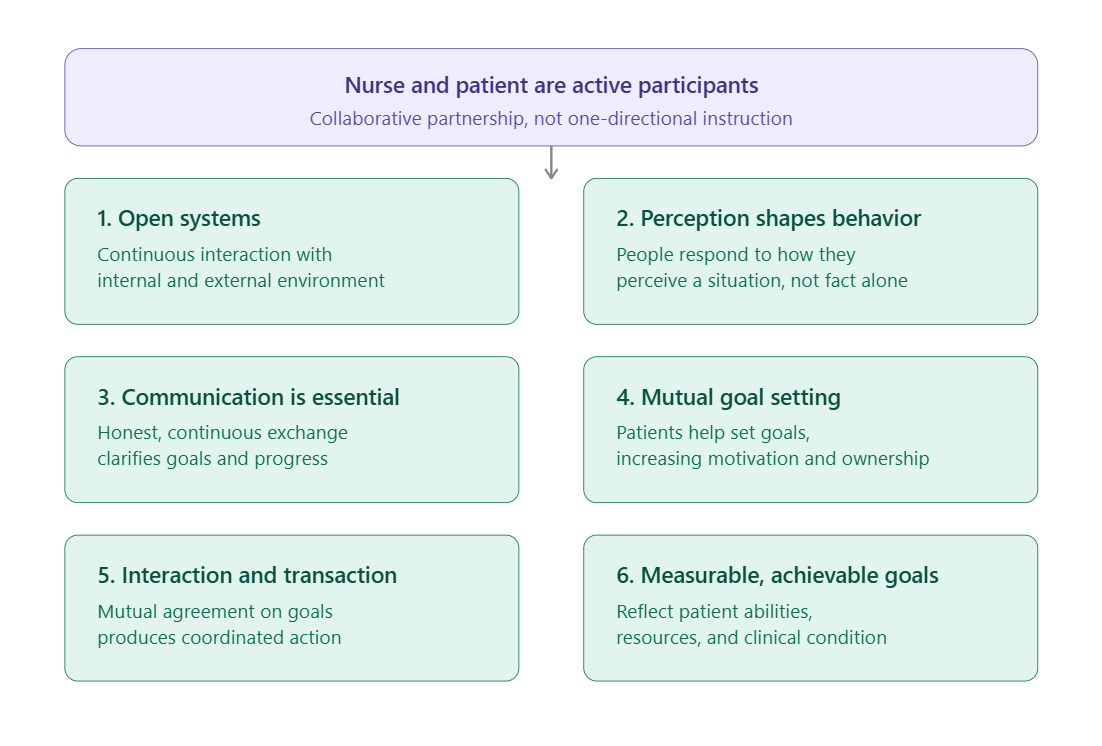
Like every major theory of nursing, the Theory of Goal Attainment is built upon a series of assumptions that describe how people interact, make decisions, and pursue health. These assumptions provide the philosophical foundation of the theory and guide its application in nursing practice.
The central assumption is that both the nurse and patient are active participants in the healthcare process. Each individual possesses knowledge, perceptions, values, experiences, and goals that influence decision-making. Nursing therefore becomes a collaborative partnership rather than a one-directional process in which professionals simply give instructions.
Key assumptions of King’s Theory of Goal Attainment include:
1. Human beings are open systems.
Individuals continuously interact with their internal and external environments. Their behaviors, perceptions, and responses change over time as they encounter new experiences, relationships, and health challenges.
For example, a patient recovering from surgery may initially fear walking because of pain. Through education, encouragement, and successful mobility experiences, the patient’s perception changes, increasing confidence and participation in rehabilitation.
2. Perception influences behavior.
People respond not to objective reality alone but to how they perceive situations.
A nurse may view insulin injections as routine, while a newly diagnosed diabetic patient may perceive them as frightening or overwhelming. Understanding these different perceptions allows the nurse to provide individualized education and emotional support.
3. Communication is essential for effective nursing care.
Successful healthcare depends on honest, respectful, and continuous communication between the nurse and patient.
Communication allows nurses to:
- Identify patient concerns.
- Clarify misunderstandings.
- Establish realistic health goals.
- Evaluate progress toward goal achievement.
4. Mutual goal setting improves health outcomes.
One of Imogene King’s most important assumptions is that patients should actively participate in establishing healthcare goals.
Instead of saying:
“You need to lose 30 pounds.”
A nurse applying the theory may ask:
“What health changes would you like to achieve over the next three months, and what do you think is realistic?”
This collaborative approach increases patient motivation and ownership of care.
5. Nursing is a process of interaction and transaction.
Every nursing encounter involves ongoing exchanges of information, perceptions, and decisions. When both the nurse and patient reach mutual agreement about health goals, a successful transaction occurs, leading to coordinated action and improved outcomes.
6. Health goals should be measurable and achievable.
Goals must reflect the patient’s abilities, preferences, available resources, and clinical condition.
For example:
- Walk independently before discharge.
- Maintain blood glucose within target range.
- Demonstrate correct inhaler technique.
- Reduce postoperative pain to a tolerable level.
These assumptions make the goal attainment theory highly applicable across diverse healthcare settings because they emphasize flexibility, communication, and individualized care.
Major Concepts of the Theory of Goal Attainment
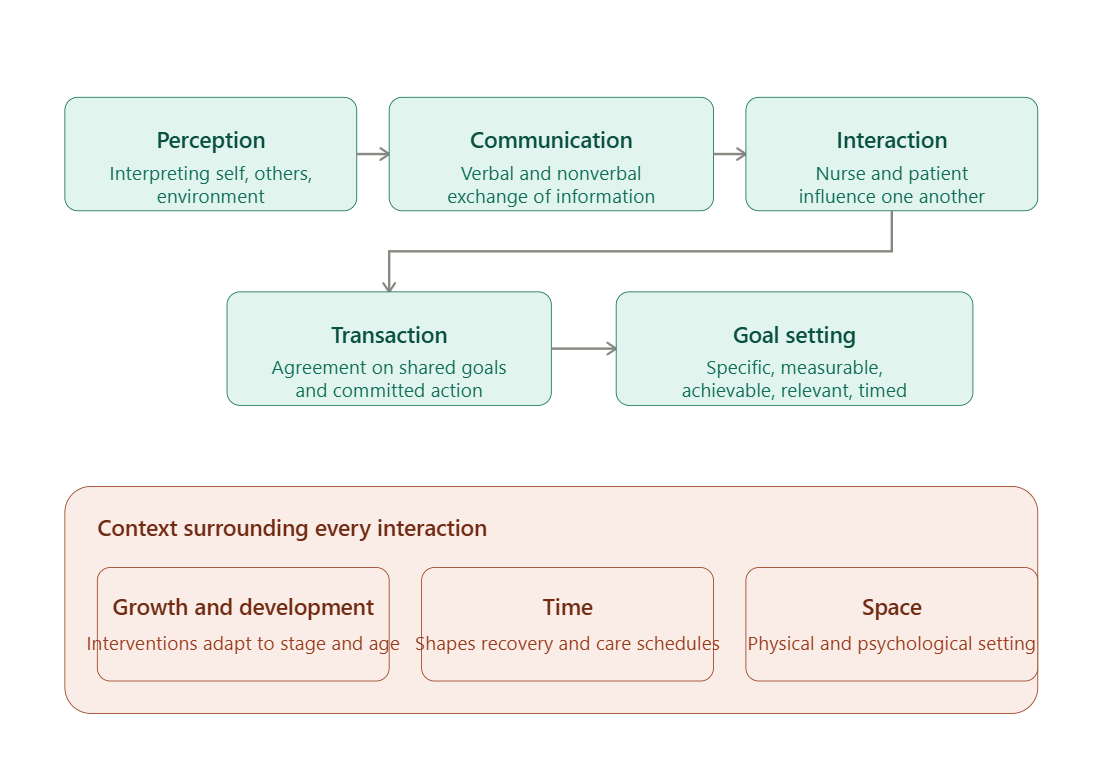
The effectiveness of Imogene King’s theory depends on several interrelated concepts that explain how nurses and patients interact to achieve desired health outcomes. These concepts form the operational language of the theory and provide guidance for both education and clinical practice.
Some of the most important concepts include:
Perception
Perception refers to how individuals interpret themselves, others, and their environment.
Because every person has different life experiences, two people may perceive the same situation differently. Nurses must therefore assess patient perceptions before developing care plans.
Communication
Communication involves the exchange of information through verbal and nonverbal methods.
Effective communication allows nurses to:
- Build trust.
- Gather accurate assessment data.
- Educate patients.
- Resolve misunderstandings.
- Encourage active participation.
Interaction
Interaction occurs whenever the nurse and patient communicate and influence one another.
Each interaction provides opportunities to:
- Assess health concerns.
- Clarify expectations.
- Build therapeutic relationships.
- Support collaborative decision-making.
Transaction
A transaction occurs when both individuals reach agreement on shared goals and commit to actions that support those goals.
For example, a nurse and patient jointly agreeing on a smoking cessation plan represents a successful transaction.
Goal Setting
Goal setting is central to King’s Theory of Goal Attainment.
Effective goals should be:
- Specific.
- Measurable.
- Achievable.
- Relevant.
- Time-oriented.
Collaborative goals increase patient engagement and accountability.
Growth and Development
Individuals continually change throughout life.
Nurses must adapt interventions according to developmental stage, age, health status, and changing patient needs.
Time
Healthcare decisions occur within specific timeframes.
Recovery expectations, discharge planning, medication schedules, and rehabilitation programs all depend upon appropriate timing.
Space
Space refers to the physical and psychological environment surrounding interactions.
Privacy, comfort, safety, and environmental conditions influence communication and therapeutic relationships.
Together, these concepts explain how the nurse and patient establish meaningful partnerships that support effective nursing care and positive patient outcomes.
Personal, Interpersonal, and Social Systems
Perhaps the most distinctive feature of Imogene King’s Theory of Goal Attainment is its organization around three interconnected interacting systems: the personal system, interpersonal system, and social system. These systems form the foundation of Imogene King’s conceptual system and explain how individuals function within increasingly complex environments.
Understanding these systems enables nurses to appreciate that health is influenced not only by physical illness but also by relationships, organizations, and society.
Personal System
The personal system focuses on the individual person.
According to Imogene King, every person possesses unique characteristics that influence health behaviors and decision-making.
Important concepts within the personal system include:
- Perception
- Self
- Growth and development
- Body image
- Learning
- Time
- Personal space
For example, two patients with identical diagnoses may respond very differently because they perceive illness differently, possess different coping mechanisms, or have different cultural beliefs.
Recognizing these differences allows nurses to individualize nursing care rather than applying identical interventions to every patient.
Interpersonal System
The interpersonal system develops whenever two or more individuals interact.
Within healthcare, this system primarily involves the relationship between the nurse and patient, although it may also include family members, caregivers, physicians, and other healthcare professionals.
Major concepts include:
- Communication
- Interaction
- Transaction
- Role
- Stress
For example, during discharge planning, effective communication between the nurse, patient, and family helps ensure medication adherence, follow-up appointments, and safe recovery at home.
The interpersonal system demonstrates why collaboration remains essential for successful goal achievement.
Social System
The social system represents larger organized structures that influence healthcare delivery.
These include:
- Hospitals
- Healthcare organizations
- Educational institutions
- Government agencies
- Professional organizations
- Communities
Within the social system, concepts include:
- Organization
- Authority
- Decision-making
- Power
- Status
For instance, hospital policies, staffing levels, organizational leadership, and healthcare regulations all influence how nurses provide care and interact with patients.
Understanding the social system helps nurses recognize that patient outcomes are shaped not only by individual actions but also by institutional and societal factors.
Application of the Theory of Goal Attainment in Nursing Practice
One of the greatest strengths of Imogene King’s Theory of Goal Attainment is its practicality. While many nursing theories provide broad philosophical perspectives, King’s Theory of Goal Attainment offers a structured framework that nurses can apply directly in everyday clinical practice. Its emphasis on communication, collaboration, and shared decision-making makes it relevant across virtually every healthcare setting, from acute care hospitals and outpatient clinics to community health programs, rehabilitation centers, mental health facilities, and home healthcare services.
At the heart of the theory is the belief that effective nursing practice depends on meaningful interactions between the nurse and patient. Rather than positioning nurses as the sole decision-makers, Imogene King argued that patients should actively participate in identifying problems, establishing priorities, and determining realistic health goals. This collaborative approach recognizes that patients possess valuable knowledge about their own experiences, lifestyles, beliefs, and preferences. Consequently, nursing interventions become more individualized, patient-centered, and responsive to the unique circumstances of each person.
The application to nursing begins the moment a nurse establishes contact with a patient. Every conversation, assessment, and intervention represents an opportunity to gather information, clarify perceptions, build trust, and develop mutually agreed-upon goals. Instead of viewing communication as merely an exchange of information, King’s Theory considers it the foundation upon which successful healthcare relationships are built.
Several principles guide the application of the Theory of Goal Attainment in nursing practice:
- Patients are active partners in healthcare rather than passive recipients of treatment.
- The nurse and patient share responsibility for identifying health priorities.
- Mutual goal setting promotes patient engagement and accountability.
- Therapeutic communication strengthens trust and improves clinical decision-making.
- Nursing interventions should address physical, psychological, social, and environmental factors influencing health.
- Continuous evaluation ensures that care plans remain appropriate as patient needs change.
For example, consider a patient admitted with newly diagnosed heart failure. A traditional approach may involve providing standardized discharge instructions about medications, diet, and exercise. Using Imogene King’s Theory of Goal Attainment, however, the nurse first explores the patient’s understanding of the diagnosis, personal concerns, family responsibilities, financial limitations, and lifestyle habits. Together, they establish achievable goals such as limiting daily sodium intake, monitoring body weight, recognizing early signs of fluid retention, and attending scheduled follow-up appointments. Because the patient actively participates in planning these goals, adherence and long-term self-management are more likely to improve.
The theory also aligns closely with contemporary healthcare priorities such as patient-centered care, shared decision-making, cultural competence, and evidence-informed nursing care. As healthcare systems increasingly emphasize individualized treatment plans and interdisciplinary collaboration, the principles established by Imogene King remain remarkably relevant.
The Nursing Process and Goal Attainment
The nursing process provides a systematic method for delivering safe, organized, and effective nursing care, while the Theory of Goal Attainment provides the interpersonal framework that guides how nurses engage patients throughout each stage of that process. Together, they complement one another by ensuring that clinical decisions are based not only on scientific evidence but also on mutual understanding and collaborative goal achievement.
Rather than replacing the nursing process, King’s Theory of Goal Attainment strengthens each of its five stages by emphasizing communication, shared decision-making, and continuous interaction between the nurse and patient.
Assessment
Assessment is the foundation of the nursing process. According to Imogene King, assessment extends beyond collecting physiological data and should include understanding how patients perceive their health, illness, and treatment.
During assessment, nurses gather information about:
- Physical health status.
- Psychological well-being.
- Social and cultural influences.
- Personal values and beliefs.
- Patient expectations.
- Family support systems.
- Learning needs.
- Environmental factors.
For example, two patients recovering from knee replacement surgery may have similar clinical findings but very different personal goals. One patient may prioritize returning to work quickly, while another focuses on regaining independence for daily activities. Understanding these differences allows nurses to develop individualized care plans.
Nursing Diagnosis
Once assessment is complete, nurses analyze the collected information to identify actual or potential health problems.
Using King’s Theory, nursing diagnoses are developed collaboratively whenever possible. Patients are encouraged to express their concerns, priorities, and perceived challenges rather than having problems identified solely by healthcare professionals.
For instance:
Instead of documenting only:
“Impaired physical mobility.”
The nurse may also recognize patient concerns such as:
- Fear of falling.
- Anxiety about returning home.
- Lack of caregiver support.
- Limited confidence during rehabilitation.
This broader understanding results in more comprehensive nursing care.
Planning
Planning represents one of the most important stages in King’s Theory of Goal Attainment because it centers on mutual goal setting.
Effective goals should be:
- Specific.
- Measurable.
- Achievable.
- Relevant.
- Time-bound.
- Developed collaboratively.
Consider a patient with uncontrolled diabetes.
Rather than imposing goals, the nurse and patient work together to establish realistic objectives such as:
- Monitoring blood glucose twice daily.
- Walking for thirty minutes at least five days each week.
- Replacing sugary beverages with healthier alternatives.
- Demonstrating proper insulin administration before discharge.
Collaborative planning increases motivation because patients feel ownership of their healthcare decisions.
Implementation
Implementation involves carrying out the agreed-upon interventions.
Within King’s Theory, implementation is viewed as a shared responsibility. The nurse provides education, clinical expertise, emotional support, and professional guidance, while the patient actively participates by following treatment plans, practicing self-care skills, and communicating concerns.
Examples include:
- Teaching wound care techniques.
- Demonstrating inhaler use.
- Monitoring medication adherence.
- Providing dietary education.
- Encouraging mobility after surgery.
- Supporting stress management strategies.
Throughout implementation, communication remains continuous rather than occurring only during formal assessments.
Evaluation
Evaluation determines whether mutually established goals have been achieved.
Instead of asking only whether laboratory values improved, nurses also consider:
- Has the patient’s understanding increased?
- Were the agreed goals achieved?
- Does the patient feel confident managing their condition?
- Are additional goals needed?
- Should the care plan be modified?
If goals have not been achieved, both the nurse and patient revisit the plan together, identify barriers, and establish revised objectives.
This continuous cycle reflects the dynamic nature of King’s Theory of Goal Attainment, emphasizing flexibility rather than rigid treatment plans.
Nurse–Patient Interaction and Goal Setting
The relationship between the nurse and patient is the cornerstone of Imogene King’s Theory of Goal Attainment. Unlike models that emphasize professional authority, Imogene King viewed nursing as a collaborative partnership built upon trust, communication, mutual respect, and shared responsibility.
According to Imogene King’s theory, every interaction between a nurse and patient contributes to the achievement—or failure—of health goals. Successful interactions involve more than exchanging information; they require both individuals to understand one another’s perceptions, expectations, and priorities before making healthcare decisions.
Effective nurse–patient interaction generally progresses through several stages:
- Establishing rapport
- Building trust.
- Demonstrating empathy.
- Creating a supportive environment.
- Sharing information
- Discussing symptoms.
- Explaining diagnoses.
- Clarifying treatment options.
- Identifying patient concerns.
- Mutual goal setting
- Identifying realistic priorities.
- Agreeing on measurable outcomes.
- Respecting patient preferences.
- Collaborative action
- Implementing agreed interventions.
- Encouraging patient participation.
- Monitoring progress together.
- Evaluating outcomes
- Reviewing achievements.
- Addressing barriers.
- Revising goals when necessary.
Clinical Example
A patient newly diagnosed with chronic obstructive pulmonary disease (COPD) expresses fear about becoming dependent on oxygen therapy.
Instead of simply providing educational pamphlets, the nurse:
- Explores the patient’s concerns.
- Assesses current understanding.
- Discusses lifestyle goals.
- Develops realistic exercise plans.
- Creates medication schedules together.
- Identifies strategies to reduce anxiety.
This collaborative process reflects the essence of goal attainment theory, where successful outcomes depend on active participation from both the nurse and patient.
Application to Nursing Across Clinical Settings
One reason Imogene King’s Theory of Goal Attainment remains highly influential is its adaptability across numerous healthcare environments. Because the theory focuses on human interaction rather than disease-specific interventions, it can be applied wherever nurses and patients work together to improve health outcomes.
Medical-Surgical Nursing
In medical-surgical units, nurses use the theory to:
- Develop postoperative recovery goals.
- Improve pain management.
- Encourage early mobility.
- Support discharge planning.
- Enhance medication adherence.
For example, following abdominal surgery, the nurse and patient may establish daily mobility goals that progressively increase activity while minimizing complications.
Community and Public Health Nursing
Community health nurses apply the theory when promoting disease prevention and health education.
Examples include:
- Hypertension management.
- Childhood immunization programs.
- Smoking cessation.
- Diabetes education.
- Maternal health initiatives.
Rather than delivering standardized education alone, nurses collaborate with individuals and communities to develop achievable health goals.
Mental Health Nursing
Therapeutic communication is particularly important in psychiatric settings.
Nurses collaborate with patients to establish goals such as:
- Reducing anxiety symptoms.
- Improving coping strategies.
- Increasing participation in therapy.
- Strengthening social relationships.
- Enhancing medication adherence.
Because trust is essential, King’s Theory aligns naturally with psychiatric nursing principles.
Pediatric Nursing
Children require developmentally appropriate communication and active family involvement.
Goal setting may involve:
- Parents.
- Guardians.
- Pediatric nurses.
- Physicians.
- Child life specialists.
For example, a child with asthma may work with the healthcare team to learn inhaler techniques while parents establish home management routines.
Critical Care Nursing
Even in intensive care environments where patients may have limited ability to communicate, nurses collaborate with family members whenever appropriate.
Goals may include:
- Stabilizing physiological status.
- Preventing complications.
- Supporting family understanding.
- Preparing for rehabilitation.
The theory reminds nurses that communication extends beyond verbal interaction and includes observation, empathy, and family engagement.
Long-Term Care and Rehabilitation
Patients recovering from stroke, orthopedic injuries, or chronic illness often require extended rehabilitation.
Mutually developed goals may include:
- Walking independently.
- Performing self-care activities.
- Improving speech.
- Returning to work.
- Maintaining quality of life.
Because rehabilitation depends heavily on patient motivation, goal setting remains central throughout recovery.
Benefits for Nursing Practice and Patient Outcomes
More than four decades after its introduction, King’s Theory of Goal Attainment continues to influence modern nursing practice because it consistently promotes individualized, collaborative, and evidence-informed care. Its emphasis on communication, partnership, and measurable outcomes aligns closely with contemporary healthcare priorities and supports both professional nursing standards and patient-centered care initiatives.
Benefits for Nursing Practice
For nurses, the theory provides numerous professional advantages, including:
- A structured framework for clinical decision-making.
- Stronger therapeutic relationships with patients.
- Improved communication skills.
- Greater patient participation during care planning.
- Enhanced critical thinking throughout the nursing process.
- Better integration of theory into everyday clinical practice.
- Increased consistency in delivering individualized nursing care.
The theory also reinforces nursing as an independent discipline by demonstrating how nursing knowledge and interpersonal expertise contribute directly to patient outcomes.
Benefits for Patients
Patients also benefit significantly from the collaborative approach promoted by Imogene King’s Theory of Goal Attainment.
These benefits include:
- Increased involvement in healthcare decisions.
- Greater understanding of treatment plans.
- Improved confidence in self-management.
- Higher adherence to medications and lifestyle recommendations.
- Stronger trust in healthcare professionals.
- Greater satisfaction with care.
- Better long-term health outcomes.
Example of Positive Outcomes
A patient recovering from myocardial infarction works with the nurse to establish individualized goals involving medication adherence, dietary modification, cardiac rehabilitation, stress reduction, and gradual physical activity.
Because these goals are developed collaboratively, the patient understands their purpose, feels empowered to participate, and remains motivated throughout recovery. This increases the likelihood of sustained behavioral change, reduces the risk of hospital readmission, and improves overall quality of life.
Strengths and Limitations of Imogene King’s Theory
Every influential theory of nursing has strengths that support its application in clinical practice and limitations that influence how it is used in different healthcare environments. Imogene King’s Theory of Goal Attainment is no exception. Since its introduction, the theory has been widely recognized for its practical approach to nursing practice, particularly its emphasis on collaboration, communication, and mutual goal setting between the nurse and patient. At the same time, scholars and clinicians have identified circumstances in which the theory may be difficult to apply, especially when patients cannot actively participate in decision-making or when organizational barriers limit effective communication.
Understanding both the strengths and limitations of King’s Theory of Goal Attainment is important because no single framework can address every clinical situation. Nurses must be able to recognize when a theory provides the most value, adapt its principles to different patient populations, and combine theoretical knowledge with sound clinical judgment. This balanced perspective reflects the ongoing evolution of nursing science, where nursing theories are continuously evaluated, refined, and integrated into evidence-informed care.
One of the reasons Imogene King’s theory has remained influential for decades is that it is both conceptual and practical. It provides a clear explanation of how interactions between the nurse and patient influence health outcomes while offering guidance that can be incorporated into the nursing process, clinical decision-making, and patient education. However, its effectiveness depends heavily on communication, patient participation, and the healthcare environment, making it more suitable for some situations than others.
A critical evaluation of the theory allows nurses to:
- Understand where the theory performs best.
- Recognize situations that require modification or additional theoretical support.
- Apply the theory more effectively in diverse healthcare settings.
- Integrate nursing knowledge with evidence-based clinical practice.
- Continue advancing theory development within the nursing profession.
Strengths of the Theory of Goal Attainment
The enduring popularity of Imogene King’s Theory of Goal Attainment stems from its practicality, adaptability, and strong focus on patient-centered care. Unlike some highly abstract nursing theories, this framework translates theoretical concepts into actions that nurses can implement during everyday clinical practice. It emphasizes the importance of therapeutic relationships and demonstrates how communication and collaboration contribute directly to successful goal achievement.
1. Promotes Patient-Centered Nursing Care
One of the greatest strengths of King’s Theory of Goal Attainment is its commitment to patient-centered nursing care. Rather than treating patients as passive recipients of treatment, the theory encourages active participation in every stage of the nursing process.
Patients are encouraged to:
- Express their concerns.
- Share personal priorities.
- Participate in clinical decision-making.
- Establish realistic health goals.
- Evaluate progress alongside the nurse.
For example, when caring for a patient recovering from a stroke, the nurse does not simply prescribe rehabilitation goals. Instead, the nurse and patient work together to identify priorities, such as regaining the ability to walk independently, preparing meals, or returning to work. This collaborative approach often improves motivation and long-term adherence to rehabilitation plans.
2. Strengthens Nurse–Patient Communication
Communication is the foundation of Imogene King’s theory. The theory recognizes that successful healthcare depends on understanding patient perceptions, clarifying expectations, and developing mutual trust.
Effective communication helps nurses:
- Build therapeutic relationships.
- Reduce misunderstandings.
- Improve patient education.
- Identify barriers to treatment.
- Support informed decision-making.
For instance, a patient with newly diagnosed asthma may hesitate to use inhaled medications because of misconceptions about dependency. Through open discussion, the nurse identifies these concerns, provides evidence-based education, and works with the patient to develop a management plan that reflects individual preferences and lifestyle.
3. Integrates Seamlessly with the Nursing Process
Another important strength is the theory’s compatibility with the nursing process. The principles of assessment, planning, implementation, and evaluation naturally align with the collaborative framework proposed by Imogene King.
For example:
| Nursing Process | Application of King’s Theory |
|---|---|
| Assessment | Explore patient perceptions, concerns, and expectations. |
| Planning | Establish mutual goals through collaboration. |
| Implementation | Carry out agreed interventions while maintaining communication. |
| Evaluation | Assess whether shared goals have been achieved and modify the plan if necessary. |
Because of this compatibility, many nursing school and college of nursing programs introduce King’s Theory of Goal Attainment alongside the nursing process to demonstrate how theory supports clinical reasoning.
4. Applicable Across Diverse Healthcare Settings
The theory’s broad applicability is another significant advantage. Because it focuses on human interaction rather than disease-specific interventions, it can be used in virtually every area of nursing practice.
Examples include:
- Medical-surgical nursing.
- Community and public health nursing.
- Mental health nursing.
- Pediatric nursing.
- Geriatric nursing.
- Rehabilitation nursing.
- Home healthcare.
- Hospice and palliative care.
Whether managing chronic diseases or promoting preventive care, the principles of communication and goal setting remain relevant.
5. Encourages Professional Accountability
Imogene King’s theory reinforces the professional responsibilities of nurses by emphasizing critical thinking, ethical decision-making, and accountability. Nurses are expected to continually assess patient needs, evaluate interventions, and modify care plans based on patient responses.
This approach supports:
- Reflective practice.
- Clinical reasoning.
- Evidence-informed decision-making.
- Lifelong professional development.
As a result, the theory contributes to advancing the nursing profession while strengthening professional confidence and competence.
6. Supports Nursing Education and Research
The theory has made lasting contributions to nursing education and nursing research by providing a structured framework for studying nurse–patient interactions.
Educational benefits include:
- Teaching communication skills.
- Improving clinical reasoning.
- Developing care-planning abilities.
- Demonstrating links between theory and practice.
Research applications include:
- Patient satisfaction studies.
- Communication research.
- Chronic disease management.
- Healthcare quality improvement.
- Evaluation of patient-centered interventions.
Its continued use in graduate education demonstrates its value as both a conceptual framework and a practical guide for clinical inquiry.
Limitations and Criticisms
Despite its many strengths, Imogene King’s Theory of Goal Attainment is not universally applicable. Researchers and clinicians have identified several limitations that may reduce its effectiveness in specific healthcare situations. Recognizing these limitations allows nurses to apply the theory more appropriately and combine it with other approaches when necessary.
1. Requires Active Patient Participation
Perhaps the most frequently discussed limitation is the theory’s dependence on active participation from both the nurse and patient.
The theory assumes that patients can:
- Communicate effectively.
- Understand health information.
- Participate in decision-making.
- Establish mutual goals.
However, many patients cannot fully engage because of:
- Cognitive impairment.
- Dementia.
- Severe mental illness.
- Coma.
- Sedation.
- Language barriers.
- Developmental disabilities.
In these situations, collaborative goal setting may be difficult or impossible, requiring nurses to involve family members or legal representatives.
2. Less Applicable in Emergency Situations
Emergency and critical care environments often require immediate intervention before meaningful communication can occur.
For example:
A patient arriving in cardiac arrest requires rapid resuscitation rather than collaborative discussion about treatment priorities.
Although communication becomes important during recovery, the initial emergency response limits application of King’s Theory of Goal Attainment.
3. Time Constraints in Modern Healthcare
Healthcare professionals frequently work in fast-paced environments characterized by:
- High patient volumes.
- Staffing shortages.
- Administrative responsibilities.
- Limited consultation time.
Because Imogene King’s theory emphasizes ongoing communication and relationship building, these constraints may reduce opportunities for comprehensive nurse–patient interactions.
4. Organizational and System Barriers
Healthcare organizations may unintentionally limit implementation of the theory through factors such as:
- Staffing shortages.
- Limited continuity of care.
- Frequent shift changes.
- High workload.
- Institutional policies.
- Resource limitations.
These challenges illustrate that patient outcomes are influenced not only by interpersonal relationships but also by the broader social system described within Imogene King’s conceptual system.
5. Cultural and Communication Challenges
Patients come from diverse cultural, linguistic, and socioeconomic backgrounds.
Differences in:
- Health beliefs.
- Religious values.
- Family decision-making.
- Language.
- Literacy.
may complicate communication and shared decision-making if nurses do not practice cultural humility and culturally responsive care.
6. Limited Focus on Family and Interdisciplinary Teams
Although King’s Theory of Goal Attainment primarily emphasizes the nurse and patient, modern healthcare increasingly involves:
- Families.
- Caregivers.
- Physicians.
- Pharmacists.
- Therapists.
- Social workers.
While the theory acknowledges broader interacting systems, critics argue that it places greater emphasis on the nurse–patient relationship than on interdisciplinary collaboration.
Relevance in Contemporary Nursing Practice
Although healthcare has changed dramatically since Imogene King introduced the Theory of Goal Attainment, its underlying principles remain remarkably relevant. Advances in technology, electronic health records, telehealth, precision medicine, and artificial intelligence have transformed healthcare delivery, yet successful patient outcomes continue to depend on effective communication, therapeutic relationships, and collaborative decision-making.
Modern healthcare increasingly emphasizes:
- Patient-centered care.
- Shared decision-making.
- Evidence-based practice.
- Interprofessional collaboration.
- Quality improvement.
- Patient safety.
These priorities closely align with the principles established by Imogene King, demonstrating the enduring value of her work.
Supporting Chronic Disease Management
The growing prevalence of chronic illnesses such as diabetes, hypertension, heart failure, and chronic kidney disease has increased the importance of patient engagement.
Long-term disease management depends on patients who can:
- Understand treatment plans.
- Monitor symptoms.
- Modify lifestyle behaviors.
- Adhere to medications.
- Communicate with healthcare providers.
These responsibilities reflect the collaborative model promoted by King’s Theory of Goal Attainment.
Advancing Patient-Centered Care
Contemporary healthcare organizations increasingly measure quality through patient experience, satisfaction, and engagement.
By encouraging mutual respect, individualized care planning, and shared goal setting, Imogene King’s theory provides nurses with practical strategies for meeting these expectations while improving health outcomes.
Strengthening Nursing Education
The theory continues to be taught extensively in nursing education because it introduces learners to essential professional competencies, including:
- Therapeutic communication.
- Critical thinking.
- Clinical reasoning.
- Care planning.
- Ethical decision-making.
- Patient advocacy.
Many nursing students first encounter King’s Theory of Goal Attainment while studying nursing theories and theorists, then apply its principles during clinical placements where they practice collaborative assessment and care planning.
Supporting Evidence-Based Nursing Practice
Although developed decades ago, the theory continues to guide contemporary nursing research examining:
- Patient engagement.
- Shared decision-making.
- Communication effectiveness.
- Self-management.
- Healthcare quality.
- Clinical outcomes.
Researchers frequently use its conceptual framework to investigate how interpersonal relationships influence patient recovery and satisfaction across diverse populations.
Imogene King’s Legacy in Nursing
The legacy of Imogene King extends far beyond the development of the Theory of Goal Attainment. Her work fundamentally changed how nursing is taught, practiced, and studied by demonstrating that nursing is an independent scientific discipline supported by its own body of knowledge, research, and theoretical frameworks. Through her contributions as a nurse, educator, administrator, researcher, and nurse theorist, Imogene King helped shape the modern identity of the nursing profession, influencing generations of nurses, educators, researchers, and healthcare leaders.
Before the emergence of comprehensive nursing theories, much of nursing practice was largely task-oriented and guided primarily by medical models. Imogene King challenged this perspective by advocating for a theory for nursing that emphasized the unique role of nurses in promoting health through communication, interpersonal relationships, and collaborative goal setting. Her work demonstrated that nursing is not merely the implementation of medical treatment but a professional discipline grounded in nursing science, critical thinking, and therapeutic interaction.
One of the defining aspects of Imogene King’s legacy is her ability to connect theory with practice. Rather than creating a highly abstract model that remained confined to academic discussions, she developed a practical framework that nurses could apply directly during patient care. Her conceptual system and theory continues to provide guidance for assessment, planning, intervention, and evaluation within the nursing process, making it one of the most enduring contributions to modern healthcare.
The continuing significance of Imogene King’s work can be seen in several areas:
- The widespread teaching of King’s Theory of Goal Attainment in nursing school and college of nursing programs.
- Continued use of her framework in nursing research and evidence-informed practice.
- Integration of her concepts into patient-centered care models.
- Ongoing influence on nursing theories and theorists.
- Recognition by major professional nursing organizations.
- Continued relevance of her ideas in improving nursing practice and patient outcomes.
More than four decades after the publication of her landmark works, Imogene King remains one of the most respected figures in the history of nursing because her ideas continue to address challenges that are central to contemporary healthcare, including patient engagement, communication, interdisciplinary collaboration, and individualized care.
Influence on Nursing Theories
Among Imogene King’s most enduring achievements is her profound influence on the evolution of nursing theories. Her work helped establish theoretical thinking as an essential component of professional nursing and demonstrated that nursing required its own scientific frameworks to guide education, research, and clinical decision-making.
During the mid-twentieth century, nursing scholars sought to define the profession independently of medicine by developing conceptual models that explained the unique role of nurses in healthcare. Imogene King became one of the leading contributors to this movement through her conceptual system and theory, which ultimately evolved into the Theory of Goal Attainment.
Her work made several important contributions to theory development:
1. Strengthening Nursing as an Independent Discipline
Before the widespread adoption of nursing theories, nursing practice often focused primarily on carrying out medical orders. Imogene King demonstrated that nursing possessed its own distinct body of nursing knowledge, emphasizing assessment, communication, human interaction, and collaborative care planning.
Her work reinforced the idea that nursing should be understood as:
- A scientific discipline.
- A professional practice.
- A human-centered profession.
- A field grounded in evidence and theory.
2. Advancing Conceptual Thinking in Nursing
One of Imogene King’s greatest scholarly achievements was organizing complex healthcare interactions into a coherent conceptual system composed of personal, interpersonal, and social systems.
This framework enabled nurses to understand that patient outcomes are influenced by:
- Individual perceptions.
- Communication.
- Family relationships.
- Organizational structures.
- Social environments.
These concepts encouraged nurses to view patient care more holistically rather than focusing exclusively on physical illness.
3. Influencing Later Nursing Theories
The work of Imogene King influenced numerous scholars involved in theory development, particularly those interested in communication, patient participation, and collaborative decision-making.
Although every nursing theorist developed unique perspectives, many later frameworks expanded upon principles that Imogene King emphasized, including:
- Therapeutic communication.
- Shared decision-making.
- Patient-centered care.
- Interpersonal relationships.
- Collaborative healthcare planning.
Her work also contributed to the development and refinement of middle-range theory, which bridges abstract conceptual ideas and practical clinical application.
4. Bridging Theory and Practice
Perhaps the most valuable contribution of King’s Theory of Goal Attainment is its ability to connect theoretical knowledge with everyday clinical care.
Rather than remaining an abstract academic model, the theory demonstrates how nurses can:
- Conduct patient assessments.
- Build therapeutic relationships.
- Develop mutually agreed goals.
- Evaluate patient outcomes.
- Improve clinical decision-making.
This practical orientation explains why Imogene King’s theory continues to appear prominently in textbooks discussing nursing theories and theorists.
Impact on Nursing Education and Research
The influence of Imogene King on nursing education has been profound and continues to shape how future nurses are prepared for professional practice. Her work encouraged educators to move beyond teaching isolated clinical skills by emphasizing critical thinking, communication, theoretical reasoning, and evidence-informed decision-making.
Today, King’s Theory of Goal Attainment is introduced in many undergraduate and graduate college of nursing programs as part of courses covering nursing theories, nursing science, leadership, and professional practice. Students learn that theory is not separate from clinical care but rather provides a framework for understanding patient interactions and making informed nursing decisions.
Educators frequently use Imogene King’s theory to teach:
- The relationship between theory and practice.
- The importance of therapeutic communication.
- Patient-centered care planning.
- Clinical reasoning.
- Professional accountability.
- The role of the nurse and patient in collaborative healthcare.
For example, simulation laboratories often require learners to establish mutual goals with standardized patients before implementing interventions. This exercise helps demonstrate how goal setting influences assessment, planning, and evaluation throughout the nursing process.
Beyond education, Imogene King made significant contributions to nursing research by providing investigators with a clear conceptual framework for examining healthcare relationships and outcomes.
Researchers have applied her theory to studies involving:
- Chronic disease management.
- Patient satisfaction.
- Medication adherence.
- Self-care behaviors.
- Health promotion.
- Nursing leadership.
- Rehabilitation outcomes.
- Communication effectiveness.
- Quality improvement initiatives.
For instance, researchers examining diabetes self-management may use King’s Theory of Goal Attainment to investigate whether collaborative goal-setting sessions improve glycemic control, patient confidence, and long-term adherence to treatment recommendations.
Because the theory focuses on measurable outcomes and interpersonal processes, it remains particularly valuable for evaluating interventions that depend upon patient engagement and behavioral change.
Professional Recognition and Honors
The professional accomplishments of Imogene King earned widespread recognition throughout her distinguished career. Her scholarly contributions, leadership, and commitment to advancing nursing science established her as one of the most respected figures in professional nursing.
Among the many honors she received were recognition from leading nursing organizations that acknowledged her influence on education, research, and theory development.
American Nurses Association
The American Nurses Association recognized the importance of Imogene King’s contributions to professional nursing by acknowledging her influence on nursing leadership, education, and the advancement of nursing knowledge.
Her work aligned closely with the organization’s commitment to promoting excellence in nursing practice, professional standards, and patient advocacy.
American Academy of Nursing
Election as a Fellow of the American Academy of Nursing represents one of the profession’s highest honors.
As a Fellow, Imogene King joined an elite community of nursing leaders recognized for outstanding contributions to:
- Nursing education.
- Research.
- Health policy.
- Clinical excellence.
- Professional leadership.
Her fellowship reflected the significant impact on nursing created through her scholarship and leadership.
Sigma Theta Tau International
Sigma Theta Tau International, the international honor society of nursing, also recognized Imogene King for her remarkable scholarly achievements and contributions to nursing research and education.
Membership and recognition by Sigma Theta Tau International acknowledge excellence in scholarship, leadership, and service to the profession. Imogene King’s work continues to be widely discussed within the organization because of its lasting influence on nursing theory and professional practice.
Scholarly Recognition
In addition to organizational honors, Imogene King received recognition through:
- Invitations to lecture nationally and internationally.
- Leadership appointments in academic institutions.
- Publication of influential books and journal articles.
- Continued citation of her work in nursing literature.
- Inclusion among the most influential nursing theories and theorists in modern nursing education.
These achievements reflect not only the quality of her scholarship but also the practical relevance of her work across multiple generations of nurses.
Remembrance of Imogene and Continuing Influence
The remembrance of Imogene extends well beyond historical recognition. Her ideas continue to influence contemporary healthcare by shaping how nurses communicate, educate patients, establish therapeutic relationships, and evaluate clinical outcomes. Although Imogene King passed away on December 24, 2007, her contributions remain deeply embedded within the foundation of nursing practice today.
The continuing influence of Imogene King is evident in hospitals, universities, healthcare organizations, and research institutions throughout the world. Her publications, particularly Toward a Theory for Nursing and later works describing the Theory of Goal Attainment, remain essential resources for understanding the relationship between theory and practice.
Several factors explain why Imogene King’s work continues to be relevant:
Continued Use in Nursing Education
Thousands of nursing students study King’s Theory of Goal Attainment each year as part of courses on nursing theories, leadership, and professional practice.
Educators continue using the theory because it:
- Encourages critical thinking.
- Supports patient-centered care.
- Strengthens communication skills.
- Demonstrates the practical value of nursing theory.
Ongoing Application in Clinical Practice
Healthcare organizations increasingly emphasize:
- Shared decision-making.
- Patient engagement.
- Interdisciplinary collaboration.
- Quality improvement.
- Evidence-informed care.
These priorities closely reflect the principles established by Imogene King, making her theory highly applicable to modern healthcare environments.
Influence on Future Nursing Scholarship
Researchers continue expanding upon Imogene King’s ideas by exploring new applications of communication, patient participation, behavioral change, and collaborative care planning.
Emerging areas include:
- Telehealth communication.
- Digital health coaching.
- Chronic disease self-management.
- Community-based care.
- Population health.
- Interprofessional collaboration.
These ongoing investigations demonstrate that the conceptual foundations established by Imogene King remain adaptable despite changing healthcare technologies and delivery systems.
A Lasting Professional Legacy
Perhaps the greatest testament to Imogene King’s legacy is that her work continues to influence nurses long after her lifetime. She demonstrated that effective nursing care requires far more than technical expertise; it depends upon understanding people, fostering trust, communicating effectively, and establishing meaningful partnerships that support health and healing.
Conclusion
Imogene King remains one of the most influential figures in the history of nursing because she demonstrated that effective nursing practice is built on far more than clinical skills alone. Through the development of the Theory of Goal Attainment, she provided nurses with a practical, evidence-informed framework that emphasizes communication, collaboration, and shared goal setting between the nurse and patient. Her work reinforced the idea that patients are active participants in their own care and that meaningful health outcomes are achieved when nurses and patients work together toward mutually identified goals.
Throughout her career, Imogene King helped shape the evolution of nursing theories, strengthen nursing education, and advance nursing science by bridging the gap between theoretical concepts and real-world clinical practice. Her conceptual system of personal, interpersonal, and social system interactions continues to guide nurses in understanding the complex factors that influence health, decision-making, and patient care. Whether applied in acute care hospitals, community health programs, rehabilitation settings, or long-term care, King’s Theory of Goal Attainment remains a valuable framework for delivering patient-centered, individualized nursing care.
Equally important is the lasting influence of Imogene King’s work on future generations of nurses. Her contributions continue to shape curricula in nursing school and college of nursing programs, inform nursing research, and support healthcare organizations committed to improving patient outcomes through collaboration and evidence-based practice. As modern healthcare increasingly emphasizes patient engagement, interdisciplinary teamwork, and quality improvement, the principles established by Imogene King remain as relevant today as they were when her theory was first introduced.
Ultimately, the legacy of Imogene King lies not only in the development of a groundbreaking theory for nursing but also in her enduring vision of nursing as a scientific, compassionate, and collaborative profession. Her work continues to inspire nurses to build therapeutic relationships, apply critical thinking, respect the individuality of every patient, and pursue shared goals that promote health, healing, and well-being. For these reasons, Imogene King remains one of the most respected nurse theorists, and her Theory of Goal Attainment continues to serve as a cornerstone of modern nursing practice and professional development.
Feeling stressed about writing a detailed nursing paper?
Let us produce a thorough, high-quality document.
Frequently Asked Questions
What is Imogene King?
Imogene King was an American nurse, educator, administrator, and nurse theorist best known for developing the Theory of Goal Attainment. She made significant contributions to nursing theories, nursing education, and nursing research by emphasizing collaboration between nurses and patients to achieve positive health outcomes.
What is Imogene King known for?
Imogene King is best known for creating the Theory of Goal Attainment, a nursing theory that focuses on effective communication, mutual goal setting, and partnership between the nurse and patient. Her work helped establish nursing as a scientific discipline with its own theoretical foundation and continues to influence nursing education and clinical practice worldwide.
How does Imogene King’s theory apply to nursing practice?
Imogene King’s Theory of Goal Attainment applies to nursing practice by encouraging nurses and patients to work together to identify health problems, establish shared goals, implement care plans, and evaluate outcomes. The theory promotes patient-centered care, therapeutic communication, and collaborative decision-making, making it applicable across a wide range of healthcare settings.
What is Imogene King’s full name?
Imogene King’s full name was Imogene Martina King. She was born on January 30, 1923, and became one of the most influential nurse theorists in the history of the nursing profession.
