

Hildegard Peplau’s Theory of Interpersonal Relations: A Complete Guide for Nurses and Nursing Students
The quality of healthcare extends beyond clinical procedures, medications, and diagnostic interventions. At the heart of effective nursing practice lies the ability of a nurse to establish meaningful, professional, and therapeutic relationships with patients. Every interaction between a nurse and patient has the potential to influence health outcomes, promote emotional well-being, reduce anxiety, and encourage patients to become active participants in their own care. This understanding forms the foundation of Hildegard Peplau’s Theory of Interpersonal Relations, one of the most influential nursing theories in modern healthcare. Unlike many theoretical frameworks that primarily emphasize physical care, Hildegard Peplau recognized that healing also depends on communication, trust, collaboration, and the development of purposeful interpersonal connections.
The Theory of Interpersonal Relations, first published in Interpersonal Relations in Nursing in 1952, fundamentally changed the way the nursing profession viewed the relationship between healthcare providers and patients. Before Peplau developed the theory, nurses were often expected to follow physicians’ instructions with limited emphasis on establishing collaborative relationships with patients. Hildegard Peplau challenged this traditional perspective by demonstrating that the nurse-patient relationship itself could serve as a powerful therapeutic tool. Rather than viewing patients as passive recipients of care, she described nursing as an interactive process in which both the nurse and the patient work together to identify problems, establish goals, and achieve improved health outcomes.
A defining feature of Peplau’s Theory of Interpersonal Relations is its emphasis on nursing as a dynamic and evolving process. According to Hildegard Peplau, effective nursing involves much more than technical competence or clinical knowledge. It requires nurses to understand human behavior, communicate effectively, recognize emotional responses, and build professional relationships that foster healing. Through this perspective, nursing becomes both a science and an interpersonal practice, where therapeutic communication and mutual understanding are just as important as clinical interventions. This patient-centered approach has become a cornerstone of contemporary nursing practice, particularly in psychiatric care, mental health services, and other specialties that rely heavily on communication and trust.
The enduring relevance of Hildegard Peplau’s work can be attributed to the broad range of healthcare settings in which the theory continues to be applied. Its principles extend beyond psychiatric nursing and are now integrated into medical-surgical nursing, community health, pediatric care, geriatric nursing, rehabilitation, and many other clinical environments. Healthcare professionals continue to use the theory to strengthen communication, improve patient engagement, support shared decision-making, and enhance the quality of nursing care. Consequently, Peplau’s theory remains an important component of many nursing education curricula, helping prepare future nurses to combine technical expertise with interpersonal competence.
Several characteristics distinguish Hildegard Peplau’s Theory of Interpersonal Relations from many other nursing frameworks. The theory emphasizes that successful nursing care depends on developing purposeful professional relationships that evolve over time and support patient growth. Some of its defining characteristics include:
- Viewing the nurse-patient relationship as the foundation of effective nursing care.
- Recognizing communication as a therapeutic intervention rather than simply a means of exchanging information.
- Encouraging patients to participate actively in identifying problems and achieving healthcare goals.
- Promoting emotional, psychological, and social healing alongside physical recovery.
- Defining specific nursing roles that change as the patient’s needs evolve throughout the therapeutic process.
- Providing a structured framework for developing professional relationships through clearly defined phases.
These principles have influenced generations of nurses and continue to shape how therapeutic care is delivered across healthcare systems worldwide.
The influence of Hildegard Peplau extends beyond the development of a single theoretical framework. Widely recognized as the mother of psychiatric nursing, she transformed perceptions of the nursing profession by demonstrating that nurses are not merely caregivers who perform clinical tasks but professionals who facilitate healing through knowledge, communication, critical thinking, and interpersonal expertise. Her contributions helped establish psychiatric nursing as a recognized specialty while reinforcing the importance of evidence-informed practice, patient advocacy, and professional collaboration. Many concepts introduced by Hildegard Peplau continue to influence clinical guidelines, nursing research, leadership development, and professional education.
This guide provides a comprehensive exploration of Hildegard Peplau and her lasting influence on modern nursing. It examines her life and professional achievements, the historical development of the Theory of Interpersonal Relations, its foundational concepts, the phases of the nurse-patient relationship, the various therapeutic nursing roles, and the principles of therapeutic communication that underpin effective patient care. The discussion also explores the application of the theory across diverse healthcare settings, evaluates its strengths and limitations, and examines its continuing relevance in contemporary nursing practice. By understanding the principles established by Hildegard Peplau, healthcare professionals can better appreciate how purposeful interpersonal relationships continue to strengthen patient-centered care, improve communication, and support positive health outcomes in today’s increasingly complex healthcare environment.
Too many nursing assignments piling up?
Let us handle the writing while you focus on your clinical work.
Who Was Hildegard Peplau?
Hildegard Peplau was one of the most influential figures in the history of modern nursing and is widely regarded as one of the profession’s most important nursing theorists. Best known for developing the Theory of Interpersonal Relations, Hildegard Peplau transformed the role of the nurse from one focused primarily on carrying out medical interventions to one that actively facilitates healing through communication, collaboration, and therapeutic interaction. Her work established the nurse-patient relationship as the foundation of effective nursing care and fundamentally changed how nurses interact with patients across a wide range of healthcare settings.
Often referred to as the mother of psychiatric nursing, Hildegard Peplau believed that nursing was much more than performing clinical procedures or following physicians’ orders. She argued that nurses should develop meaningful therapeutic relationships with patients, helping them understand their illnesses, cope with emotional challenges, and participate actively in their own recovery. This perspective represented a significant departure from the traditional nursing model of the early twentieth century, where patient participation was often minimal.
The work of Hildegard continues to influence healthcare decades after the publication of Interpersonal Relations in Nursing in 1952. Her ideas remain central to nursing education, professional development, psychiatric nursing, community health, and many areas of clinical nursing. Today, Peplau’s Theory of Interpersonal Relations is taught in nursing schools worldwide because it provides a practical framework for building trust, promoting patient engagement, and improving communication throughout the therapeutic process.
Several factors explain why Hildegard Peplau remains one of the most respected figures in nursing history:
- She developed one of the earliest and most influential middle-range nursing theories.
- She established therapeutic communication as a core nursing competency.
- She advanced psychiatric nursing into a recognized nursing specialty.
- She emphasized the importance of critical thinking, self-awareness, and professional communication.
- She redefined the nurse as an active therapeutic partner rather than a passive caregiver.
- She influenced nursing research, leadership, education, and professional practice around the world.
Her contributions continue to shape how nurses assess patients, establish professional relationships, provide emotional support, and deliver holistic care in both acute and community healthcare settings.
Early Life and Education
Understanding Hildegard Peplau’s background provides valuable insight into how her experiences shaped one of the most enduring nursing theories. Hildegard Peplau was born in 1909 in Reading, Pennsylvania, into a family of German immigrants. Growing up during a period marked by social change, economic hardship, and public health challenges—including the aftermath of the devastating influenza (flu epidemic) of 1918—she witnessed firsthand how illness affected individuals, families, and communities. These early observations contributed to her lifelong interest in healthcare and human behavior.
Although opportunities for women pursuing higher education were limited during the early twentieth century, Hildegard Peplau demonstrated remarkable determination and intellectual curiosity. She chose nursing as a profession because it offered both an opportunity to serve society and a pathway to lifelong learning.
Her formal nursing education began at the School of Nursing of Pottstown Hospital in Pennsylvania, where she graduated as a registered nurse. Rather than ending her education there, Hildegard Peplau continually sought advanced academic training, believing that nurses should combine practical experience with scientific knowledge and critical thinking.
Throughout her academic journey, she pursued studies at several respected institutions, including:
- Bennington College in Vermont, where she studied interpersonal psychology.
- Columbia University, where she completed graduate studies that strengthened her understanding of education, psychology, and healthcare leadership.
- Teachers College, Columbia University, where she further expanded her knowledge of educational methods and human development.
These educational experiences exposed Hildegard Peplau to emerging theories in psychology, sociology, and education. They also introduced her to influential scholars whose ideas would later contribute to the development of the Theory of Interpersonal Relations.
One of the defining characteristics of Hildegard Peplau’s educational philosophy was her belief that learning should never end after graduation. She viewed professional development as a lifelong process, encouraging nurses to continually update their knowledge, evaluate their clinical practice, and reflect on their interactions with patients. This philosophy remains a cornerstone of modern nursing education, where lifelong learning and evidence-based practice are considered essential professional responsibilities.
Nursing Career
The nursing career of Hildegard Peplau was distinguished by clinical excellence, military service, leadership, research, teaching, and professional advocacy. Rather than limiting herself to bedside care, she dedicated her career to improving both nursing practice and the healthcare system as a whole.
One of the most significant periods of her professional life occurred during World War II, when Peplau served in the Army Nurse Corps. During her military service, she cared for soldiers experiencing psychological trauma, emotional distress, and mental illness. Working with individuals suffering from what would now be recognized as post-traumatic stress and other psychiatric conditions exposed her to the importance of therapeutic communication and interpersonal support.
These experiences reinforced her belief that emotional healing required more than medication or physical treatment. Patients also needed understanding, trust, empathy, and skilled communication from healthcare professionals.
Following her military service, Peplau worked at Chestnut Lodge, a nationally recognized psychiatric hospital where she collaborated with psychiatrists, psychologists, and mental health professionals. This environment allowed her to study patient behavior in greater depth and refine her understanding of interpersonal relationships in healthcare.
During this period, she was influenced by several leading thinkers in psychology and psychiatry, including:
- Harry Stack Sullivan, whose theory of interpersonal relationships emphasized that personality develops through interactions with others.
- Frieda Fromm-Reichmann, known for her pioneering work in psychotherapy and therapeutic communication.
- Erich Fromm, whose writings explored human relationships, freedom, and psychological development.
These influences helped shape the theoretical foundation upon which Peplau developed the theory that would later revolutionize nursing.
As her professional reputation grew, Hildegard Peplau accepted teaching and leadership positions in higher education. She held a position at Rutgers University, where she became a respected educator and mentor for future generations of nurses. As a professor at the university, she emphasized critical thinking, reflective practice, and professional communication rather than rote memorization.
In addition to her academic responsibilities, Peplau helped strengthen nursing organizations and advocate for higher educational standards within the profession. She served in leadership roles within the American Nurses Association and contributed to national discussions on nursing policy, education, and professional regulation.
Her career also included:
- Teaching nursing students and graduate nurses.
- Conducting research on interpersonal communication and psychiatric nursing.
- Promoting group therapy and therapeutic interventions in mental health settings.
- Advising healthcare organizations on nursing leadership.
- Serving as a consultant to national and international nursing initiatives.
- Supporting efforts aimed at mental health reform and improved psychiatric services.
Throughout the 1950s and 1960s, Hildegard Peplau became an internationally recognized authority in psychiatric nursing. She also served as a visiting professor at universities, sharing her expertise with nursing faculty and healthcare professionals across the United States and internationally. Her influence extended far beyond psychiatric hospitals, reaching schools of nursing, research institutions, and professional organizations dedicated to advancing healthcare.
Major Contributions to Nursing
The contributions of Hildegard Peplau extend far beyond the creation of a single theoretical model. Her work fundamentally changed how nurses understand patient care, communication, education, and professional responsibility. Many principles that are now considered standard components of modern nursing originated from the ideas introduced by Hildegard Peplau.
Development of the Theory of Interpersonal Relations
The most significant contribution of Hildegard Peplau was the development of the Theory of Interpersonal Relations, first published in Interpersonal Relations in Nursing in 1952. The theory proposed that nursing is fundamentally an interpersonal and therapeutic process in which both the nurse and patient work together to achieve health-related goals.
Rather than viewing patients as passive recipients of treatment, Peplau’s theory emphasizes collaboration, communication, and mutual participation throughout the care process. This concept transformed nursing into a profession that actively promotes psychological, emotional, and social healing in addition to physical recovery.
Establishing Psychiatric Nursing as a Specialty
Because of her groundbreaking work, Hildegard Peplau is recognized worldwide as the mother of psychiatric nursing. She demonstrated that psychiatric nurses require specialized knowledge and communication skills to support individuals experiencing mental illness, emotional distress, and behavioral disorders.
Her work elevated psychiatric nursing from a largely custodial role to a professional discipline grounded in scientific knowledge, interpersonal psychology, and therapeutic practice.
Expanding the Professional Role of the Nurse
Before Peplau’s Theory of Interpersonal Relations, nurses were often viewed primarily as assistants responsible for carrying out physicians’ instructions. Hildegard Peplau challenged this perception by defining multiple professional roles that nurses assume throughout the therapeutic process.
These roles include:
- Stranger
- Resource Person
- Teacher
- Leader
- Counselor
- Surrogate
- Technical Expert
This framework demonstrated that nursing involves education, leadership, counseling, advocacy, and collaboration in addition to technical competence.
Advancing Therapeutic Communication
Another lasting contribution of Hildegard Peplau was establishing communication as a clinical intervention rather than merely a conversational skill.
She emphasized that effective communication enables nurses to:
- Reduce patient anxiety.
- Build trust and rapport.
- Improve assessment accuracy.
- Support informed decision-making.
- Encourage patient independence.
- Promote emotional healing.
These principles continue to guide communication training in nursing education and professional development programs worldwide.
Influencing Nursing Education and Research
The influence of Hildegard Peplau remains evident in contemporary nursing curricula. Schools of nursing continue to teach Peplau’s Theory of Interpersonal Relations because it helps future nurses understand patient-centered care, therapeutic communication, and professional relationship-building.
Her theory has also inspired decades of nursing research examining topics such as:
- Therapeutic communication.
- Mental health nursing.
- Patient satisfaction.
- Nurse-patient interactions.
- Clinical decision-making.
- Holistic nursing care.
Numerous studies published in leading nursing journals have demonstrated that strong therapeutic relationships contribute to improved patient engagement, greater treatment adherence, reduced anxiety, and higher-quality healthcare outcomes.
Lasting Influence on Modern Nursing
Perhaps the greatest legacy of Hildegard Peplau is that her ideas remain highly relevant in contemporary healthcare. Whether caring for patients in psychiatric hospitals, emergency departments, primary care clinics, community health programs, or long-term care facilities, nurses continue to rely on the principles she introduced more than seven decades ago.
Her work reminds the profession that effective nursing is not defined solely by technical expertise. It also depends on the ability to establish trust, communicate with empathy, understand human behavior, and develop therapeutic partnerships that empower patients throughout their healthcare journey. These enduring contributions have secured Hildegard Peplau’s place as one of the most influential nursing theorists in the history of the profession.
Development of Peplau’s Theory of Interpersonal Relations
The development of Peplau’s Theory of Interpersonal Relations marked a turning point in the evolution of modern nursing. Before Hildegard Peplau introduced her theoretical framework, nursing was primarily viewed as a profession centered on carrying out physicians’ orders and performing technical procedures. Although nurses interacted closely with patients, these interactions were rarely recognized as purposeful therapeutic interventions capable of influencing recovery and overall well-being. Hildegard Peplau challenged this traditional perspective by proposing that the relationship between the nurse and patient is itself an essential component of healing.
When Peplau developed the theory, she shifted nursing away from a task-oriented model toward a patient-centered approach built on communication, collaboration, and mutual learning. She argued that nursing is an interpersonal and therapeutic process in which both the nurse and the patient actively participate. Rather than seeing patients as passive recipients of treatment, Hildegard Peplau emphasized that patients should be encouraged to identify their needs, participate in decision-making, and develop the confidence necessary to improve their health.
One of the defining characteristics of Peplau’s Theory of Interpersonal Relations is that it integrates principles from psychology with nursing science. This interdisciplinary approach made the theory one of the earliest middle-range nursing theories, providing practical guidance that could be directly applied in clinical settings. Unlike grand nursing theories that explain nursing from a broad philosophical perspective, Peplau’s theory offers nurses concrete strategies for establishing therapeutic relationships, communicating effectively, and guiding patients through the healing process.
The development of the theory represented several important changes in nursing practice:
- It redefined the nurse-patient relationship as a collaborative partnership rather than a hierarchical interaction.
- It established communication as a therapeutic intervention instead of simply a method for exchanging information.
- It emphasized emotional, psychological, and social care alongside physical treatment.
- It encouraged nurses to practice self-awareness and reflective thinking during patient interactions.
- It demonstrated that successful nursing care depends on both clinical competence and interpersonal skills.
Today, these principles remain fundamental to clinical nursing, psychiatric care, community health, and nursing education, illustrating the lasting relevance of Hildegard Peplau’s work.
Historical Background
Understanding the historical context in which Hildegard Peplau developed her theory helps explain why it was considered revolutionary. During the first half of the twentieth century, healthcare was undergoing significant transformation. Advances in medicine had improved the diagnosis and treatment of many physical illnesses, yet comparatively little attention was given to patients’ emotional and psychological needs. Nursing education also focused heavily on technical procedures, with limited emphasis on interpersonal communication or therapeutic engagement.
Several historical events shaped Hildegard Peplau’s thinking and ultimately influenced the creation of the Theory of Interpersonal Relations.
The Evolution of Modern Nursing
Following the work of Florence Nightingale, nursing gradually evolved into a recognized profession with formal educational standards. However, much of nursing practice remained physician-directed. Nurses were expected to provide bedside care efficiently, but they were rarely encouraged to establish collaborative relationships with patients or to view communication as a clinical intervention.
Hildegard Peplau recognized that this model overlooked one of nursing’s greatest strengths—the ability to build meaningful human connections that support recovery.
The Impact of World War II
One of the most significant influences on the development of the theory was Hildegard Peplau’s service in the Army Nurse Corps during World War II. While caring for military personnel experiencing psychological trauma, anxiety, grief, and emotional distress, she observed that many patients benefited as much from supportive communication as they did from medical treatment.
These experiences demonstrated that healing often depends on understanding the patient’s emotional state rather than focusing exclusively on physical symptoms.
For example, a soldier experiencing severe anxiety after combat might require reassurance, trust, and therapeutic conversation before fully engaging in rehabilitation. Hildegard Peplau recognized that the nurse’s communication skills could significantly influence recovery.
Growth of Mental Health Care
The mid-twentieth century also witnessed growing interest in mental health and psychiatry. Healthcare professionals increasingly acknowledged that psychological well-being plays an important role in overall health.
Working in psychiatric settings allowed Hildegard Peplau to observe how structured communication, empathy, and interpersonal support could improve patient outcomes. These observations eventually became the foundation of interpersonal relations in nursing.
Publication of Interpersonal Relations in Nursing
The culmination of these experiences was the publication of Interpersonal Relations in Nursing in 1952. In this landmark work, Hildegard Peplau formally introduced the Theory of Interpersonal Relations, presenting nursing as an interpersonal, educational, and therapeutic discipline.
Although some healthcare professionals initially questioned the theory because of its strong psychological focus, it gradually gained widespread acceptance as evidence demonstrated the importance of effective therapeutic relationships in patient care.
Why Peplau Developed the Theory
Hildegard Peplau did not develop her theory simply to create another academic framework. Instead, she sought to solve practical problems she observed throughout her clinical experiences. She believed that nursing required a stronger scientific foundation that recognized communication and interpersonal interaction as essential components of effective healthcare.
Several motivations led Hildegard Peplau to develop the Theory of Interpersonal Relations.
To Improve the Quality of Nurse–Patient Relationships
One of Hildegard Peplau’s primary goals was to improve the quality of the nurse-patient relationship. She believed that every encounter between a nurse and patient should have a therapeutic purpose rather than consisting solely of routine tasks.
Instead of asking, “What procedure needs to be completed?” she encouraged nurses to ask:
- What concerns is the patient experiencing?
- What emotions are influencing the patient’s behavior?
- How can communication reduce anxiety?
- How can the patient participate in solving the problem?
These questions shifted nursing toward a more holistic and patient-centered approach.
To Recognize Nursing as a Therapeutic Profession
Another important objective was to demonstrate that nursing is an independent profession with its own body of knowledge.
At the time, many people viewed nurses primarily as assistants to physicians. Hildegard Peplau argued that nurses possess specialized expertise in communication, interpersonal relationships, patient education, and emotional support.
By emphasizing these competencies, she elevated the professional identity of nursing.
To Address Patients’ Emotional and Psychological Needs
Physical illness often produces fear, uncertainty, frustration, and anxiety. Hildegard Peplau believed that effective nursing care should address these emotional responses alongside physical symptoms.
For example, a newly diagnosed cancer patient may understand the treatment plan but still experience overwhelming fear about the future. According to Peplau’s theory, the nurse helps the patient explore these emotions, develop coping strategies, and participate actively in treatment decisions.
This holistic perspective continues to influence patient-centered healthcare today.
To Promote Patient Growth and Independence
Rather than encouraging dependency, Hildegard Peplau believed that nurses should help patients become increasingly independent.
The therapeutic relationship should empower patients to:
- Better understand their health conditions.
- Develop confidence in managing their care.
- Improve problem-solving abilities.
- Reduce anxiety through education and support.
- Make informed healthcare decisions.
In this way, the therapeutic process extends beyond treating illness to promoting lifelong health and personal growth.
Influences on the Theory
The development of Peplau’s Theory of Interpersonal Relations was influenced by multiple disciplines, including psychology, psychiatry, education, and nursing. Rather than relying solely on traditional nursing concepts, Hildegard Peplau integrated ideas from several prominent scholars to create a practical framework for therapeutic nursing practice.
Harry Stack Sullivan’s Interpersonal Theory
Among the most significant influences was psychiatrist Harry Stack Sullivan, whose work in interpersonal psychology emphasized that personality develops through relationships with other people.
Sullivan believed that anxiety, communication, and interpersonal experiences shape human behavior throughout life.
Hildegard Peplau adapted these principles to nursing by proposing that the nurse-patient relationship itself can facilitate learning, emotional growth, and healing.
His influence is evident in the theory’s emphasis on:
- Communication.
- Anxiety reduction.
- Mutual learning.
- Therapeutic interaction.
- Relationship development.
Frieda Fromm-Reichmann
Psychiatrist Frieda Fromm-Reichmann also influenced Hildegard Peplau’s thinking through her pioneering work in psychotherapy.
She emphasized the importance of establishing trust, demonstrating empathy, and building meaningful therapeutic alliances with patients experiencing mental illness.
These concepts became integral components of Peplau’s theory, particularly in the development of therapeutic communication.
Erich Fromm
The writings of social psychologist Erich Fromm encouraged deeper understanding of human relationships, personal growth, and emotional well-being.
His emphasis on empathy, responsibility, and authentic human interaction reinforced Hildegard Peplau’s belief that nursing extends beyond technical care to include meaningful interpersonal engagement.
Clinical Experience in Psychiatric Nursing
Perhaps the greatest influence on Hildegard Peplau was her own clinical experience.
Working with individuals experiencing anxiety, depression, trauma, and other mental health conditions demonstrated that communication itself could become a powerful therapeutic intervention.
She observed that patients frequently showed measurable improvements when nurses:
- Listened actively.
- Encouraged emotional expression.
- Built trusting relationships.
- Provided clear education.
- Fostered hope and confidence.
- Involved patients in care planning.
These observations formed the practical foundation upon which Peplau developed the theory.
Nursing Education and Professional Leadership
Finally, Hildegard Peplau’s extensive work as a nurse educator, researcher, and professional leader further refined the theory.
Teaching future nurses allowed her to evaluate how students learned therapeutic communication, developed clinical judgment, and applied interpersonal skills during patient care. These experiences reinforced her conviction that effective nursing requires both scientific knowledge and interpersonal competence.
The resulting middle-range nursing theory successfully bridged theory and practice by providing nurses with a structured framework that could be applied across diverse clinical settings. More than seven decades after its publication, Peplau’s Theory of Interpersonal Relations continues to influence nursing education, nursing practice, mental health care, and research, serving as one of the most enduring and practical theoretical foundations in the nursing profession.
Core Concepts of Peplau’s Theory
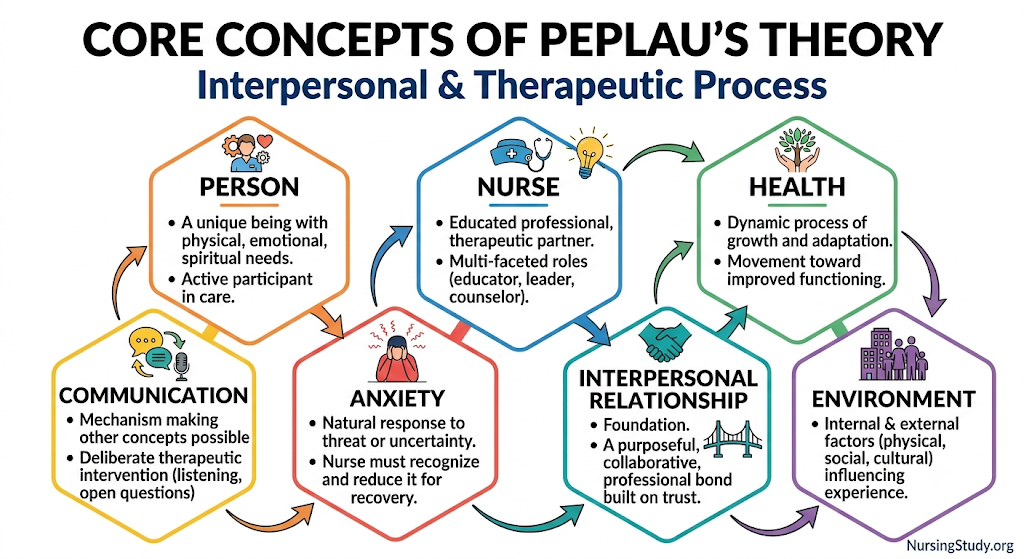
The strength of Peplau’s Theory of Interpersonal Relations lies in its well-defined concepts that explain how the nurse and patient work together to achieve therapeutic goals. Rather than focusing solely on disease management or clinical procedures, Hildegard Peplau viewed nursing as an interpersonal and therapeutic process centered on human interaction, communication, and personal growth. Each concept within the theory contributes to understanding how nurses can build effective therapeutic relationships, reduce patient anxiety, and promote recovery.
Unlike some nursing theories that primarily emphasize physiological care, Peplau’s theory integrates psychological, emotional, behavioral, and social dimensions of health into nursing care. The concepts are interconnected rather than independent. For example, communication influences the quality of the interpersonal relationship, the strength of that relationship affects anxiety levels, and reduced anxiety allows patients to participate more actively in achieving better health outcomes.
Understanding these concepts enables nurses to deliver holistic, patient-centered care while recognizing that every interaction with a patient has therapeutic potential. Whether practicing in psychiatric care, community health, acute care, or primary healthcare, nurses continue to apply these principles to strengthen the nurse-patient relationship and improve patient outcomes.
Person
In Hildegard Peplau’s Theory of Interpersonal Relations, the person is not viewed simply as an individual experiencing illness. Instead, the patient is regarded as a unique human being with physical, emotional, psychological, social, developmental, and spiritual needs. Hildegard Peplau believed that every person brings individual experiences, beliefs, values, fears, expectations, and coping mechanisms into the healthcare environment. These personal characteristics influence how patients perceive illness, respond to treatment, and interact with healthcare professionals.
Unlike traditional healthcare models that often position patients as passive recipients of care, Peplau’s Theory of Interpersonal Relations portrays the patient as an active participant in the therapeutic process. The patient collaborates with the nurse to identify problems, establish goals, and evaluate progress throughout care. This collaborative approach empowers individuals to take greater responsibility for their own health and promotes long-term self-management.
According to Peplau’s theory, every patient possesses the capacity for learning and personal growth, even during periods of illness. The role of the nurse is not to make decisions on behalf of the patient whenever possible, but to provide guidance, education, and emotional support that enables informed decision-making.
For example, consider a patient newly diagnosed with type 2 diabetes. Instead of simply instructing the patient to take prescribed medication, the nurse explores the patient’s understanding of the diagnosis, addresses fears about lifestyle changes, identifies barriers to treatment adherence, and collaborates with the patient to develop realistic self-care goals. Through this process, the patient becomes an active partner in managing the condition rather than a passive recipient of healthcare instructions.
This concept reinforces one of the central principles of modern nursing: effective care begins with understanding the individual behind the diagnosis.
Nurse
Within Peplau’s Theory of Interpersonal Relations, the nurse is much more than a provider of treatments or technical procedures. Hildegard Peplau described the nurse as an educated professional who intentionally uses knowledge, communication skills, observation, and self-awareness to establish therapeutic interactions that facilitate healing.
The nurse serves as a therapeutic partner who guides patients through periods of illness while encouraging independence and personal growth. This requires not only clinical competence but also emotional intelligence, empathy, ethical decision-making, and critical thinking.
According to Peplau’s theory, the nurse performs multiple roles depending on the patient’s changing needs throughout the therapeutic process. These include roles such as educator, counselor, leader, advocate, resource person, surrogate, and technical expert. Rather than remaining fixed in one function, the nurse continuously adapts these roles as the relationship develops.
To fulfill these responsibilities effectively, nurses must possess several essential competencies, including:
- Strong interpersonal and communication skills.
- Clinical knowledge and technical proficiency.
- Critical thinking and sound clinical judgment.
- Emotional intelligence and empathy.
- Cultural competence and respect for diversity.
- Professional ethics and accountability.
- Self-awareness and reflective practice.
For example, an emergency department nurse caring for a patient who has experienced a traumatic accident must simultaneously provide urgent clinical interventions, explain procedures clearly, reassure family members, reduce patient anxiety, and coordinate care with other healthcare professionals. Each of these actions demonstrates different aspects of the nurse’s therapeutic role.
This expanded view of nursing significantly elevated the profession by recognizing that nurses contribute to patient recovery through both technical expertise and purposeful interpersonal engagement.
Health
Unlike definitions that equate health solely with the absence of disease, Hildegard Peplau viewed health as a dynamic process involving continuous personal growth, adaptation, and movement toward improved functioning. In Peplau’s Theory of Interpersonal Relations, health is influenced not only by physical conditions but also by emotional stability, psychological well-being, interpersonal relationships, and the individual’s ability to cope with life’s challenges.
Health is therefore not considered a fixed state. Instead, it exists along a continuum where individuals constantly adapt to changing circumstances. Even patients living with chronic illnesses can achieve a high level of health if they develop effective coping strategies, maintain meaningful relationships, and actively participate in managing their conditions.
Hildegard Peplau believed that one of the primary responsibilities of nursing is to help patients progress toward greater independence and healthier patterns of living.
Health promotion within the theory involves helping patients:
- Understand their health conditions.
- Develop effective coping mechanisms.
- Reduce unnecessary anxiety.
- Strengthen decision-making abilities.
- Improve self-care skills.
- Adapt successfully to illness or disability.
For instance, a patient recovering from a stroke may not regain full physical function immediately. However, through education, emotional support, rehabilitation, and collaborative goal setting, the patient can gradually regain confidence, develop new coping strategies, and achieve an improved quality of life. From Peplau’s perspective, this progression represents movement toward better health.
Environment
Although Hildegard Peplau did not emphasize the concept of environment as extensively as some other nursing theorists, it remains an important element in understanding Peplau’s Theory of Interpersonal Relations. The environment includes all internal and external factors that influence the patient’s experiences, behaviors, emotions, and health outcomes.
These factors extend beyond the physical healthcare setting and include psychological, social, cultural, and interpersonal influences that shape the therapeutic process.
Important environmental influences include:
- The physical care environment.
- Family relationships and social support.
- Cultural beliefs and traditions.
- Economic and financial circumstances.
- Organizational policies.
- Healthcare resources.
- The emotional climate within the care setting.
A supportive environment promotes trust, open communication, and active patient participation. Conversely, environments characterized by fear, poor communication, discrimination, or excessive stress may interfere with therapeutic relationships and delay recovery.
For example, imagine two hospitalized patients receiving identical medical treatment. One is cared for in a calm environment where nurses communicate respectfully, encourage questions, and involve family members in care planning. The other experiences frequent interruptions, inconsistent communication, and limited emotional support. Despite receiving similar medical interventions, the first patient is more likely to experience greater satisfaction, reduced anxiety, and stronger engagement in recovery because the environment supports therapeutic interaction.
This example illustrates that nursing care extends beyond physical treatment to include creating conditions that foster healing.
Interpersonal Relationship
The interpersonal relationship is the central concept of Peplau’s Theory of Interpersonal Relations and the foundation upon which the entire theory is built. Hildegard Peplau argued that healing occurs most effectively when the nurse and patient establish a purposeful, collaborative, and professional relationship based on mutual respect, trust, communication, and clearly defined goals.
Unlike ordinary social relationships, the therapeutic interpersonal relationship exists specifically to address the patient’s health needs. Every interaction serves a professional purpose and contributes to assessment, education, emotional support, problem-solving, or treatment.
An effective therapeutic relationship is characterized by:
- Mutual trust.
- Respect and dignity.
- Honest communication.
- Professional boundaries.
- Shared decision-making.
- Active patient participation.
- Clearly defined healthcare goals.
As the relationship develops, both the nurse and the patient learn from one another. The nurse gains a deeper understanding of the patient’s needs, values, and experiences, while the patient develops greater confidence, knowledge, and self-awareness.
For example, consider a patient receiving treatment for severe depression. During the initial encounter, the patient may be reluctant to discuss personal concerns. As trust develops through consistent communication and compassionate care, the patient becomes more willing to express emotions, participate in therapy, and collaborate in treatment planning. This progression demonstrates the therapeutic value of a strong interpersonal relationship.
The success of Peplau’s theory depends largely on the quality of this professional relationship, making it one of the most influential concepts in modern nursing practice.
Anxiety
Anxiety occupies a central place in Hildegard Peplau’s theoretical framework because it significantly influences human behavior, communication, learning, and decision-making. According to Peplau’s Theory of Interpersonal Relations, anxiety is a natural response to actual or perceived threats, uncertainty, illness, or unfamiliar situations. While some degree of anxiety may motivate individuals to seek help or adapt to challenges, excessive anxiety can interfere with effective functioning and hinder recovery.
Hildegard Peplau believed that one of the nurse’s most important responsibilities is to recognize anxiety early, determine its underlying causes, and implement interventions that help patients regain emotional stability. Rather than dismissing anxiety as an inevitable reaction to illness, she viewed it as a critical clinical concern requiring thoughtful assessment and therapeutic intervention.
Patients may experience anxiety for many reasons, including:
- Receiving a new diagnosis.
- Anticipating surgery or invasive procedures.
- Fear of pain or disability.
- Concerns about financial responsibilities.
- Separation from family members.
- Uncertainty about treatment outcomes.
- Previous traumatic healthcare experiences.
The nurse plays a vital role in reducing anxiety by establishing trust, providing accurate information, encouraging emotional expression, and maintaining a calm, supportive presence.
For example, a patient awaiting cardiac surgery may express fear about the procedure. Instead of offering vague reassurance, the nurse listens attentively, explains the surgical process in understandable language, answers questions honestly, and helps the patient identify coping strategies. These therapeutic actions reduce anxiety and strengthen the patient’s confidence in the healthcare team.
Managing anxiety effectively allows patients to think more clearly, participate actively in care decisions, and engage more fully in the therapeutic process.
Communication
Communication is the mechanism through which every other concept in Peplau’s Theory of Interpersonal Relations becomes possible. Hildegard Peplau viewed communication not merely as the exchange of information but as a deliberate therapeutic intervention capable of promoting healing, reducing anxiety, strengthening relationships, and facilitating personal growth.
Effective communication enables nurses to assess patient needs accurately, establish trust, identify concerns that may not be immediately apparent, and collaborate with patients to develop individualized care plans. It also allows patients to express emotions, clarify misunderstandings, ask questions, and participate actively in decisions affecting their health.
Therapeutic communication includes both verbal and nonverbal techniques. Nurses use carefully chosen words, attentive listening, facial expressions, body language, silence, empathy, and clarification to create an environment where patients feel respected and understood.
Common therapeutic communication strategies include:
- Active listening without interruption.
- Asking open-ended questions.
- Reflecting patients’ feelings.
- Providing clarification when needed.
- Summarizing key points.
- Using silence appropriately to encourage reflection.
- Offering information honestly and clearly.
- Demonstrating empathy through verbal and nonverbal responses.
Consider a patient recently diagnosed with breast cancer who says, “I’m afraid my life will never be normal again.” A therapeutic response would not simply provide reassurance such as, “Everything will be fine.” Instead, the nurse might respond, “It sounds like you’re feeling uncertain about what the future may look like. Would you like to tell me more about your concerns?” This response encourages emotional expression, validates the patient’s feelings, and opens the door to meaningful therapeutic dialogue.
By emphasizing communication as a clinical skill rather than a routine conversation, Hildegard Peplau fundamentally changed the way nurses interact with patients. Today, therapeutic communication remains one of the most essential competencies in nursing practice, supporting patient-centered care across every specialty and reinforcing the enduring relevance of Peplau’s Theory of Interpersonal Relations.
Phases of the Nurse–Patient Relationship
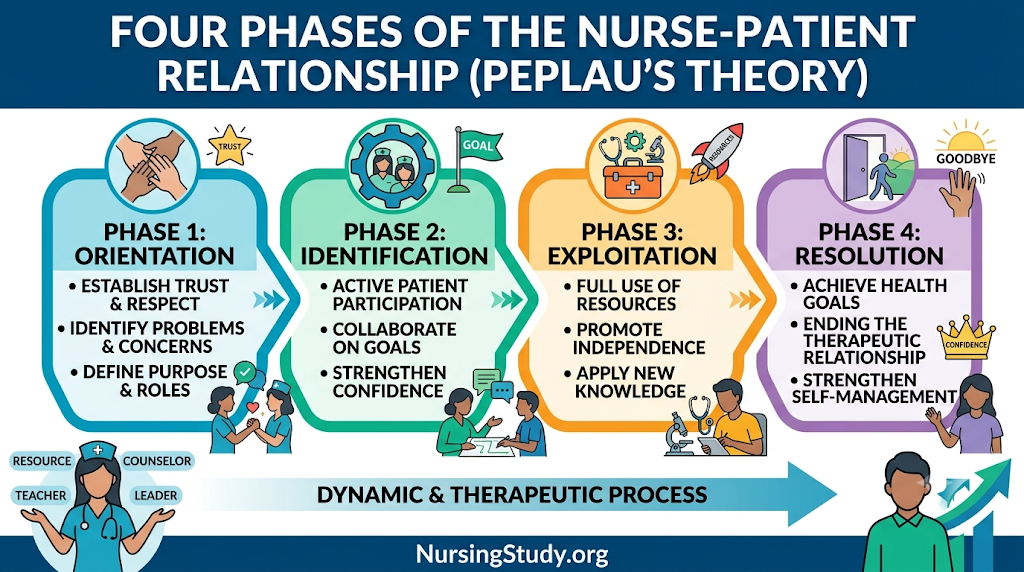
One of the most important contributions of Hildegard Peplau to modern nursing was her description of the phases of the nurse-patient relationship. Unlike traditional models of care that focused primarily on physical treatment, Hildegard Peplau’s Theory of Interpersonal Relations explains that nursing is a dynamic and purposeful therapeutic process that evolves through distinct stages. Each phase represents a different level of interaction between the nurse and patient, with specific goals, responsibilities, and outcomes that ultimately promote healing, personal growth, and independence.
At the center of Peplau’s Theory of Interpersonal Relations is the belief that the interpersonal relationship between the nurse and the patient is itself a therapeutic intervention. Every conversation, assessment, teaching session, and supportive interaction contributes to improving the patient’s health. Rather than viewing communication as simply exchanging information, Peplau emphasized that purposeful communication helps patients understand their conditions, develop coping strategies, and participate actively in their own care.
The phases of the nurse-patient relationship also illustrate why Peplau’s Theory is considered a practical middle-range nursing theory. Unlike broader conceptual models that explain nursing from a philosophical perspective, this middle-range theory provides nurses with clear guidance that can be applied directly in clinical nursing, psychiatric care, community health, and virtually every healthcare environment. The framework enables nurses to understand how therapeutic relationships develop over time and how their responsibilities change as patients become increasingly independent.
The four phases described by Hildegard Peplau include:
- Orientation Phase – Establishing trust, identifying problems, and defining the purpose of the therapeutic relationship.
- Identification Phase – Encouraging patient participation while developing mutually agreed healthcare goals.
- Exploitation Phase – Helping the patient make full use of available healthcare resources and therapeutic interventions.
- Resolution Phase – Ending the therapeutic relationship after goals have been achieved and patient independence has been strengthened.
Although these phases are presented sequentially, Hildegard Peplau acknowledged that patients do not always move through them in a perfectly linear manner. Depending on changes in health status, emotional responses, or unexpected complications, patients may temporarily return to an earlier phase before progressing again. Consequently, nurses must continuously assess the patient’s needs and adapt their approach accordingly.
Today, these phases remain fundamental to interpersonal relations in nursing, influencing nursing education, clinical nursing, psychiatry, and professional practice worldwide. They continue to guide how nurses establish therapeutic partnerships that support holistic, patient-centered nursing care.
Orientation Phase
The Orientation Phase is the first stage of the therapeutic relationship and serves as the foundation upon which every subsequent interaction is built. During this phase, the nurse and patient meet for the first time, begin establishing trust, identify immediate healthcare concerns, and define the purpose of working together. According to Hildegard Peplau, this stage is essential because the quality of the initial interaction often determines whether the patient feels safe enough to participate fully in the therapeutic process.
Patients entering a healthcare setting frequently experience uncertainty, fear, confusion, pain, or emotional distress. Hospitalization, unfamiliar procedures, new diagnoses, or significant lifestyle changes often increase anxiety. Peplau emphasized that one of the nurse’s earliest responsibilities is to help the patient understand what is happening while addressing these emotional reactions.
The major objectives of the Orientation Phase include:
- Establishing mutual trust and respect.
- Introducing the professional roles of the nurse and patient.
- Identifying the patient’s immediate concerns and healthcare needs.
- Performing comprehensive physical, psychological, and social assessments.
- Explaining available treatments and healthcare services.
- Beginning to reduce needs by reducing anxiety through therapeutic communication.
- Clarifying expectations and establishing realistic goals.
During this phase, the nurse frequently functions in what Hildegard Peplau described as moving from stranger to resource. Initially, the nurse is a professional stranger who respectfully approaches the patient without preconceived judgments. As trust develops, the nurse gradually becomes a trusted resource person, educator, and source of reliable information.
Clinical Example
A patient is admitted to the emergency department after experiencing severe chest pain. The patient appears frightened and repeatedly asks whether they are having a heart attack. Instead of responding only with technical procedures, the nurse introduces themselves, explains each assessment, answers questions honestly, reassures the patient that appropriate tests are being performed, and encourages the patient to express concerns.
Through these actions, the nurse begins building a therapeutic interpersonal relationship while simultaneously collecting essential assessment data.
By the end of the Orientation Phase, the patient should:
- Understand why healthcare is being provided.
- Feel increasingly comfortable communicating with the nurse.
- Begin developing confidence in the healthcare team.
- Recognize that the relationship exists to support recovery.
This phase establishes the trust necessary for effective therapeutic relationships throughout the remainder of care.
Identification Phase
Once trust has been established, the therapeutic relationship progresses into the Identification Phase. During this stage, patients begin identifying more closely with the nurse as someone capable of helping them address health problems. Rather than depending entirely on healthcare professionals, patients start participating actively in planning, decision-making, and treatment.
The Identification Phase represents an important shift in responsibility. Instead of the nurse directing every aspect of care, both individuals work collaboratively to identify priorities and establish mutually agreed goals. This partnership reflects one of the central principles of Peplau’s Theory of Interpersonal Relations—that successful healthcare depends upon collaboration between the nurse and patient.
The major objectives of the Identification Phase include:
- Helping patients recognize their healthcare problems.
- Encouraging active participation in treatment planning.
- Strengthening patient confidence and self-awareness.
- Supporting emotional expression.
- Developing realistic healthcare goals.
- Building greater independence while maintaining therapeutic support.
During this phase, nurses rely heavily on therapeutic communication skills to understand the patient’s values, beliefs, fears, and expectations. Emotional responses become more evident, allowing nurses to tailor interventions to the individual’s specific needs.
Clinical Example
A patient recently diagnosed with breast cancer expresses fear about chemotherapy and worries about changes in body image. Instead of immediately focusing on treatment schedules, the nurse encourages the patient to discuss these concerns, provides evidence-based information, explores available support services, and works collaboratively to establish achievable goals for treatment and emotional adjustment.
This interaction illustrates how the Identification Phase strengthens the nurse-client relationship by encouraging mutual understanding and shared decision-making.
During this stage, the nurse often serves as a:
- Teacher who promotes learning.
- Counselor who supports emotional adaptation.
- Leader who encourages patient participation.
- Resource person who connects patients with healthcare services.
The success of the Identification Phase depends largely on the patient’s willingness to trust the nurse and engage actively in the therapeutic process.
Exploitation Phase
The Exploitation Phase is often misunderstood because of its terminology. In Hildegard Peplau’s Theory of Interpersonal Relations, exploitation refers to the patient’s ability to make full and effective use of available healthcare resources, professional expertise, and therapeutic opportunities. It does not imply taking advantage of another person. Instead, it represents the stage in which patients maximize the benefits of the therapeutic relationship to improve their health.
The phrase identification and exploitation is frequently used together because the patient’s willingness to use available resources develops naturally after trust and collaboration have been established during the Identification Phase.
During this stage, patients become increasingly proactive. They ask questions, seek clarification, participate in rehabilitation, attend educational sessions, and apply newly acquired knowledge to their own care.
The primary objectives of the Exploitation Phase include:
- Encouraging maximum use of healthcare resources.
- Reinforcing healthy coping strategies.
- Promoting patient independence.
- Strengthening problem-solving abilities.
- Supporting continued education and self-care.
- Evaluating progress toward healthcare goals.
The nurse continues guiding the patient while gradually reducing dependence and encouraging greater autonomy.
Clinical Example
A patient recovering from a stroke actively participates in physical therapy, occupational therapy, speech therapy, nutritional counseling, and discharge planning. The patient requests educational materials, practices prescribed exercises independently, and discusses concerns about returning home.
In this example, the patient is fully utilizing available resources to achieve recovery, demonstrating the positive meaning of exploitation within Peplau’s theory.
The nurse may function in several therapeutic roles during this phase, including:
- Teacher.
- Counselor.
- Leader.
- Technical Expert, providing specialized clinical knowledge and skills while encouraging the patient to become increasingly independent.
This phase highlights one of Hildegard Peplau’s most important beliefs: effective nursing empowers patients rather than fostering dependence.
Resolution Phase
The Resolution Phase represents the final stage of the phases of the nurse-patient relationship and marks the successful completion of the therapeutic partnership. By this point, the goals established during earlier phases have been achieved or substantially addressed, and the patient has developed the knowledge, confidence, and skills necessary to continue managing health independently.
According to Hildegard Peplau, ending the therapeutic relationship is just as important as establishing it. The conclusion should occur naturally and professionally after the patient’s healthcare needs have been met. The nurse gradually withdraws from the intensive therapeutic role while reinforcing the patient’s confidence in self-management.
The objectives of the Resolution Phase include:
- Evaluating achievement of healthcare goals.
- Reinforcing patient independence.
- Reviewing discharge instructions and self-care skills.
- Preparing patients for ongoing community or outpatient services when necessary.
- Ending the therapeutic relationship while maintaining professional boundaries.
- Encouraging continued personal growth beyond hospitalization.
This phase demonstrates that the ultimate goal of Peplau’s Theory of Interpersonal Relations is not lifelong dependence on healthcare providers but patient empowerment.
Clinical Example
A patient receiving treatment for major depression has completed therapy, understands prescribed medications, recognizes early warning signs of relapse, and has established follow-up appointments with mental health providers. During discharge planning, the nurse reviews coping strategies, discusses available community resources, answers final questions, and acknowledges the patient’s progress.
The therapeutic relationship concludes because the patient has developed sufficient confidence and knowledge to continue recovery independently.
The Resolution Phase benefits both the patient and the nursing profession by:
- Promoting long-term self-management.
- Supporting continuity of care.
- Reinforcing healthy coping mechanisms.
- Demonstrating successful therapeutic outcomes.
- Reflecting the patient-centered principles of interpersonal relations in nursing.
Nursing Roles in Peplau’s Theory
One of the most distinctive features of Hildegard Peplau’s Theory of Interpersonal Relations is its clear description of the professional roles a nurse assumes throughout the therapeutic process. Rather than viewing nurses as individuals who perform only technical procedures, Hildegard Peplau argued that nursing is a dynamic profession in which the nurse adapts to the changing needs of each patient. As the nurse-patient relationship develops, the nurse moves through different roles that support assessment, education, communication, emotional support, decision-making, and recovery.
These roles are not rigid job descriptions or separate positions. Instead, they are complementary functions that the nurse performs at different stages of the phases of the nurse-patient relationship. A nurse may move between several roles during a single patient encounter depending on the patient’s physical condition, emotional state, level of understanding, and healthcare needs. This flexibility is one reason Peplau’s Theory of Interpersonal Relations continues to be widely applied in clinical nursing, psychiatric care, community health, and nursing education.
The nursing roles described by Hildegard Peplau demonstrate that effective nursing care requires far more than clinical competence. Nurses must also possess excellent communication skills, emotional intelligence, empathy, critical thinking, and the ability to establish meaningful therapeutic relationships. Through these roles, the nurse helps the patient reduce anxiety, develop self-confidence, acquire new knowledge, and become increasingly independent.
The seven nursing roles identified by Hildegard Peplau are:
- Stranger
- Resource Person
- Teacher
- Leader
- Counselor
- Surrogate
- Technical Expert
Together, these roles provide a practical framework that enables nurses to respond appropriately to patients’ changing needs while strengthening the interpersonal relationship that lies at the center of Peplau’s theory.
Stranger
The Stranger is the first role assumed by the nurse during the Orientation Phase of the nurse-patient relationship. In this role, the nurse approaches every patient with respect, courtesy, and professionalism, recognizing that both individuals are meeting for the first time. Hildegard Peplau believed that the initial interaction establishes the tone for the entire therapeutic relationship and significantly influences whether trust and collaboration will develop.
Being a stranger does not imply emotional distance or indifference. Instead, it reflects the nurse’s responsibility to avoid assumptions, stereotypes, or preconceived judgments. Every patient is treated as a unique individual whose experiences, beliefs, values, and concerns deserve careful consideration.
The primary responsibilities of the nurse in this role include:
- Introducing themselves and explaining their professional responsibilities.
- Creating a welcoming and respectful environment.
- Demonstrating empathy and active listening.
- Collecting initial assessment information.
- Beginning to establish trust.
- Respecting patient dignity, privacy, and confidentiality.
For example, a patient admitted with newly diagnosed heart failure may feel overwhelmed and uncertain about the future. During the first encounter, the nurse introduces themselves, explains the admission process, answers questions calmly, and encourages the patient to discuss concerns. These seemingly simple interactions lay the groundwork for a productive therapeutic process.
The Stranger role illustrates one of Hildegard Peplau’s central beliefs: the quality of the first interaction often determines the strength of future therapeutic relationships.
Resource Person
As trust develops, the nurse gradually assumes the role of Resource Person. In this capacity, the nurse becomes a reliable source of accurate, evidence-based information that helps patients better understand their illnesses, treatments, and available healthcare services.
Peplau emphasized that uncertainty frequently increases patient anxiety. Providing clear and understandable information allows patients to make informed decisions while reducing fear associated with unfamiliar situations.
The nurse acting as a resource person is responsible for:
- Explaining diagnoses and treatment plans in understandable language.
- Clarifying medical terminology.
- Answering patient and family questions honestly.
- Providing educational resources.
- Referring patients to appropriate healthcare professionals when necessary.
- Helping patients navigate healthcare systems and available services.
Clinical Example
A patient newly diagnosed with hypertension asks whether lifelong medication will be necessary. Rather than providing a brief answer, the nurse explains the disease process, discusses lifestyle modifications, reviews prescribed medications, describes possible side effects, and provides educational materials that support long-term self-management.
In this situation, the nurse serves as a trusted source of knowledge while empowering the patient to participate actively in care.
This role is especially important in health nursing, chronic disease management, community care, and discharge planning, where patient education directly influences long-term health outcomes.
Teacher
Education is one of the most important responsibilities of professional nursing, making the Teacher role central to Hildegard Peplau’s Theory of Interpersonal Relations. According to Hildegard Peplau, learning should occur continuously throughout the therapeutic process, enabling patients to understand their conditions, develop practical skills, and become increasingly independent.
Patient education extends beyond explaining medications or procedures. Effective teaching addresses emotional readiness, health literacy, cultural considerations, and individual learning preferences.
The nurse as a teacher helps patients:
- Understand their diagnosis.
- Learn about medications and treatments.
- Develop self-care skills.
- Prevent complications.
- Adopt healthier lifestyles.
- Strengthen confidence in managing chronic conditions.
Clinical Example
A patient recently diagnosed with asthma is preparing for discharge. Instead of simply providing written instructions, the nurse demonstrates how to use an inhaler correctly, observes the patient’s technique, corrects errors, discusses trigger avoidance, and asks the patient to repeat key information to confirm understanding.
This interactive approach improves patient confidence while reducing the likelihood of preventable hospital readmissions.
The Teacher role is fundamental in nursing education because it demonstrates that every patient encounter provides an opportunity for learning. It also reinforces the idea that effective education empowers patients to take greater responsibility for their own health.
Leader
The Leader role reflects the nurse’s ability to guide patients toward achieving mutually established healthcare goals. Rather than directing care through authority alone, Hildegard Peplau described leadership as a collaborative process that encourages shared decision-making and active patient participation.
In this role, the nurse coordinates care, facilitates communication among healthcare professionals, advocates for patient needs, and motivates individuals to work toward recovery.
Leadership responsibilities include:
- Establishing collaborative healthcare goals.
- Encouraging patient participation.
- Coordinating interdisciplinary care.
- Supporting informed decision-making.
- Promoting accountability and independence.
- Facilitating effective communication within the healthcare team.
Clinical Example
A patient recovering from a stroke requires input from physicians, physical therapists, occupational therapists, speech therapists, dietitians, and social workers. The nurse coordinates communication among team members, ensures that patient concerns are addressed during care planning, and encourages the patient to participate actively in rehabilitation decisions.
Through effective leadership, the nurse helps create a coordinated, patient-centered approach to recovery.
This role demonstrates that leadership in nursing involves collaboration rather than control, aligning closely with the principles of interpersonal relations in nursing.
Counselor
The Counselor role is perhaps one of the most influential aspects of Peplau’s Theory of Interpersonal Relations, particularly in psychiatric care and mental health settings. Hildegard Peplau believed that nurses play an essential role in helping patients understand emotions, cope with stress, and develop healthier ways of responding to illness and life challenges.
Unlike psychologists or psychotherapists, nurses provide supportive counseling within the context of therapeutic nursing care. Their objective is to help patients recognize problems, express feelings openly, and develop effective coping strategies.
The nurse functioning as a counselor:
- Encourages emotional expression.
- Listens without judgment.
- Helps patients recognize sources of anxiety.
- Supports problem-solving.
- Reinforces healthy coping mechanisms.
- Promotes emotional resilience.
Clinical Example
A patient recently diagnosed with multiple sclerosis expresses fear about losing independence. Instead of immediately offering reassurance, the nurse encourages the patient to discuss these concerns, validates emotional responses, explores available support systems, and identifies practical strategies for adapting to future challenges.
This interaction reduces anxiety while strengthening the interpersonal relationship between the nurse and patient.
The counseling role remains particularly important for psychiatric nurses, oncology nurses, palliative care nurses, rehabilitation specialists, and professionals working with patients experiencing chronic illness.
Surrogate
The Surrogate role recognizes that patients sometimes unconsciously associate the nurse with important individuals in their lives, such as parents, spouses, siblings, caregivers, or trusted authority figures. Hildegard Peplau explained that these emotional responses may influence how patients interact with healthcare professionals and should be understood rather than ignored.
The nurse does not replace these individuals but acknowledges the patient’s emotional experiences while maintaining professional boundaries.
Responsibilities within the surrogate role include:
- Recognizing transference and emotional attachment.
- Maintaining therapeutic boundaries.
- Supporting patient independence.
- Helping patients distinguish present experiences from past relationships.
- Encouraging healthy interpersonal development.
Clinical Example
An elderly patient recovering from surgery begins referring to the nurse as though they were a family member and becomes reluctant to accept care from anyone else. Rather than encouraging dependence, the nurse respectfully acknowledges the patient’s feelings while promoting confidence in the broader healthcare team and gradually reinforcing independence.
The Surrogate role requires exceptional emotional intelligence, self-awareness, and professional judgment to ensure that therapeutic boundaries remain intact.
Technical Expert
Although Hildegard Peplau placed great emphasis on communication and interpersonal relationships, she also recognized the importance of clinical competence. The Technical Expert role reflects the nurse’s responsibility to provide safe, evidence-based clinical care while integrating technical skills with therapeutic communication.
Patients are more likely to develop confidence in nurses who demonstrate both interpersonal competence and clinical expertise. Technical proficiency supports trust because patients recognize that the nurse possesses the knowledge and skills necessary to provide high-quality care.
As a Technical Expert, the nurse:
- Performs clinical procedures safely and accurately.
- Applies evidence-based nursing interventions.
- Uses advanced assessment skills.
- Monitors patient responses to treatment.
- Recognizes and responds promptly to clinical deterioration.
- Integrates technical care with compassionate communication.
Clinical Example
A patient receiving intravenous chemotherapy expresses anxiety before treatment begins. While expertly preparing and administering the medication, the nurse explains each step of the procedure, discusses possible side effects, answers questions honestly, and continuously assesses both physical and emotional responses.
This example illustrates how technical competence and therapeutic communication work together to strengthen the nurse-patient relationship.
Therapeutic Communication
Therapeutic communication is one of the central elements of Hildegard Peplau’s Theory of Interpersonal Relations and serves as the foundation for developing effective therapeutic relationships between the nurse and patient. Hildegard Peplau viewed communication as more than a simple exchange of information; she considered it an intentional nursing intervention that could promote healing, reduce anxiety, encourage self-awareness, and support positive behavioral changes.
Within Peplau’s Theory of Interpersonal Relations, communication is the primary tool through which the nurse establishes an interpersonal relationship with the patient. Through purposeful interactions, the nurse learns about the patient’s experiences, concerns, beliefs, emotions, and healthcare needs. At the same time, the patient gains knowledge, confidence, and understanding that enable active participation in nursing care.
Unlike ordinary conversations, therapeutic communication has a specific professional purpose. It is guided by nursing knowledge, ethical principles, and an understanding of human behavior. The goal is not simply to make the patient feel better temporarily but to create meaningful interactions that help the patient understand their situation, develop coping strategies, and achieve health-related goals.
Hildegard Peplau believed that communication allows nurses to enter the patient’s world and understand how illness affects their physical, emotional, and social experiences. This approach is particularly significant in psychiatric care, where communication is often the primary tool used by psychiatric nurses to assess thoughts, emotions, behaviors, and coping abilities. However, the principles of therapeutic communication extend across all areas of nursing, including medical-surgical care, community health, pediatric nursing, and critical care.
For example, a patient admitted after a cancer diagnosis may experience fear, uncertainty, and emotional distress. A nurse who focuses only on administering medication and completing physical assessments may miss important psychological needs. Through therapeutic communication, the nurse creates an opportunity for the patient to express fears, ask questions, clarify misunderstandings, and develop confidence in managing the healthcare journey.
The importance of therapeutic communication in interpersonal relations in nursing can be summarized through several key purposes:
- Assessment: Communication allows nurses to collect information about symptoms, concerns, emotions, and patient priorities.
- Education: Nurses use communication to explain diagnoses, treatments, procedures, and self-care strategies.
- Emotional support: Therapeutic conversations help patients express fears, frustrations, and concerns.
- Anxiety reduction: Clear explanations and empathetic responses help patients manage uncertainty and stress.
- Relationship development: Communication strengthens trust and creates a foundation for collaboration.
- Patient empowerment: Effective communication encourages patients to participate actively in healthcare decisions.
Through these functions, therapeutic communication becomes a critical component of the therapeutic process described by Hildegard Peplau.
Principles of Therapeutic Communication
The effectiveness of therapeutic communication depends on several principles that guide how nurses interact with patients. Hildegard Peplau emphasized that communication must be purposeful, respectful, and centered on the patient’s needs rather than the nurse’s personal assumptions or emotions.
These principles help nurses create meaningful interactions that promote healing and support the development of a strong nurse-patient relationship.
Active Listening
Active listening is one of the most important principles of therapeutic communication. It involves giving the patient full attention, understanding both verbal and nonverbal messages, and demonstrating genuine interest in what the patient is expressing.
Active listening requires the nurse to:
- Maintain appropriate eye contact.
- Avoid unnecessary interruptions.
- Observe body language and emotional responses.
- Provide verbal and nonverbal encouragement.
- Clarify unclear statements.
- Reflect important feelings or concerns.
For example, if a patient says, “I don’t know how I will cope after this diagnosis,” the nurse should not immediately respond with advice or reassurance. Instead, the nurse may acknowledge the emotion by saying, “It sounds like this diagnosis has been overwhelming for you. Can you tell me more about what concerns you the most?”
This response encourages deeper discussion and demonstrates that the patient’s feelings are valued.
Empathy and Understanding
Empathy involves attempting to understand the patient’s experiences from their perspective while maintaining professional objectivity. Hildegard Peplau considered empathy essential because patients are more likely to engage in the therapeutic relationship when they feel understood and respected.
Empathy does not mean that nurses personally experience the same emotions as patients. Instead, it means recognizing and validating the patient’s feelings.
For example, a patient awaiting surgery may say, “I am terrified something will go wrong.” A therapeutic response might be, “It is understandable to feel anxious before surgery. Many people have concerns about what will happen. Let us discuss what to expect and any questions you may have.”
This response acknowledges the patient’s fear while providing support and information.
Respect and Acceptance
Respect is a fundamental principle of therapeutic communication. Every patient deserves dignity and acceptance regardless of their diagnosis, lifestyle choices, cultural background, or personal beliefs.
A nurse demonstrates respect by:
- Avoiding judgmental language.
- Recognizing individual differences.
- Protecting privacy and confidentiality.
- Allowing patients to express opinions and preferences.
- Supporting patient autonomy.
This principle is particularly important in mental health settings, where stigma and misunderstanding may affect how patients perceive themselves and their willingness to seek care.
Providing Clear and Honest Information
Patients often experience increased anxiety when they do not understand their condition or treatment plan. Therefore, nurses must provide information that is accurate, understandable, and appropriate to the patient’s level of knowledge.
Effective information sharing involves:
- Using simple language instead of complex medical terminology.
- Checking whether the patient understands.
- Encouraging questions.
- Correcting misconceptions respectfully.
- Providing information at the appropriate time.
For example, when explaining a new medication, a nurse should discuss its purpose, dosage, possible side effects, and important precautions rather than simply telling the patient when to take it.
Clear information strengthens trust and allows patients to make informed decisions about their care.
Appropriate Use of Silence
Silence is an important but often overlooked communication technique. Hildegard Peplau recognized that therapeutic interactions do not always require constant conversation. Sometimes, allowing silence gives patients time to organize thoughts, process emotions, or express difficult feelings.
For example, a patient grieving the loss of a family member may not immediately know what to say. Sitting quietly with the patient while offering a supportive presence may communicate compassion more effectively than offering unnecessary words.
Asking Open-Ended Questions
Open-ended questions encourage patients to provide detailed information and express their feelings more freely. They help nurses understand the patient’s perspective rather than limiting responses to simple yes-or-no answers.
Examples include:
- “How have you been feeling since receiving your diagnosis?”
- “What concerns do you have about your treatment?”
- “Can you tell me more about what happened?”
These questions promote meaningful dialogue and strengthen the interpersonal relationship between the nurse and patient.
Building Trust
Trust is one of the most essential foundations of the nurse-patient relationship. Without trust, patients may hesitate to share important information, express concerns, or participate fully in their care. Hildegard Peplau emphasized that trust develops gradually through consistent, respectful, and reliable interactions.
In the Orientation Phase of the therapeutic relationship, establishing trust is one of the nurse’s primary responsibilities. Patients often enter healthcare environments feeling vulnerable and uncertain. A trustworthy nurse helps reduce these feelings by demonstrating competence, honesty, and genuine concern.
Building trust requires several behaviors:
Demonstrating Reliability
Patients develop confidence when nurses consistently follow through with their responsibilities. This includes:
- Returning when promised.
- Providing accurate information.
- Completing care activities safely.
- Communicating changes in treatment plans.
For example, if a nurse tells a patient they will return after reviewing laboratory results, following through on that commitment demonstrates reliability and strengthens trust.
Showing Compassion and Genuine Interest
Patients are more likely to trust nurses who demonstrate authentic concern for their wellbeing. Compassion involves recognizing the patient as a whole person rather than focusing only on illness.
Simple actions such as listening attentively, remembering personal details, acknowledging fears, and showing patience can significantly influence the quality of the therapeutic relationship.
Maintaining Confidentiality
Confidentiality is essential for trust. Patients must feel confident that personal information shared during healthcare interactions will be protected.
This is especially important in psychiatric care, where patients may disclose sensitive information regarding emotions, trauma, relationships, or personal experiences.
When confidentiality is respected, patients are more willing to communicate openly, allowing nurses to provide more effective care.
Demonstrating Clinical Competence
Trust is also influenced by the nurse’s professional knowledge and skills. Patients need confidence that their nurse can provide safe and effective care.
The role of the nurse as a Technical Expert, described by Hildegard Peplau, highlights the importance of combining clinical competence with compassionate communication.
For example, a patient receiving intravenous medication is more likely to feel secure when the nurse explains the procedure, answers questions, performs the intervention correctly, and monitors for complications.
Maintaining Professional Boundaries
Professional boundaries are essential in maintaining a healthy and effective therapeutic relationship. While Hildegard Peplau emphasized the importance of meaningful interpersonal connections, she also recognized that nursing relationships must remain professional and focused on patient goals.
A therapeutic relationship differs from a personal relationship because it exists specifically to support the patient’s health and wellbeing. The nurse provides care, guidance, and emotional support while maintaining appropriate professional limits.
Maintaining boundaries protects both the patient and the nurse by preventing dependency, role confusion, and ethical concerns.
Important aspects of professional boundaries include:
Maintaining Appropriate Emotional Involvement
Nurses must demonstrate empathy without becoming emotionally overinvolved. Excessive emotional attachment may interfere with clinical judgment and reduce the effectiveness of care.
For example, a nurse may deeply sympathize with a patient experiencing a terminal illness but must still maintain professional judgment when making care decisions.
Avoiding Dependency
One of the goals of Peplau’s Theory of Interpersonal Relations is to help patients become more independent. Therefore, nurses should support patients without encouraging excessive reliance on the nurse.
For example, if a patient refuses to participate in self-care because they believe the nurse will always complete tasks for them, the nurse should encourage independence while continuing to provide appropriate support.
Maintaining the Nurse’s Professional Role
The nurse should avoid behaviors that blur professional boundaries, such as:
- Sharing excessive personal information.
- Developing personal relationships outside professional care.
- Accepting inappropriate gifts.
- Showing favoritism toward certain patients.
These behaviors can compromise the therapeutic process and affect professional accountability.
Managing the Surrogate Role
The Surrogate role described by Hildegard Peplau requires careful attention to boundaries. Patients may sometimes view nurses as parental figures, friends, or other important individuals from their past experiences. While nurses should acknowledge these feelings, they must help patients maintain appropriate perceptions of the professional relationship.
For example, a hospitalized patient may become emotionally dependent on a particular nurse because they associate that nurse with a supportive family member. The nurse can respond compassionately while encouraging the patient to develop confidence and utilize broader support systems.
Application of Peplau’s Theory
The practical value of Hildegard Peplau’s Theory of Interpersonal Relations is demonstrated through its widespread application across different areas of nursing. Unlike theories that focus primarily on specific clinical tasks or biological processes, Peplau’s theory emphasizes the importance of the relationship between the nurse and patient as a central component of effective nursing care. The theory provides nurses with a framework for understanding patient behaviors, improving communication, reducing anxiety, and developing purposeful therapeutic relationships that support recovery.
The application of Peplau’s Theory of Interpersonal Relations extends beyond psychiatric settings, even though it was originally developed from psychiatric care and influenced by concepts from psychiatry and interpersonal psychology. Today, the principles of interpersonal relations in nursing are applied in acute care, chronic disease management, community health, rehabilitation, and nursing education.
At its core, Hildegard Peplau’s framework reminds nurses that every interaction with a patient has therapeutic potential. The nurse is not simply a provider of treatments but also an educator, counselor, communicator, advocate, and partner in the patient’s healthcare journey. Through the therapeutic process, nurses help patients understand their health conditions, develop coping strategies, make informed decisions, and achieve greater independence.
The application of the theory is based on several fundamental principles:
- The nurse-patient relationship is a purposeful professional relationship.
- Communication is a therapeutic tool that promotes healing.
- Patients should be active participants in their own care.
- Nurses must understand psychological and emotional responses to illness.
- The goal of nursing is to help patients achieve growth, adaptation, and improved health outcomes.
The continued relevance of Peplau’s theory demonstrates why it remains one of the most influential nursing theories and an important middle-range nursing theory used in modern healthcare.
Psychiatric and Mental Health Nursing
The most significant application of Hildegard Peplau’s Theory of Interpersonal Relations is found in psychiatric and mental health nursing. In fact, Hildegard Peplau is widely recognized as the mother of psychiatric nursing because her work transformed mental health nursing from a custodial model of care into a therapeutic, relationship-centered profession.
Before Peplau developed the theory, psychiatric care often focused mainly on controlling symptoms, maintaining safety, and managing institutional routines. Patients experiencing mental illness were frequently viewed primarily through the lens of their diagnosis rather than as individuals with unique emotions, experiences, and personal needs. Through her work, Hildegard Peplau introduced a new perspective in which the nurse-patient relationship became a primary instrument for treatment.
In psychiatric nursing, the nurse uses the principles of Peplau’s theory to establish a structured and therapeutic relationship that helps patients explore thoughts, feelings, behaviors, and coping patterns.
Establishing Therapeutic Relationships in Mental Health Care
Mental health conditions often involve difficulties with trust, communication, emotional regulation, and interpersonal interactions. Therefore, establishing a safe and trusting relationship is essential.
Psychiatric nurses apply the theory by:
- Creating a nonjudgmental environment.
- Encouraging patients to express emotions openly.
- Identifying sources of anxiety and distress.
- Supporting self-awareness and insight.
- Helping patients develop healthier coping mechanisms.
For example, a patient admitted with severe depression may initially withdraw from others and avoid discussing emotions. Through consistent communication, active listening, and empathy, the psychiatric nurse gradually develops trust. Over time, the patient becomes more willing to discuss feelings of hopelessness, identify triggers, and participate in treatment.
This reflects the central belief of Hildegard Peplau that the relationship itself can become a therapeutic intervention.
Managing Anxiety and Emotional Distress
Anxiety is one of the major concepts within Peplau’s Theory of Interpersonal Relations. In psychiatric settings, nurses frequently care for patients experiencing intense fear, confusion, emotional instability, or psychological distress.
The nurse uses the therapeutic relationship to help patients:
- Identify the causes of anxiety.
- Develop healthier coping strategies.
- Improve emotional regulation.
- Gain confidence in managing stressful situations.
For example, a patient experiencing panic attacks may feel unable to control overwhelming physical and emotional symptoms. The psychiatric nurse can use therapeutic communication to help the patient identify triggers, practice relaxation techniques, and understand the relationship between thoughts, emotions, and behaviors.
Through this process, the nurse helps the patient regain a sense of control and independence.
Therapeutic Communication in Psychiatric Care
Communication is particularly important in psychiatric nursing because many mental health interventions depend on the ability to understand thoughts, emotions, and behaviors.
Using Peplau’s theory, psychiatric nurses apply therapeutic communication techniques such as:
- Active listening.
- Reflection.
- Clarification.
- Encouraging emotional expression.
- Exploring patient perceptions.
- Providing constructive feedback.
For example, when a patient experiencing schizophrenia states, “Everyone is watching me,” the nurse does not dismiss the concern or reinforce the belief. Instead, the nurse may respond, “It sounds like you feel unsafe right now. Can you tell me more about what makes you feel this way?”
This approach acknowledges the patient’s experience while maintaining therapeutic boundaries.
General Nursing Practice
Although Hildegard Peplau initially developed her theory within psychiatric nursing, the principles of Peplau’s Theory of Interpersonal Relations apply broadly across all areas of general nursing practice. Every nurse interacts with patients experiencing uncertainty, fear, pain, and emotional challenges, making interpersonal skills essential regardless of specialty.
In medical-surgical units, intensive care, emergency departments, outpatient clinics, and specialty areas, nurses use the theory to strengthen communication, improve patient experiences, and provide holistic care.
Supporting Patient-Centered Care
Modern healthcare emphasizes patient-centered care, which closely aligns with Peplau’s theory. The nurse does not simply provide interventions but collaborates with patients to understand their needs, preferences, and goals.
For example, a patient diagnosed with diabetes requires more than medication administration. The nurse must explore:
- The patient’s understanding of diabetes.
- Emotional responses to lifestyle changes.
- Barriers to self-care.
- Cultural beliefs related to food and health.
- Available family support.
By understanding the patient as a whole person, the nurse develops a more effective care plan.
Improving Communication and Patient Outcomes
In general clinical nursing, effective communication improves safety, satisfaction, and health outcomes. Nurses frequently serve as the connection between patients, families, and healthcare teams.
Through therapeutic communication, nurses can:
- Identify patient concerns early.
- Prevent misunderstandings.
- Improve adherence to treatment.
- Reduce fear related to procedures.
- Strengthen cooperation between patients and healthcare providers.
For example, a patient preparing for surgery may experience significant anxiety. A nurse applying Peplau’s theory does not only provide preoperative instructions but also explores concerns, explains what to expect, and encourages questions. This interaction reduces anxiety and improves preparedness.
Supporting Chronic Disease Management
Patients living with chronic illnesses often require ongoing education, emotional support, and lifestyle adaptation. The principles of Peplau’s theory help nurses support patients through long-term health challenges.
For example, a patient with chronic obstructive pulmonary disease may struggle with limitations caused by the illness. The nurse uses the therapeutic relationship to provide education, encourage coping strategies, and support realistic goal setting.
Through this process, the patient becomes an active participant in managing their condition.
Community Nursing
The application of Peplau’s Theory of Interpersonal Relations extends beyond hospitals into community health settings. In community nursing, relationships between nurses and individuals, families, and populations are essential for promoting health, preventing disease, and improving access to healthcare services.
Community nurses often work with individuals from diverse cultural, social, and economic backgrounds. Establishing trust is therefore critical because individuals may have concerns about healthcare systems, previous negative experiences, or limited access to services.
Building Trust Within Communities
Community nurses apply the principles of Peplau’s theory by developing respectful relationships with individuals and families.
This involves:
- Understanding community beliefs and values.
- Listening to health concerns.
- Providing culturally appropriate education.
- Encouraging participation in health programs.
- Supporting individuals in making informed health decisions.
For example, a community health nurse working in a rural area may encounter individuals who are hesitant to attend vaccination programs due to misconceptions or cultural beliefs. Instead of criticizing these concerns, the nurse establishes trust, listens respectfully, provides accurate information, and addresses questions.
Through this approach, the nurse strengthens community participation and improves health outcomes.
Health Promotion and Disease Prevention
Community nursing involves helping individuals and populations develop healthier behaviors. Peplau’s theory supports this goal by emphasizing education, communication, and collaboration.
Community nurses use the theory when providing:
- Health education sessions.
- Maternal and child health services.
- Chronic disease prevention programs.
- Screening initiatives.
- Mental health support.
The nurse functions as a teacher, resource person, and counselor while helping individuals become more knowledgeable and confident in managing their health.
Nursing Education
The principles of Hildegard Peplau’s Theory of Interpersonal Relations have had a significant influence on nursing education. The theory changed how nurses are prepared by emphasizing that communication, self-awareness, and relationship-building are essential professional skills.
A successful nurse requires not only technical knowledge but also the ability to connect with patients, understand human behavior, and provide emotionally supportive care.
Teaching Therapeutic Communication Skills
Nursing programs incorporate Peplau’s theory when teaching students how to develop effective communication skills. Students learn that communication is not simply a social interaction but an important clinical skill.
Nursing education uses the theory to teach:
- Interviewing techniques.
- Patient assessment conversations.
- Active listening.
- Conflict resolution.
- Emotional support strategies.
- Professional boundary management.
For example, nursing students may participate in simulated patient interactions where they practice responding to patients experiencing anxiety, grief, anger, or fear. These exercises help students develop confidence before entering real clinical environments.
Developing Professional Nursing Identity
Hildegard Peplau’s work also influences how students understand the role of the nurse. Instead of viewing nursing as task completion, students learn that nursing involves meaningful relationships that promote healing and growth.
The theory encourages future nurses to become:
- Effective communicators.
- Compassionate caregivers.
- Critical thinkers.
- Patient advocates.
- Reflective practitioners.
This approach strengthens the professional identity of nurses and prepares them to provide holistic care.
Supporting Clinical Learning
In clinical education, Peplau’s theory helps nursing students understand how relationships develop over time. Students learn how to adapt their communication style according to the patient’s needs and stage within the therapeutic relationship.
For example, a student nurse caring for a newly admitted patient learns that the initial priority is establishing trust during the Orientation Phase. As the relationship develops, the student progresses toward patient education, collaboration, and preparation for independence.
This understanding helps students provide more effective and compassionate care.
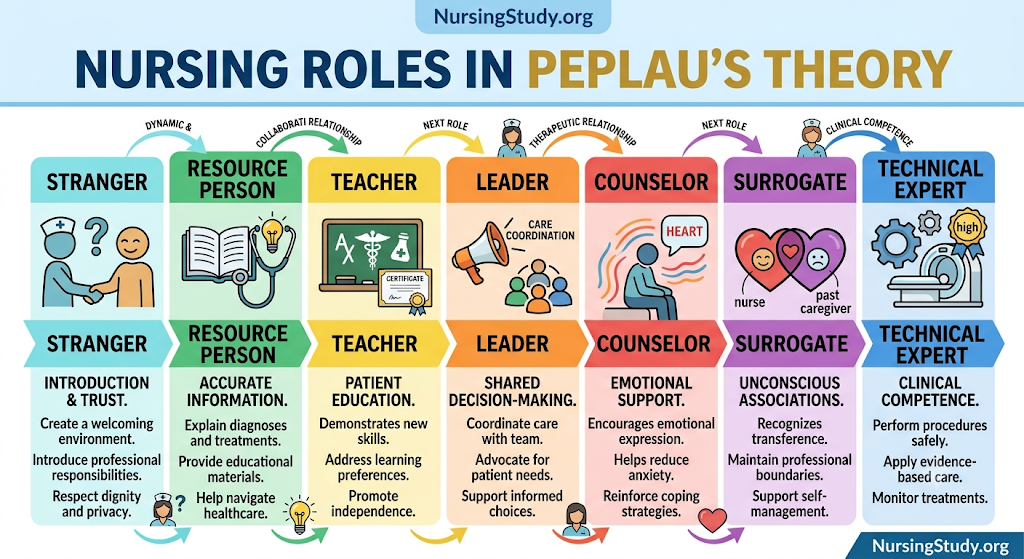
Strengths and Limitations of Peplau’s Theory
Hildegard Peplau’s Theory of Interpersonal Relations remains one of the most influential nursing theories because of its emphasis on communication, collaboration, and the therapeutic nature of the nurse-patient relationship. Since Peplau developed the theory in the mid-20th century, it has significantly shaped nursing practice, particularly in psychiatric care, while also influencing general nursing, community health, and nursing education.
The major contribution of Peplau’s theory is its recognition that nursing is not limited to performing clinical procedures or managing physical symptoms. Instead, Hildegard Peplau viewed nursing as an interpersonal process in which the nurse and patient work together to identify problems, reduce anxiety, develop coping strategies, and achieve improved health outcomes.
As a middle-range nursing theory, Peplau’s Theory of Interpersonal Relations provides practical guidance that can be directly applied in healthcare environments. It explains how relationships develop through the different phases of the nurse-patient relationship and how nurses assume different roles, including teacher, counselor, leader, resource person, and technical expert.
However, like all nursing theories, Peplau’s theory also has limitations. Changes in healthcare systems, advances in technology, increasing patient complexity, cultural diversity, and evolving nursing roles have created challenges in applying some aspects of the theory in contemporary settings.
Understanding both the strengths and limitations of Hildegard Peplau’s work allows nurses, educators, and researchers to appreciate its historical significance while recognizing areas where adaptation may be required for modern nursing practice.
Strengths
Emphasis on the Nurse-Patient Relationship
One of the greatest strengths of Hildegard Peplau’s Theory of Interpersonal Relations is its focus on the importance of the nurse-patient relationship as a central component of effective healthcare. Before Peplau’s theory, nursing was often viewed primarily as a task-oriented profession focused on completing medical orders and providing physical care. Hildegard Peplau challenged this perspective by demonstrating that the relationship between the nurse and patient could itself become a powerful therapeutic tool.
According to Peplau’s theory, the quality of the relationship influences how patients experience illness, respond to treatment, and participate in recovery. Through a supportive interpersonal relationship, nurses can help patients:
- Express fears and concerns.
- Understand their health conditions.
- Develop coping strategies.
- Reduce anxiety.
- Participate actively in decision-making.
- Achieve greater independence.
For example, a patient admitted with severe anxiety may initially avoid communication and refuse treatment recommendations. Through consistent interaction, active listening, and empathy, the nurse gradually develops trust with the patient. As the relationship strengthens, the patient becomes more willing to discuss concerns and participate in care.
This emphasis on relationships remains highly relevant in modern healthcare because patients continue to need emotional support, understanding, and human connection alongside medical treatment.
Provides a Structured Framework for Nursing Practice
Another major strength of Peplau’s Theory of Interpersonal Relations is that it provides nurses with a clear framework for developing and maintaining therapeutic relationships. The theory explains how interactions progress through the orientation phase, identification phase, exploitation phase, and resolution phase.
This structured approach helps nurses understand:
- How relationships begin.
- How trust is established.
- How patients become active participants in care.
- How therapeutic relationships are concluded appropriately.
For example, during the orientation phase, a nurse caring for a newly admitted patient focuses on introduction, assessment, trust-building, and reducing uncertainty. During later phases, the nurse transitions toward education, collaboration, and promoting independence.
This practical structure makes Peplau’s theory valuable in clinical nursing because it provides guidance for nurses working with patients experiencing physical, emotional, and psychological challenges.
Strong Application in Psychiatric and Mental Health Nursing
One of the most recognized strengths of Hildegard Peplau’s work is its profound influence on psychiatric nurses and mental health care. Because Hildegard Peplau was deeply influenced by psychiatry and interpersonal psychology, her framework became foundational in psychiatric nursing.
She is often referred to as the mother of psychiatric nursing because she transformed mental health nursing by emphasizing therapeutic communication and purposeful relationships.
In psychiatric settings, nurses use Peplau’s theory to:
- Establish trust with patients experiencing mental illness.
- Understand emotional and behavioral responses.
- Encourage self-awareness.
- Support coping and recovery.
- Facilitate therapeutic communication.
For example, a psychiatric nurse working with a patient experiencing depression may use the principles of Peplau’s theory to establish a safe relationship, encourage expression of feelings, identify negative thought patterns, and support healthier coping mechanisms.
The theory remains especially valuable in psychiatric care because interpersonal relationships are often central to treatment and recovery.
Promotes Patient-Centered Care
A significant strength of Peplau’s theory is that it positions the patient as an active participant rather than a passive recipient of healthcare. The theory recognizes that patients have personal experiences, beliefs, emotions, and abilities that influence their health outcomes.
Through collaboration between the nurse and patient, care becomes individualized and responsive to specific needs.
Patient-centered care supported by Peplau’s theory involves:
- Respecting patient preferences.
- Encouraging shared decision-making.
- Supporting patient autonomy.
- Recognizing emotional and psychological needs.
- Involving patients in goal setting.
For example, when caring for a patient with diabetes, the nurse does not simply provide instructions about medication and diet. Instead, the nurse explores the patient’s lifestyle, challenges, beliefs about illness, and readiness for change before developing an appropriate care plan.
This approach aligns closely with modern healthcare’s emphasis on individualized and holistic nursing care.
Highlights the Importance of Communication
Communication is another major strength of Hildegard Peplau’s Theory of Interpersonal Relations. Peplau emphasized that communication is not merely an exchange of information but a therapeutic intervention that can influence patient outcomes.
The theory encourages nurses to develop skills such as:
- Active listening.
- Empathy.
- Clarification.
- Reflection.
- Emotional support.
- Patient education.
These skills remain essential across all areas of nursing.
For example, in oncology nursing, a patient receiving a cancer diagnosis may experience fear and uncertainty. A nurse who applies therapeutic communication can provide emotional support, explain treatment options clearly, and help the patient navigate complex decisions.
The emphasis on communication has also strengthened nursing education by encouraging schools of nursing to teach interpersonal skills alongside clinical competencies.
Supports Professional Growth and Self-Awareness
Another strength of Peplau’s theory is its emphasis on the nurse’s personal and professional development. Hildegard Peplau recognized that nurses must understand themselves in order to establish effective relationships with patients.
The theory encourages nurses to reflect on:
- Their own beliefs and assumptions.
- Emotional responses toward patients.
- Communication patterns.
- Professional boundaries.
- Personal strengths and limitations.
For example, a nurse caring for a patient with substance use disorder may recognize personal biases and consciously work toward providing respectful, nonjudgmental care.
This emphasis on self-awareness supports ethical practice and improves the quality of interpersonal relations in nursing.
Limitations
Although Hildegard Peplau’s Theory of Interpersonal Relations has made significant contributions to nursing, it also has limitations. These limitations do not reduce its importance but highlight areas where additional perspectives may be needed in modern healthcare.
Limited Emphasis on Physical and Biological Aspects of Health
One criticism of Peplau’s theory is that it focuses heavily on psychological and interpersonal aspects of nursing while providing less attention to biological and physiological dimensions of care.
Because Hildegard Peplau developed the theory primarily from psychiatric nursing concepts, it places strong emphasis on communication, emotions, and relationships. However, many areas of modern nursing require extensive technical knowledge and physiological management.
For example, an intensive care nurse caring for a patient with multiple organ failure must prioritize:
- Hemodynamic monitoring.
- Medication management.
- Ventilator support.
- Laboratory interpretation.
- Emergency interventions.
While a therapeutic relationship remains important, the immediate physiological needs of the patient may take priority.
Therefore, some critics argue that Peplau’s theory should be combined with other nursing frameworks that address biological and environmental factors.
Requires Significant Time and Resources
Developing a meaningful therapeutic relationship requires time, consistency, and availability. However, modern healthcare environments often involve:
- Short hospital stays.
- High patient workloads.
- Limited staffing.
- Increased documentation demands.
- Time pressures.
These conditions may make it difficult for nurses to progress fully through all phases of the nurse-patient relationship.
For example, a nurse working in a busy emergency department may only interact with a patient for a few hours before transfer or discharge. Establishing a deep therapeutic relationship similar to what Peplau’s theory describes may not always be possible.
Less Applicable to Certain Nursing Situations
The theory assumes that meaningful interpersonal interaction is possible and central to care. However, some clinical situations limit communication.
Examples include:
- Patients who are unconscious.
- Patients experiencing severe cognitive impairment.
- Emergency situations requiring immediate intervention.
- Patients unable or unwilling to communicate.
For instance, a trauma nurse treating an unconscious accident victim cannot immediately establish a traditional therapeutic relationship. In such situations, physiological stabilization becomes the priority.
Potential Difficulty Applying the Theory Across Cultures
Another limitation of Peplau’s theory is that many concepts were developed within a Western healthcare context. The meaning of communication, independence, emotional expression, and nurse-patient relationships may differ across cultures.
For example, some cultures may expect healthcare decisions to be made primarily by family members rather than individual patients. In such situations, the nurse must adapt the principles of Peplau’s theory while respecting cultural values.
Modern nurses must combine the theory’s interpersonal principles with cultural competence to ensure effective care.
Limited Attention to Technology in Healthcare
When Hildegard Peplau developed the theory, healthcare technology was significantly different from today’s environment. Modern nursing now involves:
- Electronic health records.
- Telehealth.
- Artificial intelligence.
- Remote monitoring.
- Digital communication platforms.
These developments have changed how nurses interact with patients.
For example, a telehealth nurse may provide care without physical presence, requiring adaptation of traditional interpersonal approaches. Although the principles of communication remain relevant, nurses must modify how they establish trust and therapeutic connections through technology.
Challenges in Modern Healthcare
The continued application of Peplau’s theory in contemporary healthcare requires adaptation to changing healthcare environments. While the principles remain valuable, nurses face several challenges when attempting to establish therapeutic relationships today.
Increasing Patient Complexity
Modern nurses care for patients with increasingly complex health needs, including multiple chronic illnesses, mental health conditions, and social challenges.
Managing these complex situations requires nurses to balance:
- Technical clinical responsibilities.
- Emotional support.
- Patient education.
- Care coordination.
- Relationship building.
For example, a nurse caring for an older adult with diabetes, heart failure, depression, and limited family support must address both physical and psychosocial needs simultaneously.
Time Constraints and Workload Pressures
Heavy workloads remain one of the greatest barriers to implementing Peplau’s theory fully. Nurses may recognize the importance of communication but struggle to devote sufficient time to relationship development.
High patient-to-nurse ratios, administrative responsibilities, and staffing shortages can limit opportunities for meaningful interactions.
Increasing Use of Technology
Technology has improved healthcare delivery but has also changed how nurses interact with patients. While electronic systems improve documentation and access to information, excessive focus on screens and documentation may reduce face-to-face communication.
Nurses must find ways to balance technological responsibilities with maintaining human connection.
Changing Patient Expectations
Modern patients often have greater access to health information through online resources and expect active participation in decision-making.
This creates both opportunities and challenges. Nurses must support informed patients while correcting misinformation and ensuring decisions are based on evidence.
Expanding Nursing Roles
Today’s nurses increasingly work in advanced roles, including nurse practitioners, clinical specialists, educators, and healthcare leaders. These expanded responsibilities require adaptation of Peplau’s theory across different professional contexts.
The principles of communication, collaboration, and therapeutic relationships remain relevant, but nurses must integrate them with advanced clinical decision-making and leadership responsibilities.
Hildegard Peplau’s Legacy
The legacy of Hildegard Peplau represents one of the most significant transformations in the history of modern nursing. Through her groundbreaking work, Hildegard Peplau changed how nurses understood their professional role by demonstrating that nursing is not only concerned with physical care and disease management but also with human relationships, communication, emotional support, and psychological healing.
Before the development of Peplau’s Theory of Interpersonal Relations, nursing care was often heavily influenced by a task-oriented approach, where nurses primarily focused on carrying out medical treatments, maintaining patient safety, and assisting physicians. Hildegard Peplau challenged this traditional view by introducing the idea that the relationship between the nurse and patient could serve as a powerful therapeutic tool.
Through her influential work, particularly Interpersonal Relations in Nursing, Hildegard Peplau established a framework that positioned nursing as an interpersonal and collaborative profession. Her theory emphasized that nurses do not simply perform tasks for patients; they work with patients through purposeful communication and meaningful relationships to promote recovery, adaptation, and personal growth.
The impact of Peplau’s theory extends beyond psychiatric settings. Today, the principles of interpersonal relations in nursing influence healthcare delivery in hospitals, community settings, nursing schools, and advanced clinical practice. Her ideas continue to shape how nurses approach communication, patient education, mental health care, and professional relationships.
Several aspects define the lasting legacy of Hildegard Peplau, including:
- Transforming psychiatric nursing into a therapeutic discipline.
- Establishing the importance of the nurse-patient relationship.
- Advancing the role of communication in nursing practice.
- Influencing nursing education and curriculum development.
- Strengthening the recognition of nursing as an independent profession.
- Providing one of the most widely applied middle-range nursing theories.
Because of these contributions, Hildegard Peplau remains recognized as one of the most influential nursing theorists of the 20th century.
Impact on Psychiatric Nursing
The greatest impact of Hildegard Peplau can be seen in the field of psychiatric nursing. She is widely recognized as the mother of psychiatric nursing because she transformed the way mental health nurses understood their role in caring for individuals experiencing psychological distress.
Before Peplau developed the theory, psychiatric nursing was often centered around institutional care, patient supervision, and symptom management. Individuals experiencing mental illness were frequently viewed primarily through the symptoms of their conditions rather than as people with emotions, personal histories, relationships, and the capacity for growth.
Hildegard Peplau introduced a new perspective by emphasizing that psychiatric nursing should focus on understanding patients as individuals and using the therapeutic relationship as a method of care. Her approach shifted psychiatric nursing from a custodial model toward a recovery-oriented and relationship-centered model.
Establishing the Therapeutic Role of Psychiatric Nurses
One of the most important contributions of Hildegard Peplau was defining the psychiatric nurse as a therapeutic professional rather than simply a caregiver who assists with treatment routines.
Through Peplau’s Theory of Interpersonal Relations, psychiatric nurses learned that their interactions with patients could promote:
- Emotional healing.
- Self-awareness.
- Improved coping skills.
- Behavioral change.
- Increased independence.
The psychiatric nurse became recognized as an active participant in treatment rather than a passive assistant within the healthcare system.
For example, a psychiatric nurse caring for a patient experiencing anxiety disorder does not only administer prescribed medications. The nurse also establishes trust, explores sources of anxiety, teaches coping strategies, encourages emotional expression, and helps the patient develop healthier responses to stress.
This approach demonstrates how the therapeutic process becomes an essential component of psychiatric care.
Advancement of Therapeutic Communication in Mental Health Care
Another major contribution of Hildegard Peplau was highlighting the importance of communication as a clinical intervention. In psychiatric nursing, communication is often one of the primary tools used to assess, support, and treat patients.
Peplau’s theory encouraged psychiatric nurses to develop advanced interpersonal skills, including:
- Active listening.
- Empathy.
- Reflection.
- Clarification.
- Emotional support.
- Therapeutic questioning.
These skills allow nurses to understand patients’ thoughts, feelings, behaviors, and experiences.
For example, when caring for a patient experiencing depression, a psychiatric nurse may use therapeutic communication to explore feelings of hopelessness, identify risk factors, encourage expression of emotions, and support the development of coping strategies.
Rather than simply managing symptoms, the nurse helps the patient understand themselves and participate actively in recovery.
Influence on Modern Nursing Practice
The work of Hildegard Peplau significantly influenced how psychiatric nursing is taught in schools of nursing. Her theory became an important foundation for preparing nurses to work with individuals experiencing mental health challenges.
Modern nursing education incorporates concepts from Peplau’s theory by teaching students about:
- Therapeutic communication.
- Professional boundaries.
- Patient-centered care.
- Emotional intelligence.
- Mental health assessment.
- Relationship-building skills.
Students learn that effective psychiatric nursing requires both clinical knowledge and the ability to establish meaningful human connections.
For example, during psychiatric clinical placements, nursing students may practice interviewing patients, identifying emotional needs, developing therapeutic goals, and reflecting on their communication approaches. These activities directly reflect the principles established by Hildegard Peplau.
Influence on Modern Nursing Practice
Although Hildegard Peplau is best known for her contributions to psychiatric nursing, the influence of Peplau’s Theory of Interpersonal Relations extends throughout all areas of modern nursing practice. Her ideas changed the way nurses understand their professional identity and reinforced the importance of caring for the whole person.
Today, nurses in medical-surgical units, intensive care, community health, pediatrics, oncology, rehabilitation, and outpatient settings apply principles derived from Peplau’s theory.
Strengthening Patient-Centered Care
One of the most significant influences of Peplau’s theory on modern nursing practice is the promotion of patient-centered care. The theory emphasizes that patients are not passive recipients of healthcare but active participants in decisions affecting their health.
Modern nursing practice reflects this principle through:
- Shared decision-making.
- Individualized care planning.
- Patient education.
- Respect for patient preferences.
- Collaboration between healthcare providers and patients.
For example, when caring for a patient with hypertension, a nurse does not simply instruct the patient to take medications and change lifestyle habits. Instead, the nurse explores the patient’s daily routines, challenges, beliefs, and goals before developing a realistic plan.
This collaborative approach reflects Hildegard Peplau’s belief that effective care develops through partnership.
Improving Communication Across Healthcare Settings
The emphasis on communication within Peplau’s Theory of Interpersonal Relations has influenced nursing practice across all specialties.
Communication is now recognized as essential for:
- Patient safety.
- Effective teamwork.
- Health education.
- Emotional support.
- Prevention of misunderstandings.
For example, in an intensive care unit, a nurse caring for a critically ill patient must communicate effectively with the patient, family members, physicians, and other healthcare professionals. Even when the patient is unable to speak, nurses use therapeutic principles by explaining procedures, providing reassurance, and maintaining dignity.
Supporting Holistic Nursing Care
Hildegard Peplau contributed to the development of holistic nursing by emphasizing that patients should be understood beyond their medical diagnoses.
Modern nurses consider:
- Physical needs.
- Emotional experiences.
- Social relationships.
- Cultural beliefs.
- Psychological responses.
For example, a patient recovering from surgery may require more than pain management. The nurse must also address fear, uncertainty, family concerns, mobility challenges, and emotional adjustment.
This holistic approach reflects the continuing influence of Peplau’s theory on contemporary nursing care.
Enhancing Professional Nursing Roles
Peplau’s theory also expanded understanding of the different roles nurses perform. Her identification of roles such as teacher, counselor, leader, resource person, and technical expert helped demonstrate the complexity of nursing responsibilities.
Modern nurses continue to perform these roles in different settings.
For example:
- A nurse educator teaches patients about disease prevention.
- A community nurse connects individuals with healthcare resources.
- A clinical nurse specialist provides advanced expertise.
- A psychiatric nurse provides counseling and emotional support.
These roles demonstrate how the nurse contributes to healthcare beyond technical procedures.
Continuing Relevance of the Theory
Despite being developed decades ago, Hildegard Peplau’s Theory of Interpersonal Relations remains highly relevant in contemporary healthcare. The continued application of the theory demonstrates that human connection remains a fundamental aspect of nursing, even as technology, healthcare systems, and patient needs continue to evolve.
As a middle-range nursing theory, Peplau’s theory remains practical because it provides concepts that nurses can apply directly in everyday interactions. Unlike abstract theories that may be difficult to translate into practice, Peplau’s theory offers clear guidance on communication, relationships, and patient engagement.
Relevance in Modern Mental Health Care
The importance of Peplau’s theory has increased as healthcare systems place greater emphasis on mental health awareness, recovery-oriented care, and reducing stigma associated with psychiatric conditions.
Modern mental health services continue to rely on:
- Therapeutic relationships.
- Patient empowerment.
- Collaborative treatment planning.
- Communication-based interventions.
For example, community mental health nurses use principles from Peplau’s theory when supporting individuals managing depression, anxiety, substance use disorders, and other mental health conditions outside hospital environments.
Relevance in Technology-Based Healthcare
Although technology has transformed healthcare delivery, the principles of Peplau’s theory remain applicable. Telehealth, electronic communication, and digital healthcare platforms have changed how nurses interact with patients, but the need for trust, empathy, and effective communication remains unchanged.
For example, a nurse conducting a virtual consultation must still establish rapport, listen carefully, assess emotional concerns, and provide reassurance despite the absence of physical presence.
This demonstrates that the foundation of the theory is not dependent on physical proximity but on meaningful human interaction.
Relevance in Nursing Education Today
The influence of Hildegard Peplau continues in modern nursing education, where communication and interpersonal skills remain essential components of professional preparation.
Schools of nursing continue to teach concepts related to:
- Therapeutic communication.
- Professional relationships.
- Patient advocacy.
- Emotional intelligence.
- Reflective nursing practice.
Nursing students learn that technical competence alone does not define excellent nursing. The ability to establish respectful and meaningful relationships is equally important.
Relevance Across Diverse Healthcare Settings
The principles of Peplau’s theory remain applicable because every healthcare encounter involves human interaction. Whether caring for a patient in emergency care, a family in community health, or an individual receiving long-term treatment, nurses must establish relationships that support trust and cooperation.
For example:
- In pediatric nursing, nurses build relationships with children and families to reduce fear and promote cooperation.
- In oncology nursing, nurses support patients through emotional challenges associated with diagnosis and treatment.
- In community nursing, nurses establish trust with populations to promote health behaviors.
- In rehabilitation nursing, nurses encourage independence and adaptation.
These examples demonstrate the broad applicability of Hildegard Peplau’s concepts.
Too many nursing assignments piling up?
Let us handle the writing while you focus on your clinical work.
Conclusion
Hildegard Peplau’s Theory of Interpersonal Relations remains one of the most influential contributions to the development of modern nursing because it transformed the way nurses understand care, communication, and the professional relationship with patients. By emphasizing that the nurse-patient relationship is a central component of healing, Hildegard Peplau expanded the role of nursing beyond physical treatment and technical interventions to include emotional support, education, collaboration, and psychological growth.
Through the development of Peplau’s theory, nursing became recognized as an interpersonal process in which nurses and patients work together to identify needs, reduce anxiety, develop coping abilities, and achieve meaningful health outcomes. The concepts of the therapeutic process, communication, and the different phases of the nurse-patient relationship continue to provide nurses with a practical framework for building effective and purposeful connections with individuals receiving care.
The influence of Hildegard Peplau is particularly evident in psychiatric nursing, where her ideas established the foundation for relationship-centered mental health care. As the mother of psychiatric nursing, she demonstrated that therapeutic interactions could promote self-awareness, emotional stability, and recovery among individuals experiencing mental health challenges. However, the relevance of her work extends far beyond psychiatric settings, influencing medical-surgical nursing, community health, chronic disease management, rehabilitation, and nursing education.
Although modern healthcare presents new challenges, including technological advancements, increased patient complexity, shorter care encounters, and changing healthcare expectations, the principles of Peplau’s Theory of Interpersonal Relations remain highly applicable. Nurses continue to rely on trust, empathy, active listening, and effective communication to provide compassionate and patient-centered nursing care. Even in technology-driven environments such as telehealth, the need for genuine human connection remains an essential part of effective healthcare delivery.
As a middle-range nursing theory, Peplau’s theory continues to serve as a valuable guide for both practicing nurses and future professionals. It reinforces the idea that nursing is not only about what nurses do for patients but also about how nurses engage with patients throughout the healthcare journey. The ability to establish meaningful interpersonal relationships, recognize individual needs, and support patients toward independence remains a defining characteristic of excellent nursing practice.
Ultimately, the enduring legacy of Hildegard Peplau lies in her recognition that relationships are at the heart of nursing. Her work continues to remind nurses that every interaction has the potential to influence healing, build confidence, and improve patient experiences. Through its continued application in nursing practice, nursing theories, and healthcare education, Peplau’s Theory of Interpersonal Relations remains a timeless framework that strengthens the human connection at the center of professional nursing.
Frequently Asked Questions
What is Hildegard E Peplau’s Theory of Interpersonal Relationships in Nursing?
Hildegard E. Peplau’s Theory of Interpersonal Relations in nursing is a middle-range nursing theory that explains how the relationship between the nurse and patient becomes a therapeutic process that promotes healing, growth, and improved health outcomes. Developed by Hildegard Peplau, the theory emphasizes that nursing is not only the delivery of clinical interventions but also an interpersonal process involving communication, trust, collaboration, and emotional support.
According to Peplau’s theory, the nurse and patient work together through a professional relationship to identify health concerns, reduce anxiety, develop coping strategies, and achieve mutually established goals. The theory highlights the importance of therapeutic communication and explains how nurses assume different roles, including teacher, counselor, leader, resource person, and technical expert, depending on the patient’s needs.
The theory is particularly influential in psychiatric nursing, where establishing a therapeutic relationship is central to helping patients understand emotions, manage mental health challenges, and participate in recovery. However, its principles are also applied across clinical nursing, community health, chronic disease management, and nursing education.
What is the Main Idea of Hildegard Peplau Theory?
The main idea of Hildegard Peplau’s Theory of Interpersonal Relations is that nursing is a therapeutic interpersonal process where the relationship between the nurse and patient can promote healing and personal development.
Hildegard Peplau believed that effective nursing care occurs when nurses and patients interact meaningfully rather than when nurses simply perform tasks or provide treatments. Through communication and collaboration, nurses help patients understand their health situations, manage anxiety, develop independence, and participate actively in their own care.
The theory emphasizes several important ideas:
- The nurse-patient relationship is a purposeful professional relationship.
- Communication is a therapeutic tool.
- Patients should be active participants in healthcare decisions.
- Nurses must understand patients’ emotional, psychological, and physical needs.
- The relationship develops through different phases that guide nursing actions.
Ultimately, the central message of Peplau’s theory is that the quality of the relationship between the nurse and patient directly influences the effectiveness of nursing care.
What is the Purpose of Peplau’s Interpersonal Relations Theory in Nursing?
The purpose of Peplau’s Theory of Interpersonal Relations is to provide nurses with a framework for developing effective therapeutic relationships that improve patient outcomes. The theory helps nurses understand how purposeful interactions can reduce anxiety, encourage communication, promote learning, and support patients in achieving greater independence.
In nursing practice, the theory serves several purposes:
- Guiding therapeutic communication: It helps nurses use communication intentionally to understand patient concerns and provide emotional support.
- Strengthening the nurse-patient relationship: It provides a structure for developing trust, cooperation, and collaboration.
- Supporting patient growth: It enables nurses to help patients develop coping skills, confidence, and self-awareness.
- Improving nursing practice: It encourages nurses to view patients holistically rather than focusing only on illness or symptoms.
- Enhancing nursing education: It provides a foundation for teaching students about interpersonal skills, professional relationships, and patient-centered care.
The theory is especially valuable in psychiatric care, where relationships and communication are essential components of treatment. However, its purpose extends across all areas of nursing by reminding nurses that every interaction with a patient has therapeutic potential.
What Are the 4 Components of Peplau’s Theory?
The four major components of Hildegard Peplau’s Theory of Interpersonal Relations are:
1. Person
The person component refers to the individual receiving nursing care. Hildegard Peplau viewed patients as unique individuals with personal experiences, emotions, beliefs, values, and needs. Patients are not simply defined by their illnesses but should be understood as whole human beings.
This concept emphasizes that nurses must consider the patient’s psychological, social, and physical experiences when planning and providing care.
2. Nurse
The nurse component focuses on the professional role of the nurse within the therapeutic relationship. According to Peplau’s theory, the nurse is not only a caregiver but also a teacher, counselor, leader, resource person, and advocate.
The nurse uses communication, clinical knowledge, and interpersonal skills to help patients understand their situations, manage challenges, and achieve health goals.
3. Health
The health component refers to the patient’s ability to function, adapt, and achieve personal growth. Hildegard Peplau viewed health as more than the absence of disease; it includes psychological wellbeing, emotional balance, and the ability to cope effectively with life experiences.
Through the therapeutic process, nurses help patients move toward improved health and independence.
4. Environment
The environment component refers to the surrounding conditions that influence the nurse-patient relationship and the patient’s health experience. Although Peplau’s theory places greater emphasis on interpersonal interactions, it recognizes that social, cultural, and healthcare environments affect how individuals respond to illness and treatment.
A supportive environment allows patients to communicate openly, participate in care, and experience positive health outcomes.
