NRNP-6665-Week 8: Neurodevelopmental Assignment on ADHD Combined Type Study Guide-Nursing Paper Examples
A 1,071-word nursing paper examples, formatted in APA 7 (about 4 double-spaced pages). It cites 12 sources published 2015–2023.
- Type
- Nursing Paper Examples
- Length
- 1,071 words, 4 pages
- Style
- APA 7
- Sources
- 12 (2015–2023)
Contents (21 sections)
- Signs and symptoms according to the DSM-5-TR (Neurodevelopmental on ADHD-Nursing Paper Examples)
- Figure 1: Inattention and Hyperactivity Symptoms of ADHD
- Differential diagnoses
- Incidence
- Figure 2: ADHD prevalence among children in the USA
- Development and course
- Prognosis
- Figure 3: ADHD Prognosi
- Considerations related to culture, gender, age
- Figure 4: ADHD considerations based on age
- Pharmacological treatments, including any side effects
- Figure 5: Examples of ADHD Medications
- Nonpharmacological treatments
- Figure 6: Concept map for CBT activity
- Diagnostics and labs
- Figure 7: Sample of BASC-3 Report for ADHD
- Comorbidities
- Figure 8: ADHD comorbidities
- Legal and ethical considerations
- Pertinent patient education considerations
- References
Nursing Paper ExamplesAPA 7
NRNP-6665-Week 8: Neurodevelopmental Assignment on ADHD Combined Type Study Guide
Signs and symptoms according to the DSM-5-TR (Neurodevelopmental on ADHD-Nursing Paper Examples)
Attention deficit hyperactivity disorder (ADHD) is a neurological disorder that affects children’s ability to control their emotions and impulsive behaviors. Gomez et al. (2023) illustrate that the DSM-5-TR indicates that children below 17 years diagnosed with the combined form of the disorder must exhibit at least six symptoms of hyperactivity and inattention. Those above 17 years must exhibit at least five symptoms of inattention and hyperactivity.
The symptoms of inattention include making careless mistakes, trouble attention when performing tasks, challenges organizing activities, being forgetful, losing items like books easily. and easily getting distracted. (Gomez et al., 2023) Consequently, the symptoms of hyperactivity include excessive talking, interrupting others, engagement in inappropriate situations, challenges engaging in leisure activities, squirming in their seat, abandoning seats when required to remain seated, restlessness, blurts out answers to questions.
Figure 1: Inattention and Hyperactivity Symptoms of ADHD

Differential diagnoses
Emotional disorders like anxiety, mood, and conduct disorders produce similar symptoms to those of ADHD. In this case, a broadband behavior scale is recommended for filtering out the disorders (Drake et al., 2019). Psychiatrists should also be involved in the differential diagnosis process to ascertain that the symptoms are for ADHD (Neurodevelopmental on ADHD-Nursing Paper Examples).
Incidence
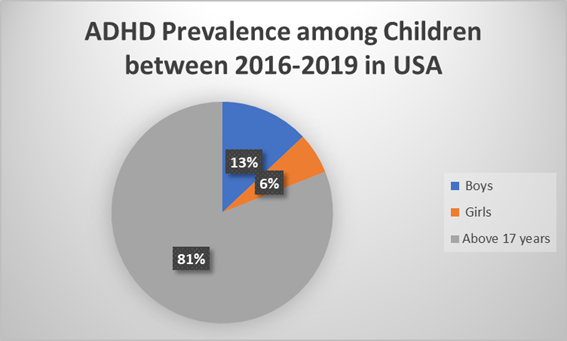
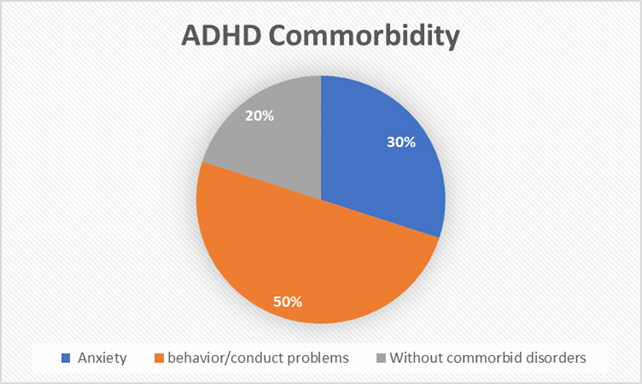
The Centers for Disease Control and Prevention (CDC) reported that ADHD affected 6 million children between 2016 and 2019, with 13% boys and 6% girls aged between 3 and 17. The children exhibited comorbid disorders, with 30% having anxiety and 50% having behavior or conduct problems. According to a meta-analysis by Ayano et al. (2020), combined ADHD prevalence was 2.95% in boys, 2.77% in girls, and 2.44% in adults (Neurodevelopmental on ADHD-Nursing Paper Examples).
Figure 2: ADHD prevalence among children in the USA
Development and course
ADHD symptoms occur before 12 years, with some children displaying mild or moderate symptoms at three years old, eventually becoming severe towards adulthood. The children may experience difficulties paying attention, overactivity, and lack of social skills, eventually exacerbated by the absence of (Neurodevelopmental on ADHD-Nursing Paper Examples).
Prognosis
Ayano et al. (2020) explain that ADHD prognosis depends on whether a child receives treatment, especially at the onset of the symptoms. Children subjected to behavioral and medical therapy exhibit healthy lives in the future. However, the absence of treatment contributes to poor long-term health outcomes, such as trouble with attention, managing daily activities, and substance abuse disorders. Approximately 50% of untreated children exhibit ADHD symptoms in adulthood (Neurodevelopmental on ADHD-Nursing Paper Examples).
Figure 3: ADHD Prognosi
Considerations related to culture, gender, age
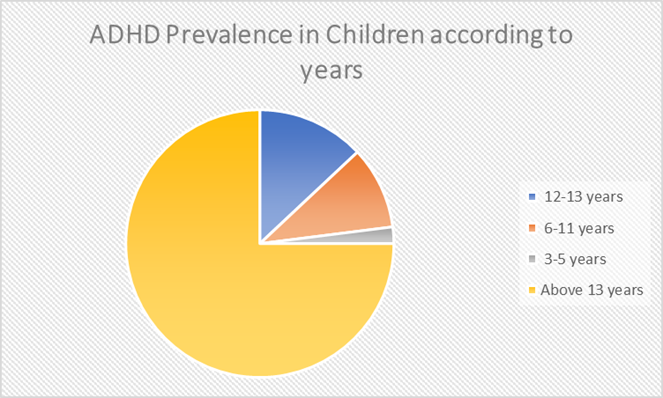
According to the CDC (2022), boys exhibit a higher incidence of ADHD at 13% compared to girls at 6%. Besides, white, back, and non-Hispanic children are more likely to develop ADHD than Hispanic children. The disorder is more prevalent in children between 12-13 (13%), 6-11 (10%), and 3-5 years (2%) (Neurodevelopmental on ADHD-Nursing Paper Examples).
Figure 4: ADHD considerations based on age
Pharmacological treatments, including any side effects
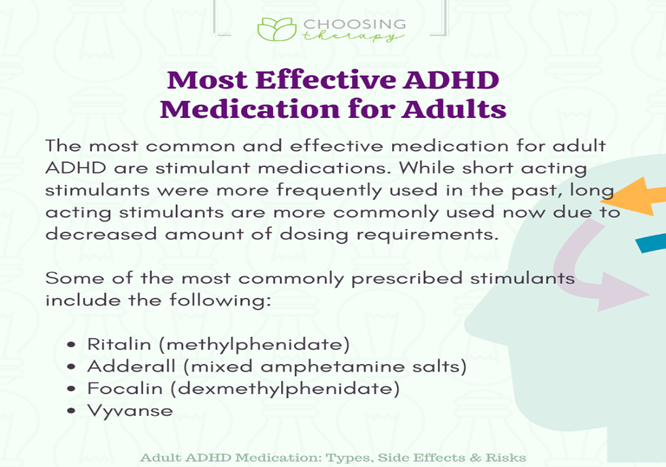
The pharmacological treatment of combined ADHD includes administering stimulant medications like Ritalin and Adderall. The stimulants can effectively reduce the disorder symptoms by 80%. However, the side effects of these Ritalin medications include nausea, vomiting, loss of appetite, and irritability. The side effects of Adderall include insomnia, headache, dry mouth, and dizziness (Cregin et al., 2020) (Neurodevelopmental on ADHD-Nursing Paper Examples).
Additionally, Ten et al. (2020) illustrate that non-stimulant medications like Strattera can also be administered to provide long-lasting relief for ADHD. It acts slowly and produces side effects like aggression, suicidal ideations, loss of appetite, headache, and dry mouth (Neurodevelopmental on ADHD-Nursing Paper Examples).
Figure 5: Examples of ADHD Medications
Nonpharmacological treatments
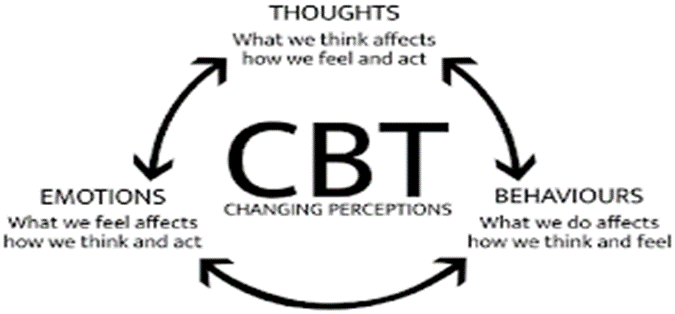
The non-pharmacological treatment of ADHD can include cognitive behavioral therapy (CBT), which is integral in addressing and revising the distorted cognition and habits affecting individuals’ emotions and productivity (Shrestha et al., 2020). It helps in organization and social skills training to impart the patients with effective coping and disorder management strategies (Shrestha et al., 2020). Additionally, Jiang et al. (2022) observe that aerobic exercises like gymnastics and martial arts are also helpful in effectively managing the disorder in children. It induces the release of neurotransmitters from the brain, resulting in focused attention and alertness (Neurodevelopmental on ADHD-Nursing Paper Examples).
Figure 6: Concept map for CBT activity
Diagnostics and labs
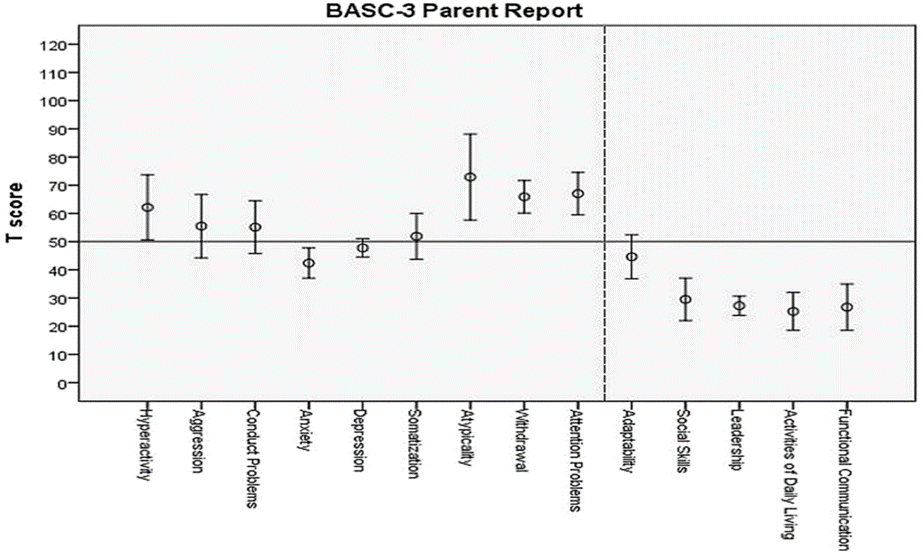
Diagnosis of combined ADHD involves psychiatric and physical evaluation, which must comply with the DSM-5-TR criteria. The evaluations occur by interviewing the child’s parents or relatives, watching the patient play, and using ADHD rating scales like the Behavior Assessment System for Children (BASC-3) to determine the disorder symptoms (Tan et al., 2020). The BASC-3 tool is reliable and effective in identifying ADHD symptoms in individuals between 2 and 21 years (Neurodevelopmental on ADHD-Nursing Paper Examples).
Figure 7: Sample of BASC-3 Report for ADHD
Comorbidities
Patients with ADHD usually exhibit other psychiatric disorders like learning disabilities, anxiety, depression, and conduct behaviors. They have an increased risk of conduct disorder and anxiety diagnosis compared to other disorders. 30% of the children with ADHD have anxiety, while 50% exhibit behavior or conduct problems (Neurodevelopmental on ADHD-Nursing Paper Examples).
Figure 8: ADHD comorbidities
Legal and ethical considerations
Tseng (2021) observes that the diagnosis of ADHD is associated with ethical challenges like the need to uphold the ethical principles of beneficence and justice. For example, schools may not permit children diagnosed with the disorder to return until fully treated, leading to conflicts on whether to ensure their basic education rights are respected (justice) or to pursue the patient’s health improvement (beneficence). Additionally, impulsive hyperactivity could contribute to retribution demands, which are likely to be settled in courts, especially when an ADHD patient engages in an activity with adverse consequences to the victim (Neurodevelopmental on ADHD-Nursing Paper Examples)
Pertinent patient education considerations
Chronis-Tuscano et al. (2020) suggest eliminating distractions in the learning environments of children with ADHD to improve their attention. Distractions trigger hyperactivity, hence should be eliminated or managed to improve alertness among the patients (Thapar et al., 2015). They should also be rewarded for good behaviors, such as improved class performance, to enable them to focus energy on their strengths. Additionally, it is important to raise awareness of ADHD among the patient’s family to enable them to reduce hyperactivity and inattention triggers that may affect the patient’s coping strategies (Chronis-Tuscano et al., 2020) (Neurodevelopmental on ADHD-Nursing Paper Examples).
References
Ayano, G., Yohannes, K., & Abraha, M. (2020). Epidemiology of attention-deficit/hyperactivity disorder (ADHD) in children and adolescents in Africa: a systematic review and meta-analysis. Annals of general psychiatry, 19(1), 1-10.https://doi.org/10.1186%2Fs12991-020-00271-w
CDC. (2022). Attention-deficit / hyperactivity disorder (ADHD): Data and statistics about ADHD. Centers for Disease Control and Prevention. https://www.cdc.gov/ncbddd/adhd/data.html
Chronis-Tuscano, A., O’Brien, K., Danko, C. M. (2020). Supporting Caregivers of Children with ADHD: An Integrated Parenting Program, Therapist Guide. United States: Oxford University Press, Incorporated.
Cregin, D., Koltun, R., Malik, S., Umeozor, D., & Begdache, L. (2021). The Adderall Epidemic: A Proposed Cyclic Relationship between ADHD Medication Use, Academic Performance, and Mental Distress. Impulse (19343361), 18(1). https://assets.pubpub.org/ualu5q36/11643848086892.pdf
Drake, M. B., Riccio, C. A., & Hale, N. S. (2019). Assessment of adult ADHD with college students. Journal of Attention Disorders, 23(14), 1729-1735. https://doi.org/10.1177/1087054717698222
Gomez, R., Chen, W., & Houghton, S. (2023). Differences between DSM-5-TR and ICD-11 revisions of attention deficit/hyperactivity disorder: A commentary on implications and opportunities. World Journal of Psychiatry, 13(5), 138. https://doi.org/10.5498%2Fwjp.v13.i5.138
Jiang, K., Xu, Y., Li, Y., Li, L., Yang, M., & Xue, P. (2022). How aerobic exercise improves executive function in ADHD children: A resting‐state fMRI study. International Journal of Developmental Neuroscience, 82(4), 295-302. https://doi.org/10.1002/jdn.10177
Shrestha, M., Lautenschleger, J., & Soares, N. (2020). Non-pharmacologic management of attention-deficit/hyperactivity disorder in children and adolescents: a review. Translational Pediatrics, 9(Suppl 1), S114. https://doi.org/10.21037%2Ftp.2019.10.01
Tan, T. X., Yi, Z., Kamphaus, R. W., Wang, Y., Li, Z., & Cheng, K. (2020). Testing the reliability and construct validity of a Chinese translation of BASC-3-SRP for 12-to 18-year-old youths. Journal of Psychoeducational Assessment, 38(5), 599-612. https://doi.org/10.1177/0734282919874257
Ten, W., Tseng, C. C., Chiang, Y. S., Wu, C. L., & Chen, H. C. (2020). Creativity in children with ADHD: Effects of medication and comparisons with normal peers. Psychiatry Research, 284, 112680. https://doi.org/10.1016/j.psychres.2019.112680
Thapar, A., Pine, D. S., Leckman, J. F., Scott, S., Snowling, M. J., & Taylor, E. A. (2015). Rutter’s Child and adolescent psychiatry (6th ed.). Wiley Blackwell.
Tseng, F. T. (2021). More scientific, more ethical: The ADHD controversy and boundary‐work in Taiwan. Sociology of Health & Illness, 43(4), 844-858. https://doi.org/10.1111/1467-9566.13259
This paper is a sample from a completed student assignment, published to help you understand structure, argument and APA formatting. Use it for inspiration and reference only, and cite it if you quote it.
Get this paper as a Word file
neurodevelopmental-on-adhd-nursing-paper-example.docx, with an APA title page and reference list, ready to edit in Word or Google Docs.
Need a custom paper on NRNP-6665-Week 8: Neurodevelopmental Assignment on ADHD Combined Type Study Guide?
Get an original, plagiarism-free paper written to your rubric by a nursing expert.
Cite This Paper
Pick your style, then copy. Italics are kept when you paste into Word or Google Docs.
Nursing Paper Examples. (2024, January 11). NRNP-6665-Week 8: Neurodevelopmental Assignment on ADHD Combined Type Study Guide [Nursing paper examples example]. https://nursingstudy.org/examples/neurodevelopmental-on-adhd-nursing-paper-examples/
(Nursing Paper Examples, 2024)
Nursing Paper Examples. (2024, January 11). NRNP-6665-Week 8: Neurodevelopmental Assignment on ADHD Combined Type Study Guide [Nursing paper examples example]. Retrieved from https://nursingstudy.org/examples/neurodevelopmental-on-adhd-nursing-paper-examples/
(Nursing Paper Examples, 2024)
“NRNP-6665-Week 8: Neurodevelopmental Assignment on ADHD Combined Type Study Guide.” Nursing Paper Examples, 11 Jan. 2024, nursingstudy.org/examples/neurodevelopmental-on-adhd-nursing-paper-examples.
(“NRNP-6665-Week 8: Neurodevelopmental Assignment”)
Nursing Paper Examples (2024) NRNP-6665-Week 8: Neurodevelopmental Assignment on ADHD Combined Type Study Guide. Available at: https://nursingstudy.org/examples/neurodevelopmental-on-adhd-nursing-paper-examples/ (Accessed: 15 October 2026).
(Nursing Paper Examples, 2024)
Nursing Paper Examples. 2024. “NRNP-6665-Week 8: Neurodevelopmental Assignment on ADHD Combined Type Study Guide.” January 11, 2024. https://nursingstudy.org/examples/neurodevelopmental-on-adhd-nursing-paper-examples/.
(Nursing Paper Examples 2024)
Nursing Paper Examples. “NRNP-6665-Week 8: Neurodevelopmental Assignment on ADHD Combined Type Study Guide.” January 11, 2024. https://nursingstudy.org/examples/neurodevelopmental-on-adhd-nursing-paper-examples/.
1. Nursing Paper Examples, “NRNP-6665-Week 8: Neurodevelopmental Assignment on ADHD Combined Type Study Guide,” January 11, 2024, https://nursingstudy.org/examples/neurodevelopmental-on-adhd-nursing-paper-examples/.
Nursing Paper Examples. NRNP-6665-Week 8: Neurodevelopmental Assignment on ADHD Combined Type Study Guide [Internet]. 2024 Jan 11 [cited 2026 Oct 15]. Available from: https://nursingstudy.org/examples/neurodevelopmental-on-adhd-nursing-paper-examples/
[1] or (1)
Nursing Paper Examples. NRNP-6665-Week 8: Neurodevelopmental Assignment on ADHD Combined Type Study Guide. Published January 11, 2024. Accessed October 15, 2026. https://nursingstudy.org/examples/neurodevelopmental-on-adhd-nursing-paper-examples/
1
Published . Updated .