

Dorothea Orem’s Self-care Deficit Nursing Theory
Dorothea Orem: A Complete Guide to the Self-Care Deficit Theory for Every Nurse
Dorothea Orem is widely recognized as one of the most influential contributors to modern nursing because of her development of the Self-Care Deficit Nursing Theory, a framework that continues to shape contemporary nursing practice, nursing education, and patient-centered care. As a pioneering nurse theorist, Dorothea Orem challenged the traditional perception that patients should always depend on healthcare professionals for their care. Instead, she proposed that individuals possess the potential to care for themselves and that the primary responsibility of a nurse is to identify when patients are unable to meet their own self-care needs and provide the appropriate level of assistance to restore or maintain their independence.
At the heart of Dorothea Orem’s work is the belief that people achieve better health outcomes when they are empowered to participate actively in their own care. Her self-care deficit theory emphasizes that nursing becomes necessary only when a person’s ability to perform self-care activities is insufficient to meet the demands required for maintaining health, recovering from illness, or coping with disability. This perspective transformed the theory of nursing by shifting the focus from simply treating disease to promoting patient autonomy, health maintenance, and long-term well-being.
Unlike many conceptual models that remain largely theoretical, Orem’s Self-Care Deficit Nursing Theory provides nurses with a practical decision-making framework that can be applied across virtually every healthcare setting. Whether caring for hospitalized patients, managing chronic illnesses in the community, supporting rehabilitation, or educating individuals about disease prevention, the theory helps healthcare professionals determine:
- A patient’s ability to perform self-care independently.
- The presence and extent of self-care deficits.
- The level of nursing intervention required.
- The most appropriate nursing system to promote recovery and independence.
This structured approach enables nurses to deliver individualized care while encouraging patients to become active participants in managing their own health.
One of the reasons Dorothea Orem’s work has remained relevant for decades is its broad applicability. The principles established through the Self-Care Deficit Nursing Theory extend beyond hospitals and are used in numerous areas of healthcare, including:
- Acute care and medical-surgical nursing.
- Community and public health nursing.
- Rehabilitation and long-term care.
- Maternal and child health.
- Mental health nursing.
- Home healthcare.
- Chronic disease management.
- Health promotion and disease prevention.
Across these diverse settings, the theory provides a consistent framework for assessing patient needs, planning interventions, and evaluating outcomes while recognizing that every individual has unique capabilities, limitations, and health goals.
Another defining characteristic of Dorothea Orem’s work is its integration of scientific knowledge with practical nursing care. Her theory combines concepts from the biological sciences and nursing to explain how physical, psychological, developmental, and environmental factors influence a person’s ability to perform self-care. Through concepts such as self-care agency, therapeutic self-care demand, universal self-care requisites, and health deviation self-care requisites, Dorothea Orem established a systematic method for understanding why some individuals require nursing assistance while others are capable of managing their health independently. These concepts continue to serve as foundational components of both the general theory of nursing and contemporary professional nursing practice.
The influence of Dorothea Orem extends well beyond clinical care. Her contributions have become an integral part of nursing education, where students learn to apply theoretical knowledge to real-world patient situations through assessment, clinical reasoning, care planning, and evaluation. By understanding Orem’s theory, future and practicing nurses develop a structured approach to identifying patient problems, establishing achievable goals, and implementing interventions that promote independence rather than unnecessary dependence on healthcare providers. This emphasis on critical thinking has made the theory one of the most widely taught nursing theories in schools of nursing throughout the world.
Throughout this guide, you will gain a comprehensive understanding of Dorothea Orem, her professional journey, the development of the Self-Care Deficit Nursing Theory, its core concepts, the different nursing systems, and its application across various areas of nursing practice. The discussion also examines the theory’s role in nursing education, its strengths and limitations, and its lasting influence on healthcare. By exploring both the theoretical foundation and its practical application, this article demonstrates why Dorothea Orem remains one of the most respected theorists in nursing and why her work continues to guide evidence-based, patient-centered care in modern healthcare systems.
Who Was Dorothea Orem?
Dorothea Orem, formally known as Dorothea Elizabeth Orem, was an American nurse, educator, administrator, and nurse theorist whose work fundamentally changed the way the nursing profession understands patient care. She is best known for developing the Self-Care Deficit Nursing Theory, one of the most influential nursing theories in modern healthcare. Her theory introduced the idea that the primary goal of nursing is not simply to provide care but also to help individuals develop or regain the ability to perform self-care independently whenever possible.
Throughout her distinguished career in nursing, Dorothea Orem combined years of clinical experience, teaching, administration, and research to create a practical framework that continues to influence nursing practice and education worldwide. Rather than viewing patients as passive recipients of healthcare, she believed that people should actively participate in maintaining and improving their own health. This patient-centered philosophy continues to guide nurses in hospitals, rehabilitation centers, community health programs, and primary care settings.
What distinguishes Dorothea Orem from many other nursing theorists is that her work was developed from practical observations made throughout her professional career. She recognized recurring patterns in patient care, particularly the challenges individuals faced when they were unable to meet their own self-care needs because of illness, injury, disability, or developmental changes. These observations ultimately led her to develop a comprehensive theory of nursing that clearly defines when nursing care becomes necessary and how nurses should respond to different patient situations.
Today, the principles established by Dorothea Orem remain foundational in nursing education, clinical practice, healthcare research, and policy development. Her work continues to shape how nurses assess patients, develop individualized care plans, promote independence, and evaluate patient outcomes across virtually every specialty within healthcare.
Need a high-quality nursing paper fast?
Submit your brief, and get a fully completed assignment ready to submit.
Early Life and Educational Background
Dorothea Elizabeth Orem was born on July 15, 1914, in Baltimore, Maryland, United States. She grew up during a period when professional nursing was rapidly evolving from a vocation into an organized healthcare discipline grounded in education, science, and standardized practice. These societal changes would later influence her vision of nursing as both a scientific discipline and a helping profession.
Little has been published about Dorothea Orem’s personal childhood, but historical records indicate that she demonstrated an early interest in education, responsibility, and service to others. She attended Seton High School, where she developed the academic foundation that prepared her for professional nursing.
Following high school, Dorothea Orem enrolled at the Providence Hospital School of Nursing in Washington, D.C., where she earned her nursing diploma. During this period, diploma programs represented the primary pathway into professional nursing in the United States. Unlike many modern programs that emphasize classroom instruction, diploma education combined rigorous academic study with extensive hospital-based clinical experience. This educational model allowed students to acquire practical skills while caring directly for patients under experienced supervision.
Her education at the Providence Hospital School of Nursing exposed her to essential areas of professional nursing, including:
- Fundamentals of nursing care.
- Anatomy and physiology.
- Medical-surgical nursing.
- Maternal and child health.
- Infection prevention.
- Patient observation and assessment.
- Ethical and professional responsibilities.
These early experiences provided Dorothea Orem with firsthand insight into the varying levels of patient independence and dependence encountered in clinical settings. She observed that some patients required complete nursing assistance, while others needed only guidance, education, or temporary support to resume caring for themselves. These observations would later become central ideas within the Self-Care Deficit Nursing Theory.
Recognizing the importance of higher education, Dorothea Orem continued her academic development at the Catholic University of America, where she earned a Bachelor of Science in Nursing Education in 1939, followed by a Master of Science in Nursing Education in 1945. At a time when advanced nursing education was relatively uncommon, these achievements demonstrated her commitment to strengthening both nursing education and professional practice.
Her graduate education expanded her knowledge in several important disciplines, including:
- Educational theory and curriculum development.
- Leadership and healthcare administration.
- Research methodology.
- Biological sciences and nursing.
- Public health principles.
- Healthcare organization and policy.
This combination of clinical experience and advanced academic preparation allowed Dorothea Orem to bridge the gap between nursing science and bedside care. Rather than viewing nursing solely as a collection of technical tasks, she began conceptualizing it as an organized discipline guided by clearly defined principles and evidence-based decision-making.
Nursing Career and Professional Achievements
Following completion of her education, Dorothea Orem embarked on an extensive and diverse career in nursing that included clinical practice, education, administration, consultation, and research. The variety of roles she held provided valuable perspectives that ultimately contributed to the development of her theoretical work.
Early in her career, Dorothea Orem worked as a staff nurse, caring for patients with diverse medical conditions. These clinical experiences allowed her to observe the wide range of physical, emotional, developmental, and social factors that influence a person’s capacity to care for themselves. She recognized that effective nursing required more than performing procedures—it required understanding each patient’s individual capabilities and limitations.
As her career progressed, Orem worked in several leadership and academic positions. She served as a faculty member, assistant professor, and later became involved in curriculum planning and nursing program development. She also taught biological sciences and nursing, helping prepare future generations of nurses for professional practice.
Beyond teaching, Dorothea Orem assumed numerous administrative responsibilities, including serving as a director of nursing, where she gained valuable experience overseeing nursing services, managing staff, and improving patient care systems. These leadership roles reinforced her appreciation for organized nursing processes and the need for standardized approaches to patient assessment and care planning.
One of her most influential professional appointments occurred when she served as a curriculum consultant and later worked with the Office of Education within the Department of Health, Education, and Welfare. In these positions, she collaborated with educators and healthcare leaders to improve nursing curricula and strengthen professional standards across educational institutions.
Her work in education and administration enabled Dorothea Orem to identify several recurring challenges facing the profession:
- Inconsistent approaches to nursing care.
- Limited theoretical foundations for clinical decision-making.
- Variability in nursing education programs.
- Lack of standardized language describing nursing interventions.
- Insufficient emphasis on patient independence.
Rather than accepting these issues as inevitable, Dorothea Orem sought to develop a unified framework that clearly defined the unique role of nursing within healthcare. This effort eventually resulted in the creation of the General Theory of Nursing, which incorporates the Theory of Self-Care, the Self-Care Deficit Theory, and the Theory of Nursing Systems.
Throughout her distinguished career, Dorothea Orem received numerous honors recognizing her contributions to healthcare. She was awarded honorary doctorates from several universities, including Illinois Wesleyan University and Incarnate Word College, acknowledging her lasting influence on nursing scholarship and education.
She was also recognized by prominent professional organizations, including the National League for Nursing, the American Academy of Nursing, and Sigma Theta Tau Nursing Honor Society, reflecting the widespread impact of her work on the profession.
Although Orem retired from active professional service, she continued writing, revising, and promoting her theoretical framework for many years. Her dedication ensured that her ideas remained relevant as healthcare systems evolved to address increasingly complex patient needs.
Contributions as a Nurse Theorist
Among all of Dorothea Orem’s achievements, her greatest contribution was establishing one of the most comprehensive and practical conceptual frameworks in the history of nursing. As a leading theorist, she sought to answer a fundamental question:
What is the unique purpose of nursing, and when is nursing care truly needed?
Her answer became the foundation of the Self-Care Deficit Theory of Nursing, which proposes that nursing is required whenever individuals cannot independently meet their own therapeutic self-care demand because of limitations in knowledge, physical ability, developmental stage, or health status.
Unlike many earlier nursing theories that focused primarily on illness or the healthcare environment, Dorothea Orem’s Self-Care Deficit Nursing Theory emphasizes patient capability and independence. According to her model, the nurse’s role extends beyond performing treatments to helping patients regain or strengthen their capacity to engage in self-care whenever possible.
Her theoretical framework ultimately evolved into the General Theory of Nursing, consisting of three interconnected components:
- Theory of Self-Care – Explains why individuals perform self-care activities and how these activities maintain health and well-being.
- Self-Care Deficit Theory – Describes the circumstances under which nursing intervention becomes necessary because individuals cannot meet their own self-care needs.
- Theory of Nursing Systems – Defines how nurses should organize and deliver care based on each patient’s level of independence.
Together, these theories transformed science in nursing by providing a systematic approach to assessment, planning, intervention, and evaluation.
For example, consider a patient recovering from total hip replacement surgery:
- Immediately after surgery, the patient cannot safely bathe, dress, or walk independently. The nurse provides direct assistance because significant self-care deficits are present.
- As recovery progresses, the patient begins participating in mobility exercises and personal hygiene with supervision.
- Before discharge, the nurse focuses primarily on education, ensuring the patient understands medication management, wound care, fall prevention, and rehabilitation exercises.
Throughout this recovery process, nursing care gradually shifts from doing tasks for the patient to helping the patient perform those tasks independently—a practical illustration of Dorothea Orem’s philosophy.
The influence of Dorothea Orem continues to extend across clinical practice, education, research, and healthcare leadership. Her work has shaped curriculum development, informed evidence-based patient care, and inspired countless studies examining patient independence and health promotion. The establishment of the International Orem Society further reflects the enduring global significance of her scholarship and its continued advancement through research and professional collaboration.
More than half a century after Dorothea Orem first established her theoretical framework, her ideas remain central to contemporary nursing practice, nursing education, and patient-centered care. By clearly defining the role of nursing in promoting independence rather than dependence, she provided the profession with a timeless framework that continues to guide nurses in delivering safe, effective, individualized, and compassionate care.
Understanding Dorothea Orem’s Self-Care Deficit Nursing Theory
The Self-Care Deficit Nursing Theory developed by Dorothea Orem is one of the most influential and widely applied nursing theories in modern healthcare. It provides a systematic explanation of why nursing care is needed, when it should be provided, and how nurses can help individuals regain or maintain the ability to care for themselves. Unlike theories that focus primarily on disease, medical treatment, or the healthcare environment, Dorothea Orem’s work centers on the individual and their capacity to perform activities necessary for sustaining life, maintaining health, and promoting well-being.
At its core, Dorothea Orem’s Self-Care Deficit Nursing Theory proposes that people naturally have the desire and responsibility to care for themselves. However, illness, injury, disability, developmental changes, or insufficient knowledge may reduce their ability to perform essential self-care activities. When this occurs, a gap develops between what individuals need to do to maintain their health and what they are actually capable of doing. This gap is known as a self-care deficit, and it is this deficit that creates the need for professional nursing intervention.
This perspective fundamentally changed the theory of nursing. Before Dorothea Orem, nursing was often viewed primarily as a profession responsible for carrying out physician orders or performing bedside tasks. Dorothea Orem redefined nursing by explaining that nurses have an independent professional role: assessing patients’ self-care needs, determining their ability to perform self-care, and providing only the level of assistance required to help patients become as independent as possible.
The theory is built upon several key principles that continue to guide contemporary nursing practice:
- Every individual has the capacity and responsibility to engage in self-care.
- Health is promoted when people actively participate in meeting their own self-care needs.
- Nursing becomes necessary when individuals cannot independently perform effective self-care activities.
- The role of the nurse is to bridge the gap between a patient’s abilities and their therapeutic self-care demand.
- Nursing interventions should encourage independence whenever possible rather than creating unnecessary dependence.
These principles make Orem’s theory highly practical because they can be applied across every stage of the healthcare continuum—from health promotion and disease prevention to rehabilitation and palliative care.
Consider a patient recovering from pneumonia. During the acute phase of illness, fatigue and shortness of breath may prevent the patient from bathing, preparing meals, or taking medications correctly. According to Dorothea Orem’s Self-Care Deficit Nursing Theory, the nurse first identifies these self-care deficits, provides the necessary assistance, teaches energy-conservation strategies, and gradually encourages the patient to resume these activities independently as recovery progresses. The ultimate objective is not simply recovery from pneumonia but restoration of the patient’s ability to manage their own health safely.
Because of its logical structure and practical application, Dorothea Orem’s work remains a cornerstone of professional nursing practice, influencing patient assessment, care planning, patient education, rehabilitation, and health promotion across healthcare systems worldwide.
Development of the Self-Care Deficit Nursing Theory
The development of the Self-Care Deficit Nursing Theory was not the result of a single research project or isolated observation. Instead, it evolved gradually through Dorothea Orem’s extensive experiences as a clinical nurse, educator, administrator, consultant, and curriculum developer. Throughout her career in nursing, she encountered patients with varying degrees of independence and noticed that the nursing profession lacked a unified explanation of its unique purpose within healthcare.
While working in hospitals, educational institutions, and government organizations, Dorothea Orem repeatedly observed that many nursing interventions were directed toward helping patients perform activities they could no longer perform independently. Yet nursing lacked a conceptual framework explaining why these interventions were necessary or how nurses should determine the most appropriate level of care.
Her work as a curriculum consultant, involvement with the Department of Health, the Office of Education, and leadership positions in nursing education further exposed her to inconsistencies in how nursing was taught and practiced. These experiences prompted Dorothea Orem to ask several fundamental questions:
- What distinguishes nursing from other healthcare professions?
- When does an individual truly require nursing care?
- How should nurses determine the type and amount of assistance each patient needs?
- What is the ultimate goal of professional nursing?
Seeking answers to these questions, Dorothea Orem began developing a conceptual framework grounded in observation, clinical reasoning, and existing knowledge from the biological sciences and nursing. Rather than focusing solely on disease processes, she focused on the patient’s ability to maintain normal life activities despite illness or disability.
Her work eventually evolved into what she called the General Theory of Nursing, a comprehensive framework consisting of three interrelated theories:
- Theory of Self-Care
- Self-Care Deficit Theory
- Theory of Nursing Systems
Together, these theories explain:
- Why people perform self-care.
- Why some individuals cannot meet their own self-care requirements.
- How nurses should respond when those deficits occur.
This integrated framework distinguished Dorothea Orem from many other nursing scholars because it addressed the complete nursing process rather than focusing on only one aspect of patient care.
As healthcare became increasingly complex during the twentieth century, Orem’s Self-Care Deficit Nursing Theory gained widespread recognition because it provided nurses with a structured yet flexible framework that could be adapted to hospitals, rehabilitation centers, home health services, long-term care facilities, and community health programs.
Today, the theory continues to evolve through ongoing research and practical application while maintaining the central philosophy established by Dorothea Orem: nursing should empower people to achieve the highest possible level of independence.
Purpose and Importance in Nursing
The primary purpose of the Self-Care Deficit Nursing Theory is to define when nursing is required and provide nurses with a systematic process for assessing patient needs and delivering individualized care. Rather than assuming every patient requires the same level of assistance, Dorothea Orem emphasized that nursing interventions should be tailored to each person’s capabilities, health status, and environment.
More specifically, the theory seeks to:
- Identify individuals experiencing self-care deficits.
- Determine each patient’s therapeutic self-care demand.
- Evaluate the patient’s self-care agency, or ability to perform required self-care.
- Select the most appropriate nursing system.
- Promote independence through education, support, and skill development.
- Evaluate patient progress toward achieving effective self-care.
This approach ensures that nursing care is individualized rather than standardized.
For example, two patients diagnosed with diabetes may have very different nursing needs.
Patient A is newly diagnosed and has little understanding of blood glucose monitoring, insulin administration, nutrition, or foot care. Although physically capable of performing these tasks, the patient lacks knowledge and confidence. Nursing interventions primarily focus on education and skill development.
Patient B has advanced diabetic complications resulting in visual impairment and reduced hand dexterity. This patient may require direct assistance with insulin administration while adaptive devices and rehabilitation strategies are introduced.
Although both patients have the same diagnosis, their self-care deficits differ significantly. Dorothea Orem’s framework allows nurses to recognize these differences and provide individualized care instead of applying identical interventions.
The importance of Dorothea Orem’s Self-Care Deficit Nursing Theory extends across multiple dimensions of healthcare.
It improves patient-centered care.
The theory encourages nurses to understand each patient’s individual abilities, preferences, and goals before developing interventions, ensuring that care plans are tailored to the person rather than the diagnosis alone.
It promotes patient independence.
Instead of fostering unnecessary dependence on healthcare providers, nursing interventions focus on helping individuals gradually regain confidence and competence in managing their own health.
It strengthens clinical decision-making.
The theory provides nurses with a logical sequence for assessment, planning, implementation, and evaluation, improving consistency in clinical reasoning.
It supports interdisciplinary collaboration.
Because patient independence often depends on multiple healthcare professionals, the theory encourages collaboration among nurses, physicians, therapists, dietitians, pharmacists, and social workers.
It enhances healthcare outcomes.
Patients who understand their conditions and actively participate in their care often demonstrate better treatment adherence, fewer complications, reduced hospital readmissions, and improved quality of life.
These benefits explain why Dorothea Orem’s work continues to influence nursing practice, healthcare policy, research, and quality improvement initiatives around the world.
Relationship Between the Self-Care Theory, Self-Care Deficit Theory, and Theory of Nursing
One of the distinguishing features of Dorothea Orem’s Self-Care Deficit Nursing Theory is that it is not a single isolated concept but rather part of a broader conceptual framework known as the General Theory of Nursing. Understanding this relationship is essential because each component builds upon the others to explain the complete nursing process.
Although these theories are interconnected, each serves a distinct purpose.
Theory of Self-Care
The Theory of Self-Care explains why people engage in activities that maintain life, health, and well-being. According to Dorothea Orem, every individual performs self-care activities to meet basic physical, psychological, developmental, and social needs.
Examples include:
- Eating nutritious meals.
- Maintaining personal hygiene.
- Drinking adequate fluids.
- Exercising regularly.
- Taking prescribed medications.
- Monitoring chronic conditions.
- Obtaining sufficient rest.
- Seeking medical care when necessary.
These activities help individuals preserve health and prevent illness throughout life.
Self-Care Deficit Theory
The Self-Care Deficit Theory explains when nursing becomes necessary.
A care deficit occurs whenever individuals cannot independently perform the self-care activities required to maintain their health. This inability may result from illness, injury, surgery, developmental limitations, cognitive impairment, emotional disorders, or insufficient knowledge.
For example, an older adult recovering from a stroke may temporarily lose the ability to dress, bathe, prepare meals, or administer medications. The resulting self-care deficits create the need for nursing intervention until sufficient independence is restored or long-term support systems are established.
This theory therefore answers the fundamental question:
When is nursing needed?
Theory of Nursing Systems
The Theory of Nursing Systems explains how nurses should respond once a self-care deficit has been identified.
After evaluating the patient’s self-care agency and therapeutic self-care demand, the nurse determines the most appropriate nursing system to meet the individual’s needs.
Depending on the patient’s condition, nursing care may involve:
- Providing complete care for patients who cannot perform self-care.
- Sharing responsibilities with patients capable of performing some activities independently.
- Teaching, supporting, and educating patients who are physically able but require knowledge or guidance.
This theory therefore answers the practical question:
How should nursing care be delivered?
Together, these three interconnected theories form a complete framework for understanding nursing from assessment through evaluation. The Theory of Self-Care identifies what individuals should do to maintain health, the Self-Care Deficit Theory determines when professional nursing becomes necessary, and the Theory of Nursing Systems guides nurses in selecting the most appropriate interventions. This integrated structure is one of the primary reasons Dorothea Orem’s work remains one of the most comprehensive and enduring contributions to science in nursing, continuing to guide nursing education and practice across the globe.
Core Concepts of Dorothea Orem’s Self-Care Theory
The strength of Dorothea Orem’s Self-Care Deficit Nursing Theory lies in its clearly defined concepts, each of which explains a specific aspect of how individuals maintain health and why nursing intervention becomes necessary. Rather than presenting nursing as a collection of isolated clinical tasks, Dorothea Orem developed an interconnected framework that enables nurses to understand the relationship between patient capabilities, health requirements, and professional nursing care.
These concepts provide a systematic approach to patient assessment, care planning, intervention, and evaluation. Together, they help nurses answer several important clinical questions:
- Can the patient safely care for themselves?
- What self-care needs are currently unmet?
- What factors limit the patient’s ability to perform self-care?
- What level of nursing assistance is required?
- How can nursing interventions promote greater patient independence?
By answering these questions, nurses can deliver individualized, evidence-based care rather than relying on generalized treatment approaches. Whether caring for a child with newly diagnosed diabetes, an older adult recovering from hip replacement surgery, or a patient learning to manage heart failure at home, these concepts provide a practical framework for clinical decision-making.
The six major concepts discussed below form the foundation of Dorothea Orem’s theory of self-care and continue to influence nursing education, professional nursing practice, and healthcare research throughout the world.
Self-Care
According to Dorothea Orem, self-care refers to the deliberate activities individuals perform to maintain life, preserve health, prevent illness, and promote overall well-being. It represents the daily actions people take to meet their physical, psychological, developmental, and social needs throughout every stage of life.
Unlike routine habits that occur automatically, Dorothea Orem viewed self-care as purposeful behavior. Individuals intentionally make decisions and perform self-care activities that help them remain healthy or recover from illness.
Examples of self-care include:
- Maintaining personal hygiene.
- Eating a balanced diet.
- Drinking sufficient fluids.
- Getting adequate sleep.
- Exercising regularly.
- Taking prescribed medications correctly.
- Monitoring blood pressure or blood glucose levels.
- Managing stress effectively.
- Attending scheduled healthcare appointments.
- Practicing infection prevention measures.
Although these activities appear simple, their importance becomes especially evident when illness or injury limits a person’s ability to perform them independently.
For example, consider a patient recovering from abdominal surgery. Before surgery, the individual independently managed bathing, dressing, meal preparation, medication administration, and mobility. Following surgery, pain, weakness, and movement restrictions temporarily reduce the patient’s ability to perform these same tasks. From Dorothea Orem’s perspective, nursing care becomes necessary because the patient’s ability to carry out effective self-care has been compromised.
It is important to recognize that self-care extends beyond physical health. Individuals also engage in behaviors that support emotional, psychological, and social well-being, such as:
- Maintaining meaningful relationships.
- Managing anxiety and emotional stress.
- Seeking counseling when needed.
- Participating in recreational activities.
- Developing healthy coping strategies.
Consequently, Dorothea Orem’s concept of self-care promotes holistic nursing by acknowledging that health encompasses far more than the absence of disease.
Self-Care Agency
While self-care refers to the activities individuals should perform, self-care agency refers to their ability to perform those activities successfully.
Dorothea Orem defined self-care agency as the acquired and developed capability that enables individuals to identify their health needs, make informed decisions, and carry out appropriate self-care actions. It reflects both physical and cognitive capacity as well as motivation, knowledge, judgment, and available resources.
Self-care agency is influenced by numerous factors, including:
- Age.
- Developmental stage.
- Physical health.
- Mental health.
- Cognitive function.
- Education and health literacy.
- Cultural beliefs.
- Family support.
- Financial resources.
- Environmental conditions.
Because these factors differ from one individual to another, nurses must avoid assuming that all patients possess the same level of self-care agency.
For example, two patients diagnosed with hypertension may have similar medical conditions but vastly different abilities to manage their care.
The first patient understands medication schedules, follows dietary recommendations, monitors blood pressure regularly, and seeks medical advice when necessary. This individual demonstrates strong self-care agency.
The second patient may struggle to understand medication instructions because of limited health literacy or cognitive impairment. Although motivated to remain healthy, this individual requires education, supervision, and ongoing nursing support to perform effective self-care activities.
This comparison illustrates why nurses assess not only what patients need to do but also whether they possess the ability to do it safely and consistently.
When evaluating self-care agency, nurses commonly assess:
- Physical ability to perform daily activities.
- Cognitive ability to understand health information.
- Emotional readiness to participate in care.
- Motivation to engage in self-care.
- Access to family or community support.
- Ability to solve health-related problems independently.
A thorough assessment of self-care agency enables nurses to tailor interventions to each patient’s unique strengths and limitations rather than focusing solely on the medical diagnosis.
Therapeutic Self-Care Demand
One of the most distinctive concepts introduced by Dorothea Orem is therapeutic self-care demand, which refers to the total amount of self-care required to maintain health, recover from illness, or effectively manage a medical condition.
In simple terms, it answers the question:
“What does this patient need to do to achieve or maintain optimal health?”
Unlike self-care agency, which measures capability, therapeutic self-care demand measures requirements. It includes every activity necessary to meet an individual’s current health needs.
Depending on the patient’s condition, therapeutic self-care demand may include:
- Taking medications correctly.
- Monitoring symptoms.
- Following dietary restrictions.
- Performing wound care.
- Attending follow-up appointments.
- Participating in rehabilitation exercises.
- Maintaining adequate nutrition.
- Preventing infection.
- Managing chronic diseases.
- Recognizing warning signs that require medical attention.
The complexity of therapeutic self-care demand varies significantly among patients.
For example, consider a patient newly diagnosed with heart failure. Their therapeutic self-care demand may involve:
- Monitoring daily body weight.
- Restricting sodium intake.
- Limiting fluid consumption.
- Taking multiple medications as prescribed.
- Monitoring blood pressure.
- Recognizing symptoms of fluid overload.
- Exercising safely.
- Keeping scheduled cardiology appointments.
If the patient possesses sufficient self-care agency, they may successfully perform these activities independently. However, if physical limitations, inadequate knowledge, or cognitive impairment interfere with these responsibilities, nursing intervention becomes necessary.
The relationship between therapeutic self-care demand and self-care agency is central to Dorothea Orem’s framework. Nurses continually compare what patients need to do with what they are able to do. Whenever these two do not align, the possibility of a self-care deficit arises.
Self-Care Deficits
The concept of self-care deficits forms the foundation of the Self-Care Deficit Nursing Theory because it explains precisely when nursing becomes necessary.
According to Dorothea Orem, a self-care deficit occurs whenever an individual’s self-care agency is insufficient to meet their therapeutic self-care demand. In other words, patients cannot independently perform the self-care required to maintain health or recover from illness.
Self-care deficits may result from numerous factors, including:
- Acute illness.
- Chronic disease.
- Physical disability.
- Cognitive impairment.
- Developmental limitations.
- Emotional disorders.
- Fatigue.
- Pain.
- Insufficient health knowledge.
- Environmental barriers.
Importantly, self-care deficits may be temporary or permanent.
A patient recovering from knee replacement surgery may experience temporary self-care deficits because postoperative pain limits mobility and independence. As rehabilitation progresses, these deficits gradually diminish.
Conversely, a patient with advanced Alzheimer’s disease may experience permanent self-care deficits requiring long-term nursing assistance and caregiver support.
Consider another clinical example.
A patient who experiences a severe stroke may temporarily lose the ability to:
- Eat independently.
- Bathe safely.
- Dress without assistance.
- Communicate effectively.
- Administer medications.
- Walk safely.
These limitations represent significant self-care deficits requiring immediate nursing intervention. As rehabilitation improves physical function, nurses gradually reduce assistance while encouraging the patient to perform increasing amounts of self-care independently.
This progressive reduction in nursing assistance reflects one of Dorothea Orem’s central beliefs—that nursing should promote independence rather than lifelong dependence whenever possible.
Self-Care Requisites
Another essential concept within Dorothea Orem’s theory of self-care is self-care requisites, which represent the specific needs every individual must meet to maintain health, support development, and manage illness effectively.
Dorothea Orem classified these requisites into three major categories.
Universal Self-Care Requisites
These are the basic requirements necessary for sustaining life and maintaining normal health regardless of age or health condition.
Examples include:
- Maintaining adequate oxygenation.
- Consuming sufficient food and water.
- Maintaining normal elimination.
- Achieving balance between activity and rest.
- Balancing social interaction and solitude.
- Preventing hazards to life and well-being.
- Promoting normal human functioning.
Every patient possesses these universal needs regardless of diagnosis.
Developmental Self-Care Requisites
These requisites relate to normal growth, development, and adaptation throughout the lifespan.
Examples include:
- Adjusting to adolescence.
- Pregnancy and parenthood.
- Adapting to aging.
- Coping with retirement.
- Managing developmental milestones.
- Adapting to major life transitions.
For example, a teenager newly diagnosed with type 1 diabetes must learn to integrate disease management into the developmental challenges of adolescence. Nursing interventions therefore address both physical and developmental needs.
Health Deviation Self-Care Requisites
These arise when illness, injury, disability, or medical treatment alters normal health.
Examples include:
- Seeking medical assistance.
- Following prescribed treatment plans.
- Learning disease management.
- Accepting lifestyle modifications.
- Preventing complications.
- Participating in rehabilitation.
A patient undergoing chemotherapy, for example, may need to monitor for infection, manage nausea, maintain nutrition, and recognize adverse medication effects. These represent health deviation self-care requisites that require ongoing education and nursing support.
Together, these three categories enable nurses to conduct comprehensive patient assessments while recognizing that health needs extend beyond disease management alone.
Nursing Agency
The final major concept is nursing agency, which refers to the knowledge, skills, judgment, and professional capabilities that enable nurses to assist individuals experiencing self-care deficits.
Just as patients possess self-care agency, nurses possess nursing agency—the professional ability to assess patient needs, develop individualized interventions, provide education, and evaluate outcomes.
Effective nursing agency requires much more than technical competence. It combines:
- Clinical knowledge.
- Critical thinking.
- Communication skills.
- Ethical decision-making.
- Leadership abilities.
- Patient advocacy.
- Evidence-based practice.
- Cultural competence.
- Compassion and empathy.
For example, a patient newly diagnosed with chronic kidney disease may feel overwhelmed by dietary restrictions, medication schedules, dialysis planning, and emotional stress. Demonstrating strong nursing agency, the nurse does far more than explain treatment instructions. The nurse:
- Assesses the patient’s understanding and concerns.
- Identifies existing self-care deficits.
- Determines the patient’s self-care agency.
- Develops an individualized education plan.
- Coordinates care with dietitians, nephrologists, and social workers.
- Evaluates whether the patient can safely manage care after discharge.
In this situation, nursing agency involves combining clinical expertise with education, communication, and care coordination to promote successful patient outcomes.
Understanding the Nursing System in Dorothea Orem’s Theory
One of the defining features of Dorothea Orem’s Self-Care Deficit Nursing Theory is the concept of the nursing system, which explains how nurses should deliver care once a self-care deficit has been identified. While the Theory of Self-Care explains what individuals should do to maintain their health and the Self-Care Deficit Theory identifies when nursing becomes necessary, the nursing system provides the practical framework for determining the type and level of assistance that should be provided.
The nursing system is based on a simple but important principle: not every patient requires the same level of nursing care. Some individuals are completely dependent on nurses because they are unable to perform even the most basic self-care activities, while others require only temporary assistance or health education. By recognizing these differences, Dorothea Orem created a flexible framework that allows nurses to match the intensity of care to each patient’s unique circumstances.
Rather than delivering standardized care, nurses evaluate several factors before deciding which nursing system is most appropriate. These include:
- The patient’s self-care agency.
- The patient’s therapeutic self-care demand.
- The extent of existing self-care deficits.
- Physical and cognitive functioning.
- Emotional and psychological status.
- Developmental stage.
- Family and caregiver support.
- Available healthcare resources.
- The patient’s willingness to engage in self-care.
The greater the gap between a patient’s ability to perform self-care and the care required to maintain health, the greater the level of nursing assistance that is needed.
An important characteristic of Dorothea Orem’s framework is that patients do not permanently remain within one nursing system. As their condition improves—or in some cases deteriorates—they may transition from one system to another. This flexibility ensures that nursing interventions remain appropriate throughout the patient’s healthcare journey.
For example, a patient admitted following a severe motor vehicle accident may initially require complete nursing care while unconscious. As recovery progresses, the patient begins assisting with mobility, feeding, and personal hygiene. Eventually, before discharge, nursing care focuses primarily on education, rehabilitation, and preparing the patient to manage recovery independently at home. This progression illustrates how the nursing system evolves alongside changes in patient capability.
To guide this process, Dorothea Orem identified three distinct nursing systems:
- Wholly Compensatory Nursing System.
- Partly Compensatory Nursing System.
- Supportive-Educative Nursing System.
Each system reflects a different level of patient independence and nursing involvement.
Wholly Compensatory Nursing System
The Wholly Compensatory Nursing System is used when patients are completely unable to perform effective self-care. In this situation, the patient’s self-care deficits are so significant that the nurse must assume nearly all responsibility for meeting the patient’s therapeutic self-care demand.
This level of care is commonly required for patients who:
- Are unconscious or comatose.
- Are receiving mechanical ventilation.
- Have experienced severe trauma.
- Are immediately recovering from major surgery.
- Have advanced neurological disorders.
- Have profound cognitive impairment.
- Are critically ill in intensive care units.
- Have severe physical disabilities preventing independent functioning.
Because patients within this system cannot safely care for themselves, the nurse performs most or all essential self-care activities, including:
- Maintaining personal hygiene.
- Providing nutrition and hydration.
- Administering medications.
- Monitoring vital signs.
- Preventing pressure injuries.
- Assisting with elimination.
- Maintaining airway patency.
- Preventing infections.
- Supporting circulation and mobility.
- Providing emotional reassurance to patients and families.
Consider a patient admitted to the intensive care unit following a severe traumatic brain injury.
The patient is unconscious, mechanically ventilated, and unable to communicate or move independently. Every aspect of care—including airway management, medication administration, repositioning, nutritional support, hygiene, and continuous monitoring—is performed by the nursing team.
In this scenario, the patient’s self-care agency is essentially absent because they lack the physical and cognitive ability to perform any self-care activities. The gap between the patient’s capabilities and their therapeutic self-care demand is therefore complete, making the Wholly Compensatory Nursing System the appropriate nursing approach.
Although nurses assume primary responsibility for care, the goal remains consistent with Dorothea Orem’s philosophy: to preserve life, prevent complications, and promote recovery until the patient can gradually participate in self-care.
Partly Compensatory Nursing System
The Partly Compensatory Nursing System applies when patients are capable of performing some, but not all, required self-care activities. In this system, responsibility for care is shared between the patient and the nurse.
Unlike patients requiring wholly compensatory care, these individuals possess partial self-care agency. They can actively participate in certain aspects of their care but still require nursing assistance because of temporary or permanent limitations.
Patients who commonly require this system include those who are:
- Recovering from surgery.
- Experiencing fractures or mobility limitations.
- Recovering from stroke.
- Living with moderate neurological disorders.
- Experiencing severe weakness following prolonged hospitalization.
- Managing chronic illnesses with functional limitations.
Within this nursing system, the nurse continually evaluates which activities patients can safely perform independently and which require assistance.
For example, following total knee replacement surgery, a patient may be able to:
- Feed themselves independently.
- Brush their teeth.
- Communicate effectively.
- Participate in treatment decisions.
However, the patient may still require assistance with:
- Walking safely.
- Bathing.
- Dressing.
- Climbing stairs.
- Pain management.
- Rehabilitation exercises.
Rather than completing every task for the patient, the nurse encourages participation while providing assistance only when necessary.
This collaborative approach produces several important benefits:
- Promotes confidence.
- Prevents unnecessary dependence.
- Preserves physical function.
- Encourages rehabilitation.
- Improves patient motivation.
- Supports faster recovery.
Another example involves a patient recovering from an ischemic stroke.
The patient retains full cognitive function and can eat independently but experiences weakness on one side of the body, making dressing and bathing difficult. The nurse assists with activities requiring balance and mobility while encouraging the patient to independently perform tasks within their abilities.
Through repeated practice and rehabilitation, nursing assistance gradually decreases as the patient’s self-care agency improves.
This progression reflects one of the central principles established by Dorothea Orem: nursing should compensate only for those functions the patient cannot yet perform while continually encouraging increasing independence.
Supportive-Educative Nursing System
The Supportive-Educative Nursing System represents the highest level of patient independence within Dorothea Orem’s framework. Patients receiving care through this system are physically capable of performing required self-care activities, but they require education, guidance, emotional support, or skill development to manage their health effectively.
In this system, the nurse functions primarily as:
- Educator.
- Teacher.
- Counselor.
- Coach.
- Advocate.
- Care coordinator.
Rather than performing physical care, nurses empower patients by helping them acquire the knowledge and confidence necessary to successfully engage in self-care.
Patients commonly requiring this system include those who are:
- Newly diagnosed with chronic illnesses.
- Learning medication administration.
- Preparing for hospital discharge.
- Adjusting to lifestyle changes.
- Managing long-term medical conditions.
- Recovering sufficiently to assume responsibility for ongoing care.
Consider a patient newly diagnosed with type 2 diabetes.
The individual is physically capable of managing daily activities but has limited understanding of blood glucose monitoring, medication administration, nutrition, exercise, and complication prevention.
Within the Supportive-Educative Nursing System, the nurse focuses on:
- Explaining the disease process.
- Demonstrating blood glucose monitoring.
- Teaching insulin injection techniques when appropriate.
- Discussing dietary modifications.
- Educating about exercise recommendations.
- Identifying symptoms requiring medical attention.
- Encouraging long-term adherence to treatment.
By discharge, the patient is expected to perform these activities independently.
Another example involves a patient with newly diagnosed hypertension.
Although physically healthy, the patient may require education regarding:
- Medication adherence.
- Home blood pressure monitoring.
- Dietary sodium restriction.
- Weight management.
- Physical activity.
- Smoking cessation.
- Stress reduction.
The nurse’s role centers on empowering the patient rather than providing direct physical assistance.
This system is particularly important in preventive healthcare because it enables individuals to develop lifelong skills that reduce disease complications and improve health outcomes.
Selecting the Appropriate Nursing System for Patient Care
Selecting the correct nursing system is one of the most important clinical decisions nurses make when applying Dorothea Orem’s Self-Care Deficit Nursing Theory. The effectiveness of nursing interventions depends not only on identifying self-care deficits but also on matching the level of nursing assistance to the patient’s current abilities.
Choosing the appropriate system begins with a comprehensive nursing assessment.
Nurses evaluate multiple factors, including:
- Current health status.
- Physical functioning.
- Cognitive abilities.
- Emotional well-being.
- Existing self-care agency.
- Therapeutic self-care demand.
- Motivation to participate in care.
- Learning ability.
- Family involvement.
- Home environment.
- Cultural considerations.
- Available community resources.
After gathering this information, the nurse determines which nursing system best addresses the patient’s current needs.
The decision-making process can be summarized as follows:
Wholly Compensatory Nursing System
- Patient cannot perform essential self-care.
- Nurse provides nearly all care.
Partly Compensatory Nursing System
- Patient performs some self-care independently.
- Nurse and patient share responsibility.
Supportive-Educative Nursing System
- Patient can perform self-care independently.
- Nurse provides education, guidance, and support.
It is important to remember that patients frequently move between these systems as their health status changes.
For example, consider a patient hospitalized for severe pneumonia.
Stage 1: Acute Illness
The patient experiences respiratory distress, profound weakness, and oxygen dependence. Nurses provide nearly all care using the Wholly Compensatory Nursing System.
Stage 2: Clinical Improvement
As respiratory function improves, the patient begins walking short distances, feeding themselves, and participating in personal hygiene while nurses assist with more demanding activities. The patient now requires the Partly Compensatory Nursing System.
Stage 3: Hospital Discharge
Before returning home, the patient independently performs daily activities but requires education regarding medications, breathing exercises, smoking cessation, adequate nutrition, and recognizing signs of relapse. Nursing care transitions to the Supportive-Educative Nursing System.
This progression demonstrates how Dorothea Orem’s nursing system is not static but evolves in response to changing patient needs. By continually reassessing self-care agency, therapeutic self-care demand, and existing self-care deficits, nurses ensure that care remains individualized, evidence-based, and focused on promoting the highest possible level of independence. This dynamic approach is one of the reasons Dorothea Orem’s Self-Care Deficit Nursing Theory continues to serve as a cornerstone of modern nursing practice, supporting safe, patient-centered care across diverse healthcare settings.
Applying Dorothea Orem’s Self-Care Deficit Nursing Theory in Nursing Practice
One of the greatest strengths of Dorothea Orem’s Self-Care Deficit Nursing Theory is its practical application in everyday nursing practice. Unlike theoretical models that remain largely conceptual, Dorothea Orem designed her framework to guide nurses through every stage of the nursing process—from assessment and diagnosis to planning, implementation, patient education, and evaluation. The theory provides a logical, patient-centered approach that enables nurses to determine when nursing care is needed, what type of care should be provided, and how patient independence can be promoted over time.
The primary objective of applying Orem’s Self-Care Deficit Nursing Theory is not simply to perform nursing tasks but to help patients achieve the highest possible level of independence. Every nursing intervention should aim to reduce self-care deficits, strengthen self-care agency, and enable patients to safely meet their own therapeutic self-care demand whenever possible.
When nurses use Dorothea Orem’s framework in clinical practice, they generally follow a systematic process that includes:
- Assessing the patient’s self-care needs and identifying existing self-care deficits.
- Determining the patient’s self-care agency and overall ability to perform self-care.
- Comparing the patient’s capabilities with their therapeutic self-care demand.
- Selecting the appropriate nursing system.
- Developing individualized, patient-centered interventions.
- Teaching and supporting patients to improve self-care abilities.
- Evaluating outcomes and modifying care plans as patient needs change.
This structured process promotes consistency, clinical reasoning, and evidence-based decision-making across a wide range of healthcare settings.
Assessing Self-Care Deficits
Assessment is the foundation of Dorothea Orem’s Self-Care Deficit Nursing Theory because nurses cannot develop effective interventions without first understanding what patients can and cannot do independently. In Orem’s theory, assessment extends beyond identifying a medical diagnosis. Instead, nurses focus on determining whether patients possess the physical, cognitive, emotional, and social capabilities required to perform effective self-care activities.
The primary question guiding assessment is:
Can this patient safely meet their own self-care needs?
To answer this question, nurses perform a comprehensive assessment that examines multiple aspects of patient functioning.
Physical Assessment
Nurses determine whether patients possess the physical ability to perform daily activities such as:
- Bathing.
- Dressing.
- Eating.
- Walking.
- Maintaining personal hygiene.
- Taking medications.
- Performing wound care.
- Using assistive devices safely.
For example, a patient recovering from spinal surgery may have temporary mobility restrictions that prevent independent bathing and dressing. These limitations represent important self-care deficits requiring nursing intervention.
Cognitive Assessment
Patients must understand their health conditions before they can successfully perform self-care.
Nurses therefore evaluate:
- Memory.
- Judgment.
- Orientation.
- Problem-solving ability.
- Understanding of treatment plans.
- Medication knowledge.
- Ability to recognize complications.
A patient with early dementia, for example, may remember to eat meals but repeatedly forget prescribed medications, creating a significant self-care challenge despite maintaining reasonable physical function.
Emotional and Psychological Assessment
Emotional health directly affects a person’s willingness to engage in self-care.
Nurses assess for:
- Anxiety.
- Depression.
- Fear.
- Motivation.
- Stress.
- Coping ability.
- Readiness to participate in care.
A patient newly diagnosed with cancer may initially struggle emotionally and become unwilling to participate in treatment or rehabilitation despite being physically capable of doing so.
Social and Environmental Assessment
Successful self-care also depends on external factors.
Nurses evaluate:
- Family support.
- Caregiver availability.
- Financial resources.
- Housing conditions.
- Transportation.
- Community services.
- Cultural beliefs.
- Access to healthcare.
For instance, a patient discharged with a complex wound may understand dressing changes but lack transportation to follow-up appointments or the financial resources to purchase wound-care supplies.
Following assessment, nurses compare the patient’s self-care agency with their therapeutic self-care demand. Whenever these do not align, one or more self-care deficits are identified, indicating the need for nursing intervention.
Developing Patient-Centered Care Plans
After identifying self-care deficits, nurses develop individualized care plans based on the principles established by Dorothea Orem. Unlike generalized care plans that focus primarily on medical diagnoses, patient-centered plans emphasize each individual’s capabilities, limitations, preferences, goals, and available support systems.
An effective care plan seeks to answer several important questions:
- Which self-care activities can the patient perform independently?
- Which activities require assistance?
- What knowledge or skills are missing?
- Which interventions will strengthen the patient’s self-care agency?
- What outcomes should be achieved?
The development of care plans typically includes several essential components.
Establishing Nursing Priorities
Not all self-care deficits present equal risk. Nurses first address problems that threaten patient safety or survival before focusing on lower-priority concerns.
For example, a patient recovering from a stroke may have deficits involving:
- Swallowing safely.
- Medication administration.
- Mobility.
- Dressing.
- Meal preparation.
Preventing aspiration and ensuring medication adherence become immediate priorities because they directly affect patient safety.
Setting Measurable Goals
Goals should be individualized, realistic, and measurable.
Examples include:
- The patient will independently administer insulin before discharge.
- The patient will safely transfer from bed to chair using a walker within three days.
- The patient will demonstrate correct wound dressing technique.
- The patient will accurately describe medication schedules before discharge.
These goals encourage progressive independence rather than continued reliance on nursing assistance.
Selecting Nursing Interventions
Interventions are chosen according to the patient’s nursing system and current abilities.
Examples include:
- Assisting with activities of daily living.
- Demonstrating medical procedures.
- Teaching disease management.
- Encouraging progressive mobility.
- Coordinating interdisciplinary services.
- Reinforcing medication adherence.
- Monitoring patient progress.
- Providing emotional support.
Individualizing the Plan
One of the greatest strengths of Dorothea Orem’s Self-Care Deficit Nursing Theory is its emphasis on individualized care.
For example, two patients recovering from hip replacement surgery may require different interventions.
Patient A lives independently, has excellent family support, and quickly regains mobility.
Patient B lives alone, has visual impairment, and struggles with mobility.
Although both share the same diagnosis, their self-care agency, therapeutic self-care demand, and required nursing interventions differ considerably.
This individualized approach improves both patient satisfaction and clinical outcomes.
Clinical Applications Across Different Nursing Specialties
One reason Dorothea Orem’s work remains one of the most influential nursing theories is its versatility. The principles of the Self-Care Deficit Nursing Theory can be applied across virtually every nursing specialty because all patients require some degree of self-care.
Medical-Surgical Nursing
Medical-surgical nurses frequently assess patients recovering from surgery or acute illness.
Examples include:
- Teaching postoperative wound care.
- Encouraging early ambulation.
- Promoting pain management.
- Educating patients about medications.
- Preventing postoperative complications.
Community and Public Health Nursing
Community health nurses apply Dorothea Orem’s theory by helping individuals maintain health outside hospital settings.
Examples include:
- Chronic disease management.
- Vaccination education.
- Maternal and child health programs.
- Home health visits.
- Health promotion campaigns.
Pediatric Nursing
Pediatric nurses recognize that children often have limited self-care agency because of developmental factors.
Interventions include:
- Educating parents.
- Encouraging age-appropriate independence.
- Supporting developmental milestones.
- Teaching medication administration.
- Managing chronic childhood illnesses.
Mental Health Nursing
Patients experiencing depression, schizophrenia, bipolar disorder, or severe anxiety often develop self-care deficits involving hygiene, nutrition, medication adherence, or social functioning.
Nurses help patients:
- Establish daily routines.
- Improve medication compliance.
- Develop coping strategies.
- Build confidence.
- Strengthen independent living skills.
Critical Care Nursing
Patients admitted to intensive care units frequently require the Wholly Compensatory Nursing System because they cannot perform independent self-care.
As patients stabilize, nurses gradually transition toward encouraging increased participation in recovery activities.
Rehabilitation Nursing
Rehabilitation settings provide one of the clearest examples of Dorothea Orem’s philosophy.
Patients recovering from:
- Stroke.
- Spinal cord injury.
- Traumatic brain injury.
- Orthopedic surgery.
receive progressive assistance designed to restore independence rather than long-term dependence.
Patient Education and Promoting Self-Care
Patient education represents one of the most important nursing interventions within Dorothea Orem’s Self-Care Deficit Nursing Theory. Because many self-care deficits arise from insufficient knowledge rather than physical incapacity, education becomes a powerful strategy for improving self-care agency.
Rather than simply giving instructions, nurses help patients develop lifelong skills that enable them to manage their own health confidently.
Effective patient education commonly includes:
- Understanding disease processes.
- Medication management.
- Nutrition counseling.
- Exercise recommendations.
- Symptom monitoring.
- Infection prevention.
- Lifestyle modification.
- Safe use of medical equipment.
- Follow-up care.
- Emergency warning signs.
For example, educating a patient newly diagnosed with heart failure may involve teaching them to:
- Monitor daily weight.
- Limit sodium intake.
- Restrict fluids.
- Take medications correctly.
- Recognize symptoms of worsening heart failure.
- Seek medical attention promptly.
Similarly, a patient recovering from surgery may learn:
- Proper wound care.
- Safe lifting restrictions.
- Pain management techniques.
- Early mobility exercises.
- Signs of infection.
- Follow-up appointment schedules.
Patient education should always be individualized.
Nurses consider:
- Literacy level.
- Preferred language.
- Cultural beliefs.
- Cognitive ability.
- Emotional readiness.
- Family involvement.
- Learning preferences.
For example, some patients benefit from written instructions, while others learn more effectively through demonstrations, videos, or return demonstrations.
By strengthening patient knowledge and confidence, nurses reduce future self-care deficits, improve long-term adherence, and support lasting independence.
Evaluating Patient Outcomes
Evaluation is the final stage of applying Dorothea Orem’s Self-Care Deficit Nursing Theory. It determines whether nursing interventions have successfully reduced self-care deficits, strengthened self-care agency, and enabled patients to achieve greater independence.
Evaluation is an ongoing process rather than a single event. Throughout hospitalization, rehabilitation, and follow-up care, nurses continually assess whether patients are progressing toward established goals.
Common evaluation questions include:
- Has the patient’s self-care agency improved?
- Can the patient safely perform required self-care activities?
- Have identified self-care deficits been reduced or eliminated?
- Is the patient meeting their therapeutic self-care demand?
- Does the patient require a different nursing system?
- Are additional educational interventions needed?
Outcome evaluation may involve observing patients perform self-care tasks, reviewing laboratory results, assessing symptom control, conducting return demonstrations, and obtaining patient feedback.
For example, after providing education to a patient newly diagnosed with asthma, the nurse may evaluate whether the patient can:
- Demonstrate proper inhaler technique.
- Explain medication schedules.
- Identify asthma triggers.
- Recognize early warning signs of an exacerbation.
- Develop an action plan for worsening symptoms.
If deficiencies remain, the nurse revises the care plan and provides additional education or support.
Similarly, after hip replacement surgery, successful outcomes may include:
- Independent ambulation using a walker.
- Safe performance of activities of daily living.
- Proper medication administration.
- Adherence to rehabilitation exercises.
- Confidence in managing recovery at home.
Dorothea Orem’s Theory in Nursing Education
The influence of Dorothea Orem extends far beyond bedside patient care. Her contributions have profoundly shaped nursing education, providing educators and students with a structured framework for understanding the purpose of nursing, developing critical thinking skills, and applying theoretical concepts to clinical practice. Today, Dorothea Orem’s Self-Care Deficit Nursing Theory remains one of the most widely taught nursing theories in undergraduate, diploma, and graduate nursing programs around the world because of its practical relevance and ability to bridge classroom learning with real-world patient care.
One of the primary goals of nursing education is to prepare future nurses to think critically, make sound clinical decisions, and deliver safe, patient-centered care. Dorothea Orem’s framework supports these goals by encouraging students to look beyond a patient’s diagnosis and instead evaluate the individual’s self-care needs, self-care agency, therapeutic self-care demand, and existing self-care deficits. This holistic perspective helps learners understand that nursing is not simply about performing clinical procedures but about empowering individuals to achieve the greatest possible level of independence.
Another reason Dorothea Orem’s work remains central to nursing education and practice is its logical organization. The theory provides students with a systematic approach that closely mirrors the nursing process:
- Assess the patient’s health status and self-care abilities.
- Identify self-care deficits.
- Determine the appropriate nursing system.
- Develop individualized nursing interventions.
- Educate and support the patient.
- Evaluate outcomes and modify care as necessary.
Because this sequence aligns with the assessment, planning, implementation, and evaluation phases of nursing care, students can readily apply theoretical concepts to clinical decision-making in hospitals, community health settings, rehabilitation centers, and primary care environments.
Furthermore, Dorothea Orem’s emphasis on patient independence reinforces one of the central values of modern healthcare: promoting patient autonomy. Nursing students learn that successful care is measured not only by clinical improvement but also by the patient’s ability to safely manage their own health after discharge. This philosophy prepares future nurses to become educators, advocates, collaborators, and leaders in addition to skilled clinicians.
Teaching the Self-Care Deficit Nursing Theory to Nursing Students
Teaching Dorothea Orem’s Self-Care Deficit Nursing Theory involves much more than explaining definitions or asking students to memorize theoretical concepts. Effective instruction emphasizes application, enabling learners to use the theory as a practical framework for solving real clinical problems.
Students are first introduced to the central principles established by Dorothea Orem, including:
- The concept of self-care.
- Self-care agency.
- Therapeutic self-care demand.
- Self-care deficits.
- Self-care requisites.
- Nursing agency.
- The three nursing systems.
Once students understand these concepts individually, educators demonstrate how they interact during patient assessment and care planning.
For example, rather than asking students simply to identify a patient’s diagnosis, instructors encourage them to ask broader questions such as:
- Can this patient independently perform activities of daily living?
- What self-care activities are currently limited?
- Which self-care deficits require nursing intervention?
- What factors are affecting the patient’s self-care agency?
- Which nursing system is most appropriate?
- How can nursing interventions promote greater independence?
This approach transforms learning from memorization into clinical reasoning.
Classroom Learning
Within classroom settings, educators frequently use:
- Interactive lectures.
- Group discussions.
- Case-based learning.
- Concept mapping.
- Problem-solving exercises.
- Evidence-based literature reviews.
- Reflective assignments.
For example, students may analyze a case involving a patient newly diagnosed with chronic obstructive pulmonary disease (COPD). Rather than focusing exclusively on respiratory physiology, they identify:
- Required self-care activities.
- Existing self-care deficits.
- Patient education needs.
- Appropriate nursing interventions.
- Expected patient outcomes.
Through repeated case analysis, students gradually learn to think systematically using Dorothea Orem’s framework.
Simulation-Based Education
Simulation has become an increasingly valuable teaching strategy in modern nursing education.
High-fidelity simulations allow students to practice applying Orem’s Self-Care Deficit Nursing Theory in realistic clinical scenarios without placing patients at risk.
For example, students may manage a simulated patient recovering from abdominal surgery by:
- Assessing mobility.
- Identifying pain-related self-care deficits.
- Determining the appropriate nursing system.
- Developing a care plan.
- Teaching postoperative breathing exercises.
- Evaluating patient progress.
These simulations strengthen both theoretical understanding and practical clinical skills.
Clinical Placements
Clinical experiences provide opportunities for students to apply Dorothea Orem’s concepts in actual patient care.
During clinical rotations, instructors often encourage students to assess:
- Functional independence.
- Medication management.
- Personal hygiene.
- Nutrition.
- Mobility.
- Learning needs.
- Family support.
- Discharge readiness.
For instance, while caring for an older adult recovering from pneumonia, students learn that effective nursing extends beyond administering medications. They also evaluate whether the patient can prepare meals, recognize worsening symptoms, manage medications, and safely function after discharge.
This experience demonstrates how Dorothea Orem’s Self-Care Deficit Nursing Theory supports comprehensive patient-centered care.
Developing Clinical Judgment Through Nursing Theories
Clinical judgment is one of the most essential competencies expected of every professional nurse. It involves collecting patient information, interpreting assessment findings, prioritizing problems, selecting appropriate interventions, and evaluating outcomes. Dorothea Orem’s framework strengthens these skills by providing students with a structured method for analyzing patient situations.
Rather than reacting automatically to symptoms or diagnoses, students learn to consider the broader context of patient functioning.
For example, instead of asking:
“What disease does this patient have?”
Students are encouraged to ask:
- What self-care needs does this patient have?
- What prevents the patient from meeting those needs?
- Which self-care deficits require immediate attention?
- Which interventions will promote independence?
- How should care change as the patient’s condition improves?
These questions encourage deeper clinical reasoning.
Improving Assessment Skills
Using Dorothea Orem’s theory encourages students to perform comprehensive assessments that extend beyond physical symptoms.
Students learn to evaluate:
- Physical function.
- Cognitive ability.
- Emotional health.
- Social support.
- Cultural influences.
- Learning readiness.
- Environmental barriers.
- Available healthcare resources.
This holistic assessment leads to more accurate identification of patient problems.
Strengthening Clinical Decision-Making
Clinical judgment requires nurses to make informed decisions based on available evidence.
For example, consider two patients recovering from identical surgical procedures.
Although both underwent knee replacement surgery, one patient is 45 years old, physically active, and highly motivated, while the other is 82 years old with multiple chronic illnesses and limited family support.
Using Dorothea Orem’s framework, students recognize that identical surgical procedures do not necessarily require identical nursing interventions.
Instead, they evaluate:
- Differences in self-care agency.
- Differences in therapeutic self-care demand.
- Available support systems.
- Rehabilitation potential.
- Educational needs.
This individualized approach improves both clinical judgment and patient outcomes.
Encouraging Evidence-Based Thinking
Modern professional nursing practice requires nurses to integrate theoretical knowledge with current research findings.
When students apply Dorothea Orem’s Self-Care Deficit Nursing Theory, they also learn to evaluate scientific evidence supporting interventions such as:
- Patient education.
- Chronic disease self-management.
- Early mobility programs.
- Rehabilitation strategies.
- Transitional care.
- Discharge planning.
- Health promotion.
This integration of theory and evidence prepares students for lifelong professional learning.
Preparing Future Nurses for Professional Practice
Ultimately, the purpose of teaching Dorothea Orem’s Self-Care Deficit Nursing Theory is to prepare students for competent, independent, and evidence-based professional nursing practice. The transition from nursing student to practicing nurse requires more than technical proficiency—it demands sound judgment, effective communication, leadership, adaptability, and a commitment to patient-centered care.
Dorothea Orem’s work supports this transition by helping future nurses understand their professional role within increasingly complex healthcare systems. Rather than viewing themselves solely as caregivers, students learn to become educators, advocates, collaborators, coordinators, and facilitators of patient independence.
The theory prepares graduates to manage patients across diverse healthcare environments, including:
- Acute care hospitals.
- Community health centers.
- Primary care clinics.
- Rehabilitation facilities.
- Long-term care settings.
- Home healthcare.
- Mental health services.
- Hospice and palliative care.
Across each of these settings, nurses apply the same fundamental principles by assessing self-care agency, identifying self-care deficits, selecting the appropriate nursing system, and promoting patient independence.
Building Professional Competencies
Application of Dorothea Orem’s framework helps future nurses develop essential competencies such as:
- Comprehensive patient assessment.
- Clinical reasoning.
- Care planning.
- Patient education.
- Communication.
- Cultural competence.
- Leadership.
- Interdisciplinary collaboration.
- Ethical decision-making.
- Outcome evaluation.
These competencies remain fundamental throughout every stage of a nursing career.
Promoting Lifelong Learning
Healthcare continues to evolve rapidly because of technological advances, emerging diseases, changing healthcare policies, and expanding scientific knowledge. Dorothea Orem’s emphasis on continuous assessment, patient education, and evidence-based care encourages nurses to remain lifelong learners who continually update their knowledge and clinical skills.
For example, nurses caring for patients using new diabetes technologies, remote monitoring devices, or telehealth services still rely on the same principles established by Dorothea Orem. Although healthcare tools evolve, the goal remains unchanged: enabling individuals to effectively engage in self-care and manage their own health whenever possible.
Supporting Leadership and Patient Advocacy
The principles of Dorothea Orem’s Self-Care Deficit Nursing Theory also prepare future nurses to become effective leaders and patient advocates. Nurses frequently identify barriers that prevent patients from achieving independence, such as inadequate health literacy, limited financial resources, cultural differences, or lack of caregiver support. By recognizing these barriers, nurses can coordinate resources, collaborate with interdisciplinary teams, and advocate for interventions that improve patient outcomes and reduce health disparities.
In addition, nurses who understand Dorothea Orem’s theory are better equipped to mentor colleagues, contribute to quality improvement initiatives, and participate in policy discussions aimed at strengthening nursing practice and education. These leadership responsibilities extend the influence of the theory beyond individual patient encounters to broader improvements in healthcare delivery.
Strengths, Limitations, and Criticisms of Dorothea Orem’s Theory
Like all major nursing theories, Dorothea Orem’s Self-Care Deficit Nursing Theory has been widely praised for its contributions to nursing practice, nursing education, and the advancement of the theory of nursing. At the same time, it has also been examined critically by nursing scholars and clinicians who have identified certain limitations in its application across diverse healthcare settings and patient populations.
Evaluating both the strengths and weaknesses of a nursing theory is essential because no single theoretical framework can address every clinical situation or healthcare challenge. Understanding the advantages of Dorothea Orem’s work enables nurses to apply the theory effectively, while recognizing its limitations encourages thoughtful adaptation and integration with other evidence-based models of care.
Despite some criticisms, Dorothea Orem’s Self-Care Deficit Nursing Theory remains one of the most influential conceptual frameworks in science in nursing. Its continued inclusion in nursing education, research, and clinical practice demonstrates its enduring value and adaptability in modern healthcare.
Strengths of the Self-Care Deficit Nursing Theory
The widespread acceptance of Dorothea Orem’s Self-Care Deficit Nursing Theory is largely due to its practical nature and its ability to guide nurses through every stage of patient care. Rather than functioning as an abstract philosophical model, the theory offers a structured framework that nurses can apply in everyday clinical decision-making.
Provides a Clear Definition of Nursing
One of Dorothea Orem’s greatest contributions was helping define the unique role of nursing within healthcare.
According to the theory, nursing becomes necessary whenever individuals cannot independently meet their self-care needs because their self-care agency is insufficient to satisfy their therapeutic self-care demand.
This definition clearly distinguishes nursing from medicine and other healthcare professions by emphasizing the nurse’s responsibility to:
- Assess patient capabilities.
- Identify self-care deficits.
- Promote patient independence.
- Provide individualized assistance.
- Evaluate patient progress.
By clearly explaining when nursing care is required, Dorothea Orem strengthened the professional identity of nurses worldwide.
Promotes Patient Independence
Perhaps the most recognized strength of Dorothea Orem’s work is its emphasis on patient autonomy.
Rather than encouraging long-term dependence on healthcare providers, the Self-Care Deficit Nursing Theory focuses on helping patients develop the knowledge, confidence, and skills necessary to manage their own health.
This philosophy supports numerous healthcare goals, including:
- Improved patient engagement.
- Better treatment adherence.
- Enhanced self-management of chronic diseases.
- Increased confidence.
- Reduced hospital readmissions.
- Improved quality of life.
For example, instead of permanently performing diabetic foot care for a patient, nurses educate the patient to inspect their feet daily, recognize warning signs of infection, and seek medical attention when necessary.
This approach empowers patients while reducing unnecessary dependence on healthcare services.
Supports Individualized Patient Care
Every patient experiences illness differently.
Two patients with identical diagnoses may differ considerably in:
- Physical abilities.
- Cognitive function.
- Family support.
- Emotional resilience.
- Financial resources.
- Cultural beliefs.
- Learning needs.
Dorothea Orem’s framework recognizes these differences by encouraging comprehensive assessment of each individual’s self-care agency, self-care needs, and existing self-care deficits.
As a result, nursing interventions become personalized rather than standardized.
For example, two patients with chronic kidney disease may require different discharge plans depending on their health literacy, transportation, family support, and ability to administer medications independently.
Provides a Structured Framework for Clinical Decision-Making
One reason Dorothea Orem’s Self-Care Deficit Nursing Theory remains popular in nursing education is its logical organization.
The theory aligns closely with the nursing process:
- Assess patient abilities.
- Identify self-care deficits.
- Determine the appropriate nursing system.
- Plan individualized interventions.
- Implement nursing care.
- Evaluate patient outcomes.
This systematic approach strengthens critical thinking while improving consistency in patient care.
Applicable Across Diverse Healthcare Settings
Another significant strength is the theory’s versatility.
The principles established by Dorothea Orem can be applied in virtually every area of professional nursing practice, including:
- Acute care hospitals.
- Primary care.
- Community health nursing.
- Rehabilitation.
- Mental health.
- Home healthcare.
- Long-term care.
- Hospice and palliative care.
Because every patient possesses some degree of self-care needs, the theory remains broadly applicable regardless of clinical specialty.
Encourages Health Promotion and Disease Prevention
Many nursing models focus primarily on treating illness after it develops.
In contrast, Dorothea Orem’s work emphasizes maintaining health before disease occurs.
Nurses therefore encourage patients to:
- Exercise regularly.
- Maintain proper nutrition.
- Monitor chronic conditions.
- Receive recommended vaccinations.
- Manage stress effectively.
- Attend preventive health screenings.
- Develop healthy lifestyle habits.
This preventive focus aligns closely with modern public health priorities and chronic disease management programs.
Strengthens Nursing Education and Research
Because the theory clearly defines major nursing concepts, it serves as an excellent educational framework.
Students learn how to:
- Perform comprehensive assessments.
- Develop patient-centered care plans.
- Improve clinical judgment.
- Strengthen patient education.
- Evaluate healthcare outcomes.
Additionally, researchers continue using Dorothea Orem’s concepts to investigate:
- Patient self-management.
- Chronic disease outcomes.
- Rehabilitation effectiveness.
- Transitional care.
- Health promotion strategies.
- Nursing interventions that improve self-care agency.
Limitations and Criticisms
Although Dorothea Orem’s Self-Care Deficit Nursing Theory has contributed enormously to nursing, scholars have identified several limitations that should be considered when applying the theory in contemporary healthcare.
Recognizing these criticisms does not diminish the value of the theory. Instead, it enables nurses to understand when additional conceptual frameworks or interdisciplinary approaches may be necessary.
Emphasizes Individual Responsibility
One of the most frequently discussed criticisms is the theory’s strong emphasis on personal responsibility for health.
While encouraging patients to engage in self-care is generally beneficial, critics argue that the theory may underestimate the influence of broader social determinants of health.
Factors such as:
- Poverty.
- Housing instability.
- Limited healthcare access.
- Transportation barriers.
- Food insecurity.
- Health literacy.
- Cultural beliefs.
- Social inequality.
may significantly affect a person’s ability to perform effective self-care activities, even when motivation is high.
For example, a patient with hypertension may understand dietary recommendations but live in an area where affordable healthy food is unavailable. In this situation, limited self-care is not caused by insufficient knowledge but by environmental constraints.
Less Applicable to Patients with Severe Cognitive Impairment
Some patient populations possess little or no potential for independent self-care because of permanent neurological or cognitive conditions.
Examples include:
- Advanced Alzheimer’s disease.
- Severe developmental disabilities.
- Persistent vegetative state.
- Advanced dementia.
- Profound traumatic brain injury.
Although the Wholly Compensatory Nursing System addresses these situations, critics argue that the theory’s central goal of promoting independence may be unrealistic for patients whose conditions permanently prevent meaningful self-care agency.
Limited Focus on Family and Caregivers
Modern healthcare increasingly recognizes families and caregivers as essential partners in patient care.
Although Dorothea Orem acknowledged the role of caregivers, critics suggest that the theory places greater emphasis on individual patients than on family systems.
For example, pediatric nursing frequently involves educating parents rather than children, while dementia care often depends primarily on caregivers.
Many contemporary family-centered nursing models provide more extensive guidance regarding caregiver roles than Orem’s theory.
Complexity of Some Concepts
Students encountering the theory for the first time sometimes find its terminology difficult to understand.
Concepts such as:
- Therapeutic self-care demand.
- Self-care agency.
- Universal self-care requisites.
- Developmental self-care requisites.
- Health deviation self-care requisites.
may initially appear abstract without practical clinical examples.
For this reason, educators often supplement theoretical instruction with case studies, simulations, and clinical experiences that demonstrate how these concepts apply to real patients.
Less Emphasis on Emotional and Interpersonal Relationships
Another criticism is that Dorothea Orem’s framework focuses primarily on patient abilities and functional independence rather than therapeutic relationships.
Other nursing theories, such as those emphasizing caring, interpersonal communication, or adaptation, provide more detailed guidance regarding:
- Emotional support.
- Therapeutic communication.
- Nurse-patient relationships.
- Spiritual care.
- Compassionate presence.
Consequently, many nurses integrate Orem’s Self-Care Deficit Nursing Theory with complementary nursing models to provide more holistic care.
Challenges in Measuring Self-Care
Although Dorothea Orem clearly defined concepts such as self-care agency, accurately measuring these concepts in clinical practice can be challenging.
Different patients may demonstrate varying levels of:
- Motivation.
- Knowledge.
- Confidence.
- Physical ability.
- Cognitive capacity.
Healthcare organizations may also use different assessment tools, making comparisons across settings more difficult.
For this reason, ongoing assessment and professional judgment remain essential components of applying the theory effectively.
Relevance in Contemporary Nursing Practice
Despite these criticisms, Dorothea Orem’s Self-Care Deficit Nursing Theory remains highly relevant in today’s healthcare environment. In fact, many modern trends in healthcare have increased the importance of the principles she established decades ago.
Healthcare systems worldwide increasingly emphasize:
- Patient-centered care.
- Shared decision-making.
- Health promotion.
- Chronic disease management.
- Preventive care.
- Reduced hospital readmissions.
- Community-based healthcare.
- Patient empowerment.
Each of these priorities closely aligns with Dorothea Orem’s philosophy of promoting independence and strengthening self-care agency.
Chronic Disease Management
The growing prevalence of chronic illnesses such as diabetes, hypertension, chronic kidney disease, heart failure, asthma, and chronic obstructive pulmonary disease has made patient self-management more important than ever.
Patients spend far more time managing their conditions at home than they do in healthcare facilities.
Consequently, nurses focus heavily on:
- Medication adherence.
- Lifestyle modification.
- Symptom monitoring.
- Nutrition.
- Exercise.
- Preventing complications.
- Recognizing early warning signs.
These interventions directly reflect the principles established by Dorothea Orem.
Growth of Home Healthcare and Community Care
Healthcare delivery has shifted significantly from hospitals toward community-based and home healthcare services.
Within these settings, patients assume greater responsibility for managing their own care.
Nurses therefore emphasize:
- Teaching.
- Coaching.
- Care coordination.
- Health education.
- Resource referral.
- Caregiver support.
These responsibilities closely mirror the Supportive-Educative Nursing System described in Dorothea Orem’s framework.
Evidence-Based and Patient-Centered Practice
Modern nursing practice increasingly integrates evidence-based interventions with individualized patient care.
Dorothea Orem’s emphasis on assessing each patient’s unique self-care needs, self-care agency, and therapeutic self-care demand supports this individualized approach.
Rather than applying standardized interventions, nurses develop personalized care plans based on comprehensive assessments and current scientific evidence.
Interprofessional Collaboration
Although Dorothea Orem’s theory focuses primarily on nursing, its concepts integrate well with interdisciplinary healthcare.
For example, patients with stroke may receive coordinated care from:
- Nurses.
- Physicians.
- Physical therapists.
- Occupational therapists.
- Speech-language pathologists.
- Dietitians.
- Social workers.
Each professional contributes to improving the patient’s functional independence while supporting the overall goal of reducing self-care deficits.
Continuing Influence on Nursing Education
Finally, Dorothea Orem’s work remains one of the most widely taught nursing theories because it prepares students to think critically about patient independence rather than focusing solely on disease treatment. By learning to assess self-care agency, identify therapeutic self-care demand, and select the appropriate nursing system, future nurses develop the clinical judgment needed to deliver individualized, evidence-based care across diverse healthcare settings.
More than six decades after its development, Dorothea Orem’s Self-Care Deficit Nursing Theory continues to provide a practical and enduring framework for nursing education, research, leadership, and professional nursing practice. Although the theory has recognized limitations, its emphasis on patient empowerment, individualized care, and the promotion of independence remains closely aligned with contemporary healthcare priorities. Rather than diminishing its value, ongoing scholarly discussion has encouraged nurses to apply Dorothea Orem’s concepts thoughtfully, adapt them to evolving patient populations, and integrate them with other theoretical models when appropriate. As healthcare continues to evolve, the principles established by Dorothea Orem remain a cornerstone of patient-centered nursing, demonstrating the lasting significance of her contributions to the nursing profession.
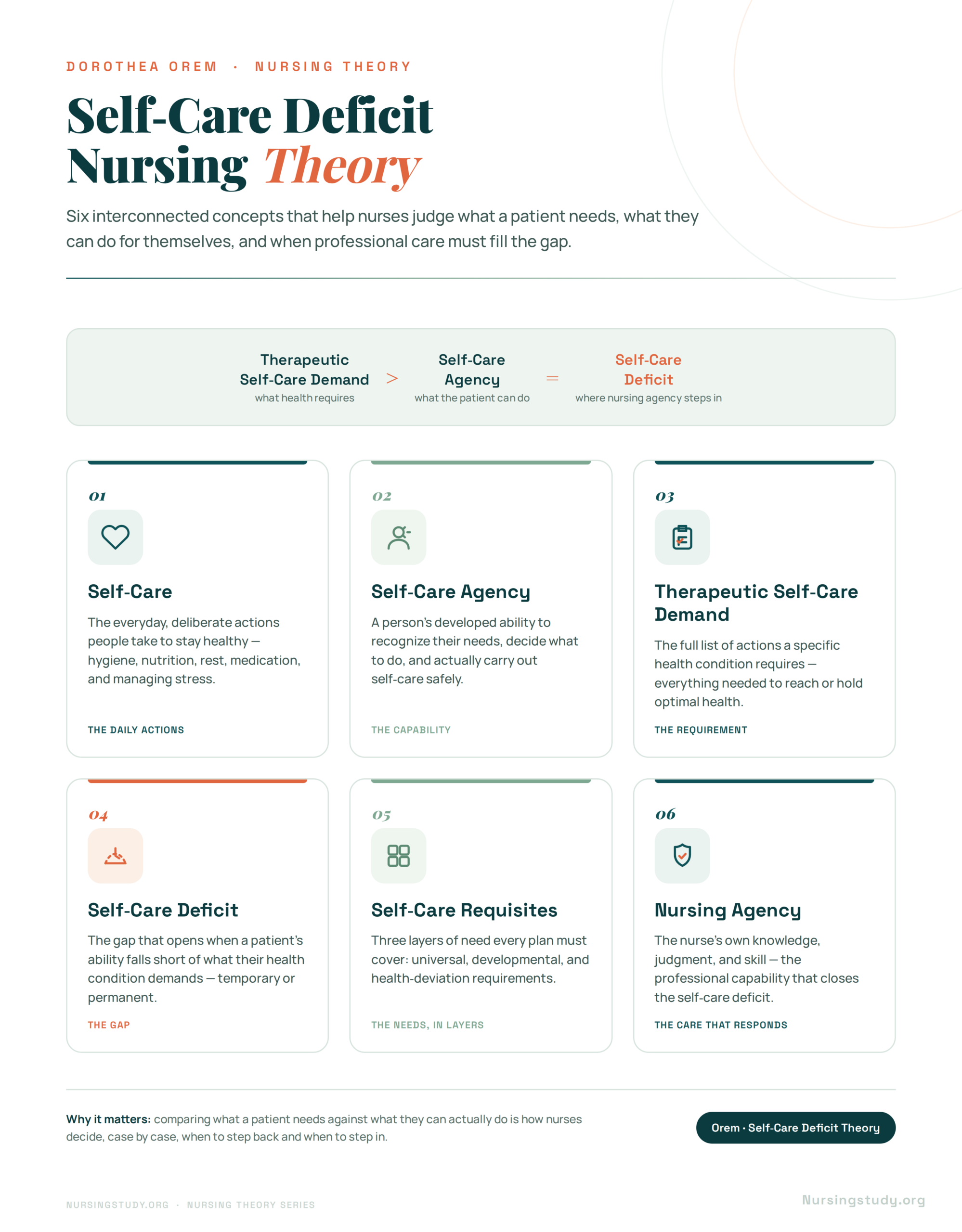
Dorothea Orem’s Legacy in Nursing
Few individuals have had as profound and enduring an influence on the nursing profession as Dorothea Orem. Through the development of the Self-Care Deficit Nursing Theory, Dorothea Orem fundamentally changed how nurses understand their role in promoting health, supporting recovery, and empowering patients. Rather than defining nursing solely as the delivery of treatments or assistance with physical care, she established a framework that emphasizes helping individuals develop or regain the capacity to care for themselves. This patient-centered philosophy has transformed nursing practice, strengthened nursing education, and contributed significantly to the advancement of the theory of nursing.
The lasting significance of Dorothea Orem’s work lies not only in the originality of her ideas but also in their practicality. Her concepts continue to guide nurses caring for patients across hospitals, community health settings, rehabilitation centers, long-term care facilities, primary care clinics, and home healthcare services. Regardless of the healthcare environment, nurses continue to apply the principles of assessing self-care agency, identifying self-care deficits, determining therapeutic self-care demand, and selecting the most appropriate nursing system to meet each patient’s unique needs.
The legacy of Dorothea Orem is also reflected in the continued global recognition of her work. Nursing schools, healthcare organizations, researchers, and professional bodies continue to study, apply, and expand upon her theoretical framework. The establishment of the International Orem Society further demonstrates the enduring relevance of her ideas, providing an international forum dedicated to advancing research, scholarship, and the practical application of Orem’s Self-Care Deficit Nursing Theory.
Her influence extends beyond theory into everyday clinical practice. Whether nurses are educating patients with chronic illnesses, planning rehabilitation programs, coordinating discharge planning, or promoting disease prevention, many of these activities reflect the principles first articulated by Dorothea Orem decades ago. This continued application illustrates why she remains one of the most respected and widely studied nurse theorists in healthcare.
Influence on Modern Nursing Theories
The work of Dorothea Orem has had a profound influence on the evolution of modern nursing theories. Before the development of the Self-Care Deficit Nursing Theory, nursing was often viewed primarily through the lens of bedside care and task performance. Dorothea Orem helped shift the profession toward a more scientific and conceptual understanding by clearly defining nursing’s unique purpose and distinguishing it from other healthcare disciplines.
One of her most significant contributions was demonstrating that nursing is an independent profession with its own body of knowledge, principles, and theoretical foundations. By defining when nursing becomes necessary and identifying how nurses should respond to self-care deficits, she strengthened the professional identity of nurses and contributed to the development of science in nursing.
Advancing Theory Development
The structured nature of Dorothea Orem’s framework encouraged nursing scholars to further explore theoretical models that explain patient care, clinical decision-making, and professional practice.
Her work demonstrated that effective theory in nursing should:
- Clearly define nursing concepts.
- Explain relationships between those concepts.
- Guide clinical decision-making.
- Be applicable across diverse healthcare settings.
- Support research and evidence-based practice.
These principles have influenced the development, refinement, and evaluation of numerous nursing frameworks used in education, research, and practice today.
Shifting Toward Patient-Centered Care
One of the most important contributions of Dorothea Orem was her emphasis on patient participation.
Rather than positioning patients as passive recipients of healthcare, she recognized them as active partners capable of participating in decisions about their health and recovery. This philosophy has become a defining characteristic of contemporary healthcare.
Today, patient-centered care emphasizes:
- Shared decision-making.
- Respect for patient preferences.
- Individualized care planning.
- Health education.
- Self-management of chronic disease.
- Collaborative goal setting.
These principles closely reflect the philosophy established by Dorothea Orem’s Self-Care Deficit Nursing Theory.
For example, a patient with chronic heart failure is no longer expected simply to follow medical instructions. Instead, nurses educate the patient about medication adherence, sodium restriction, symptom monitoring, fluid management, physical activity, and recognizing early warning signs. The patient becomes an active participant in maintaining health rather than relying entirely on healthcare providers.
Supporting Evidence-Based Nursing
Modern professional nursing practice increasingly emphasizes integrating scientific evidence with clinical expertise and patient preferences.
Although Dorothea Orem developed her theory before the widespread adoption of evidence-based practice, her structured approach readily supports research by providing clearly defined concepts such as:
- Self-care agency.
- Therapeutic self-care demand.
- Self-care deficits.
- Nursing agency.
- Self-care requisites.
Researchers continue to study these concepts to evaluate interventions that improve patient independence, enhance chronic disease management, reduce hospital readmissions, and strengthen health promotion efforts.
Encouraging Interdisciplinary Collaboration
Another important influence of Dorothea Orem’s work is its compatibility with interdisciplinary healthcare.
Although her theory focuses specifically on nursing, many of its principles encourage collaboration among healthcare professionals.
For example, caring for a patient recovering from a stroke may involve contributions from:
- Nurses.
- Physicians.
- Physical therapists.
- Occupational therapists.
- Speech-language pathologists.
- Dietitians.
- Social workers.
Each professional addresses different aspects of the patient’s therapeutic self-care demand, while nurses coordinate care and evaluate ongoing self-care deficits.
This collaborative approach reflects the increasingly integrated nature of modern healthcare.
Lasting Impact on Nursing Practice and Nursing Education
Perhaps the greatest measure of Dorothea Orem’s legacy is the continued relevance of her work in both nursing practice and nursing education. More than half a century after the publication of the Self-Care Deficit Nursing Theory, its principles remain embedded in clinical care, educational curricula, leadership development, research, and healthcare policy.
Impact on Nursing Practice
In contemporary healthcare, nurses care for increasingly diverse patient populations with complex medical, psychological, and social needs. Despite these changes, the questions proposed by Dorothea Orem remain remarkably relevant:
- Can the patient perform effective self-care?
- What self-care deficits exist?
- Which nursing system is appropriate?
- How can nursing interventions improve patient independence?
These questions continue to guide assessment, planning, implementation, and evaluation across virtually every nursing specialty.
For example:
Acute Care
Medical-surgical nurses assess postoperative patients to determine whether they can safely perform mobility exercises, administer medications, or care for surgical wounds independently.
Community Health
Public health nurses evaluate patients managing chronic illnesses at home, identifying barriers to medication adherence, nutrition, and disease monitoring.
Rehabilitation Nursing
Rehabilitation nurses focus on progressively reducing self-care deficits by helping patients recover physical function and regain independence after illness or injury.
Mental Health Nursing
Psychiatric nurses help patients rebuild routines involving hygiene, medication management, nutrition, and daily living activities while strengthening confidence and coping skills.
Across these specialties, Dorothea Orem’s principles remain directly applicable because they focus on the patient’s functional abilities rather than the diagnosis alone.
Lasting Influence on Nursing Education
The influence of Dorothea Orem on nursing education is equally significant.
Her theory continues to be introduced early in nursing curricula because it provides students with a structured method for understanding patient care and developing clinical reasoning.
Students learn to:
- Assess self-care needs.
- Evaluate self-care agency.
- Identify self-care deficits.
- Determine therapeutic self-care demand.
- Select the appropriate nursing system.
- Develop individualized care plans.
- Evaluate patient outcomes.
This structured approach strengthens critical thinking while helping students connect theoretical knowledge with clinical practice.
Simulation laboratories, clinical placements, case studies, and classroom discussions frequently incorporate Dorothea Orem’s Self-Care Deficit Nursing Theory because it mirrors the nursing process and encourages patient-centered decision-making.
Preparing Nurses for Evolving Healthcare
Healthcare continues to evolve through technological innovation, aging populations, increasing rates of chronic disease, telehealth expansion, and greater emphasis on preventive care. Despite these changes, the central message of Dorothea Orem’s work remains highly relevant: patients should be supported in achieving the highest possible level of independence.
Modern nurses increasingly function as:
- Health educators.
- Care coordinators.
- Patient advocates.
- Case managers.
- Chronic disease coaches.
- Community health leaders.
Each of these roles aligns with Dorothea Orem’s emphasis on empowering individuals to effectively engage in self-care and actively participate in maintaining their own health.
For example, telehealth consultations now allow nurses to monitor patients remotely while reinforcing medication adherence, reviewing blood glucose records, assessing blood pressure trends, and providing ongoing education. Although the technology has changed, the underlying philosophy remains consistent with Dorothea Orem’s focus on strengthening self-care agency and supporting effective self-management.
Recognition Within the Nursing Profession
The influence of Dorothea Orem is also reflected in the numerous honors and recognitions she received throughout her lifetime. Her contributions to nursing education and practice earned recognition from organizations such as the American Academy of Nursing, the National League for Nursing, and Sigma Theta Tau Nursing Honor Society. Her scholarship continues to be studied by educators, researchers, and clinicians worldwide, while the International Orem Society promotes ongoing research and discussion surrounding her theoretical contributions.
These recognitions underscore the widespread respect for Dorothea Orem as a leading theorist whose work helped shape modern nursing as an autonomous, evidence-informed profession.
Need a high-quality nursing paper fast?
ubmit your brief, and get a fully completed assignment ready to submit.
Conclusion
Dorothea Orem remains one of the most influential figures in the history of nursing because her work fundamentally reshaped how nurses understand patient care, professional responsibility, and the purpose of nursing itself. Through the development of the Self-Care Deficit Nursing Theory, she introduced a practical, patient-centered framework that emphasizes empowering individuals to take an active role in maintaining their health whenever possible. Rather than viewing patients as passive recipients of care, Dorothea Orem recognized them as capable partners whose independence should be supported, strengthened, and preserved through thoughtful nursing interventions.
The enduring value of Dorothea Orem’s work lies in its ability to connect nursing theory with everyday clinical practice. By understanding concepts such as self-care, self-care agency, therapeutic self-care demand, self-care deficits, and the various nursing systems, nurses are equipped to assess patient needs comprehensively, develop individualized care plans, provide effective education, and evaluate outcomes with a clear, evidence-informed framework. These principles continue to guide decision-making across hospitals, community health programs, rehabilitation centers, long-term care facilities, and home healthcare settings.
Beyond clinical practice, Dorothea Orem’s Self-Care Deficit Nursing Theory has had a profound influence on nursing education, helping students develop critical thinking, clinical judgment, and patient-centered care planning skills. Its logical structure mirrors the nursing process, making it one of the most practical and widely taught nursing theories in nursing schools around the world. By encouraging nurses to look beyond a patient’s diagnosis and focus on their functional abilities, strengths, and self-care needs, the theory promotes holistic, individualized, and compassionate care.
Although healthcare has evolved significantly since Dorothea Orem first introduced her ideas, the core principles of her theory remain remarkably relevant. Modern healthcare continues to prioritize patient engagement, chronic disease self-management, preventive care, interdisciplinary collaboration, and health promotion—all concepts that align closely with her vision of nursing. As technology advances and healthcare delivery continues to change, the need to empower patients with the knowledge, skills, and confidence to manage their own health has become even more important.
Ultimately, the legacy of Dorothea Orem extends far beyond the development of a theoretical model. She helped define nursing as an autonomous profession grounded in scientific knowledge, critical thinking, and a commitment to promoting patient independence. Her contributions continue to shape nursing practice, inspire research, strengthen nursing education, and improve patient outcomes worldwide. For every nurse seeking to deliver individualized, evidence-based, and patient-centered care, understanding Dorothea Orem’s Self-Care Deficit Nursing Theory is not simply an academic exercise—it is an essential foundation for providing nursing care that empowers individuals to achieve greater health, independence, and quality of life.
Frequently Asked Questions
What is Dorothea Orem’s nursing theory?
Dorothea Orem’s nursing theory is the Self-Care Deficit Nursing Theory, which states that nursing is needed when individuals cannot meet their own self-care needs. The theory emphasizes assessing self-care deficits, supporting patient independence, and helping people regain or maintain the ability to care for themselves through appropriate nursing interventions.
What is Dorothea Orem best known for?
Dorothea Orem is best known for developing the Self-Care Deficit Nursing Theory, one of the most influential nursing theories in modern healthcare. Her work established the concepts of self-care, self-care agency, therapeutic self-care demand, and the three nursing systems, providing a practical framework for patient-centered nursing care.
What is Orem’s theory of nursing care plan?
An Orem-based nursing care plan is developed by first assessing the patient’s self-care abilities and identifying any self-care deficits. The nurse then determines the appropriate nursing system (wholly compensatory, partly compensatory, or supportive-educative), creates individualized interventions to meet the patient’s needs, and evaluates outcomes with the goal of promoting greater independence and self-care.
What is Dorothea Orem’s definition of health?
According to Dorothea Orem, health is a state of physical, psychological, interpersonal, and social well-being that enables individuals to perform effective self-care. In her theory, maintaining health depends on a person’s ability to meet self-care requisites and engage in activities that support life, growth, and overall well-being.

