

Dame Cicely Saunders, Palliative Care, and the Modern Hospice Movement: How the Founder of the Modern Hospice Transformed End-of-Life Care
The development of modern healthcare has been shaped by individuals whose ideas transformed not only clinical practice but also society’s understanding of illness, suffering, and human dignity. Among these pioneers, Dame Cicely Saunders occupies a unique place in healthcare history. Widely recognized as the founder of the modern hospice, Dame Cicely Saunders revolutionized the way healthcare professionals care for individuals with life-limiting illnesses, laying the foundation for modern palliative care and inspiring the global modern hospice movement.
Prior to the work of Dame Cicely Saunders, healthcare systems primarily focused on curing disease and prolonging life. While these goals remain important, patients approaching the end of life were often overlooked once curative treatment options had been exhausted. Many individuals experienced unmanaged symptoms, inadequate pain control, emotional distress, and social isolation during their final months and weeks of life. Care for the dying was frequently fragmented, with limited attention given to the broader needs of patients and their families.
Recognizing these shortcomings, Dame Cicely Saunders challenged conventional approaches to healthcare and advocated for a model of care that emphasized comfort, dignity, and quality of life. Her work demonstrated that patients facing serious illness required far more than medical treatment alone. They needed comprehensive support that addressed:
- Physical symptoms and discomfort
- Psychological and emotional suffering
- Social and family concerns
- Spiritual and existential questions
- The unique challenges associated with end-of-life care
This holistic philosophy became one of the defining features of modern palliative care and continues to guide healthcare practice around the world.
One of the most influential contributions of Dame Cicely Saunders was the development of the concept of total pain. Through years of clinical observation and interaction with patients, she recognized that suffering cannot be understood solely in terms of physical symptoms. Instead, pain often involves interconnected physical, emotional, social, and spiritual dimensions. The concept of total pain fundamentally changed approaches to pain management, encouraging healthcare professionals to assess patients comprehensively and develop individualized care plans that address multiple sources of distress.
The contributions of Dame Cicely Saunders extended beyond theory and research. Her vision culminated in the establishment of St Christopher’s Hospice, widely regarded as the first modern hospice and one of the most influential institutions in the history of hospice care. Through the work conducted at St Christopher’s Hospice, new standards for pain and symptom control, interdisciplinary collaboration, patient advocacy, and compassionate care were developed and refined. These innovations helped shape the modern hospice movement and served as a model for hospice and palliative care programs throughout the world.
The impact of Dame Cicely Saunders can be observed across multiple areas of healthcare. Her contributions helped redefine how clinicians approach serious illness and influenced the development of practices that are now considered essential components of quality care. These include:
- Holistic assessment of patient needs.
- Evidence-based pain management strategies.
- Family-centered approaches to care.
- Interdisciplinary teamwork among healthcare professionals.
- Improved standards for care of the dying.
- Greater recognition of patient dignity and autonomy.
For the nursing profession, the influence of Dame Cicely Saunders has been particularly significant. Many of the principles that guide contemporary nursing practice—including compassionate care, therapeutic communication, symptom management, patient advocacy, and holistic assessment—reflect the philosophy she championed throughout her career. Her work reinforced the importance of viewing patients as whole persons rather than focusing solely on disease processes, a perspective that remains central to professional nursing practice today.
Understanding the life and contributions of Dame Cicely Saunders provides valuable insight into the evolution of modern healthcare. Her efforts transformed attitudes toward death and dying, advanced the field of palliative care, and established a framework for caring for individuals facing serious illness with dignity, respect, and compassion. The legacy of Dame Cicely Saunders continues to influence healthcare professionals, researchers, educators, and policymakers, ensuring that her vision remains an integral part of contemporary healthcare systems worldwide.
This article explores the life, work, and enduring influence of Dame Cicely Saunders, examining her early experiences, the development of the modern hospice movement, the theory of total pain, her contributions to pain and symptom control, her impact on nursing practice, and the lasting legacy she left on healthcare around the world.
Early Life, Education, and Career Development of Dame Cicely Saunders
The remarkable contributions of Dame Cicely Saunders to healthcare did not emerge suddenly. Rather, they were the result of a lifetime of personal experiences, educational achievements, professional development, and meaningful encounters with patients. Understanding the early life and career of Dame Cicely Saunders provides valuable insight into how she became the driving force behind modern palliative care, the modern hospice movement, and the transformation of end-of-life care around the world.
The journey of Dame Cicely Saunders is particularly significant because she brought together expertise from three distinct professions—nursing, social work, and medicine. This multidisciplinary background allowed her to develop a holistic understanding of patient suffering and ultimately led to the creation of innovative approaches to care for the dying that continue to influence healthcare practice today.
Childhood and Family Background
Cicely Mary Strode Saunders was born on June 22, 1918, in Barnet, Hertfordshire, England. Historical accounts often note that Saunders was born in Barnet, a suburban area north of London that was undergoing significant social and economic changes during the early twentieth century. As a result, references to born in Barnet and Mary Strode Saunders was born there frequently appear in biographies documenting her life and achievements.
Growing up in a financially secure family, Dame Cicely Saunders was exposed to educational opportunities that were not available to many young women of her era. Her father worked in property development, while her mother came from a family that valued education and social responsibility. Although her upbringing was relatively privileged, Dame Cicely Saunders would later dedicate much of her life to serving vulnerable populations, including the sick, the elderly, and the dying.
During her adolescence, Dame Cicely Saunders attended Roedean School, a prestigious girls’ boarding school located near Brighton. Her experiences at Roedean played an important role in shaping her intellectual curiosity and commitment to service. Teachers and classmates described her as highly intelligent, determined, and deeply interested in helping others. While attending Roedean School, she developed a strong sense of social responsibility that would later influence her career choices.
The years of her youth coincided with major global events, including the economic challenges of the interwar period and the growing tensions that eventually led to World War II. These experiences exposed Dame Cicely Saunders to broader societal concerns and contributed to her desire to pursue meaningful work that could improve people’s lives.
Training in Nursing, Social Work, and Medicine
The educational path of Dame Cicely Saunders was unusual and ultimately became one of the defining strengths of her career. Unlike many healthcare professionals who remain within a single discipline, Dame Cicely Saunders acquired expertise in nursing, social work, and medicine, allowing her to approach patient care from multiple perspectives.
Initially, Saunders was originally interested in studying politics, philosophy, and economics at Oxford. She enrolled at the University of Oxford with aspirations that differed significantly from the career for which she would later become famous. However, the outbreak of World War II changed the trajectory of her life.
Motivated by a desire to contribute to the war effort, Dame Cicely Saunders left Oxford and began training as a nurse. During this period, she worked extensively with patients experiencing illness, injury, and suffering. Unfortunately, persistent back problems eventually prevented her from continuing her nursing career in the traditional sense.
Unable to remain in bedside nursing, Dame Cicely Saunders pursued an alternative route into healthcare by training as a social worker. This decision proved transformative. As a social worker, she developed a deeper understanding of the emotional, social, and practical challenges faced by patients and families. Rather than focusing exclusively on medical treatment, she became increasingly aware of the broader human experience of illness.
One of the most influential stages of her professional development occurred while working at St Joseph’s Hospice in London. As a social worker and later as a clinician associated with working at St institutions caring for terminally ill patients, she observed the profound physical and emotional suffering experienced by many individuals nearing death.
Her experiences convinced her that healthcare professionals needed stronger scientific knowledge to improve pain control and symptom management. Determined to create change, Dame Cicely Saunders returned to Oxford to study medicine. This decision was extraordinary, particularly for a woman in the mid-twentieth century, when relatively few women entered medical school.
After completing her medical education, Dame Cicely Saunders became a physician, enabling her to combine clinical expertise with her previous experience as a nurse and social worker. This unique combination of skills would later become essential in her efforts to transform hospice care and establish new standards for pain management.
Her multidisciplinary training allowed her to understand healthcare through three important lenses:
- The nurse’s perspective on direct patient care.
- The social worker’s understanding of family and social needs.
- The physician’s expertise in diagnosis and treatment.
This integrated approach would become a hallmark of the philosophy developed by Dame Cicely Saunders.
Experiences That Inspired Her Interest in End-of-Life Care
The defining inspiration behind the work of Dame Cicely Saunders emerged through her interactions with patients who were approaching death. During the 1940s and 1950s, many healthcare institutions lacked specialized approaches for care of the dying. Patients with advanced illnesses often experienced severe symptoms, inadequate support, and limited opportunities to discuss their fears and concerns.
While working at St Joseph’s Hospice, Dame Cicely Saunders encountered numerous individuals whose experiences revealed shortcomings in contemporary healthcare. She became increasingly concerned that many patients received insufficient pain relief, inadequate emotional support, and fragmented care during the final stages of life.
One particularly influential experience involved a Polish refugee named David Tasma. Historical accounts note that Tasma became one of the most significant individuals in the life of Dame Cicely Saunders. During his terminal illness, Saunders met Tasma and developed a meaningful therapeutic relationship with him. Through countless conversations, she gained a deeper understanding of the emotional, spiritual, and social suffering experienced by dying patients.
Tasma frequently spoke about loneliness, fear, uncertainty, and the desire for dignity. These discussions profoundly influenced Dame Cicely Saunders and reinforced her belief that healthcare should address far more than physical disease. Following his death, Tasma left her a small financial gift, famously expressing his hope that it would serve as “a window in your home.” This contribution later became symbolic of the vision that eventually led to the creation of St Christopher’s Hospice.
The relationship between Dame Cicely Saunders and Tasma also helped shape her understanding of what would later become the concept of “total pain.” She recognized that suffering could not be reduced solely to physical symptoms. Patients frequently experienced overlapping forms of distress, including:
- Physical pain and other symptoms.
- Emotional anxiety and depression.
- Social isolation and family concerns.
- Spiritual and existential questions about meaning and mortality.
These observations led Saunders developed new ideas regarding holistic patient care. She increasingly argued that effective pain management required attention to all dimensions of suffering rather than focusing exclusively on medical treatment.
Another important influence on Dame Cicely Saunders was her work with the dying poor and disadvantaged populations. Many patients lacked adequate access to healthcare resources and supportive services. Her encounters with the dying poor in Bayswater and other underserved communities highlighted the need for institutions specifically dedicated to compassionate care for the dying.
Through these experiences, Dame Cicely Saunders became convinced that a new model of healthcare was needed—one that combined scientific medicine with compassion, dignity, and comprehensive support. This vision would ultimately lead her to challenge existing healthcare practices, pioneer modern palliative care, and begin the work that culminated in the establishment of the first modern hospice.
By the end of her educational and early professional journey, Dame Cicely Saunders had developed the knowledge, experience, and determination necessary to transform healthcare. Her background in nursing, social work, and medicine, combined with her close relationships with terminally ill patients, provided the foundation for a revolutionary approach to end-of-life care that continues to influence healthcare systems worldwide.
Dame Cicely Saunders and the Development of the Modern Hospice Movement
The emergence of the modern hospice movement represents one of the most significant developments in twentieth-century healthcare. At the center of this transformation was Dame Cicely Saunders, whose vision fundamentally changed how healthcare professionals approach serious illness, suffering, and the care of people approaching death. Through her pioneering work, Dame Cicely Saunders challenged longstanding assumptions about dying patients and demonstrated that compassionate, evidence-based care could greatly improve quality of life, even when cure was no longer possible.
Today, many principles associated with palliative care, symptom management, patient-centered care, and interdisciplinary collaboration can be traced directly to the work of Dame Cicely Saunders. Her efforts not only led to the creation of the first modern hospice but also established a global framework for providing comprehensive support to patients and families during some of the most difficult moments of life.
Challenges in Caring for Dying Patients
To appreciate the significance of the contributions made by Dame Cicely Saunders, it is important to understand the healthcare environment that existed before the development of the modern hospice movement.
During the first half of the twentieth century, medical practice was largely centered on diagnosis, treatment, and cure. Advances in surgery, antibiotics, and medical technology created a culture in which success was often measured by the ability to eliminate disease. While these achievements benefited countless patients, they also created unintended consequences for individuals with terminal illnesses.
When curative treatment was no longer possible, many patients were often left with limited support. In many healthcare settings:
- Pain was inadequately assessed and treated.
- Patients experienced severe physical suffering.
- Emotional and psychological distress received little attention.
- Families received minimal guidance or support.
- Discussions about death and dying were often avoided.
- The care of the dying was frequently considered a medical failure rather than an important part of healthcare.
As Dame Cicely Saunders observed during her work with terminally ill patients, many individuals suffered unnecessarily during the final stages of life. Healthcare professionals frequently lacked the knowledge, resources, or organizational structures necessary to provide comprehensive end-of-life care. Patients were often told that there was nothing more that could be done, a statement that Dame Cicely Saunders strongly rejected. Instead, she believed there was always meaningful care that could be provided, even when cure was impossible.
Another major challenge involved pain control. Many clinicians were hesitant to administer adequate opioid medications because of concerns about addiction or adverse effects. As a result, patients sometimes had to wait until their pain returned before receiving additional medication. Dame Cicely Saunders challenged these practices and argued that patients deserved consistent symptom relief rather than intermittent treatment. She helped demonstrate that appropriate medication schedules could provide more effective comfort while improving overall quality of life.
These shortcomings convinced Dame Cicely Saunders that healthcare needed a fundamentally different approach—one that focused not only on curing disease but also on caring for the person experiencing illness.
The Foundations of Modern Palliative Care
The foundations of modern palliative care emerged from the belief that every individual deserves dignity, comfort, and respect regardless of prognosis. Drawing upon her experiences as a nurse, physician, and social worker, Dame Cicely Saunders developed a philosophy that emphasized holistic care and recognized the complex nature of human suffering.
A defining feature of her approach was the recognition that patient needs extend beyond physical symptoms. Through years of clinical observation, Dame Cicely Saunders concluded that effective healthcare must address multiple dimensions of suffering simultaneously.
Her philosophy emphasized:
- Relief of physical symptoms.
- Emotional and psychological support.
- Attention to social and family concerns.
- Recognition of spiritual and existential needs.
- Respect for patient autonomy and dignity.
- Support for families before and after death.
This philosophy eventually became the basis of modern palliative care practice worldwide. Rather than focusing solely on disease, healthcare professionals were encouraged to focus on the overall well-being of the patient.
One of the most influential ideas introduced by Dame Cicely Saunders was that healthcare should be combined with care and love. Scientific treatment and compassionate support were not separate goals but complementary components of high-quality healthcare. This perspective helped establish a new culture of palliative care that valued both clinical excellence and human connection.
The work of Dame Cicely Saunders also challenged the misconception that severe suffering was unavoidable. She argued that effective pain control is always an essential goal of care and repeatedly emphasized that pain control is always possible to some degree when patients receive appropriate assessment and treatment. This philosophy would later become a cornerstone of hospice and palliative care practice.
Establishment of St Christopher’s Hospice
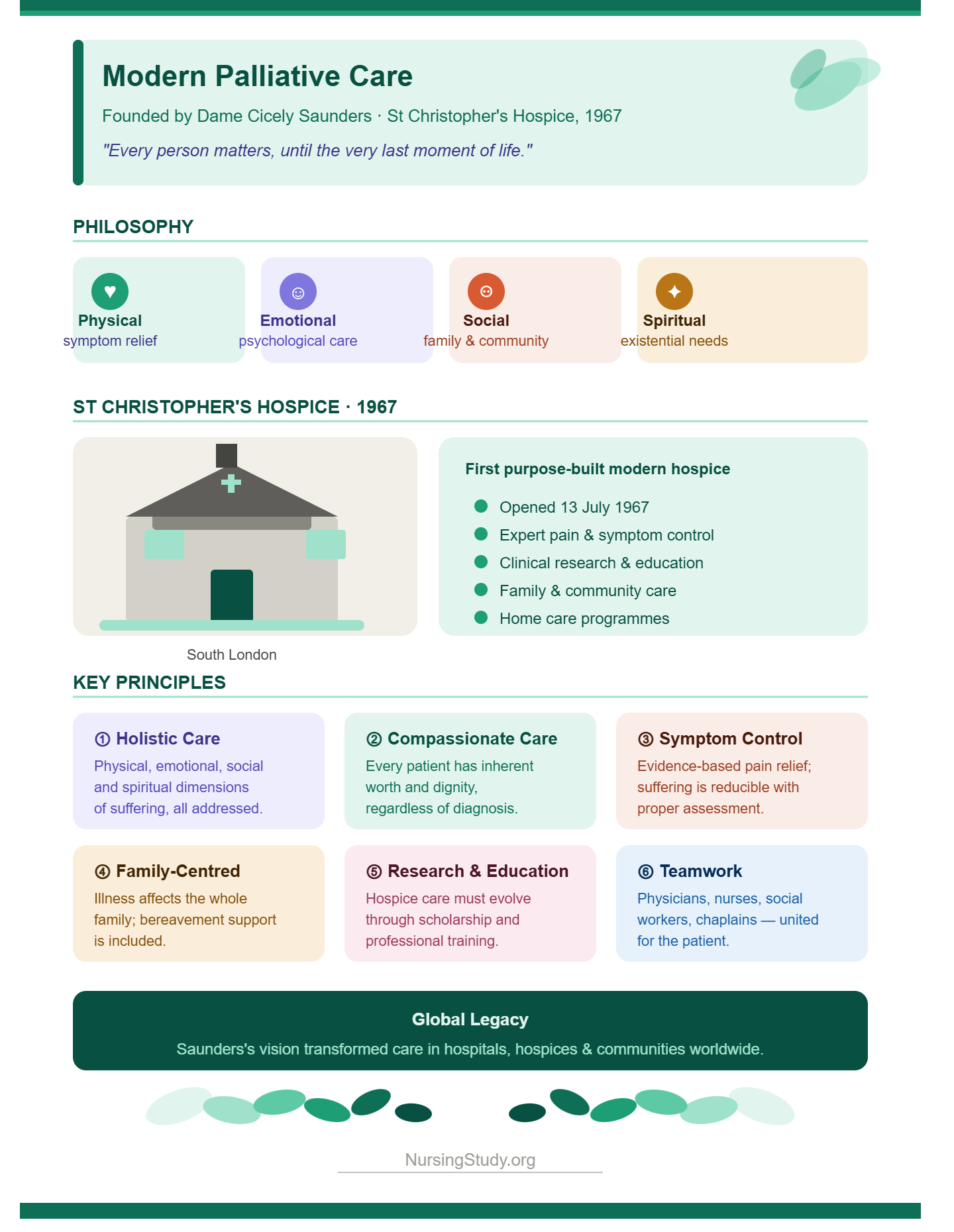
The vision of Dame Cicely Saunders became a reality with the establishment of St Christopher’s Hospice, an institution widely recognized as the first modern hospice and one of the most influential healthcare organizations in history.
The journey toward creating the hospice required years of planning, advocacy, fundraising, and research. Long before construction began, Dame Cicely Saunders had already developed detailed plans for a new type of healthcare institution that would combine expert clinical care with education and scientific inquiry. She spent years raising awareness, securing support, and obtaining the necessary resources to bring her vision to life.
In 1967, Dame Cicely Saunders founded the first purpose-built institution designed specifically to integrate compassionate care, research, education, and advanced symptom management. St Christopher’s Hospice in 1967 became a landmark achievement in healthcare history. The hospice admitted its first patient on July 13, 1967, and officially opened later that month.
Located in South London, St Christopher’s Hospice in South London quickly became a model for healthcare innovation. Unlike traditional institutions focused solely on treatment, St Christopher’s Hospice was designed to address every aspect of patient well-being.
Several features distinguished St Christopher’s Hospice from existing healthcare facilities:
- Expert pain and symptom control.
- Integrated medical, nursing, and psychosocial care.
- Family involvement in care planning.
- Education for healthcare professionals.
- Clinical research to improve practice.
- Community outreach and home care services.
The hospice was groundbreaking because it linked expert pain and symptom management with compassionate support, teaching, and research. This integration distinguished it from earlier institutions that provided care for the dying but lacked a comprehensive clinical and academic mission.
Over time, the hospice soon extended its activities beyond inpatient care. Community-based services and innovative home care programs allowed patients to receive support in familiar environments while maintaining continuity of care. These developments would later influence hospice programs throughout the world.
Key Principles of the Modern Hospice Movement
The success of St Christopher’s Hospice helped establish the principles that continue to guide the modern hospice movement today.
At its core, the movement created by Dame Cicely Saunders was built upon several interconnected principles.
1. Holistic Care
The modern hospice recognizes that patients experience illness in multiple dimensions. Care must address physical, emotional, social, and spiritual needs rather than focusing exclusively on medical symptoms.
2. Compassionate Care
A central belief of Dame Cicely Saunders was that every patient deserves compassionate care, respect, and dignity. Individuals should be valued not because of their diagnosis but because of their inherent worth as human beings.
This philosophy is reflected in one of her most famous statements: patients matter because they are who they are and continue to matter until the very end of life.
3. Expert Symptom Management
The modern hospice movement emphasizes evidence-based approaches to symptom control. Dame Cicely Saunders introduced practices that transformed pain management in the incurably ill and demonstrated that suffering could be reduced through careful assessment and treatment.
She rejected the idea that there was such a thing as intractable pain in most circumstances and argued that better understanding of patient needs could lead to significant improvements in comfort and well-being.
4. Family-Centered Care
The hospice model recognizes that serious illness affects entire families. Consequently, support services extend beyond the patient to include loved ones, caregivers, and bereaved family members.
5. Education and Research
Unlike many earlier institutions, Dame Cicely Saunders believed that hospice care should continually evolve through research and professional education. This commitment helped improve standards of care and facilitated the worldwide spread of hospice principles.
6. Interdisciplinary Collaboration
The modern hospice movement promotes teamwork among physicians, nurses, social workers, chaplains, therapists, and other healthcare professionals. This collaborative approach ensures that patients receive comprehensive and coordinated care.
Through these principles, Dame Cicely Saunders transformed the way healthcare professionals think about serious illness and death. What began as a vision to improve care for the dying evolved into an international movement that reshaped healthcare systems worldwide. Today, the influence of Dame Cicely Saunders can be seen in hospitals, hospices, community programs, and healthcare policies across the globe, demonstrating the enduring impact of the founder of the modern hospice and her commitment to improving the lives of patients and families facing life-limiting illness.
The Theory of Total Pain and Its Influence on Palliative Care
Among the many contributions made by Dame Cicely Saunders, none has had a greater influence on modern palliative care than her development of the theory of total pain. This concept fundamentally transformed how healthcare professionals understand suffering and remains one of the most important frameworks in contemporary hospice care and end-of-life care.
Prior to the work of Dame Cicely Saunders, pain was often viewed primarily as a physical symptom that could be measured and treated through medical interventions. Healthcare providers focused heavily on disease processes and physiological causes of discomfort. However, through years of caring for terminally ill patients, Dame Cicely Saunders observed that many individuals continued to experience profound suffering even when their physical symptoms appeared to be under control.
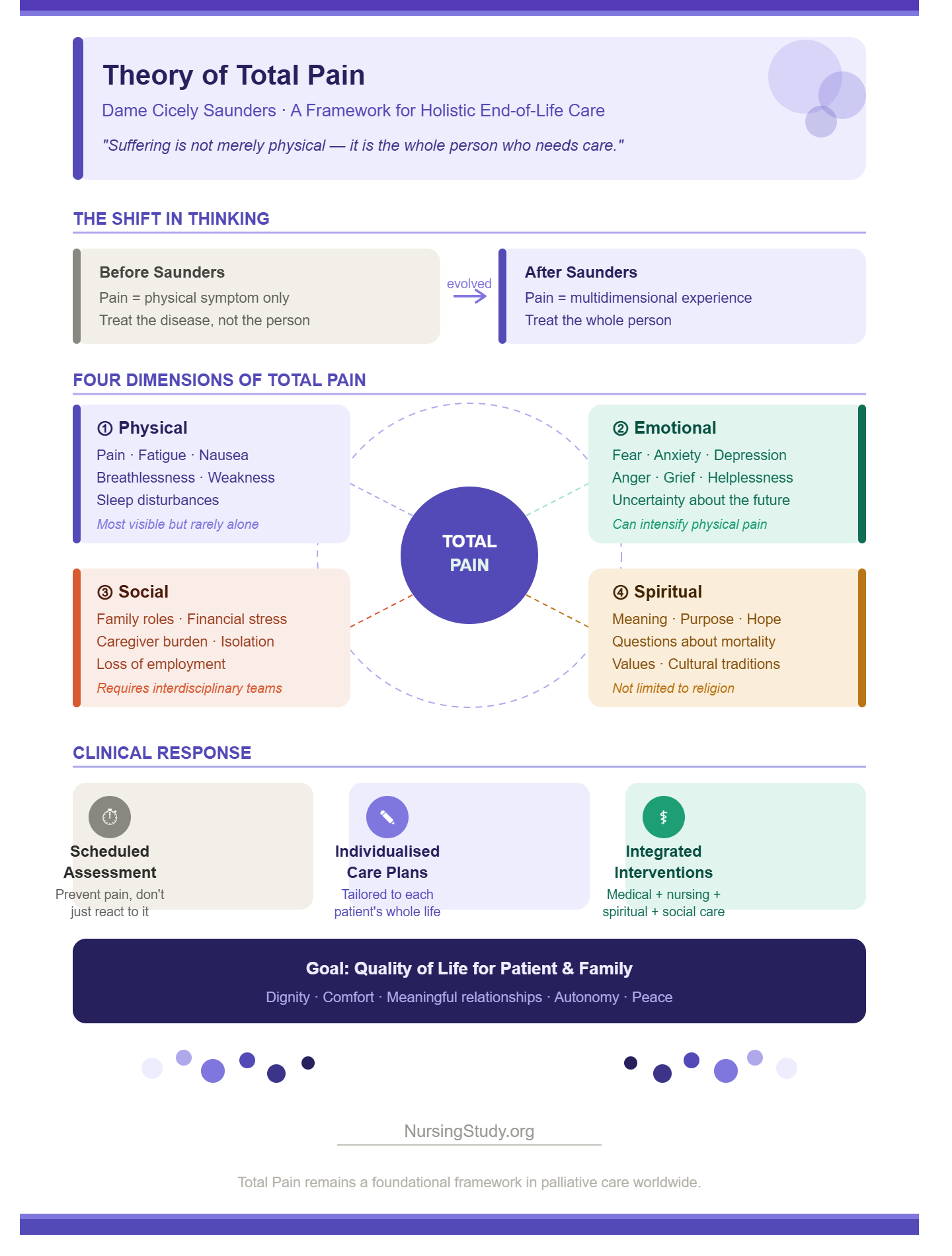
These observations led Saunders introduced the idea that pain is not merely a physical sensation. Instead, suffering is a complex experience shaped by physical, emotional, social, and spiritual factors that interact with one another. This revolutionary perspective became known as the concept of “total pain”, and it continues to guide clinical practice across the world.
The theory of total pain changed the focus of healthcare from simply treating symptoms to understanding the entire person. It provided a framework for delivering holistic care and helped establish many of the principles that define modern palliative care today. Through this work, Dame Cicely Saunders demonstrated that effective symptom management requires attention to all aspects of a patient’s experience rather than concentrating solely on physical disease.
Understanding the Concept of Total Pain
The concept of “total pain” emerged from the clinical experiences of Dame Cicely Saunders while caring for patients with advanced illnesses. Through conversations with patients and families, she recognized that suffering often extended far beyond physical symptoms.
According to Dame Cicely Saunders, patients approaching the end of life frequently experienced multiple forms of distress simultaneously. A person with advanced cancer, for example, might experience:
- Severe physical pain from the disease itself.
- Anxiety about the future.
- Fear of death.
- Concern about family members.
- Financial stress.
- Feelings of loneliness or isolation.
- Spiritual questions about meaning, purpose, and mortality.
These experiences are interconnected. Emotional distress may intensify physical symptoms, while uncontrolled physical symptoms can increase psychological suffering. As a result, Dame Cicely Saunders argued that healthcare professionals must assess the whole person rather than focusing on a single symptom or diagnosis.
The concept of “total pain” can be summarized as the recognition that suffering includes:
- Physical distress.
- Emotional and psychological distress.
- Social distress.
- Spiritual or existential distress.
This framework represented a major shift in healthcare thinking. Instead of asking only, “What is causing the patient’s pain?” clinicians were encouraged to ask broader questions such as:
- What fears is the patient experiencing?
- How is illness affecting family relationships?
- What social challenges are contributing to suffering?
- Are there unresolved spiritual concerns?
- What gives the patient meaning and hope?
By addressing these questions, healthcare professionals could develop more comprehensive and individualized care plans.
For example, a patient with advanced lung cancer may report severe chest pain. Traditional treatment might focus solely on medication. However, using the concept of “total pain”, the healthcare team may discover that the patient is also worried about leaving young children behind, experiencing depression, and feeling socially isolated. Addressing these additional concerns can significantly reduce overall suffering, even when the disease itself cannot be cured.
Physical, Emotional, Social, and Spiritual Dimensions of Total Pain
A key strength of the theory developed by Dame Cicely Saunders is its recognition that suffering occurs across multiple dimensions. Each dimension contributes to the patient’s overall experience and requires careful assessment.
Physical Dimension
The physical component refers to bodily symptoms caused by illness or treatment.
Examples include:
- Pain.
- Fatigue.
- Nausea.
- Breathlessness.
- Loss of appetite.
- Weakness.
- Sleep disturbances.
For many patients, physical pain is the most visible manifestation of suffering. However, Dame Cicely Saunders observed that physical symptoms rarely exist in isolation. She argued that when physical pain was alleviated, patients often became better able to address emotional and spiritual concerns.
This insight led to major advances in pain relief, symptom assessment, and clinical care.
Emotional and Psychological Dimension
Serious illness frequently creates emotional challenges that can be as distressing as physical symptoms.
Common emotional responses include:
- Fear.
- Anxiety.
- Depression.
- Anger.
- Grief.
- Feelings of helplessness.
A patient receiving a terminal diagnosis may experience overwhelming uncertainty about the future. Even when symptoms are controlled, emotional distress can significantly diminish quality of life.
Dame Cicely Saunders emphasized that healthcare professionals must recognize these emotional needs and provide compassionate support through communication, counseling, and therapeutic relationships.
Social Dimension
Illness often affects relationships, roles, and social functioning.
Patients may worry about:
- Family responsibilities.
- Financial difficulties.
- Loss of employment.
- Caregiver burden.
- Social isolation.
For example, a parent with advanced illness may experience significant distress about the future well-being of children. Such concerns can contribute substantially to suffering even when symptoms are medically managed.
The social dimension highlights why interdisciplinary teams—including nurses, physicians, and social workers—play an essential role in modern palliative care.
Spiritual Dimension
The spiritual component of total pain addresses questions related to meaning, purpose, hope, values, and mortality.
Patients may ask:
- Why is this happening to me?
- What meaning has my life had?
- What happens after death?
- How can I find peace?
Importantly, spirituality is not limited to religious beliefs. Many individuals seek comfort through relationships, personal values, cultural traditions, or reflection on life’s meaning.
Dame Cicely Saunders believed that addressing spiritual concerns was a critical part of compassionate end-of-life care. Ignoring these issues could leave significant suffering unresolved despite successful medical treatment.
Innovations in Pain Management and Symptom Control
The theory of total pain directly influenced the innovations in pain management and symptom care introduced by Dame Cicely Saunders.
At a time when many patients experienced unnecessary suffering, Dame Cicely Saunders advocated for systematic approaches to pain and symptom control that were based on careful assessment and ongoing monitoring.
One of her most important contributions was the belief that effective pain control is always an essential objective of care. She challenged the widespread assumption that severe suffering was inevitable for dying patients.
According to Dame Cicely Saunders, effective pain management and insisted attention to patient comfort should be central components of healthcare. She rejected the notion that patients should simply endure suffering.
Several principles emerged from her work:
Regular Assessment Rather Than Crisis Treatment
Historically, some patients were required to wait until their pain returned before receiving additional medication. This often resulted in unnecessary discomfort and anxiety.
Dame Cicely Saunders advocated scheduled medication regimens designed to prevent pain rather than merely react to it.
Individualized Care Plans
Not all patients experience symptoms in the same way. Effective symptom management requires individualized assessment and treatment strategies.
Healthcare professionals must consider:
- Symptom severity.
- Patient preferences.
- Functional status.
- Psychological concerns.
- Family circumstances.
Integration of Multiple Interventions
Successful care frequently requires a combination of approaches.
These may include:
- Pharmacological therapies.
- Nursing interventions.
- Counseling services.
- Family support.
- Spiritual care.
- Community resources.
This integrated model helped establish new standards for pain and symptom management in hospice care.
Interdisciplinary Collaboration
The innovations introduced by Dame Cicely Saunders emphasized teamwork among healthcare professionals.
Nurses, physicians, pharmacists, chaplains, therapists, and social workers collaborate to address the diverse needs identified through the total pain framework.
This collaborative model remains a cornerstone of modern palliative care practice.
Improving Quality of Life for Patients and Families
Perhaps the most enduring impact of the theory of total pain is its ability to improve quality of life for patients and families facing serious illness.
The philosophy developed by Dame Cicely Saunders recognizes that healthcare goals extend beyond disease treatment. Even when cure is no longer possible, healthcare professionals can still make meaningful contributions to patient well-being.
Through comprehensive assessment and holistic interventions, clinicians can help patients:
- Experience better symptom control.
- Maintain dignity and independence.
- Strengthen relationships with loved ones.
- Address unresolved concerns.
- Find meaning and comfort.
- Participate in important decisions about their care.
Families also benefit significantly from this approach. By involving family members in care planning and providing emotional support, healthcare teams help reduce caregiver stress and improve coping during difficult circumstances.
Consider the example of a patient with advanced heart failure receiving palliative care services. Using the framework of total pain, the healthcare team assesses not only symptoms such as breathlessness and fatigue but also emotional fears, caregiver concerns, financial challenges, and spiritual needs. Addressing these issues collectively often results in greater comfort, reduced distress, and an improved quality of life for both the patient and family.
The influence of Dame Cicely Saunders continues to be evident in healthcare systems throughout the world. The theory of total pain remains one of the foundational concepts of modern palliative care, guiding assessment, treatment planning, communication, and interdisciplinary practice. By demonstrating that suffering is multidimensional and that compassionate intervention can make a profound difference, Dame Cicely Saunders transformed healthcare’s approach to serious illness and established a framework that continues to improve the lives of countless patients and families.
The Impact of Dame Cicely Saunders on Nursing Practice
The influence of Dame Cicely Saunders extends far beyond the establishment of the modern hospice and the development of palliative care. Her ideas fundamentally transformed nursing practice by reshaping how nurses assess patients, manage symptoms, communicate with individuals and families, and collaborate with other healthcare professionals. Today, many of the principles considered essential to quality nursing care can be linked directly to the philosophy championed by Dame Cicely Saunders.
Before the work of Dame Cicely Saunders, nursing care for patients with terminal illnesses often focused primarily on meeting physical needs and carrying out medical orders. While these responsibilities remain important, Dame Cicely Saunders demonstrated that effective healthcare requires a broader understanding of human suffering. Her work encouraged nurses to move beyond disease-centered approaches and adopt a holistic perspective that considers the patient’s physical, emotional, social, and spiritual experiences.
This shift transformed nursing practice in hospitals, community settings, long-term care facilities, and hospice care programs around the world. Through her advocacy for compassionate care, symptom management, and patient dignity, Dame Cicely Saunders helped establish standards that continue to guide professional nursing practice today.
Holistic Patient Care and Assessment
One of the most significant contributions of Dame Cicely Saunders to nursing practice was her emphasis on holistic patient care. Rather than viewing illness solely as a biological problem, Dame Cicely Saunders encouraged healthcare professionals to recognize that patients experience illness in multiple dimensions.
The theory of total pain became the foundation for this approach. According to Dame Cicely Saunders, suffering may include:
- Physical symptoms.
- Emotional distress.
- Social concerns.
- Spiritual challenges.
As a result, nurses are expected to conduct comprehensive assessments that extend beyond physical examination and symptom evaluation.
A holistic nursing assessment often includes:
Physical Assessment
Nurses evaluate:
- Pain intensity and location.
- Fatigue levels.
- Appetite and nutritional status.
- Sleep patterns.
- Mobility and functional ability.
- Medication effectiveness.
The commitment of Dame Cicely Saunders to effective pain management significantly influenced how nurses assess and monitor symptoms. Today, regular pain assessment is considered a core component of quality care because Dame Cicely Saunders demonstrated that pain and symptom control should be a priority throughout the disease trajectory.
Emotional Assessment
Patients facing serious illness frequently experience:
- Anxiety.
- Depression.
- Fear of death.
- Uncertainty about the future.
- Grief and loss.
Nurses play an important role in identifying these concerns and ensuring that appropriate support is available.
Social Assessment
The philosophy of Dame Cicely Saunders recognizes that illness affects family systems, employment, finances, and social relationships.
For example, a patient with advanced cancer may be less concerned about symptoms than about the future well-being of dependent children. A holistic assessment helps identify these concerns and facilitates appropriate interventions.
Spiritual Assessment
Many individuals receiving end-of-life care struggle with questions regarding meaning, purpose, hope, or faith.
Nurses influenced by the teachings of Dame Cicely Saunders understand the importance of exploring these concerns respectfully and connecting patients with spiritual resources when desired.
Example of Holistic Assessment
Consider a patient with metastatic breast cancer admitted to a hospice unit.
A traditional assessment might focus primarily on:
- Pain levels.
- Vital signs.
- Medication administration.
However, a nurse applying the principles of Dame Cicely Saunders would also explore:
- Emotional fears about dying.
- Family concerns.
- Financial challenges.
- Spiritual beliefs.
- Personal goals and priorities.
This broader assessment often leads to more effective and compassionate care.
Through her work, Dame Cicely Saunders helped nurses understand that high-quality healthcare requires attention to the whole person rather than solely to disease processes.
Communication and Therapeutic Relationships
Another major contribution of Dame Cicely Saunders to nursing practice involves communication and the development of therapeutic relationships.
During much of the twentieth century, healthcare professionals often avoided conversations about death and dying. Patients were sometimes shielded from information regarding their prognosis, and difficult discussions were frequently postponed or avoided altogether.
Dame Cicely Saunders challenged this approach. She believed that patients deserve honesty, respect, and opportunities to express their thoughts and feelings openly.
As a result, communication became a central component of modern palliative care and nursing practice.
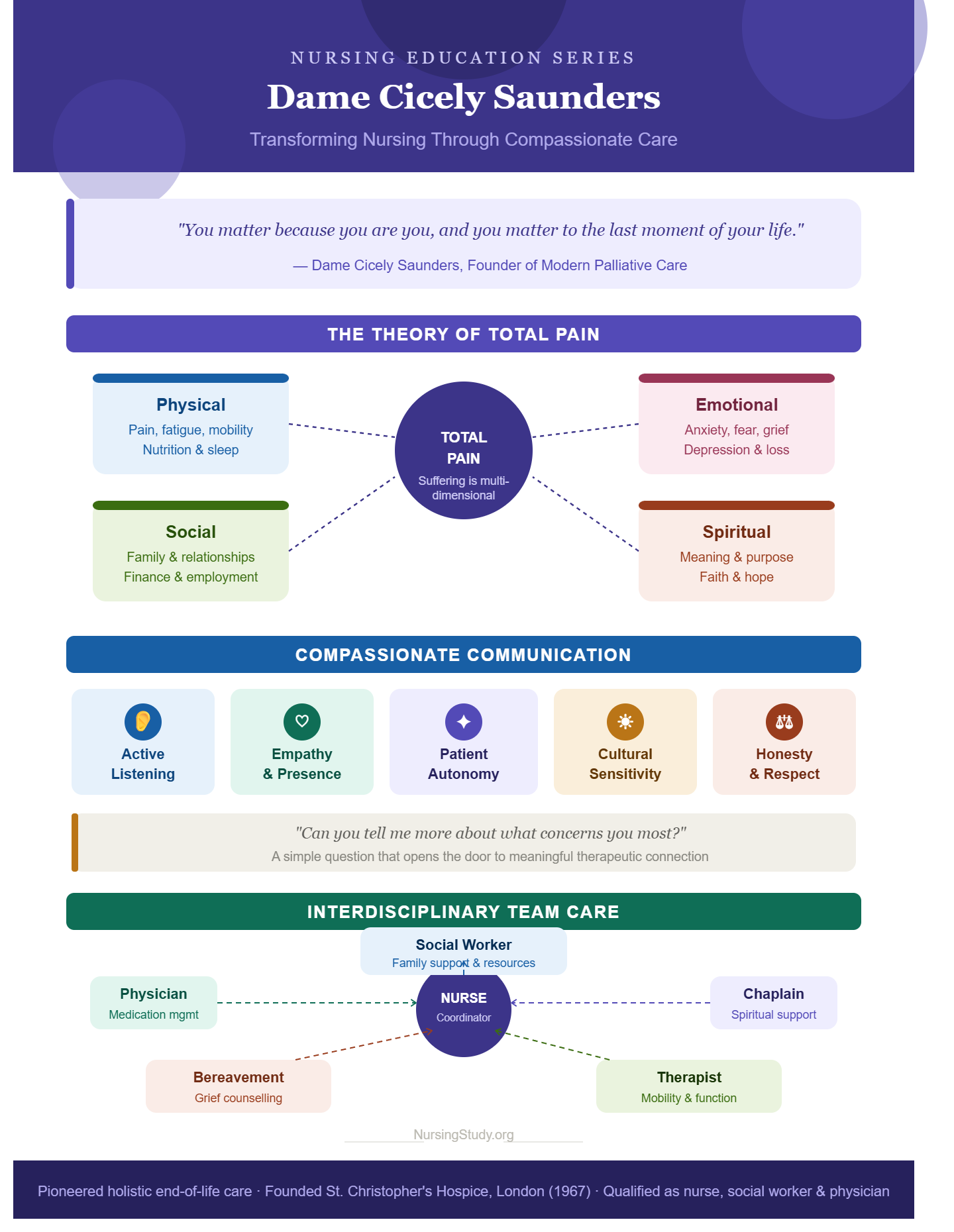
Effective communication involves:
- Active listening.
- Empathy.
- Presence.
- Compassion.
- Respect for patient autonomy.
- Cultural sensitivity.
One of the most powerful lessons from Dame Cicely Saunders is that listening can be as important as any clinical intervention. Patients approaching the end of life often need opportunities to discuss:
- Fears and anxieties.
- Family concerns.
- Unfinished goals.
- Spiritual questions.
- Personal values.
By creating a safe environment for these conversations, nurses help reduce distress and improve emotional well-being.
Therapeutic Relationships in Practice
A therapeutic relationship is built on trust, empathy, and mutual respect.
For example, imagine a patient with advanced heart failure who expresses fear about dying. Rather than immediately changing the subject or offering false reassurance, a nurse influenced by the philosophy of Dame Cicely Saunders might respond:
“Can you tell me more about what concerns you most?”
This simple question opens the door to meaningful discussion and allows the patient to feel heard and supported.
The emphasis that Dame Cicely Saunders placed on compassionate communication continues to influence nursing education, patient advocacy, and professional practice across healthcare settings.
Interdisciplinary Collaboration in Palliative Care
A defining characteristic of the model developed by Dame Cicely Saunders is interdisciplinary collaboration.
Because suffering affects multiple aspects of life, no single healthcare professional can adequately address all patient needs. Consequently, Dame Cicely Saunders promoted a team-based approach that remains a hallmark of modern palliative care.
An interdisciplinary team may include:
- Nurses.
- Physicians.
- Social workers.
- Pharmacists.
- Physical therapists.
- Occupational therapists.
- Chaplains.
- Bereavement counselors.
- Volunteers.
Each team member contributes specialized knowledge while working toward shared goals.
The Nurse’s Role Within the Team
Nurses often serve as the central point of coordination because they spend significant time with patients and families.
Responsibilities frequently include:
- Ongoing assessment.
- Symptom monitoring.
- Patient education.
- Family support.
- Care coordination.
- Advocacy.
The multidisciplinary background of Dame Cicely Saunders, who worked as a nurse, physician, and social worker, strongly influenced her belief that collaboration improves patient outcomes.
Example of Interdisciplinary Care
Consider a patient receiving hospice care for advanced lung disease.
The interdisciplinary team may address needs in the following ways:
| Team Member | Contribution |
|---|---|
| Nurse | Symptom assessment and patient education |
| Physician | Medication management |
| Social Worker | Family support and resource coordination |
| Chaplain | Spiritual counseling |
| Therapist | Mobility and functional support |
This collaborative approach reflects the vision of Dame Cicely Saunders and ensures comprehensive care for patients and families.
Lessons for Nursing Students
The life and work of Dame Cicely Saunders offer numerous lessons for future nurses. Although healthcare technology and treatment options continue to evolve, many of the principles she championed remain highly relevant.
Several key lessons stand out.
1. See the Person Behind the Diagnosis
One of the central teachings of Dame Cicely Saunders is that patients are more than their diseases.
Nurses should strive to understand:
- Individual experiences.
- Personal values.
- Family dynamics.
- Emotional concerns.
- Life goals.
This perspective promotes patient-centered care and strengthens therapeutic relationships.
2. Prioritize Compassionate Care
Technical competence is essential, but Dame Cicely Saunders demonstrated that clinical excellence must be accompanied by compassionate care.
Simple actions such as listening attentively, providing reassurance, and respecting patient preferences can significantly improve patient experiences.
3. Recognize the Importance of Pain and Symptom Management
The work of Dame Cicely Saunders revolutionized pain management and established new standards for effective pain management.
Nurses should understand that:
- Symptom assessment is ongoing.
- Patient reports should be taken seriously.
- Comfort is a fundamental goal of care.
- Effective symptom management improves quality of life.
4. Value Communication
The ability to communicate effectively with patients and families is one of the most important nursing skills.
The example set by Dame Cicely Saunders demonstrates that compassionate conversations can help patients navigate uncertainty, fear, and grief.
5. Embrace Teamwork
Modern healthcare depends upon interdisciplinary collaboration.
The success of St Christopher’s Hospice demonstrated that patient outcomes improve when professionals work together toward shared goals.
6. Advocate for Dignity and Quality of Life
Perhaps the most enduring lesson from Dame Cicely Saunders is that every individual deserves dignity, respect, and support regardless of prognosis.
Whether working in acute care, community settings, long-term care, or hospice care, nurses have a responsibility to advocate for the well-being of patients and families.
The contributions of Dame Cicely Saunders continue to shape contemporary nursing practice. Her emphasis on holistic assessment, therapeutic communication, interdisciplinary teamwork, symptom management, and compassionate care remains central to modern healthcare. By embracing these principles, nurses can provide care that not only addresses illness but also supports the physical, emotional, social, and spiritual needs of those they serve. In this way, the legacy of Dame Cicely Saunders continues to influence nursing professionals across the world and reinforces the enduring importance of patient-centered palliative care.
The Legacy of Dame Cicely Saunders
The legacy of Dame Cicely Saunders extends far beyond the walls of the hospice she established in South London. While she is widely recognized as the founder of the modern hospice, her influence reaches into virtually every aspect of contemporary palliative care, including clinical practice, nursing education, healthcare policy, research, and global health initiatives. Few healthcare pioneers have left such a lasting and transformative impact on the care of patients facing serious illness.
The work of Dame Cicely Saunders fundamentally changed how healthcare professionals understand suffering, symptom management, patient dignity, and the role of compassionate care. Her philosophy challenged the belief that little could be done for individuals with terminal illnesses and instead demonstrated that high-quality care could significantly improve the lives of patients and families, even when cure was no longer possible.
The enduring influence of Dame Cicely Saunders can be seen in the continued growth of the modern hospice movement, the expansion of research through the Cicely Saunders Institute, the development of international palliative care policies, and the integration of holistic care principles into healthcare education and clinical practice worldwide.
Global Expansion of the Modern Hospice Movement
One of the most visible aspects of the legacy of Dame Cicely Saunders is the extraordinary global growth of the modern hospice movement. What began with the opening of St Christopher’s Hospice in 1967 eventually developed into an international movement that transformed approaches to serious illness and end-of-life care.
When Dame Cicely Saunders founded the first modern hospice, she envisioned more than a single institution. She hoped to create a model that could be adapted and implemented in different healthcare systems around the world. That vision proved remarkably successful.
The influence of St Christopher’s Hospice quickly extended beyond the United Kingdom as healthcare professionals from different countries visited the hospice to learn about its innovative approaches to:
- Pain and symptom control.
- Interdisciplinary teamwork.
- Family-centered care.
- Bereavement support.
- Research and education.
- Community-based services.
As these professionals returned to their home countries, they adapted the principles developed by Dame Cicely Saunders and helped establish new hospice and palliative care programs.
Over the following decades, the modern hospice movement expanded throughout:
- Europe.
- North America.
- South America.
- Africa.
- Asia.
- Australia and New Zealand.
Today, many healthcare systems incorporate hospice and palliative care services that reflect the principles first developed by Dame Cicely Saunders.
The global reach of her influence is particularly evident in countries that have adapted hospice principles to local healthcare needs. For example, community-based and home care models have become increasingly important in regions where hospital resources are limited. These programs embody the belief of Dame Cicely Saunders that high-quality palliative care available to everyone should not depend solely on location or economic status.
The international growth of hospice services has also reinforced one of the central messages of Dame Cicely Saunders: that individuals facing life-limiting illness deserve dignity, comfort, and compassionate support regardless of diagnosis, age, culture, or socioeconomic background.
The Cicely Saunders Institute and Continuing Research
Another important component of the legacy of Dame Cicely Saunders is the continued advancement of research, education, and innovation through the Cicely Saunders Institute.
Toward the end of her life, Dame Cicely Saunders recognized that sustaining progress in palliative care would require ongoing scientific investigation and professional education. As a result, she helped establish Cicely Saunders International, an organization dedicated to supporting research and improving care for individuals with progressive illness. Cicely Saunders International was founded to continue the mission she had pursued throughout her career and to ensure that future generations could build upon her work.
The Cicely Saunders Institute, often described as the world’s first purpose-built Institute of Palliative Care, officially opened in 2010 through a partnership involving King’s College London and Cicely Saunders International. The Institute opened with a mission to integrate research, education, clinical care, and community engagement within a single center dedicated to improving the lives of people affected by serious illness.
Today, the Cicely Saunders Institute serves as a global leader in:
- Palliative care research.
- Rehabilitation research.
- Healthcare education.
- Policy development.
- Clinical innovation.
- Outcome measurement and evaluation.
Researchers affiliated with the institute investigate topics such as:
- Symptom management.
- Quality of life.
- Family caregiving.
- Communication in serious illness.
- Rehabilitation for patients with advanced disease.
- Health service delivery models.
Importantly, the institute continues the commitment of Dame Cicely Saunders to evidence-based practice. Research findings are translated into education, policy, and clinical care, ensuring that scientific discoveries contribute directly to improving patient outcomes. The institute also collaborates with healthcare organizations internationally and has become one of the world’s most influential centers for palliative care research.
The existence of the Cicely Saunders Institute reflects a core belief held by Dame Cicely Saunders throughout her career: compassionate care should be supported by rigorous scientific inquiry and continuous learning.
Influence on Modern Palliative Care Policy and Practice
The influence of Dame Cicely Saunders extends beyond clinical settings and research institutions into healthcare policy and service development.
Many principles that guide modern palliative care policy can be traced directly to the work of Dame Cicely Saunders. These include:
- Early integration of palliative services.
- Holistic patient assessment.
- Family-centered care.
- Access to symptom management.
- Interdisciplinary collaboration.
- Respect for patient autonomy and dignity.
Healthcare organizations throughout the world have adopted standards that reflect the philosophy developed by Dame Cicely Saunders. International bodies such as the World Health Organization and numerous national healthcare systems now recognize palliative care as an essential component of comprehensive healthcare.
One of her most important contributions was demonstrating that effective pain management and compassionate support should not be limited to specialized hospice settings. Instead, these principles should be incorporated throughout healthcare systems, including hospitals, outpatient clinics, long-term care facilities, and community programs.
The influence of Dame Cicely Saunders is particularly evident in efforts to improve access to symptom management and support services. Her advocacy helped challenge misconceptions regarding opioid use for serious illness and contributed to greater acceptance of evidence-based approaches to pain management.
Additionally, the philosophy developed by Dame Cicely Saunders continues to inform policies designed to improve care at the end of life. Policymakers increasingly recognize that quality healthcare includes not only treatment and cure but also comfort, dignity, and support for patients and families facing advanced illness. Recent discussions surrounding the future of hospice services and the growing need for end-of-life care continue to reference the principles first championed by Dame Cicely Saunders.
As populations age and chronic illnesses become more prevalent, the ideas introduced by Dame Cicely Saunders remain highly relevant to healthcare planning and policy development worldwide.
Lasting Contributions to Healthcare Education and End-of-Life Care
The contributions of Dame Cicely Saunders have also had a profound and lasting effect on healthcare education.
Before the emergence of the modern hospice movement, formal education regarding death, dying, and symptom management was often limited. Today, nursing, medical, and allied health programs routinely include instruction on:
- Palliative care principles.
- Symptom assessment.
- Communication skills.
- Ethical decision-making.
- Family support.
- Bereavement care.
- Interdisciplinary teamwork.
Many of these educational priorities reflect the work of Dame Cicely Saunders and her insistence that healthcare professionals require specialized knowledge to provide high-quality end-of-life care.
For nursing education in particular, her influence has been substantial. Students are taught to conduct holistic assessments, recognize the dimensions of total pain, communicate effectively with patients and families, and advocate for compassionate care. These competencies are now considered essential components of professional nursing practice.
The educational legacy of Dame Cicely Saunders is also reflected in continuing professional development programs that help clinicians remain current with evolving evidence and best practices. Through organizations such as the Cicely Saunders Institute and Cicely Saunders International, healthcare professionals around the world continue to access resources that promote excellence in palliative care education and practice.
Perhaps the most enduring contribution of Dame Cicely Saunders is the transformation of society’s understanding of dying. She demonstrated that the final stage of life deserves the same attention, skill, and compassion as any other phase of healthcare. Her belief that patients matter until the last moment of your life continues to guide healthcare professionals across disciplines and settings.
More than two decades after the death of Cicely, the influence of Dame Cicely Saunders remains evident in hospitals, hospices, universities, research centers, and community healthcare programs around the world. Her vision established a lasting culture of palliative care that continues to improve the lives of millions of patients and families. Through the ongoing growth of the modern hospice movement, advances in research, improvements in healthcare education, and the global expansion of compassionate end-of-life care, the legacy of Dame Cicely Saunders continues to shape the future of healthcare for generations to come.
Conclusion
The story of Dame Cicely Saunders is one of vision, compassion, and transformative leadership in healthcare. At a time when many patients facing terminal illness received limited support beyond basic medical treatment, Dame Cicely Saunders challenged existing assumptions and demonstrated that caring for individuals at the end of life required far more than managing disease. Through her pioneering work, she established a new philosophy of care that emphasized dignity, comfort, respect, and the holistic well-being of patients and their families.
As the founder of the modern hospice, Dame Cicely Saunders fundamentally changed the way healthcare professionals approach serious illness and death. Her establishment of St Christopher’s Hospice provided a practical model for integrating clinical excellence, research, education, and compassionate care. What began as a single institution evolved into the global modern hospice movement, influencing healthcare systems, policymakers, educators, and clinicians across the world.
Among her most enduring contributions was the development of the concept of total pain, which transformed understanding of patient suffering. By recognizing that pain encompasses physical, emotional, social, and spiritual dimensions, Dame Cicely Saunders helped create a more comprehensive approach to pain management, symptom relief, and patient-centered care. This framework continues to guide modern palliative care practice and remains a cornerstone of holistic healthcare.
The influence of Dame Cicely Saunders is especially evident in nursing. Her emphasis on compassionate care, therapeutic communication, interdisciplinary teamwork, and holistic assessment has shaped generations of nurses and continues to inform professional practice in diverse healthcare settings. Many principles now considered essential to quality nursing care reflect the values and philosophy she championed throughout her career.
The legacy of Dame Cicely Saunders extends beyond hospice walls and academic institutions. Through the continued work of the Cicely Saunders Institute, ongoing research, and the expansion of palliative care services worldwide, her vision remains highly relevant in modern healthcare. As populations age and the prevalence of chronic and life-limiting illnesses continues to increase, the need for compassionate, evidence-based end-of-life care becomes even more important.
Ultimately, Dame Cicely Saunders demonstrated that while medicine may not always be able to cure, healthcare professionals can always provide comfort, dignity, and meaningful support. Her work transformed the care of millions of patients and families and established principles that continue to guide healthcare practice worldwide. More than two decades after she died at St Christopher’s, her influence remains deeply embedded in the culture of modern healthcare, ensuring that compassion and humanity remain at the heart of caring for those facing life’s final chapter.
Frequently Asked Questions
Who is the founder of modern palliative care?
Dame Cicely Saunders is widely recognized as the founder of modern palliative care and the founder of the modern hospice movement. Through her pioneering work, she transformed the care of people with life-limiting illnesses and established many of the principles that guide hospice and palliative care today.
What was the role of Dame Cicely Saunders?
Dame Cicely Saunders was a nurse, social worker, physician, researcher, and healthcare reformer. She founded St Christopher’s Hospice in 1967, developed the concept of total pain, advanced pain management practices, and helped establish a holistic approach to end-of-life care that addresses physical, emotional, social, and spiritual needs.
Why is Dr. Cicely Saunders famous?
Dame Cicely Saunders is famous for revolutionizing the care of dying patients. She founded the first modern hospice, introduced the concept of total pain, and demonstrated that compassionate, evidence-based care can significantly improve quality of life for patients and families facing serious illness. Her work laid the foundation for the global modern hospice movement and modern palliative care.
What are the 7 C’s of palliative care?
The 7 C’s of palliative care are commonly described as:
- Communication – Open and honest discussions with patients and families.
- Coordination – Collaboration among healthcare professionals and services.
- Control of Symptoms – Effective management of pain and other distressing symptoms.
- Continuity – Consistent care across settings and stages of illness.
- Compassion – Providing care with empathy, respect, and understanding.
- Comfort – Promoting physical, emotional, and spiritual well-being.
- Caregiver Support – Assisting and educating family members and caregivers.
These principles help ensure high-quality, patient-centered palliative care and reflect many of the values championed by Dame Cicely Saunders.
