

Acute vs. Subacute Care: A Complete Guide to Rehab, Acute Care, and Subacute Rehabilitation
Acute and subacute care are important components of healthcare delivery, providing different levels of medical treatment, nursing support, and rehabilitation according to a patient’s medical condition, functional abilities, and recovery needs. Although both approaches aim to improve patient health and promote recovery, they differ in their treatment priorities, intensity of medical supervision, duration of care, and the services provided. Acute care primarily focuses on the immediate assessment, diagnosis, treatment, and stabilization of serious illnesses and injuries, while subacute care provides continued medical attention, skilled nursing, and rehabilitation for patients who no longer require intensive hospital-based treatment but still need professional healthcare support. Understanding Acute vs Subacute Care is therefore important when examining how patients receive appropriate treatment as their medical conditions change and their recovery progresses.
Acute care is generally provided in hospitals and other specialized medical settings where patients require prompt clinical intervention, close monitoring, and access to advanced diagnostic and treatment services. It commonly involves managing sudden illnesses, traumatic injuries, surgical complications, severe infections, and exacerbations of chronic medical conditions. Depending on the patient’s condition, acute treatment may include emergency procedures, surgery, intravenous medications, oxygen therapy, diagnostic investigations, and continuous monitoring of vital signs. Nurses working in these settings play an essential role in assessing patients, identifying changes in clinical status, administering prescribed treatments, preventing complications, and coordinating care with other healthcare professionals. The main priority is to stabilize the patient, manage immediate health concerns, and determine the appropriate next stage of treatment.
Subacute care serves a different but equally important purpose in the recovery process. It provides an intermediate level of healthcare for patients who have moved beyond the immediate acute phase of an illness or injury but continue to require medical supervision, nursing assistance, and structured rehabilitation. Patients receiving this type of care are often medically stable, although they may have ongoing healthcare needs that prevent them from safely returning home without additional support. Subacute care may be provided in skilled nursing facilities, nursing homes with rehabilitation services, dedicated rehab centers, and other post-acute care facilities. Depending on individual patient needs, services may include:
- Skilled nursing care: Ongoing assessment, medication administration, wound care, monitoring of medical conditions, and management of treatment-related needs.
- Physical therapy: Exercises and therapeutic activities designed to improve strength, balance, mobility, coordination, and the ability to walk safely.
- Occupational therapy: Assistance with activities of daily living (ADLs), including dressing, bathing, grooming, eating, and other tasks necessary for independent living.
- Speech therapy: Support for patients experiencing communication difficulties, cognitive changes, or swallowing problems following conditions such as stroke or neurological injury.
- Medical and recovery support: Continued management of existing health problems, monitoring of treatment progress, and coordination of services to support safe recovery.
The relationship between acute care and subacute rehabilitation is particularly evident when patients transition from hospitalization to a less intensive healthcare setting. For example, a patient who undergoes hip replacement surgery may initially require acute care for surgical treatment, pain management, postoperative monitoring, and assessment for complications. Once the patient’s condition is stable, they may transfer to a subacute rehab facility for continued nursing support, physical therapy, and occupational therapy. These rehabilitation services help improve joint mobility, restore muscle strength, develop safe movement techniques, and prepare the patient to perform everyday activities independently. Similarly, a patient recovering from a stroke may initially receive hospital-based treatment to address the immediate effects of the event before moving to a rehabilitation setting for assistance with mobility, speech, swallowing, and other affected functions. Such transitions demonstrate how different levels of care can work together to address changing medical and functional needs.
In nursing practice, the distinction between these approaches has important implications for patient assessment, care planning, clinical decision-making, and the coordination of healthcare services. Although nurses in both settings provide direct patient care, their priorities and daily responsibilities may differ according to the patient’s condition and treatment requirements. In acute care, nursing responsibilities often involve:
- Frequent patient assessment: Monitoring vital signs, neurological status, respiratory function, pain levels, and other indicators of clinical stability.
- Recognition of deterioration: Identifying changes that may indicate complications, worsening illness, or the need for urgent medical intervention.
- Administration of treatment: Providing prescribed medications, intravenous therapy, oxygen, and other treatments while monitoring their effectiveness.
- Prevention of complications: Implementing appropriate measures to reduce risks such as infections, pressure injuries, falls, and other hospital-associated complications.
In subacute care, nursing responsibilities extend beyond medical monitoring to include greater involvement in rehabilitation, functional improvement, and preparation for independent living. Nurses work with the care team to monitor progress, support therapy sessions, reinforce treatment recommendations, manage ongoing health problems, and educate patients and caregivers. They may also assist patients in developing the skills needed to manage medications, perform personal care activities, use mobility aids, and recognize symptoms that require further medical attention. This coordinated approach helps ensure that rehabilitation goals remain consistent with the patient’s overall medical condition and functional abilities.
The transition between acute and subacute care also involves important decisions about the appropriate level of care, available rehabilitation services, and the patient’s ability to recover safely outside the hospital. Discharge planning may involve physicians, nurses, physical therapists, occupational therapists, case managers, and social workers who assess the patient’s medical stability, mobility, cognitive function, support system, and ongoing treatment requirements. Depending on these factors, a patient may qualify for inpatient rehabilitation, skilled nursing care, subacute rehabilitation, home health services, or long-term care. The appropriate setting should reflect the patient’s clinical needs rather than simply the length of hospitalization or the diagnosis alone. In the United States, for example, Medicare coverage rules and eligibility requirements may also influence access to certain post-hospital services, including skilled nursing facility care and rehabilitation.
Understanding Acute vs Subacute Care therefore requires examining more than the differences in treatment intensity or the duration of a hospital stay. It involves understanding the characteristics of acute and subacute conditions, the medical services provided in each setting, the responsibilities of nurses, and the role of rehabilitation in restoring patient function. It also requires examining how patients move from acute treatment to subacute recovery, how healthcare professionals determine the appropriate level of care, and how rehabilitation services support the transition from inpatient treatment to returning home. These distinctions provide an important foundation for understanding the continuum of patient care and the role of coordinated nursing and rehabilitation services in promoting recovery, safety, and greater independence.
Understanding Acute and Subacute Conditions
Understanding acute and subacute conditions is essential when examining how healthcare professionals assess illness, determine treatment priorities, and select an appropriate level of care. The terms acute and subacute describe the clinical course of a disease, injury, or health problem, particularly how quickly it develops, how long it persists, and how symptoms change over time. Although these terms are sometimes used interchangeably in everyday healthcare discussions, they represent different patterns of illness and can influence diagnostic decisions, treatment approaches, nursing interventions, and recovery planning.
An acute condition generally develops suddenly or progresses over a relatively short period. It may cause noticeable symptoms that require prompt medical assessment, treatment, or monitoring. A subacute condition usually develops or progresses more gradually than an acute condition and lasts longer than a typical short-term illness, but it has not necessarily become chronic. Its symptoms may be less abrupt, persist after the initial illness or injury, or represent an intermediate phase between an acute episode and longer-term recovery.
The distinction is important because the word acute does not automatically mean that a condition is life-threatening, just as subacute does not mean that a condition is mild. An acute problem can range from a relatively uncomplicated infection to a serious medical emergency. Similarly, a subacute condition can involve significant pain, impaired mobility, persistent inflammation, or other problems that require ongoing medical attention and skilled nursing care.
It is also important to distinguish between acute and subacute conditions and acute and subacute care. Acute and subacute conditions describe the nature and progression of a health problem, whereas acute care and subacute care refer to different healthcare services and treatment settings. A patient with a subacute condition may still require acute care if complications develop, while a patient recovering from an acute illness may transition to subacute rehabilitation once medically stable. Understanding this distinction provides a foundation for examining the differences between acute and subacute care, including treatment intensity, rehabilitation needs, and the appropriate level of care.
Definition and Characteristics of Acute Conditions
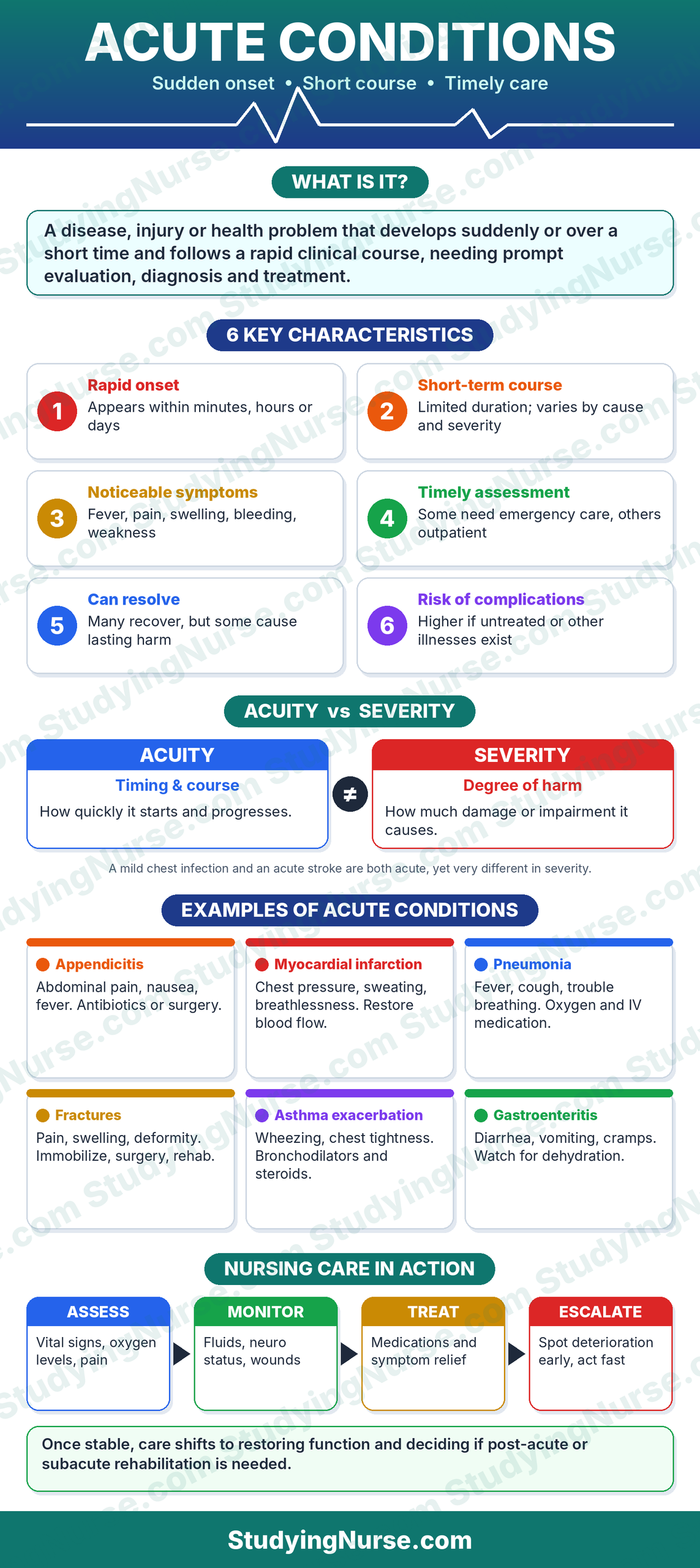
An acute condition is a disease, injury, or health problem that develops suddenly or over a relatively short period and follows a comparatively rapid clinical course. It may produce new symptoms that require prompt evaluation, diagnosis, and treatment. Acute conditions can result from infections, injuries, inflammatory responses, sudden changes in organ function, or complications of an existing medical condition.
The onset of an acute condition may occur within minutes, hours, or several days, depending on the underlying cause. For example, a patient may suddenly develop severe abdominal pain from appendicitis, experience difficulty breathing during an acute asthma exacerbation, or develop a high fever and other symptoms associated with an infection. In each situation, the change in health status may be sufficiently rapid to require timely clinical assessment and intervention.
One defining feature of acute illness is that symptoms often emerge over a relatively short period. The patient may have been functioning normally before the illness or injury and then experience a noticeable deterioration in health. This change can affect the patient’s ability to perform ordinary activities, including walking, eating, sleeping, working, or completing activities of daily living (ADLs).
Several characteristics commonly describe acute conditions:
- Rapid or sudden onset: Symptoms may appear abruptly or become noticeable over a short period. For example, a patient experiencing an acute myocardial infarction may develop sudden chest discomfort, shortness of breath, sweating, nausea, or pain radiating to the arm or jaw.
- Short-term clinical course: Many acute conditions last for a limited period, although the duration varies according to the diagnosis, severity, complications, and response to treatment.
- Noticeable symptoms: Acute illnesses and injuries may produce clear symptoms such as fever, pain, swelling, vomiting, bleeding, weakness, or difficulty breathing. However, some serious acute conditions can initially present with subtle or atypical symptoms.
- Need for timely assessment: Some acute conditions require immediate intervention to prevent deterioration, preserve organ function, or reduce the risk of complications. Others can be assessed and managed through outpatient or primary care services.
- Potential for resolution: Many acute conditions improve after appropriate treatment or resolve as the body recovers. However, recovery is not guaranteed, and some acute illnesses can cause permanent impairment, disability, or death.
- Possibility of complications: An initially uncomplicated illness may become more serious if it progresses, is not treated appropriately, or occurs in a patient with other medical conditions.
A critical point is that acuity and severity are related but separate concepts. Acuity describes the timing and course of a condition, while severity refers to the degree of harm, physiological disturbance, or functional impairment it causes. A mild acute respiratory infection may resolve without extensive treatment, whereas an acute stroke, severe infection, or major traumatic injury may require emergency intervention and intensive inpatient care.
Examples of acute conditions
Acute conditions occur across different body systems and vary considerably in their causes, symptoms, and treatment requirements.
- Acute appendicitis: Appendicitis is an inflammation of the appendix that commonly develops over hours or days. Patients may experience abdominal pain, nausea, vomiting, reduced appetite, and fever. Because an inflamed appendix can rupture and cause serious complications, prompt assessment and treatment are important. Depending on the patient’s condition, management may involve antibiotics and surgical removal of the appendix.
- Acute myocardial infarction: An acute myocardial infarction occurs when blood flow to part of the heart muscle is significantly reduced or blocked, resulting in myocardial injury. It is a time-sensitive medical emergency that may present with chest pressure, shortness of breath, sweating, nausea, or unusual fatigue. Treatment focuses on restoring blood flow when indicated, limiting heart muscle damage, and monitoring for complications such as arrhythmias and heart failure.
- Acute pneumonia: Pneumonia is an infection that causes inflammation in the lungs and may develop over a relatively short period. Symptoms can include fever, cough, chest discomfort, sputum production, and difficulty breathing. Some patients recover with outpatient treatment, while others require hospital admission, oxygen therapy, intravenous medication, or closer respiratory monitoring.
- Acute fractures: A fracture is a break in the continuity of a bone, commonly caused by trauma, a fall, or another injury. Acute fractures may produce pain, swelling, bruising, deformity, and difficulty moving or bearing weight on the affected limb. Treatment depends on the location and severity of the injury and may involve immobilization, reduction, surgery, pain management, and subsequent rehabilitation.
- Acute asthma exacerbation: An asthma exacerbation occurs when airway inflammation and narrowing cause worsening respiratory symptoms. The patient may experience wheezing, coughing, chest tightness, and shortness of breath. Treatment may include inhaled bronchodilators, corticosteroids, oxygen when indicated, and monitoring of respiratory status.
- Acute gastroenteritis: This condition involves inflammation of the stomach and intestines, commonly associated with viral or bacterial infections. Symptoms may include diarrhea, vomiting, abdominal cramps, and fever. A major concern is dehydration, particularly in young children, older adults, and people with other medical conditions. Management may involve oral or intravenous fluid replacement and treatment of the underlying cause when appropriate.
These examples demonstrate that acute conditions do not all require the same type of care. A patient with mild gastroenteritis may recover at home with hydration and appropriate guidance, while someone experiencing an acute myocardial infarction requires emergency assessment and hospital-based treatment. The appropriate level of care depends on the patient’s clinical presentation, physiological stability, risk of complications, and treatment requirements.
In nursing practice, the management of acute conditions commonly involves prompt assessment, identification of changes in health status, symptom management, medication administration, and close monitoring of the patient’s response to treatment. Depending on the diagnosis, nurses may monitor vital signs, oxygen saturation, pain levels, fluid balance, neurological function, wound condition, and other relevant clinical indicators.
For example, a patient admitted with acute pneumonia may require regular respiratory assessments, monitoring of oxygen saturation, administration of prescribed antibiotics, fluid management, and evaluation of breathing effort. If the patient develops increasing respiratory distress or falling oxygen saturation, the nurse must recognize the deterioration and escalate care according to clinical protocols. This illustrates why acute nursing care places considerable emphasis on early recognition of complications and timely intervention.
Not every acute condition requires a prolonged hospital stay. Some patients receive treatment and return home within a short period, while others need inpatient care, surgery, intensive monitoring, or additional rehabilitation. When the immediate illness or injury has been treated and the patient’s condition becomes stable, the care plan may shift toward restoring function, managing remaining health problems, and determining whether post-acute care or subacute rehabilitation is necessary.
Definition and Characteristics of Subacute Conditions
A subacute condition is a health problem that develops or progresses more gradually than an acute condition and follows an intermediate clinical course between acute and chronic illness. It may persist for several days or weeks, continue after the initial acute phase, or develop over a period that is longer than a typical sudden illness but not sufficiently prolonged to be classified as chronic.
Unlike an acute condition, which may involve a sudden and noticeable change in health, a subacute condition often has a less abrupt onset. Symptoms may develop progressively, remain present after an initial illness or injury, or improve slowly rather than resolving quickly. The patient may no longer be experiencing the most critical phase of the illness but may still require medical evaluation, treatment, monitoring, or rehabilitation.
There is no single time limit that universally defines every subacute condition. The distinction between acute, subacute, and chronic illness depends on the disease being discussed and the clinical terminology used. For example, the classification of cough commonly describes a cough lasting three to eight weeks as subacute, while other conditions use different time frames. Therefore, healthcare professionals interpret the term according to the diagnosis, clinical findings, and relevant disease-specific guidelines rather than applying one duration to every health problem.
Subacute conditions may occur in different ways. Some develop gradually without a clearly identifiable acute episode, while others represent an ongoing stage of recovery after an acute illness or injury. For example, a patient recovering from pneumonia may continue to experience fatigue, reduced exercise tolerance, and a persistent cough after the initial infection has improved. Another patient recovering from a fracture may have stable bone alignment but continue to experience pain, stiffness, weakness, and reduced mobility during the healing process.
Common characteristics of subacute conditions include:
- Gradual or less abrupt onset: Symptoms may emerge progressively rather than appearing suddenly. The patient may notice increasing discomfort, fatigue, weakness, or reduced function over several days or weeks.
- Intermediate duration: A subacute condition generally lasts longer than a typical short-term acute episode but does not necessarily persist for the prolonged period associated with chronic disease. The exact duration depends on the specific condition.
- Persistent or evolving symptoms: Symptoms may continue after the initial illness or injury has been treated. They may gradually improve, fluctuate in intensity, or require additional investigation when recovery is slower than expected.
- Ongoing treatment requirements: Patients may need medication, follow-up examinations, wound care, symptom management, skilled nursing care, or other rehabilitation services.
- Gradual functional recovery: When a subacute condition follows an acute illness or injury, the patient may need time and structured support to regain strength, mobility, endurance, and independence.
- Variable impact on daily activities: Some patients remain independent but experience limitations in specific activities, while others require assistance with walking, bathing, dressing, eating, or other ADLs.
A subacute condition should not automatically be considered a mild or uncomplicated health problem. Although the symptoms may develop more slowly, the underlying condition can still be clinically significant. Persistent infection, inflammation, pain, impaired organ function, or neurological symptoms may require continued assessment and treatment. A patient with a subacute condition can also deteriorate and develop an acute complication, making reassessment essential.
Examples of subacute conditions
Subacute conditions may affect several body systems and can arise during recovery from an acute illness or as a distinct clinical presentation.
- Subacute cough: A subacute cough is commonly defined as a cough lasting between three and eight weeks. It may occur after an upper respiratory tract infection, even after the initial fever, congestion, and other symptoms have resolved. Persistent airway irritation or inflammation may contribute to the cough. Although many cases improve gradually, continued symptoms may require evaluation to exclude conditions such as asthma, ongoing infection, or other respiratory problems.
- Subacute thyroiditis: Subacute thyroiditis is an inflammatory condition of the thyroid gland that may develop over several weeks. Patients can experience neck pain or tenderness, sometimes accompanied by fever and temporary changes in thyroid hormone levels. The clinical course may involve an initial period of increased thyroid hormone release, followed by a temporary reduction in thyroid function before recovery in many cases. Management depends on symptoms and thyroid function and may include anti-inflammatory medication and follow-up monitoring.
- Subacute endocarditis: Subacute infective endocarditis is an infection involving the inner lining of the heart, commonly affecting the heart valves. Compared with more rapidly progressing forms of endocarditis, it may develop more gradually, with symptoms such as persistent low-grade fever, fatigue, night sweats, weight loss, and general malaise. Despite its slower progression, it is a serious condition that requires timely diagnosis and appropriate antimicrobial treatment because it can damage heart valves and cause systemic complications.
- Recovery following a stroke: A stroke is an acute neurological event, but the period after the initial emergency treatment may involve a prolonged and gradual recovery process. A patient may continue to experience weakness on one side of the body, impaired balance, difficulty swallowing, communication problems, or reduced coordination. These ongoing impairments may require physical therapy, occupational therapy, speech therapy, and nursing support. The recovery phase should not be confused with the original acute stroke; rather, it represents the continuing management of its effects.
- Recovery following an orthopedic injury or surgery: After a major fracture or joint replacement, the initial injury or operation may be managed during an acute hospital stay. Once the patient is medically stable, pain, swelling, muscle weakness, restricted joint movement, and difficulty walking may continue. These problems may require subacute rehabilitation, physical therapy, occupational therapy, and skilled nursing care to improve mobility and support a safe return home.
- Persistent symptoms following pneumonia: A patient may complete treatment for acute pneumonia but continue to experience fatigue, reduced stamina, breathlessness during activity, or a lingering cough. These symptoms can interfere with daily activities and may require follow-up assessment, gradual activity progression, respiratory support when indicated, and rehabilitation. Persistent or worsening symptoms should not automatically be attributed to normal recovery because they may indicate complications or another underlying condition.
The examples illustrate an important distinction: some subacute conditions are defined by the clinical course of the disease itself, while others describe ongoing symptoms or functional limitations after an acute event. A patient recovering from a stroke, for instance, does not necessarily have a subacute stroke. The stroke was the acute event; the subsequent rehabilitation period addresses the neurological and functional effects that remain.
This distinction is particularly relevant when determining the appropriate type of care. A patient whose acute medical problem has been treated but who continues to need wound care, medication management, assistance with activities of daily living, or structured therapy may benefit from post-acute care. Depending on the patient’s medical needs and recovery goals, services may be provided through a skilled nursing facility, a rehabilitation facility, outpatient therapy, or home health. The setting is determined by the patient’s condition and required services, not simply by whether the diagnosis is described as subacute.
Onset, Duration, and Disease Progression
Onset, duration, and disease progression are three important factors used to understand the clinical course of an illness or injury. Although they are closely related, each describes a different aspect of how a health problem develops and changes over time.
- Onset refers to when and how a condition first develops. It describes whether symptoms appear suddenly, emerge gradually, or become noticeable after an identifiable event.
- Duration refers to how long the condition or its symptoms persist. It helps distinguish short-term health problems from those that continue over an intermediate or prolonged period.
- Disease progression describes how the condition changes after it begins. Symptoms may worsen, remain stable, fluctuate, improve with treatment, or lead to complications.
These factors help healthcare professionals interpret the difference between acute and subacute conditions, determine whether a patient’s health is improving or deteriorating, and identify the most appropriate treatment and monitoring requirements.
Onset of acute and subacute conditions
Acute conditions are commonly associated with sudden or rapid onset. Symptoms may develop within minutes, hours, or a few days, depending on the underlying disease or injury. The patient may identify a specific point when the problem began, such as the moment of an injury or the sudden appearance of chest pain.
For example, a patient who falls and sustains a hip fracture may experience immediate pain, difficulty standing, and an inability to bear weight. Similarly, a patient who develops sudden facial drooping, arm weakness, and speech difficulty may be experiencing a stroke. Both situations require prompt clinical assessment, although their causes, treatment pathways, and expected recovery patterns differ.
Subacute conditions generally have a less abrupt onset. Symptoms may develop over several days or weeks and become progressively more noticeable. A patient may initially experience mild discomfort, fatigue, or reduced physical capacity before recognizing that the symptoms are persistent enough to require medical attention.
For instance, a patient with subacute thyroiditis may initially notice neck discomfort and tenderness that gradually become more pronounced. A person with a subacute cough may continue coughing for weeks after recovering from a respiratory infection. In these situations, the onset and progression are less sudden than in many acute conditions, but the symptoms still require appropriate assessment.
However, onset alone does not determine the classification of a condition. Some illnesses develop suddenly but persist for a prolonged period, while others begin gradually and may still require urgent intervention once identified. Healthcare professionals therefore consider onset together with duration, symptoms, diagnostic findings, and the patient’s overall clinical status.
Duration of acute and subacute conditions
Duration provides another way to distinguish between different clinical courses. Many acute conditions are short-lived, with symptoms resolving over days or a few weeks following appropriate treatment or natural recovery. The actual period varies considerably. An uncomplicated viral infection may improve within several days, whereas recovery from a major traumatic injury or severe infection may take much longer.
Subacute conditions generally persist beyond the initial short-term phase. They may last several weeks or, depending on the condition, longer. For example, the clinical classification of cough provides a useful illustration: a cough lasting less than three weeks is commonly described as acute, one lasting three to eight weeks as subacute, and one lasting more than eight weeks as chronic. These time limits apply specifically to cough and should not be treated as universal definitions for all diseases.
Duration is important because persistent symptoms may require further investigation. A patient who continues to experience fever, pain, weakness, breathlessness, or impaired function may need additional diagnostic testing or changes to the treatment plan. The healthcare team must determine whether the symptoms represent expected recovery, incomplete resolution of the original illness, a complication, or a separate medical condition.
Duration also influences rehabilitation planning. A patient may no longer require the same intensity of medical treatment provided during the acute phase but may still need ongoing nursing care and therapy. For example, after surgery for a hip fracture, the immediate surgical and medical needs may be addressed during the hospital stay. However, the patient may continue to require assistance with transfers, walking, personal care, and strengthening exercises. Subacute rehabilitation can provide an appropriate setting for these continuing needs when the patient meets the relevant clinical and admission criteria.
Disease progression and changes in clinical status
Disease progression refers to the pattern of change that occurs after a condition develops. Acute conditions may progress rapidly, particularly when the underlying cause produces significant physiological disturbance. For example, an untreated severe infection may progress to sepsis, while an acute respiratory condition may worsen and cause respiratory failure. These possibilities explain why patients with serious acute illnesses may require frequent monitoring and prompt intervention.
However, not all acute conditions worsen rapidly. Some remain relatively mild and resolve without major complications. An uncomplicated urinary tract infection, for example, may respond well to appropriate treatment, while a minor soft-tissue injury may improve gradually with rest and supportive care. The course depends on the underlying cause, the patient’s health status, and the effectiveness of treatment.
Subacute conditions often follow a slower or more prolonged pattern. Symptoms may gradually improve, remain persistent, or fluctuate over time. In some cases, a subacute condition represents a transitional stage between an acute illness and chronic disease. For example, inflammation that continues after an initial injury may remain active for several weeks before resolving. If the underlying cause persists, the condition may develop into a longer-term problem.
Disease progression can generally follow several patterns:
- Improvement and recovery: Symptoms decrease as the underlying cause is treated or the body heals. For example, a patient recovering from pneumonia may experience reduced fever and improved breathing before gradually regaining normal energy levels and exercise tolerance.
- Persistent symptoms: The initial illness improves, but some symptoms remain. A patient may recover from an acute respiratory infection while continuing to experience a subacute cough. Persistent symptoms may require monitoring or further investigation, depending on their nature and duration.
- Progressive deterioration: The condition becomes more severe over time. For example, an infection may spread or cause organ dysfunction if it is not adequately controlled. In this situation, a patient who initially appeared stable may require escalation to a higher level of care.
- Fluctuating symptoms: Symptoms may improve and worsen at different times. A patient recovering from an inflammatory condition may experience periods of reduced pain followed by temporary increases in discomfort or swelling. The care team must assess whether these changes are expected or indicate a complication.
- Transition to a chronic condition: A health problem may persist beyond the expected recovery period and become a long-term condition. This may occur when the underlying cause is not resolved or when lasting tissue damage or functional impairment remains.
An additional pattern is an acute exacerbation of a chronic condition. This occurs when a patient with an established long-term illness experiences a sudden deterioration. For example, a person with chronic obstructive pulmonary disease (COPD) may develop an acute exacerbation characterized by increased breathlessness, cough, or sputum production. The patient has a chronic underlying disease but is experiencing a new acute episode that may require urgent treatment or hospital admission. This is often described as an acute-on-chronic condition.
How onset, duration, and progression influence the level of care
The clinical course of a condition helps determine the level of care a patient requires, but it should never be used as the only basis for deciding where treatment should take place. Healthcare professionals also consider vital signs, organ function, symptom severity, complications, comorbidities, functional ability, and the availability of appropriate services.
A patient with an acute condition may require emergency assessment, acute treatment, surgery, or inpatient monitoring. For example, a patient with an acute stroke may need immediate neurological assessment, brain imaging, time-sensitive treatment when eligible, and close monitoring in a hospital. The immediate priority is to stabilize the patient and reduce further neurological injury.
After the acute phase, the patient’s needs may change. If the patient is medically stable but continues to experience weakness, impaired balance, difficulty swallowing, or reduced independence, the care plan may include rehabilitation services. Depending on the patient’s needs, these services may involve inpatient rehabilitation, subacute rehab in a skilled nursing facility, outpatient therapy, or home health.
Consider a patient who sustains a hip fracture following a fall. The injury has an acute onset and requires prompt assessment, pain management, and often surgical treatment. During the initial hospital stay, the care team focuses on treating the fracture, monitoring postoperative recovery, preventing complications, and managing other medical conditions. Once the patient is medically stable, the main concerns may shift toward mobility, strength, safe transfers, personal care, and returning home. If the patient cannot yet manage these activities independently and needs continued skilled services, subacute rehabilitation may be considered.
This example shows why the transition from acute care to subacute care is not based simply on the number of days since the injury occurred. It depends on whether the patient’s immediate medical needs have been addressed and whether ongoing skilled nursing or rehabilitation services are necessary. A patient who develops a new infection, unstable vital signs, or another serious complication may need acute hospital treatment again, even if they had already entered a rehabilitation program.
Similarly, a patient recovering from a serious infection may no longer require intensive hospital treatment but may remain weak, have reduced endurance, or need continued wound care and medication management. The care team may consider a transitional level of care that supports recovery while addressing the patient’s remaining medical and functional needs.
For nurses, understanding onset, duration, and disease progression supports accurate assessment and clinical decision-making. It helps them recognize when symptoms are consistent with expected recovery and when a change in condition requires further evaluation. It also supports communication with physicians, therapists, case managers, and other members of the care team when determining discharge needs and appropriate rehabilitation services.
In the context of acute vs subacute care, the central consideration is the patient’s current clinical and functional status. Acute care addresses immediate medical needs, stabilization, and treatment of serious illness or injury. Subacute care may support patients who no longer need the same intensity of acute hospital treatment but still require skilled nursing, medical oversight, or structured therapy before they can safely return home or transition to another care setting. Understanding how a condition begins, how long it lasts, and how it progresses helps ensure that the patient receives the appropriate type of care at each stage of recovery.
Common Examples of Acute and Subacute Conditions
Acute and subacute conditions occur across nearly every area of healthcare, including cardiovascular, respiratory, neurological, gastrointestinal, musculoskeletal, and infectious disease practice. Recognizing common examples helps explain how the timing and progression of an illness or injury influence assessment, treatment, nursing responsibilities, and decisions about the appropriate level of care.
An acute condition typically develops suddenly or over a relatively short period and may require prompt medical attention. Some acute conditions are minor and resolve with limited treatment, while others are serious emergencies that require immediate intervention, hospital admission, or intensive monitoring. Subacute conditions generally develop more gradually or persist beyond the initial acute phase. They may require continued medical management, skilled nursing, or rehabilitation even when the patient no longer needs the intensity of treatment provided in an acute hospital setting.
It is important to recognize that a diagnosis does not always belong exclusively to one category. The same disease or injury can have an acute presentation, a subacute course, or a longer recovery period. For example, pneumonia may begin as an acute infection, while the patient may continue to experience fatigue and reduced exercise tolerance during recovery. Similarly, a stroke is an acute neurological event, but the resulting weakness, communication difficulties, and mobility limitations may require weeks or months of rehabilitation. The examples below illustrate these differences and show how they relate to patient care.
Acute Conditions
Acute conditions are health problems that develop suddenly or progress over a relatively short period. They may result from infection, trauma, inflammation, reduced blood supply, sudden organ dysfunction, or an exacerbation of an existing disease. Their presentation often involves a noticeable change from the patient’s usual health status, such as the sudden onset of pain, fever, bleeding, weakness, breathing difficulty, or altered consciousness.
The urgency of treatment depends on the nature and severity of the condition. Some acute illnesses can be managed in primary care or outpatient settings, whereas others require emergency treatment and inpatient care. The following examples demonstrate the range of acute conditions encountered in healthcare.
1. Acute myocardial infarction
An acute myocardial infarction, commonly called a heart attack, occurs when blood flow to part of the heart muscle is severely reduced or blocked, resulting in damage to the myocardium. A common cause is the formation of a blood clot at the site of a ruptured or eroded atherosclerotic plaque in a coronary artery.
Patients may develop sudden chest pressure, tightness, or discomfort, which can spread to the arms, shoulders, back, neck, or jaw. Other symptoms include shortness of breath, sweating, nausea, vomiting, dizziness, and unusual fatigue. Some patients, particularly older adults and people with diabetes, may experience less typical symptoms or little chest discomfort.
An acute myocardial infarction requires urgent assessment because delays in treatment can increase the amount of heart muscle damage and the risk of complications. Diagnosis commonly involves an electrocardiogram (ECG), cardiac troponin testing, clinical assessment, and other investigations as indicated. Treatment may include antiplatelet medication, anticoagulation when appropriate, other cardiac medications, and restoration of blood flow through percutaneous coronary intervention or, in selected circumstances, thrombolytic therapy.
Nursing responsibilities include monitoring vital signs and cardiac rhythm, assessing chest pain, administering prescribed medication, observing for complications, and supporting the patient’s response to treatment. Following stabilization, some patients require cardiac rehabilitation, medication education, and lifestyle support. This illustrates how an acute medical emergency can lead to a longer recovery period involving ongoing care and rehabilitation.
2. Acute stroke
A stroke occurs when blood supply to part of the brain is interrupted or when a blood vessel in the brain ruptures, causing injury to brain tissue. Ischemic stroke results from a blocked blood vessel, while hemorrhagic stroke occurs when bleeding develops within or around the brain. Both are acute neurological emergencies because brain cells can be damaged rapidly when normal blood flow is disrupted.
Common warning signs include sudden facial drooping, weakness or numbness on one side of the body, difficulty speaking or understanding speech, sudden visual disturbance, loss of balance, and severe headache, particularly in some hemorrhagic strokes. The acronym FAST—Face, Arms, Speech, Time—is commonly used to help recognize important stroke symptoms and emphasize the need for emergency assessment.
Acute stroke management focuses on rapid diagnosis, determining the type of stroke, and providing time-sensitive treatment when the patient is eligible. Brain imaging is essential to distinguish ischemic from hemorrhagic stroke and guide treatment decisions. Selected patients with ischemic stroke may qualify for intravenous thrombolysis or mechanical thrombectomy, depending on clinical findings and the time or imaging criteria. Other interventions focus on maintaining physiological stability and preventing complications.
Nursing care involves frequent neurological assessments, monitoring vital signs, evaluating swallowing before oral intake when indicated, maintaining patient safety, and observing for changes in consciousness or neurological function. Complications such as aspiration, pressure injuries, falls, infection, and immobility-related problems must also be addressed.
Although the stroke itself is an acute event, its effects may continue well beyond the initial hospital stay. A patient may need physical therapy to improve strength and walking, occupational therapy to regain independence in daily activities, and speech therapy to address communication or swallowing difficulties. Depending on the patient’s needs, recovery may involve inpatient rehabilitation, subacute rehab, outpatient therapy, or home health services.
3. Acute pneumonia
Pneumonia is an infection of the lung tissue that causes inflammation in the alveoli and surrounding structures. It may be caused by bacteria, viruses, fungi, or other infectious agents. In an acute presentation, symptoms can develop over a short period and include cough, fever, chills, chest discomfort, sputum production, fatigue, and shortness of breath.
The severity of acute pneumonia varies. A relatively healthy person with mild disease may be treated at home, while a patient with low oxygen saturation, significant respiratory distress, unstable vital signs, or other risk factors may require hospital admission. Older adults and people with underlying heart, lung, or immune-system conditions may be at greater risk of complications.
Assessment may include a physical examination, oxygen saturation measurement, chest imaging, blood tests, and microbiological investigations when appropriate. Treatment depends on the likely cause and severity. It may include antibiotics for bacterial pneumonia, antiviral treatment in selected infections, oxygen therapy, fluids, and supportive measures.
Nursing interventions commonly involve monitoring respiratory rate and effort, oxygen saturation, temperature, breath sounds, hydration, and response to prescribed treatment. Nurses may also encourage appropriate mobility, positioning, coughing, and deep breathing as clinically suitable.
Some patients improve within days, but fatigue, cough, and reduced exercise tolerance may continue after the acute infection has been controlled. When these symptoms interfere with normal functioning, follow-up care and gradual rehabilitation may be needed. If symptoms worsen or fail to improve as expected, further assessment is necessary to identify possible complications or an alternative diagnosis.
4. Acute appendicitis
Acute appendicitis is inflammation of the appendix, commonly associated with obstruction of its opening and subsequent infection and inflammation. It often presents with abdominal pain that begins near the umbilicus and may move toward the lower right side of the abdomen. Other symptoms can include nausea, vomiting, loss of appetite, fever, and abdominal tenderness.
The condition requires prompt medical assessment because an inflamed appendix can perforate, allowing infected material to enter the abdominal cavity and cause peritonitis or an abscess. Diagnosis is based on the patient’s history, physical examination, laboratory findings, and imaging when indicated.
Treatment commonly involves surgical removal of the appendix, although selected uncomplicated cases may be managed with antibiotics under appropriate clinical guidance. Nursing care includes assessing pain, monitoring vital signs, observing for signs of deterioration, maintaining prescribed fasting status before surgery, administering fluids and medication, and providing postoperative care when an operation is performed.
Following treatment, many patients recover without requiring prolonged rehabilitation. However, recovery time depends on whether the appendix ruptured, whether complications developed, and the patient’s general health. This example shows that an acute condition may have a relatively short treatment course but can become serious if recognition and intervention are delayed.
5. Acute asthma exacerbation
An acute asthma exacerbation occurs when airway inflammation and narrowing cause a sudden or significant worsening of asthma symptoms. The patient may experience wheezing, coughing, chest tightness, shortness of breath, and difficulty completing ordinary activities. Triggers may include respiratory infections, allergens, exercise, smoke, air pollution, or exposure to other irritants.
A severe exacerbation can become life-threatening if airflow obstruction progresses and the patient cannot maintain adequate ventilation. Assessment includes respiratory rate, work of breathing, oxygen saturation, ability to speak, air entry, and response to treatment. In some cases, peak expiratory flow measurement and blood gas analysis may help assess severity.
Treatment may involve repeated inhaled bronchodilators, systemic corticosteroids, oxygen when indicated, and additional emergency interventions for severe cases. Nursing care focuses on respiratory assessment, administering prescribed medication, positioning the patient to ease breathing, monitoring treatment response, and recognizing signs of respiratory fatigue or deterioration.
Once the exacerbation is controlled, the patient may return to routine asthma management. This may include reviewing inhaler technique, identifying triggers, following an asthma action plan, and arranging appropriate follow-up. The acute episode is therefore distinct from the patient’s underlying chronic asthma.
6. Acute gastroenteritis
Acute gastroenteritis is inflammation of the stomach and intestines, commonly caused by viral or bacterial infections and, less frequently, other infectious agents. It may produce diarrhea, vomiting, abdominal cramps, nausea, and fever. Symptoms can begin suddenly and vary in severity.
The main clinical concern is fluid and electrolyte loss. Repeated vomiting and diarrhea can cause dehydration, which may lead to dizziness, reduced urine output, weakness, low blood pressure, and, in severe cases, circulatory compromise. Infants, older adults, and people with existing medical conditions may be particularly vulnerable.
Management focuses on replacing fluids and electrolytes, usually through oral rehydration when the patient can tolerate it. Intravenous fluids may be necessary when dehydration is severe or oral intake is inadequate. Medication is selected according to the patient’s presentation and suspected cause; antibiotics are not routinely required for every case of gastroenteritis.
Nursing care includes monitoring fluid intake and output, assessing hydration, observing stool and vomiting patterns, monitoring vital signs, and reinforcing infection-prevention measures. Most uncomplicated cases resolve over a relatively short period, although some patients may experience temporary weakness or reduced appetite during recovery.
7. Acute fractures and traumatic injuries
An acute fracture is a break in the continuity of a bone, usually caused by trauma, a fall, a motor vehicle collision, or another injury. Symptoms may include sudden pain, swelling, bruising, deformity, restricted movement, and inability to bear weight on the affected limb. The severity depends on the bone involved, the fracture pattern, whether the skin is broken, and whether blood vessels, nerves, or surrounding tissues are damaged.
Initial management involves assessing the injury, controlling pain, immobilizing the affected area, and evaluating circulation, sensation, and movement beyond the injury site. Some fractures can be treated with casts, splints, or other forms of immobilization, while others require surgical fixation using plates, screws, rods, or other devices.
Nursing responsibilities include pain assessment, neurovascular checks, safe positioning, monitoring for complications, wound care when applicable, and supporting mobility within prescribed restrictions. For example, a patient with a surgically repaired hip fracture may initially require assistance with transfers and walking and may have restrictions or precautions related to the procedure.
Although the fracture is an acute injury, bone healing and functional recovery take longer. The patient may need physical therapy to improve strength, balance, and mobility, as well as occupational therapy to relearn safe approaches to bathing, dressing, toileting, and other activities of daily living. If the patient is medically stable but cannot yet function safely at home, subacute rehabilitation or another appropriate post-acute care option may be considered.
8. Acute kidney injury
Acute kidney injury (AKI) is a sudden decline in kidney function that develops over hours or days. It may occur because of reduced blood flow to the kidneys, direct kidney tissue damage, or obstruction of urine flow. Causes include severe dehydration, blood loss, sepsis, certain medications, and urinary tract obstruction.
A patient with AKI may have reduced urine output, swelling, nausea, fatigue, confusion, or changes in blood electrolyte levels. Some patients have few noticeable symptoms, and the condition is identified through laboratory testing, particularly changes in serum creatinine and urine output.
Management focuses on identifying and treating the underlying cause, supporting circulation and hydration when appropriate, reviewing medications that may affect kidney function, and monitoring fluid balance and electrolytes. Severe cases may require hospital admission and, in selected circumstances, dialysis.
Nursing care includes monitoring intake and output, daily weight when indicated, blood pressure, edema, laboratory results, and signs of fluid overload or electrolyte disturbance. Some patients recover kidney function, while others experience incomplete recovery or develop longer-term kidney impairment. The outcome depends on the cause, severity, duration, and the patient’s underlying health.
These examples show that acute conditions vary widely in presentation and treatment. Some resolve with outpatient care, while others require emergency intervention, surgery, or a prolonged hospital stay. The defining consideration is the patient’s current clinical condition and the urgency of the medical needs rather than the diagnosis alone.
Subacute Conditions
Subacute conditions generally develop over a longer period than acute conditions or persist after the initial phase of an illness or injury. They may involve symptoms that gradually become noticeable, continue for several weeks, or improve slowly despite appropriate treatment. In some cases, a subacute condition develops independently, while in others it represents an intermediate stage between an acute episode and full recovery.
Patients with subacute conditions may no longer require emergency interventions or the intensive monitoring associated with an unstable acute illness. However, this does not mean that they have recovered completely or no longer need medical attention. They may continue to experience pain, weakness, inflammation, reduced mobility, impaired organ function, or difficulty performing activities of daily living. Depending on the condition, treatment may involve medication, follow-up examinations, wound care, skilled nursing, physical therapy, occupational therapy, or speech therapy.
The following examples demonstrate different ways subacute conditions can present and how they may affect patient care.
1. Subacute cough
A subacute cough is generally defined as a cough that lasts between three and eight weeks. It often develops after an acute respiratory infection, such as the common cold, influenza, or another viral illness. Although the original infection may have resolved, irritation and inflammation in the airways can continue, causing the patient to cough for several additional weeks.
Patients may experience a persistent dry or productive cough, throat irritation, occasional chest discomfort, and disrupted sleep. In some cases, the cough becomes more noticeable during physical activity, exposure to cold air, or at night. Post-infectious airway sensitivity is one possible explanation, although other conditions, including asthma, pertussis, and ongoing respiratory infections, may also cause prolonged coughing.
Management depends on the underlying cause and the patient’s symptoms. Healthcare professionals may review the patient’s medical history, medication use, exposure to respiratory irritants, and associated symptoms. Further investigations may be necessary when the cough is accompanied by warning signs such as coughing up blood, significant breathlessness, persistent fever, unexplained weight loss, or chest pain.
This example illustrates how a health problem can continue beyond the initial acute illness without necessarily becoming chronic. A patient may have recovered from the original respiratory infection but still require evaluation and symptom management while the cough gradually resolves.
2. Subacute thyroiditis
Subacute thyroiditis is an inflammatory condition of the thyroid gland that often develops over several weeks and may occur following a viral or upper respiratory infection. It is sometimes associated with pain and tenderness in the front of the neck, particularly over the thyroid gland.
The condition can temporarily affect thyroid hormone levels. In the early phase, inflammation may cause stored thyroid hormones to be released into the bloodstream, resulting in temporary symptoms of increased thyroid activity. These may include palpitations, sweating, heat intolerance, tremors, and nervousness. As the condition progresses, some patients experience a temporary period of reduced thyroid hormone production, which may cause fatigue, cold intolerance, constipation, or other symptoms associated with hypothyroidism.
The clinical course varies, but many patients gradually recover thyroid function. Treatment is directed toward controlling inflammation and relieving symptoms. Depending on the severity, management may include anti-inflammatory medication, pain relief, and medication to control troublesome symptoms such as palpitations. Follow-up thyroid function testing helps assess recovery and identify patients who develop persistent thyroid dysfunction.
Subacute thyroiditis demonstrates that a condition can evolve through different clinical phases rather than presenting as one sudden episode. Continued assessment is important because symptoms and hormone levels may change during recovery.
3. Subacute infective endocarditis
Subacute infective endocarditis is an infection of the inner lining of the heart, commonly involving one or more heart valves. Compared with rapidly progressing forms of infective endocarditis, the subacute form may develop more gradually, sometimes over several weeks. It is often associated with organisms that cause a slower clinical course, although the presentation can vary.
Patients may experience persistent low-grade fever, fatigue, night sweats, reduced appetite, weight loss, and a general feeling of being unwell. Some develop a new or changing heart murmur, while others may experience symptoms related to complications such as heart failure or embolization.
Despite its slower progression, subacute infective endocarditis is a serious medical condition. The infection can damage heart valves, interfere with normal cardiac function, and allow infected material to travel through the bloodstream to other organs. Diagnosis commonly involves blood cultures, echocardiography, and clinical assessment.
Treatment usually requires prolonged antimicrobial therapy, often administered intravenously, with close medical monitoring. Some patients require surgery if there is significant valve damage, persistent infection, heart failure, or another serious complication. Nursing responsibilities include monitoring temperature and vital signs, administering prescribed antimicrobial medication, observing for signs of embolic events or heart failure, and supporting the patient’s nutritional and general care needs.
This example highlights an important principle: a gradual onset does not necessarily indicate a mild condition. A subacute illness can still cause serious complications and require hospital-based treatment.
4. Subacute recovery following a stroke
A stroke is an acute neurological event, but the physical, cognitive, and communication problems that remain after the initial emergency may require an extended recovery period. Once the immediate medical needs have been addressed, some patients enter a rehabilitation phase in which the focus shifts toward improving function, preventing complications, and supporting independence.
Depending on the affected area of the brain and the severity of the stroke, patients may experience:
- Weakness or paralysis affecting one side of the body.
- Difficulty walking, standing, maintaining balance, or coordinating movements.
- Speech and language difficulties, including aphasia or dysarthria.
- Difficulty swallowing, which may increase the risk of aspiration.
- Changes in memory, attention, judgment, or problem-solving.
- Reduced ability to perform activities of daily living, such as bathing, dressing, eating, and toileting.
Recovery may involve several rehabilitation services. Physical therapy focuses on mobility, strength, balance, transfers, and walking. Occupational therapy helps patients regain the skills required for everyday activities and adapt to physical or cognitive limitations. Speech therapy addresses communication and swallowing difficulties. Nurses contribute through medication administration, skin care, nutrition support, fall prevention, monitoring, and assistance with daily activities.
The appropriate rehabilitation setting depends on the patient’s medical stability, functional ability, ability to participate in therapy, and need for ongoing supervision or skilled services. Some patients qualify for intensive inpatient rehabilitation, while others may receive subacute rehabilitation in a skilled nursing facility or continue therapy through outpatient or home health services.
It is important to distinguish the acute stroke from the subsequent recovery process. The stroke itself requires emergency assessment and treatment, whereas the later rehabilitation phase addresses the functional consequences that remain after the initial event.
5. Subacute recovery following an orthopedic injury or surgery
Orthopedic injuries and surgical procedures frequently involve a period of recovery that extends beyond the initial acute treatment. For example, a patient who sustains a hip fracture may undergo surgical repair during an acute hospital stay. Although the fracture has been stabilized, the patient may continue to experience pain, swelling, muscle weakness, reduced joint movement, and difficulty walking.
A similar recovery process may occur after knee or hip replacement surgery, spinal procedures, or other major orthopedic operations. The initial surgical problem may have been addressed, but the patient may not yet have regained the strength, balance, endurance, or independence needed to function safely at home.
Subacute rehabilitation may be appropriate when the patient is medically stable but requires continued skilled nursing care and structured therapy. The care plan may include:
- Physical therapy: Exercises and mobility training to improve strength, balance, walking ability, joint movement, and safe transfers.
- Occupational therapy: Assistance with dressing, bathing, toileting, meal preparation, and the use of adaptive equipment.
- Pain management: Administration and evaluation of prescribed pain medication to support comfort and participation in rehabilitation.
- Wound care: Assessment of surgical incisions, dressing changes when indicated, and monitoring for signs of infection or delayed healing.
- Medication management: Support with prescribed medications, including anticoagulants when ordered for prevention of venous thromboembolism.
- Fall prevention: Assessment of mobility risks, safe use of walking aids, environmental modifications, and patient education.
For example, an older adult recovering from a hip fracture may be able to transfer from a bed to a chair with assistance but remain unable to walk safely or manage bathing and dressing independently. A subacute rehab program may provide daily therapy sessions and nursing support while the patient works toward realistic recovery goals. The length of stay depends on progress, clinical needs, functional improvement, and the availability of a safe discharge arrangement.
This example demonstrates how a patient can move from acute treatment to a transitional level of care without being fully recovered. The purpose of subacute rehabilitation is to address ongoing medical and functional needs while helping the patient regain as much independence as possible.
6. Subacute recovery following pneumonia
Some patients continue to experience symptoms after the acute infection responsible for pneumonia has been treated. Although fever and other signs of active infection may have improved, fatigue, weakness, cough, breathlessness during activity, and reduced physical endurance can persist.
These symptoms may be more pronounced in older adults, patients with chronic lung or heart disease, and individuals who experienced severe pneumonia or prolonged hospitalization. A period of reduced mobility during the hospital stay may also contribute to muscle weakness and decreased exercise tolerance.
The recovery plan depends on the patient’s respiratory function, general health, and remaining symptoms. It may include follow-up medical assessment, prescribed medication, gradual return to physical activity, nutritional support, and respiratory rehabilitation when indicated. Patients who remain significantly weak or require assistance with daily activities may need skilled nursing or rehabilitation services before returning home.
For example, a patient who was hospitalized with severe pneumonia may no longer require supplemental oxygen at rest but may become breathless when walking short distances. The patient may need assistance with mobility, monitoring during activity, and a gradual exercise program. Physical therapy may help improve endurance and strength, while nursing care supports medication adherence, nutrition, hydration, and monitoring for recurrent or worsening symptoms.
Persistent symptoms should not automatically be considered a normal part of recovery. New fever, worsening breathlessness, chest pain, confusion, or declining oxygen saturation may indicate a complication or another medical problem and require prompt evaluation.
7. Subacute wound healing and wound care
Wound healing is a gradual process that may extend over several weeks, particularly when the wound is large, deep, infected, or associated with poor circulation or other medical conditions. A patient may initially receive acute treatment for a traumatic wound, surgical incision, or infected ulcer but continue to require wound management after the immediate problem has been addressed.
During the recovery period, the wound may need regular assessment, dressing changes, infection monitoring, and measures to support tissue repair. The care plan depends on the wound’s cause, location, depth, drainage, surrounding skin condition, and evidence of healing.
For example, a patient recovering from surgery may have a stable incision that requires continued dressing changes and monitoring for redness, swelling, drainage, or separation of the wound edges. Another patient with a pressure injury may require pressure redistribution, repositioning, nutritional support, moisture management, and ongoing wound assessment.
Skilled nursing care may be necessary when wound management involves complex dressings, specialized treatment, monitoring for infection, or coordination with other healthcare professionals. Patients with diabetes, vascular disease, or impaired mobility may require additional interventions because these conditions can delay healing.
Not every wound is classified as a subacute condition simply because healing takes time. The term describes the clinical course in the context of the particular problem. Nevertheless, ongoing wound care is a common reason patients may need post-acute or subacute services after discharge from a hospital.
8. Subacute low back pain
Subacute low back pain is commonly described as back pain that persists for approximately four to twelve weeks. It may develop after a muscle strain, lifting injury, or another musculoskeletal problem. In some patients, the initial pain improves but does not resolve completely, while others experience symptoms that interfere with movement, work, sleep, and everyday activities.
Symptoms may include localized lower back discomfort, stiffness, reduced range of motion, and pain that becomes worse with particular movements or prolonged positions. Some patients also experience pain radiating into the buttock or leg, depending on the underlying cause.
Assessment focuses on identifying the source of pain, evaluating functional limitations, and checking for warning signs that may indicate a more serious condition. New bowel or bladder dysfunction, saddle-area numbness, progressive neurological weakness, significant trauma, or other concerning features require urgent medical assessment.
Management commonly emphasizes maintaining appropriate activity, education, and a gradual return to normal function. Depending on the clinical presentation, treatment may include prescribed pain relief, physical therapy, exercise, and modification of activities that aggravate symptoms. Prolonged bed rest is generally discouraged for uncomplicated low back pain because it can contribute to deconditioning and delayed functional recovery.
This example shows how a condition can move beyond the acute stage without necessarily becoming chronic. The goal of treatment is to reduce symptoms, restore movement, and prevent prolonged functional limitations.
9. Subacute recovery following a serious infection
A patient recovering from a serious infection may continue to experience weakness, fatigue, reduced appetite, and difficulty completing ordinary activities after the infection has been controlled. This can occur following conditions such as severe urinary tract infections, bloodstream infections, or other illnesses that require hospitalization.
For example, a patient who has received hospital treatment for a serious urinary tract infection may be medically stable and no longer require emergency intervention but may still need assistance with mobility, medication management, hydration, nutrition, or wound care if other health problems are present. Patients recovering from sepsis may experience more extensive physical and cognitive difficulties, and their recovery can be prolonged.
The care plan should be based on the patient’s remaining clinical needs rather than assuming that all weakness or fatigue is simply part of recovery. The care team may need to assess organ function, medication effects, nutritional status, mobility, cognition, and the possibility of persistent or recurrent infection.
Depending on the patient’s condition, continued care may involve a skilled nursing facility, rehabilitation services, outpatient follow-up, or home health. Physical and occupational therapy may help address weakness and reduced independence, while nursing care supports monitoring, medication administration, and prevention of complications.
10. Subacute neurological and functional recovery after traumatic brain injury
Traumatic brain injury (TBI) may result from a fall, motor vehicle collision, sports injury, or another external force. The initial injury can require emergency assessment and acute hospital treatment, particularly when there is bleeding, swelling, or altered consciousness. However, some patients continue to experience physical, cognitive, emotional, and behavioral difficulties after the immediate injury has been managed.
During the recovery period, patients may experience headaches, dizziness, impaired balance, memory problems, difficulty concentrating, sleep disturbances, irritability, or reduced coordination. The pattern and severity of symptoms depend on the nature of the injury and the areas of the brain affected.
Rehabilitation may involve physical therapy for balance and mobility, occupational therapy for daily activities and cognitive strategies, and speech therapy for communication, attention, memory, or swallowing difficulties when indicated. Nursing care may include monitoring symptoms, supporting medication routines, promoting safety, and helping patients and families understand the recovery plan.
Some patients recover with outpatient services and family support, while others require inpatient or subacute rehabilitation because they cannot yet function safely without professional assistance. A patient’s medical stability, functional limitations, and ability to participate in therapy help determine the most appropriate setting.
These examples demonstrate that subacute conditions are not limited to one disease category. They may involve persistent symptoms, ongoing inflammation, gradual tissue healing, or functional limitations following a serious acute event. The appropriate type of care depends on the patient’s individual needs, and some patients may require continued hospital treatment if their condition remains unstable or complications arise.
In the context of acute vs subacute care, recognizing these examples helps clarify why patients may need different services at different stages of illness and recovery. A patient may initially require acute treatment to address an immediate medical problem and later need subacute rehabilitation, skilled nursing, or other post-acute care to regain strength, manage remaining health problems, and work toward returning home safely.
Acute Care: Treatment and Nursing Responsibilities
Acute care is a specialized level of healthcare designed to address sudden illnesses, injuries, severe symptoms, and acute exacerbations of existing medical conditions. Its primary purpose is to provide prompt assessment, diagnosis, treatment, and stabilization when a patient’s health requires timely medical intervention. Unlike care focused mainly on long-term disease management or gradual functional recovery, acute care prioritizes identifying the immediate health problem, preventing further deterioration, treating the underlying cause, and supporting the patient’s physiological stability.
Patients receiving acute care may present with conditions such as myocardial infarction, stroke, pneumonia, severe infections, acute kidney injury, traumatic injuries, gastrointestinal bleeding, or complications following surgery. The severity of these conditions varies, and not every patient requires intensive care. However, each patient needs an appropriate level of medical attention based on clinical findings, the risk of complications, and the treatment required.
Acute care also involves coordinated work among physicians, nurses, pharmacists, laboratory professionals, therapists, and other members of the care team. Nurses have a particularly important role because they provide continuous patient assessment, administer prescribed treatments, monitor responses, recognize early signs of deterioration, and communicate changes in clinical status. Their responsibilities extend beyond carrying out medical orders to include patient advocacy, education, safety, documentation, and coordination of care.
Understanding acute care requires examining the settings in which it is delivered, the characteristics that distinguish it from other levels of care, and the medical and nursing interventions used to manage patients during acute illness or injury.
Purpose, Settings, and Characteristics of Acute Care
The primary purpose of acute care is to provide timely and appropriate medical treatment for patients experiencing a sudden health problem or a significant deterioration in an existing condition. It addresses immediate clinical needs by identifying the cause of symptoms, restoring or maintaining essential body functions, preventing complications, and stabilizing the patient.
Acute care is not limited to life-threatening emergencies. It also includes treatment for conditions that require hospital-based investigation, medical supervision, surgery, or short-term inpatient management. For example, a patient experiencing severe chest pain may require emergency assessment to determine whether a myocardial infarction has occurred. Another patient may be admitted for a planned surgical procedure and receive acute care before, during, and after the operation. Both situations involve acute healthcare services, although the circumstances and urgency differ.
Several important objectives guide acute care:
- Rapid assessment and diagnosis: Healthcare professionals evaluate the patient’s symptoms, medical history, physical findings, and diagnostic results to identify the underlying problem. Early recognition is particularly important when delays could result in permanent injury or organ damage.
- Stabilization of the patient’s condition: Treatment aims to maintain essential physiological functions, including breathing, circulation, neurological function, and fluid and electrolyte balance. Patients with unstable vital signs may require immediate interventions and closer monitoring.
- Treatment of the underlying illness or injury: Acute treatment addresses the cause of the health problem whenever possible. This may involve medication, surgery, intravenous fluids, respiratory support, wound management, or other interventions.
- Prevention of complications: Acute illness and hospitalization can expose patients to complications such as infection, pressure injuries, falls, blood clots, aspiration, and medication-related adverse events. Preventive nursing and medical interventions help reduce these risks.
- Management of symptoms: Pain, fever, nausea, breathlessness, anxiety, and other symptoms can affect comfort, safety, and recovery. Appropriate symptom management is an important component of acute care.
- Preparation for the next stage of care: Once the immediate medical problem is controlled, the care team evaluates whether the patient can return home, requires additional inpatient treatment, or needs post-acute care, such as subacute rehabilitation or skilled nursing services.
For example, a patient admitted with acute pneumonia may initially require oxygen therapy, intravenous antibiotics, fluid management, and frequent respiratory assessments. As the infection responds to treatment, oxygen requirements may decrease, fever may resolve, and breathing may improve. The care team’s priorities then shift toward assessing mobility, nutritional intake, medication needs, and the patient’s ability to manage safely outside the hospital. If the patient remains weak or needs assistance with daily activities, additional rehabilitation or home health may be appropriate.
Settings where acute care is provided
Acute care is delivered in several healthcare settings. The appropriate setting depends on the patient’s condition, urgency of treatment, required monitoring, and available medical resources. Although hospitals are the most commonly associated acute care facilities, not every acute condition requires inpatient admission.
1. Emergency departments
Emergency departments (EDs) provide immediate assessment and treatment for patients with sudden illnesses, injuries, and potentially life-threatening symptoms. They operate continuously and are designed to manage a wide range of medical emergencies, from minor injuries to severe trauma and critical illness.
Patients are generally assessed through a triage process that prioritizes care according to the severity of their condition and the risk of deterioration. Someone experiencing severe respiratory distress, signs of stroke, or major bleeding receives a higher priority than a patient with a minor injury and stable vital signs.
Emergency department services may include:
- Initial assessment and stabilization.
- Blood tests, imaging, ECGs, and other diagnostic investigations.
- Emergency medication and intravenous fluid administration.
- Wound cleaning, dressing, and treatment of minor injuries.
- Management of acute pain, allergic reactions, and respiratory symptoms.
- Resuscitation and other life-saving interventions when required.
- Referral for hospital admission, specialist assessment, or discharge with follow-up instructions.
For example, a patient who arrives with sudden chest pain may undergo rapid triage, an ECG, cardiac biomarker testing, and continuous or repeated monitoring as indicated. If an acute myocardial infarction is identified, the patient may be transferred for urgent cardiac treatment or admitted to a specialized hospital unit.
Emergency departments are also important for patients whose chronic medical conditions suddenly worsen. A person with diabetes may develop diabetic ketoacidosis, while someone with chronic obstructive pulmonary disease may experience an acute exacerbation that causes severe breathlessness. Although these patients have pre-existing conditions, the sudden deterioration requires acute assessment and treatment.
2. Hospital inpatient units
Hospital inpatient units provide acute care for patients who require admission for medical treatment, surgery, observation, or ongoing monitoring. Admission may occur through the emergency department, a specialist referral, or a planned procedure.
Different inpatient units are organized according to the patient’s diagnosis, clinical needs, and level of monitoring required. Examples include:
- Medical units: Manage conditions such as pneumonia, heart failure, infections, gastrointestinal disorders, and acute kidney injury.
- Surgical units: Provide care before and after procedures, including abdominal surgery, orthopedic operations, and other interventions.
- Cardiac units: Monitor and treat patients with acute cardiac conditions, arrhythmias, and other cardiovascular problems.
- Neurological units: Manage patients with stroke, seizures, neurological deterioration, and other disorders requiring specialized assessment.
- Maternity units: Provide hospital-based care for complications of pregnancy, childbirth, and the immediate postpartum period.
- Pediatric units: Deliver acute medical and surgical care to infants, children, and adolescents.
The length of a hospital stay varies according to the diagnosis, severity, treatment response, complications, and discharge requirements. Some patients need only a short admission, while others require a longer period of acute treatment. Hospital admission does not necessarily mean that a patient is critically ill; it indicates that their medical needs require inpatient services rather than routine outpatient management.
3. Intensive care units
Intensive care units (ICUs) provide a higher level of acute care for patients with severe or life-threatening conditions who need continuous observation, advanced monitoring, and organ support. Patients may be admitted because of respiratory failure, severe sepsis, major trauma, serious cardiac complications, neurological emergencies, or complications following major surgery.
Depending on the patient’s condition, ICU treatment may involve:
- Mechanical ventilation and advanced respiratory support.
- Continuous cardiac and hemodynamic monitoring.
- Vasopressor medications to support blood pressure and circulation.
- Renal replacement therapy, including dialysis, when indicated.
- Management of severe fluid, electrolyte, and acid-base disturbances.
- Frequent neurological assessment and management of critical illness complications.
For example, a patient with severe pneumonia may develop respiratory failure and require mechanical ventilation. In the ICU, the care team monitors oxygenation, ventilation, circulation, fluid balance, infection indicators, and response to treatment. Nurses provide continuous surveillance and coordinate complex interventions to maintain stability and identify deterioration promptly.
Not every patient receiving acute care needs ICU admission. Intensive care is reserved for patients whose clinical condition requires a level of monitoring or organ support that cannot be safely provided in a general inpatient unit.
4. Operating rooms and perioperative settings
Surgical procedures are another important component of acute care. Operating rooms provide a controlled environment for procedures that treat injuries, remove diseased tissue, repair anatomical structures, or address other medical problems. Acute surgical care may be required for emergencies such as appendicitis, internal bleeding, traumatic injuries, or intestinal obstruction. It also includes planned operations, such as joint replacement or other procedures that require hospital-based perioperative services.
Perioperative care covers the preoperative, intraoperative, and postoperative phases. Nurses contribute by preparing patients for surgery, verifying relevant documentation and safety checks, assisting with procedures, monitoring anesthesia-related recovery, managing pain, and observing for postoperative complications.
For example, a patient undergoing surgery for an acute hip fracture may receive preoperative assessment and stabilization, surgical repair, and postoperative monitoring. The initial treatment takes place in the acute hospital setting, but the patient may later need subacute rehabilitation to regain mobility and independence.
5. Observation and short-stay units
Some hospitals operate observation or short-stay units for patients who need additional assessment or monitoring but may not require a conventional inpatient admission. These units are commonly used when clinicians need time to evaluate symptoms, review test results, assess response to treatment, or determine whether hospital admission is necessary.
For example, a patient presenting with chest discomfort may remain under observation while undergoing serial ECGs and cardiac biomarker testing. If the findings are reassuring and the patient is clinically stable, discharge with appropriate follow-up may be possible. If results indicate a serious condition, inpatient admission may be required.
Observation services are not the same as subacute care. They are generally intended for short-term evaluation and management of an acute problem rather than extended rehabilitation or recovery support.
Characteristics that distinguish acute care
Although acute care settings differ in the services they provide, they share several characteristics that distinguish them from subacute care, long-term care, and other healthcare services.
1. Focus on immediate medical needs
Acute care prioritizes conditions that require prompt diagnosis, intervention, or close clinical supervision. The main concern is the patient’s current health problem and the possibility of deterioration. For example, a patient with internal bleeding may require emergency imaging, blood transfusion, and surgery rather than a rehabilitation-focused treatment plan.
2. Higher intensity of medical intervention
Acute care may involve complex diagnostic procedures, intravenous medication, surgery, advanced respiratory support, and frequent reassessment. The intensity of treatment is determined by the patient’s needs. A patient admitted with a severe infection may require frequent laboratory testing and intravenous antibiotics, while another patient recovering from a minor surgical procedure may need less intensive monitoring.
3. Frequent assessment and reassessment
A patient’s condition can change rapidly during an acute illness. Healthcare professionals therefore perform regular assessments to evaluate symptoms, vital signs, laboratory findings, and responses to treatment. Monitoring frequency depends on the patient’s stability and the clinical risks involved.
4. Multidisciplinary coordination
Acute care requires collaboration among different healthcare professionals. Physicians diagnose and direct medical treatment, nurses provide ongoing assessment and care, pharmacists support medication safety, and diagnostic professionals perform investigations. Physical therapists, occupational therapists, dietitians, social workers, and case managers may also contribute when their services are needed.
5. Short-term stabilization and treatment goals
Acute care generally focuses on resolving or controlling the immediate health problem and establishing a safe plan for continued care. However, the length of treatment is not fixed. Some conditions require only a brief hospital stay, while severe illness, complications, or complex medical needs can result in prolonged admission.
6. Risk of rapid clinical deterioration
Patients receiving acute care may experience sudden changes in vital signs, neurological function, respiratory status, or organ function. Early recognition of deterioration is therefore a major priority. Nurses must be familiar with warning signs and escalation procedures so that additional treatment can be initiated without unnecessary delay.
7. Discharge planning begins during treatment
Planning for the next stage of care should not be postponed until the patient is ready to leave the hospital. The care team evaluates the patient’s medical progress, functional ability, available support, home environment, medication requirements, and need for rehabilitation throughout the admission. Some patients can return home with follow-up appointments, while others need home health, outpatient therapy, subacute rehabilitation, or another suitable care facility.
Acute care is therefore best understood as a level of healthcare organized around immediate medical assessment, treatment, and stabilization. Although its central purpose differs from rehabilitation-focused services, acute care also lays the foundation for recovery by preventing complications, preserving function, and identifying the patient’s needs after hospital treatment.
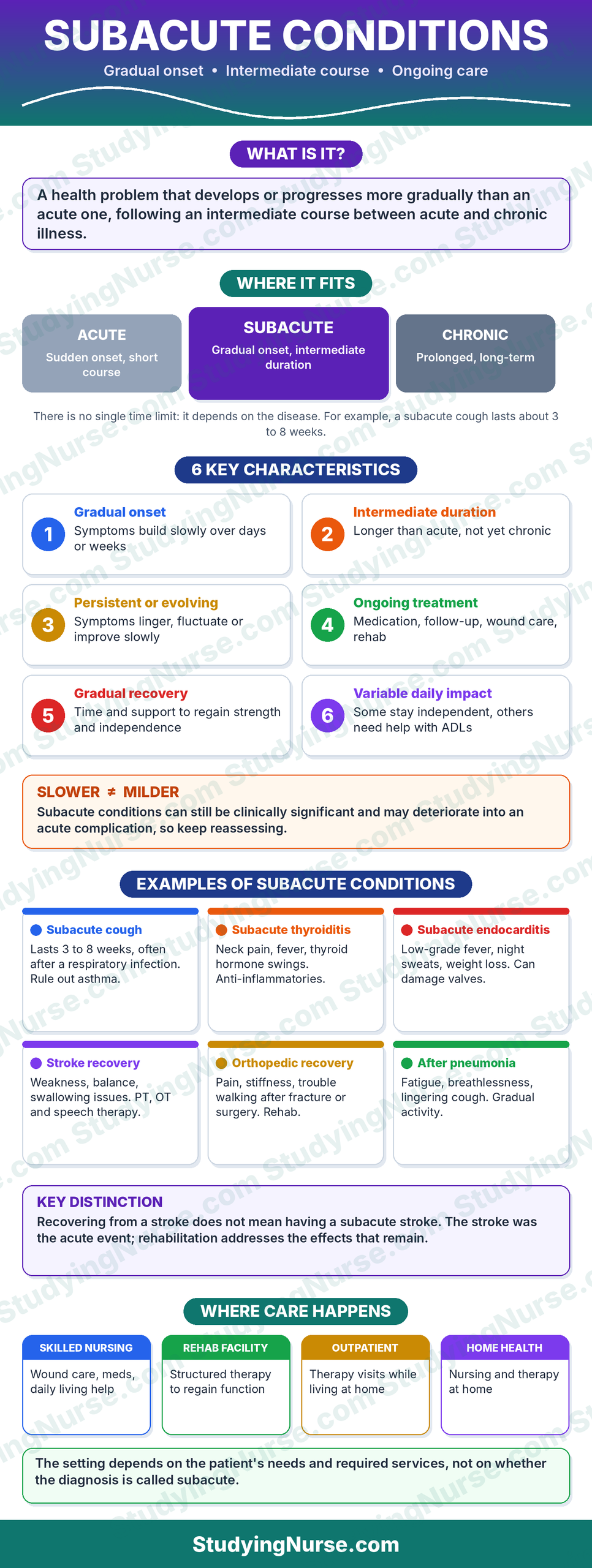
Acute Care: Treatment and Nursing Responsibilities
Acute care is a specialized level of healthcare designed to address sudden illnesses, injuries, severe symptoms, and acute exacerbations of existing medical conditions. Its primary purpose is to provide prompt assessment, diagnosis, treatment, and stabilization when a patient’s health requires timely medical intervention. Unlike care focused mainly on long-term disease management or gradual functional recovery, acute care prioritizes identifying the immediate health problem, preventing further deterioration, treating the underlying cause, and supporting the patient’s physiological stability.
Patients receiving acute care may present with conditions such as myocardial infarction, stroke, pneumonia, severe infections, acute kidney injury, traumatic injuries, gastrointestinal bleeding, or complications following surgery. The severity of these conditions varies, and not every patient requires intensive care. However, each patient needs an appropriate level of medical attention based on clinical findings, the risk of complications, and the treatment required.
Acute care also involves coordinated work among physicians, nurses, pharmacists, laboratory professionals, therapists, and other members of the care team. Nurses have a particularly important role because they provide continuous patient assessment, administer prescribed treatments, monitor responses, recognize early signs of deterioration, and communicate changes in clinical status. Their responsibilities extend beyond carrying out medical orders to include patient advocacy, education, safety, documentation, and coordination of care.
Understanding acute care requires examining the settings in which it is delivered, the characteristics that distinguish it from other levels of care, and the medical and nursing interventions used to manage patients during acute illness or injury.
Purpose, Settings, and Characteristics of Acute Care
The primary purpose of acute care is to provide timely and appropriate medical treatment for patients experiencing a sudden health problem or a significant deterioration in an existing condition. It addresses immediate clinical needs by identifying the cause of symptoms, restoring or maintaining essential body functions, preventing complications, and stabilizing the patient.
Acute care is not limited to life-threatening emergencies. It also includes treatment for conditions that require hospital-based investigation, medical supervision, surgery, or short-term inpatient management. For example, a patient experiencing severe chest pain may require emergency assessment to determine whether a myocardial infarction has occurred. Another patient may be admitted for a planned surgical procedure and receive acute care before, during, and after the operation. Both situations involve acute healthcare services, although the circumstances and urgency differ.
Several important objectives guide acute care:
- Rapid assessment and diagnosis: Healthcare professionals evaluate the patient’s symptoms, medical history, physical findings, and diagnostic results to identify the underlying problem. Early recognition is particularly important when delays could result in permanent injury or organ damage.
- Stabilization of the patient’s condition: Treatment aims to maintain essential physiological functions, including breathing, circulation, neurological function, and fluid and electrolyte balance. Patients with unstable vital signs may require immediate interventions and closer monitoring.
- Treatment of the underlying illness or injury: Acute treatment addresses the cause of the health problem whenever possible. This may involve medication, surgery, intravenous fluids, respiratory support, wound management, or other interventions.
- Prevention of complications: Acute illness and hospitalization can expose patients to complications such as infection, pressure injuries, falls, blood clots, aspiration, and medication-related adverse events. Preventive nursing and medical interventions help reduce these risks.
- Management of symptoms: Pain, fever, nausea, breathlessness, anxiety, and other symptoms can affect comfort, safety, and recovery. Appropriate symptom management is an important component of acute care.
- Preparation for the next stage of care: Once the immediate medical problem is controlled, the care team evaluates whether the patient can return home, requires additional inpatient treatment, or needs post-acute care, such as subacute rehabilitation or skilled nursing services.
For example, a patient admitted with acute pneumonia may initially require oxygen therapy, intravenous antibiotics, fluid management, and frequent respiratory assessments. As the infection responds to treatment, oxygen requirements may decrease, fever may resolve, and breathing may improve. The care team’s priorities then shift toward assessing mobility, nutritional intake, medication needs, and the patient’s ability to manage safely outside the hospital. If the patient remains weak or needs assistance with daily activities, additional rehabilitation or home health may be appropriate.
Settings where acute care is provided
Acute care is delivered in several healthcare settings. The appropriate setting depends on the patient’s condition, urgency of treatment, required monitoring, and available medical resources. Although hospitals are the most commonly associated acute care facilities, not every acute condition requires inpatient admission.
1. Emergency departments
Emergency departments (EDs) provide immediate assessment and treatment for patients with sudden illnesses, injuries, and potentially life-threatening symptoms. They operate continuously and are designed to manage a wide range of medical emergencies, from minor injuries to severe trauma and critical illness.
Patients are generally assessed through a triage process that prioritizes care according to the severity of their condition and the risk of deterioration. Someone experiencing severe respiratory distress, signs of stroke, or major bleeding receives a higher priority than a patient with a minor injury and stable vital signs.
Emergency department services may include:
- Initial assessment and stabilization.
- Blood tests, imaging, ECGs, and other diagnostic investigations.
- Emergency medication and intravenous fluid administration.
- Wound cleaning, dressing, and treatment of minor injuries.
- Management of acute pain, allergic reactions, and respiratory symptoms.
- Resuscitation and other life-saving interventions when required.
- Referral for hospital admission, specialist assessment, or discharge with follow-up instructions.
For example, a patient who arrives with sudden chest pain may undergo rapid triage, an ECG, cardiac biomarker testing, and continuous or repeated monitoring as indicated. If an acute myocardial infarction is identified, the patient may be transferred for urgent cardiac treatment or admitted to a specialized hospital unit.
Emergency departments are also important for patients whose chronic medical conditions suddenly worsen. A person with diabetes may develop diabetic ketoacidosis, while someone with chronic obstructive pulmonary disease may experience an acute exacerbation that causes severe breathlessness. Although these patients have pre-existing conditions, the sudden deterioration requires acute assessment and treatment.
2. Hospital inpatient units
Hospital inpatient units provide acute care for patients who require admission for medical treatment, surgery, observation, or ongoing monitoring. Admission may occur through the emergency department, a specialist referral, or a planned procedure.
Different inpatient units are organized according to the patient’s diagnosis, clinical needs, and level of monitoring required. Examples include:
- Medical units: Manage conditions such as pneumonia, heart failure, infections, gastrointestinal disorders, and acute kidney injury.
- Surgical units: Provide care before and after procedures, including abdominal surgery, orthopedic operations, and other interventions.
- Cardiac units: Monitor and treat patients with acute cardiac conditions, arrhythmias, and other cardiovascular problems.
- Neurological units: Manage patients with stroke, seizures, neurological deterioration, and other disorders requiring specialized assessment.
- Maternity units: Provide hospital-based care for complications of pregnancy, childbirth, and the immediate postpartum period.
- Pediatric units: Deliver acute medical and surgical care to infants, children, and adolescents.
The length of a hospital stay varies according to the diagnosis, severity, treatment response, complications, and discharge requirements. Some patients need only a short admission, while others require a longer period of acute treatment. Hospital admission does not necessarily mean that a patient is critically ill; it indicates that their medical needs require inpatient services rather than routine outpatient management.
3. Intensive care units
Intensive care units (ICUs) provide a higher level of acute care for patients with severe or life-threatening conditions who need continuous observation, advanced monitoring, and organ support. Patients may be admitted because of respiratory failure, severe sepsis, major trauma, serious cardiac complications, neurological emergencies, or complications following major surgery.
Depending on the patient’s condition, ICU treatment may involve:
- Mechanical ventilation and advanced respiratory support.
- Continuous cardiac and hemodynamic monitoring.
- Vasopressor medications to support blood pressure and circulation.
- Renal replacement therapy, including dialysis, when indicated.
- Management of severe fluid, electrolyte, and acid-base disturbances.
- Frequent neurological assessment and management of critical illness complications.
For example, a patient with severe pneumonia may develop respiratory failure and require mechanical ventilation. In the ICU, the care team monitors oxygenation, ventilation, circulation, fluid balance, infection indicators, and response to treatment. Nurses provide continuous surveillance and coordinate complex interventions to maintain stability and identify deterioration promptly.
Not every patient receiving acute care needs ICU admission. Intensive care is reserved for patients whose clinical condition requires a level of monitoring or organ support that cannot be safely provided in a general inpatient unit.
4. Operating rooms and perioperative settings
Surgical procedures are another important component of acute care. Operating rooms provide a controlled environment for procedures that treat injuries, remove diseased tissue, repair anatomical structures, or address other medical problems. Acute surgical care may be required for emergencies such as appendicitis, internal bleeding, traumatic injuries, or intestinal obstruction. It also includes planned operations, such as joint replacement or other procedures that require hospital-based perioperative services.
Perioperative care covers the preoperative, intraoperative, and postoperative phases. Nurses contribute by preparing patients for surgery, verifying relevant documentation and safety checks, assisting with procedures, monitoring anesthesia-related recovery, managing pain, and observing for postoperative complications.
For example, a patient undergoing surgery for an acute hip fracture may receive preoperative assessment and stabilization, surgical repair, and postoperative monitoring. The initial treatment takes place in the acute hospital setting, but the patient may later need subacute rehabilitation to regain mobility and independence.
5. Observation and short-stay units
Some hospitals operate observation or short-stay units for patients who need additional assessment or monitoring but may not require a conventional inpatient admission. These units are commonly used when clinicians need time to evaluate symptoms, review test results, assess response to treatment, or determine whether hospital admission is necessary.
For example, a patient presenting with chest discomfort may remain under observation while undergoing serial ECGs and cardiac biomarker testing. If the findings are reassuring and the patient is clinically stable, discharge with appropriate follow-up may be possible. If results indicate a serious condition, inpatient admission may be required.
Observation services are not the same as subacute care. They are generally intended for short-term evaluation and management of an acute problem rather than extended rehabilitation or recovery support.
Characteristics that distinguish acute care
Although acute care settings differ in the services they provide, they share several characteristics that distinguish them from subacute care, long-term care, and other healthcare services.
1. Focus on immediate medical needs
Acute care prioritizes conditions that require prompt diagnosis, intervention, or close clinical supervision. The main concern is the patient’s current health problem and the possibility of deterioration. For example, a patient with internal bleeding may require emergency imaging, blood transfusion, and surgery rather than a rehabilitation-focused treatment plan.
2. Higher intensity of medical intervention
Acute care may involve complex diagnostic procedures, intravenous medication, surgery, advanced respiratory support, and frequent reassessment. The intensity of treatment is determined by the patient’s needs. A patient admitted with a severe infection may require frequent laboratory testing and intravenous antibiotics, while another patient recovering from a minor surgical procedure may need less intensive monitoring.
3. Frequent assessment and reassessment
A patient’s condition can change rapidly during an acute illness. Healthcare professionals therefore perform regular assessments to evaluate symptoms, vital signs, laboratory findings, and responses to treatment. Monitoring frequency depends on the patient’s stability and the clinical risks involved.
4. Multidisciplinary coordination
Acute care requires collaboration among different healthcare professionals. Physicians diagnose and direct medical treatment, nurses provide ongoing assessment and care, pharmacists support medication safety, and diagnostic professionals perform investigations. Physical therapists, occupational therapists, dietitians, social workers, and case managers may also contribute when their services are needed.
5. Short-term stabilization and treatment goals
Acute care generally focuses on resolving or controlling the immediate health problem and establishing a safe plan for continued care. However, the length of treatment is not fixed. Some conditions require only a brief hospital stay, while severe illness, complications, or complex medical needs can result in prolonged admission.
6. Risk of rapid clinical deterioration
Patients receiving acute care may experience sudden changes in vital signs, neurological function, respiratory status, or organ function. Early recognition of deterioration is therefore a major priority. Nurses must be familiar with warning signs and escalation procedures so that additional treatment can be initiated without unnecessary delay.
7. Discharge planning begins during treatment
Planning for the next stage of care should not be postponed until the patient is ready to leave the hospital. The care team evaluates the patient’s medical progress, functional ability, available support, home environment, medication requirements, and need for rehabilitation throughout the admission. Some patients can return home with follow-up appointments, while others need home health, outpatient therapy, subacute rehabilitation, or another suitable care facility.
Acute care is therefore best understood as a level of healthcare organized around immediate medical assessment, treatment, and stabilization. Although its central purpose differs from rehabilitation-focused services, acute care also lays the foundation for recovery by preventing complications, preserving function, and identifying the patient’s needs after hospital treatment.
Medical Treatment, Patient Monitoring, and Nursing Interventions
Medical treatment and nursing interventions are central components of acute care. While physicians and other authorized healthcare professionals establish diagnoses and prescribe treatment, nurses play a continuous role in implementing the care plan, evaluating the patient’s response, and identifying changes that may require further intervention. Effective acute nursing care involves combining clinical knowledge, systematic assessment, technical skills, communication, and sound clinical judgment.
The treatment provided depends on the patient’s diagnosis, severity of illness, physiological stability, and response to previous interventions. A patient with acute pneumonia may need oxygen, antimicrobial medication, and respiratory monitoring, while someone with a myocardial infarction may require cardiac medication, urgent restoration of coronary blood flow, and continuous rhythm monitoring. Despite these differences, the nursing process follows several common priorities: assessing the patient, identifying immediate needs, implementing appropriate interventions, monitoring outcomes, and communicating significant findings.
1. Initial patient assessment and identification of priorities
The first stage of acute care involves assessing the patient’s condition and identifying problems that require immediate attention. Assessment begins with the presenting complaint, medical history, physical examination, and evaluation of vital signs. When the patient appears critically ill, healthcare professionals prioritize life-threatening problems before completing a detailed assessment.
A structured approach such as ABCDE can help organize the initial evaluation:
- Airway: Determine whether the airway is open and whether the patient can speak, cough, and protect their airway. Signs of obstruction, unusual breathing sounds, or reduced consciousness require urgent attention.
- Breathing: Assess respiratory rate, depth, effort, chest movement, breath sounds, and oxygen saturation. Look for signs such as severe breathlessness, cyanosis, accessory muscle use, or inadequate ventilation.
- Circulation: Evaluate heart rate, blood pressure, peripheral perfusion, skin temperature, capillary refill, and signs of bleeding or shock. Establish appropriate vascular access when required for emergency treatment.
- Disability: Assess neurological status, including level of consciousness, pupil response, orientation, and limb movement. Check blood glucose when indicated, particularly in patients with altered mental status.
- Exposure: Examine the patient for injuries, bleeding, rashes, swelling, wounds, or other relevant clinical findings while maintaining privacy and preventing unnecessary heat loss.
The ABCDE approach helps clinicians identify and address immediate threats in order of priority. It does not replace a comprehensive assessment; rather, it provides a structured method for recognizing serious problems and initiating appropriate escalation.
For example, a patient admitted with a suspected stroke may initially undergo assessment of airway protection, breathing, circulation, level of consciousness, speech, facial symmetry, and limb strength. If the patient has difficulty swallowing or reduced consciousness, the care team must consider the risk of aspiration and take appropriate precautions.
A thorough assessment also includes reviewing the patient’s medical history, allergies, current medication, previous procedures, existing medical conditions, and relevant social or functional circumstances. These details can influence treatment decisions and help identify risks such as medication interactions, falls, pressure injuries, and complications associated with chronic illness.
2. Diagnostic investigations and clinical evaluation
Accurate diagnosis is essential in acute care because treatment decisions often depend on identifying the cause of the patient’s symptoms. Diagnostic investigations are selected according to the suspected condition and may include laboratory testing, imaging, cardiac studies, microbiological investigations, and other specialized procedures.
Common investigations include:
- Blood tests: Complete blood count, electrolyte levels, kidney and liver function tests, blood glucose, inflammatory markers, and other tests relevant to the suspected diagnosis.
- Cardiac investigations: ECGs, cardiac troponin measurements, echocardiography, and cardiac monitoring for patients with suspected cardiovascular problems.
- Imaging: X-rays, ultrasound, computed tomography (CT), and magnetic resonance imaging (MRI) to assess injuries, infections, bleeding, and abnormalities involving internal organs.
- Microbiological tests: Blood cultures, urine cultures, sputum samples, and other specimens to identify infectious organisms and guide antimicrobial treatment.
- Respiratory investigations: Arterial blood gases, peak flow measurements, and other assessments to evaluate oxygenation, ventilation, and respiratory function.
Nurses support diagnostic procedures by preparing patients, collecting or assisting with specimen collection, checking relevant safety requirements, explaining procedures, and monitoring patients during and after investigations. They also ensure that specimens are correctly identified and transported according to facility protocols.
For example, a patient with suspected sepsis may require blood cultures, blood tests, lactate measurement, and other investigations while treatment is initiated. When sepsis is suspected, diagnostic testing should be coordinated with urgent clinical management rather than causing unnecessary delays in appropriate treatment.
Nurses must also communicate abnormal results and concerning clinical findings promptly. A laboratory result may indicate worsening kidney function, severe electrolyte disturbance, or a possible infection, while imaging may reveal an injury requiring urgent specialist intervention. Timely communication helps the care team adjust the treatment plan.
3. Medication administration and medical treatment
Medication is a major part of acute treatment. Depending on the diagnosis, patients may receive oral, intravenous, intramuscular, subcutaneous, inhaled, topical, or other prescribed medications. Some medications are administered to treat the underlying cause of illness, while others control symptoms or prevent complications.
Common categories of medication used in acute care include:
- Antibiotics: Used to treat susceptible bacterial infections, such as certain cases of pneumonia, sepsis, or urinary tract infection.
- Analgesics: Administered to relieve acute pain following injuries, surgery, or other painful conditions.
- Anticoagulants and antiplatelet medications: Used in selected cardiovascular conditions and for the prevention or treatment of blood clots, according to the patient’s clinical needs.
- Bronchodilators: Used to relieve airway narrowing in conditions such as acute asthma exacerbations.
- Corticosteroids: Used to reduce inflammation in selected respiratory, allergic, and inflammatory conditions.
- Antihypertensive and cardiac medications: Used to manage specific cardiovascular problems and maintain appropriate blood pressure or heart function.
- Insulin and other glucose-lowering treatments: Used to manage significant hyperglycemia and certain acute diabetic complications.
- Intravenous fluids and electrolyte replacement: Used when indicated to correct dehydration, support circulation, or address fluid and electrolyte disturbances.
Nursing responsibilities in medication administration include verifying the prescription, confirming patient identity, checking allergies, assessing relevant clinical parameters, administering the correct medication and dose, and documenting the intervention. Nurses must also monitor the patient’s response and observe for adverse effects.
Medication safety is particularly important in acute care because patients may receive multiple drugs within a short period, sometimes through different routes. Changes in kidney or liver function can affect medication metabolism and elimination, while age, body weight, allergies, and existing medical conditions may influence the risk of adverse reactions.
For example, a patient with acute pneumonia receiving intravenous antibiotics may require monitoring for allergic reactions, gastrointestinal effects, and changes in clinical status. If the patient develops a rash, facial swelling, wheezing, or sudden difficulty breathing after medication administration, the nurse must recognize the possibility of a serious allergic reaction and initiate the appropriate emergency response.
Medication administration should also involve patient education whenever the patient’s condition allows. Explaining the purpose of medication, expected effects, important precautions, and the need to complete prescribed treatment supports safe care and continuity after discharge.
4. Respiratory support and oxygen therapy
Respiratory assessment and support are common components of acute care, particularly for patients with pneumonia, asthma exacerbations, pulmonary edema, chest injuries, and other conditions affecting breathing.
Oxygen therapy may be prescribed when a patient cannot maintain an appropriate oxygen level. It can be delivered through devices such as nasal cannulas, simple face masks, or other oxygen delivery systems. Patients with more severe respiratory problems may require high-flow oxygen, noninvasive ventilation, or invasive mechanical ventilation.
Nursing responsibilities include:
- Assessing respiratory rate, breathing pattern, effort, and breath sounds.
- Monitoring oxygen saturation according to the patient’s condition and treatment plan.
- Ensuring that oxygen equipment is functioning and correctly positioned.
- Observing for signs of worsening respiratory distress or reduced consciousness.
- Evaluating the patient’s response to respiratory treatments.
- Maintaining appropriate positioning to support ventilation when clinically suitable.
- Reporting changes that may indicate respiratory failure or inadequate oxygenation.
For example, a patient with an acute asthma exacerbation may receive prescribed inhaled bronchodilators and oxygen when indicated. The nurse assesses wheezing, respiratory effort, oxygen saturation, and the ability to speak. A patient who becomes increasingly exhausted, has reduced air movement, or develops altered consciousness requires urgent reassessment because these findings may indicate severe deterioration.
Oxygen should be administered according to clinical indications and prescribed or protocol-based targets. It is not appropriate to assume that every patient with breathlessness requires the same oxygen concentration. Some patients, including selected individuals with chronic respiratory disease, may need individualized oxygen targets and closer monitoring.
5. Fluid, electrolyte, and nutritional management
Acute illnesses can disrupt the body’s fluid and electrolyte balance. Vomiting, diarrhea, bleeding, fever, poor oral intake, kidney dysfunction, and severe infection may all contribute to dehydration, fluid overload, or abnormal electrolyte levels.
Fluid management is therefore an important part of acute care. Some patients require intravenous fluids to restore circulating volume, while others need fluid restriction or careful monitoring because of heart failure, kidney impairment, or other conditions.
Nursing interventions may include:
- Monitoring oral and intravenous fluid intake.
- Measuring urine output and reporting significant changes.
- Assessing mucous membranes, skin condition, edema, and other signs of hydration status.
- Monitoring body weight when clinically indicated.
- Reviewing electrolyte and kidney function results.
- Administering prescribed fluids and electrolyte replacement.
- Assessing nutritional intake and identifying difficulties with eating or swallowing.
For example, a patient admitted with acute gastroenteritis may have significant fluid loss from vomiting and diarrhea. The nurse monitors hydration, urine output, vital signs, and laboratory results while administering prescribed oral or intravenous fluids. If the patient develops confusion, persistent hypotension, or markedly reduced urine output, further assessment is necessary because these findings may indicate significant dehydration or circulatory compromise.
Nutrition also contributes to recovery. Patients with acute illness may have reduced appetite, nausea, swallowing difficulties, or increased nutritional requirements. Nurses collaborate with dietitians and other healthcare professionals to support appropriate nutritional intake and identify patients who require specialized feeding plans.
6. Pain assessment and symptom management
Acute illnesses and injuries frequently cause pain, discomfort, nausea, fever, anxiety, and sleep disturbance. These symptoms can affect the patient’s ability to rest, participate in treatment, breathe deeply, mobilize, and recover.
Pain assessment should consider the location, intensity, duration, quality, aggravating factors, relieving factors, and effect on daily functioning. Where possible, patients should describe their pain using an appropriate pain scale. For patients who cannot communicate effectively, behavioral indicators and validated assessment tools may be used.
Nursing interventions may include:
- Administering prescribed analgesics and evaluating their effectiveness.
- Reassessing pain after medication or other interventions.
- Supporting comfortable positioning and appropriate movement.
- Applying prescribed heat or cold therapy when indicated.
- Providing reassurance and explaining procedures.
- Monitoring for medication-related adverse effects, such as sedation, nausea, constipation, or respiratory depression.
For example, a patient recovering from abdominal surgery may experience pain when coughing, changing position, or walking. Appropriate pain management allows the patient to participate more effectively in deep breathing exercises and early mobilization, which may help reduce postoperative complications.
Symptom management should also address the underlying cause whenever possible. Giving pain relief without investigating new or worsening pain may delay recognition of a complication. A sudden increase in postoperative pain, for instance, may require assessment for bleeding, infection, wound problems, or another medical concern.
7. Continuous patient monitoring and recognition of deterioration
Patient monitoring is one of the most important responsibilities in acute nursing care. A patient’s condition may change rapidly, and early recognition of deterioration can prevent serious complications. Monitoring involves more than recording vital signs; it requires interpreting findings in the context of the diagnosis, treatment plan, baseline health status, and overall clinical presentation.
Common parameters include:
- Temperature: Helps identify fever, hypothermia, and changes that may suggest infection or another clinical problem.
- Heart rate: Provides information about cardiac response, pain, fever, dehydration, blood loss, and other physiological changes.
- Blood pressure: Helps assess circulation and may reveal hypotension, hypertension, or changes associated with deterioration.
- Respiratory rate: Provides important information about respiratory function and may change early during clinical deterioration.
- Oxygen saturation: Helps evaluate oxygenation and response to oxygen therapy or other respiratory interventions.
- Level of consciousness: Changes may indicate neurological deterioration, reduced oxygenation, medication effects, metabolic abnormalities, or other serious problems.
- Urine output: Can help assess kidney function and circulating fluid status, particularly in patients with severe illness.
The frequency of monitoring depends on the patient’s condition, clinical risks, and local protocols. A stable patient recovering from a minor procedure may need less frequent observations than a patient with sepsis, respiratory distress, or unstable blood pressure. Hospitals may use early warning or track-and-trigger systems to identify concerning patterns and guide escalation.
For example, a patient admitted with an infection may initially have a high temperature and elevated heart rate. If the patient later develops falling blood pressure, increasing respiratory rate, confusion, and reduced urine output, these changes may indicate worsening infection and possible sepsis-related organ dysfunction. The nurse must recognize the pattern, communicate the findings promptly, and activate the appropriate escalation process.
Monitoring also includes assessing the effectiveness of treatment. If a patient’s oxygen saturation improves following respiratory therapy, this may indicate a positive response. If blood pressure remains low despite prescribed fluid replacement, further medical evaluation may be required. Accurate documentation of these trends helps the care team make informed decisions.
8. Infection prevention and control
Patients receiving acute care may be vulnerable to healthcare-associated infections because of invasive procedures, weakened immune systems, prolonged hospitalization, or exposure to infectious organisms. Infection prevention is therefore an essential nursing responsibility.
Important measures include:
- Performing hand hygiene at appropriate moments.
- Using personal protective equipment according to the anticipated exposure risk and transmission precautions.
- Maintaining aseptic technique during wound care and invasive procedures.
- Ensuring safe preparation and administration of medications and injections.
- Cleaning and disinfecting patient-care equipment appropriately.
- Maintaining proper catheter and intravenous line care.
- Following isolation precautions when required.
- Monitoring for signs of infection and reporting concerning findings.
For example, a patient with an indwelling urinary catheter may be at risk of catheter-associated urinary tract infection. Nurses help reduce this risk by ensuring that catheter use remains clinically necessary, maintaining appropriate catheter care, and monitoring for symptoms such as fever, suprapubic discomfort, or changes in urine characteristics.
Similarly, patients with surgical wounds require assessment for increasing redness, warmth, swelling, drainage, wound separation, and other signs of infection. Prompt recognition and reporting allow appropriate treatment to begin before complications become more serious.
Infection prevention also protects healthcare workers, other patients, and visitors. Standard precautions should be applied to patient care, with additional precautions selected according to the suspected or confirmed infection. <Cite refs={[“turn906202search10″,”turn906202search13”]}/>
9. Prevention of immobility-related complications and promotion of safety
Although acute care focuses on treating immediate medical problems, preserving the patient’s physical function is also important. Prolonged bed rest and reduced mobility can contribute to muscle weakness, pressure injuries, venous thromboembolism, constipation, respiratory complications, and loss of independence.
Nursing interventions should therefore include assessing mobility, identifying fall risks, supporting safe movement, and encouraging activity when medically appropriate. The level of assistance depends on the patient’s condition, surgical restrictions, pain, balance, and physical capacity.
Examples of preventive measures include:
- Repositioning patients who cannot move independently.
- Assessing skin integrity, particularly over pressure-prone areas.
- Supporting early mobilization when clinically appropriate.
- Using prescribed mobility aids and transfer techniques.
- Applying prescribed mechanical or pharmacological measures to reduce venous thromboembolism risk.
- Maintaining a safe environment with accessible call bells and appropriate bed positioning.
- Providing assistance with bathing, toileting, dressing, and other activities of daily living.
For example, a patient recovering from abdominal surgery may initially need assistance sitting at the bedside and walking short distances. Gradual mobilization, when approved by the care team, can help preserve muscle strength and reduce complications associated with prolonged immobility.
A patient with a neurological impairment may require additional support because weakness, confusion, or impaired balance increases the risk of falls. Nurses collaborate with physical and occupational therapists to establish safe mobility strategies and determine the assistance required for everyday activities.
10. Wound care and postoperative nursing interventions
Wound management is common in acute care, particularly among patients recovering from surgery, trauma, burns, or infected wounds. The immediate priorities are to protect the wound, control bleeding when present, reduce infection risk, manage pain, and support healing.
Nursing responsibilities may include assessing the wound’s location, size, appearance, drainage, surrounding skin, and signs of infection. Dressings are changed according to the treatment plan and the wound’s specific requirements. Nurses also monitor surgical sites, drains, and other devices for abnormalities.
Postoperative care requires additional attention to the patient’s airway, breathing, circulation, consciousness, pain, nausea, temperature, and surgical site. Patients recovering from anesthesia may need close observation because residual anesthetic effects can influence breathing, alertness, and hemodynamic stability.
For example, after an abdominal operation, the nurse monitors the incision for bleeding or drainage, assesses abdominal pain and distension, evaluates bowel function, and observes for nausea or vomiting. The patient may also need assistance with movement, breathing exercises, and gradual resumption of oral intake according to the surgical plan.
If a patient develops increasing wound pain, fever, spreading redness, purulent drainage, or wound separation, the findings should be reported for further assessment. Wound care is not simply a dressing task; it involves evaluating healing and recognizing complications that may require additional medical treatment.
11. Patient communication, education, and emotional support
Acute illness can create fear, uncertainty, discomfort, and emotional distress. Patients may be unfamiliar with their diagnosis, treatment options, hospital routines, or expected recovery. Clear communication helps reduce anxiety, supports informed decision-making, and improves cooperation with care.
Nurses should explain procedures and treatments in language the patient can understand, encourage questions, and involve patients in decisions to the extent appropriate. Communication must also consider language differences, hearing or visual impairments, cognitive limitations, and cultural preferences.
Patient education may include:
- Explaining the diagnosis and the purpose of treatment.
- Discussing medication use and potential side effects.
- Providing information about activity restrictions and mobility.
- Teaching wound care or other necessary self-care procedures.
- Explaining warning signs that require medical attention.
- Reinforcing follow-up appointments and recommended lifestyle changes.
For example, a patient admitted with an acute asthma exacerbation may benefit from education about inhaler technique, medication adherence, common triggers, and when to seek urgent medical help. A patient recovering from surgery may need instructions about wound care, prescribed pain medication, safe movement, and signs of postoperative complications.
Family members and caregivers may also be involved, with the patient’s consent and in accordance with relevant privacy requirements. Their participation can be especially valuable when the patient has cognitive impairment, limited mobility, or ongoing care needs after discharge.
12. Documentation and multidisciplinary coordination
Accurate documentation is essential because acute care often involves multiple professionals working across different shifts and departments. Nursing records provide information about the patient’s condition, interventions performed, medication administration, response to treatment, and changes requiring follow-up.
Documentation should be timely, factual, complete, and consistent with professional and facility requirements. It commonly includes assessment findings, vital signs, pain scores, fluid balance, wound observations, medication administration, patient education, and communication with other healthcare professionals.
Effective communication is equally important. Nurses may need to report a sudden change in vital signs, clarify a treatment order, coordinate diagnostic investigations, or communicate concerns during a shift handover. Structured communication approaches, such as SBAR (Situation, Background, Assessment, Recommendation), can help organize important information and support timely clinical decisions.
Multidisciplinary collaboration ensures that the patient receives coordinated treatment. For example, a patient admitted with a hip fracture may receive medical and surgical management, nursing care, physiotherapy, occupational therapy, medication review, and discharge coordination. Each professional contributes to a different aspect of recovery, but the interventions should work toward shared patient goals.
13. Discharge preparation and transition from acute care
Discharge planning is an important part of acute care because the end of the hospital stay does not always mean that the patient has fully recovered. Some patients can return home without additional services, while others need continued nursing care, rehabilitation, medication support, or supervision.
Planning should begin early in the hospital admission and develop as the patient’s condition changes. The care team considers medical stability, functional ability, medication requirements, home circumstances, caregiver availability, and follow-up needs.
Depending on the patient’s circumstances, the next stage may involve:
- Returning home with medication instructions and outpatient follow-up.
- Home health services for nursing assessment, wound care, or other skilled needs.
- Outpatient physical therapy, occupational therapy, or speech therapy.
- Subacute rehabilitation in a skilled nursing facility when ongoing skilled services are required.
- Inpatient rehabilitation for patients who meet the relevant medical and functional criteria.
- Long-term care or assisted living when ongoing support is needed and other arrangements are not sufficient.
For example, a patient recovering from a severe infection may be medically stable but remain too weak to bathe, dress, or walk safely without assistance. If the patient needs continued skilled nursing care and therapy, the care team may consider subacute rehabilitation. Another patient with a similar diagnosis may regain sufficient strength and independence to return home with outpatient follow-up.
A safe transition requires clear communication about the patient’s diagnosis, treatment received, medication changes, pending investigations, follow-up appointments, and warning signs that should prompt medical attention. Patients and caregivers should understand the next care plan and know whom to contact if problems arise.
Acute care therefore involves much more than treating the immediate illness or injury. It combines timely medical intervention with ongoing nursing assessment, patient monitoring, complication prevention, education, and coordinated discharge preparation. These responsibilities help patients achieve clinical stability while preserving function and establishing a safe pathway to the next stage of recovery. When the immediate medical needs have been addressed but the patient still requires nursing support or rehabilitation, the care plan may transition to subacute care or another appropriate post-acute service.
Subacute Care: Treatment and Rehabilitation Services
Subacute care is a level of healthcare designed for patients who no longer require the intensity of acute hospital treatment but still need continued medical attention, skilled nursing care, or rehabilitation services before they can safely return home or transition to another care setting. It commonly serves as a bridge between an acute hospital stay and independent living, outpatient treatment, home health, or long-term care. The focus is on managing ongoing health problems, supporting recovery, preventing complications, and helping patients regain the highest level of independence possible.
Patients may enter subacute care after hospitalization for conditions such as stroke, pneumonia, severe infection, orthopedic injuries, major surgery, or complications associated with chronic medical conditions. Although their immediate medical problems may have been treated or stabilized, they may continue to experience weakness, pain, reduced mobility, impaired balance, difficulty swallowing, surgical wounds, or limitations in activities of daily living (ADLs). These needs may make an immediate return home unsafe or impractical.
Subacute care addresses this gap by combining medical oversight, nursing interventions, and structured rehabilitation according to each patient’s condition and recovery goals. Depending on the facility and individual needs, services may include medication management, wound care, intravenous therapy, nutritional support, physical therapy, occupational therapy, and speech therapy. The care team works together to improve functional ability, manage remaining medical problems, and prepare the patient for the next stage of recovery.
It is important to understand that subacute care does not mean that a patient has completely recovered or that medical treatment is no longer necessary. Patients receiving these services may still have complex medical conditions that require professional monitoring and intervention. However, their needs can often be managed in a setting that provides skilled nursing and rehabilitation without requiring the same level of hospital-based acute treatment.
Purpose and Settings of Subacute Care
The primary purpose of subacute care is to provide continued medical and rehabilitative support to patients who are medically stable enough to leave acute hospital care but are not yet ready to manage their health and daily activities independently. It addresses the ongoing needs that remain after the initial illness, injury, or surgical treatment has been managed.
For example, a patient who undergoes surgery for a hip fracture may have a successful operation and stable vital signs but remain unable to walk safely, dress independently, or use the bathroom without assistance. Another patient recovering from a stroke may no longer require emergency neurological treatment but may continue to experience weakness, impaired coordination, and difficulty communicating. Both patients may need additional care before returning home.
Subacute care provides a structured environment in which patients can receive skilled nursing, medical follow-up, and rehabilitation services while working toward measurable recovery goals. The specific services depend on the patient’s diagnosis, functional limitations, medical needs, and ability to participate in treatment.
Main purposes of subacute care
1. Supporting recovery after acute illness or injury
One of the main purposes of subacute care is to support patients during the period between hospital treatment and their return to a more independent level of functioning. Some illnesses and injuries require more time for physical recovery than the initial hospital stay allows. Even when the immediate medical problem has improved, patients may remain weak, fatigued, or unable to perform routine activities safely.
For example, an older adult hospitalized with severe pneumonia may recover from the infection but experience significant muscle weakness and reduced endurance after several days of illness and limited mobility. The patient may need assistance walking, bathing, dressing, and preparing meals. Subacute care can provide nursing support and therapy to improve strength and endurance while monitoring the patient’s remaining health needs.
This stage of care is particularly important when a patient has not regained sufficient independence to return home safely. It allows recovery to continue in an environment where professional assistance is available.
2. Providing continued skilled nursing care
Some patients require nursing interventions after hospital discharge that cannot be managed safely through ordinary self-care or routine assistance alone. These needs may include complex wound care, medication administration, monitoring of clinical conditions, management of certain intravenous treatments, and assessment of complications.
For instance, a patient recovering from major abdominal surgery may need ongoing surgical wound assessment, dressing changes, pain management, nutritional monitoring, and observation for signs of infection. A patient with diabetes may require support with blood glucose monitoring, medication administration, foot care, and wound management.
Skilled nursing care helps address these needs while allowing patients to continue recovering outside the acute hospital environment. The nursing team also monitors whether the patient’s condition remains stable or whether new problems require medical reassessment.
3. Restoring mobility and physical function
Illness, surgery, and prolonged hospitalization can reduce muscle strength, balance, coordination, and physical endurance. Patients who have been confined to bed or have experienced significant pain may struggle to stand, walk, transfer between surfaces, or complete personal care independently.
Subacute care provides opportunities for gradual physical recovery through structured therapy and supervised activity. Physical therapists may help patients improve walking ability, joint movement, balance, and strength. Nurses reinforce safe mobility techniques during routine care, including transfers, toileting, and movement around the facility.
For example, a patient recovering from a total knee replacement may initially require a walker and assistance when standing or walking. Through an individualized rehabilitation plan, the patient gradually works toward improved knee movement, strength, balance, and safe mobility.
4. Improving independence in activities of daily living
Recovery involves more than improvement in laboratory results or the resolution of the original medical problem. Patients also need to regain the ability to perform everyday activities safely. These include bathing, dressing, grooming, eating, toileting, transferring, and moving around the home.
Occupational therapy and nursing assistance play important roles in addressing these needs. Patients may practice using adaptive equipment, learn safer techniques for personal care, and develop strategies for managing physical limitations.
For example, a patient recovering from a stroke may have weakness in one arm and difficulty dressing without assistance. Occupational therapy can introduce techniques and equipment that make dressing easier, while nursing staff reinforce these strategies during daily care.
5. Preventing complications and avoiding unnecessary hospital readmissions
Patients recovering from serious illness may remain vulnerable to complications even after their condition has stabilized. Reduced mobility can increase the risk of pressure injuries and venous thromboembolism, while swallowing difficulties may increase the risk of aspiration. Medication changes, poor nutritional intake, and unresolved medical problems can also affect recovery.
Subacute care provides continued observation and preventive interventions to address these risks. Nurses assess skin integrity, monitor vital signs, review medication administration, evaluate hydration and nutrition, and report changes in clinical status.
For example, a patient recovering from a stroke who has difficulty swallowing may need an individualized feeding plan and monitoring for coughing, choking, or other signs of aspiration. Appropriate precautions and coordination with speech therapy can help reduce risks while supporting nutritional intake.
Preventing hospital readmission is an important consideration, but it should not take priority over appropriate escalation when a patient’s condition deteriorates. If a patient develops a new serious infection, unstable vital signs, respiratory distress, or another acute problem, transfer back to an acute hospital may be necessary.
6. Preparing patients for a safe return home or transition to another setting
Subacute care also focuses on determining what a patient needs to function safely after leaving the facility. Some patients regain enough independence to return home without additional services, while others require home health, outpatient therapy, assisted living, or long-term care.
The care team evaluates functional progress, medical needs, home accessibility, caregiver availability, and the patient’s ability to manage medication and daily activities. A case manager or social worker may help coordinate equipment, follow-up appointments, transportation, and other discharge arrangements.
For example, a patient recovering from a hip fracture may improve enough to walk short distances using a walker but still require help with bathing and meal preparation. The discharge plan may include home health nursing, outpatient physical therapy, a shower chair, and support from a family caregiver. If the patient’s needs cannot be met safely at home, another care arrangement may be considered.
Settings where subacute care is provided
Subacute care can be delivered in different healthcare and rehabilitation environments. The appropriate setting depends on the patient’s clinical stability, medical requirements, functional limitations, rehabilitation needs, and the services available in the facility. The terminology and organization of subacute services can vary between healthcare systems and countries.
1. Skilled nursing facilities
A skilled nursing facility (SNF) is a healthcare setting that provides nursing care and certain rehabilitation services for patients who require professional medical or functional support. In the United States, SNFs commonly provide post-acute care to individuals transitioning from hospital treatment.
Services may include:
- Skilled nursing assessments and ongoing monitoring.
- Medication administration and medication management.
- Wound care and dressing changes.
- Assistance with recovery following surgery or serious illness.
- Physical therapy, occupational therapy, and speech therapy.
- Support with mobility and activities of daily living.
- Nutritional assessment and assistance with feeding.
- Coordination of follow-up care and discharge planning.
For example, a patient recovering from a complicated surgical procedure may be transferred to a skilled nursing facility once acute hospital treatment is no longer required. The patient may still need daily wound assessment, medication management, assistance with mobility, and structured therapy.
A skilled nursing facility should not be confused with a traditional nursing home that primarily provides long-term residential support. Although some facilities provide both services, the purpose and intensity of care differ. Subacute or post-acute services generally focus on a period of treatment and recovery, whereas long-term care is intended for individuals who need continuing assistance or supervision over an extended period.
2. Subacute rehabilitation units
Some hospitals and healthcare organizations operate dedicated subacute rehabilitation units or programs. These settings provide medical and nursing oversight alongside rehabilitation for patients who need more support than outpatient therapy or routine home care can provide.
Patients may receive therapy to improve mobility, coordination, strength, communication, swallowing, and self-care abilities. The intensity and frequency of treatment depend on the patient’s tolerance, clinical needs, and the facility’s program.
For example, a patient recovering from a stroke may receive physical therapy to improve balance and walking, occupational therapy to practice dressing and bathing, and speech therapy to address communication difficulties. Nurses reinforce these goals during everyday care and monitor for medical complications.
Subacute rehabilitation is distinct from intensive inpatient rehabilitation. In the United States, an inpatient rehabilitation facility (IRF) generally provides a more intensive, interdisciplinary rehabilitation program for patients who meet specific medical and functional criteria. Subacute rehabilitation, often provided in an SNF, may offer a less intensive therapy schedule alongside skilled nursing services. The distinction is based on the services and admission requirements of the setting rather than simply the name used by a facility.
3. Hospital-based transitional care units
Some hospitals provide transitional care units for patients who no longer require acute hospital treatment but still need additional nursing care, monitoring, or rehabilitation before returning home. These units help bridge the gap between hospital treatment and a less intensive care environment.
A patient recovering from a serious infection, for example, may have stable vital signs but still require continued medication administration, wound care, nutritional support, and gradual mobility training. A transitional care unit may provide these services while the care team evaluates the patient’s readiness for discharge.
The availability and organization of transitional care units vary across healthcare systems. In some settings, similar services may be provided through skilled nursing facilities or other post-acute care facilities.
4. Specialized rehabilitation and post-acute care facilities
Some facilities focus on particular conditions or patient populations. Examples include orthopedic rehabilitation centers, neurological rehabilitation programs, and facilities that provide specialized wound management or recovery support after major illness.
A patient recovering from a complex orthopedic injury may need a coordinated program involving physical therapy, occupational therapy, pain management, and nursing support. A patient with a neurological condition may need therapy focused on balance, coordination, communication, swallowing, and cognitive function.
Specialized facilities can be useful when the patient’s needs require particular clinical expertise or equipment. However, the suitability of a facility depends on whether it can provide the medical supervision, nursing services, and rehabilitation interventions the patient requires.
5. Home-based post-acute services
Some patients can leave the hospital and continue recovery at home with support from home health professionals. Home health is not the same as facility-based subacute care, but it can provide an alternative for patients who are medically stable and whose needs can be safely managed in their home environment.
Depending on eligibility and local service availability, home health may include skilled nursing visits, wound care, medication support, physical therapy, occupational therapy, and speech therapy. The care team may also assess the home environment and recommend equipment or modifications to improve safety.
For example, a patient recovering from a joint replacement may be able to walk with a prescribed mobility aid and perform basic activities with limited assistance. Home-based physical therapy and nursing follow-up may be sufficient, provided the patient has a safe home environment and appropriate support.
The main difference is that facility-based subacute care offers a more structured setting with staff and services available on-site, while home health delivers selected services through scheduled visits. Neither option is automatically appropriate for every patient; the decision depends on clinical and functional needs.
Factors that determine the appropriate subacute care setting
The most suitable setting is selected through an assessment of the patient’s condition and recovery requirements. Important considerations include:
- Medical stability: The patient should not require a level of acute intervention or monitoring that the proposed setting cannot safely provide.
- Skilled nursing needs: The care team determines whether the patient requires professional nursing interventions, such as complex wound care, medication administration, or monitoring of ongoing medical problems.
- Functional ability: Mobility, balance, cognition, swallowing, and independence in daily activities influence the amount of assistance required.
- Rehabilitation potential and goals: The team considers which functions can be improved and what type and frequency of therapy are appropriate.
- Ability to participate: The patient’s endurance, cognition, medical condition, and tolerance for activity influence the suitability of different rehabilitation programs.
- Home environment and available support: Stairs, bathroom accessibility, mobility equipment, caregiver availability, and other practical factors affect discharge planning.
- Coverage and eligibility: Insurance requirements, Medicare or Medicaid rules, and local healthcare policies may influence access to particular services in the United States.
A medically stable patient does not automatically qualify for subacute rehabilitation. The patient must have needs that the facility can address, and admission must meet the relevant clinical, functional, and coverage requirements. The care team should select the setting that can provide safe and appropriate treatment without exposing the patient to unnecessary restrictions or delays.
Subacute Rehab, Skilled Nursing, and Therapy Services
Subacute rehabilitation combines medical oversight, skilled nursing, and structured therapy to support patients who need continued care after an acute illness, injury, or surgical procedure. It is particularly useful when the patient has moved beyond the most unstable phase of a health problem but still has physical, cognitive, or medical limitations that interfere with independent living.
The services provided are individualized. One patient may need intensive wound monitoring and medication management with limited mobility assistance, while another may need several types of therapy to regain walking ability, communication, and self-care skills. The care team assesses these needs and establishes recovery goals that reflect the patient’s diagnosis, previous functional ability, medical condition, and personal priorities.
1. Subacute rehabilitation services
Subacute rehab focuses on improving functional ability while addressing the medical and nursing needs that remain after hospital treatment. It may be appropriate for patients recovering from stroke, orthopedic surgery, fractures, serious infections, prolonged hospitalization, or other conditions that have affected their independence.
Rehabilitation is usually organized around specific goals. These may include walking safely with an assistive device, transferring from a bed to a chair, improving upper-body strength, swallowing safely, managing personal hygiene, or completing daily activities with less assistance.
A patient recovering from a hip fracture, for example, may have several related goals:
- Regain sufficient strength to stand and transfer safely.
- Improve balance and walking ability using an appropriate mobility aid.
- Increase joint movement within prescribed precautions.
- Learn safe methods of bathing and dressing.
- Manage pain sufficiently to participate in therapy.
- Reduce fall risk and prepare for a safe return home.
Progress is evaluated regularly. Goals may be adjusted if the patient improves more quickly than expected, experiences a setback, or develops new medical concerns.
2. Skilled nursing services
Skilled nursing is an essential component of subacute care because many patients continue to need professional assessment and intervention after leaving the hospital. These services are provided by appropriately qualified nursing personnel according to the patient’s care plan and applicable regulations.
Common skilled nursing services include:
- Medication administration and monitoring: Nurses administer prescribed medications, assess therapeutic responses, monitor side effects, and identify potential interactions or problems with medication adherence.
- Wound care: Patients may need surgical incision assessments, dressing changes, pressure injury management, or monitoring of wounds that require specialized treatment.
- Intravenous therapy: Selected patients may require prescribed intravenous medications, fluids, or other treatments that can be safely provided in the facility.
- Monitoring of chronic and complex medical conditions: Patients with diabetes, heart failure, kidney disease, or other conditions may need continued assessment and management during recovery.
- Respiratory care: Some patients require monitoring of respiratory symptoms, support with prescribed respiratory treatments, or assistance managing oxygen equipment.
- Nutrition and hydration support: Nurses monitor intake, assess nutritional concerns, support prescribed feeding plans, and identify signs of dehydration or poor nutritional status.
- Catheter and ostomy care: Patients may need support managing urinary catheters, bowel diversions, or other devices while learning how to perform appropriate self-care.
- Pain and symptom management: Nurses assess pain, administer prescribed treatments, and evaluate whether symptoms are interfering with rest, mobility, or participation in rehabilitation.
For example, a patient recovering from a complicated diabetic foot wound may need regular wound assessment, dressing changes, blood glucose monitoring, medication management, and education about foot protection. The nursing team may also coordinate with wound specialists, physicians, and therapists to address mobility limitations and prevent further injury.
Skilled nursing differs from routine personal care because it involves professional assessment, clinical judgment, and interventions that require nursing knowledge and training. Assistance with bathing or dressing is important, but the need for these activities alone does not necessarily establish a requirement for skilled nursing care.
3. Physical therapy
Physical therapy is one of the most common rehabilitation services provided in subacute care. It focuses on improving movement, strength, balance, coordination, endurance, and mobility after illness, injury, or surgery.
Patients may require physical therapy because of prolonged bed rest, neurological impairment, orthopedic injury, joint replacement, or severe illness that has reduced their physical capacity. Treatment is tailored to the patient’s condition and may progress gradually as strength and tolerance improve.
Common physical therapy interventions include:
- Range-of-motion exercises to maintain or improve joint flexibility.
- Strengthening exercises to address muscle weakness.
- Balance training to reduce the risk of falls.
- Gait training to improve walking patterns and safety.
- Transfer training to help patients move between beds, chairs, and other surfaces.
- Endurance activities to improve tolerance for physical activity.
- Training in the use of mobility aids such as walkers, canes, or crutches.
For example, a patient recovering from a stroke may have weakness affecting one side of the body and difficulty maintaining balance while standing. Physical therapy may include supported standing, weight-shifting exercises, strengthening activities, and progressive walking practice.
Another patient recovering from a hip replacement may work on safe transfers, walking with a walker, and strengthening the muscles around the hip while following the surgeon’s instructions and any movement precautions.
Physical therapy also helps determine whether a patient can safely move around the home, negotiate stairs, and use prescribed mobility equipment. These findings contribute to discharge planning and help the care team decide whether additional support will be needed after the patient leaves the facility.
4. Occupational therapy
Occupational therapy focuses on helping patients regain independence in meaningful daily activities. While physical therapy places greater emphasis on movement and mobility, occupational therapy addresses how physical, cognitive, sensory, and other limitations affect a person’s ability to complete everyday tasks.
Patients receiving subacute care may need occupational therapy after a stroke, orthopedic procedure, neurological injury, or prolonged illness. Common areas of intervention include:
- Bathing, grooming, and personal hygiene.
- Dressing and undressing.
- Toileting and safe transfers.
- Eating and meal-related activities.
- Hand function, coordination, and fine motor skills.
- Cognitive strategies for attention, memory, and task organization.
- Use of adaptive equipment and assistive devices.
- Safety and energy conservation during everyday activities.
For example, a patient recovering from a stroke may have difficulty using one hand to button clothing, brush their teeth, or prepare a simple meal. An occupational therapist may teach alternative techniques, introduce adaptive equipment, and provide exercises to improve coordination and functional use of the affected arm.
A patient recovering from a hip fracture may also need instruction on using a reacher, dressing aids, or a shower chair to complete personal care while following movement precautions. These interventions help reduce dependence on caregivers and support a safer transition home.
5. Speech therapy
Speech therapy, also known as speech-language pathology, addresses communication, swallowing, cognitive-communication, and related difficulties. It is particularly important for patients recovering from stroke, traumatic brain injury, neurological disorders, or other conditions that affect speech and swallowing.
Common problems addressed by speech therapy include:
- Aphasia: Difficulty understanding or producing language following damage to areas of the brain responsible for communication.
- Dysarthria: Difficulty producing clear speech because of impaired muscle control.
- Swallowing difficulties (dysphagia): Problems moving food, liquids, or saliva safely from the mouth to the stomach.
- Cognitive-communication difficulties: Problems with memory, attention, organization, problem-solving, or understanding information.
- Voice difficulties: Changes in voice quality, strength, or production that interfere with communication.
For example, a patient recovering from a stroke may understand what others say but struggle to find the words needed to respond. Speech therapy may involve language exercises, communication strategies, and the use of alternative communication methods when necessary.
Another patient may have difficulty swallowing safely, placing them at risk of aspiration. The speech-language pathologist may assess swallowing function and recommend appropriate food textures, liquid consistency, positioning, and swallowing techniques. Nurses reinforce these recommendations during meals and monitor for coughing, choking, wet-sounding voice, or other concerning signs.
Speech therapy is therefore not limited to helping patients speak clearly. It can be essential for safe nutrition, hydration, communication, and participation in daily life.
6. Additional rehabilitation and supportive services
Depending on the patient’s condition, subacute care may include other services that support recovery and address medical or functional needs.
These may include:
- Respiratory therapy: Helps manage respiratory conditions through prescribed breathing treatments, airway clearance techniques, oxygen-related support, and other interventions within the therapist’s scope.
- Dietitian services: Assess nutritional requirements and develop dietary plans for patients with poor appetite, diabetes, swallowing restrictions, wounds, or increased nutritional needs.
- Wound care specialists: Provide specialized assessment and recommendations for complex or slow-healing wounds.
- Pharmacy services: Support medication review, safe medication use, and identification of potential interactions or adverse effects.
- Social work: Helps address psychosocial concerns, caregiver needs, access to community resources, and discharge barriers.
- Case management: Coordinates services, evaluates discharge options, and assists with communication among the patient, family, healthcare professionals, and receiving facilities.
For example, a patient recovering from a severe illness may have reduced appetite, muscle weakness, and difficulty managing multiple medications. The dietitian can address nutritional needs, the pharmacist can review the medication regimen, and the case manager can coordinate follow-up services. These contributions complement nursing and rehabilitation interventions.
7. Individualized care plans and recovery goals
Subacute rehabilitation should be guided by an individualized care plan rather than a standard set of activities applied to every patient. The care team evaluates the patient’s medical history, current condition, previous level of independence, functional limitations, personal goals, and available support.
Recovery goals should be specific and measurable. Rather than documenting a general objective such as “improve mobility,” the team may establish a goal for the patient to walk a specified distance with a walker and limited assistance within an agreed period, provided this is clinically appropriate.
Goals may address:
- Medical stability and management of ongoing conditions.
- Safe mobility and transfer ability.
- Improved strength, balance, and endurance.
- Independence in activities of daily living.
- Safe swallowing and adequate nutritional intake.
- Communication and cognitive function.
- Wound healing and symptom management.
- Patient and caregiver preparation for the next care setting.
Progress is reviewed through therapy assessments, nursing observations, functional evaluations, and medical follow-up. If a patient is not meeting expected goals, the team may investigate barriers such as uncontrolled pain, depression, medication effects, infection, poor nutrition, or inadequate therapy tolerance.
The aim is not simply to complete a fixed number of therapy sessions. It is to achieve meaningful improvements that support safety, function, and quality of life.
8. Length of stay and intensity of therapy
The length of stay in subacute care varies according to the patient’s condition, progress, medical needs, rehabilitation goals, and available support after discharge. Some patients require only a short period of additional nursing and therapy, while others need several weeks or longer.
The frequency and intensity of therapy also differ. A patient with mild weakness following a short hospital stay may need a limited rehabilitation program, whereas someone recovering from a major stroke or complicated orthopedic injury may need several disciplines working toward different functional goals.
Subacute rehabilitation is generally less intensive than the therapy program offered by an inpatient rehabilitation facility in the United States, although the actual services and schedules vary. Patients in an SNF may receive therapy according to their clinical needs and tolerance, alongside skilled nursing services. Admission to an inpatient rehabilitation facility, by contrast, involves specific medical and functional criteria and a more intensive interdisciplinary rehabilitation program.
The goal is to match the level of rehabilitation to the patient’s needs rather than assuming that every patient requires the same number of therapy hours or the same length of stay.
9. Medicare and coverage considerations in the United States
In the United States, Medicare Part A may cover qualifying skilled nursing facility care when specific eligibility and coverage requirements are met. These requirements generally include a qualifying need for skilled nursing or rehabilitation services and other conditions relating to the patient’s Medicare coverage and admission.
The commonly discussed Medicare benefit of up to 100 days of SNF care per benefit period should not be interpreted as a guarantee of 100 covered days. Coverage depends on eligibility, the need for covered skilled services, and applicable benefit-period rules. Medicare coverage also differs according to whether the patient receives care in a skilled nursing facility, an inpatient rehabilitation facility, or another setting.
Medicaid, private insurance, and other payment arrangements may have different eligibility rules, covered services, and limitations. Patients and families should confirm coverage with the relevant payer and facility before assuming that a particular rehabilitation program will be paid for.
This distinction matters because the clinical need for subacute rehabilitation and the financial eligibility for a specific service are separate considerations. A patient may need ongoing rehabilitation, but the location, duration, and payment arrangements must be evaluated according to the applicable healthcare and insurance requirements.
Nursing Responsibilities in Subacute Care
Nursing responsibilities in subacute care involve supporting patients who are recovering from illness, injury, or surgery while continuing to manage medical needs that have not fully resolved. Although the immediate emphasis may have shifted away from emergency treatment, patients still require professional assessment, clinical monitoring, medication management, complication prevention, and assistance with functional recovery.
Subacute nursing care combines medical and rehabilitative priorities. Nurses help patients maintain stability, participate in therapy, regain independence, and prepare for discharge. They also serve as an important link between the patient, family, physicians, therapists, case managers, and other members of the care team.
The responsibilities vary according to the patient’s diagnosis and care plan. A patient recovering from a stroke may need neurological monitoring, swallowing precautions, mobility assistance, and communication support. Someone recovering from orthopedic surgery may require pain management, wound care, mobility support, and monitoring for venous thromboembolism. The following responsibilities are central to nursing practice in this setting.
1. Comprehensive patient assessment
Assessment is the foundation of safe nursing care in subacute rehabilitation. Nurses evaluate the patient’s medical condition, functional ability, symptoms, and response to treatment to identify ongoing needs and establish appropriate priorities.
The assessment may include:
- Vital signs, including temperature, pulse, respiratory rate, blood pressure, and oxygen saturation when indicated.
- Pain level, location, characteristics, and response to prescribed treatment.
- Neurological status, including consciousness, orientation, speech, and movement when relevant.
- Skin integrity, wound condition, and risk of pressure injury.
- Mobility, balance, strength, and ability to transfer safely.
- Nutritional intake, hydration, swallowing ability, and weight changes when relevant.
- Bowel and bladder function.
- Medication use, allergies, and possible adverse effects.
- Cognitive status, mood, and ability to participate in care.
- Ability to complete activities of daily living.
For example, a patient admitted to subacute rehabilitation after a hip fracture may be able to stand with assistance but remain unable to walk independently. The nurse assesses pain, mobility restrictions, lower-limb circulation, wound condition, and ability to perform personal care. These findings help determine the assistance needed during routine activities and identify issues that may interfere with therapy.
Assessment should be ongoing rather than limited to admission. A patient’s condition can change during rehabilitation, and new symptoms may require further investigation. If a patient develops fever, worsening pain, confusion, breathlessness, or reduced mobility, the nurse must evaluate the change and communicate concerns promptly.
2. Monitoring medical stability and ongoing health conditions
Patients receiving subacute care may have several medical problems that require continued monitoring even though they no longer need acute hospital treatment. Nurses assess for changes in clinical status, monitor prescribed parameters, and identify signs of complications.
For example, a patient recovering from heart failure may need monitoring of blood pressure, heart rate, respiratory symptoms, edema, daily weight when prescribed, and response to diuretic medication. Another patient recovering from a serious infection may require temperature monitoring, assessment of the original infection site, and observation for signs of recurrence.
Monitoring is tailored to the patient’s diagnosis and care plan. It may involve:
- Assessing vital signs at prescribed intervals.
- Monitoring blood glucose in patients with diabetes.
- Observing respiratory status in patients with pulmonary conditions.
- Monitoring fluid intake, urine output, and edema when indicated.
- Reviewing relevant laboratory results.
- Assessing wounds, surgical sites, and medical devices.
- Recognizing changes in cognition, behavior, or physical function.
Subacute care does not mean that monitoring can be reduced to a routine or superficial process. The frequency and complexity of assessment must reflect the patient’s risks and clinical needs. If the patient’s condition becomes unstable or requires treatment beyond the facility’s capabilities, transfer to an acute hospital may be necessary.
3. Medication administration and management
Medication management is an important nursing responsibility because patients often leave the hospital with new prescriptions, adjusted doses, or complex medication schedules. Some may be taking antibiotics, anticoagulants, analgesics, insulin, antihypertensive drugs, cardiac medications, or treatments for chronic medical conditions.
Nurses must administer medication safely, monitor its effectiveness, identify adverse effects, and support the patient’s understanding of the treatment plan. Medication reconciliation is also important when patients transfer from hospital to subacute care because discrepancies between medication lists can result in missed doses, duplication, or harmful interactions.
For example, a patient recovering from hip replacement surgery may be prescribed medication to manage pain and reduce the risk of blood clots. The nurse administers the medication according to the prescription, monitors pain relief, observes for bleeding or other adverse effects, and reinforces instructions about safe medication use.
Patients may also need education about medication schedules, storage, precautions, and what to do if a dose is missed. This is particularly important when the patient will eventually manage medications independently at home.
4. Wound care and infection prevention
Many patients enter subacute care with surgical wounds, pressure injuries, traumatic wounds, or other skin problems that require continued treatment. Nurses assess wound healing, perform prescribed dressing changes, maintain appropriate infection-control practices, and report concerning findings.
Wound assessment may include examining:
- Wound size, depth, and appearance.
- Drainage, odor, and changes in exudate.
- Surrounding skin for redness, warmth, swelling, or breakdown.
- Pain or tenderness at the wound site.
- Evidence of healing or deterioration.
- The condition of sutures, staples, drains, or other devices when present.
For example, a patient recovering from abdominal surgery may need regular assessment of the incision and dressing. If the nurse observes increasing redness, purulent drainage, wound separation, or fever, the findings should be communicated promptly for further medical evaluation.
Infection prevention also includes hand hygiene, appropriate use of personal protective equipment, aseptic technique when indicated, safe catheter care, and cleaning of shared equipment. These practices are essential because patients in rehabilitation facilities may have surgical wounds, invasive devices, or conditions that increase their vulnerability to infection.
5. Pain management and comfort measures
Pain can interfere with movement, sleep, appetite, personal care, and participation in rehabilitation. Effective pain management is therefore essential to both patient comfort and recovery.
Nurses assess pain regularly, administer prescribed medication, evaluate treatment effectiveness, and identify factors that may worsen discomfort. They may also use appropriate non-pharmacological approaches, such as repositioning, relaxation techniques, supportive positioning, and the application of prescribed heat or cold therapy.
For example, a patient recovering from knee replacement surgery may experience pain during walking exercises. The nurse can coordinate prescribed pain medication with the therapy schedule, when appropriate, so the patient is more comfortable during rehabilitation. The nurse must also monitor for side effects such as excessive sedation, constipation, nausea, or dizziness that could interfere with mobility and safety.
Pain should not be dismissed as an expected consequence of recovery. New, severe, or worsening pain may indicate a complication, such as infection, bleeding, a wound problem, or another medical condition. Assessment and timely communication are essential.
6. Supporting mobility and safe participation in rehabilitation
Nurses reinforce rehabilitation goals throughout the day by helping patients apply the techniques and strategies learned during therapy. This makes routine care an important part of functional recovery.
A patient may practice walking with a physical therapist during a scheduled session but still need nursing assistance when walking to the bathroom or moving from a chair to the bed. Consistent support helps reinforce safe movement and reduce the risk of falls or injury.
Nursing responsibilities may include:
- Assisting with transfers and ambulation according to the care plan.
- Reinforcing the correct use of walkers, canes, or crutches.
- Encouraging appropriate activity and participation in daily routines.
- Following weight-bearing restrictions and postoperative precautions.
- Supporting range-of-motion activities when prescribed.
- Assessing fatigue, dizziness, pain, and tolerance during movement.
- Communicating mobility changes to the therapy team.
For example, a patient recovering from a stroke may be learning to transfer from a wheelchair to a bed with partial assistance. Nurses reinforce the therapist’s instructions during daily care and use appropriate transfer techniques to protect both the patient and staff.
Nurses should not encourage activity beyond the patient’s medical or functional limitations. Mobility plans must follow therapy recommendations, surgical precautions, and the patient’s current clinical condition.
7. Assisting with activities of daily living
Patients in subacute care may need varying degrees of assistance with bathing, dressing, grooming, toileting, eating, and other daily activities. Nursing staff help patients complete these tasks safely while encouraging as much independence as possible.
The level of assistance should be individualized. A patient who can wash their face and upper body independently may need help with lower-body dressing, while another may require full assistance with bathing and toileting.
The goal is not to perform every activity for the patient but to provide the support needed to maintain safety and encourage functional improvement. Allowing patients to complete appropriate parts of their daily routines can reinforce strength, coordination, confidence, and self-care skills.
For example, a patient with weakness following a stroke may need assistance dressing. The nurse can encourage the patient to perform the tasks they can manage, use adaptive equipment recommended by occupational therapy, and provide help with movements that remain difficult.
This approach supports rehabilitation by making ordinary activities opportunities for practice and gradual improvement.
8. Preventing pressure injuries, falls, and other complications
Patients recovering from serious illness or surgery may remain at risk of complications associated with reduced mobility, weakness, impaired sensation, or cognitive changes. Nurses play a major role in identifying risks and implementing preventive interventions.
Important areas include:
- Pressure injury prevention: Assessing skin integrity, repositioning patients who cannot move independently, supporting nutrition and hydration, and using appropriate pressure-redistributing equipment.
- Fall prevention: Evaluating fall risk, ensuring safe footwear, keeping the environment free of hazards, providing mobility assistance, and using prescribed assistive devices.
- Venous thromboembolism prevention: Encouraging appropriate mobility and implementing prescribed mechanical or pharmacological prevention measures.
- Aspiration prevention: Following swallowing recommendations, ensuring appropriate positioning during meals, and monitoring patients with dysphagia.
- Constipation prevention: Encouraging appropriate fluids, activity, and dietary intake while administering prescribed treatments when needed.
- Deconditioning prevention: Supporting regular activity and participation in rehabilitation to limit further loss of strength and endurance.
For example, a patient who has been bedridden for an extended period may be at risk of pressure injuries and muscle weakness. The nurse develops a plan that includes skin assessment, appropriate repositioning, nutritional support, and gradual mobilization in coordination with the therapy team.
Preventive interventions should be based on individual risk assessments. Not every patient requires the same measures, and interventions must be adapted to medical restrictions and clinical recommendations.
9. Supporting nutrition, hydration, and swallowing safety
Adequate nutrition and hydration are essential for wound healing, muscle recovery, immune function, and general well-being. However, patients recovering from serious illness may experience poor appetite, nausea, fatigue, swallowing difficulties, or dietary restrictions.
Nurses monitor food and fluid intake, identify changes in weight or appetite, assess for signs of dehydration, and communicate nutritional concerns to the care team. They also reinforce prescribed dietary plans and assist patients who need help eating.
For patients with swallowing difficulties, nurses must follow the recommendations established by the relevant healthcare professionals. These may include modified food textures, thickened liquids, positioning instructions, supervision during meals, or other swallowing precautions.
For example, a patient recovering from a stroke may be prescribed a modified diet because of dysphagia. The nurse ensures that meals and drinks are provided according to the swallowing plan and observes for coughing, choking, changes in voice quality, or other signs of difficulty. Any concerning findings should be reported for reassessment.
Nutritional support may also be important for patients with complex wounds, diabetes, or other medical conditions that affect healing. Collaboration with a dietitian can help ensure that the patient’s nutritional plan supports recovery while taking relevant medical restrictions into account.
10. Monitoring emotional well-being and providing psychosocial support
Recovery from a serious illness or injury can affect a patient’s emotional health, confidence, relationships, and sense of independence. Patients may feel frustrated by their limitations, anxious about returning home, or discouraged when progress is slower than expected.
Nurses provide emotional support by listening to concerns, explaining care activities, encouraging realistic expectations, and recognizing signs of distress. They should also observe for symptoms of depression, anxiety, confusion, or withdrawal that may interfere with participation in rehabilitation.
For example, a patient who previously lived independently may feel distressed about needing assistance with bathing or walking after a stroke. The nurse can acknowledge these concerns, reinforce improvements, encourage participation in achievable goals, and involve the care team when additional psychological or social support is needed.
Family involvement may also help patients adjust to temporary or lasting functional changes. With the patient’s consent, nurses can educate caregivers about safe transfers, medication routines, mobility precautions, and other aspects of ongoing care.
11. Patient and caregiver education
Education is essential because patients and caregivers must understand how to manage health needs after leaving a subacute care facility. Teaching should begin during the recovery period rather than being postponed until the day of discharge.
Depending on the diagnosis, education may cover:
- Medication schedules, precautions, and possible adverse effects.
- Wound care and recognition of infection.
- Safe use of mobility aids and adaptive equipment.
- Exercise and activity recommendations.
- Dietary requirements and hydration.
- Blood glucose monitoring or other self-management tasks.
- Fall prevention and home safety.
- Signs of complications and when to seek medical attention.
- Follow-up appointments and continued rehabilitation services.
For example, a patient with a healing surgical wound may need instruction on keeping the area clean, following dressing instructions, and recognizing signs of infection. A patient with diabetes may need reinforcement about glucose monitoring, medication adherence, foot inspection, and the importance of attending follow-up appointments.
Education should be adapted to the patient’s cognitive ability, literacy, language, cultural preferences, and readiness to learn. Nurses should confirm understanding rather than assuming that providing written instructions is sufficient. Demonstration and return demonstration can be useful when teaching practical skills such as wound dressing or the use of mobility equipment.
12. Multidisciplinary collaboration and communication
Subacute care depends on coordinated work among nurses, physicians, physical therapists, occupational therapists, speech-language pathologists, pharmacists, dietitians, social workers, and case managers. Each professional addresses different aspects of the patient’s recovery, but their interventions must support shared goals.
Nurses contribute important information because they observe patients during routine activities and across different times of the day. They can identify whether a patient is tolerating therapy, experiencing pain during movement, having difficulty eating, or showing changes in cognition or mobility.
For example, a patient may perform well during a supervised therapy session but become dizzy when walking later in the day. The nurse communicates this finding to the physician and therapy team so that medication effects, hydration, blood pressure changes, and activity tolerance can be reviewed.
Effective communication also helps prevent conflicting instructions. If a patient has a weight-bearing restriction following orthopedic surgery, all members of the care team must understand and follow the same mobility plan.
13. Discharge planning and coordination of continued care
Discharge planning is one of the most important responsibilities in subacute care because the patient’s progress must be translated into a safe and realistic plan for the next setting. The goal is to ensure that medical, functional, and social needs can be managed after the patient leaves the facility.
The nursing team works with the patient, family, therapists, case manager, social worker, and other professionals to evaluate readiness for discharge. Important considerations include:
- Whether the patient’s medical condition is stable.
- Whether medications can be managed safely.
- The level of assistance required for mobility and personal care.
- Whether wounds or other medical needs require continued skilled services.
- Whether the patient can eat, drink, and manage toileting safely.
- Whether the home environment is suitable.
- Whether caregivers are available and adequately prepared.
- Whether follow-up appointments, equipment, and continued therapy have been arranged.
For example, a patient recovering from a hip fracture may have progressed from requiring two-person assistance to walking short distances with a walker. Before discharge, the team evaluates whether the patient can transfer safely, manage essential daily activities, and navigate the home environment with available support. The plan may include a walker, home health visits, outpatient physical therapy, and caregiver assistance.
Another patient may continue to need complex wound care and medication management that cannot be provided safely at home. In that situation, continued skilled nursing or another appropriate care arrangement may be necessary.
The discharge plan should include clear instructions about medication, wound care, activity restrictions, warning signs, follow-up appointments, and contact arrangements. Patients and caregivers should know what to do if symptoms worsen or new problems develop.
Subacute nursing care therefore combines clinical management with functional rehabilitation and preparation for life after the facility stay. Nurses help maintain medical stability, prevent complications, reinforce therapy goals, and support patients as they regain independence. Through individualized care and effective multidisciplinary coordination, subacute services provide an important transition between hospital treatment and the next stage of recovery, whether that involves returning home, receiving home health, continuing outpatient rehabilitation, or moving to a longer-term care setting.
Acute vs. Subacute Care: Main Differences
Acute vs. subacute care differ in their primary purpose, the complexity of patient conditions, the intensity of treatment, and the expected course of recovery. Although both levels of care support patients with serious medical conditions, they address different stages of illness, injury, and rehabilitation. Acute care focuses on diagnosing and treating urgent or complex health problems that require immediate medical attention, close monitoring, and advanced clinical interventions. Subacute care, on the other hand, generally supports patients who no longer require the intensity of hospital-based acute treatment but still need skilled nursing care, medical supervision, and rehabilitation services before they can safely return home or transition to another care setting.
Understanding these differences helps healthcare professionals determine the appropriate level of care based on a patient’s medical stability, functional abilities, treatment requirements, and recovery goals. It also supports effective discharge planning, continuity of nursing care, and appropriate use of healthcare resources. While some patients move directly from acute care to their homes, others require subacute rehabilitation to regain strength, improve mobility, manage ongoing medical needs, and recover independence after hospitalization.
Patient Conditions and Level of Care
One of the most important differences in acute vs. subacute care is the condition of the patient and the level of medical support required. Acute care is generally appropriate for patients experiencing new, severe, unstable, or rapidly worsening medical conditions. These patients may need immediate diagnostic investigations, emergency interventions, surgery, intensive medication management, or continuous monitoring to prevent life-threatening complications. Subacute care is usually intended for patients whose immediate medical problems have been stabilized but who continue to require professional nursing care, rehabilitation, or treatment that cannot yet be managed safely at home.
Acute care patients and their medical needs
Patients receiving acute care often have conditions that require prompt assessment and active medical treatment. Their health status may change quickly, making frequent reassessment and close clinical supervision essential. They may require advanced diagnostic procedures, intravenous medications, surgical treatment, oxygen therapy, or other interventions that are more readily available in a hospital environment.
Examples of patients who may require acute care include:
- Patients experiencing a heart attack: A person presenting with chest pain, shortness of breath, and signs of myocardial infarction may require immediate cardiac assessment, electrocardiography, blood tests, medication, and possibly an emergency procedure such as percutaneous coronary intervention. Continuous cardiac monitoring may be necessary to identify potentially dangerous arrhythmias.
- Patients with acute stroke: Someone experiencing sudden facial weakness, difficulty speaking, or weakness on one side of the body needs urgent assessment to determine the type of stroke and whether time-sensitive treatment is appropriate. Acute care may involve brain imaging, neurological monitoring, medication, and specialist intervention.
- Patients with severe infections: A patient with sepsis may require rapid administration of intravenous fluids and antibiotics, blood tests, identification of the infection source, and close monitoring of blood pressure, oxygenation, kidney function, and other indicators of organ function.
- Patients recovering immediately after major surgery: Individuals who have undergone complex abdominal, orthopedic, cardiac, or other major procedures may need close postoperative monitoring, pain control, wound assessment, fluid management, and observation for bleeding, infection, or other complications.
- Patients with serious respiratory problems: Severe asthma exacerbations, respiratory failure, or serious pneumonia may require oxygen support, respiratory treatments, advanced monitoring, and sometimes mechanical ventilation.
These examples demonstrate that acute care is not limited to unexpected emergencies. It also includes planned treatment, such as major surgery, when the patient’s condition or procedure requires hospital-based medical supervision and specialized interventions.
The level of care provided depends on the severity and complexity of the condition. Some patients may receive treatment in a general hospital ward, while others require a higher level of support in an intensive care unit (ICU), cardiac care unit, or specialized surgical department. The common feature is the need for active medical management that cannot be safely delivered through routine outpatient services or a lower-intensity care setting.
Subacute care patients and their medical needs
Patients in subacute care are generally medically stable enough that they no longer require the full range or intensity of acute hospital treatment. However, being medically stable does not mean that they have completely recovered or no longer need professional healthcare services. They may still have physical limitations, ongoing symptoms, wounds, complex medication requirements, or reduced ability to perform activities of daily living (ADLs).
For example, a patient who has been hospitalized following a stroke may have completed the initial emergency treatment and no longer require continuous hospital-based neurological intervention. However, the patient may still experience weakness on one side of the body, difficulty swallowing, impaired balance, or problems with speech. Subacute rehabilitation can provide skilled nursing care, physical therapy, occupational therapy, and speech therapy to address these limitations.
Other examples include:
- Patients recovering from orthopedic surgery: A person who has undergone hip replacement or surgical repair of a complicated fracture may be medically stable but unable to walk independently, manage personal hygiene, or safely use stairs. Subacute rehab can provide mobility training, pain management, wound care, and assistance with daily activities.
- Patients recovering from serious infections: Someone who has received acute treatment for severe pneumonia or another infection may still experience weakness, reduced endurance, and difficulty completing routine activities. Continued nursing assessment, medication management, nutritional support, and rehabilitation may be necessary.
- Patients with complex wounds: Individuals recovering from surgery or serious injuries may require ongoing wound assessment, dressing changes, infection surveillance, and monitoring of healing. When these services require skilled nursing expertise, a subacute care facility may be appropriate.
- Patients recovering from prolonged hospitalization: A person who has spent several weeks in hospital may develop muscle weakness, reduced balance, fatigue, and difficulty performing ADLs. Subacute rehabilitation can help restore strength and functional independence.
- Patients requiring continued medical supervision: Some individuals may need ongoing management of medications, nutritional support, respiratory treatments, or other skilled services even after their acute condition has stabilized.
The distinction is that these patients generally no longer need emergency intervention or the intensity of acute hospital treatment, but they are not yet ready to manage their healthcare needs independently. Subacute care provides a transitional level of support between hospital treatment and a less intensive setting, such as home health services, assisted living, or long-term care, depending on the patient’s condition and functional abilities.
How the level of care is determined
Healthcare professionals do not determine the appropriate level of care based on a diagnosis alone. Two patients with the same medical condition may require different services depending on the severity of their symptoms, response to treatment, complications, functional limitations, and available support.
For example, two people recovering from a stroke may have very different care requirements. One patient may regain the ability to walk, eat, dress, and communicate with minimal assistance and therefore be suitable for discharge home with outpatient or home health rehabilitation. Another may have significant mobility impairment, swallowing difficulties, and a need for skilled nursing supervision. The second patient may require a facility-based rehabilitation program after acute treatment has been completed.
Several factors influence whether acute or subacute care is appropriate:
- Medical stability: Patients with unstable vital signs, rapidly changing symptoms, or a need for emergency treatment generally require acute care. Patients whose immediate medical problems have been controlled may be considered for subacute care if they still require skilled services.
- Complexity of medical needs: The need for advanced monitoring, emergency procedures, intensive medication administration, or specialized hospital interventions may indicate acute care. Ongoing wound care, medication management, and other skilled nursing services may be managed in an appropriately equipped subacute setting.
- Functional ability: Patients who cannot safely walk, transfer, bathe, dress, eat, or perform other ADLs may need rehabilitation and nursing assistance before returning home.
- Rehabilitation potential and goals: The care team considers whether the patient has realistic and measurable recovery goals that can be addressed through available therapy and nursing services.
- Safety and available support: The patient’s home environment, caregiver availability, mobility limitations, and risk of falls or other complications influence discharge decisions.
- Facility capabilities and eligibility: The selected setting must be able to provide the required nursing, medical, and rehabilitation services. Insurance or public healthcare coverage criteria may also affect access to particular services.
The appropriate level of care should therefore reflect the patient’s current clinical needs rather than simply the name of the illness or injury. A patient may move from acute care to subacute rehabilitation as their condition improves, but the transition should occur only when the receiving setting can safely meet their remaining medical and functional needs.
Treatment Intensity and Duration
Another major difference in acute vs. subacute care is the intensity and duration of treatment. Acute care generally involves more intensive medical interventions delivered over a relatively short period, with the primary objective of stabilizing the patient, treating the immediate health problem, and preventing serious complications. Subacute care usually involves a less intensive level of medical treatment combined with continued skilled nursing and rehabilitation over a longer recovery period.
However, the length of stay and treatment intensity vary according to the patient’s condition, response to treatment, complications, and individual care plan. Neither acute nor subacute care has a fixed duration that applies to every patient.
Treatment intensity in acute care
Acute care is designed to address immediate medical problems that require prompt intervention. Treatment may be highly specialized and can involve several healthcare professionals working together to stabilize the patient’s condition.
Depending on the diagnosis, acute treatment may include:
- Emergency assessment and diagnostic investigations, such as blood tests, imaging, electrocardiograms, and other specialized examinations.
- Intravenous fluids, antibiotics, medications, and other treatments requiring close clinical supervision.
- Surgical procedures and immediate postoperative management.
- Continuous or frequent monitoring of vital signs, cardiac rhythm, neurological status, oxygen saturation, and fluid balance.
- Respiratory support, including oxygen therapy and advanced ventilation when clinically indicated.
- Management of acute pain, bleeding, infection, and other complications.
- Specialist consultations and coordinated medical interventions.
For instance, a patient admitted with severe pneumonia may initially require oxygen therapy, intravenous antibiotics, fluid management, and frequent assessment of respiratory function. If the patient develops respiratory failure, the intensity of treatment may increase and require transfer to an intensive care unit. During this stage, the primary focus is controlling the infection, maintaining adequate oxygenation, and preventing organ complications.
The intensity of acute care is reflected not only in the treatments provided but also in the frequency of clinical reassessment and the availability of specialized equipment and personnel. Nurses may need to monitor vital signs frequently, administer time-sensitive medications, assess responses to interventions, and report changes in the patient’s condition promptly.
Treatment intensity in subacute care
Subacute care generally provides a lower intensity of medical treatment than an acute hospital setting, but it is more comprehensive than routine assistance or basic custodial care. Patients may still require skilled nursing interventions and regular medical oversight, particularly when recovering from a complex illness, surgery, or injury.
Treatment commonly focuses on maintaining medical stability, supporting healing, managing ongoing symptoms, and improving functional ability. Depending on the patient’s needs and the facility’s capabilities, services may include:
- Medication administration and monitoring for therapeutic effects or adverse reactions.
- Wound care, dressing changes, and surveillance for signs of infection.
- Monitoring of blood pressure, temperature, respiratory status, blood glucose, and other relevant clinical indicators.
- Pain management and assessment of its effect on mobility and participation in therapy.
- Assistance with mobility, transfers, personal hygiene, feeding, and other ADLs.
- Physical therapy to improve strength, balance, endurance, and walking ability.
- Occupational therapy to support independence in daily tasks and the safe use of adaptive equipment.
- Speech therapy for communication, cognitive, and swallowing difficulties.
- Nutritional support, hydration monitoring, and education about recovery needs.
For example, after a patient undergoes hip replacement surgery, the acute hospital team may manage the operation, immediate postoperative monitoring, pain control, and early mobilization. Once the patient is medically stable, they may transfer to a subacute rehabilitation facility because they still need assistance with transfers, walking, bathing, and dressing. The subacute care team can continue monitoring the surgical wound, administering prescribed medications, and providing therapy sessions to improve mobility and prepare the patient to return home safely.
Although subacute care is generally less intensive than acute hospital treatment, the services remain individualized. Some patients may require frequent nursing assessments or complex wound management, while others may primarily need rehabilitation and support with functional recovery. The treatment plan should be based on the patient’s medical needs rather than an assumption that every person in subacute care receives the same services or therapy schedule.
Duration of acute and subacute care
The length of stay also differs between the two settings. Acute hospital stays are often focused on resolving the immediate medical problem or reaching a level of stability at which the patient can safely transition to another setting. Some patients may be discharged after a short admission, while others require a prolonged hospital stay because of severe illness, complications, major surgery, or slow clinical improvement.
Subacute care may continue beyond the acute hospitalization because patients often need additional time to regain strength, improve mobility, complete skilled nursing treatment, and develop the skills required for independent living. The length of stay depends on the severity of functional limitations, medical complexity, progress toward recovery goals, and availability of a safe discharge destination.
For example, a patient admitted with an uncomplicated infection may receive acute treatment and return home after a brief hospital stay. In contrast, a patient who experiences a severe infection followed by prolonged bed rest may need additional rehabilitation to rebuild strength and improve endurance. Even after the infection has been controlled, the patient may not be able to walk independently or manage personal care without assistance.
In the United States, Medicare Part A may cover eligible skilled nursing facility care for up to 100 days during a benefit period when applicable coverage requirements are met. This is a potential maximum benefit, not a guarantee that every patient qualifies for 100 days of subacute care. Coverage depends on factors such as eligibility, qualifying skilled service needs, and other Medicare requirements. The actual length of stay should be determined by clinical needs, progress, and coverage rules rather than by treating the 100-day period as a standard duration.
How treatment intensity changes during recovery
A patient’s care needs may gradually change as their condition improves. Someone who initially requires intensive acute treatment may later need a lower level of medical supervision and more emphasis on rehabilitation. This transition does not mean that the patient has fully recovered; it means that the immediate medical problem has improved sufficiently for another setting to address the remaining needs.
Consider a patient who experiences a major stroke:
- Acute phase: The patient is admitted to hospital for urgent neurological assessment, brain imaging, stroke treatment when indicated, and close monitoring for complications.
- Stabilization phase: Once the immediate medical concerns have been addressed, the healthcare team evaluates the patient’s ability to swallow, communicate, move safely, and perform basic activities.
- Subacute recovery phase: If the patient requires continued skilled nursing and rehabilitation but no longer needs acute hospital treatment, they may transition to an appropriate rehabilitation setting. Therapy may focus on walking, balance, speech, swallowing, and personal care.
- Further recovery and discharge: As functional abilities improve, the patient may return home with home health services, continue outpatient rehabilitation, or require another level of support depending on remaining limitations.
This progression illustrates how acute and subacute care can work together as part of a coordinated recovery pathway. The goal is to provide the intensity of treatment that matches the patient’s current condition while avoiding unnecessary hospitalization or premature discharge.
Rehabilitation Needs and Recovery Outcomes
Rehabilitation is another important area of difference in acute vs. subacute care. Although rehabilitation can begin during an acute hospital admission, it generally becomes a more central component of care when the patient’s immediate medical condition has stabilized and the main priorities shift toward restoring function and independence.
Acute care focuses primarily on treating the illness or injury that caused hospitalization. Subacute care places greater emphasis on helping patients recover from the physical, cognitive, and functional effects of that condition. This may involve structured therapy sessions, skilled nursing interventions, patient education, and gradual preparation for returning home.
Rehabilitation during acute care
Rehabilitation often begins before a patient leaves the hospital. Early mobilization and functional assessment can reduce the effects of prolonged bed rest, support recovery, and help determine the most appropriate discharge destination.
However, acute hospital rehabilitation is generally adapted to the patient’s medical stability and immediate treatment priorities. Therapy may be shorter or more limited when a patient is experiencing significant pain, fatigue, unstable vital signs, or other complications.
Examples of rehabilitation activities during acute care include:
- Helping a postoperative patient sit at the edge of the bed, stand, and take a few steps when medically appropriate.
- Teaching a patient recovering from a stroke to begin safe positioning, movement, and basic functional activities.
- Assessing whether a patient can swallow safely before oral feeding resumes.
- Teaching breathing exercises and supported coughing techniques to patients recovering from certain respiratory or surgical conditions.
- Evaluating whether a patient can transfer from a bed to a chair with or without assistance.
These interventions help prevent complications associated with immobility and provide an early indication of the patient’s rehabilitation needs. Physical therapists, occupational therapists, speech-language pathologists, and nurses may contribute to this process.
For example, after abdominal surgery, a patient may receive instructions on safe movement, positioning, and gradual walking while still hospitalized. These activities support early recovery, but the patient may need further rehabilitation if weakness, pain, or reduced endurance prevents independent movement after discharge.
Rehabilitation during subacute care
In subacute care, rehabilitation is often a major component of the patient’s treatment plan. The focus shifts from managing the immediate illness or injury to improving functional capacity and helping the patient regain the skills needed for daily life.
The specific rehabilitation program depends on the patient’s diagnosis, limitations, goals, and ability to participate. It may include several therapy disciplines working together.
- Physical therapy: Physical therapists help patients improve strength, balance, coordination, flexibility, endurance, and mobility. Treatment may include walking practice, transfer training, therapeutic exercises, stair climbing, and instruction in the use of mobility aids. For example, a patient recovering from a hip fracture may practice standing, walking with a walker, and safely transferring between the bed and chair.
- Occupational therapy: Occupational therapists focus on helping patients perform everyday activities as independently and safely as possible. These activities include bathing, dressing, grooming, toileting, preparing simple meals, and using adaptive equipment. A patient with limited hand strength after a stroke may learn techniques for dressing and eating with specialized utensils or assistive devices.
- Speech therapy: Speech-language pathologists assess and treat communication, cognitive, and swallowing difficulties. A patient recovering from a stroke may need exercises and strategies to improve speech clarity, language comprehension, or safe swallowing. Swallowing assessments can also help reduce the risk of aspiration.
- Respiratory therapy: When indicated, respiratory therapists may assist patients who need ongoing respiratory treatments, oxygen management, airway clearance techniques, or support with breathing exercises.
- Nursing rehabilitation support: Nurses reinforce therapy recommendations throughout the day by encouraging safe mobility, supporting prescribed exercises, monitoring fatigue and pain, assisting with ADLs, and observing how patients function outside scheduled therapy sessions.
Rehabilitation is not limited to formal therapy appointments. Everyday nursing activities can reinforce functional progress. For example, rather than completing every task for a patient who is recovering from a stroke, a nurse may encourage the patient to participate in dressing or grooming within their abilities. This approach promotes independence while ensuring that necessary assistance and safety precautions remain in place.
Recovery goals and expected outcomes
Recovery outcomes differ according to the patient’s original condition, baseline health, age, complications, motivation, and access to rehabilitation. Subacute care does not guarantee a complete return to the patient’s previous level of function. Instead, the care team establishes realistic goals based on what the patient can achieve safely and the extent to which function can be restored or adapted.
Common recovery goals include:
- Improving strength, balance, coordination, and physical endurance.
- Increasing the ability to walk or move safely with an appropriate assistive device.
- Regaining independence in activities of daily living, such as bathing, dressing, eating, and toileting.
- Improving communication, memory, attention, or swallowing when these functions have been affected.
- Managing pain and other symptoms that interfere with recovery.
- Promoting wound healing and reducing the risk of infection or other complications.
- Learning to manage medications, medical equipment, and ongoing health conditions.
- Preparing patients and caregivers for safe care after discharge.
Goals should be specific, measurable, and relevant to the patient’s circumstances. For instance, rather than setting a broad goal of improving mobility, the care team may establish a goal for the patient to walk a specified distance using a walker with supervision or transfer from the bed to a chair with minimal assistance. The patient’s progress can then be evaluated against these measurable outcomes.
Recovery goals may also involve adapting to permanent or long-term limitations. A patient with significant neurological impairment may not regain all previous abilities but may learn to use a wheelchair safely, perform selected self-care activities independently, and communicate needs effectively. In such cases, successful rehabilitation includes maximizing independence, preventing complications, and improving quality of life rather than expecting complete physical recovery.
The role of the multidisciplinary care team
Both acute and subacute care rely on collaboration among healthcare professionals, but their priorities may differ. In acute care, the team often concentrates on diagnosis, stabilization, and treatment of the immediate medical problem. In subacute care, greater attention is given to coordinating nursing care, rehabilitation services, functional improvement, and discharge preparation.
The subacute care team may include physicians or other qualified medical practitioners, registered nurses, licensed practical or vocational nurses, nursing assistants, physical therapists, occupational therapists, speech-language pathologists, dietitians, pharmacists, social workers, and case managers. Each professional contributes to the patient’s recovery plan.
For example, a patient recovering from a stroke may receive physical therapy to improve walking, occupational therapy to regain self-care skills, and speech therapy to address communication or swallowing problems. Nurses monitor the patient’s clinical condition and reinforce safety measures, while the physician or other responsible practitioner oversees ongoing medical needs. A dietitian may assess nutritional requirements, and a social worker or case manager may coordinate caregiver education, equipment, insurance arrangements, and discharge services.
Regular communication helps ensure that rehabilitation goals remain consistent across disciplines. If a patient experiences increased pain, dizziness, shortness of breath, or a sudden decline in mobility, the nursing and therapy teams can communicate these findings so that the care plan can be reassessed. This coordination is essential because a patient who appears medically stable may still experience complications that affect their ability to participate safely in rehabilitation.
How recovery outcomes influence discharge decisions
Discharge from subacute care should be based on the patient’s medical condition, functional progress, safety, and ongoing care requirements. Completing a predetermined number of therapy sessions or reaching a specific length of stay does not automatically mean that a patient is ready to return home.
Before discharge, the care team considers whether the patient can perform essential activities safely, whether caregivers can provide the required assistance, and whether appropriate equipment and follow-up services are available. A patient may return home with home health services, outpatient physical therapy, occupational therapy, or other rehabilitation services. Another patient may need assisted living, continued skilled nursing care, or a long-term care arrangement if substantial assistance remains necessary.
For example, a patient recovering from knee replacement may initially require assistance with walking, bathing, and dressing. After a period of subacute rehabilitation, the patient may regain enough strength and mobility to use a walker, manage basic self-care, and navigate the home environment safely. The discharge plan may include home exercises, outpatient physical therapy, medication instructions, and follow-up appointments.
A patient with a more severe stroke may continue to have significant cognitive or physical limitations despite completing a rehabilitation program. In this situation, discharge planning may involve caregiver training, a wheelchair, home modifications, ongoing nursing support, or a longer-term care arrangement.
The difference between acute and subacute care is therefore not simply that one takes place in a hospital and the other in a rehabilitation facility. The two levels of care serve different clinical purposes and contribute to different stages of recovery. Acute care addresses immediate medical needs and stabilizes serious conditions, while subacute care provides continued skilled nursing and rehabilitation for patients who need additional support to regain function, manage ongoing health problems, and transition safely to the next stage of care.
Transitioning From Acute Care to Subacute Rehabilitation
Transitioning from acute care to subacute rehabilitation is an important stage in the healthcare journey for patients who have received hospital treatment but are not yet ready to return home independently. Although acute care focuses on diagnosing, stabilizing, and treating serious medical conditions, some patients continue to experience physical limitations, ongoing medical needs, or reduced ability to perform activities of daily living (ADLs) after their immediate condition has improved. These patients may require additional nursing care, medical supervision, and rehabilitation services before they can safely resume their usual routines.
The transition from hospital to subacute care is designed to maintain continuity of care while addressing the needs that remain after acute treatment. It allows patients to continue recovering in a setting that provides skilled nursing, physical therapy, occupational therapy, speech therapy, wound care, medication management, and other appropriate rehabilitation services. This stage is particularly important for individuals recovering from major surgery, stroke, serious infections, traumatic injuries, or prolonged hospitalization.
A successful transition requires careful coordination among the hospital care team, the receiving facility, the patient, and family members or caregivers. Healthcare professionals must assess the patient’s medical stability, functional abilities, rehabilitation potential, and ongoing treatment requirements before selecting an appropriate level of care. Effective discharge planning also helps reduce avoidable hospital readmissions, prevent complications, and prepare patients for returning home or moving to another care setting.
Post-Acute Care and Discharge Planning
Post-acute care refers to healthcare services provided after a patient has completed the immediate phase of hospital-based acute treatment but still requires additional medical care, nursing support, or rehabilitation. It serves as a bridge between hospitalization and the next stage of recovery, which may involve returning home, receiving home health services, continuing outpatient therapy, or transitioning to a longer-term care environment.
Not every patient requires post-acute care. Some individuals recover sufficiently during their hospital stay to return home with routine follow-up appointments. Others have ongoing medical or functional needs that make an immediate return home unsafe or impractical. For these patients, subacute rehabilitation or another appropriate post-acute care arrangement can provide the support necessary to continue recovery.
Purpose of post-acute care
The main purpose of post-acute care is to address health and functional needs that remain after the initial illness or injury has been treated. While acute treatment may resolve an infection, stabilize a fracture, or manage a surgical complication, the patient may still need time and professional assistance to regain strength, mobility, and independence.
Post-acute care can serve several important purposes:
- Continuing skilled nursing care: Patients may need ongoing wound care, medication administration, monitoring of chronic or complex medical conditions, pain management, nutritional support, or other skilled interventions after hospital discharge.
- Supporting physical recovery: Illness, surgery, injury, and prolonged bed rest can cause muscle weakness, reduced endurance, impaired balance, and difficulty walking. Rehabilitation services help patients rebuild strength and improve mobility.
- Restoring independence: Occupational therapy and nursing support help patients regain the ability to perform ADLs, including bathing, dressing, grooming, toileting, eating, and transferring safely.
- Preventing complications: Continued clinical monitoring and appropriate interventions help reduce the risk of falls, pressure injuries, infections, medication-related problems, aspiration, and other complications.
- Preparing for safe discharge: Patients receive education, therapy, and practical assistance to help them manage their health needs and transition to a suitable environment.
- Reducing avoidable readmissions: Appropriate follow-up, medication management, patient education, and early identification of complications can help prevent deterioration that might otherwise lead to another hospital admission.
For example, a patient hospitalized after a severe case of pneumonia may respond well to antibiotics and oxygen therapy, allowing the infection and respiratory symptoms to improve. However, after several days of limited mobility, the patient may experience significant weakness and become unable to walk independently or complete personal care activities. A post-acute care program can provide continued nursing assessment, medication management, nutritional support, and physical therapy to help the patient regain endurance and mobility before returning home.
Assessing readiness for transfer from acute care
Before transferring a patient from an acute hospital to a subacute rehabilitation facility, the healthcare team must determine whether the patient is clinically appropriate for the receiving setting. Medical stability is an important consideration, but it is not the only requirement. The patient must also have care needs that the receiving facility can safely and effectively manage.
The assessment generally considers the following factors:
- Medical stability: The patient’s immediate medical condition should be sufficiently controlled. For example, a patient with a serious infection should have an appropriate treatment plan and should not require emergency interventions or hospital-level monitoring that the receiving facility cannot provide.
- Ongoing nursing requirements: The team evaluates whether the patient still needs skilled nursing services, such as wound management, medication administration, monitoring, or other specialized care.
- Functional limitations: Difficulty walking, transferring, bathing, dressing, eating, or performing other ADLs may indicate the need for rehabilitation and assistance.
- Rehabilitation potential: The team considers whether the patient has meaningful recovery goals that can be addressed through available therapy and nursing services.
- Ability to participate in treatment: The patient’s physical condition, cognitive abilities, endurance, pain, and medical restrictions influence the type and intensity of rehabilitation that can be provided.
- Safety concerns: Fall risk, swallowing difficulties, cognitive impairment, pressure injury risk, and the ability to manage medications or medical equipment must be considered.
- Availability of support: The patient’s home environment, caregiver availability, accessibility, and need for assistive devices influence whether returning home is appropriate.
- Facility capabilities: The receiving facility must have the staff, equipment, and clinical services required to manage the patient’s needs.
For instance, a patient recovering from a complicated hip fracture may no longer need hospital-based surgical care but may still require assistance with transfers, walking, wound care, and pain management. If the patient cannot safely perform these activities at home, a subacute rehabilitation facility may be an appropriate next step.
However, a patient who continues to experience unstable vital signs, uncontrolled bleeding, severe respiratory distress, or another acute complication may need to remain in the hospital or receive a higher level of care. The decision to transfer should therefore be based on a clinical assessment rather than simply the number of days a patient has spent in the hospital.
The discharge planning process
Discharge planning is a coordinated process that begins during hospitalization and continues as the patient’s condition changes. It involves identifying the services, equipment, medications, and support the patient will need after leaving the acute care setting. Effective planning helps ensure that the transition is safe, organized, and consistent with the patient’s recovery goals.
The process commonly involves several steps:
- Initial assessment and identification of needs: The care team evaluates the patient’s diagnosis, medical history, functional status, medications, mobility, cognitive abilities, and social circumstances. This assessment helps determine whether the patient is likely to need subacute rehabilitation, home health services, outpatient therapy, or another level of care.
- Establishing recovery goals: The team identifies realistic goals based on the patient’s condition and expected progress. These may include improving walking ability, managing pain, completing personal care activities, healing a surgical wound, or learning to use assistive equipment.
- Selecting the appropriate care setting: The patient, family, physicians, nurses, therapists, and case manager may discuss the most suitable post-acute care option. The decision should reflect the patient’s clinical needs, rehabilitation requirements, preferences, available support, and eligibility for services.
- Coordinating the transfer: The hospital communicates with the receiving facility to confirm acceptance, arrange transportation, and ensure that the necessary clinical information is available. This may include the patient’s medical history, diagnosis, treatment records, medication list, allergies, recent test results, and current care plan.
- Preparing the patient and caregivers: Nurses and other healthcare professionals explain the next stage of care, expected services, safety precautions, and responsibilities. Education may cover wound care, medication use, mobility restrictions, nutrition, and signs of complications that require medical attention.
- Reviewing and updating the care plan: Once the patient arrives at the receiving facility, the care team reassesses their condition and develops or adjusts an individualized plan. Rehabilitation goals and nursing interventions should reflect the patient’s current abilities and treatment requirements.
Discharge planning should not be treated as a single administrative task completed on the day of hospital discharge. It is an ongoing process that requires communication among healthcare professionals and active involvement of the patient and caregivers. A plan that is appropriate early in the hospital stay may need to change if the patient’s condition improves, complications develop, or functional limitations become clearer.
The role of nurses, case managers, and the multidisciplinary team
Nurses play a central role in preparing patients for the transition from acute care to subacute rehabilitation. They observe the patient’s response to treatment, identify changes in clinical status, reinforce medical instructions, and communicate ongoing care needs to the receiving team.
Important nursing responsibilities include:
- Assessing vital signs, pain, mobility, nutritional status, skin integrity, and other relevant clinical indicators.
- Monitoring the patient’s response to medication and identifying possible adverse effects.
- Documenting wound condition, treatment provided, and any signs of infection or delayed healing.
- Evaluating the patient’s ability to perform basic ADLs and identifying areas where assistance is needed.
- Reinforcing mobility precautions, fall prevention measures, and safe transfer techniques.
- Educating patients and caregivers about medications, wound care, nutrition, activity restrictions, and follow-up requirements.
- Ensuring that important clinical information is communicated during the transfer.
- Identifying barriers to recovery, including limited caregiver support, financial concerns, transportation difficulties, or an unsafe home environment.
Case managers and discharge planners help coordinate the practical and administrative aspects of post-acute care. They may communicate with rehabilitation facilities, review insurance requirements, arrange referrals, coordinate transportation, and help patients understand available services. Social workers may address psychosocial concerns, caregiver limitations, financial challenges, and community support needs.
Therapists also contribute by assessing the patient’s physical and functional abilities and recommending an appropriate rehabilitation plan. Physical therapists evaluate mobility, balance, strength, and transfer ability, while occupational therapists assess the patient’s capacity to perform daily activities. Speech-language pathologists may evaluate communication and swallowing difficulties, particularly in patients recovering from neurological conditions.
Effective communication is essential when transferring responsibility between care settings. For example, if a patient requires a specific wound dressing schedule, has a medication allergy, or must follow weight-bearing restrictions after orthopedic surgery, this information must be clearly documented and communicated to the receiving facility. Missing or incomplete information can lead to treatment delays, medication errors, complications, or unnecessary readmissions.
Important elements of a safe transition
A safe transition from acute care to subacute rehabilitation requires more than arranging a bed at a receiving facility. It involves ensuring that the patient’s medical treatment, nursing care, rehabilitation goals, and safety requirements remain consistent across settings.
Several elements are particularly important:
- Accurate medication reconciliation: The medication list should be reviewed and updated to identify changes made during hospitalization, discontinued medications, new prescriptions, allergies, and potential interactions. The receiving team should understand which medications must continue and how they should be administered.
- Complete clinical documentation: Transfer records should include the diagnosis, medical history, procedures performed, current clinical status, allergies, laboratory results when relevant, wound care instructions, and any outstanding investigations or follow-up requirements.
- Clear treatment instructions: The receiving facility should understand medication schedules, dietary restrictions, oxygen requirements, activity limitations, weight-bearing precautions, and other aspects of the care plan.
- Functional and safety assessment: The team should communicate the patient’s mobility level, fall risk, cognitive status, swallowing precautions, and need for assistance with ADLs.
- Patient and caregiver involvement: Patients and caregivers should understand why subacute care is recommended, what services will be provided, and what recovery goals are being pursued.
- Follow-up coordination: Medical appointments, specialist reviews, diagnostic tests, and other follow-up services should be arranged or clearly communicated.
These measures help maintain continuity of care and reduce the possibility of preventable problems during the transition. They also support a more organized recovery process by ensuring that the receiving team has the information needed to continue treatment without unnecessary interruptions.
Returning Home, Home Health, and Long-Term Care
After acute treatment and, when necessary, subacute rehabilitation, patients may transition to different living and care arrangements depending on their medical condition, functional abilities, and ongoing support requirements. Some individuals recover sufficiently to return home independently, while others need home health services, assistance from family members, assisted living, or long-term care.
The appropriate destination depends on the patient’s ability to manage daily activities safely and whether their remaining healthcare needs can be met in the proposed environment. Discharge planning should consider not only whether the patient is medically stable but also whether they can obtain medications, attend follow-up appointments, move around safely, and receive assistance when needed.
Returning home after subacute rehabilitation
Returning home is often an important recovery goal for patients receiving subacute rehabilitation. However, being discharged home does not necessarily mean that rehabilitation or nursing care has ended. Some patients continue to need assistance with mobility, personal care, medication management, wound treatment, or other aspects of recovery.
Before discharge, the care team evaluates whether the patient can safely manage essential activities or has sufficient assistance available. The assessment may consider:
- Mobility and transfers: Can the patient move from the bed to a chair, walk safely, use stairs when necessary, and transfer to the toilet?
- Activities of daily living: Can the patient bathe, dress, groom, eat, and use the toilet independently or with available assistance?
- Medication management: Can the patient understand and follow the medication schedule, or will a caregiver or healthcare professional need to help?
- Medical needs: Does the patient still require wound care, injections, monitoring, oxygen, or other skilled services?
- Cognitive and communication abilities: Can the patient understand instructions, recognize safety concerns, communicate symptoms, and make appropriate decisions?
- Home environment: Is the home accessible, free of major hazards, and suitable for the patient’s current mobility level?
- Caregiver support: Is someone available to provide the assistance the patient needs, particularly during the early stages of recovery?
For example, a patient recovering from a total knee replacement may complete subacute rehabilitation with improved strength and walking ability but still need a walker and assistance with certain household tasks. The care team may recommend installing grab bars in the bathroom, removing loose rugs, arranging a suitable sleeping area, and continuing prescribed physical therapy after discharge.
A patient recovering from a stroke may have more complex needs. Even if the patient can walk short distances, weakness on one side of the body or difficulty swallowing may require ongoing supervision, adaptive equipment, and caregiver training. The home environment may need modifications to improve accessibility and reduce the risk of falls.
Returning home should therefore be based on a realistic assessment of safety and support rather than the assumption that every patient will regain complete independence during a subacute rehabilitation stay.
Home health services after hospital or rehabilitation discharge
Home health services provide professional healthcare support to eligible patients in their homes. They are particularly useful for individuals who are medically stable and can live outside a healthcare facility but still require intermittent skilled nursing care or rehabilitation.
Depending on the patient’s needs and local service availability, home health may include:
- Skilled nursing visits: Nurses may assess the patient’s condition, monitor vital signs, administer or manage certain medications, provide wound care, assess symptoms, and reinforce medical instructions.
- Physical therapy: Physical therapists help patients improve walking, strength, balance, endurance, and safe movement within the home environment.
- Occupational therapy: Occupational therapists help patients regain independence in activities such as dressing, bathing, grooming, meal preparation, and other daily tasks. They may also recommend adaptive equipment and home modifications.
- Speech therapy: Speech-language pathologists may provide treatment for communication, cognitive, or swallowing difficulties.
- Patient and caregiver education: Healthcare professionals teach patients and caregivers how to manage medications, perform prescribed care activities, recognize warning signs, and follow recovery instructions.
- Care coordination: Home health professionals communicate with physicians and other members of the healthcare team when a patient’s condition changes or additional services are required.
For example, an older adult recovering from a stroke may return home after subacute rehabilitation with residual weakness and difficulty performing some daily activities. A home health nurse may visit to monitor blood pressure, review medications, and assess overall health, while a physical therapist works with the patient on safe walking and balance. Occupational therapy may focus on dressing, bathing, and adapting the home to support independence.
Home health differs from subacute rehabilitation in both setting and service delivery. In a subacute rehabilitation facility, patients generally receive coordinated nursing and rehabilitation services within the facility, with access to staff throughout the day and night. Home health services are usually delivered through scheduled visits, rather than continuous supervision. Consequently, patients who need frequent nursing interventions, extensive assistance, or ongoing observation may not be appropriate for discharge directly to home health.
Home health should also be distinguished from nonmedical home care. Home health involves healthcare services delivered by qualified professionals, while nonmedical home care generally provides assistance with activities such as housekeeping, meal preparation, companionship, and personal care. A patient may need one or both types of support depending on their condition.
Long-term care and assisted living
Not all patients regain enough independence to return home safely after acute care or subacute rehabilitation. Some continue to have substantial physical, cognitive, or medical limitations that require ongoing assistance. In these situations, assisted living or long-term care may be considered.
Long-term care refers to ongoing assistance and support for individuals who have difficulty managing daily activities independently because of chronic illness, disability, frailty, or cognitive impairment. It may be provided in a residential facility, nursing home, or through services delivered in the community or at home.
A nursing home generally provides a higher level of personal and nursing support than assisted living. Residents may need regular assistance with bathing, dressing, eating, mobility, medication management, and other daily activities. Some nursing homes also provide skilled nursing services and rehabilitation when clinically appropriate.
Assisted living facilities are generally intended for people who need help with certain daily activities but do not require the same level of continuous nursing supervision typically available in a nursing home. Services may include meals, housekeeping, medication assistance, personal care, and help with mobility. The exact services and level of nursing support vary by facility and jurisdiction.
Examples help illustrate the differences:
- A patient with advanced mobility limitations: Following a serious orthopedic injury, a patient may remain unable to transfer or walk safely without substantial assistance. If the patient no longer requires intensive rehabilitation but continues to need extensive help with daily activities, long-term care may be appropriate.
- A patient with progressive cognitive impairment: Someone with advanced dementia may have difficulty managing medications, preparing meals, recognizing hazards, or maintaining personal hygiene. A residential setting with appropriate supervision and support may be necessary.
- A patient with chronic medical needs: An individual with multiple complex medical conditions may require regular nursing assessment, medication administration, and assistance with personal care. A nursing home may be suitable if these needs cannot be managed safely at home.
- A patient who needs limited daily assistance: Someone who can walk independently but needs help with medication organization, meals, and household tasks may be able to live in an assisted living facility rather than a nursing home.
It is important to distinguish long-term care from subacute rehabilitation. Subacute rehabilitation is generally intended to address ongoing skilled nursing and recovery needs over a transitional period. Long-term care is usually designed to provide continuing assistance when a person’s functional or medical needs are expected to persist. However, the two services may overlap in facilities that offer both rehabilitation and long-term residential care.
Factors influencing the choice between home health and long-term care
The decision to discharge a patient home, arrange home health, or recommend long-term care depends on several clinical, functional, environmental, and social considerations.
- Level of independence: Patients who can perform most daily activities safely, with limited assistance, may be suitable for home discharge. Those who require substantial help with transfers, bathing, dressing, or eating may need more structured support.
- Complexity of nursing needs: Patients who need intermittent skilled nursing visits may be appropriate for home health. Those requiring frequent interventions, continuous supervision, or complex care beyond the capacity of home services may need a facility-based setting.
- Cognitive and behavioral status: Confusion, memory problems, impaired judgment, wandering, or difficulty following safety instructions can affect whether a patient can live safely at home.
- Caregiver availability: Family members may be willing to assist, but their ability to provide care must be assessed realistically. Caregiving can involve physical, emotional, and financial demands, particularly when a patient requires frequent assistance.
- Home accessibility: Stairs, narrow doorways, inaccessible bathrooms, and other environmental barriers may make returning home difficult. Home modifications and assistive devices can sometimes address these challenges.
- Financial and coverage considerations: The cost of rehabilitation, home health, assisted living, and long-term care varies. Insurance coverage, public healthcare benefits, personal resources, and eligibility requirements may influence available options.
- Patient preferences and recovery goals: Whenever possible, patients should participate in decisions about where they will receive care. Their preferences, cultural circumstances, family situation, and desired level of independence should be considered alongside clinical recommendations.
For instance, a patient who has completed subacute rehabilitation after a hip fracture may be able to return home if they can walk safely with a walker, perform essential self-care activities, and receive help with meals and household tasks. If the same patient has severe balance problems, frequent falls, and no available caregiver, a more supervised setting may be necessary.
Continuity of care after discharge
The transition from subacute rehabilitation to home health or long-term care should include a clear plan for ongoing medical management and recovery. Discharge does not mean that the patient no longer needs healthcare support. Many individuals continue to require follow-up appointments, medication adjustments, rehabilitation exercises, wound monitoring, or assistance with chronic medical conditions.
A comprehensive discharge plan should include:
- A current medication list with instructions on dosage, timing, and potential side effects.
- Details of ongoing medical conditions and treatments that require follow-up.
- Wound care instructions and guidance on recognizing infection or delayed healing.
- A rehabilitation plan outlining recommended exercises, mobility precautions, and therapy appointments.
- Information about assistive devices, such as walkers, wheelchairs, grab bars, or shower chairs.
- Follow-up appointments with primary care providers and relevant specialists.
- Instructions on warning signs that require prompt medical assessment.
- Contact information for home health providers, community services, or the receiving long-term care facility.
- Education for patients and caregivers about maintaining safety, nutrition, hydration, and medication adherence.
For example, a patient discharged after subacute rehabilitation for a serious infection may need to complete a prescribed medication course, attend follow-up appointments, monitor symptoms, and gradually increase physical activity. If home health nursing is arranged, the nurse can assess the patient’s progress, identify early signs of deterioration, and communicate concerns to the responsible healthcare provider.
Medication reconciliation is particularly important during transitions because patients may have received several new medications during hospitalization and rehabilitation. The discharge medication list should be reviewed to ensure that unnecessary medications have been discontinued, essential treatments are continued, and patients or caregivers understand how to administer them correctly.
Patients and caregivers should also receive clear instructions about when to seek medical attention. New or worsening shortness of breath, chest pain, sudden confusion, new neurological symptoms, fever, uncontrolled pain, or signs of wound infection may require urgent assessment. The specific warning signs depend on the patient’s diagnosis and treatment history.
A well-coordinated transition supports continuity of nursing care, reduces gaps in treatment, and helps patients maintain the progress achieved during rehabilitation. Whether the next step is returning home, receiving home health services, moving to assisted living, or entering long-term care, the care plan should match the patient’s medical needs, functional abilities, and available support. The central goal is to ensure that patients continue receiving an appropriate level of care while promoting safety, recovery, and the greatest possible independence.
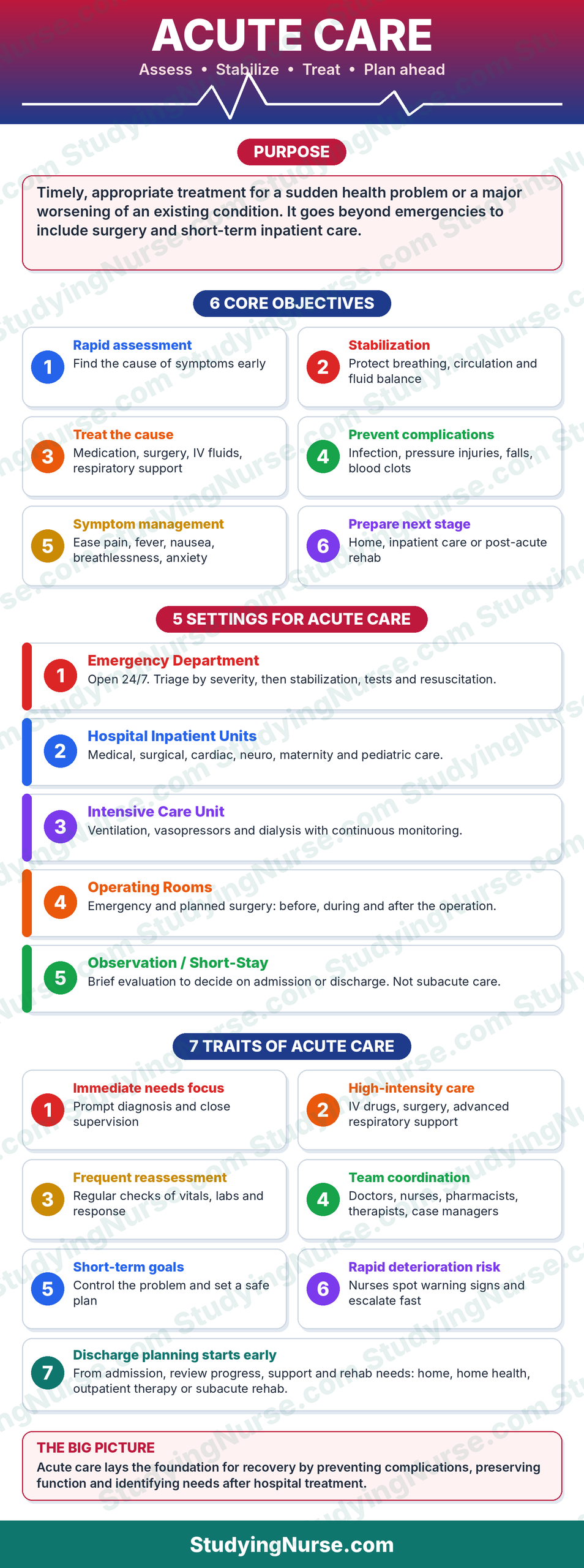
Conclusion
Understanding acute vs. subacute care is essential for recognizing how healthcare services support patients through different stages of illness, treatment, and recovery. Although both levels of care address significant medical needs, they serve distinct purposes. Acute care focuses on diagnosing, treating, and stabilizing serious or rapidly worsening conditions through timely medical interventions, close monitoring, and specialized hospital services. Subacute care continues the recovery process after immediate medical concerns have been addressed, providing skilled nursing, rehabilitation, and ongoing clinical support for patients who are not yet ready to return home independently.
The transition between these settings is an important part of patient-centered healthcare. Effective discharge planning, comprehensive nursing assessments, and collaboration among physicians, nurses, therapists, case managers, patients, and caregivers help ensure that individuals receive the appropriate level of care at each stage. Through physical therapy, occupational therapy, speech therapy, wound care, medication management, and assistance with activities of daily living, subacute rehabilitation helps patients regain functional abilities, manage ongoing health needs, and work toward realistic recovery goals.
Ultimately, the choice between acute care, subacute rehabilitation, home health, and long-term care should be guided by the patient’s medical stability, functional limitations, safety, and individual support needs. Recognizing these differences promotes continuity of care, reduces preventable complications, and supports safer transitions from hospital treatment to recovery. The goal is not simply to move patients between healthcare facilities, but to provide the right care at the right time while helping each individual achieve the highest possible level of health, independence, and quality of life.
Frequently Asked Questions
1. What are some examples of subacute care?
Examples of subacute care include rehabilitation after a stroke, recovery following hip or knee replacement, skilled wound care, continued treatment after a serious infection, physical therapy after major surgery, and nursing care for patients recovering from prolonged hospitalization.
2. What are the key differences between acute and subacute hospitals?
Acute hospitals provide intensive medical treatment for serious, unstable, or rapidly worsening conditions, including emergencies and major surgeries. Subacute care facilities generally serve medically stable patients who still require skilled nursing, medical supervision, and rehabilitation but no longer need the intensity of acute hospital treatment.
3. What is another name for subacute care?
Subacute care is commonly referred to as post-acute care or subacute rehabilitation, depending on the services provided. Other related terms include transitional care and skilled nursing facility care, although these terms are not always interchangeable.
4. What does acute versus subacute mean?
Acute refers to a condition that develops suddenly or requires prompt medical attention, often over a short period. Subacute describes a condition or phase of illness that falls between acute and chronic, generally involving a less sudden onset or a more prolonged course than an acute condition. In healthcare settings, acute care treats immediate medical problems, while subacute care supports continued treatment and recovery after initial stabilization.
