

Postmortem Care in Nursing: A Complete Guide to Procedures, Responsibilities, and Preparing the Body After Death
Postmortem care is an essential component of nursing practice, reflecting the responsibility of healthcare professionals to preserve the dignity of a deceased person while providing compassionate support to grieving families. Although nursing care is commonly associated with promoting health, managing illness, and supporting recovery, the nurse’s responsibilities do not end when death occurs. Appropriate care after death remains an important part of professional nursing practice, ensuring that the deceased is treated with dignity and respect while family members receive the attention, information, and emotional support they need during a difficult time. The process requires clinical knowledge, ethical judgment, cultural sensitivity, and adherence to established healthcare standards.
Postmortem care, also referred to as after-death care, involves the physical preparation and respectful handling of the body after death has occurred. It is performed to maintain the deceased person’s appearance, prepare the body for family viewing, and facilitate safe transfer to a morgue or funeral home. Depending on the circumstances surrounding the death and institutional policies, the procedure may involve several activities, including:
- Positioning the body in proper anatomical alignment to maintain a natural appearance and reduce the effects of early postmortem changes.
- Performing hygiene and cleaning the body while managing bodily fluids and maintaining infection-control precautions.
- Managing wounds, drainage, catheters, and other medical devices according to clinical and legal requirements.
- Closing the eyes and mouth, arranging the hair, and dressing the body when appropriate.
- Applying identification tags and ensuring that personal belongings are properly documented and secured.
- Preparing the deceased for viewing, transportation, or transfer to the morgue.
The responsibilities involved extend beyond these physical procedures. Nurses must understand the physiological changes that occur after death, including rigor mortis, which refers to the gradual stiffening of muscles following death. Knowledge of these changes helps healthcare professionals determine appropriate positioning and preparation measures. They must also recognize circumstances that require special handling, such as suspected unnatural deaths, autopsy requests, coroner investigations, and organ or tissue donation. In such cases, routine postmortem procedures may need to be modified to preserve evidence, protect the integrity of the body, and comply with applicable legal requirements.
Another important aspect of postmortem care is supporting family members as they begin to process their loss. Death can create significant emotional distress, and relatives may experience shock, sadness, confusion, or difficulty accepting what has happened. Nurses help families navigate this period by communicating sensitively, explaining the procedures being performed, answering questions, and allowing appropriate time with the deceased when circumstances permit. Cultural, religious, and personal beliefs must also be considered because families may have specific preferences concerning washing, touching, dressing, viewing, and handling the body. Respecting these preferences, whenever legally and clinically possible, helps preserve the deceased person’s dignity and provides comfort to those who are grieving.
Postmortem care also requires accurate documentation, effective teamwork, and professional accountability. Nurses must record the care given, account for personal belongings, maintain correct identification, and coordinate with relevant healthcare professionals responsible for the deceased person’s transfer. Whether death occurs in a hospital, long-term care facility, or hospice, the procedures must follow institutional policies, infection-control standards, and applicable legal requirements. Understanding these responsibilities ensures that the deceased is handled appropriately and that the family receives compassionate, respectful care throughout the process.
This guide examines the fundamental principles of postmortem care in nursing, beginning with its definition, purpose, and the professional responsibilities of the nurse. It explores the preparation required before care, the step-by-step procedures involved in positioning and preparing the body, and the special considerations associated with autopsies, coroner investigations, organ donation, and cultural or religious practices. It also discusses documentation, the management of personal belongings, transfer to the morgue, and the emotional responsibilities of nurses when caring for deceased individuals and their families. Together, these aspects provide a comprehensive understanding of how postmortem care is performed safely, ethically, and compassionately within healthcare settings.
Understanding Postmortem Care in Nursing
Postmortem care is an important aspect of nursing practice that extends the responsibility of healthcare professionals beyond the patient’s life. Although the primary focus of nursing is to promote health, prevent complications, relieve suffering, and support recovery, nurses also have a professional obligation to ensure that individuals who die under their care are treated with dignity and respect. This responsibility involves more than preparing the body for transfer or viewing; it encompasses physical care, ethical decision-making, legal compliance, communication, and emotional support for the bereaved family.
In healthcare settings, death marks the transition from active patient care to after-death care. During this period, nurses must follow established procedures to ensure that the deceased person is handled appropriately, personal belongings are protected, and the family receives compassionate assistance. The process requires an understanding of the physical changes that occur after death, the circumstances surrounding the death, and any medical or legal instructions that may influence the care provided. For example, the procedures followed after an expected death in a hospice may differ from those required when a patient dies unexpectedly under circumstances that require a coroner’s investigation.
Understanding postmortem care in nursing therefore involves examining its definition and purpose, the responsibilities of nurses, and the ethical and legal principles that guide the handling of a deceased person.
Definition and Purpose
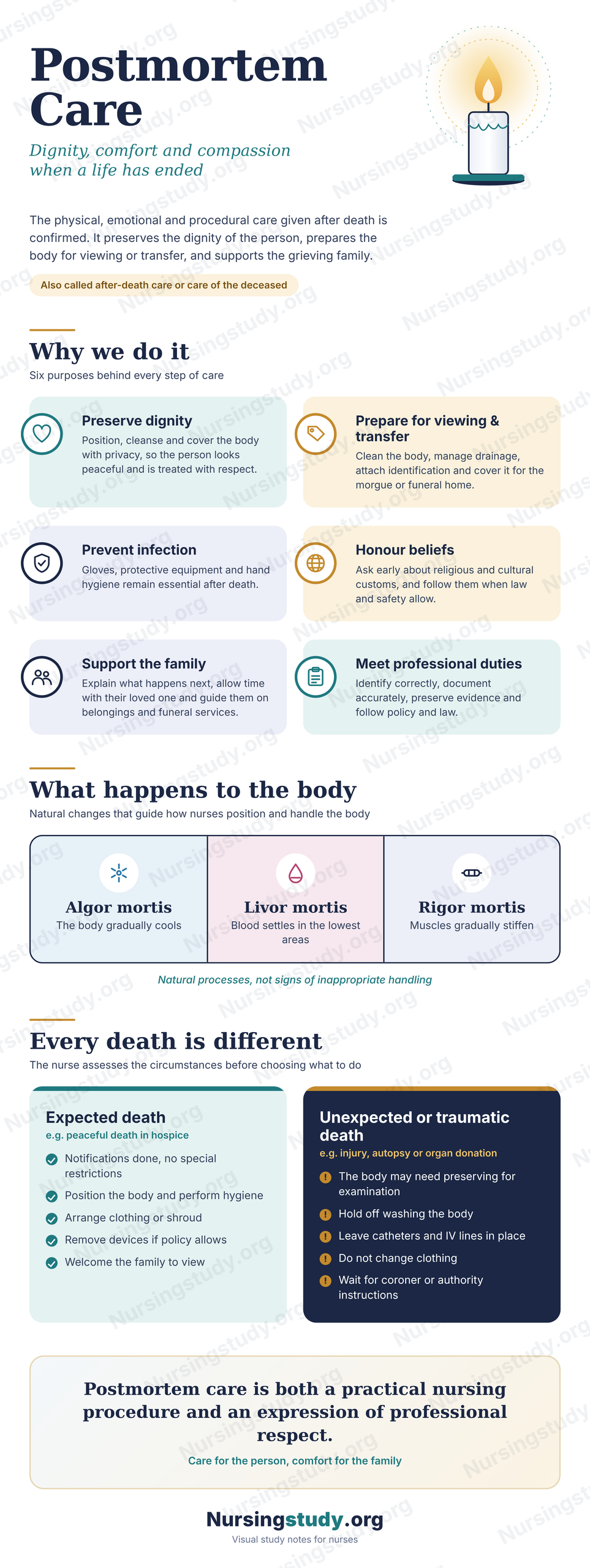
Postmortem care refers to the physical, emotional, and procedural care provided following a person’s death to preserve the dignity of the deceased, prepare the body for viewing or transfer, and support the family during the immediate period of bereavement. It is also commonly called after-death care or care of the deceased. The term postmortem means occurring or performed after death, while postmortem care describes the nursing activities undertaken once death has been confirmed and the necessary authorization and instructions have been established.
The care generally begins after death has been formally verified or confirmed according to applicable professional requirements and institutional policies. It involves preparing the body for its next stage of handling, whether that involves family viewing, an autopsy, transfer to a morgue, or collection by a funeral home. The specific procedures depend on the circumstances of death, the deceased person’s condition, family preferences, cultural or religious practices, and any legal restrictions.
For instance, when a patient dies peacefully in a hospice following a prolonged illness, the nurse may be able to provide routine postmortem care after completing the required notifications and confirming that no special restrictions apply. The nurse may position the body, perform appropriate hygiene, arrange the patient’s clothing or shroud, and facilitate family viewing. However, if a patient dies unexpectedly following a traumatic incident, the body may need to be preserved for examination. In this situation, washing the body, removing medical devices, or changing clothing may be restricted until the relevant authorities provide instructions.
The main purposes of postmortem care include the following:
1. Preserving the dignity and appearance of the deceased: One of the primary objectives is to ensure that the deceased person is treated respectfully throughout the process. Nurses position the body appropriately, perform necessary hygiene, arrange clothing or coverings, and maintain privacy. These actions help preserve a natural appearance and allow relatives to spend time with their loved one in a respectful environment.
2. Preparing the body for viewing and transfer: Postmortem care helps prepare the body for family viewing, transportation, and subsequent handling by the morgue or funeral home. This may involve cleaning the body, managing drainage, arranging identification tags, and preparing appropriate coverings. The aim is to ensure that the body is handled safely and that identification is maintained throughout the transfer process.
3. Maintaining hygiene and preventing infection: Although death has occurred, standard infection-prevention precautions remain essential. The body may release blood, secretions, or other bodily fluids, particularly when medical devices are removed or drainage is present. Nurses use appropriate personal protective equipment, including gloves, and follow hand hygiene and waste-disposal procedures to minimize occupational exposure.
4. Respecting cultural, religious, and personal preferences: Different individuals and communities have specific beliefs about death and the handling of the body. Some families may prefer that the deceased be washed or dressed according to religious customs, while others may request that certain rituals be performed before the body is moved. Nurses should identify these preferences early and accommodate them whenever possible, provided they do not conflict with legal requirements or necessary clinical precautions.
5. Supporting the family during bereavement: The period immediately following death can be emotionally overwhelming. Postmortem care provides an opportunity for nurses to offer emotional support, explain what will happen next, and allow relatives appropriate time with the deceased. Families may also need guidance about collecting personal belongings, contacting funeral services, and understanding the procedures involved in transferring the body.
6. Fulfilling professional and institutional responsibilities: Proper care after death ensures that nursing activities comply with professional standards, legal requirements, and institutional policies. Accurate identification, documentation, preservation of evidence when necessary, and appropriate communication with other healthcare professionals help prevent errors and protect the rights of the deceased and their relatives.
Postmortem care also requires an understanding of the physical changes that occur after death. These changes influence how nurses position, handle, and prepare the body. For example, rigor mortis is the gradual stiffening of muscles that develops after death. Other changes include cooling of the body, known as algor mortis, and the settling of blood in dependent areas, known as livor mortis. These processes are natural and should be understood as part of the preparation process rather than automatically interpreted as signs of inappropriate handling.
An important consideration is that postmortem care does not mean that every deceased person must undergo the same procedures. The nurse must assess the circumstances, review relevant instructions, and determine which interventions are appropriate. For example, removing a catheter or intravenous line may be acceptable in an uncomplicated expected death under facility policy, but the same action may be inappropriate when a coroner or medical examiner requires the devices to remain in place. Similarly, washing the body may need to be delayed when an autopsy, forensic examination, or organ donation procedure is being considered.
Therefore, postmortem care is both a practical nursing procedure and an expression of professional respect. It ensures that the deceased person receives appropriate physical care while recognizing the emotional, cultural, and procedural needs of those affected by the death.
Roles and Responsibilities of the Nurse
The nurse plays a central role in coordinating and providing postmortem care, ensuring that the deceased person is handled appropriately while the needs of family members are addressed. Although the physical preparation of the body is a significant part of the process, nursing responsibilities extend to communication, documentation, infection prevention, identification, coordination with other healthcare professionals, and compliance with institutional policies. These responsibilities require professionalism, attention to detail, and the ability to manage sensitive situations with compassion.
In most healthcare settings, a registered nurse (RN) oversees the care provided after death and ensures that the appropriate procedures are followed. Depending on the facility, the physical tasks may be performed by registered nurses, nursing assistants, or other appropriately trained healthcare personnel. However, delegation does not remove the nurse’s responsibility to ensure that care is safe, respectful, and consistent with professional standards.
The specific responsibilities of the nurse include the following:
1. Confirming death and initiating the appropriate procedures
Before routine postmortem care begins, the nurse must ensure that death has been confirmed or verified by an appropriately authorized healthcare professional. The person responsible for verification depends on local legislation, professional scope of practice, and institutional policy. In some jurisdictions, trained registered nurses may verify an expected death, while formal certification of the cause of death is generally a separate responsibility.
Once the required confirmation has taken place, the nurse initiates the facility’s procedures, which may include notifying the attending healthcare provider, informing relevant departments, contacting the mortuary, and determining whether the death requires referral to a coroner or medical examiner.
The nurse must also establish whether any special instructions apply before beginning physical care. For example, if the death occurred unexpectedly or there are concerns about its circumstances, the body may need to remain undisturbed until the appropriate authorities provide instructions.
2. Providing physical care and maintaining the deceased person’s dignity
One of the nurse’s primary responsibilities is to ensure that the deceased receives appropriate physical care. This involves preparing the body for viewing or transfer while preserving its appearance and maintaining dignity and respect.
Depending on the circumstances, the nurse may be responsible for:
- Positioning the body in a supine position and maintaining proper alignment of the head, arms, and legs.
- Gently closing the eyes and mouth, where possible, to maintain a natural appearance.
- Performing appropriate hygiene by cleaning exposed areas and managing bodily fluids.
- Changing soiled bed linens and clothing.
- Managing wounds, drainage, and other sources of fluid leakage.
- Dressing the body or applying a clean covering according to family preferences and institutional procedures.
- Ensuring that identification tags are correctly applied.
For example, when preparing a deceased client for family viewing, the nurse may gently wash the face and hands, arrange the hair, close the eyelids, and place a clean gown on the body. If dentures are available and their placement is appropriate, they may be replaced to help maintain the natural appearance of the face. A clean sheet can then be used for covering the body while preserving privacy.
These procedures should be performed gently, recognizing that the body may become increasingly difficult to reposition as postmortem changes develop.
3. Supporting family members and providing emotional support
The death of a loved one can be an overwhelming experience, and families may need considerable assistance immediately afterward. The nurse is often one of the healthcare professionals who remains available to relatives during this period, making communication and emotional support important responsibilities.
Providing emotional support involves recognizing that individuals respond to death differently. Some relatives may cry openly, others may remain silent, while some may experience confusion, disbelief, or difficulty understanding what has happened. Nurses should avoid making assumptions about how family members should grieve and instead provide a supportive environment in which they can express their feelings.
Practical nursing responsibilities include:
- Explaining the postmortem care process in clear, compassionate language.
- Allowing relatives appropriate time with the deceased when circumstances permit.
- Answering questions about what happens to the body after death.
- Explaining how personal belongings will be handled and returned.
- Asking whether the family has religious, cultural, or personal preferences concerning the deceased.
- Arranging access to chaplaincy services, spiritual leaders, interpreters, or bereavement support when needed.
For example, a family may request additional time to sit beside the deceased, hold their hand, pray, or participate in certain aspects of personal care. The nurse should discuss these requests sensitively and explain any restrictions that may apply. When participation is possible, family members should receive appropriate guidance about hygiene, infection prevention, and the physical changes they may observe.
4. Maintaining infection prevention and occupational safety
Although the patient has died, appropriate infection-control precautions remain necessary. Nurses must recognize the possibility of exposure to blood, secretions, and other bodily fluids during postmortem procedures. The presence of an infectious disease, open wounds, drainage, or medical devices may also require additional precautions.
The nurse is responsible for ensuring that appropriate protective measures are used, including:
- Performing hand hygiene before and after providing care.
- Wearing gloves and other personal protective equipment according to the anticipated exposure.
- Using safe techniques when handling contaminated linen and equipment.
- Managing leaking wounds and bodily fluids appropriately.
- Cleaning and disinfecting reusable equipment.
- Disposing of contaminated materials according to healthcare waste-management procedures.
The nurse should also communicate relevant infection risks to mortuary personnel and other professionals involved in transferring the body. These precautions protect healthcare workers, family members, transport personnel, and anyone who may subsequently handle the deceased.
5. Managing medical devices and identifying special circumstances
Nurses must assess the medical devices attached to the body and determine whether they can be removed or must remain in place. These may include urinary catheters, intravenous lines, central venous catheters, endotracheal tubes, drainage tubes, and other clinical equipment.
Removal should never be treated as an automatic part of postmortem care. The decision depends on the circumstances of death, autopsy requirements, possible coroner involvement, and institutional instructions.
For instance, if a patient dies following an expected illness and no investigation is required, certain devices may be removed according to facility policy. However, when the death is unexplained or requires forensic examination, removing a catheter, intravenous line, or other equipment could interfere with the investigation. In such circumstances, the nurse must preserve the body and seek instructions from the appropriate authority.
6. Documenting care and safeguarding personal belongings
Accurate documentation is another essential nursing responsibility. The nurse must maintain a clear record of the procedures performed, observations made, notifications completed, and arrangements for transferring the deceased.
Documentation may include:
- The date and time of death or the time death was verified, clearly distinguishing between the two where applicable.
- The name and designation of the healthcare professional who confirmed or verified death.
- The postmortem care provided.
- The condition of the body and any relevant observations.
- Medical devices removed or left in place and the reasons for doing so.
- The identification tags applied.
- The personal belongings collected, documented, or handed over.
- Family members or representatives who received belongings.
- The destination of the body and details of the transfer.
Personal belongings must be handled carefully because they may have considerable financial, practical, or sentimental value to relatives. Items such as jewelry, watches, clothing, dentures, mobile phones, and identification documents should be accounted for according to institutional procedures. The nurse should ensure that valuables are not misplaced or released to an unauthorized individual.
7. Coordinating with other healthcare professionals
Postmortem care involves several professionals and departments, making effective coordination essential. Depending on the healthcare setting and circumstances of death, the nurse may communicate with:
- The attending healthcare provider responsible for the patient’s medical care.
- Mortuary personnel responsible for receiving and storing the deceased.
- Hospital porters or designated transport personnel.
- Medical examiners or coroners when an investigation is required.
- Organ and tissue donation coordinators.
- Funeral home representatives or authorized family contacts.
- Bereavement officers, chaplains, and social workers.
For example, when a deceased patient is being transferred to the hospital morgue, the nurse must ensure that the identification details are correct, the required documentation is complete, and the receiving personnel are informed of any special handling instructions.
These responsibilities demonstrate that postmortem care is not an isolated nursing task. It is a coordinated process that requires accurate communication and cooperation among healthcare professionals to protect the deceased person’s dignity and ensure a respectful transition from the healthcare facility.
Ethical and Legal Considerations
Postmortem care involves several ethical and legal responsibilities because the death of a patient does not eliminate the obligation to respect their dignity, previously expressed wishes, privacy, and legal rights. Nurses must ensure that every procedure performed on the deceased is justified, appropriate, and consistent with professional standards. Decisions concerning the handling of the body, removal of medical devices, disclosure of information, release of personal belongings, and family involvement must be guided by applicable laws and institutional policies.
Ethical and legal considerations are particularly important when the circumstances surrounding death are unclear, family members disagree about the appropriate arrangements, or cultural and religious expectations differ from routine healthcare procedures. Nurses must exercise professional judgment while recognizing the limits of their authority and seeking guidance whenever necessary.
The major ethical and legal considerations include the following:
1. Preserving the dignity and respect of the deceased
Respect for human dignity remains a fundamental ethical obligation during postmortem care. Nurses must recognize that the deceased was an individual with personal values, relationships, beliefs, and preferences. The body should never be treated as an ordinary clinical object or handled carelessly simply because death has occurred.
Maintaining dignity involves:
- Handling the body gently during positioning, cleaning, dressing, and transportation.
- Maintaining privacy by covering exposed areas and limiting unnecessary access to the room.
- Avoiding inappropriate comments or behavior around the deceased.
- Respecting the person’s appearance, modesty, and previously expressed preferences.
- Ensuring that the body is not left unattended in an inappropriate or undignified environment.
- Maintaining proper identification throughout the care and transfer process.
For example, a nurse preparing a deceased patient for transfer should ensure that the body is appropriately covered, personal hygiene has been addressed where permitted, and identification tags are securely applied. Even during routine transportation to the morgue, the deceased should be handled respectfully and protected from unnecessary exposure.
2. Respecting the deceased person’s wishes and advance directives
A patient’s previously expressed wishes may influence how postmortem care is provided. These preferences may be documented in advance care plans, medical records, religious instructions, or other legally recognized documents.
For example, a person may have expressed a preference for a particular religious burial practice, requested that certain personal items remain with them, or made arrangements concerning organ and tissue donation. Nurses should review available documentation and communicate relevant preferences to the healthcare team.
However, previously expressed wishes must be interpreted alongside applicable legal requirements. A request from the deceased or their family does not automatically authorize every procedure, particularly when an autopsy, forensic investigation, or other legal process is required.
The nurse should therefore:
- Review available advance care plans and relevant medical documentation.
- Identify known preferences concerning the handling of the body.
- Communicate relevant instructions to the appropriate healthcare professionals.
- Avoid performing procedures that conflict with applicable legal restrictions.
- Seek clarification when the patient’s wishes are unclear or conflicting instructions exist.
3. Maintaining confidentiality and protecting personal information
Confidentiality remains an important professional responsibility after a patient’s death. Nurses may have access to sensitive medical information, including diagnoses, treatment history, circumstances surrounding death, and personal details that should not be disclosed to unauthorized individuals.
Although the legal application of confidentiality obligations after death varies between jurisdictions, healthcare professionals should continue to handle the deceased person’s information responsibly.
This includes:
- Avoiding discussions about the deceased in public areas or with unauthorized individuals.
- Protecting medical records and other confidential documents.
- Releasing information only to individuals who are legally entitled to receive it.
- Avoiding photographs or recordings of the deceased without appropriate authorization.
- Maintaining confidentiality when communicating with funeral service providers and other external professionals.
For example, a nurse should not disclose the medical circumstances surrounding a patient’s death to another patient, visitor, or unrelated individual simply because they request the information. Questions about medical records or the cause of death should be directed through the appropriate authorized channels.
4. Complying with legal requirements surrounding death and certification
Death verification, certification, registration, and investigation are distinct processes that must be handled according to the law. Nurses should understand their professional responsibilities and avoid undertaking duties outside their authorized scope of practice.
It is particularly important to distinguish between:
- Confirmation or verification of death: Establishing that death has occurred according to recognized clinical procedures and professional authorization.
- Certification of death: The formal medical process of certifying the death and, where applicable, recording its cause.
- Registration of death: The official recording of the death with the appropriate civil registration authority.
The professional authorized to perform each function depends on the country’s legal framework. For example, some jurisdictions permit appropriately trained registered nurses to verify an expected death, while certification of the cause of death remains the responsibility of an authorized medical practitioner.
In Kenya, healthcare professionals must follow the applicable provisions governing death notification, medical certification, registration of deaths, and the management of human remains. Nurses should refer to relevant Ministry of Health guidance, institutional procedures, and applicable national legislation rather than assuming that procedures used in another country apply locally.
5. Preserving evidence and complying with coroner or medical examiner instructions
When death occurs under suspicious, unexplained, accidental, or otherwise legally reportable circumstances, the body may require examination by a coroner or other authorized investigative authority. In these situations, routine postmortem care may be restricted because certain procedures could interfere with the investigation.
For example, removing a catheter, intravenous line, endotracheal tube, or dressing may alter evidence relevant to determining the cause or circumstances of death. Similarly, washing the body or removing clothing may interfere with forensic examination.
The nurse must therefore:
- Identify whether the death requires referral to the appropriate legal authority.
- Avoid removing medical devices or altering the body until instructions are received.
- Refrain from washing or dressing the body when doing so could compromise evidence.
- Preserve relevant equipment, materials, and documentation as required.
- Record observations and actions accurately.
- Follow instructions concerning the handling and transfer of the deceased.
Consider a patient who dies unexpectedly following a suspected assault. The nurse should not proceed with routine cleaning, remove potentially relevant medical devices, or discard clothing that may contain evidence. Instead, the nurse should secure the situation, notify the appropriate authorities, and follow the facility’s forensic and legal procedures.
6. Respecting cultural and religious beliefs
Ethical postmortem care requires sensitivity to cultural, religious, and spiritual beliefs surrounding death. These beliefs may influence who is permitted to wash or dress the deceased, whether family members can participate, how the body should be positioned, and how soon burial or cremation should occur.
For example, some Muslim families may request prompt preparation and burial, while certain religious traditions may have specific requirements concerning washing, modesty, and who can handle the body. Other families may request prayers, rituals, or the presence of a religious representative before the deceased is transferred.
The nurse should avoid assuming that every person from a particular religious or cultural community follows identical practices. Instead, family members or the deceased person’s documented wishes should guide the discussion.
When accommodating these preferences, nurses must balance cultural sensitivity with infection prevention, safety, institutional procedures, and legal obligations.
7. Respecting family involvement and decision-making boundaries
Family members may wish to participate in postmortem care, spend time with the deceased, or undertake certain traditional practices. Whenever possible, nurses should provide opportunities for appropriate participation and explain any restrictions sensitively.
However, family involvement must be balanced with the deceased person’s previously expressed wishes, legal requirements, and institutional policies. For example, relatives may request the removal of medical devices, but this may not be permitted when a coroner requires the devices to remain in place.
Similarly, disagreements may arise between family members concerning funeral arrangements, religious practices, or the handling of personal belongings. Nurses should avoid taking sides or making decisions beyond their authority. Instead, they should document concerns and refer unresolved matters to the appropriate healthcare administrator or legal authority.
8. Maintaining professional accountability and accurate documentation
Nurses are professionally accountable for the actions they perform and the decisions they make during postmortem care. Every procedure should be consistent with the nurse’s scope of practice, institutional policies, and applicable professional standards.
Accurate documentation is particularly important because postmortem records may be reviewed during legal investigations, complaints, audits, or inquiries concerning the circumstances of death.
For instance, if a nurse removes a urinary catheter during routine care, the action should be documented according to facility requirements. If a medical device remains in place because of a coroner’s instruction, this should also be recorded, together with the relevant communication or direction received.
Professional accountability also requires nurses to acknowledge limitations in their knowledge, seek assistance when uncertain, and report errors or concerns through appropriate channels.
Preparation for Postmortem Care
Preparation is an essential stage of postmortem care because it establishes the clinical, legal, and practical conditions necessary to handle the deceased safely and respectfully. Before beginning any physical care, the nurse must ensure that death has been appropriately confirmed, relevant medical instructions have been reviewed, and any circumstances that could affect the procedure have been identified. The preparation process also involves gathering the necessary supplies, organizing the care environment, and determining whether family members wish to participate or spend time with the deceased.
Unlike routine patient care, which focuses on maintaining physiological function and promoting recovery, postmortem care is directed toward preserving the dignity of the deceased, preparing the body for viewing or transfer, and supporting relatives during bereavement. Therefore, nurses must approach preparation with sensitivity, attention to detail, and an understanding of the institutional policies governing care after death.
The exact preparation requirements may differ depending on whether death occurs in a hospital, hospice, nursing home, or another healthcare setting. For example, an expected death in a hospice may allow the nurse to follow an established after-death care pathway, while an unexpected death may require additional legal procedures before the body can be touched or prepared. Similarly, the presence of an infectious disease, an autopsy request, or a possible organ donation may influence which supplies are required and which procedures can be performed.
Three major areas guide preparation for postmortem care: confirming death and reviewing medical instructions, gathering supplies and preparing the environment, and supporting family members.
Confirming Death and Reviewing Medical Instructions
Before postmortem care begins, the nurse must establish that death has been appropriately confirmed or verified according to the applicable professional requirements and institutional policies. This is a critical step because routine preparation of the body should not begin while the patient’s death remains unverified. It also ensures that the healthcare team has followed the required procedures for documenting death and determining whether any special legal or medical instructions apply.
It is important to distinguish between recognizing that death appears to have occurred, formally verifying death, and certifying the cause of death. These responsibilities are not necessarily performed by the same healthcare professional. Depending on local legislation and professional authorization, a registered nurse may be permitted to verify an expected death, while formal certification of the cause of death is generally undertaken by an authorized medical practitioner.
1. Confirming and verifying death
When a patient dies, the healthcare team follows the facility’s established procedure for confirming or verifying death. The process may involve assessing the absence of signs of circulation and breathing, checking for responsiveness, and conducting any additional examinations required by the applicable clinical protocol.
Depending on the circumstances, the assessment may include:
- Assessing responsiveness to appropriate verbal and physical stimulation.
- Observing the absence of spontaneous breathing.
- Assessing for the absence of a detectable central pulse.
- Checking for the absence of heart sounds using an appropriate clinical method.
- Assessing pupillary responses where required by the applicable protocol.
- Reviewing relevant clinical circumstances and ensuring that the findings are consistent with the criteria for death verification.
The precise examination and observation period must follow the relevant clinical guidelines and the professional’s authorized scope of practice. Nurses should not independently declare death based on a single observation or assume that the absence of a pulse alone establishes death.
For example, when a patient receiving end-of-life care in a hospice dies following an expected deterioration, the responsible healthcare professional follows the facility’s procedure for verifying death. Once the required verification has been completed, the nurse can proceed with the remaining post-death responsibilities, including notifications, documentation, and preparation for postmortem care.
2. Recording the time of death and completing required notifications
After death has been confirmed or verified, the appropriate time and details must be documented according to facility policy. Nurses should distinguish between the actual or estimated time death occurred, the time it was discovered, and the time it was formally verified. These may be different, particularly when a patient is found deceased after an interval without direct observation.
The nurse should also ensure that the appropriate individuals and departments are notified. These may include:
- The attending healthcare provider or authorized medical practitioner.
- The nurse in charge or relevant clinical supervisor.
- The patient’s designated next of kin or authorized family contact.
- The hospital mortuary or designated body-transfer service.
- The coroner, medical examiner, or other relevant authority when required.
- Organ and tissue donation personnel when applicable.
Notifications must follow institutional procedures and confidentiality requirements. For example, when a patient dies in a hospital, the nurse may notify the attending provider, who will guide the subsequent medical and administrative processes. The family should receive clear and sensitive communication about the death and the next steps.
3. Reviewing the patient’s medical records and end-of-life instructions
Before preparing the body, the nurse should review the relevant medical documentation to understand the patient’s clinical history, the circumstances surrounding death, and any instructions that may affect postmortem procedures.
Important information to review includes:
- The patient’s medical history and documented cause or circumstances of death, where available.
- Advance care plans and relevant end-of-life preferences.
- Any documented wishes concerning organ or tissue donation.
- Autopsy requests or other examination requirements.
- Known infectious diseases or infection-control precautions.
- Information about medical devices, wounds, surgical sites, and drainage systems.
- Religious, cultural, or personal preferences concerning the handling of the body.
- Instructions relating to personal belongings and funeral arrangements, where documented.
For example, a patient may have expressed a preference for a particular religious burial practice or may have registered an intention to donate organs or tissues. Reviewing the available records helps the nurse identify these considerations and communicate them to the appropriate professionals before physical care begins.
The nurse should not assume that information communicated verbally by a relative automatically replaces formal medical or legal instructions. Any uncertainty should be clarified with the responsible healthcare provider or designated authority.
4. Identifying autopsy, coroner, and organ donation requirements
One of the most important reasons for reviewing medical instructions is to determine whether routine postmortem care can proceed or whether special restrictions apply.
Some deaths require examination by a coroner or medical examiner, particularly when they are unexpected, suspicious, accidental, or otherwise legally reportable. In such cases, the body may need to remain undisturbed to preserve potential forensic evidence.
The nurse should establish whether:
- An autopsy has been requested or ordered.
- The death requires a coroner or medical examiner investigation.
- Medical devices, tubes, catheters, or dressings must remain in place.
- Clothing or other materials must be preserved.
- The body must not be washed, repositioned, or otherwise altered before examination.
- Organ or tissue donation arrangements require coordination with a specialist team.
For example, if a patient dies following an unexplained injury, the nurse should not automatically remove a catheter, clean the body, or discard the bed linens. These actions may interfere with an investigation. Instead, the nurse should preserve the relevant evidence, document the condition of the body, and follow instructions from the authorized investigative personnel.
Organ donation also requires special coordination. When donation is being considered, the nurse should notify the designated donation team and follow its instructions. The nurse should not make independent decisions about donation eligibility or alter the body in ways that could interfere with the process.
5. Establishing whether routine postmortem care can proceed
Once death has been appropriately verified and the relevant instructions reviewed, the nurse can determine which aspects of physical care are permitted.
This involves distinguishing between routine procedures and interventions that require special authorization. For instance, cleaning the body, changing bed linens, removing certain medical devices, or dressing the deceased may be appropriate in an uncomplicated expected death. However, these activities may be restricted in cases involving forensic examination, autopsy, or donation.
The nurse should clarify any uncertainty before proceeding. This helps prevent unnecessary disturbance of the body, protects evidence where applicable, and ensures that postmortem care is performed according to the circumstances of death.
Gathering Supplies and Preparing the Environment
Once death has been appropriately verified and the relevant medical instructions reviewed, the nurse can begin preparing the supplies and environment required for postmortem care. Proper preparation helps ensure that the procedure is completed efficiently, safely, and respectfully while minimizing unnecessary movement or disturbance of the deceased. It also allows the healthcare team to maintain infection-control standards, protect personal belongings, and provide an appropriate environment for family members who wish to spend time with the deceased.
The supplies required depend on the condition of the body, the nature of the death, the healthcare setting, and the specific procedures permitted under institutional policies. For example, a patient who dies following a prolonged illness may require routine hygiene and dressing, while a deceased person with extensive wounds, drainage, or a known infectious condition may require additional protective equipment and specialized supplies.
1. Gathering the necessary postmortem care supplies
Before beginning the procedure, the nurse should collect all necessary materials and place them within easy reach. Having the equipment ready prevents repeated interruptions and reduces the need to leave the deceased unattended while searching for supplies.
Common supplies used during postmortem care include:
| Supplies | Purpose |
|---|---|
| Disposable gloves | Protect the nurse from direct contact with bodily fluids and contaminated materials. |
| Disposable gown or apron | Protect clothing and exposed skin during physical care. |
| Face mask and eye protection | Provide additional protection when splashing or exposure to infectious material is anticipated. |
| Washbasin, warm water, soap, and washcloths | Used for cleaning the body when washing is permitted. |
| Clean towels and disposable wipes | Used to dry the body and maintain hygiene. |
| Clean hospital gown or appropriate clothing | Used for dressing the deceased according to family preferences and facility procedures. |
| Clean bed linens and sheets | Replace soiled linen and provide a clean surface for the deceased. |
| Gauze and wound dressings | Cover wounds and manage minor leakage where appropriate. |
| Cotton balls or absorbent materials | May be used for specific hygiene or fluid-management needs according to facility protocol. |
| Identification tags or labels | Maintain correct identification throughout handling and transfer. |
| Waste bags and laundry bags | Allow appropriate disposal or collection of contaminated materials. |
| Personal belongings bags or envelopes | Secure clothing, jewelry, and other possessions for documentation and return. |
| Body bag or transfer shroud | Used when required by facility policy, infection-control precautions, or transportation arrangements. |
| Comb or hairbrush | Helps arrange the hair and maintain the deceased person’s appearance. |
The nurse should also ensure that any additional equipment required for safe handling is available. For example, a patient with a high body weight, complex positioning needs, or significant physical limitations may require assistance from additional staff or appropriate moving and handling equipment.
It is important to remember that not every item is required for every deceased person. The nurse should select supplies based on the anticipated care needs rather than automatically using every available material. For example, gauze dressings may be necessary when wounds are leaking, while a body bag may be unnecessary for routine preparation when a clean shroud and approved transfer arrangements are sufficient.
2. Selecting and using personal protective equipment
Infection prevention is an essential part of preparing for postmortem care. Although the patient is no longer alive, blood, secretions, and other bodily fluids may still be present, creating potential occupational exposure risks.
The nurse should assess the infection risks associated with the deceased person’s condition and select appropriate personal protective equipment (PPE). Standard precautions should be followed for all deceased persons, with additional transmission-based precautions applied when indicated.
The basic protective measures include:
- Gloves: Disposable gloves should be worn when handling the body, contaminated linen, medical devices, and bodily fluids.
- Protective gowns or aprons: These help prevent contamination of the nurse’s clothing and skin.
- Face masks: Appropriate masks should be used when the identified infection risk or procedure requires respiratory protection.
- Eye protection: Goggles or face shields may be necessary when splashing of blood or secretions is anticipated.
- Hand hygiene: Nurses should perform hand hygiene before putting on PPE and after removing it, following the recommended procedure.
For example, if a deceased patient has leaking wounds or substantial bodily fluid drainage, the nurse may require gloves, a protective gown, and eye protection to reduce the risk of exposure. If the patient had a known transmissible infection, the appropriate infection-control team should provide guidance on additional precautions.
The nurse must also ensure that used PPE is removed and disposed of correctly. Gloves should not be reused, and contaminated materials should be placed in the designated waste or laundry containers. These measures protect healthcare workers and other individuals involved in subsequent handling of the body.
3. Preparing the patient’s room and surrounding environment
The environment should be organized before physical care begins to provide privacy, reduce interruptions, and create a respectful setting for the deceased and their family.
The nurse should consider the following environmental preparations:
- Maintaining privacy: Close doors and curtains to prevent unnecessary exposure of the deceased. Limit access to authorized healthcare personnel and individuals permitted by the family or facility.
- Creating adequate working space: Remove unnecessary equipment, furniture, and obstacles that could interfere with safe positioning or movement around the bed.
- Adjusting the bed: Ensure that the bed is stable and positioned at a comfortable working height for the healthcare personnel providing care.
- Managing lighting: Provide sufficient lighting to allow careful assessment and hygiene while maintaining a calm and respectful atmosphere.
- Reducing unnecessary interruptions: Coordinate with other staff to minimize avoidable disturbances during the procedure.
- Preparing for family viewing: If relatives wish to see the deceased, ensure that the room is clean, private, and arranged appropriately before inviting them in.
For example, in a hospital ward, the nurse may close the privacy curtains, place a notice or otherwise restrict unnecessary entry according to facility policy, and remove unused clinical equipment from the immediate area. If the deceased was receiving continuous monitoring, equipment such as an electrocardiogram (EKG) monitor may be disconnected once the required death verification and instructions have been completed and removal is authorized.
The room should also be prepared with consideration for family members. A chair may be provided for relatives who wish to sit beside the deceased, while tissues and drinking water may be made available where appropriate. These seemingly small arrangements can help families feel more comfortable during a difficult period.
4. Assessing the body and identifying care requirements
Before proceeding with physical preparation, the nurse should assess the condition of the body to determine which interventions may be necessary. This assessment should be guided by the patient’s medical records, the circumstances surrounding death, and any restrictions established by the responsible healthcare provider or legal authority.
The assessment may involve identifying:
- The presence of wounds, surgical incisions, pressure injuries, or skin damage.
- Any visible blood, secretions, or other bodily fluids.
- Medical devices such as catheters, intravenous lines, drains, and monitoring equipment.
- Existing dressings and areas that may require additional fluid containment.
- The presence of personal items, jewelry, dentures, or other belongings.
- Any signs of an infectious risk requiring additional precautions.
- Any physical condition that could make positioning or handling difficult.
For example, a patient who had a urinary catheter before death may require assessment for possible leakage during subsequent handling. Similarly, a patient with a surgical wound may need an appropriate dressing to prevent fluid from escaping during transportation, provided that wound management is permitted.
The nurse should also identify implanted medical devices, including pacemakers and certain radioactive implants, because these may present specific handling or safety considerations for mortuary personnel and funeral service providers. Relevant information should be communicated to the receiving team.
5. Organizing staff and equipment for safe handling
Postmortem care may require more than one healthcare worker, particularly when the deceased needs repositioning, has a high body weight, or requires assistance with moving and handling. Many institutional procedures recommend that two trained personnel participate, with a registered nurse supervising or coordinating the process as appropriate.
Before starting, the nurse should establish who will perform each task. One person may assist with positioning while another manages linen, hygiene, and equipment. This coordination reduces unnecessary movement and helps maintain proper alignment.
Safe handling is especially important because the body may become more difficult to reposition as rigor mortis develops. Nurses should therefore use appropriate moving and handling techniques and available equipment rather than attempting to lift or reposition the body without assistance.
6. Maintaining identification and safeguarding personal belongings
Preparation should also include organizing the materials required to maintain the deceased person’s identity and protect their possessions.
Identification tags should be available before the body is prepared for transfer. The nurse should verify the patient’s identifying details against the medical record and follow the facility’s requirements for applying identification labels.
Personal belongings should also be identified and handled systematically. Items such as jewelry, watches, clothing, dentures, mobile phones, and other valuables should be accounted for according to institutional procedures. The nurse should prepare appropriate property bags, envelopes, or inventory forms to prevent loss or confusion.
For instance, if a patient has a wedding ring, wristwatch, and mobile phone, these items should be documented and secured according to facility policy. Their release should be made to an authorized recipient, with the appropriate acknowledgment where required.
Proper preparation of supplies and the environment creates the foundation for safe, organized, and respectful postmortem care. It ensures that the nurse can concentrate on the deceased person’s needs without unnecessary interruptions while maintaining infection prevention, accurate identification, and professional standards.
Supporting Family Members
Supporting family members is an essential part of preparation for postmortem care because the period immediately following death can be emotionally overwhelming. Relatives may experience shock, disbelief, sadness, anger, confusion, or difficulty accepting the loss. Some may be uncertain about what to do next, while others may wish to spend time with the deceased, participate in physical care, or perform religious and cultural rituals. The nurse must therefore approach family interactions with patience, empathy, and sensitivity, recognizing that emotional support is just as important as the physical preparation of the body.
The family should not be treated as passive observers during this process. Where appropriate, relatives should be given opportunities to express their preferences, ask questions, and participate in decisions concerning the care of their loved one. However, their involvement must be balanced with the deceased person’s known wishes, legal requirements, infection-control precautions, and institutional policies.
1. Communicating the death with compassion and sensitivity
When death has been appropriately confirmed, communication with family members should be clear, direct, and compassionate. Nurses should avoid confusing medical terminology, vague expressions, or language that could create uncertainty about what has happened.
For example, rather than saying that the patient has “passed on” or “is no longer with us” without further explanation, the nurse should communicate clearly that the patient has died. The information should be delivered in a private environment, allowing relatives time to process what they have heard.
Effective communication involves:
- Using simple, understandable language when explaining that death has occurred.
- Allowing family members time to react without rushing them.
- Listening carefully to their concerns and questions.
- Avoiding assumptions about how they should respond emotionally.
- Providing honest information without making promises that cannot be guaranteed.
- Offering clarification about the next steps in postmortem care.
Some family members may ask questions about the patient’s final moments, the time of death, or the medical interventions performed before death. Nurses should answer questions within their professional knowledge and authority. Questions concerning the medical cause of death or matters requiring formal explanation should be referred to the responsible healthcare provider.
2. Allowing family members appropriate time with the deceased
Spending time with a deceased loved one can be an important part of the grieving process. It gives relatives an opportunity to say goodbye, pray, reflect, express their emotions, or simply remain beside the person they have lost.
Whenever possible, nurses should provide families with sufficient privacy and time before beginning routine physical preparation or arranging transfer. The amount of time required will vary depending on the family’s preferences, the circumstances of death, and any medical or legal restrictions.
For example, a family whose relative has died in a hospice may wish to remain in the room for an extended period, hold the deceased person’s hand, or say prayers before the body is prepared. The nurse should accommodate these wishes when feasible and explain any practical considerations that may affect the arrangements.
It is also important to recognize that family members may not all respond in the same way. One relative may wish to remain beside the deceased, while another may prefer to leave the room. Nurses should respect these differences without pressuring anyone to participate in viewing or after-death rituals.
3. Explaining the postmortem care procedure
Family members may have limited knowledge of what happens to the body after death. Some may be concerned about cleaning procedures, the removal of medical devices, the appearance of the deceased, or how the body will be transported.
The nurse should explain the intended care in advance, using language that is appropriate to the family’s understanding and emotional state.
Topics that may need explanation include:
- Why the body is positioned and prepared before transfer.
- Whether washing, dressing, or other hygiene procedures will be performed.
- How medical devices such as catheters and intravenous lines will be managed.
- How identification tags will be applied.
- How personal belongings will be collected and returned.
- Whether the body will be transferred to a hospital morgue or funeral home.
- Any restrictions resulting from an autopsy, coroner investigation, or organ donation arrangement.
It is particularly important to prepare relatives for normal physical changes after death. For example, the body may become cooler, the skin may change in appearance, and rigor mortis may cause the muscles to stiffen. The eyes or mouth may also remain partly open despite gentle attempts to close them.
Explaining these changes can prevent unnecessary distress. If relatives understand what to expect, they may feel more prepared when viewing or touching the deceased.
4. Respecting cultural, religious, and personal preferences
Cultural and religious beliefs can strongly influence how families approach death and the handling of the body. Some traditions emphasize prompt preparation and burial, while others involve specific washing practices, prayers, clothing requirements, or restrictions on who may touch the deceased.
The nurse should ask whether the family has any particular customs or preferences rather than assuming that all members of a religious or cultural group follow the same practices.
Examples of considerations include:
- Religious washing: Some families may request that the deceased be washed according to specific religious requirements. They may also prefer that designated family members or religious representatives perform the washing.
- Modesty and body covering: Families may request that the body remain covered except when a particular area needs attention.
- Prayer and spiritual rituals: Relatives may wish to pray beside the deceased or request the presence of a chaplain, imam, priest, or other spiritual leader.
- Prompt burial: Certain religious traditions place importance on completing burial arrangements as soon as reasonably possible.
- Handling restrictions: Some families may have preferences concerning the gender of the healthcare professional or family member who prepares the body.
For example, a Muslim family may request that the deceased be handled according to Islamic washing and shrouding practices. The nurse should discuss these preferences with the family and coordinate with appropriate personnel while ensuring that legal requirements and infection-control precautions are observed.
Similarly, some Christian families may request prayers or the presence of a religious leader before the body is transferred. These requests can often be accommodated without interfering with the necessary clinical and administrative procedures.
5. Offering opportunities for family participation in physical care
Some relatives may wish to participate in preparing the deceased. For them, activities such as washing the face, combing the hair, arranging clothing, or holding the person’s hand may provide comfort and a sense of involvement in their loved one’s final care.
Where permitted, nurses should explain which activities family members can participate in and provide appropriate guidance. Participation should always be voluntary; relatives should never feel pressured to perform physical care if they are uncomfortable.
Before involving family members, the nurse should consider:
- Whether the circumstances of death permit family participation.
- Whether a coroner or medical examiner has imposed restrictions.
- Whether any infection-control precautions are necessary.
- Whether the family understands the physical changes that may occur after death.
- Whether the requested activity is consistent with institutional policies.
For instance, a relative may wish to help wash the deceased person’s face or arrange their hair. The nurse can provide clean materials, explain the procedure, and remain available to offer assistance. If the death requires forensic investigation, however, such activities may need to be postponed or restricted to avoid disturbing evidence.
6. Providing emotional support and recognizing complicated grief responses
Not all family members respond to death in the same manner. Some may cry, while others become quiet or withdrawn. Others may express anger, guilt, disbelief, or frustration, particularly when death follows a prolonged illness or unexpected deterioration.
The nurse should recognize these reactions as possible responses to bereavement and provide appropriate emotional support without judging or attempting to control the family’s emotions.
Supportive nursing interventions include:
- Listening attentively without interrupting or dismissing concerns.
- Acknowledging the family’s loss and emotional distress.
- Providing reassurance through calm and compassionate communication.
- Allowing periods of silence when relatives need time to process their feelings.
- Avoiding statements that minimize the loss, such as telling relatives that they should be strong or move on.
- Identifying family members who may require additional emotional or psychological assistance.
- Referring relatives to bereavement counselors, social workers, spiritual care providers, or other support services when appropriate.
For example, a relative may repeatedly ask whether everything possible was done to save the patient’s life. The nurse should listen carefully, acknowledge the concern, and avoid giving an unsupported explanation. If the question relates to clinical decisions or the cause of death, the attending healthcare provider should be involved in providing further clarification.
7. Providing practical guidance about the next steps
Family members may also require practical information because they may be unfamiliar with the procedures that follow death. Nurses should explain the arrangements relevant to their healthcare setting and direct relatives to the appropriate administrative personnel.
This may include guidance concerning:
- Collection and documentation of personal belongings.
- Completion of required administrative procedures.
- Contacting a funeral home or designated funeral service provider.
- Arrangements for transfer to the morgue.
- Obtaining information about death notification and certification.
- Accessing bereavement or spiritual support services.
The nurse should explain these matters gradually rather than overwhelming relatives with too much information immediately after the death. Written information or a bereavement information pack may be useful, particularly when several arrangements need to be completed.
In addition, nurses should avoid making assumptions about who is legally authorized to receive the deceased’s belongings or make decisions concerning the body. Where disagreements arise, the appropriate institutional or legal authority should provide guidance.
8. Maintaining communication throughout preparation and transfer
Family support should continue beyond the initial notification of death. Nurses should keep relatives informed about relevant developments, particularly when the body cannot be prepared or transferred immediately because of an autopsy, coroner investigation, donation arrangements, or other special circumstances.
For example, if a deceased patient must remain in the clinical area while awaiting instructions from a medical examiner, the nurse should explain why routine preparation has been delayed and provide information about what will happen next.
Similarly, when postmortem care is complete, the nurse should explain the arrangements for transferring the body and ensure that relatives know whom to contact if they have additional questions.
The goal is to prevent unnecessary uncertainty while maintaining appropriate professional boundaries and respecting the family’s need for time and privacy.
Supporting family members during preparation for postmortem care requires a balance between emotional sensitivity, practical assistance, and professional responsibility. By communicating clearly, respecting cultural preferences, allowing appropriate time with the deceased, and providing compassionate guidance, nurses help families navigate the immediate experience of loss while ensuring that the deceased person continues to receive dignified and respectful care.
Step-by-Step Postmortem Care Procedure
The step-by-step postmortem care procedure involves a series of nursing interventions performed to prepare the deceased person for viewing, transportation, or transfer to a morgue or funeral home. These interventions focus on maintaining the body’s appearance, preserving dignity, managing bodily fluids, preventing infection, and ensuring correct identification throughout the process. Although the specific procedures may vary depending on the healthcare facility and circumstances of death, the general objective is to ensure that the deceased receives respectful and appropriate physical care.
Postmortem care requires careful handling because several physiological changes begin shortly after death. The muscles initially relax, bodily fluids may leak from natural openings or wounds, and the body gradually cools and becomes stiff. These changes can affect positioning, cleaning, dressing, and transportation. Therefore, nurses should perform appropriate preparation as soon as permitted after death has been verified, rather than delaying necessary procedures without reason.
Before beginning, the nurse should ensure that:
- Death has been appropriately verified and the required documentation completed.
- The healthcare provider’s instructions and institutional policies have been reviewed.
- There are no restrictions relating to autopsy, coroner investigations, or organ donation.
- The necessary protective equipment and postmortem care supplies are available.
- Family members have been given appropriate time with the deceased, and their preferences have been considered.
- Sufficient assistance is available for safe positioning and handling.
The procedure generally involves positioning and cleaning the body, managing wounds and medical devices, understanding the physical changes that occur after death, and dressing and identifying the deceased.
Positioning and Cleaning the Body
Positioning and cleaning are fundamental components of postmortem care because they help maintain the deceased person’s appearance, promote hygiene, and prepare the body for viewing or transfer. Following death, the body gradually undergoes physical changes that can make repositioning more difficult. Therefore, appropriate positioning and personal hygiene should be performed carefully and, when permitted, before significant stiffening develops.
The nurse should use gentle handling techniques throughout the procedure, recognizing that the body must be treated with the same dignity and respect expected during routine patient care. The deceased should not be handled roughly, unnecessarily exposed, or subjected to procedures that could compromise legal or forensic requirements.
1. Positioning the deceased in a supine position
The deceased is generally positioned in a supine position, meaning that the person lies flat on their back with the face directed upward. This position provides a natural and organized appearance, makes hygiene easier, and facilitates subsequent dressing and transfer.
The nurse should aim to maintain proper anatomical alignment by arranging the head, trunk, arms, and legs in a comfortable and natural position.
The positioning procedure generally involves:
- Lowering the head of the bed gradually until the body is lying flat, unless a clinical or institutional reason requires a different position.
- Placing the head on a single pillow to support its natural alignment.
- Straightening the neck without forcing it into an unnatural position.
- Placing the arms alongside the body, with the hands resting naturally.
- Straightening the legs where possible and allowing the feet to remain in a natural position.
- Ensuring that the body is centered on the bed and that the shoulders and hips are appropriately aligned.
The arms may be placed alongside the body or arranged across the abdomen, depending on facility policy, cultural preferences, and the intended preparation of the deceased.
For example, when preparing a patient who died following a prolonged illness, the nurse may place the body flat on the bed, straighten the legs gently, arrange the arms alongside the body, and place a pillow beneath the head. This positioning creates a natural appearance and makes subsequent hygiene and dressing easier.
It is important not to force the limbs into position. If rigor mortis has already developed, the joints may resist movement. Attempting to straighten stiffened arms or legs forcefully can damage tissues or cause unnecessary injury. In such circumstances, the nurse should maintain the position that can be achieved safely and seek guidance where necessary.
2. Closing the eyes and maintaining a natural facial appearance
After death, the eyelids may remain partially or completely open because the muscles responsible for maintaining eye closure are no longer functioning normally. Closing the eyes gently can help maintain a peaceful appearance and make the deceased more comfortable for family viewing.
The nurse may gently lower the eyelids using clean hands or gloved fingers and apply light pressure for a short period, following institutional procedures.
Important considerations include:
- Avoiding excessive pressure on the eyeballs.
- Never forcing the eyelids closed if resistance is encountered.
- Avoiding adhesive tape that may damage the delicate skin around the eyes.
- Not inserting materials into the eyes unless specifically directed by an approved protocol.
- Explaining to relatives that the eyes may not remain completely closed despite appropriate preparation.
If the eyelids cannot be closed naturally, the nurse should not repeatedly attempt the procedure. The funeral director or mortuary personnel may have appropriate methods for addressing the appearance of the eyes during subsequent preparation.
3. Supporting the jaw and closing the mouth
The mouth may remain open after death because of relaxation of the muscles responsible for maintaining jaw closure. This can affect the appearance of the face, particularly when the deceased is prepared for viewing.
A pillow beneath the head may help support the natural position of the jaw. If additional support is needed, a rolled towel may be placed gently beneath the chin for a limited period, according to facility policy. Any temporary support should be removed before family viewing if required by the procedure.
The nurse should avoid tightly binding the jaw or using methods that may leave marks on the face. If the mouth does not close easily, it should not be forced.
Where appropriate and permitted, dentures may be replaced to help maintain the natural shape of the face. However, this should be done gently and only when the dentures are available and their placement is suitable.
For example, an elderly patient who wore full dentures may have a sunken facial appearance after death if the dentures are removed. Replacing them, when appropriate, may help maintain the person’s familiar appearance for relatives.
4. Cleaning the body and maintaining personal hygiene
Cleaning the body is an important aspect of postmortem care because it removes visible dirt, blood, secretions, and other substances that may affect the appearance of the deceased. It also prepares the body for dressing, covering, and transfer.
The nurse should follow standard infection-control precautions, including appropriate hand hygiene and the use of gloves and other protective equipment according to the anticipated exposure risk.
A gentle bed bath or localized cleaning may be performed using warm water, mild soap, washcloths, and clean towels when washing is permitted.
The cleaning process may involve:
1. Preparing the body: Ensure that the deceased is appropriately positioned, covered, and protected from unnecessary exposure. Place an absorbent pad beneath the body when leakage is anticipated.
2. Cleaning the face: Gently wash the forehead, cheeks, nose, and chin using a clean washcloth. Remove visible secretions without applying excessive pressure.
3. Cleaning the upper body: Wash the neck, chest, arms, and hands, paying attention to areas where sweat, blood, or other secretions may have accumulated.
4. Cleaning the lower body: Clean the abdomen, legs, and feet as appropriate, maintaining privacy throughout the procedure.
5. Providing perineal hygiene: Clean the genital and anal areas when necessary, using appropriate protective equipment and separate cleaning materials to prevent contamination.
6. Drying the body: Use clean towels to dry the skin gently, paying attention to skin folds and areas where moisture may accumulate.
7. Changing the bed linens: Remove soiled linens according to infection-control procedures and replace them with clean sheets when appropriate.
The nurse should also clean visible secretions around the mouth and nose while avoiding unnecessary manipulation of the body.
5. Managing hair, nails, and general appearance
Maintaining the deceased person’s familiar appearance can provide comfort to relatives, particularly when they wish to spend time with the body before transfer.
Where permitted, the nurse may:
- Comb or brush the hair into its usual style.
- Clean the face and remove visible dirt or secretions.
- Clean the hands and remove visible contaminants from beneath the nails.
- Arrange clothing or a clean hospital gown.
- Ensure that the body is appropriately covered.
However, procedures such as shaving, cutting hair, trimming nails, applying cosmetics, or removing jewelry should be guided by family preferences and institutional policies. Nurses should not undertake extensive cosmetic preparation unless this falls within their authorized responsibilities.
6. Maintaining privacy and preparing the bed for subsequent care
Throughout positioning and cleaning, the deceased should remain covered whenever possible. Only the area being cleaned should be exposed at any given time. This helps preserve dignity and maintains a respectful environment.
An absorbent pad or appropriate incontinence product may be placed beneath the body to manage possible leakage of urine, feces, or other bodily fluids. Clean bed linens should be used to provide a suitable surface for subsequent dressing and transfer.
The nurse should inspect the bed area for visible contamination and ensure that used materials are placed in the appropriate waste or laundry containers.
Positioning and cleaning should be performed with sensitivity to the family’s wishes, the deceased person’s known preferences, and any legal restrictions. These interventions help maintain a natural appearance and ensure that the body is appropriately prepared for the next stages of postmortem care.
Managing Wounds, Drainage, and Medical Devices
Managing wounds, drainage, and medical devices is an important part of postmortem care because bodily fluids may continue to escape from the body after death. Wounds, surgical incisions, catheter sites, intravenous access points, and other openings may allow blood, urine, or other secretions to leak during repositioning and transportation. If these areas are not managed appropriately, the body may become soiled, clothing and bed linens may be contaminated, and healthcare workers may be exposed to potentially infectious materials.
The nurse must therefore assess the condition of the body, identify potential sources of leakage, and apply appropriate measures to contain bodily fluids. However, the management of wounds and medical devices depends on the circumstances surrounding death. In uncomplicated cases, certain devices may be removed according to institutional procedures. When an autopsy, coroner investigation, or forensic examination is required, devices and dressings may need to remain in place.
1. Assessing wounds and potential sources of drainage
Before managing wounds or drainage, the nurse should inspect the body for visible injuries, surgical incisions, pressure injuries, puncture sites, and areas where fluids may escape.
Common sources of drainage include:
- Surgical wounds and healing incisions.
- Pressure injuries and open skin lesions.
- Intravenous cannulation sites.
- Central venous catheter insertion sites.
- Urinary catheter openings.
- Tracheostomy sites.
- Gastrointestinal stomas and surgical drainage openings.
- Natural body openings, including the mouth, nose, urethra, vagina, and rectum.
The nurse should determine whether the drainage is related to an existing wound, a medical device, or normal post-death fluid release. Any unusual finding should be documented and reported according to facility policy.
For example, a patient who underwent abdominal surgery before death may have an incision that continues to release small amounts of blood or wound fluid. The nurse should assess the dressing and apply an appropriate absorbent covering if permitted.
2. Managing wounds and surgical incisions
Open wounds and surgical sites should be managed to prevent leakage and maintain the appearance of the deceased. The objective is not to initiate new treatment or promote wound healing, but to contain drainage and prepare the body for safe handling.
Depending on the wound and applicable instructions, the nurse may:
- Clean visible contamination around the wound when washing is permitted.
- Apply a clean, absorbent dressing over leaking areas.
- Secure dressings using appropriate medical tape.
- Ensure that existing sutures and surgical clips remain undisturbed unless otherwise instructed.
- Avoid excessive pressure on injured or fragile tissues.
- Document any wound-related observations and interventions.
For example, if a deceased patient has a surgical wound with minor fluid leakage, the nurse may place sterile gauze or an appropriate absorbent dressing over the area. If the wound is likely to release additional fluid during transportation, a suitable waterproof outer dressing may be used according to facility procedures.
The nurse should avoid using excessive adhesive tape because it may damage fragile skin or leave marks that are difficult to remove during subsequent preparation at the funeral home.
In cases involving suspected trauma or a coroner investigation, wounds should not be cleaned, covered, or otherwise altered without authorization because they may contain evidence relevant to determining the circumstances of death.
3. Managing drainage and bodily fluids
After death, relaxation of the muscles may result in the release of urine, feces, and other bodily fluids. Movement of the body during cleaning or transportation may also cause fluids to escape from natural openings or existing wounds.
The nurse should anticipate this possibility and take appropriate measures to prevent leakage.
These measures may include:
- Placing an absorbent pad beneath the buttocks and pelvic area.
- Using an appropriate incontinence product when permitted.
- Applying absorbent dressings to leaking wounds.
- Securing existing drainage systems according to facility procedures.
- Managing secretions around the mouth and nose using appropriate materials.
- Ensuring that contaminated materials are handled and disposed of safely.
For example, a patient who had been receiving intravenous fluids before death may have fluid remaining in the tubing or at the insertion site. Once removal of the equipment is authorized, the nurse should manage the site appropriately and apply a small dressing if necessary.
It is important not to confuse routine postmortem fluid management with invasive procedures. Nurses should not insert packing materials into the rectum, vagina, or other body openings simply to prevent leakage unless a specific authorized protocol requires it.
4. Managing urinary catheters and drainage systems
Urinary catheters are commonly present in hospitalized patients, particularly those who have experienced critical illness, undergone surgery, or required close monitoring of urine output.
After death, the nurse must determine whether the catheter should remain in place or be removed. This decision depends on institutional policy, the circumstances of death, and any legal or medical instructions.
When removal is authorized, the procedure should be performed by appropriately trained personnel using the facility’s approved method. The nurse should also ensure that any leakage from the insertion site is managed appropriately.
If the catheter must remain in place, the drainage system should be secured and managed according to facility instructions to prevent accidental disconnection or leakage during transportation.
For example, a deceased patient with a Foley catheter may have the catheter removed during routine postmortem care if there are no restrictions. However, if the death is subject to forensic investigation, the catheter may need to remain in place because it could be relevant to the examination.
5. Managing intravenous lines, drains, and other medical devices
Many patients die while receiving treatment involving several medical devices. These may include intravenous cannulas, central venous catheters, feeding tubes, oxygen equipment, surgical drains, endotracheal tubes, and infusion pumps.
The nurse should identify each device and establish whether it can be removed before proceeding.
Common considerations include:
- Peripheral intravenous cannulas: These may be removed after death when authorized and when no investigation requires them to remain in place. The insertion site should be covered with an appropriate dressing.
- Central venous catheters: Removal may require specific authorization or trained personnel, particularly when the device is complex or an investigation is anticipated.
- Surgical drains: These may need to remain in place if they are relevant to an autopsy or if removal could cause additional leakage.
- Feeding tubes: Their removal depends on institutional instructions and the circumstances of death.
- Endotracheal tubes and tracheostomy equipment: These may need special consideration, especially in cases involving forensic examination or particular infection-control precautions.
- Infusion pumps and other electronic equipment: These should be disconnected or removed according to facility procedures once the required verification and authorization have been completed.
An electrocardiogram (EKG) monitor and other monitoring equipment should also be disconnected when appropriate. The nurse should ensure that the equipment is handled safely and returned to the designated department.
6. Recognizing devices that require special precautions
Some implanted or attached medical devices require additional attention because they may affect the safety of mortuary personnel or funeral service providers.
Examples include:
- Pacemakers and implantable cardioverter-defibrillators (ICDs).
- Radioactive implants or brachytherapy devices.
- Implanted medication pumps.
- Certain prosthetic devices.
- Other specialized implanted equipment.
For instance, a patient with an implanted pacemaker may require the device to be identified and documented because it may need to be removed before cremation, depending on the device and applicable funeral service requirements. The nurse should inform mortuary or funeral personnel about the implant rather than attempting removal without appropriate authorization.
Similarly, radioactive implants may require specialist handling and specific precautions. These should never be removed or manipulated without the relevant instructions.
7. Maintaining infection control during wound and device management
Handling wounds, drainage systems, and medical devices may expose nurses to blood and other potentially infectious materials. Therefore, standard precautions must be maintained throughout postmortem care.
The nurse should:
- Wear gloves and appropriate protective clothing.
- Use eye and face protection when splashing is anticipated.
- Avoid unnecessary manipulation of medical devices.
- Handle contaminated dressings and tubing carefully.
- Dispose of sharps in approved sharps containers.
- Place contaminated linen and waste in designated containers.
- Perform hand hygiene after completing care and removing protective equipment.
Additional precautions may be necessary when the deceased has a known or suspected transmissible infection. The relevant infection-control team should be consulted when the required handling procedures are unclear.
Managing wounds, drainage, and medical devices requires careful assessment and sound clinical judgment. The nurse must balance the need to prepare the body with the responsibility to preserve evidence, prevent infection, and follow legal and institutional requirements. Proper management reduces leakage, protects healthcare personnel, and helps ensure that the deceased is ready for subsequent dressing and transfer.
Understanding Rigor Mortis and Other Physical Changes
Understanding the physical changes that occur after death is essential to providing appropriate postmortem care. Once death has occurred, the body begins to undergo several natural physiological and biochemical changes because the processes that maintain circulation, respiration, cellular metabolism, and temperature regulation have ceased. These changes influence the appearance, temperature, flexibility, and general condition of the deceased.
Nurses must understand these processes because they affect how the body should be positioned, cleaned, dressed, and transferred. They also help explain why certain procedures should be performed promptly after death, particularly when maintaining a natural appearance is important for family viewing.
The major early physical changes following death include rigor mortis, algor mortis, and livor mortis. Other changes include muscle relaxation, changes in skin appearance, and the gradual onset of decomposition.
1. Rigor mortis: Stiffening of the body after death
Rigor mortis refers to the progressive stiffening of skeletal muscles following death. It occurs because the biochemical processes responsible for normal muscle contraction and relaxation stop functioning once circulation and cellular energy production cease.
Under normal conditions, muscles require adenosine triphosphate (ATP) to relax after contraction. ATP helps separate the contractile proteins actin and myosin, allowing muscle fibers to return to a relaxed state. After death, ATP production stops, and the available energy reserves are gradually depleted. As a result, actin and myosin remain bound together, causing the muscles to become stiff.
The development of rigor mortis generally follows a recognizable pattern:
- Initial relaxation: Immediately after death, the muscles become relaxed because normal neurological and muscular control has ceased.
- Onset of stiffness: Within the following hours, muscles begin to stiffen as ATP becomes depleted.
- Progressive stiffening: Rigidity gradually affects different muscle groups, including those of the face, jaw, neck, trunk, arms, and legs.
- Maximum stiffness: Rigor mortis becomes more established as the process progresses.
- Resolution: As decomposition advances, muscle tissues begin to break down, and the stiffness gradually disappears.
The timing is variable. Rigor mortis may begin within approximately 1–2 hours under some conditions, become well established over the next several hours, and gradually resolve over approximately 24–48 hours. These are general estimates rather than fixed clinical timelines. Temperature, environmental conditions, the person’s physical condition before death, and other factors influence its development.
Nursing implications of rigor mortis
Rigor mortis has important implications for positioning and preparing the deceased. Because the muscles gradually become stiff, it may become difficult to straighten the arms and legs, close the mouth, or reposition the body after rigidity has developed.
Nurses should therefore:
- Position the body in an appropriate alignment as early as permitted.
- Gently arrange the arms and legs before significant stiffness develops.
- Attempt to close the eyes and mouth without applying excessive pressure.
- Avoid forcing stiff joints into an unnatural position.
- Explain expected changes to family members when they are concerned about the appearance of the deceased.
For example, if a patient dies with the arms flexed and the legs partially bent, the nurse may gently reposition the limbs into a more natural position before rigor mortis becomes established. If stiffness has already developed, the nurse should not force the joints straight because doing so may cause tissue damage.
2. Algor mortis: Cooling of the body after death
Algor mortis refers to the gradual reduction in body temperature after death. During life, the body maintains a relatively stable internal temperature through metabolic activity and thermoregulatory mechanisms. Once death occurs, these processes stop, and the body gradually loses heat to the surrounding environment.
The rate of cooling depends on several factors, including:
- Environmental temperature.
- Air circulation and ventilation.
- Clothing and coverings.
- Body size and composition.
- Contact with surfaces and surrounding materials.
- Humidity and other environmental conditions.
For example, a deceased person in a cool, well-ventilated room may lose heat differently from someone in a warm environment. A body covered with heavy clothing or blankets may also cool more slowly than one exposed to cooler air.
Nursing implications of algor mortis
Algor mortis helps explain why the deceased person’s skin may feel cooler than it did during life. Nurses should understand that cooling is a natural post-death process and does not necessarily indicate inadequate care or prolonged exposure.
The nurse should:
- Maintain an appropriate room temperature according to facility policy.
- Avoid unnecessary exposure of the body.
- Use suitable coverings to maintain dignity and protect the deceased.
- Inform family members that cooling is an expected physical change.
- Ensure that the body is transferred to appropriate storage facilities within the required period.
Algor mortis is also relevant in forensic medicine because body temperature may contribute to estimating the time since death. However, such estimates require specialist assessment and consideration of environmental conditions. Nurses should not use skin temperature alone to determine the time of death.
3. Livor mortis: Postmortem discoloration
Livor mortis, also known as postmortem lividity or hypostasis, refers to the settling of blood within the dependent parts of the body after circulation stops. When the heart no longer pumps blood, gravity causes blood to accumulate in small blood vessels in areas closest to the supporting surface.
This produces reddish-purple, bluish, or dark discoloration of the skin, depending on several factors, including the amount of blood present and the circumstances of death.
For example, when a deceased person remains lying on their back, discoloration may develop over the back, buttocks, and posterior surfaces of the limbs. If the body is positioned differently, the areas affected may also differ.
Nursing implications of livor mortis
Livor mortis is important because it can affect the appearance of the deceased, particularly when family members wish to view the body. Nurses should understand that the discoloration is a natural post-death change rather than automatically assuming that it represents bruising or injury.
Appropriate positioning early after death may help reduce the development of prominent pressure-related discoloration in areas where the body is in contact with the bed. However, existing lividity should not be mistaken for a wound or treated as something that can simply be washed away.
The nurse should also document and report unusual discoloration or findings that may be relevant to a medical or forensic investigation.
4. Primary relaxation and changes in muscle tone
Immediately after death, the muscles generally enter a period of relaxation because nerve stimulation and normal muscle activity cease. This is sometimes described as primary flaccidity.
During this period:
- The jaw may become relaxed, causing the mouth to remain open.
- The eyelids may not remain closed.
- The limbs may become flexible.
- The sphincter muscles may relax.
- Urine or feces may be released.
These changes explain why nurses may need to position the body, arrange the jaw, close the eyes gently, and place appropriate absorbent materials beneath the deceased.
For example, when a patient dies, relaxation of the urinary and anal sphincters may result in the release of bodily contents during repositioning. An absorbent pad or appropriate incontinence product can help manage this possibility and protect the bed linens.
5. Other changes in skin and facial appearance
Several visible changes may occur after death as circulation and cellular activity cease. These may include:
- Pale or altered skin coloration due to the absence of normal circulation.
- Cooling of the skin.
- Changes in skin elasticity and texture.
- Drying of exposed mucous membranes, particularly around the eyes and mouth.
- Increased prominence of lividity in dependent areas.
- Gradual changes in the appearance of the face.
The extent and timing of these changes vary. Nurses should understand that not every deceased person will exhibit the same appearance or develop changes at the same rate.
Maintaining appropriate positioning, covering the body, and providing gentle hygiene can help preserve a respectful appearance during the early stages of postmortem care.
6. Decomposition and subsequent physical changes
Decomposition refers to the gradual breakdown of body tissues following death. It occurs through natural enzymatic processes and the activity of microorganisms within the body and environment.
The process may involve:
- Changes in skin coloration.
- Increasing tissue breakdown.
- Formation of gases within the body.
- Swelling and changes in body shape.
- Development of characteristic odors.
- Breakdown of soft tissues as decomposition progresses.
The rate of decomposition depends on environmental temperature, humidity, the condition of the body, and storage conditions.
For nurses, understanding decomposition is important because it reinforces the need for appropriate body handling, timely transfer, and suitable storage arrangements. In Kenya, the Ministry of Health’s clinical guidance specifies refrigerated body storage at approximately 2–6°C in designated compartments.
7. Why nurses need to understand postmortem physical changes
Knowledge of postmortem changes helps nurses anticipate the practical challenges associated with preparing and transferring the deceased. It also allows them to explain normal physical changes to relatives and avoid unnecessary interventions.
The following table summarizes the major changes and their relevance to nursing care.
| Physical change | Description | Nursing significance |
|---|---|---|
| Rigor mortis | Progressive stiffening of muscles | Position the body appropriately before significant stiffness develops; never force stiff joints. |
| Algor mortis | Gradual cooling of the body | Maintain appropriate covering and arrange timely transfer to suitable storage. |
| Livor mortis | Settling of blood in dependent areas | Recognize normal postmortem discoloration and document unusual findings. |
| Primary relaxation | Initial loss of muscle tone | Anticipate changes in jaw position, eyelids, and sphincter control. |
| Decomposition | Gradual breakdown of body tissues | Follow appropriate storage, infection-control, and transfer procedures. |
Understanding these changes allows nurses to provide appropriate postmortem care while recognizing the natural processes that occur after death. It also helps prevent unnecessary handling and prepares healthcare professionals to explain changes that family members may observe when viewing the deceased.
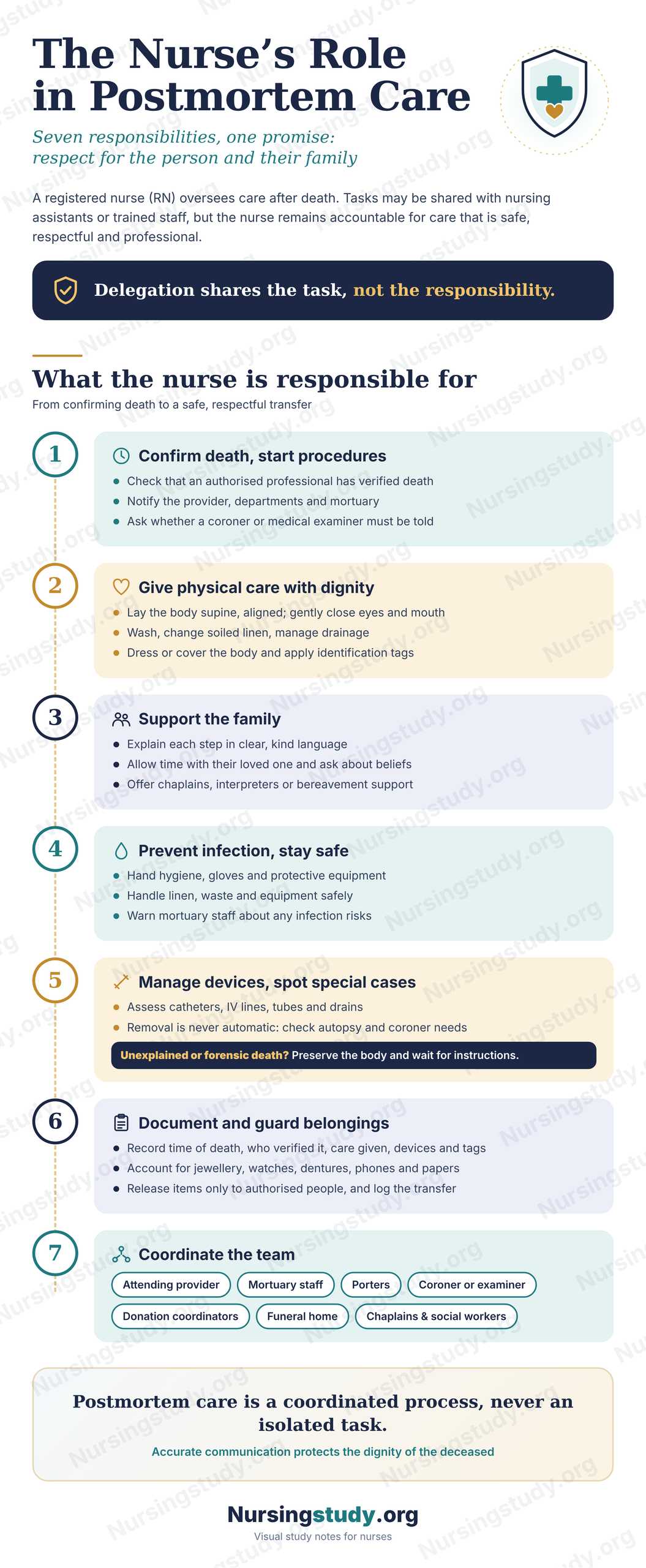
Dressing and Identifying the Deceased
Dressing and identifying the deceased are important final stages of the physical preparation process. Once the body has been appropriately positioned, cleaned, and assessed for wounds or drainage, the nurse prepares it for family viewing, transportation, or transfer to the morgue. This stage focuses on maintaining a dignified appearance, ensuring appropriate body covering, and preserving accurate identification throughout subsequent handling.
The clothing selected and the method of dressing depend on institutional policies, family preferences, cultural or religious practices, and the intended destination of the body. Some families may prefer that the deceased wear personal clothing, while others may accept a clean hospital gown or traditional burial garment. In certain facilities, the funeral home or mortuary personnel undertake the final dressing, particularly when additional preparation is required.
1. Preparing the deceased for dressing
Before dressing begins, the nurse should ensure that the body is clean, dry, and appropriately positioned. Any necessary wound dressings should be secured, and medical devices should have been managed according to the instructions received.
The nurse should also confirm that:
- There are no legal restrictions preventing further preparation.
- Any required identification checks have been completed.
- The family’s clothing or dressing preferences have been established.
- Appropriate clothing or coverings are available.
- Any medical devices or implants that must remain in place have been identified and documented.
- The body can be dressed without unnecessary movement or force.
For example, a family may provide a favorite outfit that the deceased regularly wore. The nurse should establish whether the facility permits the use of personal clothing before proceeding. If the clothing is unsuitable for the required transfer arrangements, the family should be informed and alternative arrangements discussed.
2. Dressing the body in appropriate clothing
Dressing the deceased helps maintain a familiar and respectful appearance. Depending on the circumstances, the nurse may place a clean hospital gown, personal clothing, or a culturally appropriate garment on the body.
When dressing is within the nurse’s responsibilities, the process generally involves:
- Selecting clean clothing that is appropriate for the deceased and the family’s preferences.
- Maintaining privacy by covering areas that are not being dressed.
- Gently positioning the arms and legs to facilitate clothing placement.
- Dressing the upper body without pulling or forcing the limbs.
- Dressing the lower body carefully while maintaining modesty.
- Ensuring that clothing is arranged neatly and does not interfere with medical dressings or identification labels.
If rigor mortis has developed, the nurse should avoid forcing the limbs through clothing or attempting to straighten stiff joints. Alternative arrangements may be necessary, and the mortuary or funeral home may complete the dressing.
3. Arranging the hair, face, and personal appearance
The appearance of the deceased can have a significant emotional impact on family members, particularly when they wish to view the body before transfer. Nurses should therefore make reasonable efforts to maintain a neat and familiar appearance without undertaking procedures beyond their training or authorization.
Appropriate measures may include:
- Gently combing or brushing the hair.
- Cleaning visible dirt or secretions from the face.
- Ensuring that the eyes and mouth are positioned as naturally as possible.
- Replacing dentures when appropriate and permitted.
- Arranging clothing and ensuring that the body is properly covered.
- Removing unnecessary clinical materials that are authorized for removal.
For example, a family may request that the deceased’s hair be arranged in the style they normally wore. The nurse can accommodate this request using a clean comb or hairbrush, provided it does not interfere with other requirements.
It is important to understand that nurses are not necessarily responsible for cosmetic restoration. Procedures such as extensive facial preparation, makeup application, and reconstructive work are generally undertaken by appropriately trained mortuary or funeral professionals.
4. Applying identification tags to the deceased
Accurate identification is one of the most important responsibilities during postmortem care. Identification errors can have serious consequences, including incorrect release of the body, administrative complications, and distress for relatives.
The nurse must therefore ensure that the deceased is correctly identified before the body leaves the healthcare facility.
Identification should be verified using the required patient information, which may include:
- Full legal name.
- Hospital or medical record number.
- Date of birth, where available.
- Relevant identification number.
- Other identifiers required by institutional policy.
Identification tags should be completed accurately and applied according to facility procedures. Depending on the system used, identification may involve a wrist or ankle tag and an additional label attached to the body covering or transfer bag.
The nurse should ensure that the identification information on the body corresponds with the medical records and accompanying documentation.
For example, if a deceased patient has the same name as another individual who was previously admitted to the facility, relying on the name alone could result in an identification error. Checking additional identifiers, such as the medical record number and date of birth, helps reduce this risk.
5. Applying identification to the body bag or transfer covering
When a body bag is required, the nurse must ensure that the identification information is also attached to the appropriate external covering. This helps maintain identification during transportation and prevents confusion when several deceased individuals are being transferred to the same morgue.
A body bag may be required when:
- There is significant leakage of bodily fluids.
- The deceased has an infection requiring additional containment precautions.
- Facility transportation procedures specify its use.
- The body requires additional protection during movement.
- A coroner or other authorized authority requires a particular method of handling.
A body bag is not necessarily required for every deceased person. The decision should be guided by infection-control assessment, the condition of the body, and institutional procedures.
The nurse should check that the bag is appropriate for the circumstances, securely closed when necessary, and correctly labeled. Any additional precautions or special handling instructions should be communicated to the receiving mortuary personnel.
6. Managing personal identification items and belongings
Personal identification items and belongings must be handled separately from the identification tags used to establish the identity of the deceased.
Items such as jewelry, watches, clothing, dentures, glasses, and mobile phones should be accounted for according to facility policy. The nurse should establish whether particular items are to remain with the deceased or be returned to an authorized family member.
For example, some families may request that a wedding ring remain with the deceased, while others may prefer to collect it. The nurse should document the arrangement and ensure that any removed valuables are properly secured.
Religious or cultural items, such as prayer beads, necklaces, or other ornaments, may also be important to the family. These should not be removed automatically without considering the deceased person’s preferences and the family’s instructions.
7. Performing final checks before viewing or transfer
Before the deceased is presented to family members or transferred to the morgue, the nurse should conduct a final assessment to ensure that all required preparation has been completed.
The final checks should include:
- Confirming that the body is appropriately positioned and covered.
- Ensuring that clothing is clean and arranged properly.
- Checking that wounds and leaking areas have suitable dressings.
- Confirming that all required medical devices have been managed appropriately.
- Verifying that identification tags are accurate and securely attached.
- Ensuring that personal belongings have been documented and secured.
- Confirming that any special infection-control or legal instructions are communicated.
- Checking that the relevant documentation is complete.
If the family wishes to view the deceased, the nurse should provide privacy and allow relatives appropriate time, where permitted. The nurse should also prepare them for any physical changes that may be visible, including skin discoloration, cooling, or stiffness.
Once these checks are complete, the deceased can be prepared for transfer according to the facility’s procedures.
Dressing and identifying the deceased are not merely administrative or cosmetic activities. They are important expressions of professional accountability and respect. Through careful preparation, accurate identification, and attention to personal preferences, nurses help ensure that the deceased is handled appropriately and that the family can spend time with their loved one in a respectful environment
Special Considerations in Post Mortem Care
Although the general principles of postmortem care apply to most deceased patients, some circumstances require additional precautions and adjustments. These include cases involving an autopsy, a coroner’s investigation, or organ and tissue donation, as well as situations in which cultural or religious beliefs influence how the body should be handled. In these circumstances, the nurse must balance institutional procedures and legal requirements with respect for the deceased person’s wishes and the needs of the family.
Post mortem care should never be treated as a routine task that is performed in exactly the same way for every deceased client. The nurse must review relevant instructions, communicate with the appropriate healthcare professionals, and determine whether any restrictions apply before cleaning, dressing, moving, or transferring the body. This is particularly important because certain actions, such as removing medical devices, washing the body, or altering its position, may interfere with an investigation, an organ donation process, or a family’s religious practices.
The central responsibility is to preserve the dignity of the deceased while ensuring that the body and any associated evidence, organs, or personal belongings are handled appropriately.
Autopsy, Coroner, and Organ Donation Cases
An autopsy, coroner’s investigation, and organ or tissue donation may significantly change the usual postmortem care procedure. Each situation has specific clinical, legal, and ethical requirements that determine what the nurse may do before the deceased is transferred to the morgue or another designated location.
1. Postmortem care when an autopsy is planned
An autopsy, also called a postmortem examination, is a systematic examination of a deceased person’s body to establish or clarify the cause of death, identify disease processes, assess injuries, or investigate other medical findings. It may be requested by the treating healthcare team, authorized by the appropriate legal authority, or arranged with the consent of the legally appropriate person, depending on the circumstances and applicable law.
There are two broad categories:
- Clinical or hospital autopsy: This is generally performed to investigate a medical condition, clarify the cause of death, evaluate treatment outcomes, or improve understanding of a disease. It may help determine whether the clinical diagnosis was accurate or reveal an unexpected condition.
- Forensic or medicolegal autopsy: This is conducted under the authority of a coroner, medical examiner, or other legally authorized official when the circumstances of death require investigation. Examples include suspected homicide, unexplained death, suspected poisoning, or death following certain accidents.
When an autopsy is planned, the nurse must establish whether the procedure has been authorized and whether any restrictions have been placed on routine postmortem care. The body may need to be preserved in its current condition so that the pathologist or forensic team can examine it without interference.
Important nursing responsibilities include:
- Confirming the autopsy instructions: The nurse should review the medical record and communicate with the responsible healthcare provider or relevant authority to establish whether an autopsy has been requested, authorized, or legally required.
- Avoiding unauthorized removal of medical devices: Catheters, intravenous lines, drains, endotracheal tubes, and other medical devices may need to remain in place for examination. The nurse should not remove them simply because the patient has died.
- Preserving wounds and injuries: Existing dressings, visible injuries, and other relevant findings should be handled according to instructions. The nurse should avoid cleaning, covering, or altering an area if doing so could interfere with evidence collection or examination.
- Maintaining identification: Identification tags and other required identifiers must remain attached to the body according to facility policy. Accurate identification is essential because the deceased may pass through several departments before the examination is completed.
- Documenting relevant observations: The nurse should record the care given, the condition of the body, the presence of medical devices, and any instructions received. Unusual findings, such as unexplained bruising, wounds, or drainage, should be documented objectively and reported through the appropriate channels.
For example, a patient who dies following an unexplained deterioration may be scheduled for a hospital autopsy. If the healthcare team requests that an intravenous line and urinary catheter remain in place, the nurse should not remove them during routine preparation. The body should be handled according to the instructions provided, with the relevant devices and identification maintained until the examination team takes responsibility.
2. Postmortem care in coroner or medicolegal cases
A coroner or other legally authorized official may become involved when a death is sudden, unexpected, unexplained, suspicious, or otherwise reportable under local law. The purpose of the investigation is to establish the circumstances and cause of death and determine whether further examination is necessary.
In such cases, the nurse’s responsibilities extend beyond routine preparation of the body. Preserving potential evidence and maintaining an accurate record of events are essential.
The nurse should:
- Follow instructions from the appropriate authority: The healthcare provider and designated legal authority should clarify which aspects of postmortem care are permitted. The nurse must not assume that routine cleaning and preparation can proceed.
- Avoid unnecessary manipulation of the body: Moving the deceased, changing clothing, washing the skin, removing dressings, or altering the position of the limbs may affect evidence. Any necessary movement should be authorized and documented.
- Leave medical devices in place when instructed: Tubes, catheters, intravenous access devices, and other equipment may contain information relevant to the investigation. Their removal can compromise the examination.
- Protect potential physical evidence: Clothing, bedding, personal belongings, and objects associated with the death may need to be preserved. They should not be discarded, washed, or handed over without following the required procedure.
- Maintain confidentiality and security: Information about the death should only be shared with authorized individuals. The nurse should also ensure that access to the deceased and relevant belongings is controlled.
- Document observations objectively: Records should distinguish between what the nurse directly observed, what another person reported, and what actions were performed. For example, the nurse may document the location and appearance of a visible injury without speculating about how it occurred.
A practical example is a patient who dies after being admitted with injuries from a road traffic accident. If the death requires a medicolegal investigation, the nurse should not automatically remove the patient’s clothing, clean the body, or discard dressings. The relevant authority must determine how the body and associated materials should be preserved and transferred.
It is also important to recognize that legal procedures differ between jurisdictions. A coroner’s role, the circumstances requiring notification, and the authority to release a body may vary. Nurses must therefore follow applicable local law and institutional policy rather than relying on assumptions about what is permitted.
3. Postmortem care in organ and tissue donation cases
Organ and tissue donation is another important consideration in postmortem care. Donation may allow organs or tissues to be used for transplantation, helping patients with severe or life-threatening conditions. Depending on the circumstances, donation may involve organs such as the kidneys, liver, heart, lungs, and pancreas, or tissues such as corneas, skin, bone, and heart valves.
The donation process is time-sensitive and requires coordination among healthcare professionals, donation specialists, and the relevant transplant organization. Consequently, postmortem care must be planned around the donation process rather than carried out as an ordinary sequence of tasks.
The nurse should understand the distinction between organ donation after death and tissue donation, as the timing, eligibility requirements, and procedures may differ. In some cases, the potential donor is assessed before death under strict clinical and legal criteria. In other cases, tissue donation may be considered after death. The nurse should not independently determine eligibility or promise that donation will proceed.
Key nursing responsibilities include:
- Recognizing and communicating potential donation opportunities: If donation may be appropriate, the nurse should promptly notify the designated donation coordinator or follow the facility’s referral process. The nurse should not make assumptions about eligibility based on the patient’s age, diagnosis, or medical history.
- Respecting the patient’s documented wishes: The healthcare team should review any recorded donation decision and follow the applicable consent or authorization process. If the patient’s wishes are unknown, the appropriate legal process for discussing donation with the family should be followed.
- Coordinating with the donation team: The nurse should communicate with the transplant or donation coordinator to establish which procedures may proceed and which must be delayed. This may include instructions about medical devices, laboratory samples, documentation, and transfer arrangements.
- Maintaining the body appropriately: The nurse should follow instructions regarding positioning, temperature management, hygiene, and the timing of routine postmortem care. Certain clinical interventions and monitoring may need to continue during the donation process, as directed by the responsible team.
- Avoiding unauthorized removal of devices: Medical devices may need to remain in place until the donation team has completed its assessment or retrieval process. The nurse should not remove lines, tubes, or other equipment without authorization.
- Providing emotional support to relatives: Donation discussions can occur during an intensely distressing period. Nurses should communicate sensitively, allow family members time to ask questions, and refer detailed questions about eligibility, consent, and donation procedures to the designated specialists.
For example, a patient who has sustained a severe brain injury may be assessed for organ donation after the appropriate determination of death. The nurse should follow the established referral and clinical protocols, maintain the required care until the donation team provides further instructions, and avoid beginning routine postmortem preparation prematurely.
Following organ or tissue retrieval, the body is handled respectfully and prepared for transfer according to the donation team’s instructions and the family’s needs. Donation does not remove the family’s right to respectful treatment or mean that the deceased should receive less attention during postmortem care. Where possible, the body can still be prepared for viewing and funeral arrangements in accordance with clinical requirements and the family’s wishes.
4. Communication and coordination in special cases
In autopsy, coroner, and organ donation cases, clear communication is essential because several professionals may be involved in decisions about the deceased. These may include the registered nurse (RN), attending healthcare provider, pathologist, forensic personnel, coroner, donation coordinator, mortuary staff, and funeral service representatives.
Before proceeding with routine care, the nurse should establish:
- Whether the death has been formally confirmed and documented by an authorized professional.
- Whether an autopsy or medicolegal investigation is planned.
- Whether the coroner or another legal authority has issued instructions.
- Whether organ or tissue donation is being considered or has been authorized.
- Which medical devices, dressings, clothing, and personal belongings must remain in place.
- Whether there are infection-control precautions or special handling requirements.
- Who is responsible for authorizing the release and transfer of the body.
These checks help prevent avoidable errors, protect evidence, support donation procedures, and ensure that the deceased is treated with dignity. They also reinforce an important principle of postmortem care: the nurse should never remove devices, alter the body, or proceed with routine preparation when doing so could conflict with a legal, clinical, or donation-related instruction.
Cultural and Religious Practices
Cultural and religious beliefs can influence how a person’s body should be treated after death, who may participate in postmortem care, how soon the body should be transferred, and which rituals should be performed before burial or cremation. For many families, these practices are an important part of honoring the deceased, expressing love, and beginning the grieving process.
A nurse must therefore approach postmortem care with cultural sensitivity, respect, and a willingness to accommodate reasonable requests. The same religious affiliation does not necessarily mean that every individual follows identical practices. Beliefs may vary according to family traditions, personal convictions, denomination, community, and level of religious observance. The nurse should avoid making assumptions based solely on a person’s name, appearance, ethnicity, or stated religion.
1. Assessing and respecting the family’s cultural and religious preferences
Whenever possible, the nurse should establish the patient’s cultural and religious preferences during admission or while providing end-of-life care. This information helps the healthcare team plan appropriate care and avoid actions that may conflict with the patient’s wishes.
After death, the nurse should communicate with the family or their designated representative to understand any specific requirements concerning the body. Questions may include:
- Are there religious or cultural practices that should be observed immediately after death?
- Would the family like to pray, sing, read religious texts, or invite a spiritual leader to the bedside?
- Are there restrictions on who may touch, wash, or dress the body?
- Does the family wish to participate in cleaning or preparing the deceased?
- Are there particular requirements concerning the position, covering, or handling of the body?
- Are religious objects, jewelry, or other personal belongings required to remain with the deceased?
- Is there a need for an expedited release of the body to facilitate funeral or burial arrangements?
The nurse should listen without judgment and explain which requests can be accommodated. Where a request cannot be followed because of legal requirements, infection-control precautions, or institutional policy, the nurse should explain the reason sensitively and explore an acceptable alternative.
For example, a family may request that the body remain in the room for prayers before it is transferred to the morgue. If there are no legal, clinical, or operational restrictions, the nurse may help arrange a private space and allow reasonable time for the family to complete the ritual.
2. Religious practices that may influence postmortem care
Different religions and cultural communities have distinctive beliefs about death, the condition of the body, burial, cremation, and the treatment of the deceased. The following examples illustrate practices that nurses may encounter. They are general considerations rather than universal rules; individual preferences should always be confirmed with the family.
– Islam: In many Muslim communities, the body is treated with particular modesty and respect, and burial is generally arranged as soon as reasonably possible. Families may request that the deceased remain covered, that the body be positioned to face the Qibla (the direction of Mecca), and that washing and preparation be performed by Muslims of the same sex as the deceased. The ritual washing, known as Ghusl, is usually undertaken by designated members of the community or family according to religious practice. Some families may also request that prayers or recitation from the Qur’an take place before transfer. Nurses should ask whether the family wishes to perform or arrange these practices rather than automatically undertaking routine washing and dressing. Views on autopsy and organ donation vary, although some families may have religious concerns about these procedures.
NCBI+2
– Christianity: Christian beliefs and practices vary considerably across denominations and individual families. Some families may request prayers, scripture readings, hymns, or the presence of a priest, pastor, chaplain, or other religious leader. Catholic families may request a priest or other appropriate spiritual support, while some Orthodox and Protestant families may have particular prayers or rites they wish to observe. A crucifix, rosary, Bible, or other religious object may be placed with or near the deceased if permitted. Many Christian traditions accept either burial or cremation, although individual preferences differ. Nurses should ask whether the family would like religious objects to remain with the body and ensure that these items are documented and handled appropriately.
NCBI+2
– Judaism: Jewish traditions generally emphasize prompt burial and respectful handling of the body. Some families may request that the deceased be covered with a plain sheet, that unnecessary handling be avoided, and that a family member or religious representative remain near the body. A rabbi or representative of the Jewish burial society may be contacted to guide the family through the required preparations. Some Jewish communities have religious objections to autopsy, embalming, or unnecessary interference with the body, although views and circumstances vary. When an autopsy is legally required, the nurse should explain that the decision may rest with the relevant legal authority and help the family access appropriate religious support.
– Hinduism: Hindu beliefs commonly include reincarnation and the importance of rituals surrounding the transition from life to death. Families may request prayers, the presence of a priest, or the opportunity to perform specific rites. In some traditions, relatives may wish to wash the deceased, often with same-sex family members undertaking the preparation. Religious threads, jewelry, or other sacred objects may need to remain with the body. Cremation is common in many Hindu communities, and families may wish to arrange it promptly. Nurses should clarify which rituals the family wants to perform and whether they need assistance arranging a suitable space or contacting a religious representative.
– Buddhism: Some Buddhist traditions place importance on maintaining a peaceful environment around the time of death and avoiding unnecessary disturbance of the body immediately afterward. Families may request prayers, chanting, meditation, or the presence of a Buddhist monk or spiritual leader. Some may prefer that the body remain undisturbed for a period before routine preparation or transfer. Practices concerning organ donation and postmortem examination also vary. The nurse should ask about the family’s preferences and, where feasible, avoid unnecessary movement or handling until the requested rituals have been completed.
These examples demonstrate why nurses should not assume that a particular procedure is acceptable to every family within a religious group. The most reliable approach is to ask the family about the deceased person’s wishes and involve an appropriate spiritual or cultural representative when additional guidance is needed.
3. Respecting family participation in postmortem care
Some families prefer healthcare professionals to complete all postmortem care, while others wish to participate in preparing the deceased. Family participation may involve washing the body, combing the hair, arranging clothing, placing religious objects, saying prayers, or helping cover the body with a preferred cloth.
When appropriate, nurses should support these activities by:
- Explaining the usual postmortem care procedure and identifying which activities family members may safely participate in.
- Providing privacy and allowing sufficient time for family members to say goodbye.
- Offering clean towels, water, clothing, or other supplies when relatives wish to assist with washing or dressing.
- Asking whether family members prefer to perform certain activities themselves or have a healthcare professional undertake them.
- Respecting requests about the gender of the person who handles or washes the deceased, where staffing and institutional arrangements allow.
- Ensuring that religious jewelry, clothing, and sacred objects are not removed without permission.
- Maintaining infection-control precautions while allowing reasonable participation.
For instance, a family may wish to wash and dress a deceased relative according to a religious tradition. The nurse can explain the facility’s safety requirements, provide a suitable private environment, and coordinate with the family or spiritual representative. If the body is subject to a coroner’s investigation or an autopsy, the nurse must first establish whether such preparation is permitted.
Family participation should never be forced. Some relatives may feel unable to touch the body because of shock, grief, fear, or personal beliefs. The nurse should provide emotional support and allow them to decide how they wish to be involved.
4. Balancing cultural preferences with legal and infection-control requirements
Respect for cultural and religious practices is an essential part of postmortem care, but it must be balanced with applicable legal requirements, occupational safety, and infection prevention and control. Certain situations may limit how the body can be handled or how long it can remain in a particular location.
For example, a family may request immediate washing and dressing, but the death may require a forensic examination. In this situation, the nurse must preserve the body and follow instructions from the appropriate authority before proceeding. Similarly, where a known or suspected infectious risk requires additional precautions, the nurse must follow the facility’s infection-control procedures while discussing possible alternatives with the family.
The nurse should consider the following:
- Legal restrictions: A coroner’s or other authorized investigation may restrict movement, washing, dressing, removal of medical devices, or release of the deceased.
- Infection-control precautions: Appropriate personal protective equipment (PPE), hand hygiene, and safe handling of bodily fluids must be maintained. Certain infections may require specialized precautions or restrictions on washing and preparation.
- Facility procedures: Hospital policies may determine where rituals can take place, how long the body may remain in a ward, and how family participation is organized.
- Time-sensitive arrangements: Some religious traditions place importance on prompt burial. The nurse should communicate these needs to the responsible healthcare provider and mortuary staff so that avoidable delays can be minimized.
- Preservation of personal and religious items: Sacred objects, clothing, jewelry, and other belongings should be handled according to the patient’s wishes and documented procedures.
Kenya’s Ministry of Health clinical guidelines emphasize that human remains should be handled with respect and dignity while taking account of the deceased person’s sociocultural and religious practices, wishes, and those of the family. They also require infection prevention and control measures to be maintained during handling.
5. Providing culturally sensitive communication and emotional support
The period immediately following death can be emotionally overwhelming. Family members may be distressed, confused, or uncertain about what needs to happen next. Cultural and religious expectations may also influence how they express grief. Some families may cry openly, while others may prefer quiet reflection, prayer, or time alone. Nurses should avoid interpreting these differences as a lack of grief or concern.
Effective communication involves:
- Using compassionate, clear, and respectful language when explaining what happens after death.
- Giving relatives time to process the news and ask questions about postmortem care.
- Avoiding unnecessary interruptions during prayers, rituals, or family moments.
- Asking permission before touching or moving the deceased when family members are present and circumstances permit.
- Arranging access to chaplaincy services, spiritual leaders, or community representatives when requested.
- Explaining any restrictions that affect the family’s wishes without dismissing their beliefs.
- Maintaining privacy and limiting conversations about the deceased to appropriate individuals.
For example, relatives may become distressed when informed that a body must be transferred to the morgue before a religious ceremony can take place. The nurse should explain the reason for the transfer, clarify whether the family can accompany the body or remain nearby, and help coordinate with mortuary personnel to facilitate the requested arrangements where possible.
Culturally sensitive care also requires the nurse to recognize personal limitations. When unsure about a religious practice, it is better to ask respectfully or seek guidance from a qualified spiritual representative than to rely on stereotypes or make assumptions.
In postmortem care, respecting cultural and religious practices is not simply an additional courtesy; it is part of providing compassionate, person-centered nursing care. By recognizing individual preferences, involving families appropriately, and working within legal and clinical requirements, nurses help preserve the dignity of the deceased and support relatives during a difficult period of loss.
Documentation and Transfer of the Deceased
Documentation and transfer are essential final stages of postmortem care in nursing. After the body has been cleaned, positioned, dressed, and identified, the nurse must ensure that all care provided is accurately recorded and that the deceased is safely transferred to the designated morgue or mortuary. These responsibilities help maintain continuity, accountability, traceability, and respect for the deceased.
Accurate documentation is particularly important because several individuals and departments may become involved after death, including the attending healthcare provider, registered nurse (RN), nursing assistant, mortuary personnel, funeral home representatives, and, where applicable, a coroner or organ donation team. A clear record helps establish what happened, which procedures were performed, which personal belongings were handled, and who received the body.
The nurse must also ensure that the deceased is correctly identified throughout the transfer process. Errors involving identification tags, personal belongings, or release documentation can cause significant distress to families and may create legal and professional consequences for the healthcare facility. Therefore, postmortem documentation and transfer should be approached with the same attention to accuracy, dignity, and safety as other aspects of patient care.
Recording Care and Managing Personal Belongings
Documentation following death provides an official account of the events surrounding the patient’s death and the postmortem care performed. It records relevant observations, actions taken, instructions received, and the disposition of personal belongings. This information supports communication among healthcare professionals, protects the rights and interests of the deceased and family, and provides an auditable record if questions arise later.
Postmortem documentation should be factual, objective, complete, and consistent with institutional policy. The nurse should record what was observed and done rather than making assumptions or including personal opinions.
1. Documenting confirmation and notification of death
The medical record should clearly establish that death occurred and that the appropriate healthcare professional completed the required confirmation and documentation. Nurses must follow the applicable law and facility policy concerning who is authorized to verify or certify death. These responsibilities are not interchangeable: confirming or verifying death may be distinct from formally certifying the cause of death.
Relevant information may include:
- The documented date and time of death, as recorded by the authorized healthcare professional.
- The name and designation of the professional who confirmed or verified death, where applicable.
- The name of the healthcare provider notified and the time notification occurred.
- Any instructions received from the provider concerning postmortem care, autopsy, coroner involvement, or transfer.
- Notifications made to the next of kin or designated family representative, in accordance with facility procedures.
- Any relevant circumstances surrounding the death that must be included in the clinical record.
The nurse should not independently estimate or change the time of death. If the time recorded in different documents appears inconsistent, the discrepancy should be clarified through the appropriate clinical process rather than corrected through assumption.
For example, if a nurse finds that a patient’s death has been confirmed by the authorized clinician at a documented time, the nurse should record the relevant notification and subsequent care using the established time in the medical record. The nurse should not substitute the time at which postmortem care began for the documented time of death.
2. Recording the postmortem care provided
The nurse should document the care given after death in sufficient detail to show how the body was prepared and whether any special instructions were followed. The record should reflect the actual procedures performed rather than simply stating that postmortem care was completed.
Depending on the circumstances and facility requirements, documentation may include:
- The date and time postmortem care commenced and was completed.
- The names or designations of the healthcare personnel involved.
- The position in which the deceased was placed, such as the supine position.
- The hygiene and grooming care performed, including cleaning the body, arranging the hair, and preparing the face.
- Whether the eyes and mouth were gently closed and whether dentures or other personal items were replaced or retained.
- The clothing or hospital gown used to dress the deceased.
- The condition of the skin, visible wounds, dressings, and any drainage or leakage observed.
- The medical devices, catheters, tubes, or lines that were removed, retained, or left in place according to instructions.
- The identification tags applied and the method used to verify the deceased person’s identity.
- Any infection-control precautions or special handling procedures followed.
- Any restrictions related to an autopsy, coroner’s investigation, or organ and tissue donation.
- The time the body was transferred and the person or department that accepted responsibility.
Documentation should also include any care that could not be completed and the reason for the omission. For example, if a coroner’s instruction required a catheter and intravenous line to remain in place, the nurse should document that these devices were retained and why routine removal was not performed.
Similarly, if the body could not be washed or dressed because of a forensic investigation or a specific infection-control requirement, this should be recorded clearly. Such documentation explains why the usual postmortem procedure was modified.
3. Documenting the condition of the body
An accurate description of the deceased’s condition helps establish the body’s state before transfer and provides information for the professionals who receive it. The nurse should record relevant findings objectively and avoid conclusions that fall outside the nursing role.
For example, appropriate documentation may describe:
- The presence and location of visible wounds, bruising, or skin abnormalities.
- Any dressings or medical devices remaining in place.
- The presence of drainage or leakage and the measures taken to manage it.
- Whether identification tags were attached and checked.
- Any unusual finding reported to the healthcare provider or relevant authority.
The nurse should avoid vague statements such as “body was normal” or “patient looked fine.” Instead, documentation should identify relevant observations. For instance, a record may state that an absorbent dressing was placed over a wound on the left lower leg and that the dressing remained secure at the time of transfer.
When a death is subject to a coroner’s investigation, the nurse should be especially careful not to alter or interpret findings. Observations should be recorded as they were seen, with the appropriate authority notified of relevant concerns. The nurse should not attempt to determine the cause of an injury or speculate about its relationship to the death.
4. Managing and documenting personal belongings
Personal belongings require careful handling after death because they may have considerable financial, practical, cultural, religious, or sentimental value. Items such as clothing, jewelry, watches, mobile phones, wallets, identification documents, dentures, hearing aids, glasses, and religious objects should be accounted for according to the patient’s wishes and facility policy.
The nurse should establish whether belongings are to remain with the deceased, be released to the family, or be retained by the facility or relevant authority. This decision may depend on the circumstances of death, the type of property, legal requirements, and any documented instructions.
A systematic approach includes:
- Identify the belongings: Examine the items associated with the deceased and determine which belong to the patient. Items should not be assumed to belong to the patient merely because they are found near the bed.
- Create an inventory: List the belongings in sufficient detail to distinguish one item from another. For example, record “one gold-colored wristwatch” rather than simply writing “jewelry.”
- Secure valuable items: Money, jewelry, electronic devices, and important documents should be handled according to the facility’s property-management procedures. They should not be left unattended or placed in an unsecured location.
- Confirm the recipient: Where belongings are to be released, establish the identity and authority of the person receiving them. Follow the institution’s procedures for next-of-kin or representative verification.
- Obtain acknowledgment: Record the name of the person receiving the items, the date and time of handover, and any required signature or receipt.
- Document retained items: If belongings remain with the body or are transferred to the morgue, record their location and the reason they were retained.
For example, if a deceased client has a wristwatch, a mobile phone, and a wallet containing identification documents, the nurse should follow the facility’s inventory process. If the items are released to an authorized family representative, the record should identify the recipient and confirm the handover. If the wallet must remain with the deceased because of a legal investigation, it should be secured and handled according to the relevant instructions.
5. Handling valuables, religious objects, and disputed belongings
Some personal belongings may have special significance beyond their monetary value. A wedding ring, religious necklace, prayer beads, sacred text, or family photograph may be important to the deceased and relatives. The nurse should not remove or discard such items without considering the patient’s wishes and the applicable instructions.
Where possible, the family should be consulted about whether religious objects or jewelry should remain with the deceased or be returned to relatives. However, if an item may constitute evidence in a coroner’s investigation, it must not be removed or released without authorization.
Disagreements may also arise among relatives concerning who should receive particular belongings. The nurse should avoid taking sides or deciding ownership independently. Instead, the matter should be referred to the appropriate facility authority, such as the nurse manager, patient affairs department, or designated property officer.
If an item is missing, damaged, or cannot be accounted for, the nurse should report the matter promptly and document the steps taken to investigate it. Accurate records help protect both the family and healthcare professionals from misunderstandings.
6. Maintaining confidentiality and professional accountability
Postmortem documentation remains part of the patient’s confidential healthcare record. The nurse should ensure that information is entered into the correct record and accessed only by individuals with an appropriate professional or legal reason.
Information about the deceased should not be discussed casually with other patients, visitors, or unauthorized individuals. Similarly, photographs, videos, and personal details should not be shared through personal devices or social media.
The nurse should use the approved documentation system, complete required forms, and follow institutional procedures for correcting errors. Entries should be made promptly and should identify the person completing the documentation. If an error is discovered, it should be corrected using the approved process rather than deleting or concealing the original entry.
These practices promote accountability and ensure that the final stages of patient care are properly recorded.
Preparing and Transferring the Body to the Morgue
After postmortem care and documentation have been completed, the deceased is prepared for transfer to the hospital morgue or another designated mortuary facility. This stage requires careful coordination to ensure that the body remains correctly identified, is handled safely, and is transferred to the appropriate destination.
The morgue is a designated facility or area where deceased persons are received and stored temporarily, usually under controlled conditions, while awaiting release, autopsy, funeral arrangements, or other authorized procedures. The body may later be transferred to a funeral home or another facility according to the family’s arrangements and applicable regulations.
The nurse is responsible for ensuring that the deceased is ready for transfer, that all required documentation accompanies the body, and that responsibility is formally handed over to the receiving personnel.
1. Completing the final checks before transfer
Before the body leaves the clinical area, the nurse should conduct a final assessment to confirm that all required postmortem procedures have been completed and that the deceased is ready for safe transportation.
The final checks generally include:
- Confirming identity: Check the identification band and any additional identification tags against the patient’s medical record and transfer documentation. Follow the facility’s required identification-verification process.
- Checking the body’s preparation: Ensure the body is clean, appropriately dressed or covered, and positioned respectfully. If routine preparation was restricted because of an autopsy, coroner’s investigation, or organ donation, confirm that the relevant instructions have been followed.
- Checking medical devices: Verify that all catheters, intravenous lines, drains, dressings, and other devices have either been removed or retained according to authorized instructions. Devices such as pacemakers and other implanted equipment may require specific attention.
- Managing body fluids: Ensure that any leakage is contained using suitable absorbent materials and that the body is prepared according to infection-control requirements.
- Checking personal belongings: Confirm that all belongings have been accounted for, documented, and either released to an authorized recipient or secured appropriately.
- Checking documentation: Ensure that the required clinical records, identification details, transfer forms, and other relevant documents are complete.
- Maintaining privacy: Cover the deceased appropriately and ensure that the body is not unnecessarily exposed during movement through the facility.
These checks reduce the risk of identification errors, loss of belongings, and avoidable complications during transportation.
2. Maintaining identification during transportation
Correct identification is one of the most important safety requirements when transferring a deceased person. The identification process must allow mortuary staff to establish that the body received is the same individual documented in the medical record.
The nurse should follow the facility’s identification policy, which may require an identification band and additional tags attached to the body. Some institutions also use identification labels on the body bag or transfer documentation.
The information may include:
- The deceased person’s full legal name, where known.
- Hospital or medical record number.
- Date of birth or age.
- Date and time of death.
- Ward or department from which the body is being transferred.
- Other identifiers required by the institution.
The original identification band should not be removed unless the facility’s policy specifically provides otherwise. Additional identification tags should be applied in the designated locations and checked before the body leaves the ward.
The nurse should also ensure that the information on the identification band matches the accompanying documents. If there is a discrepancy, the transfer should be paused until the issue is resolved through the appropriate procedure.
For example, if the identification band shows a different medical record number from the mortuary transfer form, the nurse should not assume that the difference is a typing error. The information must be verified using the patient’s official records and corrected by an authorized person.
This process is particularly important when two deceased patients have similar names or when the body has been transferred between departments. In cases involving unidentified persons, the relevant authority must provide the required identification instructions and documentation.
3. Applying infection prevention and control measures
Although death has occurred, the body may still present an infection risk. Some infectious organisms can remain viable in human remains, and healthcare workers may be exposed through direct contact with blood, bodily fluids, respiratory secretions, or contaminated equipment.
For this reason, standard infection prevention and control precautions remain necessary during preparation and transportation.
The nurse and other personnel involved should:
- Perform hand hygiene before and after handling the body.
- Wear appropriate personal protective equipment (PPE), including gloves and protective clothing, based on the anticipated exposure.
- Use eye and face protection when splashing or spraying of bodily fluids is possible.
- Cover open wounds and leaking areas with appropriate dressings.
- Use absorbent materials to manage fluid leakage.
- Ensure that contaminated linen and disposable supplies are handled and discarded according to facility policy.
- Clean and disinfect reusable equipment, including the trolley or stretcher, after transfer.
- Communicate any known or suspected infectious risks to mortuary personnel before the body arrives.
A body bag may be required when there is significant fluid leakage, a specific infection-control concern, or an institutional requirement. It should not automatically be assumed that every deceased person must be placed in one. Where a body bag is used, identification must remain secure and visible according to the facility’s procedure.
For example, if a deceased patient has significant drainage from a wound, the nurse should ensure that the area is covered with an appropriate absorbent dressing and that leakage is contained before transfer. If the patient had a known infection requiring additional precautions, the mortuary should be informed so that staff can prepare the appropriate handling arrangements.
Kenya’s National Infection Prevention and Control Guidelines emphasize the use of standard precautions when handling human remains at every stage, including transportation, storage, and mortuary preparation.
4. Preparing the body for transportation
The deceased should be moved using an appropriate stretcher, trolley, or designated body transport vehicle. The equipment should be suitable for the person’s condition and allow safe handling without unnecessary movement or exposure.
Before transportation, the nurse should ensure that:
- The body is positioned securely and comfortably on the transfer trolley.
- The head and limbs are supported as necessary.
- The body is covered with a clean sheet or other appropriate covering.
- Any required identification tags remain attached and legible.
- The body bag, if required, is correctly secured.
- Medical devices and dressings are handled according to the relevant instructions.
- All required documents are available and accompany the transfer through the approved process.
Safe moving and handling practices are important because transferring a deceased person may involve more than one healthcare worker. Staff should use suitable equipment and follow the facility’s manual-handling procedures to reduce the risk of injury.
The body should also be moved discreetly. Where possible, transportation routes should minimize unnecessary exposure to other patients, visitors, and members of the public. The nurse should maintain a respectful approach throughout the process, avoiding loud conversations, careless handling, or unnecessary interruptions.
In some facilities, a designated mortuary attendant or trained member of the transport team collects the body from the ward. In others, nursing personnel may accompany or coordinate the transfer. The specific arrangement depends on institutional policy and available resources.
5. Completing the transfer documentation and handover
The transfer of the deceased is not complete merely because the body has arrived at the morgue. There must be a formal handover that establishes who received the body, when it was received, and whether the identification and accompanying documentation were correct.
The nurse should ensure that the receiving mortuary personnel verify the deceased’s identity against the transfer documents and acknowledge receipt according to facility policy.
Information communicated during handover may include:
- The deceased person’s identifying details.
- The date and documented time of death.
- The ward or department from which the body originated.
- The completion of postmortem care or any procedures that were intentionally not performed.
- The presence of medical devices, dressings, prostheses, or implanted equipment.
- Any known or suspected infection-control risks.
- Whether an autopsy, coroner’s investigation, or organ and tissue donation process is involved.
- The location and status of personal belongings.
- Any special cultural, religious, or family-related instructions that remain relevant.
Both the transferring and receiving personnel should complete the required records. The nurse should document the time of departure and arrival where required, the name or designation of the person accepting the body, and any relevant concerns identified during handover.
For example, if a patient is transferred with a pacemaker and an intravenous line that must remain in place for an examination, the nurse should communicate this information clearly to the mortuary staff. The information should also appear in the transfer documentation so that the receiving team can handle the body appropriately.
This process establishes continuity and accountability. It also reduces the likelihood of confusion when the deceased is later released to a funeral home or transferred for an autopsy.
6. Admission and storage in the morgue
Once the deceased arrives, mortuary personnel complete the admission process and confirm that the body has the required identification and supporting documents. The body is then assigned a mortuary admission number or another tracking identifier according to the institution’s system.
The admission process may involve:
- Checking the identification tags against the transfer documents.
- Recording the deceased person’s identifying details.
- Recording the date and time the body was received.
- Documenting the name and contact details of the next of kin where required.
- Recording the location of personal belongings and other accompanying property.
- Noting any medical devices, dressings, or special handling instructions.
- Recording whether the death is associated with a coroner’s investigation or an autopsy.
- Assigning an appropriate storage location.
The mortuary must have adequate capacity to store the body safely without compromising any examination or investigation that may be required. Refrigerated storage helps slow decomposition and preserve the body while funeral or examination arrangements are made.
In Kenya, the Ministry of Health’s clinical guidelines specify refrigerated storage at approximately 2–6°C. They also address documentation, identification, and the recording and release of personal effects. These requirements illustrate the importance of a coordinated process between the healthcare facility and the receiving mortuary.
The nurse should not assume that the body has been formally admitted simply because it has been delivered to the mortuary. The receiving personnel must complete the appropriate admission and acknowledgment procedures.
7. Special considerations during transfer
Certain circumstances require additional coordination before the deceased can be transported.
- Coroner or police cases: The body may need to remain undisturbed until the appropriate authority authorizes its movement. The nurse should follow instructions concerning clothing, medical devices, wounds, personal belongings, and other potential evidence. In Kenya, the National Coroners Service Act provides for the preservation and movement of bodies under the direction of a coroner or police officer in relevant cases.
- Autopsy cases: The receiving mortuary or pathology department should be informed that an examination is planned. Any instructions concerning retained devices, specimens, dressings, or the condition of the body must be communicated clearly.
- Organ and tissue donation: Transfer arrangements should be coordinated with the donation team. Routine postmortem care should not interfere with the donation process, and the body should be released or moved only when the appropriate team has authorized the next step.
- Infectious disease concerns: The mortuary must receive advance notification of relevant high-risk infections so that appropriate precautions and storage arrangements can be made.
- Unidentified deceased persons: Additional legal and identification procedures may apply. The nurse should not independently assign an identity or release the body to someone claiming to be a relative without the required verification.
- Urgent cultural or religious arrangements: If the family requests prompt transfer because of burial requirements, the nurse should communicate this to the responsible provider and mortuary team. Reasonable arrangements should be facilitated without compromising legal requirements or safety.
For example, when a deceased patient is subject to a police investigation, the nurse may be required to delay routine transfer until the police or coroner provides instructions. In contrast, where there are no legal restrictions and the family has requested prompt burial arrangements, the healthcare team should coordinate the transfer efficiently to avoid unnecessary delays.
8. Maintaining dignity throughout the transfer process
The deceased must be treated with dignity not only during cleaning and dressing but also while being moved, stored, and handed over. The fact that the patient can no longer communicate does not reduce the professional responsibility to provide respectful care.
Nurses should therefore:
- Keep the body appropriately covered during transportation.
- Avoid unnecessary exposure in corridors or public areas.
- Use respectful language when discussing the deceased.
- Handle the body gently and avoid rough or hurried movements.
- Protect the deceased person’s privacy and confidential information.
- Ensure that religious or cultural items are handled according to documented wishes.
- Confirm that the body reaches the correct destination and is accepted by authorized personnel.
The family may experience additional distress if they witness careless handling or discover that belongings have been misplaced. A respectful transfer can therefore contribute to a more supportive bereavement experience.
The overall goal is to ensure that the deceased moves from the clinical area to the morgue through a secure, documented, and compassionate process. Accurate records, reliable identification, proper infection-control measures, and clear communication allow the healthcare team to fulfill its professional responsibilities while protecting the dignity of the person who has died.
Professional Responsibilities of Nurses
Professional responsibilities remain central to postmortem care in nursing, even after a patient’s death. Although active treatment and routine patient care have ended, the nurse continues to have important duties toward the deceased, the family, and the healthcare team. These responsibilities include protecting the dignity of the deceased, respecting personal and cultural preferences, maintaining confidentiality, following ethical and legal requirements, and providing compassionate support to grieving relatives.
Postmortem care can be emotionally demanding because nurses may have developed a close relationship with the patient and family during hospitalization, end-of-life care, or a prolonged illness. They may also be required to support relatives who are experiencing shock, sadness, anger, or uncertainty while completing practical responsibilities such as documentation, preparation of the body, and transfer to the morgue.
A professional approach requires nurses to combine clinical competence with empathy, sound judgment, and respect. The quality of care provided after death can influence how families remember the healthcare experience and how they begin the grieving process.
Maintaining Dignity and Compassion
Maintaining dignity is one of the most important responsibilities of a nurse during postmortem care. A person who has died should continue to be treated with respect, regardless of age, diagnosis, socioeconomic background, personal history, or circumstances surrounding death. The nurse must recognize that the deceased was an individual with personal values, relationships, beliefs, and preferences that should be respected even after life has ended.
Compassionate postmortem care involves more than completing physical procedures. It includes protecting the body from unnecessary exposure, handling it gently, respecting cultural and religious practices, safeguarding personal belongings, and communicating sensitively with relatives. Every action should reflect the understanding that the body represents someone who was important to other people.
1. Respecting the deceased as a person
Nurses should approach the deceased with the same fundamental respect they would demonstrate during life. Death does not remove a person’s right to dignity, privacy, and appropriate treatment. Even when the body is being cleaned, repositioned, dressed, or transferred, the nurse should avoid behavior that could be considered disrespectful or careless.
Practical ways of demonstrating respect include:
- Addressing the deceased respectfully and avoiding jokes, insensitive comments, or casual remarks about the person’s appearance or condition.
- Explaining the care being performed when appropriate, even though the deceased cannot respond.
- Handling the body gently when positioning, cleaning, dressing, or moving it.
- Keeping the body covered as much as possible during postmortem care.
- Avoiding unnecessary exposure of private areas while performing hygiene procedures.
- Respecting the person’s known cultural, religious, and personal preferences.
- Ensuring that the deceased is not left in an undignified position or unattended in an inappropriate environment.
For example, when a nurse is preparing a deceased client for transfer, the body should be positioned appropriately, covered with a clean sheet, and handled carefully. Even when several tasks need to be completed quickly, staff should not rush in a manner that compromises respect or privacy.
2. Protecting privacy and confidentiality
Privacy remains an important professional obligation after death. Information about a patient’s diagnosis, treatment, medical history, and circumstances of death should only be shared with authorized individuals for legitimate clinical, legal, or administrative purposes.
The nurse should protect the deceased from unnecessary exposure and prevent unauthorized individuals from accessing personal information. This responsibility applies to both physical privacy and confidentiality of the medical record.
Appropriate practices include:
- Closing curtains or doors during postmortem care.
- Limiting access to the room to personnel involved in care and authorized family members.
- Covering the body during cleaning, dressing, and transportation.
- Avoiding discussions about the patient’s condition in public areas.
- Not sharing photographs, videos, or details about the deceased through personal social media accounts.
- Securing medical records, identification documents, and personal belongings.
- Releasing information only in accordance with applicable privacy laws and facility policies.
For example, a nurse who cared for a patient with a sensitive medical condition should not discuss the diagnosis with visitors who are not authorized to receive that information. Similarly, taking a photograph of the deceased for personal use or sharing it with colleagues through an unofficial messaging group would violate professional expectations and could breach privacy requirements.
In Kenya, healthcare professionals are expected to protect patient information in accordance with applicable professional standards and data protection requirements. The fact that a patient has died does not make confidential medical information available for unrestricted disclosure.
3. Preserving the physical dignity of the body
Postmortem care involves several procedures that require direct contact with the body. These may include washing, repositioning, closing the eyes and mouth, managing drainage, removing or retaining medical devices, and dressing the deceased. Each procedure should be carried out carefully to preserve the person’s appearance and physical dignity.
The nurse should:
- Clean the body gently and maintain appropriate hygiene.
- Arrange the hair, face, and clothing respectfully.
- Position the deceased in a natural and dignified posture where possible.
- Use clean bed linens and suitable coverings.
- Manage wounds and bodily fluids discreetly.
- Avoid forcing the eyes, mouth, arms, or legs into a particular position, especially when rigor mortis has developed.
- Follow instructions concerning medical devices that must remain in place.
- Ensure that identification tags are correctly attached before transfer.
The nurse should also recognize that physical changes occur after death. Rigor mortis, cooling of the body, and other postmortem changes may affect how easily the deceased can be positioned or prepared. These changes should be managed gently, without unnecessary force or attempts to make the body appear as it did during life.
For instance, if rigor mortis has caused the arms and legs to stiffen, the nurse should not force the joints into a different position to improve the body’s appearance. The appropriate approach is to preserve a respectful position within the limits of the body’s condition and follow facility procedures.
4. Respecting cultural, religious, and personal wishes
Compassionate nursing care requires recognition that families may have different beliefs about the handling of the body after death. Some may request specific prayers, rituals, clothing, positioning, or participation in washing and dressing the deceased. Others may prefer that healthcare professionals perform all postmortem procedures.
The nurse should establish these preferences rather than assuming that all members of a particular religious or cultural group follow identical practices.
Ways to respect these wishes include:
- Asking the family whether there are cultural or religious requirements that should be observed.
- Allowing reasonable time for prayer, reflection, or other rituals where circumstances permit.
- Facilitating contact with a chaplain, religious leader, or spiritual representative.
- Respecting requests concerning who may wash or handle the body, where staffing and policy allow.
- Preserving religious objects and personal items according to the deceased person’s wishes.
- Explaining any legal, infection-control, or institutional restrictions that may affect the requested practice.
For example, a family may request that the deceased be washed and dressed by relatives of the same sex before transfer. Where permitted, the nurse can help arrange privacy, provide suitable supplies, and explain any infection-control precautions. If the death is subject to a coroner’s investigation, however, the nurse must first confirm whether washing and dressing are permitted.
Respecting cultural preferences does not mean that nurses should disregard safety or legal requirements. Rather, it involves working with the family and healthcare team to identify appropriate arrangements that honor the deceased while meeting professional obligations.
5. Demonstrating compassion when communicating with relatives
The nurse’s manner of communication can strongly influence the family’s experience after death. Relatives may be overwhelmed by grief and may struggle to understand what happens next. They may also have questions about the cause of death, postmortem care, the release of the body, or funeral arrangements.
Compassionate communication involves listening carefully, using clear language, avoiding insensitive expressions, and allowing relatives to express their emotions without judgment.
The nurse should:
- Speak calmly and respectfully.
- Use direct but sensitive language when discussing death.
- Avoid medical jargon when explaining postmortem procedures.
- Give relatives time to ask questions and process information.
- Avoid making promises about matters outside the nurse’s authority.
- Explain what will happen to the body and where it will be transferred.
- Offer appropriate emotional and spiritual support.
- Respect a family’s decision to spend time with the deceased or to leave before postmortem care begins.
For example, if a relative asks whether they can see the deceased before the body is transferred to the morgue, the nurse should explain the available arrangements and any restrictions. If viewing is possible, the nurse can prepare a private and appropriate environment. If it is not possible because of a legal investigation or another restriction, the reason should be explained with sensitivity.
6. Upholding ethical and professional standards
Professional conduct during postmortem care requires nurses to follow ethical principles and institutional procedures. These include respect for autonomy, beneficence, nonmaleficence, justice, confidentiality, and accountability.
Although autonomy is most directly associated with decisions made during life, a patient’s documented wishes and applicable legal directions may continue to influence decisions after death. These may concern organ donation, autopsy, religious practices, and the handling of personal belongings.
The nurse should also recognize the limits of their professional authority. For example, a nurse should not independently authorize an autopsy, certify the cause of death when not legally authorized, or release a body to an individual without completing the required verification process.
Professional accountability also means reporting errors, following instructions, maintaining accurate records, and seeking guidance when uncertain. If a nurse discovers that an identification tag is missing or that a personal belonging cannot be accounted for, the matter should be reported promptly rather than ignored.
Maintaining dignity and compassion therefore requires both respectful behavior and responsible clinical practice. A nurse who handles the body gently but fails to verify identification or document the transfer has not fulfilled all professional responsibilities. Equally, accurate documentation does not compensate for insensitive treatment of the deceased or family.
Managing Emotional Stress and Grief
Providing postmortem care can affect nurses emotionally, psychologically, and sometimes physically. Although death is a familiar part of healthcare practice, repeated exposure to dying patients and grieving families does not make every loss easy to manage. Nurses may experience sadness, helplessness, frustration, guilt, anxiety, or emotional exhaustion, particularly when they have developed a close relationship with a patient or witnessed a difficult death.
Grief among healthcare professionals is sometimes overlooked because nurses are expected to remain composed, complete clinical responsibilities, and continue caring for other patients. However, experiencing emotional distress after a patient’s death is a normal human response and does not indicate a lack of professionalism. The ability to acknowledge and manage these feelings is important for personal well-being and the continued delivery of safe, compassionate nursing care.
A systematic review of nurses’ experiences following patient deaths identified several coping approaches, including reflection, setting emotional boundaries, talking with colleagues, spiritual practices, education, and structured debriefing. Research involving critical care nurses has also highlighted the importance of recognizing emotional responses to death and providing formal and informal workplace support.
1. Understanding the emotional impact of patient death on nurses
The emotional response to a patient’s death varies from one nurse to another. Some deaths may be anticipated after a prolonged illness, while others occur suddenly and unexpectedly. The circumstances, the nurse’s relationship with the patient, personal experiences with bereavement, and the level of support available can all influence how the loss is experienced.
Common emotional reactions include:
- Sadness and grief: Nurses may feel deeply saddened when a patient they have cared for dies, particularly after a long admission or when they have witnessed the patient’s suffering.
- Helplessness: A nurse may feel distressed when treatment has not been successful despite extensive efforts to preserve life or relieve suffering.
- Guilt and self-questioning: Some nurses may wonder whether they could have done something differently, even when the death was unavoidable and appropriate care was provided.
- Anger and frustration: These feelings may arise following an unexpected death, difficult clinical circumstances, communication problems, or perceived limitations in the healthcare system.
- Anxiety and fear: A traumatic or sudden death may cause a nurse to worry about similar events occurring with other patients.
- Emotional numbness: Some nurses temporarily distance themselves from their feelings as a way of coping with repeated exposure to death.
- Relief: When a patient has experienced prolonged suffering, a nurse may feel relief that the suffering has ended. This reaction can coexist with sadness and compassion and should not automatically be interpreted as indifference.
The experience may be particularly difficult when the deceased is a child, a young adult, or someone whose condition deteriorated unexpectedly. Nurses may also find it emotionally challenging when a patient dies without family members present or when relatives are visibly distressed.
For example, a nurse who has cared for a patient with advanced cancer over several weeks may develop a meaningful professional connection with the patient and family. When the patient dies, the nurse may feel sadness while remembering conversations, changes in the patient’s condition, and the family’s efforts to provide support. Even though the death was anticipated, the emotional impact can remain significant.
Recognizing these reactions allows nurses to understand that emotional responses are part of working in a profession that involves human suffering, illness, and loss.
2. Recognizing grief, cumulative loss, and compassion fatigue
Grief is the emotional and psychological response to loss. In nursing, it may occur after a patient’s death, especially when the nurse has been closely involved in the patient’s care. The experience may be brief for some individuals, while others may need more time and support to process the loss.
A distinction should be made between an individual response to a particular death and the cumulative effects of repeated exposure to patient loss.
- Professional grief: This refers to the emotional response a healthcare professional experiences following the death of someone under their care. It may involve sadness, reflection, regret, or a sense of loss.
- Cumulative grief: This occurs when a nurse experiences repeated patient deaths without sufficient opportunity to process each loss. The emotional effects may accumulate, making subsequent deaths increasingly difficult to manage.
- Compassion fatigue: This describes the emotional and physical strain that can develop through prolonged exposure to other people’s suffering and distress. It may reduce a nurse’s emotional resources and make it harder to remain engaged in compassionate care.
- Burnout: This is a work-related state of physical and emotional exhaustion associated with prolonged workplace stress. It may involve emotional depletion, reduced professional effectiveness, and detachment from work.
- Moral distress: This can occur when a nurse believes a particular action would be ethically appropriate but feels unable to carry it out because of institutional restrictions, resource limitations, or other barriers. For example, a nurse may feel distressed when unable to provide the level of family support they consider necessary because of severe staffing shortages.
These experiences can overlap, but they are not identical. A nurse can experience grief without developing compassion fatigue or burnout. Similarly, burnout may arise from multiple workplace pressures rather than patient deaths alone.
The effects of unresolved or cumulative distress may include difficulty concentrating, irritability, sleep disturbances, emotional withdrawal, reduced job satisfaction, and difficulty separating work-related experiences from personal life.
For instance, a nurse working in an intensive care unit may care for several critically ill patients who die within a short period. Even if each death is managed appropriately, repeated exposure to loss may gradually create emotional exhaustion. Without adequate rest, peer support, or opportunities to reflect, the nurse may find it increasingly difficult to cope.
Recognizing these experiences is important because nurses should not be expected to manage repeated exposure to death through personal resilience alone. Healthcare facilities also have a responsibility to provide supportive working environments and appropriate resources.
3. Developing healthy coping strategies
Healthy coping strategies help nurses process the emotional impact of patient death while maintaining professional responsibilities. Coping does not mean suppressing grief or pretending that a death has had no emotional effect. Rather, it involves recognizing feelings, finding appropriate ways to express them, and developing strategies that support recovery.
Useful approaches include:
- Acknowledging personal emotions: Nurses should recognize that sadness, disappointment, or helplessness may occur after a patient dies. Accepting these reactions can make it easier to seek support and process the experience.
- Reflective practice: Taking time to think about the care provided can help nurses understand what happened, recognize positive contributions, and identify areas for professional improvement. Reflection should not become repetitive self-blame.
- Talking with trusted colleagues: Discussing a difficult death with a supportive colleague can help nurses feel heard and understand that others may have experienced similar emotions.
- Maintaining healthy boundaries: Nurses should remain compassionate without assuming personal responsibility for every outcome. Understanding the limits of medical treatment and individual professional roles can reduce unrealistic expectations.
- Practicing relaxation techniques: Deep breathing, mindfulness, gentle physical activity, and other relaxation approaches may help reduce stress after emotionally demanding situations.
- Engaging in spiritual or personal practices: Prayer, meditation, religious activities, or other sources of meaning may provide comfort to nurses who find them helpful.
- Maintaining ordinary routines: Adequate sleep, balanced meals, physical activity, and time with supportive family members and friends can help restore emotional and physical energy.
- Pursuing professional education: Training in palliative care, communication, bereavement support, and death-related nursing procedures can improve confidence and reduce uncertainty when caring for dying patients and deceased clients.
For example, after a particularly distressing death, a nurse may speak with a senior colleague, reflect on the care provided, and take time to recover before returning to demanding duties. Another nurse may find comfort in prayer, exercise, or spending time with family. Coping strategies are individual, and no single approach works equally well for everyone.
Importantly, healthy coping should not depend on avoiding all emotional connections with patients. Establishing professional boundaries means recognizing the limits of the nursing role while still providing warm, respectful, and compassionate care.
4. Seeking peer, supervisory, and professional support
Support from colleagues and supervisors is an important part of managing emotional stress in nursing. Nurses work within teams, and the death of a patient may affect several healthcare professionals who participated in treatment, end-of-life care, and postmortem procedures.
A supportive workplace should provide opportunities for staff to discuss difficult experiences without fear of judgment or criticism.
Appropriate forms of support include:
- Peer support: Colleagues who have experienced similar situations may provide understanding, reassurance, and practical advice.
- Supervisory support: Nurse managers and clinical supervisors can help identify staff who are struggling and arrange appropriate assistance.
- Team discussions: A team may review a death to understand clinical events, improve communication, or identify lessons for future practice. Such discussions should distinguish clinical review from emotional support.
- Structured debriefing: Following a particularly distressing event, a facilitated discussion may allow staff to reflect on their experiences, discuss concerns, and identify further support needs. Participation should be handled sensitively rather than forcing individuals to disclose personal feelings.
- Counseling services: Professional counseling or psychological support may help nurses manage persistent distress, traumatic experiences, or difficulty coping with repeated losses.
- Employee assistance programs: Where available, these services may provide confidential counseling, mental health support, and referrals to additional resources.
For example, following the unexpected death of a young patient, the nurse manager may arrange a team meeting where staff can discuss the clinical circumstances, identify any outstanding concerns, and access emotional support. A nurse who remains particularly distressed may be offered an individual meeting or referral to a counselor.
A systematic review of nurses’ coping strategies found that talking with others, being listened to, participating in education, and accessing debriefing were important sources of external support. These findings reinforce the importance of workplace systems that allow nurses to process patient deaths rather than leaving each individual to cope alone.
5. Recognizing when additional emotional or psychological help is needed
Although grief is a normal response to loss, some experiences may become sufficiently distressing to interfere with a nurse’s personal life, health, or ability to perform professional duties. Recognizing when additional help is needed is an important aspect of professional self-awareness.
Warning signs may include:
- Persistent sadness, anxiety, or emotional exhaustion.
- Recurrent intrusive memories of a traumatic death.
- Difficulty sleeping or frequent nightmares.
- Withdrawal from colleagues, family members, or social activities.
- Increasing irritability or difficulty controlling emotional reactions.
- Persistent guilt or self-blame about the patient’s death.
- Difficulty concentrating or making routine clinical decisions.
- Loss of motivation or a growing sense of detachment from patients.
- Increased reliance on alcohol or other substances to manage stress.
- Feeling unable to return to work or provide care safely.
These signs do not automatically indicate a specific mental health condition. However, if they persist, become more severe, or interfere with daily functioning, the nurse should seek appropriate support.
Possible sources of assistance include a mental health professional, occupational health service, employee assistance program, counselor, trusted supervisor, or primary healthcare provider. Where distress is severe or involves thoughts of self-harm, urgent professional assistance is necessary.
For example, a nurse who continues to experience nightmares and intrusive memories several weeks after witnessing a traumatic patient death should not feel obligated to manage the situation alone. Seeking professional support can help the nurse address the distress and develop appropriate coping strategies.
Healthcare institutions should also recognize that a nurse who is struggling emotionally may need temporary adjustments, additional supervision, or time away from particularly demanding duties. Such support should be approached constructively and without stigma.
6. Providing emotional support to grieving family members
Managing emotional stress and grief also involves supporting relatives who have lost a loved one. Families may experience different emotional reactions after death, including disbelief, crying, anger, guilt, confusion, silence, or difficulty accepting what has happened. The nurse should understand that grief is individual and that there is no single correct way to respond to a loss.
The nurse’s role is not to eliminate the family’s grief or provide complex psychotherapy. Instead, the nurse offers compassionate presence, practical guidance, appropriate information, and referral to additional support when necessary.
Important approaches include:
- Acknowledging the loss: A simple, sincere expression of sympathy can communicate care. For example, the nurse may say, “I am sorry for your loss.”
- Listening without judgment: Relatives should be given an opportunity to express their feelings, ask questions, or talk about the deceased without being interrupted unnecessarily.
- Avoiding false reassurance: Statements such as “Everything happens for a reason” or “You will get over it soon” may minimize the family’s experience. Acknowledging their pain is often more helpful than trying to explain it away.
- Providing clear information: The nurse should explain the immediate steps following death, including postmortem care, identification, documentation, and transfer to the morgue.
- Allowing time for farewell: Where possible and permitted, families should have privacy and sufficient time to sit with the deceased, pray, or say goodbye.
- Facilitating spiritual support: A chaplain, religious leader, or other spiritual representative may be contacted when requested.
- Offering practical guidance: Families may need information about collecting personal belongings, contacting the appropriate hospital department, obtaining relevant documents, or arranging transfer to a funeral home.
- Referring for further bereavement support: Relatives who appear to need additional assistance may be referred to counselors, social workers, grief-support services, or other appropriate professionals.
For example, a family member may repeatedly ask whether the patient experienced pain before death. The nurse should respond within their knowledge and professional scope, explain what is documented or known, and arrange for the responsible healthcare provider to answer questions requiring further clinical clarification.
The nurse should also recognize that family members may react differently to the same death. One relative may cry openly, another may remain silent, and another may become angry. These reactions should be approached with patience and sensitivity rather than judgment.
Research on grief support following in-hospital deaths emphasizes acknowledging relatives’ feelings, encouraging meaningful conversations about the deceased, offering practical assistance, and connecting families with appropriate support professionals.
7. Balancing professional responsibilities with personal well-being
Nurses must balance their responsibility to provide compassionate patient care with the need to protect their own emotional and physical health. This does not mean becoming detached from patients or families. Rather, it involves developing a sustainable approach to nursing that recognizes the emotional demands of caring for people who are dying and those who have died.
Several practices can support this balance:
- Recognize personal emotional limits and seek help when necessary.
- Take appropriate breaks after emotionally demanding situations.
- Avoid carrying every difficult experience into personal and family life.
- Maintain supportive relationships outside the workplace.
- Participate in professional development related to death, dying, and bereavement.
- Use available workplace support systems rather than relying exclusively on individual coping strategies.
- Maintain appropriate boundaries while continuing to demonstrate empathy.
- Reflect on meaningful aspects of the care provided, including the comfort, dignity, and support offered to the deceased and family.
For instance, a nurse who has completed postmortem care for a patient who died after a prolonged illness may reflect on the fact that the patient received respectful care and that the family was given an opportunity to say goodbye. This reflection does not remove the sadness associated with the death, but it may help the nurse recognize the value of the professional care provided.
In the Kenyan nursing context, developing these competencies is also important for professional practice. Research examining end-of-life nursing care competencies among Kenyan nurses identifies self-awareness of personal experiences of loss, respect for individual grief responses, family support, and referral to appropriate services as relevant areas of nursing competence.
Managing emotional stress and grief is therefore an essential part of professional nursing practice. Nurses who recognize their emotional responses, access appropriate support, and maintain healthy coping strategies are better positioned to continue providing compassionate care. Supporting grieving families while also acknowledging the emotional impact of patient death helps create a more humane healthcare environment for everyone involved.
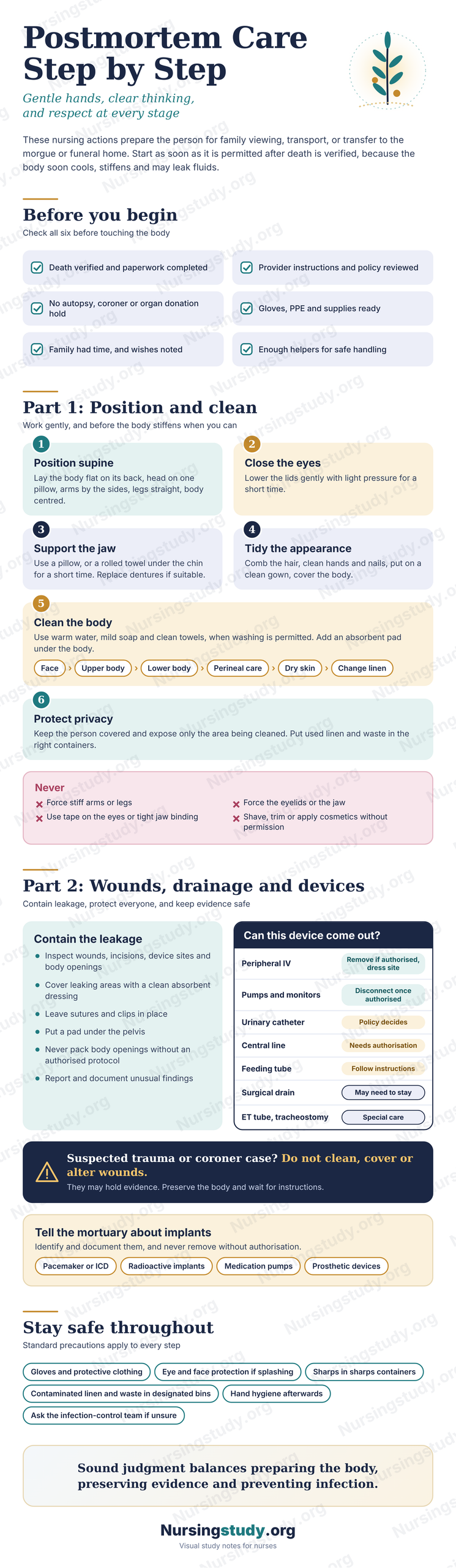
Conclusion
Postmortem care in nursing is an essential part of the care continuum that extends beyond the moment a patient dies. It involves much more than preparing the body for transfer to the morgue; it requires clinical knowledge, ethical judgment, attention to legal requirements, and a compassionate approach to the deceased and their family. From confirming death and performing appropriate postmortem procedures to documenting care, managing personal belongings, and coordinating the transfer, every action contributes to preserving the dignity and respect owed to the deceased.
A nurse must also recognize that postmortem care is not identical in every situation. Autopsy requirements, coroner investigations, organ and tissue donation, infection-control precautions, and cultural or religious practices may influence how the body is handled. Understanding these considerations helps nurses make appropriate decisions, avoid interfering with legal or clinical procedures, and accommodate family preferences whenever possible.
Equally important is the emotional dimension of this responsibility. The death of a patient can affect relatives and healthcare professionals in different ways. Providing clear information, allowing families time to grieve, respecting their beliefs, and facilitating appropriate support are important aspects of compassionate nursing practice. Nurses must also recognize their own emotional responses and seek support when needed.
Ultimately, effective postmortem care in nursing reflects the profession’s commitment to dignity, accountability, and compassionate care at every stage of the patient experience. By combining proper procedures with sensitivity and respect, nurses help ensure that even after death, the individual is treated with dignity and the family receives the support they need during a difficult time.
Frequently Asked Questions
What are the nursing steps for postmortem care?
The nursing steps for postmortem care generally include:
- Confirming that death has been officially pronounced and reviewing relevant medical or legal instructions.
- Providing emotional support to the family and allowing time for viewing, if appropriate.
- Performing hand hygiene and using appropriate personal protective equipment (PPE).
- Positioning the deceased supine, gently closing the eyes, and supporting the jaw.
- Cleaning the body, managing drainage, and replacing soiled linens.
- Managing wounds and medical devices according to facility policy and any autopsy or coroner requirements.
- Dressing or covering the body and attaching the required identification tags.
- Documenting the care provided and handling personal belongings appropriately.
- Preparing the body for transfer to the morgue or funeral home.
What are the four stages of post-mortem?
The four commonly described physical changes after death are:
- Pallor mortis: Paleness of the skin caused by the cessation of blood circulation.
- Algor mortis: Gradual cooling of the body after death.
- Livor mortis: Purplish discoloration that develops as blood settles in dependent areas of the body.
- Rigor mortis: Stiffening of the muscles following death.
These are physical changes that occur after death, not stages of the nursing postmortem care procedure.
How to care for a dying patient as a nurse?
A nurse cares for a dying patient by prioritizing comfort, dignity, and emotional support. Important responsibilities include:
- Assessing and managing pain, breathlessness, nausea, and other distressing symptoms.
- Providing personal hygiene, mouth care, repositioning, and skin care.
- Administering prescribed medications and following the patient’s care plan.
- Communicating compassionately with the patient and family.
- Respecting cultural, religious, and personal preferences.
- Supporting family members and explaining what to expect as death approaches.
- Maintaining privacy, dignity, and comfort throughout the dying process.
What are the steps for postmortem care in the proper order?
The proper order may vary depending on facility policy, the circumstances of death, and legal requirements. A general sequence is:
- Verify that death has been pronounced and review any autopsy, coroner, or organ-donation instructions.
- Notify the appropriate healthcare professionals and support the family.
- Perform hand hygiene, gather supplies, and put on appropriate PPE.
- Position the body supine while the joints can still be moved comfortably.
- Close the eyes, support the jaw, and remove or manage medical devices according to applicable instructions.
- Clean the body, manage wounds and drainage, and replace soiled linens.
- Dress the deceased or cover the body respectfully.
- Attach identification tags and secure personal belongings according to policy.
- Document the care provided and prepare the body for transfer.
- Transfer the deceased to the designated morgue or funeral service in accordance with facility procedures.
Important: If an autopsy, coroner investigation, or organ donation is involved, do not remove medical devices or alter the body until the responsible authority has provided instructions.
