

Sims Position in Nursing: A Complete Guide to Patient Positioning and Safe Clinical Practice
Patient positioning is a fundamental component of safe, effective, and patient-centered nursing care. Every clinical environment—from acute care settings to long-term care—relies on proper positioning of patients to support diagnosis, treatment, and recovery. Among the many common patient positions used in practice, the Sims Position stands out as a widely applied and clinically significant patient position, particularly in procedures involving rectal care and assessment.
At its core, the Sims Position is more than just a physical arrangement of the body. It is a carefully structured approach to proper patient positioning that balances procedural access, anatomical alignment, and patient comfort. This position is used in situations where both visibility and accessibility are required without placing the patient in more invasive or uncomfortable postures such as the lithotomy position or jackknife position. As such, understanding how and why to position the patient in this way is essential for safe and effective care delivery.
To appreciate the role of the Sims Position, it is important to understand how it fits within the broader framework of patient positioning guidelines:
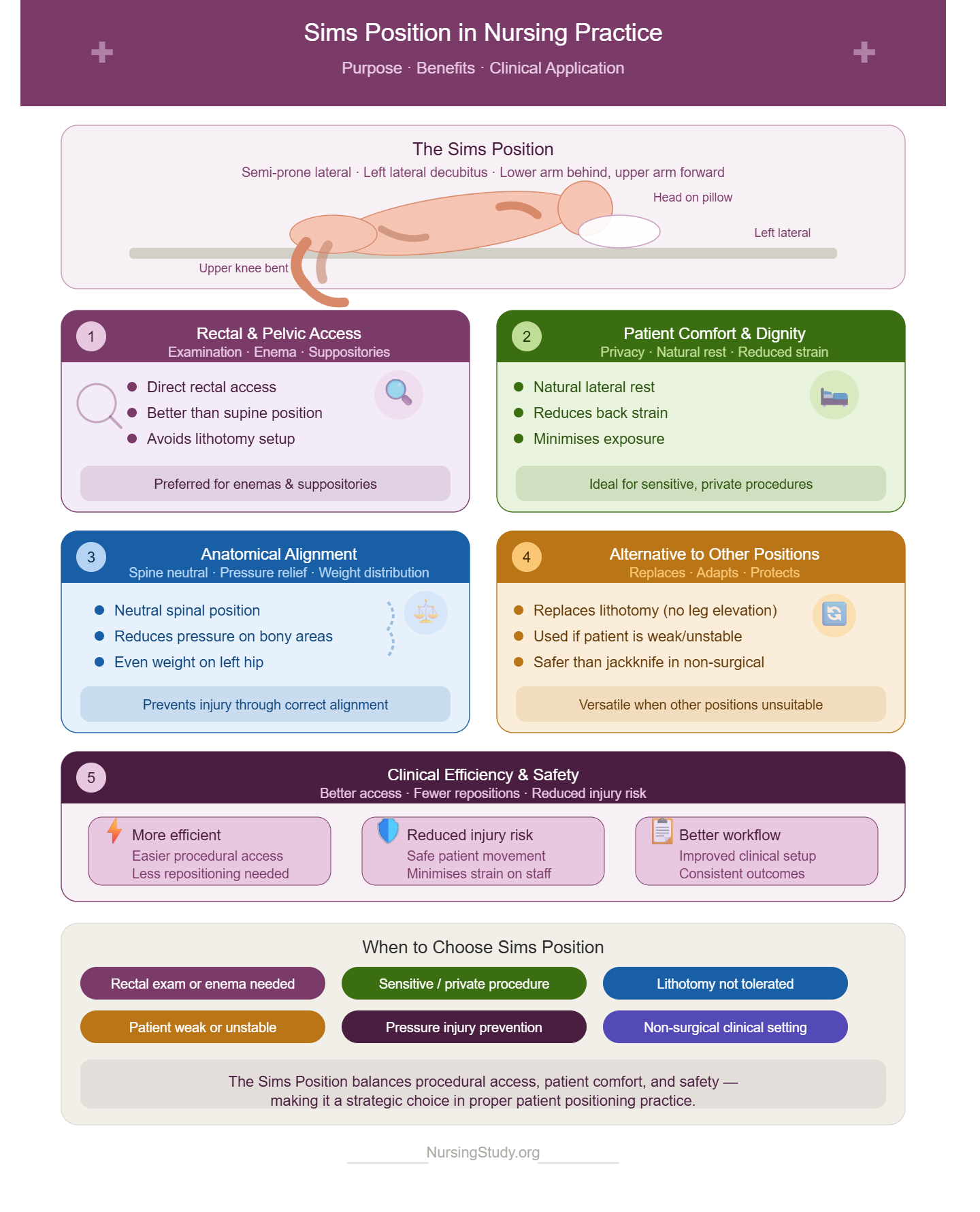
- It is a variation of the lateral position, specifically a semi-prone position
- The patient is typically lying on the left side, also referred to as the left lateral or left lateral decubitus position
- The hip and knee are flexed in a way that promotes stability and exposure
- The left hip and lower extremity remain relatively extended, while the upper leg is flexed
This configuration creates a position in which the patient is both supported and accessible, allowing clinicians to perform procedures with minimal strain on the patient.
The clinical relevance of the Sims Position can be better understood by examining its primary uses. It is commonly applied in:
- Rectal procedures, including:
- Rectal examination
- Administration of an enema
- Insertion of suppositories
- Diagnostic and therapeutic interventions where the position allows:
- Improved visualization of the rectal and perineal area
- Easier use of instruments such as the sims speculum
- Reduced need for more invasive positions like the standard lithotomy position or high lithotomy position
- Situations requiring enhanced patient tolerance, where:
- The patient in lateral position experiences less discomfort compared to the supine position
- It helps maintain patient comfort during sensitive or prolonged procedures
Historically, the sims’ position is associated with James Marion Sims (also referred to as marion sims), who contributed to its early use in gynecological and rectal procedures. Over time, the technique has evolved and is now integrated into modern patient positioning guidelines, emphasizing safety, dignity, and clinical effectiveness.
A key aspect of mastering the Sims Position lies in understanding that it is not a one-size-fits-all approach. Variations such as the modified sims position are often used to accommodate individual patient needs. Factors influencing these adaptations include:
- Limited mobility or joint restrictions involving the hip and knee
- Pain or discomfort requiring adjustments to maintain a neutral position
- Clinical conditions that make alternative options like the sitting position, fowler’s position, or kidney position more appropriate
In addition, comparing the Sims Position with other common patient positions highlights its unique advantages. For example:
- Unlike the supine position, it reduces direct pressure on the back and sacrum
- Compared to the patient lies prone position, it offers greater comfort and less respiratory compromise
- In contrast to the low lithotomy position or exaggerated lithotomy position, it is less invasive and easier to tolerate
Ultimately, the effectiveness of the Sims Position depends on the ability to apply proper positioning techniques consistently and safely. This includes:
- Following established patient positioning guidelines
- Ensuring correct positioning patients practices to prevent injury
- Monitoring alignment to maintain a neutral position
- Continuously assessing the patient to maintain patient comfort throughout the procedure
This guide provides a comprehensive exploration of the Sims Position, examining its definition, clinical applications, comparisons with other common patient positions, and step-by-step techniques for safe implementation. It also addresses safety considerations, adaptations for different patient populations, and the broader role of positioning in high-quality nursing care. Through this discussion, the Sims Position is presented not simply as a routine task, but as a critical clinical skill that supports both procedural success and patient well-being.
Need a high-quality nursing paper fast?
Submit your brief, and get a fully completed assignment ready to submit.
Overview of Sims Position in Patient Positioning
The Sims Position is a foundational concept within patient positioning, widely recognized for its role in facilitating both comfort and clinical access. As part of the broader group of common patient positions, it represents a specialized adaptation of the lateral position, designed to optimize exposure of specific anatomical areas while maintaining stability and safety.
In clinical practice, the Sims Position is often associated with the left lateral or left lateral decubitus position, where the patient is lying on the left side in a controlled semi-prone position. This configuration creates a position in which the patient is partially turned forward, allowing healthcare providers improved access to the posterior body structures, particularly during rectal procedures.
From a practical standpoint, the Sims Position is not used in isolation but is part of a continuum of proper patient positioning strategies. It is selected based on:
- The type of procedure being performed
- The patient’s physical condition and mobility
- The need to maintain patient comfort while ensuring adequate exposure
- Established patient positioning guidelines
Compared to other common patient positions such as the supine position, fowler’s position, or lithotomy position, the Sims Position offers a balance between accessibility and reduced physical strain. It is particularly beneficial when the position allows clinicians to perform interventions without requiring more invasive or uncomfortable alternatives like the jackknife position or standard lithotomy position.
Definition and Clinical Meaning of Sims Position
The Sims Position is defined as a patient position in which the individual is placed in a lateral position, typically on the left side, with specific adjustments to the hip and knee to achieve both stability and procedural access. It is often described as a semi-prone position, meaning the patient is neither fully on the side nor completely prone.
Key characteristics of this patient position include:
- The patient is lying in the left lateral orientation
- The left hip and lower extremity are usually extended or only slightly flexed
- The upper leg is flexed at the hip and knee, often drawn forward
- The torso is rotated slightly forward, creating a semi-prone position
- The arms are positioned to support comfort and prevent strain
This arrangement creates a position in which the patient is secure, supported, and accessible for clinical procedures. The design of the Sims Position ensures that gravity assists in maintaining alignment while also exposing the necessary anatomical regions.
Clinically, the Sims Position is significant because:
- It enhances access to the rectal and perineal areas for procedures such as a rectal examination or administration of an enema
- It supports proper positioning by reducing pressure on vulnerable areas compared to the patient lies prone position
- It allows for easier insertion and use of instruments such as the sims speculum
- It helps maintain a neutral position of the spine when performed correctly
The Sims Position is also adaptable. Variations such as the modified sims position are used when standard alignment is not suitable due to patient-specific factors such as pain, limited mobility, or anatomical considerations.
Historical Background of Sims Position
The Sims Position derives its name from James Marion Sims, often referred to as marion sims, a 19th-century physician known for his contributions to gynecological practice. The development of the sims’ position was closely tied to the need for improved visualization and access during pelvic and rectal procedures.
Historically, clinical procedures involving the rectal or vaginal areas were limited by inadequate patient positioning techniques. The introduction of the Sims Position marked a significant advancement because:
- It provided a more practical alternative to rigid positions like the erect position
- It improved access without requiring the patient to assume the more invasive lithotomy position
- It allowed the effective use of tools such as the sims speculum
Over time, the Sims Position became integrated into standardized patient positioning guidelines, evolving alongside advancements in medical knowledge and ethical considerations. While the historical contributions of james marion sims are acknowledged in clinical terminology, modern nursing practice emphasizes:
- Patient dignity and consent
- Evidence-based positioning of patients
- Adaptation of techniques to enhance safety and inclusivity
Today, the Sims Position remains a widely accepted patient position, not only because of its historical origins but also due to its continued relevance in modern healthcare settings.
Purpose of Sims Position in Nursing Practice
The primary purpose of the Sims Position in nursing practice is to facilitate safe, effective, and comfortable care by optimizing both patient alignment and procedural access. It is a strategic choice within proper patient positioning, selected when other common patient positions may not provide the same balance of exposure and comfort.
The Sims Position is used to achieve several important clinical objectives:
1. Facilitate Rectal and Pelvic Procedures
The Sims Position is commonly used for:
- Rectal examination
- Administration of an enema
- Insertion of suppositories
In these situations, the position allows:
- Direct access to the rectal area
- Improved visualization compared to the supine position
- Reduced need for more invasive setups like the high lithotomy position or exaggerated lithotomy position
2. Promote Patient Comfort and Dignity
Maintaining patient comfort is a central goal in all patient positioning guidelines. The Sims Position supports this by:
- Allowing the patient to rest in a natural lateral position
- Reducing strain on the back compared to the patient lies prone position
- Minimizing exposure compared to the low lithotomy position or hemilithotomy position
This makes it particularly suitable for sensitive procedures where privacy and comfort are essential.
3. Support Proper Anatomical Alignment
Effective positioning patients involves maintaining alignment that prevents injury and promotes physiological function. The Sims Position helps:
- Maintain a neutral position of the spine when correctly aligned
- Reduce pressure on bony prominences
- Distribute body weight evenly across the left hip and lower extremity
4. Provide an Alternative to Other Positions
The Sims Position is often selected when other common patient positions are not suitable. For example:
- It may replace the lithotomy position in patients who cannot tolerate leg elevation
- It can be used instead of the sitting position when the patient is weak or unstable
- It offers a safer alternative to the kidney position or jackknife position in non-surgical settings
5. Enhance Clinical Efficiency and Safety
By enabling easier access and reducing the need for repositioning, the Sims Position contributes to:
- More efficient procedures
- Reduced risk of injury during positioning of patients
- Improved workflow in clinical environments
Sims Position Compared to Common Patient Positions
Understanding the Sims Position within the broader framework of common patient positions is essential for selecting the most appropriate patient position in clinical care. While many positions aim to support examination, treatment, or comfort, each differs in terms of body alignment, level of exposure, and clinical purpose. The Sims Position, as a specialized lateral position, is uniquely designed to balance accessibility—especially for rectal procedures—with patient comfort and safety.
In practice, the decision to position the patient in a specific way is guided by:
- The clinical objective (e.g., examination, procedure, or rest)
- The patient’s physical condition and tolerance
- The need to follow established patient positioning guidelines
- The requirement to maintain a neutral position and prevent injury
Compared to other common patient positions such as the supine position, fowler’s position, lithotomy position, or jackknife position, the Sims Position offers a less invasive yet highly functional alternative. It is particularly advantageous when the position allows direct access without placing the patient in more physically demanding or exposed postures.
Sims Position vs Lateral and Left Lateral Positions
The Sims Position is often confused with the standard lateral position or left lateral posture because all involve side-lying alignment. However, important distinctions exist in structure, purpose, and clinical application.
🔹 Key Similarities
- All involve a patient in lateral position, typically lying on the left side
- Used to promote patient comfort and reduce pressure on the back
- Support circulation and reduce strain compared to the supine position
🔹 Key Differences
- Body Alignment and Structure
- In a standard lateral position, the body remains aligned with minimal forward rotation
- In the Sims Position, the patient assumes a semi-prone position, with the torso slightly rotated forward
- The left hip and lower extremity are relatively straight, while the upper leg is flexed at the hip and knee
- Degree of Rotation
- The left lateral decubitus position maintains a true side-lying posture
- The Sims Position modifies this by shifting toward a semi-prone position, improving access to posterior structures
- Clinical Purpose
- The lateral position is commonly used for rest, pressure relief, or recovery
- The Sims Position is specifically designed for procedures such as a rectal examination or administration of an enema
- Access and Visibility
- The left lateral decubitus position offers limited procedural exposure
- The Sims Position enhances access because the position allows better visualization of the rectal and perineal areas
🔹 Practical Example
- A patient requiring repositioning to prevent pressure injuries may be placed in a standard lateral position
- A patient scheduled for a rectal examination would be placed in the Sims Position to ensure proper access and alignment
Sims Position vs Other Common Patient Positions
The Sims Position differs significantly from other common patient positions, each of which serves distinct clinical purposes. Understanding these differences helps in selecting the most appropriate approach for proper positioning.
🔹 Sims Position vs Supine Position
- Supine position: Patient lies flat on the back
- Sims Position: Patient is lying in the left lateral and partially rotated
Key differences:
- The supine position is ideal for general examination but limits access to posterior structures
- The Sims Position provides better access for rectal procedures while reducing pressure on the sacrum
🔹 Sims Position vs Fowler’s Position
- Fowler’s position: Patient is semi-upright in a sitting position
- Sims Position: Patient is side-lying in a semi-prone position
Key differences:
- Fowler’s position supports breathing and feeding
- The Sims Position is used when lateral access is required
🔹 Sims Position vs Lithotomy Position Variants
- Includes lithotomy position, low lithotomy position, standard lithotomy position, high lithotomy position, exaggerated lithotomy position, and hemilithotomy position
Key differences:
- Lithotomy positions involve elevation and separation of the legs for pelvic procedures
- The Sims Position is less invasive and often preferred for basic rectal examination or enema administration
- Lithotomy may compromise patient comfort more than the Sims Position
🔹 Sims Position vs Jackknife Position
- Jackknife position: Patient is prone with hips elevated
- Sims Position: Patient remains in a modified lateral position
Key differences:
- The jackknife position is primarily surgical
- The Sims Position is more suitable for bedside care and routine procedures
🔹 Sims Position vs Patient Lies Prone Position
- Patient lies prone position: Patient is fully face-down
- Sims Position: Patient is partially rotated into a semi-prone position
Key differences:
- Prone positioning may compromise airway and comfort
- The Sims Position offers similar access with improved safety and tolerance
🔹 Sims Position vs Kidney Position
- Kidney position: Used in surgical settings with patient flexed laterally
- The Sims Position is simpler and used in non-surgical contexts
🔹 Summary of Key Advantages of Sims Position
The Sims Position is often chosen because it:
- Enhances access without extreme positioning
- Helps maintain patient comfort
- Reduces strain compared to more invasive positions
- Aligns with standard patient positioning guidelines
Modified Sims Position and Clinical Variations
While the standard Sims Position is widely used, clinical practice often requires adjustments to accommodate individual patient needs. These adaptations are collectively referred to as the modified sims position and other clinical variations.
🔹 What Is Modified Sims Position?
The modified sims position is an adjusted form of the Sims Position in which the degree of flexion, rotation, or support is altered to suit the patient. This ensures proper patient positioning while addressing specific limitations.
🔹 Common Modifications in Practice
- Adjustment of Hip and Knee Flexion
- Reduced flexion for patients with joint pain or stiffness
- Increased flexion for improved access during procedures
- Use of Support Devices
- Pillows placed under the hip and knee for stability
- Cushions to maintain a neutral position and reduce pressure
- Variation in Body Rotation
- Less forward rotation for patients unable to tolerate a full semi-prone position
- Slight repositioning to maintain comfort while preserving access
🔹 Clinical Situations Requiring Modification
The modified sims position is commonly used when:
- Patients have limited mobility or musculoskeletal issues
- There is discomfort in the left hip and lower extremity
- Standard positioning may compromise circulation or alignment
- Special populations (e.g., elderly or post-operative patients) require gentler positioning
🔹 Comparison with Other Adaptable Positions
In some cases, alternative common patient positions may still be more appropriate:
- Fowler’s position for respiratory support
- Sitting position for neurological assessment
- Low lithotomy position for advanced pelvic procedures
However, the Sims Position remains highly adaptable and often serves as a preferred intermediate option when balancing access and comfort.
🔹 Importance of Individualized Positioning
Effective positioning patients requires flexibility and clinical judgment. The Sims Position and its variations demonstrate how a standard patient position can be adapted while still adhering to patient positioning guidelines.
Key considerations include:
- Ensuring alignment to maintain a neutral position
- Monitoring for discomfort or pressure areas
- Adjusting positioning to maintain patient comfort throughout care
Clinical Indications for Sims Position in Patient Care
The Sims Position is a highly practical patient position in clinical nursing because it is specifically suited for procedures that require access to the rectal and lower pelvic regions while still prioritizing patient comfort and safety. Within the broader framework of common patient positions, it is considered a functional modification of the lateral position, most often performed with the patient lying on the left side in a semi-prone position.
The decision to position the patient in Sims is not random; it is guided by clear clinical indications, including procedural requirements, patient tolerance, and adherence to patient positioning guidelines. Unlike more invasive positions such as the lithotomy position, jackknife position, or exaggerated lithotomy position, the Sims Position provides a balance between accessibility and comfort, making it a preferred option in bedside care and diagnostic procedures.
Use of Sims Position in Rectal Procedures
One of the primary clinical indications for the Sims Position is its use in rectal procedures. The anatomical alignment created in this patient position allows healthcare providers to access the rectal area with minimal discomfort to the patient.
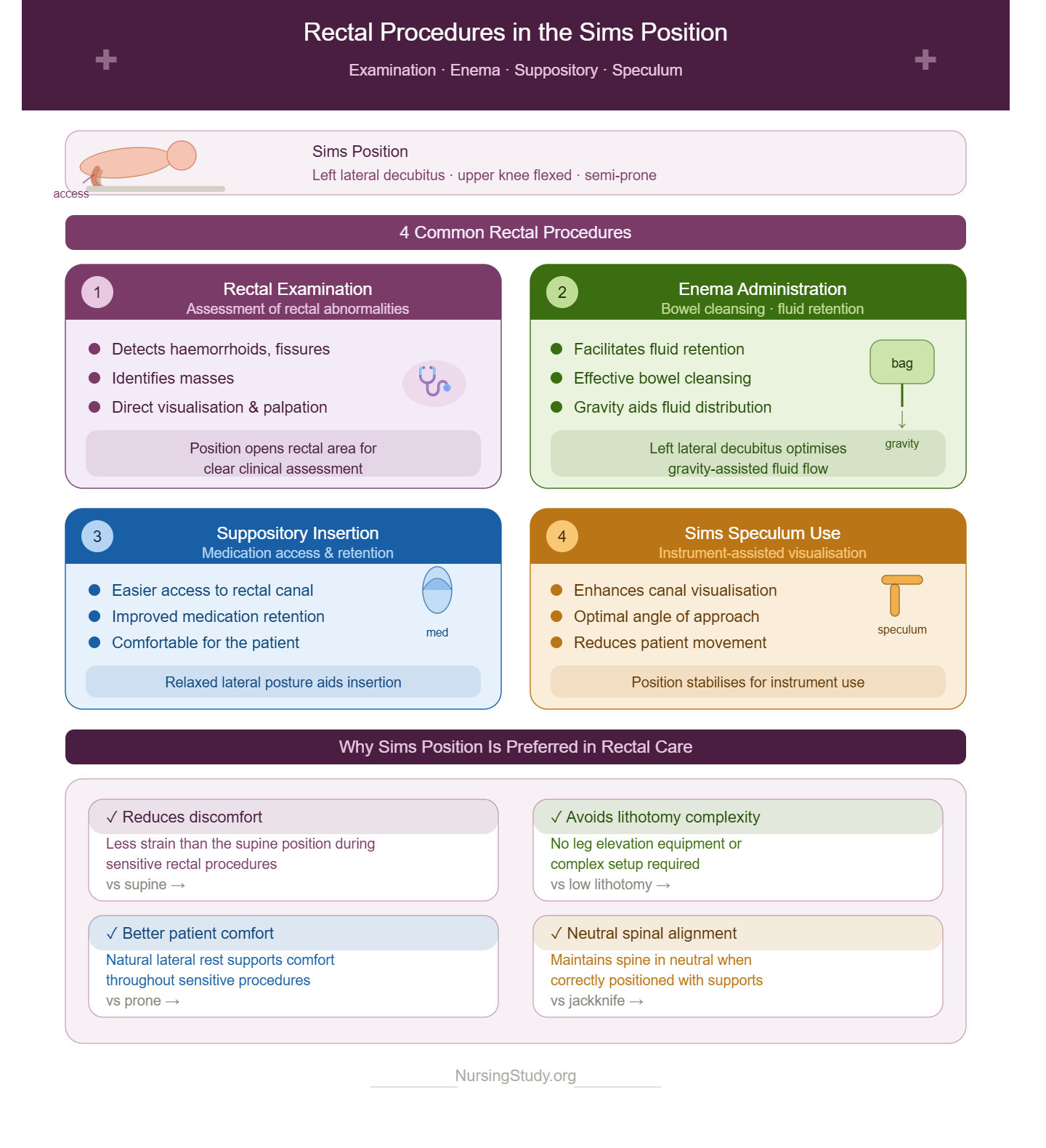
🔹 Common Rectal Procedures Performed in Sims Position
- Rectal examination
- Used to assess abnormalities such as hemorrhoids, fissures, or masses
- The position allows direct visualization and palpation of the rectal area
- Administration of an enema
- Facilitates fluid retention and effective bowel cleansing
- Gravity assists in fluid distribution due to the left lateral decubitus position
- Suppository insertion
- Ensures easier access and retention of medication
- Use of instruments such as the sims speculum
- Enhances visualization of the rectal canal during examination
🔹 Why Sims Position Is Preferred in Rectal Care
- Reduces discomfort compared to the supine position
- Avoids the complexity of the low lithotomy position
- Maintains better patient comfort during sensitive procedures
- Supports a stable neutral position of the spine when properly aligned
🔹 Clinical Example
A patient requiring bowel preparation before surgery may be placed in the Sims Position for enema administration. This ensures that the solution flows effectively into the colon while minimizing discomfort and maintaining dignity during the procedure.
Access and Visibility in Rectal and Pelvic Care
The Sims Position plays a critical role in enhancing both access and visibility during rectal and certain pelvic-related procedures. By positioning the patient in a semi-prone position, the anatomy is naturally aligned to improve exposure without requiring extreme repositioning.
🔹 Anatomical Advantages of Sims Position
The position in which the patient is placed creates several clinical advantages:
- The upper leg is flexed at the hip and knee, allowing relaxation of pelvic muscles
- The lower body remains supported in a left lateral orientation
- Gravity assists in exposing the rectal and perineal regions
- The anal area becomes more accessible without excessive manipulation
🔹 Comparison with Other Positions for Access
- Compared to the supine position, Sims provides significantly better posterior access
- Compared to the lithotomy position, it is less invasive and easier to tolerate
- Compared to the patient lies prone position, it offers improved comfort and airway safety
- Compared to the jackknife position, it is more appropriate for non-surgical bedside procedures
🔹 Clinical Significance
The improved visibility offered by the Sims Position is especially important in:
- Bedside examinations where mobility is limited
- Emergency care settings where rapid access is required
- Situations where maintaining patient comfort is essential while still ensuring procedural effectiveness
For example, during a rectal examination, the clinician benefits from a clear view of the anal region without needing to reposition the patient into a more complex surgical posture.
When to Choose Sims Position Over Other Common Patient Positions
Selecting the appropriate patient position is a critical clinical decision. The Sims Position is chosen when it provides the best balance between procedural access, safety, and comfort compared to other common patient positions.
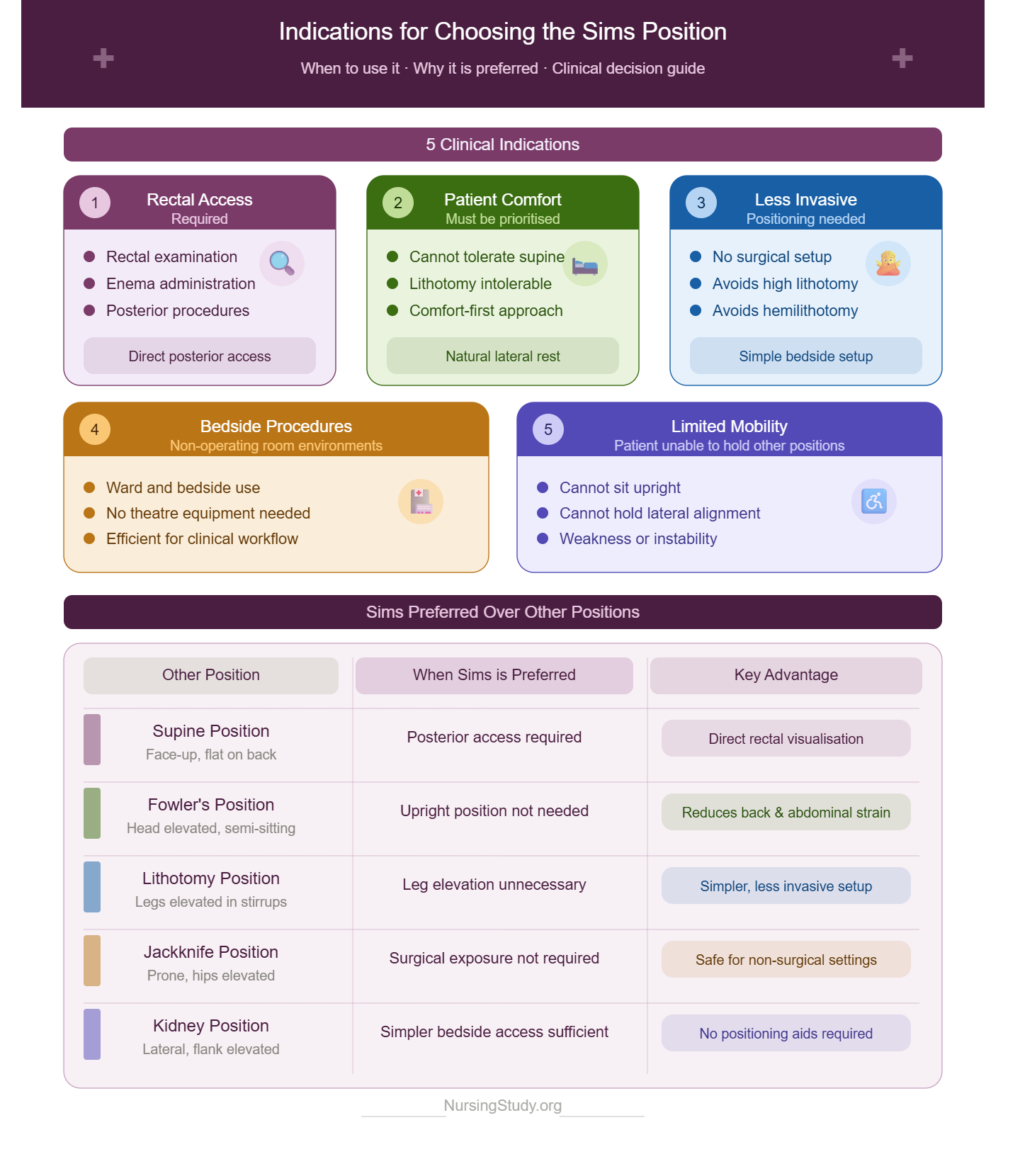
🔹 Indications for Choosing Sims Position
The Sims Position is preferred when:
- Rectal access is required
- Such as during a rectal examination or enema administration
- Patient comfort must be prioritized
- Especially for patients unable to tolerate prolonged supine position or lithotomy position
- Less invasive positioning is needed
- When surgical positions like the high lithotomy position or hemilithotomy position are unnecessary
- Bedside procedures are being performed
- Particularly in non-operating room environments
- Patients have limited mobility or discomfort in other positions
- Including inability to maintain sitting position or full lateral alignment
🔹 When Sims Position Is Preferred Over Other Positions
- Over supine position: when posterior access is required
- Over fowler’s position: when upright positioning is not needed
- Over lithotomy position: when invasive leg elevation is unnecessary
- Over jackknife position: when surgical exposure is not required
- Over kidney position: when simpler bedside access is sufficient
🔹 Clinical Decision-Making Example
A patient presenting with constipation requiring a rectal suppository would typically be placed in the Sims Position rather than the supine position. This ensures:
- Easier insertion
- Improved retention of medication
- Better patient comfort
- Reduced need for repositioning
🔹 Key Clinical Considerations
When choosing the Sims Position, healthcare providers must ensure:
- Proper alignment of the hip and knee
- Maintenance of a neutral position to prevent strain
- Continuous monitoring of patient comfort
- Adherence to patient positioning guidelines
- Adjustments to accommodate a modified sims position when necessary
Step-by-Step Sims Patient Positioning Guidelines
The Sims Position requires careful, deliberate proper patient positioning to ensure both clinical effectiveness and patient comfort. Unlike simpler common patient positions such as the supine position or sitting position, the Sims Position involves a structured sequence of movements that align the body into a stable semi-prone position while maintaining safety, dignity, and procedural access.
Effective positioning patients in Sims is guided by established patient positioning guidelines, which emphasize anatomical alignment, pressure relief, and functional access—especially for rectal procedures such as a rectal examination or administration of an enema.
Preparing the Patient for Sims Position
Proper preparation is a critical first step before positioning the patient in Sims Position. This phase ensures safety, cooperation, and psychological readiness.
🔹 Key Preparation Steps
- Explain the procedure clearly
- Describe why the patient position is needed
- Example: “You will be placed on your side to allow access for a rectal examination.”
- This helps improve cooperation and reduce anxiety
- Ensure privacy and dignity
- Close curtains or doors
- Drape the patient appropriately to maintain modesty during positioning of patients
- Gather required equipment
- Gloves and lubricants for rectal procedures
- Pillows or supports for alignment
- Examination tools such as a sims speculum if required
- Assess patient condition
- Evaluate mobility of the hip and knee joints
- Check for pain, surgical history, or contraindications to lateral position
- Confirm patient safety readiness
- Ensure bed brakes are locked
- Adjust bed height for safe positioning patients
How to Position the Patient in Sims Position
Once preparation is complete, the nurse proceeds with the actual positioning of patients into the Sims Position. This step involves precise alignment to ensure that the position allows optimal access while maintaining comfort and safety.
🔹 Step-by-Step Technique
- Move the patient into a lateral position
- Assist the patient to lie on their left side, forming the base left lateral decubitus position
- Ensure the body is aligned before further adjustments
- Adjust the lower extremities
- Extend the left hip and lower extremity comfortably
- Flex the upper leg at the hip and knee
- Bring the upper knee slightly forward toward the chest
- Rotate the torso slightly forward
- This creates a semi-prone position
- Ensures better exposure of the rectal area
- Align the upper body
- Position arms comfortably in front of the patient or at the side
- Maintain a neutral position of the spine where possible
- Ensure stability of the position
- Confirm that the patient is not rolling backward or forward
- Adjust as needed to maintain balance and safety
🔹 Clinical Example
A patient scheduled for a rectal examination is placed in the Sims Position. After being turned to the left side, the upper leg is flexed and supported, allowing the clinician clear access to the rectal area while the patient remains stable and comfortable.
Use of Pillows and Support Devices in Patient Positioning
Support devices play a crucial role in ensuring that the Sims Position is both safe and comfortable. Proper use of pillows and supports enhances proper patient positioning and reduces the risk of injury during prolonged procedures.
🔹 Purpose of Support Devices
- Maintain body alignment
- Enhance patient comfort
- Prevent strain on joints, especially the hip and knee
- Reduce pressure on bony prominences
- Improve stability in the semi-prone position
🔹 Common Support Techniques
- Pillow between knees
- Prevents friction between lower limbs
- Maintains correct alignment in the left lateral position
- Pillow under the upper leg
- Supports the flexed hip and knee
- Prevents muscle strain during prolonged procedures
- Back support pillows
- Stabilize the torso to prevent rolling
- Helps maintain a consistent patient position in which the patient remains secure
- Head and neck support
- Keeps airway aligned and comfortable
- Prevents strain during longer procedures
🔹 Modified Sims Position and Support Adjustments
In some cases, a modified sims position is required. This may involve:
- Reducing the degree of hip flexion
- Adding extra pillows for patients with limited mobility
- Adjusting torso rotation for patients with pain or post-surgical restrictions
For example, an elderly patient with hip discomfort may require additional cushioning under the left hip and lower extremity to maintain comfort while still allowing sufficient access for a rectal examination.
🔹 Clinical Importance of Support Use
Proper use of supports ensures that:
- The position allows safe and stable access for procedures
- Pressure injury risk is minimized
- Patient comfort is maintained throughout care
- Alignment remains consistent with patient positioning guidelines
Safety, Comfort, and Patient Positioning Guidelines
The Sims Position is widely used in clinical care because it supports both procedural access and patient comfort, especially during rectal procedures such as a rectal examination or administration of an enema. However, like all common patient positions, it must be implemented with strict attention to safety principles to prevent complications such as discomfort, nerve strain, or pressure-related injuries.
Safe positioning patients requires more than simply placing the individual in a lateral position or semi-prone position. It involves applying structured patient positioning guidelines, continuous assessment, and clinical judgment to ensure that the position allows both effective care delivery and protection of the patient’s physical integrity.
In the Sims Position, safety and comfort are closely linked. Poor alignment of the hip and knee, inadequate support of the left hip and lower extremity, or failure to maintain a neutral position can lead to complications. Therefore, nurses must consistently evaluate the patient throughout the procedure.
Preventing Pressure Injuries in Sims Position
Pressure injury prevention is a critical aspect of safe proper patient positioning in the Sims Position, especially when the patient remains in this posture for extended periods.
🔹 Why Pressure Injuries Occur in Sims Position
Pressure injuries can develop due to:
- Prolonged pressure on bony prominences (hip, knee, shoulder)
- Improper alignment in the left lateral decubitus position
- Lack of repositioning during extended procedures
- Inadequate cushioning during positioning of patients
🔹 High-Risk Areas in Sims Position
The following areas are particularly vulnerable:
- Left hip and lower extremity
- Lateral aspect of the knee
- Shoulder on the dependent side
- Elbow and ankle pressure points
🔹 Preventive Nursing Interventions
To reduce risk during the Sims Position, nurses should:
- Use cushioning effectively
- Place pillows between knees to reduce friction
- Support the flexed hip and knee with padding
- Reassess positioning regularly
- Ensure the patient remains comfortable and aligned
- Avoid prolonged static positioning when not necessary
- Maintain skin integrity
- Check for redness or pressure marks
- Adjust positioning if early signs of breakdown appear
- Follow patient positioning guidelines
- Ensure safe duration in one position
- Combine Sims with other common patient positions when appropriate (e.g., supine position or fowler’s position)
🔹 Clinical Example
A patient receiving a prolonged enema may remain in the Sims Position for several minutes. During this time, a nurse places a pillow between the knees and monitors the lateral hip area to prevent pressure injury development.
Maintaining Proper Body Alignment in This Patient Position
Correct alignment is essential for ensuring both safety and effectiveness of the Sims Position. Improper alignment can lead to discomfort, musculoskeletal strain, or reduced procedural access.
🔹 Principles of Proper Alignment
In the Sims Position, the following alignment principles must be maintained:
- The patient remains in a stable lateral position, usually on the left side
- The torso is slightly rotated forward into a semi-prone position
- The upper leg is flexed at the hip and knee while the lower leg remains extended
- The spine is supported in a neutral position where possible
🔹 Importance of Alignment in Clinical Practice
Proper alignment ensures that:
- The position allows optimal access for rectal procedures
- Muscle strain is minimized, especially in the back and lower limbs
- The patient maintains patient comfort throughout care
- The risk of nerve compression or joint stress is reduced
🔹 Comparison with Other Positions
- In the supine position, alignment focuses on full back support
- In the patient lies prone position, alignment prioritizes anterior body support
- In contrast, the Sims Position requires asymmetrical alignment focused on one side of the body
This makes precise positioning patients especially important in Sims compared to other common patient positions.
🔹 Clinical Example
During a rectal examination, improper flexion of the hip and knee may cause pelvic misalignment, making it difficult to visualize the rectal area. Correcting the alignment improves both procedural accuracy and patient tolerance.
Documentation and Communication in Patient Positioning
Accurate documentation and clear communication are essential components of safe patient positioning guidelines, particularly when using the Sims Position in clinical care.
🔹 Importance of Documentation
Proper documentation ensures continuity of care and legal accountability. It should include:
- The patient position used (e.g., Sims Position or modified sims position)
- Duration the patient remained in position
- Patient tolerance and level of patient comfort
- Any adjustments made to maintain alignment or safety
- Use of supports such as pillows or assistive devices
🔹 Communication Among Healthcare Team
Effective communication ensures safe positioning of patients across care transitions.
Key points include:
- Informing team members that the patient is in the left lateral decubitus position or semi-prone position
- Reporting any discomfort or complications observed during positioning
- Sharing special considerations (e.g., limited mobility of the hip and knee)
- Indicating when alternative common patient positions may be required
🔹 Example of Documentation
A proper nursing note might include:
- “Patient placed in Sims Position on left side for rectal examination. Pillow placed between knees for support. Patient tolerated procedure well with no signs of discomfort. Alignment maintained in neutral position throughout.”
🔹 Clinical Importance
Effective documentation and communication:
- Enhances patient safety during repeated positioning patients tasks
- Ensures consistency in patient positioning guidelines
- Supports clinical decision-making for future positioning needs
- Reduces risk of errors during transitions between common patient positions
Adapting Sims Position for Special Patient Populations
The Sims Position is a versatile patient position, but its application must be carefully adapted when working with special patient populations. Differences in age, mobility, musculoskeletal integrity, and pain tolerance significantly influence how positioning patients is carried out in clinical practice. Unlike standard common patient positions such as the supine position, fowler’s position, or sitting position, the Sims Position requires individualized adjustments to maintain safety, alignment, and patient comfort.
Effective adaptation is grounded in proper patient positioning principles and adherence to patient positioning guidelines, ensuring that the position allows both clinical effectiveness and protection from injury. In these populations, even small adjustments to the hip and knee or support of the left hip and lower extremity can significantly affect outcomes.
Sims Position in Pediatric and Elderly Patients
Both pediatric and elderly patients require modified approaches when using the Sims Position, as physiological and anatomical differences affect tolerance and safety.
🔹 Pediatric Patients
In pediatric care, the Sims Position is used less frequently but remains important for procedures such as rectal examination or enema administration.
Key considerations include:
- Smaller body size requires reduced degree of rotation into the semi-prone position
- Gentle handling is essential when positioning of patients to prevent distress
- Continuous reassurance is needed to maintain cooperation and patient comfort
Example:
- A child requiring a suppository may be placed in a modified left lateral decubitus position with minimal flexion of the hip and knee, ensuring the position allows safe administration without causing fear or resistance
🔹 Elderly Patients
In elderly individuals, the Sims Position must be carefully adjusted due to common issues such as joint stiffness, reduced mobility, and fragile skin.
Key considerations include:
- Increased risk of pressure injury over the left hip and lower extremity
- Limited flexibility in the hip and knee joints
- Greater sensitivity to prolonged lateral position
Clinical adaptations:
- Use of a modified sims position with reduced rotation
- Additional cushioning to support a neutral position
- Frequent repositioning to maintain circulation and comfort
Example:
- An elderly patient undergoing bowel care may only tolerate partial lateral rotation rather than full semi-prone position, requiring additional pillows to maintain safe alignment
Positioning Patients with Limited Mobility or Pain
Patients with restricted movement or acute pain present unique challenges in positioning patients in the Sims Position. These individuals may not tolerate full lateral rotation or sustained flexion of the hip and knee, requiring careful modification.
🔹 Common Causes of Limited Mobility
- Post-surgical recovery (hip, abdominal, or spinal surgery)
- Musculoskeletal conditions such as arthritis
- Acute pain affecting movement or positioning
- Neurological impairments
🔹 Adaptation Strategies
To safely use the Sims Position in these patients, clinicians may:
- Reduce degree of lateral rotation
- Maintain a gentler left lateral alignment instead of full semi-prone position
- Modify hip and knee flexion
- Avoid excessive bending of the hip and knee
- Keep limbs in a more relaxed posture to reduce strain
- Increase support use
- Use pillows under the back and between legs
- Maintain a stable neutral position where possible
- Monitor pain levels continuously
- Adjust or discontinue positioning if discomfort increases
🔹 Clinical Example
A post-operative patient with hip surgery may only tolerate partial side-lying positioning. In this case, a modified Sims Position is used with minimal rotation and additional support to avoid stress on the surgical site while still allowing access for a rectal examination if necessary.
When to Use Alternative Common Patient Positions
Although the Sims Position is highly useful, it is not always the most appropriate patient position. Clinical judgment is required to determine when alternative common patient positions should be used instead.
🔹 Situations Requiring Alternative Positions
- Severe pain or intolerance to lateral positioning
- Use supine position or fowler’s position instead
- Respiratory compromise or breathing difficulty
- Sitting position or elevated fowler’s position may be preferred
- Need for surgical or advanced pelvic access
- lithotomy position, low lithotomy position, or high lithotomy position may be required
- Spinal or musculoskeletal limitations
- Avoid semi-prone position and use neutral supine position
- Procedures requiring prone access
- patient lies prone position or jackknife position may be more appropriate
🔹 Comparison-Based Decision Making
- Use Sims Position when moderate rectal or perineal access is needed with comfort priority
- Use lithotomy position when full pelvic access is required
- Use supine position for general assessment and stabilization
- Use fowler’s position for respiratory or cardiovascular support
🔹 Clinical Example
A patient with severe lower back pain may not tolerate the Sims Position for a rectal examination. In this case, the clinician may opt for a supine position with slight lateral adjustment or delay the procedure until positioning is tolerated.
🔹 Key Clinical Principle
The choice of patient position should always prioritize:
- Safety
- Patient comfort
- Procedural effectiveness
- Adherence to patient positioning guidelines
Need a high-quality nursing paper fast?
Submit your brief, and get a fully completed assignment ready to submit.
Conclusion
The Sims Position remains one of the most practical and frequently used common patient positions in nursing practice, particularly in procedures involving rectal assessment and care. Its unique configuration as a modified lateral position—typically with the patient lying on the left side in a semi-prone position—makes it especially valuable for balancing clinical access with patient comfort.
Across clinical settings, the effectiveness of the Sims Position lies in its adaptability and purpose-driven design. It supports essential interventions such as rectal examination, enema administration, and the use of specialized instruments like the sims speculum, while minimizing discomfort compared to more invasive alternatives such as the lithotomy position, jackknife position, or high lithotomy position. When applied correctly, the position allows safe access to anatomical structures while preserving dignity and stability.
A key takeaway from its application is that successful positioning patients requires more than technical placement. It demands:
- Adherence to patient positioning guidelines
- Careful alignment of the hip and knee
- Continuous monitoring to maintain a neutral position
- Ongoing attention to patient comfort and safety
The use of a modified sims position further highlights the importance of individualized care, especially for pediatric, elderly, or mobility-impaired patients. In such cases, clinical judgment determines when to adapt the position or when to select alternative common patient positions such as the supine position, fowler’s position, or sitting position.
Ultimately, the Sims Position is more than a routine nursing technique—it is a reflection of foundational clinical competence in proper patient positioning. Mastery of this patient position enhances procedural efficiency, reduces patient risk, and reinforces a patient-centered approach to care. By integrating anatomical knowledge, safety principles, and adaptability, healthcare providers ensure that the Sims Position continues to serve as an essential and effective tool in modern nursing practice.
Frequently Asked Questions
What is the Sims position used for?
The Sims Position is mainly used for rectal procedures, including rectal examination, enema administration, and suppository insertion. It is also used to improve access to the rectal and perineal area while maintaining patient comfort in a lateral position with partial forward rotation.
What are the 4 types of position?
The four basic common patient positions in nursing are:
- Supine position (lying on the back)
- Prone position (lying face down)
- Lateral position (lying on the side)
- Fowler’s position (semi-sitting/upright position)
What is the Sims position?
The Sims Position is a modified lateral position where the patient lies in a semi-prone position, usually with the upper leg flexed at the hip and knee and the lower arm positioned behind the body. It is designed to provide better access for rectal and related procedures while maintaining stability and comfort.
Is the Sims position right or left?
The Sims Position is most commonly performed on the left side, known as the left lateral decubitus position, especially for procedures like rectal examination and enemas. However, in some clinical situations, it can also be adapted to the right side if needed.
