

Understanding IV Fluids: Types of IV, Different Types of IV Fluids, and IV Therapy in Nursing Practice
Intravenous therapy is a foundational component of modern clinical care, and a clear understanding of IV Fluids is essential for safe and effective patient management. IV Fluids are administered directly into a vein, allowing rapid delivery of water, electrolyte, and nutrients into the blood vessel and extracellular fluid compartments. Because IV Fluids are specially formulated to meet specific physiological needs, they play a central role in maintaining fluid balance, restoring fluid volume, and supporting overall hydration in a wide range of clinical conditions.
At a fundamental level, IV Fluids are not simply “fluids given intravenously.” Their administration involves an understanding of how different types of IV and each type of IV fluid interact with the body’s internal environment. This includes the movement of fluids across semipermeable membranes, shifts between intracellular and extracellular compartments, and the regulation of key elements such as sodium, chloride, potassium, and calcium. These physiological principles directly influence how an iv solution behaves once infused and determine its clinical effectiveness.
To understand the role of IV Fluids in practice, it is important to consider the following core concepts:
- Purpose of IV Fluids in Clinical Care
- Restore hydration in patients experiencing dehydration
- Maintain or correct fluid balance and fluid volume
- Deliver essential electrolyte components such as sodium chloride
- Serve as a medium for medications during iv therapy
- Support circulation during emergencies requiring fluid resuscitation
- How IV Fluids Function in the Body
- Once administered through a vein, fluids enter the blood vessel system
- They distribute into the extracellular fluid, influencing plasma volume
- Movement across semipermeable membranes depends on tonicity and osmotic gradients
- Different formulations affect whether fluid remains intravascular or shifts into cells
- Why Selection of IV Fluids Matters
- The fluid used must match the patient’s clinical condition
- Incorrect selection can lead to complications such as fluid overload or electrolyte imbalance
- Some intravenous solutions are used to treat dehydration, while others are used for fluid resuscitation
- Certain hypertonic solutions can cause rapid fluid shifts, requiring close monitoring
A comprehensive understanding of IV Fluids also requires familiarity with the different types of IV fluids available in clinical practice. These are broadly categorized into:
- Crystalloids (e.g., normal saline, lactated ringer’s, dextrose solutions)
- Colloid IV fluids (e.g., albumin, other colloid solutions)
Each category includes various types of fluids with distinct compositions and clinical applications. Among the common types of IV fluids, some are classified based on tonicity:
- Isotonic fluids (e.g., normal saline) – often commonly used IV solutions for volume replacement
- Hypertonic IV fluids – used in specific conditions but require caution due to fluid shifts
- Hypotonic fluids – used for cellular hydration but associated with certain risks
In clinical practice, the selection and administration of IV Fluids extends beyond basic classification. It involves applying knowledge of:
- Types of crystalloids and their specific uses
- Differences between colloid fluid and crystalloid solution in fluid resuscitation
- The role of iv infusion versus iv bolus in managing acute versus stable conditions
- How intravenous fluids influence laboratory values and patient outcomes
Ultimately, understanding IV fluids is a critical aspect of patient care that integrates physiology, pharmacology, and clinical judgment. Mastery of IV Fluids enables healthcare providers to anticipate patient needs, select the most appropriate types of iv solutions, and respond effectively to changes in patient condition. This guide provides a structured exploration of understanding IV, progressing from foundational concepts to advanced clinical applications, ensuring a comprehensive approach to the safe and effective use of IV Fluids.
Behind on multiple nursing assignments?
Our team will handle them while you focus on learning and clinical work.
Foundations of IV Fluid Therapy
A strong foundation in IV Fluids is essential for understanding how fluids are selected, administered, and monitored in clinical practice. IV fluid therapy involves delivering intravenous fluids directly into the circulatory system to maintain or restore fluid balance, support hydration, and correct electrolyte disturbances. Because IV Fluids bypass the gastrointestinal tract, they provide an immediate and controlled method of fluid replacement, making them indispensable in both routine care and emergency settings.
From a physiological perspective, the body maintains a delicate equilibrium between intracellular and extracellular fluid compartments. This balance is influenced by fluid intake, output, and the movement of solutes such as sodium, chloride, potassium, and calcium. When this equilibrium is disrupted—such as in dehydration, blood loss, or renal failure—IV Fluids are used to restore stability and ensure adequate tissue perfusion.
Key roles of IV Fluid Therapy include:
- Maintaining adequate fluid volume and circulatory stability
- Supporting cellular function through proper electrolyte balance
- Replacing losses from vomiting, diarrhea, or hemorrhage
- Providing rapid intervention in fluid resuscitation
- Serving as a carrier for medications during iv infusion
Understanding these foundational principles is critical before exploring the different types of IV fluids and their clinical applications.
IV Fluid Basics: Definition, Composition, and Role in IV Therapy
IV Fluids are sterile intravenous solutions designed to be administered directly into a vein. These fluids are carefully formulated to mimic or influence the body’s natural fluid composition. In clinical practice, IV Fluids are specially formulated to achieve specific therapeutic goals depending on the patient’s condition.
1. Definition of IV Fluids
An iv fluid is any sterile liquid administered intravenously to:
- Restore hydration
- Maintain or expand fluid volume
- Deliver essential nutrients or medications
These fluids are delivered through an iv infusion or, in urgent situations, as an iv bolus for rapid effect.
2. Composition of IV Fluids
The composition of an iv solution determines how it behaves in the body. Most IV Fluids contain:
- Water – the primary component for hydration
- Electrolytes – such as sodium, chloride, potassium, and calcium
- Buffers – such as lactate in lactated ringer’s, which help regulate acid-base balance
- Energy sources – such as dextrose, which provides calories
Examples of commonly used iv fluids include:
- Normal saline (0.9% sodium chloride) – a widely used saline solution for volume replacement
- Lactated ringer’s – contains lactate, potassium, and calcium, making it useful in fluid resuscitation
- Dextrose solutions – provide energy and are often used in maintenance therapy
3. Role of IV Fluids in Clinical Practice
The role of IV Fluids extends beyond simple hydration. They are used to treat dehydration, stabilize patients in shock, and maintain physiological balance.
Clinical applications include:
- Hydration support: Restoring fluids in patients unable to take oral intake
- Fluid resuscitation: Rapidly increasing fluid volume in trauma or sepsis
- Electrolyte correction: Addressing imbalances in sodium, potassium, and chloride
- Medication delivery: Acting as a medium for drug administration
For example, a patient with severe vomiting may require normal saline to restore fluid balance, while a trauma patient may receive crystalloids as the first line of fluid resuscitation.
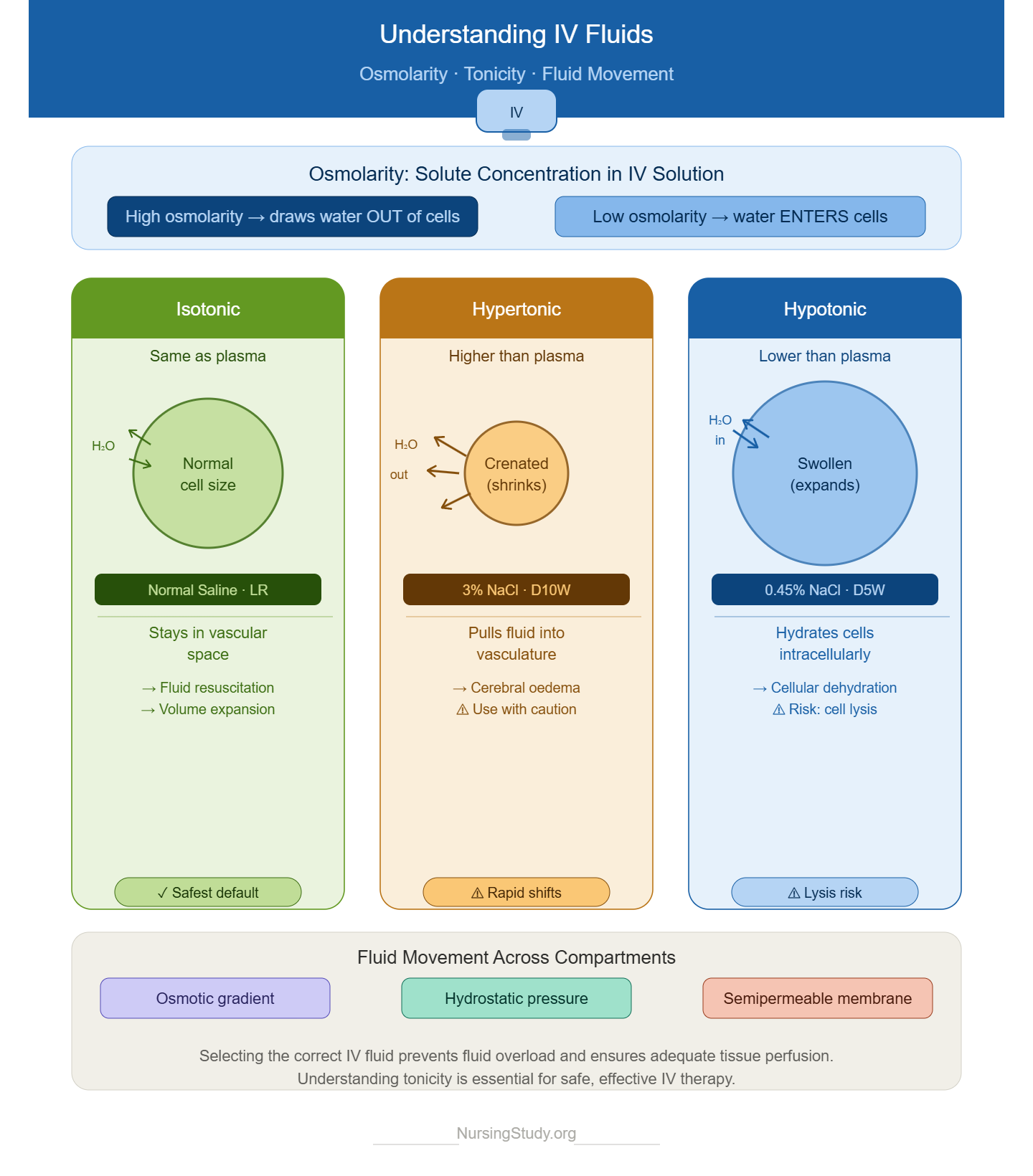
Understanding IV Fluids: Osmolarity, Tonicity, and Fluid Movement
A deeper level of understanding IV fluids involves how they influence fluid distribution in the body. This is primarily determined by osmolarity and tonicity, which govern how fluids move across semipermeable membranes.
1. Osmolarity and Its Clinical Significance
Osmolarity refers to the concentration of solutes in an iv solution. It determines how IV Fluids interact with body fluids and affects the movement of water between compartments.
- High osmolarity → draws water out of cells
- Low osmolarity → allows water to enter cells
2. Tonicity and Types of IV Fluids
Tonicity describes how an iv fluid affects cell size and fluid distribution. The three types of tonicity include:
- Isotonic fluids
- Similar concentration to plasma
- Examples: normal saline, lactated ringer’s
- Remain primarily in the blood vessel space
- Commonly used for fluid resuscitation
- Hypertonic fluids
- Higher solute concentration than plasma
- Includes hypertonic iv fluids and hypertonic dextrose solutions
- Pull fluid from cells into the intravascular space
- Hypertonic solutions can cause rapid shifts and must be used cautiously
- Hypotonic fluids
- Lower solute concentration than plasma
- Includes hypotonic IV fluid options
- Cause fluid to move into cells
- Useful in cellular dehydration but may lead to complications if misused
3. Fluid Movement Across Compartments
Fluid movement is governed by:
- Osmotic gradients
- Hydrostatic pressure
- The permeability of semipermeable membranes
When IV Fluids are administered:
- Isotonic solution remains in the extracellular space
- Hypertonic IV draws water out of cells
- Hypotonic fluids promote intracellular hydration
Understanding these mechanisms is essential for selecting the correct type of IV fluid and avoiding complications such as fluid overload or inadequate tissue perfusion.
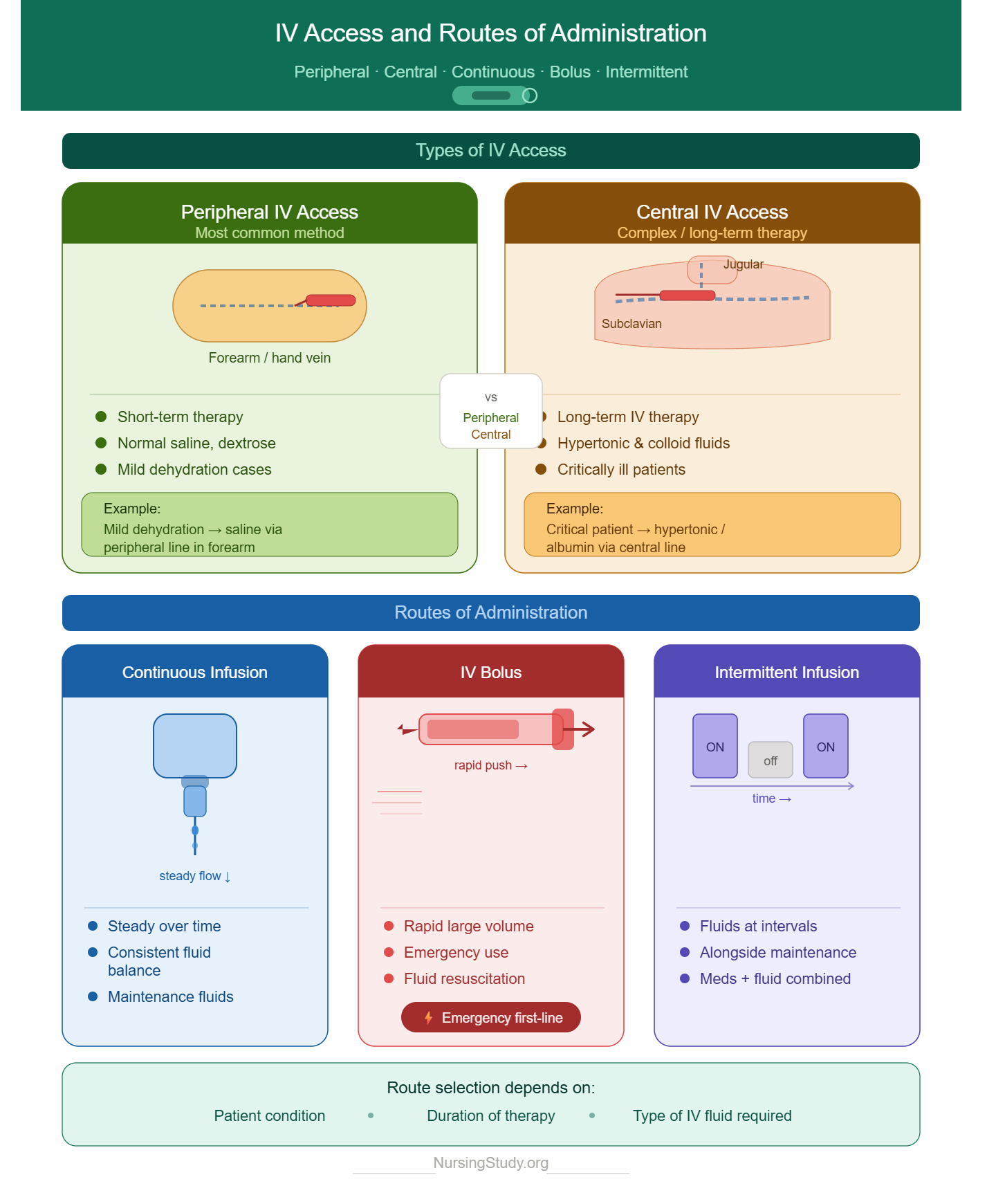
Types of IV Access and Routes Used in IV Therapy
The effectiveness of IV fluid therapy depends not only on the fluid used but also on the route of administration. Different types of IV access are selected based on the patient’s condition, duration of therapy, and the type of intravenous fluids required.
1. Peripheral IV Access
This is the most commonly used method for administering IV Fluids.
Key features:
- Inserted into a peripheral vein (e.g., hand, forearm)
- Suitable for short-term therapy
- Used for common types of IV fluids such as normal saline and dextrose
Example:
A patient with mild dehydration may receive saline solution through a peripheral IV line.
2. Central IV Access
Central lines are used when more complex or long-term therapy is required.
Key features:
- Inserted into large central blood vessel (e.g., subclavian or jugular vein)
- Allows administration of hypertonic IV solutions and colloid IV fluids
- Suitable for patients requiring long-term iv therapy
Example:
A critically ill patient requiring hypertonic fluids or albumin may need central access.
3. Routes of Administration in IV Therapy
a. Continuous IV Infusion
- Steady administration of IV Fluids over time
- Maintains consistent fluid balance
b. IV Bolus
- Rapid administration of a large volume
- Common in emergencies requiring fluid resuscitation
c. Intermittent Infusion
- Fluids or medications given at intervals
- Often used alongside maintenance fluids
Clinical Considerations for IV Access:
- Type of iv solution being administered
- Risk of fluid overload
- Patient condition (e.g., shock, renal failure)
- Duration of therapy
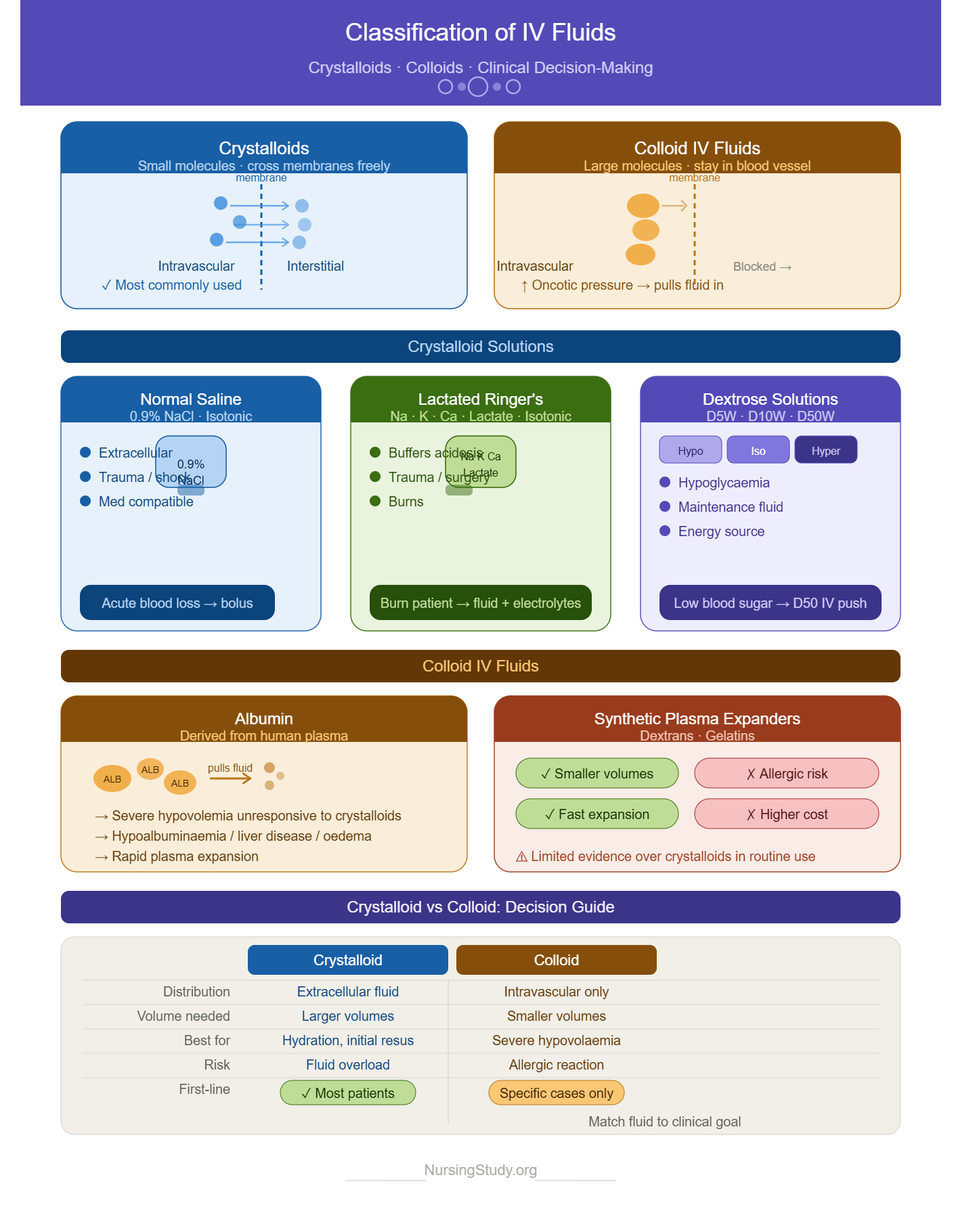
Classification of IV Fluids: Crystalloids and Colloid IV Fluids
The classification of IV Fluids is a fundamental concept in understanding IV fluids, as it provides a structured way to evaluate how different types of IV and each type of IV fluid behave once administered. Broadly, intravenous fluids are divided into two major categories:
- Crystalloids
- Colloid IV fluids
This classification is based on the size of the particles within the iv solution and their ability to move across semipermeable membranes. These properties directly influence how fluids distribute within the extracellular fluid and intravascular compartments, ultimately affecting fluid balance, fluid volume, and patient outcomes.
Key Differences Between the Two Categories:
- Crystalloids
- Contain small molecules (e.g., sodium, chloride)
- Easily cross semipermeable membranes
- Distribute between intravascular and interstitial spaces
- Represent the most commonly used iv fluids
- Colloid IV fluids
- Contain large molecules (e.g., proteins like albumin)
- Remain primarily within the blood vessel
- Exert oncotic pressure to pull fluid into circulation
- Used in specific clinical conditions
Understanding this classification is essential because the fluid used must match the clinical goal—whether it is restoring hydration, expanding plasma volume, or supporting fluid resuscitation.
Crystalloid Solution Overview: Common Types of IV Fluids
A crystalloid solution is an iv solution composed of water and dissolved electrolytes that can freely pass through semipermeable membranes. These types of crystalloids are the foundation of IV fluid therapy due to their versatility, availability, and cost-effectiveness.
Characteristics of Crystalloids:
- Low molecular weight substances
- Rapid distribution into extracellular fluid
- Short duration in the intravascular space
- Effective for hydration and initial fluid resuscitation
Why Crystalloids Are Commonly Used:
- Suitable for a wide range of conditions
- Easily administered via peripheral vein
- Provide essential electrolyte replacement
- Widely available in different formulations
Clinical Uses of Crystalloids:
- Used to treat dehydration caused by vomiting, diarrhea, or inadequate intake
- Restore fluid volume in mild to moderate hypovolemia
- Maintain baseline fluid balance in hospitalized patients
- Serve as first-line fluids used for fluid resuscitation in many protocols
For example, a patient presenting with gastroenteritis and dehydration will typically receive a crystalloid solution such as normal saline or lactated ringer’s to restore circulating volume and correct electrolyte imbalances.
Common Crystalloid IV Solutions: Saline, Lactate, and Dextrose
Among the common types of IV fluids, crystalloid solutions are further categorized based on their composition and tonicity. The most widely used include saline, lactate, and dextrose-based solutions.
1. Saline Solutions (Sodium Chloride-Based Fluids)
Saline solution, particularly normal saline (0.9% sodium chloride), is one of the most commonly used iv fluids in clinical practice.
Key features:
- Contains sodium and chloride in concentrations similar to plasma
- Classified as an isotonic solution
- Remains primarily in the extracellular fluid
Clinical uses:
- Fluid resuscitation in trauma or shock
- Treatment of dehydration
- Replacement of electrolyte losses
- Compatible with most medications during iv infusion
Example:
A patient with acute blood loss may receive normal saline as an initial iv bolus to restore fluid volume.
2. Lactate-Based Solutions (Lactated Ringer’s)
Lactated ringer’s is another widely used crystalloid solution that contains lactate, sodium, potassium, and calcium.
Key features:
- Considered an isotonic fluid
- The lactate component acts as a buffer, helping correct acidosis
Clinical uses:
- Fluid resuscitation in trauma and surgical patients
- Burns and severe fluid loss
- Situations requiring balanced electrolyte replacement
Example:
A burn patient may receive lactated ringer’s to restore both fluid volume and electrolyte balance.
3. Dextrose Solutions
Dextrose-containing fluids provide both hydration and an energy source.
Key features:
- May be isotonic, hypotonic, or hypertonic depending on concentration
- Includes hypertonic dextrose solutions such as D10 or D50
Clinical uses:
- Management of hypoglycemia
- Maintenance fluids in patients unable to eat
- Providing calories during prolonged illness
Example:
A patient with low blood sugar may receive a hypertonic IV dextrose solution as an emergency intervention.
Colloid IV Fluids Explained: Albumin and Plasma Expanders
Colloid IV fluids are intravenous solutions that contain large molecules, such as proteins or synthetic polymers, which remain within the intravascular space. These colloid solutions are designed to increase oncotic pressure, drawing fluid into the blood vessel from surrounding tissues.
Characteristics of Colloid IV Fluids:
- Large molecular size prevents movement across semipermeable membranes
- Prolonged intravascular retention
- Effective in expanding plasma volume
Common Types of Colloid IV Fluids:
- Albumin (derived from human plasma)
- Synthetic plasma expanders (e.g., dextrans, gelatins)
Clinical Uses:
- Severe hypovolemia not responsive to crystalloids
- Conditions requiring rapid plasma expansion
- Management of hypoalbuminemia
Example:
A patient with severe liver disease and low albumin levels may receive colloid IV fluids to improve oncotic pressure and reduce edema.
Advantages and Limitations:
Advantages:
- More effective at expanding intravascular volume
- Require smaller volumes compared to crystalloids
Limitations:
- Higher cost
- Risk of allergic reactions
- Limited evidence of superiority in routine fluid resuscitation
Colloid IV vs Crystalloid Solution: Clinical Decision-Making
Choosing between a colloid fluid and a crystalloid solution is a critical aspect of IV fluid therapy. The decision depends on the patient’s condition, treatment goals, and risk factors.
Key Factors in Decision-Making:
- Clinical Condition
- Crystalloids are preferred for most patients, especially for hydration and initial fluid resuscitation
- Colloid IV fluids are reserved for specific indications such as severe hypovolemia
- Fluid Distribution
- Crystalloids distribute across the extracellular fluid
- Colloid IV fluids remain in the blood vessel, providing sustained volume expansion
- Speed of Volume Expansion
- Colloid solutions act more rapidly in expanding plasma volume
- Crystalloids may require larger volumes to achieve the same effect
- Risk Considerations
- Excessive use of crystalloids may lead to fluid overload
- Colloid IV fluids carry risks such as allergic reactions and higher cost
Practical Clinical Comparison:
| Feature | Crystalloids | Colloid IV Fluids |
|---|---|---|
| Composition | Small molecules (e.g., sodium chloride) | Large molecules (e.g., albumin) |
| Distribution | Extracellular space | Intravascular space |
| Cost | Low | High |
| Use | First-line in most cases | Selective use |
| Examples | Normal saline, lactated ringer’s, dextrose | Albumin, plasma expanders |
Clinical Example:
- A patient with dehydration → treated with crystalloids like normal saline
- A patient with severe hypoalbuminemia → may require colloid IV fluids
Tonicity-Based Types of IV Fluids
A critical aspect of understanding IV fluids is recognizing how IV Fluids are classified based on tonicity. Tonicity refers to the concentration of solutes in an iv solution relative to plasma and determines how water moves across semipermeable membranes. This movement directly affects the distribution of fluid between the blood vessel, interstitial space, and intracellular compartments within the extracellular fluid.
In clinical practice, tonicity helps guide the selection of the most appropriate type of IV fluid based on patient needs. The three types of tonicity-based different types of IV fluids include:
- Isotonic fluids
- Hypertonic fluids
- Hypotonic fluids
Each category has distinct physiological effects, specific uses, and associated risks, making it essential to understand how these types of IV solutions behave once administered during iv therapy.
Isotonic IV Fluid: Common Types and Clinical Uses
Isotonic fluids are IV Fluids that have a similar osmolarity to plasma. Because of this, they do not cause significant fluid shifts across semipermeable membranes, meaning the fluid remains primarily within the extracellular fluid and intravascular space.
Key Characteristics of Isotonic IV Fluid:
- Osmolarity closely matches plasma
- No net movement of water into or out of cells
- Expands intravascular fluid volume without altering cell size
- Often the most commonly used IV fluids
Common Types of Isotonic Fluids:
- Normal saline (0.9% sodium chloride)
- Lactated ringer’s
- Other balanced crystalloid solution options
These common types of IV fluids are frequently described as IV fluids are isotonic, especially when used in routine care and emergency settings.
Clinical Uses of Isotonic IV Fluids:
- Fluid resuscitation
- First-line fluids used for fluid resuscitation in trauma, burns, and shock
- Rapidly restore circulating fluid volume
- Hydration and maintenance
- Correct mild to moderate dehydration
- Maintain baseline fluid balance
- Electrolyte replacement
- Provide sodium and chloride in physiological concentrations
- Perioperative care
- Maintain hemodynamic stability during surgery
Clinical Example:
A patient presenting with severe diarrhea and dehydration may receive normal saline through an iv infusion to restore hydration and stabilize vital signs.
Key Consideration:
Although isotonic solution options are generally safe, excessive administration may still lead to fluid overload, especially in patients with renal failure or cardiac conditions.
Hypertonic IV Fluid: Indications, Mechanism, and Risks
Hypertonic IV fluids are IV Fluids with a higher osmolarity than plasma. These hypertonic solutions draw water out of cells into the intravascular space, increasing circulating fluid volume.
Mechanism of Action:
- Increased solute concentration in the iv solution
- Water moves from intracellular space → extracellular fluid
- Expansion of plasma volume within the blood vessel
This mechanism makes hypertonic IV fluids particularly useful in specific, controlled clinical scenarios.
Common Types of Hypertonic Fluids:
- Hypertonic saline (e.g., 3% sodium chloride)
- Hypertonic dextrose solutions (e.g., D10, D50)
These hypertonic IV solutions are powerful but must be administered carefully.
Clinical Indications:
- Severe hyponatremia
- Rapid correction of dangerously low sodium levels
- Cerebral edema
- Reduce brain swelling by drawing fluid out of cells
- Hypoglycemia (severe)
- Dextrose solutions used as emergency treatment
Risks and Complications:
- Hypertonic solutions can cause rapid fluid shifts leading to:
- Cellular dehydration
- Increased risk of vascular overload
- Potential for fluid overload due to intravascular expansion
- Risk of vein irritation or damage if not properly administered
- Electrolyte imbalances, particularly involving sodium
Clinical Example:
A patient with severe hyponatremia may receive hypertonic IV fluids in a controlled setting to gradually correct sodium levels while preventing neurological complications.
Key Consideration:
Because of their potency, hypertonic fluids are typically administered via central access and require close monitoring during iv therapy.
Hypotonic IV Fluid: Uses and Safety Considerations
Hypotonic fluids are IV Fluids with a lower osmolarity than plasma. These hypotonic solutions cause water to move from the intravascular space into cells, promoting intracellular hydration.
Mechanism of Action:
- Lower solute concentration in the iv solution
- Water shifts from blood vessel → intracellular space
- Leads to cellular expansion
Common Types of Hypotonic Fluids:
- 0.45% sodium chloride (half normal saline)
- Certain dextrose solutions after metabolism
These hypotonic IV fluid options are less commonly used in acute care but remain important in specific conditions.
Clinical Uses:
- Cellular dehydration
- Rehydrate cells in conditions such as hypernatremia
- Maintenance therapy
- Provide free water in stable patients
- Correction of high sodium levels
- Gradually lower elevated sodium concentration
Risks and Safety Considerations:
- Excessive use may lead to:
- Cellular swelling
- Risk of cerebral edema
- Can reduce intravascular fluid volume, worsening hypotension
- Requires careful monitoring of electrolyte levels
Clinical Example:
A patient with hypernatremia may receive a hypotonic IV fluid to safely lower sodium levels and restore intracellular hydration.
Key Consideration:
Hypotonic fluids should be used cautiously in patients at risk of increased intracranial pressure or those with unstable hemodynamics.
Summary of Tonicity-Based IV Fluids
Understanding tonicity is essential when selecting among the different types of IV fluids. The choice of IV Fluids depends on how fluid movement is expected to affect the patient’s physiological state.
Quick Comparison:
- Isotonic fluids
- Maintain balance within the extracellular fluid
- Best for fluid resuscitation and general hydration
- Hypertonic IV fluids
- Pull fluid into the intravascular space
- Used in critical, targeted conditions
- Hypotonic fluids
- Promote intracellular hydration
- Used cautiously for specific imbalances
Clinical Applications of IV Fluids in Nursing Practice
The clinical use of IV Fluids is a central component of iv therapy, particularly in acute care, emergency settings, and long-term hospital management. In practice, intravenous fluids are not administered in isolation but are selected based on the patient’s physiological status, laboratory findings, and ongoing changes in fluid balance. The effectiveness of IV fluid therapy depends on accurate assessment, appropriate selection of the type of IV fluid, and continuous monitoring of response.
At the clinical level, IV Fluids are primarily applied in three major areas:
- Hydration and dehydration management
- Fluid resuscitation in shock states
- Electrolyte replacement and fluid balance correction
Each of these applications requires a deep understanding IV fluids principles, including how different types of IV solutions interact with body compartments such as the extracellular fluid and intracellular space.
IV Fluids for Hydration and Dehydration Management
One of the most commonly used IV applications is the correction of dehydration and maintenance of adequate hydration status. IV Fluids are often administered when oral intake is insufficient, contraindicated, or ineffective.
Pathophysiology of Dehydration
Dehydration occurs when fluid loss exceeds intake, leading to:
- Reduced fluid volume in the intravascular space
- Increased serum sodium concentration in some cases
- Impaired tissue perfusion
- Electrolyte disturbances involving potassium, chloride, and calcium
Role of IV Fluids in Hydration
In such cases, IV Fluids are specially formulated to restore circulating volume and re-establish fluid balance.
Common IV solutions used:
- Normal saline (saline solution) – an isotonic fluid used for rapid rehydration
- Lactated ringer’s – a balanced crystalloid solution useful in moderate dehydration
- Dextrose-containing fluids – provide both hydration and energy
Clinical Example
A patient with prolonged vomiting and diarrhea may present with signs of dehydration, including dry mucous membranes, tachycardia, and hypotension. Administration of normal saline via iv infusion helps restore fluid volume and correct extracellular deficits.
Key Clinical Considerations
- Choice of iv solution depends on severity of dehydration
- Monitoring for fluid overload is essential, especially in elderly patients or those with renal failure
- Electrolyte levels must be regularly assessed during therapy
IV Fluid Therapy in Fluid Resuscitation and Shock
A critical application of IV Fluids is in fluid resuscitation, particularly in patients experiencing shock. Shock is a life-threatening condition characterized by inadequate tissue perfusion and oxygen delivery.
Types of Shock Requiring IV Fluid Therapy
- Hypovolemic shock (e.g., hemorrhage, severe dehydration)
- Septic shock
- Burns and trauma-related shock
Mechanism of IV Fluid Resuscitation
During fluid resuscitation, IV Fluids used for fluid resuscitation rapidly expand intravascular volume to:
- Improve cardiac output
- Restore blood pressure
- Enhance oxygen delivery to tissues
Common Fluids Used in Resuscitation
- Isotonic fluids such as normal saline
- Lactated ringer’s (balanced crystalloid solution)
- In selected cases, colloid IV fluids such as albumin
Clinical Example
A trauma patient with significant blood loss may receive an immediate iv bolus of normal saline to stabilize blood pressure while preparing for blood transfusion.
Hypertonic Considerations in Resuscitation
In some specialized cases, hypertonic IV fluids may be used to draw water into the intravascular space. However, hypertonic solutions can cause rapid fluid shifts and must be used cautiously due to the risk of fluid overload and cellular dehydration.
Nursing Considerations
- Continuous monitoring of vital signs during iv therapy
- Assessment of urine output and perfusion status
- Avoiding excessive fluid administration that may worsen fluid balance
Electrolyte Replacement and Fluid Balance Management
Another major clinical use of IV Fluids is the correction of electrolyte imbalances and maintenance of overall fluid balance. Because intravenous fluids directly influence serum concentrations of sodium, potassium, chloride, and calcium, they are essential in managing metabolic disturbances.
Common Electrolyte Disturbances Treated with IV Fluids
1. Sodium Imbalances
- Hyponatremia: treated with hypertonic IV solutions in severe cases
- Hypernatremia: corrected using hypotonic IV fluid or free water replacement
2. Potassium Imbalances
- Hypokalemia may be corrected with potassium supplementation in iv solution
- Requires careful monitoring due to risk of cardiac arrhythmias
3. Calcium Imbalances
- Calcium-containing fluids like lactated ringer’s may assist in correction
- Often managed alongside other therapies
Role of IV Fluids in Fluid Balance
Maintaining fluid balance involves ensuring equilibrium between intake and output. IV Fluids help regulate:
- Intravascular fluid volume
- Distribution of extracellular fluid
- Renal excretion and retention of fluids
Example of Clinical Application
A patient with renal failure may require carefully calculated iv fluid therapy to avoid fluid overload while still maintaining adequate perfusion and electrolyte stability.
Monitoring Considerations
- Regular laboratory assessment of electrolytes
- Strict input/output charting
- Observation for signs of fluid overload (edema, crackles in lungs, hypertension)
- Adjustment of iv infusion rates based on patient response
Selecting the Right Type of IV Fluid
Selecting the appropriate IV Fluids is a critical clinical decision that directly influences patient outcomes, particularly in acute care, emergency medicine, and long-term hospital management. The process of choosing the correct type of IV fluid is not arbitrary; it requires a structured understanding IV fluids, careful clinical assessment, and continuous evaluation of the patient’s response to iv therapy.
In practice, intravenous fluids must be matched precisely to physiological needs in order to restore or maintain fluid balance, correct electrolyte disturbances, and optimize fluid volume within the extracellular fluid and intravascular compartments. Incorrect selection may lead to complications such as fluid overload, worsening electrolyte imbalance, or inadequate perfusion.
Factors Influencing IV Fluid Selection
The choice of IV Fluids depends on multiple interrelated clinical factors. A healthcare professional must evaluate the patient holistically before determining the most appropriate iv solution.
1. Patient Hydration Status
One of the primary determinants is the level of hydration.
- In dehydration, isotonic fluids such as normal saline or lactated ringer’s are commonly used
- In mild fluid deficits, maintenance crystalloid solution may be sufficient
- Severe dehydration may require rapid fluid resuscitation using isotonic IV Fluids
Example:
A patient with prolonged diarrhea and vomiting may present with low blood pressure and dry mucous membranes. In this case, IV fluids are isotonic, such as saline solution, to restore circulating fluid volume.
2. Electrolyte Imbalance
The levels of key electrolyte components such as sodium, potassium, chloride, and calcium significantly influence fluid selection.
- Low sodium (hyponatremia) may require hypertonic IV fluids
- High sodium (hypernatremia) may require hypotonic IV fluid
- Potassium imbalances require carefully balanced intravenous solutions
Clinical Insight:
Because IV Fluids are specially formulated, even small changes in composition can significantly impact electrolyte correction.
3. Clinical Condition and Diagnosis
Different medical conditions require different types of IV solutions.
- Shock states → aggressive fluid resuscitation with isotonic fluids
- Burns → large-volume crystalloid administration
- Liver disease or hypoalbuminemia → colloid IV fluids such as albumin
- Hypoglycemia → dextrose-based iv solution
4. Organ Function (Renal and Cardiac Status)
Organ function plays a major role in fluid selection.
- Patients with renal failure are at higher risk of fluid overload
- Cardiac patients may not tolerate rapid increases in fluid volume
- Impaired kidneys affect sodium and water excretion, influencing fluid balance
Example:
A patient with heart failure may require carefully restricted iv infusion rates to avoid pulmonary edema caused by excessive IV Fluids.
5. Osmolarity and Tonicity Requirements
The body’s response to fluids depends on osmolarity and tonicity:
- Isotonic fluids remain in the extracellular space
- Hypertonic fluids pull water into the intravascular space
- Hypotonic fluids shift water into cells
Understanding this helps prevent complications such as cellular swelling or dehydration.
6. Urgency of Clinical Situation
The urgency of treatment also determines fluid choice.
- Emergency shock → rapid iv bolus of isotonic fluids
- Stable maintenance → slow iv infusion
- Neurological emergencies → carefully controlled hypertonic IV solutions
Matching IV Solution to Patient Needs
Once clinical factors are assessed, the next step is matching the appropriate IV Fluids to the patient’s physiological condition. This ensures that the selected iv solution supports recovery without causing harm.
1. Hydration and Maintenance Needs
For general hydration, the goal is to maintain equilibrium in fluid balance and support normal physiological function.
Suitable IV Fluids:
- Normal saline (saline solution)
- Balanced crystalloid solution
- Low-concentration dextrose fluids
Clinical Application:
A post-operative patient who is unable to take oral fluids may receive a maintenance iv infusion of isotonic fluids to maintain hydration.
2. Fluid Resuscitation Needs
In acute conditions such as shock or trauma, rapid restoration of circulating volume is essential.
Suitable IV Fluids:
- Isotonic solution (first-line choice)
- Lactated ringer’s
- Selected colloid IV fluids in specific cases
These fluids are used for fluid resuscitation to quickly restore perfusion and stabilize vital signs.
Clinical Example:
A trauma patient with hemorrhagic shock may receive a rapid iv bolus of isotonic IV Fluids to restore blood pressure and maintain organ perfusion.
3. Electrolyte Correction Needs
When electrolyte imbalance is the primary concern, fluid selection must be highly targeted.
Suitable IV Fluids:
- Hypertonic IV fluids for severe hyponatremia
- Hypotonic IV fluid for hypernatremia
- Potassium or calcium-adjusted iv solution
Clinical Insight:
Because hypertonic solutions can cause rapid shifts in water movement, they must be administered cautiously with continuous monitoring.
4. Specialized Clinical Needs
Certain conditions require specialized fluid selection:
- Hypoalbuminemia → albumin (colloid IV)
- Diabetic emergencies → dextrose solutions
- Severe burns → large-volume crystalloid solution
5. Monitoring Response to IV Fluids
Matching the correct IV Fluids does not end with administration. Continuous monitoring is essential to ensure therapeutic effectiveness.
Key indicators include:
- Vital signs (blood pressure, heart rate)
- Urine output
- Signs of fluid overload (edema, crackles in lungs)
- Serum electrolyte levels
- Changes in mental status
Nursing Responsibilities in IV Fluid Therapy
Safe and effective management of IV Fluids is a core responsibility in clinical nursing practice. Because intravenous fluids directly affect fluid balance, fluid volume, and electrolyte levels within the body, nurses play a central role in ensuring that iv therapy is administered accurately, monitored closely, and adjusted appropriately based on patient response.
A strong understanding IV fluids is essential for identifying the correct type of IV fluid, recognizing early signs of complications, and ensuring safe delivery through a vein into the blood vessel system. Nursing responsibilities extend beyond administration to include continuous assessment, documentation, and clinical decision support in collaboration with other healthcare providers.
Safe IV Fluid Administration and Infusion Monitoring
Safe administration of IV Fluids is a structured process that requires precision, clinical judgment, and adherence to established protocols. Since IV Fluids are specially formulated for specific therapeutic goals, even small errors in administration can significantly affect patient outcomes.
Key Steps in Safe IV Fluid Administration
- Verification of the IV Solution
- Confirm the correct iv solution (e.g., normal saline, lactated ringer’s, dextrose)
- Ensure compatibility with prescribed medications
- Check expiry date and clarity of intravenous fluids
- Patient Identification and Assessment
- Confirm correct patient and indication
- Assess baseline fluid balance, hydration status, and vital signs
- Review laboratory values, especially sodium, potassium, and chloride
- Selection of IV Access
- Choose appropriate vein for peripheral access
- Consider central access for hypertonic IV fluids or long-term therapy
- Ensure patency of the blood vessel before initiating infusion
- Administration Technique
- Administer via controlled iv infusion or iv bolus depending on urgency
- Use infusion pumps for accurate delivery rates
- Adjust flow rate based on patient condition and prescribed order
Infusion Monitoring Responsibilities
Once IV Fluids are initiated, continuous monitoring is essential:
- Monitor vital signs (blood pressure, heart rate, temperature)
- Assess IV site for infiltration, phlebitis, or infection
- Track intake and output to evaluate fluid volume changes
- Observe for response to fluid resuscitation if applicable
Clinical Example
A post-operative patient receiving normal saline via iv infusion must be monitored for adequate urine output and stable blood pressure to ensure effective hydration without developing fluid overload.
Monitoring for Complications of IV Fluids
Because IV Fluids directly influence internal physiological systems, complications can arise if therapy is not carefully monitored. Early identification of adverse effects is essential to prevent deterioration.
1. Fluid Overload
One of the most significant risks of iv therapy is fluid overload, especially in patients with renal failure or cardiac conditions.
Signs of fluid overload:
- Peripheral edema
- Crackles on lung auscultation
- Elevated blood pressure
- Shortness of breath
Clinical Example:
A patient receiving excessive isotonic fluids may develop pulmonary congestion due to increased intravascular fluid volume.
2. Electrolyte Imbalances
Because IV Fluids contain electrolyte components, improper administration can disrupt normal levels of:
- Sodium
- Potassium
- Calcium
- Chloride
Example:
Overuse of normal saline may lead to hypernatremia and metabolic acidosis.
3. Local IV Site Complications
Complications at the infusion site are common and must be identified early.
- Infiltration: fluid leaking into surrounding tissue
- Phlebitis: inflammation of the vein
- Infection at the insertion site
- Occlusion of the catheter
4. Fluid and Acid-Base Imbalances
Certain intravenous solutions can alter acid-base balance.
- Lactate-containing fluids may help correct acidosis
- Excess chloride from saline can contribute to metabolic acidosis
5. Hypertonic and Hypotonic Complications
- Hypertonic IV fluids may cause rapid fluid shifts leading to cellular dehydration
- Hypotonic IV fluid may cause cellular swelling and neurological complications if misused
Preventing Errors in IV Therapy
Preventing medication and fluid administration errors is a critical aspect of nursing safety. Errors in IV fluid therapy can result in severe complications, including fluid overload, electrolyte imbalance, or inadequate treatment response.
1. The “Rights” of IV Fluid Administration
Nurses must consistently apply:
- Right patient
- Right IV Fluids
- Right concentration
- Right rate of iv infusion
- Right route (peripheral or central vein)
2. Double-Checking High-Risk IV Solutions
Certain types of IV fluids require additional caution:
- Hypertonic IV fluids (risk of rapid shifts)
- Dextrose concentrations
- Potassium-containing solutions
3. Accurate Documentation
Proper documentation ensures continuity of care:
- Type and rate of iv solution
- Time of administration
- Patient response to IV Fluids
- Changes in fluid balance and output
4. Regular Patient Reassessment
Ongoing reassessment is essential during iv therapy:
- Monitor hydration status
- Review electrolyte results
- Adjust infusion rates based on clinical response
- Detect early signs of fluid overload or underhydration
5. Use of Infusion Devices and Protocols
- Utilize infusion pumps for accuracy
- Follow standardized hospital protocols for intravenous fluids
- Ensure proper labeling of all IV Fluids
Clinical Example of Error Prevention
A patient prescribed hypertonic IV fluids for hyponatremia is at risk of rapid sodium correction. Careful monitoring, slow infusion rates, and frequent electrolyte checks help prevent complications such as neurological damage.
Complications and Safety Considerations in IV Fluid Use
Although IV Fluids are essential in modern iv therapy, their administration is not without risk. Because intravenous fluids directly influence fluid balance, fluid volume, and electrolyte composition within the body, inappropriate selection or excessive administration can lead to significant complications. Safe use of IV Fluids therefore requires a strong understanding IV fluids, careful monitoring, and timely clinical intervention.
Complications typically arise in three major areas:
- Fluid overload and volume imbalance
- Electrolyte disturbances from IV Fluids
- Acid-base imbalances and solution effects
Each of these complications is closely linked to how the body responds to different types of IV solutions, including isotonic fluids, hypertonic fluids, and hypotonic fluids, as well as crystalloid solution and colloid IV fluids.
Fluid Overload and Volume Imbalance
One of the most clinically significant complications of IV Fluids is fluid overload, also referred to as volume excess. This occurs when the rate or volume of administered fluids exceeds the body’s ability to regulate and excrete them, particularly through the kidneys.
Pathophysiology of Fluid Overload
When excess IV Fluids are infused into a vein, the intravascular fluid volume increases beyond physiological needs. This leads to:
- Expansion of the blood vessel compartment
- Increased hydrostatic pressure
- Fluid leakage into interstitial spaces
High-Risk Populations
Certain patients are more susceptible to fluid overload, including:
- Patients with renal failure (reduced fluid excretion)
- Individuals with heart failure
- Elderly patients with reduced physiological reserve
Clinical Signs of Fluid Overload
- Peripheral edema (swelling in extremities)
- Pulmonary crackles due to fluid in lungs
- Elevated blood pressure
- Shortness of breath
- Rapid weight gain
Example
A patient receiving continuous normal saline via iv infusion for postoperative hydration may develop pulmonary congestion if fluid volume is not carefully monitored.
Clinical Consideration
Even isotonic solution such as saline solution can contribute to overload if administered excessively, highlighting the importance of precise fluid calculation and monitoring.
Electrolyte Disturbances from IV Fluids
Because IV Fluids are specially formulated with varying concentrations of sodium, potassium, chloride, and other electrolyte components, they can significantly alter serum electrolyte levels when misused or overadministered.
1. Sodium Imbalances
Hyponatremia
- May result from excessive administration of hypotonic IV fluid
- Causes water to shift into cells
Hypernatremia
- May result from excessive use of hypertonic IV fluids or inadequate free water
- Leads to cellular dehydration
2. Potassium Imbalances
- Some intravenous solutions, such as lactated ringer’s, contain potassium
- Excess administration may contribute to hyperkalemia
- Deficiency may occur if potassium-free fluids are used in high volumes
3. Chloride Imbalance
- Large volumes of normal saline (sodium chloride) may cause hyperchloremia
- This can disrupt acid-base balance
Clinical Example
A patient receiving prolonged iv fluid therapy with high volumes of saline solution may develop elevated chloride levels, leading to metabolic disturbances.
Safety Consideration
Continuous electrolyte monitoring is essential during iv therapy, especially when using hypertonic IV solutions, dextrose, or potassium-containing fluids.
Acid-Base Imbalances and Solution Effects
Another important complication of IV Fluids is disruption of acid-base homeostasis. Different types of IV fluids can influence blood pH depending on their composition and metabolism.
1. Hyperchloremic Metabolic Acidosis
- Often associated with excessive use of normal saline
- High chloride content reduces bicarbonate concentration
- Results in decreased blood pH
Example
A patient receiving large volumes of isotonic fluids for fluid resuscitation may develop metabolic acidosis due to chloride overload.
2. Metabolic Alkalosis or Correction via Lactate Metabolism
- Lactate in lactated ringer’s is metabolized into bicarbonate
- Helps buffer acid and correct mild acidosis
- Improper use, however, may affect acid-base balance in liver dysfunction
3. Effects of Dextrose Solutions
- Dextrose-containing fluids may initially be isotonic fluids or hypertonic IV solutions depending on concentration
- Once metabolized, they act as free water
- Can lead to dilutional effects on electrolytes and acid-base balance
4. Hypertonic and Hypotonic Fluid Effects
- Hypertonic IV fluids draw water out of cells, potentially increasing serum sodium concentration and altering pH
- Hypotonic IV fluid shifts water into cells, potentially diluting extracellular electrolytes and affecting acid-base stability
Clinical Example
A patient receiving hypertonic IV fluids for severe hyponatremia must be closely monitored because rapid correction can lead to dangerous neurological and acid-base complications.
Safety Considerations in Acid-Base Balance
- Monitor arterial blood gases (ABGs) in critical patients
- Adjust iv infusion rates based on laboratory findings
- Avoid rapid shifts in fluid volume and electrolyte concentration
- Use balanced crystalloid solution when appropriate to minimize acid-base disruption
Behind on multiple nursing assignments?
Our team will handle them while you focus on learning and clinical work.
Conclusion
A comprehensive understanding of IV Fluids is essential in safe and effective iv therapy, as these intravenous fluids directly influence key physiological processes such as fluid balance, electrolyte regulation, and overall circulatory stability. Throughout clinical practice, the selection and administration of the appropriate type of IV fluid—whether isotonic, hypertonic, or hypotonic fluids—requires careful assessment of the patient’s condition, including hydration status, organ function, and underlying pathology.
The diverse types of IV solutions, including crystalloid solution options like normal saline, lactated ringer’s, and dextrose, as well as colloid IV fluids such as albumin, highlight the complexity and precision required in modern fluid management. Each iv solution carries specific physiological effects on the extracellular fluid and intracellular compartments, making clinical decision-making highly dependent on a strong understanding IV fluids and their mechanisms of action.
Equally important is the recognition of potential complications associated with IV Fluids, including fluid overload, electrolyte disturbances, and acid-base imbalances. These risks underscore the need for continuous monitoring, accurate administration, and timely adjustment of iv infusion therapy to ensure patient safety. When used appropriately, however, IV Fluids remain one of the most effective interventions for restoring fluid volume, correcting dehydration, and supporting fluid resuscitation in both acute and chronic care settings.
Ultimately, mastery of IV Fluids goes beyond memorizing the different types of IV fluids; it involves integrating physiological knowledge, clinical judgment, and vigilant nursing practice. By applying these principles consistently, healthcare professionals can optimize patient outcomes, prevent complications, and ensure that intravenous fluids are used safely and effectively across all levels of care.
Frequently Asked Questions
What are the different types of IV fluids and their examples?
IV Fluids are mainly classified into two broad categories:
- Crystalloids (most commonly used)
- Examples: Normal saline (0.9% sodium chloride), lactated Ringer’s, dextrose solutions (D5W, D10W)
- Colloids
- Examples: albumin, plasma expanders (e.g., dextran, gelatin-based solutions)
They are also classified by tonicity:
- Isotonic fluids: Normal saline, lactated Ringer’s
- Hypertonic fluids: 3% saline, hypertonic dextrose
- Hypotonic fluids: 0.45% saline
What is type IV fluid?
A type IV fluid refers to a sterile intravenous solution administered directly into a vein to restore hydration, correct electrolyte imbalance, or support fluid balance. It may be isotonic, hypertonic, or hypotonic, depending on its osmolarity and clinical purpose.
Which IV is used for weakness?
Weakness caused by dehydration or low energy is commonly treated with:
- Normal saline (isotonic IV fluid) for hydration and volume replacement
- Dextrose-containing IV fluids (e.g., D5W) if weakness is related to low blood sugar or poor caloric intake
The exact choice depends on the underlying cause of the weakness.
What are IV types?
IV types generally refer to:
- By composition
- Crystalloids
- Colloids
- By tonicity
- Isotonic IV fluids
- Hypertonic IV fluids
- Hypotonic IV fluids
- By route/access
- Peripheral IV
- Central venous IV
Each type is selected based on the patient’s condition and treatment goals such as hydration, fluid resuscitation, or electrolyte correction.
