

Asepsis in Nursing Practice: Medical Asepsis, Aseptic Technique, and Surgical Asepsis to Protect Patients and Reduce Incidence of Postoperative Complications
Asepsis is a foundational principle in healthcare practice that underpins safe and effective patient care across all clinical environments. It refers to the practices and procedures used to minimize or eliminate the presence of microorganisms and prevent their transmission within healthcare settings. Within this broad concept, Medical Asepsis plays a central role in reducing the number of pathogens and limiting their spread during routine care activities. It is a critical component of infection prevention strategies and is consistently applied in medical settings to protect patients from avoidable complications.
In healthcare practice, maintaining safety depends heavily on the consistent application of aseptic principles. These principles guide healthcare professionals in reducing the risk of infection through structured, evidence-based interventions. The importance of Medical Asepsis becomes particularly evident in everyday clinical interactions, where patient contact, handling of equipment, and environmental exposure all present potential pathways for pathogen transmission. By applying Medical Asepsis, healthcare systems aim to reduce contamination risks and maintain safe care environments.
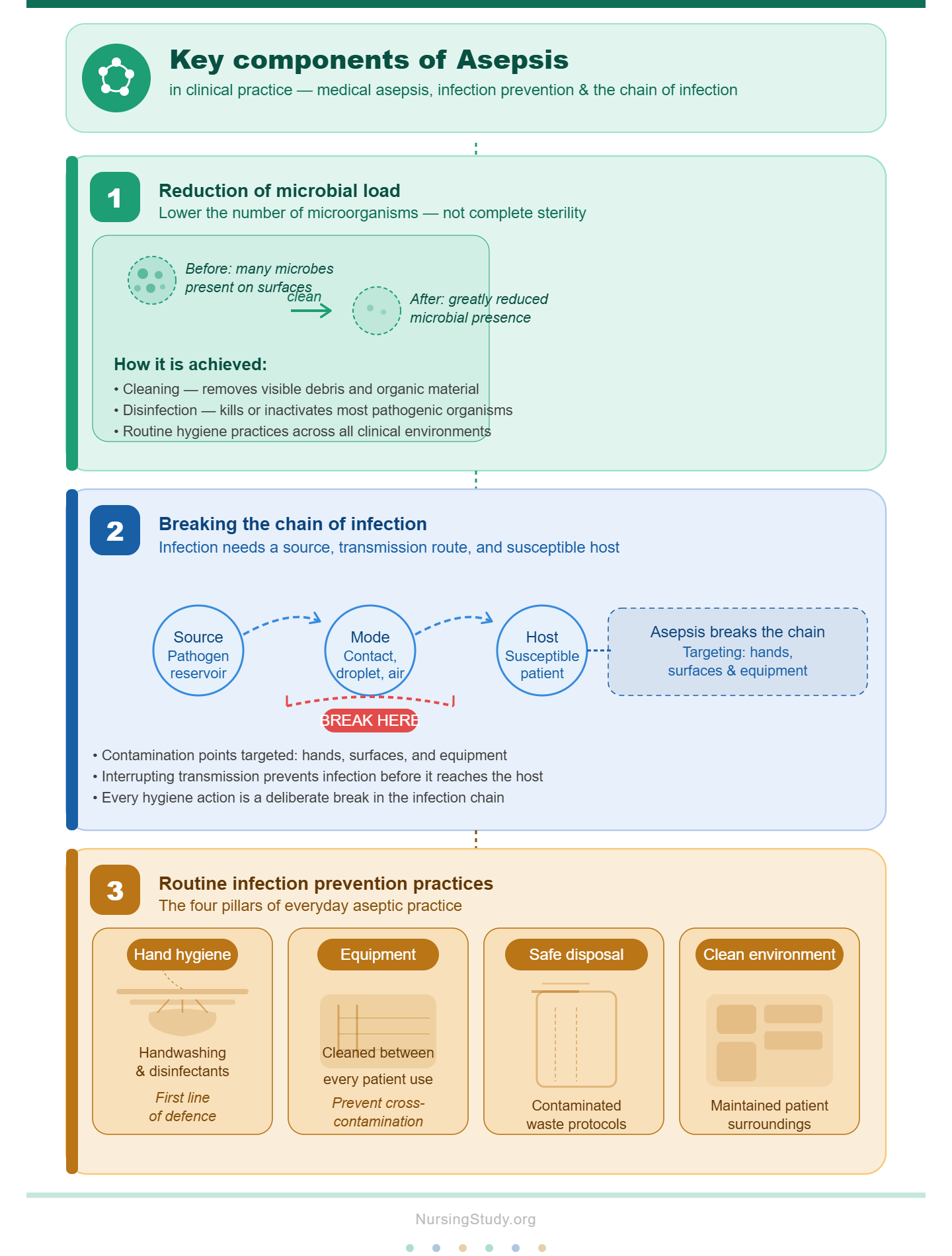
Key components of asepsis in clinical practice include:
- Reduction of microbial load
- Medical Asepsis focuses on lowering the number of microorganisms rather than achieving complete sterility.
- This is achieved through cleaning, disinfection, and routine hygiene practices.
- Breaking the chain of infection
- Infection transmission requires a source, mode of transmission, and a susceptible host.
- Medical Asepsis interrupts this chain by targeting contamination points such as hands, surfaces, and equipment.
- Routine infection prevention practices
- Hand hygiene (including handwashing and use of disinfectants)
- Cleaning of medical equipment
- Proper disposal of contaminated materials
- Maintenance of clean patient environments
Healthcare professionals rely on Medical Asepsis as part of standard patient care because it forms the baseline of infection prevention. It is applied continuously in both inpatient and outpatient environments, ensuring that every interaction reduces the likelihood of pathogen transmission. In many clinical situations, Medical Asepsis is the first line of defense before more advanced sterile measures are required.
Aseptic practice also extends into structured clinical procedures through aseptic technique, which combines principles of cleanliness and controlled handling of equipment to reduce contamination risks during medical procedures. This becomes especially important when caring for vulnerable patients, managing invasive devices, or performing procedures that could introduce pathogens into the body.
The distinction between Medical Asepsis and surgical asepsis is essential in understanding infection control practices. While Medical Asepsis focuses on reducing microorganisms in the environment, surgical asepsis aims to achieve complete sterility during surgical procedures. Both approaches work together to ensure comprehensive infection prevention, particularly in settings where surgical interventions or invasive procedures are performed.
Overall, asepsis represents a critical framework in healthcare that supports patient safety, reduces infection risks, and improves clinical outcomes. Through consistent application of Medical Asepsis, healthcare systems strengthen their ability to prevent healthcare-associated infections and maintain high standards of care across diverse medical environments.
Not confident in your nursing writing skills?
We’ll produce clear, professional, and evidence-based work
Foundations of Asepsis in Medical and Surgical Settings
Asepsis is a core principle in healthcare that focuses on maintaining environments and practices that reduce or eliminate harmful microorganisms. In both medical and surgical environments, asepsis forms the foundation of safe patient care, guiding how healthcare professionals interact with patients, equipment, and clinical spaces. Within this framework, Medical Asepsis is applied broadly in everyday clinical activities, while surgical asepsis is used in high-risk sterile procedures such as surgical procedures and invasive interventions involving a surgical site.
Understanding asepsis in medical and surgical environments
Asepsis in healthcare refers to the practices used to prevent contamination by microorganisms such as bacteria, viruses, and fungi that can cause disease. In practical terms, it ensures that medical settings and healthcare settings remain safe for both patients and staff.
In medical and surgical environments, asepsis is applied in two main contexts:
1. Medical environment (Medical Asepsis)
- Focuses on reducing the number and spread of pathogens
- Commonly applied in:
- Routine patient care
- Wound cleaning
- Vital signs monitoring
- Handling medical equipment
- Involves:
- Hand hygiene
- Use of disinfectants
- Clean technique rather than sterility
- Proper hand washing and environmental cleaning
Example: A nurse cleaning a patient’s wound using clean gloves and disinfectant without requiring a sterile field is applying Medical Asepsis.
2. Surgical environment (Surgical asepsis)
- Focuses on complete elimination of microorganisms to maintain sterility
- Required during:
- Surgical procedures
- Invasive catheter insertions
- Dressing of deep surgical site wounds
- Involves:
- Sterile field creation
- Use of sterile gloves
- Wearing sterile gowns
- Use of sterilized instruments
Example: During an appendectomy, the surgical team maintains sterility using surgical asepsis principles to ensure no contamination of the operative field.
The role of asepsis in infection prevention and patient safety
Asepsis plays a critical role in reducing risk of infection and ensuring overall patient safety across all care settings. It is one of the most effective strategies for preventing healthcare-associated infections (HAIs) and reducing morbidity and complications.
Key roles of asepsis include:
- Preventing spread of infection
- Interrupts transmission of harmful pathogens
- Reduces cross-contamination between patients and equipment
- Protecting vulnerable patients
- Especially important for ill patients, postoperative patients, and immunocompromised individuals
- Reducing complications
- Lowers rates of postoperative infections
- Prevents wound deterioration and serious complications
- Improving patient outcomes
- Enhances recovery rates
- Reduces hospital stay duration
- Minimizes morbidity and mortality
Example: Consistent use of hand hygiene before and after patient contact significantly reduces infection transmission in hospital wards.
Key differences between medical asepsis and surgical asepsis
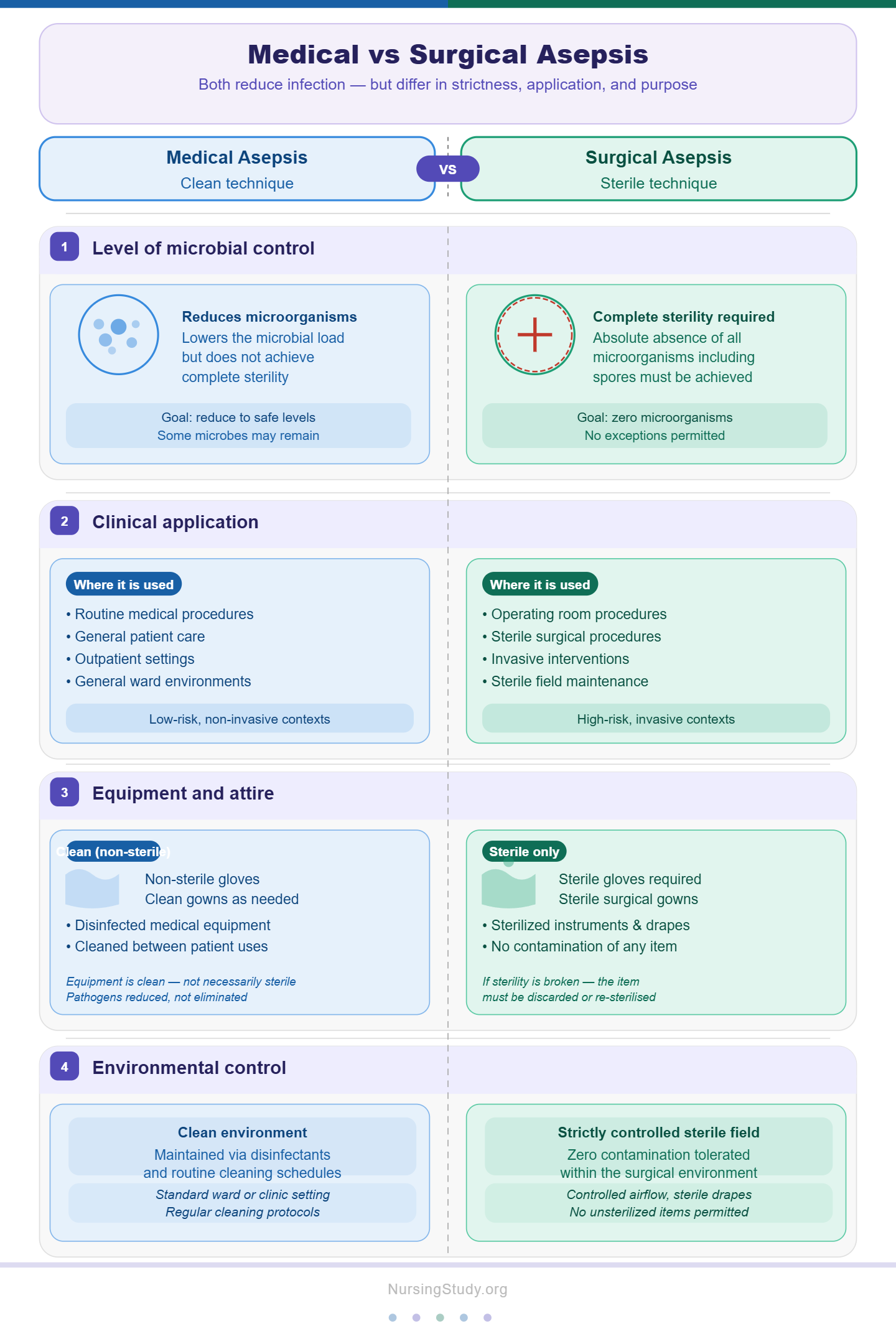
Although both aim to reduce infection, Medical Asepsis and surgical asepsis differ in strictness, application, and purpose.
1. Level of microbial control
- Medical Asepsis
- Reduces microorganisms
- Does not require complete sterility
- Surgical asepsis
- Requires complete absence of microorganisms (sterility)
2. Clinical application
- Medical Asepsis:
- Routine medical procedures
- General patient care
- Outpatient and ward settings
- Surgical asepsis:
- Operating room procedures
- Sterile surgical procedures
- Invasive interventions involving a sterile field
3. Equipment and attire
- Medical Asepsis:
- Clean gloves (non-sterile)
- Clean gowns when necessary
- Disinfected medical equipment
- Surgical asepsis:
- Sterile gloves
- Sterile gowns
- Sterilized instruments and materials
4. Environmental control
- Medical Asepsis:
- Clean environment maintained through disinfectants and cleaning routines
- Surgical asepsis:
- Strictly controlled sterile environment with no contamination allowed
Principles guiding asepsis in medical and surgical care
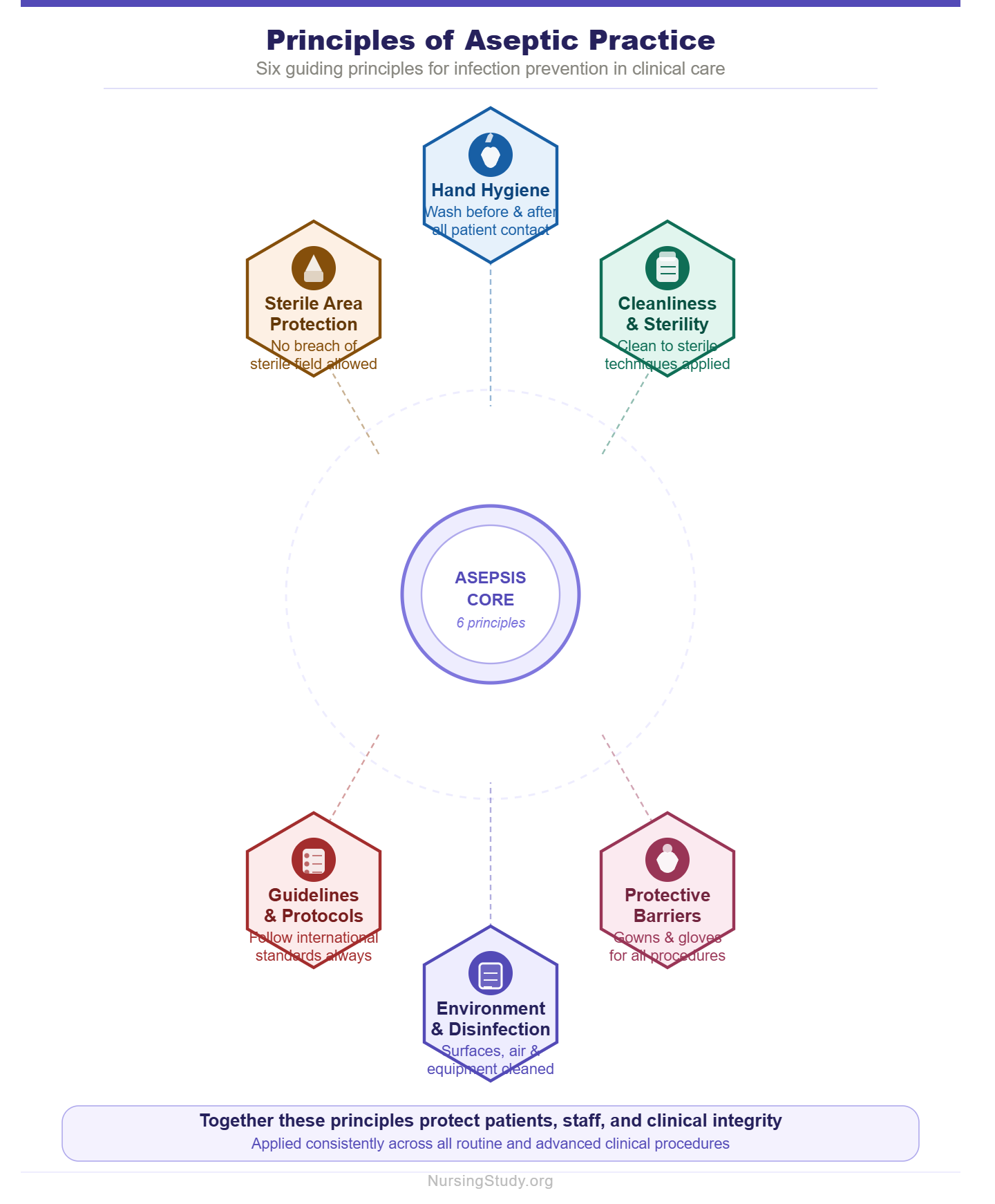
Aseptic practice is guided by structured principles that ensure consistency and effectiveness in infection prevention. These principles are applied by healthcare professionals use in both routine and advanced clinical procedures.
Core principles include:
1. Standard hygiene practices
- Consistent hand hygiene and handwashing
- Use of wash hands protocols before and after patient contact
- Proper use of disinfectants to reduce microbial load
2. Maintenance of cleanliness and sterility
- Clean technique in Medical Asepsis
- Strict sterility in surgical asepsis
- Ensuring instruments are properly sterilized
3. Protection of sterile areas
- Maintaining a sterile field during procedures
- Avoiding contamination of sterile instruments and materials
- Proper handling of sterile gloves and gowns
4. Proper use of protective barriers
- Wearing appropriate protective attire such as gowns and gloves
- Use of sterile gowns and barrier protection during surgical procedures
- Ensuring barriers remain uncontaminated during care
5. Environmental control and disinfection
- Use of disinfectant agents on surfaces and equipment
- Regular cleaning of medical equipment
- Maintaining controlled medical and surgical environments
6. Adherence to guidelines and protocols
- Following according to guidelines from infection control authorities
- Implementing international medical standards in clinical practice
- Ensuring compliance within healthcare institutions
Clinical application example
In a hospital ward, a nurse performing wound dressing on a post-operative patient applies Medical Asepsis by:
- Performing hand hygiene
- Using clean gloves
- Cleaning the wound with disinfectant
- Preventing contamination of surrounding surfaces
In contrast, during a central line insertion, surgical asepsis is applied by:
- Wearing sterile gloves and sterile gowns
- Establishing a sterile field
- Using sterilized instruments only
- Ensuring no breach of sterility occurs
Medical Asepsis and Clean Technique in Clinical Practice
Medical asepsis forms the practical backbone of everyday infection prevention in healthcare delivery. It is primarily concerned with reducing the number of microorganism present in the environment, on equipment, and on hands to minimize the spread of infection. Unlike surgical asepsis, which requires complete sterility, Medical Asepsis focuses on maintaining a safe level of cleanliness in medical settings and healthcare settings where patients receive continuous patient care. Through structured aseptic procedures, it helps healthcare professionals consistently reduce exposure to pathogen and protect patients from avoidable infections.
Medical asepsis and its role in breaking the chain of infection
Medical Asepsis plays a central role in interrupting the chain of infection, which is the process through which infections are transmitted from one source to another. The chain of infection typically includes:
- Infectious agent (pathogen)
- Reservoir (environment or host)
- Portal of exit
- Mode of transmission
- Portal of entry
- Susceptible host
Medical Asepsis breaks this chain at multiple points by reducing contamination in the environment and preventing transmission through contact.
Key ways Medical Asepsis breaks infection transmission:
- Reducing microbial load on surfaces through cleaning and disinfection
- Preventing cross-contamination during medical procedures
- Ensuring proper handling of medical equipment
- Encouraging consistent hand hygiene before and after patient interaction
- Using disinfectant solutions to eliminate pathogens on frequently touched surfaces
Example: A nurse disinfecting a bedside table before placing wound care supplies reduces the likelihood of transferring harmful pathogens to a patient’s wound site.
Clean technique and standard precautions used by healthcare professionals
Clean technique, also referred to as clean technique aseptic technique, is a practical application of Medical Asepsis used in non-sterile clinical procedures. It is widely applied by healthcare professionals in both hospital and outpatient environments.
Standard precautions include:
- Treating all bodily fluids as potentially infectious
- Using gloves when exposure to blood or body fluids is expected
- Proper disposal of contaminated materials
- Cleaning and disinfecting reusable equipment
- Avoiding direct contact with contaminated surfaces
Clean technique focuses on reducing contamination risk rather than achieving complete sterility. It is commonly used in:
- Dressing minor wounds
- Administering injections
- Catheter care (non-invasive maintenance)
- Routine patient care activities
Example: During a routine IV line flush, a nurse uses clean gloves and disinfects the access port before administration, ensuring safe delivery without requiring full sterility.
Hand hygiene practices and wash hands protocols in medical asepsis
Hand hygiene is the most critical and effective component of Medical Asepsis. It directly reduces transmission of harmful pathogens between patients, staff, and surfaces. In healthcare environments, hand washing and antiseptic hand preparation are essential interventions supported by global infection control guidelines.
Key hand hygiene practices include:
- When to perform hand hygiene
- Before and after patient contact
- Before aseptic procedures
- After exposure to bodily fluids
- After touching patient surroundings
- Before and after wearing gloves
- Methods of hand hygiene
- Handwashing with soap and water
- Use of alcohol-based hand rubs
- Proper drying with single-use towels
- Technique for effective wash hands practice
- Wet hands thoroughly
- Apply soap and lather all surfaces
- Scrub for at least 20 seconds
- Rinse thoroughly
- Dry completely and avoid recontamination
Healthcare institutions emphasize hand hygiene as a primary strategy for preventing healthcare-associated infections (HAIs) and ensuring safe clinical practice.
Example: Before administering medication, a nurse performs hand hygiene to prevent transferring pathogens from one patient environment to another.
Application of medical asepsis in routine patient care
Medical Asepsis is applied continuously in routine clinical activities to ensure a safe care environment. It is embedded in nearly every aspect of patient care, from basic hygiene support to equipment handling and environmental cleaning.
Common applications include:
1. Environmental cleaning
- Regular disinfection of patient beds, tables, and equipment
- Use of approved disinfectant solutions
- Proper cleaning schedules in care settings
2. Equipment handling
- Cleaning medical equipment between patients
- Proper sterilization when required
- Ensuring instruments are safe for reuse
3. Patient hygiene support
- Assisting patients with bathing and oral care
- Maintaining skin integrity to prevent infection entry points
- Ensuring clean linens and clothing
4. Routine clinical procedures
- Dressing wounds using clean technique
- Administering medications safely
- Monitoring vital signs without contamination
5. Waste management
- Safe disposal of contaminated materials
- Segregation of infectious waste
- Prevention of environmental contamination
Clinical example:
A healthcare worker assisting a bedridden patient with hygiene care applies Medical Asepsis by:
- Performing hand hygiene before contact
- Using clean gloves during bathing
- Changing soiled linens promptly
- Disinfecting surrounding surfaces afterward
Aseptic Technique in Clinical Procedures
Aseptic technique is a structured set of practices used in medical and surgical care to prevent contamination during medical procedures and other invasive interventions. It is a critical component of infection prevention that builds on Medical Asepsis but extends further to minimize or eliminate exposure to microorganism at points where the body is vulnerable. In clinical practice, aseptic technique is consistently applied by healthcare professionals to reduce the risk of infection, particularly during procedures that could introduce pathogen into sterile body areas.
Unlike general cleanliness measures, aseptic technique is highly procedural and requires strict adherence to defined steps, especially when working within or near a sterile field.
Core principles of aseptic technique in nursing practice
The effectiveness of aseptic technique depends on a set of foundational principles that guide safe clinical actions. These principles ensure that contamination is prevented at every stage of care.
Key principles include:
- Maintaining sterility at all times
- Any sterile item that touches a non-sterile surface is considered contaminated.
- Sterile items must only be used within a controlled sterile environment.
- Minimizing exposure to microorganisms
- Reducing contact between sterile equipment and non-sterile surfaces.
- Limiting movement and conversation during procedures.
- Protecting key parts and key sites
- Key parts include sterile instruments and gloves.
- Key sites include wounds, IV insertion points, and surgical site areas.
- Strict hand hygiene
- Performing hand hygiene before and after procedures.
- Ensuring proper hand washing or antiseptic hand preparation.
- Use of appropriate protective barriers
- Wearing sterile gloves, gowns, and masks when required.
- Preventing contamination through physical barriers.
These principles ensure that aseptic technique remains effective in preventing contamination during high-risk clinical care.
Steps involved in performing aseptic technique during procedures
Aseptic technique is performed through a structured sequence of actions designed to maintain sterility and prevent contamination.
Standard procedural steps include:
- Preparation phase
- Perform hand hygiene using wash hands protocols.
- Gather sterile supplies and check packaging integrity.
- Ensure the environment is clean and organized.
- Setting up sterile field
- Open sterile packs without contaminating contents.
- Place sterile items on a clean, dry surface.
- Avoid reaching over the sterile field.
- Donning protective equipment
- Put on sterile gloves and, if required, sterile gowns.
- Ensure no contact between sterile and non-sterile surfaces.
- Performing the procedure
- Handle sterile instruments only within the sterile field.
- Avoid touching non-sterile surfaces during the procedure.
- Maintain focus to prevent accidental contamination.
- Completion and disposal
- Dispose of used materials safely.
- Remove gloves and perform hand hygiene.
- Clean the area using appropriate disinfectant.
Example: During catheter insertion, a nurse prepares a sterile tray, dons sterile gloves, maintains a sterile field, and ensures the catheter remains uncontaminated throughout insertion.
Use of sterile gloves and sterile gowns in maintaining aseptic technique
Protective barriers such as sterile gloves and gowns are essential in maintaining aseptic integrity during invasive procedures.
Sterile gloves:
- Used to prevent direct hand contact with sterile items
- Required during procedures involving open tissues or invasive access
- Must be changed immediately if contamination occurs
Sterile gowns:
- Provide a protective barrier against contamination from clothing
- Used during surgical procedures or high-risk interventions
- Help maintain a controlled sterile environment
Together, these barriers ensure that healthcare professionals use appropriate protection while safeguarding patients from external contamination sources.
Example: During wound suturing, a clinician wears sterile gloves and a sterile gown to prevent introducing external pathogens into the wound.
Creating and maintaining a sterile field during clinical procedures
A sterile field is a designated area that is free from contamination and is essential for safe aseptic technique.
Steps to create a sterile field:
- Select a clean, dry surface
- Open sterile packs carefully without crossing over contents
- Allow sterile items to remain within defined boundaries
- Place sterile instruments without contamination
Maintaining sterility requires:
- Keeping sterile items above waist level
- Avoiding reaching over the field
- Not turning away from the sterile area
- Monitoring for breaks in sterility
The sterile field is especially important during surgical procedures, wound management, and invasive device insertion.
Example: In a dressing change for a deep wound, maintaining a sterile field prevents introduction of harmful pathogens that could delay healing or cause infection.
Common breaches in aseptic technique and prevention strategies
Despite structured protocols, breaches in aseptic technique can occur and significantly increase the risk of infection. These breaches often lead to contamination of equipment, wounds, or surgical site areas.
Common breaches include:
- Touch contamination
- Contact between sterile gloves and non-sterile surfaces
- Accidental touching of sterile instruments with unsterile hands
- Environmental contamination
- Airflow or movement disrupting sterile field
- Placing sterile items in contaminated areas
- Improper handling of sterile equipment
- Opening sterile packs incorrectly
- Using expired or damaged sterile supplies
- Breaks in personal protective barriers
- Torn gloves or improperly worn gowns
- Failure to change contaminated PPE
Prevention strategies:
- Strict adherence to aseptic protocols and guidelines
- Continuous training for healthcare professionals
- Routine monitoring and supervision during procedures
- Use of standardized checklists during aseptic procedures
- Immediate correction of contamination incidents
Example: If a sterile glove touches a non-sterile surface during a procedure, it must be replaced immediately to prevent contamination of the sterile field.
Surgical Asepsis and Sterile Field Management in Medical and Surgical Care
Surgical asepsis represents the highest level of infection prevention used in healthcare, where the goal is to create and maintain a completely sterile environment free from all microorganism. It is essential in medical and surgical practice, particularly during invasive surgical procedures that expose sterile body tissues such as the surgical site. Unlike Medical Asepsis, which reduces the number of pathogens, surgical asepsis aims for total elimination of pathogen, ensuring that no contamination reaches vulnerable tissues. This level of control is critical for patient care, as even minimal contamination can lead to severe postoperative complications.
Surgical asepsis and its importance in medical and surgical procedures
Surgical asepsis is a cornerstone of safe operative and invasive care. It is strictly applied whenever there is a break in the body’s natural barriers, such as skin or mucous membranes.
Importance of surgical asepsis includes:
- Prevention of infection at surgical sites
- Reduces contamination of the surgical site
- Prevents introduction of harmful microorganisms during incision or device insertion
- Protection of patient safety
- Minimizes risk of infection and post-surgical complications
- Reduces morbidity and mortality associated with surgical infections
- Support for successful surgical outcomes
- Promotes faster wound healing
- Reduces hospital stay and improves recovery rates
- Reduction of healthcare burden
- Decreases incidence of healthcare-associated infections (HAIs)
- Lowers need for additional treatment and readmissions
Example: During abdominal surgery, strict surgical asepsis ensures that no external contamination enters the abdominal cavity, preventing life-threatening infections.
Establishing and maintaining a sterile field in surgical environments
The sterile field is the foundation of surgical asepsis. It refers to a designated area where all objects and surfaces are free from contamination and free of microorganisms.
Steps in establishing a sterile field:
- Perform thorough hand hygiene
- Ensure all surgical packs are sterile and intact
- Open sterile drapes carefully without contamination
- Arrange sterile instruments within the field
- Maintain strict separation between sterile and non-sterile areas
Maintaining sterility requires:
- Continuous monitoring of the field for contamination
- Avoiding reaching over or turning away from the sterile field
- Keeping sterile items above waist level
- Restricting unnecessary movement and conversation in the area
In operating rooms, maintaining a sterile field is a shared responsibility among all healthcare professionals use involved in the procedure.
Example: During orthopedic surgery, instruments are arranged on a sterile draped table, and any accidental contact with non-sterile surfaces requires immediate replacement of the contaminated item.
Sterilization of instruments, gowns, and gloves in surgical asepsis
Sterilization is the process of eliminating all forms of microbial life, including spores, and is a critical component of surgical asepsis.
Key sterilization practices include:
1. Sterile instruments
- Cleaned and sterilized using autoclaving or chemical methods
- Stored in sterile packaging until use
- Inspected for integrity before surgical procedures
2. Sterile gowns
- Worn by surgical team members to prevent contamination
- Act as barriers between personnel and sterile environment
- Included in strict infection prevention protocols
3. Sterile gloves
- Used to maintain direct sterility during procedures
- Changed immediately if contamination occurs
- Essential for handling sterile instruments and tissues
These measures ensure that all items used in surgical environments remain safe for patient care and reduce contamination risks.
Example: Before inserting a central venous catheter, a clinician uses sterilized gloves, gown, and instruments to prevent introducing infection into the bloodstream.
Operating room infection control measures and contamination prevention
The operating room is a highly controlled environment where infection prevention is strictly enforced through structured protocols.
Key infection control measures include:
- Strict environmental cleaning
- Regular disinfection of surfaces using approved disinfectant
- Maintenance of air filtration systems
- Controlled movement and access
- Limited entry to authorized personnel only
- Reduction of traffic to minimize contamination risk
- Proper use of protective barriers
- Use of sterile gowns, gloves, and masks
- Ensuring all healthcare professionals adhere to aseptic protocols
- Safe handling of equipment
- Sterile instruments handled only within sterile zones
- Immediate removal of contaminated materials
- Prevention of cross-contamination
- Separation of clean and contaminated zones
- Strict adherence to surgical asepsis protocols
Example: In a cardiac surgery suite, airflow systems are designed to reduce airborne contamination while staff maintain sterile attire throughout the procedure.
International medical standards guiding surgical asepsis practices
Surgical asepsis is governed by global infection prevention standards that ensure consistency and safety across healthcare systems.
Key guiding principles include:
- Evidence-based infection control guidelines
- Developed through clinical research, including randomized controlled trials and systematic reviews
- Focus on reducing surgical site infections
- Standardized aseptic protocols
- Ensure uniform application of surgical asepsis across facilities
- Include step-by-step procedures for sterile field management
- Global healthcare recommendations
- Provided by international health organizations to ensure safe medical services
- Include guidance on sterilization, PPE use, and operating room practices
- Continuous quality improvement
- Supported by prospective study and retrospective cohort study findings
- Helps refine infection prevention strategies based on real-world outcomes
These standards ensure that surgical asepsis practices remain consistent, effective, and aligned with global patient safety expectations.
Example: Hospitals following international guidelines report lower rates of postoperative infection due to standardized sterile protocols and strict operating room discipline.
Postoperative Care and Prevention of Infection in Surgical Patients
Postoperative care is a critical phase in the continuum of medical and surgical management, where the primary focus is maintaining stability, promoting healing, and preventing complications after surgical procedures. At this stage, the application of aseptic principles—particularly Medical Asepsis and surgical asepsis when required—plays a central role in reducing the risk of infection at the surgical site. Because patients are often vulnerable during recovery, consistent patient care practices are essential in minimizing exposure to microorganism and ensuring optimal recovery outcomes.
Role of asepsis in reducing incidence of postoperative complications
Asepsis is one of the most effective strategies for reducing the incidence of postoperative infections and related complications. After surgery, the body’s natural barriers are disrupted, creating an entry point for pathogen and increasing the risk of infection.
Key roles of asepsis in postoperative outcomes include:
- Preventing surgical site infections (SSIs)
- Proper aseptic practices reduce contamination of the wound area
- Protects the surgical site during dressing changes and care
- Reducing morbidity and mortality
- Decreases complications such as wound dehiscence and sepsis
- Lowers morbidity and mortality associated with postoperative infections
- Supporting wound healing
- Maintains a clean environment that promotes tissue repair
- Prevents delays in recovery caused by infection
- Enhancing overall patient safety
- Ensures safer recovery within healthcare environments
- Strengthens patient safety outcomes across care settings
Example: A patient recovering from abdominal surgery benefits from strict aseptic wound dressing changes, which significantly reduces the risk of bacterial contamination and infection development.
Postoperative wound care and monitoring to prevent infection
Effective postoperative wound care is a structured process that relies heavily on Medical Asepsis principles to maintain cleanliness and prevent contamination.
Key components include:
1. Regular wound assessment
- Monitoring for redness, swelling, heat, and discharge
- Evaluating wound edges for proper healing
- Documenting changes in wound condition
2. Dressing changes using aseptic technique
- Using clean or sterile technique depending on wound type
- Applying appropriate sterile gloves when necessary
- Using sterile materials to prevent contamination
3. Maintenance of wound environment
- Keeping wound area dry and clean
- Avoiding unnecessary manipulation of the dressing
- Ensuring proper disposal of contaminated materials
4. Use of disinfectants and cleaning agents
- Cleaning surrounding skin using approved disinfectant solutions
- Preventing microbial growth in surrounding tissue
Example: A postoperative patient with a knee replacement undergoes daily wound inspection and dressing changes under aseptic conditions to prevent infection and ensure proper healing.
Patient care interventions that protect patients after surgery
Postoperative recovery involves multiple patient care interventions aimed at reducing complications and supporting healing. Healthcare professionals use structured aseptic and clinical practices to ensure safe recovery.
Key interventions include:
- Pain management and mobility support
- Encouraging early mobilization to improve circulation
- Preventing complications such as blood clots and delayed healing
- Infection prevention strategies
- Maintaining hand hygiene before patient contact
- Using clean technique aseptic technique during care procedures
- Ensuring clean handling of medical equipment
- Respiratory care
- Encouraging deep breathing exercises to prevent pneumonia
- Monitoring oxygen saturation in high-risk patients
- Nutritional support
- Promoting adequate protein intake for wound healing
- Supporting immune function to reduce infection risk
- Environment management
- Keeping patient surroundings clean
- Reducing exposure to harmful pathogens within the care area
Example: A postoperative patient is assisted with early ambulation and receives wound care under aseptic conditions to reduce infection risk and promote faster recovery.
Early identification and management of surgical site contamination
Early detection of contamination at the surgical site is essential in preventing progression to serious infection. Prompt intervention helps avoid complications and reduces the need for extended treatment.
Signs of possible contamination include:
- Increased redness, swelling, or warmth around the wound
- Purulent or foul-smelling discharge
- Delayed wound healing
- Increased pain at the surgical site
- Fever or systemic signs of infection
Management strategies:
- Immediate wound assessment by healthcare professionals
- Initiation of appropriate wound cleaning using sterile or clean technique
- Application of appropriate antimicrobial or dressing interventions
- Escalation of care when infection is suspected
- Use of sterilization principles to prevent further contamination
Example: If a postoperative wound shows purulent discharge, the healthcare team initiates immediate aseptic wound care, collects samples for laboratory testing, and adjusts treatment based on findings.
Improving outcomes through clinical case report analysis in postoperative care
Clinical case analysis plays an important role in improving postoperative infection prevention strategies. By reviewing real-world patient outcomes, healthcare systems can identify patterns, improve protocols, and enhance patient care practices.
Role of case report analysis includes:
- Identifying infection trends
- Helps detect recurring causes of postoperative infections
- Supports early intervention strategies
- Improving aseptic practice compliance
- Highlights gaps in adherence to aseptic procedures
- Strengthens training for healthcare professionals
- Enhancing evidence-based practice
- Uses findings from clinical research, including observational cohort study, retrospective cohort, and prospective study designs
- Supports development of improved infection prevention protocols
- Reducing healthcare burden
- Decreases readmissions and extended hospital stays
- Improves efficiency in healthcare settings
Example: A case report analysis reveals that improper dressing technique contributed to increased postoperative infections, leading to revised aseptic training protocols for staff.
Infection Control Systems, Sterilization, and Healthcare Policies
Infection control systems form the structural backbone of safe medical and surgical practice, ensuring that care delivery consistently minimizes the transmission of microorganism and reduces the risk of infection. These systems integrate Medical Asepsis, surgical asepsis, and broader institutional policies to protect patients across all care settings, from outpatient clinics to high-dependency surgical units. Within this framework, healthcare professionals rely on standardized protocols, evidence-based guidelines, and continuous monitoring systems to maintain high levels of patient care and safety.
Sterilization methods used in healthcare settings
Sterilization is a critical process that eliminates all forms of microbial life, including bacteria, viruses, fungi, and spores. It is essential in ensuring that medical equipment, instruments, and materials used in medical procedures and surgical procedures are completely safe for use.
Common sterilization methods include:
1. Steam sterilization (Autoclaving)
- Uses high-pressure saturated steam
- Most widely used method in hospitals
- Effective for sterile instruments, surgical tools, and linens
2. Dry heat sterilization
- Uses high temperatures without moisture
- Suitable for glassware and metal instruments
3. Chemical sterilization
- Uses liquid or gaseous agents
- Applied to heat-sensitive equipment
4. Radiation sterilization
- Uses gamma or electron beam radiation
- Common in disposable medical supplies
Sterilization ensures that equipment used during surgical procedures is free of harmful pathogens, significantly reducing the risk of infection in patients.
Example: Surgical scissors used in an operation are autoclaved before and after use to ensure complete sterility before they contact a surgical site.
Infection control protocols used by healthcare professionals
Infection control protocols provide structured guidance for healthcare professionals use in preventing the spread of infections within healthcare environments. These protocols combine Medical Asepsis practices with broader institutional procedures to ensure consistent safety.
Core infection control protocols include:
- Hand hygiene compliance
- Regular handwashing using soap and water or antiseptic solutions
- Alcohol-based rubs used when appropriate
- Strict adherence before and after patient care
- Use of personal protective equipment (PPE)
- Gloves, gowns, masks, and eye protection
- Use of sterile gloves during invasive procedures
- Use of sterile gowns in surgical environments
- Environmental cleaning
- Regular disinfection of surfaces using approved disinfectant
- Cleaning of patient areas to reduce contamination
- Safe handling of medical waste
- Proper disposal of contaminated materials
- Prevention of cross-contamination in healthcare facilities
- Aseptic procedures
- Maintaining sterile conditions during invasive care
- Ensuring sterile field integrity during procedures
Example: A nurse administering IV therapy follows infection control protocols by performing hand hygiene, using clean gloves, and disinfecting the IV access point before administration.
Role of HAIs surveillance in improving patient safety
Healthcare-associated infections (HAIs) are infections acquired during the course of receiving healthcare treatment. Surveillance systems for HAIs play a crucial role in identifying infection trends, improving outcomes, and enhancing patient safety.
Key functions of HAIs surveillance include:
- Monitoring infection rates
- Tracks frequency of hospital-acquired infections
- Identifies high-risk units and procedures
- Identifying infection sources
- Helps trace contamination pathways
- Detects breakdowns in aseptic practice
- Guiding prevention strategies
- Supports targeted infection control interventions
- Improves adherence to aseptic procedures
- Reducing morbidity and mortality
- Lowers infection-related complications
- Improves overall clinical outcomes
HAIs surveillance is often supported by systematic review and meta-analysis, randomized controlled studies, and clinical research that evaluate infection prevention strategies across healthcare systems.
Example: A hospital identifies increased post-surgical infections through surveillance data and introduces stricter sterilization and hand hygiene compliance measures, reducing infection rates significantly.
Implementation of international medical infection control guidelines
International infection control guidelines provide standardized frameworks for preventing infections across global healthcare systems. These guidelines ensure consistency in practice regardless of geographic or institutional differences.
Key elements include:
- Evidence-based recommendations
- Developed from clinical research and randomized clinical trial findings
- Focus on reducing infection transmission and improving outcomes
- Standard aseptic practices
- Integration of Medical Asepsis and surgical asepsis principles
- Emphasis on consistent aseptic method application
- Guidance on sterilization and disinfection
- Clear protocols for sterilization of instruments
- Use of approved cleaning agents and disinfectant solutions
- Patient safety frameworks
- Prioritization of patient safety in all healthcare interventions
- Reduction of morbidity and mortality associated with infections
- Global alignment of healthcare practices
- Ensures consistency across international medical systems
- Supports quality improvement in healthcare settings
Example: Hospitals adopting international guidelines standardize surgical prep procedures, reducing variability in aseptic technique and improving surgical outcomes.
Integration of asepsis practices into healthcare systems and policy
The integration of asepsis into healthcare systems ensures that infection prevention is not only a clinical practice but also an institutional and policy-driven priority. This integration strengthens consistency, accountability, and long-term patient safety outcomes.
Key integration strategies include:
- Institutional infection control policies
- Embedding aseptic standards into hospital protocols
- Ensuring compliance across all departments
- Training and competency development
- Continuous education for healthcare professionals
- Simulation-based training in aseptic procedures
- Quality assurance and audits
- Monitoring adherence to infection control protocols
- Evaluating performance using structured audits
- Use of clinical evidence
- Incorporation of findings from prospective study, retrospective cohort study, and observational cohort study
- Continuous improvement based on literature review findings
- System-wide infection prevention strategies
- Integration of asepsis into hospital design and workflow
- Standardization of medical services to reduce infection risk
Example: A hospital integrates aseptic guidelines into its electronic health record system, prompting staff to complete hand hygiene checks before documenting patient care activities.
Challenges and Quality Improvement in Aseptic Practice
Maintaining high standards of asepsis in healthcare is a continuous process that requires vigilance, competence, and system-wide support. Despite the availability of clear guidelines and established protocols, adherence to Medical Asepsis, surgical asepsis, and overall infection prevention standards can be inconsistent in real-world healthcare settings. These inconsistencies may increase the risk of infection, compromise patient care, and contribute to healthcare-associated infections (HAIs). For this reason, quality improvement strategies are essential in strengthening aseptic practice and ensuring safe medical and surgical care.
Common problems in aseptic technique compliance
Non-compliance with aseptic standards remains a significant challenge in clinical practice. These issues often arise from human, environmental, and system-related factors that affect healthcare professionals use of infection control practices.
Common problems include:
- Inconsistent hand hygiene practices
- Missed handwashing opportunities before and after patient care
- Improper hand hygiene technique or insufficient duration
- Over-reliance on gloves without proper cleansing
- Breaks in sterile technique
- Accidental contamination of sterile field
- Improper handling of sterile gloves and sterile gowns
- Touch contamination during aseptic procedures
- Time pressure and workload demands
- Rushed medical procedures leading to skipped steps
- High patient volume affecting compliance with protocols
- Environmental constraints
- Overcrowded medical settings
- Limited access to sterilization resources or disinfectant supplies
- Knowledge and skill gaps
- Inadequate understanding of aseptic technique principles
- Poor differentiation between clean technique and sterile technique
Example: A nurse performing wound care may unintentionally contaminate a sterile dressing due to improper glove handling, increasing the risk of infection at the wound site.
Training healthcare professionals in asepsis and infection prevention
Continuous education is essential in ensuring that healthcare professionals maintain competence in infection prevention and aseptic practice. Training programs strengthen adherence to both Medical Asepsis and surgical asepsis standards.
Key components of training include:
- Theoretical education
- Understanding microorganism transmission
- Principles of infection control and prevent the spread of infection
- Differentiation between clean and sterile techniques
- Practical skills training
- Correct hand washing and hand hygiene techniques
- Proper use of sterile instruments, gowns, and gloves
- Establishing and maintaining a sterile environment
- Simulation-based learning
- Practice of aseptic method in controlled environments
- Scenario-based training for contamination prevention
- Continuing professional development
- Regular updates based on international medical guidelines
- Incorporation of findings from clinical research and literature review
Example: A hospital introduces simulation workshops where staff practice inserting IV lines using full aseptic technique to reduce contamination errors during real procedures.
Audit systems and quality improvement in sterile practice
Audit systems are essential tools for evaluating compliance with aseptic standards and improving infection prevention outcomes. They provide structured feedback that helps healthcare institutions refine their practices.
Key elements of audit and quality improvement include:
- Monitoring compliance with aseptic standards
- Observation of aseptic procedures in clinical settings
- Evaluation of hand hygiene adherence rates
- Data collection and analysis
- Tracking infection rates, including incidence of postoperative infections
- Using prospective study and retrospective cohort data
- Performance feedback
- Providing structured feedback to healthcare professionals
- Identifying gaps in practice and recommending improvements
- Implementation of corrective actions
- Revising protocols for sterilization and infection control
- Enhancing training programs based on audit findings
Quality improvement is often supported by systematic review and meta-analysis, which help identify best practices in infection prevention across multiple healthcare environments.
Example: An audit reveals poor compliance with sterile glove use during catheter insertion, leading to targeted retraining and a subsequent reduction in infection rates.
Responding to suspected contamination in sterile environments
Immediate and appropriate response to contamination is critical in preventing infection spread and protecting patient safety. When a breach occurs in a sterile field or during surgical procedures, rapid corrective action is required.
Response steps include:
- Immediate recognition of contamination
- Identifying breaks in sterility during procedures
- Noticing compromised sterile gloves or equipment
- Stopping the procedure when necessary
- Halting activity to prevent further contamination
- Protecting the surgical site or wound area
- Replacing contaminated materials
- Re-establishing a new sterile field
- Replacing gloves, gowns, or instruments
- Disinfection and environmental control
- Using appropriate disinfectant solutions
- Cleaning contaminated surfaces
- Reporting and documentation
- Recording the incident in clinical documentation systems
- Supporting future quality improvement initiatives
Example: If a sterile instrument accidentally touches a non-sterile surface during a procedure, it must be replaced immediately to avoid introducing harmful pathogens into the patient.
Strengthening adherence to asepsis standards in clinical settings
Improving adherence to aseptic standards requires a combination of institutional support, continuous training, and accountability systems within care settings.
Key strategies include:
- Leadership and policy enforcement
- Strong infection control policies within healthcare institutions
- Enforcement of according to guidelines practices
- Standardization of procedures
- Use of checklists for medical procedures and surgical procedures
- Clear protocols for sterilize and use of disinfectants
- Continuous education and reinforcement
- Regular training for all health professionals
- Updates based on evolving evidence from clinical research
- Use of technology and monitoring tools
- Electronic tracking of hand hygiene compliance
- Automated alerts for infection control violations
- Culture of safety
- Encouraging accountability among healthcare workers
- Promoting shared responsibility for infection prevention
Example: A hospital introduces a digital monitoring system that tracks hand hygiene compliance, improving adherence rates and reducing HAIs over time.
Not confident in your nursing writing skills?
We’ll produce clear, professional, and evidence-based work
Conclusion
Asepsis remains a fundamental pillar of safe and effective healthcare delivery, forming the basis of infection prevention across all medical and surgical environments. Through the consistent application of Medical Asepsis, surgical asepsis, and structured aseptic procedures, healthcare systems are able to significantly reduce the transmission of microorganism, limit the spread of infection, and protect patients from avoidable harm during patient care.
In everyday clinical practice, the integration of hand hygiene, proper use of sterile field techniques, and adherence to sterilization protocols ensures that healthcare professionals maintain a high standard of safety during medical procedures and surgical procedures. These practices are not isolated tasks but interconnected components of a broader infection control system that directly influences patient safety, recovery outcomes, and the overall quality of care.
The importance of asepsis is further highlighted in its impact on reducing healthcare-associated infections (HAIs), minimizing postoperative complications, and lowering the overall risk of infection within healthcare settings. When properly implemented, aseptic principles support better healing outcomes, reduce morbidity, and strengthen trust in healthcare services.
However, maintaining high standards of aseptic practice requires more than technical knowledge. It demands continuous education, strict adherence to guidelines, regular audits, and a strong culture of accountability among healthcare professionals use. Challenges such as non-compliance, environmental constraints, and procedural errors highlight the need for ongoing quality improvement initiatives and reinforcement of best practices.
Ultimately, asepsis is not merely a clinical procedure but a professional responsibility that underpins all safe care delivery. By consistently applying Medical Asepsis and reinforcing aseptic standards across all levels of care, healthcare systems can ensure safer environments, improved clinical outcomes, and sustained protection for every patient receiving care.
Frequently Asked Questions
What are the 7 principles of aseptic technique?
The 7 principles of aseptic technique are key rules used to prevent contamination during clinical procedures:
- Only sterile items touch sterile items
- Sterile fields must be continuously monitored and maintained
- Anything below waist level or out of sight is considered contaminated
- Hands must be kept away from sterile areas
- Moisture or wet surfaces are considered contaminated (strike-through contamination)
- Sterile fields must not be reached over or crossed
- Movement and air flow around sterile fields should be minimized
What are the 5 principles of aseptic technique?
The 5 core principles focus on essential infection prevention actions:
- Perform effective hand hygiene before any procedure
- Use appropriate personal protective equipment (PPE)
- Maintain a sterile or clean field depending on procedure type
- Avoid contamination of sterile instruments and supplies
- Dispose of contaminated materials safely and correctly
What is medical asepsis aseptic technique?
Medical asepsis aseptic technique refers to practices used to reduce the number and spread of microorganisms in healthcare environments. It does not eliminate all microbes but minimizes contamination risk. It includes hand hygiene, cleaning of equipment, use of disinfectants, and maintaining a clean patient care environment to prevent infection transmission.
What are the 8 principles of asepsis?
The 8 principles of asepsis provide a more detailed framework for infection control:
- All items within a sterile field must remain sterile
- Sterile and non-sterile items must not be mixed
- The edges of sterile packaging are considered non-sterile
- Hands must remain above waist level and in view
- Any object that becomes wet is considered contaminated
- Sterile fields must be set up as close as possible to the time of use
- Prolonged exposure increases contamination risk
- When contamination is suspected, the item or field must be replaced immediately
