

Safe and Effective Left Lateral Position in Patient Positioning: Lateral Position, Lateral Decubitus Position, and Lateral Recumbent Position Guidelines for Nursing Practice
Patient positioning is a foundational component of nursing and perioperative care that significantly influences patient safety, physiological stability, and procedural outcomes. It is not merely a mechanical task of placing a patient on an operating table but a structured clinical intervention that requires knowledge of anatomy, biomechanics, and the effects of gravity on body systems. Appropriate positioning ensures optimal exposure for procedures, maintains organ function, and minimizes the risk of complications such as pressure injuries, nerve damage, and impaired circulation.
Within the broader scope of clinical positioning, several standardized postures are used depending on the patient’s condition and procedural requirements. These include the supine position, prone position, lithotomy, Fowler’s, jackknife, Sims, and various lateral-based positions. Among these, lateral alignment plays a particularly important role due to its versatility in both operative and non-operative settings, as well as its impact on respiratory and cardiovascular dynamics.
The left lateral position represents a specific form of side-lying alignment in which the patient is positioned on their left side. This position is part of a broader category of lateral positioning techniques, which also include the lateral decubitus position and lateral recumbent position. Each variation shares core principles but differs in clinical application, degree of flexion, and intended procedural use.
Key characteristics and clinical relevance of lateral-based positioning include:
- Redistribution of body weight to reduce pressure on posterior anatomical structures
- Improved access to specific surgical sites, particularly in abdominal, thoracic, and retroperitoneal procedures
- Enhanced visualization and accessibility during diagnostic and therapeutic interventions
- Altered physiological effects on respiration, circulation, and organ displacement
Despite its benefits, lateral positioning requires careful consideration of patient alignment and support. Inappropriate placement may lead to complications such as brachial plexus injury, compromised venous return, or respiratory restriction due to thoracic compression. For this reason, proper patient positioning must be guided by established clinical principles and tailored to the individual’s condition and procedural needs.
The application of lateral positioning techniques is highly dependent on context. In non-operative care, it may be used to promote comfort, improve breathing efficiency, or facilitate nursing care activities such as hygiene and wound management. In operative settings, it is often used to optimize surgical access while maintaining stability and safety under anesthesia. This dual utility makes it a critical skill in both acute and surgical nursing environments.
A clear understanding of positioning principles is essential for ensuring safe practice. Effective patient positioning involves:
- Careful assessment of the patient’s physiological status and mobility
- Selection of an appropriate position based on clinical indication
- Use of supports such as pads and cushions to maintain alignment
- Continuous monitoring to prevent complications during prolonged positioning
Ultimately, the study of the left lateral position within patient positioning practice highlights the intersection between anatomical knowledge, clinical judgment, and patient-centered care. It underscores the importance of precision, vigilance, and adherence to safety principles in all positioning interventions, particularly in high-acuity and perioperative settings.
Overview of Position, Lateral Positioning, and Patient Positioning Principles in Clinical Care
Patient positioning is a core clinical skill that directly influences the safety, comfort, and physiological stability of a patient across all care environments. In nursing and perioperative practice, position refers to the deliberate placement of the patient’s body in a specific orientation to support assessment, treatment, or surgical intervention. It is a structured component of patient care rather than a passive activity, requiring clinical reasoning, anatomical awareness, and continuous monitoring.
At its foundation, lateral positioning represents one of the most widely used categories of positioning due to its adaptability in both non-operative and operative settings. It is especially important in scenarios where pressure redistribution, respiratory optimization, or surgical access is required. When applied correctly, lateral positioning supports organ function, reduces complications associated with immobility, and enhances procedural effectiveness.
Key principles guiding patient positioning in clinical care include:
- Maintenance of anatomical alignment of the patient’s body
- Protection of bony prominences using pads and supports
- Preservation of airway patency and respiratory function
- Prevention of neurovascular compression and nerve damage
- Promotion of venous return and cardiovascular stability
- Ensuring comfort while maintaining clinical necessity
These principles are applied universally across all forms of positioning, including supine, prone, lateral, and specialized surgical positions.
Understanding position and lateral position in patient positioning guidelines
In clinical guidelines, position is defined as the intentional arrangement of the patient’s body to achieve a therapeutic or procedural objective. Within this framework, lateral position refers specifically to side-lying alignment, where the patient’s weight is distributed along one side of the body.
The lateral position is particularly significant because it:
- Redistributes pressure away from the posterior body surface
- Reduces strain on the spine and sacral region
- Facilitates access to anterior and posterior anatomical structures
- Supports drainage and ventilation in specific pulmonary conditions
For example, a post-stroke patient with unilateral weakness may be positioned laterally to prevent pressure injuries and improve comfort. Similarly, in respiratory care, lateral alignment may assist in improving oxygenation by enhancing lung expansion on the dependent or non-dependent side depending on clinical goals.
Within patient positioning guidelines, lateral positioning must always be individualized based on:
- Patient mobility and level of consciousness
- Cardiopulmonary status
- Surgical or procedural requirements
- Risk of pressure injury or nerve compression
Overview of lateral position, lateral decubitus, and lateral recumbent position in nursing practice
In nursing practice, lateral-based positioning is categorized into several closely related forms, each with specific clinical implications:
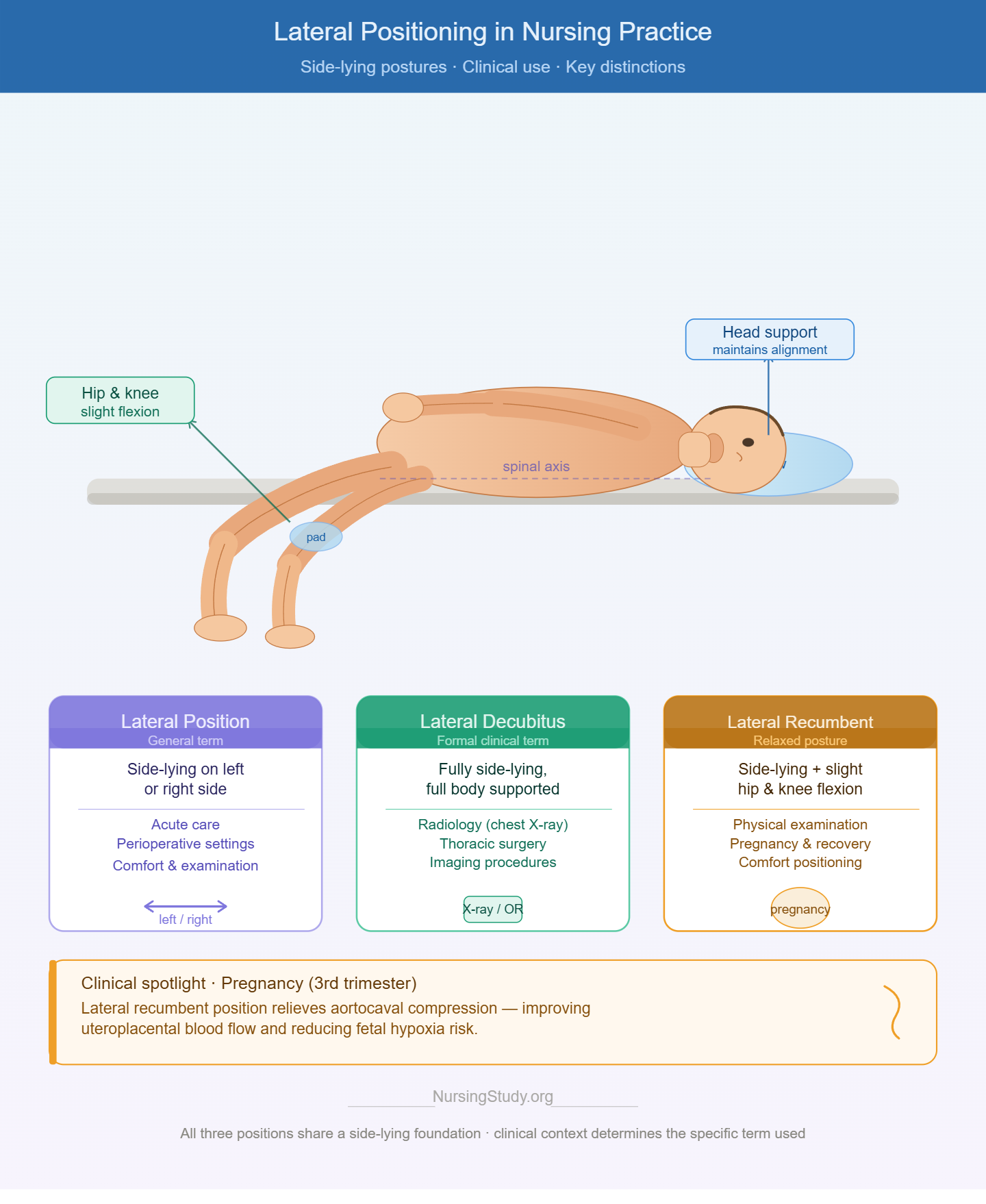
Lateral position
This is a general term describing a side-lying posture where the patient is positioned on either the left or right side of the body. It is commonly used in both acute care and perioperative environments for comfort, examination, and procedural access.
Lateral decubitus position
The lateral decubitus position is a more formal clinical term often used in radiology and surgery. It refers to a fully side-lying position where the patient is supported along the length of the body. This position is frequently used in imaging studies (e.g., chest X-rays) and thoracic procedures.
Lateral recumbent position
The lateral recumbent position is closely related but emphasizes a relaxed side-lying posture, often with slight flexion of the hip and knee joints. It is commonly used in physical examinations, pregnancy care, and recovery positioning due to its comfort-enhancing properties.
For example, a pregnant patient in the third trimester may be placed in a lateral recumbent position to relieve pressure on major blood vessels and improve uteroplacental circulation.
Comparison of left lateral, right lateral, supine position, and Sims position in patient positioning
Different clinical positions serve distinct physiological and procedural purposes:
Left lateral position vs right lateral position
- The left lateral position places the patient on the left side, often used to reduce pressure on the inferior vena cava and improve venous return.
- The right lateral position is used when access to the left thoracic or abdominal structures is required.
For example, in certain gastrointestinal procedures, left lateral alignment may facilitate endoscopic access.
Supine position
The supine position involves the patient lying flat on their back. It is commonly used for general examination, cardiopulmonary resuscitation, and anterior surgical access. However, prolonged supine positioning increases risk of pressure injuries to the sacrum, heels, and occiput.
Sims position
The Sims position is a semi-prone variation where the patient is positioned on the left side with the right hip and knee flexed. It is frequently used for rectal examinations, enema administration, and certain obstetric procedures due to its balance of comfort and accessibility.
Each of these positions must be selected based on:
- Surgical or diagnostic requirements
- Patient’s physiological stability
- Risk of compression or impaired circulation
- Level of required access to anatomical structures
Importance of proper patient positioning in safe and effective patient care
Proper patient positioning is a critical determinant of clinical safety and treatment effectiveness. Incorrect positioning can lead to serious complications, while appropriate alignment enhances both procedural outcomes and patient well-being.
The importance of correct positioning includes:
1. Prevention of complications
- Reduces risk of pressure injuries over bony prominences
- Prevents nerve damage such as brachial plexus injury
- Minimizes vascular compression and impaired circulation
2. Maintenance of physiological stability
- Supports optimal respiratory function by preventing thoracic restriction
- Enhances venous return and cardiac output in vulnerable patients
- Reduces risk of aspiration in certain positioning scenarios
3. Facilitation of surgical and diagnostic procedures
- Improves surgical access to targeted anatomical regions
- Enhances visualization during imaging and interventions
- Stabilizes the patient during operative procedures under anesthesia
4. Improvement of patient comfort and recovery
- Promotes relaxation and reduces pain in immobilized patients
- Supports postoperative recovery by preventing stiffness and complications
- Enhances overall patient experience in both acute and long-term care
For example, a critically ill patient in intensive care may be repositioned regularly between supine and lateral positions to prevent pressure ulcers, maintain lung expansion, and promote circulation.
Feeling stressed about writing a detailed nursing paper?
Let us produce a thorough, high-quality document
Clinical Definition and Applications of the Left Lateral Position in Patient Positioning
The left lateral position is a clinically significant form of patient alignment in which the individual is placed on their left side with the body supported along its lateral aspect. This form of positioning the patient is widely used across medical, surgical, and diagnostic settings due to its influence on respiratory mechanics, circulatory dynamics, and access to specific anatomical regions. In practice, it forms part of a broader category of lateral position techniques that are essential in both routine nursing care and specialized clinical procedures.
From a clinical standpoint, understanding the left lateral position requires not only recognition of body orientation but also an appreciation of its physiological effects, safety implications, and procedural applications. It is particularly relevant in situations where patient positioning must optimize organ function, reduce pressure, or facilitate access to internal structures.
Defining left lateral position, lateral decubitus position, and lateral recumbent position
Although often used interchangeably in general discussion, the left lateral position, lateral decubitus position, and lateral recumbent position have distinct clinical connotations:
- Left lateral position
Refers specifically to the patient lying on their left side with the body aligned and supported. This position is commonly used in both non-operative care and procedural settings where left-sided exposure or physiological benefits are desired. - Lateral decubitus position
A more formal clinical term describing a full side-lying posture where the patient’s body is placed on either the right or left side. It is frequently referenced in radiology and surgical contexts, particularly in imaging studies such as chest radiographs. For example, a lateral decubitus position chest X-ray may be used to detect pleural effusion. - Lateral recumbent position
A more relaxed variation of side-lying alignment, often with partial flexion of the hip and knee joints. This position is commonly used in physical examinations, recovery care, and comfort positioning. For instance, a patient recovering from anesthesia may be placed in a lateral recumbent posture to reduce aspiration risk and improve comfort.
These variations highlight how subtle differences in patient positioning can significantly influence clinical outcomes.
Anatomical orientation: left or right side placement and side of the body considerations
Accurate anatomical orientation is essential when applying the left lateral position, as the choice of left or right side directly affects physiological responses and procedural access. In this position, the patient is lying on their left side of the body, which influences organ displacement and vascular flow.
Key anatomical considerations include:
- Cardiovascular effects:
The left lateral orientation may reduce compression of major vessels such as the inferior vena cava, supporting improved venous return and cardiac output in certain patients. - Respiratory mechanics:
Lung expansion may vary depending on the dependent and non-dependent lung, influencing oxygenation and ventilation distribution. - Abdominal organ positioning:
Gravity shifts abdominal structures, which may assist or hinder access during procedures involving the gastrointestinal tract or adjacent organs.
For example, in a patient undergoing endoscopic evaluation, placing them in a left lateral position can facilitate passage of the endoscope through the upper gastrointestinal tract due to anatomical alignment.
Indications for left lateral position in patient care and clinical procedures
The left lateral position is indicated in a variety of clinical scenarios where patient care goals include improved comfort, enhanced physiological function, or procedural access. Common indications include:
- Diagnostic procedures:
Used during endoscopy and imaging studies where gravitational alignment improves visualization. - Postoperative care:
Helps reduce pressure on surgical sites and supports drainage of secretions in immobilized patients. - Respiratory support:
Can improve ventilation-perfusion matching in certain pulmonary conditions by optimizing lung expansion. - Pregnancy care:
Frequently recommended for pregnant patients to improve uteroplacental blood flow and reduce pressure on major vessels. - Neurological or unconscious patients:
The lateral orientation may assist in maintaining airway patency and reducing aspiration risk.
For example, an unconscious patient in a clinical ward may be placed in the left lateral position to prevent airway obstruction and allow secretions to drain effectively, thereby reducing the risk of aspiration pneumonia.
When lateral position is preferred over supine position or other surgical positions
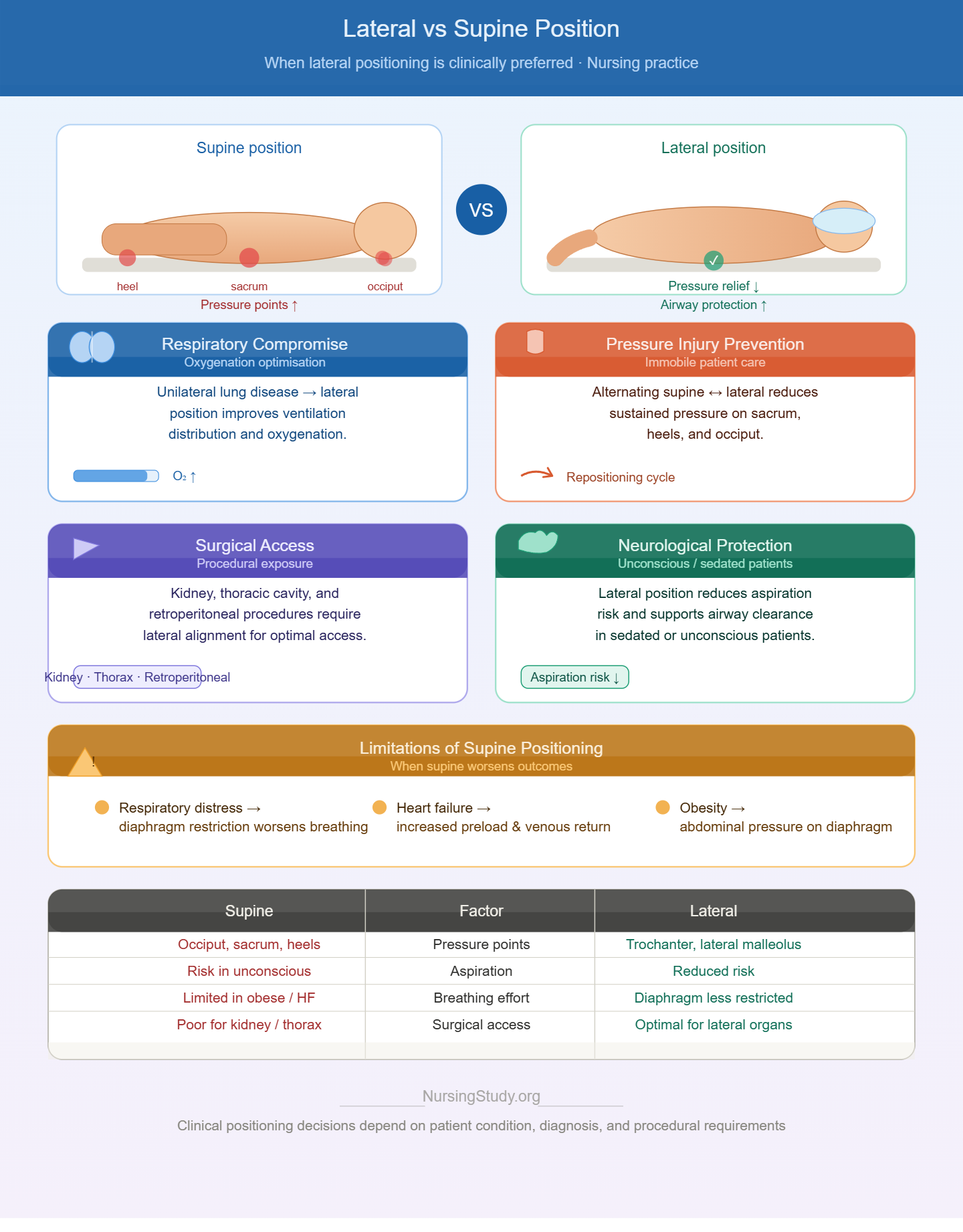
The lateral position is preferred over the supine position or other surgical positions when specific physiological or procedural advantages are required. While the supine position is commonly used for general examination and anterior surgical access, it may not always provide optimal outcomes in complex or prolonged care scenarios.
Situations where lateral positioning is preferred include:
- Respiratory compromise:
In patients with unilateral lung disease, lateral positioning can improve oxygenation by optimizing ventilation distribution. - Pressure injury prevention:
In immobile patients, alternating from supine to lateral positions reduces prolonged pressure on the sacrum, heels, and occiput. - Surgical access requirements:
Procedures involving the kidney, thoracic cavity, or retroperitoneal space often require lateral alignment for optimal exposure. - Neurological protection and recovery:
In unconscious or sedated patients, lateral positioning reduces the risk of aspiration and supports airway clearance. - Limitations of supine positioning:
In patients with respiratory distress, heart failure, or obesity, supine positioning may worsen breathing effort or increase discomfort due to diaphragmatic restriction.
For instance, a patient undergoing renal surgery may be placed in a lateral decubitus variation of the left lateral position to allow optimal access to the retroperitoneal space while maintaining stability under anesthesia.
Patient Positioning Techniques in the Operating Room for Left Lateral Position
The application of the left lateral position in the operating room is a highly structured component of perioperative care that requires coordination, precision, and strict adherence to patient positioning guidelines. Unlike general bedside positioning, positioning the patient in the surgical environment must account for anesthesia effects, surgical access requirements, hemodynamic stability, and prevention of intraoperative complications.
In this context, the operating room becomes a controlled environment where every adjustment of the patient’s body has direct implications on safety, exposure of the surgical field, and physiological function. Proper execution of the lateral position ensures adequate access to thoracic, abdominal, or retroperitoneal structures while maintaining overall patient stability.
Patient positioning guidelines for positioning the patient in the operating room
Effective patient positioning guidelines in the operating room emphasize a systematic and multidisciplinary approach involving surgical staff, anesthesia providers, and nursing personnel. These guidelines are designed to ensure safe and effective alignment of the patient throughout the procedure.
Key principles include:
- Pre-positioning assessment
- Evaluate patient’s mobility, musculoskeletal limitations, and cardiopulmonary status
- Identify risks such as pressure injury, nerve compression, or circulatory compromise
- Team coordination
- Surgical staff and anesthesia providers must communicate clearly before movement begins
- Assign roles for stabilizing the head, thorax, and lower body during transfer
- Equipment preparation
- Ensure availability of pads, supports, and positioning devices
- Confirm functionality of operating table locks and safety straps
- Continuous monitoring
- Monitor airway patency and vital signs during and after movement
- Ensure anesthesia stability before final positioning adjustments
For example, in a thoracic procedure requiring a left lateral orientation, the anesthesia provider must secure the airway while nursing staff coordinate controlled movement to prevent displacement of lines or endotracheal tubes.
Step-by-step process for safe transfer from supine position to lateral position
The transition from supine position to the lateral position is a critical phase that must be performed gradually and with coordinated support to prevent injury or instability.
A standard step-by-step approach includes:
1. Preparation phase
- Confirm patient identity and surgical site
- Secure intravenous lines, catheters, and monitoring equipment
- Ensure anesthesia depth is adequate for movement
2. Initial alignment
- The patient is centered on the operating table
- Arms are positioned carefully to avoid traction injury
- Head and neck are supported in neutral alignment
3. Coordinated roll to lateral position
- Surgical staff reposition the patient in a synchronized motion
- The patient is gently turned onto the left side (or right if indicated)
- The torso, pelvis, and lower extremities are moved as a single unit to maintain spinal alignment
4. Stabilization phase
- Positioning aids such as pads and supports are placed
- Straps are applied to secure the patient to the table
- Non-dependent arm is positioned carefully to prevent compression
For instance, during a nephrectomy, the patient may be carefully rolled into a left lateral position while maintaining spinal alignment to allow optimal exposure of the retroperitoneal space.
Alignment of head, thorax, and lower body for optimal surgical access
Proper anatomical alignment is essential for both surgical access and prevention of complications in the left lateral position. Each body segment must be carefully positioned to maintain physiological balance and procedural efficiency.
Head and neck alignment
- The patient’s head should be supported in a neutral position
- Airway devices must remain secure and unobstructed
- Overextension or flexion is avoided to prevent airway compromise
Thorax positioning
- The thorax should be aligned perpendicular to the operating table
- Adequate chest expansion must be maintained to support ventilation
- Padding may be placed under the axilla to prevent nerve compression
Lower body alignment
- The lower body is stabilized to maintain spinal neutrality
- Hips and knees may be slightly flexed for comfort and stability
- The dependent leg is padded to reduce pressure on bony prominences
For example, in thoracic surgery, proper thoracic alignment in the lateral position allows optimal lung collapse on the operative side while preserving ventilation on the non-operative side.
Maintaining operative stability during positioning the patient for surgery
Once the patient is placed in the left lateral position, maintaining operative stability is essential throughout the procedure. Any movement or misalignment can compromise surgical access, anesthesia safety, or physiological function.
Key strategies include:
Secure fixation of the patient
- Use of straps across the hips and legs to prevent shifting
- Ensuring the patient is firmly anchored to the operating table
Protection of pressure points
- Application of pads under shoulders, hips, knees, and ankles
- Continuous assessment to reduce risk of pressure injuries during prolonged surgery
Maintenance of spinal and musculoskeletal alignment
- Ensuring the spine remains in a neutral position
- Preventing rotation of the torso or pelvis during the procedure
Anesthesia and monitoring integration
- Continuous monitoring of airway and hemodynamic status
- Adjustments made collaboratively between anesthesia and surgical staff if instability occurs
For example, during prolonged abdominal surgery in the lateral position, periodic reassessment of padding and alignment is necessary to prevent compression injuries and maintain venous return.
Surgical Access and Anatomical Considerations in Lateral Positioning
The lateral position is a critical component of perioperative patient positioning that directly influences the surgeon’s ability to access internal structures safely and effectively. In the left lateral position and lateral decubitus position, the patient’s body alignment is intentionally modified to optimize exposure of specific anatomical regions while maintaining physiological stability under anesthesia. Because of these dual goals—surgical access and patient safety—this positioning requires careful anatomical planning, precise execution, and continuous intraoperative monitoring.
In clinical practice, the success of procedures performed in the operating room is often dependent on how well the patient is aligned in relation to gravity, gravity-dependent organs, and the intended surgical field.
Surgical access considerations in left lateral position and lateral decubitus position
The left lateral position and lateral decubitus position are commonly used when surgical access to one side of the body is required while preserving stability of the airway and circulation. In these positions, the patient lies on the left or right side, allowing the uppermost side of the body to be fully accessible.
Key surgical access considerations include:
- Exposure of unilateral anatomical structures
- Facilitates access to kidneys, lungs, and retroperitoneal structures
- Allows targeted intervention on one side without repositioning
- Gravity-assisted organ displacement
- Internal organs shift depending on the side of the body that is dependent
- Improves visualization of deep anatomical spaces
- Stability of the surgical field
- Proper positioning of patients ensures minimal movement during operative procedures
- Secure fixation reduces risk of intraoperative displacement
For example, during a left nephrectomy, the patient is placed in a lateral decubitus position to allow optimal access to the right or left kidney depending on the surgical target, ensuring unobstructed access to the retroperitoneal space.
Thorax and chest exposure in lateral position for thoracic procedures
Thoracic procedures frequently require the patient to be positioned in a lateral orientation to maximize exposure of the chest cavity. In the lateral position, the thorax becomes more accessible, allowing controlled collapse of the operative lung while maintaining ventilation of the non-operative lung.
Important considerations include:
- Chest wall exposure
- The upper thorax is fully accessible for incision and instrumentation
- Rib spacing may be optimized for thoracotomy or minimally invasive access
- Lung isolation during anesthesia
- One-lung ventilation may be used in conjunction with lateral positioning
- The dependent lung remains functional to support gas exchange
- Respiratory mechanics
- The thorax is affected by gravitational forces, influencing ventilation-perfusion matching
- Proper alignment reduces risk of hypoxia during prolonged procedures
For instance, in lung resection surgery, placing the patient in a lateral decubitus position allows the surgeon to access the diseased lung while the anesthesia team maintains ventilation through the opposite lung.
Retroperitoneal space access and kidney-related surgical positioning
The retroperitoneal space is one of the most common anatomical regions accessed using the lateral position due to its posterior location and deep anatomical positioning. The left lateral position is particularly useful for renal and adrenal procedures.
Key considerations include:
- Kidney exposure
- The kidney is positioned in a way that allows direct surgical access through flank incisions
- Gravity assists in displacing abdominal contents away from the surgical field
- Retroperitoneal approach advantages
- Reduced need to mobilize intraperitoneal organs
- Lower risk of bowel injury compared to anterior approaches
- Stability during deep dissection
- Proper patient positioning ensures minimal shifting of retroperitoneal structures
- Supports precise dissection around vascular structures such as renal vessels
For example, during a partial nephrectomy, the patient may be placed in a modified lateral decubitus position to provide direct access to the kidney while maintaining protection of surrounding abdominal organs.
Neurosurgery and specialized surgical positioning considerations
Although less common than in abdominal or thoracic procedures, lateral positioning is also applied in select neurosurgery cases, particularly when access to lateral cranial or spinal structures is required.
Key considerations include:
- Spinal access
- The lateral position may be used for certain spinal decompression or tumor removal procedures
- Ensures controlled exposure of vertebral segments
- Head stabilization
- The patient’s head must be rigidly secured to prevent micro-movements
- Alignment is critical to avoid spinal cord or nerve root injury
- Neurological safety
- Avoidance of excessive pressure on cervical structures
- Continuous monitoring of neurological function when feasible
For instance, in a spinal tumor resection, lateral positioning allows the surgeon to access posterior-lateral spinal structures while maintaining spinal alignment and reducing intraoperative neural tension.
Lower body alignment and pressure distribution in patient in lateral positioning
Proper alignment of the lower body is essential to ensure both surgical access and prevention of complications such as nerve damage and pressure injuries during prolonged procedures in the lateral position.
Key principles include:
- Pressure redistribution
- Weight is distributed along the dependent side of the body
- Padding is applied to protect bony prominences such as the hips and knees
- Hip and leg alignment
- The lower extremities are often slightly flexed to enhance stability
- Ensures neutral alignment of the pelvis and spine
- Prevention of nerve compression
- Careful padding prevents compression of the peroneal and femoral nerves
- Reduces risk of postoperative neuropathies
- Circulatory considerations
- Proper alignment supports venous return and reduces vascular compression
- Prevents impairment of blood flow to dependent limbs
For example, during prolonged abdominal surgery in the lateral position, improper padding of the dependent hip may lead to ischemic pressure injury, highlighting the importance of continuous intraoperative reassessment.
Anesthesia and Airway Management in Left Lateral Position
The left lateral position presents unique physiological and technical considerations for both anesthesia delivery and airway management in the operating room. Unlike the supine position, where airway access and hemodynamic assessment are more straightforward, lateral positioning introduces changes in anatomical orientation, ventilation dynamics, and vascular flow that must be carefully managed to ensure safe and effective perioperative care. Effective patient positioning in surgery therefore requires close coordination between surgical staff and anesthesia providers throughout all phases of care.
Anesthesia considerations in lateral position and patient positioning in surgery
In the lateral position, anesthesia management is influenced by changes in respiratory mechanics, drug distribution, and cardiovascular function. The anesthetist must account for both the physical orientation of the patient’s body and the physiological effects of gravity.
Key anesthesia considerations include:
- Altered ventilation dynamics
- The dependent lung (the side against the table) receives more perfusion but may have reduced ventilation if compressed
- The non-dependent lung may be better ventilated, especially in controlled mechanical ventilation
- Drug distribution and hemodynamic effects
- Redistribution of blood flow can influence onset and duration of anesthetic agents
- Changes in venous return may affect blood pressure stability
- Muscle relaxation and positioning dependency
- Adequate muscle relaxation is required to prevent patient movement during repositioning
- Deep anesthesia is typically ensured before final fixation in the lateral orientation
For example, during thoracic surgery in the left lateral position, anesthesia providers must balance lung ventilation carefully to maintain oxygenation while allowing surgical access to the operative lung field.
Airway management and monitoring in lateral decubitus position
Airway management in the lateral decubitus position requires heightened vigilance due to the altered orientation of the head, neck, and airway devices. Unlike the supine position, direct access to the airway may be more challenging once the patient is fully positioned.
Key considerations include:
- Airway device security
- Endotracheal tubes must be firmly secured before repositioning
- Movement during positioning the patient must not dislodge airway equipment
- Head and neck alignment
- The patient’s head should remain in a neutral position to maintain airway patency
- Excess flexion or extension can obstruct airflow or increase airway resistance
- Continuous monitoring
- Capnography is essential for monitoring ventilation effectiveness
- Oxygen saturation and airway pressures must be continuously assessed
- Emergency access planning
- The anesthesia team must ensure rapid access to the airway if complications arise
- Equipment for airway rescue should be readily available in the operating room
For instance, during prolonged renal surgery in a lateral decubitus position, even slight displacement of the endotracheal tube may significantly affect ventilation, requiring immediate correction without disturbing the sterile surgical field.
Venous return, circulation, and physiological effects of lateral positioning
The lateral position significantly influences cardiovascular physiology, particularly venous return and overall circulation. These effects are essential considerations during anesthesia, as they directly impact hemodynamic stability.
Key physiological effects include:
- Venous return alterations
- Compression of the inferior vena cava may occur depending on positioning
- This can reduce venous return to the heart and lower cardiac output
- Redistribution of blood flow
- Gravity shifts blood toward the dependent side of the body
- The non-dependent side may experience reduced perfusion
- Cardiac output changes
- In some patients, cardiac output may decrease slightly due to positional compression
- Careful monitoring is required in patients with cardiovascular compromise
- Respiratory-circulatory interaction
- Changes in lung ventilation in the lateral position also affect oxygen delivery to tissues
- Ventilation-perfusion matching may improve or worsen depending on the side and condition of the lungs
For example, in a patient with pre-existing heart failure, prolonged positioning in the left lateral position may require careful fluid management and hemodynamic monitoring to prevent hypotension caused by reduced venous return.
Maintaining airway stability and patient safety during operative procedures
Ensuring airway stability and patient safety during operative procedures in the left lateral position is a continuous process that requires coordination between anesthesia providers and surgical staff throughout the entire procedure.
Key safety strategies include:
Secure stabilization of airway devices
- Endotracheal tubes and laryngeal devices must be firmly secured before final positioning
- Tubing should be checked after every movement of the patient’s body
Protection of head and neck alignment
- The patient’s head is supported using padded devices to maintain neutral positioning
- Prevents airway obstruction and cervical strain
Continuous physiological monitoring
- Oxygen saturation, end-tidal CO₂, heart rate, and blood pressure are continuously observed
- Early detection of instability allows immediate correction
Prevention of positional complications
- Padding is used to avoid compression of the thorax and axilla
- Regular reassessment ensures no shift in positioning of patients during prolonged surgery
Team-based communication
- Surgical staff and anesthesia providers maintain continuous communication
- Any change in patient stability or positioning is immediately shared and addressed
For example, during a long abdominal procedure in the lateral position, gradual shifting of the torso can place pressure on the thorax, requiring immediate adjustment of supports to maintain both airway stability and circulatory function.
Patient Safety, Pressure Prevention, and Neurovascular Protection
Ensuring patient safety in the left lateral position is a central priority in perioperative and critical care settings. While this form of patient positioning is essential for achieving optimal surgical access and physiological benefits, it also introduces significant risks if not executed correctly. These risks primarily include pressure injuries, neurovascular compromise, and impaired circulation due to sustained compression of dependent anatomical structures during prolonged lateral decubitus position use.
Safe practice therefore depends on meticulous alignment, continuous monitoring, and the appropriate use of protective devices such as pads and supports to maintain safe and effective positioning throughout the procedure.
Preventing brachial plexus injury during lateral position patient positioning
One of the most important neurovascular risks associated with the lateral position patient positioning is injury to the brachial plexus. This complex network of nerves is particularly vulnerable when the upper limb and shoulder girdle are not properly supported.
Key prevention strategies include:
- Proper arm positioning
- The dependent arm should be gently extended and supported
- The non-dependent arm must be placed on an armrest with neutral alignment
- Avoiding excessive shoulder traction
- Overextension of the shoulder can stretch the brachial plexus
- This may lead to postoperative neuropathy or motor weakness
- Axillary protection
- A padded roll should be placed under the axilla to prevent compression of neurovascular structures
- Ensures that the thorax is lifted slightly off the table, reducing pressure concentration
For example, during a prolonged thoracic procedure, failure to support the upper limb in the left lateral position may result in postoperative numbness or weakness in the affected arm due to brachial plexus compression.
Pressure injury prevention in prolonged lateral decubitus position
The lateral decubitus position, when maintained for extended periods, significantly increases the risk of pressure injuries due to sustained force on dependent bony prominences. These include the hip, shoulder, ankle, and lateral knee.
Preventive measures include:
- Frequent assessment of pressure points
- Continuous monitoring of skin integrity during long procedures
- Early identification of redness or ischemia
- Redistribution of pressure
- Regular adjustment of positioning of patients when clinically feasible
- Use of pressure-relieving surfaces on the operating table
- Time management
- Minimizing duration in one static position where possible
- Planning surgical workflow efficiently to reduce prolonged compression
For instance, a patient undergoing prolonged abdominal surgery in a lateral decubitus position may develop pressure-related skin changes over the dependent hip if protective measures are not adequately applied.
Use of pads, cushions, and supports for proper patient positioning
The use of supportive devices is essential in achieving proper patient positioning and maintaining stability in the left lateral position. These devices help distribute pressure evenly and maintain anatomical alignment.
Common supports include:
- Foam pads and gel cushions
- Placed under bony prominences such as the shoulder, hip, and knee
- Reduce localized pressure and improve comfort
- Positioners and stabilization devices
- Used to maintain the patient in a fixed lateral alignment on the operating table
- Prevent unintended rolling or shifting during surgery
- Axillary rolls
- Specifically designed to protect the brachial plexus and vascular structures
- Ensure proper spacing between thorax and surface
For example, in renal surgery, an axillary roll is placed when the patient is in a left lateral position to protect neurovascular structures while maintaining optimal surgical exposure of the retroperitoneal space.
Maintaining circulation and reducing venous compression risks
Circulatory integrity is a critical consideration in patient positioning, particularly in the lateral orientation where gravitational forces and external compression can affect venous return.
Key physiological and preventive considerations include:
- Venous return optimization
- Avoiding compression of major vessels such as the inferior vena cava
- Ensuring the abdomen is not excessively compressed against the table
- Prevention of limb ischemia
- Ensuring dependent limbs are not trapped or excessively weighted
- Maintaining neutral alignment of the lower extremities
- Monitoring hemodynamic stability
- Continuous assessment of blood pressure and perfusion indicators
- Early detection of circulatory compromise during surgery
For example, improper positioning in the left lateral position may compress abdominal vessels, leading to reduced venous return and intraoperative hypotension if not corrected promptly.
Ensuring proper alignment for safe and effective patient positioning guidelines
Achieving and maintaining safe and effective patient positioning guidelines requires precise anatomical alignment and continuous reassessment throughout the procedure.
Key alignment principles include:
- Spinal neutrality
- The spine should remain in a straight, non-rotated position
- Prevents musculoskeletal strain and nerve compression
- Head and neck positioning
- The patient’s head must remain aligned with the spine
- Supports airway patency and reduces cervical strain
- Lower body alignment
- Hips and knees should be slightly flexed to enhance stability
- Prevents excessive tension on lower extremity nerves
- Continuous reassessment
- Surgical and anesthesia teams must regularly check for shifts in positioning the patient
- Adjust supports as needed during prolonged procedures
For example, during a long neurosurgical or abdominal procedure in the lateral position, gradual rotation of the torso can occur, requiring immediate correction to maintain spinal alignment and prevent postoperative musculoskeletal complications.
Surgical Staff Roles and Equipment in Safe Patient Positioning
Safe and effective patient positioning in the operating room is a coordinated, multidisciplinary responsibility that directly impacts surgical outcomes, physiological stability, and complication prevention. The left lateral position, like all forms of surgical positions, requires precise execution and shared accountability among the surgical team. Because positioning affects the airway, circulation, musculoskeletal alignment, and neurovascular integrity, every member of the team plays a defined role in ensuring optimal positioning of patients before and during operative procedures.
Roles of surgical staff in positioning the patient safely in the operating room
The process of positioning the patient in the lateral position involves multiple healthcare providers, each contributing to safe alignment and stabilization.
Key roles include:
- Scrub nurse
- Prepares sterile equipment and ensures readiness of the surgical field
- Assists in maintaining sterile boundaries during movement and positioning
- Circulating nurse
- Coordinates the overall patient positioning guidelines in the operating room
- Ensures safety devices, straps, and supports are correctly applied
- Monitors for risks such as pressure points or misalignment
- Anesthesia provider
- Maintains airway control and monitors hemodynamic stability during repositioning
- Ensures secure placement of airway devices before movement begins
- Surgeon
- Determines the required surgical access and confirms final positioning requirements
- Communicates specific anatomical alignment needs for optimal exposure
- Additional surgical staff
- Assist in physically moving the patient in a controlled and synchronized manner
- Ensure the patient’s body is moved as a single unit to prevent musculoskeletal injury
For example, during a nephrectomy requiring a left lateral position, the surgeon directs the final alignment while the circulating nurse ensures that all supports are in place and the anesthesia team confirms airway stability before movement begins.
Coordination between surgical staff and anesthesia during lateral positioning
Effective coordination between surgical staff and anesthesia providers is essential for maintaining safe and effective patient positioning, particularly during transitions into the lateral position.
Critical coordination elements include:
- Pre-positioning communication
- Confirmation of readiness from anesthesia before movement begins
- Verification that the airway is secured and monitoring systems are stable
- Synchronized movement
- All staff members reposition the patient simultaneously to maintain spinal alignment
- The patient’s body is moved as a single unit to prevent torsion or nerve injury
- Real-time monitoring
- Anesthesia continuously monitors oxygen saturation, blood pressure, and airway pressure
- Surgical staff ensure no displacement of lines, tubes, or monitors
- Post-positioning verification
- Joint assessment of final position for anatomical accuracy and stability
- Confirmation that surgical access and physiological parameters are optimal
For example, during thoracic surgery, even slight miscommunication during transition into the lateral position can result in airway displacement or compromised ventilation, highlighting the importance of coordinated teamwork.
Essential positioning equipment for proper patient positioning (pads, straps, supports)
The use of specialized equipment is essential for achieving proper patient positioning and maintaining stability throughout surgery in the operating room. These tools reduce the risk of injury and ensure sustained alignment during prolonged procedures.
Key equipment includes:
- Pads and cushions
- Used to protect bony prominences such as hips, shoulders, and knees
- Reduce risk of pressure injuries during prolonged lateral decubitus position use
- Straps and safety belts
- Secure the patient to the operating table to prevent movement
- Essential for maintaining stability in the left lateral position
- Positioners and supports
- Specialized devices that maintain body alignment and prevent rolling
- Support the thorax, abdomen, and lower extremities depending on surgical needs
- Axillary rolls
- Protect neurovascular structures in the shoulder region
- Prevent compression of the brachial plexus during lateral positioning
For example, in spinal surgery requiring a modified lateral orientation, gel pads and rigid supports are used to maintain spinal alignment while minimizing pressure on dependent structures.
Safety checks before and during operative lateral positioning
Comprehensive safety checks are essential to ensure safe positioning before and throughout the procedure. These checks reduce the risk of complications such as nerve injury, pressure ulcers, and circulatory impairment.
Before positioning:
- Confirm patient identity, procedure, and correct surgical site
- Ensure all monitoring devices and airway equipment are secure
- Verify availability and placement of positioning aids
- Conduct a team briefing to confirm roles and sequence of movement
During positioning:
- Monitor airway integrity and ventilation continuously
- Ensure the patient’s body is moved slowly and in a coordinated manner
- Check for proper alignment of head, thorax, and lower body
- Confirm that no tubes, lines, or catheters are kinked or displaced
After positioning:
- Reassess circulatory status, including venous return and blood pressure
- Inspect pressure points for adequate padding
- Confirm final stability of the left lateral position before surgical incision
For example, during a prolonged abdominal procedure, a routine mid-surgery check may reveal slight shoulder displacement, requiring immediate correction to prevent compression injury and maintain optimal patient positioning guidelines.
Postoperative Care and Patient Monitoring After Lateral Positioning
Postoperative care following procedures performed in the left lateral position is a critical phase of recovery that focuses on restoring physiological stability, identifying early complications, and ensuring safe transition from the operating room to recovery or intensive care settings. Because patient positioning in the lateral decubitus position can influence respiratory mechanics, circulation, and neurovascular integrity, targeted postoperative assessment is essential to detect any residual effects of intraoperative positioning.
Effective postoperative management is not limited to wound care or surgical recovery alone; it also includes systematic evaluation of the consequences of positioning the patient for prolonged periods, particularly in high-acuity surgical cases.
Postoperative respiratory and circulatory assessment after lateral position
Following surgery performed in the lateral position, both respiratory and circulatory systems require close monitoring due to the physiological changes associated with gravity-dependent positioning and anesthesia effects.
Respiratory assessment
Key respiratory considerations include:
- Lung expansion and ventilation
- Assess for asymmetrical chest expansion, especially if one lung was dependent during surgery
- Monitor for reduced ventilation in the previously compressed lung
- Oxygenation status
- Continuous monitoring of oxygen saturation (SpO₂)
- Observation for signs of hypoxia or respiratory distress
- Airway patency
- Ensure airway remains clear following extubation
- Monitor for residual effects of anesthesia that may impair protective reflexes
For example, a patient who underwent thoracic surgery in a prolonged lateral decubitus position may experience transient reduced expansion in the dependent lung postoperatively, requiring respiratory physiotherapy and oxygen supplementation.
Circulatory assessment
Circulatory monitoring focuses on detecting hemodynamic instability caused by intraoperative positioning effects:
- Blood pressure and heart rate monitoring for early signs of instability
- Assessment of peripheral perfusion (capillary refill, skin temperature)
- Evaluation for signs of venous stasis or impaired venous return
For instance, prolonged compression of abdominal vessels during surgery may result in mild postoperative hypotension, which requires fluid management and continued monitoring.
Monitoring complications following lateral decubitus positioning
Complications related to the lateral decubitus position may not always be immediately apparent and often require systematic postoperative evaluation.
Common complications include:
- Pressure injuries
- Occur over dependent bony prominences such as the hip, shoulder, and knee
- May present as redness, skin breakdown, or localized pain
- Nerve injuries
- Compression of the brachial plexus or peroneal nerve may result in numbness, weakness, or tingling
- Often linked to inadequate intraoperative padding or misalignment
- Musculoskeletal discomfort
- Stiffness or pain due to prolonged static patient positioning
- Particularly common in elderly or immobile patients
- Respiratory complications
- Atelectasis or reduced lung expansion in previously dependent lung regions
For example, a patient recovering from renal surgery in a left lateral position may report shoulder numbness due to transient nerve compression, requiring neurological assessment and documentation.
Patient comfort, mobility, and recovery after surgical positioning
Postoperative recovery is significantly influenced by the quality of patient positioning during surgery. Ensuring comfort and early mobility reduces complications and supports overall healing.
Key aspects include:
- Pain management
- Address musculoskeletal discomfort resulting from prolonged lateral positioning
- Use multimodal analgesia where appropriate
- Gradual mobilization
- Encourage early movement as tolerated to restore circulation and prevent complications
- Assist patient in transitioning safely from bed rest to sitting and ambulation
- Position-related comfort adjustments
- Repositioning the patient to relieve pressure on previously dependent areas
- Use of pillows or supports to maintain comfort in recovery settings
For example, a postoperative patient who was in a prolonged left lateral position may require gradual repositioning to avoid dizziness or orthostatic changes during early mobilization.
Education on complications and recovery following patient positioning
Patient and caregiver education is an essential component of postoperative care, particularly following procedures involving extended patient positioning in the lateral orientation. Education helps reduce anxiety, improves recovery outcomes, and enhances early detection of complications.
Key educational points include:
- Recognition of complications
- Signs of nerve injury such as numbness or tingling
- Symptoms of pressure injuries, including skin discoloration or pain
- Indicators of respiratory difficulty such as shortness of breath
- Mobility guidance
- Importance of gradual movement and avoiding sudden position changes
- Safe techniques for turning and repositioning at home or in care settings
- Recovery expectations
- Explanation of temporary discomfort related to surgical positioning
- Timeline for resolution of positioning-related symptoms
For example, a patient discharged after abdominal surgery performed in the lateral decubitus position should be educated on monitoring for shoulder pain or skin irritation that may result from intraoperative pressure.
Variations of Surgical Positions and Clinical Modifications
Surgical positioning is a dynamic and highly individualized aspect of perioperative care that directly influences procedural success, patient safety, and physiological stability. The left lateral position is one of several core surgical positions used in the operating room, and its application must be understood in relation to other commonly used positions such as the right lateral, supine, and Sims positions. Each variation of patient positioning produces distinct anatomical and physiological effects, which guide clinical decision-making and surgical planning.
Understanding these variations is essential because even small adjustments in positioning of patients can significantly alter surgical access, respiratory function, and circulatory dynamics.
Differences between left lateral, right lateral, supine, and Sims positions
Each position serves a unique clinical purpose depending on the surgical site, patient condition, and desired exposure.
Left lateral position
The left lateral position places the patient on their left side, with the body aligned to support exposure of right-sided structures or optimize physiological function. It is commonly used in thoracic, renal, and gastrointestinal procedures. This position can improve venous return in certain patients and enhance access to the retroperitoneal space.
Right lateral position
The right lateral position mirrors the left lateral alignment, placing the patient on their right side. It is often used when surgical access to left-sided organs is required. For example, left lung procedures or splenic interventions may benefit from this orientation.
Supine position
The supine position involves the patient lying flat on their back. It is the most commonly used patient positioning method in surgery and general examination. It provides anterior access to the thorax and abdomen but may increase risk of pressure injuries to the sacrum, occiput, and heels during prolonged procedures.
Sims position
The Sims position is a semi-lateral variation where the patient lies on the left side with the right hip and knee flexed. It is frequently used for rectal examinations, enema administration, and certain gynecological or nursing procedures due to its balance between access and comfort.
For example, a patient requiring rectal examination may be placed in the Sims position rather than full lateral positioning to allow easier access while maintaining patient comfort.
Modifying lateral position for thoracic, abdominal, and neurosurgical procedures
The lateral position is not static; it is frequently modified to meet the specific needs of different surgical specialties. These modifications are essential to ensure optimal surgical access while maintaining physiological stability.
Thoracic procedures
In thoracic surgery, the lateral position is often adjusted to facilitate lung isolation and chest wall exposure.
- The upper arm is elevated and supported to expose the thoracic cavity
- One-lung ventilation may be used in conjunction with positioning
- The thorax is stabilized to prevent movement during incision and retraction
For example, during lung resection surgery, the patient may be placed in a modified left lateral position to allow access to the right lung while maintaining controlled ventilation.
Abdominal procedures
In abdominal surgery, lateral modifications assist in accessing structures such as the kidneys and colon.
- Slight table flexion may be used to increase intercostal space
- The abdomen is supported to reduce compression of internal organs
- Gravity assists in shifting bowel structures away from the surgical field
For instance, during colectomy procedures, a lateral tilt may improve visualization of the descending or ascending colon depending on surgical side.
Neurosurgical procedures
In selected neurosurgical cases, lateral positioning is adapted for spinal or cranial access.
- The head is rigidly stabilized to prevent movement
- Spinal alignment is maintained to avoid neural compression
- Padding is used to prevent pressure on cranial and cervical structures
For example, in spinal tumor removal, a modified lateral position may provide optimal exposure of posterior spinal elements while minimizing cord tension.
Clinical decision-making in selecting surgical positions based on patient condition
Selecting the appropriate surgical position is a complex clinical decision that depends on multiple patient-specific and procedure-specific factors. Healthcare providers must evaluate risks and benefits to ensure safe and effective patient positioning.
Key decision-making factors include:
- Type and location of surgery
- Determines whether lateral, supine, or alternative positions are required
- Patient’s physiological status
- Cardiovascular stability influences tolerance to positional changes
- Respiratory function affects suitability of lateral or supine positioning
- Mobility and musculoskeletal limitations
- Joint deformities or spinal conditions may restrict certain positions
- Risk of complications
- Pressure injury risk may necessitate frequent repositioning
- Nerve compression risk influences padding and alignment choices
For example, an obese patient undergoing abdominal surgery may require modified lateral or supine positioning with additional supports to maintain ventilation and reduce abdominal compression.
Role of patient positioning guidelines in safe and effective surgical care
Structured patient positioning guidelines are essential for standardizing practice and ensuring patient safety across all surgical settings. These guidelines provide evidence-based frameworks that guide the selection, execution, and monitoring of all surgical positions, including the left lateral position.
Key roles of positioning guidelines include:
- Standardization of practice
- Ensures consistency in how patients are positioned across surgical teams
- Risk reduction
- Minimizes complications such as nerve injury, pressure ulcers, and circulatory compromise
- Support for multidisciplinary coordination
- Enhances communication between surgical staff, anesthesia, and nursing teams
- Improved surgical outcomes
- Optimizes surgical access while maintaining physiological stability
For example, adherence to standardized guidelines ensures that during lateral positioning, all pressure points are adequately padded, airway devices are secured, and spinal alignment is maintained, thereby reducing the risk of preventable complications.
Feeling stressed about writing a detailed nursing paper?
Let us produce a thorough, high-quality document
Conclusion
The left lateral position remains a fundamental component of clinical patient positioning, playing a critical role in both surgical and non-surgical care settings. Its application extends beyond simple body alignment to encompass complex physiological, anatomical, and procedural considerations that directly influence patient outcomes. When appropriately executed, this form of lateral position supports optimal surgical access, enhances respiratory function, promotes venous return, and reduces the risk of complications associated with prolonged immobility.
Across the perioperative pathway, the effectiveness of positioning the patient depends on careful preparation, precise execution, and continuous monitoring. From anesthesia induction to intraoperative stabilization and postoperative recovery, each phase requires coordinated teamwork among healthcare professionals to ensure that patient positioning remains safe, stable, and clinically appropriate. The integration of patient positioning guidelines, specialized equipment such as pads and supports, and evidence-based clinical judgment further strengthens the safety and effectiveness of care delivered in the operating room.
Importantly, the comparison of different surgical positions—including supine, right lateral, and Sims positions—highlights the need for individualized decision-making based on surgical objectives and patient-specific factors. No single position is universally applicable; rather, each must be selected with consideration of anatomy, physiology, and procedural demands.
Ultimately, safe and effective use of the left lateral position reflects the broader principles of high-quality nursing and perioperative practice: precision, vigilance, collaboration, and patient-centered care. By mastering these principles, healthcare providers can significantly reduce risks such as nerve injury, pressure damage, and circulatory compromise while improving surgical efficiency and recovery outcomes.
Frequently Asked Questions
What is the left lateral position?
The left lateral position is a form of patient positioning where the patient lies on their left side with the body aligned and supported. It is commonly used in clinical, diagnostic, and surgical settings to improve access to anatomical structures and support physiological function.
What is the left lateral position called?
The left lateral position is also referred to as:
- Left lateral decubitus position
- Left lateral recumbent position
It is part of the broader category of lateral position techniques.
Why do we give left lateral position?
The left lateral position is used to:
- Improve surgical access to specific organs (e.g., kidney, thorax, abdomen)
- Enhance respiratory function in some patients
- Reduce pressure on the back and promote pressure injury prevention
- Aid in comfort, recovery, and airway protection in unconscious or postoperative patients
What are the benefits of the left lateral position?
Key benefits include:
- Improved ventilation and oxygenation in selected clinical cases
- Reduced risk of aspiration in unconscious or sedated patients
- Better exposure for certain surgical and diagnostic procedures
- Relief of pressure on the sacrum, heels, and back
- Enhanced venous return and circulatory stability in some patients
- Increased patient comfort during rest or recovery
