

Understanding -Penia Meaning in Medical Terms: Suffix and Conditions Characterized by Deficiency
The suffix -penia holds a central role in medical terminology, functioning as a precise linguistic marker for conditions defined by a reduction, shortage, or deficiency of a specific type of cell or blood cells. Originating from the Greek word for poverty, -penia is not merely a descriptive label; it conveys a measurable decrease in a specific substance or cellular component, often with significant physiological and clinical implications. The -penia meaning in medical terms is foundational for identifying disorders in which the immune system, oxygen transport, or coagulation pathways are compromised due to low blood counts or other cellular deficiencies.
In hematology, -penia is frequently applied to white blood cells, red blood cells, and platelets, with each deficiency resulting in distinct clinical consequences. A reduction in white blood cells, known as leukopenia, compromises the immune system, leaving the body vulnerable to infection. Similarly, a low platelet count, termed thrombocytopenia, can disrupt normal clotting mechanisms, leading to excessive bleeding or abnormal bruising. Erythropenia, the reduction of red blood cells, results in impaired oxygen delivery to tissues, manifesting as fatigue, pallor, and other systemic effects. Each of these conditions reflects a condition characterized by a lack or deficiency in a specific type of cell, illustrating the clinical relevance of the suffix across multiple physiological systems.
The -penia meaning in medical terms is consistently documented in medical dictionaries and authoritative references, where it is defined as a reduction used to denote insufficient cellular or tissue components. Beyond blood cells, the suffix can describe deficiencies in other tissues or substances, reflecting a broader phenomenon of insufficiency that may affect bone marrow, liver, or other organs. Clinical interpretation of -penia relies on correlating laboratory results, such as complete blood counts or component analyses, with observable symptoms—including infection susceptibility, anemia, bleeding tendencies, and abnormal tissue function—to determine the severity and underlying disorder.
Understanding the -penia meaning in medical terms enables the recognition of subtle variations in cellular levels, informs diagnostic strategies, and guides treatment decisions, whether through pharmacological intervention, immune modulation, or supportive therapies. By tracing the Greek word origins and examining its application across multiple blood cell types, the concept of -penia bridges linguistic precision with clinical significance, providing a framework for interpreting deficiencies, predicting outcomes, and addressing systemic consequences of cell shortages. This article explores the -penia meaning in medical terms, detailing its origins, variations across blood cell populations, associated symptoms, diagnostic approaches, and management considerations for conditions marked by cellular deficiency.
The Suffix -Penia and Its Role in Blood Cell Disorders
Origins and Definition of -Penia
The suffix -penia is derived from the Greek word penia, meaning “poverty” or “lack,” and has been incorporated into medical terminology to denote a deficiency or shortage of a specific type of cell or blood cells. In contemporary clinical practice, -penia is not merely a descriptive linguistic tool; it conveys a quantifiable reduction in cellular components that has tangible physiological and pathological consequences.
The term is consistently defined in authoritative medical dictionaries and references as a condition characterized by a lower than normal number or concentration of a specific type of cell or substance. Its clinical significance lies in its ability to signal a deficiency, guiding diagnostic evaluation and treatment strategies.
In practice, the suffix -penia is attached to terms describing specific cell types, forming labels such as:
- Leukopenia – reduction in white blood cells
- Erythropenia – reduction in red blood cells
- Lymphopenia – reduction in lymphocytes, a subtype of white blood cells
- Thrombocytopenia – reduction in platelets
The standardized use of -penia ensures clarity across clinical communication, bridging historical origins with modern medical application, and facilitating the interpretation of laboratory values and clinical findings.
Penia Across Blood Cell Types
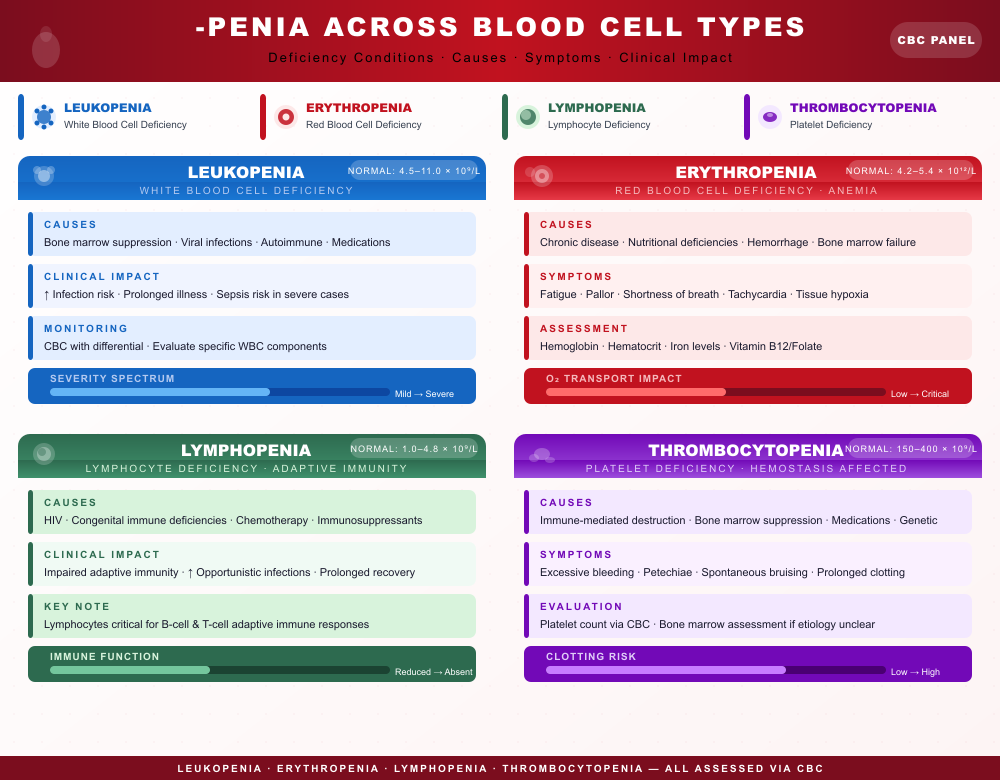
The suffix -penia is versatile in its application to different blood cell types, each with unique clinical implications:
1. White Blood Cell Deficiency (Leukopenia)
- Leukopenia reflects a decrease in white blood cells, crucial components of the immune system.
- Causes include bone marrow suppression, viral infections, autoimmune phenomena, certain medications, or congenital disorders.
- Clinical impact: increased susceptibility to infection, prolonged recovery from illness, and heightened risk of sepsis in severe cases.
- Monitoring involves complete blood counts (CBC) and evaluation of specific cell components.
2. Red Blood Cell Deficiency (Erythropenia)
- Erythropenia results in reduced red blood cells, leading to anemia and impaired oxygen transport.
- Causes: chronic disease, nutritional deficiencies, hemorrhage, or bone marrow dysfunction.
- Symptoms: fatigue, pallor, shortness of breath, tachycardia, and tissue hypoxia.
- Clinical assessment may involve evaluating hemoglobin, hematocrit, and iron or vitamin levels.
3. Lymphocyte Deficiency (Lymphopenia)
- A specific -penia involving lymphocytes, critical for adaptive immune responses.
- Causes: viral infections (e.g., HIV), congenital immune deficiencies, chemotherapy, or immunosuppressive medication.
- Clinical impact: impaired immune system function, increased susceptibility to opportunistic infections, and prolonged recovery periods.
4. Platelet Deficiency (Thrombocytopenia)
- A decrease in platelets affects clot formation and hemostasis.
- Causes: immune-mediated destruction, bone marrow suppression, certain medications, or genetic disorders.
- Symptoms: excessive bleeding, petechiae, spontaneous bruising, and prolonged clotting time.
- Laboratory evaluation: platelet count via CBC; further bone marrow assessment if etiology is unclear.
The -penia meaning in medical terms consistently communicates cellular shortage, allowing clinicians to identify which blood cell type is affected and the potential systemic consequences.
Understanding Low Platelet Count
Thrombocytopenia, a specific manifestation of -penia, is clinically significant due to its direct impact on hemostasis and bleeding risk. A low platelet count can lead to severe complications if left unrecognized.
Etiology:
- Decreased Production – Bone marrow suppression due to chemotherapy, radiation, aplastic anemia, or nutritional deficiencies.
- Increased Destruction – Immune-mediated conditions (e.g., immune thrombocytopenic purpura), certain medications, or autoimmune disorders.
- Sequestration – Enlargement of the spleen can trap platelets, reducing circulating counts.
Clinical Consequences:
- Bleeding tendencies: from minor cuts to severe hemorrhage.
- Abnormal bruising: petechiae or purpura on the skin or mucous membranes.
- Increased risk during surgical procedures or trauma.
Diagnostic Approach:
- Platelet counts via CBC to quantify deficiency.
- Evaluation of bone marrow function when production is suspected as the underlying cause.
- Medical references provide standardized thresholds, usually defining thrombocytopenia as a platelet count below 150,000/μL.
Management Considerations:
- Dependent on etiology and severity; may involve medication adjustment, platelet transfusions, or immunosuppressive therapy.
- Continuous monitoring is critical to prevent excessive bleeding and maintain hemostatic balance.
Through thrombocytopenia, the clinical relevance of -penia is evident: the suffix signals not just a numerical reduction, but a potentially life-threatening deficiency requiring timely recognition and intervention.
Clinical Presentation and Symptom Patterns of -Penia Conditions
Common Symptoms Across Cell Types
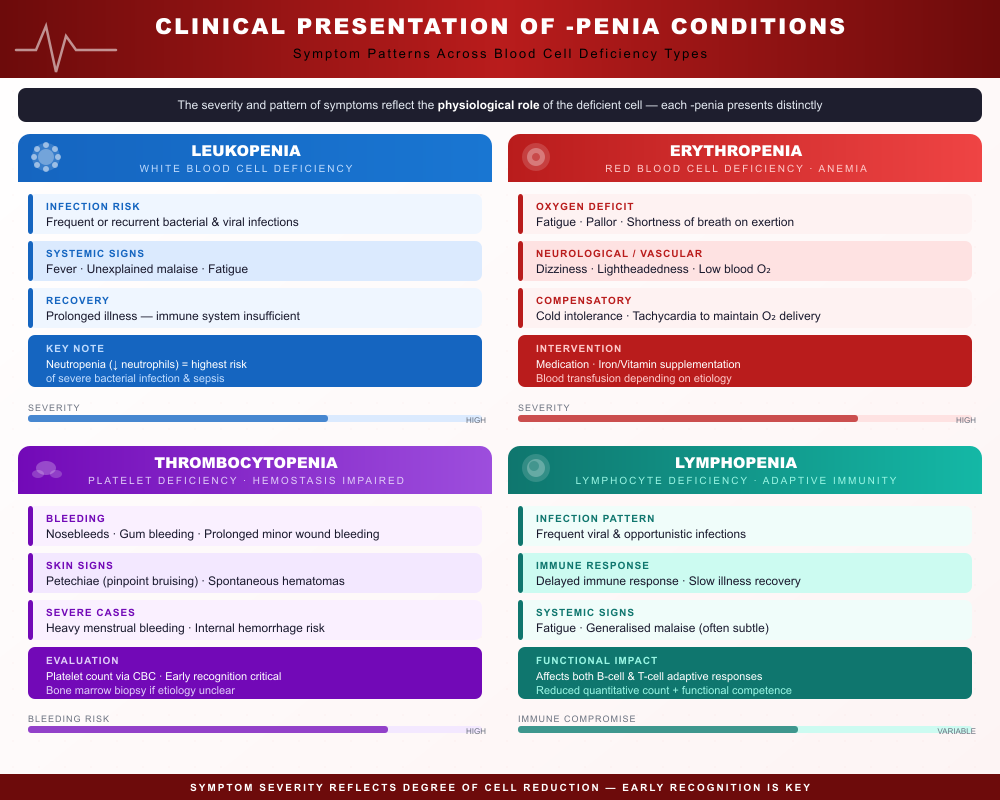
The -penia meaning in medical terms is often most clearly observed through its symptom patterns, which vary according to the specific type of blood cell affected. Because -penia denotes a condition characterized by a reduction or shortage of particular cell populations, the resulting clinical manifestations reflect the physiological roles of those cells. Understanding these patterns is critical in early recognition and management of the underlying disorder.
1. White Blood Cell Deficiency (Leukopenia)
- Leukopenia involves a reduction in white blood cells, which are central to immune system defense.
- Symptoms commonly include:
- Frequent or recurrent infection, often bacterial or viral in nature.
- Fever or unexplained malaise due to compromised immunity.
- Slow recovery from illness, indicating immune system insufficiency.
- The severity of symptoms is often proportional to the degree of reduction in specific white blood cell types, such as neutrophils (neutropenia), which increases susceptibility to severe infection.
2. Red Blood Cell Deficiency (Erythropenia)
- Erythropenia, a deficiency in red blood cells, disrupts oxygen transport to tissues and organs.
- Symptoms include:
- Fatigue, pallor, and shortness of breath even with minimal exertion.
- Dizziness or lightheadedness due to low blood oxygen levels.
- Cold intolerance or tachycardia, reflecting compensatory mechanisms to maintain oxygen delivery.
- Clinically, erythropenia often signals a condition characterized by systemic oxygen deficit, requiring medical evaluation and potentially interventions such as medication, supplementation, or transfusion depending on etiology.
3. Platelet Deficiency (Thrombocytopenia)
- Thrombocytopenia refers to a low platelet count, impairing hemostasis and clot formation.
- Symptoms may include:
- Excessive bleeding, such as nosebleeds, gum bleeding, or prolonged bleeding after minor injuries.
- Petechiae—small, pinpoint bruising on the skin or mucous membranes.
- Heavy menstrual bleeding in women or spontaneous hematomas in severe cases.
- These manifestations reflect the deficiency in the cellular component responsible for coagulation, and they underscore the clinical importance of recognizing thrombocytopenia early.
4. Lymphocyte Deficiency (Lymphopenia)
- Lymphopenia results in immune system compromise, leading to:
- Frequent viral or opportunistic infections.
- Delayed immune response and slow recovery from illness.
- Sometimes subtle systemic symptoms like fatigue or generalized malaise.
- Lymphopenia exemplifies how -penia conditions can affect both quantitative cell counts and functional immune competence.
Clinical Signs Observed in Nursing Assessments
While symptoms are patient-reported experiences, clinical signs are observable indications of -penia conditions during assessment. These signs are critical for diagnosis, risk stratification, and management planning.
1. Laboratory Findings
- Low blood counts are universally observed across -penia conditions:
- Leukopenia: reduced white blood cell count, particularly neutrophils or lymphocytes.
- Erythropenia: decreased hemoglobin, hematocrit, and red blood cell indices.
- Thrombocytopenia: platelet counts lower than 150,000/μL.
- These quantitative measures are corroborated by medical references and serve as objective evidence of cellular shortage.
2. Physical Signs
- Abnormal bruising or petechiae in thrombocytopenia.
- Pallor, tachycardia, and fatigue in erythropenia.
- Signs of infection in leukopenia and lymphopenia, including inflamed mucous membranes, fever, or delayed wound healing.
- Excessive bleeding from minor cuts or venipuncture sites, indicating impaired platelet function.
3. Variation by Cell Type
- The observable clinical signs vary significantly depending on which specific type of cell is deficient:
- Red blood cell deficiency primarily affects oxygen delivery and tissue perfusion.
- White blood cell deficiency primarily compromises host defense and immune response.
- Platelet deficiency primarily disrupts coagulation and vascular integrity.
- Recognizing these variations allows clinicians to correlate laboratory findings with symptom presentation to determine the severity and etiology of the -penia condition.
4. Integration into Clinical Assessment
- Comprehensive evaluation often requires:
- Detailed patient history, including recent infection episodes, bleeding tendencies, or fatigue.
- Laboratory investigations to confirm cellular deficiency.
- Assessment of underlying disorders affecting bone marrow, immune system, or systemic health.
The -penia meaning in medical terms is thus directly linked to both patient symptoms and observable clinical signs, providing a bridge between language, laboratory values, and physiological impact. Recognizing these patterns enables timely diagnosis, monitoring, and treatment, and underscores the systemic consequences of deficiencies in blood cells or specific cell types.
Diagnosing -Penia: Tests and Medical References
Blood Tests for Cell Deficiency
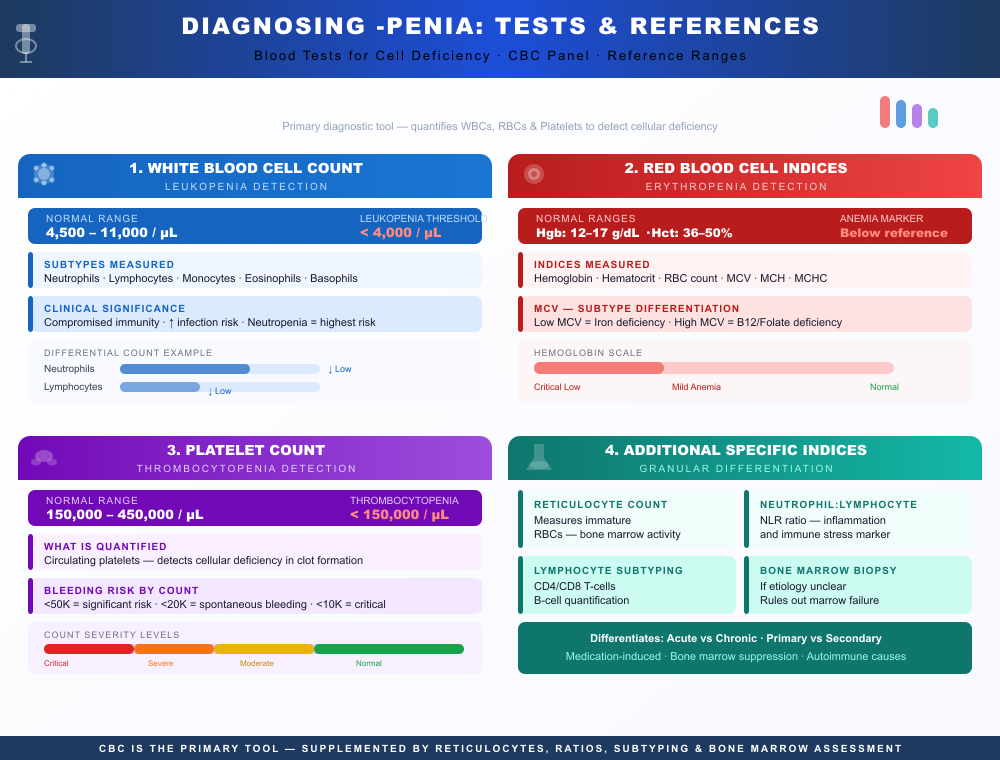
Diagnosing -penia conditions begins with laboratory evaluation, which provides objective evidence of cellular deficiency. The primary diagnostic tool is the complete blood count (CBC), a medical test that quantifies the different blood cells, including white blood cells, red blood cells, and platelets. The CBC serves as a critical reference for determining whether a condition characterized by decrease in cell populations exists.
Key components of blood tests for -penia include:
- White Blood Cell Counts
- Measurement of total white blood cells and subtypes such as neutrophils, lymphocytes, and monocytes.
- Leukopenia is identified when total white blood cells fall below established reference ranges (commonly <4,000/μL in adults).
- Clinical significance: an indicator of compromised immune system function and increased infection risk.
- Red Blood Cell Indices
- Includes hemoglobin concentration, hematocrit, and red blood cell count.
- Erythropenia is identified when these values are lower than normal, signaling anemia and tissue oxygen deficiency.
- Additional indices like mean corpuscular volume (MCV) help determine the specific type of red blood cell disorder.
- Platelet Counts
- Quantifies circulating platelets to detect thrombocytopenia, a condition characterized by low platelet count.
- Normal reference ranges typically lie between 150,000–450,000/μL, with values below this range indicating cellular deficiency and increased bleeding risk.
- Additional Specific Indices
- Reticulocyte counts, neutrophil-to-lymphocyte ratios, or lymphocyte subtyping may provide granular insight into immune system deficiencies.
- These measures assist clinicians in differentiating between acute versus chronic -penia, and in identifying secondary causes such as medication effects, bone marrow suppression, or autoimmune disorders.
Accurate interpretation of these tests requires reference to established medical references and guidelines, ensuring that low blood counts are contextualized within normal population ranges and individual patient characteristics.
Bone Marrow Evaluation and Specialist Referral
In some cases, blood tests alone are insufficient to determine the underlying cause of -penia. A bone marrow evaluation may be indicated when there is suspicion of primary marrow failure, malignancy, or unexplained reduction in multiple cell types.
Indications for bone marrow examination include:
- Persistent leukopenia, erythropenia, or thrombocytopenia not explained by medication or acute illness.
- Pancytopenia, where multiple blood cell lines are reduced simultaneously.
- Unexplained excessive bleeding, recurrent infections, or other clinical signs associated with -penia.
Bone marrow aspiration or biopsy allows direct assessment of cellular production, the presence of abnormal tissue or malignancy, and the evaluation of bone marrow microenvironment that may contribute to cellular shortage.
Specialist referral to a hematologist is recommended when complex disorders are suspected, or when initial laboratory tests and clinical evaluation indicate severe or progressive -penia conditions. Authoritative medical references provide standardized protocols for bone marrow assessment, ensuring that both diagnosis and management are consistent with evidence-based practice.
Terminology in Different English Variants
The -penia meaning in medical terms is consistent across languages but may exhibit subtle variations between American English and British English in spelling, usage, or reference presentation.
American English:
- Typically uses standardized laboratory reference ranges and terms such as platelet count, leukopenia, or erythropenia.
- Clinical reports and medical references generally adopt this terminology in both diagnostic and treatment guidelines.
British English:
- May employ alternative spellings or phrasing (e.g., “platelet deficiency” instead of “thrombocytopenia” in some contexts), though the suffix -penia is universally recognized.
- Authoritative British medical references provide cross-referenced terms to align with American English reporting standards.
Understanding these terminological nuances ensures accurate interpretation of laboratory results, allows clinicians to refer to international references, and aids in the consistent application of diagnostic criteria across healthcare systems.
By integrating blood tests, bone marrow evaluation, specialist referral, and knowledge of English language variants, clinicians can systematically diagnose -penia, identify the affected cell type, and develop evidence-based treatment strategies. The -penia meaning in medical terms is thus directly linked to precise clinical evaluation, laboratory interpretation, and standardized medical references.
Treatment Approaches for Different -Penia Conditions
General Treatment Strategies
Managing -penia conditions requires a multifaceted approach that addresses both the underlying disorder and the cellular deficiency itself. Because -penia can affect white blood cells, red blood cells, lymphocytes, or platelets, treatment strategies must be tailored to the specific type of cell affected, the severity of deficiency, and the patient’s overall clinical status.
Key general strategies include:
- Addressing the Underlying Disorder
- Treatment focuses on correcting the primary cause of -penia, which may include:
- Infections that suppress bone marrow or destroy specific cells.
- Autoimmune disorders causing immune-mediated destruction of blood cells (e.g., immune thrombocytopenia).
- Nutritional deficiencies, such as iron, vitamin B12, or folate deficiency, which contribute to erythropenia.
- Correcting the underlying condition often restores normal blood cell counts and mitigates symptoms such as fatigue, infection risk, or bleeding tendencies.
- Treatment focuses on correcting the primary cause of -penia, which may include:
- Supportive Care to Address Cellular Deficiency
- Supportive interventions aim to reduce complications while cell counts recover.
- Examples include:
- Infection prevention strategies for leukopenia, such as strict hygiene and monitoring for early signs of infection.
- Oxygen supplementation or transfusion support for erythropenia to manage anemia symptoms.
- Platelet transfusions or avoidance of trauma in thrombocytopenia to prevent excessive bleeding.
By focusing on both the root cause and cell-specific consequences, general strategies ensure comprehensive management of -penia across blood cell types.
Medication and Therapy Options
Pharmacologic interventions play a pivotal role in treating -penia, particularly when supportive care alone is insufficient or the deficiency is severe. Medications are chosen based on the type of cell affected, the etiology of the deficiency, and the patient’s risk profile.
1. Leukopenia (White Blood Cell Deficiency)
- Granulocyte colony-stimulating factors (G-CSFs), such as filgrastim, stimulate production of neutrophils in the bone marrow, reducing infection risk.
- Immunosuppressive therapy may be necessary in autoimmune-mediated leukopenia to prevent immune system destruction of white blood cells.
2. Thrombocytopenia (Platelet Deficiency)
- Platelet transfusions provide immediate correction for critically low platelet counts or active bleeding.
- Immunosuppressants (e.g., corticosteroids) may reduce autoimmune-mediated destruction in conditions like immune thrombocytopenic purpura.
- Thrombopoietin receptor agonists stimulate bone marrow production of platelets, improving low platelet count over time.
3. Erythropenia (Red Blood Cell Deficiency)
- Iron, vitamin B12, or folate supplementation addresses nutritional deficiencies causing low blood red cell counts.
- Erythropoiesis-stimulating agents (ESAs) may be used in chronic kidney disease or chemotherapy-induced erythropenia to promote red blood cell production.
4. Targeted and Supportive Therapies
- In cases of complex -penia, such as pancytopenia, combination therapy may include growth factors, transfusions, and immune modulation.
- Medications are selected according to specific type of cell affected, severity of deficiency, and potential for adverse effects, ensuring safe management of -penia conditions.
Long-Term Management and Prevention
Effective management of -penia extends beyond immediate correction of cellular deficiency. Long-term strategies focus on monitoring, prevention, and lifestyle adjustments to minimize recurrence and complications.
1. Ongoing Monitoring
- Regular blood tests track cell counts and identify trends toward recurrence of -penia.
- Monitoring is particularly critical in patients with chronic bone marrow disorders, autoimmune diseases, or those receiving medication known to reduce blood cells.
2. Lifestyle Adjustments
- Adequate nutrition, including iron, B12, folate, and other essential substances, supports bone marrow function and red blood cell production.
- Infection prevention measures, such as vaccination and hygiene, protect patients with leukopenia or lymphopenia from opportunistic infections.
- Avoiding medications or substances that may exacerbate thrombocytopenia helps maintain low platelet counts within safer ranges.
3. Preventative Strategies
- Early identification of risk factors, including autoimmune or genetic disorders, helps prevent severe cellular deficiency.
- In high-risk populations, prophylactic interventions such as growth factors or transfusions may prevent complications like bleeding, anemia, or infection.
- Education on recognizing early symptoms of -penia empowers patients and clinicians to initiate timely treatment.
Long-term management integrates clinical monitoring, preventive care, and therapeutic intervention to sustain adequate blood cell levels and maintain overall health. This holistic approach ensures that -penia conditions are not only corrected acutely but also controlled over time, reducing the risk of abnormal outcomes such as severe infection, bleeding complications, or chronic fatigue.
Specific -Penia Disorders Explained
Leukopenia: White Blood Cell Deficiency
Leukopenia refers to a condition characterized by a reduction in white blood cells (WBCs), which play a critical role in the immune system. The -penia meaning in medical terms indicates a shortage or deficiency in WBCs, leaving the body more susceptible to infection and slowing recovery from illness.
Causes:
- Bone marrow suppression – due to chemotherapy, radiation, or bone marrow disorders.
- Autoimmune disorders – conditions like systemic lupus erythematosus can trigger immune system–mediated destruction of WBCs.
- Infections – viral infections, such as HIV, can lead to persistent leukopenia.
- Medications – certain drugs, including some antibiotics and immunosuppressants, may reduce white blood cell production.
Clinical Manifestations:
- Recurrent or severe infections, sometimes with minimal fever.
- Fatigue, malaise, and slow healing of wounds due to impaired immune defense.
- In severe cases, opportunistic infections like pneumonia or sepsis may occur.
Management Considerations:
- Monitoring through regular CBC to track white blood cell counts.
- Infection prevention strategies, including prophylactic antibiotics in immunocompromised patients.
- Use of growth factors, such as granulocyte colony-stimulating factor (G-CSF), to stimulate bone marrow production of white blood cells.
- Adjusting or discontinuing medications that contribute to leukopenia.
Erythropenia: Red Blood Cell Deficiency
Erythropenia is defined as a reduction in red blood cells, resulting in decreased oxygen delivery to tissues and organs. The suffix -penia indicates the lack or deficiency of this essential cellular component.
Causes:
- Nutritional deficiencies – iron, vitamin B12, or folate deficiency.
- Bone marrow suppression – from chemotherapy, radiation, or primary marrow disorders.
- Chronic diseases affecting red blood cell production.
- Hemorrhage or excessive blood loss leading to acute erythropenia.
Symptoms:
- Fatigue, pallor, dizziness, and shortness of breath due to low oxygen-carrying capacity.
- Tachycardia as the cardiovascular system compensates for reduced oxygen delivery.
- Cognitive impairment or decreased concentration in severe cases.
Clinical Implications:
- Low red blood cells require careful monitoring through CBC and hemoglobin levels.
- Treatment may include iron, B12, or folate supplementation, erythropoiesis-stimulating agents, or blood transfusions depending on severity.
- Identifying and correcting the underlying cause is crucial to restoring normal blood cell counts and reducing anemia-related symptoms.
Lymphopenia: Immune Cell Deficiency
Lymphopenia specifically refers to a reduction in lymphocytes, a key white blood cell type critical for adaptive immune responses. It is a -penia condition that indicates compromised immune system function, increasing infection risk.
Common Causes:
- Viral infections, including HIV, that target lymphocytes.
- Autoimmune disorders or immunodeficiency syndromes.
- Chronic corticosteroid use or immunosuppressive medication.
- Malnutrition or severe systemic illness affecting bone marrow function.
Clinical Consequences:
- Increased susceptibility to opportunistic infections such as fungal, viral, and bacterial infections.
- Slower immune response to vaccines or pathogens.
- Fatigue or generalized malaise associated with immune compromise.
Management Strategies:
- Regular monitoring of lymphocyte counts via CBC and lymphocyte subtyping.
- Infection prevention measures, including vaccination, hygiene, and avoidance of sick contacts.
- Adjusting medications that contribute to lymphopenia and supporting nutrition to enhance immune system function.
- In severe cases, referral to a hematologist or immunologist may be warranted for advanced interventions.
Thrombocytopenia: Platelet Deficiency
Thrombocytopenia is a -penia condition characterized by a low platelet count, which impairs hemostasis and increases the risk of bleeding. Platelets are essential for forming clots and maintaining vascular integrity, making thrombocytopenia a significant clinical concern.
Causes:
- Bone marrow dysfunction – aplastic anemia or chemotherapy-induced suppression.
- Immune-mediated destruction – immune thrombocytopenic purpura (ITP).
- Medications such as heparin or chemotherapeutic agents.
- Splenic sequestration or chronic systemic diseases.
Clinical Manifestations:
- Excessive bleeding, including nosebleeds, gum bleeding, or prolonged bleeding from minor injuries.
- Petechiae and bruising on the skin or mucous membranes.
- In severe cases, internal bleeding or hemorrhage may occur.
Management Priorities:
- Platelet transfusions for critically low counts or active bleeding.
- Immunosuppressive therapy in autoimmune cases to prevent further platelet destruction.
- Avoidance of trauma or medications that exacerbate bleeding risk.
- Ongoing monitoring through platelet counts to guide treatment and assess response.
Clinical Example:
- A patient undergoing chemotherapy may develop thrombocytopenia with low platelet count, requiring both transfusion support and temporary discontinuation of platelet-lowering medications to prevent excessive bleeding.
Conclusion
The -penia meaning in medical terms serves as a vital linguistic and clinical tool, signaling a condition characterized by a decrease or deficiency in specific blood cells. Understanding this suffix is essential not only for interpreting medical terminology but also for recognizing the physiological and clinical consequences of cellular shortages. Across the spectrum of -penia disorders—from leukopenia and lymphopenia affecting the immune system, to erythropenia impacting oxygen transport, and thrombocytopenia compromising platelet-mediated hemostasis—the clinical signs and symptoms consistently reflect the vital role of each cell type in maintaining systemic health.
Accurate diagnosis relies on careful evaluation of laboratory tests, including complete blood counts, platelet counts, and specific cell indices, with bone marrow assessment reserved for complex or unexplained cases. Medical references and authoritative dictionary definitions provide standardized frameworks for interpreting results, guiding clinicians in evidence-based decision-making. Awareness of terminology variations in American English and British English ensures consistent understanding across clinical and educational contexts.
Management of -penia conditions requires a combination of strategies: treating the underlying cause, applying medication and targeted therapies, and implementing long-term monitoring and preventative measures. Supporting the immune system, correcting nutritional deficiencies, and preventing bleeding or infection are essential components of patient care. By integrating clinical evaluation, laboratory findings, and tailored management approaches, healthcare providers can mitigate the risks associated with low blood cell counts and enhance patient outcomes.
In essence, the -penia suffix is more than a linguistic marker; it reflects a phenomenon of cellular shortage with profound implications for human health. Recognizing the specific type of -penia, understanding its clinical presentation, and applying structured diagnostic and treatment strategies allow for comprehensive care. Mastery of this concept equips healthcare professionals to identify deficiency-related disorders, respond promptly to clinical signs, and implement interventions that preserve function, prevent complications, and support overall patient well-being.
Ultimately, the study of -penia exemplifies the intersection of medical terminology, laboratory science, and clinical practice, highlighting how precise language guides effective diagnosis, monitoring, and management in modern healthcare.
Frequently Asked Questions
What is the suffix for deficiency in medical terms?
- The suffix “-penia” is used in medical terminology to indicate a deficiency or reduction of a specific substance or cell type, such as leukopenia (low white blood cell count) or thrombocytopenia (low platelet count).
What are 20 examples of suffixes?
Here are 20 common medical suffixes and their general meanings:
- -itis – inflammation (e.g., appendicitis)
- -ectomy – surgical removal (e.g., appendectomy)
- -algia – pain (e.g., neuralgia)
- -emia – blood condition (e.g., anemia)
- -osis – abnormal condition or disease (e.g., cirrhosis)
- -pathy – disease or disorder (e.g., neuropathy)
- -plasty – surgical repair (e.g., rhinoplasty)
- -stomy – creating an opening (e.g., colostomy)
- -graphy – process of recording (e.g., angiography)
- -gram – record or image (e.g., electrocardiogram)
- -scopy – visual examination (e.g., endoscopy)
- -rrhea – discharge or flow (e.g., diarrhea)
- -rrhage / -rrhagia – excessive flow or bleeding (e.g., hemorrhage)
- -megaly – enlargement (e.g., hepatomegaly)
- -penia – deficiency or shortage (e.g., leukopenia)
- -cyte – cell (e.g., leukocyte)
- -phobia – fear (e.g., claustrophobia)
- -tomy – incision or cutting (e.g., tracheotomy)
- -plasm – formation or growth (e.g., neoplasm)
- -genesis – formation or development (e.g., osteogenesis)
What does the suffix mean in medical terms?
- In medical terminology, a suffix is a word ending added to the root word to modify its meaning, typically indicating a condition, procedure, disease, or state. For example, “-itis” means inflammation, and “-penia” means deficiency.
What prefix means deficiency?
- While “-penia” is a suffix for deficiency, there is no universal prefix that means deficiency in standard medical terms. Deficiency is primarily expressed through suffixes (like -penia). Some terms may use hypo- as a prefix to indicate low or decreased levels of a substance, such as hypocalcemia (low calcium levels).
