

Semi Fowler Position: How the Semi-Fowler Patient Position Improves Breathing and Abdominal Care
Patient positioning is a fundamental component of nursing practice, influencing respiratory function, comfort, and recovery outcomes across a wide range of clinical scenarios. Among the various positioning techniques, the semi-Fowler position occupies a critical role in promoting optimal breathing, supporting abdominal care, and facilitating nursing interventions. By elevating the head of the bed to an angle typically between 30 and 45 degrees, the semi-Fowler position allows for improved lung expansion and oxygenation while minimizing strain on the upper abdominal muscles. Its application extends beyond respiratory support, encompassing post-abdominal surgery care, feeding procedures, and management of patients experiencing respiratory distress.
The semi-Fowler position is distinguished from standard Fowler or high Fowler positions by its moderate bed angle, which balances the benefits of an upright posture with patient comfort and safety. Understanding the physiological impact of this patient position on the diaphragm, chest expansion, and abdominal structures is essential for nurses seeking to implement evidence-based positioning strategies. Proper patient positioning also involves attention to alignment, support of the lower back and legs, and adjustments tailored to individual patient needs, ensuring both efficacy and safety during clinical care.
This article provides an in-depth exploration of the semi-Fowler position, detailing its historical development, clinical rationale, and practical application across diverse nursing contexts. From respiratory support and post-surgical recovery to feeding interventions and pressure injury prevention, the discussion integrates evidence-based practices, step-by-step guidance, and considerations for monitoring and documentation. By understanding the nuances of semi-Fowler positioning, nursing professionals can enhance patient comfort, optimize physiological outcomes, and maintain high standards of care in everyday practice.
Understanding Fowler vs Semi-Fowler Position in Patient Care
Patient positioning is a critical element in nursing care, influencing respiratory function, abdominal comfort, and overall recovery outcomes. The Fowler and semi-Fowler positions are frequently utilized in hospitals, long-term care, and home settings to optimize patient physiology and facilitate nursing interventions. Although both positions elevate the head of the bed, their bed angles, physiological effects, and clinical applications differ significantly.
Definition and Bed Angles: Semi-Fowler (30–45°) vs Fowler (45–90°)
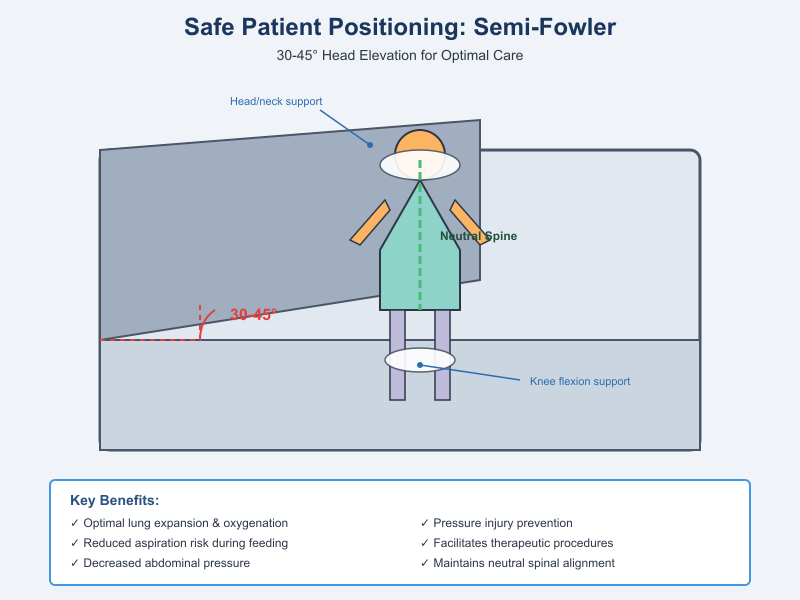
The semi-Fowler position is defined as a patient position where the head of the bed is elevated between 30 degrees and 45 degrees. This semi-sitting position provides a balance between upright posture and comfort, allowing for moderate chest expansion while reducing pressure on the upper abdominal muscles. In contrast, the standard Fowler position involves a more pronounced elevation, typically between 45 degrees and 90 degrees, with high Fowler’s position reaching the full upright angle of 90 degrees. These differences in bed angle directly impact the degree of lung expansion, diaphragm movement, and abdominal relaxation.
For example, patients recovering from abdominal surgery may benefit from the semi-Fowler position because the moderate angle reduces tension on the abdominal muscles and promotes comfort, whereas patients in respiratory distress may require the higher Fowler or even high Fowler’s position to maximize oxygenation and facilitate breathing treatments. The choice of angle should also consider the patient’s tolerance for sitting upright, risk for orthostatic hypotension, and overall clinical condition.
Historical Development and Clinical Rationale of Fowler and Semi-Fowler Positions
The Fowler position was first described in the early 20th century as a means to assist patients with respiratory compromise and gastrointestinal management. Originally intended to improve diaphragmatic excursion and reduce aspiration risk, it became a standard in both medical and surgical care settings. The semi-Fowler position emerged as a modification to provide a more comfortable patient position while still supporting adequate ventilation and abdominal relief. Textbooks for nursing assistants emphasize the clinical rationale for these positions, noting that elevation of the head of the bed facilitates patient comfort, promotes effective chest expansion, and supports procedures such as feeding, catheter care, and postoperative monitoring.
The development of these positions is rooted in the understanding of human anatomy and physiology. Elevating the head of the bed changes the relationship between the diaphragm, thoracic cavity, and abdominal contents. By allowing the diaphragm to descend more efficiently during inspiration, both positions enhance lung expansion and improved breathing, though the semi-Fowler position does so with less strain on the upper abdominal region.
Physiological Effects on the Diaphragm, Lung Expansion, and Abdominal Comfort
The primary physiological benefit of the semi-Fowler position is its effect on respiratory mechanics. By elevating the head of the bed to approximately 30–45 degrees, the diaphragm can contract and descend more freely, promoting chest expansion and lung expansion. This angle is particularly beneficial for patients experiencing difficulty breathing or mild respiratory distress, as it increases tidal volume and enhances oxygenation without requiring a full upright posture, which may be uncomfortable or unsustainable for prolonged periods.
From an abdominal perspective, the semi-Fowler position reduces tension on the abdominal muscles and upper abdominal region, especially following surgical procedures such as upper abdominal surgery or laparoscopic interventions. In contrast, a full Fowler’s position can place greater strain on incision sites or exacerbate discomfort in patients with abdominal distention. Nursing staff often combine semi-Fowler positioning with proper support of the lower back and legs of the patient, using pillows or adjustable mattress features to maintain a neutral position that maximizes both comfort and physiological benefit.
Clinically, semi-Fowler’s position is frequently used during feeding, administration of breathing treatments, and care for patients requiring moderate upright positioning without the full strain of high Fowler’s position. In practice, maintaining the head of the bed at 30–45 degrees while supporting the foot of the bed and lower extremities ensures stability, reduces risk of sliding, and facilitates optimal patient positioning for both respiratory and abdominal care.
Benefits of the Semi-Fowler Position for Patient Positioning
The semi-Fowler position offers multiple clinical benefits that extend across respiratory support, abdominal comfort, and gastrointestinal safety. Elevating the head of the bed to 30–45 degrees creates a semi-sitting position that facilitates chest and lung expansion, reduces strain on the upper abdominal muscles, and minimizes the risk of aspiration during feeding or therapeutic interventions. Understanding these benefits is essential for nurses to implement evidence-based patient positioning safely and effectively.
Respiratory Benefits: Improving Oxygenation and Chest Expansion
The semi-Fowler position has profound implications for respiratory function. By elevating the head of the bed, the diaphragm can descend more efficiently during inhalation, improving lung expansion and chest expansion. This elevation enhances oxygenation, reduces difficulty breathing, and supports patients with mild to moderate respiratory distress.
Clinical application includes:
- Patients with chronic obstructive pulmonary disease (COPD) who struggle with breathing while in supine position. Elevating them to semi-Fowler allows the diaphragm to move unimpeded, improving ventilation.
- Patients receiving oxygen therapy or breathing treatments benefit from a semi-sitting position, which maximizes airway clearance while maintaining comfort.
Adjusting the head of the bed between 30 and 45 degrees provides a customizable approach: lower angles suffice for routine respiratory support, while higher angles (closer to 45 degrees) are used for more pronounced difficulty breathing without the patient assuming a full high Fowler’s position, which could strain the upper abdominal muscles.
Abdominal Care: Post-Surgery Comfort and Reduced Strain on the Surgical Site
The semi-Fowler position is particularly advantageous for patients recovering from abdominal surgery. Elevation of the head of the bed reduces tension on abdominal muscles, provides upper abdominal comfort, and protects surgical incisions from unnecessary strain.
Examples of its application include:
- Post-laparoscopic cholecystectomy patients: Semi-Fowler positioning reduces pressure on the incision, promotes comfort, and facilitates monitoring of the surgical site.
- Post-upper abdominal surgery patients: Supporting the lower back and legs of the patient in a semi-Fowler position ensures a stable, neutral position, preventing sliding and maintaining proper alignment of the spine and abdomen.
By balancing torso elevation with abdominal protection, semi-Fowler positioning allows patients to rest comfortably while maintaining optimal physiological function.
Gastrointestinal and Feeding Advantages: Reducing Aspiration Risk
The semi-Fowler position also supports safe feeding and gastrointestinal care. Elevating the head of the bed reduces the risk of aspiration, particularly in patients with compromised swallowing reflexes, postoperative abdominal surgery, or tube feeding requirements.
Key considerations include:
- Tube feeding or NG tube management: Elevation prevents regurgitation and facilitates gastric emptying.
- Oral feeding: Semi-Fowler positioning allows patients to maintain a semi-sitting posture, promoting digestion and reducing the risk of aspiration pneumonia.
- Post-surgical feeding: Patients recovering from abdominal surgery tolerate food better in semi-Fowler, as the position reduces pressure on the upper abdominal muscles while enhancing comfort.
By combining respiratory, abdominal, and gastrointestinal advantages, the semi-Fowler position serves as a versatile intervention that addresses multiple patient care priorities simultaneously. Proper implementation requires attention to head of bed elevation, supporting the lower back and legs of the patient, and ensuring a neutral position to maximize benefits and maintain patient safety.
Clinical Applications and Indications for Semi Fowler Position
The semi-Fowler position is a versatile patient position widely used in nursing practice to address diverse clinical needs. Its moderate elevation of the head of the bed between 30 and 45 degrees provides a semi-sitting posture that facilitates lung expansion, oxygenation, and abdominal comfort while supporting safe execution of nursing interventions. Understanding the clinical applications and indications of semi-Fowler positioning is essential for delivering evidence-based patient care in both acute and long-term care settings.
Use in Respiratory Distress and Oxygen Therapy
One of the most common indications for the semi-Fowler position is the management of patients experiencing respiratory distress. Elevating the head of the bed improves diaphragm mobility, promotes chest expansion, and enhances lung expansion, resulting in more efficient oxygenation and reduced difficulty breathing.
For example, patients with chronic obstructive pulmonary disease (COPD), pneumonia, or early stages of acute respiratory failure often benefit from semi-Fowler positioning during routine monitoring or oxygen therapy. In this posture, the semi-sitting position allows for:
- Improved ventilation-perfusion matching, facilitating better oxygen delivery to the tissues.
- Increased comfort during continuous positive airway pressure (CPAP) therapy or high-flow oxygen delivery, reducing the sensation of breathlessness.
- Enhanced ability to perform breathing treatments, including nebulization, as the patient can maintain a stable upright posture while keeping the lower back and legs of the patient supported.
In situations where respiratory distress intensifies, transitioning from semi-Fowler to high Fowler may be necessary to further maximize lung expansion and oxygenation, while still protecting upper abdominal comfort.
Post-Abdominal Surgery and Gastrointestinal Interventions
The semi-Fowler position is also critical for patients recovering from abdominal surgery. Elevating the head of the bed reduces tension on abdominal muscles and supports the upper abdominal region, minimizing discomfort at surgical sites. This position promotes optimal healing while maintaining a neutral position for the spine, preventing pressure on incisions and reducing postoperative pain.
Clinical applications in post-abdominal surgery care include:
- Monitoring surgical sites: Nurses can assess incisions, drains, and dressings while the patient remains comfortable in the semi-Fowler posture.
- Facilitating abdominal drainage or wound healing: The semi-Fowler angle allows gravity to assist in drainage from abdominal tubes, reducing fluid accumulation and risk of complications.
- Promoting patient mobility: This position enables gradual transition to sitting or standing, supporting early mobilization without straining the abdominal muscles or surgical sites.
By maintaining proper support for the lower back and legs of the patient, semi-Fowler positioning ensures that post-surgical patients remain stable and safe while receiving optimal abdominal care.
Feeding, NG Tube Management, and Other Therapeutic Procedures
Semi-Fowler positioning is indispensable for safe feeding and gastrointestinal interventions. Elevating the head of the bed to 30–45 degrees reduces the risk of aspiration, promotes gastric emptying, and supports patients during therapeutic procedures such as NG tube management or oral feeding.
Examples include:
- Tube feeding: Semi-Fowler positioning helps prevent regurgitation and aspiration pneumonia in patients with compromised swallowing or postoperative abdominal surgery.
- Oral feeding: Maintaining a semi-sitting position allows patients to eat safely while protecting upper abdominal muscles and minimizing discomfort at surgical sites.
- Therapeutic procedures: Semi-Fowler positioning facilitates interventions such as wound care, bladder catheterization, and respiratory therapy without requiring full supine or upright positions, which may be uncomfortable or unsafe for certain patients.
Nurses must continuously monitor oxygenation, lung expansion, and abdominal comfort while patients are in semi-Fowler, adjusting the bed angle or adding support for the lower back and legs of the patient to maintain a neutral position. This ensures both safety and efficacy across multiple therapeutic applications.
Safe Patient Positioning Techniques in Semi-Fowler
Safe and effective positioning of patients in the semi-Fowler position is a critical component of nursing care. Proper implementation ensures optimal oxygenation, lung expansion, abdominal comfort, and prevention of pressure injuries, while also facilitating therapeutic procedures such as feeding, NG tube management, and breathing treatments. Nurses must combine anatomical understanding, clinical assessment, and evidence-based strategies to position patients safely while maintaining a neutral position and proper alignment of the spine.
Step-by-Step Guide: Adjusting Head of Bed and Maintaining Neutral Alignment
Positioning a patient in semi-Fowler begins with careful adjustment of the head of the bed. Gradual elevation is essential to prevent orthostatic hypotension, maintain hemodynamic stability, and ensure patient comfort.
- Begin by verifying that the patient’s bed angle corresponds to a semi-Fowler range (30–45 degrees). For patients experiencing mild respiratory distress, a 30-degree elevation may be adequate, whereas higher angles closer to 45 degrees can enhance chest expansion without imposing excessive strain on the upper abdominal muscles.
- Raise the head of the bed slowly while monitoring the patient for any signs of difficulty breathing, dizziness, or discomfort.
- Align the patient’s spine in a neutral position, ensuring that the upper abdominal region is supported and the torso does not slouch forward. Proper spinal alignment facilitates diaphragm movement, promotes lung expansion, and reduces the risk of pressure on surgical sites.
- Encourage the patient to flex their hips slightly if tolerated, supporting the lower back and maintaining body position stability. This ensures that the head of the bed elevation does not compromise comfort or alignment.
Supporting Legs, Lower Back, and Padding for Comfort
Supporting the legs of the patient and lower back is crucial in semi-Fowler positioning to prevent sliding, maintain posture, and enhance overall comfort. Improper support can lead to shear injuries, increased tension on abdominal muscles, and reduced chest expansion due to postural compromise.
- Place a small pillow or wedge under the knees to slightly flex them, which helps reduce pressure on the lumbar spine and prevents the patient from sliding down the bed.
- Support the lower back with a rolled towel or lumbar cushion to maintain a neutral position and facilitate upright position without overextending the spine.
- Additional padding may be used under pressure points such as heels or elbows to prevent pressure injuries, particularly in patients who remain in the semi-Fowler position for extended periods.
- Ensure that any support does not obstruct abdominal expansion, allowing the diaphragm to move freely during breathing treatments and improving lung expansion and oxygenation.
Modifications for Specific Patient Needs: Obesity, Postoperative, or Respiratory Conditions
Nursing staff must recognize that semi-Fowler positioning requires individualized modifications based on the patient’s condition, body habitus, and clinical needs.
- Obese patients: Elevated head of bed angles may need slight adjustments to ensure comfort and stability. Extra pillows or specialized wedges may support the lower back and legs of the patient without compressing the abdominal muscles, maintaining proper neutral position.
- Postoperative patients: After abdominal surgery, the semi-Fowler angle may need to be reduced slightly (closer to 30 degrees) to prevent tension on incisions while still allowing sufficient chest expansion and oxygenation. Proper positioning also facilitates observation of surgical sites and drains.
- Patients with respiratory conditions: Individuals experiencing respiratory distress may require angles approaching 45 degrees or slightly higher, depending on tolerance. Additional support for the upper body and arms may help maintain an effective semi-sitting position during oxygen therapy or breathing treatments.
In all cases, continuous assessment is essential. Nurses must observe the patient for comfort, skin integrity, and effectiveness of respiratory mechanics, adjusting padding, leg support, or head of the bed elevation as needed. Combining careful positioning with frequent monitoring ensures both safety and therapeutic benefit, reinforcing the semi-Fowler position’s versatility across diverse clinical scenarios.
Nursing Care, Monitoring, and Documentation
Proper nursing care, monitoring, and documentation are essential components when caring for patients positioned in semi-Fowler. This ensures not only patient safety but also optimizes respiratory function, abdominal comfort, and prevention of complications such as pressure injuries. Nurses play a pivotal role in implementing evidence-based practices while maintaining compliance with nursing standards and clinical protocols.
Assessing Breathing, Oxygenation, and Lung Expansion
One of the primary responsibilities of the nurse when positioning a patient in semi-Fowler position is the continuous assessment of breathing, oxygenation, and lung expansion. This includes:
- Observation of respiratory patterns: Nurses monitor the rate, depth, and effort of breathing. Patients with respiratory distress may display labored breathing, use of accessory muscles, or difficulty breathing that requires immediate intervention.
- Use of monitoring devices: Pulse oximetry, capnography, or arterial blood gases may be used to evaluate oxygenation and ensure the semi-Fowler posture effectively facilitates lung expansion.
- Physical assessment: Nurses assess for chest symmetry and chest expansion during inspiration, listening for abnormal breath sounds that may indicate compromised ventilation.
- Patient feedback: Comfort and ability to breathe without strain are evaluated, as some patients may require slight adjustments to the head of the bed or support for the lower back and legs of the patient to maintain optimal semi-sitting position.
For example, a patient recovering from upper abdominal surgery may demonstrate shallow breathing if lying too flat in supine position. Elevating them to semi-Fowler improves diaphragm mobility, allowing for better lung expansion and oxygenation, while reducing postoperative discomfort.
Pressure Injury Prevention and Position Adjustment Frequency
Prolonged time in semi-Fowler position can increase the risk of pressure injuries, especially at bony prominences such as the sacrum, heels, and elbows. Effective nursing care requires proactive prevention strategies:
- Regular repositioning: Patients should be repositioned every 2 hours or as clinically indicated to relieve pressure points and promote circulation.
- Use of supportive devices: Pillows, foam wedges, or specialty mattresses may be employed to offload pressure from vulnerable areas while maintaining proper neutral position and comfort.
- Assessment of skin integrity: Nurses perform frequent skin checks, paying attention to the upper back, sacral region, and heels, documenting any redness, blanching, or early signs of pressure injury.
For example, a patient with limited mobility in semi-Fowler’s position postoperatively may require additional padding under the lower back and legs of the patient to prevent shear forces while still allowing effective chest and lung expansion.
Documentation, Safety Checks, and Compliance with Nursing Standards
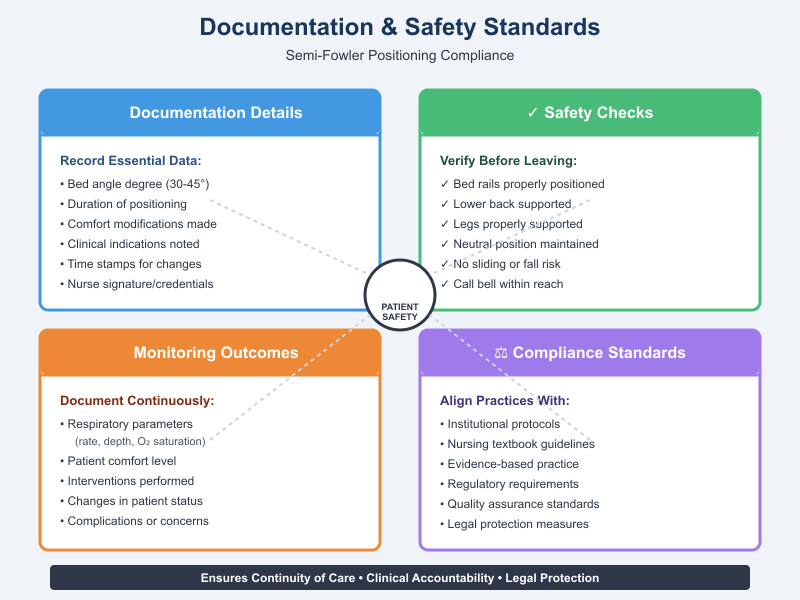
Accurate documentation and adherence to nursing standards are essential when positioning patients in semi-Fowler position. Documentation ensures continuity of care, supports legal protection, and reinforces clinical accountability:
- Documenting positioning details: Record the degree of bed angle, duration of semi-Fowler positioning, and any modifications made for comfort or clinical indication.
- Safety checks: Verify that bed rails are appropriately positioned, the patient’s lower back and legs are supported, and the neutral position is maintained to prevent sliding or falls.
- Monitoring outcomes: Document respiratory parameters, patient comfort, and any interventions performed during the period in semi-Fowler.
- Compliance with standards: Align all positioning practices with institutional protocols, textbooks for nursing assistants, and evidence-based guidelines to ensure both therapeutic effectiveness and patient safety.
For example, when performing feeding or NG tube management, nurses should document the head of bed angle, patient tolerance, and any changes in oxygenation or lung expansion, ensuring that interventions comply with safety and professional standards.
When to Transition from Semi-Fowler to Other Positions
While the semi-Fowler position is widely used for respiratory support, abdominal care, and feeding, there are clinical scenarios where transitioning to another patient position becomes necessary. Nurses must continuously assess patient status, comfort, and therapeutic outcomes to determine whether adjustments to bed angle, posture, or support are required. Proper transitions optimize oxygenation, reduce difficulty breathing, and maintain upper abdominal comfort, all while preventing complications such as pressure injuries or strain on surgical sites.
High Fowler vs Semi-Fowler: Indications and Benefits
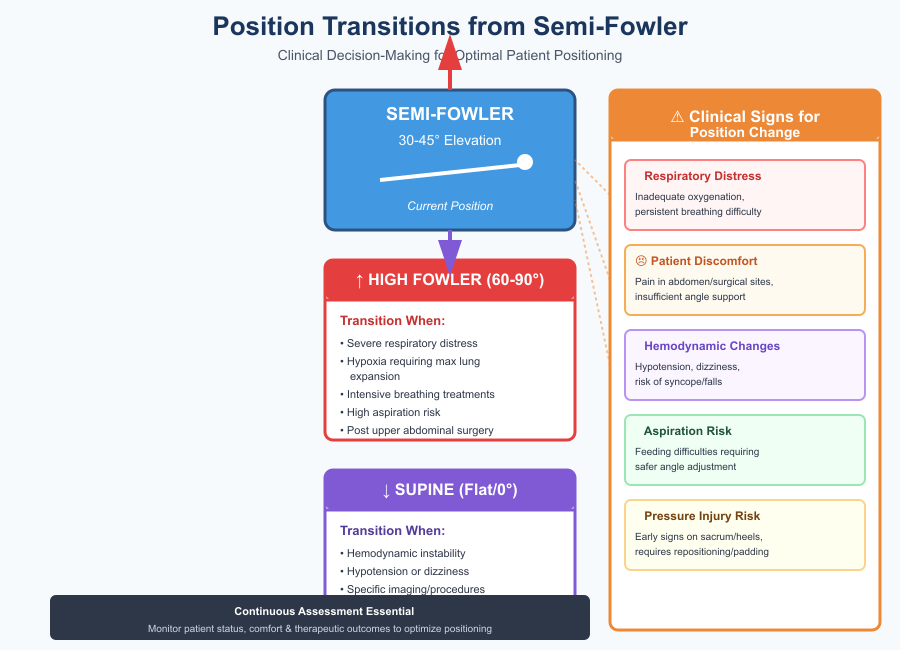
The high Fowler position, with the head of the bed elevated to 60–90 degrees, is often indicated when patients require maximal chest expansion or are experiencing significant respiratory distress. In comparison, semi-Fowler, with its 30–45 degree elevation, offers moderate diaphragm facilitation and comfort for patients who are stable or recovering.
Indications for transitioning from semi-Fowler to high Fowler include:
- Severe respiratory distress or hypoxia that requires maximum lung expansion and improved oxygenation.
- Assistance with intensive breathing treatments, such as nebulization or high-flow oxygen therapy, where an upright position improves airway clearance.
- Patients with feeding difficulties who need a higher angle to prevent aspiration, especially postoperatively after upper abdominal surgery.
For example, a patient with acute exacerbation of COPD may initially be placed in semi-Fowler position for comfort. If oxygen saturation remains low and difficulty breathing persists, elevating to high Fowler can enhance chest expansion, improve diaphragm movement, and facilitate oxygen therapy more effectively.
Supine Position: When Upright Angles Are Not Suitable
There are clinical situations where upright angles—whether semi-Fowler or high Fowler—may be contraindicated, necessitating a transition to the supine position. These include:
- Hemodynamic instability: Patients with hypotension, dizziness, or syncope may require a more flat body position to promote venous return and maintain cardiac output.
- Certain surgical or procedural needs: Some imaging studies, abdominal assessments, or surgical procedures require the patient to be in a supine position for accuracy and safety.
- Severe musculoskeletal limitations: Patients with spinal injuries or severe postural pain may not tolerate elevated positions, and supine positioning provides comfort while maintaining a neutral position.
Nurses must carefully support the lower back and legs of the patient during transitions to supine position, ensuring that the upper abdominal region remains protected and pressure injury prevention measures are maintained.
Clinical Signs Necessitating Position Change
Continuous monitoring is essential for determining when a patient requires repositioning. Signs that a transition from semi-Fowler is warranted include:
- Inadequate oxygenation or persistent difficulty breathing, indicating the need for a higher head of bed elevation or upright position.
- Patient discomfort or pain, particularly in the upper abdominal region or at surgical sites, suggesting the current angle is insufficient for abdominal support.
- Changes in hemodynamic stability, such as hypotension or dizziness, which may necessitate a supine position to prevent falls or syncope.
- Risk of aspiration during feeding, requiring adjustment of the semi-sitting position to a safer angle.
- Early signs of pressure injuries, particularly on the sacrum or heels, signaling the need for position adjustment or added padding.
For instance, a patient recovering from abdominal surgery may initially tolerate semi-Fowler position well. If the patient reports sharp pain at the surgical site or shows signs of nausea during feeding, the nurse may adjust the bed angle or temporarily move to low Fowler or supine position to protect abdominal muscles and maintain comfort.
Conclusion
The semi-Fowler position represents a cornerstone of safe and effective patient positioning in nursing practice. By elevating the head of the bed to 30–45 degrees, this semi-sitting position not only facilitates improved breathing but also supports abdominal comfort, enhances lung expansion, and reduces difficulty breathing in patients with respiratory distress. Its versatility makes it an essential tool for post-abdominal surgery care, feeding, NG tube management, and other therapeutic procedures, providing a balance between upright position for oxygenation and protection of the upper abdominal muscles.
Effective use of the semi-Fowler position requires proper patient positioning, ongoing nursing care, monitoring, and documentation, and regular adjustments to prevent pressure injuries. Nurses must maintain the neutral position, support the lower back and legs of the patient, and carefully observe clinical signs to determine if transition to high Fowler or supine position is necessary.
Ultimately, the semi-Fowler posture exemplifies how thoughtful positioning a patient can directly impact recovery, safety, and overall well-being. By integrating evidence-based techniques into daily nursing practice, healthcare professionals can optimize chest expansion, protect surgical sites, and promote effective respiratory and gastrointestinal outcomes. The semi-Fowler position is not merely a static posture—it is a dynamic nursing intervention that combines comfort, safety, and clinical effectiveness to enhance patient care.
Frequently Asked Questions
What is the semi-Fowler’s position used for?
The semi-Fowler position is used to elevate the head of the bed to 30–45 degrees, creating a semi-sitting position. It facilitates improved breathing, chest and lung expansion, and oxygenation, while providing abdominal comfort. It is commonly used for patients recovering from abdominal surgery, receiving feeding or NG tube interventions, or experiencing respiratory distress.
What are the three Fowler’s positions?
- Low Fowler’s Position: Head of the bed elevated 15–30 degrees, often used for mild respiratory distress or resting.
- Semi-Fowler’s Position: Head of the bed elevated 30–45 degrees, used for respiratory support, abdominal comfort, and feeding.
- High Fowler’s Position: Head of the bed elevated 60–90 degrees, used when maximum lung expansion or upright positioning is needed, such as in severe respiratory distress or feeding with aspiration risk.
What medical conditions benefit from Fowler’s?
Fowler’s positions benefit patients with:
- Respiratory distress, COPD, or pneumonia to improve oxygenation.
- Post-abdominal surgery to reduce strain on abdominal muscles and surgical sites.
- Dysphagia or aspiration risk, facilitating safe feeding.
- Patients requiring breathing treatments or oxygen therapy.
What are the indications for Fowler’s position?
- Improving respiratory function by promoting chest and lung expansion.
- Reducing abdominal pressure post-surgery or for upper abdominal procedures.
- Facilitating feeding or gastrointestinal interventions.
- Preventing aspiration in patients at risk.
- Comfort and monitoring for patients with difficulty breathing, hemodynamic stability issues, or during therapeutic procedures.
