

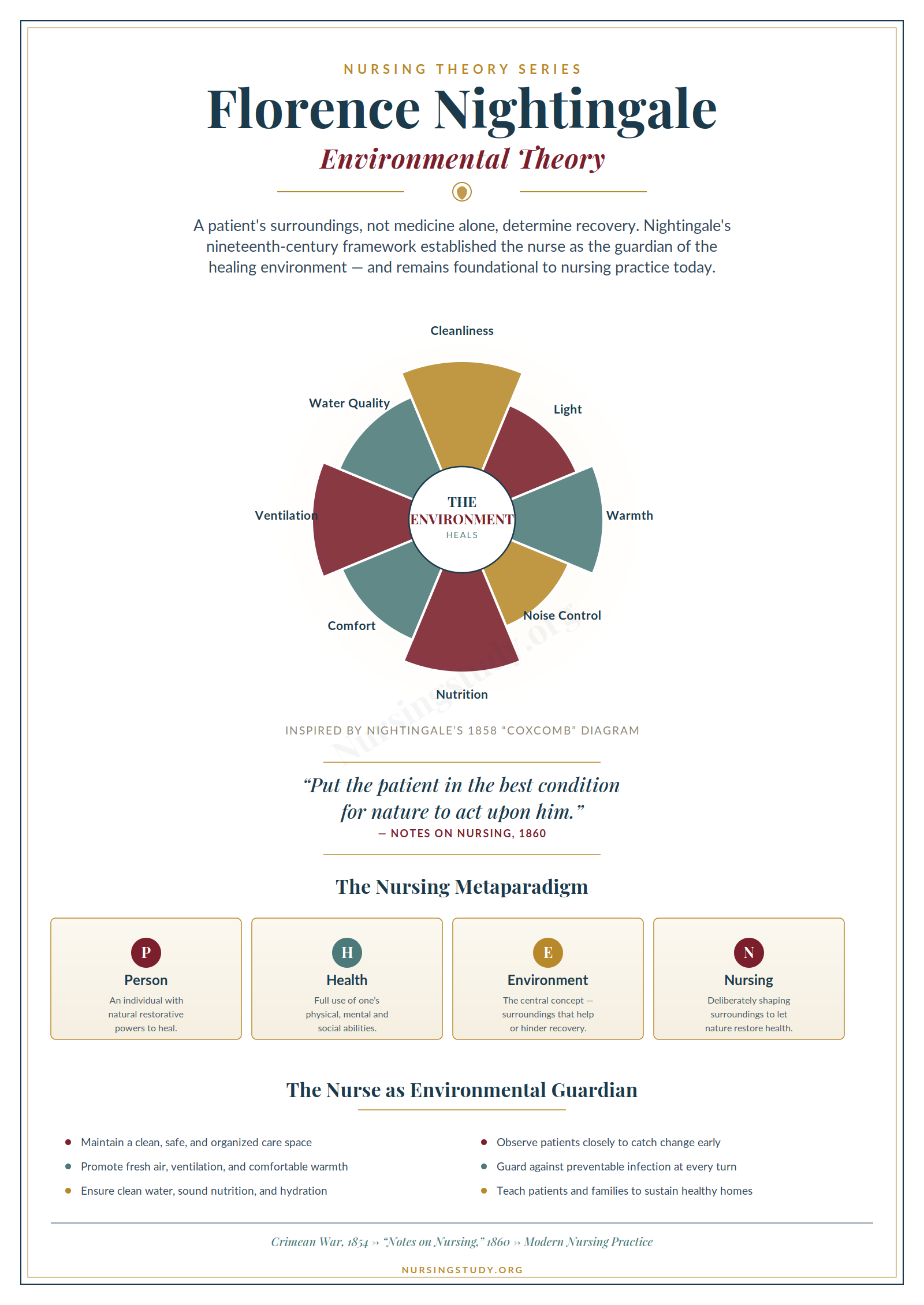
Florence Nightingale Environmental Theory: Concepts, Principles, Applications, and Influence on Modern Nursing Practice
The Florence Nightingale Environmental Theory is one of the earliest and most influential nursing theories, providing a foundation for understanding how the environment affects health, healing, and recovery. Developed by Florence Nightingale, the founder of modern nursing, the theory transformed the way healthcare professionals approached patient care by emphasizing that recovery depends not only on medical treatment but also on the conditions surrounding the patient. During a period when infectious diseases were widespread and scientific knowledge about disease transmission was still limited, Nightingale demonstrated that improving environmental conditions could dramatically reduce illness and mortality. Her work fundamentally changed the theory of nursing, shifting the profession toward a more systematic, patient-centered, and evidence-informed approach to care.
Unlike many healthcare models that focus primarily on diagnosing and treating disease, the Florence Nightingale Environmental Theory places the patient’s surroundings at the center of the healing process. Nightingale believed that the body possesses a natural ability to heal itself when supported by a healthy environment. Consequently, the responsibility of the nurse extends beyond administering medications or carrying out medical procedures to creating and maintaining conditions that promote recovery and prevent disease. According to the theory, elements such as cleanliness, ventilation, sanitation, access to pure water, proper nutrition, adequate lighting, noise reduction, and effective drainage are not simply environmental considerations—they are essential components of high-quality nursing care.
At its core, the Florence Nightingale Environmental Theory emphasizes that health is influenced by multiple environmental factors that interact with one another. These factors shape both physical recovery and overall well-being, making environmental management an integral part of professional nursing practice. The theory highlights several key principles, including:
- Maintaining a healthy environment that supports healing.
- Ensuring proper ventilation and access to fresh air.
- Promoting cleanliness and personal hygiene to reduce the spread of disease.
- Providing clean water and nutritious food to support recovery.
- Reducing unnecessary noise and disturbances to encourage rest and sleep.
- Maintaining appropriate lighting and comfortable environmental conditions.
- Improving environmental conditions through proper sanitation and efficient drainage.
- Continuously observing the patient and adapting the environment according to individual needs.
Although these principles were first introduced during the nineteenth century, they remain remarkably relevant in modern healthcare. Many of the practices that are now considered standard components of infection control, patient safety, and environmental health have their roots in Nightingale’s observations and recommendations. The emphasis placed on creating safe care environments, preventing healthcare-associated infections, and promoting holistic recovery reflects the enduring influence of the Florence Nightingale Environmental Theory on contemporary healthcare systems.
The continued relevance of the Florence Nightingale Environmental Theory is particularly evident in today’s increasingly complex healthcare environment. Advances in medical technology have significantly improved diagnostic and treatment capabilities, yet environmental factors continue to influence patient outcomes across hospitals, long-term care facilities, rehabilitation centers, and community health settings. The importance of proper environmental adaptation, effective infection prevention strategies, and maintaining therapeutic care environments became especially apparent during the COVID-19 pandemic, when healthcare organizations around the world relied on rigorous hygiene practices, environmental cleaning, ventilation, and isolation measures to reduce disease transmission. These practices reinforce Nightingale’s long-standing belief that controlling the patient’s environment is a critical aspect of promoting health and preventing illness.
Beyond its clinical significance, the Florence Nightingale Environmental Theory has played a defining role in shaping the nursing profession itself. It established nursing as a discipline grounded in scientific observation, critical thinking, and systematic patient assessment rather than one based solely on physician direction. The theory has influenced nursing education, nursing research, and the development of numerous subsequent nursing theories, many of which continue to build upon Nightingale’s emphasis on the relationship between individuals and their environments. Concepts introduced through Notes on Nursing continue to inform the education of future nurses and contribute to the ongoing evolution of evidence-based practice, demonstrating that the environment remains a central consideration in delivering safe, effective, and compassionate care.
This article provides a comprehensive examination of the Florence Nightingale Environmental Theory, exploring the historical experiences that shaped its development, the major concepts and assumptions that define the theory, and its application across modern nursing practice. It also examines the role of the nurse within the theory, the relationship between the person, health, nursing, and the environment, the theory’s influence on infection control, its contribution to contemporary nursing practice, its significance in nursing education and research, and its strengths, limitations, and future relevance within the broader field of nursing. Through this discussion, readers will gain a thorough understanding of why the Florence Nightingale Environmental Theory continues to serve as one of the foundational frameworks guiding professional nursing and patient-centered healthcare worldwide.
Overwhelmed with multiple nursing deadlines?
Let us write your papers efficiently and accurately.
Who Was Florence Nightingale?
Understanding the Florence Nightingale Environmental Theory begins with understanding the woman behind it. Florence Nightingale was an English social reformer, statistician, educator, and nursing theorist whose work transformed the perception and practice of nursing. She is widely recognized as the founder of modern nursing because she established nursing as a respected profession grounded in scientific observation, patient advocacy, education, and environmental management rather than untrained caregiving. Her innovative ideas continue to influence nursing practice, nursing education, public health, and healthcare policy more than a century after her death.
Before Nightingale’s contributions, nursing lacked standardized education, professional recognition, and clearly defined responsibilities. Hospitals were frequently overcrowded, poorly ventilated, and unsanitary, while many patients died from preventable infections rather than the illnesses or injuries for which they were admitted. Nightingale challenged these conditions by demonstrating that improving the patient’s surroundings could significantly improve health outcomes. Her observations eventually became the foundation of the Florence Nightingale Environmental Theory, one of the earliest and most enduring nursing theories.
What distinguished Florence Nightingale from many healthcare reformers of her era was her reliance on systematic observation and data. Rather than accepting traditional practices, she carefully documented patient conditions, mortality rates, environmental conditions, and the outcomes of different interventions. This analytical approach made her one of the earliest advocates of what is now recognized as evidence-based practice, showing that effective nursing care should be guided by measurable evidence as well as compassionate service.
Today, Florence Nightingale’s contributions extend far beyond the hospital ward. Her principles continue to influence:
- Environmental management in healthcare facilities.
- Modern infection control practices.
- Hospital design and patient safety initiatives.
- Nursing education and professional training.
- Public health and community nursing.
- The development of subsequent nursing theories.
- Holistic approaches to patient care.
For these reasons, Florence Nightingale is not only remembered as an influential historical figure but also as a visionary whose ideas continue to shape the field of nursing around the world.
Florence Nightingale’s Early Life and Career
Florence Nightingale was born on May 12, 1820, in Florence, Italy, while her wealthy British parents were traveling through Europe. She was named after the city of her birth. Raised in an affluent family in England, Nightingale received an exceptional education for a woman of her time. Her father ensured that she studied mathematics, philosophy, literature, history, economics, and several languages, subjects that later contributed to her analytical thinking and ability to interpret healthcare data.
During the early nineteenth century, women from wealthy families were generally expected to marry, manage households, and participate in social activities rather than pursue professional careers. Nursing was considered low-status work that required little formal education and was often associated with poor working conditions. Despite these societal expectations, Florence Nightingale believed she had a higher purpose. At the age of sixteen, she described experiencing what she considered a divine calling to dedicate her life to serving others through nursing.
Her decision to enter the nursing profession met considerable resistance from her family, who viewed nursing as inappropriate for someone of her social standing. Nevertheless, Nightingale remained committed to her goal and sought opportunities to gain formal nursing training. She eventually studied at the Institution of Protestant Deaconesses in Kaiserswerth, Germany, where she learned practical nursing skills, hospital administration, patient observation, and methods for maintaining cleanliness and hygiene within healthcare settings.
Following her training, Nightingale accepted leadership positions that allowed her to apply both her organizational abilities and clinical knowledge. She became superintendent of the Establishment for Gentlewomen During Illness in London, where she introduced improvements in hospital management, staffing, sanitation, and patient care. These early administrative experiences demonstrated that healthcare quality could be improved not only through clinical interventions but also through better organization, environmental management, and professional standards.
Several characteristics defined Florence Nightingale’s early career and later became central to the Florence Nightingale Environmental Theory:
- Commitment to scientific observation rather than relying solely on tradition.
- Attention to environmental conditions that influenced patient recovery.
- Emphasis on patient-centered nursing care, recognizing that each patient had unique needs.
- Leadership in healthcare management, showing that organizational improvements could enhance patient outcomes.
- Dedication to professional nursing education, believing that competent nurses required structured training.
These experiences laid the intellectual and practical foundation for what would later become one of the most influential theories in nursing.
The Crimean War and the Birth of Modern Nursing
The defining moment in Florence Nightingale’s career occurred during the Crimean War (1853–1856), a conflict involving Britain, France, the Ottoman Empire, and Russia. In 1854, the British government asked Nightingale to lead a team of nurses to the military hospital at Scutari (modern-day Üsküdar, Türkiye), where thousands of wounded soldiers were receiving treatment under extremely poor conditions.
When Nightingale and her team arrived, they encountered an alarming healthcare environment. The hospital suffered from numerous problems, including:
- Severe overcrowding.
- Poor ventilation and stagnant air.
- Inadequate access to clean water.
- Contaminated food supplies.
- Poor sanitation and ineffective waste disposal.
- Limited supplies and medical equipment.
- Poor personal hygiene among patients and staff.
- Inadequate drainage systems and sewage management.
- High rates of infectious diseases such as cholera, typhus, and dysentery.
Ironically, more soldiers were dying from infectious diseases than from battle injuries. Nightingale recognized that the environment of the patient played a significant role in these deaths. Rather than focusing exclusively on medical treatment, she implemented broad environmental improvements aimed at creating a healthier healing environment.
Her interventions included:
- Improving ventilation throughout hospital wards.
- Enhancing cleanliness through regular washing of floors, bedding, and equipment.
- Promoting strict personal hygiene among patients and staff.
- Improving access to pure water and safe food.
- Organizing effective laundry services.
- Introducing better sanitation and efficient drainage systems.
- Reducing overcrowding whenever possible.
- Improving nutrition for recovering soldiers.
- Encouraging routine observation and documentation of patient conditions.
These changes produced remarkable results. Mortality rates declined dramatically after environmental improvements were introduced, providing compelling evidence that environmental conditions directly influence patient recovery. Although historians continue to debate the exact contribution of each intervention, Nightingale’s work demonstrated that disease prevention and recovery depend not only on medical treatment but also on maintaining a safe and therapeutic environment.
Her success during the Crimean War transformed public perceptions of nursing. Nurses were no longer viewed simply as caregivers carrying out physicians’ orders but as skilled professionals capable of improving healthcare outcomes through assessment, observation, organization, and environmental management. These achievements established Florence Nightingale as the founder of modern nursing and elevated the status of nursing as a respected profession.
The Crimean War also demonstrated several principles that would later define the Florence Nightingale Environmental Theory:
- Environmental conditions directly influence recovery.
- Prevention is often more effective than treatment alone.
- The nurse has an active role in modifying the patient’s surroundings.
- Observation is essential for identifying patient needs.
- Safe healthcare environments improve overall health outcomes.
Notes on Nursing and the Development of the Environmental Theory
Following the Crimean War, Florence Nightingale sought to ensure that the lessons she had learned were not confined to military hospitals. In 1860, she published Notes on Nursing: What It Is and What It Is Not, one of the most influential books in the history of the nursing profession. Rather than serving as a medical textbook, Notes on Nursing provided practical guidance on how nurses and caregivers could create environments that supported healing and prevented disease.
The publication addressed nursing as both a science and an art. Nightingale argued that successful nursing required careful observation, sound judgment, compassion, and a thorough understanding of the patient’s surroundings. She emphasized that the role of the nurse was not to cure disease directly but to place the patient in the best possible condition for nature to promote healing.
Several principles discussed in Notes on Nursing later became central components of the Florence Nightingale Environmental Theory, including:
- Maintaining a clean and orderly patient environment.
- Ensuring continuous access to fresh air through adequate ventilation.
- Providing sufficient natural light.
- Preserving quiet surroundings that promote rest.
- Supporting proper nutrition and hydration.
- Maintaining personal and environmental hygiene.
- Carefully observing physical and emotional changes in patients.
- Individualizing nursing care according to each patient’s needs.
The publication also reflected Nightingale’s holistic perspective. She believed that healing depended on the interaction of physical, psychological, and environmental factors rather than focusing exclusively on disease processes. This philosophy continues to influence holistic nursing, patient-centered care, and environmental nursing today.
The Development of the Environmental Theory
The Florence Nightingale Environmental Theory did not emerge from a single event or publication. Instead, it developed gradually through years of clinical observation, hospital administration, statistical analysis, public health advocacy, and direct experience caring for patients. Nightingale continuously refined her ideas by examining how changes in environmental conditions affected recovery, mortality, and overall well-being.
Central to the theory was Nightingale’s belief that the environment for patient recovery could either support or hinder the body’s natural healing abilities. She argued that while physicians primarily treated disease, nurses should focus on managing the environmental factors affecting health. This distinction established nursing as a unique discipline with its own body of nursing knowledge and professional responsibilities.
The theory eventually evolved around several interconnected ideas:
- The patient should be cared for within a healing environment.
- The nurse should actively modify environmental settings to support recovery.
- Prevention is a primary responsibility of nursing.
- Observation and critical thinking guide effective nursing interventions.
- Environmental management improves patient comfort, safety, and recovery.
- High-quality nursing care requires both scientific knowledge and compassionate practice.
Although healthcare has advanced significantly since the nineteenth century, these principles continue to influence modern nursing practice. Contemporary hospitals emphasize infection prevention, environmental cleaning, air quality, patient safety, and evidence-based environmental interventions—concepts that closely align with Nightingale’s original vision. Modern research in environmental health, healthcare design, and patient safety further supports the idea that well-managed care environments contribute to better recovery, reduced complications, and improved patient satisfaction.
The enduring influence of the Florence Nightingale Environmental Theory demonstrates that nursing extends beyond treating illness. It encompasses creating conditions that promote healing, preserving patient dignity, preventing disease, and supporting the body’s natural capacity for recovery. More than 160 years after the publication of Notes on Nursing, Nightingale’s work continues to serve as a cornerstone of professional nursing, illustrating why she is rightly regarded as both the founder of modern nursing and one of the most influential nursing theorists in history.
Understanding Florence Nightingale Environmental Theory
The Florence Nightingale Environmental Theory is one of the foundational frameworks in the theory in nursing, emphasizing that a patient’s environment plays a central role in health, recovery, and overall well-being. Developed by Florence Nightingale during the nineteenth century, the theory challenged the prevailing belief that recovery depended solely on medical treatment. Instead, Nightingale argued that creating and maintaining a healthy environment enables the body’s natural healing processes to function more effectively. This perspective fundamentally changed nursing practice, establishing the nurse as an active participant in promoting health rather than simply assisting physicians.
The Florence Nightingale Environmental Theory was shaped by Nightingale’s observations during the Crimean War, where she recognized that many soldiers died from preventable infectious diseases caused by poor environmental conditions rather than from their battle wounds. Through systematic observation and practical interventions, she demonstrated that improving cleanliness, sanitation, ventilation, nutrition, and access to clean water could significantly improve patient survival and recovery. These findings became the cornerstone of her environmental theory of nursing, which continues to influence modern nursing practice, environmental nursing, and infection control.
Unlike many contemporary nursing models that emphasize interpersonal relationships, technology, or disease management, the Florence Nightingale Environmental Theory focuses primarily on modifying the environment of the patient. Nightingale believed that nurses should create an environment that minimizes obstacles to healing and maximizes the patient’s ability to recover naturally. This approach reflects the philosophy of holistic nursing, recognizing that physical, psychological, and environmental factors interact to influence health outcomes.
The theory views nursing as both a science and an art. Scientific observation enables nurses to identify environmental factors affecting health, while compassionate care ensures that each patient’s individual needs are addressed. Consequently, the Florence Nightingale Environmental Theory remains highly relevant in contemporary healthcare because it encourages nurses to think beyond disease treatment and consider how the patient’s surroundings contribute to recovery.
Several fundamental ideas characterize the Florence Nightingale Environmental Theory:
- Health is strongly influenced by the quality of the patient’s environment.
- The nurse has the responsibility to modify environmental conditions that hinder recovery.
- Prevention of disease is as important as treating illness.
- Care should support the body’s natural healing mechanisms.
- Continuous patient observation guides effective nursing interventions.
- Safe and therapeutic care environments improve patient outcomes.
- Environmental management is an essential component of professional nursing care.
These principles continue to guide healthcare professionals in hospitals, rehabilitation facilities, long-term care institutions, community health settings, and home healthcare, illustrating the enduring value of the Florence Nightingale Environmental Theory in modern clinical practice.
Definition and Purpose of the Theory
The Florence Nightingale Environmental Theory can be defined as a nursing framework that emphasizes the deliberate management of environmental factors to promote healing, prevent disease, and improve patient well-being. Rather than focusing exclusively on disease pathology, the theory proposes that modifying the patient’s surroundings allows nature to restore health more effectively. In Nightingale’s view, the nurse’s responsibility is not to cure disease directly but to place patients in the best possible conditions for recovery.
This definition reflects Nightingale’s famous belief that nursing should “put the patient in the best condition for nature to act upon him.” Although healthcare has advanced considerably since 1860, when Notes on Nursing was published, this principle continues to underpin many aspects of contemporary nursing practice.
The primary purpose of the Florence Nightingale Environmental Theory is to provide a structured approach for creating therapeutic environments that enhance healing while reducing unnecessary risks. The theory emphasizes that many illnesses and complications can be prevented by managing the patient’s surroundings effectively rather than relying solely on medical interventions.
More specifically, the theory seeks to:
- Promote recovery by creating a healing environment.
- Prevent illness through improved hygiene, cleanliness, and sanitation.
- Reduce exposure to harmful environmental factors affecting health.
- Support the body’s natural healing abilities.
- Improve patient comfort and psychological well-being.
- Encourage systematic observation throughout the nursing process.
- Guide nurses in providing safe, individualized, and effective patient care.
Unlike theories that focus primarily on interpersonal communication or psychological adaptation, the Florence Nightingale Environmental Theory emphasizes practical environmental management. This makes the theory particularly valuable in settings where preventing complications is a priority, including surgical units, intensive care units, neonatal care, long-term care facilities, and community health programs.
The theory also recognizes that environmental management extends beyond the hospital setting. Patients recovering at home, residents of long-term care facilities, and individuals receiving community-based healthcare all benefit from environments that support health through adequate lighting, proper ventilation, safe drinking water, nutrition, cleanliness, and reduced exposure to environmental hazards.
Another important purpose of the theory is to establish nursing as an independent profession with clearly defined responsibilities. By emphasizing the nurse’s role in managing environmental conditions, Nightingale demonstrated that nursing contributes directly to patient recovery through specialized knowledge, careful observation, and evidence-informed interventions rather than functioning solely as an extension of medical practice.
The Role of the Nurse
Within the Florence Nightingale Environmental Theory, the nurse serves as both a caregiver and an environmental manager. Nightingale believed that successful nursing care requires continuous assessment of the patient’s surroundings and deliberate action to eliminate environmental conditions that interfere with healing. This perspective expanded the traditional responsibilities of nurses and established environmental management as a defining characteristic of professional nursing.
Rather than concentrating exclusively on medications or procedures, the nurse evaluates the complete care environment and identifies factors that may delay recovery or increase the risk of illness. This requires combining scientific observation, clinical judgment, and compassionate care to support both physical and emotional well-being.
Key responsibilities of the nurse within the Florence Nightingale Environmental Theory include:
- Maintaining a clean, safe, and organized patient environment.
- Promoting effective ventilation and access to fresh air.
- Ensuring adequate cleanliness, personal hygiene, and environmental sanitation.
- Supporting access to clean water, nutritious food, and appropriate hydration.
- Monitoring temperature, lighting, and noise levels.
- Protecting patients from preventable infections through effective infection control measures.
- Observing changes in patient condition and documenting findings accurately.
- Educating patients and families about maintaining healthy environments after discharge.
- Individualizing environmental interventions according to each patient’s needs.
Observation occupies a particularly important place within Nightingale’s theory. She believed that careful observation enables nurses to recognize subtle changes in patient condition before complications become severe. This principle remains fundamental to the nursing process, particularly during patient assessment and evaluation.
For example, a nurse caring for an older adult recovering from pneumonia may implement several environmental interventions simultaneously:
- Opening windows or adjusting ventilation systems to improve air circulation where appropriate.
- Maintaining strict hygiene and environmental cleaning.
- Encouraging adequate hydration and nutrition.
- Reducing unnecessary noise to promote restful sleep.
- Monitoring room temperature for patient comfort.
- Frequently assessing respiratory status and oxygen saturation.
Although these interventions may appear simple, together they create a therapeutic environment that supports recovery while minimizing additional health risks.
The theory also positions the nurse as an educator and advocate. Nurses not only modify hospital environments but also teach patients and caregivers how to maintain healthy environmental conditions after discharge. This educational role contributes to disease prevention, promotes long-term wellness, and supports continuity of care beyond the healthcare facility.
The Relationship Between the Person, Health, Environment, and Nursing
One of the defining strengths of the Florence Nightingale Environmental Theory is its explanation of the dynamic relationship between the person, health, environment, and nursing. These four concepts, often referred to as the nursing metaparadigm, provide the theoretical framework that explains how nursing interventions influence patient outcomes.
Rather than viewing these concepts independently, Nightingale understood them as interconnected elements that continuously influence one another. A change in the patient’s environment affects health, while nursing interventions modify the environment to support the person’s recovery.
Person
Within the Florence Nightingale Environmental Theory, the person is viewed as an individual possessing natural restorative abilities. Every patient has the capacity to recover, but this capacity depends on whether the surrounding environment supports or hinders healing.
Patients are not passive recipients of care. Instead, they respond continuously to the physical and psychological conditions surrounding them. Age, nutritional status, emotional well-being, existing illnesses, and personal resilience all influence how individuals interact with their environments and recover from disease.
Health
Nightingale viewed health as more than the absence of disease. Health represents a state in which individuals can fully utilize their physical, mental, and social abilities. According to the theory, maintaining health requires environments that encourage healing while minimizing unnecessary physiological stress.
Health is promoted when patients have:
- Fresh air and adequate ventilation.
- Access to pure water and nutritious food.
- Clean surroundings.
- Opportunities for rest and sleep.
- Safe and comfortable care environments.
- Protection from infectious diseases.
Conversely, poor environmental conditions contribute to illness, delayed recovery, and increased mortality.
Environment
The environment represents the central concept of the Florence Nightingale Environmental Theory. Nightingale believed that nearly every aspect of the patient’s surroundings could influence recovery, making environmental management the nurse’s primary responsibility.
Important environmental aspects include:
- Air quality and ventilation.
- Water quality.
- Personal and environmental cleanliness.
- Effective waste disposal and efficient drainage.
- Lighting.
- Noise control.
- Temperature regulation.
- Nutrition.
- Emotional comfort.
- Safe healthcare surroundings.
These environmental settings work together to create either a therapeutic or harmful environment for patients.
Nursing
Within the Florence Nightingale Environmental Theory, nursing is defined as the deliberate process of modifying the patient’s surroundings to promote recovery and preserve health. Nursing extends beyond technical procedures to include continuous observation, environmental management, education, advocacy, and compassionate care.
This understanding continues to influence modern nurses, who routinely integrate environmental assessment into daily practice. Whether preventing healthcare-associated infections, promoting patient safety, reducing environmental hazards, or educating families about healthy home environments, contemporary nurses continue to apply principles first articulated by Florence Nightingale.
The relationship among the person, health, environment, and nursing illustrates why the Florence Nightingale Environmental Theory remains one of the most enduring frameworks within the field of nursing. It demonstrates that effective healthcare depends not only on treating disease but also on creating environments that enable individuals to achieve their highest possible level of health. Even in an era characterized by sophisticated medical technology and advanced clinical treatments, Nightingale’s emphasis on environmental management continues to guide professional nursing and improve patient outcomes across diverse healthcare settings.
Core Concepts of Florence Nightingale Environmental Theory
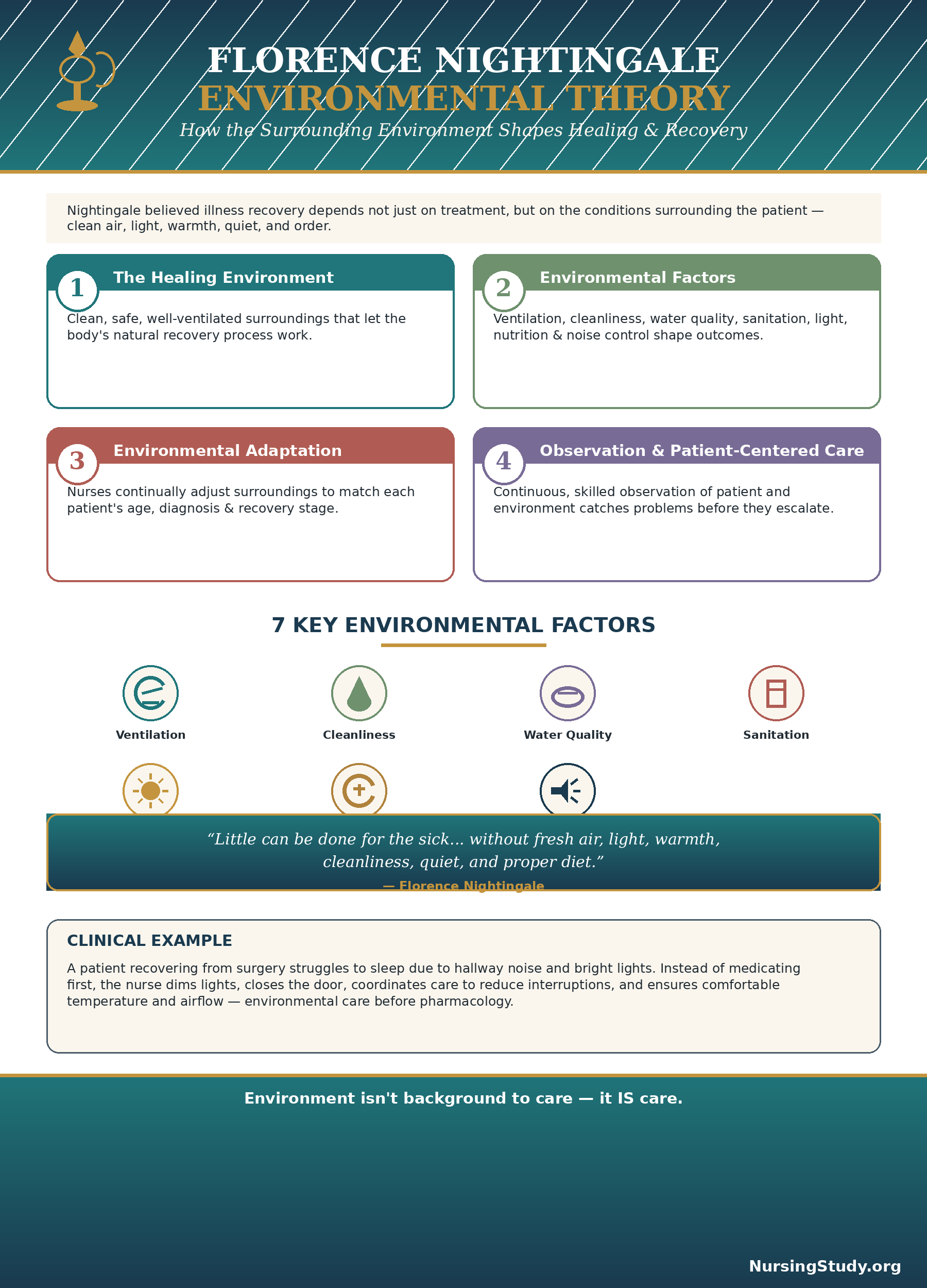
The Florence Nightingale Environmental Theory is built upon several interconnected concepts that explain how the environment influences health, recovery, and the delivery of effective nursing care. Rather than viewing illness as an isolated biological event, Florence Nightingale argued that recovery is influenced by the interaction between the patient and the surrounding environment. This perspective shifted the focus of the theory of nursing from simply treating disease to creating conditions that enable the body to heal naturally.
One of the distinguishing features of the Florence Nightingale Environmental Theory is that it considers nursing to be a proactive discipline. The nurse is not merely responsible for carrying out physician orders but also for continuously assessing, modifying, and maintaining the patient’s environment to optimize recovery. Every decision regarding cleanliness, ventilation, lighting, nutrition, hygiene, and comfort contributes to the overall quality of patient care.
The major concepts that form the foundation of the Florence Nightingale Environmental Theory include:
- The healing environment as the foundation of recovery.
- The influence of environmental factors affecting health.
- Environmental adaptation to meet changing patient needs.
- Continuous observation combined with patient-centered care.
Together, these concepts explain why the theory remains one of the most influential nursing theories and continues to guide modern nursing practice across hospitals, long-term care facilities, rehabilitation centers, community health programs, and home healthcare.
The Healing Environment
The concept of the healing environment is the cornerstone of the Florence Nightingale Environmental Theory. Florence Nightingale believed that every patient should be surrounded by physical conditions that support the body’s natural ability to heal. Rather than attempting to “cure” disease directly, the role of the nurse is to create an environment for patient recovery by eliminating factors that interfere with healing and strengthening those that promote health.
For Nightingale, a healing environment was much more than a clean hospital room. It involved carefully managing every aspect of the patient’s surroundings so that physical, psychological, and emotional well-being could be maintained throughout recovery. She believed that when environmental conditions were optimized, patients experienced fewer complications, recovered more quickly, and were less likely to develop preventable infections.
According to the Florence Nightingale Environmental Theory, a healing environment should include:
- Clean, orderly, and safe surroundings.
- Continuous access to fresh air through proper ventilation.
- Adequate natural and artificial lighting.
- Comfortable room temperatures.
- Access to clean water and pure water for drinking and hygiene.
- Proper nutrition to support healing.
- Quiet surroundings that encourage rest and sleep.
- Effective sanitation and efficient drainage systems.
- Protection from infectious diseases and unnecessary environmental hazards.
Each of these components contributes to maintaining physiological stability while reducing physical and emotional stress. Nightingale believed that even seemingly minor environmental disturbances, such as excessive noise or poor air quality, could interfere with the body’s ability to recover.
Characteristics of a Healing Environment
Within the Florence Nightingale Environmental Theory, an effective healing environment possesses several defining characteristics:
- Safety
- The environment should minimize risks such as infection, falls, and environmental hazards.
- Cleanliness
- Patient rooms, equipment, bedding, and surrounding areas should be maintained at high standards of cleanliness to reduce microbial contamination.
- Comfort
- Temperature, lighting, bedding, and furniture should support physical comfort and emotional well-being.
- Fresh Air
- Proper ventilation ensures adequate oxygen supply while reducing the accumulation of airborne contaminants.
- Restorative Conditions
- Noise should be minimized to promote uninterrupted sleep and recovery.
- Psychological Support
- Calm, organized, and pleasant surroundings reduce anxiety and emotional stress.
Example
Consider a patient recovering from abdominal surgery.
Instead of focusing solely on medications and wound care, the nurse also:
- Maintains a clean room and sterile dressing supplies.
- Encourages airflow through appropriate ventilation systems.
- Reduces unnecessary interruptions during sleep.
- Ensures adequate hydration and balanced nutrition.
- Removes clutter to reduce fall risks.
- Adjusts lighting according to patient comfort.
- Maintains a quiet environment that promotes healing.
These interventions collectively create the therapeutic conditions described in the Florence Nightingale Environmental Theory, illustrating how environmental management directly contributes to successful recovery.
Environmental Factors Affecting Health
The central premise of the Florence Nightingale Environmental Theory is that environmental factors affecting health significantly influence disease prevention, recovery, and overall well-being. Florence Nightingale observed that many patients experienced poorer outcomes because of unhealthy surroundings rather than the severity of their illnesses alone. Consequently, she argued that modifying environmental conditions should be a primary responsibility of every nurse.
Unlike many later nursing theories, which emphasize psychological or interpersonal relationships, Nightingale focused primarily on the physical environment while recognizing that emotional and social surroundings also contribute to healing.
Major Environmental Factors
1. Ventilation and Fresh Air
Nightingale regarded ventilation as one of the most important environmental factors.
Fresh air:
- Improves oxygen availability.
- Removes unpleasant odors.
- Reduces stagnant air.
- Minimizes airborne contaminants.
- Creates a healthier recovery environment.
Today, proper ventilation remains essential for reducing airborne disease transmission, particularly during outbreaks of respiratory illnesses such as influenza and COVID-19.
2. Cleanliness and Hygiene
Cleanliness and hygiene form another major concept within the Florence Nightingale Environmental Theory.
Maintaining cleanliness involves:
- Frequent hand hygiene.
- Cleaning patient rooms.
- Disinfecting equipment.
- Proper linen management.
- Personal hygiene for both patients and healthcare providers.
Modern infection control programs continue to emphasize these same practices because they reduce healthcare-associated infections and improve patient safety.
3. Water Quality
Nightingale stressed the importance of both clean water and pure water for drinking, cooking, cleaning, and sanitation.
Unsafe water increases the risk of:
- Gastrointestinal infections.
- Dehydration.
- Delayed wound healing.
- Cross-contamination.
Today, water safety remains an important component of hospital infection prevention programs.
4. Sanitation and Efficient Drainage
Poor waste disposal contributed significantly to disease transmission during the Crimean War.
Nightingale advocated for:
- Proper sewage disposal.
- Effective sanitation.
- Efficient drainage systems.
- Clean hospital grounds.
These environmental improvements substantially reduced mortality among wounded soldiers.
5. Light
Natural light supports:
- Normal sleep cycles.
- Psychological well-being.
- Orientation.
- Patient comfort.
Modern hospital design increasingly incorporates natural lighting because research demonstrates its positive effects on recovery.
6. Nutrition
Patients require adequate nutrition to support:
- Immune function.
- Tissue repair.
- Energy production.
- Overall healing.
Nightingale believed that nurses should ensure patients received nutritious meals appropriate to their individual needs.
7. Noise Control
Excessive noise contributes to:
- Sleep deprivation.
- Increased stress.
- Elevated blood pressure.
- Delayed healing.
Reducing unnecessary noise remains an important strategy for improving patient satisfaction and recovery.
Example
A patient admitted with pneumonia benefits from environmental interventions including:
- Fresh, well-circulated air.
- Proper hydration.
- Quiet surroundings.
- Regular environmental cleaning.
- Appropriate room temperature.
- Nutritional support.
- Strict infection prevention measures.
These interventions complement medical treatment while illustrating the practical application of the Florence Nightingale Environmental Theory.
Environmental Adaptation
Another fundamental concept of the Florence Nightingale Environmental Theory is environmental adaptation. Rather than creating identical conditions for every patient, Nightingale believed that nurses should continuously modify the environment according to each patient’s changing physical, emotional, and clinical needs.
Environmental adaptation recognizes that patients differ in:
- Age.
- Diagnosis.
- Mobility.
- Immune status.
- Emotional condition.
- Cultural preferences.
- Recovery stage.
Consequently, the environment should also change to support these differences.
Examples of Environmental Adaptation
A nurse caring for different patients may adapt the environment by:
Postoperative patient
- Reducing noise.
- Encouraging early mobility.
- Maintaining sterile wound care.
- Monitoring room temperature.
Neonatal patient
- Controlling lighting.
- Maintaining warmth.
- Minimizing environmental stimulation.
- Supporting infection prevention.
Older adult with dementia
- Using clear orientation cues.
- Reducing clutter.
- Improving lighting.
- Providing familiar objects.
Patient receiving chemotherapy
- Maintaining protective isolation.
- Ensuring meticulous environmental cleaning.
- Monitoring visitors for infection risks.
- Supporting adequate nutrition.
These individualized interventions demonstrate how the Florence Nightingale Environmental Theory promotes flexible, patient-centered environmental management rather than rigid protocols.
Environmental adaptation remains particularly important within advanced nursing, where patients often present with complex conditions requiring individualized approaches to care.
Observation and Patient-Centered Care
Perhaps no concept was more strongly emphasized by Florence Nightingale than careful observation. She believed that observation distinguished professional nursing from routine caregiving and formed the basis of safe, effective nursing practice.
Within the Florence Nightingale Environmental Theory, observation involves much more than recording vital signs. Nurses continuously assess both the patient and the surrounding environment to identify changes that may influence recovery.
Observation includes monitoring:
- Physical appearance.
- Respiratory status.
- Pain.
- Appetite.
- Sleep quality.
- Emotional well-being.
- Mobility.
- Environmental cleanliness.
- Lighting.
- Ventilation.
- Noise.
- Temperature.
- Family interactions.
Nightingale argued that skilled observation enables nurses to recognize subtle problems before they develop into serious complications.
Observation Within the Nursing Process
Observation supports every stage of the nursing process:
Assessment
- Collecting patient and environmental data.
Planning
- Identifying environmental modifications needed.
Implementation
- Applying appropriate nursing interventions.
Evaluation
- Determining whether environmental changes improved patient outcomes.
This systematic approach remains central to contemporary nursing practice and reflects Nightingale’s belief that effective nursing depends upon both scientific observation and compassionate care.
Patient-Centered Care
The Florence Nightingale Environmental Theory also reflects the principles of patient-centered care, although the term itself was not used during Nightingale’s lifetime. She recognized that every patient has unique needs and that nursing interventions should be individualized rather than standardized.
Patient-centered environmental care involves:
- Respecting patient preferences whenever possible.
- Promoting dignity and privacy.
- Adapting the environment to individual comfort.
- Encouraging patient participation in care decisions.
- Supporting physical, emotional, and psychological well-being.
Clinical Example
A patient recovering from heart failure reports difficulty sleeping because of excessive hallway noise and bright lights. Rather than simply administering a sleep medication, the nurse first evaluates the environment by:
- Closing the patient’s door when appropriate.
- Dimming unnecessary lights.
- Reducing nighttime interruptions.
- Coordinating care activities to minimize disturbances.
- Maintaining a comfortable room temperature.
- Ensuring the patient can breathe comfortably with adequate airflow.
These interventions reflect the principles of the Florence Nightingale Environmental Theory, demonstrating that modifying the environment can significantly improve patient comfort and recovery while reducing unnecessary reliance on pharmacological interventions.
Assumptions and Principles of the Environmental Theory
Every nursing theory is built upon a set of assumptions and guiding principles that explain how nurses should understand patients, health, and the delivery of care. The Florence Nightingale Environmental Theory is no exception. Its assumptions provide the philosophical foundation for the theory, while its principles translate those beliefs into practical actions that nurses can apply in clinical settings. Together, they explain why environmental management is considered a central responsibility of nursing and why creating a healthy environment is essential for promoting recovery.
Unlike theories that focus primarily on disease treatment or medical interventions, the Florence Nightingale Environmental Theory assumes that health is strongly influenced by the quality of the patient’s surroundings. Florence Nightingale believed that illness often resulted from unhealthy environmental conditions, and that improving these conditions could significantly enhance recovery and reduce mortality. Her experiences during the Crimean War demonstrated that relatively simple interventions—such as improving cleanliness, increasing ventilation, ensuring adequate sanitation, and providing access to clean water—could dramatically improve health outcomes even before the widespread use of antibiotics and modern medical technology.
The assumptions and principles of the theory also define the professional role of the nurse. Rather than functioning solely as a caregiver who administers treatments prescribed by physicians, the nurse becomes an environmental manager, patient advocate, educator, observer, and decision-maker. This broader perspective established nursing as an independent profession with its own body of nursing knowledge, responsibilities, and scientific foundation.
Although healthcare has evolved considerably since the publication of Notes on Nursing in 1860, the assumptions underlying the Florence Nightingale Environmental Theory continue to influence modern nursing practice, environmental nursing, infection control, public health, and evidence-based practice. Many of the environmental interventions that Nightingale recommended remain standard components of safe and effective patient care today.
Major Assumptions
The assumptions of the Florence Nightingale Environmental Theory represent the fundamental beliefs that guided Florence Nightingale’s understanding of nursing and health. These assumptions explain how the environment affects patients and clarify the responsibilities of nurses in promoting healing.
1. The Environment Has a Direct Influence on Health
The most important assumption of the Florence Nightingale Environmental Theory is that the environment directly affects an individual’s physical and psychological well-being. Nightingale believed that patients recover more effectively when they are surrounded by healthy environmental settings that support the body’s natural healing processes.
She argued that poor environmental conditions increase stress on the body, weaken resistance to disease, and delay recovery. Conversely, a well-managed healing environment improves comfort, reduces complications, and promotes restoration of health.
Examples of environmental conditions that influence recovery include:
- Air quality and ventilation.
- Room temperature.
- Lighting.
- Personal and environmental hygiene.
- Cleanliness of patient rooms.
- Noise levels.
- Nutrition and hydration.
- Safe waste disposal and efficient drainage.
- Access to pure water and clean water.
Today, this assumption is supported by extensive nursing research and healthcare studies demonstrating that environmental improvements reduce healthcare-associated infections, shorten hospital stays, and improve patient satisfaction.
2. Nature Plays a Central Role in Healing
Another important assumption is that the human body possesses an inherent capacity to heal itself when provided with appropriate conditions.
Nightingale frequently emphasized that nursing does not directly cure disease. Instead, the role of nursing is to create circumstances that allow natural healing processes to function effectively.
This assumption reflects the philosophy of holistic nursing, which recognizes that healing depends upon the interaction of biological, psychological, social, and environmental influences.
For example:
- Adequate sleep supports immune function.
- Good nutrition promotes tissue repair.
- Fresh air improves oxygenation.
- Clean surroundings reduce exposure to harmful microorganisms.
Rather than replacing medical treatment, these environmental interventions complement clinical care by supporting the body’s recovery mechanisms.
3. The Nurse Has a Responsibility to Modify the Environment
The Florence Nightingale Environmental Theory assumes that environmental management is one of the primary responsibilities of every nurse.
According to Nightingale, nurses should continuously assess the patient’s surroundings and identify conditions that may interfere with recovery. This includes recognizing environmental hazards, implementing appropriate interventions, and evaluating whether those interventions improve patient outcomes.
Examples include:
- Maintaining cleanliness within patient rooms.
- Monitoring ventilation and air circulation.
- Promoting personal hygiene.
- Preventing environmental contamination.
- Ensuring adequate nutrition and hydration.
- Reducing unnecessary noise.
- Maintaining patient comfort and safety.
This assumption transformed nursing from a passive occupation into an active profession requiring critical thinking and environmental assessment.
4. Prevention Is More Effective Than Treatment Alone
Another central assumption is that preventing disease is often more beneficial than treating illness after it develops.
Florence Nightingale recognized this principle during the Crimean War, where improvements in sanitation, hygiene, and environmental management reduced mortality among wounded soldiers.
Today, preventive care remains fundamental to contemporary nursing practice, particularly in areas such as:
- Infection control.
- Vaccination programs.
- Public health.
- Community nursing.
- Patient education.
- Environmental health initiatives.
This preventive philosophy remains one of Nightingale’s most enduring contributions to healthcare.
5. Observation Is Essential to Effective Nursing
Nightingale believed that skilled observation distinguished professional nursing from routine caregiving.
Observation involves more than measuring vital signs. Nurses must continuously evaluate:
- Patient appearance.
- Behavior.
- Emotional status.
- Environmental conditions.
- Changes in symptoms.
- Response to nursing interventions.
Accurate observation enables nurses to recognize early signs of deterioration and modify the environment before complications occur.
Today, observation remains a cornerstone of the nursing process and supports safe clinical decision-making.
Fundamental Principles
While assumptions describe what Nightingale believed, the principles of the Florence Nightingale Environmental Theory explain how those beliefs should be applied in daily nursing practice. These principles continue to guide nurses across diverse healthcare settings and remain highly relevant despite advances in medical science.
Maintain a Healthy Environment
The first principle emphasizes creating and preserving a healthy environment that supports recovery.
This includes:
- Clean patient rooms.
- Safe surroundings.
- Comfortable temperatures.
- Adequate lighting.
- Appropriate noise control.
- Well-maintained healthcare facilities.
The nurse continuously evaluates whether the environment promotes healing or introduces unnecessary risks.
Promote Cleanliness and Hygiene
Nightingale considered cleanliness one of the most powerful tools available to nurses.
Maintaining cleanliness includes:
- Hand hygiene.
- Environmental cleaning.
- Sterilization of equipment.
- Clean bedding.
- Proper waste disposal.
- Personal hygiene for patients.
Modern infection control protocols continue to emphasize these same principles because they reduce disease transmission and improve patient safety.
Ensure Proper Ventilation
Fresh air was regarded by Nightingale as essential for maintaining health.
Proper ventilation helps:
- Improve oxygen availability.
- Reduce airborne contaminants.
- Remove unpleasant odors.
- Promote respiratory comfort.
Modern healthcare facilities continue to prioritize ventilation through advanced air filtration systems and infection prevention strategies.
Support Adequate Nutrition and Hydration
Patients require sufficient nutrition to support healing, maintain immune function, and recover from illness.
Nurses should ensure that patients receive:
- Balanced meals.
- Adequate fluids.
- Appropriate dietary modifications.
- Nutritional monitoring when necessary.
Nutrition remains an essential aspect of patient-centered nursing care.
Encourage Rest and Comfort
Nightingale believed that uninterrupted rest was essential for healing.
Nurses promote rest by:
- Minimizing noise.
- Reducing unnecessary interruptions.
- Providing comfortable bedding.
- Managing lighting.
- Supporting emotional well-being.
These measures continue to improve recovery and patient satisfaction.
Individualize Nursing Care
Although environmental principles apply broadly, Nightingale recognized that every patient has unique needs.
Effective environmental adaptation requires nurses to modify interventions according to:
- Age.
- Diagnosis.
- Mobility.
- Cultural background.
- Emotional needs.
- Severity of illness.
This individualized approach reflects the principles of patient-centered care that define contemporary nursing practice.
Integrate Observation Into Every Stage of Care
Continuous observation remains one of the defining principles of the Florence Nightingale Environmental Theory.
Observation supports every phase of the nursing process by enabling nurses to:
- Identify environmental hazards.
- Detect changes in patient condition.
- Evaluate intervention effectiveness.
- Modify care plans appropriately.
This systematic approach strengthens clinical judgment and promotes safer patient care.
The Nursing Metaparadigm
The Florence Nightingale Environmental Theory can also be understood through the lens of the nursing metaparadigm, which consists of four broad concepts that define the discipline of nursing:
- Person
- Health
- Environment
- Nursing
Although Nightingale developed her theory before the nursing metaparadigm was formally established, her work clearly reflects these four concepts and demonstrates how they interact to influence patient care.
Person
Within the Florence Nightingale Environmental Theory, the person is viewed as a unique individual with physical, emotional, social, and spiritual needs. Every patient possesses an inherent ability to heal, but this ability depends greatly on the quality of the surrounding environment.
Rather than viewing patients merely as recipients of medical treatment, Nightingale recognized them as active participants in the healing process. Individual characteristics such as age, nutritional status, emotional resilience, mobility, and existing health conditions influence how patients respond to illness and environmental changes. Consequently, nurses must tailor care to meet each person’s unique needs rather than applying identical interventions to every patient.
Health
Nightingale viewed health as much more than the absence of disease. In the Florence Nightingale Environmental Theory, health represents a state of physical, mental, and emotional well-being in which individuals can function at their highest potential.
Health is promoted when patients are provided with:
- A clean and safe environment.
- Fresh air and adequate ventilation.
- Proper nutrition and hydration.
- Opportunities for rest and recovery.
- Protection from infection.
- Emotional comfort and reduced stress.
From this perspective, maintaining health requires continuous attention to the patient’s environment rather than focusing exclusively on disease treatment.
Environment
The environment is the central concept of the Florence Nightingale Environmental Theory and the element that distinguishes it from many other nursing theories. Nightingale believed that virtually every aspect of a patient’s surroundings influences recovery, making environmental management one of the nurse’s primary responsibilities.
The environment includes both physical and psychosocial environmental aspects, such as:
- Air quality and ventilation.
- Cleanliness and hygiene.
- Safe water supply.
- Nutrition.
- Temperature.
- Lighting.
- Noise levels.
- Sanitation and efficient drainage.
- Emotional atmosphere.
- Overall care environments.
By modifying these environmental factors, nurses create therapeutic conditions that support healing and reduce the likelihood of complications.
Nursing
Within the Florence Nightingale Environmental Theory, nursing is defined as the deliberate process of managing the patient’s environment to promote health, prevent illness, and facilitate recovery. Rather than focusing solely on technical procedures, nursing encompasses observation, environmental assessment, education, advocacy, and compassionate care.
The nurse is responsible for:
- Assessing environmental conditions.
- Identifying risks to health.
- Implementing appropriate environmental interventions.
- Educating patients and families.
- Continuously evaluating the effectiveness of care.
This perspective established nursing as an independent scientific discipline with its own professional responsibilities and body of knowledge. It also laid the foundation of nursing as a profession dedicated not only to treating illness but also to creating conditions that allow individuals to achieve optimal health.
Application of Florence Nightingale Environmental Theory in Nursing Practice
One of the greatest strengths of the Florence Nightingale Environmental Theory is its practical applicability across virtually every healthcare setting. Although the theory was developed in the nineteenth century, its principles continue to guide modern nursing practice, demonstrating that a carefully managed environment remains essential for promoting healing, preventing complications, and improving health outcomes. Unlike theories that remain largely conceptual, the Florence Nightingale Environmental Theory provides nurses with clear guidance on how environmental management can be integrated into everyday nursing practice, regardless of specialty or level of care.
The application of the Florence Nightingale Environmental Theory extends beyond maintaining clean hospital rooms. It involves the continuous assessment, modification, and evaluation of the environment of the patient to ensure that it supports physical recovery, emotional well-being, and overall safety. This includes identifying environmental risks, minimizing exposure to infection, promoting comfort, supporting rest, and creating therapeutic care environments tailored to each patient’s individual needs.
In contemporary healthcare, nurses routinely apply Nightingale’s principles in various settings, including:
- Acute care hospitals.
- Intensive care units (ICUs).
- Emergency departments.
- Community and public health programs.
- Long-term care facilities.
- Rehabilitation centers.
- Mental health services.
- Home healthcare.
- Hospice and palliative care.
- Maternal and neonatal care.
Across these settings, the Florence Nightingale Environmental Theory encourages nurses to recognize that environmental management is not a separate nursing activity but an integral component of every patient interaction. Whether preventing hospital-acquired infections, improving patient comfort, or reducing environmental hazards, nurses continue to apply Nightingale’s principles to deliver safe, holistic, and patient-centered care.
The practical application of the theory also aligns closely with evidence-based practice, as numerous studies have demonstrated that interventions involving environmental cleanliness, hand hygiene, air quality, patient safety, and noise reduction contribute to improved patient outcomes. Consequently, the Florence Nightingale Environmental Theory remains highly relevant despite advances in medical technology, reinforcing the idea that excellent healthcare depends not only on sophisticated treatments but also on maintaining healthy environments.
Applying the Theory Throughout the Nursing Process
The nursing process provides a systematic framework for delivering individualized patient care through five interconnected stages:
- Assessment
- Nursing Diagnosis
- Planning
- Implementation
- Evaluation
The Florence Nightingale Environmental Theory can be incorporated into each of these stages, ensuring that environmental considerations become part of every clinical decision rather than an afterthought. This integration strengthens clinical judgment while promoting safer and more effective nursing care.
Assessment
Assessment is the foundation of the nursing process and the stage in which nurses gather information about both the patient and the surrounding environment.
Within the Florence Nightingale Environmental Theory, assessment extends beyond physical examination to include careful evaluation of environmental factors affecting health.
The nurse assesses:
- Air quality and ventilation.
- Room temperature.
- Lighting conditions.
- Noise levels.
- Cleanliness of the patient environment.
- Personal hygiene.
- Availability of clean water.
- Nutritional status.
- Safety hazards.
- Emotional comfort.
- Infection risks.
For example, a nurse assessing a patient with chronic obstructive pulmonary disease (COPD) would evaluate not only respiratory status but also room ventilation, exposure to irritants, humidity, and environmental triggers that could worsen breathing difficulties.
Through comprehensive assessment, nurses identify environmental conditions that may interfere with healing and develop appropriate interventions.
Nursing Diagnosis
After assessment, nurses analyze collected information to identify actual or potential health problems.
Environmental findings often contribute directly to nursing diagnoses, such as:
- Risk for infection related to inadequate environmental hygiene.
- Disturbed sleep pattern related to excessive environmental noise.
- Impaired comfort related to poor temperature regulation.
- Risk for falls related to environmental hazards.
- Ineffective airway clearance related to poor air quality.
Using the Florence Nightingale Environmental Theory, nurses recognize that many health problems originate from or are aggravated by environmental conditions that can be modified through nursing interventions.
Planning
During the planning phase, nurses establish measurable goals and identify interventions that improve the patient’s environment while supporting recovery.
Environmental goals may include:
- Maintaining a clean patient room.
- Preventing healthcare-associated infections.
- Improving ventilation.
- Promoting uninterrupted sleep.
- Supporting nutritional intake.
- Reducing environmental stressors.
- Maintaining patient safety.
Planning also involves prioritizing interventions according to the patient’s condition, ensuring that environmental modifications complement medical treatment.
Implementation
Implementation involves carrying out planned interventions.
The Florence Nightingale Environmental Theory emphasizes that environmental management should occur continuously throughout patient care rather than as a single intervention.
Implementation activities include:
- Performing environmental cleaning.
- Encouraging frequent hand hygiene.
- Maintaining appropriate sanitation.
- Improving airflow and ventilation.
- Providing adequate hydration.
- Supporting nutritional needs.
- Reducing unnecessary noise.
- Maintaining comfortable lighting.
- Educating patients and families about environmental health.
- Monitoring environmental safety.
For example, a nurse caring for a postoperative patient may simultaneously:
- Encourage deep breathing exercises.
- Maintain sterile wound care.
- Ensure adequate room ventilation.
- Promote hydration.
- Keep the patient’s surroundings clean.
- Reduce nighttime disturbances to encourage healing.
Each intervention contributes to creating the healing environment described in the Florence Nightingale Environmental Theory.
Evaluation
Evaluation determines whether nursing interventions successfully achieved desired outcomes.
Within the Florence Nightingale Environmental Theory, nurses evaluate:
- Improvement in patient comfort.
- Reduction in infection risk.
- Enhanced wound healing.
- Better sleep quality.
- Improved respiratory status.
- Patient satisfaction.
- Overall health outcomes.
If environmental interventions fail to produce expected improvements, the nurse reassesses the patient and modifies the care plan accordingly.
This continuous cycle of assessment, intervention, and evaluation reflects Nightingale’s emphasis on observation and adaptability.
Environmental Nursing Interventions
The Florence Nightingale Environmental Theory introduced the concept of environmental nursing, emphasizing that environmental management is itself a therapeutic intervention. Rather than relying solely on medications and procedures, nurses deliberately modify the patient’s surroundings to support healing, prevent illness, and promote recovery.
Environmental nursing interventions are proactive measures designed to optimize the patient’s physical, psychological, and social environment. These interventions remain central to contemporary nursing practice because they address preventable factors that may compromise patient outcomes.
Infection Prevention and Environmental Hygiene
One of the most important environmental interventions involves preventing infection.
Nurses accomplish this by:
- Maintaining strict cleanliness.
- Following hand hygiene protocols.
- Disinfecting patient equipment.
- Using aseptic technique.
- Managing waste appropriately.
- Supporting hospital infection control programs.
These interventions directly reflect Nightingale’s belief that many diseases can be prevented through environmental management.
Optimizing Air Quality
Maintaining proper ventilation remains a priority in healthcare environments.
Nurses help optimize air quality by:
- Ensuring adequate airflow.
- Monitoring ventilation systems.
- Reducing exposure to airborne contaminants.
- Encouraging deep breathing exercises when appropriate.
- Maintaining smoke-free environments.
Improved air quality supports respiratory function while reducing infection risks.
Promoting Comfort
Comfort is an essential component of recovery.
Environmental interventions include:
- Adjusting room temperature.
- Providing comfortable bedding.
- Managing lighting.
- Reducing environmental noise.
- Supporting privacy.
- Minimizing unnecessary interruptions.
These seemingly simple interventions reduce stress and improve healing.
Supporting Nutrition and Hydration
Adequate nutrition is another major component of environmental nursing.
Nurses promote nutritional health by:
- Monitoring dietary intake.
- Encouraging fluid consumption.
- Collaborating with dietitians.
- Assisting patients during meals.
- Addressing barriers to eating.
Proper nutrition strengthens immunity and supports tissue repair.
Maintaining Safety
Environmental safety interventions reduce preventable injuries.
Examples include:
- Removing clutter.
- Preventing falls.
- Maintaining dry floors.
- Ensuring adequate lighting.
- Securing medical equipment.
- Positioning frequently used items within patient reach.
These interventions create safer care environments while supporting patient independence.
Patient and Family Education
Environmental nursing also extends beyond the healthcare facility.
Nurses educate patients and caregivers regarding:
- Home hygiene.
- Safe food preparation.
- Infection prevention.
- Environmental hazards.
- Medication storage.
- Maintaining healthy living conditions.
Education empowers patients to continue environmental health practices after discharge.
Clinical Examples of the Theory in Practice
The practical value of the Florence Nightingale Environmental Theory becomes most evident when examining its application in real clinical situations. Although healthcare technology has evolved significantly since Nightingale’s time, the environmental principles she introduced continue to influence daily nursing care across virtually every specialty.
Example 1: Postoperative Surgical Patient
A patient recovering from abdominal surgery faces increased risks of infection, pain, and delayed wound healing.
Using the Florence Nightingale Environmental Theory, the nurse:
- Maintains sterile wound care.
- Keeps the room clean and organized.
- Promotes hand hygiene.
- Encourages adequate nutrition and hydration.
- Maintains comfortable room temperature.
- Reduces nighttime noise.
- Encourages early mobilization.
- Monitors environmental safety.
These interventions complement medical treatment while creating conditions that support healing.
Example 2: Intensive Care Unit Patient
A critically ill patient in the ICU requires continuous environmental management.
The nurse:
- Monitors air quality and ventilation.
- Maintains strict infection prevention protocols.
- Reduces unnecessary environmental stimulation.
- Coordinates care to minimize sleep interruptions.
- Maintains equipment cleanliness.
- Supports family involvement while limiting infection risks.
Here, the Florence Nightingale Environmental Theory contributes directly to patient safety and recovery.
Example 3: Community Health Nursing
A community health nurse visits an older adult with diabetes who experiences recurrent wound infections.
Environmental assessment reveals:
- Poor home sanitation.
- Inadequate food storage.
- Limited access to clean water.
- Unsafe flooring.
- Poor lighting.
The nurse develops interventions that include:
- Educating the family about hygiene.
- Recommending environmental modifications.
- Improving wound care practices.
- Encouraging proper nutrition.
- Coordinating community resources.
These interventions address environmental causes of illness rather than focusing solely on treating infection.
Example 4: Pediatric Care
A child hospitalized with asthma experiences worsening respiratory symptoms.
Environmental interventions include:
- Reducing exposure to allergens.
- Monitoring air quality.
- Maintaining room cleanliness.
- Ensuring adequate ventilation.
- Educating parents about home environmental triggers.
These actions support medical treatment while reducing future asthma exacerbations.
Example 5: Long-Term Care Facility
An older resident with limited mobility is at increased risk for pressure injuries and respiratory infections.
The nurse applies the Florence Nightingale Environmental Theory by:
- Maintaining skin hygiene.
- Frequently repositioning the resident.
- Improving room ventilation.
- Ensuring clean bedding.
- Encouraging hydration.
- Monitoring nutritional intake.
- Maintaining a quiet and comfortable environment.
These interventions promote dignity, comfort, and quality of life while reducing preventable complications.
Florence Nightingale’s Influence on Infection Control and Contemporary Nursing
One of the most enduring contributions of the Florence Nightingale Environmental Theory is its profound influence on infection control and the evolution of contemporary nursing practice. Although Florence Nightingale developed her ideas long before the discovery of bacteria, viruses, and antibiotics, many of her observations anticipated principles that later became fundamental to modern healthcare. She recognized that the environment plays a critical role in disease prevention and that nurses have a professional responsibility to create conditions that minimize the risk of illness while promoting recovery.
During the nineteenth century, infectious diseases such as cholera, typhus, dysentery, and tuberculosis claimed thousands of lives. At the time, scientific understanding of disease transmission was limited, and hospitals were often overcrowded, poorly ventilated, and unsanitary. Through careful observation during the Crimean War, Florence Nightingale concluded that poor environmental conditions, rather than battle injuries alone, were responsible for many patient deaths. By improving cleanliness, sanitation, ventilation, nutrition, and access to clean water, she demonstrated that environmental management could dramatically reduce mortality.
These experiences became central to the Florence Nightingale Environmental Theory, reinforcing the belief that prevention is one of the most important functions of nursing. Rather than waiting for disease to occur, Nightingale advocated for creating a healthy environment that would reduce exposure to harmful microorganisms and support the body’s natural healing processes. This preventive philosophy remains deeply embedded in modern nursing practice, where infection prevention is considered a shared responsibility among all healthcare professionals.
Today, many routine healthcare practices reflect principles first emphasized by Florence Nightingale, including:
- Maintaining rigorous cleanliness in healthcare facilities.
- Promoting effective hand hygiene.
- Ensuring adequate ventilation within patient care areas.
- Maintaining safe sanitation and waste disposal systems.
- Protecting patients through environmental cleaning and disinfection.
- Preventing cross-contamination between patients.
- Monitoring environmental risks that may contribute to infection.
- Educating patients and families about infection prevention.
These measures illustrate that the Florence Nightingale Environmental Theory continues to influence healthcare not because of historical significance alone but because its principles remain scientifically relevant and clinically effective.
The Foundation of Modern Infection Control
The Florence Nightingale Environmental Theory is widely regarded as one of the earliest theoretical foundations for modern infection control. Although Nightingale did not have access to germ theory during the early years of her career, she recognized a clear relationship between unhealthy environments and disease. Through systematic observation, she demonstrated that improving environmental conditions significantly reduced illness and mortality among hospitalized patients.
During the Crimean War, Nightingale encountered military hospitals where infection was widespread because of:
- Poor sanitation.
- Inadequate ventilation.
- Overcrowded wards.
- Contaminated water supplies.
- Poor personal hygiene.
- Dirty bedding and clothing.
- Ineffective waste disposal.
- Limited environmental cleaning.
Recognizing these problems, she introduced comprehensive environmental reforms that focused on creating a safer and healthier environment for patient recovery.
Her interventions included:
- Improving hospital cleanliness.
- Increasing fresh air circulation through better ventilation.
- Providing access to pure water and clean water.
- Improving sewage disposal and efficient drainage.
- Ensuring cleaner bedding and clothing.
- Promoting regular bathing and personal hygiene.
- Improving nutrition for recovering patients.
- Monitoring patient conditions through systematic observation.
Following these improvements, mortality rates among British soldiers declined dramatically. Although later scientific discoveries identified microorganisms as the direct cause of infectious diseases, Nightingale had already demonstrated that controlling the environment could significantly reduce disease transmission.
Nightingale’s Preventive Philosophy
One of Nightingale’s greatest contributions was shifting healthcare from a reactive model to a preventive model.
Instead of focusing solely on treating illness after it occurred, she emphasized preventing disease through environmental management.
This preventive philosophy remains central to contemporary nursing practice, where infection prevention strategies include:
- Standard precautions.
- Transmission-based precautions.
- Sterile technique.
- Environmental disinfection.
- Hand hygiene protocols.
- Safe food handling.
- Water quality monitoring.
- Air quality management.
Many of these interventions reflect the same environmental principles promoted by the Florence Nightingale Environmental Theory more than 160 years ago.
Evidence Supporting Nightingale’s Principles
Modern nursing research and public health studies continue to validate Nightingale’s observations.
Research consistently demonstrates that:
- Hand hygiene significantly reduces healthcare-associated infections.
- Environmental cleaning lowers microbial contamination.
- Proper ventilation reduces airborne disease transmission.
- Clean hospital environments improve patient safety.
- Safe water and sanitation decrease infection rates.
- Organized care environments reduce cross-contamination.
These findings reinforce the continued importance of Nightingale’s environmental approach within evidence-based practice.
Lessons from the COVID-19 Pandemic
The COVID-19 pandemic highlighted the remarkable relevance of the Florence Nightingale Environmental Theory in contemporary healthcare. Although separated by more than a century, the pandemic reinforced many of the environmental principles that Florence Nightingale advocated during the Crimean War.
Healthcare organizations around the world relied heavily on environmental interventions to reduce transmission while vaccines and effective treatments were being developed. Many of these interventions closely aligned with Nightingale’s recommendations regarding environmental management and disease prevention.
Hygiene and Hand Washing
Throughout the pandemic, hand hygiene became one of the most widely promoted infection prevention strategies.
Healthcare professionals emphasized:
- Frequent hand washing.
- Alcohol-based hand sanitizers.
- Surface disinfection.
- Personal hygiene.
- Environmental cleaning.
These recommendations closely mirror Nightingale’s longstanding emphasis on cleanliness and hygiene as essential components of effective nursing care.
Ventilation and Air Quality
The pandemic also renewed attention to the importance of ventilation, a concept repeatedly emphasized within the Florence Nightingale Environmental Theory.
Hospitals, schools, workplaces, and public buildings improved air circulation by:
- Increasing fresh air exchange.
- Installing high-efficiency filtration systems.
- Monitoring indoor air quality.
- Using negative-pressure isolation rooms.
- Reducing overcrowding where possible.
These environmental measures reduced airborne transmission while supporting safer care environments.
Environmental Cleaning
Routine environmental disinfection became another essential infection prevention strategy during the pandemic.
Healthcare facilities intensified cleaning of:
- Patient rooms.
- Medical equipment.
- Frequently touched surfaces.
- Waiting areas.
- Isolation units.
This emphasis on environmental management directly reflects Nightingale’s belief that a clean environment is fundamental to patient recovery.
Patient Isolation and Environmental Management
Although isolation techniques have evolved considerably since Nightingale’s era, the underlying principle remains consistent:
The environment should minimize opportunities for disease transmission.
Modern isolation practices include:
- Dedicated isolation rooms.
- Personal protective equipment (PPE).
- Controlled visitor access.
- Environmental disinfection.
- Airborne infection isolation precautions.
Each intervention focuses on modifying the patient’s surroundings to reduce infection risk.
Psychological Environment During the Pandemic
The pandemic also demonstrated that environmental management extends beyond physical surroundings.
Patients frequently experienced:
- Anxiety.
- Loneliness.
- Fear.
- Social isolation.
- Emotional distress.
Nurses responded by:
- Supporting family communication through technology.
- Promoting therapeutic communication.
- Providing emotional reassurance.
- Maintaining patient dignity.
- Creating calm and supportive environments despite restrictive infection control measures.
These interventions align with Nightingale’s holistic view that emotional well-being influences recovery.
Influence on Contemporary Nursing Practice
The Florence Nightingale Environmental Theory continues to shape contemporary nursing practice by providing a framework that integrates environmental management with patient-centered care, prevention, and clinical decision-making. Although healthcare technology has advanced dramatically, the theory reminds nurses that sophisticated treatments alone cannot achieve optimal patient outcomes without safe and supportive environments.
Modern nurses apply Nightingale’s principles daily, often without explicitly recognizing their historical origins.
Infection Prevention
Perhaps the clearest influence appears in routine infection control practices.
Nurses regularly:
- Perform hand hygiene.
- Maintain sterile technique.
- Monitor environmental cleanliness.
- Prevent cross-contamination.
- Educate patients regarding infection prevention.
- Follow isolation precautions.
- Participate in quality improvement initiatives.
Each of these responsibilities reflects Nightingale’s environmental philosophy.
Patient Safety
The Florence Nightingale Environmental Theory also contributes significantly to patient safety initiatives.
Modern nurses routinely assess environmental risks such as:
- Fall hazards.
- Unsafe equipment placement.
- Poor lighting.
- Excessive noise.
- Cluttered patient rooms.
- Fire safety concerns.
- Infection risks.
Environmental assessment has become an integral component of the nursing process because safe surroundings improve both patient outcomes and quality of care.
Holistic Nursing Care
Nightingale recognized that healing depends upon more than medical treatment alone.
Today, holistic nursing incorporates environmental management alongside:
- Physical assessment.
- Emotional support.
- Spiritual care.
- Cultural sensitivity.
- Patient education.
- Family involvement.
This comprehensive approach reflects the philosophy established by the Florence Nightingale Environmental Theory.
Evidence-Based Practice
The continued relevance of Nightingale’s work is strengthened by modern evidence-based practice.
Current research supports environmental interventions including:
- Noise reduction.
- Improved lighting.
- Enhanced ventilation.
- Environmental cleaning.
- Safe room design.
- Access to natural light.
- Patient-centered healthcare environments.
Healthcare organizations increasingly incorporate these findings into hospital architecture, patient safety programs, and clinical guidelines.
Nursing Leadership and Quality Improvement
The Florence Nightingale Environmental Theory also influences nursing leadership.
Nurse leaders oversee:
- Infection prevention programs.
- Environmental safety audits.
- Quality improvement initiatives.
- Patient safety committees.
- Healthcare accreditation activities.
- Staff education on environmental health.
These responsibilities demonstrate that environmental management extends beyond bedside care to organizational leadership and healthcare policy.
Public Health and Community Nursing
The influence of Nightingale’s work extends well beyond hospitals.
Community and public health nurses apply environmental principles by promoting:
- Safe drinking water.
- Community sanitation.
- Waste management.
- Vaccination programs.
- Disease surveillance.
- Environmental health education.
- Healthy housing initiatives.
These interventions reflect Nightingale’s belief that improving communities ultimately improves population health.
Lasting Influence on Modern Nursing
More than a century after the publication of Notes on Nursing, the Florence Nightingale Environmental Theory continues to guide professional nursing across every specialty. Its emphasis on prevention, environmental management, patient observation, and compassionate care has shaped the evolution of the nursing profession and remains deeply embedded within contemporary nursing practice.
Florence Nightingale Environmental Theory in Nursing Education and Research
The Florence Nightingale Environmental Theory continues to occupy a central place in nursing education, nursing research, and the ongoing development of professional nursing knowledge. Although the theory was introduced more than 160 years ago, it remains one of the first nursing theories taught in many undergraduate and graduate nursing programs because it establishes the philosophical and practical foundation upon which much of modern nursing practice has been built.
The enduring value of the Florence Nightingale Environmental Theory lies in its ability to bridge historical nursing principles with contemporary healthcare challenges. It introduces learners to the concept that nursing extends beyond performing clinical procedures and administering medications. Instead, it emphasizes that effective nursing care requires nurses to understand how environmental factors affecting health influence patient recovery, disease prevention, and overall well-being.
For educators, the theory serves as an excellent framework for introducing students to the broader responsibilities of the nurse, including environmental assessment, patient advocacy, critical observation, clinical reasoning, and preventive care. For researchers, it provides a conceptual model for studying how physical, psychological, and social environments influence patient outcomes and healthcare quality.
The theory also aligns well with current priorities in healthcare, including:
- Patient safety.
- Quality improvement.
- Infection control.
- Evidence-based practice.
- Environmental health.
- Holistic nursing care.
- Community and public health.
- Patient-centered care.
- Healthcare sustainability.
As healthcare systems continue to evolve, the Florence Nightingale Environmental Theory provides a timeless reminder that even the most advanced technologies cannot replace the importance of maintaining safe, clean, and therapeutic care environments.
Importance in Nursing School
The Florence Nightingale Environmental Theory is considered one of the foundational theories introduced during nursing school because it helps students understand the historical development of the nursing profession while establishing the principles that continue to guide professional practice today. Before students learn advanced clinical procedures or complex disease management, they must first understand the core responsibilities of nursing, many of which were first articulated by Florence Nightingale.
Teaching the theory early in nursing education allows students to appreciate that nursing is not limited to performing technical tasks. Instead, it is a scientific and compassionate profession that requires careful observation, sound clinical judgment, and deliberate management of the patient’s environment.
Understanding the Foundation of Nursing
The Florence Nightingale Environmental Theory introduces learners to the foundation of nursing, emphasizing that nurses play a direct role in promoting healing by creating environments that support recovery.
Students learn that nursing involves:
- Assessing the patient’s surroundings.
- Identifying environmental hazards.
- Promoting cleanliness and hygiene.
- Supporting infection control.
- Creating a healing environment.
- Preventing complications through environmental management.
These concepts help students develop a broader understanding of professional nursing responsibilities beyond clinical procedures.
Developing Clinical Thinking
One of the most valuable contributions of the Florence Nightingale Environmental Theory to nursing education is its emphasis on observation and critical thinking.
Rather than simply memorizing interventions, students learn to ask important clinical questions, such as:
- How might this environment affect recovery?
- What environmental risks are present?
- Which interventions can reduce those risks?
- How can the environment be modified to improve patient outcomes?
These questions encourage analytical thinking and strengthen clinical reasoning throughout the nursing process.
Integrating Theory With Clinical Practice
A common challenge for nursing students is connecting classroom knowledge with real-world patient care.
The Florence Nightingale Environmental Theory provides this connection by demonstrating how theoretical concepts guide everyday nursing decisions.
For example, during a clinical placement, a student caring for a patient recovering from pneumonia may recognize the need to:
- Improve room ventilation where appropriate.
- Encourage adequate hydration.
- Promote hand hygiene.
- Reduce environmental noise to facilitate rest.
- Maintain room cleanliness.
- Monitor the patient’s response to environmental changes.
These activities illustrate how nursing theory becomes practical clinical care.
Supporting Professional Identity
Learning about Florence Nightingale also helps students appreciate the historical evolution of the nursing profession.
By studying her contributions, students recognize that nurses are:
- Independent healthcare professionals.
- Patient advocates.
- Clinical observers.
- Health educators.
- Environmental managers.
- Leaders in healthcare quality improvement.
This understanding strengthens professional identity while reinforcing nursing’s unique contribution to healthcare.
Evidence-Based Practice and Current Research
Although the Florence Nightingale Environmental Theory originated in the nineteenth century, many of its central principles are strongly supported by contemporary evidence-based practice and nursing research. Advances in microbiology, epidemiology, environmental health, and healthcare quality have provided scientific evidence confirming many of Nightingale’s original observations.
Rather than replacing Nightingale’s ideas, modern research has expanded and refined them, demonstrating that environmental management remains an essential component of safe and effective nursing care.
Research Supporting Environmental Cleanliness
Numerous healthcare studies have demonstrated that maintaining cleanliness within hospitals significantly reduces healthcare-associated infections.
Research supports interventions such as:
- Routine environmental cleaning.
- Surface disinfection.
- Equipment sterilization.
- Proper waste disposal.
- Hand hygiene compliance.
These findings reinforce Nightingale’s belief that environmental management protects patients from preventable illness.
Research on Ventilation and Indoor Air Quality
Modern studies continue to demonstrate the importance of ventilation in reducing disease transmission and promoting patient recovery.
Research has shown that improved air quality contributes to:
- Reduced airborne infections.
- Better respiratory outcomes.
- Improved patient comfort.
- Lower transmission of infectious diseases.
- Healthier healthcare environments.
These findings became particularly important during the COVID-19 pandemic, when healthcare facilities enhanced ventilation systems to reduce viral transmission.
Infection Prevention Research
Current infection control research consistently supports many environmental interventions originally promoted by Florence Nightingale.
Evidence demonstrates that:
- Hand hygiene remains the single most effective method for reducing infection transmission.
- Proper isolation procedures decrease cross-contamination.
- Environmental disinfection lowers microbial contamination.
- Safe water systems reduce healthcare-associated infections.
- Clean hospital environments improve patient safety.
These practices reflect the environmental principles described in the Florence Nightingale Environmental Theory.
Patient-Centered Environmental Research
Modern healthcare research increasingly examines how healthcare environments influence patient experiences and outcomes.
Studies have found that therapeutic care environments can improve:
- Sleep quality.
- Pain management.
- Anxiety levels.
- Recovery time.
- Patient satisfaction.
- Overall quality of care.
Researchers continue to investigate how factors such as lighting, noise, room design, and access to natural views influence healing, providing further support for Nightingale’s emphasis on the environment.
Nursing Research Inspired by the Theory
The Florence Nightingale Environmental Theory continues to influence nursing research across numerous areas, including:
- Hospital design.
- Environmental health.
- Healthcare-associated infections.
- Patient safety.
- Community health.
- Long-term care.
- Disaster nursing.
- Critical care.
- Home healthcare.
- Healthcare quality improvement.
Researchers frequently use the theory as a conceptual framework for studying how environmental modifications affect clinical outcomes, making it one of the most enduring theories in nursing scholarship.
Implications for Nursing Students
For every nursing student, the Florence Nightingale Environmental Theory offers more than historical knowledge—it provides practical guidance for developing safe, effective, and patient-centered clinical practice. Many of the habits encouraged by Nightingale become essential professional competencies that students continue to use throughout their careers.
Understanding the theory helps students recognize that nursing involves continuous assessment of both the patient and the surrounding environment. This perspective encourages learners to think critically, identify potential risks, and appreciate that seemingly simple interventions can significantly improve patient outcomes.
Developing Environmental Awareness
One of the most important lessons for students is learning to assess the environment of the patient as carefully as they assess the patient’s physical condition.
Students should routinely evaluate:
- Room cleanliness.
- Lighting.
- Ventilation.
- Temperature.
- Noise levels.
- Safety hazards.
- Infection risks.
- Patient comfort.
- Availability of hygiene supplies.
This habit strengthens clinical observation and improves patient safety.
Strengthening Clinical Judgment
The Florence Nightingale Environmental Theory teaches students that effective nursing requires thoughtful decision-making rather than simply following routines.
For example, a student caring for an older adult recovering from surgery should consider questions such as:
- Is the room temperature comfortable?
- Are environmental hazards increasing the risk of falls?
- Does the patient have access to clean drinking water?
- Is excessive noise interfering with sleep?
- Are infection prevention measures being followed?
Answering these questions encourages systematic clinical reasoning.
Applying the Nursing Process
The theory also reinforces every stage of the nursing process.
Students learn to:
Assess
- Evaluate both patient condition and environmental factors.
Plan
- Identify environmental interventions that support healing.
Implement
- Modify the patient’s surroundings while delivering nursing care.
Evaluate
- Determine whether environmental changes improved patient outcomes.
This systematic approach prepares students for safe and evidence-informed clinical practice.
Promoting Professional Responsibility
The Florence Nightingale Environmental Theory reminds students that every nurse shares responsibility for maintaining safe healthcare environments.
Professional responsibilities include:
- Following infection prevention protocols.
- Maintaining patient confidentiality and dignity.
- Promoting cleanliness and hygiene.
- Protecting patient safety.
- Educating patients and families.
- Advocating for healthy environments.
These responsibilities remain fundamental regardless of nursing specialty.
Preparing for Modern Nursing Practice
Although healthcare now includes advanced diagnostic technologies, artificial intelligence, robotic surgery, and electronic health records, the environmental principles established by Florence Nightingale remain highly relevant.
Modern nurses continue to rely on:
- Careful observation.
- Environmental assessment.
- Infection prevention.
- Patient-centered care.
- Critical thinking.
- Evidence-based decision-making.
- Interdisciplinary collaboration.
Understanding these principles prepares students to succeed in contemporary nursing practice while recognizing the enduring influence of one of the profession’s most significant pioneers.
Strengths, Limitations, and Future Directions
No nursing theory is without strengths and limitations, and the Florence Nightingale Environmental Theory is no exception. While it remains one of the most influential nursing theories ever developed, healthcare has changed dramatically since Florence Nightingale first introduced her ideas in Notes on Nursing in 1860. Advances in medical science, pharmacology, genetics, technology, and healthcare delivery have expanded the scope of nursing far beyond what existed during Nightingale’s time. Nevertheless, many of the principles established within the Florence Nightingale Environmental Theory continue to provide a valuable framework for contemporary nursing practice.
One of the greatest reasons for the theory’s longevity is its emphasis on environmental management as a determinant of health. Modern healthcare consistently demonstrates that patient outcomes are influenced not only by medical treatment but also by the quality of the environment of the patient, including factors such as cleanliness, ventilation, safety, noise levels, lighting, nutrition, and infection prevention. Consequently, the theory remains highly relevant in hospitals, community healthcare, long-term care facilities, rehabilitation centers, and home healthcare.
At the same time, the theory has limitations. It was developed before many modern scientific discoveries, including germ theory, advanced diagnostic technologies, genetics, and complex chronic disease management. As a result, some aspects of the theory do not fully address the multifaceted nature of healthcare in the twenty-first century. Modern nurses must therefore integrate the Florence Nightingale Environmental Theory with current scientific evidence, technological innovations, and other nursing theories to provide comprehensive patient care.
Understanding both the strengths and limitations of the theory allows nurses to appreciate its historical significance while recognizing opportunities for continued development and adaptation.
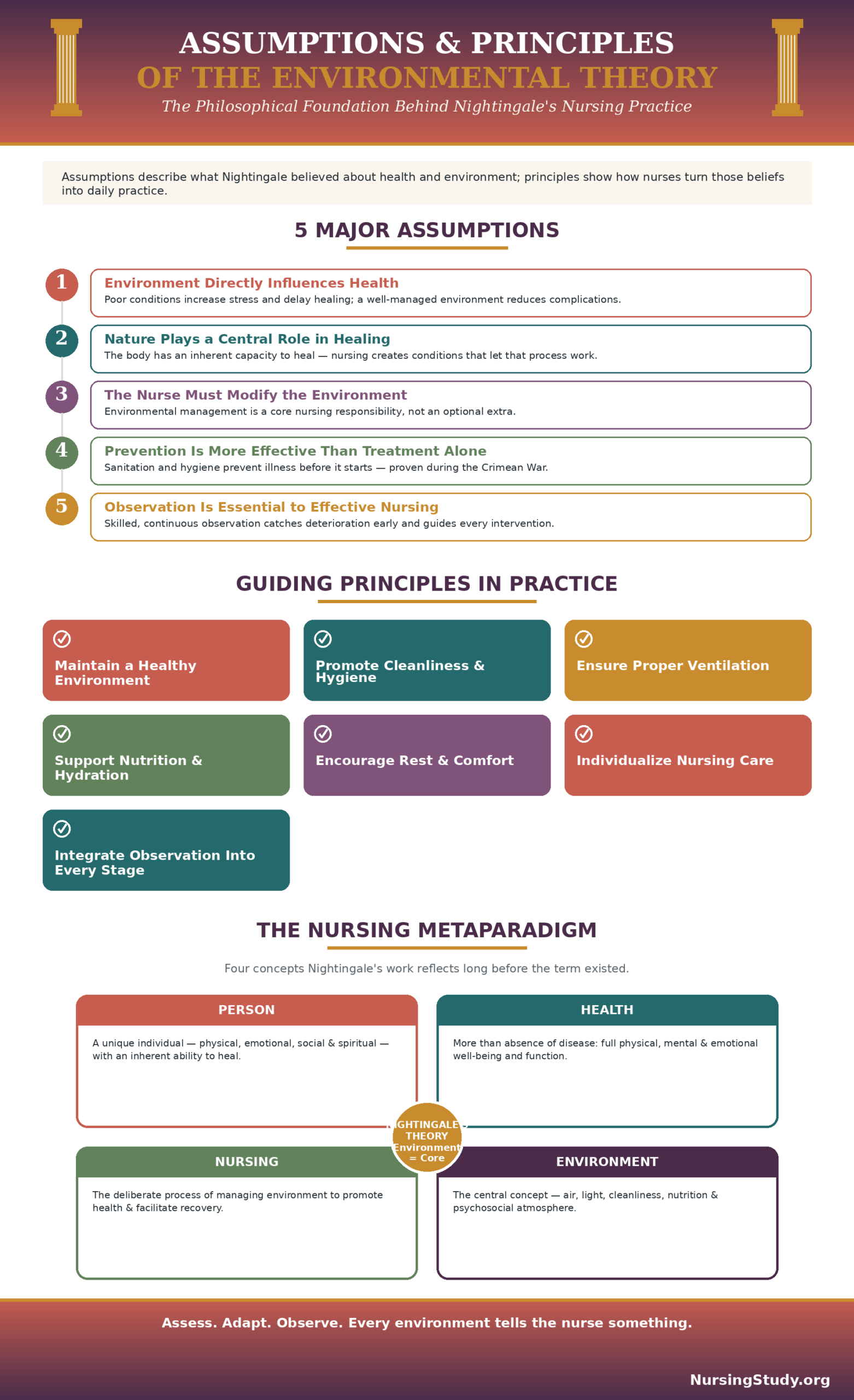
Strengths of the Environmental Theory
The Florence Nightingale Environmental Theory has remained influential for more than a century because many of its principles continue to support safe, effective, and patient-centered nursing care. Its strengths extend beyond historical importance and remain evident in everyday clinical practice.
1. Established the Foundation of Modern Nursing
Perhaps the greatest strength of the Florence Nightingale Environmental Theory is that it established the foundation of nursing as a distinct healthcare profession.
Before Florence Nightingale’s work, nursing lacked formal educational standards and professional recognition. By emphasizing observation, environmental management, patient advocacy, and scientific thinking, she demonstrated that nursing required specialized knowledge and independent clinical judgment.
The theory helped define the professional role of the nurse, transforming nursing from informal caregiving into a respected healthcare discipline. Today, these principles continue to influence nursing education, professional standards, and clinical practice worldwide.
2. Emphasizes Prevention Rather Than Treatment Alone
One of Nightingale’s most significant contributions was her emphasis on disease prevention.
Rather than focusing exclusively on treating illness after it developed, the Florence Nightingale Environmental Theory encourages nurses to reduce health risks before complications occur by improving the patient’s environment.
Examples include:
- Promoting cleanliness and hygiene.
- Maintaining adequate ventilation.
- Supporting proper sanitation.
- Encouraging access to clean water.
- Reducing environmental hazards.
- Preventing healthcare-associated infections.
This preventive philosophy remains fundamental to infection control, public health, and contemporary nursing practice.
3. Promotes Holistic Nursing Care
The Florence Nightingale Environmental Theory recognizes that healing involves more than treating physical symptoms.
By considering the influence of environmental, emotional, and social factors on health, the theory supports holistic nursing and patient-centered care.
Nurses are encouraged to assess:
- Physical surroundings.
- Emotional well-being.
- Comfort.
- Nutrition.
- Sleep quality.
- Environmental safety.
- Family support.
This comprehensive approach improves both patient experiences and clinical outcomes.
4. Easy to Understand and Apply
Another strength of the theory is its practical simplicity.
Many nursing theories contain highly abstract concepts that may be difficult to translate into everyday practice. In contrast, the Florence Nightingale Environmental Theory offers clear guidance that can be implemented across nearly every healthcare setting.
Examples include:
- Maintaining clean patient rooms.
- Reducing unnecessary noise.
- Improving lighting.
- Promoting hand hygiene.
- Supporting adequate nutrition.
- Creating therapeutic care environments.
Because these interventions are practical and observable, nurses at every level of experience can incorporate them into daily practice.
5. Applicable Across Diverse Healthcare Settings
The principles of the Florence Nightingale Environmental Theory remain relevant in virtually every area of healthcare.
Applications include:
- Acute care hospitals.
- Community health.
- Long-term care facilities.
- Home healthcare.
- Critical care units.
- Pediatric nursing.
- Mental health nursing.
- Palliative care.
- Disaster response.
- Rehabilitation services.
This broad applicability contributes to the theory’s enduring relevance.
6. Supported by Modern Evidence
Although developed before modern scientific discoveries, many principles of the Florence Nightingale Environmental Theory are supported by current evidence-based practice and nursing research.
Research consistently demonstrates the importance of:
- Hand hygiene.
- Environmental cleaning.
- Air quality.
- Safe hospital design.
- Noise reduction.
- Infection prevention.
- Patient-centered healthcare environments.
These findings reinforce the scientific validity of many of Nightingale’s original observations.
Limitations and Criticisms
Despite its many strengths, the Florence Nightingale Environmental Theory has several limitations that should be considered when applying it to modern healthcare. Like all theoretical models, it reflects the scientific knowledge and healthcare context of the period in which it was developed.
Recognizing these limitations does not diminish the importance of the theory. Instead, it helps nurses understand where additional frameworks and contemporary evidence are needed to address complex healthcare challenges.
1. Limited Attention to Psychological and Emotional Factors
Although Florence Nightingale acknowledged that emotional well-being affects recovery, the theory primarily emphasizes the physical environment.
Compared with many later nursing theories, it provides relatively limited discussion of:
- Psychological health.
- Emotional resilience.
- Coping mechanisms.
- Therapeutic communication.
- Interpersonal relationships.
- Mental health disorders.
Modern nursing recognizes that these factors significantly influence recovery and should be integrated into comprehensive care.
2. Developed Before Modern Medical Science
The Florence Nightingale Environmental Theory was created before many major scientific discoveries transformed healthcare.
At the time, there was limited understanding of:
- Germ theory.
- Microbiology.
- Genetics.
- Immunology.
- Molecular biology.
- Chronic disease management.
- Advanced pharmacology.
Consequently, the theory does not explain disease mechanisms using contemporary scientific knowledge.
However, many of its environmental recommendations remain consistent with current healthcare evidence.
3. Limited Focus on Complex Healthcare Technology
Healthcare today includes:
- Electronic health records.
- Artificial intelligence.
- Telehealth.
- Robotic surgery.
- Precision medicine.
- Advanced life-support technologies.
The Florence Nightingale Environmental Theory understandably does not address these innovations because they did not exist during Nightingale’s lifetime.
Modern nurses therefore combine Nightingale’s environmental principles with technological competence and evidence-based clinical decision-making.
4. Broad Environmental Concepts
Some critics argue that several concepts within the theory are relatively broad and may be interpreted differently across clinical settings.
For example:
- What constitutes an optimal healing environment?
- How should environmental adaptation be measured?
- Which environmental interventions have the greatest impact on specific diseases?
Modern research continues to refine these concepts by providing measurable clinical evidence.
5. Less Emphasis on Patient Participation
Compared with many contemporary nursing models, the Florence Nightingale Environmental Theory places greater emphasis on the nurse’s responsibility for environmental management than on shared decision-making with patients.
Current healthcare encourages:
- Patient autonomy.
- Shared decision-making.
- Collaborative care planning.
- Cultural competence.
- Individualized healthcare preferences.
Although these ideas are compatible with Nightingale’s philosophy, they are not extensively developed within the original theory.
Future Relevance in Nursing Theories
Despite being introduced more than a century ago, the Florence Nightingale Environmental Theory continues to evolve alongside healthcare and remains one of the most influential nursing theories in professional practice. Rather than becoming obsolete, its principles have gained renewed importance as healthcare increasingly recognizes the relationship between environmental conditions, patient safety, population health, and quality improvement.
Continuing Importance of Environmental Health
Growing awareness of environmental health has expanded the relevance of Nightingale’s work.
Modern healthcare increasingly addresses issues such as:
- Climate change.
- Air pollution.
- Water quality.
- Sustainable healthcare.
- Healthcare waste management.
- Disaster preparedness.
- Community environmental risks.
These priorities closely align with Nightingale’s belief that healthy environments are essential for promoting health and preventing disease.
Supporting Future Infection Control
Emerging infectious diseases continue to highlight the importance of environmental management.
The COVID-19 pandemic demonstrated that healthcare systems still rely heavily on environmental interventions, including:
- Hand hygiene.
- Environmental cleaning.
- Air quality management.
- Isolation procedures.
- Personal protective equipment.
- Safe healthcare environments.
Future infection prevention strategies will likely continue reflecting the principles established within the Florence Nightingale Environmental Theory.
Integration With Technology
Although the original theory predates modern technology, its principles can complement technological innovation rather than compete with it.
For example:
- Smart hospital rooms can optimize lighting, temperature, and ventilation.
- Environmental sensors can monitor air quality and infection risks.
- Artificial intelligence can identify environmental safety hazards.
- Electronic health records can incorporate environmental assessments into patient care planning.
Technology can therefore strengthen, rather than replace, Nightingale’s environmental approach.
Expanding Nursing Research
Future nursing research will continue exploring how environmental interventions influence:
- Recovery times.
- Patient satisfaction.
- Mental health.
- Sleep quality.
- Healthcare-associated infections.
- Healthcare costs.
- Population health.
These studies will further refine and strengthen the scientific foundation of the Florence Nightingale Environmental Theory.
Preparing Future Nurses
The theory will likely remain an essential component of nursing education because it teaches foundational principles that remain relevant regardless of technological advances or changes in healthcare delivery.
Future nurses will continue learning to:
- Assess environmental risks.
- Promote patient safety.
- Apply infection prevention measures.
- Integrate environmental assessment into the nursing process.
- Deliver holistic, patient-centered care.
- Combine environmental management with evidence-based practice.
These competencies are essential across every nursing specialty.
Lasting Significance Within Nursing Theories
The continued relevance of the Florence Nightingale Environmental Theory reflects its remarkable adaptability. While modern healthcare has expanded far beyond the conditions that existed during Florence Nightingale’s lifetime, the central premise of the theory—that the environment profoundly influences health and recovery—remains firmly supported by contemporary science and clinical practice.
As healthcare systems continue to address emerging infectious diseases, aging populations, environmental sustainability, technological innovation, and increasingly complex patient needs, Nightingale’s work provides a timeless framework for understanding the relationship between individuals and their surroundings. Rather than standing apart from newer nursing theories, the Florence Nightingale Environmental Theory complements them by emphasizing prevention, environmental management, patient observation, and holistic care.
Its enduring influence demonstrates that effective nursing is not defined solely by advanced medical treatments or sophisticated technologies. Instead, it depends equally on the nurse’s ability to create safe, supportive, and therapeutic environments that promote healing, preserve dignity, and improve health outcomes. For this reason, the Florence Nightingale Environmental Theory will continue to serve as both a historical cornerstone and a practical guide for future generations of nurses, educators, researchers, and healthcare leaders.
Overwhelmed with multiple nursing deadlines?
Let us write your papers efficiently and accurately.
Conclusion
The Florence Nightingale Environmental Theory remains one of the most influential and enduring contributions to the field of nursing, continuing to shape how nurses understand health, healing, and the delivery of quality patient care. Although developed during the nineteenth century, the theory’s central message—that the environment plays a critical role in recovery—has proven remarkably resilient and continues to align with the principles of modern nursing practice. Florence Nightingale recognized that factors such as cleanliness, ventilation, sanitation, access to clean water, proper nutrition, and careful observation were not simply supportive measures but essential components of effective nursing. Today, these same principles underpin many aspects of infection control, patient safety initiatives, and evidence-based practice.
Beyond its historical significance, the Florence Nightingale Environmental Theory established nursing as an independent profession grounded in scientific observation, critical thinking, and compassionate care. It redefined the role of the nurse from one of passive assistance to one of active environmental management, patient advocacy, and health promotion. By emphasizing prevention alongside treatment, the theory laid the foundation of nursing and influenced the development of numerous nursing theories that followed. Its concepts continue to guide nurses working in hospitals, community health settings, long-term care facilities, rehabilitation centers, and home healthcare, demonstrating that creating a therapeutic environment remains fundamental to achieving positive health outcomes.
The theory also illustrates the importance of viewing patients holistically. Rather than focusing solely on disease, Florence Nightingale encouraged nurses to consider the environment of the patient, recognizing that physical surroundings, emotional comfort, and social conditions all contribute to healing. This holistic perspective has become increasingly relevant as healthcare embraces patient-centered care, interdisciplinary collaboration, and the broader understanding of environmental factors affecting health. Modern challenges—including healthcare-associated infections, environmental sustainability, aging populations, and global public health emergencies such as the COVID-19 pandemic—have further reinforced the importance of Nightingale’s environmental approach.
For nursing students, educators, researchers, and practicing professionals, the Florence Nightingale Environmental Theory offers far more than a historical account of nursing’s origins. It provides a practical framework for integrating environmental assessment into the nursing process, promoting safer care environments, supporting clinical decision-making, and delivering compassionate, evidence-informed nursing care. The theory also serves as a reminder that even in an era of sophisticated medical technologies and advanced treatments, fundamental nursing interventions—such as maintaining hygiene, preventing infection, promoting comfort, and carefully observing patients—remain indispensable to quality healthcare.
Ultimately, the enduring relevance of the Florence Nightingale Environmental Theory lies in its universal principle that healing occurs most effectively when individuals are cared for in environments that support their physical, emotional, and psychological well-being. As healthcare continues to evolve, the theory will remain an essential guide for contemporary nursing, inspiring future generations of nurses to combine scientific knowledge, environmental awareness, and compassionate care to improve the lives of the patients and communities they serve.
Frequently Asked Questions
What are the assumptions of Florence Nightingale’s Environmental Theory?
Florence Nightingale’s Environmental Theory is based on several key assumptions:
- The environment has a direct impact on a person’s health and recovery.
- The body has a natural ability to heal when placed in a healthy environment.
- Nurses play a vital role in modifying the environment to promote healing.
- Disease prevention is as important as disease treatment.
- Careful observation and assessment are essential for effective nursing care.
These assumptions emphasize that creating a safe, clean, and supportive environment enables patients to recover more effectively.
What are the applications of Florence Nightingale Environmental Theory?
The theory is widely applied in modern nursing practice, including:
- Promoting infection prevention through hygiene and sanitation.
- Creating safe and therapeutic healthcare environments.
- Guiding environmental assessments during the nursing process.
- Improving patient comfort by managing noise, lighting, and ventilation.
- Supporting patient education on maintaining healthy home environments.
- Enhancing hospital safety and quality improvement initiatives.
- Informing community health and public health nursing practices.
What are the environmental concepts of Florence Nightingale?
Florence Nightingale identified several environmental concepts that influence health and recovery, including:
- Clean air and proper ventilation.
- Pure water and safe drinking supplies.
- Efficient drainage and waste disposal.
- Cleanliness of the patient and surroundings.
- Adequate light, especially natural sunlight.
- Quiet surroundings to promote rest.
- Proper nutrition.
- Comfortable temperature.
- Healthy and safe environmental conditions.
Together, these concepts create a healing environment that supports the body’s natural recovery process.
What are the 5 components of Nightingale’s Environmental Theory?
Five commonly recognized components of Nightingale’s Environmental Theory are:
- Pure air – Providing fresh air and adequate ventilation.
- Pure water – Ensuring access to clean and safe drinking water.
- Efficient drainage – Maintaining proper sewage and waste disposal systems.
- Cleanliness – Promoting personal hygiene and maintaining a clean environment.
- Light – Providing sufficient natural and artificial lighting to support healing.
These five environmental components work together to reduce disease risk, promote patient comfort, and create optimal conditions for recovery.
Its principles are used in hospitals, long-term care facilities, rehabilitation centers, community health settings, and home healthcare.
