

Jean Watson’s Theory of Human Caring: A Complete Guide to Human Care for Every Nurse and Nursing Theorist
Jean Watson is one of the most influential figures in modern nursing and is widely recognized for developing the Theory of Human Caring, a framework that transformed the understanding of human care within the nursing profession. At a time when healthcare was becoming increasingly focused on technology, medical procedures, and disease management, Jean Watson emphasized that caring is the defining characteristic of nursing. She argued that while scientific knowledge and technical competence are indispensable, they must be complemented by compassion, empathy, authentic human connection, and respect for the dignity of every individual. This perspective has made Jean Watson’s work one of the most enduring contributions to contemporary nursing theories, influencing how nurses deliver care in hospitals, clinics, community settings, and educational institutions around the world.
Unlike many nursing models that concentrate primarily on physical illness and clinical interventions, Jean Watson’s Theory of Human Caring presents nursing as both a science and an art. According to Jean Watson, effective nursing practice extends beyond diagnosing and treating disease; it also involves understanding the emotional, psychological, social, cultural, and spiritual dimensions of the person receiving care. Through her philosophy and science of caring, Jean Watson proposed that meaningful healing occurs when nurses establish authentic relationships with patients, creating an environment where trust, hope, compassion, and dignity are preserved. This holistic approach continues to influence healthcare organizations seeking to improve both patient outcomes and the quality of the care experience.
The importance of Jean Watson’s work extends beyond theoretical discussions. Her ideas have become practical frameworks that guide everyday nursing decisions and interactions. Concepts such as transpersonal caring, caring consciousness, and the Caritas Processes provide nurses with evidence-informed approaches for developing therapeutic relationships, promoting healing, and delivering patient-centered care. Rather than viewing caring as an abstract ideal, Jean Watson demonstrated that caring behaviors can be intentionally cultivated, practiced, and integrated into routine clinical care regardless of the healthcare setting.
Today, the principles established by Jean Watson continue to shape professional nursing in numerous ways, including:
- Promoting holistic, patient-centered care that addresses the whole person rather than focusing solely on illness.
- Strengthening therapeutic relationships between nurses, patients, families, and interdisciplinary healthcare teams.
- Encouraging compassionate communication alongside evidence-based clinical decision-making.
- Supporting ethical nursing practice grounded in respect, dignity, and empathy.
- Influencing nursing education, leadership, research, and healthcare policy across the world.
These contributions explain why Jean Watson’s Theory of Human Caring remains one of the most widely studied and applied nursing theories in both academic and clinical environments.
The influence of Jean Watson has also been reinforced through her extensive academic and professional accomplishments. Throughout her career, she has contributed significantly to nursing scholarship, served in leadership positions at the University of Colorado, and helped establish the Watson Caring Science Institute, an organization dedicated to advancing caring science globally. Her work has inspired decades of research on caring, influenced curriculum development in colleges and schools of nursing, and encouraged healthcare organizations to place compassionate human care alongside clinical excellence as a central component of quality healthcare delivery.
Understanding Jean Watson and her theory requires more than simply memorizing definitions or theoretical concepts. It involves examining how her experiences shaped the development of the theory, understanding the philosophical foundations that distinguish her work from other nursing models, and appreciating how caring can be translated into measurable nursing behaviors and clinical outcomes. This comprehensive perspective allows nurses to recognize caring not merely as a professional expectation, but as an intentional practice that supports healing, strengthens therapeutic relationships, and enhances patient well-being.
This guide provides an in-depth exploration of Jean Watson, her biography and career, and the evolution of the Theory of Human Caring. It examines the historical foundations of the theory, explores the philosophy and science of caring, explains the major concepts and assumptions that underpin the model, and discusses the original Carative Factors alongside the Clinical Caritas Processes. The guide also explores practical applications of the theory across diverse areas of nursing practice, methods for assessing and measuring caring, and the lasting influence of Jean Watson on nursing education, professional organizations, and modern healthcare. Together, these topics provide a comprehensive understanding of why human care remains central to nursing and why Jean Watson’s contributions continue to influence the profession decades after the theory was first introduced.
Jean Watson: Biography and Career of a Pioneering Nursing Theorist
Understanding Jean Watson’s contributions to nursing begins with an appreciation of the experiences, education, and professional journey that shaped her philosophy. Recognized internationally as an american nurse theorist and nursing scholar, educator, and author, Jean Watson transformed the way healthcare professionals think about caring, healing, and the nurse–patient relationship. Her work demonstrates that nursing extends beyond the treatment of disease to encompass compassion, human connection, and the promotion of holistic well-being.
Throughout her career, Jean Watson has consistently advocated for the idea that human care is the moral and scientific foundation of professional nursing. Her scholarly work, leadership positions, and research have influenced nursing curricula, clinical practice, healthcare administration, and nursing research across the globe. Today, Jean Watson is best known for her theory of caring, which continues to guide healthcare professionals in delivering compassionate, patient-centered care.
The sections below explore the life and professional journey of Jean Watson, examining the milestones that contributed to her development as one of history’s most influential nursing theorists.
Early Life and Educational Background
The story of Jean Watson begins in the small Appalachian community of Welch, West Virginia. Watson was born Margaret Jean Harman on June 10, 1940. Jean Watson was born Margaret Jean Harman and grew up as the youngest of eight children in a close-knit family where compassion, mutual support, and respect for others were integral values. Living in a large family exposed her to the importance of caring relationships from an early age, experiences that would later influence her understanding of nursing as a deeply human profession.
Growing up in rural West Virginia also provided Jean Watson with firsthand insight into the importance of community, empathy, and service. At a time when healthcare resources were often limited, interpersonal relationships and family support played a significant role in promoting health and recovery. These early observations became foundational to her later belief that healing involves far more than medical treatment alone.
Seeking greater educational opportunities, Jean Watson relocated to Colorado during her young adulthood. This move marked the beginning of an academic journey that would eventually reshape modern nursing.
Her educational achievements include:
- A diploma in nursing, marking the beginning of her professional career as a nurse.
- A bachelor’s degree in nursing from the University of Colorado, where she completed her undergraduate nursing in 1964.
- A master’s degree in mental health nursing in 1966, expanding her understanding of psychological health, therapeutic communication, and holistic patient care.
- Doctoral studies in educational psychology and counseling, providing expertise in learning theory, human behavior, interpersonal relationships, and personal development.
This interdisciplinary educational background distinguished Jean Watson from many of her contemporaries. Rather than relying solely on biomedical science, she integrated concepts from psychology, education, philosophy, sociology, and human science into her understanding of nursing. These diverse academic influences would later become evident throughout Watson’s philosophy and science of caring.
Her graduate education in educational psychology and counseling proved particularly significant because it strengthened her understanding of:
- Human growth and development.
- Emotional and psychological healing.
- Communication and interpersonal relationships.
- Learning and behavioral change.
- The importance of empathy in healthcare.
These areas became central building blocks of Watson’s theory of human caring, which emphasizes caring relationships as essential components of healing rather than optional additions to clinical treatment.
Another defining event in Jean Watson’s personal life occurred decades later when she experienced the loss of her left eye following an accident. This profound experience deepened her personal understanding of vulnerability, suffering, resilience, and healing. Rather than viewing illness and adversity solely from a professional perspective, she experienced firsthand the emotional and spiritual dimensions of recovery. Many scholars note that this life event reinforced her commitment to authentic caring relationships and strengthened her advocacy for compassionate nursing practice.
Collectively, these educational experiences and personal challenges laid the intellectual and philosophical foundation for Jean Watson’s Theory of Human Caring, allowing her to develop one of the most influential models in contemporary nursing.
Overwhelmed with multiple nursing deadlines?
Let us write your papers efficiently and accurately
Academic Career and Leadership Roles
Following her education, Jean Watson embarked on a distinguished academic career that would span several decades. Much of her professional life was closely associated with the University of Colorado, where she served as educator, researcher, administrator, and mentor.
Her appointment at the University of Colorado at Boulder and the University of Colorado Health Sciences Center provided opportunities to combine teaching, research, and clinical scholarship. During this period, Watson began developing her theory, recognizing that many nursing models emphasized disease management while giving comparatively less attention to caring as the essence of nursing.
As both a practicing nurse and academic, Jean Watson observed that advances in medicine were improving diagnostic and treatment capabilities, yet many patients continued to express unmet emotional, psychological, and spiritual needs. These observations led her to question whether technical competence alone could define excellent nursing care.
Her academic responsibilities included:
- Teaching undergraduate and graduate nursing students.
- Supervising nursing research and doctoral education.
- Developing nursing curricula.
- Conducting research on caring and healing.
- Promoting interdisciplinary collaboration between healthcare professionals.
As her reputation grew, Jean Watson became a distinguished professor of nursing, a role that reflected both her scholarly achievements and her influence on nursing education. She later served as Dean of Nursing, where she championed curriculum reforms that emphasized holistic care, ethics, reflective practice, and compassionate leadership.
One of her most influential accomplishments during her tenure at the Colorado Health Sciences Center was helping establish the original Center for Human Caring, later widely recognized as a pioneering institution devoted to advancing caring scholarship. Watson founded initiatives that promoted caring research, faculty development, and innovative educational programs focused on healing relationships.
Her leadership extended beyond university administration. Throughout her career, Jean Watson has promoted several key principles that continue to shape nursing practice:
- Caring is central to nursing and should guide every patient interaction.
- Scientific knowledge and compassion must complement one another.
- Nurses influence healing through both clinical expertise and authentic presence.
- Professional nursing requires continuous reflection, personal growth, and ethical responsibility.
- Caring environments contribute to improved patient outcomes and healthier healthcare organizations.
Rather than viewing nursing as merely the completion of clinical tasks, Jean Watson consistently emphasized that the practice of caring in nursing requires intentional engagement, emotional presence, and respect for each individual’s humanity.
Professional Achievements and Global Recognition
Over the course of her remarkable career, Jean Watson has received widespread recognition for transforming nursing education and professional practice. Her scholarship has influenced universities, hospitals, healthcare systems, and research institutions across numerous countries.
One of her most enduring contributions is the development of the Theory of Human Caring, introduced in the late 1970s and continually refined throughout subsequent decades. The theory became a cornerstone of modern nursing theories, providing an alternative to purely biomedical models by emphasizing caring relationships as essential components of healing.
Beyond theory development, Jean Watson has authored numerous books, scholarly articles, and educational resources that have expanded the understanding of caring in nursing and health. Her work has stimulated extensive research on caring, encouraging investigators to examine how compassionate care influences patient satisfaction, recovery, quality of life, staff well-being, and organizational culture.
Among her most notable professional accomplishments are:
- Becoming a Fellow of the American Academy of Nursing in recognition of her outstanding contributions to the profession.
- Receiving numerous honorary doctoral degrees from universities around the world.
- Helping establish the Watson Caring Science Institute, an international organization dedicated to advancing unitary caring science, education, research, and professional development.
- Serving as the inaugural holder of the first endowed chair in caring and later the endowed chair in caring science, positions dedicated to advancing scholarship in caring science.
- Influencing healthcare organizations to adopt caring-based models of professional nursing practice.
The Watson Caring Science Institute continues to promote the integration of caring science into healthcare through educational programs, leadership development, clinical consultations, and global collaborations. Its work reflects Jean Watson’s vision that caring should remain the foundation of healthcare despite advances in technology and medical science.
Her influence extends internationally through collaborations with:
- Universities and college of nursing programs.
- Hospitals and academic medical center systems.
- Community healthcare organizations.
- Professional nursing associations.
- Healthcare leaders seeking to improve organizational cultures through caring science.
Recognition from organizations such as the American Academy of Nursing and collaborations with institutions worldwide have reinforced Jean Watson’s position as one of the most respected scholars in nursing history. Her theories are taught extensively in nursing schools, incorporated into clinical orientation programs, and applied in healthcare systems seeking to strengthen compassionate, patient-centered care.
Today, Jean Watson’s legacy extends well beyond the publication of a single theory. Her work has fundamentally influenced how nursing professionals define healing, develop therapeutic relationships, and understand the ethical responsibilities of caregiving. By integrating philosophy, psychology, education, spirituality, and empirical science into one comprehensive framework, Jean Watson established a lasting model that continues to inspire nurses, educators, researchers, and healthcare leaders around the world. Her enduring message—that caring is central to nursing practice and that authentic human care has the power to promote healing—remains as relevant in today’s complex healthcare environments as it was when she first introduced her groundbreaking ideas.
The Development of Jean Watson’s Theory of Human Caring
The development of Jean Watson’s Theory of Human Caring represents one of the most significant milestones in the history of modern nursing. Introduced in the late 1970s, the theory emerged during a period of rapid scientific advancement in healthcare, when technological innovations and increasingly specialized medical treatments were transforming clinical practice. While these developments greatly improved diagnostic capabilities and treatment outcomes, Jean Watson observed that healthcare risked becoming increasingly task-oriented, with less emphasis on the interpersonal relationships that distinguish nursing from other health professions.
Recognizing this shift, Jean Watson sought to establish a theoretical framework that reaffirmed the unique role of nurses in promoting healing through compassionate, holistic care. Rather than rejecting scientific and technological progress, she argued that caring and science should coexist. According to Watson’s philosophy and science, evidence-based clinical interventions become even more effective when combined with authentic human relationships, empathy, and respect for the dignity of every individual.
Unlike theories that primarily explain disease processes or physiological adaptation, Watson’s theory of human caring focuses on the person behind the illness. It proposes that healing is influenced not only by medications, procedures, and clinical expertise but also by the quality of interactions between the nurse and the patient. This perspective fundamentally changed how many educators, clinicians, and healthcare leaders viewed nursing practice, emphasizing that human care is not an optional component of nursing—it is its defining characteristic.
Several factors contributed to the development of the theory, including:
- Jean Watson’s experiences as a practicing nurse.
- Her academic preparation in nursing, psychology, and counseling.
- Growing interest in holistic healthcare during the 1970s.
- Expanding research in behavioral sciences and human science.
- Recognition that patients have emotional, spiritual, cultural, and social needs alongside physical health concerns.
Together, these influences enabled Jean Watson to develop a framework that integrates scientific knowledge with compassionate caregiving, ultimately establishing one of the world’s most influential nursing theories.
Historical Foundations of the Caring Theory
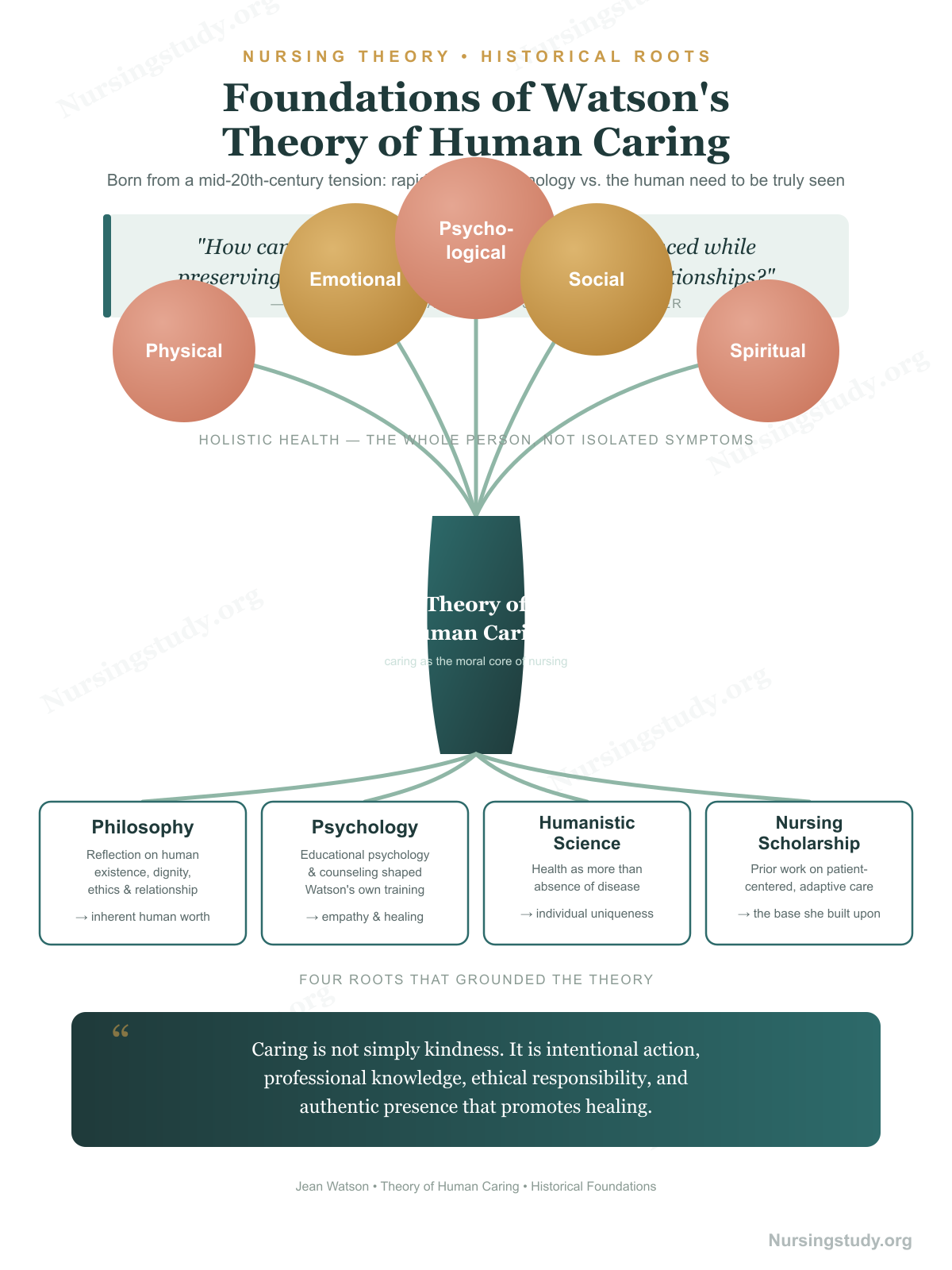
To understand the origins of Jean Watson’s Theory of Human Caring, it is important to examine the healthcare environment in which it was developed. During the mid-twentieth century, medicine experienced remarkable advances in pharmacology, surgery, diagnostic imaging, and intensive care. These innovations dramatically improved patient survival and expanded the capabilities of healthcare systems. However, the increasing emphasis on technology also created new challenges.
Many nursing scholars observed that patient care was becoming increasingly procedural, with greater attention devoted to completing clinical tasks than to understanding patients’ lived experiences. As hospitals became larger and healthcare delivery more complex, some patients reported feeling isolated, anxious, or treated as diagnoses rather than as individuals.
Jean Watson believed this trend highlighted an important question:
How can healthcare remain scientifically advanced while preserving compassion, dignity, and authentic human relationships?
Her response was the development of the Theory of Human Caring, which emphasized that caring should remain the moral and philosophical foundation of nursing regardless of technological advancement.
The historical development of the caring theory was influenced by several disciplines beyond nursing, including:
Philosophy
Philosophical traditions encouraged reflection on human existence, meaning, dignity, ethics, and interpersonal relationships. These ideas supported Jean Watson’s belief that every individual possesses inherent worth that must be respected during healthcare encounters.
Psychology
Because Jean Watson completed graduate education in educational psychology and counseling, psychological theories significantly influenced her understanding of empathy, communication, emotional healing, and therapeutic relationships. These concepts became essential components of transpersonal caring.
Humanistic Science
Humanistic scholars emphasized the uniqueness of each individual and recognized health as more than the absence of disease. This perspective aligned closely with Jean Watson’s holistic understanding of human care.
Nursing Scholarship
Earlier nursing scholars had already emphasized patient-centered care, adaptation, interpersonal relationships, and environmental influences. Jean Watson built upon these foundations while introducing a stronger philosophical focus on caring as the defining essence of nursing.
Another important influence was the emergence of holistic healthcare, which recognized that optimal health involves interactions among physical, emotional, psychological, social, and spiritual dimensions. Jean Watson incorporated these principles into her developing framework, arguing that effective nursing should address the whole person rather than isolated symptoms.
According to Watson, caring cannot simply be reduced to kindness or good intentions. Instead, caring involves intentional actions, professional knowledge, ethical responsibility, and authentic presence that promote healing in meaningful ways.
Evolution of the Theory of Human Caring
Like many influential nursing theories, Jean Watson’s Theory of Human Caring has evolved over time in response to advances in research, changes in healthcare systems, and the growing understanding of holistic care. Rather than remaining static, the theory has been continually refined while preserving its central message that caring is the essence of nursing.
The evolution of the theory can be understood in several major phases.
1. Initial Development
When Jean Watson first introduced the theory in 1979, its primary goal was to establish caring as the central focus of nursing rather than viewing nursing solely as a collection of clinical procedures.
The original framework introduced the Ten Carative Factors, which identified fundamental caring behaviors that promote healing and strengthen nurse–patient relationships. These factors provided practical guidance for integrating compassion into everyday nursing practice.
2. Expansion of Caring Science
As the theory matured, Jean Watson expanded her work beyond caring behaviors to develop a broader philosophy and science of caring. This evolution emphasized that caring involves intentional relationships that influence both the caregiver and the person receiving care.
During this stage, concepts such as:
- Caring consciousness
- Transpersonal caring
- Healing environments
- Authentic presence
- Spiritual dimensions of care
became increasingly important within the theory.
This broader perspective contributed to the development of caring science as sacred science, which views caring as a disciplined field of inquiry grounded in ethics, human dignity, compassion, and evidence-informed practice. Rather than opposing scientific medicine, caring science as sacred science emphasizes that scientific knowledge and authentic human connection should work together to support healing.
3. Transition to Clinical Caritas Processes
As research expanded, Jean Watson revised the original Carative Factors into the Clinical Caritas Processes.
This transition reflected a deeper emphasis on intentional caring relationships and personal transformation. The word Caritas, derived from Latin, conveys meanings such as love, compassion, charity, and appreciation for humanity.
Although the terminology evolved, the underlying philosophy remained consistent: caring is a conscious practice that can be intentionally cultivated throughout professional nursing.
4. Global Application
Today, Watson’s caring framework extends far beyond North America. Hospitals, universities, and healthcare organizations worldwide have integrated principles from Watson’s theory of human caring into:
- Clinical practice standards.
- Leadership development.
- Nursing education.
- Professional ethics.
- Quality improvement initiatives.
- Organizational culture.
The establishment of the Watson Caring Science Institute further accelerated this global expansion by providing educational resources, certification programs, leadership training, and international collaborations focused on caring science.
As healthcare continues to evolve, Jean Watson’s theory has demonstrated remarkable adaptability because its central principles—respect, compassion, dignity, and authentic relationships—remain relevant regardless of advances in technology or changes in healthcare delivery.
Significance of the Theory Within Nursing Theories
Among contemporary nursing theories, Jean Watson’s Theory of Human Caring occupies a unique position because it defines caring as the essence of nursing rather than merely one component of clinical practice. While many nursing theories explain physiological adaptation, environmental influences, self-care, or systems of care, Jean Watson places the caring relationship itself at the center of nursing knowledge.
This perspective has significantly influenced nursing education, research, leadership, and clinical practice by encouraging healthcare professionals to balance scientific competence with compassionate care.
Several characteristics distinguish Jean Watson’s work from many other theoretical models.
Human Care Is the Foundation of Nursing
Perhaps the theory’s most influential contribution is its assertion that human care defines the nursing profession.
According to Watson, technical skills, medications, and medical technologies are essential, but they cannot replace authentic human relationships. Healing occurs most effectively when clinical competence is combined with compassion, empathy, and respect for patient dignity.
A Holistic Perspective
Unlike approaches that focus primarily on disease management, Watson’s theory of human caring views individuals as integrated beings whose physical, emotional, psychological, social, cultural, and spiritual dimensions interact continuously.
For example, a patient recovering from major surgery may receive excellent pain management and wound care yet still experience fear, loneliness, or uncertainty about recovery. Applying Jean Watson’s theory encourages the nurse to address these emotional and spiritual concerns alongside physical treatment, resulting in more comprehensive care.
Integration of Science and Compassion
One of the theory’s greatest strengths is its ability to integrate evidence-based practice with compassionate caregiving.
Rather than suggesting that caring replaces science, Jean Watson argues that caring enhances scientific nursing practice by improving communication, trust, patient engagement, and therapeutic relationships.
Relevance Across Healthcare Settings
The theory remains applicable across diverse clinical environments, including:
- Acute care hospitals.
- Community health clinics.
- Long-term care facilities.
- Rehabilitation centers.
- Hospice and palliative care.
- Psychiatric and mental health nursing.
- Nursing education and leadership.
For instance, in psychiatric and mental health nursing, therapeutic communication, empathy, trust, and emotional presence are central to effective care. Jean Watson’s emphasis on transpersonal caring provides a valuable framework for establishing meaningful therapeutic relationships with individuals experiencing mental illness.
Continued Influence on Modern Nursing
The continued relevance of Jean Watson’s Theory of Human Caring is reflected in its widespread adoption by healthcare organizations, nursing schools, and professional development programs. It has inspired extensive research on caring, informed curriculum design, and shaped initiatives that promote compassionate, patient-centered care. Through the work of the Watson Caring Science Institute, the theory continues to evolve while remaining grounded in its original principle that caring is central to nursing.
Philosophy and Science of Caring in Jean Watson’s Human Care Framework
At the heart of Jean Watson’s Theory of Human Caring lies a profound philosophical foundation that distinguishes nursing from other healthcare professions. While medicine traditionally focuses on diagnosing, treating, and curing disease, Jean Watson argued that nursing has a broader mission: to promote healing through authentic relationships, compassionate presence, and holistic human care. This perspective is reflected in Watson’s philosophy and science of caring, which integrates scientific knowledge, ethical practice, humanistic values, and spiritual awareness into a unified approach to nursing.
Rather than viewing caring as an emotional response or a personality trait, Jean Watson presents caring as a deliberate, evidence-informed, and professional practice. Caring requires knowledge, clinical competence, emotional intelligence, ethical responsibility, and intentional action. In this framework, caring is both a science that can be studied and improved through research and a philosophy that guides every interaction between the nurse and the person receiving care.
The philosophy and science of caring recognizes that every healthcare encounter has the potential to influence healing. Whether a nurse is administering medication, providing emotional support, educating a patient, or simply listening with empathy, each interaction contributes to the patient’s overall experience of health and recovery. According to Jean Watson, these moments of authentic connection are not secondary to clinical interventions—they are central to effective nursing practice.
An important aspect of this framework is its integration of multiple disciplines. Jean Watson drew upon insights from:
- Nursing science.
- Human science.
- Psychology and educational psychology and counseling.
- Philosophy and ethics.
- Sociology.
- Spiritual traditions.
- Behavioral sciences.
By combining these perspectives, Jean Watson developed a model that acknowledges the complexity of human beings and recognizes that healing occurs through the interaction of physical, emotional, social, cultural, and spiritual dimensions.
Another distinguishing feature of the framework is its emphasis on the reciprocal nature of caring. According to Watson, the nurse affects and is affected by every caring relationship. In other words, caring is not a one-way process in which the nurse simply provides care while the patient passively receives it. Instead, both individuals participate in a meaningful human encounter that has the potential to foster growth, healing, understanding, and transformation.
Several principles characterize Watson’s philosophy and science:
- Caring is the moral ideal of nursing.
- Scientific competence and compassion are complementary rather than competing priorities.
- Every person possesses inherent dignity and deserves respect.
- Healing extends beyond curing disease.
- Authentic relationships contribute to health and well-being.
- The environment created by the nurse influences healing outcomes.
- Caring behaviors can be intentionally learned, demonstrated and practiced, and strengthened throughout a professional career.
These principles form the philosophical foundation upon which the remainder of Jean Watson’s Theory of Human Caring is built.
Human Care as the Essence of Nursing
One of Jean Watson’s most influential contributions is her assertion that human care is the defining characteristic of nursing. While healthcare professionals from many disciplines contribute to patient recovery, Jean Watson believed that caring distinguishes nursing as a unique profession.
According to Watson, nursing cannot be reduced to performing technical procedures or completing clinical tasks. Administering medications, monitoring vital signs, inserting intravenous lines, or documenting assessments are essential responsibilities, but they do not fully capture the essence of professional nursing. Instead, these technical skills achieve their greatest value when delivered within compassionate, respectful, and trusting relationships.
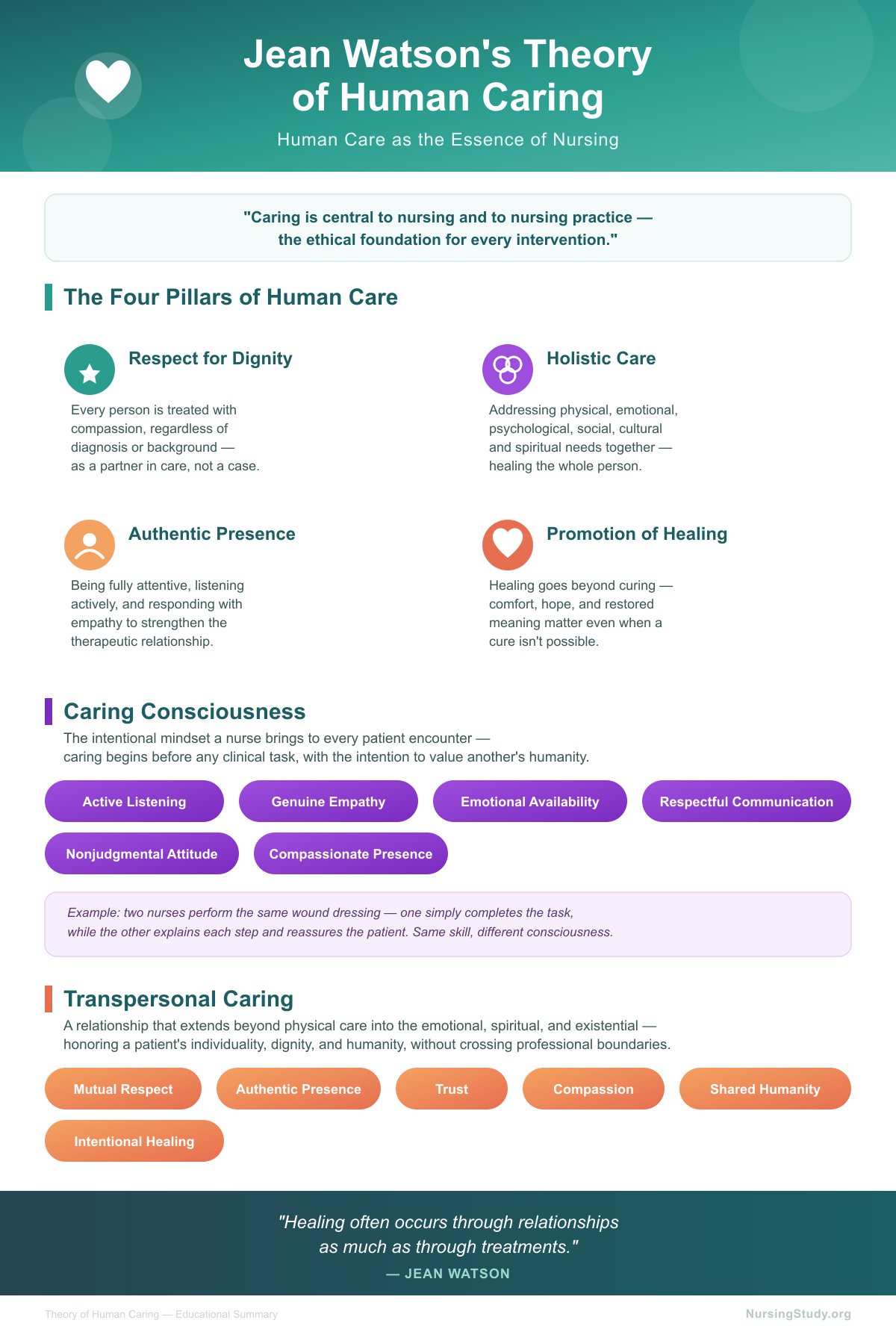
This belief is often summarized by the principle that caring is central to nursing and central to nursing practice. Caring is not viewed as an optional characteristic or an act of kindness performed only when time permits. Rather, it is the ethical and professional foundation upon which all nursing interventions should be based.
According to Jean Watson, human care involves recognizing each patient as a whole person rather than focusing solely on a diagnosis or medical condition. Every individual brings unique experiences, beliefs, fears, hopes, cultural values, and personal goals into the healthcare environment. Effective nursing therefore requires attention to these dimensions alongside physical assessment and treatment.
The concept of human care includes several essential characteristics:
- Respect for Human Dignity
- Every individual deserves compassionate and respectful treatment regardless of age, culture, diagnosis, socioeconomic status, or personal beliefs.
- Patients should always be viewed as partners in care rather than passive recipients of treatment.
- Holistic Care
- Nurses address physical, emotional, psychological, social, cultural, and spiritual needs simultaneously.
- This holistic approach to health care recognizes that healing involves the entire person.
- Authentic Presence
- Nurses remain fully attentive during patient interactions.
- Listening actively and responding with empathy strengthens therapeutic relationships.
- Promotion of Healing
- Healing extends beyond eliminating disease.
- Patients may experience healing through acceptance, comfort, emotional support, hope, and restored meaning even when cure is not possible.
For example, consider a patient receiving palliative care for advanced cancer. While medical treatments may no longer be curative, the nurse can continue to promote healing by:
- Managing pain effectively.
- Listening to the patient’s fears and concerns.
- Supporting family members.
- Respecting cultural and spiritual preferences.
- Preserving dignity throughout end-of-life care.
In this situation, healing is measured not only by physiological outcomes but also by comfort, emotional well-being, and quality of life.
Jean Watson also emphasized that caring environment accepts a person as they are while supporting who they may become. Rather than judging individuals based on illness, disability, or personal choices, the caring environment encourages growth, adaptation, resilience, and hope.
Furthermore, human is viewed as greater than the sum of individual body systems or medical diagnoses. Each person possesses unique life experiences, relationships, aspirations, and values that must be considered when planning care. This holistic understanding remains one of the defining features of Watson’s caring philosophy.
Caring Consciousness and Transpersonal Caring
Among the most distinctive concepts introduced by Jean Watson are caring consciousness and transpersonal caring. These ideas move beyond routine caregiving and describe the deeper human connection that can develop between a nurse and a patient.
Caring Consciousness
Caring consciousness refers to the intentional mindset that nurses bring to every patient encounter. It involves being fully present, self-aware, compassionate, and mindful during the caring relationship rather than simply completing assigned tasks.
According to Jean Watson, caring begins long before a nurse performs any clinical intervention. It starts with intention—the deliberate commitment to value another person’s humanity.
A nurse practicing intentional caring consciousness demonstrates behaviors such as:
- Active listening.
- Genuine empathy.
- Emotional availability.
- Respectful communication.
- Nonjudgmental attitudes.
- Compassionate presence.
This intentional approach transforms ordinary clinical interactions into meaningful opportunities for healing.
For example, two nurses may perform the same wound dressing procedure using identical clinical techniques. However, one nurse may focus solely on completing the task efficiently, while another explains each step, acknowledges the patient’s anxiety, provides reassurance, and invites questions. Although both nurses deliver technically competent care, the second nurse demonstrates caring consciousness, creating a more supportive and healing experience for the patient.
Transpersonal Caring
Perhaps the most distinctive concept in Jean Watson’s Theory of Human Caring is transpersonal caring.
A transpersonal caring relationship extends beyond physical interaction to include emotional, psychological, spiritual, and existential dimensions. It occurs when the nurse intentionally connects with another person in a manner that honors their individuality, dignity, and humanity.
According to Watson, these relationships are characterized by:
- Mutual respect.
- Authentic presence.
- Trust.
- Compassion.
- Shared humanity.
- Intentional healing.
Importantly, transpersonal caring does not imply crossing professional boundaries or becoming emotionally dependent on patients. Instead, it reflects a professional relationship grounded in empathy, respect, and genuine concern for another person’s well-being.
Consider a patient newly diagnosed with heart failure who expresses fear about the future. A technically skilled nurse may provide medication instructions and discharge education. A nurse practicing transpersonal caring provides the same education while also acknowledging the patient’s emotions, encouraging discussion, addressing fears, involving family members when appropriate, and offering hope without providing false reassurance. The clinical care remains evidence-based, but the interaction becomes more meaningful because the patient’s emotional and existential needs are also addressed.
Through transpersonal caring, Jean Watson demonstrates that healing often occurs through relationships as much as through treatments.
Major Assumptions of the Philosophy and Science of Caring
The philosophy and science of caring is built upon several foundational assumptions that explain how caring contributes to healing and why it remains essential to professional nursing. These assumptions continue to guide education, research, leadership, and clinical practice throughout the world.
The major assumptions include the following.
Caring Is Central to Nursing
Perhaps the most fundamental assumption is that caring is central to nursing. According to Jean Watson, caring defines the profession and distinguishes nursing from other healthcare disciplines. Every nursing intervention should reflect compassion, respect, and commitment to the person’s well-being.
Caring Can Be Demonstrated and Practiced
Jean Watson believed that caring can be demonstrated through intentional actions and professional behaviors. Compassion is not simply an innate personality trait possessed by a select group of individuals. Instead, caring skills can be learned, refined, evaluated, and strengthened through education, reflective practice, and clinical experience.
Examples include:
- Therapeutic communication.
- Active listening.
- Respecting patient autonomy.
- Providing emotional support.
- Preserving privacy and dignity.
- Practicing cultural sensitivity.
Caring Consists of Carative Factors
Another major assumption is that caring consists of Carative Factors, later refined into the Clinical Caritas Processes. These structured principles provide nurses with practical guidance for expressing caring consistently in clinical practice while maintaining scientific rigor and professional accountability.
Caring Addresses the Whole Person
According to Jean Watson, science of caring addresses every dimension of the individual rather than focusing exclusively on disease. Physical symptoms are important, but effective nursing also recognizes emotional, psychological, social, cultural, and spiritual needs.
Consequently, caring addresses how nurses express compassion through both technical competence and meaningful interpersonal relationships.
The Nurse and Patient Influence One Another
A caring relationship is reciprocal. As Watson stated, the nurse affects and is affected by every interaction with patients. Caring relationships foster growth not only for those receiving care but also for the professionals providing it. Reflection, empathy, and shared human experiences contribute to personal and professional development.
Health Is More Than the Absence of Disease
Within Jean Watson’s framework, health better than a simple absence of illness is understood as harmony among the mind, body, and spirit. A person living with chronic disease may still experience health through emotional resilience, meaningful relationships, spiritual well-being, and a sense of purpose. This perspective broadens the traditional biomedical definition of health and reinforces the value of holistic nursing care.
Caring Promotes Healing Environments
The theory also assumes that healing is influenced by the environment in which care is delivered. A respectful, supportive, and compassionate atmosphere encourages trust, reduces anxiety, and enhances recovery. Whether in an intensive care unit, community clinic, rehabilitation center, or home care setting, the nurse plays a key role in creating conditions that foster healing.
Collectively, these assumptions illustrate why Jean Watson’s Theory of Human Caring continues to be one of the most influential nursing theories in contemporary healthcare. By integrating scientific knowledge with compassion, ethical responsibility, and authentic human relationships, Jean Watson provides a framework that supports both clinical excellence and holistic healing. Her philosophy reminds nurses that while technology and medical advances continue to evolve, the human connection between the nurse and the patient remains the enduring foundation of safe, ethical, and compassionate nursing practice.
Core Concepts of Jean Watson’s Caring Theory
Jean Watson’s Theory of Human Caring is built upon a collection of interconnected concepts that explain how caring influences health, healing, and the overall human experience. These concepts provide the theoretical framework that guides nursing practice, helping nurses move beyond task-oriented care toward meaningful therapeutic relationships. Rather than viewing nursing as a series of isolated clinical procedures, Jean Watson presents it as a dynamic process centered on authentic human connection, compassionate presence, and holistic healing.
At the core of Watson’s caring framework is the belief that every individual possesses inherent worth and should be cared for with dignity, respect, and compassion. According to Jean Watson, caring is not simply an emotion or a professional obligation—it is a deliberate and intentional practice that shapes every interaction between the nurse and the person receiving care. These interactions have the potential to influence not only physical recovery but also emotional well-being, psychological resilience, spiritual growth, and quality of life.
The major concepts of Watson’s theory of human caring are interconnected rather than independent. Together, they explain:
- How caring relationships promote healing.
- Why authentic human connection is central to nursing.
- How nurses create environments that foster recovery.
- The relationship between the individual, health, and the surrounding environment.
- Why caring should remain the foundation of professional nursing regardless of advances in technology or medical science.
Among the many concepts within the theory, four are particularly fundamental:
- The caring-healing relationship.
- The caring moment and caring occasion.
- The relationship between human needs, health, environment, and nursing.
- The understanding that caring transforms both the patient and the caregiver.
These concepts continue to influence nursing education, clinical practice, leadership, and research worldwide because they provide practical guidance for delivering compassionate, evidence-informed care.
The Caring-Healing Relationship
One of the defining concepts in Jean Watson’s Theory of Human Caring is the caring-healing relationship. Unlike traditional healthcare models that emphasize diagnosis and treatment alone, Jean Watson believed that healing occurs through meaningful relationships between the nurse and the person receiving care. Clinical competence remains essential, but genuine healing is enhanced when professional knowledge is combined with compassion, empathy, trust, and authentic presence.
The caring-healing relationship is founded on the principle that nursing involves more than performing procedures or following treatment protocols. Every interaction between a nurse and a patient has the potential to influence the patient’s physical, emotional, psychological, social, and spiritual well-being. According to Watson, healing is facilitated when nurses intentionally establish relationships characterized by respect, kindness, honesty, and mutual trust.
Several characteristics define a caring-healing relationship.
Mutual Respect and Human Dignity
Every individual deserves to be treated with dignity regardless of age, diagnosis, cultural background, religion, disability, or socioeconomic status. Jean Watson emphasizes that patients should never be viewed merely as medical cases or collections of symptoms. Instead, they should be recognized as unique human beings with personal experiences, values, and aspirations.
For example, two patients may have the same diagnosis of heart failure, yet each person’s fears, coping strategies, family support, and treatment goals may differ significantly. A caring-healing relationship encourages the nurse to understand these individual differences when planning and delivering care.
Authentic Presence
Authentic presence involves being fully engaged during patient interactions. Rather than focusing solely on completing clinical tasks, the nurse gives undivided attention to the patient, demonstrating empathy through verbal and nonverbal communication.
Authentic presence may include:
- Maintaining eye contact.
- Listening without interruption.
- Acknowledging patient concerns.
- Providing reassurance without offering false hope.
- Allowing patients sufficient time to express their feelings.
These seemingly simple behaviors strengthen trust and create an environment in which patients feel heard, respected, and valued.
Therapeutic Communication
Effective communication is an essential component of the caring-healing relationship. According to Jean Watson, communication should extend beyond exchanging clinical information to include emotional support, encouragement, and active listening.
For instance, when caring for a patient newly diagnosed with diabetes, a nurse practicing Watson’s caring approach does more than explain insulin administration. The nurse also explores the patient’s fears about lifestyle changes, addresses misconceptions, encourages questions, and collaborates with the patient to develop realistic self-care goals.
Healing Beyond Cure
An important distinction within Jean Watson’s Theory of Human Caring is the difference between curing and healing.
- Curing focuses on eliminating disease through medical treatment.
- Healing refers to achieving harmony of the mind, body, and spirit, even when complete recovery is not possible.
This distinction is particularly evident in palliative and hospice care. A patient with advanced illness may not experience a cure, but compassionate symptom management, emotional support, spiritual care, and respectful communication can promote healing by improving comfort, preserving dignity, and enhancing quality of life.
The caring-healing relationship therefore illustrates that nursing is not limited to treating illness—it is equally concerned with supporting individuals throughout every stage of the human experience.
The Caring Moment and Caring Occasion
Among the most distinctive concepts introduced by Jean Watson are the caring moment and the caring occasion. These concepts explain how ordinary interactions between nurses and patients can become meaningful experiences that promote healing and personal transformation.
Although the terms are closely related, they have distinct meanings within the theory.
Caring Occasion
A caring occasion occurs whenever a nurse and another individual come together in a shared healthcare experience. This encounter creates the opportunity for a genuine human connection that extends beyond routine clinical care.
A caring occasion may occur during:
- Admission assessments.
- Medication administration.
- Health education.
- Wound care.
- Family conferences.
- End-of-life discussions.
- Routine bedside conversations.
Every interaction has the potential to become significant depending on how the nurse approaches the relationship.
Caring Moment
The caring moment develops within the caring occasion when both the nurse and the patient engage authentically with one another. During this interaction, each person’s experiences, emotions, beliefs, and perspectives influence the relationship.
According to Jean Watson, caring moments are characterized by:
- Genuine presence.
- Mutual respect.
- Trust.
- Compassion.
- Shared humanity.
- Intentional caring.
Rather than focusing solely on technical procedures, the nurse recognizes the patient as a whole person whose emotional and spiritual needs deserve attention alongside physical care.
Clinical Example
Consider an elderly patient recovering after a stroke.
During morning rounds, the nurse assists the patient with bathing and mobility exercises. If the interaction is limited to completing assigned tasks as quickly as possible, it remains a routine clinical encounter.
However, suppose the nurse notices that the patient appears unusually withdrawn. Instead of ignoring the change, the nurse pauses, asks open-ended questions, listens attentively, acknowledges the patient’s frustration about losing independence, and provides encouragement while involving the patient in setting rehabilitation goals.
This interaction becomes a caring moment because the nurse intentionally addresses both emotional and physical needs. Although the clinical tasks remain the same, the quality of the relationship transforms the experience into one that promotes healing.
Why Caring Moments Matter
Caring moments contribute to improved healthcare experiences because they:
- Strengthen therapeutic relationships.
- Build trust between nurses and patients.
- Reduce anxiety and emotional distress.
- Encourage patient participation in care.
- Improve communication.
- Foster hope and resilience.
- Support holistic healing.
These encounters demonstrate that compassionate presence often has lasting effects that extend well beyond the immediate clinical intervention.
Human Needs, Health, Environment, and Nursing
One of the strengths of Jean Watson’s Theory of Human Caring is its comprehensive understanding of the relationships among human needs, health, environment, and nursing. These ideas correspond to what many nursing scholars refer to as the theory’s four major concepts, or nursing metaparadigm concepts, which provide a broad framework for understanding nursing practice.
Rather than viewing these concepts independently, Jean Watson presents them as interconnected elements that collectively influence healing and well-being.
Human Being
According to Jean Watson, human is viewed as greater than the sum of individual body systems or biological processes. Every person is a unique and integrated being whose physical, emotional, psychological, cultural, social, and spiritual dimensions continuously interact.
Individuals cannot be understood solely through laboratory values, diagnostic tests, or medical conditions. Instead, nurses must recognize:
- Personal beliefs and values.
- Cultural traditions.
- Family relationships.
- Emotional experiences.
- Spiritual perspectives.
- Individual goals and life experiences.
For example, two patients undergoing identical surgical procedures may have very different recovery experiences because of differences in family support, coping strategies, cultural beliefs, or emotional resilience. Recognizing these differences enables nurses to individualize care.
Human Needs
A central concept within Watson’s theory of human caring is the gratification of human needs. Jean Watson believed that nursing should address the complete spectrum of human needs rather than focusing exclusively on physiological problems.
These needs include:
- Physical comfort and safety.
- Nutrition and hydration.
- Emotional security.
- Love and belonging.
- Self-esteem.
- Personal growth.
- Spiritual meaning and purpose.
Meeting these needs contributes to healing by supporting the whole person rather than treating isolated symptoms.
For instance, a patient admitted with pneumonia requires antibiotics and oxygen therapy, but may also need reassurance about recovery, education regarding treatment, opportunities to communicate with family, and emotional support during hospitalization. Addressing these broader needs exemplifies holistic nursing care.
Health
Within Jean Watson’s framework, health is understood as harmony among the mind, body, and spirit rather than merely the absence of disease.
Health exists on a continuum and reflects an individual’s ability to adapt, find meaning, and achieve balance despite illness or adversity. Consequently, a person living with chronic illness may still experience health through effective symptom management, meaningful relationships, psychological resilience, and spiritual well-being.
This definition encourages nurses to evaluate health from multiple perspectives rather than relying exclusively on physiological indicators.
Environment
The environment plays a critical role in promoting healing. According to Jean Watson, healing occurs most effectively in environments that support dignity, comfort, safety, respect, and emotional well-being.
A healing environment includes both physical and interpersonal elements.
Physical characteristics may include:
- Cleanliness.
- Safety.
- Privacy.
- Noise reduction.
- Comfortable surroundings.
Interpersonal characteristics include:
- Respectful communication.
- Compassion.
- Cultural sensitivity.
- Emotional support.
- Collaboration with patients and families.
For example, an intensive care unit can be technologically advanced while still promoting healing if nurses communicate compassionately, explain procedures clearly, involve families appropriately, and create opportunities for patients to maintain dignity despite critical illness.
Nursing
Within the theory, nursing is viewed as both a scientific discipline and a humanistic profession. The nurse combines evidence-based clinical knowledge with compassion, ethical responsibility, and intentional caring to promote healing.
This perspective reinforces that technical competence alone is insufficient. Nurses must also cultivate interpersonal skills, emotional intelligence, reflective practice, and authentic relationships to deliver comprehensive care.
The Ten Carative Factors and Clinical Caritas Processes
The Ten Carative Factors and the Clinical Caritas Processes are among the most recognizable and influential components of Jean Watson’s Theory of Human Caring. Together, they translate the philosophical principles of human care into practical actions that nurses can incorporate into everyday nursing practice. While the theory provides the conceptual foundation for understanding caring, these two frameworks explain how caring can be intentionally demonstrated during patient interactions.
When Jean Watson first introduced the Theory of Human Caring, she recognized that compassion alone was insufficient to guide professional nursing. Nurses needed a structured framework that described specific caring behaviors while preserving the flexibility required to address the unique needs of each patient. The result was the development of the Ten Carative Factors, which served as practical guidelines for cultivating meaningful nurse–patient relationships and promoting holistic healing.
As Watson’s theory evolved, she expanded these original factors into the Clinical Caritas Processes, reflecting a broader understanding of caring that integrates ethical practice, intentional presence, spirituality, healing relationships, and caring consciousness. Although the terminology changed, the central message remained the same: caring is an intentional professional practice that supports healing through authentic human relationships.
Today, both the original Carative Factors and the Clinical Caritas Processes continue to influence:
- Nursing education.
- Clinical decision-making.
- Leadership development.
- Patient-centered care initiatives.
- Quality improvement programs.
- Research on caring.
- Organizational cultures within healthcare institutions.
Rather than replacing one another, the Carative Factors and Clinical Caritas Processes represent different stages in the evolution of Jean Watson’s Theory of Human Caring. Understanding both frameworks provides nurses with a deeper appreciation of how caring science has developed over time and why it remains highly relevant in modern healthcare.
Understanding the Original Carative Factors
When Jean Watson first published her theory in 1979, she introduced the Ten Carative Factors as the core principles guiding professional nursing care. At that time, healthcare was becoming increasingly technology-driven, and Jean Watson sought to preserve caring as the defining characteristic of nursing. The term carative was deliberately chosen to distinguish nursing’s caring function from the medical emphasis on curing disease.
According to Jean Watson, caring consists of Carative Factors that help nurses establish therapeutic relationships, support healing, and address the physical, emotional, social, and spiritual needs of patients. These factors provide a systematic approach to caring in nursing, ensuring that compassion is expressed through intentional and evidence-informed practice rather than left to individual personality or circumstance.
The original Watson’s 10 Carative Factors are outlined below.
1. Formation of a Humanistic-Altruistic System of Values
The first Carative Factor emphasizes developing genuine concern for the welfare of others. Nurses cultivate values such as compassion, kindness, empathy, respect, and service throughout their professional careers.
For example, a nurse caring for a patient experiencing homelessness demonstrates this factor by providing respectful care without judgment while advocating for community resources that support long-term recovery.
2. Instillation of Faith and Hope
Hope is an important component of healing. Even when complete recovery is uncertain, nurses can help patients maintain optimism, resilience, and confidence by offering encouragement, realistic reassurance, and emotional support.
For instance, when caring for a patient beginning chemotherapy, the nurse acknowledges fears about treatment while reinforcing available support systems and explaining strategies for managing side effects.
3. Cultivation of Sensitivity to Self and Others
Effective caring begins with self-awareness. Nurses who understand their own emotions, biases, and reactions are better equipped to recognize and respond compassionately to the experiences of others.
Self-reflection also helps reduce unconscious bias and strengthens therapeutic communication.
4. Development of Helping-Trust Relationships
Trust forms the foundation of every therapeutic relationship. Nurses build trust by communicating honestly, maintaining confidentiality, respecting patient autonomy, and consistently following through on commitments.
For example, explaining every procedure before performing it and encouraging questions helps patients feel respected and involved in their care.
5. Promotion and Acceptance of the Expression of Feelings
Patients should be encouraged to express both positive and negative emotions without fear of judgment. Jean Watson emphasized the importance of acknowledging the positive and negative emotions that accompany illness because emotional expression contributes to healing.
Consider a patient who becomes frustrated after a spinal cord injury. Rather than dismissing the patient’s anger, the nurse listens empathetically, validates the emotional response, and collaborates with rehabilitation specialists to support coping.
6. Systematic Use of the Scientific Problem-Solving Method
Although Jean Watson emphasized caring, she never suggested replacing science with compassion alone. Instead, caring and evidence-based clinical reasoning work together.
Nurses continue to use assessment, diagnosis, planning, implementation, and evaluation while integrating caring into each stage of the nursing process.
7. Promotion of Interpersonal Teaching-Learning
Patient education should be collaborative rather than directive. Nurses assess learning needs, encourage participation, adapt teaching strategies to the individual’s abilities, and support informed decision-making.
For example, diabetes education becomes more effective when the nurse explores the patient’s lifestyle, cultural preferences, and readiness to learn instead of simply providing written instructions.
8. Provision of a Supportive, Protective, and Corrective Environment
Healing is influenced by both physical and emotional surroundings. Nurses help create environments that promote comfort, dignity, safety, privacy, trust, and respect.
Examples include reducing unnecessary noise, preserving confidentiality, supporting family involvement, and maintaining cultural sensitivity.
9. Assistance with the Gratification of Human Needs
This factor emphasizes addressing the full spectrum of gratification of human needs, including physiological, psychological, emotional, social, and spiritual dimensions.
Meeting these needs may involve:
- Managing pain.
- Ensuring adequate nutrition.
- Promoting emotional security.
- Supporting spiritual practices.
- Encouraging independence whenever possible.
10. Allowance for Existential-Phenomenological-Spiritual Forces
The final Carative Factor recognizes that illness often raises questions about meaning, purpose, suffering, hope, and mortality. Nurses should respect each person’s beliefs while supporting spiritual well-being regardless of religious affiliation.
For example, facilitating visits from spiritual leaders, providing quiet spaces for reflection, or simply remaining present during difficult conversations demonstrates this aspect of caring.
Transition to the Clinical Caritas Processes
As Jean Watson’s Theory of Human Caring matured, Jean Watson recognized that the original Carative Factors could be expanded to better reflect the deeper philosophical and spiritual dimensions of caring. This led to the development of the Clinical Caritas Processes, which represent the modern evolution of the original framework.
The word Caritas originates from Latin and conveys meanings such as love, compassion, generosity, charity, and appreciation for humanity. By adopting this term, Jean Watson emphasized that caring involves more than performing compassionate actions—it reflects a way of being and relating to others.
The transition from Carative Factors to Caritas was not intended to replace the original concepts but rather to deepen their meaning.
Several important shifts occurred during this evolution.
Greater Emphasis on Intentional Caring
The Clinical Caritas Processes emphasize intentional caring consciousness, encouraging nurses to become fully present during patient interactions rather than simply completing clinical responsibilities.
Every encounter becomes an opportunity for healing through authentic human connection.
Stronger Focus on Transpersonal Caring
The updated framework places greater emphasis on transpersonal caring, recognizing that meaningful relationships can influence healing for both patients and caregivers.
Rather than viewing care as something delivered by one individual to another, the relationship itself becomes part of the healing process.
Integration of Spiritual and Existential Dimensions
The Clinical Caritas Processes recognize that illness often affects identity, purpose, hope, and meaning.
Consequently, nurses are encouraged to:
- Respect diverse spiritual beliefs.
- Support emotional resilience.
- Foster hope.
- Promote inner healing alongside physical recovery.
Caring as Professional Practice
The revised framework reinforces that caring should remain visible throughout every aspect of professional nursing.
Whether documenting assessments, administering medications, coordinating interdisciplinary care, or educating patients, caring remains central to every clinical decision.
Alignment with Caring Science
The Clinical Caritas Processes also reflect the evolution of caring science as sacred science, emphasizing that scientific evidence and compassionate human relationships are complementary rather than opposing forces.
This perspective supports the integration of evidence-based medicine with authentic human presence, ethical practice, and reflective nursing.
Although terminology evolved, the central principles remained unchanged:
- Every person deserves dignity and respect.
- Healing involves the whole person.
- Authentic relationships promote well-being.
- Caring should guide all professional nursing actions.
The Clinical Caritas Processes therefore represent a natural progression in Watson’s philosophy and science, adapting the original framework to contemporary healthcare while preserving its foundational values.
Integrating Caritas into Contemporary Nursing Practice
The Clinical Caritas Processes have become an important framework for integrating Jean Watson’s Theory of Human Caring into modern healthcare systems. Rather than existing solely as theoretical concepts taught in classrooms, the Caritas principles provide practical guidance for delivering compassionate, evidence-informed, and patient-centered care across diverse clinical settings.
Healthcare today is characterized by rapid technological advancement, increasing patient acuity, workforce shortages, electronic documentation systems, and complex interdisciplinary collaboration. These realities can sometimes shift attention toward efficiency and task completion. The Caritas framework reminds nurses that while technology enhances care, it should never replace authentic human relationships.
Applying Caritas During the Nursing Process
The principles of Caritas can be integrated throughout every phase of the nursing process.
Assessment
- Listening attentively to patient concerns.
- Understanding cultural and spiritual beliefs.
- Identifying emotional as well as physical needs.
Planning
- Collaborating with patients to establish meaningful goals.
- Respecting patient preferences and values.
- Including family members when appropriate.
Implementation
- Demonstrating empathy during clinical procedures.
- Explaining interventions clearly.
- Providing reassurance and emotional support.
Evaluation
- Assessing not only physiological improvement but also emotional well-being, satisfaction, coping, and quality of life.
Examples Across Clinical Settings
The flexibility of the Caritas framework allows it to be applied in virtually every area of healthcare.
Critical Care
A nurse caring for a mechanically ventilated patient speaks calmly, explains procedures despite limited patient responsiveness, involves family members in care planning, and preserves dignity throughout treatment.
Mental Health Nursing
In psychiatric and mental health nursing, nurses establish trust through active listening, empathy, emotional validation, and therapeutic communication, helping patients feel safe enough to discuss difficult experiences.
Pediatric Nursing
A pediatric nurse reduces fear by explaining procedures in age-appropriate language, involving parents in decision-making, and creating a comforting environment for both the child and family.
Community Health
Community health nurses demonstrate Caritas by respecting cultural beliefs, empowering individuals to manage chronic illnesses, and addressing social determinants that influence health outcomes.
Organizational Benefits of Caritas
Healthcare organizations increasingly incorporate Watson’s caring philosophy because caring-centered cultures contribute to numerous positive outcomes.
These include:
- Improved patient satisfaction.
- Enhanced nurse engagement.
- Better interdisciplinary collaboration.
- Reduced burnout.
- Stronger therapeutic relationships.
- Higher quality of care.
- Improved organizational culture.
Institutions influenced by the Watson Caring Science Institute often integrate caring science into leadership development, orientation programs, staff education, and quality improvement initiatives to reinforce compassionate practice at every organizational level.
Applying Jean Watson’s Theory of Human Caring in Nursing Practice
The true value of Jean Watson’s Theory of Human Caring lies not only in its philosophical principles but also in its practical application. While the theory provides a conceptual understanding of caring, its greatest impact is seen when nurses intentionally incorporate its principles into everyday nursing practice. From bedside care and patient education to leadership, interdisciplinary collaboration, and quality improvement, Jean Watson’s framework offers practical guidance for delivering care that is both clinically competent and deeply compassionate.
Modern healthcare environments are often characterized by increasing patient acuity, rapid technological advancements, staffing challenges, and time constraints. Despite these realities, Jean Watson maintained that caring should never become secondary to technical efficiency. According to Watson, clinical competence and compassionate care are not competing priorities but complementary elements of professional nursing. A nurse who possesses excellent technical skills while also demonstrating empathy, authentic presence, and respect is better equipped to promote healing and improve patient outcomes.
Applying Watson’s theory of human caring requires nurses to move beyond viewing patients as diagnoses or medical cases. Instead, each patient is recognized as a whole person whose physical, emotional, psychological, cultural, social, and spiritual needs influence health and recovery. This holistic perspective encourages nurses to individualize care, foster meaningful relationships, and create healing environments that promote dignity and well-being.
The practical application of the theory can be observed in virtually every aspect of nursing, including:
- Establishing therapeutic relationships with patients and families.
- Communicating with empathy and respect.
- Integrating compassionate care into clinical decision-making.
- Supporting patients during illness, recovery, rehabilitation, and end-of-life care.
- Collaborating effectively with interdisciplinary healthcare teams.
- Creating environments that promote healing and trust.
- Encouraging reflective practice and professional growth.
Importantly, applying Jean Watson’s theory does not require additional medical procedures or expensive technologies. Instead, it involves changing how nurses approach every patient interaction by combining scientific knowledge with intentional caring. Small actions—such as listening attentively, acknowledging emotions, explaining procedures, preserving privacy, or simply remaining present during difficult moments—can significantly influence a patient’s healthcare experience.
The following sections examine how Jean Watson’s Theory of Human Caring is applied through therapeutic relationships, clinical decision-making, and diverse healthcare settings.
Building Therapeutic Nurse–Patient Relationships
The therapeutic relationship between the nurse and the patient is one of the central elements of Jean Watson’s Theory of Human Caring. According to Jean Watson, healing occurs most effectively when nurses establish authentic, respectful, and compassionate relationships that acknowledge each patient’s humanity. These relationships extend beyond completing clinical tasks; they involve understanding the patient’s experiences, values, concerns, and goals while fostering trust and collaboration.
Unlike ordinary social relationships, therapeutic nurse–patient relationships are professional partnerships designed to promote health, healing, and well-being. They are intentionally developed through communication, empathy, clinical competence, ethical practice, and mutual respect.
Characteristics of Therapeutic Relationships
Within Watson’s caring framework, effective therapeutic relationships are characterized by several key qualities.
Trust
Trust develops when nurses consistently demonstrate honesty, reliability, competence, and confidentiality. Patients are more likely to participate actively in their care when they believe their nurse is dependable and genuinely concerned about their well-being.
For example, a nurse who clearly explains treatment plans, answers questions honestly, and follows through on promised interventions strengthens patient confidence and trust.
Empathy
Empathy involves understanding another person’s experiences and emotions without becoming overwhelmed by them. Jean Watson emphasized that empathy allows nurses to appreciate how illness affects individuals beyond physical symptoms.
Consider a patient newly diagnosed with multiple sclerosis. Instead of focusing exclusively on medication schedules and diagnostic results, the nurse explores the patient’s concerns about employment, family responsibilities, independence, and future quality of life. This empathetic approach helps establish a stronger therapeutic relationship.
Authentic Presence
Authentic presence means giving patients undivided attention during interactions. Rather than appearing rushed or distracted, nurses intentionally engage with patients through attentive listening, eye contact, and meaningful communication.
Authentic presence may be demonstrated by:
- Sitting at the patient’s bedside during difficult conversations.
- Allowing time for questions.
- Acknowledging emotional distress.
- Remaining emotionally available without judgment.
These behaviors reinforce the patient’s sense of dignity and value.
Respect for Individuality
Every patient has unique cultural beliefs, personal values, coping mechanisms, and healthcare preferences. Therapeutic relationships recognize these differences and avoid one-size-fits-all approaches to care.
For instance, when caring for patients from diverse cultural backgrounds, nurses should adapt communication styles, respect religious practices, and involve family members according to patient preferences whenever appropriate.
Shared Decision-Making
Rather than directing care without patient input, Jean Watson’s framework encourages collaboration. Patients are active participants in planning and evaluating their care, leading to increased autonomy and greater adherence to treatment plans.
Clinical Example
Imagine an older adult hospitalized following a stroke who expresses frustration about losing independence.
A task-oriented approach may involve completing neurological assessments, administering medications, and documenting findings efficiently.
A nurse applying Watson’s theory of human caring performs the same clinical responsibilities while also:
- Listening to the patient’s fears about recovery.
- Encouraging realistic goal setting.
- Involving family members in rehabilitation planning.
- Celebrating small improvements.
- Reinforcing the patient’s strengths and capabilities.
Although the medical treatment remains unchanged, the therapeutic relationship becomes an important source of emotional support, hope, and motivation.
Strong therapeutic relationships have been associated with numerous positive outcomes, including:
- Greater patient satisfaction.
- Improved communication.
- Better treatment adherence.
- Reduced anxiety.
- Increased patient engagement.
- Enhanced trust in healthcare providers.
- Higher quality of care.
These outcomes illustrate why caring in nursing remains fundamental to professional practice.
Caring Theory in Clinical Decision-Making
Clinical decision-making is often associated with diagnostic reasoning, evidence-based practice, and technical expertise. However, Jean Watson argued that sound clinical decisions should also be guided by compassion, ethical reflection, and an understanding of the individual’s unique needs. Within Watson’s theory of human caring, caring is not separate from clinical judgment; rather, it informs how decisions are made and implemented.
Every nursing decision should balance scientific evidence with the patient’s values, preferences, beliefs, and life circumstances. This integration of clinical reasoning and human care enables nurses to provide care that is both effective and person-centered.
Integrating Caring Into the Nursing Process
The principles of Jean Watson’s Theory of Human Caring can be incorporated into every phase of the nursing process.
Assessment
Beyond collecting physiological data, nurses assess emotional well-being, cultural beliefs, spiritual needs, family dynamics, coping abilities, and personal goals.
For example, while assessing a patient with chronic heart failure, the nurse explores not only symptoms such as edema and dyspnea but also concerns about managing medications at home, financial barriers, caregiver support, and emotional stress.
Planning
Care plans are developed collaboratively, respecting patient preferences whenever possible.
Planning may include:
- Establishing realistic goals.
- Considering cultural practices.
- Including family participation.
- Addressing emotional and psychosocial needs.
Implementation
Clinical interventions are delivered with compassion, respect, and clear communication.
Examples include:
- Explaining procedures before beginning.
- Providing emotional reassurance.
- Encouraging patient participation.
- Maintaining dignity during personal care.
- Supporting informed decision-making.
Evaluation
Evaluation extends beyond physiological outcomes to include:
- Patient satisfaction.
- Emotional well-being.
- Quality of therapeutic relationships.
- Achievement of personal goals.
- Improvement in coping abilities.
Ethical Decision-Making
Jean Watson’s philosophy also strengthens ethical nursing practice. Nurses frequently encounter situations involving informed consent, end-of-life care, cultural differences, resource allocation, and patient autonomy.
Using Watson’s caring framework, ethical decisions are guided by principles such as:
- Respect for human dignity.
- Compassion.
- Advocacy.
- Nonjudgmental care.
- Shared decision-making.
- Preservation of hope.
Clinical Example
A patient with advanced chronic kidney disease decides to decline dialysis after careful consideration.
Rather than attempting to persuade the patient to change the decision, the nurse applying Jean Watson’s theory:
- Ensures the patient understands available treatment options.
- Respects the patient’s autonomy.
- Provides emotional support.
- Coordinates palliative care resources.
- Continues delivering compassionate care without judgment.
This approach demonstrates that caring remains present even when patients make choices different from those preferred by healthcare professionals.
Ultimately, caring theory enriches clinical decision-making by ensuring that scientific evidence, ethical principles, and compassionate relationships work together to achieve the best possible outcomes.
Human Care Across Diverse Healthcare Settings
One of the greatest strengths of Jean Watson’s Theory of Human Caring is its adaptability across virtually every area of healthcare. Because its principles focus on relationships rather than specific diseases or procedures, the theory can be applied wherever nurses interact with patients.
Whether providing preventive services in the community or caring for critically ill patients in intensive care units, nurses can integrate human care into every aspect of professional practice.
Acute Care Hospitals
In medical-surgical units, nurses often manage complex clinical responsibilities while caring for multiple patients.
Applying Jean Watson’s theory may involve:
- Introducing oneself before each interaction.
- Explaining treatments clearly.
- Listening to patient concerns.
- Preserving privacy during procedures.
- Encouraging patient participation in care decisions.
These seemingly simple actions strengthen trust and reduce anxiety while supporting clinical recovery.
Critical Care Units
Patients in intensive care frequently experience fear, confusion, and loss of control.
Even when patients are sedated or mechanically ventilated, nurses can demonstrate caring by:
- Speaking to patients respectfully during procedures.
- Maintaining dignity during personal care.
- Supporting family members.
- Creating calm healing environments.
- Providing consistent emotional reassurance.
These practices acknowledge the patient’s humanity despite severe illness.
Community and Public Health Nursing
Community health nurses frequently care for individuals outside hospital settings.
Examples of human care include:
- Respecting cultural beliefs.
- Promoting health education.
- Empowering patients to manage chronic diseases.
- Building long-term relationships with families.
- Addressing social determinants of health.
These activities align closely with Jean Watson’s emphasis on holistic care and prevention.
Psychiatric and Mental Health Nursing
The principles of psychiatric and mental health nursing closely align with Watson’s theory of human caring, where therapeutic relationships often serve as the primary intervention.
Nurses support patients by:
- Demonstrating empathy.
- Encouraging emotional expression.
- Maintaining consistent therapeutic boundaries.
- Promoting trust.
- Supporting recovery-oriented care.
For individuals experiencing depression, anxiety, schizophrenia, or trauma-related disorders, compassionate communication can significantly influence treatment engagement and recovery.
Pediatric Nursing
Children and their families often experience significant stress during hospitalization.
Applying Jean Watson’s theory involves:
- Using age-appropriate communication.
- Including parents in care planning.
- Reducing fear through reassurance.
- Respecting developmental needs.
- Creating supportive environments for both children and caregivers.
Geriatric Nursing
Older adults frequently experience multiple chronic conditions, functional limitations, and social isolation.
A caring approach emphasizes:
- Respect for lifelong experiences.
- Preservation of independence.
- Fall prevention.
- Family involvement.
- Emotional support during transitions in care.
Hospice and Palliative Care
Hospice settings provide perhaps one of the clearest examples of human care in action.
Although curing disease may no longer be possible, nurses continue promoting healing by:
- Managing pain and other symptoms.
- Supporting patients and families emotionally.
- Facilitating meaningful conversations.
- Respecting cultural and spiritual beliefs.
- Preserving dignity during end-of-life care.
Here, healing is understood not as eliminating illness but as promoting comfort, peace, and quality of life.
Nursing Leadership and Education
The influence of Jean Watson’s Theory of Human Caring extends beyond direct patient care. Nurse leaders can foster caring cultures by encouraging collaboration, supporting staff well-being, recognizing professional achievements, and promoting respectful workplace relationships.
Similarly, nursing educators apply the theory by creating supportive learning environments where students are encouraged to think critically, reflect on clinical experiences, and develop both technical competence and compassionate practice.
Across all healthcare settings, the enduring relevance of Jean Watson’s Theory of Human Caring lies in its reminder that compassionate relationships remain fundamental to quality nursing. Regardless of specialty, patient population, or technological advances, human care continues to shape how nurses assess, communicate, make decisions, and promote healing. By integrating caring into every clinical encounter, nurses not only improve health outcomes but also uphold the profession’s commitment to dignity, empathy, and holistic care, ensuring that caring is central to nursing in every environment where healthcare is delivered.
Measuring Caring and Evaluating Caring Outcomes in Nursing
One of the most common criticisms directed toward caring-based nursing theories is the belief that caring is too subjective to be measured or evaluated. Because concepts such as compassion, empathy, trust, and presence are deeply personal experiences, some have questioned whether they can be assessed with the same rigor as physiological outcomes like blood pressure, blood glucose levels, or wound healing. Jean Watson, however, maintained that caring is not merely an abstract ideal or emotional response—it is a professional nursing competency that can be intentionally cultivated, observed, demonstrated and practiced, and systematically evaluated.
Within Jean Watson’s Theory of Human Caring, caring is viewed as an integral component of high-quality nursing practice rather than an optional characteristic of compassionate individuals. As healthcare organizations increasingly prioritize patient-centered care, quality improvement, and evidence-based practice, there has been growing interest in assessing and measuring caring to determine how caring behaviors influence patient experiences, clinical outcomes, staff satisfaction, and organizational performance.
According to Jean Watson, evaluating caring should extend beyond measuring the completion of nursing tasks. It should examine how nurses establish therapeutic relationships, communicate with patients, demonstrate empathy, preserve dignity, promote hope, and create healing environments. These dimensions of care contribute significantly to patient recovery, emotional well-being, treatment adherence, and overall satisfaction with healthcare services.
The ability to measure caring is important for several reasons.
- It helps determine whether caring principles are being consistently integrated into clinical practice.
- It provides evidence supporting the effectiveness of Watson’s theory of human caring.
- It identifies strengths and opportunities for professional development.
- It guides quality improvement initiatives within healthcare organizations.
- It supports nursing education by helping students develop caring competencies.
- It contributes to research on caring and the continued advancement of nursing science.
Importantly, measuring caring does not seek to reduce compassion to numerical scores alone. Rather, it combines quantitative and qualitative approaches to evaluate how caring behaviors influence both patients and healthcare professionals. This comprehensive approach recognizes that caring is experienced through relationships, communication, ethical practice, and intentional presence.
Assessing Caring Behaviors and Caring Consciousness
The first step in measuring caring in nursing involves identifying caring behaviors that can be observed, reflected upon, and evaluated in clinical practice. Jean Watson believed that caring is expressed through intentional actions rather than isolated feelings. Consequently, caring behaviors can be recognized in everyday nursing interactions and assessed using structured evaluation methods.
Assessing Caring Behaviors
Caring behaviors refer to the observable actions that demonstrate compassion, empathy, respect, and professional commitment during patient care. These behaviors reflect the principles of Watson’s caring philosophy and contribute to the development of therapeutic nurse–patient relationships.
Examples of caring behaviors include:
- Listening attentively without interrupting.
- Treating every patient with dignity and respect.
- Explaining procedures before performing them.
- Encouraging patients to express concerns and emotions.
- Maintaining privacy and confidentiality.
- Demonstrating patience during difficult situations.
- Responding promptly to patient needs.
- Respecting cultural and spiritual beliefs.
- Involving patients and families in decision-making.
- Providing reassurance while maintaining honesty.
These behaviors are not merely acts of courtesy; they represent professional competencies that support healing and strengthen patient trust.
Clinical Example
Consider two nurses caring for postoperative patients following abdominal surgery.
Both nurses administer pain medication, monitor vital signs, and complete wound assessments according to clinical guidelines.
However, one nurse also:
- Greets the patient by name.
- Explains each intervention before beginning.
- Notices signs of anxiety and encourages discussion.
- Adjusts the environment to improve comfort.
- Involves family members in discharge education.
- Asks whether the patient has additional concerns before leaving the room.
Although both nurses provide technically competent care, the second nurse demonstrates stronger caring behaviors consistent with Jean Watson’s Theory of Human Caring.
Assessing Caring Consciousness
Beyond observable behaviors, Jean Watson introduced the concept of caring consciousness, referring to the intentional mindset nurses bring to every patient encounter. Unlike individual tasks, caring consciousness reflects attitudes, awareness, values, and purposeful presence throughout the caring relationship.
Intentional caring consciousness involves:
- Being fully present with patients.
- Practicing mindfulness during care.
- Demonstrating empathy without judgment.
- Remaining emotionally available.
- Reflecting on personal attitudes and biases.
- Recognizing the patient’s unique humanity.
Assessing caring consciousness often requires reflective methods because internal attitudes cannot always be measured through direct observation alone.
Common approaches include:
- Reflective journals.
- Guided self-assessment.
- Clinical debriefing sessions.
- Peer reflection.
- Faculty feedback during clinical education.
- Structured interviews.
For example, following a challenging end-of-life case, nurses may participate in reflective discussions examining how they communicated with the patient and family, managed emotional responses, demonstrated compassion, and maintained professional presence. These reflections encourage personal growth while strengthening future caring relationships.
Why Both Behaviors and Consciousness Matter
Jean Watson emphasized that caring involves both external actions and internal intentions.
A nurse may perform every required procedure correctly, yet if interactions lack empathy, respect, or authentic presence, patients may still perceive care as impersonal.
Conversely, compassionate intentions without clinical competence cannot ensure safe patient care.
Effective professional nursing therefore requires both:
- Technical excellence.
- Intentional caring consciousness.
Together, these dimensions reflect the holistic nature of Watson’s theory of human caring.
Tools for Measuring Caring in Nursing Practice
As Jean Watson’s Theory of Human Caring gained international recognition, researchers and nursing educators developed various instruments to support measuring caring in nursing. These tools provide structured methods for evaluating caring behaviors, nurse–patient relationships, patient perceptions, and organizational cultures while supporting evidence-based improvements in clinical practice.
Although no single instrument captures every aspect of caring, many assessment tools are grounded in the principles of Watson’s philosophy and science and have been widely used in nursing research, education, and quality improvement initiatives.
Caring Behaviors Assessment (CBA)
The Caring Behaviors Assessment measures patients’ perceptions of caring behaviors demonstrated by nurses.
Areas commonly evaluated include:
- Respect.
- Communication.
- Emotional support.
- Professional competence.
- Responsiveness.
- Availability.
This instrument helps healthcare organizations understand whether patients perceive nursing care as compassionate and patient-centered.
Caring Behaviors Inventory (CBI)
The Caring Behaviors Inventory is one of the most widely used instruments for assessing and measuring caring in nursing.
The CBI evaluates behaviors such as:
- Assurance of human presence.
- Professional knowledge and skill.
- Respectful communication.
- Positive connectedness.
- Anticipation of patient needs.
Researchers frequently use the CBI when evaluating interventions designed to strengthen caring practices within healthcare organizations.
Watson Caritas Patient Score (WCPS)
The Watson Caritas Patient Score was developed specifically to evaluate caring from the perspective of Jean Watson’s Theory of Human Caring.
The instrument focuses on how patients experience:
- Compassion.
- Respect.
- Trust.
- Emotional support.
- Healing relationships.
- Authentic nurse presence.
Because it reflects the principles of the Clinical Caritas Processes, the WCPS provides valuable information regarding implementation of caring science within healthcare organizations.
Reflective Practice Tools
Not all evaluation methods rely on standardized questionnaires.
Reflective approaches include:
- Personal journals.
- Clinical reflection assignments.
- Portfolio development.
- Guided faculty discussions.
- Peer evaluation.
These methods help nurses examine how effectively they integrate caring principles into everyday clinical practice.
Patient Satisfaction Surveys
Although patient satisfaction surveys evaluate multiple aspects of healthcare, they frequently include questions related to caring behaviors, including:
- Respect shown by nurses.
- Communication quality.
- Responsiveness.
- Emotional support.
- Overall nursing care experience.
When interpreted alongside caring-specific assessment tools, patient satisfaction surveys provide additional insight into the quality of therapeutic relationships.
Organizational Assessments
Healthcare organizations increasingly evaluate caring at the system level by examining:
- Staff engagement.
- Nurse retention.
- Workplace culture.
- Collaboration among healthcare teams.
- Patient safety climate.
- Compassionate leadership practices.
Organizations influenced by the Watson Caring Science Institute often integrate caring science principles into leadership evaluations, professional development programs, orientation processes, and organizational quality initiatives.
Limitations of Caring Measurement
Although numerous tools exist, measuring caring presents several challenges.
These include:
- Differences in cultural expectations regarding caring behaviors.
- Individual variations in patient perceptions.
- Difficulty measuring spiritual and emotional experiences objectively.
- Influence of staffing levels and workload on observed behaviors.
- Variability in clinical environments.
Consequently, researchers recommend combining quantitative instruments with qualitative methods such as interviews, observations, and reflective narratives to obtain a more comprehensive understanding of caring.
Evaluating Caring Outcomes in Clinical Settings
Assessing caring behaviors is only one aspect of evaluation. Healthcare organizations must also determine whether caring influences measurable patient, nurse, and organizational outcomes. Jean Watson argued that caring contributes not only to positive interpersonal relationships but also to improved health outcomes, enhanced professional satisfaction, and stronger healthcare systems.
Patient Outcomes
Research examining Watson’s theory of human caring has associated caring-centered nursing with numerous patient benefits, including:
- Higher patient satisfaction.
- Greater trust in healthcare providers.
- Reduced anxiety.
- Improved treatment adherence.
- Better communication.
- Increased participation in care planning.
- Enhanced emotional well-being.
- Improved quality of life.
For example, a patient recovering from cardiac surgery may experience less anxiety and greater confidence in self-care when nurses consistently provide emotional support, encourage questions, and involve family members in discharge planning.
Nursing Outcomes
Caring also positively influences nurses themselves.
Healthcare organizations implementing caring science initiatives have reported:
- Higher job satisfaction.
- Improved professional fulfillment.
- Greater resilience.
- Stronger teamwork.
- Reduced compassion fatigue.
- Lower burnout.
- Increased retention.
This finding aligns with Jean Watson’s belief that the nurse affects and is affected by every caring relationship. Caring benefits both patients and caregivers by fostering meaningful professional experiences.
Organizational Outcomes
Organizations that prioritize human care often experience broader system-level improvements.
Potential organizational outcomes include:
- Improved patient experience scores.
- Better interdisciplinary collaboration.
- Enhanced staff morale.
- Reduced turnover.
- Stronger patient safety culture.
- Improved quality indicators.
- Greater public trust.
These outcomes support the growing adoption of caring science principles across hospitals, community health agencies, academic medical centers, and long-term care facilities.
Example of Clinical Evaluation
Imagine a hospital implementing a caring science initiative based on Jean Watson’s Theory of Human Caring.
The evaluation process might include several measures.
Before implementation
- Baseline patient satisfaction surveys.
- Staff engagement assessments.
- Nurse burnout measurements.
- Observation of nurse–patient communication.
During implementation
- Staff education on Clinical Caritas Processes.
- Reflective practice workshops.
- Leadership coaching.
- Peer mentoring.
After implementation
Evaluation may demonstrate:
- Improved patient satisfaction.
- Higher staff morale.
- Better communication scores.
- Reduced nurse turnover.
- Increased patient perceptions of compassionate care.
- Greater consistency in caring behaviors.
Such findings illustrate how caring science can produce measurable improvements beyond traditional clinical indicators.
The Future of Measuring Caring
Advances in healthcare quality improvement continue to strengthen interest in measuring caring in nursing. Researchers are increasingly exploring relationships between caring behaviors and outcomes such as patient safety, healthcare costs, clinical recovery, staff well-being, and organizational performance.
Emerging technologies, patient-reported outcome measures, and mixed-method research approaches are also expanding opportunities to evaluate caring more comprehensively while preserving the deeply human aspects of nursing.
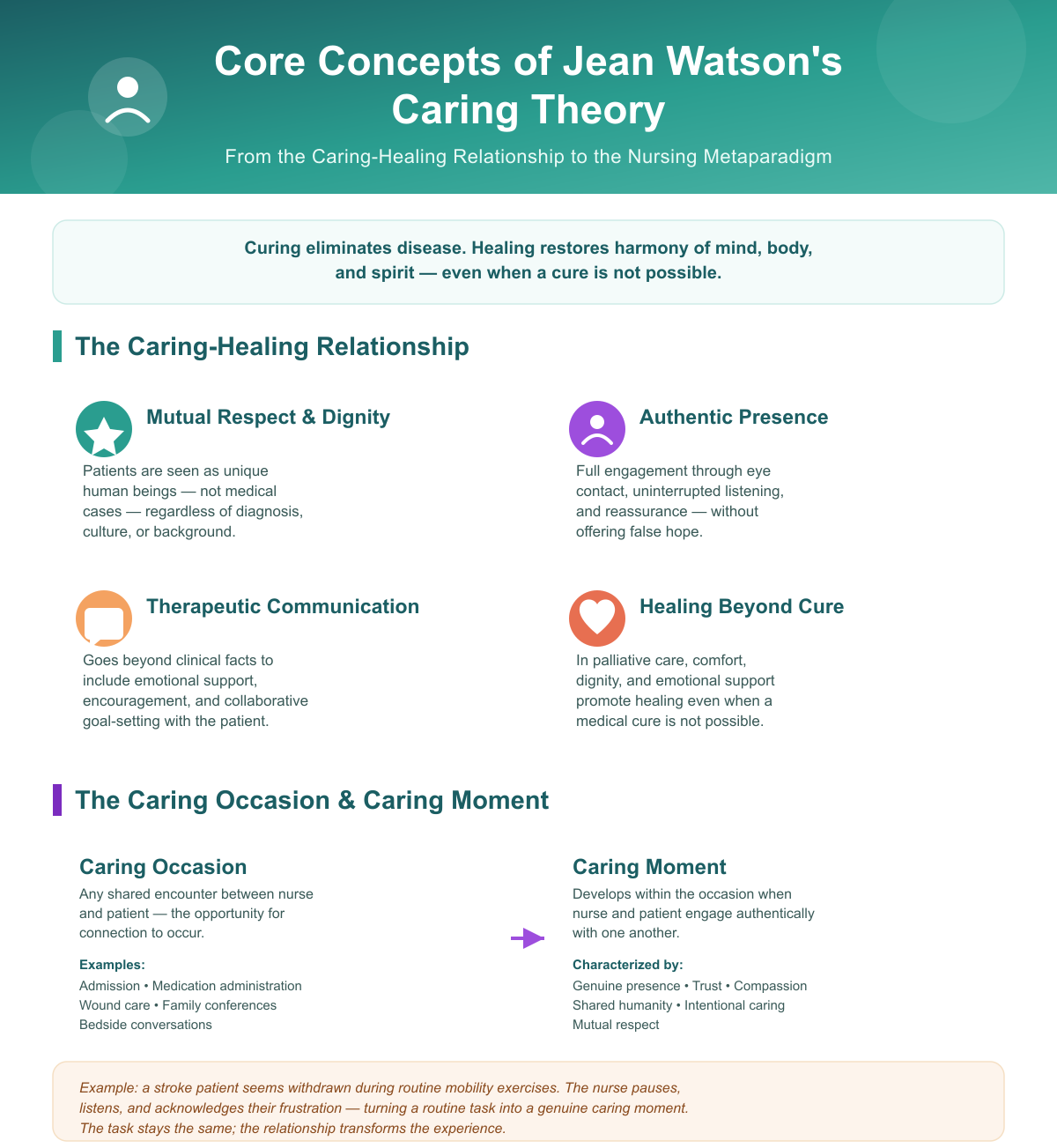
Jean Watson’s Legacy and Influence on Modern Nursing
Few individuals have influenced modern nursing as profoundly as Jean Watson. Through the development of the Theory of Human Caring, she fundamentally changed how nurses understand caring, healing, and professional practice. At a time when healthcare was becoming increasingly focused on technology, specialization, and biomedical interventions, Jean Watson reminded the profession that compassionate human care is not separate from scientific excellence but is an essential component of quality healthcare.
Today, Jean Watson’s ideas continue to shape nursing theories, clinical practice, education, leadership, research, and healthcare policy around the world. Her work has encouraged nurses to recognize that healing extends beyond treating disease and includes fostering hope, preserving dignity, promoting meaningful relationships, and supporting the whole person.
Unlike many theoretical models that remain primarily academic, Watson’s theory of human caring has been successfully translated into everyday clinical practice. Healthcare organizations, universities, hospitals, and professional associations have incorporated caring science into patient care models, leadership development, nursing curricula, quality improvement initiatives, and organizational culture.
The enduring influence of Jean Watson can be seen in several important areas:
- The advancement of caring as the defining focus of professional nursing.
- Greater emphasis on holistic and patient-centered care.
- Development of evidence-based caring science.
- Integration of compassion into clinical leadership.
- Expansion of research on caring across diverse healthcare settings.
- Recognition that the well-being of nurses directly influences patient outcomes.
- Increased appreciation for healing relationships within modern healthcare.
Perhaps most importantly, Jean Watson demonstrated that caring is both an ethical obligation and a scientific discipline. Through her concept of unitary caring science, she showed that technical competence, evidence-based practice, and compassionate relationships should work together to promote healing.
The following sections examine her lasting contributions, professional recognition, and the continuing relevance of her work.
Contributions to Nursing Theory and Practice
One of Jean Watson’s greatest achievements is the development of one of the most influential nursing theories in modern healthcare. Before the introduction of her theory, nursing often focused primarily on clinical procedures, physician-directed treatments, and disease management. Although compassionate care had always been valued, Jean Watson provided the profession with a comprehensive theoretical framework explaining why caring is fundamental to nursing and how it can be intentionally integrated into practice.
Her work expanded nursing’s understanding of health by emphasizing that healing involves physical, emotional, psychological, social, and spiritual dimensions. This holistic perspective continues to influence nursing education and clinical care worldwide.
Establishing Caring as the Foundation of Nursing
Perhaps Jean Watson’s most enduring contribution is reinforcing the principle that caring is central to nursing. She argued that nursing is distinguished from other health professions by its commitment to developing authentic human relationships that promote healing.
This perspective transformed how many nurses viewed their professional role. Instead of focusing exclusively on completing clinical tasks, nurses were encouraged to integrate empathy, compassion, ethical reflection, and therapeutic communication into every patient interaction.
Today, this principle continues to influence:
- Patient-centered care models.
- Nursing curricula.
- Clinical competency standards.
- Leadership development.
- Professional codes of ethics.
Advancing Holistic Nursing Practice
Jean Watson’s Theory of Human Caring helped establish the holistic approach to health care as an essential component of professional nursing.
Rather than concentrating solely on disease processes, nurses are encouraged to consider:
- Emotional well-being.
- Cultural beliefs.
- Family relationships.
- Spiritual needs.
- Personal goals.
- Environmental influences.
For example, when caring for a patient recovering from myocardial infarction, the nurse assesses not only cardiac function but also anxiety, family support, lifestyle changes, emotional adjustment, and readiness for rehabilitation.
This broader perspective contributes to more individualized and comprehensive care.
Strengthening Evidence-Based Caring
Although caring is often viewed as a personal characteristic, Jean Watson emphasized that it can be systematically studied, evaluated, and strengthened through research on caring.
Her work encouraged researchers to investigate questions such as:
- How caring behaviors influence patient satisfaction.
- The relationship between caring and patient safety.
- Effects of caring on nurse burnout.
- Outcomes associated with healing environments.
- Impact of therapeutic relationships on recovery.
These investigations have strengthened the scientific foundation of caring while supporting evidence-based nursing practice.
Transforming Nursing Education
The influence of Jean Watson extends throughout nursing education.
Many college of nursing programs incorporate Watson’s theory of human caring into courses addressing:
- Professional values.
- Nursing ethics.
- Communication.
- Leadership.
- Clinical reasoning.
- Reflective practice.
Students are encouraged to develop technical competence alongside compassion, empathy, and caring consciousness, preparing them to provide safe and holistic patient care.
Influence on Leadership
Jean Watson’s work also reshaped nursing leadership by emphasizing that caring should extend beyond patient interactions to include organizational culture and staff well-being.
Leaders applying caring science promote:
- Respectful workplaces.
- Professional collaboration.
- Staff recognition.
- Emotional support.
- Reflective practice.
- Healthy work environments.
These principles contribute to improved retention, stronger teamwork, and enhanced patient outcomes.
Global Influence on Healthcare
Today, Watson’s caring philosophy influences healthcare organizations across numerous countries.
Hospitals, academic institutions, and healthcare systems integrate caring science into:
- Patient care standards.
- Staff education.
- Leadership development.
- Quality improvement initiatives.
- Organizational mission statements.
This widespread adoption demonstrates the practical value and global relevance of Jean Watson’s Theory of Human Caring.
Recognition by Professional Nursing Organizations
The remarkable contributions of Jean Watson have been recognized through numerous awards, honors, and leadership appointments spanning several decades. Her influence extends well beyond academic nursing, earning respect from professional organizations, healthcare institutions, educators, researchers, and clinicians throughout the world.
Fellow of the American Academy of Nursing
Among her most prestigious distinctions is her recognition as a Fellow of the American Academy of Nursing. Election as a fellow reflects outstanding contributions to nursing science, education, leadership, and healthcare improvement.
As a fellow of the American Academy, Jean Watson joined an international community of nursing leaders whose work has significantly advanced the profession.
Her recognition by the American Academy of Nursing reflects the profound impact of her caring theory on modern healthcare.
National League for Nursing
Jean Watson has also received significant recognition from the National League for Nursing, one of the oldest organizations dedicated to excellence in nursing education.
Her work has influenced nursing faculty, curriculum development, educational standards, and professional preparation throughout the United States and internationally.
The organization’s recognition highlights the importance of caring science in preparing future generations of nurses.
Academic Leadership
Throughout her distinguished academic career, Jean Watson held numerous influential leadership positions.
At the University of Colorado, she served as:
- Faculty member.
- Administrator.
- Dean of Nursing.
- Distinguished Professor of Nursing.
Her leadership at the University of Colorado Health Sciences Center helped strengthen nursing education while advancing caring science scholarship.
She also became the recipient of the first endowed chair in caring and later the endowed chair in caring science, recognizing her pioneering contributions to nursing scholarship and caring research.
These appointments reflected the growing recognition that caring deserved rigorous academic study alongside other nursing specialties.
Honorary Degrees and International Recognition
Throughout her career, Jean Watson has received numerous honorary doctoral degrees from universities around the world.
These honors acknowledge her extraordinary contributions to:
- Nursing theory.
- Nursing education.
- Caring science.
- Healthcare leadership.
- International nursing scholarship.
Her lectures, workshops, and consulting activities have reached healthcare professionals across multiple continents, making her one of the most internationally recognized nursing scholars.
Watson Caring Science Institute
Another lasting contribution is the establishment of the Watson Caring Science Institute, which Watson founded to advance the application of caring science in healthcare organizations throughout the world.
The institute promotes:
- Caring science education.
- Leadership development.
- Clinical implementation.
- Organizational transformation.
- Research initiatives.
- Professional certification.
- International collaboration.
Through the Watson Caring Science Institute, healthcare organizations receive guidance on integrating caring science into everyday practice while strengthening both patient outcomes and workforce well-being.
The institute continues the mission first initiated through the original Center for Human Caring, further expanding the global influence of Jean Watson’s work.
Continuing Relevance of Jean Watson’s Human Caring Theory
More than four decades after its introduction, Jean Watson’s Theory of Human Caring remains one of the most influential and widely applied nursing theories in contemporary healthcare. While medical technology, electronic health records, artificial intelligence, and sophisticated diagnostic tools have transformed healthcare delivery, the need for compassionate, relationship-centered nursing has become even more important.
Modern healthcare systems face numerous challenges, including:
- Increasing patient complexity.
- Aging populations.
- Chronic disease management.
- Workforce shortages.
- Nurse burnout.
- Ethical dilemmas.
- Greater cultural diversity.
- Rapid technological advancement.
These challenges reinforce rather than diminish the importance of Jean Watson’s caring philosophy.
Addressing Technology-Driven Healthcare
Technology has greatly improved diagnosis, treatment, and patient safety. However, it also creates the risk that healthcare professionals become more focused on screens, documentation, and equipment than on human relationships.
Jean Watson consistently argued that technology should support—not replace—the caring relationship between the nurse and the patient.
Her theory reminds nurses to balance technological competence with authentic presence, empathy, and meaningful communication.
Supporting Patient-Centered Care
Contemporary healthcare increasingly emphasizes individualized, patient-centered care.
The principles of Watson’s theory of human caring align closely with this movement by encouraging nurses to:
- Respect patient autonomy.
- Promote shared decision-making.
- Honor cultural diversity.
- Support emotional well-being.
- Preserve dignity.
- Foster therapeutic relationships.
These principles remain central to quality healthcare across all clinical specialties.
Improving Nurse Well-Being
One increasingly important aspect of Jean Watson’s work is its recognition that caring extends to nurses themselves.
Healthcare organizations adopting caring science often promote:
- Reflective practice.
- Emotional resilience.
- Mindfulness.
- Peer support.
- Compassionate leadership.
- Healthy work environments.
These initiatives help reduce burnout while improving professional satisfaction.
Influence on Education and Research
The theory continues to shape nursing education through its emphasis on compassionate practice, reflective learning, and professional identity.
Likewise, researchers continue exploring:
- Measuring caring in nursing.
- Healing environments.
- Therapeutic communication.
- Caring science interventions.
- Patient experience.
- Workforce well-being.
- Organizational culture.
This expanding body of evidence reinforces the scientific credibility of caring science while supporting its integration into evidence-based practice.
A Global Framework for Human Care
The principles developed by Jean Watson have proven applicable across cultures, healthcare systems, and clinical specialties because they are grounded in universal human values.
Whether caring for newborn infants, individuals with chronic illness, patients receiving mental health services, critically ill adults, or those approaching the end of life, nurses continue to find relevance in Watson’s philosophy and science.
The enduring significance of the theory lies in its ability to remind healthcare professionals that every patient deserves compassionate, individualized, and holistic care.
Overwhelmed with multiple nursing deadlines?
Let us write your papers efficiently and accurately
Conclusion
Jean Watson’s Theory of Human Caring remains one of the most influential and enduring frameworks in modern nursing because it reminds healthcare professionals that caring is the foundation upon which all effective nursing practice is built. Throughout her career, Jean Watson demonstrated that nursing is far more than the performance of clinical tasks or the treatment of disease. It is a human-centered profession that combines scientific knowledge, ethical responsibility, compassionate relationships, and holistic care to promote healing in its fullest sense.
From her early life and academic leadership at the University of Colorado to the development of the Theory of Human Caring, Jean Watson transformed how nurses understand the relationship between caring and healing. Her work introduced concepts such as transpersonal caring, caring consciousness, the Clinical Caritas Processes, and human care, providing nurses with a comprehensive framework for delivering compassionate, evidence-informed, and person-centered care. These principles continue to shape nursing education, leadership, research, and clinical practice across diverse healthcare settings.
One of the greatest strengths of Watson’s theory of human caring is its practicality. The theory encourages nurses to integrate empathy, respect, therapeutic communication, and authentic presence into every patient interaction without compromising clinical excellence. Whether caring for critically ill patients in intensive care units, supporting individuals with chronic illnesses, promoting recovery in rehabilitation settings, or providing comfort during end-of-life care, the principles established by Jean Watson remain applicable and relevant. They reinforce the idea that healing involves not only treating physical illness but also addressing emotional, psychological, social, cultural, and spiritual needs.
The continued influence of the Watson Caring Science Institute, ongoing research on caring, and the integration of caring science into healthcare organizations worldwide demonstrate that Jean Watson’s ideas are far from theoretical ideals. Instead, they have become practical strategies for improving patient experiences, strengthening therapeutic relationships, enhancing nurse satisfaction, and fostering healthier organizational cultures. As healthcare becomes increasingly technology-driven, Watson’s work serves as an important reminder that advanced medical knowledge should complement—not replace—the human connection that defines professional nursing.
Ultimately, Jean Watson’s legacy extends beyond the development of a single nursing theory. She helped redefine nursing as both a science and a caring profession, emphasizing that compassionate relationships are essential to healing and that caring is central to nursing. For nurses, educators, researchers, and healthcare leaders alike, her work continues to provide a timeless guide for delivering safe, ethical, holistic, and patient-centered care. As the nursing profession evolves to meet new healthcare challenges, the principles of Jean Watson’s Theory of Human Caring will continue to inspire generations of nurses to place human care at the heart of every clinical decision and every therapeutic relationship.
Frequently Asked Questions
What is Jean Watson’s nursing theory?
Jean Watson’s nursing theory, known as the Theory of Human Caring (or Theory of Caring), is a nursing theory that emphasizes caring as the foundation of professional nursing. It focuses on holistic care, therapeutic nurse–patient relationships, transpersonal caring, and the belief that compassionate, patient-centered care promotes healing of the mind, body, and spirit—not just the treatment of disease.
When did Jean Watson lose her eye?
Jean Watson lost her left eye in 1997 following an accident. This life-changing experience deepened her understanding of suffering, healing, and resilience, further influencing her work in caring science and her emphasis on authentic human connections in nursing.
What are the four major concepts of Watson’s theory?
The four major concepts (metaparadigm concepts) of Jean Watson’s Theory of Human Caring are:
- Human Being (Person) – The individual is viewed as a unique, holistic person with physical, emotional, social, and spiritual dimensions.
- Health – Health is a state of harmony among the mind, body, and spirit rather than simply the absence of illness.
- Environment – A caring, supportive, and healing environment promotes health, recovery, and well-being.
- Nursing – Nursing is a human science focused on caring relationships that promote healing, preserve dignity, and improve quality of life.
Who is Jean Watson?
Jean Watson is an American nurse theorist, nursing professor, and author best known for developing the Theory of Human Caring. She served as a professor and dean at the University of Colorado College of Nursing, founded the Watson Caring Science Institute, and has significantly influenced nursing education, research, and clinical practice through her work on caring science and holistic nursing.
